

Weight Loss and Bariatric Surgery for Ethiopian Patients in India
Five gates every weight-loss surgery question should pass before booking a flight — starting with the fact that, in Ethiopia, diabetes is already more common than obesity, which says something important about who this treatment is actually for.
Bariatric surgery is widely, and understandably, thought of as an operation for people who look heavy. That framing misses what the surgery actually treats. In 24 years of arranging surgical care in India for patients across Africa and Asia, the field now generally called metabolic and bariatric surgery has moved well beyond a simple weight target: it is fundamentally a treatment for metabolic disease — diabetes, high blood pressure, fatty liver — that happens to work through the digestive system, and that disease can be present, sometimes severely, in bodies that don't meet the weight thresholds most people associate with the word "obesity." Ethiopia's own data makes this point unusually clearly. Diabetes affects a larger share of the adult population than obesity does, particularly among men, where diabetes prevalence runs nearly triple the obesity prevalence. This is not a contradiction; it reflects a well-documented pattern where metabolic risk accumulates around the abdomen at body weights a simple BMI chart doesn't flag as obese. Obesity itself, while still low by global standards, has more than tripled in Ethiopia over the past decade, concentrated in Addis Ababa and other urban centres — an early-stage curve, not a distant future problem. India's high-volume bariatric centres treat this full spectrum, from classic severe obesity to metabolic disease at more moderate weights, as established, everyday practice. These five gates walk through what this surgery is actually meant to treat, why the decision should never be about appearance alone, and why India is where that full range of care is reliably available.
Healing Journeys of Ethiopian Patients









Key Takeaways
- Bariatric surgery is not simply about appearance or weight loss. The guide presents it primarily as a treatment for metabolic disease, including diabetes, high blood pressure and fatty liver disease.
- The page 2 chart shows an important Ethiopian pattern: diabetes prevalence is 5.9% among women and 6.9% among men, while obesity prevalence is 8.5% among women and only 2.4% among men. This highlights why BMI alone may not capture metabolic risk.
- Ethiopia's adult obesity prevalence increased from 0.9% in 2012 to 2.9% in 2024, according to the page 3 visual. The guide notes that the rise is particularly visible in urban areas including Addis Ababa, Sidama and Harari.
- Surgery is not automatically the first treatment. The guide explains that GLP-1 weight-loss medications and lifestyle measures may produce meaningful results for some patients, while surgery may be considered when these approaches do not provide lasting control or when metabolic disease is more severe.
- The page 4 procedure chart shows sleeve gastrectomy at 60%, gastric bypass at 20%, revision surgery at 10% and other procedures at 10% in the referenced worldwide distribution. The guide stresses that procedure selection should depend on the patient's BMI, diabetes status, reflux and eating pattern.
- Ethiopia currently has limited access to the multidisciplinary infrastructure required for bariatric surgery, particularly dietetic support and structured long-term nutritional monitoring.
- Indicative Indian costs include US$3,500–6,000 for sleeve gastrectomy, US$5,000–7,500 for gastric bypass and US$4,500–8,000 for revision bariatric surgery. Diagnostic workup is approximately US$300–700.
- The annotated US$4,800 quotation includes pre-operative endoscopy and laboratory tests and four days of admission, but excludes ongoing nutritional supplements and possible future revision surgery.
- Ethiopian patients should confirm that the programme includes a bariatric surgeon, dietitian, appropriate psychological evaluation where relevant and a long-term nutritional follow-up plan, rather than comparing hospitals on surgical price alone.
- The PDF states that most patients should plan approximately 10–14 days in India, including pre-operative evaluation, surgery, initial recovery and follow-up.
- Ethiopian health financing does not generally cover planned bariatric treatment abroad. The guide notes that a bank may advance up to US$20,000 against a treating hospital letter, subject to applicable requirements.
- Long-term follow-up remains important after returning to Ethiopia, particularly for vitamin and mineral supplementation and monitoring for nutritional deficiencies.
Quick Facts
- Treatment
- Weight Loss and Bariatric Surgery
- Country
- India
- Patients
- Ethiopian Patients
- Main Procedures
- Sleeve Gastrectomy, Gastric Bypass and Revision Bariatric Surgery
- Main Conditions
- Obesity and Metabolic Disease
- Key Metabolic Conditions
- Diabetes, High Blood Pressure and Fatty Liver Disease
- Ethiopian Obesity Prevalence
- 2.9% in 2024
- Ethiopian Diabetes Prevalence
- 5.9% women and 6.9% men
- Sleeve Gastrectomy
- US$3,500–6,000
- Gastric Bypass
- US$5,000–7,500
- Revision Bariatric Surgery
- US$4,500–8,000
- Diagnostic Workup
- US$300–700
- GLP-1 Medication Trial
- US$150–400 per month
- Post-Operative Nutritional Follow-Up
- US$300–600 per year
- Example Quotation
- US$4,800
- Typical India Stay
- Approximately 10–14 days
- Key Specialist
- Bariatric Surgeon with Multidisciplinary Support
- Important Follow-Up
- Long-term nutritional monitoring
- Financing Mentioned
- Up to US$20,000 against treating hospital letter
- Required Records
- Weight history, diabetes/blood pressure records and previous treatment attempts
In Brief
For Ethiopian patients considering bariatric surgery, the PDF emphasises that the decision should be based on overall metabolic health rather than body weight alone. Diabetes, high blood pressure and fatty liver disease may indicate significant metabolic risk even when BMI is not extremely high. The guide also stresses that medication and lifestyle measures, including GLP-1 medicines for appropriate patients, should be considered before surgery in many cases. When surgery is appropriate, sleeve gastrectomy and gastric bypass have different effects on digestion, reflux, nutrient absorption and diabetes. Indian bariatric centres are presented as an option because of their multidisciplinary teams and structured long-term nutritional monitoring, which are particularly important for Ethiopian patients travelling abroad for treatment.
1 Gate One
How much weight, or how much risk?
A number on a scale, or a BMI calculation, is what usually starts this conversation, and it is worth knowing upfront that this number alone was never meant to be the whole story. BMI is a simple ratio of weight to height that says nothing about where fat is actually distributed in the body, and abdominal or visceral fat carries substantially more metabolic risk than fat elsewhere, even at an identical BMI.
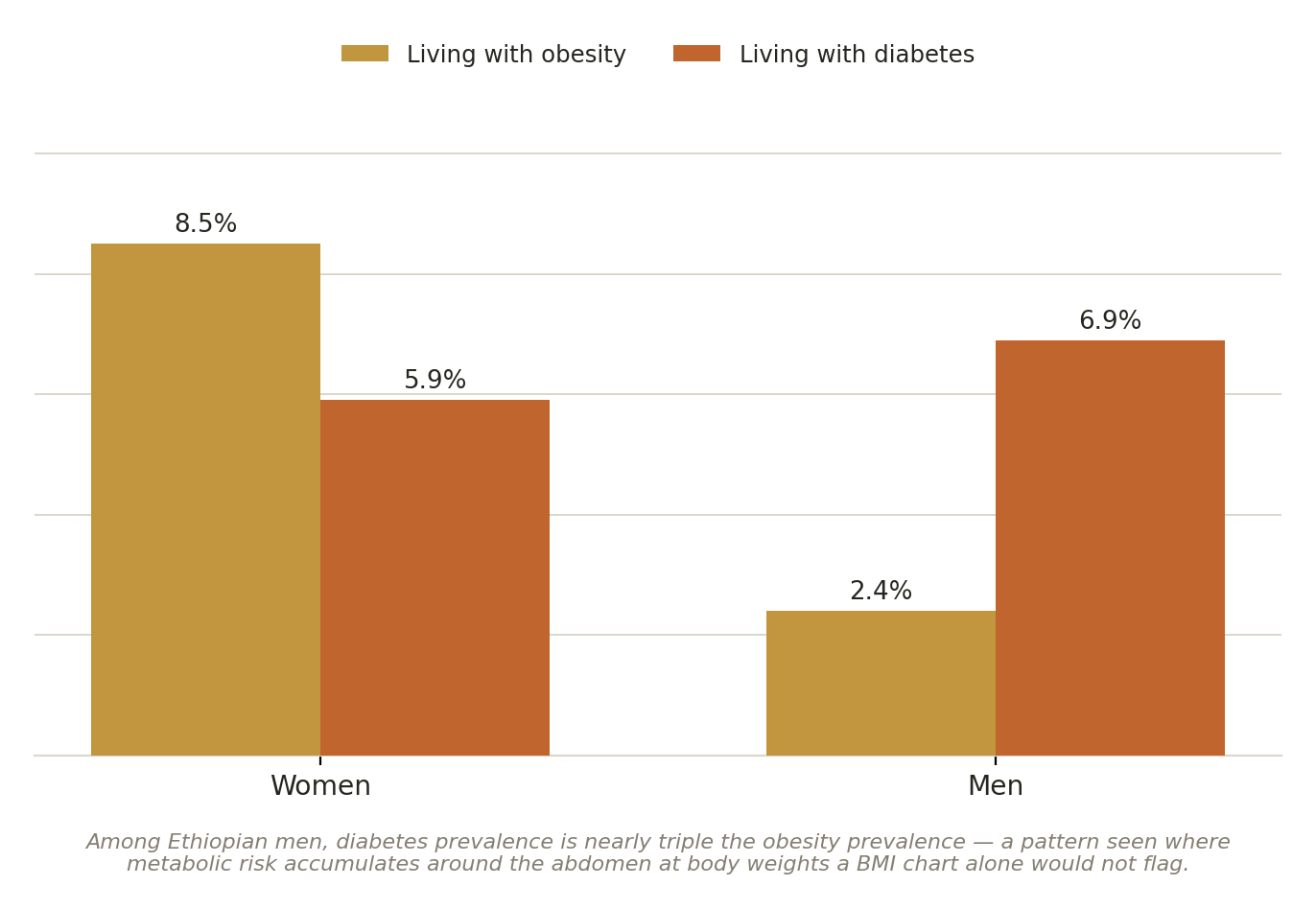
Diabetes exceeding obesity prevalence, especially among men, is a sign that BMI alone is missing real metabolic risk.
International surgical guidelines themselves now acknowledge this limitation explicitly, and have begun adjusting recommended thresholds for populations where diabetes and cardiovascular disease appear at lower BMI levels than the original criteria assumed. If diabetes, high blood pressure, or fatty liver disease is present, ask specifically whether you are being evaluated on your overall metabolic risk, not on a BMI cutoff alone.
2 Gate Two
The rising curve nobody's watching
Ethiopia's obesity rate remains genuinely low by global and regional standards, and that fact, while true, can obscure the trajectory underneath it.
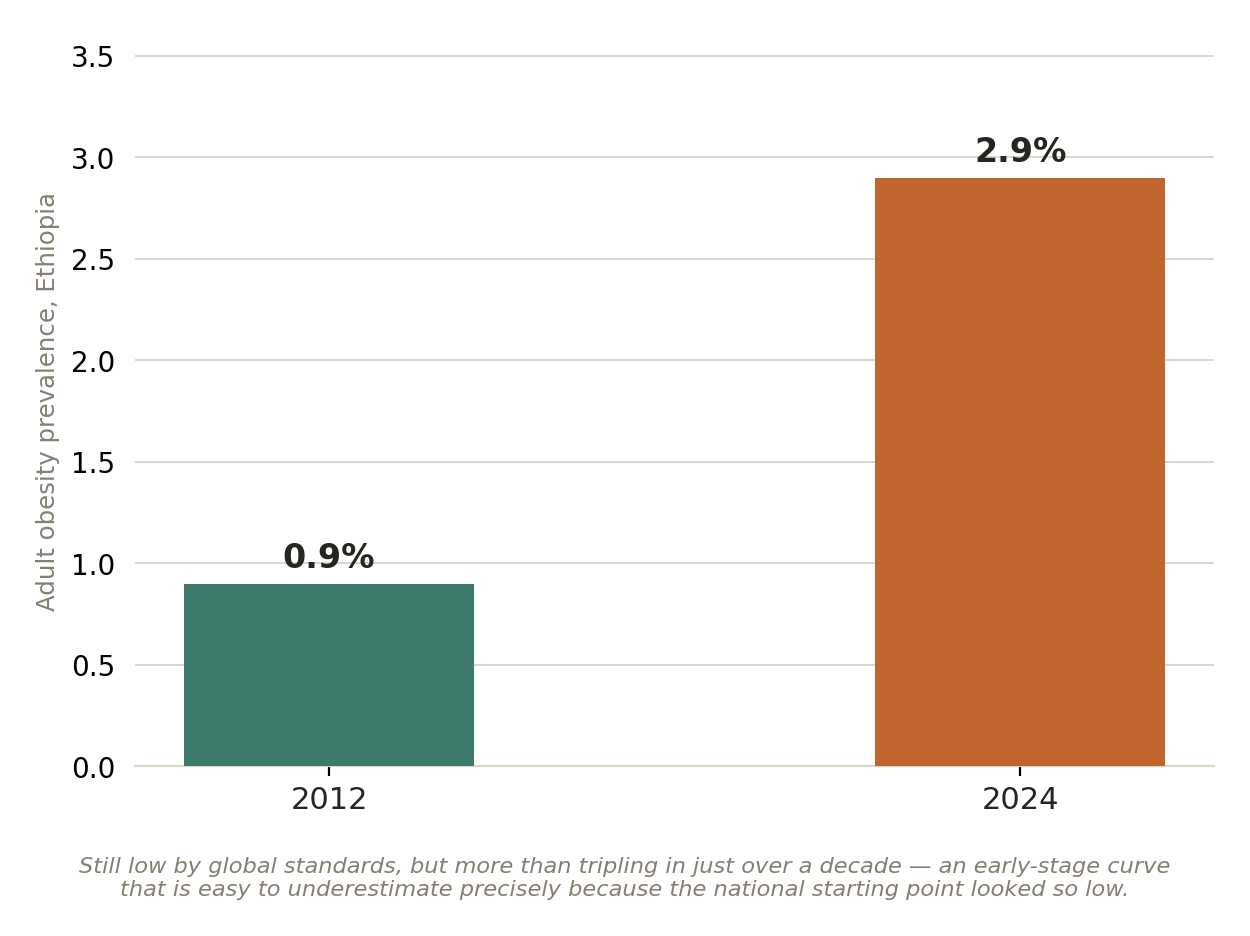
A low starting point and a fast-rising curve are not the same as a problem that can wait.
This growth is concentrated in specific places: urban centres including Addis Ababa, Sidama, and Harari show the sharpest rises, tracking closely with rising diabetes rates in the same regions. This is precisely the pattern seen in country after country before obesity-related disease becomes a dominant burden on the health system — recognising it early, rather than after it becomes common, is the more useful moment to act.
3 Gate Three
Sleeve, bypass, or medication first?
Surgery is not the automatic first answer, and a trustworthy programme will say so plainly. GLP-1 weight-loss medications have genuinely changed this field, and for some patients they achieve meaningful, sustained results without surgery. Surgery tends to produce more durable long-term outcomes, particularly for diabetes remission, and is generally considered once medication and lifestyle measures haven't achieved lasting control, or when obesity and its complications are more severe.
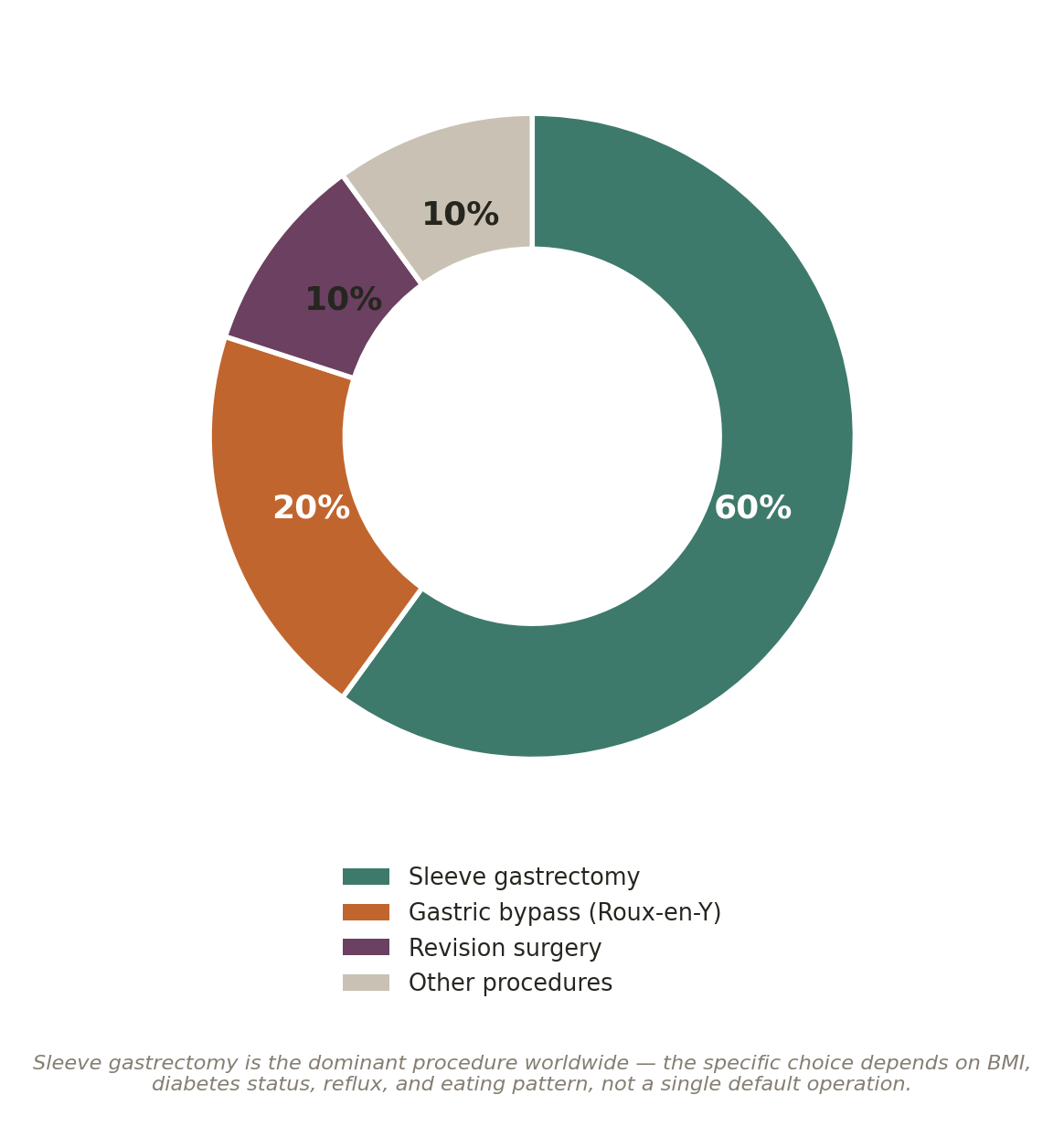
Even once surgery is the right path, the specific operation still depends on individual evaluation, not a single default choice.
Why the specific procedure matters: sleeve gastrectomy, gastric bypass, and other techniques differ in how they affect digestion, nutrient absorption, and reflux, and in how much of the effect comes from reduced food intake versus hormonal changes that improve diabetes independently of weight loss. Ask specifically which procedure is being recommended and why it fits your particular health profile, not simply which one the centre prefers to perform.
4 Gate Four
Could this be done in Ethiopia?
Currently, only to a very limited degree. This is consistent with the broader pattern in gate two: a rapidly rising need that domestic specialist infrastructure has not yet caught up with. Bariatric surgery specifically depends on a multidisciplinary team — a bariatric surgeon, a dietitian experienced in post-surgical nutrition, and a structured long-term follow-up system to monitor for nutritional deficiencies — that is not yet well established within Ethiopia.
This is precisely where India's high-volume bariatric centres add genuine, comparative depth: the full multidisciplinary team as standard practice, experience across the full range of procedures and patient profiles, and structured long-term nutritional monitoring programmes. For a treatment this dependent on careful patient selection and lifelong follow-up, not just the operation itself, that established infrastructure is not a convenience — it is what actually protects a patient's health for years after the surgery. Ask any centre what their long-term nutritional monitoring plan looks like, not just what the operation itself costs.
5 Gate Five
Is the money arranged?
Ethiopia's health financing does not follow a patient abroad. Community-Based Health Insurance covers contracted facilities inside the country, and the formal-sector scheme still isn't settling claims. Since February 2026 a bank may release up to US$20,000 per case against a letter from the treating hospital, without a visa or ticket in hand.
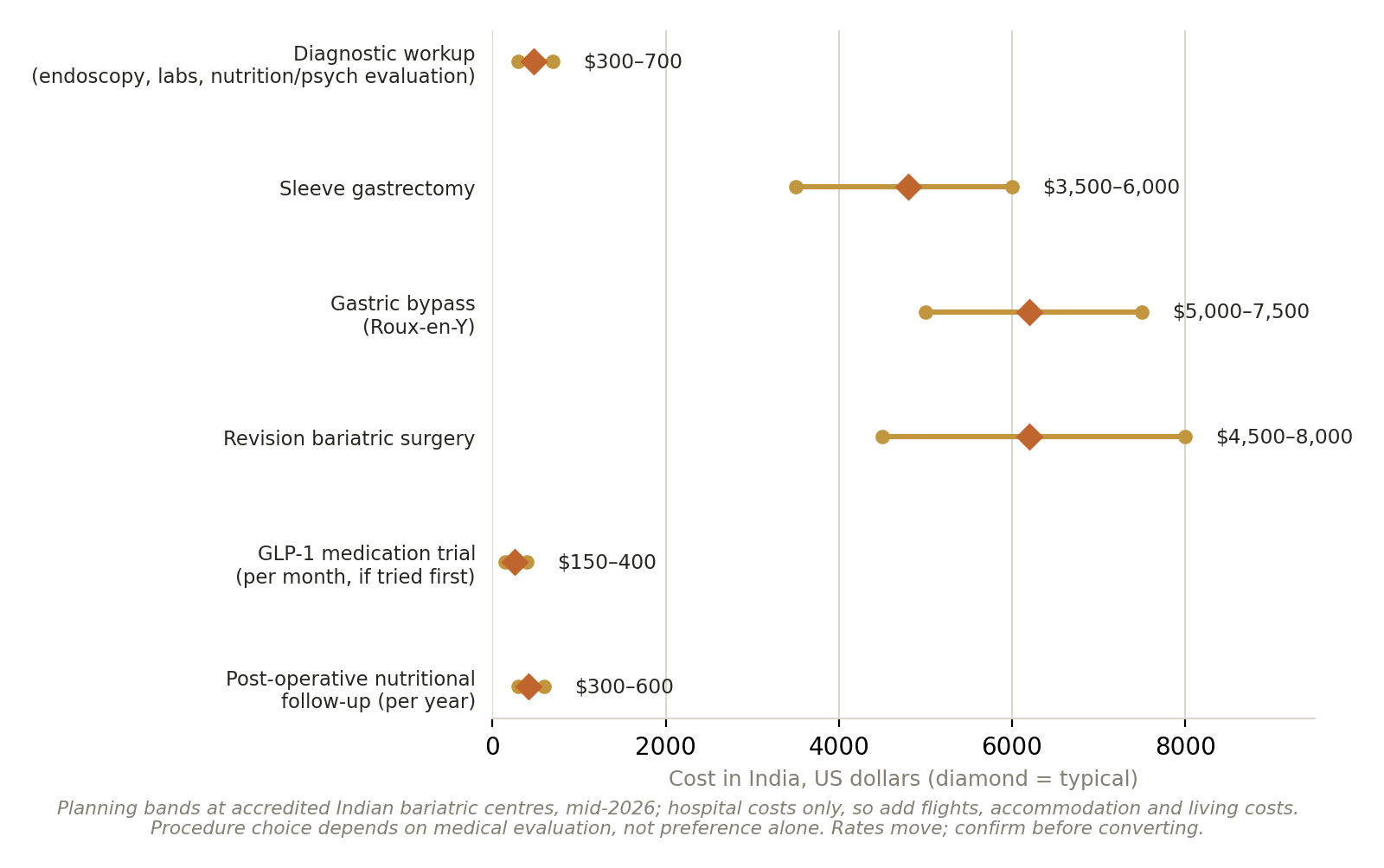
Budget for the specific procedure your evaluation actually points to, not the most familiar figure.
The figures differ by procedure and complexity: sleeve gastrectomy sits below gastric bypass, and revision surgery, needed if a first procedure doesn't achieve lasting results, costs more than either. Even at the top of these ranges, treatment at an accredited Indian bariatric centre remains a fraction of an equivalent case in the Gulf, Europe, or the United States. Confirm the specific procedure recommended before assuming any single number applies to your case.
| A quotation, annotatedA composite of the bariatric surgery quotes that reach me, with the questions I send back. | |
| Bariatric surgery — USD 4,800 | Sleeve or bypass? These differ meaningfully in price, recovery, and long-term nutritional needs. |
| Includes: pre-op endoscopy and labs | Good sign. Ask whether a dietitian and, if relevant, a psychological evaluation are also included. |
| Includes: 4 days admission | Reasonable for a laparoscopic procedure. Ask what a complication would add. |
| Team: bariatric surgeon, ask about the rest | Ask specifically whether a dietitian and long-term follow-up plan are part of the programme. |
| Excludes: nutritional supplements (ongoing) | Ask for the expected monthly cost of vitamin and mineral supplementation after surgery. |
| Excludes: revision surgery if needed later | Ask what circumstances might lead to a revision, and its separate cost. |
In 24 years the bariatric surgery patients most satisfied with their outcome were the ones who chose a programme with a genuine long-term follow-up plan, not just the lowest quoted price for the operation itself.
The Ethiopian practicalities
Ethiopian Airlines flies non-stop from Bole to Delhi, Mumbai, Bengaluru, Chennai, and Hyderabad. Ask for written clearance to fly a few days after surgery once initial recovery is confirmed. Yellow fever certification is required at least ten days before arrival, oral polio vaccination roughly four weeks before. The medical visa follows the hospital's invitation letter through the Embassy of India, Addis Ababa. Where treatment spans the Orthodox fasting calendar, raise this with the hospital's dietary team beforehand, since post-surgical nutrition needs are specific and structured. Confirm current rules with the Embassy, since they change, and ask for an Amharic-speaking coordinator to carry a written long- term nutritional monitoring plan back to a named provider in Ethiopia, since ongoing follow-up matters as much as the surgery itself.
Straight Answers for Ethiopian Patients about Weight Loss and Bariatric Surgery in India
My BMI isn't that high, but I have diabetes and high blood pressure. Could I still be a candidate?
Possibly, yes. Guidelines increasingly recognise BMI as an imperfect measure of metabolic risk. Someone with diabetes or high blood pressure at a moderate BMI can be a genuine candidate, evaluated on overall health risk rather than weight alone.
Should I try weight-loss medication before considering surgery?
For many patients, yes. GLP-1 medications work well for some. Surgery tends to produce more durable results, particularly for diabetes remission, and is usually considered once medication and lifestyle changes alone haven't achieved lasting results.
Is bariatric surgery available in Ethiopia?
Very limited. Obesity has risen quickly from a low base, and the specialised multidisciplinary teams safe bariatric surgery depends on are not yet well established domestically.
How long does bariatric surgery in India take?
Pre-operative evaluation takes about a week. Surgery and initial recovery need three to five days. Most patients plan ten to fourteen days total, including a follow-up check.
Who pays for this in Ethiopia?
You do. Neither Community-Based Health Insurance nor the pending formal-sector scheme funds treatment abroad, though a bank may now advance up to US$20,000 against the treating hospital's letter.
A closing word
Send your recent weight history, any diabetes or blood pressure readings, and what you've already tried. I will tell you honestly whether this looks like a genuine metabolic surgery case, and why India's bariatric centres are where the full evaluation, procedure choice, and years of follow-up care this treatment needs are reliably available.
Sources
- 🌐 Global Nutrition Report. Ethiopia nutrition profile: obesity and diabetes estimates
- 🌐 Burden and trends of diabetes mellitus in Ethiopia: systematic analysis of the Global Burden of Disease Study 1990-2023. Explor Med. 2025
- 🌐 2022 American Society for Metabolic and Bariatric Surgery (ASMBS) and International Federation for the Surgery of Obesity and Metabolic Disorders (IFSO): Indications for Metabolic and Bariatric Surgery
- 🌐 National Medical Commission of India — Indian Medical Register, for verifying a treating bariatric surgeon's qualification and registration
- 🌐 National Bank of Ethiopia Directive FXD/04/2026 (foreign exchange, advance payments for treatment abroad); Embassy of India, Addis Ababa
Frequently Asked Questions by Ethiopians about Weight Loss and Bariatric Surgery in India
Can Ethiopian patients with diabetes and a moderate BMI still be considered for bariatric surgery?
Possibly. The guide explains that BMI does not capture all metabolic risk. Ethiopian patients with diabetes or high blood pressure may need an assessment based on their overall health profile rather than weight alone.
How does the obesity and diabetes pattern in Ethiopia affect bariatric treatment decisions?
The PDF highlights that diabetes is more prevalent than obesity among Ethiopian men, with 6.9% diabetes compared with 2.4% obesity in the cited data. This supports evaluating metabolic risk rather than relying solely on BMI.
Should Ethiopian patients try GLP-1 medication before bariatric surgery?
For many Ethiopian patients, medication and lifestyle changes may be considered before surgery. The guide explains that GLP-1 medicines can produce meaningful results for some patients, while surgery may offer more durable outcomes for selected patients, particularly regarding diabetes remission.
Which bariatric procedure may be suitable for Ethiopian patients—sleeve or gastric bypass?
There is no single procedure suitable for every Ethiopian patient. The guide states that the choice should consider BMI, diabetes status, reflux, eating pattern, digestion and nutritional requirements rather than simply choosing the procedure most commonly performed by a centre.
How much does sleeve gastrectomy cost for Ethiopian patients in India?
The PDF gives an indicative Indian planning range of US$3,500–6,000 for sleeve gastrectomy. The final quotation should clarify what is included, such as investigations, admission, surgeon fees, dietetic support and follow-up.
How much does gastric bypass cost for Ethiopian patients in India?
The indicative range for Roux-en-Y gastric bypass is US$5,000–7,500. Ethiopian patients should confirm the exact procedure recommended and whether nutritional follow-up and supplements are included separately.
Is bariatric surgery widely available in Ethiopia for Ethiopian patients?
The guide describes bariatric surgery as currently available only to a very limited degree in Ethiopia. It particularly identifies gaps in multidisciplinary teams, post-surgical nutrition and structured long-term monitoring.
How long should Ethiopian patients stay in India for bariatric surgery?
The PDF recommends planning approximately 10–14 days in India, including about one week for pre-operative evaluation, three to five days for surgery and initial recovery, and a follow-up check before returning home.
What should Ethiopian patients check in a bariatric surgery quotation from India?
Patients should confirm whether the quotation includes pre-operative endoscopy and laboratory tests, admission, dietitian support and psychological assessment where relevant. They should also ask about ongoing supplements and the separate cost of any future revision surgery.
What long-term follow-up will Ethiopian patients need after bariatric surgery in India?
Ethiopian patients require structured nutritional follow-up after returning home, including monitoring for nutritional deficiencies and ongoing vitamin and mineral supplementation. The guide recommends returning with a written long-term monitoring plan for a named provider in Ethiopia.
Page Summary
This guide gives Ethiopian patients a practical overview of weight-loss and metabolic surgery in India, beginning with the importance of looking beyond BMI and considering diabetes, blood pressure and other metabolic risks. It explains Ethiopia's changing obesity and diabetes pattern and why early assessment is becoming increasingly important. The guide compares medication and lifestyle treatment with surgery and explains why sleeve gastrectomy or gastric bypass should be selected according to the patient's individual health profile. It also highlights Ethiopia's limited multidisciplinary bariatric infrastructure and India's established surgical and nutritional follow-up programmes. Indicative costs, an annotated quotation and important exclusions are provided to help Ethiopian patients compare treatment packages properly. The final sections cover travel planning, expected stay, financing and the long-term nutritional follow-up required after returning to Ethiopia.
Citation Block
| Topic | Information |
|---|---|
| Topic Information | Weight Loss and Bariatric Surgery for Ethiopian Patients in India |
| Treatment | Bariatric / Metabolic Surgery |
| Country | India |
| Intended Audience | Ethiopian Patients |
| Main Procedures | Sleeve Gastrectomy, Gastric Bypass and Revision Surgery |
| Main Conditions | Obesity and Metabolic Disease |
| Ethiopian Obesity Prevalence | 2.9% in 2024 |
| Ethiopian Diabetes Prevalence | 5.9% women; 6.9% men |
| Sleeve Gastrectomy | US$3,500–6,000 |
| Gastric Bypass | US$5,000–7,500 |
| Revision Surgery | US$4,500–8,000 |
| Diagnostic Workup | US$300–700 |
| Example Quotation | US$4,800 |
| Typical India Stay | Approximately 10–14 days |
| Key Specialist | Bariatric Surgeon |
| Important Support | Dietitian and long-term nutritional monitoring |
| Follow-Up | Named Provider in Ethiopia |
| Financing Arrangement | Up to US$20,000 against treating hospital letter |
| Pre-Travel Check | Confirm procedure, inclusions, exclusions and follow-up plan |
| Author | Dr. Dheeraj Bojwani |
| Experience | 24+ Years |


Our Mission Statement
Our mission is to place patients at the centre of every healthcare decision by providing trustworthy, evidence-based, and unbiased medical information. We believe that informed patients make better decisions. Backed by personalised guidance from our experienced advisory team, we help patients understand their treatment options, compare them objectively, and confidently choose the path that best suits their medical needs and personal circumstances.
Patient Testimonials from Ethiopia










Ready to Take the First Step?
Share your Medical Reports with our Healthcare Managers Today and Get a FREE CONSULTATION, a Personalized Treatment Plan, and Complete Support from Arrival to Recovery.
Get Your Free ConsultationAreas We Serve
This resource has been thoughtfully prepared for patients from Ethiopia who are considering medical treatment in India. We also welcome patients from the wider region in the countries mentioned below-
We assist patients from:
- Eritrea
- Djibouti
- Somalia
- Kenya
- Sudan
- Burundi
- Comoros
- Ethiopia
- Madagascar
- Malawi
- Mauritius
- Mozambique
- Rwanda
- South Sudan
Many of the insights, treatment pathways, hospital recommendations, travel guidance, and patient support services described here are equally relevant and may be used as a reference when planning treatment in India.
From Ethiopia to India: Your Complete Patient Support Guide
- Brain Tumour Surgery in India for Ethiopians
- Cancer Treatment in India for Ethiopians
- Cardiac Surgery in India for Ethiopian Patients
- Cervical and Disc Replacement Surgery in India for Ethiopians
- Cosmetic and Plastic Surgery in India for Ethiopians
- CyberKnife Treatment in India for Ethiopians
- Eye Surgery in India for Ethiopians
- Gamma Knife Treatment in India for Ethiopians
- Heart Valve Replacement Surgery in India for Ethiopians
- Hip Surgery in India for Ethiopian Patients
- Knee Surgery in India for Ethiopian Patients
- Laparoscopic and Robotic Myomectomy Surgery in India for Ethiopians
- Neurosurgery in India for Ethiopians
- Paediatric Cardiac Surgery in India for Ethiopians
- Paediatric Neurosurgery in India for Ethiopians
- Prostate Cancer Treatment and Surgery in India for Ethiopians
- Robotic Cancer Surgery in India for Ethiopians
- Scoliosis Surgery in India for Ethiopians