

Scoliosis Surgery in India for Ethiopians
Five gates every scoliosis case should pass before booking a flight — and the one question that decides more than any other: how much growing does this spine still have left to do?
Ethiopia has almost no organised scoliosis screening. A 2026 school-based study covering forty-two primary schools found the condition more common among Ethiopian schoolchildren than many families realise, and earlier research has been blunt about the consequence: without screening, curves are usually found later and larger than they would be elsewhere, and only a small number of children are identified in time through NGO programmes for treatment in Addis Ababa or abroad. That late presentation makes one question more urgent here than almost anywhere else: how much growing has this child got left to do? The answer decides not just when to operate, but which kind of operation is even appropriate — and getting it wrong in a still-growing child is a mistake that cannot be undone by a second operation. In 24 years of arranging surgical care in India for patients across Africa and Asia, scoliosis is a field where I have seen families offered the wrong strategy more often than the wrong surgeon. These five gates exist to catch that before it happens.
Healing Journeys of Ethiopian Patients
Key Takeaways
- Scoliosis surgery planning for Ethiopian children should begin with a standing spine X-ray and Cobb angle measurement. The Cobb angle establishes the severity of the sideways spinal curve and provides the starting point for decisions about observation, bracing or surgery.
- The chart on page 2 provides general treatment thresholds. Curves below roughly 25° are commonly observed with repeat X-rays. Between 25° and 40°, bracing may be considered when meaningful growth remains. At approximately 40–50°, surgery becomes a serious discussion, while curves over 50° are generally shown as requiring surgery without unnecessary delay. These are guidance thresholds, not fixed rules for every child.
- A single Cobb angle is not enough. The guide emphasises comparing successive standing X-rays because whether the curve is stable or progressively increasing can be as important as its measurement on one particular day.
- For children who may need surgery, the most important question is how much spinal growth remains. This can fundamentally change which operation is appropriate.
- The decision diagram on page 3 separates two very different pathways. A young child with substantial growth remaining may require growing rods and staged surgery, while a teenager with little or no growth remaining may be suitable for definitive spinal fusion.
- Fusing a young child's spine too early permanently stops growth in the fused section. According to the guide, excessive early fusion can leave the chest cavity too small for adequate lung development as the child grows.
- Growing rods are designed to avoid this problem. They are expandable implants that hold the curve while allowing continued growth. The rods are lengthened periodically—every few months to a year—before eventual conversion to definitive fusion when growth is largely complete.
- The guide stresses that growing-rod treatment is not simply a smaller version of spinal fusion. It is a multi-year treatment strategy involving an initial operation, repeated lengthening procedures and ultimately definitive fusion.
- Long-term follow-up is particularly important with growing rods. Starting treatment in India without having a reliable plan for subsequent lengthening procedures in Ethiopia creates an incomplete treatment pathway.
- Financial planning must therefore cover years rather than only the first operation. The page 5 graphic illustrates a hypothetical growing-rod pathway beginning around age eight, followed by repeated lengthenings and eventual definitive fusion, reaching a cumulative illustrative total of USD 23,500 by age 15. The guide explicitly states that this is illustrative rather than a fixed schedule or guaranteed cost.
Quick Facts
- Specialty
- Paediatric Scoliosis and Spinal Deformity Surgery
- Country
- India
- Intended Audience
- Ethiopian children with scoliosis and their families
- Primary Condition
- Scoliosis
- Important Differential Diagnosis
- Spinal tuberculosis / Pott's disease
- Important Qualification
- These thresholds are guides rather than fixed rules and must be interpreted according to the child's age, growth remaining and curve pattern.
- Treatment in Ethiopia
- Scoliosis surgery occurs in Ethiopia, particularly through hospitals in Addis Ababa working with NGO partners.
- Key Growing-Rod Planning Question
- Who will perform the repeat lengthenings over the following years?
- Page 5 Illustrative Pathway
- Initial growing rods around age 8, several subsequent lengthenings and conversion to definitive fusion, reaching an illustrative cumulative USD 23,500 by age 15.
- Important Cost Qualification
- The page 5 pathway is illustrative, not a fixed treatment schedule or guaranteed price.
- Sample Scoliosis Quotation
- USD 9,000 for scoliosis correction
- Financial Planning
- Families considering growing rods should request the entire multi-year pathway cost, not only the first admission.
- Typical Stay in India
- The document does not provide one universal total stay for scoliosis surgery.
- Pre-Travel Records
- Standing spine X-ray, measured Cobb angle where available, child's age and information indicating how much growth may remain.
In Brief
Scoliosis surgery in India for Ethiopian children should be planned according to both the Cobb angle and the amount of spinal growth remaining. The guide uses general thresholds of below 25° for observation, 25–40° for possible bracing in a growing child, and approximately 40–50° or more for serious surgical consideration. For younger children, remaining growth may make growing rods more appropriate than immediate definitive fusion. Growing rods require repeated lengthening procedures over several years before eventual fusion, making long-term follow-up and financial planning essential. The guide also stresses distinguishing idiopathic scoliosis from spinal tuberculosis, which can produce a sharp angular deformity and requires treatment of the underlying infection before deformity correction.
1 Gate One
What is the Cobb angle?
Everything starts with a standing X-ray and a measurement called the Cobb angle — the number of degrees the spine curves sideways. It is the single figure every subsequent decision hangs on.
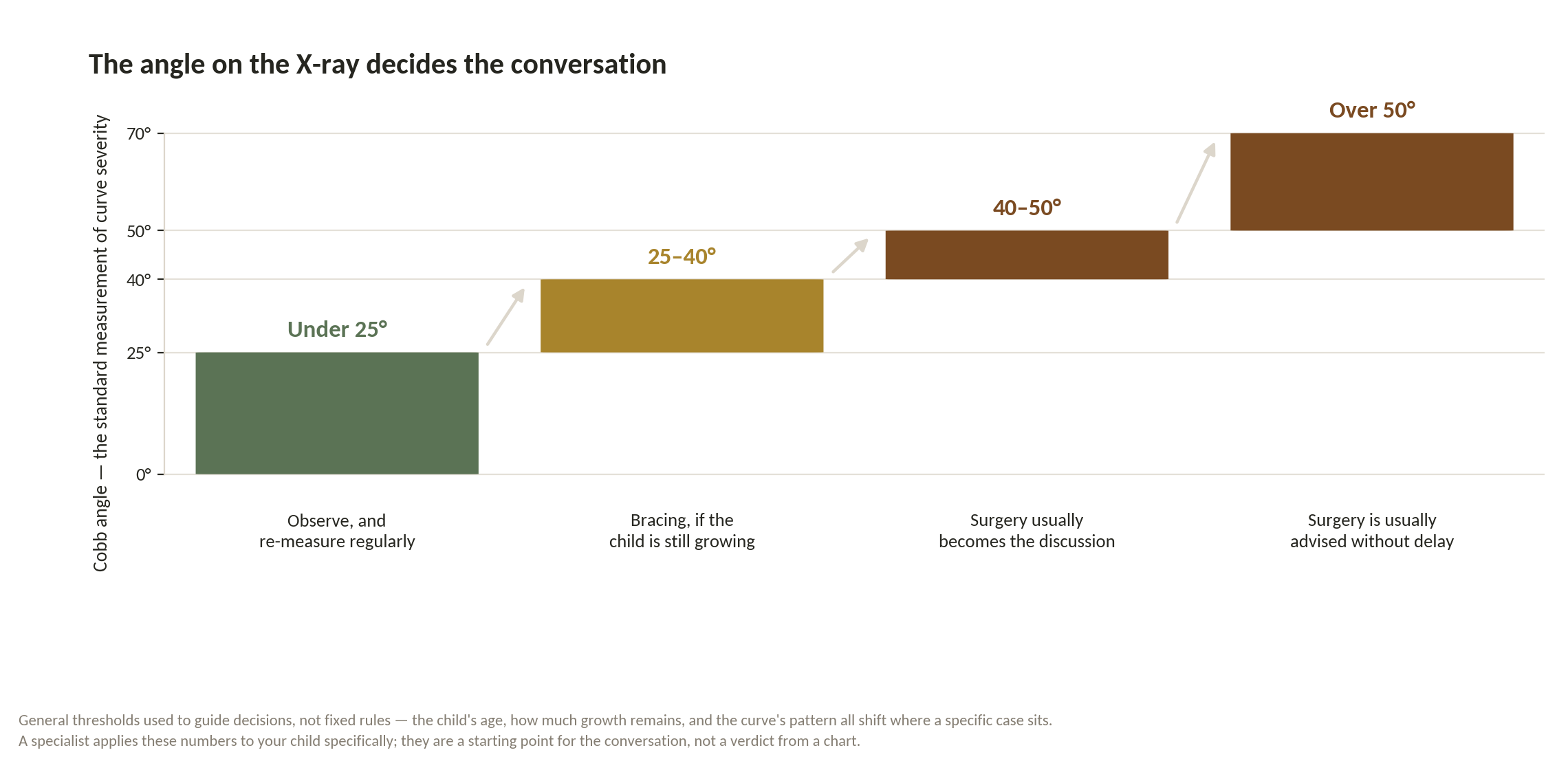
General thresholds, applied specifically to your child by a specialist.
Below roughly 25 degrees, most curves are simply watched with regular X-rays. Between 25 and 40 degrees, bracing is often tried first, provided the child still has meaningful growth left, since bracing works by managing the curve while growth continues rather than by correcting it outright. Above roughly 40 to 50 degrees, surgery usually becomes the serious conversation, both because larger curves rarely stop progressing on their own and because, left long enough, a severe curve can begin to compress the chest and affect breathing.
These are guides, not verdicts. A 35-degree curve in a child who has nearly finished growing is a very different situation from the same angle in a child years from puberty, which is exactly what gate two exists to establish.
Two practical points matter at this first stage. The X-ray needs to be taken standing, not lying down, because gravity's effect on the curve is part of what is being measured. And a single reading tells you very little on its own — what matters is whether the angle is stable or increasing over successive scans, usually spaced a few months apart, since a curve's trajectory shapes the plan as much as its size on any one day.
2 Gate Two
How much growth is left?
If surgery is on the table, this is the question that matters more than any other, and it is the one most likely to be skipped in a rushed conversation.
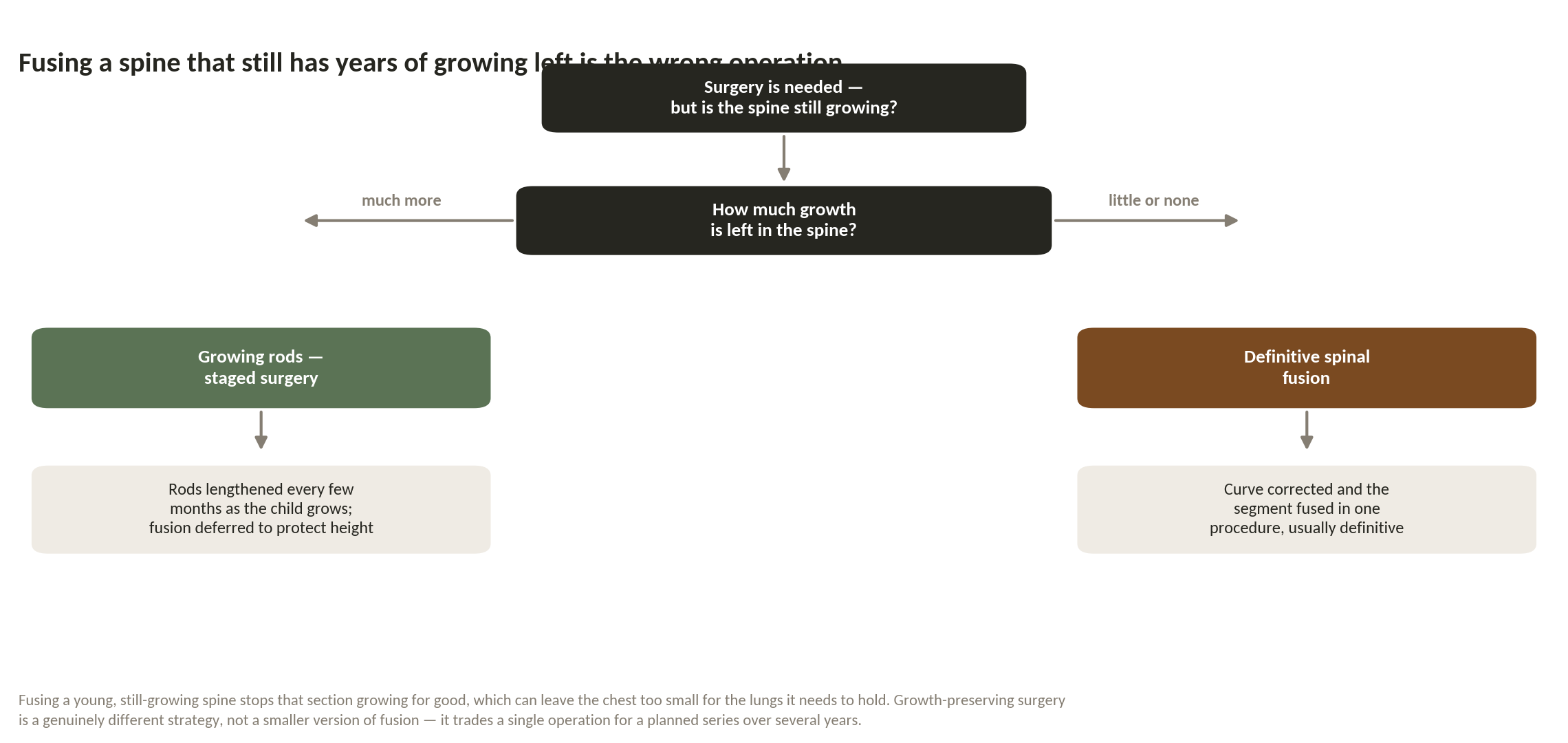
Two entirely different operations, decided by one question.
Fusing vertebrae permanently stops that section of the spine from growing. In a teenager close to skeletal maturity, that is simply how the operation works and causes no real problem. In a young child with years of growth still ahead, fusing too early and too much can leave the chest cavity permanently too small for the lungs it needs to hold as the child grows into an adult body.
This is why growing rods exist. Rather than fusing the curve early, growing rods are expandable implants, lengthened every few months to a year as the child grows, holding the curve in check while deferring definitive fusion until growth is mostly complete. It is not a smaller version of fusion surgery; it is a different strategy entirely, trading one operation for a planned series spread across years. If your child is young and the surgeon proposes fusion without discussing growth remaining, ask directly why growing rods are not being considered.
3 Gate Three
Is it idiopathic, or something else?
Most scoliosis in otherwise healthy children has no identifiable cause and is called idiopathic. But not every bent spine is scoliosis, and this distinction matters more in Ethiopia than in many other places.
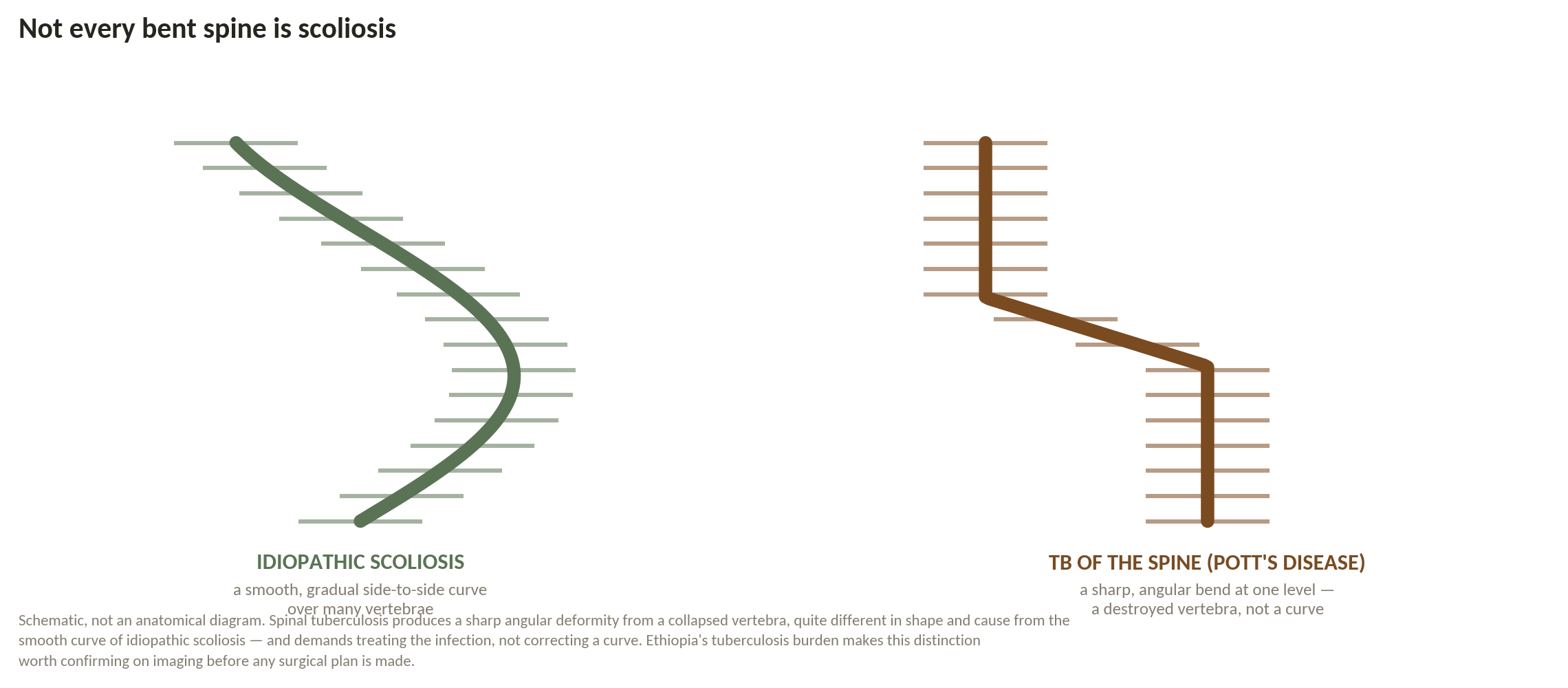
A curve, and a collapse, look nothing alike on close inspection.
Idiopathic scoliosis produces a smooth curve spread across many vertebrae. Spinal tuberculosis, still a real presence in Ethiopia, produces something visually quite different: a sharp, angular bend at a single level, caused by a vertebra collapsing under infection rather than a gradual sideways curve. That distinction is not academic. A collapsed, infected vertebra needs treating as an infection first, with surgery to correct the deformity considered only once the disease is under control — not corrected as though it were an ordinary curve. A specialist should confirm which kind of deformity this is on imaging before any surgical plan is written.
4 Gate Four
Could this be done in Ethiopia?
Scoliosis surgery does happen in Ethiopia, largely through hospitals in Addis Ababa working with NGO partners who identify and fund cases that would otherwise go untreated. For some children this route genuinely works, and it deserves to be explored fully before assuming travel is necessary.
The case for travelling strengthens for the more demanding parts of this field: growing-rod programmes needing years of consistent follow-up and repeat procedures, complex curves needing combined approaches, and cases where the differential in gate three needs specialist imaging and infectious disease expertise working alongside a spine surgeon. Ask any Ethiopian or Indian centre directly how many paediatric scoliosis cases, specifically, the surgeon manages each year, and for a growing-rod case, who will manage the lengthening visits over the years that follow.
This last point deserves more weight than families usually give it. A growing-rod pathway that starts in India but has nowhere reliable to continue in Ethiopia is an incomplete plan, however well the first operation goes. Before travelling, ask the Indian hospital directly whether they coordinate with a specific doctor or centre in Ethiopia for the interim lengthenings, or whether every visit will mean another flight.
5 Gate Five
Is the money arranged, across several years if needed?
Ethiopia's health financing does not follow a patient abroad. Community ‐ Based Health Insurance covers contracted facilities inside the country, and the formal ‐ sector scheme is still not settling claims. Since February 2026 a bank may release up to twenty thousand US dollars per case against a letter from the treating hospital, without a visa or ticket in hand.
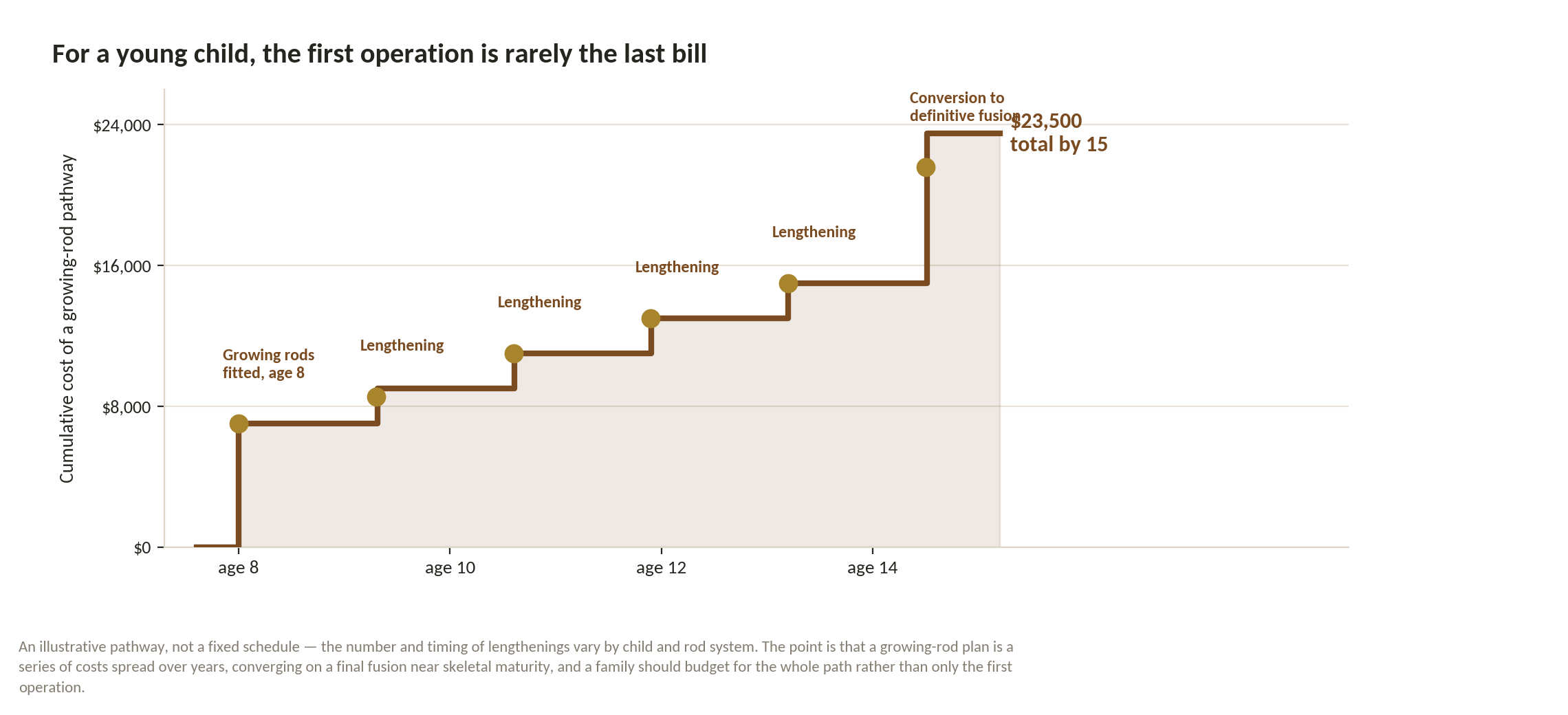
The first operation is rarely the last bill, for a young child.
A single definitive fusion in a teenager is, financially, a single event. A growing-rod pathway in a young child is not: it is an initial operation followed by repeated lengthening procedures over several years, converging on a final fusion once growth is largely complete. Ask for the whole pathway costed out from the start, not only the first admission, and ask specifically whether lengthenings can be arranged locally in Ethiopia between trips to reduce the number of times the family needs to travel.
In 24 years the scoliosis families most caught out financially were almost always the ones who budgeted for one operation when the honest plan, from the very first consultation, required several.
| A quotation, annotatedA composite of the scoliosis quotes that reach me, with the questions I send back. | |
| Scoliosis correction — USD 9,000 | Fusion, or growing rods? These are different operations entirely. |
| Includes: implants, 6 days admission | Reasonable for fusion. For growing rods, ask about lengthening visits. |
| Neuromonitoring: included | Confirm this explicitly — it should never be optional for this surgery. |
| Bone graft: as required | Ask whether it is the child's own bone or donor bone, and the cost. |
| Excludes: future lengthening procedures | For growing rods, ask the full multi-year plan and cost, not just today's. |
| Excludes: brace, if trialled first | Ask the brace cost and trial period before assuming surgery is next. |
Pay the hospital and never an individual, and never settle a balance before you arrive.
The Ethiopian practicalities
Ethiopian Airlines flies non ‐ stop from Bole to Delhi, Mumbai, Bengaluru, Chennai and Hyderabad. Ask for written clearance to fly rather than assuming a fixed number of days; recovery from spinal fusion is longer than from most other operations in this series, and that timeline should shape your travel dates.
Yellow fever certification is required at least ten days before arrival and oral polio vaccination roughly four weeks before. The medical visa follows the hospital's invitation letter through the Embassy of India in Addis Ababa, and both parents should apply where possible for a child's case, since a young patient in hospital needs family close by. Confirm current rules with the Embassy, since they change, and ask for an Amharic ‐ speaking coordinator to help plan the years of follow ‐ up a growing-rod pathway involves, not only the first trip.
A closing word
Send the standing spine X-ray, the Cobb angle if it has already been measured, your child's age, and where you can, an indication of how much growing is likely left — whether periods have started, for a girl, is often part of that picture. I will tell you which gate you are standing at, whether this looks like a growing-rod case or a fusion case, and where the honest answer is that Ethiopia's own programmes can care for your child well, I will say so.
Sources
- 🌐 Prevalence and characteristics of scoliosis among Ethiopian schoolchildren aged 6–15 years: a school-based cross-sectional study
- 🌐 Idiopathic scoliosis and associated factors among school children: a school-based screening in Ethiopia
- 🌐 The prevalence of scoliosis among adolescent chest radiographs obtained at Tikur Anbessa Specialized Hospital in 2019
- 🌐 National Medical Commission of India — Indian Medical Register, for verifying a treating surgeon's qualification and registration
- 🌐 National Accreditation Board for Hospitals & Healthcare Providers (NABH), Quality Council of India
- 🌐 National Bank of Ethiopia Directive FXD/04/2026 (foreign exchange, advance payments for treatment abroad); Embassy of India, Addis Ababa
Frequently Asked Questions by Ethiopians about Scoliosis Surgery in India
At what Cobb angle does an Ethiopian child usually need scoliosis surgery?
The guide uses general thresholds rather than fixed rules. According to the chart on page 2, curves below approximately 25° are usually observed, while curves between 25° and 40° may be treated with bracing if meaningful growth remains. At around 40–50°, surgery generally becomes a serious discussion, and above approximately 50°, surgery is usually advised without unnecessary delay. The child's age, remaining growth, curve pattern and progression must also be considered.
Why is the child's remaining growth so important before scoliosis surgery?
The guide identifies this as the most important question when surgery is being considered. Spinal fusion permanently stops growth in the fused section. In a teenager who is nearly skeletally mature, this is generally part of the intended treatment. In a young child with years of growth remaining, however, extensive early fusion can restrict development of the chest cavity and leave insufficient room for the lungs as the child grows.
What is the difference between growing rods and spinal fusion?
The decision diagram on page 3 shows two fundamentally different strategies. Growing rods are expandable implants used in a child who still has substantial growth remaining. They are lengthened periodically while the child grows, with definitive fusion delayed until growth is mostly complete. Spinal fusion permanently corrects and joins the selected vertebrae and is generally more appropriate when little or no spinal growth remains.
How many operations can a growing-rod treatment pathway involve?
The document does not specify a fixed number because the schedule varies by child and rod system. It describes an initial growing-rod operation, followed by lengthening procedures every few months to a year for several years, and finally conversion to definitive spinal fusion once growth is largely complete. The page 5 chart illustrates why families should plan for a multi-year series of procedures rather than budgeting only for the first operation.
Can bracing prevent an Ethiopian child from needing scoliosis surgery?
Sometimes. According to the guide, bracing is often considered for curves of approximately 25–40° when the child still has meaningful growth remaining. Bracing is intended to manage the curve during growth rather than permanently correct it. Surgery may become necessary if the curve continues progressing despite bracing or if the child first presents with a curve already large enough to warrant surgical consideration.
Could a spinal deformity in an Ethiopian child be tuberculosis rather than idiopathic scoliosis?
Yes, and the guide considers this distinction particularly important in Ethiopia. The page 4 illustration contrasts idiopathic scoliosis, which generally produces a smooth curve across several vertebrae, with spinal tuberculosis or Pott's disease, which can cause a sharp angular deformity at a single level because of vertebral collapse. A collapsed infected vertebra requires treatment of the infection before deformity correction is considered.
Can scoliosis surgery be performed in Ethiopia instead of travelling to India?
Yes. The guide states that scoliosis surgery is performed in Ethiopia, particularly through hospitals in Addis Ababa working with NGO partners, and recommends exploring this route before assuming international treatment is necessary. The case for travelling becomes stronger for complex curves, growing-rod programmes requiring repeated procedures over several years, and cases requiring specialised imaging or combined infectious-disease and spine expertise.
How much does scoliosis surgery in India cost for Ethiopian patients?
The document provides a sample composite quotation of USD 9,000 for scoliosis correction, including implants and six days of admission. However, this should not be interpreted as a universal price. For a young child requiring growing rods, the page 5 illustration shows how repeated lengthenings and eventual definitive fusion can create a much larger multi-year expense, reaching an illustrative cumulative USD 23,500 by age 15.
What should Ethiopian families check before accepting a growing-rod treatment plan in India?
Families should ask for the entire multi-year pathway, not merely the first operation. This includes the expected frequency of lengthening procedures, their costs, eventual definitive fusion and whether interim lengthenings can be performed in Ethiopia. The guide warns that starting a growing-rod programme in India without a reliable place to continue follow-up in Ethiopia creates an incomplete treatment plan.
What should Ethiopian families send before requesting a scoliosis surgery opinion from India?
The guide recommends sending the child's standing spine X-ray, Cobb angle if it has already been measured, age and information that helps indicate how much growth remains. For girls, whether menstruation has started may form part of that assessment. These details help determine whether the child is at the observation, bracing or surgical stage and, if surgery is needed, whether a growth-preserving strategy or definitive fusion should be considered.
My child's curve is 30 degrees. Does that mean surgery?
Not necessarily. At that angle, bracing is often the first step if your child is still growing, with surgery reserved for curves that progress despite the brace, or that are already large when first found.
Why can't a young child just have the same fusion surgery as a teenager?
Because fusing a spine that still has years of growth left stops that section growing permanently, which can leave too little room for the lungs and chest to develop. Growing rods exist specifically to avoid this.
How many operations does a growing-rod pathway actually involve?
Typically the initial rod placement, then lengthening procedures every few months to a year for several years, followed by a final conversion to definitive fusion once growth is mostly complete. Ask for the whole plan, not just the first step.
Could this be a spine infection rather than scoliosis?
It should be checked. A sharp, angular bend at a single level, rather than a smooth curve over many vertebrae, can indicate spinal tuberculosis, which needs treating as an infection rather than corrected as a deformity.
Who pays for this in Ethiopia?
You do. Neither community-based insurance nor the pending formal-sector scheme funds treatment abroad, though a bank may now advance up to US$20,000 against the hospital's letter.
Page Summary
This guide takes Ethiopian families through five gates, with remaining spinal growth the question that changes everything. Gate one establishes the Cobb angle — observation below about 25°, bracing at 25–40°, surgery usually above 50° — and tracks progression across repeated standing X-rays rather than one measurement. Gate two asks how much growth is left: a still-growing child may need staged growing rods, while a nearly mature spine may be ready for fusion — fusing too early restricts chest and lung development. Gate three separates idiopathic scoliosis from the sharp angular collapse of spinal tuberculosis, which needs infection treatment first. Gate four points to complex deformity and growing-rod pathways as the reasons to travel. Gate five shows why a growing-rod programme cannot be budgeted as one operation: an illustrative pathway reaches USD 23,500 by age 15.
Citation Block
| Topic | Information |
|---|---|
| Topic Information | Scoliosis Surgery in India for Ethiopians |
| Specialty | Paediatric Spine / Scoliosis Surgery |
| Country | India |
| Intended Audience | Ethiopian Children with Scoliosis and Their Families |
| Conditions Covered | Idiopathic Scoliosis and Spinal Deformity; Spinal TB Discussed as an Important Differential |
| Procedures | Bracing, Growing-Rod Surgery and Definitive Spinal Fusion |
| Primary Measurement | Cobb Angle on Standing Spine X-Ray |
| Observation Range | Generally Below Approximately 25° |
| Bracing Range | Approximately 25–40° in a Child with Meaningful Growth Remaining |
| Surgical Discussion | Generally Around 40–50° and Above |
| Typical Stay | No Universal Overall Stay Specified |
| Follow-Up | Growing-Rod Lengthening and Long-Term Care Must Be Planned Before Initial Surgery |

Our Mission Statement
Our mission is to place patients at the centre of every healthcare decision by providing trustworthy, evidence-based, and unbiased medical information. We believe that informed patients make better decisions. Backed by personalised guidance from our experienced advisory team, we help patients understand their treatment options, compare them objectively, and confidently choose the path that best suits their medical needs and personal circumstances.
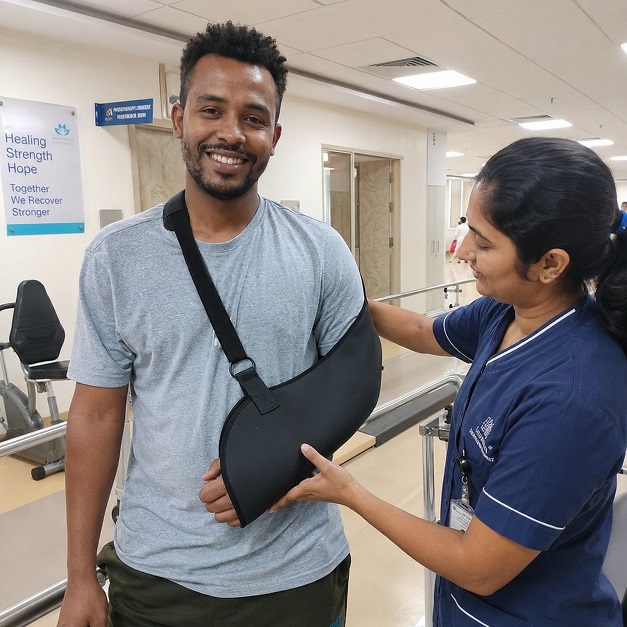
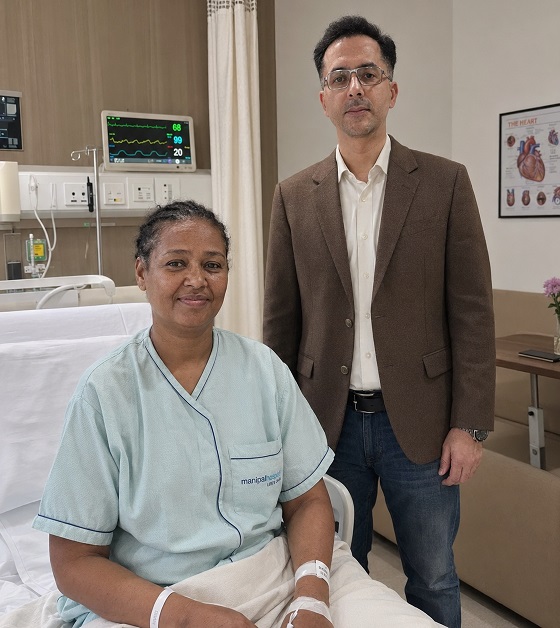
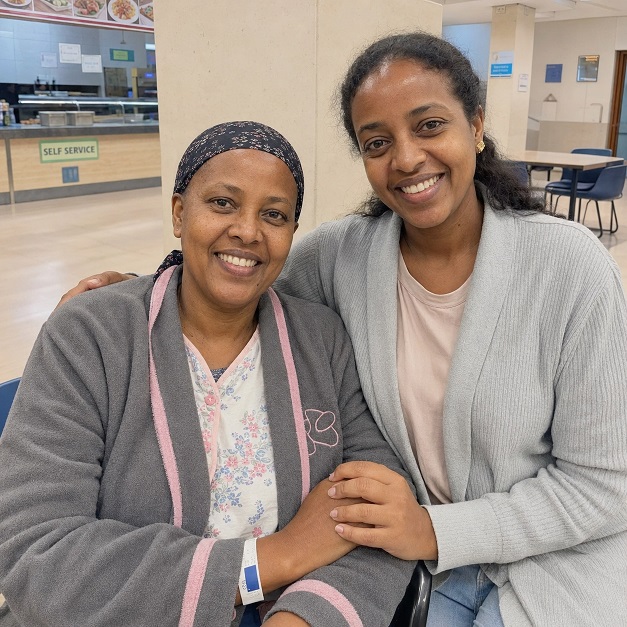
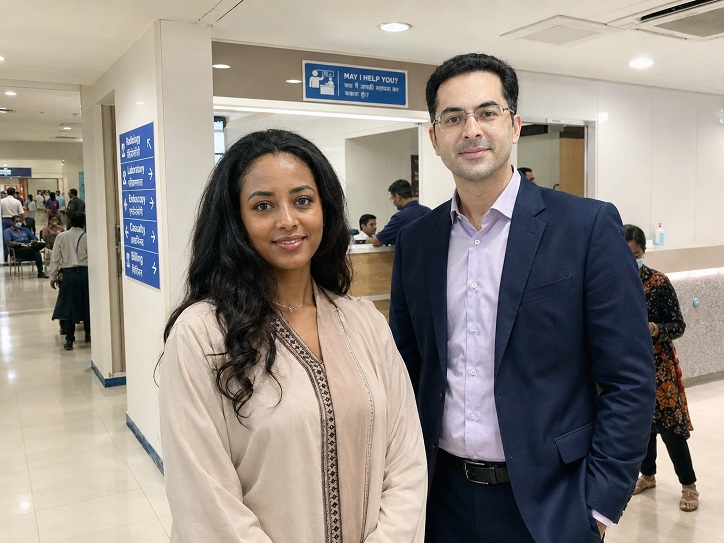
Patient Testimonials from Ethiopia
Ready to Take the First Step?
Share your Medical Reports with our Healthcare Managers Today and Get a FREE CONSULTATION, a Personalized Treatment Plan, and Complete Support from Arrival to Recovery.
Get Your Free ConsultationAreas We Serve
This resource has been thoughtfully prepared for patients from Ethiopia who are considering medical treatment in India. We also welcome patients from the wider region in the countries mentioned below-
We assist patients from:
- Eritrea
- Djibouti
- Somalia
- Kenya
- South Sudan
- Sudan
- Burundi
- Comoros
- Ethiopia
- Madagascar
- Malawi
- Mauritius
- Mozambique
- Rwanda
Many of the insights, treatment pathways, hospital recommendations, travel guidance, and patient support services described here are equally relevant and may be used as a reference when planning treatment in India.
From Ethiopia to India: Your Complete Patient Support Guide
- Brain Tumour Surgery in India for Ethiopians
- Cancer Treatment in India for Ethiopians
- Cardiac Surgery in India for Ethiopian Patients
- Cervical and Disc Replacement Surgery in India for Ethiopians
- Cosmetic and Plastic Surgery in India for Ethiopians
- CyberKnife Treatment in India for Ethiopians
- Eye Surgery in India for Ethiopians
- Gamma Knife Treatment in India for Ethiopians
- Heart Valve Replacement Surgery in India for Ethiopians
- Hip Surgery in India for Ethiopian Patients
- Knee Surgery in India for Ethiopian Patients
- Laparoscopic and Robotic Myomectomy Surgery in India for Ethiopians
- Neurosurgery in India for Ethiopians
- Paediatric Cardiac Surgery in India for Ethiopians
- Paediatric Neurosurgery in India for Ethiopians
- Prostate Cancer Treatment and Surgery in India for Ethiopians
- Robotic Cancer Surgery in India for Ethiopians
- Scoliosis Surgery in India for Ethiopians