

Robotic Cancer Surgery in India for Ethiopians
Five gates every robotic cancer case should pass before booking a flight — beginning with the honest limits of what the word "robotic" actually promises.
Robotic surgery is marketed, understandably, as the most advanced option available. For most cancer operations, it genuinely is gentler: smaller incisions, less blood loss, a shorter stay, a faster return to ordinary life. What it is not, for most cancers, is a better cure rate than a skilled surgeon achieves through open surgery. The cancer clearance is usually equivalent, not superior, and conflating the two is where I see patients most often oversold. There is one important exception to that general pattern, and it is specific enough and serious enough that it deserves its own gate rather than a footnote. In 24 years of arranging surgical care in India for patients across Africa and Asia, robotic surgery is a field where the marketing has run well ahead of what any patient should assume without asking.
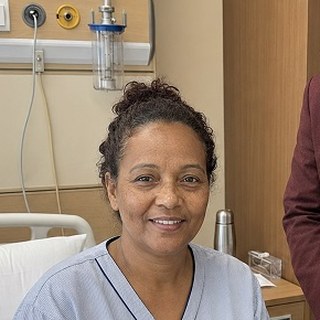
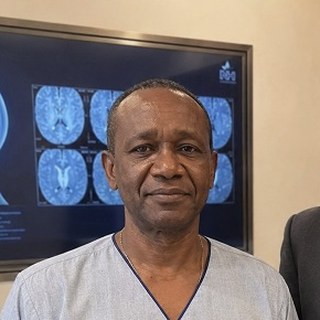
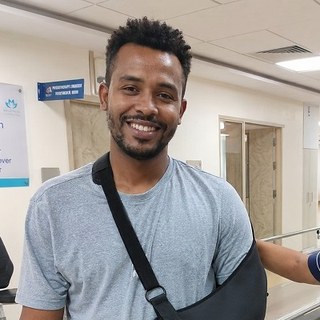
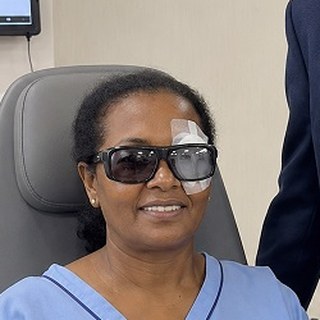
Healing Journeys of Ethiopian Patients





Key Takeaways
- Robotic cancer surgery should be understood primarily as a less invasive way to perform an operation, rather than automatically as a more effective cancer treatment. The guide's central distinction is between recovery and cure rate.
- For most cancer operations directly compared with open surgery, robotic surgery generally offers less blood loss, a shorter hospital stay and a faster return to normal activities. However, cancer clearance and long-term survival are generally described as equivalent rather than superior.
- The page 2 graphic reinforces this distinction. It illustrates better recovery measures with robotic surgery while showing broadly similar clear-margin and five-year-survival figures between robotic and open approaches. The document describes these figures as illustrative of the general evidence pattern rather than data from one trial.
- This general equivalence is discussed for operations involving prostate, kidney, colorectal and most gynaecological cancers. The robot's magnified camera and precise, tremor-free movement may give the surgeon greater control in confined anatomical spaces, but this should not automatically be interpreted as superior cancer clearance.
- There is an important exception requiring particular caution: radical hysterectomy for early-stage cervical cancer. The guide highlights a major randomised trial in which minimally invasive radical hysterectomy produced worse disease-free and overall survival than open surgery.
- The page 3 chart illustrates disease-free survival at 4.5 years of 96.5% with open surgery versus 86.0% with minimally invasive laparoscopic or robotic surgery in the cited LACC trial. The guide notes that this finding changed international practice toward favouring open surgery for this specific operation.
- For Ethiopian women with cervical cancer, the guide therefore recommends a specific discussion with the surgeon about whether open or robotic radical hysterectomy is being recommended and how the surgeon interprets this evidence for the patient's individual stage and circumstances.
- Surgeon selection should focus on robotic console experience, not simply total years of surgical practice. An excellent open surgeon is not automatically an experienced robotic surgeon because robotic surgery has its own learning curve.
- According to the page 5 cost chart, indicative Indian hospital costs are approximately USD 6,500–11,000 for robotic hysterectomy for endometrial/early cervical cancer, USD 6,500–12,500 for robotic prostatectomy, USD 6,000–10,000 for robotic partial nephrectomy, USD 7,000–12,000 for robotic colorectal resection and USD 8,000–14,000 for robotic gastrectomy or complex gastrointestinal surgery.
- The document estimates that robotic procedures generally cost around 15–30% more than equivalent open or standard laparoscopic surgery, largely because of the per-case cost of robotic instruments. For most cancers, that premium is described as paying for a gentler recovery rather than a better cure rate.
Quick Facts
- Country
- India
- Intended Audience
- Ethiopian patients considering robotic cancer surgery in India
- Recovery Advantages
- Less blood loss, shorter hospital stay and faster return to normal activities
- Key Principle
- Robotic surgery earns its reputation primarily on recovery, not cure rate.
- Major Exception/Caution
- Radical hysterectomy for early-stage cervical cancer
- Robotic Hysterectomy Cost
- Approximately USD 6,500–11,000
- Robotic Prostatectomy Cost
- Approximately USD 6,500–12,500
- Robotic Partial Nephrectomy Cost
- Approximately USD 6,000–10,000
- Robotic Colorectal Resection Cost
- Approximately USD 7,000–12,000
- Robotic Gastrectomy/Complex GI Cost
- Approximately USD 8,000–14,000
- Hospital Stay
- The sample quotation on page 6 includes 2 days of admission as a representative package item, but the document does not specify one universal stay for all procedures.
- Follow-Up
- A written oncology surveillance schedule should be arranged before returning to Ethiopia.
- Financial Planning
- The document states that Ethiopian health financing does not fund treatment abroad and that a bank may release up to USD 20,000 per case against the treating hospital's letter.
- Pre-Travel Records
- Pathology report, imaging, known cancer stage, proposed operation and information about whether robotic or open surgery has been recommended and why.
In Brief
Robotic cancer surgery in India can offer Ethiopian patients smaller incisions, less blood loss, shorter hospital stays and faster recovery compared with open surgery. However, the guide stresses that for most prostate, kidney, colorectal and gynaecological cancer operations, cancer clearance and long-term survival are generally equivalent rather than superior with robotic surgery. A major exception requiring careful discussion is radical hysterectomy for early-stage cervical cancer: the cited LACC trial found worse disease-free survival with minimally invasive surgery than with open surgery. Patients should also evaluate the individual surgeon's experience on the specific robotic platform and operation rather than relying only on general surgical experience or hospital reputation.
1 Gate One
What robotic surgery actually changes
Separate two questions that often get answered as one: how will I recover, and how likely am I to be cured?
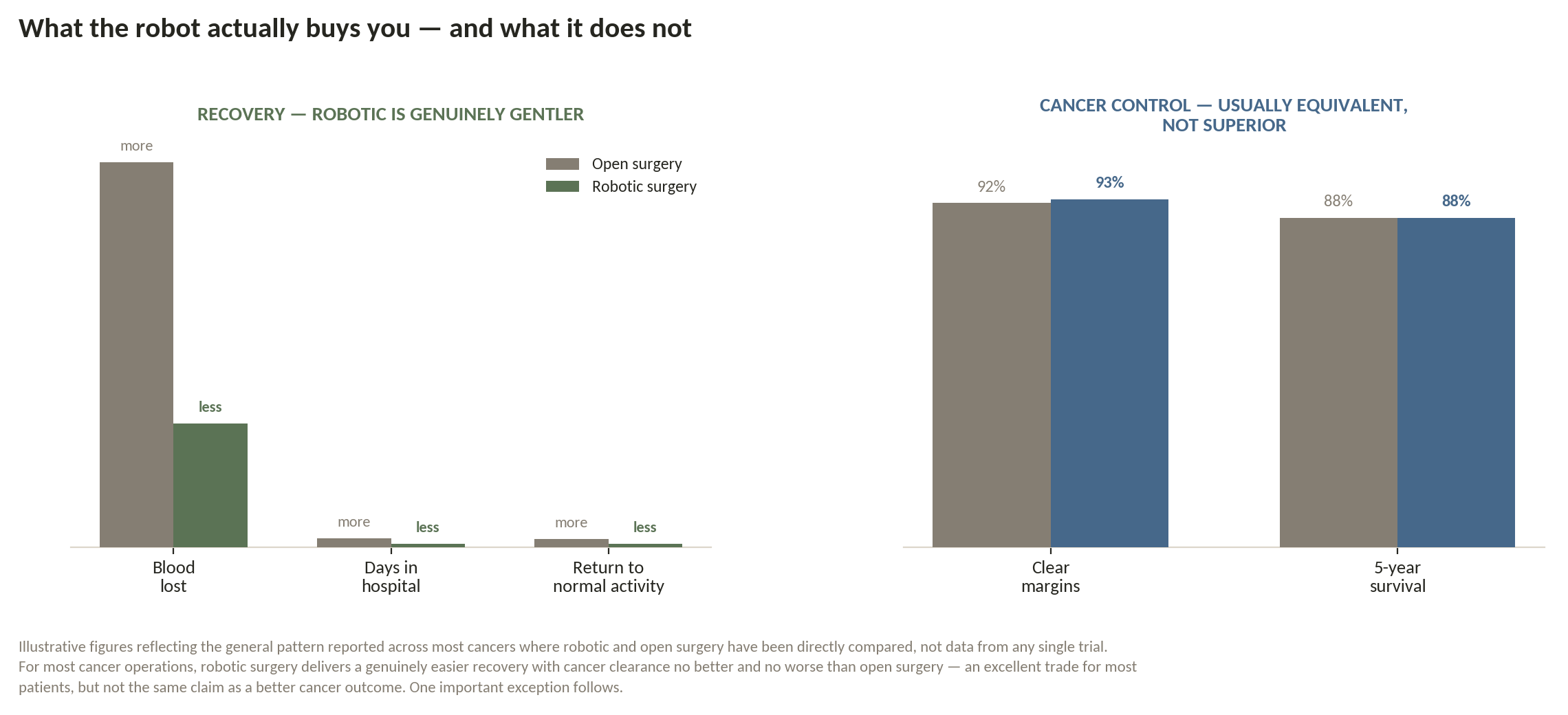
Robotic surgery earns its reputation on recovery, not on cure rate.
For most cancer operations where robotic and open surgery have been directly compared, recovery genuinely differs in the robot's favour: less blood loss, fewer days in hospital, a faster return to work and ordinary life. Cancer clearance — how completely the tumour comes out, and long-term survival — is generally equivalent between the two approaches, not better with the robot. That is still an excellent trade for most patients. It is simply a different claim from the one the marketing often implies, and worth being precise about before you decide anything.
This equivalence holds for a wide range of common cancer operations: prostate, kidney, colorectal, and most gynaecological cancers among them. The camera's magnified view and the robot's precise, tremor-free movement genuinely help a surgeon see and work with more control in a confined space, which is exactly why recovery improves. What that control does not do, for most cancers, is remove tissue more completely than a skilled pair of hands already could through an open incision. Precision and cure rate are related but not identical claims, and a good surgeon will keep them separate when explaining your options.
2 Gate Two
The one cancer with a real caution
This is the gate that makes precision matter, and it is specific to one operation: radical hysterectomy for early-stage cervical cancer.
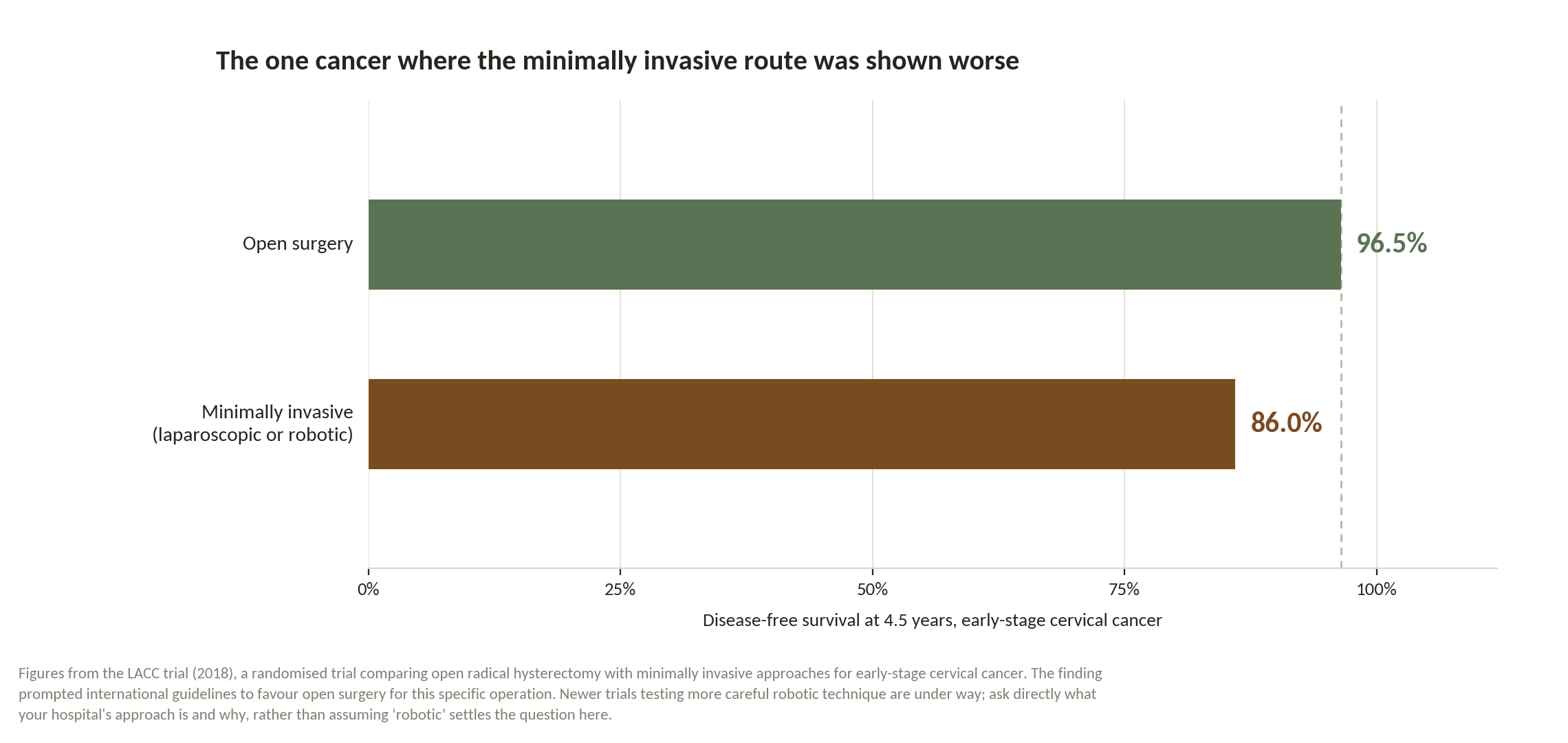
The trial that changed international guidelines back to open surgery.
A large randomised trial published in 2018, comparing open radical hysterectomy with minimally invasive approaches, found materially worse disease-free and overall survival with the minimally invasive route. The finding was unexpected enough, and the trial large enough, that international gynaecological oncology guidelines shifted to favour open surgery for this specific cancer and this specific operation. It remains an active area of research, with newer trials testing whether more careful robotic technique — avoiding certain instruments and sealing the surgical field before the uterus is removed — can recover the safety of the minimally invasive route.
If you have cervical cancer , ask your surgeon directly how they weigh this specific finding, and whether they recommend open or robotic surgery for your particular stage and situation, and why. Cervical cancer is a cancer of real significance for Ethiopian women specifically, which makes this an unusually important question to ask precisely rather than assume.
3 Gate Three
Console time, not just experience
An outstanding open surgeon is not automatically an experienced robotic one. The skills genuinely differ, and robotic surgery has been shown to carry its own learning curve, separate from a surgeon's general years in practice.
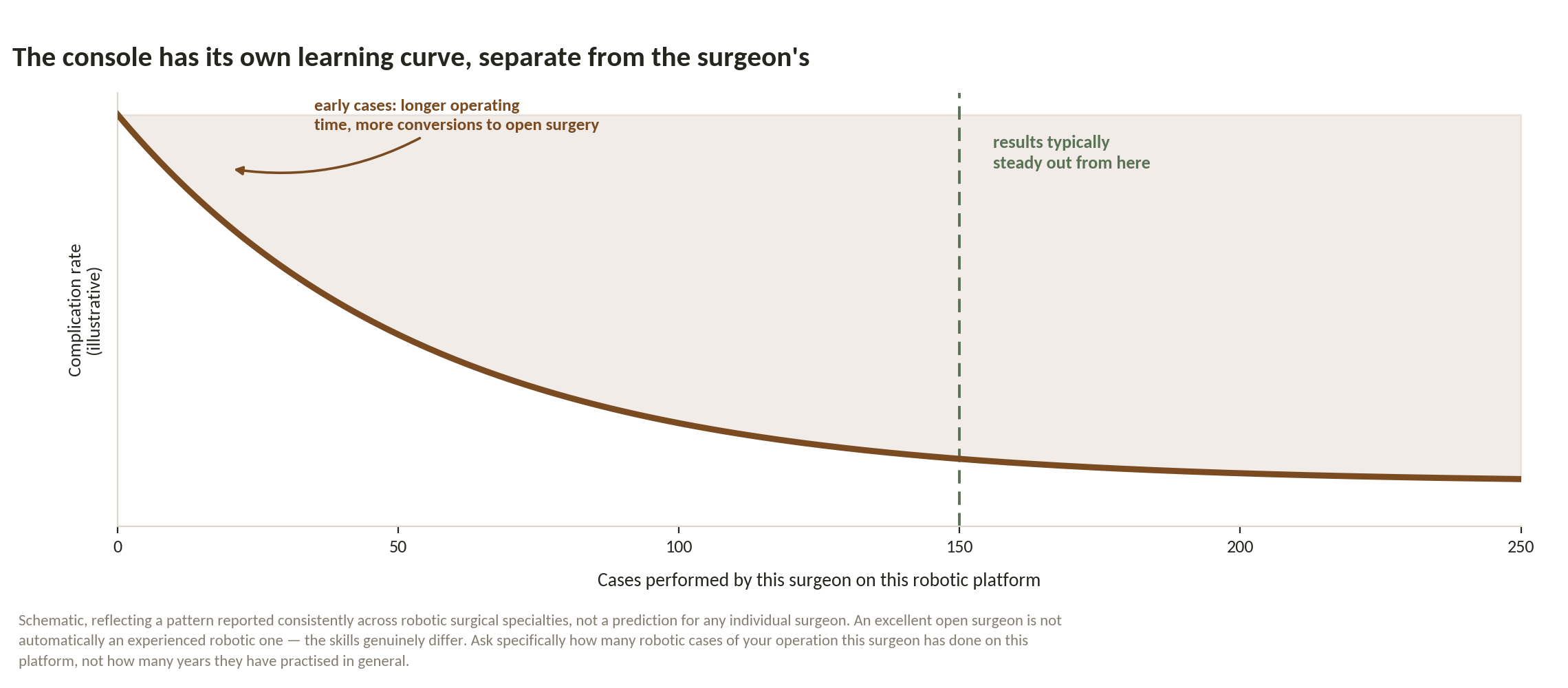
The console has to be learned, case by case, like any other skill.
Early cases on a robotic platform, for any surgeon, tend to take longer and carry a higher chance of needing to convert to open surgery mid-operation. Results generally improve steadily with case volume before levelling off. The question worth asking, precisely, is how many robotic cases of exactly your operation this surgeon has performed on this specific platform — not how many years they have practised surgery, and not how many robotic cases of any kind they have done. A confident, specific number is a good sign. Vagueness in answer to that question is itself an answer.
This distinction matters more than it might first appear, because a hospital's overall robotic programme can be well established while an individual surgeon within it is still early in their own console experience. Ask about the specific person who will operate on you, not the reputation of the institution around them.
4 Gate Four
Could this be done in Ethiopia?
This gate has changed while this article was being written, and it deserves an honest, current answer rather than an outdated one. In July 2026, Ethiopia inaugurated robotic and endoscopic surgery training centres in Addis Ababa, developed in partnership with Chinese institutions, alongside a Ministry of Health announcement on introducing AI-assisted robotic surgery more broadly. That is genuine, welcome progress, and worth stating plainly rather than dismissing.
What it does not yet establish is how many robotic cancer operations, if any, are currently being performed on patients in Ethiopia, as distinct from surgeons being trained on the technology. Published research on minimally invasive surgery generally in Ethiopia describes the field as still early-stage and concentrated in Addis Ababa. So the honest question to ask any Ethiopian hospital is specific: not whether robotic surgery training exists, but how many robotic cancer cases, of your particular operation, the centre has actually completed. India's major centres, by contrast, have been performing thousands of robotic cancer operations annually for over a decade.
None of this is a criticism of what Ethiopia has begun. Training the next generation of surgeons on this technology is a necessary and genuinely significant first step, and it will, in time, change the answer to this gate. For now, the honest position is that training capacity and treating capacity are two different things, and a family deciding where to have a cancer operated on deserves to know which one a hospital is actually offering.
5 Gate Five
Is the money arranged for the robotic premium?
Ethiopia's health financing does not follow a patient abroad. Community ‐ Based Health Insurance covers contracted facilities inside the country, and the formal ‐ sector scheme is still not settling claims. Since February 2026 a bank may release up to twenty thousand US dollars per case against a letter from the treating hospital, without a visa or ticket in hand.
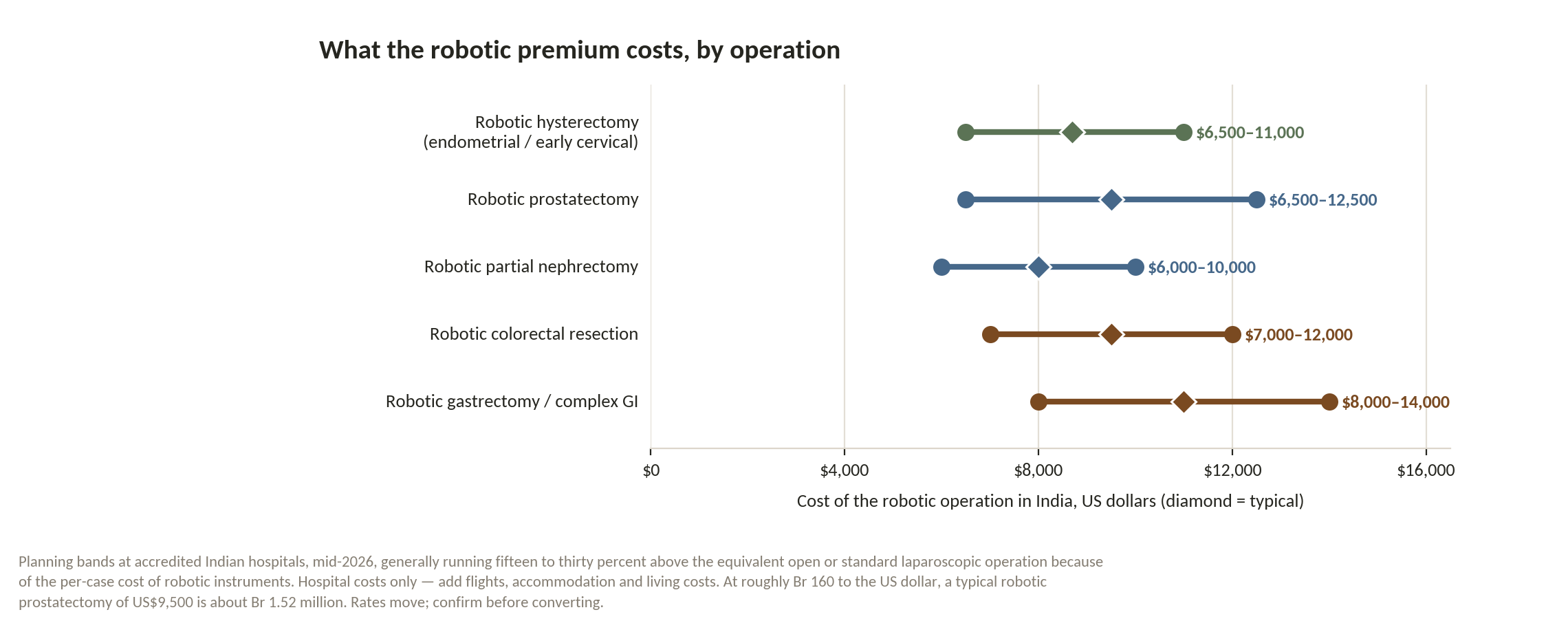
The robotic premium, made explicit rather than buried in the quote.
Robotic operations generally cost fifteen to thirty percent more than the equivalent open or standard laparoscopic surgery, mainly because of the per-case cost of the robotic instruments themselves. Given gate one, that premium is buying an easier recovery for most cancers, not a better cure rate — a fair trade for many patients, but worth deciding deliberately rather than assuming the more expensive option must also be the more effective one.
In 24 years the robotic surgery patients most satisfied with their decision were the ones who chose it for what it genuinely offers — a gentler recovery — rather than for a cure rate no operation can actually promise them.
| A quotation, annotatedA composite of the robotic cancer surgery quotes that reach me, with the questions I send back. | |
| Robotic cancer surgery — USD 9,500 | For which operation? Robotic pricing varies enormously by procedure. |
| Surgeon: da Vinci certified | Ask their case count on this platform for this cancer, specifically. |
| Includes: 2 days admission | Reasonable for most. Ask what a longer stay would add if needed. |
| Pathology: standard margins report | Ask whether this includes the same margin and node assessment as open surgery. |
| Excludes: conversion to open surgery | Ask the added cost if the operation has to convert mid-procedure. |
| Excludes: oncology follow-up plan | Ask for a written surveillance schedule to carry home to Ethiopia. |
Pay the hospital and never an individual, and never settle a balance before you arrive.
The Ethiopian practicalities
Ethiopian Airlines flies non ‐ stop from Bole to Delhi, Mumbai, Bengaluru, Chennai and Hyderabad. Robotic surgery's gentler recovery often means an earlier, more comfortable flight home than the equivalent open operation would allow, but confirm clearance with your surgeon rather than assuming.
Yellow fever certification is required at least ten days before arrival and oral polio vaccination roughly four weeks before. The medical visa follows the hospital's invitation letter through the Embassy of India in Addis Ababa. Confirm current rules with the Embassy, since they change, and ask for an Amharic ‐ speaking coordinator to help arrange the follow-up surveillance schedule with a named oncologist in Ethiopia before you leave India.
A closing word
Send the pathology report, imaging, and the cancer's stage as far as it is known, along with a note on which operation has been proposed and whether robotic or open surgery was recommended and why. I will tell you which gate you are standing at, and where a careful conversation about gate two is needed before anything else, I will say so plainly.
Sources
- 🌐 Ramirez PT, et al. Minimally invasive versus abdominal radical hysterectomy for cervical cancer
- 🌐 Robotic radical hysterectomy for cervical cancer: current trends and controversies
- 🌐 Suga HK, et al. Current use of minimally invasive surgery in Ethiopia. Surgical Endoscopy, 2026. doi: 10.1007/s00464-025- 12405-w
- 🌐 National Medical Commission of India — Indian Medical Register, for verifying a treating surgeon's qualification and registration
- 🌐 National Accreditation Board for Hospitals & Healthcare Providers (NABH), Quality Council of India
- 🌐 National Bank of Ethiopia Directive FXD/04/2026 (foreign exchange, advance payments for treatment abroad); Embassy of India, Addis Ababa
Frequently Asked Questions by Ethiopians about Robotic Cancer Surgery in India
Does robotic cancer surgery cure cancer better than open surgery?
For most cancers discussed in the guide, no. Robotic surgery's main advantages are smaller incisions, less blood loss, shorter hospital stays and faster recovery. Cancer clearance and long-term survival are generally described as equivalent to skilled open surgery rather than superior. The page 2 graphic specifically illustrates this difference between improved recovery and broadly similar cancer-control outcomes.
Which cancers can be treated with robotic surgery in India for Ethiopian patients?
The guide discusses robotic surgery for several common cancers, including prostate, kidney, colorectal, endometrial and other selected gynaecological cancers, as well as gastric and complex gastrointestinal cancers. Whether robotic surgery is appropriate depends on the cancer type, stage, proposed operation and the surgeon's assessment.
Is robotic surgery recommended for Ethiopian women with early-stage cervical cancer?
This requires particular caution. The page 3 chart, based on the cited LACC trial, shows 4.5-year disease-free survival of 96.5% with open radical hysterectomy versus 86.0% with minimally invasive laparoscopic or robotic surgery. The guide states that international guidelines shifted toward open surgery for this specific cancer and operation. Ethiopian women should therefore ask their surgeon directly whether open or robotic surgery is recommended for their particular stage and why.
How much does robotic cancer surgery in India cost for Ethiopian patients?
According to the cost chart on page 5, indicative Indian hospital costs are approximately USD 6,500–11,000 for robotic hysterectomy, USD 6,500–12,500 for robotic prostatectomy, USD 6,000–10,000 for robotic partial nephrectomy, USD 7,000–12,000 for robotic colorectal resection, and USD 8,000–14,000 for robotic gastrectomy or complex gastrointestinal surgery.
Why does robotic cancer surgery cost more than open or laparoscopic surgery?
The guide estimates that robotic operations generally cost around 15–30% more than equivalent open or standard laparoscopic procedures. Much of this additional expense comes from the per-case cost of robotic instruments. For most cancers, the guide frames this premium as paying primarily for a gentler and potentially faster recovery, not a higher cure rate.
How should Ethiopian patients choose an experienced robotic cancer surgeon in India?
Patients should not rely only on the surgeon's total years of experience. Robotic surgery has its own learning curve, illustrated by the page 4 graphic. The guide recommends asking exactly how many robotic procedures of the patient's specific operation the individual surgeon has performed on that particular robotic platform. A hospital may have a large robotic programme while an individual surgeon is still relatively early in their own console experience.
Can robotic cancer surgery be performed in Ethiopia?
The guide states that robotic and endoscopic surgery training centres were inaugurated in Addis Ababa in July 2026, alongside an announcement concerning wider introduction of AI-assisted robotic surgery. However, it distinguishes training capacity from established treatment capacity. Patients are advised to ask how many robotic cancer operations of their specific type have actually been performed on patients at the Ethiopian centre.
What happens if robotic surgery has to be converted to open surgery?
Conversion to open surgery can sometimes become necessary during an operation. The annotated quotation on page 6 specifically advises Ethiopian patients to ask whether conversion is excluded from the package and what additional cost would apply if the procedure has to be converted to open surgery mid-operation. This should be clarified before travelling rather than after surgery.
What should Ethiopian patients check in a robotic cancer surgery quotation?
The guide recommends confirming the exact operation, the surgeon's case count on the specific robotic platform, the number of admission days included, and whether pathology includes the same margin and lymph-node assessment expected with open surgery. Patients should also clarify the cost of a longer hospital stay, conversion to open surgery and whether a written oncology follow-up plan is included.
What medical records should Ethiopian patients send before requesting a robotic cancer surgery opinion from India?
The guide recommends sending the pathology report, imaging and cancer stage as far as it is known, together with details of the operation already proposed. Patients should also explain whether robotic or open surgery has been recommended and why. These records help determine whether robotic surgery offers a meaningful advantage for the individual case or whether another surgical approach may be more appropriate.
Does robotic surgery cure cancer better than open surgery?
For most cancers, no — cancer clearance is generally equivalent between robotic and open surgery. What robotic surgery reliably improves is recovery: less blood loss, a shorter hospital stay, and a faster return to ordinary life. That is a genuine and valuable benefit, just not the same claim as a better cure rate.
I have cervical cancer. Is robotic surgery still a good option?
It needs a specific, honest conversation. A major trial found worse survival with minimally invasive radical hysterectomy compared with open surgery for early-stage cervical cancer, and international guidelines shifted toward open surgery as a result. Ask your surgeon directly how they approach this specific finding.
How do I know if the surgeon is actually experienced on the robotic system?
Ask for their case count on that specific platform, not their years in practice generally. Robotic surgery has its own learning curve, separate from open or standard laparoscopic experience, and outcomes generally improve with case volume before levelling off.
Is robotic cancer surgery available in Ethiopia?
Training centres for robotic and minimally invasive surgery opened in Addis Ababa in July 2026, alongside a government announcement on introducing the technology. This is genuinely new; ask specifically whether robotic cancer operations are yet being performed on patients, not only whether training has begun.
Who pays for this in Ethiopia?
You do. Neither community-based insurance nor the pending formal-sector scheme funds treatment abroad, though a bank may now advance up to US$20,000 against the hospital's letter.
Page Summary
This guide separates what robotic surgery genuinely improves from what it does not promise: less blood loss, fewer hospital days and a faster return to normal life, but cancer clearance broadly comparable with open surgery. Gate two is the important exception — in early-stage cervical cancer treated by radical hysterectomy, the LACC trial found 4.5-year disease-free survival of 96.5% after open surgery against 86.0% after minimally invasive surgery. Gate three asks for the surgeon's own case count on that exact operation and platform, because console experience is not general surgical experience. Gate four notes Addis Ababa's new robotic training centres, while distinguishing training capacity from treatment volume. Gate five puts common robotic cancer procedures at USD 6,000–14,000, a premium of roughly 15–30% that buys a gentler recovery rather than better cancer control.
Citation Block
| Topic | Information |
|---|---|
| Topic Information | Robotic Cancer Surgery in India for Ethiopians |
| Specialty | Robotic Surgical Oncology |
| Country | India |
| Intended Audience | Ethiopian Cancer Patients |
| Cancers Covered | Prostate, Kidney, Colorectal, Gynaecological and Gastrointestinal Cancers |
| Procedures | Robotic Hysterectomy, Prostatectomy, Partial Nephrectomy, Colorectal Resection and Gastrectomy/Complex GI Surgery |
| Primary Benefit | Gentler Recovery |
| Cancer Control | Generally Equivalent to Open Surgery for Most Cancers Discussed |
| Important Caution | Minimally Invasive Radical Hysterectomy for Early-Stage Cervical Cancer |
| Typical Stay | Procedure-Dependent; No Universal Overall Stay Specified |
| Hospital Stay | Sample Quotation Includes 2 Days Admission |
| Follow-Up | Written Oncology Surveillance Plan Recommended Before Returning to Ethiopia |


Our Mission Statement
Our mission is to place patients at the centre of every healthcare decision by providing trustworthy, evidence-based, and unbiased medical information. We believe that informed patients make better decisions. Backed by personalised guidance from our experienced advisory team, we help patients understand their treatment options, compare them objectively, and confidently choose the path that best suits their medical needs and personal circumstances.
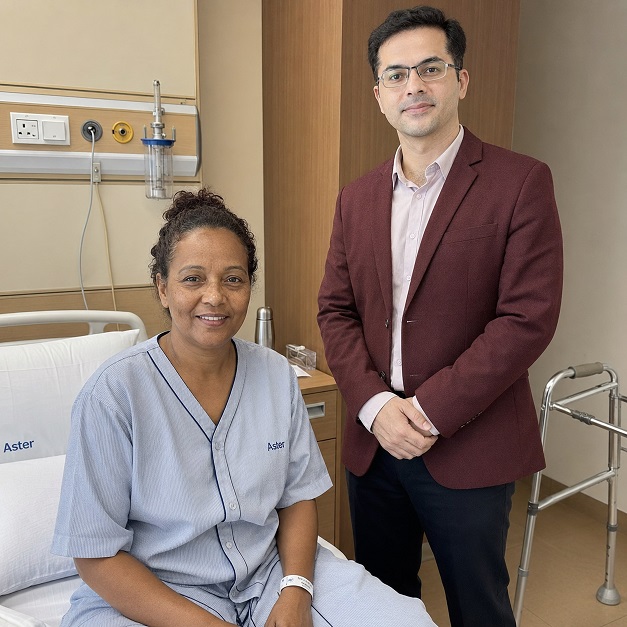
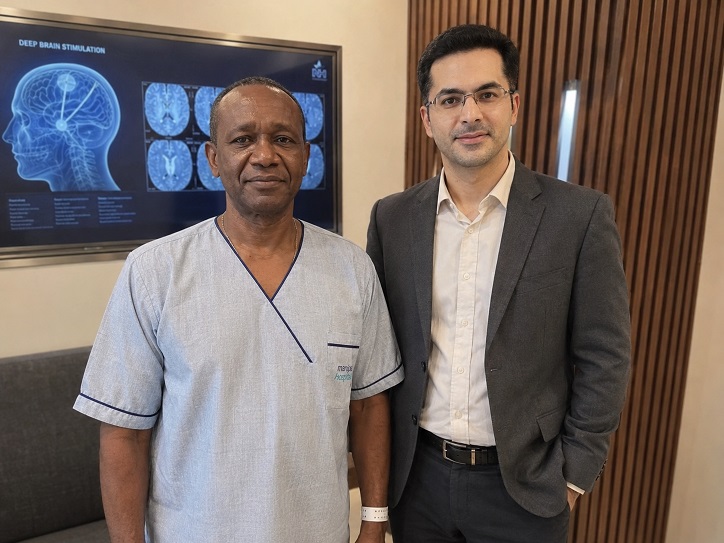
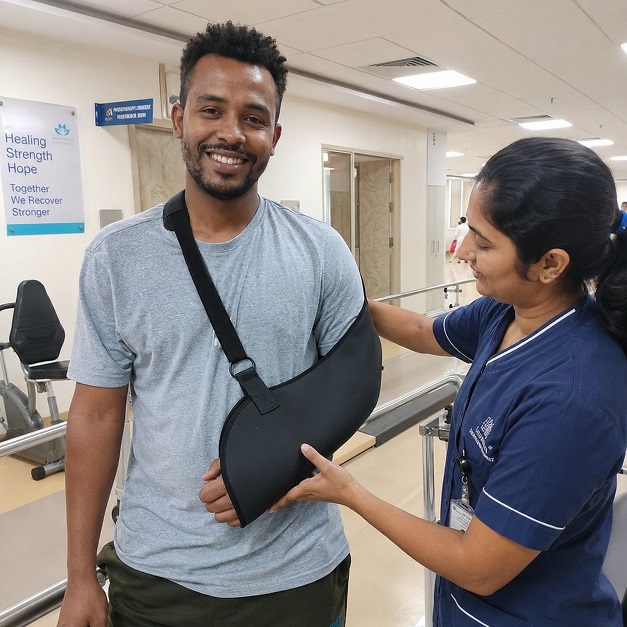
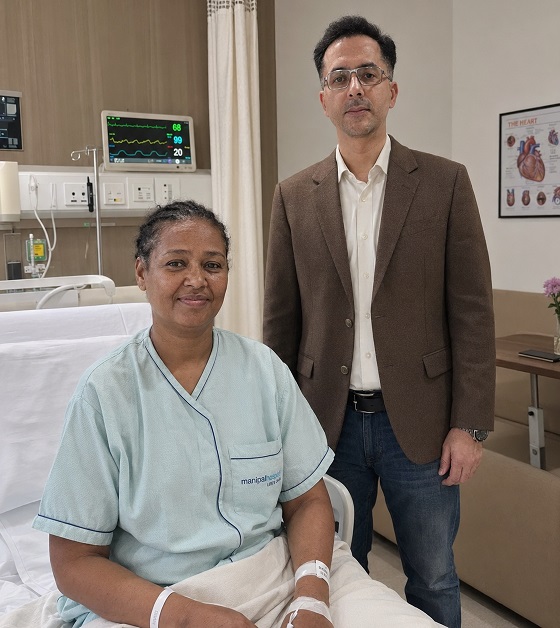
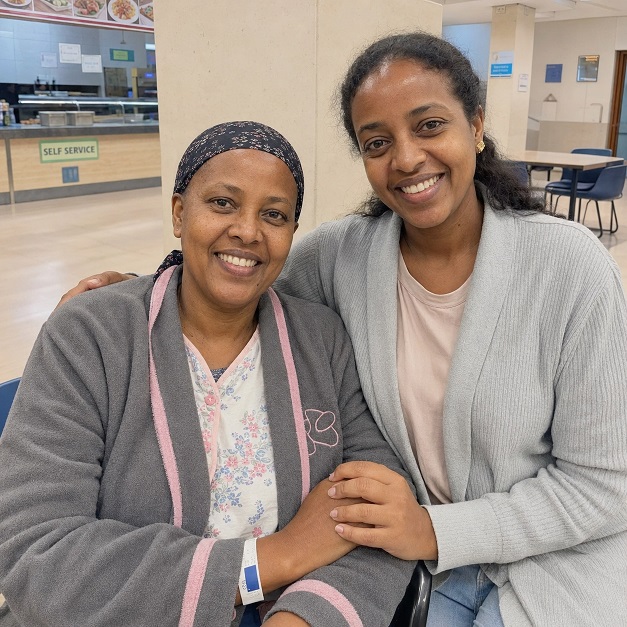
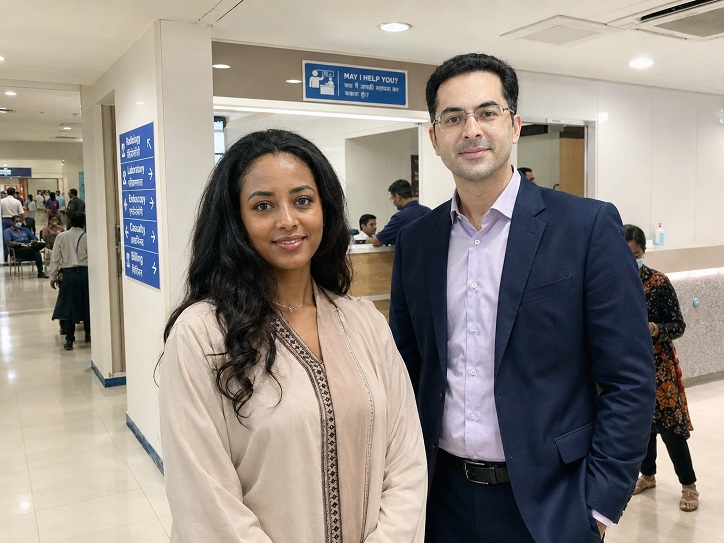
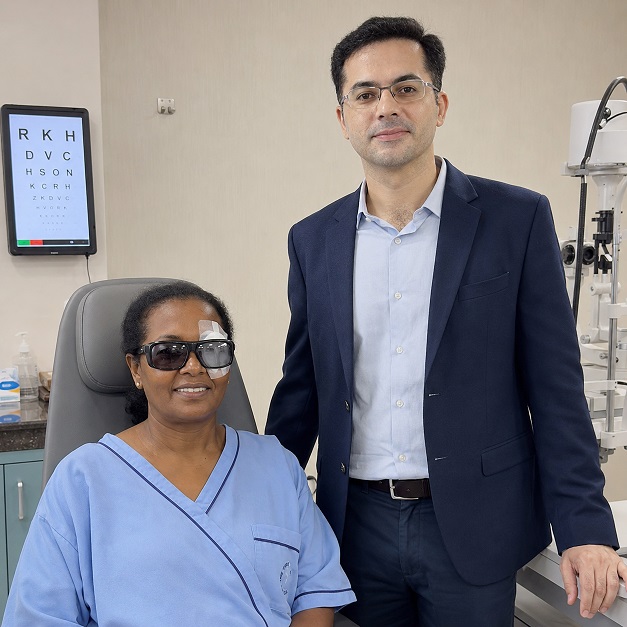
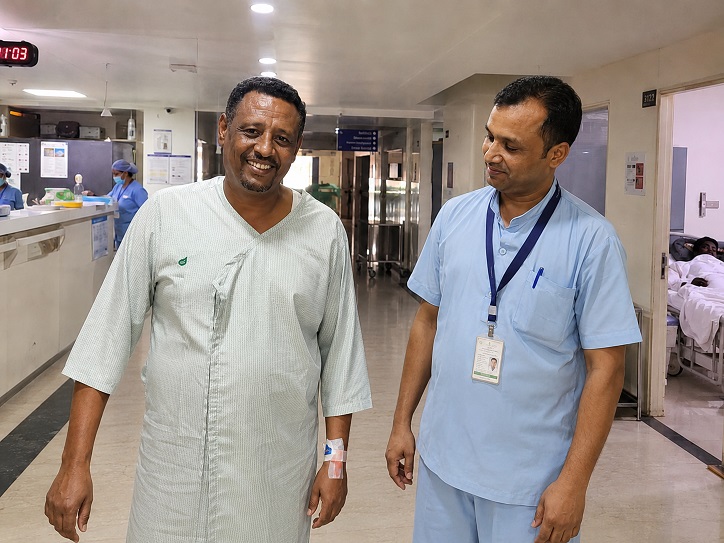
Patient Testimonials from Ethiopia
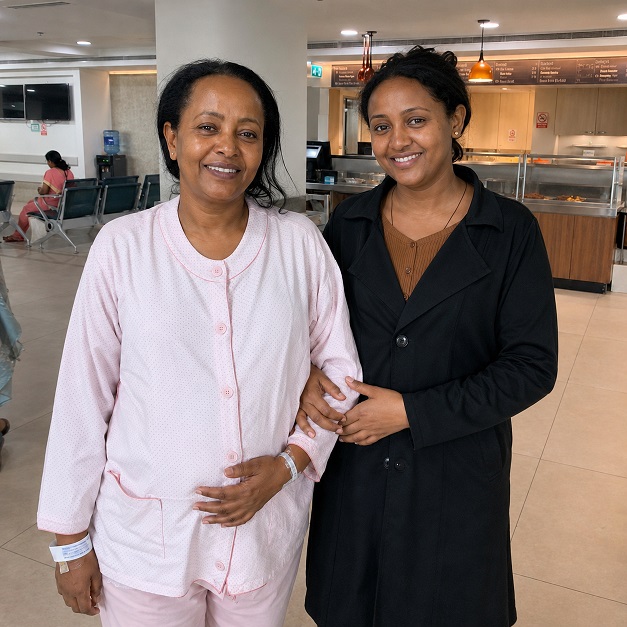

Ready to Take the First Step?
Share your Medical Reports with our Healthcare Managers Today and Get a FREE CONSULTATION, a Personalized Treatment Plan, and Complete Support from Arrival to Recovery.
Get Your Free ConsultationAreas We Serve
This resource has been thoughtfully prepared for patients from Ethiopia who are considering medical treatment in India. We also welcome patients from the wider region in the countries mentioned below-
We assist patients from:
- Eritrea
- Djibouti
- Somalia
- Kenya
- South Sudan
- Sudan
- Burundi
- Comoros
- Ethiopia
- Madagascar
- Malawi
- Mauritius
- Mozambique
- Rwanda
Many of the insights, treatment pathways, hospital recommendations, travel guidance, and patient support services described here are equally relevant and may be used as a reference when planning treatment in India.
From Ethiopia to India: Your Complete Patient Support Guide
- Brain Tumour Surgery in India for Ethiopians
- Cancer Treatment in India for Ethiopians
- Cardiac Surgery in India for Ethiopian Patients
- Cervical and Disc Replacement Surgery in India for Ethiopians
- Cosmetic and Plastic Surgery in India for Ethiopians
- CyberKnife Treatment in India for Ethiopians
- Eye Surgery in India for Ethiopians
- Gamma Knife Treatment in India for Ethiopians
- Heart Valve Replacement Surgery in India for Ethiopians
- Hip Surgery in India for Ethiopian Patients
- Knee Surgery in India for Ethiopian Patients
- Laparoscopic and Robotic Myomectomy Surgery in India for Ethiopians
- Neurosurgery in India for Ethiopians
- Paediatric Cardiac Surgery in India for Ethiopians
- Paediatric Neurosurgery in India for Ethiopians
- Prostate Cancer Treatment and Surgery in India for Ethiopians
- Robotic Cancer Surgery in India for Ethiopians
- Scoliosis Surgery in India for Ethiopians