

Eye Surgery in India for Ethiopians
Five gates every eye condition should pass before anyone books a flight — and the one distinction that matters more than any other: can this operation give sight back, or can it only stop things getting worse?
Most eye conditions fall into one of two very different families, and almost nobody explains the difference before treatment begins. In one family, an operation restores what was lost. In the other, an operation can only defend what remains. Confusing the two leads to the two most common mistakes I see: people who delay a cataract for years out of fear, when delay costs them almost nothing, and people who delay a glaucoma check because their vision still feels fine, when delay is the one thing that condition cannot forgive. Ethiopia carries one of the heaviest burdens of avoidable blindness anywhere in the world. Cataract and trachoma, between them, cause the majority of it, and both are treatable. That single fact should be a source of hope rather than alarm, but only if the distinction above is understood early. In 24 years of arranging surgical care in India for patients across Africa and Asia, eye conditions are where the gap between what a patient fears and what actually threatens their sight is widest. These five gates are built to close that gap.
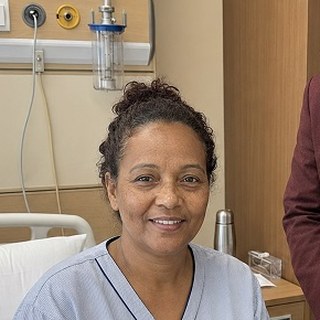
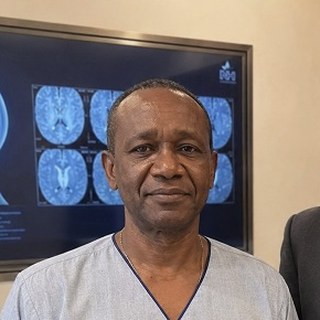
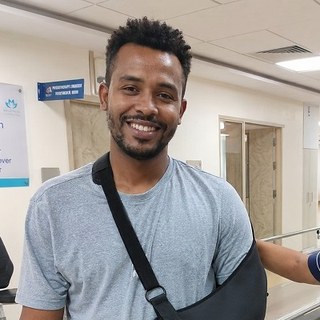
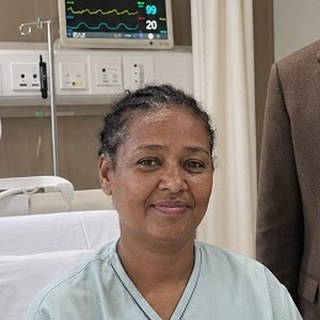
Healing Journeys of Ethiopian Patients


Key Takeaways
- Eye conditions in Ethiopian patients should first be separated into two groups: those where treatment can restore lost sight and those where treatment can only prevent further vision loss. This distinction determines how urgently a patient needs to act.
- The guide identifies cataract, trachoma-related trichiasis, glaucoma and diabetic retinopathy as important causes of vision problems in Ethiopia. A proper ophthalmic examination should assess eye pressure, the lens, retina and optic nerve rather than relying only on a vision-chart test.
- Cataract surgery can often restore vision by removing the cloudy natural lens and replacing it with a clear intraocular lens. Trichiasis surgery can stop eyelashes damaged by trachoma scarring from continuing to injure the eye.
- Glaucoma and diabetic retinopathy are different because vision already lost from optic-nerve or retinal damage cannot be restored. Treatment aims to prevent or slow further loss, making early detection particularly important.
- The page 3 glaucoma illustration explains why glaucoma can remain unnoticed for a long time. Peripheral vision may deteriorate while central vision remains relatively clear, meaning a patient can still read or recognise faces despite substantial visual-field loss.
- Not every Ethiopian patient needs to travel to India. The guide states that Ethiopia has established capacity for routine cataract and trichiasis surgery, making overseas treatment unnecessary in many straightforward cases.
- The case for travelling becomes stronger for complex or repeat cataract surgery, glaucoma drainage-device surgery, vitreoretinal surgery for retinal detachment or advanced diabetic bleeding, corneal transplantation, and paediatric or re-operative eye surgery.
- For cataract surgery, lens selection should be clearly specified. A standard monofocal lens generally provides clear distance vision while reading glasses may still be needed. Toric, multifocal and extended-depth lenses can address astigmatism or reduce dependence on glasses but cost more.
- Typical time in India varies according to the procedure. The guide indicates approximately one week for straightforward cataract surgery in both eyes and around 2–3 weeks for corneal transplantation or vitreoretinal surgery.
- After retinal surgery involving a gas bubble, patients should specifically confirm whether flying is safe. Glaucoma patients should also make sure prescribed pressure-lowering eye drops or suitable equivalents will remain reliably available after returning to Ethiopia.
Quick Facts
- Conditions Covered
- Cataract, trachoma-related trichiasis, glaucoma, diabetic retinopathy, retinal detachment, advanced diabetic retinal bleeding and corneal disease
- Procedures Mentioned
- Cataract surgery, trichiasis surgery, glaucoma drainage-device surgery, laser treatment, vitrectomy, vitreoretinal surgery and corneal transplantation
- Target Audience
- Ethiopian patients and families considering eye surgery in India
- Standard Cataract Surgery Cost
- Approximately USD 700–1,400 per eye
- Premium-Lens Cataract Surgery Cost
- Approximately USD 1,400–2,800 per eye
- Trichiasis Surgery Cost
- Approximately USD 180–500 per eye
- Glaucoma Surgery/Drainage Device Cost
- Approximately USD 1,200–3,000 per eye
- Vitrectomy Cost
- Approximately USD 1,800–4,000 per eye
- Corneal Transplant Cost
- Approximately USD 1,500–3,500 per eye
- Typical Stay for Cataract Surgery
- Approximately 1 week for straightforward surgery in both eyes
- Typical Stay for Corneal Transplant
- Approximately 2–3 weeks
- Typical Stay for Vitreoretinal Surgery
- Approximately 2–3 weeks
- Financial Planning
- The guide states that Ethiopian health financing does not cover overseas treatment and that a bank may release up to USD 20,000 per case against a treating hospital's letter.
- Author/Advisor
- Dr. Dheeraj Bojwani, Independent Medical Travel Advisor, 24 years arranging surgical care in India for international patients
In Brief
Eye surgery in India for Ethiopian patients should be considered according to both the diagnosis and the complexity of treatment required. Routine cataract and trichiasis surgery can often be performed in Ethiopia, while complex cataracts, glaucoma drainage procedures, vitreoretinal surgery, corneal transplantation and re-operative cases may provide stronger reasons to seek specialised treatment abroad. Cataract surgery can restore sight lost from a cloudy lens, whereas glaucoma and diabetic retinopathy treatment primarily aims to prevent further irreversible vision loss. Indicative Indian hospital costs range from approximately USD 700–1,400 per eye for standard cataract surgery to USD 1,800–4,000 for vitrectomy.
1 Gate One
What is actually stealing the sight?
In national surveys, close to half of all blindness in Ethiopia is caused by cataract alone, with trachoma- related scarring and glaucoma making up most of the rest. These are three genuinely different diseases needing three different examinations, so the first step is a proper eye examination by an ophthalmologist, not an assumption based on age or symptoms.
That examination should measure the pressure inside the eye, look at the lens, and examine the retina and optic nerve at the back — not simply test how well you can read a chart. A cataract can sit in front of a glaucoma that nobody has yet found, and treating the visible problem while missing the hidden one is a common and costly mistake.
Diabetes deserves a specific mention here, because Ethiopia's diabetic population is growing and diabetic retinopathy is easy to miss until it is advanced. If you have diabetes, a dilated retinal examination belongs in your annual check-up whether or not your vision has changed, since the earliest and most treatable stage of the disease produces no symptoms a patient would notice.
2 Gate Two
Reversible, or only preventable from here?
This is the gate that should decide how urgently you act, and it is almost never explained clearly.
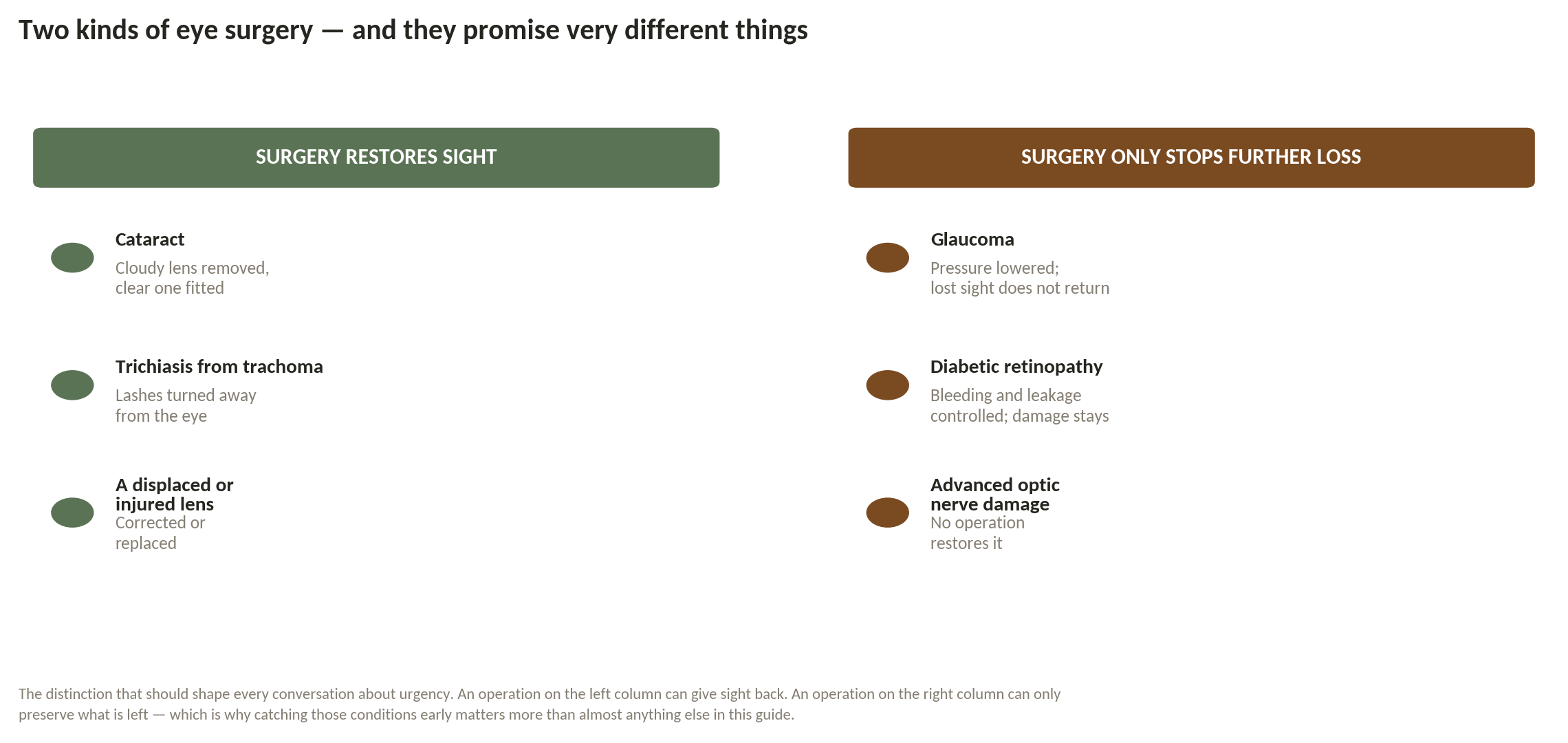
The same word, surgery, promising two very different things.
A cataract clouds the eye's own lens. Remove it and fit a clear one, and sight returns, often dramatically. Trichiasis, in which trachoma-scarred eyelashes turn inward and scratch the eye, is corrected the same way — the damage stops and the eye usually recovers. Waiting for either is unpleasant, but rarely costly in the long run.
Glaucoma and diabetic retinopathy behave in the opposite way. Both damage the optic nerve or the retina directly, and neither eye surgery nor medicine can restore nerve tissue once it is gone. Treatment lowers eye pressure or controls bleeding and stops the loss continuing — it does not give back what has already been lost. That makes early detection, not early surgery, the thing that actually saves sight.
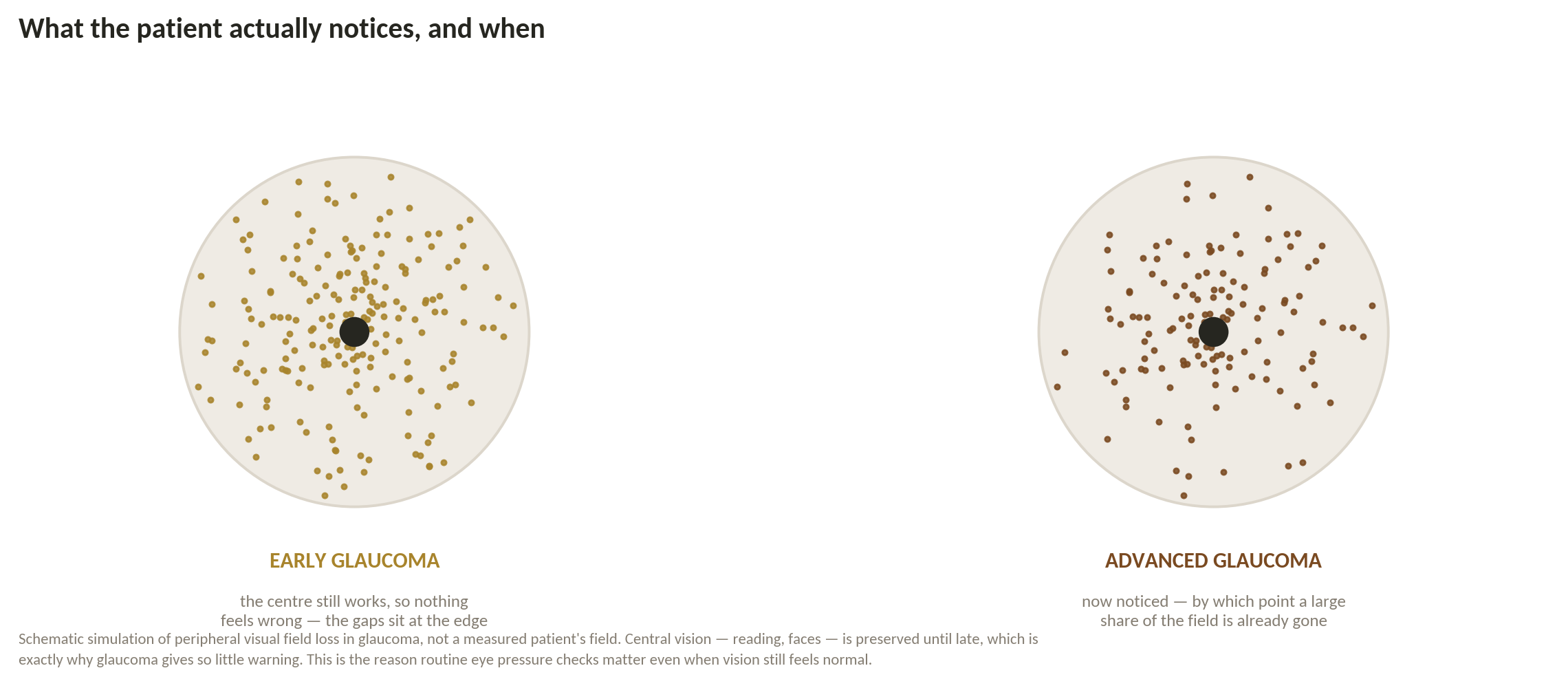
Why glaucoma is so often caught late.
This is why glaucoma is called the silent thief of sight. It takes peripheral vision first, while the centre — the part used for reading a face or a chart — stays sharp until late. A person can lose a large share of their visual field and still pass a basic eye test. If glaucoma runs in your family, or you have ever been told your eye pressure was raised, a dedicated glaucoma assessment matters even when your sight feels entirely normal.
3 Gate Three
Could this be done in Ethiopia?
For a large share of eye conditions, the honest answer is yes, and saying so plainly matters more here than in any other field in this series. Ethiopia has spent two decades building real cataract surgery capacity, and trichiasis surgery for trachoma is delivered at real scale through dedicated national and NGO-backed programmes. For a routine cataract or a straightforward trichiasis case, travelling abroad is very often an unnecessary expense.
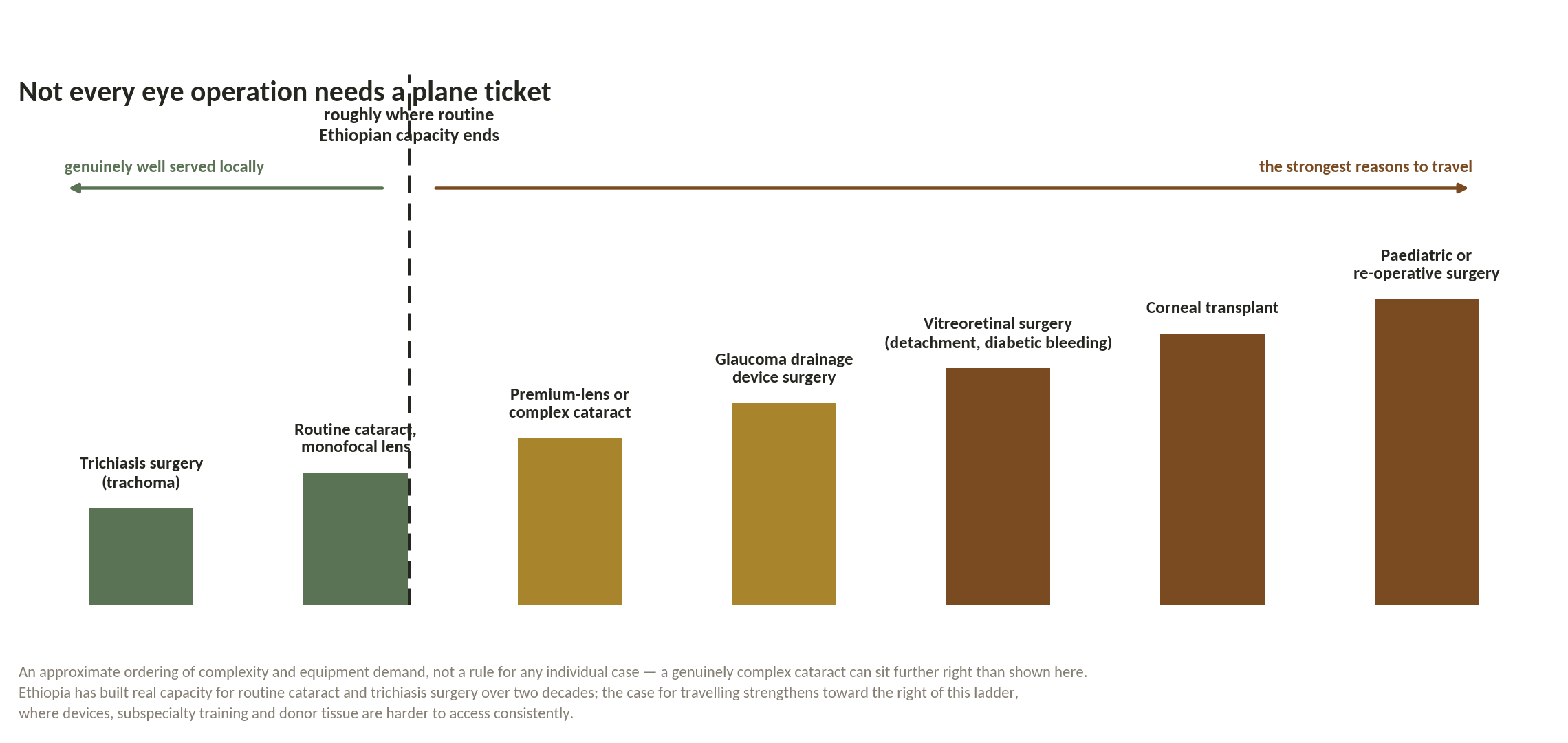
Complexity climbs, and so does the case for travelling.
The case for travelling strengthens as the ladder climbs: a complex or re-operative cataract, a glaucoma drainage device, vitreoretinal surgery for a detached retina or advanced diabetic bleeding, and corneal transplantation, which depends on a reliable supply of donor tissue and a subspecialist team. These are precisely the operations where volume and equipment change outcomes most, and where consistent access is hardest to guarantee everywhere at home. Ask plainly which rung of that ladder your condition sits on before deciding to travel.
4 Gate Four
Does the technique match your eye?
Once travel is the right choice, the details of the technique decide the result as much as the surgeon's hands do.
For cataract, the lens choice matters. A standard monofocal lens gives clear distance vision and still needs reading glasses; premium toric, multifocal or extended-depth lenses correct astigmatism or reduce dependence on glasses altogether, at a higher price. Neither is wrong — but a quotation that does not name the lens has not really priced your surgery.
For corneal transplantation, ask specifically how donor tissue is sourced and how long typical waiting times run; India has built one of the world's larger eye-banking networks, but availability still varies by centre and by tissue type. For glaucoma, ask whether the plan is a drainage device, a laser procedure, or both, and how many pressure-lowering medicines you may still need afterwards — many glaucoma patients continue drops for life even after successful surgery, and that ongoing medicine needs to be available in Ethiopia.
Before you leave India, confirm the exact brand and strength of any drops prescribed, and check with a pharmacy at home that the same or an equivalent product can be sourced reliably. A glaucoma patient who cannot obtain their drops for a few weeks can lose ground that surgery cannot get back — which returns squarely to the point made at gate two.
5 Gate Five
Is the money arranged?
Ethiopia's health financing does not follow a patient abroad. Community ‐ Based Health Insurance covers contracted facilities inside the country, and the formal ‐ sector scheme is still not settling claims. Since February 2026 a bank may release up to twenty thousand US dollars per case against a letter from the treating hospital, without a visa or ticket in hand — a ceiling that comfortably covers even the most complex procedure in this field.
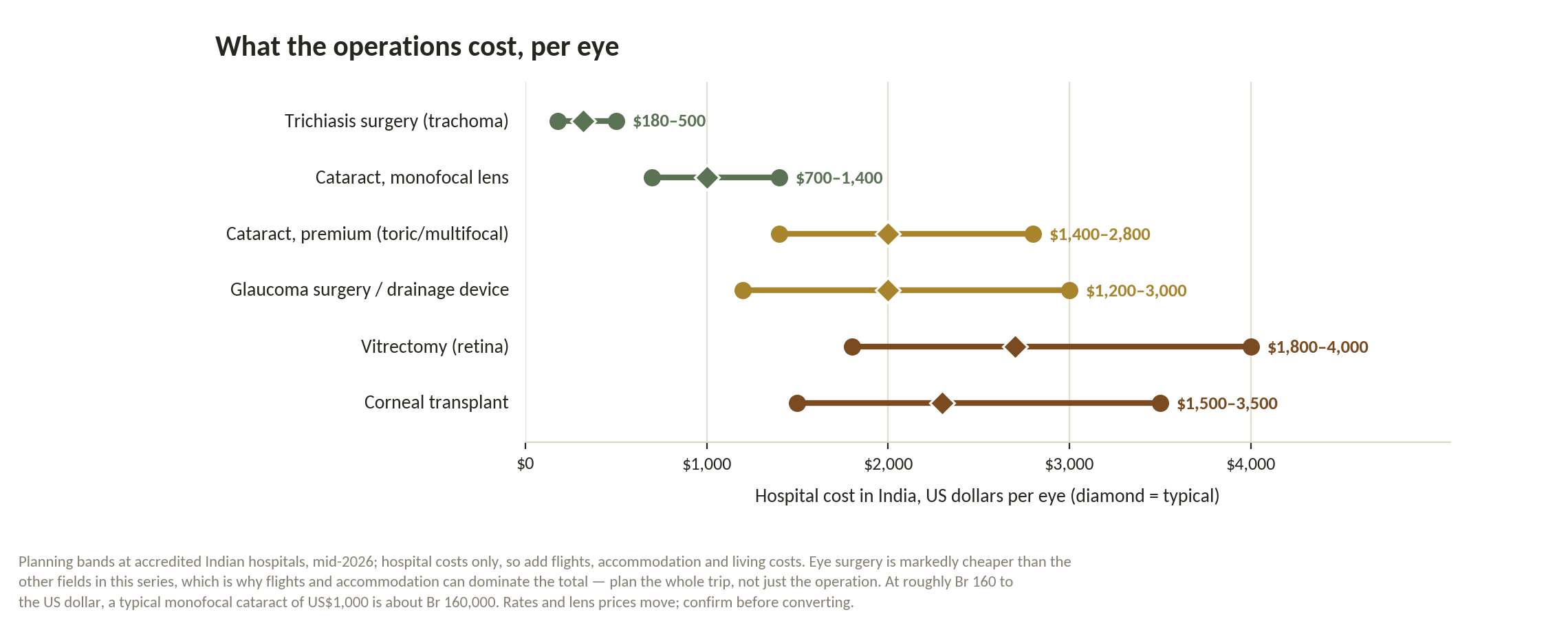
Eye surgery is the least expensive field in this series — which changes the maths of a trip.
Because the operations themselves are comparatively inexpensive, flights and accommodation can end up being the largest single cost of the whole trip. That argues for combining both eyes into one visit wherever the surgeon agrees it is safe, and for being honest about whether a routine case truly needs the airfare at all — the answer, from gate three, is often no.
In 24 years the eye surgery patients most satisfied with the value of their trip were rarely the ones with the cheapest quotation. They were the ones who understood, before flying, exactly which gate their condition belonged to.
| A quotation, annotatedA composite of the eye surgery quotes that reach me, with the questions I send back. | |
| Cataract surgery — USD 900 | One eye or two? And which lens is this figure written for? |
| IOL: standard monofocal | Fine, if that is what you chose. Ask the premium-lens price too. |
| Includes: pre-op tests, 1 follow-up | One follow-up is thin. Ask what a second visit costs, in writing. |
| Glaucoma assessment: not included | If pressure has ever been raised, this should not be optional. |
| Excludes: complications | Every quote does. Ask what a retained lens fragment would cost. |
| Excludes: the other eye | Often done as a separate admission days later. Price both now. |
Pay the hospital and never an individual, and never settle a balance before you arrive.
The Ethiopian practicalities
Ethiopian Airlines flies non ‐ stop from Bole to Delhi, Mumbai, Bengaluru, Chennai and Hyderabad. After most eye operations the restriction is protecting the eye rather than the journey itself — ask for the eye shield and drop schedule in writing, and confirm whether pressurised cabin air is a concern for your specific procedure, since it can be after certain retinal surgeries involving a gas bubble.
Yellow fever certification is required at least ten days before arrival and oral polio vaccination roughly four weeks before. The medical visa follows the hospital's invitation letter through the Embassy of India in Addis Ababa, and an attendant is worth arranging even for same-day surgery, since vision is often blurred for the first days. Confirm current rules with the Embassy, since they change, and ask for an Amharic ‐ speaking coordinator to walk through the drop schedule and warning signs before you fly home.
A closing word
Send a description of what you can and cannot see, when it started, and whether it came on suddenly or crept up gradually — that last detail often tells us more than you would expect. If you have ever had your eye pressure checked, send that reading too. I will tell you which gate you are standing at, and where the honest answer is that Ethiopia can already treat you well, I will say so.
Sources
- 🌐 Rapid Assessment of Avoidable Blindness survey, northwest Ethiopia. Wellcome Open Research, 2026
- 🌐 Active trachoma among children aged 1–9 years in Ethiopia: a meta-analysis, 2019–2024
- 🌐 Corneal blindness and eye banking: current strategies and best practices. India-focused review
- 🌐 National Programme for Control of Blindness and Visual Impairment (NPCBVI), Ministry of Health & Family Welfare, Government of India
- 🌐 National Medical Commission of India — Indian Medical Register, for verifying a treating doctor's registration
- 🌐 National Accreditation Board for Hospitals & Healthcare Providers (NABH), Quality Council of India
Frequently Asked Questions by Ethiopians about Eye Surgery in India
Which eye conditions may require Ethiopian patients to travel to India for treatment?
The guide explains that routine cataract and straightforward trichiasis surgery can often be treated effectively in Ethiopia, so travelling abroad may not be necessary. The case for India becomes stronger for complex or repeat cataract surgery, glaucoma drainage-device procedures, vitreoretinal surgery, corneal transplantation, and paediatric or re-operative eye surgery where specialised equipment and subspecialist experience may be important.
How much does cataract surgery in India cost for Ethiopian patients?
According to the cost chart on page 5, standard cataract surgery with a monofocal lens costs approximately USD 700–1,400 per eye. Cataract surgery using a premium toric or multifocal lens costs approximately USD 1,400–2,800 per eye. The guide stresses that the quotation should clearly name the intraocular lens being provided.
How much do glaucoma, retinal and corneal surgeries cost in India?
The page 5 chart gives indicative Indian hospital costs of approximately USD 1,200–3,000 per eye for glaucoma surgery or a drainage device, USD 1,800–4,000 for vitrectomy, and USD 1,500–3,500 for corneal transplantation. These are mid-2026 hospital planning ranges and exclude flights, accommodation and living expenses.
Can eye surgery restore vision lost from glaucoma?
No. The guide makes an important distinction between restoring sight and preventing further loss. Cataract surgery can often restore vision by replacing the cloudy lens, but glaucoma damages the optic nerve. Vision already lost from optic-nerve damage cannot be restored by surgery or medication. Glaucoma treatment therefore aims to protect the sight that remains.
Why can glaucoma be dangerous even when an Ethiopian patient can still see clearly?
The illustration on page 3 shows that glaucoma commonly damages peripheral vision first while central vision remains relatively clear. A person may therefore still read or recognise faces while having already lost a significant part of the visual field. The guide recommends a dedicated glaucoma assessment for people with a family history of glaucoma or previously raised eye pressure, even when their vision feels normal.
Should Ethiopian patients travel to India for routine cataract surgery?
Often not. The guide states that Ethiopia has developed substantial cataract-surgery capacity, and a routine cataract without another eye problem can frequently be treated locally. Travelling may become more worthwhile for a complex or re-operative cataract, when a specific premium lens is required, or when cataract surgery is combined with another condition requiring specialist treatment.
How long should Ethiopian patients stay in India after eye surgery?
The guide gives approximately one week for straightforward cataract surgery in both eyes. Patients undergoing corneal transplantation or vitreoretinal surgery should generally expect around 2–3 weeks, because healing and follow-up examinations determine when they can safely return home.
What should Ethiopian patients know about flying after retinal surgery?
The guide advises patients to ask specifically whether pressurised cabin air is safe after their procedure, particularly following retinal surgery involving a gas bubble. Patients should obtain procedure-specific travel instructions rather than assuming they can fly immediately after surgery.
What should Ethiopian patients check before accepting an eye surgery quotation from India?
The annotated quotation on page 6 recommends confirming whether the price covers one or both eyes, exactly which intraocular lens is included, how many follow-up visits are covered, whether glaucoma assessment is included when relevant, what complications would cost, and how the second eye would be priced. The guide also advises paying the hospital rather than an individual.
What follow-up should Ethiopian patients arrange after returning home from eye surgery in India?
Follow-up depends on the procedure. Glaucoma patients may continue to require pressure-lowering eye drops even after successful surgery, so the exact brand, strength or an equivalent medicine should be confirmed as reliably available in Ethiopia. Patients should also leave India with their written eye-drop schedule, eye-protection instructions and warning signs that require urgent ophthalmic review.
I can still see well. Why would I need eye surgery now?
Because two very different clocks run in the eye. A cataract announces itself with blurring, so waiting rarely costs you anything permanent. Glaucoma and diabetic retinopathy give almost no warning, and the vision they take does not come back. Which clock you are on is worth knowing before you decide to wait.
Is cataract surgery worth travelling for if it is available in Ethiopia?
Often not, for a routine cataract with no other eye problem — Ethiopia has built real cataract capacity over two decades. Travelling becomes worthwhile for a complex cataract, a premium lens you specifically want, or when it is combined with another condition that does need a specialist unit.
How long will I be in India?
About one week for straightforward cataract surgery in both eyes, two to three weeks for a corneal transplant or vitreoretinal surgery, since healing and follow-up checks set the pace.
Can a lost corneal transplant or a failed glaucoma operation be tried again?
Often yes, but each attempt is harder than the last. This is a field where the first operation, done well by the right team, matters more than most.
Who pays for this in Ethiopia?
You do. Neither community-based insurance nor the pending formal-sector scheme funds treatment abroad, though a bank may now advance up to US$20,000 against the hospital's letter.
Page Summary
This guide takes Ethiopian patients through five gates. Gate one asks what is actually causing the sight loss — cataract, trachoma-related trichiasis, glaucoma or diabetic retinopathy — and insists on a full examination of lens, pressure, retina and optic nerve. Gate two draws the crucial line between conditions where surgery can restore sight and those where treatment only protects what remains. Gate three places routine trichiasis and cataract surgery within local reach, while drainage devices, vitreoretinal work, corneal grafts and paediatric or repeat surgery build the case for travelling. Gate four matches the procedure to the eye, from lens choice to donor tissue. Gate five prices it, from USD 180–500 per eye for trichiasis to USD 1,800–4,000 for vitrectomy — low enough that flights and accommodation can dominate the budget.
Citation Block
| Topic | Information |
|---|---|
| Topic Information | Eye Surgery in India for Ethiopian Patients |
| Procedure | Ophthalmic & Eye Surgery |
| Country | India |
| Intended Audience | Ethiopian Patients and Families |
| Conditions Covered | Cataract, Trachoma-Related Trichiasis, Glaucoma, Diabetic Retinopathy, Retinal Detachment and Corneal Disease |
| Procedures | Cataract Surgery, Trichiasis Surgery, Glaucoma Surgery, Vitrectomy, Vitreoretinal Surgery and Corneal Transplantation |
| Typical Stay – Cataract | Approximately 1 Week for Straightforward Surgery in Both Eyes |
| Typical Stay – Corneal/Retinal Surgery | Approximately 2–3 Weeks |
| Hospital Stay | Procedure-Dependent; Same-Day Surgery Is Possible for Some Procedures |
| Recovery | Procedure-Dependent; Follow-Up and Fit-to-Fly Advice Required |
| Trichiasis Surgery Cost | Approximately USD 180–500 Per Eye |
| Corneal Transplant Cost | Approximately USD 1,500–3,500 Per Eye |


Our Mission Statement
Our mission is to place patients at the centre of every healthcare decision by providing trustworthy, evidence-based, and unbiased medical information. We believe that informed patients make better decisions. Backed by personalised guidance from our experienced advisory team, we help patients understand their treatment options, compare them objectively, and confidently choose the path that best suits their medical needs and personal circumstances.
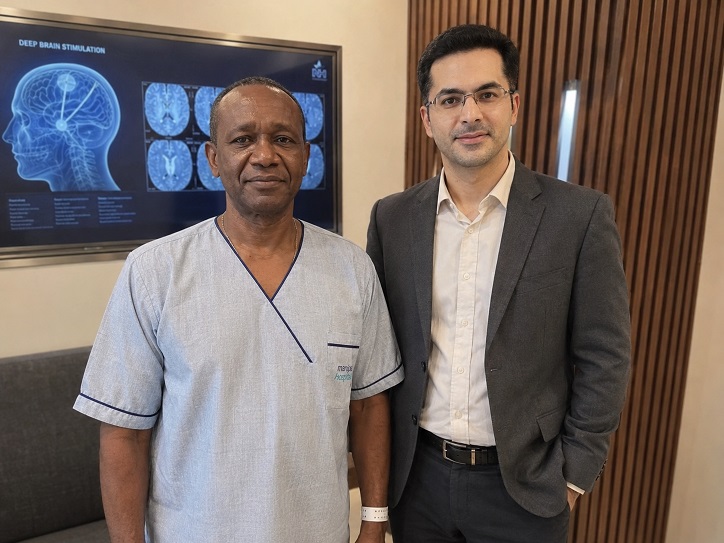
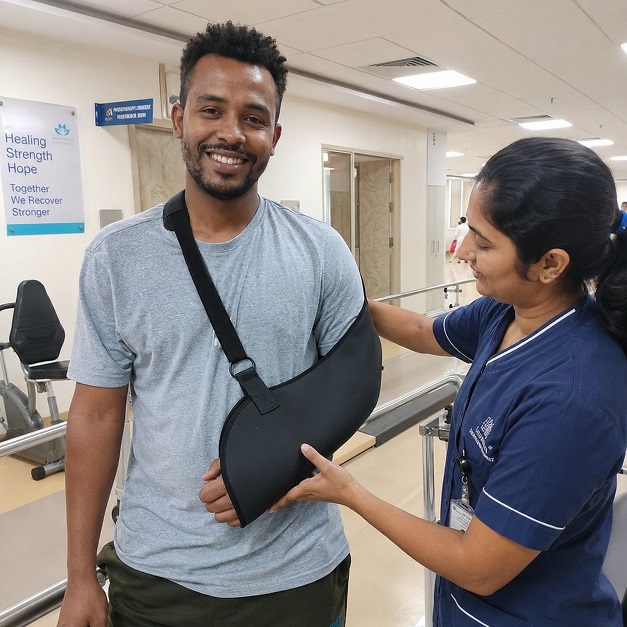
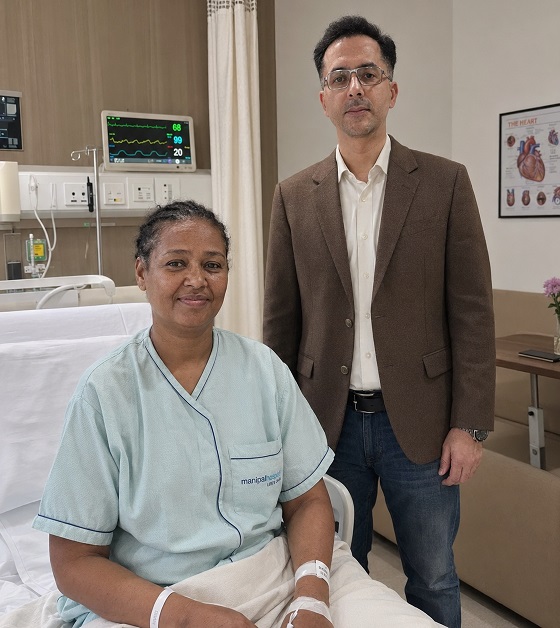
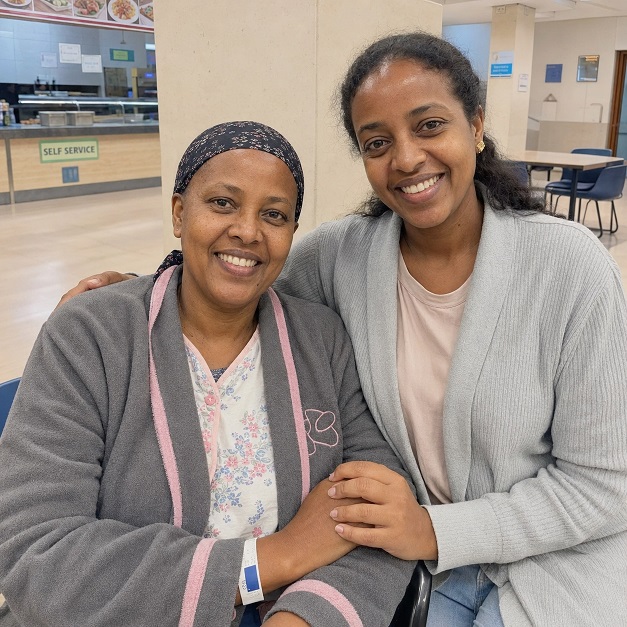
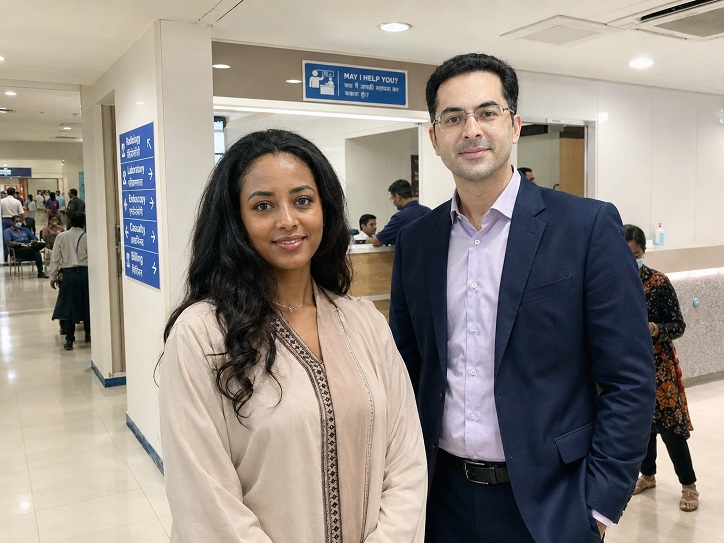
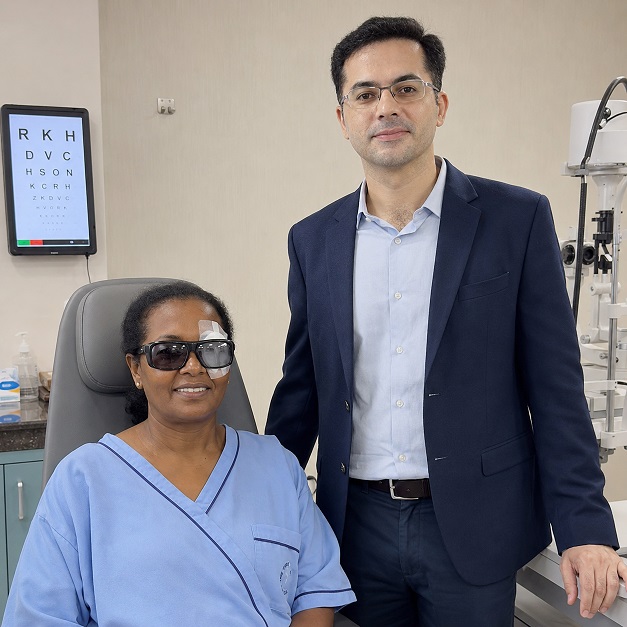
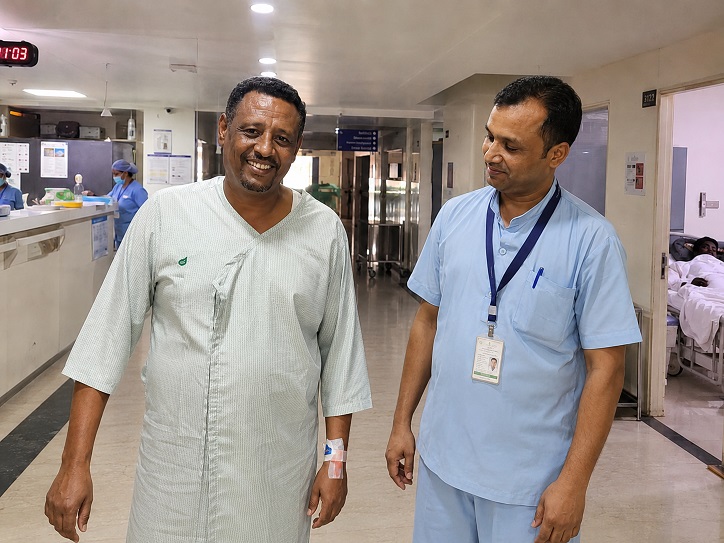
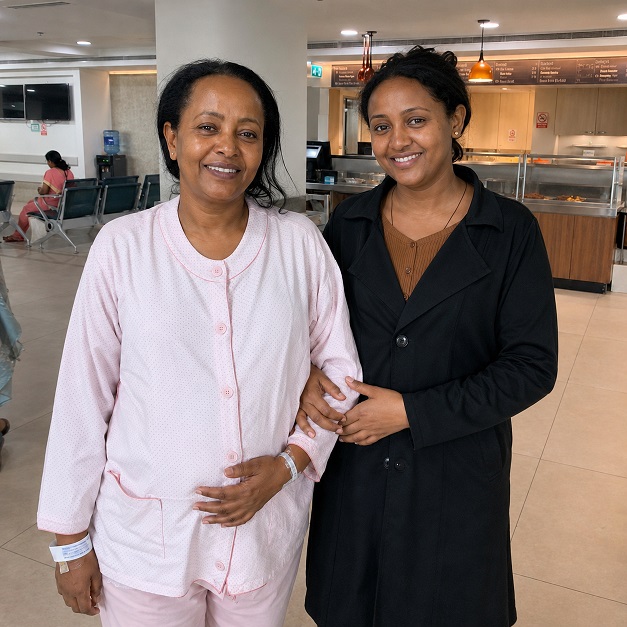
Patient Testimonials from Ethiopia

Ready to Take the First Step?
Share your Medical Reports with our Healthcare Managers Today and Get a FREE CONSULTATION, a Personalized Treatment Plan, and Complete Support from Arrival to Recovery.
Get Your Free ConsultationAreas We Serve
This resource has been thoughtfully prepared for patients from Ethiopia who are considering medical treatment in India. We also welcome patients from the wider region in the countries mentioned below-
We assist patients from:
- Eritrea
- Djibouti
- Somalia
- Kenya
- South Sudan
- Sudan
- Burundi
- Comoros
- Ethiopia
- Madagascar
- Malawi
- Mauritius
- Mozambique
- Rwanda
Many of the insights, treatment pathways, hospital recommendations, travel guidance, and patient support services described here are equally relevant and may be used as a reference when planning treatment in India.
From Ethiopia to India: Your Complete Patient Support Guide
- Brain Tumour Surgery in India for Ethiopians
- Cancer Treatment in India for Ethiopians
- Cardiac Surgery in India for Ethiopian Patients
- Cervical and Disc Replacement Surgery in India for Ethiopians
- Cosmetic and Plastic Surgery in India for Ethiopians
- CyberKnife Treatment in India for Ethiopians
- Eye Surgery in India for Ethiopians
- Gamma Knife Treatment in India for Ethiopians
- Heart Valve Replacement Surgery in India for Ethiopians
- Hip Surgery in India for Ethiopian Patients
- Knee Surgery in India for Ethiopian Patients
- Laparoscopic and Robotic Myomectomy Surgery in India for Ethiopians
- Neurosurgery in India for Ethiopians
- Paediatric Cardiac Surgery in India for Ethiopians
- Paediatric Neurosurgery in India for Ethiopians
- Prostate Cancer Treatment and Surgery in India for Ethiopians
- Robotic Cancer Surgery in India for Ethiopians
- Scoliosis Surgery in India for Ethiopians