

Radiotherapy and Modern Cancer Treatments in India for Ethiopian Patients
Five gates every radiotherapy case should pass before booking a flight — and why, in a country where the published median wait for radical radiotherapy has been measured at 477 days against a clinically recommended maximum of six weeks, India's radiotherapy capacity is not a lifestyle upgrade but frequently the difference between treatment in time and treatment too late.
Radiotherapy is one of the most effective tools in cancer care, used with curative intent in roughly half of all cancer patients worldwide at some point in their treatment. In 24 years of arranging surgical and oncologic care in India for patients across Africa and Asia, radiotherapy is the field where Ethiopia's capacity constraint is most starkly measurable, and where the consequence of that constraint is not inconvenience but documented, published loss of life while patients wait. For over two decades, the entire country's radiotherapy care pivoted around a single cobalt-60 machine at Tikur Anbessa Specialized Hospital, serving a population that has since passed 120 million. That era is now ending, with the hospital transitioning to modern linear accelerators — genuine, welcome progress. But even the modernised capacity remains a small fraction of what the country's cancer burden requires, and a queue built up over years does not clear overnight. India, over the same period, has built hundreds of NABH-accredited radiotherapy centres running the same modern IMRT/IGRT/VMAT technology on same-week scheduling, at a fraction of equivalent cost in the Gulf, Europe, or the United States. These five gates walk through whether radiotherapy is genuinely the right treatment for a specific case, and for the many Ethiopian patients for whom it is, why the honest arithmetic of machines, wait times, and precision technology points so clearly toward India as where that treatment is actually delivered in time.
Healing Journeys of Ethiopian Patients









Key Takeaways
- Radiotherapy is not required for every cancer patient. It may be recommended to cure early disease, shrink a tumour before surgery, eliminate microscopic disease after surgery, or relieve symptoms in advanced cancer. Patients should understand the specific purpose of radiation in their treatment plan before travelling.
- Ethiopia has experienced a major radiotherapy capacity shortage. The document describes a long period in which the country's service depended heavily on a very limited number of cobalt-60 machines, while newer linear accelerator capacity is now being introduced.
- Waiting time can be clinically important. The published Addis Ababa study cited in the guide found a median 477-day wait between cervical cancer diagnosis and radical radiotherapy, compared with a clinically recommended maximum of six weeks. More than half of the patients in that study died before treatment began.
- Modern radiotherapy can improve treatment precision. The page 4 chart presents an illustrative pattern of reduced radiation dose to nearby healthy tissue, increasing from 8% with cobalt-60/2D planning to 72% with IGRT/VMAT compared with the stated cobalt-60 baseline. The document clearly notes that these are illustrative dosimetric comparisons, not guarantees for an individual patient.
- India's accredited radiotherapy centres commonly use modern techniques such as 3D-CRT, IMRT, IGRT and VMAT, with the guide stating that treatment can typically begin within one to two weeks of a confirmed plan at suitable centres.
- The cost chart on page 5 shows that treatment costs vary significantly by technique. A 3D-CRT course is approximately USD 1,200–2,200, compared with USD 2,200–4,000 for IMRT and USD 3,000–5,500 for IGRT/VMAT.
- Patients should therefore compare the recommended technique, number of sessions, planning costs, chemotherapy requirements and accommodation needs, rather than choosing a centre based only on the headline radiotherapy price.
Quick Facts
- Treatment
- Radiotherapy and Modern Cancer Treatment
- Country
- India
- Patients
- Ethiopian Patients
- Primary Condition
- Cancer
- Main Uses
- Curative, Pre-operative, Post-operative and Palliative Treatment
- Main Techniques
- 3D-CRT, IMRT, IGRT and VMAT
- Key Planning
- CT Simulation and Treatment Planning
- Ethiopia Published Median Wait
- 477 Days for Radical Radiotherapy in the Cited Study
- Recommended Maximum Wait
- Six Weeks
- 3D-CRT Cost
- USD 1,200–2,200
- IMRT Cost
- USD 2,200–4,000
- IGRT/VMAT Cost
- USD 3,000–5,500
- Brachytherapy
- USD 1,200–2,800 Per Implant Course
- Treatment Duration
- Approximately 3–7 Weeks
- Typical Sessions
- 15–35 Daily Sessions
- Why Consider India
- Modern Technology and Faster Treatment Access
- Follow-Up
- Oncology Care in Ethiopia
- Payment Advice
- Confirm Technique, Sessions and Package Inclusions in Writing
In Brief
Ethiopian patients considering radiotherapy in India should first confirm that radiation is appropriate for their cancer and understand whether the goal is curative, pre-operative, post-operative or palliative. The treatment plan should specify the recommended technique and number of sessions. Modern approaches such as IMRT, IGRT and VMAT can provide more precise dose delivery than conventional cobalt-60 treatment, while timely access can be equally important where treatment delays are substantial. Before travelling, patients should obtain their pathology, imaging and oncology treatment plan and confirm the complete treatment cost, expected schedule and follow-up arrangements.
1 Gate One
Does this need radiation at all?
Radiotherapy is recommended for specific, well-defined reasons: to cure early disease alone or alongside surgery, to shrink a tumour before an operation, to clean up microscopic disease left behind after one, or to relieve pain and other symptoms in advanced cancer. It is not a default add-on for every diagnosis, and a treatment plan that proposes it should say clearly which of these goals it is aiming for.
Ask explicitly whether radiotherapy is being recommended with curative or palliative intent, what the expected benefit is, and whether surgery or systemic therapy alone could achieve a similar result with less overall treatment burden. This matters everywhere, but it matters more where radiotherapy capacity is scarce: confirming the indication before entering a queue, whether in Ethiopia or in India, protects a limited and valuable resource for the patients who need it most.
2 Gate Two
One machine, a whole country?
For most of the past three decades, Ethiopia's entire radiotherapy service ran on a single cobalt-60 machine at Tikur Anbessa Specialized Hospital. A second cobalt unit was added later, but one of the two went offline in 2015 for want of funding to repair it, leaving the country back to one working machine for a population now above 120 million. The World Health Organization's benchmark recommends roughly one megavoltage machine per 120,000 people.
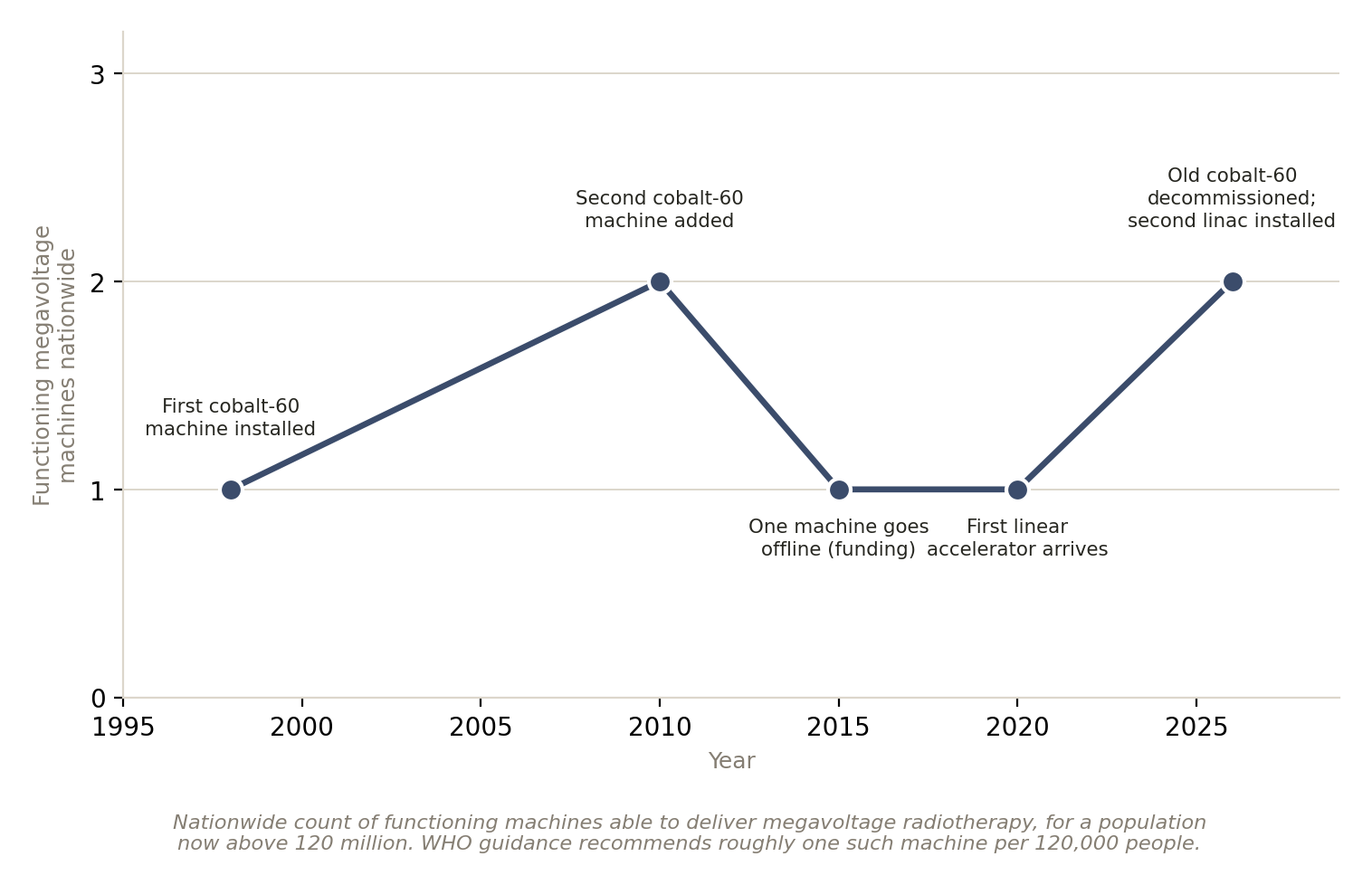
Machine count is only now, in 2026, returning to where it stood over a decade ago — with modern technology behind it this time.
The recent transition to linear accelerators, with the old cobalt-60 unit decommissioned and a second linac being installed, is genuine progress and worth recognising. It does not close the gap. Africa-wide surveys put the continent's radiotherapy capacity at only about a third of the WHO-recommended optimal, and Ethiopia's own history sits well below even that regional average. A queue built up over years of single-machine service does not clear because a better machine arrives.
3 Gate Three
Is the wait itself the danger?
This is the gate that changes this report from a capacity discussion into an urgent one. A published study at Tikur Anbessa Specialized Hospital measured the time between a cervical cancer diagnosis and the start of radical-dose radiotherapy: a median of 477 days. The clinically recommended maximum is six weeks. More than half the patients in that study died before treatment began at all.
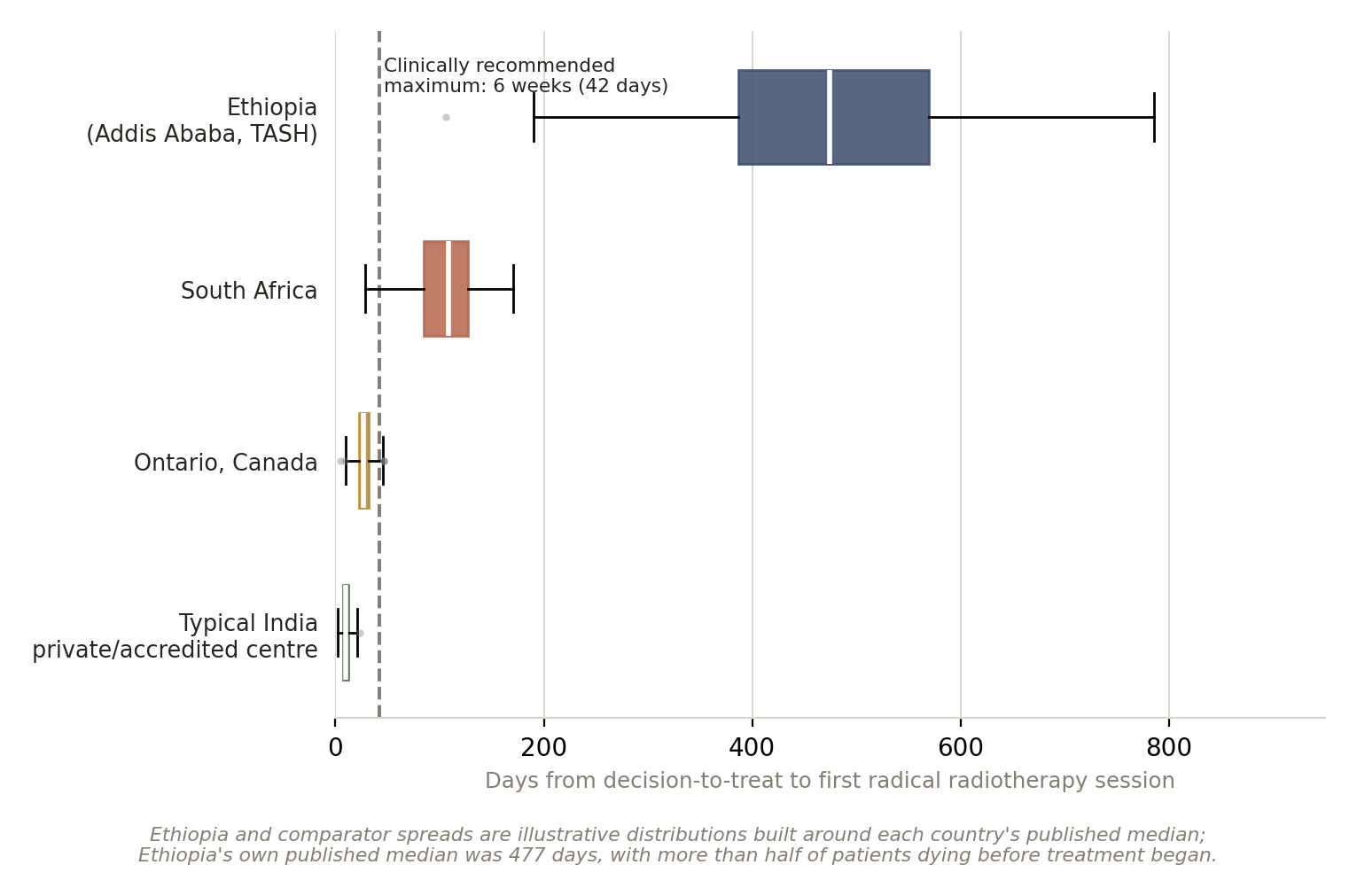
In Ethiopia, the wait is frequently longer than the disease allows.
Why this is not a one-off statistic: the same research group found that patients who waited 120 to 179 days had over three times the odds of disease progression compared to those treated promptly, and the odds climbed further beyond 180 days. A treatment plan that is correct on paper but delayed by months is, in practical terms, a different and worse treatment plan.
This is precisely why, for radiotherapy specifically, the case for travelling is rarely about finding a better machine alone — it is about finding a machine with time to spare. India's private and accredited radiotherapy centres typically begin treatment within one to two weeks of a confirmed plan, a timeline that is, for many Ethiopian patients, the difference between disease treated at the stage it was diagnosed and disease treated at a stage it has already progressed to.
4 Gate Four
Could this be done in Ethiopia?
For some patients, genuinely yes: TASH's expanding linear accelerator capacity, and newer services at regional teaching hospitals, are real and improving options for straightforward, non-urgent cases where a longer wait carries less risk. But the honest picture, gates two and three above, is one of a system still climbing out of a multi-decade capacity deficit, with a queue that took years to form.
The technology inside the machine matters as much as the queue in front of it. Cobalt-60 units deliver radiation from a fixed source with comparatively wide treatment margins; modern linear accelerators running IMRT, IGRT, or VMAT planning shape the dose tightly around the tumour.
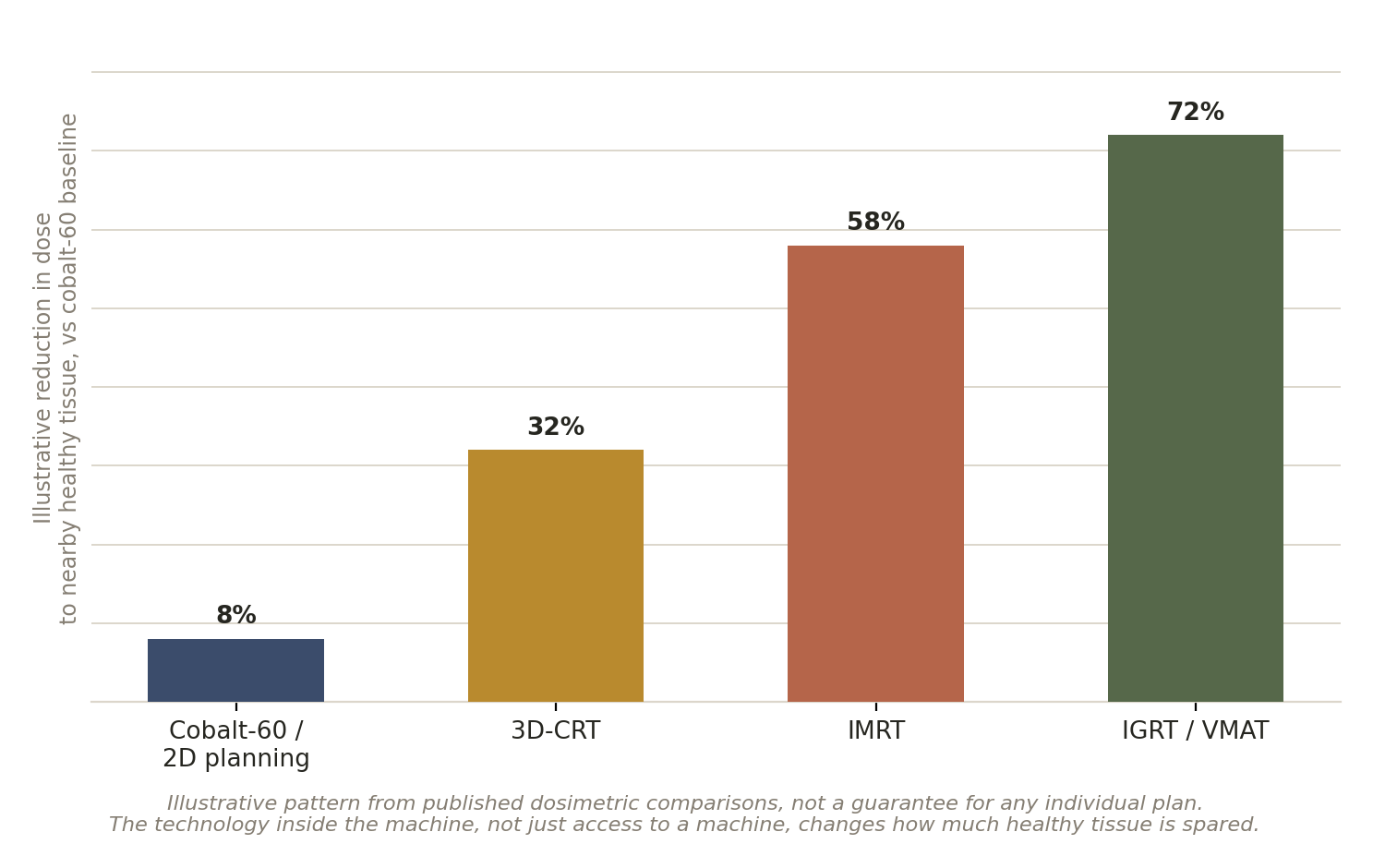
Precision inside the machine changes how much healthy tissue a patient keeps intact.
India's leading radiotherapy centres have run this technology as standard, high-volume practice for well over a decade, with same-week planning-to-treatment turnaround and multidisciplinary oncology teams to sequence radiotherapy correctly alongside surgery and systemic therapy. For a treatment where outcome depends this heavily on both starting promptly and being planned precisely, that combination is not a convenience — for many Ethiopian patients today, it is the more reliable path to the treatment actually working as intended.
5 Gate Five
Is the money arranged?
Ethiopia's health financing does not follow a patient abroad. Community-Based Health Insurance covers contracted facilities inside the country, and the formal-sector scheme still isn't settling claims. Since February 2026 a bank may release up to US$20,000 per case against a letter from the treating hospital, without a visa or ticket in hand.
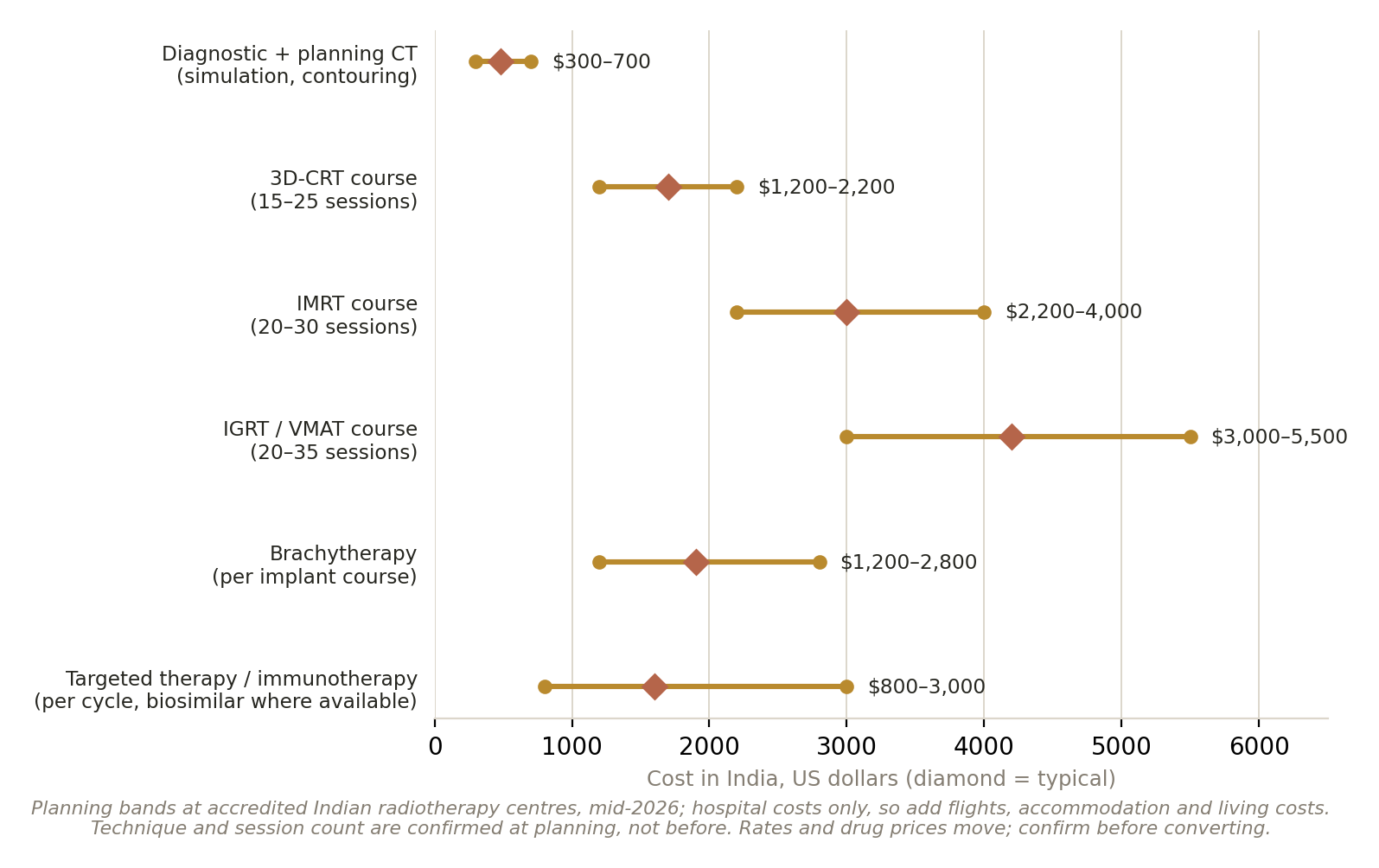
Budget for the technique your oncologist actually recommends, not the most familiar figure.
The figures differ substantially by technique: a straightforward 3D-CRT course sits well below an IMRT or IGRT/VMAT course, which adds precision planning and more frequent imaging verification. Even at the top of these ranges, treatment at an accredited Indian radiotherapy centre remains a fraction of an equivalent course in the Gulf, Europe, or the United States. Confirm the technique your specific cancer calls for before assuming any single number applies to your case.
| A quotation, annotatedA composite of the radiotherapy quotes that reach me, with the questions I send back. | |
| Radiotherapy course — USD 3,500 | 3D-CRT, IMRT, or IGRT/VMAT? The technique changes both price and precision. |
| Includes: planning CT and simulation | Reasonable. Ask how many days this adds before the first treatment session. |
| 25 sessions, 5 days a week | Ask what happens to the schedule and price if more sessions are needed. |
| Excludes: concurrent chemotherapy | Ask whether your cancer typically needs chemoradiation, and its separate cost. |
| Excludes: brachytherapy boost | Ask whether your cancer type (e.g. cervical) typically needs this on top of external beam. |
| Excludes: accommodation for the full course | A multi-week daily course needs local stay — ask what's arranged nearby. |
In 24 years the radiotherapy patients most satisfied with their outcome were the ones who treated the calendar as seriously as the price — asking not just what a course would cost, but how many days would pass between a confirmed plan and the first session.
The Ethiopian practicalities
Ethiopian Airlines flies non-stop from Bole to Delhi, Mumbai, Bengaluru, Chennai, and Hyderabad. Since a radiotherapy course runs daily over several weeks, book accommodation near the treatment centre rather than assuming a hospital stay throughout. Yellow fever certification is required at least ten days before arrival, oral polio vaccination roughly four weeks before. The medical visa follows the hospital's invitation letter through the Embassy of India, Addis Ababa; because the course is long, confirm the visa validity covers the full treatment length plus a margin for any extra sessions. Where treatment spans the Orthodox fasting calendar, raise this with the hospital's dietary team beforehand. Confirm current rules with the Embassy, since they change, and ask for an Amharic-speaking coordinator to carry a written follow-up plan back to a named oncologist in Ethiopia.
Straight Answers for Ethiopian Patients about Radiotherapy and Modern Cancer Treatments in India
Does every cancer diagnosis need radiotherapy?
No. It is used to cure early disease, shrink a tumour before surgery, clean up microscopic disease after surgery, or relieve symptoms in advanced disease. Many cancers are treated well with surgery or systemic therapy alone. Ask specifically why it's being recommended for your case.
How long is the wait for radiotherapy in Ethiopia?
Published data from Addis Ababa found a median wait of 477 days for cervical cancer patients between diagnosis and radical radiotherapy, against a recommended maximum of six weeks. More than half of patients in that study died before treatment began.
What is the difference between cobalt-60 and a modern linear accelerator?
Cobalt-60 delivers radiation from a fixed source with wider treatment margins, exposing more healthy tissue. Modern linear accelerators with IMRT, IGRT, or VMAT planning shape the dose tightly around the tumour, sparing more surrounding tissue for an equivalent tumour dose.
How long does radiotherapy treatment in India take?
A typical curative course runs 15 to 35 daily sessions over three to seven weeks, usually as an outpatient. Planning and simulation beforehand take three to five days, with any systemic therapy scheduled around the same visit.
Who pays for this in Ethiopia?
You do. Neither Community-Based Health Insurance nor the pending formal-sector scheme funds treatment abroad, though a bank may now advance up to US$20,000 against the treating hospital's letter.
A closing word
Send the pathology confirming your diagnosis, any imaging, and the treatment plan if one has already been proposed, including which radiotherapy technique and how many sessions. I will tell you honestly whether radiotherapy is the right next step, and if timing matters as much as I suspect it will, why India's capacity to start promptly is the most important number in this entire guide.
Sources
- 🌐 Rick TJ, Habtamu B, Abreha A, et al. Ethiopia: how the care of 100 million people pivots on a single cobalt teletherapy machine
- 🌐 Feyisa JD, Woldegeorgis MA, Zingeta GT, et al. Cervical cancer progression in patients waiting for radiotherapy treatment at a referral center in Ethiopia: a longitudinal study
- 🌐 Dereje N, Addissie A, Worku A, et al. Association between waiting time for radiotherapy initiation and disease progression among women with cervical cancer in Addis Ababa, Ethiopia
- 🌐 National Medical Commission of India — Indian Medical Register, for verifying a treating oncologist's qualification and registration
- 🌐 National Accreditation Board for Hospitals & Healthcare Providers (NABH), Quality Council of India
- 🌐 National Bank of Ethiopia Directive FXD/04/2026 (foreign exchange, advance payments for treatment abroad); Embassy of India, Addis Ababa
Frequently Asked Questions by Ethiopians about Radiotherapy and Modern Cancer Treatments in India
Does every cancer patient need radiotherapy?
No. Radiotherapy is used for specific treatment goals, including curing certain cancers, shrinking tumours before surgery, treating microscopic disease after surgery or relieving symptoms in advanced cancer.
What radiotherapy techniques are available in India?
The guide covers 3D-CRT, IMRT, IGRT and VMAT, along with brachytherapy for selected cancers. The appropriate technique depends on the cancer type, location and treatment objective.
Why is treatment waiting time important?
Delaying radiation can allow some cancers to progress. The cited Ethiopian study found a median 477-day wait for radical radiotherapy in cervical cancer patients, compared with a recommended maximum of six weeks.
What is the difference between cobalt-60 and a linear accelerator?
Cobalt-60 uses a fixed radiation source and generally has wider treatment margins. Modern linear accelerators can use IMRT, IGRT or VMAT planning to shape radiation more precisely around the tumour.
How much does radiotherapy cost in India?
The document gives indicative ranges of USD 1,200–2,200 for 3D-CRT, USD 2,200–4,000 for IMRT and USD 3,000–5,500 for IGRT/VMAT. Planning, chemotherapy, brachytherapy and other services may be additional.
How many radiotherapy sessions are usually required?
A typical curative course may involve 15–35 daily sessions over approximately three to seven weeks, depending on the cancer and treatment protocol.
How long does planning take before radiotherapy starts?
The guide states that CT simulation and treatment planning generally take around three to five days. At suitable Indian centres, treatment may then begin within approximately one to two weeks of a confirmed plan.
Can radiotherapy be combined with chemotherapy?
Yes. Some cancers require concurrent chemoradiation. The document's annotated quotation specifically advises patients to confirm whether concurrent chemotherapy is required and whether it is included in the quoted treatment cost.
Do Ethiopian patients need accommodation in India during radiotherapy?
Usually, yes. Because radiotherapy is generally delivered on multiple treatment days over several weeks, the guide recommends arranging accommodation close to the treatment centre rather than assuming a continuous hospital stay.
What should Ethiopian patients check before accepting a radiotherapy quotation?
Patients should confirm the exact radiotherapy technique, number of sessions, planning CT, concurrent chemotherapy, possible brachytherapy, accommodation and the cost of additional sessions. The quotation on page 6 specifically highlights these points.
Page Summary
This guide explains when radiotherapy may be appropriate for Ethiopian cancer patients and examines Ethiopia's radiotherapy capacity, treatment waiting times and access to modern radiation technology. It compares conventional and modern techniques such as 3D-CRT, IMRT, IGRT and VMAT, while also covering indicative treatment costs, treatment duration, travel preparation and important questions to ask before accepting a radiotherapy package in India.
Citation Block
| Topic | Information |
|---|---|
| Topic Information | Radiotherapy and Modern Cancer Treatments in India for Ethiopian Patients |
| Treatment | Radiotherapy |
| Country | India |
| Intended Audience | Ethiopian Patients |
| Primary Condition | Cancer |
| Main Treatment Goals | Curative, Pre-operative, Post-operative and Palliative |
| Main Techniques | 3D-CRT, IMRT, IGRT and VMAT |
| Key Planning | CT Simulation and Treatment Planning |
| Ethiopia Published Median Wait | 477 Days |
| Recommended Maximum | Six Weeks |
| 3D-CRT Course | USD 1,200–2,200 |
| IMRT Course | USD 2,200–4,000 |
| IGRT/VMAT Course | USD 3,000–5,500 |
| Brachytherapy | USD 1,200–2,800 |
| Targeted Therapy/Immunotherapy | USD 800–3,000 Per Cycle |
| Diagnostic + Planning CT | USD 300–700 |
| Typical Sessions | 15–35 |
| Typical Duration | 3–7 Weeks |
| Key Specialists | Radiation Oncologist and Multidisciplinary Cancer Team |
| Why Consider India | Modern Radiotherapy Technology and Faster Access |
| Travel Requirement | Medical Visa and Required Vaccinations |
| Important Documents | Pathology, Imaging and Treatment Plan |
| Follow-Up | Continued Oncology Care in Ethiopia |
| Payment Advice | Confirm Technique and Package Inclusions |
| Author | Dr. Dheeraj Bojwani |
| Experience | 24+ Years |


Our Mission Statement
Our mission is to place patients at the centre of every healthcare decision by providing trustworthy, evidence-based, and unbiased medical information. We believe that informed patients make better decisions. Backed by personalised guidance from our experienced advisory team, we help patients understand their treatment options, compare them objectively, and confidently choose the path that best suits their medical needs and personal circumstances.
Patient Testimonials from Ethiopia










Ready to Take the First Step?
Share your Medical Reports with our Healthcare Managers Today and Get a FREE CONSULTATION, a Personalized Treatment Plan, and Complete Support from Arrival to Recovery.
Get Your Free ConsultationAreas We Serve
This resource has been thoughtfully prepared for patients from Ethiopia who are considering medical treatment in India. We also welcome patients from the wider region in the countries mentioned below-
We assist patients from:
- Eritrea
- Djibouti
- Somalia
- Kenya
- Sudan
- Burundi
- Comoros
- Ethiopia
- Madagascar
- Malawi
- Mauritius
- Mozambique
- Rwanda
- South Sudan
Many of the insights, treatment pathways, hospital recommendations, travel guidance, and patient support services described here are equally relevant and may be used as a reference when planning treatment in India.
From Ethiopia to India: Your Complete Patient Support Guide
- Brain Tumour Surgery in India for Ethiopians
- Cancer Treatment in India for Ethiopians
- Cardiac Surgery in India for Ethiopian Patients
- Cervical and Disc Replacement Surgery in India for Ethiopians
- Cosmetic and Plastic Surgery in India for Ethiopians
- CyberKnife Treatment in India for Ethiopians
- Eye Surgery in India for Ethiopians
- Gamma Knife Treatment in India for Ethiopians
- Heart Valve Replacement Surgery in India for Ethiopians
- Hip Surgery in India for Ethiopian Patients
- Knee Surgery in India for Ethiopian Patients
- Laparoscopic and Robotic Myomectomy Surgery in India for Ethiopians
- Neurosurgery in India for Ethiopians
- Paediatric Cardiac Surgery in India for Ethiopians
- Paediatric Neurosurgery in India for Ethiopians
- Prostate Cancer Treatment and Surgery in India for Ethiopians
- Robotic Cancer Surgery in India for Ethiopians
- Scoliosis Surgery in India for Ethiopians