

Plastic and Reconstructive Surgery for Ethiopian Patients in India
Five gates every burn scar or hand injury should pass before booking a flight — and why, for reconstructive surgery specifically, the calendar matters almost as much as the surgeon: the same injury, treated early or treated late, is often two very different operations.
Plastic and reconstructive surgery covers a wide field, and it is worth being clear from the start that this guide is not about elective cosmetic procedures. It is about restoring function after burns and traumatic hand injuries — the two conditions that, by Ethiopia's own hospital data, dominate the caseload of the country's dedicated reconstructive surgery units. In 24 years of arranging surgical care in India for patients across Africa and Asia, this is a field defined by a fact that deserves to be said plainly: reconstruction delayed is reconstruction made harder, and a scar left to mature and tighten across a joint becomes a fundamentally more difficult problem to fix than the same scar addressed within weeks of injury. Burn injuries carry real, documented risk in Ethiopian hospitals, with mortality driven substantially by inadequate early fluid resuscitation, a correctable acute-care factor rather than an unavoidable one. For survivors, the reconstructive story continues well past hospital discharge: a burn scar crossing a joint continues to contract for months, and every month of delay narrows the surgical options and widens the gap between what a simple release could have achieved and what a more complex operation is now required to attempt. Hand trauma tells a related story — the second most common reason patients present to Ethiopia's flagship reconstructive surgery unit, with caseloads reported to have doubled over a recent two-year period. India's high-volume plastic and reconstructive surgery centres treat both conditions, at every stage from fresh injury to old, established contracture, as routine practice. These five gates walk through whether a specific scar or injury needs reconstructive surgery, why timing shapes the entire treatment path, and why India is where that treatment, at whatever stage it's reached, is reliably available.
Healing Journeys of Ethiopian Patients
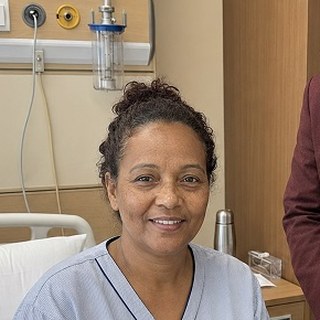
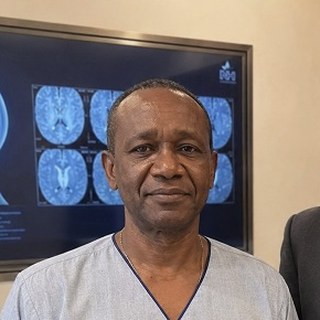
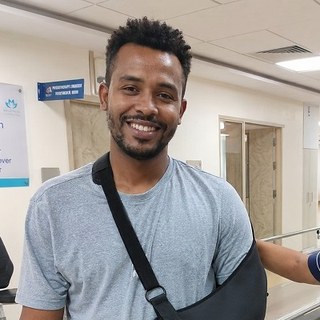
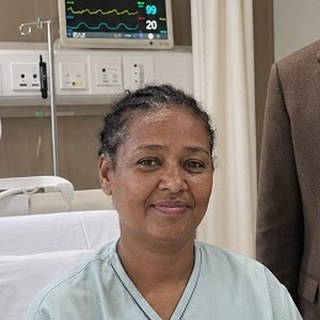
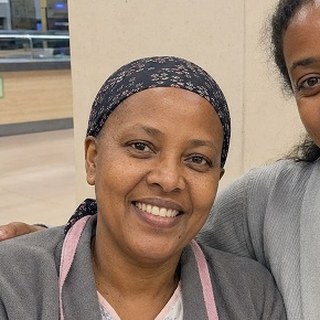

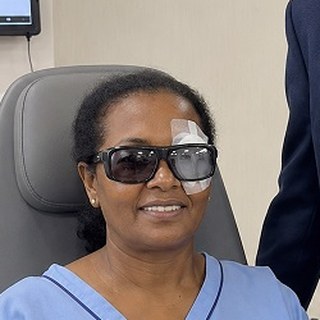
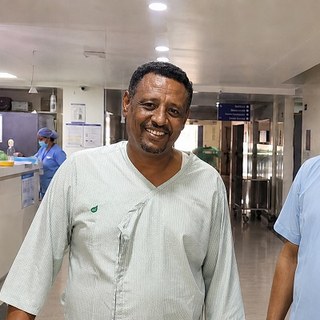
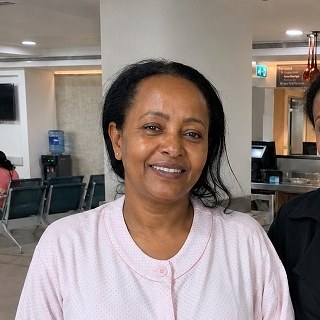
Key Takeaways
- The guide focuses specifically on functional reconstruction after burns and traumatic hand injuries, rather than elective cosmetic surgery. It explains that a scar becomes a functional concern when it crosses a joint and restricts movement, gripping, limb extension or a child's growth.
- Timing is presented as one of the most important factors. The page 2 chart shows a 14.9% documented burn complication rate and 6.99% pooled mortality rate in the cited Ethiopian hospital literature, while the guide stresses that inadequate early fluid resuscitation is a major correctable contributor to burn mortality.
- For survivors, delay can make reconstruction more complex. The page 3 illustrative chart shows that contractures treated within weeks are more likely to require simple release or grafting, whereas injuries left untreated for two years or more are more likely to require complex flap or staged reconstruction.
- The guide distinguishes between burn contracture and traumatic hand reconstruction. Burn contractures may require skin grafts or flap techniques, while hand injuries may require tendon repair and microsurgical precision. Ethiopian data cited in the guide also shows hand-injury presentations doubling over a two-year period at a dedicated reconstructive unit.
- The page 5 cost chart gives indicative Indian planning ranges of US$1,000–2,500 for split-thickness skin grafting, US$1,500–3,000 for Z-plasty/local flap reconstruction, US$3,500–7,000 for complex contracture release and US$1,500–3,500 for hand tendon repair/reconstruction.
- The guide explains that reconstructive surgery is available in Ethiopia, including a dedicated plastic, reconstructive and hand surgery unit operating since 2000, but capacity is concentrated in a small number of centres. For patients travelling to India, it recommends confirming injury-specific expertise, whether surgery will be one-stage or staged, structured physiotherapy and a written rehabilitation plan for continuation in Ethiopia.
Quick Facts
- Treatment
- Reconstructive Surgery
- Country
- India
- Patients
- Ethiopian Patients
- Main Areas
- Burns & Hand Injuries
- Key Conditions
- Contracture & Hand Trauma
- Key Specialist
- Plastic / Reconstructive Surgeon
- Main Focus
- Functional Restoration
- Key Techniques
- Grafts, Flaps & Microsurgery
- Skin Grafting
- US$1,000–2,500
- Complex Release
- US$3,500–7,000
- Hand Reconstruction
- US$1,500–3,500
- Hospital Stay
- 3–10 Days
- Total Stay
- About 2–3 Weeks
- Rehabilitation
- Structured Physiotherapy
- Key Check
- Injury-Specific Experience
- Cost Check
- One-Stage vs Staged Surgery
- Follow-Up
- Ethiopian Physiotherapist
- Warning Sign
- Delayed Contracture Treatment
- Author
- Dr. Dheeraj Bojwani
- Experience
- 24+ Years
In Brief
For Ethiopian patients considering reconstructive surgery in India, the guide recommends first determining whether a scar is merely cosmetic or a contracture that restricts function. Patients should send photographs, explain when the injury occurred and describe its effect on movement. The surgeon should have specific experience with the actual problem, whether burn contracture, hand trauma, tendon reconstruction or microsurgery. The quotation should clarify graft or flap requirements, hospital stay, possible staged procedures and physiotherapy. A written rehabilitation programme should be arranged before returning to Ethiopia.
1 Gate One
A scar, or a contracture?
A burn scar or a healed injury is what usually starts this conversation, and the honest first question is what that scar is actually doing, not just how it looks. A flat, supple scar that doesn't restrict movement is often a cosmetic concern, manageable without surgery. A scar that crosses a joint — the elbow, the neck, the fingers — and pulls the skin tight enough to limit movement is a contracture, and this is a functional problem, not a cosmetic one.
Ask specifically whether the scar limits range of motion, growth in a child, or daily function such as gripping or fully extending a limb. This distinction changes everything about the urgency and the right next step.
2 Gate Two
Why timing matters twice over
Timing matters first for survival, and Ethiopian hospital data is specific about where the risk lies.
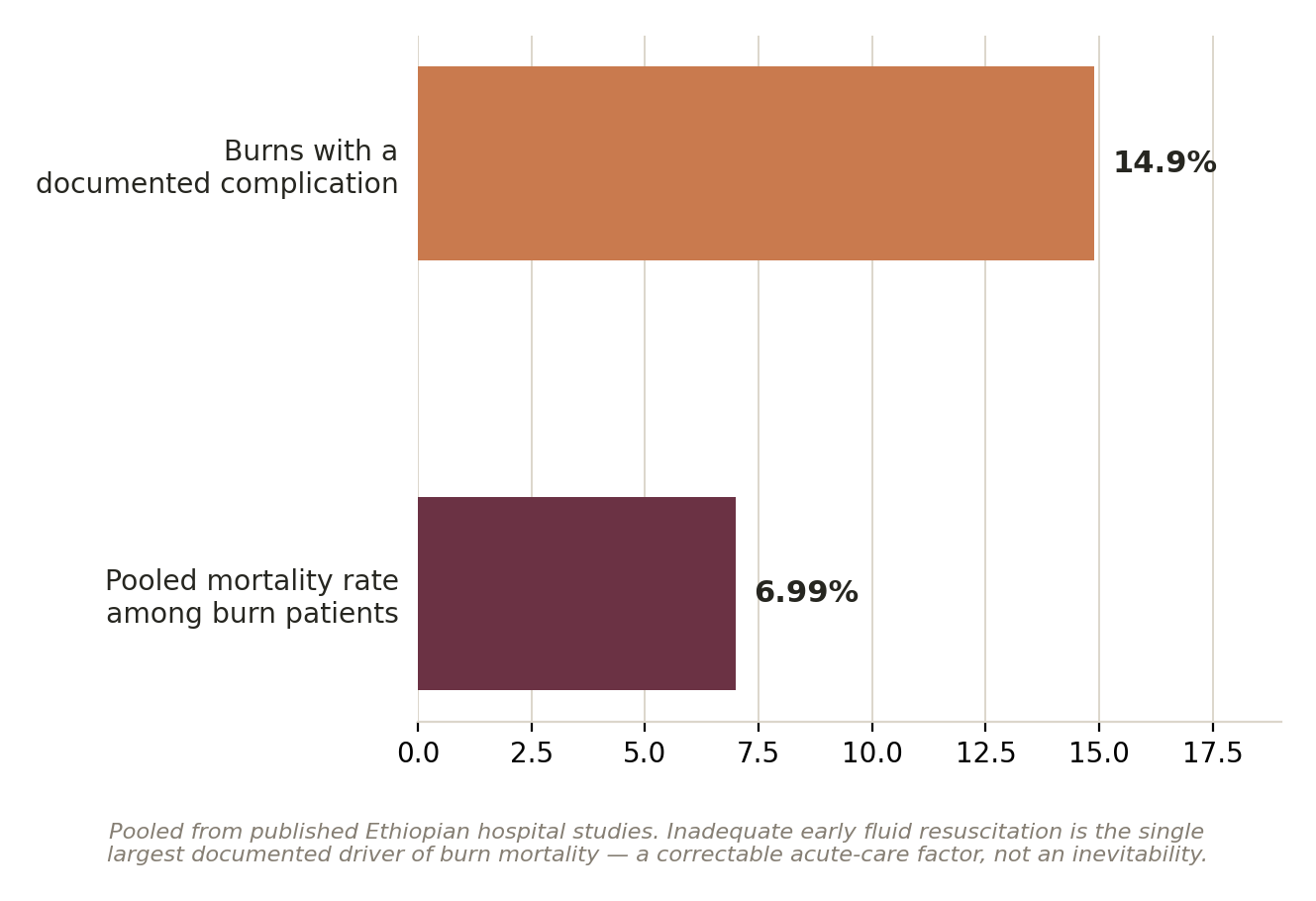
Much of this risk traces to correctable acute-care factors, not the severity of the burn alone.
For survivors, timing matters again, in a different way: for how well a scar's function can ultimately be restored.
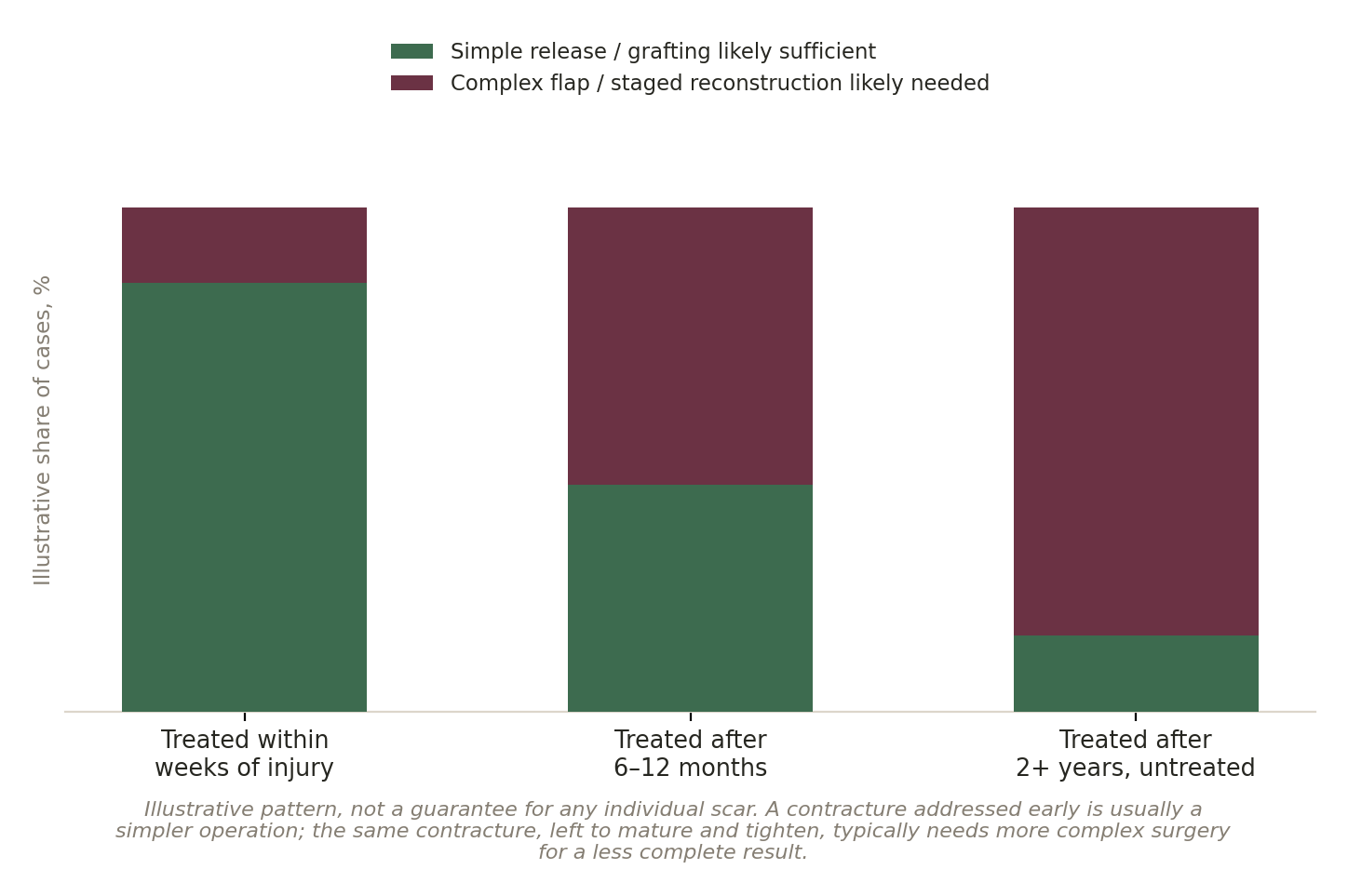
The same contracture, addressed early or left to mature, is often two genuinely different operations.
Why this deserves acting on, not just knowing: a contracture doesn't announce a deadline. It simply becomes gradually less correctable with simple techniques as scar tissue matures over months. If a scar is limiting movement, treat the timing itself as part of the urgency, not just the injury.
3 Gate Three
Burns, or hands, or both?
Published data from Ethiopia's own dedicated plastic and reconstructive surgery service, at Yekatit 12 Hospital in Addis Ababa, describes burns as the most common reason patients present, with traumatic hand injury second. Both need reconstructive expertise, but not the same expertise: burn contracture release depends on skin grafting and flap technique, while hand trauma often needs tendon repair and microsurgical precision to restore fine motor function, not just close a wound.
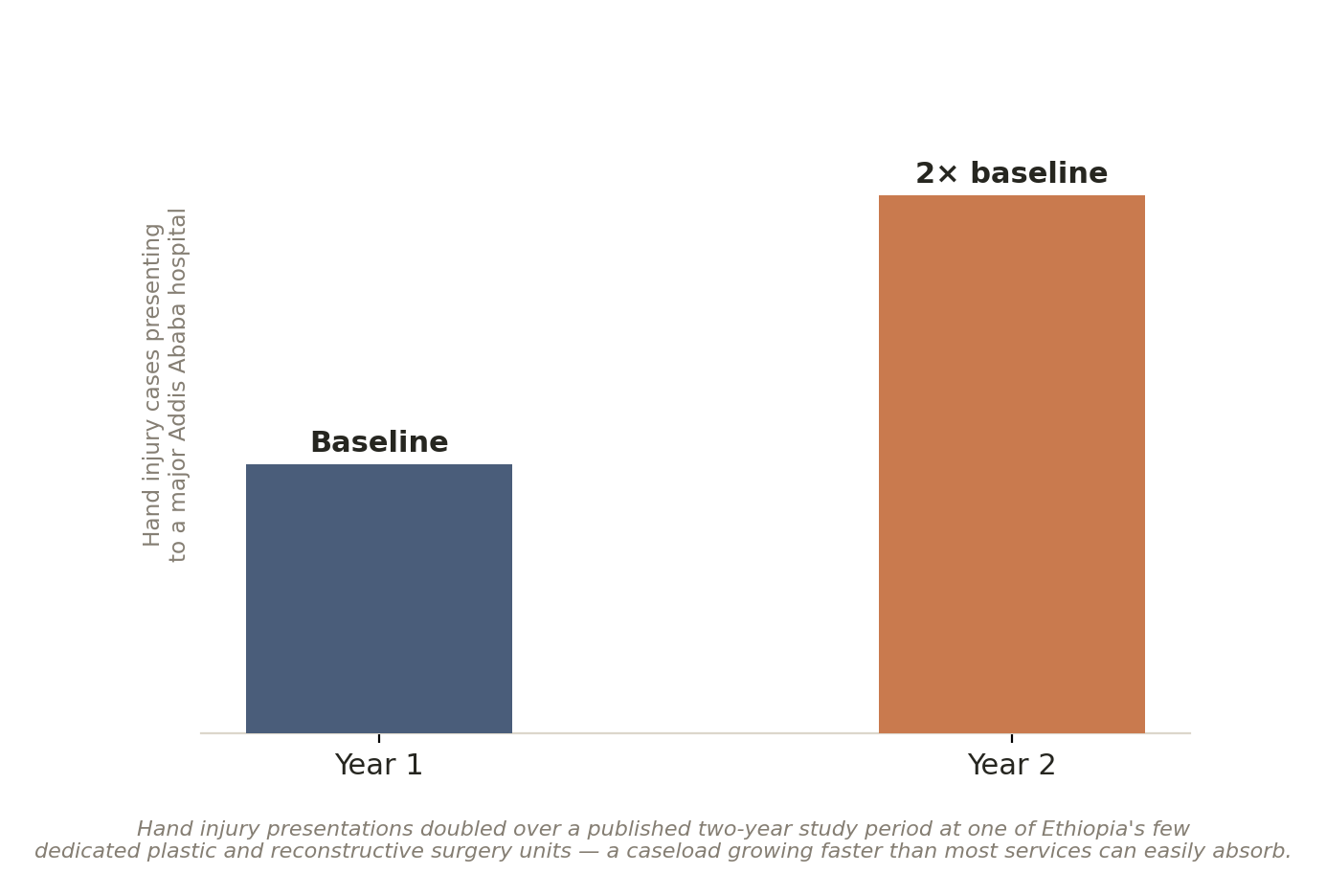
A caseload doubling in two years, at one of the country's few dedicated units for this kind of injury.
Ask specifically whether the surgeon being consulted has specific experience with your type of injury — burn contracture and hand trauma are related fields, but genuine expertise in one doesn't automatically transfer to the other.
4 Gate Four
Could this be done in Ethiopia?
To a real degree, yes, and this deserves genuine recognition: Ethiopia has run a dedicated plastic, reconstructive, and hand surgery unit since 2000, and the surgeons there have real, documented experience with exactly these conditions. The honest complication is one of capacity relative to demand — published data showing hand injury caseloads doubling in two years suggests a service under growing pressure, concentrated in a small number of centres, mostly in Addis Ababa.
This is precisely where India's high-volume plastic and reconstructive surgery centres add genuine, comparative depth: surgeons managing burn and hand reconstruction as defined subspecialties with substantial case volume, the full range of grafting, flap, and microsurgical techniques available, and capacity that isn't stretched by a rapidly growing local caseload. For an injury where the difference between simple and complex reconstruction often comes down to how soon it's addressed, that available capacity is not a convenience — it's what actually keeps the treatment window open. Ask any centre how many burn contracture or hand reconstruction cases they manage each year.
5 Gate Five
Is the money arranged?
Ethiopia's health financing does not follow a patient abroad. Community-Based Health Insurance covers contracted facilities inside the country, and the formal-sector scheme still isn't settling claims. Since February 2026 a bank may release up to US$20,000 per case against a letter from the treating hospital, without a visa or ticket in hand.
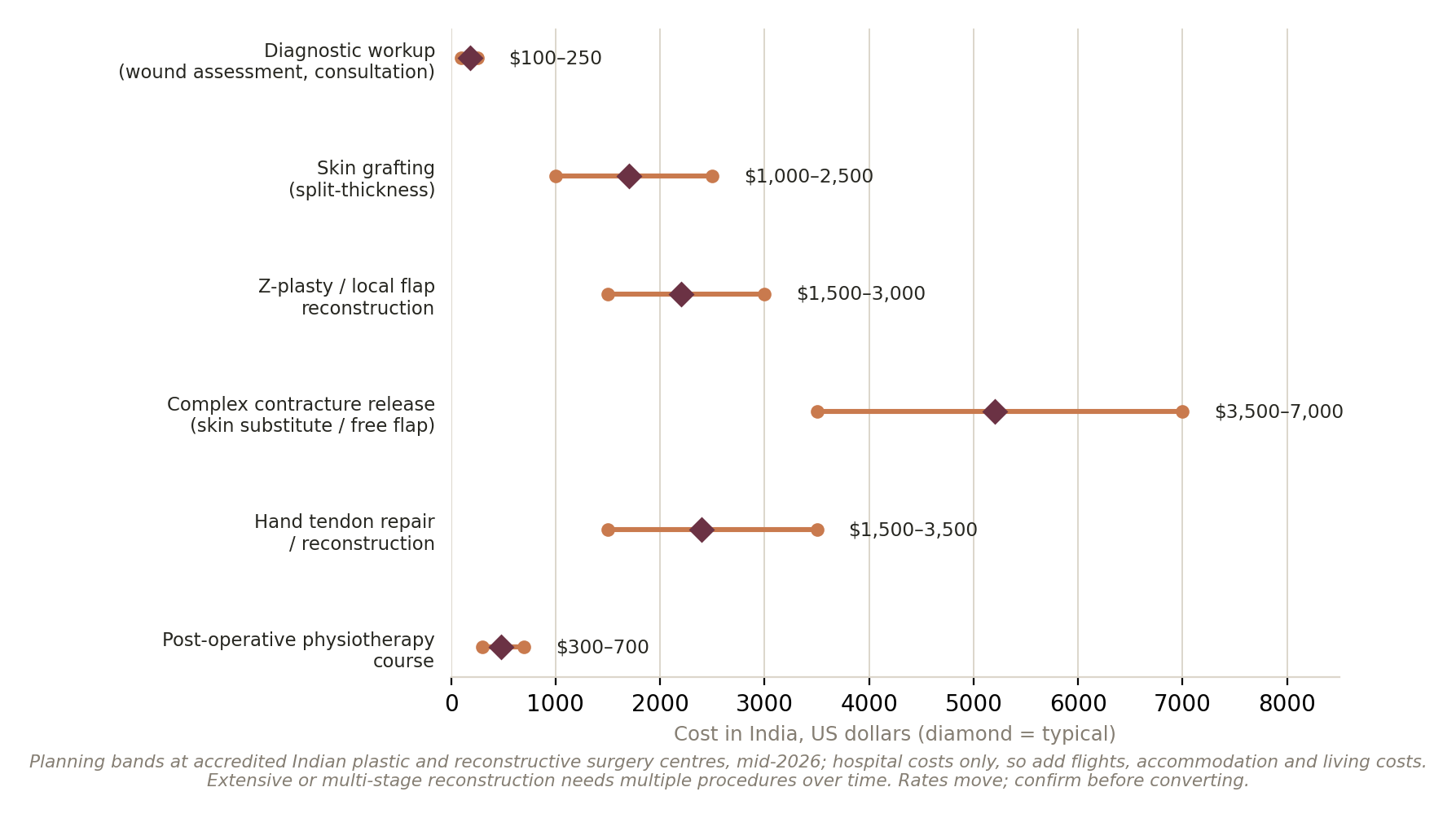
Budget for the complexity your specific injury and its timing actually require.
The figures differ substantially by complexity: a straightforward skin graft sits well below a complex contracture release needing a flap or skin substitute, and hand tendon reconstruction falls in between. Even at the top of these ranges, treatment at an accredited Indian reconstructive surgery centre remains a fraction of an equivalent case in the Gulf, Europe, or the United States. Confirm the specific procedure and whether staged surgery is needed before assuming any single number applies to your case.
| A quotation, annotatedA composite of the reconstructive surgery quotes that reach me, with the questions I send back. | |
| Contracture release — USD 3,200 | How long since the injury? This affects whether a simple release or a complex flap is actually needed. |
| Includes: skin graft | Ask whether a graft alone will fully restore movement, or whether a flap is more appropriate. |
| Includes: 4 days admission | Reasonable for a single-stage procedure. Ask what a staged approach would add. |
| Surgeon: plastic surgery generalist | For hand injuries specifically, ask about hand-surgery or microsurgical subspecialty experience. |
| Excludes: post-operative physiotherapy | Ask for a structured physiotherapy plan, since this affects the final functional outcome substantially. |
| Excludes: a second procedure if staged | Ask directly whether this is likely to be a one-stage or multi-stage reconstruction. |
In 24 years the reconstructive surgery patients most satisfied with their outcome were the ones who sought treatment as soon as a contracture was recognised, not after it had settled in.
The Ethiopian practicalities
Ethiopian Airlines flies non-stop from Bole to Delhi, Mumbai, Bengaluru, Chennai, and Hyderabad. For staged reconstruction, plan for either an extended single stay or multiple shorter trips, depending on the surgical plan; ask the treating centre which they recommend. Yellow fever certification is required at least ten days before arrival, oral polio vaccination roughly four weeks before. The medical visa follows the hospital's invitation letter through the Embassy of India, Addis Ababa. Arrange a structured physiotherapy plan before leaving India, ideally with a written programme a physiotherapist in Ethiopia can continue, since ongoing therapy affects the final functional result as much as the surgery itself. Confirm current rules with the Embassy, since they change, and ask for an Amharic-speaking coordinator to carry that written plan back to a named provider in Ethiopia.
Straight Answers for Ethiopian Patients about Plastic and Reconstructive Surgery in India
I have a burn scar. Does it need surgery?
Not always. A flat scar that doesn't restrict movement is often a cosmetic concern. A scar that crosses a joint and limits movement is a contracture, and generally does need reconstructive surgery to restore function.
Why does timing matter so much for burn reconstruction?
A burn scar continues to tighten for months, especially across a joint. Addressed within weeks to a few months, a simple release and graft often suffices. Left a year or more, it typically needs more complex flap surgery for a less complete result.
Is reconstructive surgery for burns and hand injuries available in Ethiopia?
Yes, at a small number of dedicated centres, notably a specialist unit in Addis Ababa since 2000. Genuine expertise exists there, though published data shows caseload, particularly for hand injuries, growing faster than capacity.
How long does reconstructive surgery in India take?
A single skin graft needs three to five days. Complex flap reconstruction may need seven to ten days, sometimes staged. Most patients plan two to three weeks total, including early physiotherapy.
Who pays for this in Ethiopia?
You do. Neither Community-Based Health Insurance nor the pending formal-sector scheme funds treatment abroad, though a bank may now advance up to US$20,000 against the treating hospital's letter.
A closing word
Send photographs of the scar or injury, when it happened, and how it currently affects movement or function. I will tell you honestly whether this looks like a case for reconstruction, how urgently, and why India's plastic and reconstructive surgery centres are where that treatment, at whatever stage it's reached, is reliably available.
Sources
- 🌐 Treatment outcome and associated factors of burn injury in Ethiopian hospitals: a systematic review and meta-analysis. PubMed. 2025
- 🌐 Outcome of burn injury and its associated factors among burn patients attending public hospitals in North Showa Zone, Ethiopia
- 🌐 Common causes and types of hand injuries and their pattern of occurrence in Yekatit 12 Hospital, Addis Ababa, Ethiopia. PMC. 2019
- 🌐 National Medical Commission of India — Indian Medical Register, for verifying a treating plastic surgeon's qualification and registration
- 🌐 National Bank of Ethiopia Directive FXD/04/2026 (foreign exchange, advance payments for treatment abroad); Embassy of India, Addis Ababa
Frequently Asked Questions by Ethiopians about Plastic and Reconstructive Surgery in India
Does every burn scar require reconstructive surgery?
No. A flat, supple scar that does not restrict movement may not require surgery. A scar crossing a joint and limiting movement is a contracture and may require reconstruction.
Why is timing important for burn reconstruction?
Burn scars can continue tightening for months. Early treatment may allow a simpler release and graft, while long-standing contractures may require more complex flap or staged reconstruction.
What types of injuries does the guide cover?
It focuses on burn contractures and traumatic hand injuries, including cases requiring grafting, flap reconstruction, tendon repair and microsurgery.
Is reconstructive surgery available in Ethiopia?
Yes. The guide states that Ethiopia has dedicated plastic, reconstructive and hand surgery services, including a specialist unit operating since 2000, although capacity is concentrated in a limited number of centres.
What should patients ask about the surgeon?
Patients should ask whether the surgeon has specific experience with their injury. Experience with burn contractures does not automatically mean equivalent expertise in complex hand trauma or microsurgery.
How much does skin grafting cost in India?
The guide gives an indicative range of US$1,000–2,500 for split-thickness skin grafting at accredited Indian reconstructive surgery centres.
What does complex contracture release cost?
The indicative planning range is US$3,500–7,000, depending on the complexity and whether a skin substitute, flap or staged procedure is required.
What should be included in the quotation?
Patients should confirm whether the quotation includes the graft or flap, hospital stay, physiotherapy and any additional procedure if staged reconstruction becomes necessary.
How long may patients need to stay in India?
A single skin graft may require around three to five days, while complex flap reconstruction may require seven to ten days. The guide suggests planning approximately two to three weeks overall, including early physiotherapy.
What should patients arrange before returning to Ethiopia?
A structured physiotherapy programme should be prepared in writing so that a physiotherapist in Ethiopia can continue the rehabilitation. Ongoing therapy is considered an important part of the final functional result.
Page Summary
This seven-page guide helps Ethiopian patients evaluate plastic and reconstructive surgery in India for burn scars and traumatic hand injuries, with emphasis on restoring movement and function. It explains why timing matters because mature contractures can require more complex reconstruction. The guide distinguishes burn contracture treatment from hand tendon and microsurgical reconstruction and highlights the importance of injury-specific surgical expertise. The page 2 chart presents Ethiopian burn complication and mortality figures, while page 5 compares indicative costs for grafting, flap reconstruction and hand repair. The guide also covers travel planning, staged surgery, physiotherapy and continued follow-up in Ethiopia.
Citation Block
| Topic | Information |
|---|---|
| Topic | Plastic & Reconstructive Surgery |
| Treatment | Reconstructive Surgery |
| Country | India |
| Patients | Ethiopian Patients |
| Main Areas | Burns & Hand Injuries |
| Key Conditions | Contracture & Hand Trauma |
| Key Specialist | Plastic / Reconstructive Surgeon |
| Main Focus | Functional Restoration |
| Key Techniques | Grafts, Flaps & Microsurgery |
| Skin Grafting Cost | US$1,000–2,500 |
| Complex Release Cost | US$3,500–7,000 |
| Hand Reconstruction Cost | US$1,500–3,500 |
| Hospital Stay | 3–10 Days |
| Total Stay | About 2–3 Weeks |
| Rehabilitation | Structured Physiotherapy |
| Key Selection Check | Injury-Specific Experience |
| Surgical Planning | One-Stage vs Staged |
| Key Records | Photos & Previous Treatment |
| Follow-Up | Ethiopian Physiotherapist |
| Visa | Indian Medical Visa |
| Warning Sign | Delayed Contracture Treatment |
| Key Questions | Technique, Timing, Cost & Rehabilitation |

Our Mission Statement
Our mission is to place patients at the centre of every healthcare decision by providing trustworthy, evidence-based, and unbiased medical information. We believe that informed patients make better decisions. Backed by personalised guidance from our experienced advisory team, we help patients understand their treatment options, compare them objectively, and confidently choose the path that best suits their medical needs and personal circumstances.
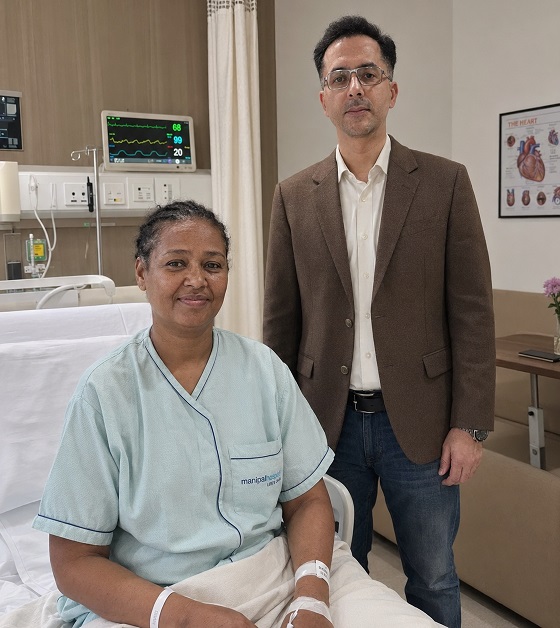
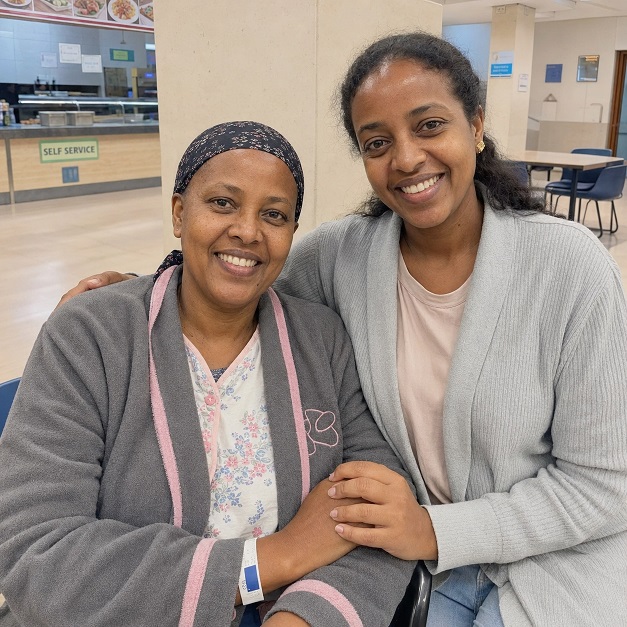
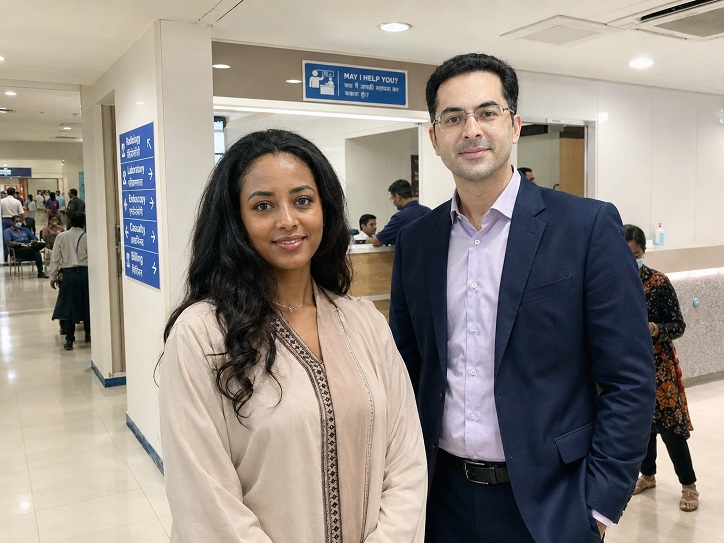
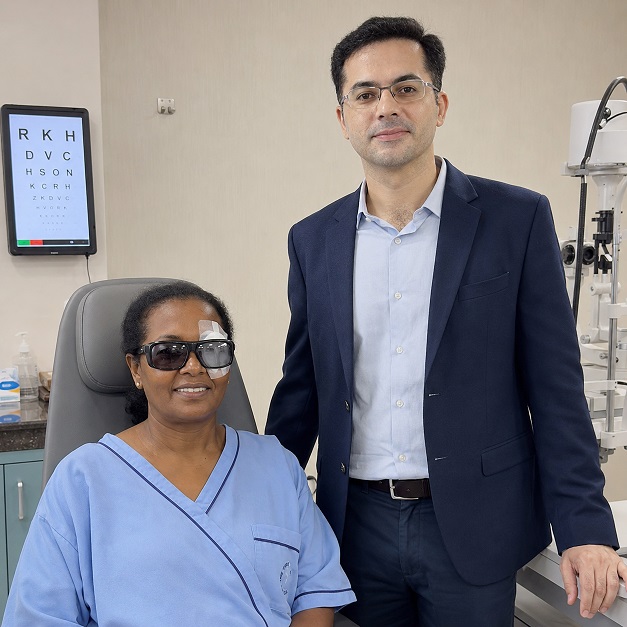
Patient Testimonials from Ethiopia
Ready to Take the First Step?
Share your Medical Reports with our Healthcare Managers Today and Get a FREE CONSULTATION, a Personalized Treatment Plan, and Complete Support from Arrival to Recovery.
Get Your Free ConsultationAreas We Serve
This resource has been thoughtfully prepared for patients from Ethiopia who are considering medical treatment in India. We also welcome patients from the wider region in the countries mentioned below-
We assist patients from:
- Eritrea
- Djibouti
- Somalia
- Kenya
- Sudan
- Burundi
- Comoros
- Ethiopia
- Madagascar
- Malawi
- Mauritius
- Mozambique
- Rwanda
- South Sudan
Many of the insights, treatment pathways, hospital recommendations, travel guidance, and patient support services described here are equally relevant and may be used as a reference when planning treatment in India.
From Ethiopia to India: Your Complete Patient Support Guide
- Brain Tumour Surgery in India for Ethiopians
- Cancer Treatment in India for Ethiopians
- Cardiac Surgery in India for Ethiopian Patients
- Cervical and Disc Replacement Surgery in India for Ethiopians
- Cosmetic and Plastic Surgery in India for Ethiopians
- CyberKnife Treatment in India for Ethiopians
- Eye Surgery in India for Ethiopians
- Gamma Knife Treatment in India for Ethiopians
- Heart Valve Replacement Surgery in India for Ethiopians
- Hip Surgery in India for Ethiopian Patients
- Knee Surgery in India for Ethiopian Patients
- Laparoscopic and Robotic Myomectomy Surgery in India for Ethiopians
- Neurosurgery in India for Ethiopians
- Paediatric Cardiac Surgery in India for Ethiopians
- Paediatric Neurosurgery in India for Ethiopians
- Prostate Cancer Treatment and Surgery in India for Ethiopians
- Robotic Cancer Surgery in India for Ethiopians
- Scoliosis Surgery in India for Ethiopians