

Penile Implant Surgery for Ethiopian Patients in India
Five gates every erectile dysfunction case should pass before considering surgery — starting with a number worth sitting with: almost none of the Ethiopian men found to have this condition in published research had ever discussed it with a doctor.
Erectile dysfunction is often treated as too private to discuss, and that silence has a real medical cost. In 24 years of arranging medical care in India for patients across Africa and Asia, this is a field where the honest starting point isn't the surgery at all — it's the conversation that, for most men, never happens in the first place. Diabetes is the connecting thread. More than half of Ethiopian men with diabetes live with erectile dysfunction, a well- documented complication that typically appears roughly a decade earlier in men with diabetes than in men without it. And yet published Ethiopian research on this exact population found that almost none had ever raised the issue with a doctor or been offered treatment, despite effective options existing at every stage, from simple oral medication through to surgery for the smaller group of men who genuinely need it. This gap between how common the condition is and how rarely it's treated is one of the widest documented anywhere in this series. India's urology and andrology centres treat this full spectrum, from first-line medication through to advanced implant surgery, as routine, confidential, everyday practice. These five gates walk through whether surgery is genuinely the right next step for a specific case, what the real treatment ladder looks like before reaching that point, and why India is where this entire spectrum of care, handled with real discretion, is reliably available.
Healing Journeys of Ethiopian Patients


Key Takeaways
- The guide explains that erectile dysfunction is particularly common among Ethiopian men with diabetes, with the page 2 chart showing a pooled estimate of 54.3% in Ethiopia compared with 71.45% across Africa. It highlights diabetes as an important contributor and notes that ED can develop considerably earlier in men with diabetes.
- A major focus is that penile implant surgery should not be the first treatment. The recommended treatment ladder begins with oral medicines such as sildenafil or tadalafil, followed by options such as vacuum devices or injections when appropriate. Implants are generally considered after these approaches fail or are unsuitable.
- The guide explains two main implant types: malleable and inflatable devices. Malleable implants use bendable rods and are simpler and less expensive, while inflatable implants use a pump, provide a more natural flaccid appearance and involve greater cost and surgical complexity.
- The page 3 chart highlights a significant treatment gap: 97% of Ethiopian men with documented ED in the cited research had never been screened or treated, compared with only 3% who had received screening or treatment. The guide presents this as an important reason to discuss ED openly with a doctor.
- The page 6 cost chart gives indicative Indian planning ranges of US$3,000–5,000 for a malleable implant and US$6,000–13,000 for an inflatable implant. Diagnostic assessment, medication trials, vacuum devices and post-operative follow-up have separate indicative costs.
- The guide also covers practical planning, including choosing a surgeon who performs implants regularly, checking the implant brand and reliability data, understanding warranty and revision costs, arranging confidential follow-up from Ethiopia and planning approximately five to seven days in India, with recovery continuing for four to six weeks.
Quick Facts
- Treatment
- Penile Implant Surgery
- Country
- India
- Patients
- Ethiopian Patients
- Key Condition
- Erectile Dysfunction
- Key Specialist
- Urologist / Andrologist
- Treatment Ladder
- Pills, Pump, Injections & Implant
- Implant Types
- Malleable & Inflatable
- Malleable Cost
- US$3,000–5,000
- Inflatable Cost
- US$6,000–13,000
- Key Check
- Implant Brand & Reliability
- Hospital Stay
- 1–2 Days
- India Stay
- 5–7 Days
- Recovery
- 4–6 Weeks
- Follow-Up
- Ethiopia-Based Doctor
- Key Warning
- Implant Before Trying Other Options
- Author
- Dr. Dheeraj Bojwani
- Experience
- 24+ Years
In Brief
For Ethiopian patients considering penile implant surgery in India, the guide recommends first confirming the cause of erectile dysfunction and reviewing whether oral medication, vacuum therapy or injections have genuinely been tried. Patients should ask about the surgeon's implant experience, the recommended device type, specific implant brand, long-term reliability, warranty and future revision costs. The quotation should clearly state what is included, while follow-up should be arranged with a doctor in Ethiopia. The guide indicates a five-to-seven-day stay in India for the procedure, with full recovery generally continuing over four to six weeks.
1 Gate One
ED, or something else entirely?
Difficulty achieving or maintaining an erection is what usually starts this conversation, and the honest first step is understanding the cause, not assuming the solution. Diabetes, cardiovascular disease, low testosterone, certain medications, and psychological factors can all contribute, often in combination, and each points toward a different starting treatment.
A proper workup, including hormone testing and an assessment of blood flow, is what actually identifies the cause. For men with diabetes specifically, this is worth raising directly with whoever manages that diabetes care, since it is a well-recognised complication that deserves the same routine attention as blood sugar or blood pressure, not a separate, harder conversation left for later. A urologist can usually determine the underlying cause within a single consultation.
2 Gate Two
The silence around a 97% gap
This condition is common, not rare, among men with diabetes in this region.
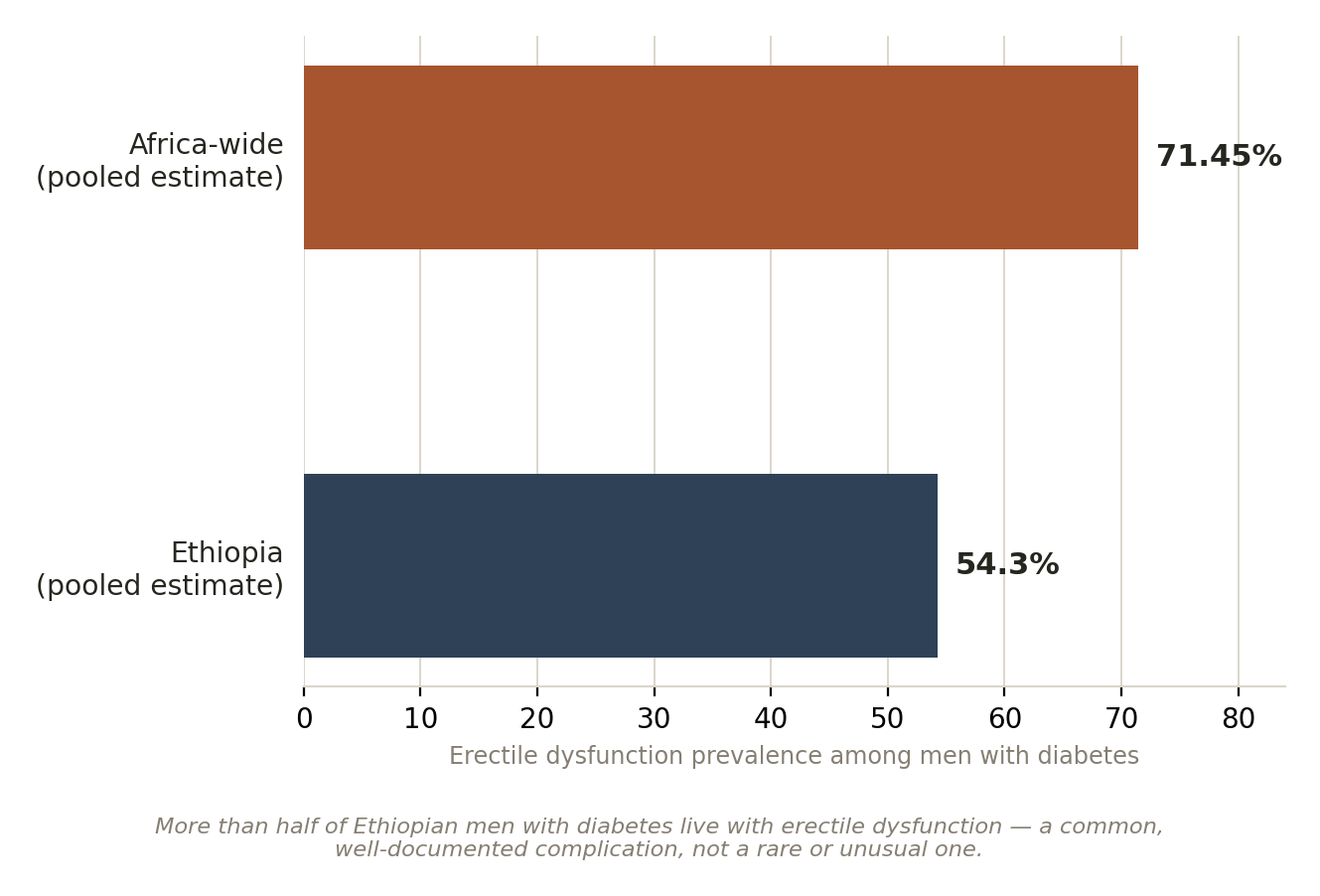
A well-documented, common complication of diabetes, not an unusual or isolated problem.
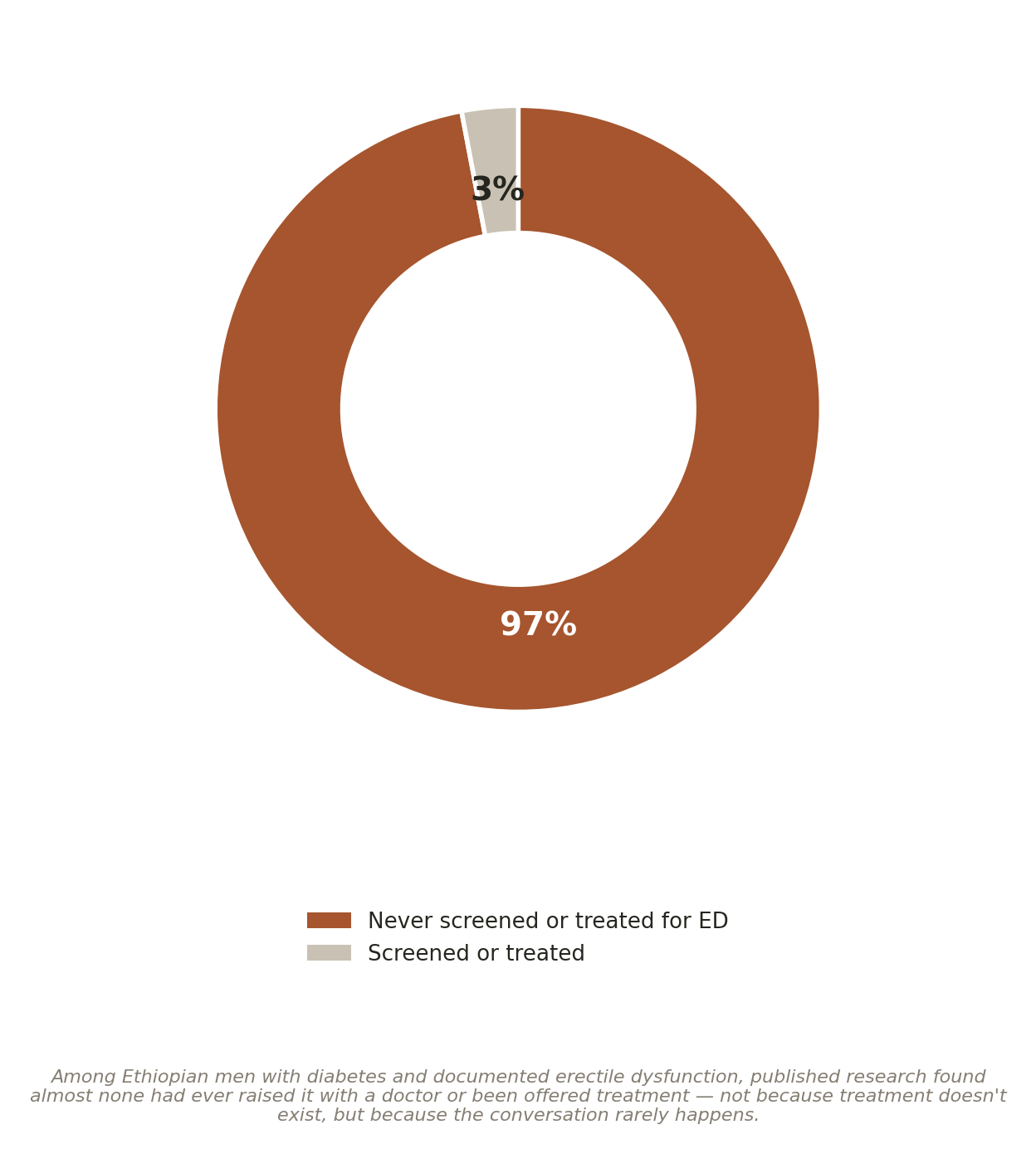
Effective treatment exists at every stage. The gap is almost entirely in the conversation happening at all.
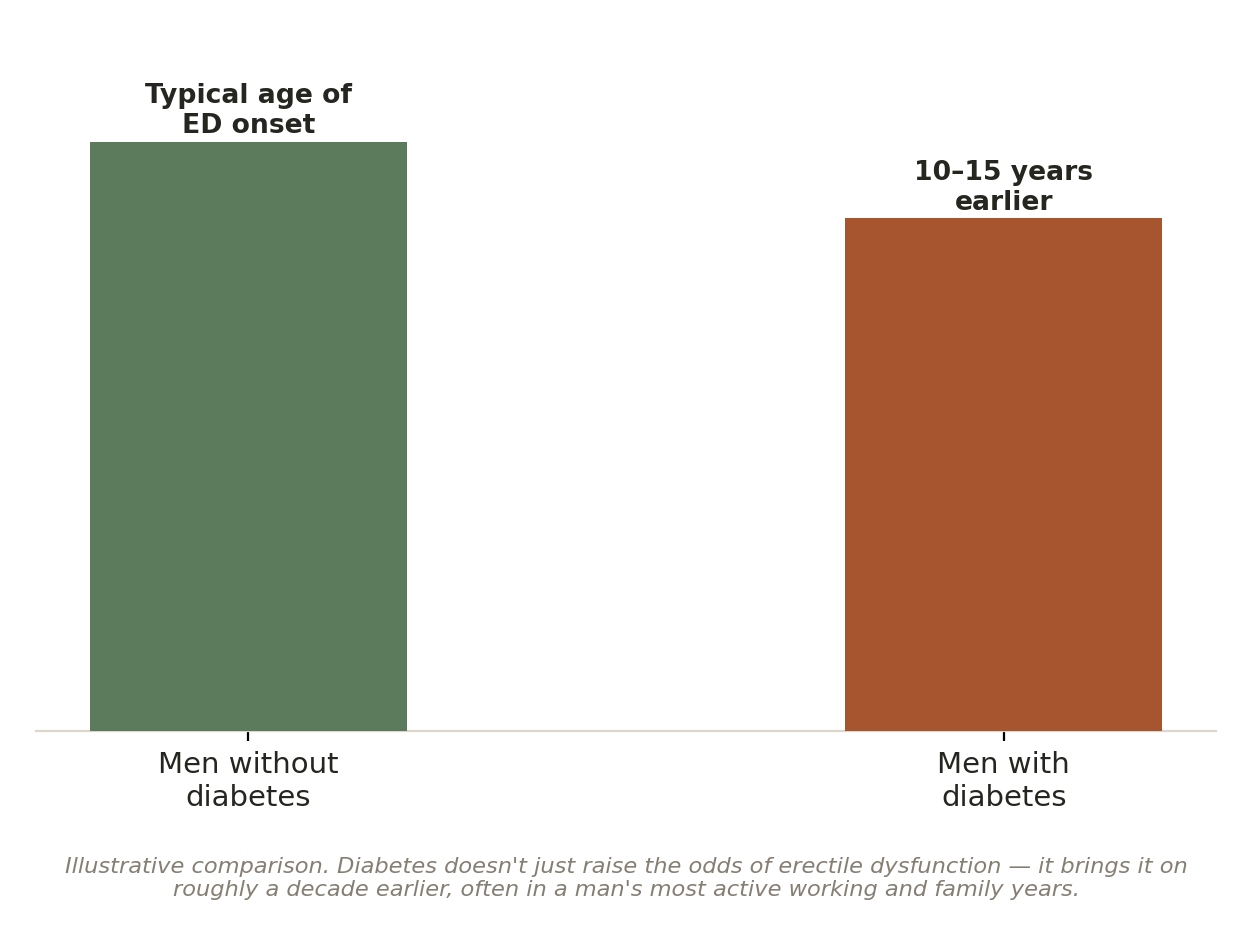
Diabetes brings this condition on roughly a decade earlier, often during a man's most active working and family years.
Why this matters beyond one man's health: a decade of earlier onset often falls during a man's prime working and family years. Treating this as too private to mention delays a genuinely treatable condition during exactly the years it affects most.
3 Gate Three
Pills, pump, or implant?
Surgery is the last step on a treatment ladder, not the first, and a trustworthy urologist will walk through that ladder in order rather than moving straight to the most invasive option. Oral medications such as sildenafil or tadalafil are the standard first-line treatment and work well for many men, including many with diabetes. Vacuum erection devices and injectable medications are effective non-surgical second-line options for men who don't respond to pills or can't take them.
A penile implant is generally considered only once these options have genuinely been tried and haven't worked, or are ruled out for a specific medical reason. Two main implant types exist: a malleable device, simpler and more affordable, with bendable rods positioned manually as needed, and an inflatable device, which creates an erection on demand via a pump mechanism and offers a more natural flaccid appearance, at a higher cost and with more surgical complexity. Both types have high reported satisfaction rates among patients who reach this stage after genuinely exhausting earlier options. Ask specifically what's been tried already before agreeing that implant surgery is the right next step.
4 Gate Four
Could this be done in Ethiopia?
Oral medication is increasingly available in Ethiopia, including through urology clinics in Addis Ababa. The bigger gap, honestly, isn't access to a specific treatment tier — it's the near-total absence of screening described in gate two, which means many men never reach any treatment conversation at all. For men who have exhausted first- and second-line options and genuinely need implant surgery specifically, that level of subspecialised urological expertise is considerably harder to find domestically.
This is precisely where India's urology centres add genuine, comparative depth: andrologists who perform implant surgery as a defined subspecialty with high case volumes, the full range of implant types and international device brands in stock, and a culture of handling this specific procedure with real discretion. For a decision this personal, that combination of surgical volume and confidentiality is not a convenience — it is what actually makes the decision to seek treatment feel safe to make. Ask any centre how many implant procedures their surgeon performs annually, and what their published complication and satisfaction rates look like.
5 Gate Five
Is the money arranged?
Ethiopia's health financing does not follow a patient abroad. Community-Based Health Insurance covers contracted facilities inside the country, and the formal-sector scheme still isn't settling claims. Since February 2026 a bank may release up to US$20,000 per case against a letter from the treating hospital, without a visa or ticket in hand.
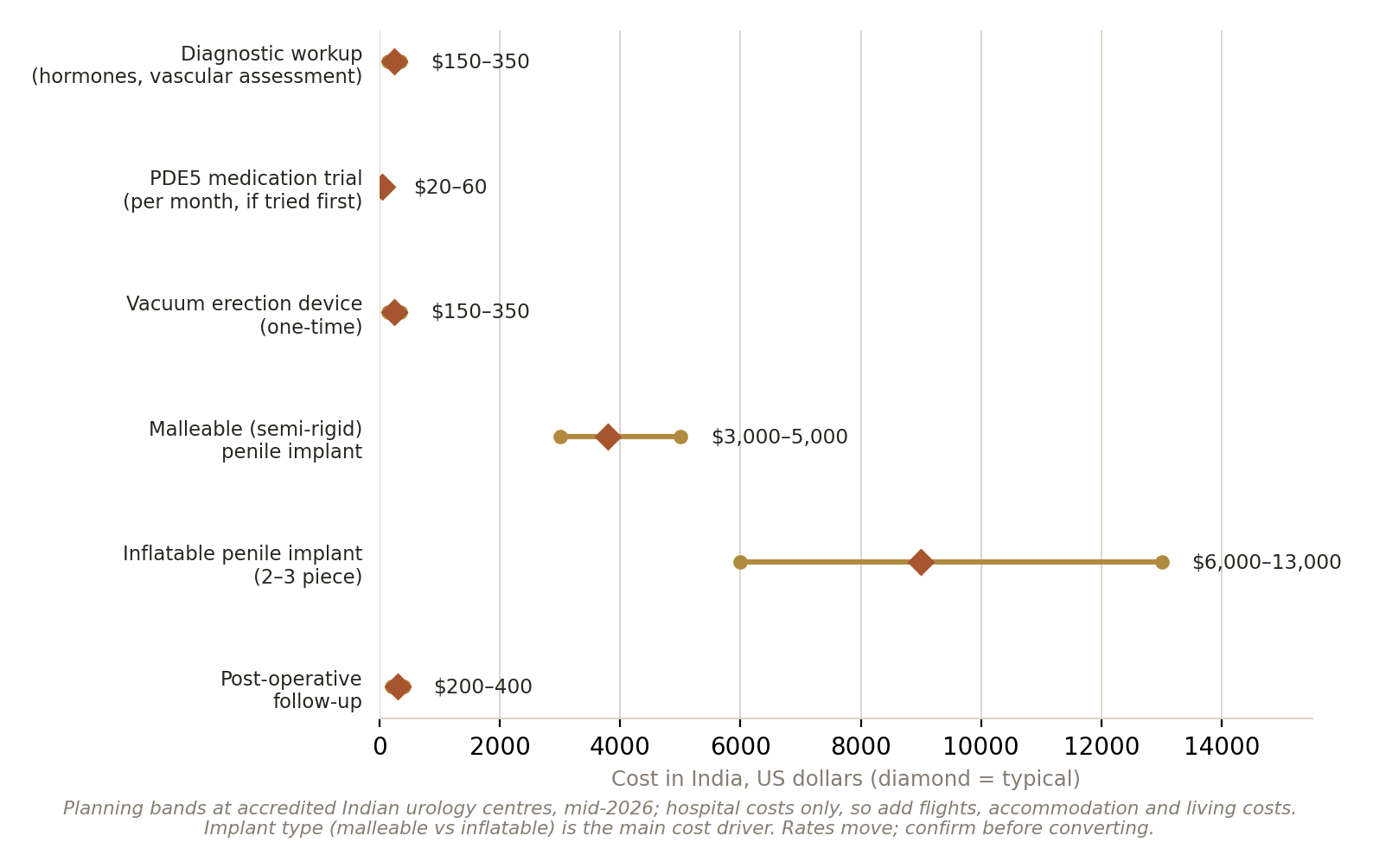
Budget for the treatment tier that's actually appropriate, not the most familiar figure.
The figures differ substantially by tier: oral medication costs a small fraction of surgery, and within surgery, a malleable implant sits well below an inflatable one. Even at the top of these ranges, treatment at an accredited Indian urology centre remains a fraction of an equivalent case in the Gulf, Europe, or the United States. Confirm which implant type is actually being recommended, and why, before assuming any single number applies to your case.
| A quotation, annotatedA composite of the penile implant quotes that reach me, with the questions I send back. | |
| Penile implant surgery — USD 9,000 | Malleable or inflatable? These differ substantially in price, mechanism, and long-term maintenance. |
| Includes: pre-op hormone and vascular workup | Good sign. Ask whether oral medication and other options were genuinely tried first. |
| Device: brand, ask specifically | Ask for the specific implant brand and its published long-term reliability data. |
| Includes: 2 days admission | Reasonable for this procedure. Ask what a complication would add. |
| Excludes: revision if mechanical failure occurs later | Ask about the device's warranty period and the cost of a future revision. |
| Excludes: follow-up beyond initial check | Ask what ongoing follow-up is recommended and how it can be coordinated from Ethiopia. |
In 24 years the patients most satisfied with this particular decision were the ones who had genuinely tried the earlier steps first, so that surgery, when it came, was clearly the right call rather than the first thing tried.
The Ethiopian practicalities
Ethiopian Airlines flies non-stop from Bole to Delhi, Mumbai, Bengaluru, Chennai, and Hyderabad. Most patients plan five to seven days in India for this procedure, with full recovery continuing over four to six weeks after returning home. Yellow fever certification is required at least ten days before arrival, oral polio vaccination roughly four weeks before. The medical visa follows the hospital's invitation letter through the Embassy of India, Addis Ababa; visa correspondence and hospital documentation can generally reference a general urological procedure without further detail, and reputable centres treat this information with real discretion throughout. Confirm current rules with the Embassy, since they change, and ask for a coordinator who can communicate directly and confidentially with you about follow-up care.
Straight Answers for Ethiopian Patients about Penile Implant Surgery in India
I have diabetes and erectile dysfunction. Do I need surgery?
Not necessarily, and usually not first. Oral medication works well for many men, including many with diabetes, and is almost always tried first. Implant surgery is generally considered only after other options haven't worked or aren't suitable.
Why is erectile dysfunction so rarely discussed with doctors in Ethiopia?
Stigma is the primary documented reason, compounded by ED rarely being asked about as routine diabetes care. Studies found the large majority of men with diabetes and documented ED had never raised it with a doctor.
What's the difference between a malleable and an inflatable penile implant?
A malleable implant uses bendable rods manually positioned as needed; simpler and more affordable. An inflatable implant uses a pump for an on-demand erection and more natural flaccid appearance; costs more, more surgically complex.
How long does penile implant surgery in India take?
The procedure takes one to two hours with a one-to-two-day hospital stay. Most patients plan five to seven days total in India, with full recovery taking four to six weeks.
Who pays for this in Ethiopia?
You do. Neither Community-Based Health Insurance nor the pending formal-sector scheme funds treatment abroad, though a bank may now advance up to US$20,000 against the treating hospital's letter.
A closing word
Send a note on how long this has been an issue, any diabetes or cardiovascular history, and what's already been tried. I will tell you honestly what stage of treatment this looks like, and why India's urology centres are where the full spectrum of care, handled with genuine discretion, is reliably available.
Sources
- 🌐 Prevalence and determinants of erectile dysfunction among type 2 diabetes mellitus patients at selected government hospitals in Gurage Zone
- 🌐 Seid A, et al. Prevalence and determinants of erectile dysfunction among diabetic patients attending hospitals of central and northwestern zone of Tigray, northern Ethiopia
- 🌐 Shiferaw WS, Akalu TY, Aynalem YA. Prevalence of erectile dysfunction in patients with diabetes mellitus and its association with body mass index and glycated hemoglobin in Africa: a systematic review and meta-analysis. Int J Endocrinol. 2020
- 🌐 National Medical Commission of India — Indian Medical Register
- 🌐 National Bank of Ethiopia Directive FXD/04/2026 (foreign exchange, advance payments for treatment abroad); Embassy of India, Addis Ababa
Frequently Asked Questions by Ethiopians about Penile Implant Surgery in India
Do all Ethiopian men with erectile dysfunction need a penile implant?
No. The guide states that oral medication, vacuum devices and injectable treatments should generally be considered before implant surgery.
How common is erectile dysfunction among Ethiopian men with diabetes?
The page 2 chart shows a pooled Ethiopian estimate of 54.3% among men with diabetes, highlighting ED as a common complication rather than an unusual condition.
What are the main types of penile implants?
There are two main types: malleable implants, which use bendable rods, and inflatable implants, which use a pump and provide a more natural flaccid appearance.
Which implant is more affordable?
A malleable implant is generally less expensive. The guide gives an indicative Indian range of US$3,000–5,000, compared with US$6,000–13,000 for an inflatable implant.
What should patients ask about the implant brand?
Patients should request the specific implant brand and ask for published long-term reliability information, warranty details and the potential cost of future revision.
Why should diabetes be discussed with the doctor?
Diabetes is an important contributor to erectile dysfunction and may be associated with earlier onset. The guide recommends discussing ED as part of routine diabetes care.
How long does penile implant surgery take?
The guide states that the procedure generally takes one to two hours, followed by a one-to-two-day hospital stay.
How long should Ethiopian patients stay in India?
Most patients should plan approximately five to seven days in India for this procedure, while complete recovery may continue for four to six weeks after returning home.
What should be included in the quotation?
Patients should check the implant type and brand, hospital stay, pre-operative assessment, complication costs, future revision arrangements and follow-up after returning to Ethiopia.
Does Ethiopian health insurance cover penile implant surgery in India?
The guide states that Community-Based Health Insurance and the pending formal-sector scheme do not fund treatment abroad. It notes that a bank may advance up to US$20,000 per case against a treating hospital's letter.
Page Summary
This eight-page guide helps Ethiopian patients understand erectile dysfunction and evaluate penile implant treatment in India when earlier options have failed or are unsuitable. It highlights the strong association between diabetes and ED and the large treatment gap shown in Ethiopian research. The guide explains the treatment ladder from medication and vacuum devices to malleable or inflatable implants. It also compares indicative implant costs, with the page 6 chart showing different ranges for each device type. The page 7 pathway covers implant selection, quotation review, travel planning and confidential follow-up.
Citation Block
| Topic | Information |
|---|---|
| Topic | Penile Implant Surgery |
| Treatment | Penile Prosthesis |
| Country | India |
| Patients | Ethiopian Patients |
| Key Condition | Erectile Dysfunction |
| Key Specialist | Urologist / Andrologist |
| Treatment Ladder | Pills, Pump, Injections & Implant |
| Implant Types | Malleable & Inflatable |
| Malleable Cost | US$3,000–5,000 |
| Inflatable Cost | US$6,000–13,000 |
| Key Selection Check | Implant Experience |
| Device Check | Brand & Reliability |
| Hospital Stay | 1–2 Days |
| India Stay | 5–7 Days |
| Recovery | 4–6 Weeks |
| Follow-Up | Ethiopia-Based Doctor |
| Key Records | Medical History & Previous Treatments |
| Cost Check | Implant, Revision & Follow-Up |
| Visa | Indian Medical Visa |
| Warning Signs | Surgery Before Earlier Options |
| Key Questions | Device, Cost, Warranty & Follow-Up |

Our Mission Statement
Our mission is to place patients at the centre of every healthcare decision by providing trustworthy, evidence-based, and unbiased medical information. We believe that informed patients make better decisions. Backed by personalised guidance from our experienced advisory team, we help patients understand their treatment options, compare them objectively, and confidently choose the path that best suits their medical needs and personal circumstances.
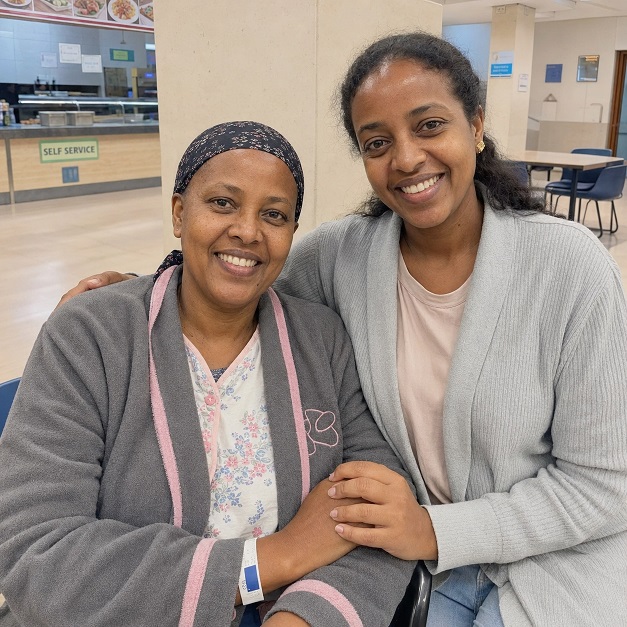
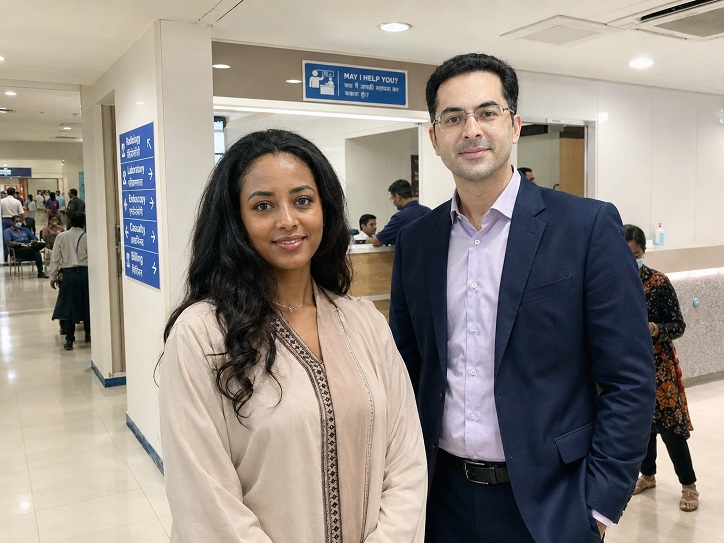
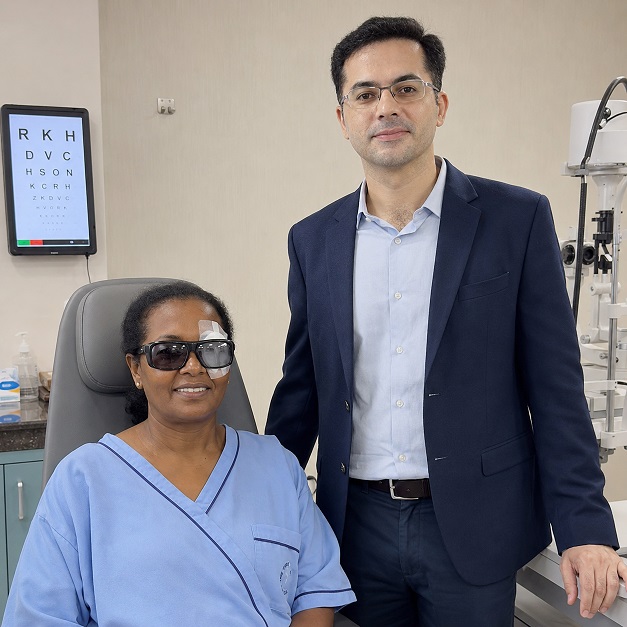
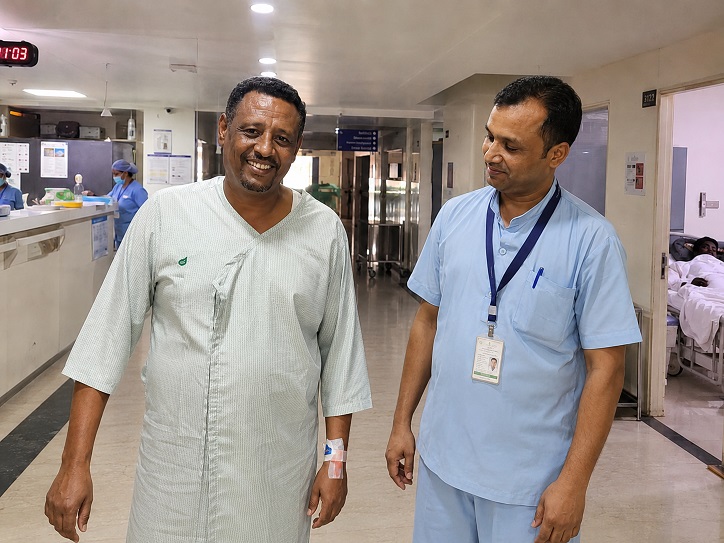
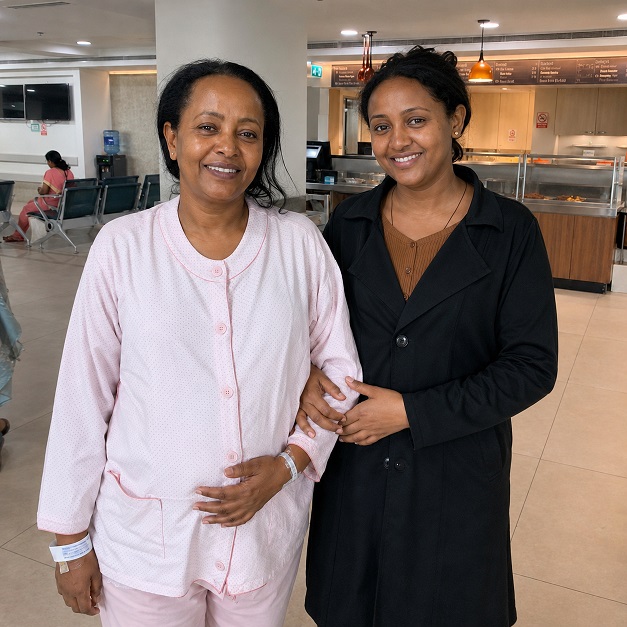
Patient Testimonials from Ethiopia

Ready to Take the First Step?
Share your Medical Reports with our Healthcare Managers Today and Get a FREE CONSULTATION, a Personalized Treatment Plan, and Complete Support from Arrival to Recovery.
Get Your Free ConsultationAreas We Serve
This resource has been thoughtfully prepared for patients from Ethiopia who are considering medical treatment in India. We also welcome patients from the wider region in the countries mentioned below-
We assist patients from:
- Eritrea
- Djibouti
- Somalia
- Kenya
- Sudan
- Burundi
- Comoros
- Ethiopia
- Madagascar
- Malawi
- Mauritius
- Mozambique
- Rwanda
- South Sudan
Many of the insights, treatment pathways, hospital recommendations, travel guidance, and patient support services described here are equally relevant and may be used as a reference when planning treatment in India.
From Ethiopia to India: Your Complete Patient Support Guide
- Brain Tumour Surgery in India for Ethiopians
- Cancer Treatment in India for Ethiopians
- Cardiac Surgery in India for Ethiopian Patients
- Cervical and Disc Replacement Surgery in India for Ethiopians
- Cosmetic and Plastic Surgery in India for Ethiopians
- CyberKnife Treatment in India for Ethiopians
- Eye Surgery in India for Ethiopians
- Gamma Knife Treatment in India for Ethiopians
- Heart Valve Replacement Surgery in India for Ethiopians
- Hip Surgery in India for Ethiopian Patients
- Knee Surgery in India for Ethiopian Patients
- Laparoscopic and Robotic Myomectomy Surgery in India for Ethiopians
- Neurosurgery in India for Ethiopians
- Paediatric Cardiac Surgery in India for Ethiopians
- Paediatric Neurosurgery in India for Ethiopians
- Prostate Cancer Treatment and Surgery in India for Ethiopians
- Robotic Cancer Surgery in India for Ethiopians
- Scoliosis Surgery in India for Ethiopians