

Leukemia, Lymphoma, and Blood Cancer Treatments for Ethiopian Patients in India
Five gates every blood cancer case should pass before booking a flight — and why, for a group of diseases where the exact subtype decides everything, India's precision hematology centres are where that subtype is actually pinned down and kept in view for as long as treatment lasts.
Leukemia and lymphoma are not single diseases but families of them, and two cases that look identical under a basic microscope can need completely different treatments. In 24 years of arranging medical care in India for patients across Africa and Asia, blood cancer is a field where the most consequential step often isn't the treatment at all — it's the laboratory work beforehand that decides which treatment is even correct, and the follow-up testing afterward that confirms it's still working. Ethiopia's own published research shows exactly where this matters most. At Tikur Anbessa Specialized Hospital, flow cytometry — the technique that distinguishes one leukemia subtype from another by reading the specific proteins on the cancer cells' surface — has documented real cases where a diagnosis made by basic microscopy alone was wrong, and correcting it changed the treatment entirely. For chronic myeloid leukemia specifically, a disease now controlled for years by a single daily pill in well-monitored settings, Ethiopian patients are diagnosed decades younger than the international pattern and, when that pill stops working, only a small fraction ever get the molecular test that identifies why and what to try next. India's precision hematology centres run this entire diagnostic and monitoring pathway as routine, everyday practice. These five gates walk through getting the exact diagnosis right, understanding when treatment is working and when it truly isn't, and why India is where that precision is available for as long as a blood cancer needs watching.
Healing Journeys of Ethiopian Patients









Key Takeaways
- Leukemia and lymphoma include different disease subtypes, making accurate diagnosis through flow cytometry and pathology essential before treatment. The PDF cites an Ethiopian case where flow cytometry changed an AML diagnosis to T-cell acute lymphoblastic leukemia.
- For CML, daily tyrosine kinase inhibitor therapy can control the disease for years, but regular BCR-ABL monitoring is important. The cited Ethiopian cohort had a median diagnosis age of 33 years compared with 64 years in the typical international pattern.
- The PDF highlights a significant gap in molecular monitoring for treatment-resistant CML: only 19% of the cited Ethiopian patients received mutation analysis, compared with 81% who did not.
- Most blood cancers do not automatically require a transplant. The guide explains that bone marrow transplantation is generally reserved for selected high-risk or relapsed cases that have not responded adequately to standard treatment.
- Ethiopia has made progress in blood cancer diagnosis and standard chemotherapy, while India offers broader access to cytogenetic, molecular and long-term monitoring services. Indicative Indian costs range from US$300–800 for diagnostic workup to US$4,000–12,000 for standard leukemia induction and US$9,000–18,000 for six-cycle R-CHOP treatment.
- Ethiopian patients should confirm the exact diagnosis, treatment regimen, monitoring requirements and complete quotation before travelling. The PDF also highlights medical visa and vaccination planning and the possibility of coordinating later chemotherapy cycles with a hematologist in Ethiopia.
- The PDF notes that Ethiopian patients should not judge treatment options by the initial diagnosis alone; ongoing monitoring is equally important, particularly for diseases such as CML where treatment may continue for years.
- For Ethiopian patients travelling to India for chemotherapy, the guide suggests asking whether later treatment cycles can be coordinated with a hematologist in Ethiopia, potentially reducing the number of international trips required.
Quick Facts
- Treatment
- Leukemia, Lymphoma and Blood Cancer Treatment
- Country
- India
- Patients
- Ethiopian Patients
- Main Treatments
- Chemotherapy, Targeted Therapy and Antibody Therapy
- Key Diagnostic Test
- Flow Cytometry
- Acute Leukemia Pattern
- 49% ALL, 46% AML and 5% unresolved in the cited Ethiopian data
- CML Treatment
- Daily Tyrosine Kinase Inhibitor Therapy
- CML Monitoring
- Quantitative BCR-ABL Testing
- Mutation Analysis
- 19% received testing in the cited resistant-CML cohort
- Diagnostic Workup
- US$300–800
- Imatinib
- US$50–150 per month for generic therapy
- BCR-ABL Monitoring
- US$80–200 per test
- Leukemia Induction Chemotherapy
- US$4,000–12,000
- R-CHOP Lymphoma Course
- US$9,000–18,000
- Radiotherapy
- US$1,800–4,000 where indicated
- Diagnostic Stay
- Approximately 3–5 days
- Chemotherapy Duration
- Approximately 3–6 months in cycles
- Key Specialist
- Hematologist / Hemato-Oncologist
- Follow-Up
- Named Hematologist in Ethiopia
- Required Records
- Blood counts, biopsy/flow cytometry reports and previous treatment details
- Financing Mentioned
- Up to US$20,000 bank advance against a treating hospital letter
In Brief
Ethiopian patients diagnosed with leukemia, lymphoma or another blood cancer should first confirm the exact disease subtype before choosing treatment. The PDF highlights the role of flow cytometry, pathology review, cytogenetics and molecular testing in making this distinction, including an Ethiopian case where flow cytometry changed both the diagnosis and treatment plan. For CML, targeted therapy such as imatinib can control the disease for years, but regular BCR-ABL monitoring is necessary to confirm that treatment remains effective. If resistance develops, mutation analysis can help identify the cause and guide the next treatment. The guide also explains that transplantation is not automatically required for blood cancer and is generally considered for selected high-risk or relapsed cases.
1 Gate One
One cell type, or another?
Fatigue, unexplained bruising, swollen lymph nodes, or an abnormal blood count is what usually starts this conversation, and the word "leukemia" or "lymphoma" alone is only the beginning of an answer, not the end of one.
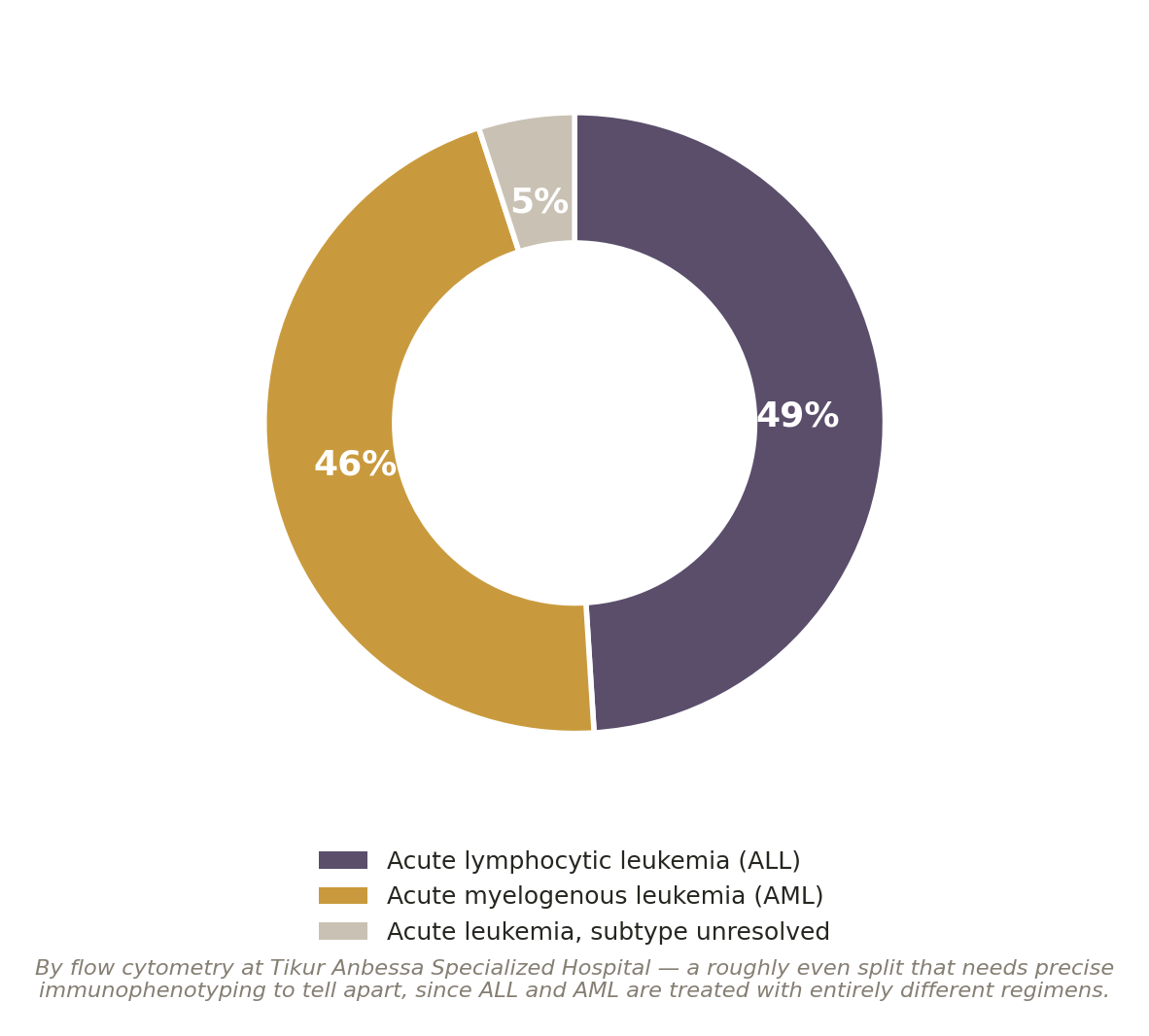
Roughly an even split between two diseases that look similar and are treated very differently.
A documented Ethiopian case worth knowing about: published research from Addis Ababa describes a patient diagnosed by basic microscopy as having acute myelogenous leukemia, who responded poorly to that treatment. Flow cytometry later identified the actual disease as T-cell acute lymphoblastic leukemia — a different disease needing a different regimen entirely. The correction changed the treatment plan.
Ask explicitly whether flow cytometry immunophenotyping, not morphology alone, has been used to confirm the exact subtype, and for lymphoma, whether the tissue subtype has been confirmed by pathology review. This single step shapes everything that follows.
2 Gate Two
Is the pill still working?
Chronic myeloid leukemia is one of modern oncology's genuine success stories: a disease once treated with intensive chemotherapy is now controlled for years, often decades, by a single daily pill called a tyrosine kinase inhibitor. That success depends entirely on monitoring — confirming the drug is working, and catching resistance early if it isn't.
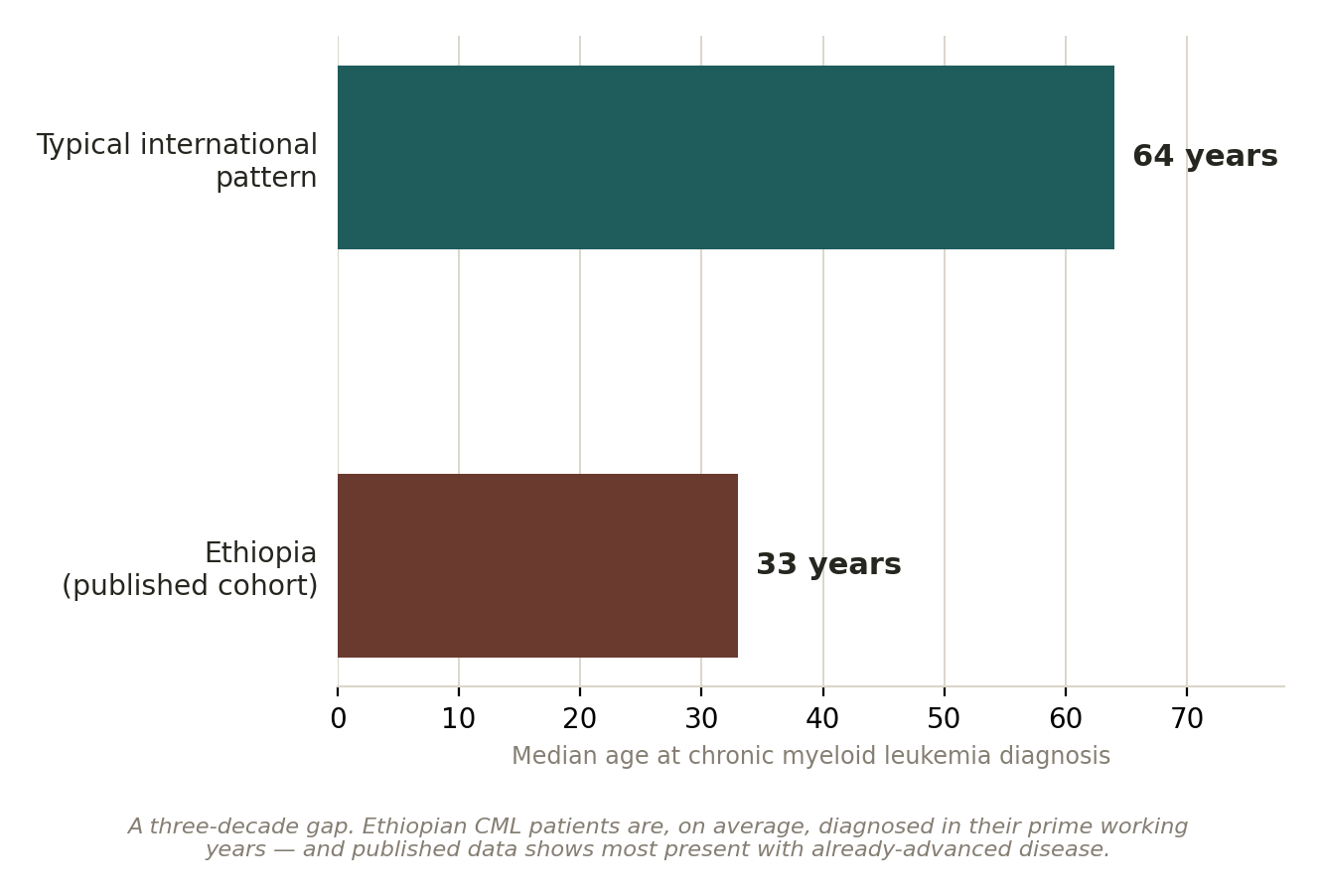
Ethiopian CML patients are diagnosed roughly three decades younger than the international pattern.
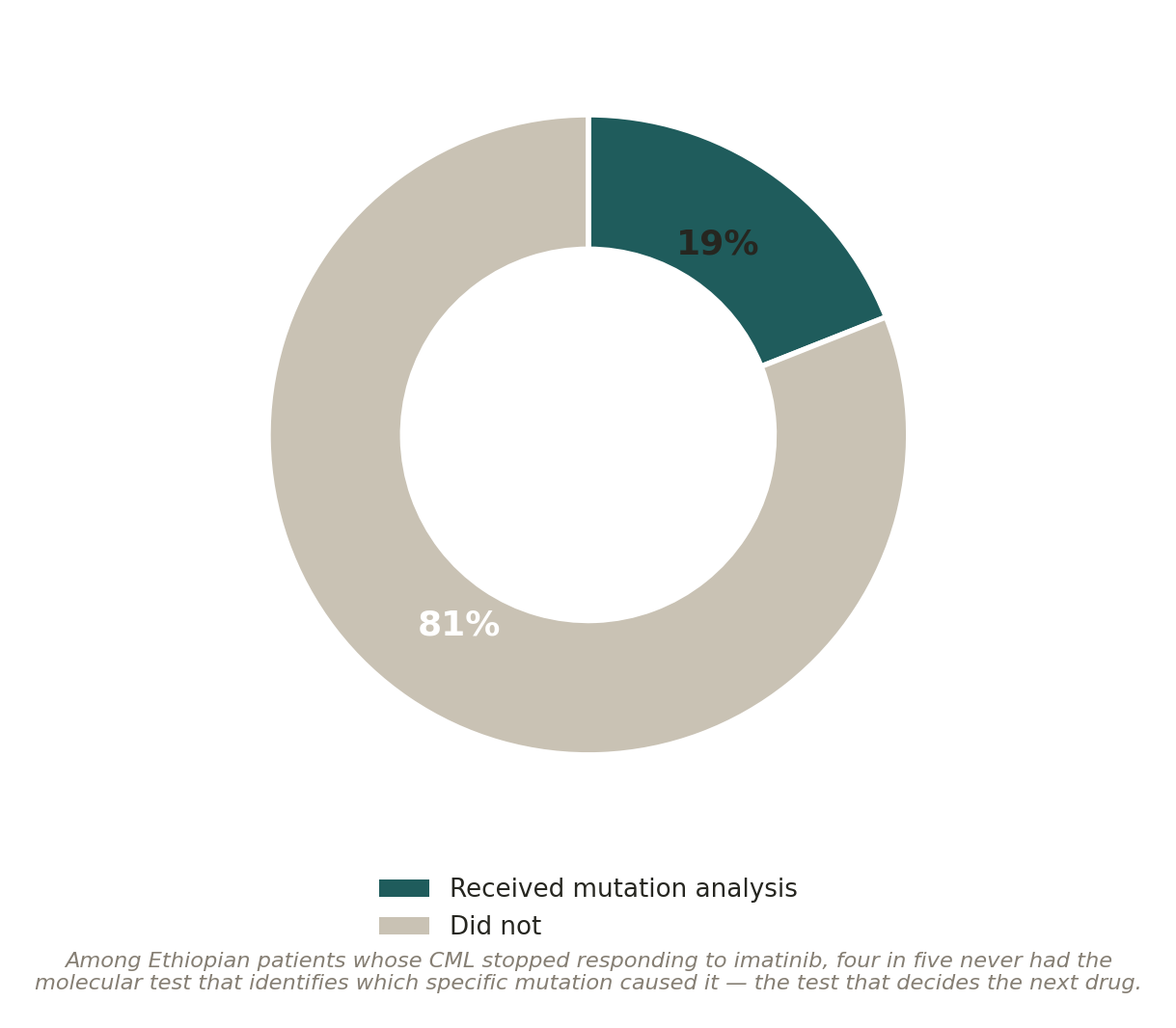
When the pill stops working, the test that explains why is the exception, not the rule.
Ask specifically whether quantitative BCR-ABL monitoring is being done at defined intervals, and if treatment appears to be failing, whether mutation analysis is available to identify the cause and guide the choice of a second- line drug — not simply switching medications by trial and error.
3 Gate Three
A transplant, or the right protocol?
Most blood cancers are treated well without a bone marrow transplant. Standard-risk acute leukemia often responds to induction chemotherapy alone. Most lymphomas are treated with chemotherapy, sometimes combined with an antibody drug like rituximab, and many are cured this way. Chronic myeloid leukemia is managed with daily pill therapy, covered in Gate Two, not transplant, for the great majority of patients.
Transplant is reserved for specific situations: high-risk or relapsed disease that hasn't responded to standard treatment. If transplant has been raised, it is worth confirming explicitly why standard treatment is considered insufficient for the specific diagnosis and risk category — and a dedicated companion guide in this series covers bone marrow transplant itself, including how donor matching works, for the patients who do need it.
4 Gate Four
Could this be done in Ethiopia?
Diagnosis and standard chemotherapy for blood cancers are increasingly available at Ethiopia's main tertiary hospitals, and flow cytometry is now in use at centres like Tikur Anbessa Specialized Hospital — genuine, meaningful progress worth recognising. The gap sits specifically in ongoing molecular monitoring and precision diagnostics: cytogenetics, mutation analysis, and the infrastructure to track a chronic blood cancer's response over years, not just confirm it at the start.
This is precisely where India's precision hematology centres add real, comparative depth: full cytogenetic and molecular testing panels, hematopathologists specialised specifically in blood cancer diagnosis, and the infrastructure for quarterly or biannual monitoring that catches resistance early rather than after a relapse has already progressed. For a group of diseases this dependent on ongoing precision, not just an initial diagnosis, that infrastructure is not a convenience — it is what actually keeps a working treatment working. Ask any centre what monitoring schedule they recommend and what tests it includes, not just what the initial diagnosis costs.
5 Gate Five
Is the money arranged?
Ethiopia's health financing does not follow a patient abroad. Community-Based Health Insurance covers contracted facilities inside the country, and the formal-sector scheme still isn't settling claims. Since February 2026 a bank may release up to US$20,000 per case against a letter from the treating hospital, without a visa or ticket in hand.
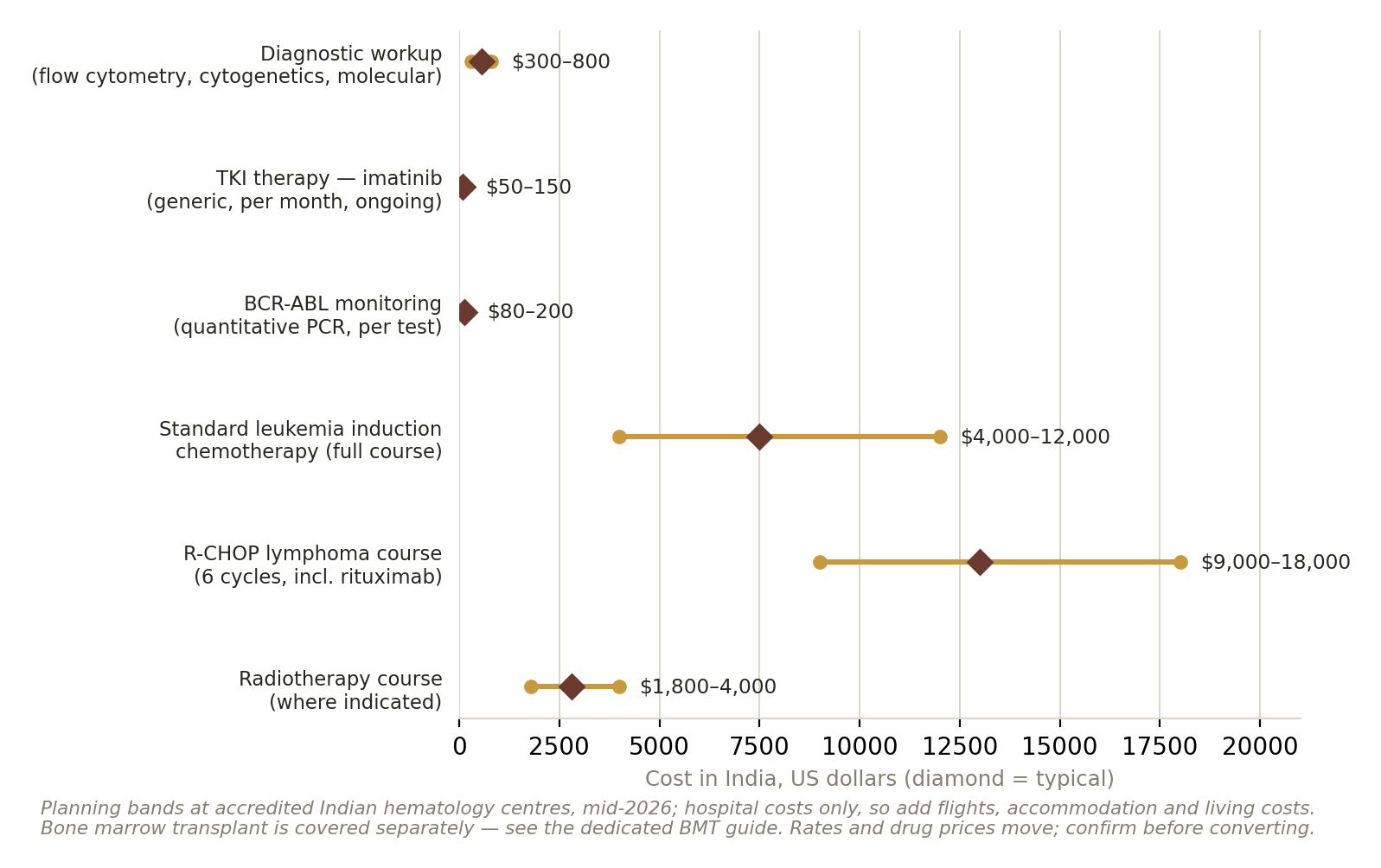
Budget for the specific diagnosis and regimen, not the most familiar figure.
The figures differ substantially by disease and regimen: ongoing pill therapy for CML costs a small fraction of a full chemotherapy course, which in turn costs less than an antibody-containing lymphoma regimen. Even at the top of these ranges, treatment at an accredited Indian hematology centre remains a fraction of an equivalent case in the Gulf, Europe, or the United States. Confirm the exact diagnosis and planned regimen before assuming any single number applies to your case.
| A quotation, annotatedA composite of the blood cancer quotes that reach me, with the questions I send back. | |
| Leukemia treatment — USD 6,000 | Which subtype, confirmed how? Flow cytometry result should be named specifically, not assumed. |
| Includes: induction chemotherapy | Ask how many cycles this covers, and what consolidation therapy afterward would add. |
| CML: imatinib, generic | Ask about the monitoring schedule (BCR-ABL PCR) included, and its ongoing cost. |
| Lymphoma: R-CHOP, 6 cycles | Confirm the exact lymphoma subtype supports this specific regimen. |
| Excludes: cytogenetics/molecular panel | Ask whether this was already done, and its separate cost if not. |
| Excludes: relapse or resistance monitoring | Ask what ongoing monitoring costs, and how it can be coordinated from Ethiopia. |
In 24 years the blood cancer patients most satisfied with their outcome were the ones who asked for their exact subtype in writing before asking about the price of treating it.
The Ethiopian practicalities
Ethiopian Airlines flies non-stop from Bole to Delhi, Mumbai, Bengaluru, Chennai, and Hyderabad. For chemotherapy delivered in cycles, ask whether later cycles can be coordinated with a hematologist in Ethiopia once the diagnosis and initial treatment are established in India, reducing the number of trips needed. Yellow fever certification is required at least ten days before arrival, oral polio vaccination roughly four weeks before; timing matters more here since chemotherapy affects immune function, so plan vaccination well before treatment begins. The medical visa follows the hospital's invitation letter through the Embassy of India, Addis Ababa. Where treatment spans the Orthodox fasting calendar, raise this with the hospital's dietary team beforehand, since chemotherapy nutrition needs are specific. Confirm current rules with the Embassy, since they change, and ask for an Amharic-speaking coordinator to carry a written treatment and monitoring plan back to a named hematologist in Ethiopia.
Straight Answers for Ethiopian Patients about Leukemia, Lymphoma, and Blood Cancer Treatments in India
I've been told I have leukemia. Do I need a bone marrow transplant?
Not necessarily, and for many patients, not at all. Most leukemias and lymphomas are treated first with chemotherapy or pill-based targeted therapy. Transplant is reserved for specific high-risk or relapsed cases.
Why does the exact type of leukemia or lymphoma matter so much?
Because it determines which treatment works. Different subtypes can look similar under basic microscopy but need entirely different regimens. Flow cytometry tells them apart reliably, and there are documented Ethiopian cases where this test changed the diagnosis and treatment.
Is targeted therapy like imatinib available in Ethiopia?
The drug itself is increasingly available. Harder to access is the ongoing molecular monitoring that confirms it's working and explains why if it stops — published data shows only a small minority of patients whose treatment failed received this testing.
How long does blood cancer treatment in India take?
Diagnostic workup typically takes three to five days. Chemotherapy is given in cycles over three to six months, sometimes split between India and Ethiopia. Pill-based therapy for chronic conditions is managed long-term with periodic monitoring visits.
Who pays for this in Ethiopia?
You do. Neither Community-Based Health Insurance nor the pending formal-sector scheme funds treatment abroad, though a bank may now advance up to US$20,000 against the treating hospital's letter.
A closing word
Send the blood counts, any biopsy or flow cytometry report, and details of treatment tried so far. I will tell you honestly what this diagnosis actually is, and why India's precision hematology centres are where that diagnosis, and the years of monitoring that follow it, are handled with the accuracy this group of diseases genuinely needs.
Sources
- 🌐 Flow cytometric characterisation of acute leukaemia in adolescent and adult Ethiopians. Afr J Lab Med. 2024
- 🌐 Tadesse F, et al. Spectrum of BCR-ABL mutations and treatment outcomes in Ethiopian imatinib-resistant patients with chronic myeloid leukemia
- 🌐 Hematological, clinical, cytogenetic and molecular profiles of confirmed chronic myeloid leukemia patients at presentation at a tertiary care teaching hospital in Addis Ababa, Ethiopia
- 🌐 National Medical Commission of India — Indian Medical Register
- 🌐 National Bank of Ethiopia Directive FXD/04/2026 (foreign exchange, advance payments for treatment abroad); Embassy of India, Addis Ababa
Frequently Asked Questions by Ethiopians about Leukemia, Lymphoma, and Blood Cancer Treatments in India
Why is flow cytometry important for Ethiopian patients diagnosed with leukemia?
For Ethiopian patients, flow cytometry can distinguish leukemia subtypes that may appear similar under basic microscopy. The PDF describes an Ethiopian case where flow cytometry changed the diagnosis from AML to T-cell acute lymphoblastic leukemia, resulting in a different treatment plan.
What leukemia types were found in the Ethiopian data shown in the PDF?
The page 2 chart from Tikur Anbessa Specialized Hospital shows approximately 49% acute lymphocytic leukemia (ALL), 46% acute myelogenous leukemia (AML) and 5% unresolved acute leukemia. The figures demonstrate the need for precise immunophenotyping.
Can Ethiopian patients with CML receive targeted treatment in India?
Yes. Ethiopian CML patients can be assessed for tyrosine kinase inhibitor treatment such as imatinib. The PDF explains that this daily treatment can control CML for years when the response is properly monitored.
Why should Ethiopian CML patients have regular BCR-ABL monitoring?
Ethiopian patients taking targeted therapy for CML need quantitative BCR-ABL testing at defined intervals to confirm that the treatment is working. If the response begins to fail, further molecular testing can help determine the reason and guide the next treatment choice.
Can Ethiopian patients with imatinib-resistant CML receive mutation analysis in India?
Yes. Ethiopian patients whose CML stops responding to imatinib can ask an Indian hematology centre about mutation analysis. The PDF highlights that only 19% of patients in the cited Ethiopian imatinib-resistant cohort received this testing, while 81% did not.
Do Ethiopian patients with leukemia or lymphoma automatically need a bone marrow transplant?
No. Ethiopian patients should not assume that transplantation is automatically required. The PDF explains that many acute leukemias and lymphomas are initially treated with chemotherapy or targeted/antibody therapy, while transplant is reserved for selected high-risk or relapsed cases.
How much does leukemia treatment cost for Ethiopian patients in India?
The PDF gives an indicative planning range of US$4,000–12,000 for a standard leukemia induction chemotherapy course. The actual cost depends on the confirmed subtype, treatment regimen, number of cycles and additional treatment requirements.
How much does lymphoma treatment cost for Ethiopian patients in India?
The PDF gives an indicative range of US$9,000–18,000 for a six-cycle R-CHOP lymphoma course including rituximab. Ethiopian patients should first confirm that this specific regimen is appropriate for their confirmed lymphoma subtype.
Can Ethiopian patients complete later chemotherapy cycles in Ethiopia after starting treatment in India?
In selected cases, yes. Ethiopian patients can ask whether later chemotherapy cycles can be coordinated with a hematologist in Ethiopia once the diagnosis and initial treatment plan have been established in India, potentially reducing the number of international trips.
What should Ethiopian patients arrange before travelling to India for blood cancer treatment?
Ethiopian patients should carry their blood counts, biopsy or flow-cytometry reports and details of previous treatment. The PDF also advises confirming medical visa requirements, vaccination timing, treatment duration, dietary needs and a written treatment and monitoring plan for a named hematologist in Ethiopia.
Page Summary
This guide gives Ethiopian patients an overview of leukemia, lymphoma and blood cancer treatment in India, beginning with accurate diagnosis and subtype confirmation. It explains the role of flow cytometry, CML targeted therapy, BCR-ABL monitoring and mutation testing. It also clarifies when bone marrow transplantation may be considered for high-risk or relapsed disease. The guide compares blood cancer diagnostic and monitoring capabilities in Ethiopia and India, along with indicative treatment costs and quotation checks. It concludes with financing, travel planning, medical visa requirements, treatment coordination and follow-up after returning to Ethiopia.
Citation Block
| Topic | Information |
|---|---|
| Topic Information | Leukemia, Lymphoma and Blood Cancer Treatments for Ethiopian Patients in India |
| Treatment | Blood Cancer Treatment |
| Country | India |
| Intended Audience | Ethiopian Patients |
| Main Treatments | Chemotherapy, Targeted Therapy and Antibody Therapy |
| Key Diagnostic Test | Flow Cytometry |
| Acute Leukemia Pattern | 49% ALL, 46% AML, 5% unresolved |
| CML Treatment | Daily TKI Therapy |
| CML Monitoring | Quantitative BCR-ABL Testing |
| Diagnostic Workup | US$300–800 |
| Leukemia Induction Cost | US$4,000–12,000 |
| R-CHOP Cost | US$9,000–18,000 |
| Typical Treatment Duration | Approximately 3–6 months for chemotherapy cycles |
| Key Specialist | Hematologist / Hemato-Oncologist |
| Follow-Up | Named Hematologist in Ethiopia |
| Required Records | Blood counts, biopsy/flow cytometry reports and treatment history |
| Financing Arrangement | Up to US$20,000 bank advance against treating hospital letter |
| Pre-Travel Check | Confirm exact subtype, treatment regimen and monitoring plan |
| Author | Dr. Dheeraj Bojwani |
| Experience | 24+ Years |


Our Mission Statement
Our mission is to place patients at the centre of every healthcare decision by providing trustworthy, evidence-based, and unbiased medical information. We believe that informed patients make better decisions. Backed by personalised guidance from our experienced advisory team, we help patients understand their treatment options, compare them objectively, and confidently choose the path that best suits their medical needs and personal circumstances.
Patient Testimonials from Ethiopia










Ready to Take the First Step?
Share your Medical Reports with our Healthcare Managers Today and Get a FREE CONSULTATION, a Personalized Treatment Plan, and Complete Support from Arrival to Recovery.
Get Your Free ConsultationAreas We Serve
This resource has been thoughtfully prepared for patients from Ethiopia who are considering medical treatment in India. We also welcome patients from the wider region in the countries mentioned below-
We assist patients from:
- Eritrea
- Djibouti
- Somalia
- Kenya
- Sudan
- Burundi
- Comoros
- Ethiopia
- Madagascar
- Malawi
- Mauritius
- Mozambique
- Rwanda
- South Sudan
Many of the insights, treatment pathways, hospital recommendations, travel guidance, and patient support services described here are equally relevant and may be used as a reference when planning treatment in India.
From Ethiopia to India: Your Complete Patient Support Guide
- Brain Tumour Surgery in India for Ethiopians
- Cancer Treatment in India for Ethiopians
- Cardiac Surgery in India for Ethiopian Patients
- Cervical and Disc Replacement Surgery in India for Ethiopians
- Cosmetic and Plastic Surgery in India for Ethiopians
- CyberKnife Treatment in India for Ethiopians
- Eye Surgery in India for Ethiopians
- Gamma Knife Treatment in India for Ethiopians
- Heart Valve Replacement Surgery in India for Ethiopians
- Hip Surgery in India for Ethiopian Patients
- Knee Surgery in India for Ethiopian Patients
- Laparoscopic and Robotic Myomectomy Surgery in India for Ethiopians
- Neurosurgery in India for Ethiopians
- Paediatric Cardiac Surgery in India for Ethiopians
- Paediatric Neurosurgery in India for Ethiopians
- Prostate Cancer Treatment and Surgery in India for Ethiopians
- Robotic Cancer Surgery in India for Ethiopians
- Scoliosis Surgery in India for Ethiopians