

IVF and Fertility Treatment for Ethiopian Patients in India
Five gates every fertility treatment question should pass before booking a flight — starting with why so much infertility in Ethiopia traces back to an infection, not age, and ending with how to tell a genuinely excellent fertility clinic from one whose numbers simply aren't real.
Infertility is often discussed as though it were one condition with one cause, and in Ethiopia that framing hides something important. In 24 years of arranging medical care in India for patients across Africa and Asia, fertility treatment is a field where getting the diagnosis right changes everything that follows, and where the story behind why a couple can't conceive looks genuinely different here than it does in the countries where most fertility medicine research and marketing originates. Roughly one in four Ethiopian couples experience infertility, a meaningfully higher share than the global average, and the leading documented cause is not age, but untreated sexually transmitted infection leading to blocked or scarred fallopian tubes. This carries a severe social cost in Ethiopia that deserves to be named directly: published research documents infertility-related stigma, marital instability, and profound psychological distress among Ethiopian women affected by it. It also carries a specific clinical implication: tubal factor infertility generally needs IVF, since IVF bypasses the damaged tubes entirely rather than trying to repair them. India's high-volume fertility centres treat this exact pattern, and treat it with transparent, independently verifiable outcome data — a genuine point of difference from some of the fertility advertising Ethiopian patients encounter closer to home. These five gates walk through what's actually causing a specific case of infertility, how to spot a fertility clinic whose claims don't hold up, and why India is where honest, well-documented treatment for this exact problem is reliably available.
Healing Journeys of Ethiopian Patients
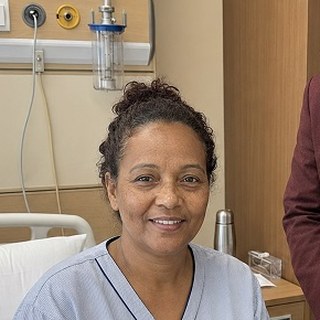
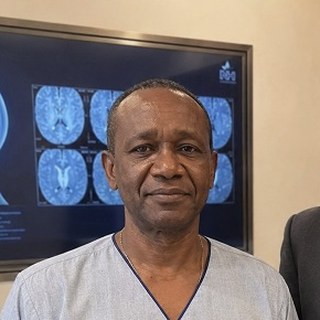
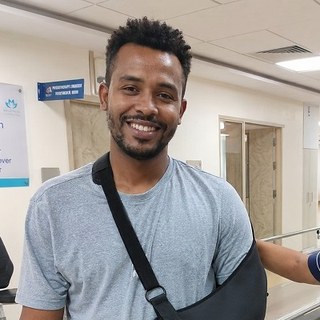
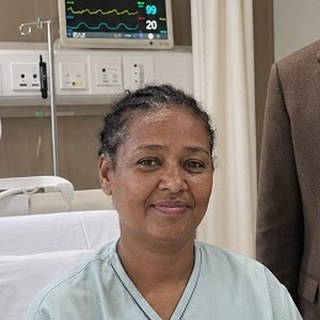


Key Takeaways
- The guide explains that infertility in Ethiopia is reported at around 26% of couples, compared with a global estimate of 17.5%. It highlights untreated sexually transmitted infections and resulting tubal damage as an important documented cause of female infertility in the region.
- It stresses that couples should complete a proper diagnostic workup before choosing IVF. Hysterosalpingography assesses fallopian-tube patency, hormone testing evaluates ovulation and ovarian reserve, and semen analysis assesses male fertility. Some patients may benefit from simpler treatments such as ovulation induction or IUI.
- The guide strongly cautions against fertility clinics advertising 90–100% IVF success rates. The page 4 chart illustrates more realistic age-based figures of approximately 40% for women under 35, 28% for ages 35–40 and 12% for women over 40, while recommending independently verifiable, age-stratified clinic data.
- The guide acknowledges that fertility treatment is available in Addis Ababa, but says quality and transparency vary between providers. It highlights India's high-volume fertility centres for larger embryology laboratories, complex-case expertise, surgical sperm retrieval and more transparent age- and diagnosis-specific outcome reporting.
- The page 5 cost graphic gives planning ranges of US$2,500–4,500 for standard IVF, US$3,000–5,500 for IVF with ICSI, US$800–1,500 for frozen embryo transfer, US$500–1,000 for surgical sperm retrieval and US$4,500–7,500 for donor egg or sperm cycles. Diagnostic testing is shown at US$150–350.
- The guide also covers practical planning, including budgeting for more than one cycle, checking exactly what the quotation includes, arranging an extended stay of around three to four weeks, medical-visa documentation and vaccination requirements, and ensuring a written treatment summary is returned to a named provider in Ethiopia.
Quick Facts
- Treatment
- IVF & Fertility Treatment
- Country
- India
- Patients
- Ethiopian Patients
- Key Tests
- HSG, Hormone Testing & Semen Analysis
- Main Options
- IVF, IUI & ICSI
- Key Cause
- Tubal-Factor Infertility
- Key Specialist
- Fertility Specialist
- Success Check
- Age- & Diagnosis-Specific Data
- Standard IVF
- US$2,500–4,500
- IVF with ICSI
- US$3,000–5,500
- Donor Cycle
- US$4,500–7,500
- Treatment Stay
- About 3–4 Weeks
- Key Warning
- 90–100% Success Claims
- Follow-Up
- Ethiopian Doctor
- Visa
- Indian Medical Visa
- Author
- Dr. Dheeraj Bojwani
- Experience
- 24+ Years
In Brief
For Ethiopian couples considering IVF in India, the guide recommends identifying the actual cause of infertility before selecting treatment. Patients should review HSG, hormone and semen-test results, then compare clinics using independently verifiable age- and diagnosis-specific success rates rather than headline claims. Quotations should clearly distinguish standard IVF from ICSI and donor treatment and state what medications, embryo transfer, freezing and repeat cycles include. Couples should also budget for potentially more than one cycle and plan approximately three to four weeks in India for monitoring and treatment.
1 Gate One
Infertility, or something treatable?
A year or more of trying to conceive without success is what usually starts this conversation, and the honest next step is a proper diagnostic workup, not an assumption about what treatment is needed. A hysterosalpingogram checks whether the fallopian tubes are open, hormone testing evaluates ovulation and ovarian reserve, and a semen analysis assesses male fertility. These three tests, done together, identify the actual cause in the large majority of cases.
Some causes, such as ovulatory disorders or mild male-factor infertility, can respond well to simpler, less expensive treatments like ovulation induction medication or intrauterine insemination. Blocked or significantly damaged fallopian tubes, the most common finding in this region, generally do need IVF, since it bypasses the tubes entirely rather than attempting a repair with a much lower success rate. Ask specifically what your diagnostic workup showed before agreeing to any specific treatment.
2 Gate Two
Why the numbers look different here
Infertility is more common in Ethiopia than the global average, and it has a specific, well-documented driver.
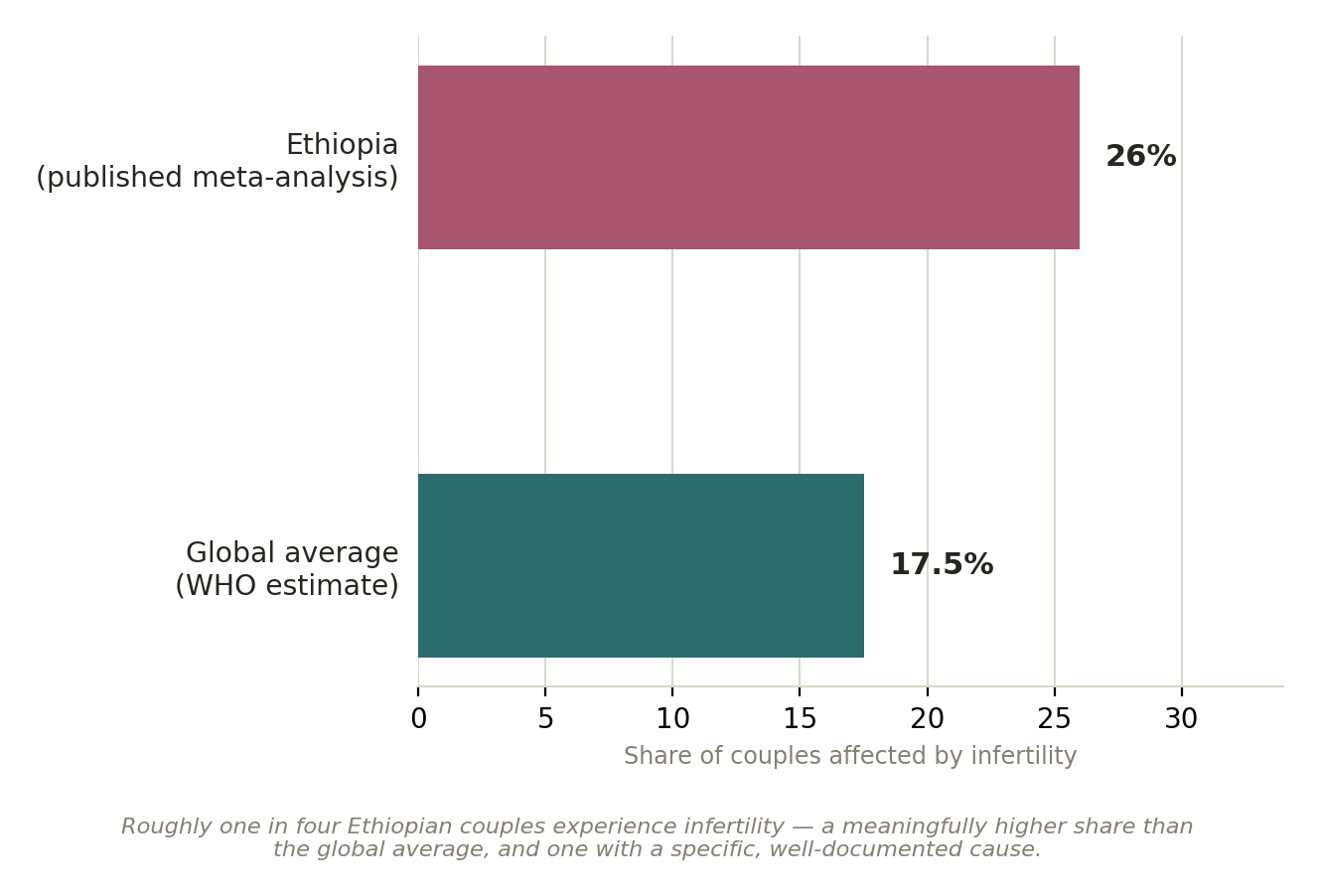
A meaningfully higher share of couples affected, with a cause that looks different from the age-related pattern common elsewhere.
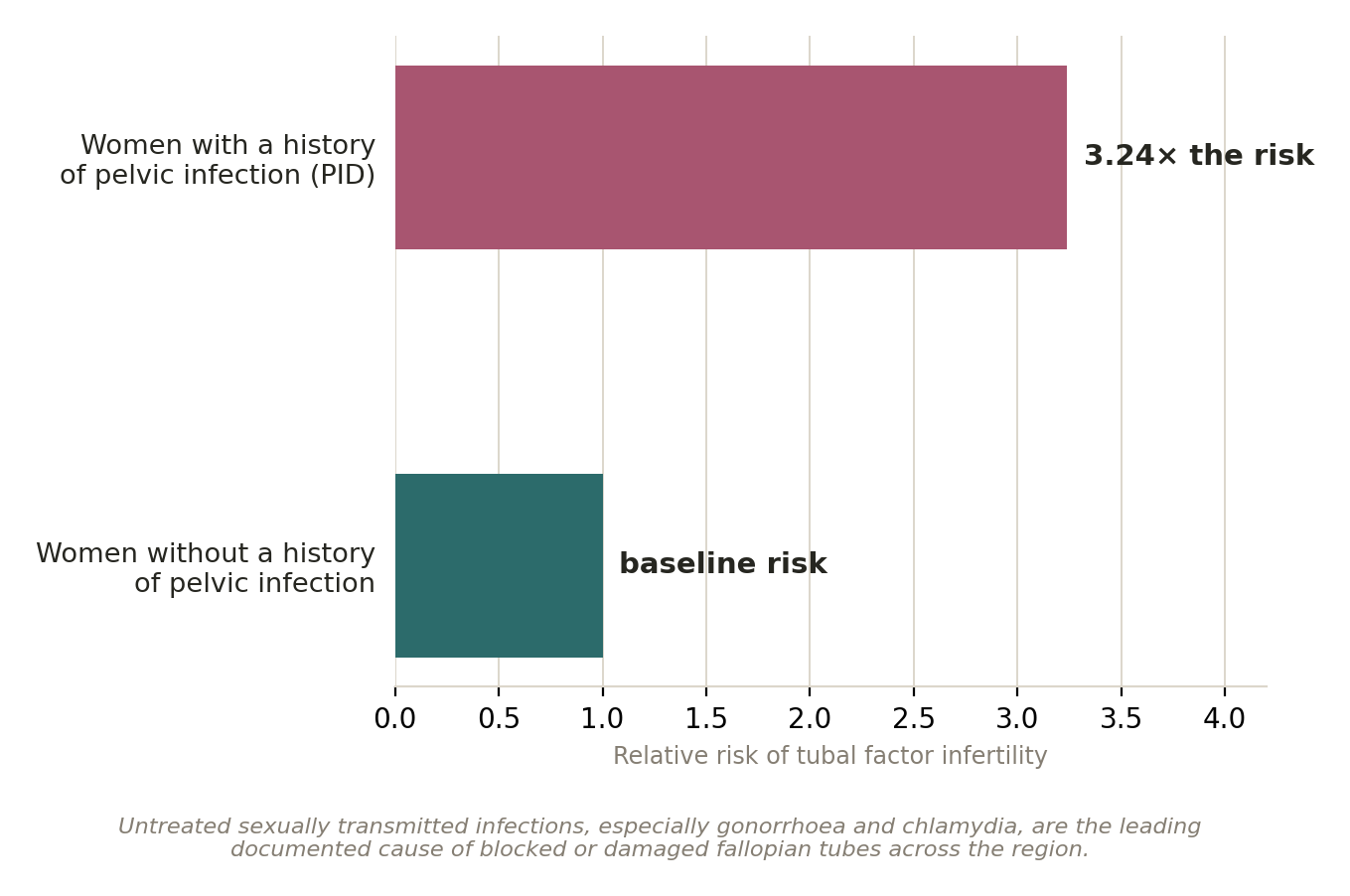
An untreated infection years earlier is often the real, and preventable, root cause.
A cost worth naming directly: published Ethiopian research documents that infertility here carries severe social consequences beyond the medical diagnosis itself — stigma, marital instability, and profound psychological distress. This is not simply a fertility question; for many couples, it is a matter of real social and emotional urgency.
3 Gate Three
A number worth double-checking
Fertility clinic advertising, in Ethiopia and elsewhere, sometimes quotes success rates that simply aren't achievable anywhere in the world. This is worth knowing plainly before choosing a clinic based on a marketed number.
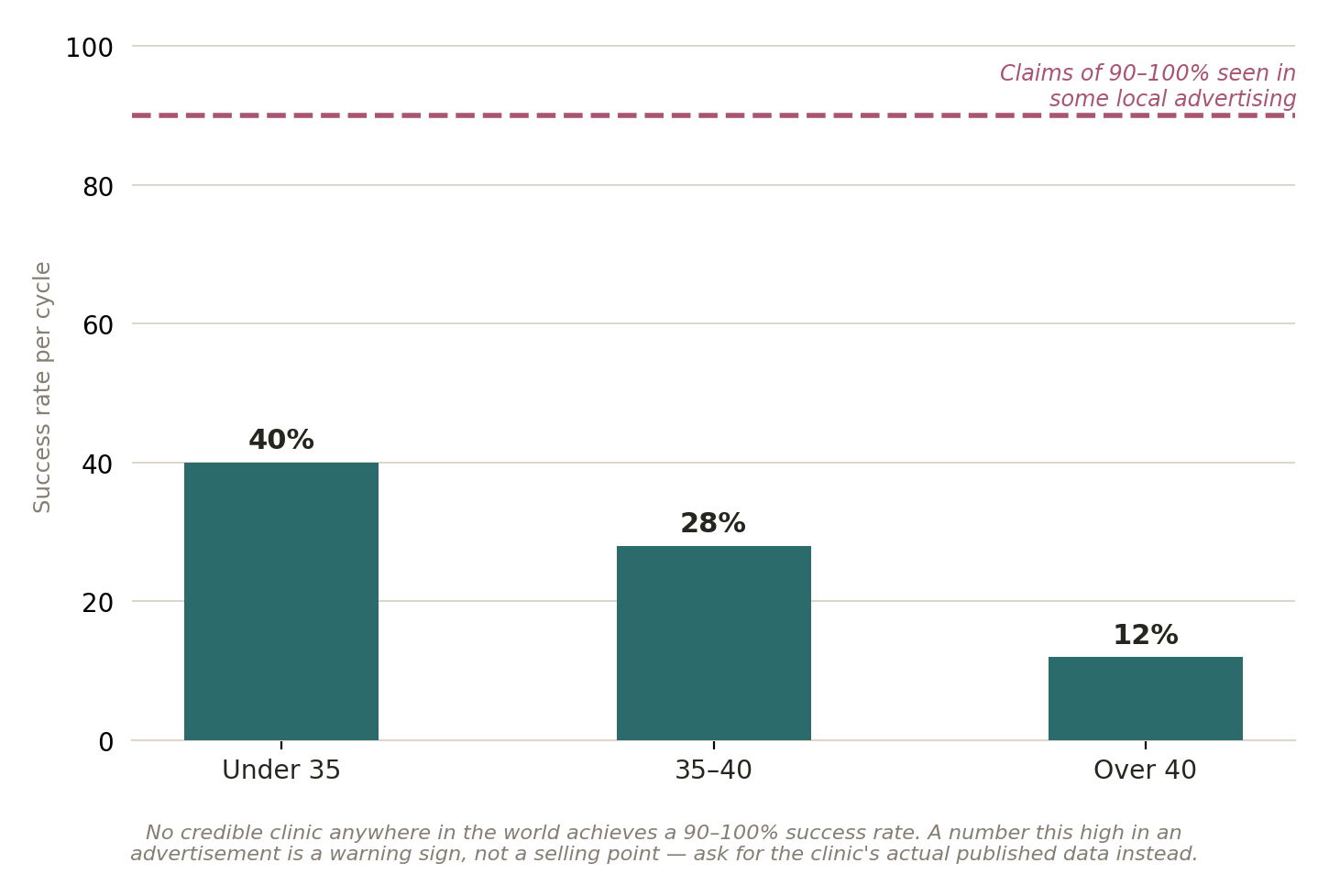
A genuinely excellent clinic reports numbers in this realistic range, not above it.
Ask any clinic, in Ethiopia or India, for their published, independently verifiable success rate, broken down by age group and by whether the figure is a clinical pregnancy rate or a live birth rate — these are different numbers, and a clinic that only quotes the more flattering one without clarifying which it is deserves a more careful look. A reputable clinic will answer this question specifically and without hesitation.
4 Gate Four
Could this be done in Ethiopia?
To a genuine degree, yes, and this is worth stating honestly: Addis Ababa now has several fertility clinics, including hospital-based programmes with real, published treatment volume. This represents real progress. It's also honest to note that quality and transparency vary considerably between providers, and the implausible success-rate marketing described in gate three is not uncommon in this landscape, making it harder for patients to compare options confidently.
This is precisely where India's high-volume fertility centres add genuine, comparative depth: embryology laboratories handling large case volumes, subspecialists in complex cases such as hydrosalpinx (a specific type of severely damaged, fluid-filled tube that can reduce IVF success unless surgically addressed first) and male-factor infertility needing surgical sperm retrieval, and a strong culture of publishing verifiable, age-stratified outcome data. For a treatment this dependent on getting the diagnosis and protocol right, that transparency is not a convenience — it is what actually lets a couple make an informed decision. Ask any centre for their success rate broken down by diagnosis and age, not just an overall headline figure.
5 Gate Five
Is the money arranged?
Ethiopia's health financing does not follow a patient abroad. Community-Based Health Insurance covers contracted facilities inside the country, and the formal-sector scheme still isn't settling claims. Since February 2026 a bank may release up to US$20,000 per case against a letter from the treating hospital, without a visa or ticket in hand.
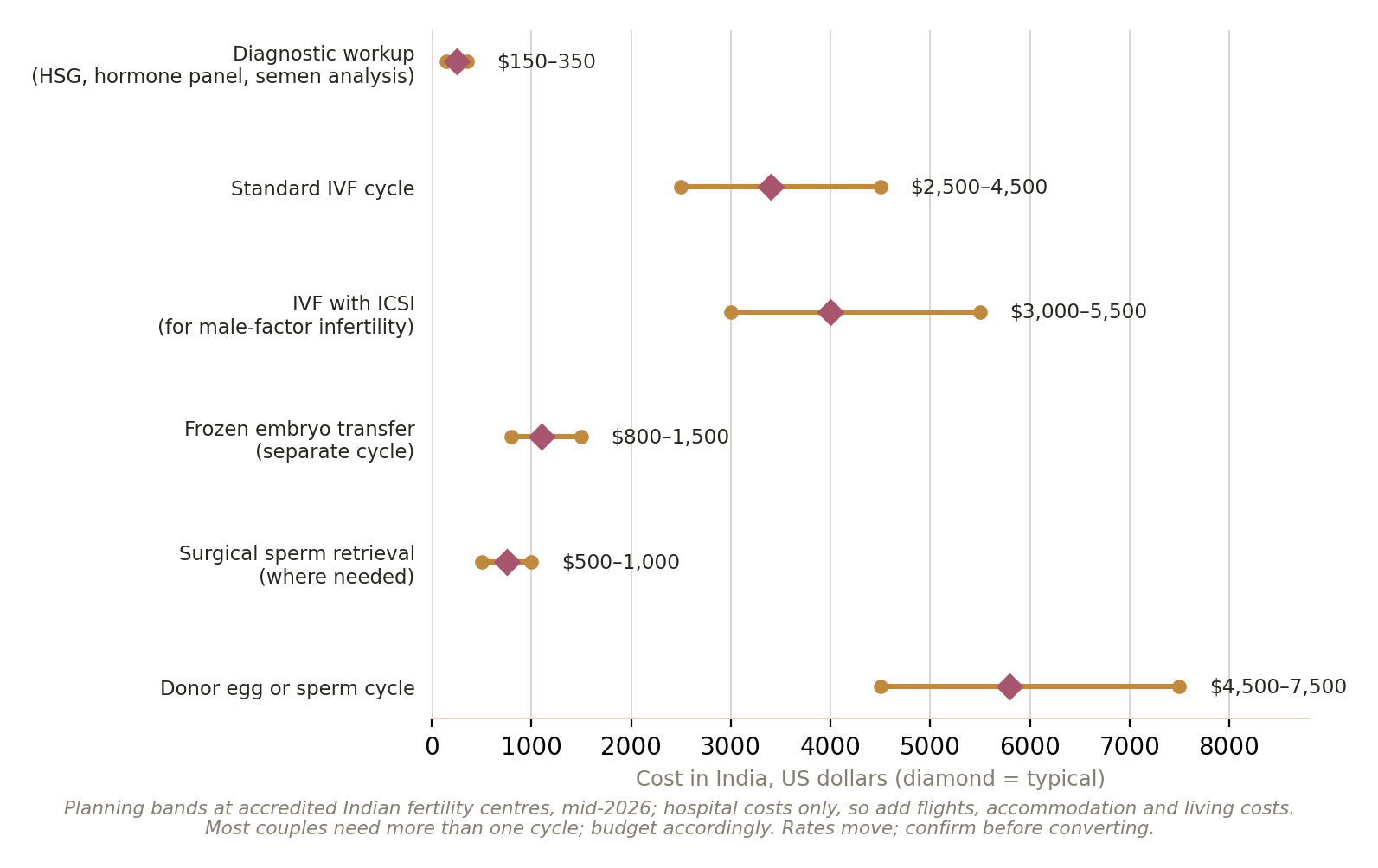
Budget for more than one cycle; most couples don't succeed on the first attempt.
The figures differ by treatment and diagnosis: a standard cycle sits below one requiring ICSI for male-factor infertility, and donor egg or sperm cycles cost more than either. Even at the top of these ranges, treatment at an accredited Indian fertility centre remains a fraction of an equivalent case in the Gulf, Europe, or the United States. Confirm the specific protocol recommended, and realistically budget for a second cycle, before assuming any single number applies to your case.
| A quotation, annotatedA composite of the fertility treatment quotes that reach me, with the questions I send back. | |
| IVF cycle — USD 3,400 | Standard IVF or ICSI? Ask which your diagnosis actually requires before comparing prices. |
| Success rate: "over 90%" | Ask for the published, age-stratified figure instead, and whether it's pregnancy or live birth rate. |
| Includes: hormone stimulation medication | Ask which specific protocol and drugs, since dosage needs vary by age and ovarian reserve. |
| Includes: single embryo transfer | Ask about the clinic's policy on embryo freezing for a future cycle if this one doesn't succeed. |
| Excludes: ICSI if sperm quality requires it | Ask whether a semen analysis has already determined if ICSI is needed. |
| Excludes: a second cycle if needed | Ask for the price of a repeat cycle, since most couples need more than one attempt. |
In 24 years the fertility patients most satisfied with their outcome were the ones who chose a clinic willing to show its real numbers, not the one promising the best ones.
The Ethiopian practicalities
Ethiopian Airlines flies non-stop from Bole to Delhi, Mumbai, Bengaluru, Chennai, and Hyderabad. A full IVF cycle needs close monitoring over about three weeks, so plan for an extended stay rather than a short visit; some initial testing can sometimes be coordinated with a doctor in Ethiopia beforehand to shorten the trip. Yellow fever certification is required at least ten days before arrival, oral polio vaccination roughly four weeks before. The medical visa follows the hospital's invitation letter through the Embassy of India, Addis Ababa. Where treatment spans the Orthodox fasting calendar, this rarely affects fertility treatment directly, but confirm any dietary considerations with the clinic. Confirm current rules with the Embassy, since they change, and ask for an Amharic-speaking coordinator to carry a written treatment summary back to a named provider in Ethiopia.
Straight Answers for Ethiopian Patients about IVF and Fertility Treatment in India
We've been trying to conceive for over a year. Do we need IVF straight away?
Not necessarily. A proper diagnostic workup determines the cause and the right treatment. Some causes respond to simpler treatments. Blocked or damaged fallopian tubes, the most common cause here, generally do need IVF, since it bypasses the tubes entirely.
Why is infertility so often linked to past infections in Ethiopia specifically?
Untreated sexually transmitted infections can silently damage the fallopian tubes over time. Women with a history of pelvic inflammatory disease face more than three times the risk of tubal factor infertility, the leading documented cause across the region.
A clinic near me advertises a 90% or higher IVF success rate. Is that realistic?
No. Published success rates typically range from 35 to 45% per cycle for women under 35, declining with age. No credible clinic anywhere achieves 90 to 100%. A claim this high is a warning sign, not an advantage.
How long does IVF treatment in India take?
One full cycle, from stimulation through embryo transfer, typically takes about three weeks. Many patients plan three to four weeks in India for monitoring throughout the cycle.
Who pays for this in Ethiopia?
You do. Neither Community-Based Health Insurance nor the pending formal-sector scheme funds treatment abroad, though a bank may now advance up to US$20,000 against the treating hospital's letter.
A closing word
Send any prior fertility testing, how long you've been trying to conceive, and either partner's relevant medical history. I will tell you honestly what the likely cause looks like, and why India's fertility centres are where that specific cause is treated with genuinely verifiable, honestly reported results.
Sources
- 🌐 Factors associated with female infertility in Ethiopia: a systematic review and meta-analysis. PLOS One. 2025
- 🌐 Prevalence of infertility and its risk factors in Sub-Saharan Africa: a systematic review and meta-analysis. Contracept Reprod Med. 2025
- 🌐 Prevalence and correlates of infertility-related psychological stress in women with infertility: a cross-sectional hospital-based survey
- 🌐 World Health Organization. Infertility prevalence estimates, 1990-2021. who.int/news/item/infertility-prevalence- estimates
- 🌐 National Medical Commission of India — Indian Medical Register
- 🌐 National Bank of Ethiopia Directive FXD/04/2026 (foreign exchange, advance payments for treatment abroad); Embassy of India, Addis Ababa
Frequently Asked Questions by Ethiopians about IVF and Fertility Treatment in India
Do Ethiopian couples need IVF immediately after trying for a year?
Not necessarily. The guide recommends a proper diagnostic workup first, because some causes may respond to ovulation medication or IUI rather than IVF.
What fertility tests are recommended?
The guide highlights HSG, hormone testing and semen analysis to assess tubal patency, ovulation and ovarian reserve, and male fertility.
Why is tubal infertility important in Ethiopia?
The guide identifies untreated sexually transmitted infections and resulting tubal damage as an important documented cause. IVF can bypass damaged fallopian tubes.
Is a 90% IVF success rate realistic?
No. The guide states that credible IVF success rates are much lower and vary significantly with age. A 90–100% claim should be treated as a warning sign.
What success-rate information should patients request?
Patients should ask for published, independently verifiable figures broken down by age and diagnosis, and clarify whether the clinic is reporting clinical pregnancy or live birth rates.
How much does standard IVF cost in India?
The guide gives an indicative planning range of US$2,500–4,500 for a standard IVF cycle at accredited Indian fertility centres.
How much does IVF with ICSI cost?
The guide gives an indicative range of US$3,000–5,500 for IVF with ICSI, depending on the treatment protocol and case requirements.
How long should Ethiopian patients stay in India?
One full IVF cycle generally takes around three weeks, and the guide recommends planning approximately three to four weeks in India for monitoring and treatment.
Should couples budget for another IVF cycle?
Yes. The guide specifically recommends budgeting for more than one cycle because many couples do not achieve pregnancy on the first attempt.
What should be checked in an IVF quotation?
Patients should clarify whether the quoted treatment is standard IVF or ICSI, what medications are included, embryo-freezing arrangements, whether a second cycle is covered and which additional procedures may be charged separately.
Page Summary
This seven-page guide helps Ethiopian couples understand IVF and fertility treatment options in India, beginning with proper diagnosis before choosing treatment. It highlights Ethiopia's reported infertility burden and the important role of tubal-factor infertility linked to previous infections. The guide stresses realistic, independently verifiable IVF success rates and warns against exaggerated 90–100% claims. It also compares treatment options and indicative Indian costs for IVF, ICSI, frozen embryo transfer, sperm retrieval and donor cycles. The practical pathway covers clinic evaluation, treatment planning, budgeting, travel, medical documentation and a three-to-four-week stay in India.
Citation Block
| Topic | Information |
|---|---|
| Topic | IVF & Fertility Treatment |
| Treatment | IVF / ICSI / Fertility Care |
| Country | India |
| Patients | Ethiopian Patients |
| Key Tests | HSG, Hormone Testing & Semen Analysis |
| Main Options | IVF, IUI & ICSI |
| Key Cause | Tubal-Factor Infertility |
| Key Specialist | Fertility Specialist |
| Success Rate Check | Age- & Diagnosis-Specific Data |
| Standard IVF Cost | US$2,500–4,500 |
| ICSI Cost | US$3,000–5,500 |
| Frozen Transfer | US$800–1,500 |
| Donor Cycle | US$4,500–7,500 |
| Treatment Duration | About 3 Weeks |
| Recommended Stay | 3–4 Weeks |
| Key Warning | 90–100% Success Claims |
| Clinic Check | Independently Verifiable Results |
| Budget Check | Plan for More Than One Cycle |
| Travel Route | Ethiopia–India |
| Visa | Indian Medical Visa |
| Follow-Up | Ethiopian Doctor |
| Key Records | Previous Fertility Tests & Medical History |
| Key Questions | Diagnosis, Success Rate, Cost & Repeat Cycle |

Our Mission Statement
Our mission is to place patients at the centre of every healthcare decision by providing trustworthy, evidence-based, and unbiased medical information. We believe that informed patients make better decisions. Backed by personalised guidance from our experienced advisory team, we help patients understand their treatment options, compare them objectively, and confidently choose the path that best suits their medical needs and personal circumstances.
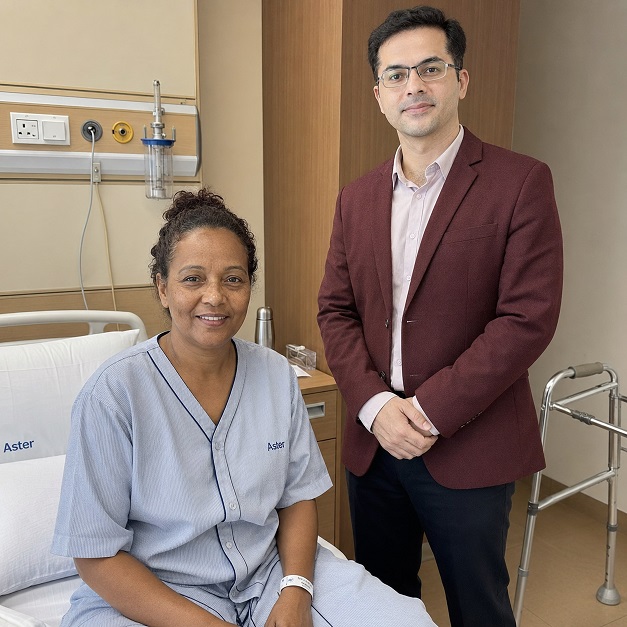
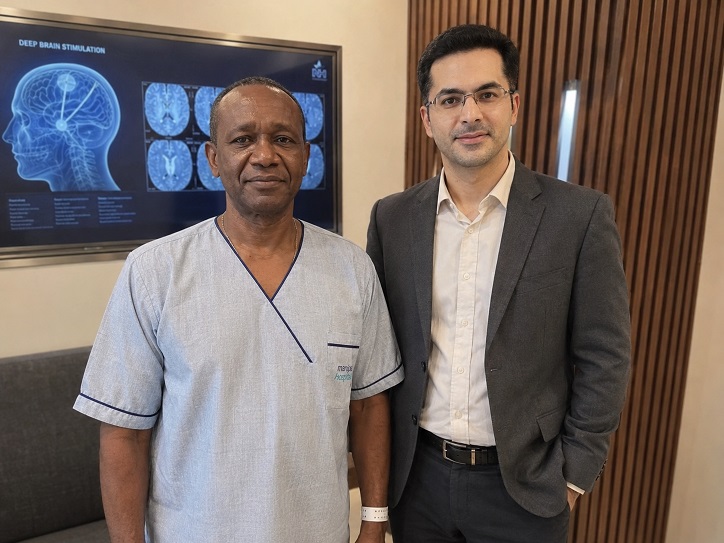
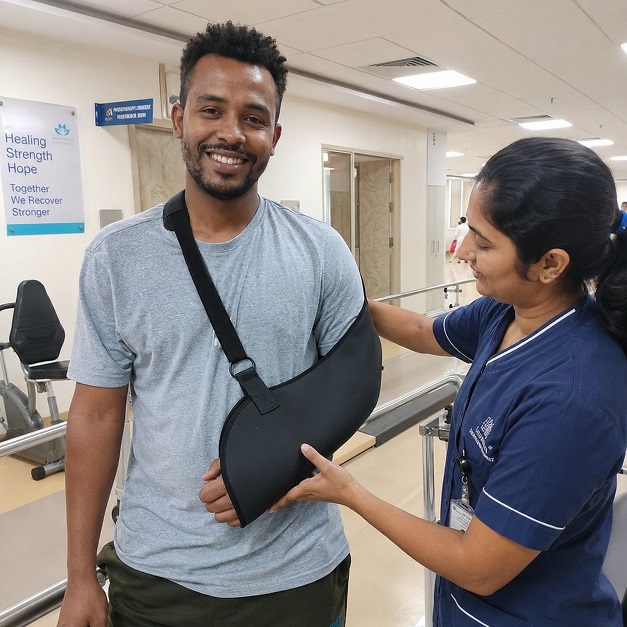
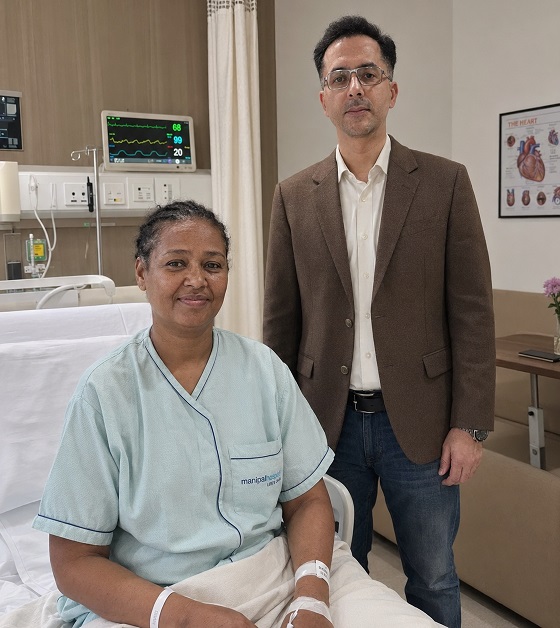
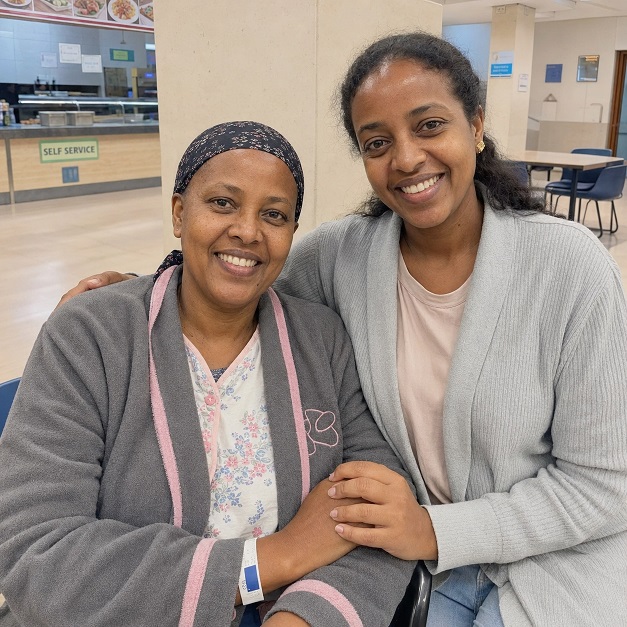
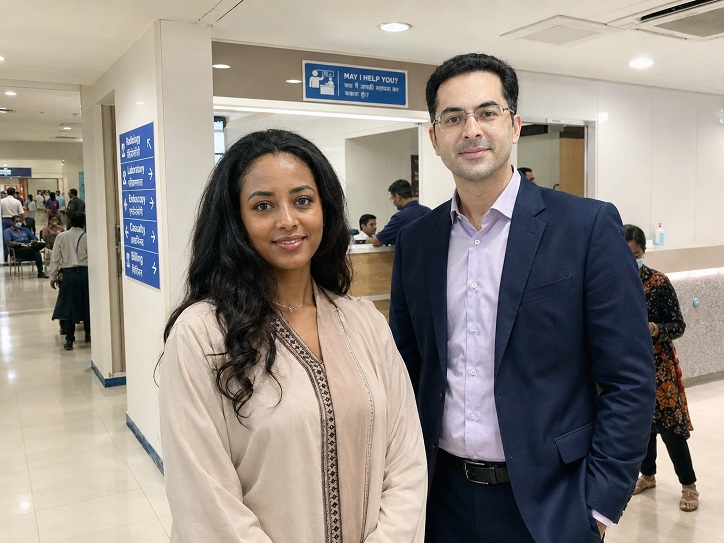
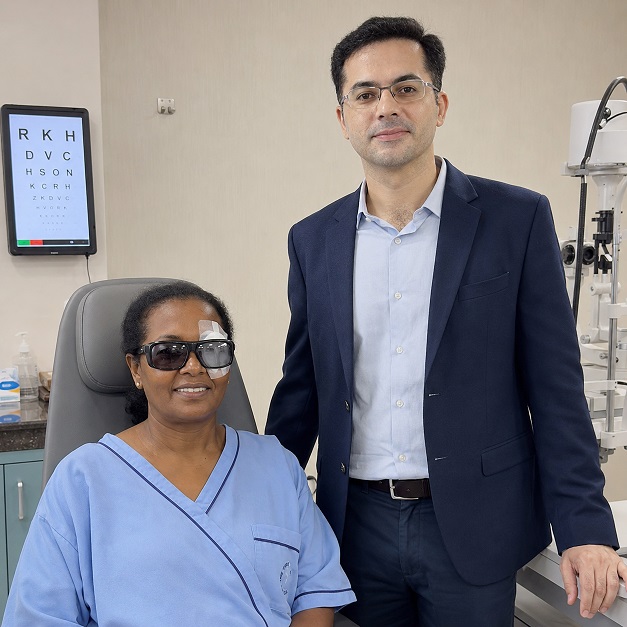
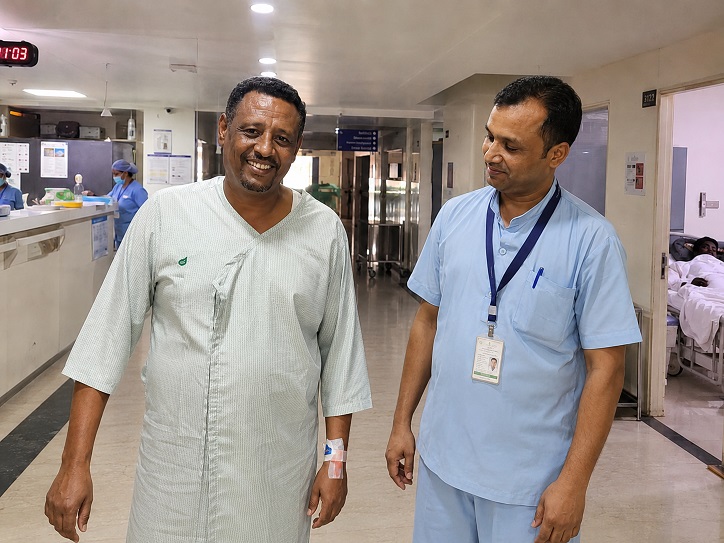
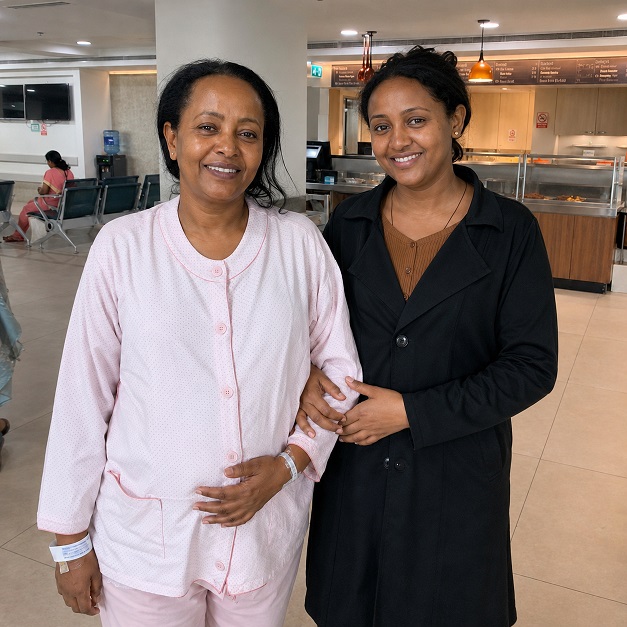
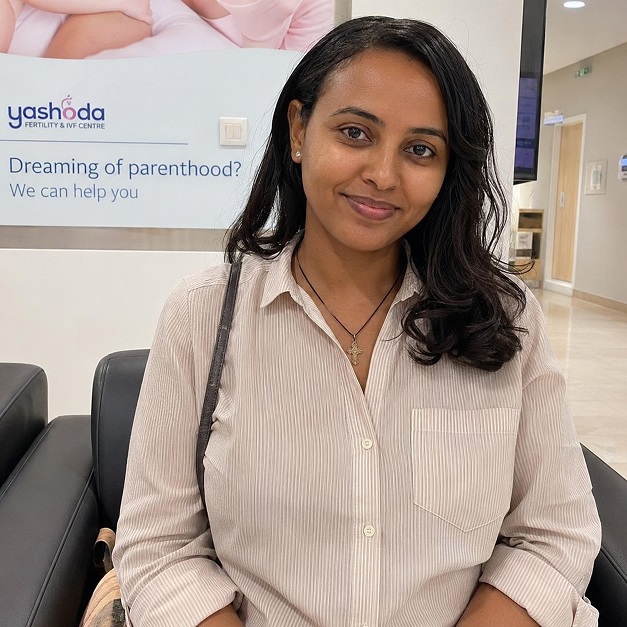
Patient Testimonials from Ethiopia
Ready to Take the First Step?
Share your Medical Reports with our Healthcare Managers Today and Get a FREE CONSULTATION, a Personalized Treatment Plan, and Complete Support from Arrival to Recovery.
Get Your Free ConsultationAreas We Serve
This resource has been thoughtfully prepared for patients from Ethiopia who are considering medical treatment in India. We also welcome patients from the wider region in the countries mentioned below-
We assist patients from:
- Eritrea
- Djibouti
- Somalia
- Kenya
- Sudan
- Burundi
- Comoros
- Ethiopia
- Madagascar
- Malawi
- Mauritius
- Mozambique
- Rwanda
- South Sudan
Many of the insights, treatment pathways, hospital recommendations, travel guidance, and patient support services described here are equally relevant and may be used as a reference when planning treatment in India.
From Ethiopia to India: Your Complete Patient Support Guide
- Brain Tumour Surgery in India for Ethiopians
- Cancer Treatment in India for Ethiopians
- Cardiac Surgery in India for Ethiopian Patients
- Cervical and Disc Replacement Surgery in India for Ethiopians
- Cosmetic and Plastic Surgery in India for Ethiopians
- CyberKnife Treatment in India for Ethiopians
- Eye Surgery in India for Ethiopians
- Gamma Knife Treatment in India for Ethiopians
- Heart Valve Replacement Surgery in India for Ethiopians
- Hip Surgery in India for Ethiopian Patients
- Knee Surgery in India for Ethiopian Patients
- Laparoscopic and Robotic Myomectomy Surgery in India for Ethiopians
- Neurosurgery in India for Ethiopians
- Paediatric Cardiac Surgery in India for Ethiopians
- Paediatric Neurosurgery in India for Ethiopians
- Prostate Cancer Treatment and Surgery in India for Ethiopians
- Robotic Cancer Surgery in India for Ethiopians
- Scoliosis Surgery in India for Ethiopians