

Heart Failure Treatment and Surgery for Ethiopian Patients in India
Five gates every heart failure case should pass before booking a flight — starting with the fact that Ethiopian heart failure is, in most cases, a different disease from the one most international guidance is written around, and ending with why India is where its full treatment ladder, up to transplant, genuinely exists.
Heart failure is not one disease with one treatment path; it is a spectrum, and where a specific patient sits on that spectrum determines almost everything about the right next step. In 24 years of arranging surgical and medical care in India for patients across Africa and Asia, heart failure is a field where the Ethiopian picture is genuinely distinct from the international default: valve disease, heart muscle disease, and high blood pressure, not blocked coronary arteries, drive the large majority of cases, and the patients affected are often decades younger than the heart failure patients most treatment guidelines are written for. One form of this disease deserves to be named on its own. Peripartum cardiomyopathy, heart failure arising in the last month of pregnancy or the months after delivery, disproportionately affects women of African ancestry and is frequently mistaken at first for ordinary postpartum fatigue or swelling. In the highest-burden settings, it has been linked to roughly a third of peripartum deaths. And when heart failure of any cause progresses beyond what medication and devices can control, the advanced therapies that follow — mechanical heart pumps and heart transplant — barely exist anywhere on the African continent. India's cardiac centres, by contrast, run the complete treatment ladder, from medication optimisation through to transplant, as established, everyday practice. These five gates walk through what stage of heart failure a specific case is genuinely at, whether medical therapy has been properly maximised first, and why India is where the advanced end of this disease's treatment ladder is where an Ethiopian patient can actually reach it.
Healing Journeys of Ethiopian Patients









Key Takeaways
- Heart failure is not one disease with one treatment pathway. The guide explains that the underlying cause and severity determine the appropriate next step. In Ethiopia, valve disease, heart muscle disease and high blood pressure are highlighted as major contributors, rather than the coronary artery disease pattern commonly seen in high-income settings.
- The guide gives particular attention to peripartum cardiomyopathy, a form of heart failure that develops during the last month of pregnancy or in the months after delivery. It notes that this condition disproportionately affects women of African ancestry and may be mistaken for normal postpartum fatigue or swelling. The page 3 visual highlights that approximately 34% of peripartum deaths in high-burden settings have been attributed to peripartum cardiomyopathy.
- The treatment pathway should generally begin with accurate diagnosis and properly optimised heart failure medication. The document stresses that devices, mechanical circulatory support and transplant should not automatically be considered before medication has been genuinely maximised. Patients should ask which medicines were tried, at what doses and for how long.
- The guide explains that standard diagnosis and medical management are increasingly available in Ethiopia, while devices such as pacemakers and ICDs are more limited. Advanced therapies such as LVAD implantation and heart transplantation are described as extremely limited across Africa, whereas leading Indian cardiac centres have established programmes for advanced heart failure, mechanical support and transplantation.
- The page 5 cost chart provides indicative Indian planning ranges of USD 200–500 for diagnostic workup, USD 30–100 per month for optimised medical therapy, USD 9,600–18,000 for ICD implantation, USD 7,000–24,000 for CRT-D implantation, USD 45,000–75,000 for LVAD implantation and USD 30,000–45,000 for heart transplantation including the waiting period. The PDF stresses that the appropriate cost depends heavily on the patient's position on the heart failure treatment ladder.
- The annotated quotation advises patients to confirm whether guideline-directed medical therapy has been maximised, which specific device and brand is proposed, how the centre manages an uncertain transplant waiting period, expected lifelong immunosuppression costs after transplant and future device battery replacement costs.
Quick Facts
- Treatment
- Heart Failure Treatment and Surgery
- Country
- India
- Patients
- Ethiopian Patients
- Main Causes Highlighted
- Valve Disease, Cardiomyopathy and Hypertensive Heart Disease
- Important Condition
- Peripartum Cardiomyopathy
- Initial Assessment
- Echocardiogram and Cardiac Evaluation
- First Treatment Step
- Optimised Medical Therapy
- Device Options
- ICD and CRT-D
- Advanced Options
- LVAD and Heart Transplant
- Diagnostic Workup
- USD 200–500
- Optimised Medical Therapy
- USD 30–100 Per Month
- ICD Implantation
- USD 9,600–18,000
- CRT-D Implantation
- USD 7,000–24,000
- LVAD Implantation
- USD 45,000–75,000
- Heart Transplant
- USD 30,000–45,000 Including Waiting Period
- Medication Optimisation
- Often Approximately 1 Week for Initial Workup
- Device Implantation
- Approximately 5–7 Days
- LVAD Implantation
- Approximately 3–4 Weeks
- Heart Transplant
- Timing Depends on Donor Availability
- Ethiopia
- Standard Heart Failure Management Available; Advanced LVAD and Transplant Capacity Extremely Limited
- Key Planning Requirement
- Confirm Heart Failure Stage and Optimised Medical Therapy
- Payment Advice
- Confirm Treatment Stage, Device Costs, Future Replacement and Long-Term Medication Costs
In Brief
Ethiopian patients considering advanced heart failure treatment in India should first establish the actual cause and severity of heart failure through appropriate cardiac evaluation, including an echocardiogram and review of current medication. Before discussing devices, LVAD or transplant, patients should confirm that guideline-directed medical therapy has been properly optimised. If advanced treatment is genuinely required, they should ask the Indian cardiac centre about its experience with the specific device or transplant procedure, annual procedure volume, survival outcomes, waiting-period arrangements, long-term medication requirements and follow-up in Ethiopia.
1 Gate One
Breathless, or heart failure?
Breathlessness, swollen ankles, and fatigue are what usually start this conversation, and each has many possible causes besides the heart. An echocardiogram, showing how well the heart is actually pumping, is what confirms or rules out heart failure — symptoms alone are not enough to build a treatment plan on.
This matters especially for women who are pregnant or have recently given birth, where breathlessness and swelling are often assumed to be normal. A specific, dangerous form of heart failure can hide behind that assumption, covered in the next gate. Ask for an echocardiogram whenever heart failure symptoms appear in this period, rather than waiting to see if they pass.
2 Gate Two
Which heart failure, and whose?
Once heart failure is confirmed, what caused it changes almost everything about prognosis and treatment — and the Ethiopian pattern looks different from what most international guidance assumes.
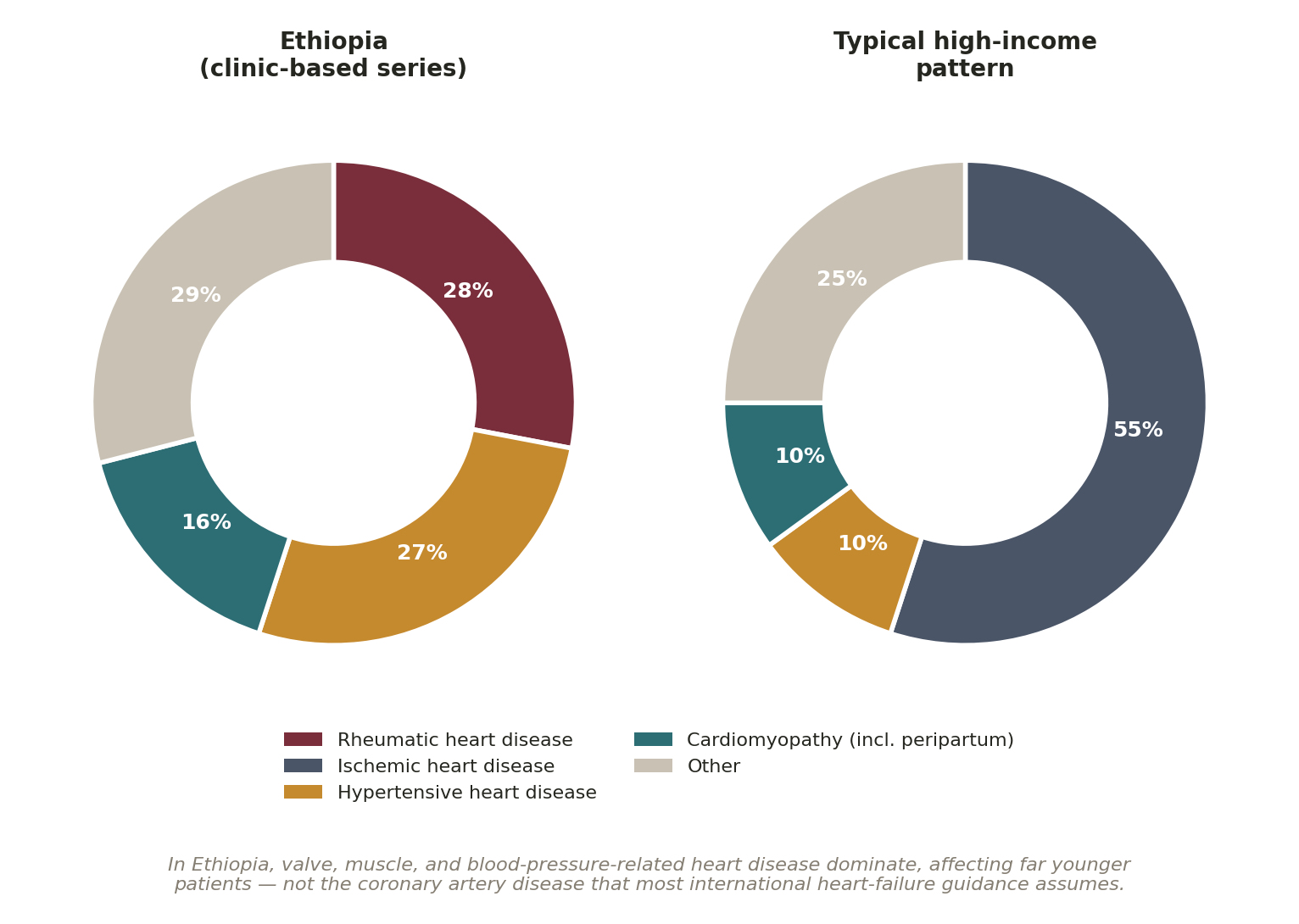
Valve, muscle, and blood-pressure disease dominate in Ethiopia — not blocked coronary arteries.
A specific form worth naming directly: peripartum cardiomyopathy, heart failure arising in late pregnancy or the months after delivery, disproportionately affects women of African ancestry.
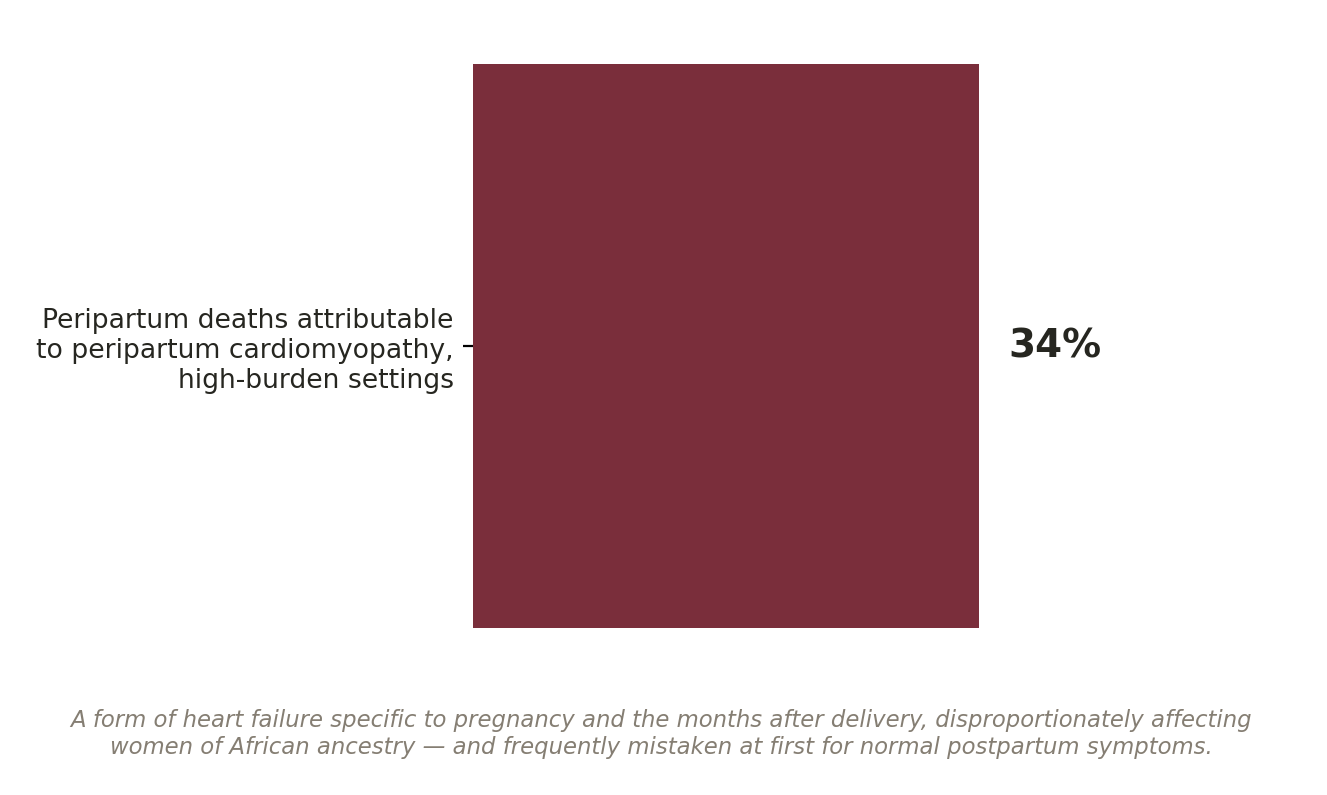
A treatable disease that is frequently missed because its symptoms mimic normal postpartum recovery.
Peripartum cardiomyopathy has a disease-specific treatment beyond standard heart failure medication, and many affected women recover substantial heart function with prompt diagnosis and treatment started early enough. Ask explicitly whether this diagnosis has been considered for any woman with heart failure symptoms in the peripartum period, rather than assuming the breathlessness will resolve on its own.
3 Gate Three
Has medication really been maximised?
Modern heart failure medication, when given at full guideline-recommended doses and in combination, meaningfully improves survival and quality of life for most patients — and this step is skipped or left incomplete more often than it should be. Advanced therapies like devices, mechanical support, or transplant are intended for patients whose heart failure remains severe despite this medication being genuinely optimised, not as an earlier substitute for it.
Before any conversation about devices or transplant, ask specifically which heart failure medications have been tried, at what doses, and for how long. A patient labelled "end-stage" who has never received a full, properly dosed medication regimen may have more room to improve than that label suggests.
4 Gate Four
Could this be done in Ethiopia?
Diagnosis and standard medical management for heart failure are increasingly available within Ethiopia, and many patients are treated well at this level without ever needing to travel. Devices such as pacemakers and, in some centres, ICDs are more limited but exist for selected patients. The advanced end of the treatment ladder — mechanical circulatory support and heart transplant — is a different picture entirely, and it is worth being honest about that difference early rather than discovering it mid-crisis.
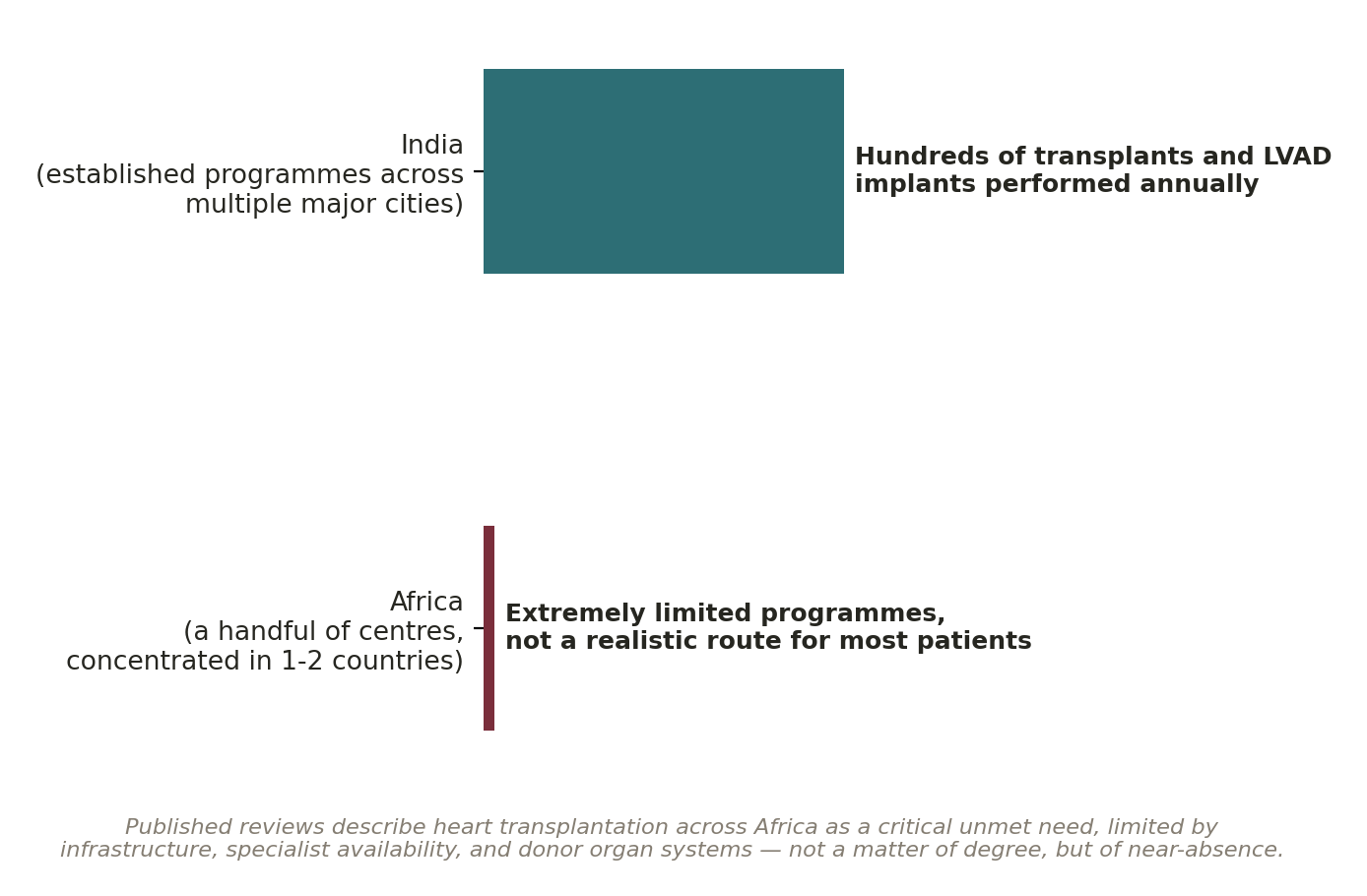
This is not a capacity gap to work around. Across the continent, it is close to an absence.
This is precisely where India's position matters most for advanced heart failure. India's leading cardiac centres run heart transplant and LVAD programmes as established, high-volume practice, with the donor networks, mechanical support technology, and post-transplant immunology expertise this treatment depends on. For a patient whose heart failure has genuinely progressed beyond medication and devices, that established infrastructure is not a convenience — for an Ethiopian patient today, it is close to the only route to this treatment existing at all. Ask any centre how many transplants and LVAD implants they perform each year, and what their survival outcomes are.
5 Gate Five
Is the money arranged?
Ethiopia's health financing does not follow a patient abroad. Community-Based Health Insurance covers contracted facilities inside the country, and the formal-sector scheme still isn't settling claims. Since February 2026 a bank may release up to US$20,000 per case against a letter from the treating hospital, without a visa or ticket in hand.
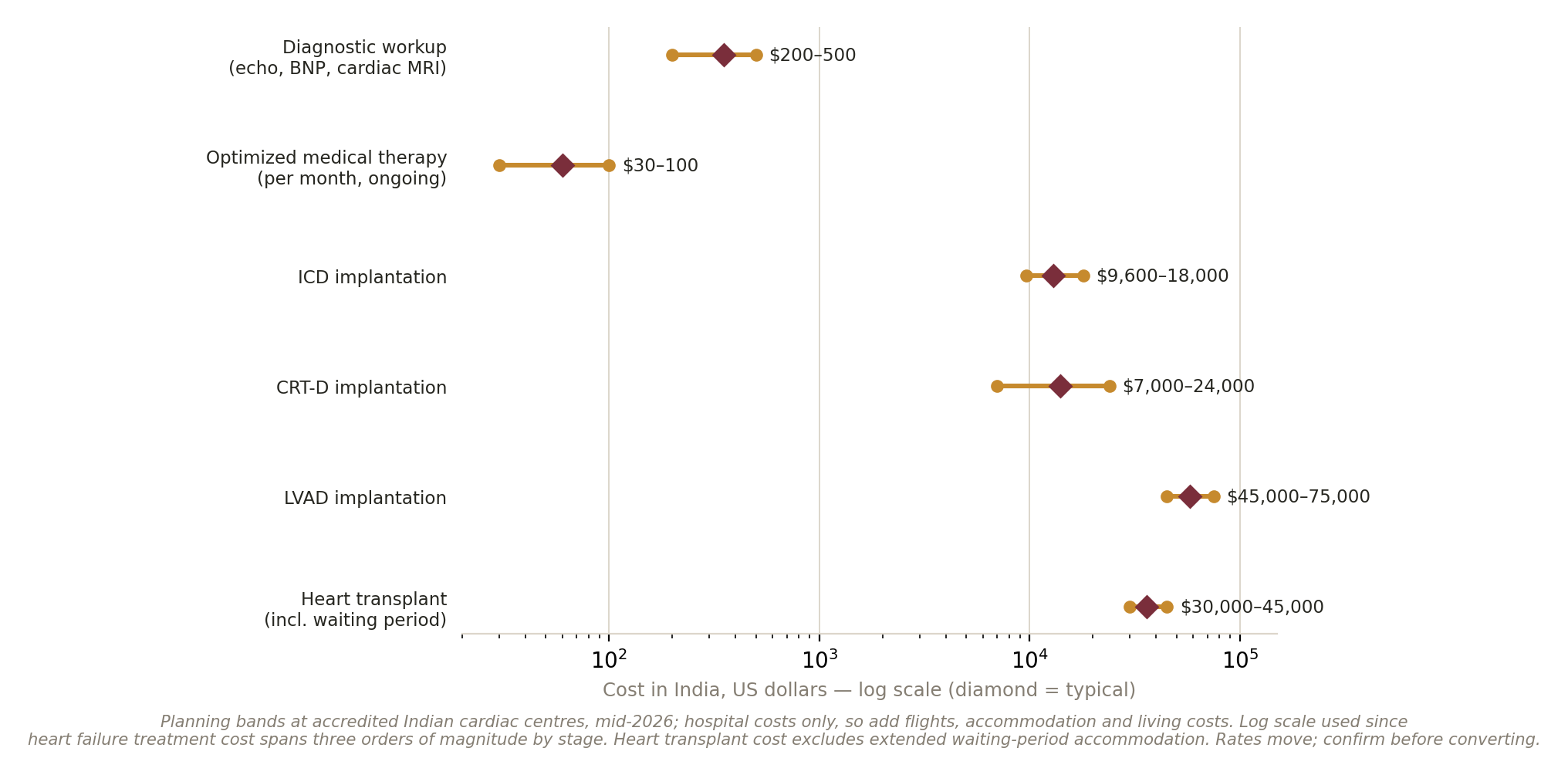
Heart failure treatment cost spans three orders of magnitude — confirm which stage actually applies to your case.
The figures differ enormously by stage: optimised medication costs a small fraction of a device, which in turn costs a fraction of mechanical support or transplant. Even at the top of this range, treatment at a leading Indian cardiac centre remains a fraction of an equivalent case in the Gulf, Europe, or the United States. Confirm the stage of heart failure and the specific treatment being proposed before assuming any single number applies to your case.
| A quotation, annotatedA composite of the heart failure quotes that reach me, with the questions I send back. | |
| Heart failure treatment — USD 15,000 | Medication, device, LVAD, or transplant? These are entirely different prices and journeys. |
| Includes: full cardiology workup | Good sign. Ask whether guideline-directed medical therapy has genuinely been maximised first. |
| Device: ICD/CRT-D as indicated | Ask which specific device and brand, and the expected battery life before replacement. |
| Transplant: waiting period variable | Ask how the centre supports a patient during an uncertain donor-wait period. |
| Excludes: lifelong immunosuppression (if transplant) | Ask for expected monthly medication costs after transplant. |
| Excludes: device battery replacement (later) | Ask for the expected interval and cost of future device replacement. |
In 24 years the heart failure patients most satisfied with their outcome were the ones who understood exactly where on the treatment ladder they stood before discussing any specific procedure's price.
The Ethiopian practicalities
Ethiopian Airlines flies non-stop from Bole to Delhi, Mumbai, Bengaluru, Chennai, and Hyderabad. Ask for written clearance to fly rather than assuming a fixed timeline, since this varies enormously by treatment stage. Yellow fever certification is required at least ten days before arrival, oral polio vaccination roughly four weeks before. The medical visa follows the hospital's invitation letter through the Embassy of India, Addis Ababa; for transplant candidates, ask specifically about visa provisions for an extended, uncertain waiting period. An attendant is essential throughout, particularly for device or transplant patients. Where treatment spans the Orthodox fasting calendar, raise this with the hospital's dietary team beforehand, since heart failure nutrition needs are specific. Confirm current rules with the Embassy, since they change, and ask for an Amharic-speaking coordinator to carry a written follow-up plan back to a named cardiologist in Ethiopia.
Straight Answers for Ethiopian Patients about Heart Failure Treatment and Surgery in India
I get breathless and swollen ankles. Is this heart failure?
Not necessarily, but these are classic symptoms deserving an echocardiogram. In women who are pregnant or recently gave birth, these symptoms are especially easy to mistake for normal changes — exactly when a dangerous form of heart failure can be missed.
Does heart failure always need a transplant or surgery?
No. Most heart failure is managed first with optimized medication. Devices come next for specific patients. Transplant and mechanical support are reserved for advanced disease that hasn't responded to properly maximised medical therapy.
Is heart transplant or LVAD available in Ethiopia?
No. Published reviews describe heart transplantation across Africa as a critical unmet need, with programmes concentrated in only one or two countries. No routine programme currently operates in Ethiopia.
How long does heart failure treatment in India take?
Diagnostic workup and medication optimisation often need one week. Device implantation needs five to seven days. LVAD implantation needs three to four weeks. Heart transplant timing depends on donor availability and can't be scheduled precisely.
Who pays for this in Ethiopia?
You do. Neither Community-Based Health Insurance nor the pending formal-sector scheme funds treatment abroad, though a bank may now advance up to US$20,000 against the treating hospital's letter.
A closing word
Send the echocardiogram report, current medications and doses, and a note on how long symptoms have been present. I will tell you honestly which stage of heart failure this looks like, and if advanced therapy is genuinely the next step, why India's cardiac centres are, for an Ethiopian patient today, close to the only place that treatment ladder reaches all the way to transplant.
Sources
- 🌐 Clinical profiles of cardiovascular diseases and predictors of outcome at Ayder Comprehensive Specialized Hospital, Tigray, Ethiopia
- 🌐 Rheumatic heart disease burden and determinants in cardiac patients: a follow up care concern in Ethiopia. IJC Heart & Vasculature. 2024
- 🌐 Peripartum cardiomyopathy: a review of prevalence and treatment trends from an African perspective. PMC. 2024
- 🌐 Femi-Lawal VO, Anyinkeng ABS, Effiom VB. Unmet need for heart transplantation in Africa. Ann Med Surg. 2024. doi:
- 🌐 National Medical Commission of India — Indian Medical Register
- 🌐 National Bank of Ethiopia Directive FXD/04/2026 (foreign exchange, advance payments for treatment abroad); Embassy of India, Addis Ababa
Frequently Asked Questions by Ethiopians about Heart Failure Treatment and Surgery in India
I have breathlessness and swollen ankles. Does this mean I have heart failure?
Not necessarily. These symptoms can have several causes, but they are important symptoms that warrant cardiac evaluation. The guide recommends an echocardiogram to assess heart function.
Does every heart failure patient need surgery or a heart transplant?
No. Most patients are initially managed with properly optimised heart failure medication. Devices, LVAD and transplantation are considered for selected patients whose disease remains severe despite appropriate treatment.
What causes of heart failure are highlighted for Ethiopian patients?
The guide highlights valve disease, cardiomyopathy and hypertensive heart disease as important causes in Ethiopia. It contrasts this pattern with the greater contribution of ischemic heart disease in typical high-income settings.
What is peripartum cardiomyopathy?
It is heart failure that develops during the final month of pregnancy or in the months following delivery. The guide highlights that it can be mistaken for normal postpartum symptoms and recommends considering it when women develop breathlessness or swelling during this period.
Is heart transplant or LVAD treatment available in Ethiopia?
The PDF states that there is no routine heart-transplant programme currently operating in Ethiopia and that advanced mechanical circulatory support is extremely limited across Africa. India has established programmes for both LVAD and heart transplantation.
How much does heart failure treatment cost in India?
The indicative ranges include USD 9,600–18,000 for ICD implantation, USD 7,000–24,000 for CRT-D, USD 45,000–75,000 for LVAD implantation and USD 30,000–45,000 for heart transplantation including the waiting period.
How long does heart failure treatment in India take?
Initial diagnostic workup and medication optimisation may take approximately one week. Device implantation may require five to seven days, while LVAD implantation may require approximately three to four weeks. Transplant timing depends on donor availability.
What should patients ask before choosing an Indian cardiac centre?
Patients should ask about the centre's annual LVAD and transplant volume, survival outcomes, specific device and brand, transplant waiting-period support and long-term follow-up arrangements.
What costs may continue after a heart transplant or device procedure?
After transplantation, lifelong immunosuppressive medication may be required. For devices, patients should also ask about expected battery life and the future cost and timing of replacement.
Who pays for heart failure treatment abroad for Ethiopian patients?
The PDF states that Ethiopian health-financing schemes do not fund treatment abroad. It also notes that, from February 2026, a bank may release up to US$20,000 per case against a letter from the treating hospital, subject to the applicable requirements.
Page Summary
This guide explains the heart failure treatment pathway for Ethiopian patients considering treatment in India, from diagnosis and medication to advanced cardiac therapies. It highlights the different causes of heart failure seen in Ethiopia and gives particular attention to peripartum cardiomyopathy. The guide stresses that medication should be properly optimised before considering devices, LVAD or heart transplantation. It compares the limited availability of advanced heart failure treatment in Africa with India's established cardiac transplant and LVAD programmes. The guide provides indicative costs, treatment timelines, quotation considerations and practical travel information for Ethiopian patients. Overall, patients are encouraged to establish their heart failure stage and understand the complete treatment and follow-up plan before travelling to India.
Citation Block
| Topic | Information |
|---|---|
| Topic Information | Heart Failure Treatment and Surgery for Ethiopian Patients in India |
| Treatment | Heart Failure Treatment and Advanced Cardiac Care |
| Country | India |
| Intended Audience | Ethiopian Patients |
| Main Causes Highlighted | Valve Disease, Cardiomyopathy and Hypertensive Heart Disease |
| Important Condition | Peripartum Cardiomyopathy |
| Initial Assessment | Echocardiogram and Cardiac Evaluation |
| First Treatment Step | Optimised Medical Therapy |
| Device Options | ICD and CRT-D |
| Advanced Options | LVAD and Heart Transplant |
| Diagnostic Workup | USD 200–500 |
| Optimised Medical Therapy | USD 30–100 Per Month |
| ICD Implantation | USD 9,600–18,000 |
| CRT-D Implantation | USD 7,000–24,000 |
| LVAD Implantation | USD 45,000–75,000 |
| Heart Transplant | USD 30,000–45,000 Including Waiting Period |
| Treatment Duration | Approximately 1 Week for Initial Workup; 5–7 Days for Devices; 3–4 Weeks for LVAD |
| Important Planning | Confirm Heart Failure Stage and Medical Optimisation |
| Important Cost Check | Confirm Device, Long-Term Medication and Replacement Costs |
| Follow-Up | Continued Cardiology Care in Ethiopia |
| Author | Dr. Dheeraj Bojwani |
| Experience | 24+ Years |


Our Mission Statement
Our mission is to place patients at the centre of every healthcare decision by providing trustworthy, evidence-based, and unbiased medical information. We believe that informed patients make better decisions. Backed by personalised guidance from our experienced advisory team, we help patients understand their treatment options, compare them objectively, and confidently choose the path that best suits their medical needs and personal circumstances.
Patient Testimonials from Ethiopia










Ready to Take the First Step?
Share your Medical Reports with our Healthcare Managers Today and Get a FREE CONSULTATION, a Personalized Treatment Plan, and Complete Support from Arrival to Recovery.
Get Your Free ConsultationAreas We Serve
This resource has been thoughtfully prepared for patients from Ethiopia who are considering medical treatment in India. We also welcome patients from the wider region in the countries mentioned below-
We assist patients from:
- Eritrea
- Djibouti
- Somalia
- Kenya
- Sudan
- Burundi
- Comoros
- Ethiopia
- Madagascar
- Malawi
- Mauritius
- Mozambique
- Rwanda
- South Sudan
Many of the insights, treatment pathways, hospital recommendations, travel guidance, and patient support services described here are equally relevant and may be used as a reference when planning treatment in India.
From Ethiopia to India: Your Complete Patient Support Guide
- Brain Tumour Surgery in India for Ethiopians
- Cancer Treatment in India for Ethiopians
- Cardiac Surgery in India for Ethiopian Patients
- Cervical and Disc Replacement Surgery in India for Ethiopians
- Cosmetic and Plastic Surgery in India for Ethiopians
- CyberKnife Treatment in India for Ethiopians
- Eye Surgery in India for Ethiopians
- Gamma Knife Treatment in India for Ethiopians
- Heart Valve Replacement Surgery in India for Ethiopians
- Hip Surgery in India for Ethiopian Patients
- Knee Surgery in India for Ethiopian Patients
- Laparoscopic and Robotic Myomectomy Surgery in India for Ethiopians
- Neurosurgery in India for Ethiopians
- Paediatric Cardiac Surgery in India for Ethiopians
- Paediatric Neurosurgery in India for Ethiopians
- Prostate Cancer Treatment and Surgery in India for Ethiopians
- Robotic Cancer Surgery in India for Ethiopians
- Scoliosis Surgery in India for Ethiopians