

Choosing the Best Dental Surgery Dentist and Facility in India: A Guide for Ethiopian Patients
Dental surgery ranges from a single afternoon procedure to a staged process spanning months. Choosing an internationally recognised implant system, not just the lowest quote, is what determines whether your dental work can actually be maintained and adjusted once you're back in Ethiopia.
Most patients researching dental surgery in India spend the bulk of their time comparing prices, and understandably so — cost is often what makes the trip possible at all. But price is the easiest variable to compare and, on its own, the least useful one for predicting whether the work actually lasts, and whether it can be looked after once you're home. Two quotes that look identical on paper can represent very different levels of training, very different facilities, and very different implant systems with very different long-term track records. This matters more for dental surgery than many people expect, because of two things that don't apply in the same way elsewhere. The first is that dental procedures span an enormous range of complexity, from a routine filling or extraction, well handled by a competent dental clinic, to full-mouth reconstruction or jaw surgery requiring genuine hospital-level anaesthesia and emergency backup, and knowing which category a specific case falls into changes what kind of facility is actually appropriate. The second is that major dental work, particularly implants, is often not a single- visit procedure. After an implant is placed, the surrounding bone needs months to fuse around it before a final crown can safely be attached, meaning many patients travelling specifically for implants need either a longer stay or a clearly planned return visit, not a single quick trip. The specific implant system used also matters for years afterward: an internationally recognised system with global parts and service availability can be adjusted by almost any dentist, including one in Ethiopia, while an obscure or unbranded system may leave a patient with no local recourse later. In 24 years of arranging medical care in India for patients across Africa and Asia, these two factors, matching facility to complexity and planning honestly for staged treatment, are what most reliably separate dental work that lasts from dental work that doesn't. The two decisions, dentist and facility, deserve equal weight. A skilled dentist without the right facility behind them, and a well-equipped facility without a genuinely experienced dentist, can each independently produce a disappointing result. What follows is a practical guide to evaluating both, together with the other factors that quietly shape how well the entire process goes.
Healing Journeys of Ethiopian Patients









Key Takeaways
- Dental surgery can range from simple procedures to complex staged treatment. Routine fillings or extractions may be suitable for a dental clinic, while full-mouth reconstruction, jaw surgery or procedures requiring sedation or general anaesthesia may require hospital-level facilities and emergency support.
- The dentist's qualifications should match the specific procedure. Ethiopian patients should verify registration with the Dental Council of India or relevant state dental council and confirm appropriate postgraduate training, such as MDS in oral and maxillofacial surgery, prosthodontics or periodontics.
- Specific procedure experience is an important selection factor. Patients should ask how many procedures of their exact type the dentist performs each year, particularly for implants, jaw surgery and full-mouth reconstruction.
- The source's illustrative chart links higher implant procedure volume with better outcomes. Five-year implant success rates are shown at 86%, 91%, 95% and 98% across increasing annual case-volume categories, while major complication rates decrease from 11.4% to 1.8%.
- An internationally recognised implant system can support future dental care in Ethiopia. Patients should ask for the exact implant brand and system and confirm long-term outcome data and global availability rather than accepting an unspecified or unbranded implant.
- The facility should be appropriate for the complexity of the procedure. Ethiopian patients should check NABH or JCI accreditation, hospital-level anaesthesia and emergency support where required, CBCT or equivalent 3D imaging, dedicated procedure volume and visible sterilisation and infection-control protocols.
- Dental treatment may require more than one visit to India. Implant procedures can involve a healing period before the final crown is fitted, so patients should understand the complete treatment timeline rather than relying on promises of a single short visit.
- Follow-up planning should be arranged before returning to Ethiopia. Patients should obtain detailed treatment records and imaging, identify a post-procedure contact and establish coordination with a dentist in Ethiopia for adjustments or concerns after treatment.
Quick Facts
- Author
- Dr. Dheeraj Bojwani
- Experience
- 24+ Years
- Guide For
- Patients from Ethiopia
- Treatment
- Dental Surgery in India
- Common Procedures
- Dental implants, jaw surgery and full-mouth reconstruction
- Dentist Qualification
- BDS with relevant specialist training such as MDS in oral and maxillofacial surgery, prosthodontics or periodontics
- Case Volume
- Confirm annual experience with the exact procedure being considered
- Implant System
- Use an internationally recognised system with long-term outcome data and global parts availability
- Imaging
- CBCT or equivalent 3D imaging for accurate implant and surgical planning
- Facility Standards
- Verify NABH or JCI accreditation, appropriate anaesthesia support and infection-control standards
- Treatment Planning
- Confirm realistic staging and healing time before travelling
- Second Opinion
- Obtain an independent review of the treatment plan and timeline
- Cost Planning
- Request an itemised estimate covering every planned visit and treatment stage
- Ethiopia Follow-Up
- Carry treatment records and imaging and arrange coordination with a dentist in Ethiopia
- International Patient Support
- Check for visa assistance, airport coordination, interpreter or Amharic-speaking liaison support and clear pre-departure communication.
In Brief
For Ethiopian patients considering dental surgery in India, the strongest choice is a dentist and facility whose qualifications, procedure-specific experience, imaging capability and treatment facilities are independently verified. Patients should pay particular attention to internationally recognised implant systems, realistic treatment staging, sterilisation standards, complete cost transparency and arrangements for continued dental care in Ethiopia. A second specialist opinion and detailed treatment records can further reduce the risk of unexpected problems after returning home.
01 The Dental Surgery Dentist in India: What Actually Matters
A dentist's qualifications are the starting point, not the finish line. The following, taken together, give a genuinely reliable picture.
Registration and formal qualification. Confirm the dentist is registered with the Dental Council of India or the appropriate state dental council, and holds a postgraduate qualification specific to the procedure needed (MDS in oral and maxillofacial surgery, prosthodontics, or periodontics, as relevant). This is worth checking directly rather than taking on trust.
Sub-specialisation matched to your specific procedure. A general dentist and an oral and maxillofacial surgeon are not interchangeable for complex work. Ask specifically about the practitioner's training and experience for your exact procedure, particularly for implants, jaw surgery, or full-mouth reconstruction.
Case volume, specifically in the relevant procedure. Ask directly how many procedures of your specific type the dentist performs each year. Outcomes are closely tied to specific, ongoing experience with that exact procedure.
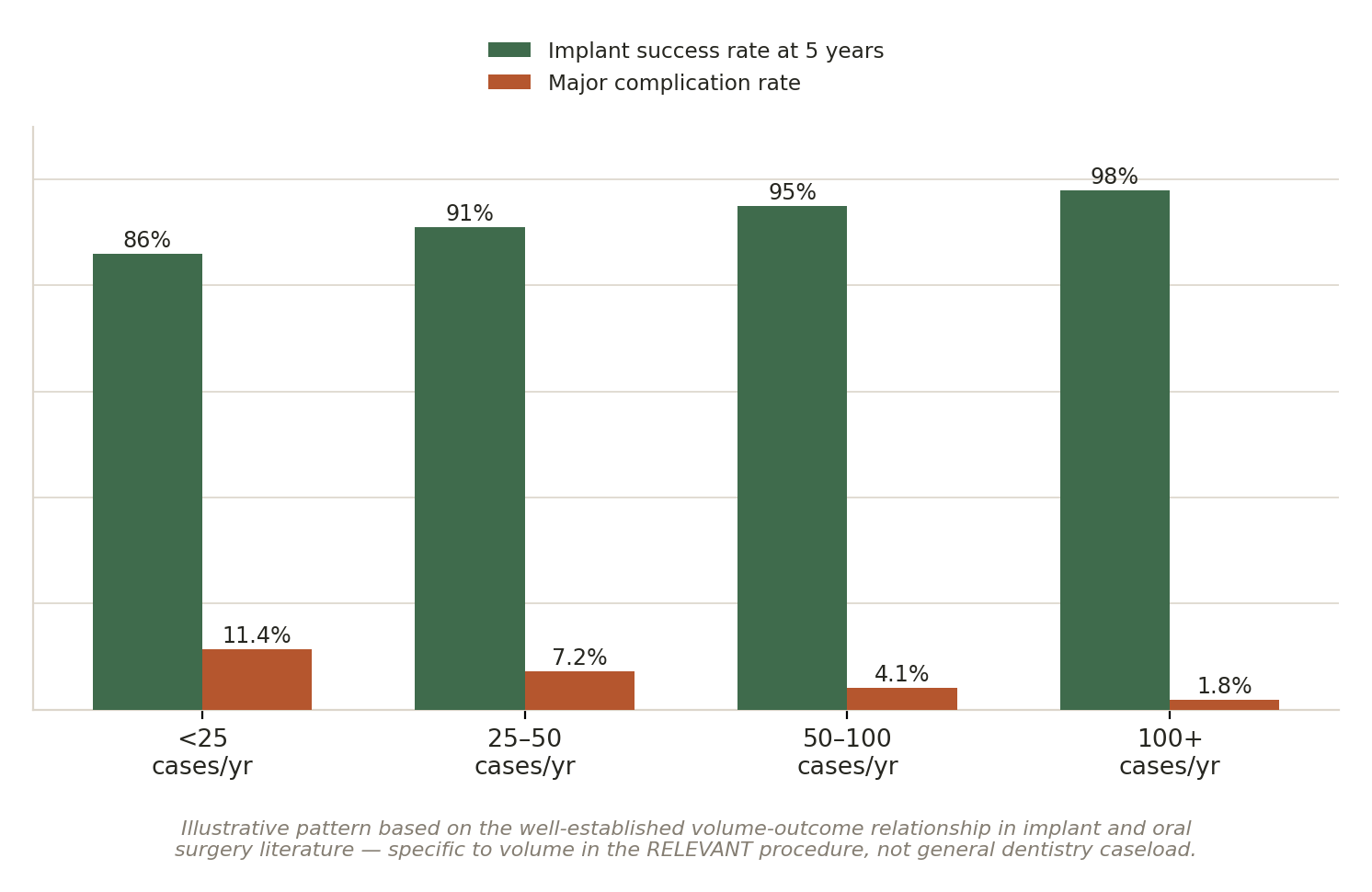
Why "how many of THIS exact procedure do you do a year?" matters for long-term success, not just the immediate result.
Honest guidance on staging and timeline. A trustworthy dentist explains the realistic timeline for your case, including any healing period needed between stages, rather than overpromising a single-visit solution when it genuinely isn't appropriate for your situation.
Use of an internationally recognised implant system. Ask specifically which implant brand and system is being used, and confirm it has published long-term outcome data and genuine global availability, not an unfamiliar or unbranded system chosen mainly to reduce cost.
Transparency about outcomes and experience with international patients. A dentist willing to discuss their own complication and long-term success rates candidly, and who is accustomed to patients travelling from Ethiopia and the wider region, is showing exactly the accountability and practical attentiveness worth trusting.
02 The Dental Surgery Facility in India: What Actually Matters
The facility is not simply a venue for the dentist's work; matching the facility's actual capability to the complexity of your specific procedure is one of the most practically important checks in this entire process.
Accreditation. National Accreditation Board for Hospitals & Healthcare Providers (NABH) accreditation is the baseline worth confirming for any facility under consideration; Joint Commission International (JCI) accreditation, held by a smaller number of leading Indian hospitals, reflects an internationally benchmarked standard of safety and quality worth actively seeking out for more complex procedures.
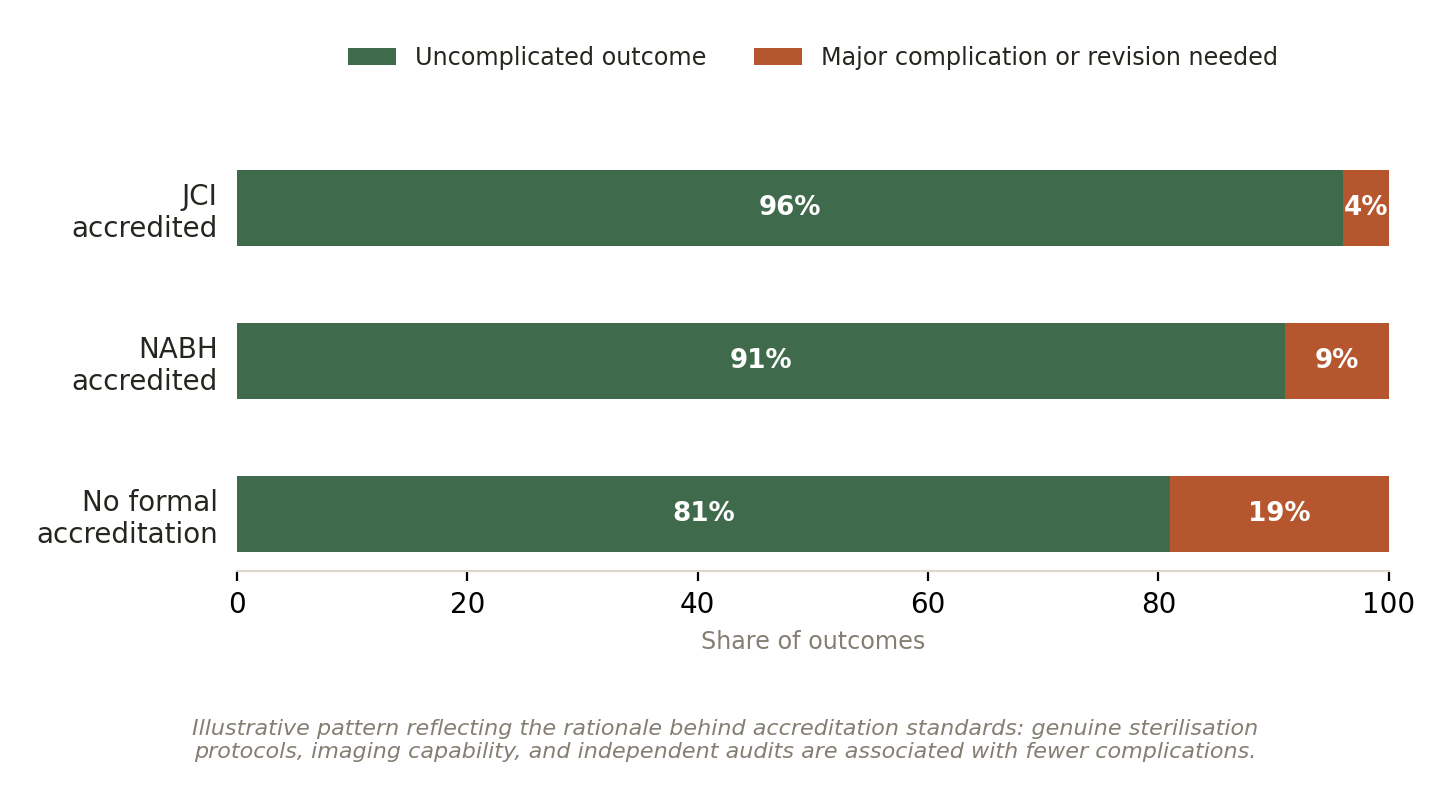
Accreditation is a proxy for genuine sterilisation and imaging standards, not a formality.
Facility capability genuinely matched to your procedure's complexity. For routine work, a well-equipped dental clinic may be entirely appropriate. For full-mouth reconstruction, jaw surgery, or any procedure needing sedation or general anaesthesia, confirm the facility has genuine hospital-level anaesthesia support and emergency backup, not just a dental chair.
On-site 3D imaging capability. Confirm the facility has CBCT or equivalent 3D imaging for accurate implant and surgical planning, rather than relying on standard two-dimensional X-rays for a procedure that benefits substantially from precise, three-dimensional planning.
Dedicated procedure volume. Facilities that perform a high annual volume of your specific procedure, ideally through a dedicated implant or oral surgery programme, tend to have more refined protocols than general dental clinics for whom this is occasional work.
Rigorous, visible sterilisation and infection control protocols. Ask specifically about the facility's sterilisation process, since this is a genuinely important, procedure-specific safety concern worth confirming directly rather than assuming.
International patient services. A dedicated international patient department, offering visa support, airport coordination, interpreter or Amharic-speaking liaison support, and clear pre-departure communication, is a meaningful sign that the facility is genuinely set up for patients travelling from Ethiopia, not simply willing to accept them.
03 Other Factors in India That Quietly Shape the Outcome of Dental Surgery
Beyond the dentist and the facility individually, a handful of practical factors determine how smoothly the whole process, especially a staged treatment plan, actually goes.
A genuine second opinion. Before committing to travel, it is worth having a second specialist review your imaging and confirm both the treatment plan and the realistic timeline for your specific case.
Independent credential verification. Do not rely solely on a clinic's own marketing material. Cross-check the dentist's registration with the relevant dental council, and the facility's accreditation status through the NABH or JCI's own public directories.
Full cost transparency across every stage. Ask for a detailed, itemised estimate covering every planned visit, not just the initial procedure, particularly for implants that require a second visit for the final restoration.
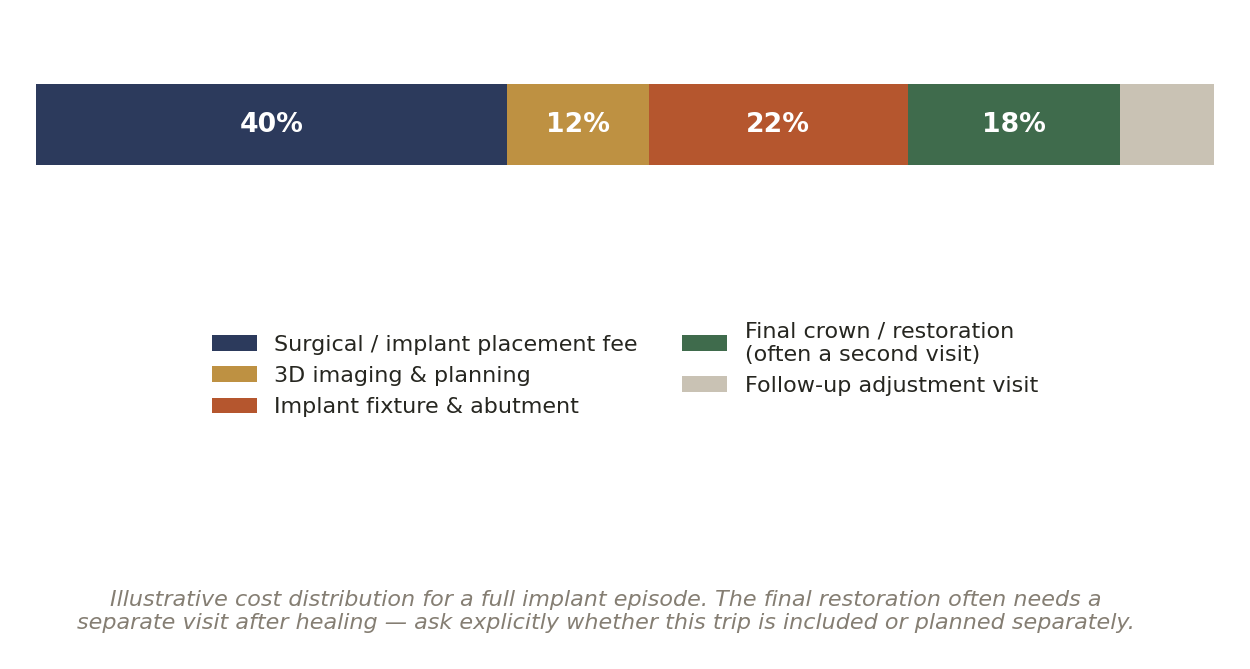
Clear communication across every stage. Confirm who your point of contact will be throughout the treatment, including for the return visit if one is needed, and that this person can communicate clearly with you at every stage.
A concrete plan for coordination with a dentist in Ethiopia. Ask for detailed treatment records and imaging to hand to a dentist in Ethiopia, so minor adjustments or concerns between visits don't require an unplanned trip back to India.
Why this balance matters in practice: a skilled dentist operating without the right facility or imaging behind them, and a well-equipped facility without a dentist genuinely experienced in your specific procedure, can each still produce a disappointing result. The strongest choice is where both are independently verified to be excellent, not one compensating for the other.
A practical checklist before you commit
- Dentist's registration verified independently
- Dentist's sub-specialisation matched to your specific
- procedure confirmed
- Dentist's specific annual case volume confirmed
- Facility's NABH or JCI accreditation verified independently
- Facility capability matched to your procedure's complexity
- confirmed
- Internationally recognised implant system confirmed, if applicable
- On-site 3D imaging capability confirmed
- Realistic staging and timeline explained and understood
- Second opinion obtained on treatment plan and timeline
- Full itemised cost estimate for every planned visit
- requested
- Treatment records plan for a dentist in Ethiopia confirmed
- Named post-procedure follow-up contact confirmed
A closing word
Send your dental imaging, the procedure you're considering, and any relevant medical history. I will help you compare specific dentists and facilities against these exact criteria, so the decision rests on verified substance rather than the most polished marketing or the lowest number on a quote.
Sources
- 🌐 Dental Council of India — for verifying a dentist's qualification and registration
- 🌐 National Accreditation Board for Hospitals & Healthcare Providers (NABH), Quality Council of India
- 🌐 Joint Commission International — directory of JCI-accredited organisations worldwide
- 🌐 The relationship between operator experience, implant system selection
Frequently Asked Questions by Ethiopians about Dental Surgery Dentists and Facilities in India
Why do Ethiopian patients consider dental surgery in India?
India provides access to dentists and specialised facilities for procedures ranging from implants to complex oral surgery. Ethiopian patients should compare specialist expertise and facility capability rather than choosing only by price.
How should Ethiopian patients choose a dental surgeon in India?
They should verify the dentist's registration, relevant postgraduate qualification, sub-specialisation and experience with the exact procedure they require.
What qualifications should Ethiopian patients check before dental surgery in India?
Depending on the procedure, patients should look for relevant postgraduate training such as MDS in oral and maxillofacial surgery, prosthodontics or periodontics, together with valid dental-council registration.
How important is a dentist's experience with the specific procedure?
It is an important selection factor. Ethiopian patients should ask how many procedures of their exact type the dentist performs annually, rather than relying only on general dental experience.
What should Ethiopian patients check before getting dental implants in India?
They should ask for the exact implant brand and system and confirm its long-term outcome data and global availability. This can help with future maintenance in Ethiopia.
Is 3D imaging important for Ethiopian patients undergoing dental surgery?
For implant and surgical planning, the guide recommends confirming CBCT or equivalent 3D imaging where appropriate instead of relying only on conventional two-dimensional X-rays.
Does an Ethiopian patient always need a hospital for dental surgery in India?
No. Routine dental work may be appropriate in a well-equipped clinic, while complex reconstruction, jaw surgery or procedures requiring general anaesthesia require suitable hospital-level support.
Can Ethiopian patients complete dental implant treatment during one visit to India?
Not always. Implant treatment may require a healing period before final restoration, so patients should confirm whether a second visit will be necessary before travelling.
How can Ethiopian patients continue dental care after returning home?
They should obtain complete treatment records and imaging and arrange coordination with a dentist in Ethiopia. This can help manage follow-up needs without an unnecessary return to India.
What should Ethiopian patients check before booking dental surgery in India?
They should verify dentist credentials, facility accreditation, procedure-specific experience, imaging, implant system where applicable, treatment staging, complete costs and the follow-up plan in Ethiopia.
Page Summary
This guide provides Ethiopian patients with a practical framework for selecting a dental surgeon and facility in India for procedures ranging from routine dental surgery to implants, jaw surgery and full-mouth reconstruction. It explains how to assess dentist registration, postgraduate qualifications, procedure-specific experience and annual case volume, while also evaluating facility accreditation, 3D imaging, anaesthesia and emergency support, dedicated procedure volume and sterilisation standards. The guide also highlights the importance of internationally recognised implant systems, realistic treatment staging, second opinions, complete itemised costs and detailed treatment records. For Ethiopian patients, planning follow-up with a dentist at home is particularly important so that future adjustments, concerns or staged treatment can be managed without unnecessary travel back to India.
Citation Block
| Topic | Information |
|---|---|
| Topic | Choosing the Best Dental Surgery Dentist and Facility in India for Ethiopian Patients |
| Treatment Area | Dental Surgery |
| Common Procedures | Dental implants, oral surgery, jaw surgery and full-mouth reconstruction |
| Dentist Selection | Verify dental-council registration, relevant qualifications, sub-specialisation and procedure-specific experience |
| Case Volume Evidence | Illustrative five-year implant success rates range from 86% to 98% across increasing annual case-volume categories |
| Implant System | Exact brand and system should be identified and documented before treatment |
| Facility Selection | Verify NABH or JCI accreditation, appropriate facility capability and infection-control standards |
| Imaging | CBCT or equivalent 3D imaging should be available where required |
| Treatment Timeline | Confirm realistic staging and healing periods before travelling |
| Cost Transparency | Request an itemised estimate covering every planned visit |
| Ethiopia Follow-Up | Provide treatment records and imaging to a dentist in Ethiopia |
| Second Opinion | Obtain independent review of the proposed treatment plan and timeline |
| International Support | Check visa assistance, airport coordination and Amharic-speaking support where required |
| Complication Planning | Confirm who will manage concerns after returning to Ethiopia |


Our Mission Statement
Our mission is to place patients at the centre of every healthcare decision by providing trustworthy, evidence-based, and unbiased medical information. We believe that informed patients make better decisions. Backed by personalised guidance from our experienced advisory team, we help patients understand their treatment options, compare them objectively, and confidently choose the path that best suits their medical needs and personal circumstances.
Patient Testimonials from Ethiopia










Ready to Take the First Step?
Share your Medical Reports with our Healthcare Managers Today and Get a FREE CONSULTATION, a Personalized Treatment Plan, and Complete Support from Arrival to Recovery.
Get Your Free ConsultationAreas We Serve
This resource has been thoughtfully prepared for patients from Ethiopia who are considering medical treatment in India. We also welcome patients from the wider region in the countries mentioned below-
We assist patients from:
- Eritrea
- Djibouti
- Somalia
- Kenya
- Sudan
- Burundi
- Comoros
- Ethiopia
- Madagascar
- Malawi
- Mauritius
- Mozambique
- Rwanda
- South Sudan
Many of the insights, treatment pathways, hospital recommendations, travel guidance, and patient support services described here are equally relevant and may be used as a reference when planning treatment in India.
From Ethiopia to India: Your Complete Patient Support Guide
- Brain Tumour Surgery in India for Ethiopians
- Cancer Treatment in India for Ethiopians
- Cardiac Surgery in India for Ethiopian Patients
- Cervical and Disc Replacement Surgery in India for Ethiopians
- Cosmetic and Plastic Surgery in India for Ethiopians
- CyberKnife Treatment in India for Ethiopians
- Eye Surgery in India for Ethiopians
- Gamma Knife Treatment in India for Ethiopians
- Heart Valve Replacement Surgery in India for Ethiopians
- Hip Surgery in India for Ethiopian Patients
- Knee Surgery in India for Ethiopian Patients
- Laparoscopic and Robotic Myomectomy Surgery in India for Ethiopians
- Neurosurgery in India for Ethiopians
- Paediatric Cardiac Surgery in India for Ethiopians
- Paediatric Neurosurgery in India for Ethiopians
- Prostate Cancer Treatment and Surgery in India for Ethiopians
- Robotic Cancer Surgery in India for Ethiopians
- Scoliosis Surgery in India for Ethiopians