

Spine Surgery in India for Zambian Patients
The spine is the one operation where the wrong diagnosis is worse than no diagnosis. This guide explains what actually causes back and leg trouble in Zambia, what surgery can and cannot fix, and how to choose safely in India.
Few things frighten a person more than a back that is failing — the pain that shoots down the leg, the foot that will not lift, the fear of the word “paralysis.” And few areas of surgery are as easy to get wrong. For 24 years I have helped patients across Africa navigate spine problems, and the hardest lesson I pass on is this: with the spine, the operation matters far less than the diagnosis that comes before it. A brilliant surgeon performing the wrong procedure on the wrong problem does harm, not good. So this guide is written to make you a sharper, safer patient — one who asks the right questions before anyone reaches for a scalpel.
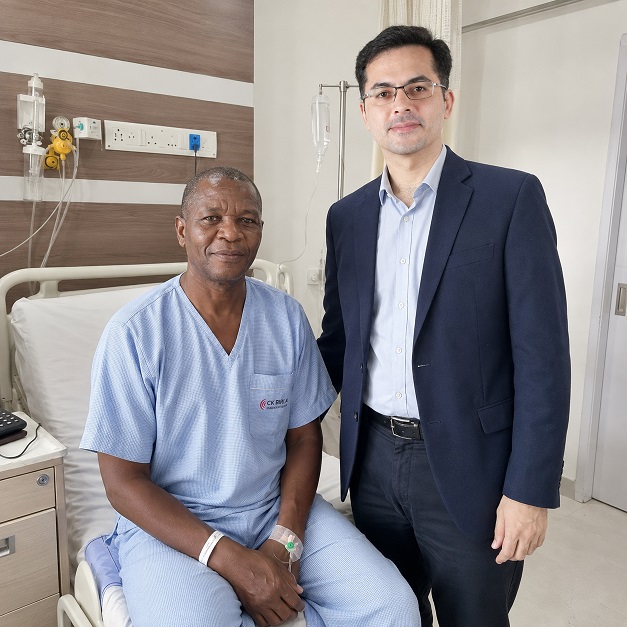
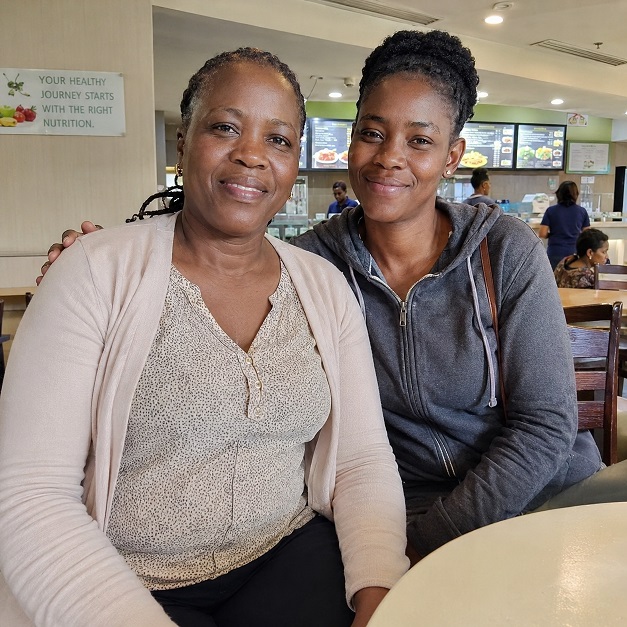
Healing Journeys of Zambian Patients
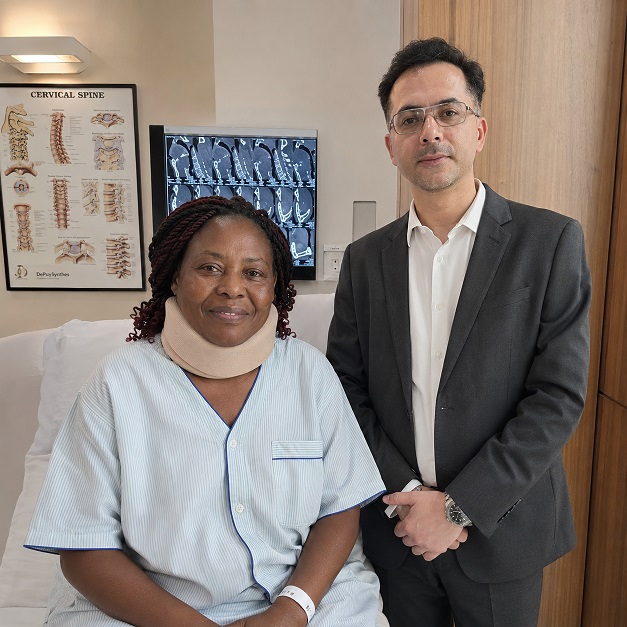
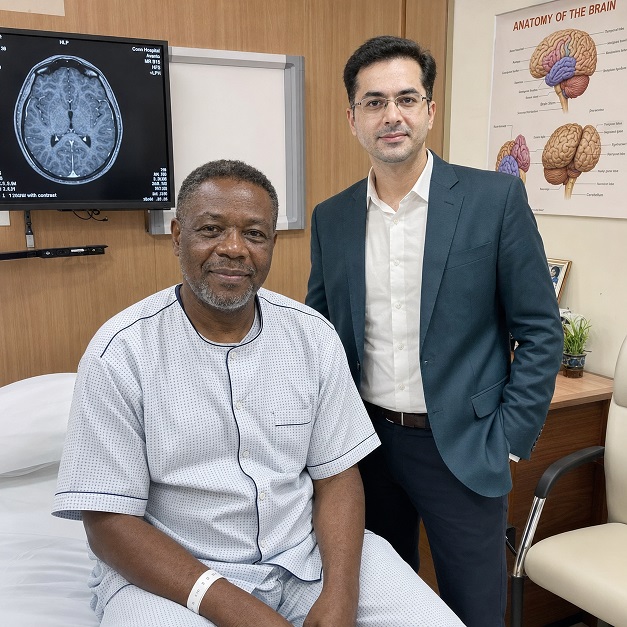
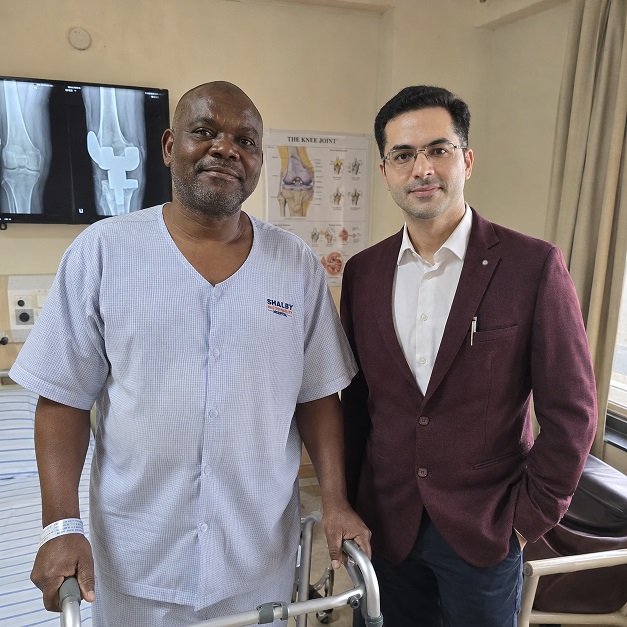


Key Takeaways
- The guide's central message is that correct diagnosis must come before choosing a spine operation. A technically successful procedure can still cause harm when performed for the wrong underlying problem.
- Zambian patients have access to neurosurgical and orthopaedic services locally, and the document notes that straightforward disc problems may sometimes be treated appropriately within Zambia. Travel becomes more relevant for serious, uncertain or complex spinal conditions requiring high-volume expertise, modern imaging and specialised safety equipment.
- A particularly important diagnosis for Zambian patients is tuberculosis of the spine, or Pott's disease. Spinal TB can cause back pain, leg pain, difficulty walking, vertebral destruction, deformity and spinal-cord compression, sometimes resembling an ordinary degenerative disc problem.
- The guide stresses that spinal TB is treated primarily with a complete course of anti-tuberculosis medication. Surgery is reserved for situations such as significant deformity, abscess drainage or spinal-cord compression.
- Before an operation is planned, patients should have a proper MRI, and where infection is suspected, biopsy and TB testing should be considered to establish the correct diagnosis.
- Spine surgery is most predictable when symptoms come from physical nerve compression. It can be particularly effective for radiating leg pain, weakness or numbness caused by a trapped nerve, but outcomes are much less predictable for isolated mechanical low-back pain without nerve compression.
Quick Facts
- Treatment
- Spine Surgery & Spine Treatment
- Country
- India
- Intended Audience
- Zambian Patients
- Central Treatment Principle
- Correct Diagnosis Before Surgery
- Important Zambia-Specific Diagnosis
- Spinal Tuberculosis / Pott's Disease
- Spinal TB Primary Treatment
- Complete Course of Anti-Tuberculosis Medication
- Spinal TB Surgery
- Mainly for Serious Deformity, Abscess or Spinal-Cord Compression
- Primary Diagnostic Test
- MRI
- Additional Testing When Infection Is Suspected
- Biopsy and TB Testing
- Conditions Highlighted
- Slipped Disc, Spinal Stenosis, Nerve Compression, Spinal TB and Mechanical Back Pain
- Procedures
- Microdiscectomy, Decompression/Laminectomy, Spinal Fusion and Artificial Disc Replacement
- Hospital Accreditation Mentioned
- NABH and JCI
- Pre-Travel Requirement
- Actual MRI and X-Ray Files
- Emergency Warning Signs
- Rapid Weakness, Groin Numbness and Loss of Bladder or Bowel Control
In Brief
Spine surgery in India for Zambian patients should begin with a confirmed diagnosis rather than a predetermined operation. Spinal tuberculosis is particularly important to exclude because Pott's disease may resemble an ordinary disc problem but usually requires anti-tuberculosis medication rather than routine fusion. Surgery is most predictable for symptoms caused by clear nerve compression, while isolated low-back pain is less reliably improved. Depending on the procedure, the guide shows approximate Indian costs ranging from US$3,500–US$5,500 for microdiscectomy to US$7,500–US$11,000 for artificial disc replacement.
First, should you travel at all?
Let me be fair to Zambia. The University Teaching Hospital in Lusaka, the country’s largest referral centre, and Levy Mwanawasa University Teaching Hospital both provide neurosurgical and orthopaedic care; the Zambian–Italian Orthopaedic Hospital and private units such as Medcross in Lusaka add capacity, and the teaching hospital in Ndola serves the Copperbelt. For a clear-cut disc problem in a fit patient, treatment at home may be entirely reasonable. But spine surgery is unusually dependent on volume, on modern imaging, and on safety equipment such as continuous nerve monitoring during the operation — and the units doing complex spine work in large numbers, with that full kit, are not yet plentiful. When the problem is serious, uncertain, or involves the spinal cord itself, the case for a high-volume centre is strong.
Knowledge first: the real question is not which surgery — it is what is actually wrong
In wealthy countries, most spine surgery is for wear-and-tear: a slipped disc or a narrowed canal pressing on a nerve. In Zambia, a failing spine has an extra and very important possible cause that changes everything — and missing it is the single costliest mistake a patient can make.
That cause is tuberculosis of the spine , known as Pott’s disease. Zambia is one of the thirty highest-burden TB and TB/HIV countries in the world, and tuberculosis does not always stay in the lungs; it can settle in the vertebrae, quietly eating away at the bone until a vertebra collapses, the spine bends, and — if it reaches the spinal cord — the legs begin to weaken. To the patient, and even to a hurried clinician, it can look exactly like an ordinary disc problem: back pain, leg pain, difficulty walking. But the treatment could not be more different. Spinal TB is cured chiefly by a long, complete course of anti-tuberculosis medicine; surgery is reserved for straightening a serious deformity, draining an abscess, or taking pressure off the cord — never a routine “fusion” as though it were a worn disc. Operate on undiagnosed spinal TB as if it were degeneration, and you invite disaster.
This is why the first step is never surgery — it is the correct diagnosis: a proper MRI, and where infection is suspected, a biopsy and TB testing, before anyone plans an operation. Here India is an advantage, not a risk: because India also knows tuberculosis well, its high-volume spine units recognise and distinguish spinal TB routinely, where a surgeon who rarely sees it might not.
What spine surgery can fix — and what it cannot
The second piece of knowledge is just as valuable, and just as often ignored. Spine surgery is genuinely excellent at one thing: relieving pain and weakness caused by a nerve being physically pinched. If a disc is trapping the nerve that runs down your leg, freeing it reliably relieves that leg pain. But surgery is far less predictable for back pain on its own — the deep, aching, mechanical pain with no trapped nerve behind it. No honest surgeon can promise that a fusion will cure that. Be deeply sceptical of anyone who does.
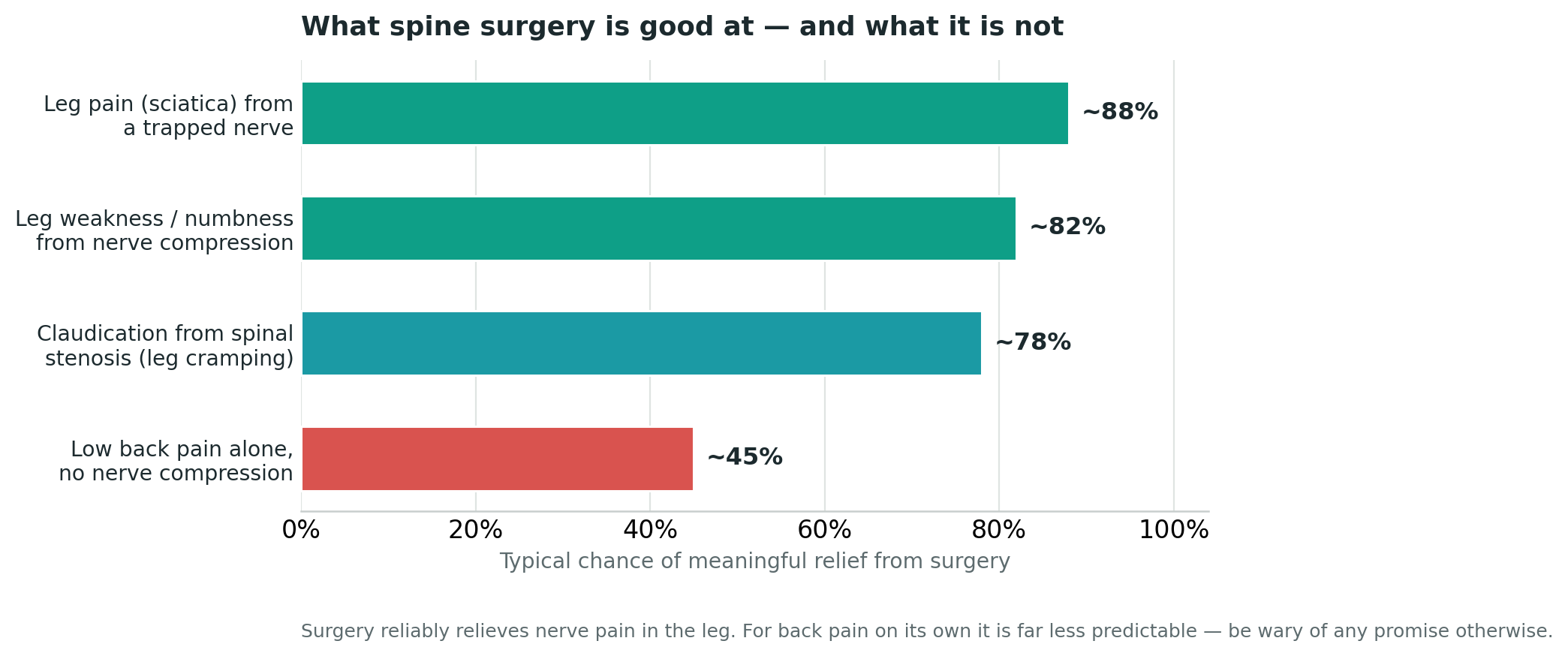
Surgery is a strong tool for nerve pain in the leg, and a weak, unpredictable one for back pain alone. Match the operation to the symptom.
Before surgery: many backs heal without it
Here is something no one selling an operation will tell you: a great many spine problems settle without surgery at all. Most slipped discs shrink and calm down over weeks to a few months, and a well-run course of physiotherapy, targeted exercise, weight management and time cures more back pain than any scalpel. Surgery earns its place when a nerve is clearly and persistently pinched, when weakness is progressing, or when the pain has failed a fair trial of proper non-surgical care — not before. If you are being pushed toward theatre without having tried these first, and without a clear trapped nerve on your scan, that is a reason to pause and seek a second opinion. Travelling for surgery you did not need is the most expensive mistake of all.
The warning signs that cannot wait
While most spine trouble allows time to plan calmly, a few symptoms are true emergencies and must not be delayed for travel arrangements. Sudden or rapidly worsening weakness in a leg or foot, numbness around the groin or back passage, or any loss of control of your bladder or bowels can mean the spinal cord or its nerve roots are being crushed — a condition called cauda equina syndrome, where hours matter. If any of these appear, go to the nearest hospital in Zambia immediately; this is not something to fly for. For everything else, the calm, careful path this guide describes is exactly the right one.
The main spine procedures, compared
When surgery is the right answer, it is worth knowing the choices, because the honest principle is that less is usually more. A microdiscectomy removes just the fragment of disc pressing on a nerve — small, quick, and highly effective for sciatica. A decompression or laminectomy trims away bone and tissue to give a squeezed nerve room, the standard answer for spinal stenosis. A fusion permanently joins two or more vertebrae with screws and rods — powerful and sometimes essential, but a much bigger operation with a much longer recovery, and one that is over-used. An artificial disc replacement can, in selected patients, relieve compression while keeping the joint moving. The best surgeons reach for the smallest operation that solves the problem — not the largest.
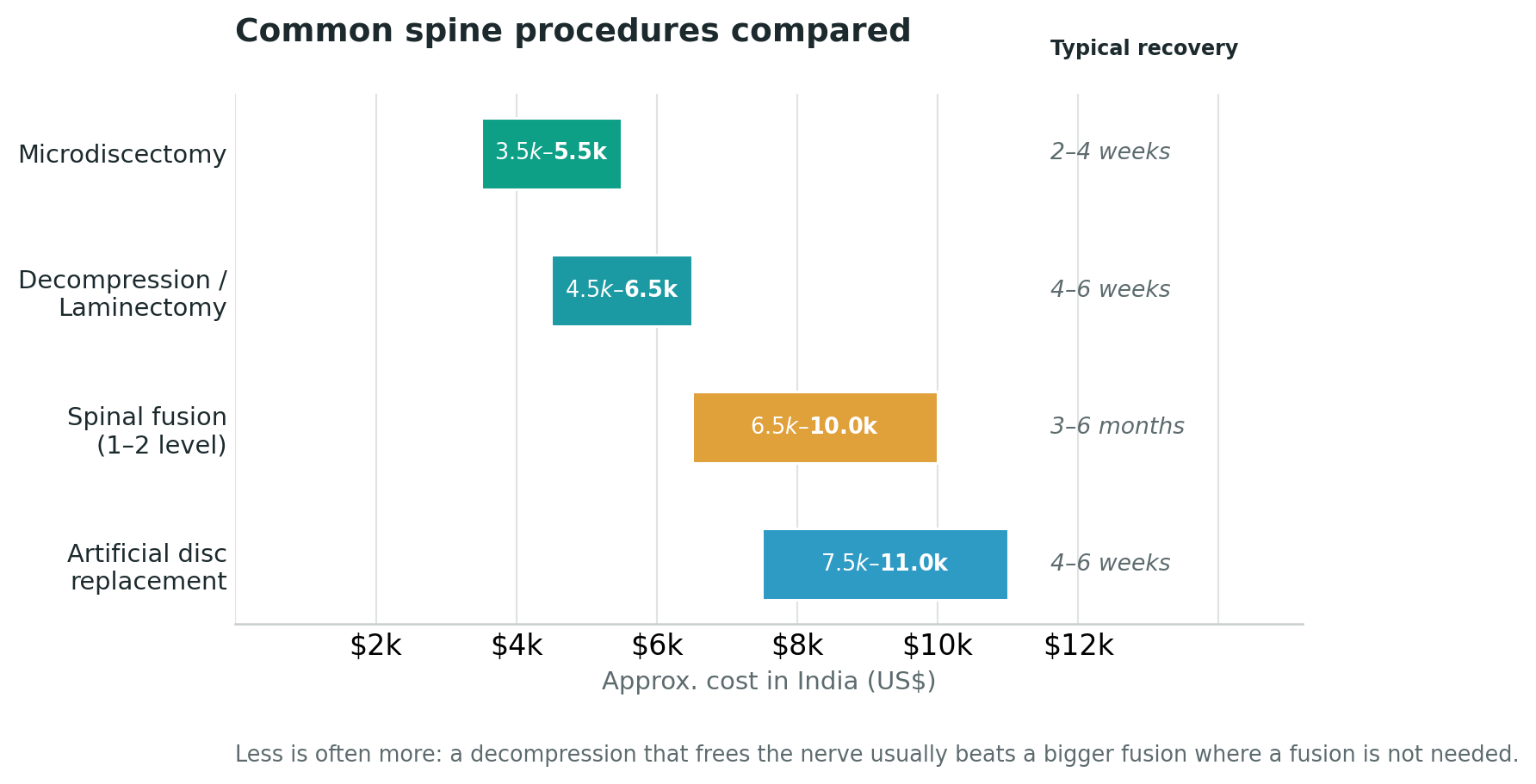
Approximate cost in India and typical recovery for the common spine procedures. A decompression is far less than a fusion — and often all that is needed.
One more habit is worth building: when a fusion or any large operation is recommended, get a second opinion before you agree. In spine surgery, two careful surgeons looking at the same MRI can reach genuinely different plans, and the more conservative one is often right. A second reading costs little, and a good Indian unit will give you an honest view even when it means recommending a smaller operation — or none. Send your scans to more than one reviewer; let the recommendations converge before you book anything.
The cost, in plain terms
The price gap is dramatic in spine surgery precisely because Western spine care is so expensive. A one- to two-level fusion in a good Indian hospital, all in, typically runs around US$6,000 to US$9,000; the same operation privately in the United Kingdom is several times that, and in the United States can exceed US$50,000. At roughly ZK19 to the dollar in mid-2026, an Indian fusion package sits near ZK115,000 to ZK170,000 — treat that rate as a moving figure to confirm before travel.
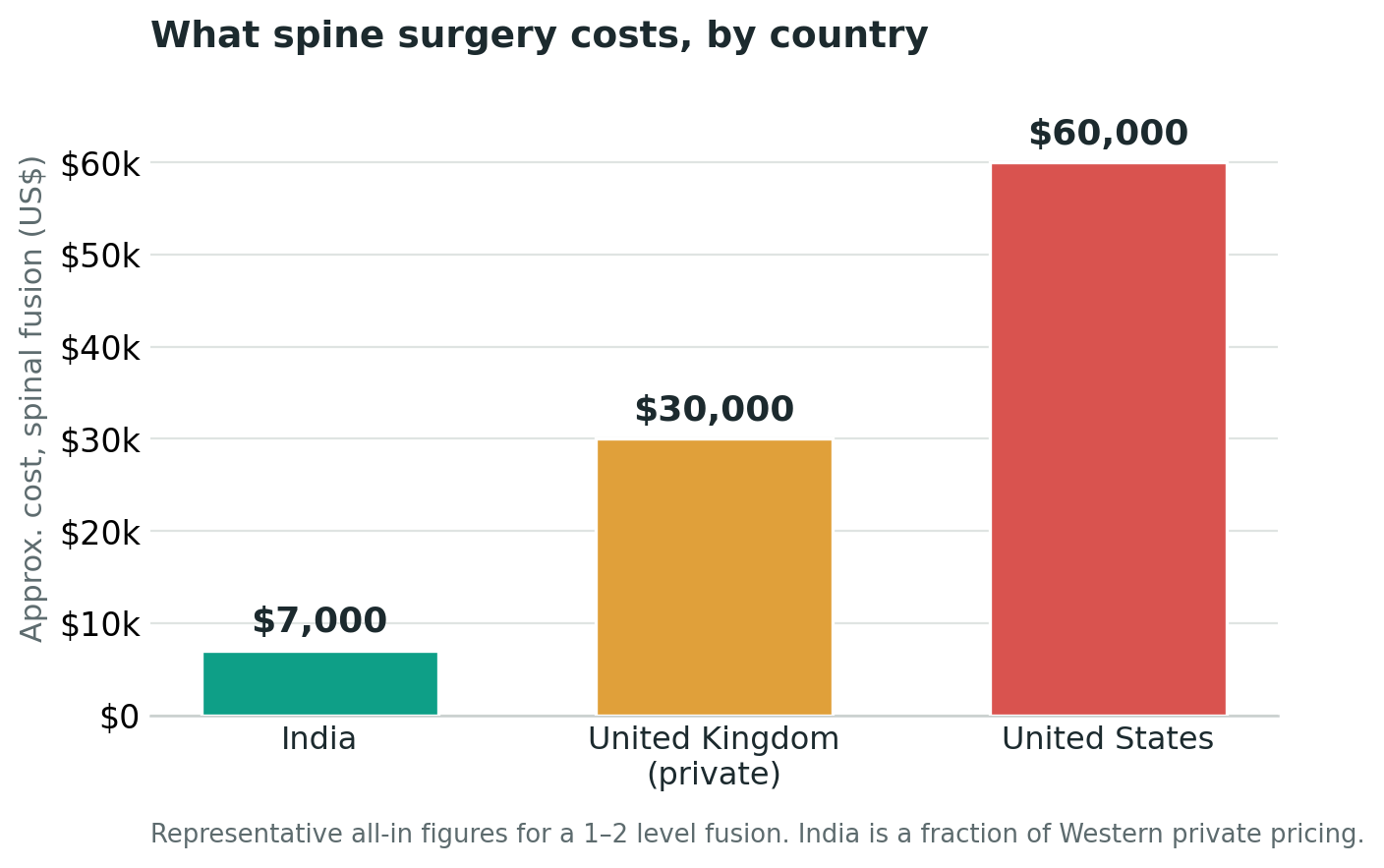
Representative figures for a 1–2 level fusion. Simpler procedures such as a microdiscectomy cost considerably less.
In 24 years of arranging these journeys, I have learned that disputes almost never concern the quoted price — they concern what it left out: the implants and screws, the imaging, the intensive-care days, the physiotherapy. Insist on one written, itemised figure, and be wary of any number that looks too clean to be true.
Why India, and how the good units keep you safe
The hospitals Zambian patients are sent to are accredited to international standards — JCI internationally, NABH within India — and staffed by spine surgeons operating in high volume with modern tools: MRI and CT on site, image guidance, microscopes, and, crucially, continuous intra-operative nerve monitoring that watches the spinal cord in real time and warns the surgeon before harm is done. Ask whether that monitoring will be used — for anything near the cord, it should be. There are no waiting lists, and English, Zambia’s official language, is the working language of care. Insist, too, that your surgeon records exactly what was done and hands your follow-up back to a Zambian spine or orthopaedic surgeon for the years ahead.
Recovery, and when you can fly home
Recovery depends heavily on the operation. After a microdiscectomy or decompression many patients are up and walking within a day and home in a week or two; after a fusion the bone itself must knit, which takes months, though you will be mobile long before it is complete. Plan for around two to three weeks in India for most procedures — enough for the wound to settle and for your team to clear you before a long flight. Do not let a return ticket push you onto a plane too soon.
What the journey looks like
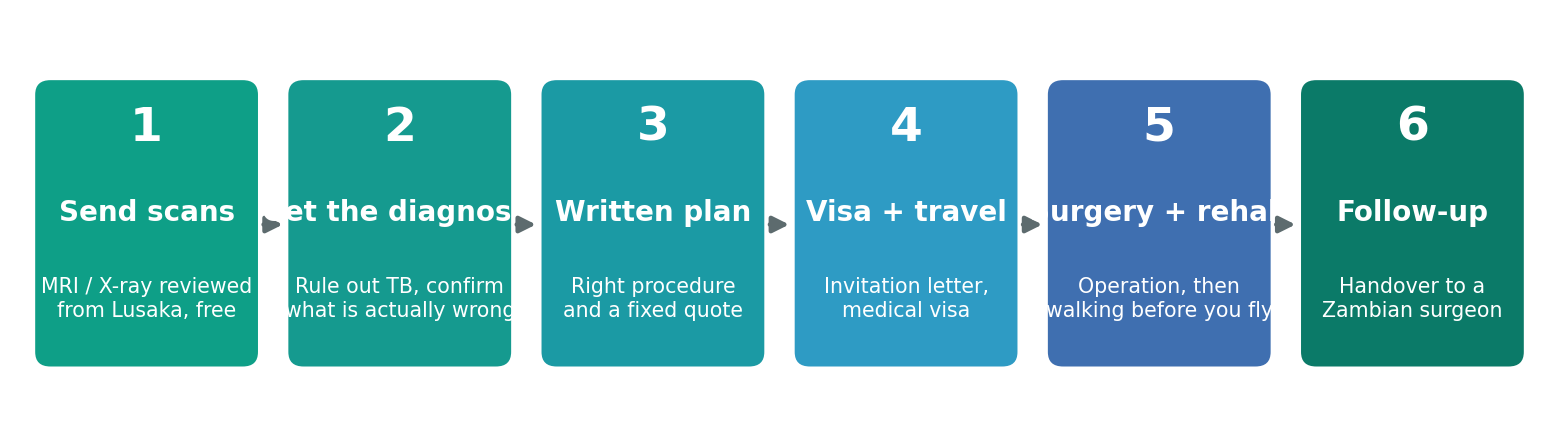
Notice that step two is the diagnosis — not the surgery. Send your actual imaging (the MRI and X-ray files themselves, not only the report), and a good unit will confirm what is truly wrong and return a written plan and a fixed quote at no charge before you commit a single kwacha.
Practicalities for travelling from Zambia
India requires a yellow fever vaccination certificate from travellers arriving from Zambia, valid only ten days after the injection — do not leave it late. Your medical visa is issued by the High Commission of India on Pandit Nehru Road in Lusaka against the hospital’s invitation letter; apply for a medical-attendant visa in the same batch so a family member can travel with you, which matters especially after spine surgery. There is no direct flight — you will connect through Addis Ababa on Ethiopian Airlines, or through Dubai, Doha or Nairobi, a door-to-door journey of roughly fourteen to twenty hours. Book a changeable return ticket, carry your original scans and any TB or HIV records, and settle the hospital by traceable bank transfer rather than cash.
On paying for it. Zambia’s National Health Insurance scheme funds care at accredited facilities inside the country, not elective surgery abroad, so a planned spine operation in India will come from your own resources. I would rather you knew that from the first line than discovered it later. If you hold a private or employer policy, ask the insurer in writing whether any overseas benefit exists before assuming it does.
Four signals that should make you pause
- Operating before proper MRI review — and before infection such as spinal TB has been excluded.
- A promise that fusion cures untrapped pain — back pain that has no trapped nerve behind it.
- A large fusion over a smaller decompression — proposed where a smaller operation would free the nerve.
- No mention of nerve monitoring — for cord-level surgery, and no follow-up plan for Zambia.
Straight answers for Zambian Patients about Spine Surgery in India
Will surgery cure my back pain?
If your main problem is pain or weakness running down the leg from a pinched nerve, surgery relieves it reliably. If it is deep back pain with no nerve compression, surgery is far less predictable — and no honest surgeon will guarantee a cure. Insist on knowing which of the two you have.
My doctor mentioned TB of the spine. Can that be treated in India?
Yes, and Indian units are very familiar with it. But spinal TB is treated chiefly with a full course of anti-TB medicine; surgery is only for deformity, an abscess, or pressure on the cord. Get the diagnosis firmly confirmed before any operation is planned.
How urgent is my case?
Most spine problems allow time to plan. But sudden leg weakness, numbness in the groin, or loss of bladder or bowel control is an emergency — go to a hospital immediately, do not wait to arrange travel.
What if something goes wrong after I return home?
This is why records and a follow-up plan matter. With a full operative note and a Zambian spine or orthopaedic surgeon briefed in advance, your routine follow-up can be managed at home without flying back.
Sources & Useful Links
- 🌐 Medical visa (India), Lusaka — High Commission of India, requirements & process: hcizambia.gov.in/page/medical-visa
- 🌐 National Health Insurance (Zambia) — NHIMA cover and accredited facilities: nhima.co.zm
- 🌐 Ministry of Health, Zambia — referrals and national health services: moh.gov.zm
- 🌐 University Teaching Hospitals, Lusaka — Zambia’s largest public referral centre: uth.gov.zm
- 🌐 Hospital accreditation (India) — verify a hospital’s NABH accreditation: nabh.co
- 🌐 Yellow fever & travel health — WHO vaccination guidance: who.int/health-topics/yellow-fever
A closing word
If you send me your scans and a note on your history, I will review them and tell you honestly what I think — whether the problem is a disc, a stenosis or something like spinal TB that needs medicine before any knife, whether surgery is likely to help you at all, and whether you should stay in Zambia rather than travel. With the spine above all, the right answer at the right time protects you far more than the cheapest quote ever could. My work has always been to make sure you get it.
Frequently Asked Questions by Zambian Patients about Spine Surgery in India
Why do Zambian patients travel to India for spine surgery?
India offers access to high-volume spine units with modern MRI and CT imaging, image guidance, microscopes and continuous intra-operative nerve monitoring. Complex, uncertain or spinal-cord-related cases may particularly benefit from this level of specialised care.
Why is spinal TB important before spine surgery for Zambian patients?
Spinal tuberculosis, or Pott's disease, can cause back pain, leg symptoms and difficulty walking that may resemble an ordinary disc problem. The guide therefore stresses excluding spinal TB before planning surgery.
Can Zambian patients get spinal TB treatment in India?
Yes. The guide notes that Indian units are familiar with spinal tuberculosis. Treatment is primarily a complete course of anti-TB medication, while surgery is generally reserved for deformity, abscess or spinal-cord compression.
How much does microdiscectomy in India cost for Zambian patients?
The page 3 chart gives an approximate cost of US$3,500–US$5,500, with typical recovery of around 2–4 weeks.
How much does spinal decompression surgery in India cost?
Decompression or laminectomy is shown at approximately US$4,500–US$6,500, with typical recovery of around 4–6 weeks.
How much does spinal fusion in India cost for Zambian patients?
The procedure chart gives approximately US$6,500–US$10,000 for a 1–2 level fusion, while the text separately describes an all-in range of approximately US$6,000–US$9,000 in a good Indian hospital.
Will spine surgery in India cure back pain?
It depends on the cause. The guide says surgery is much more predictable for pain or weakness caused by a physically compressed nerve. Isolated mechanical back pain without nerve compression responds much less predictably.
How long should Zambian patients stay in India after spine surgery?
The guide recommends planning approximately two to three weeks in India for most procedures, although recovery varies according to the operation and individual patient.
When should a Zambian patient seek emergency spine treatment instead of travelling to India?
Sudden or rapidly worsening leg weakness, numbness around the groin, or loss of bladder or bowel control may indicate severe nerve compression or cauda equina syndrome. The document advises going to the nearest hospital in Zambia immediately rather than waiting to travel.
What are the red flags when choosing spine surgery in India?
The guide identifies four major warning signs: surgery recommended before proper MRI review and exclusion of spinal TB, promises that fusion will cure back pain without nerve compression, a large fusion where smaller decompression may be sufficient, and no nerve-monitoring or Zambia follow-up plan for cord-level surgery.
Page Summary
This guide explains spine surgery in India for Zambian patients with a strong emphasis on getting the diagnosis right before selecting an operation. It identifies spinal tuberculosis or Pott's disease as an especially important diagnosis to exclude in Zambian patients because it can resemble common degenerative spine disease. The document explains that spinal TB is treated mainly with anti-tuberculosis medication, with surgery reserved for selected complications such as deformity, abscess or spinal-cord compression. MRI—and biopsy and TB testing where appropriate—should therefore precede surgical planning.
Citation Block
| Topic | Information |
|---|---|
| Topic Information | Details |
| Procedure | Spine Surgery & Spine Treatment |
| Country | India |
| Intended Audience | Zambian Patients |
| Conditions Covered | Slipped Disc, Spinal Stenosis, Nerve Compression, Spinal TB and Mechanical Back Pain |
| Procedures | Microdiscectomy, Decompression/Laminectomy, Spinal Fusion and Artificial Disc Replacement |
| Important Zambia-Specific Condition | Spinal Tuberculosis / Pott's Disease |
| Primary Diagnosis | MRI |
| Additional Investigation | Biopsy and TB Testing When Infection Is Suspected |
| Microdiscectomy Cost | US$3,500–US$5,500 |
| Decompression Cost | US$4,500–US$6,500 |
| Spinal Fusion Cost | US$6,500–US$10,000 in Procedure Chart |
| Artificial Disc Replacement Cost | US$7,500–US$11,000 |
| Typical Stay | Approximately 2–3 Weeks in India for Most Procedures |


Our Mission Statement
Our mission is to place patients at the centre of every healthcare decision by providing trustworthy, evidence-based, and unbiased medical information. We believe that informed patients make better decisions. Backed by personalised guidance from our experienced advisory team, we help patients understand their treatment options, compare them objectively, and confidently choose the path that best suits their medical needs and personal circumstances.
Patient Testimonials from Zambia
Ready to Take the First Step?
Share your Medical Reports with our Healthcare Managers Today and Get a FREE CONSULTATION, a Personalized Treatment Plan, and Complete Support from Arrival to Recovery.
Get Your Free ConsultationAreas We Serve
This resource has been thoughtfully prepared for patients from Zambia who are considering medical treatment in India. We also welcome patients from the wider region in the countries mentioned below-
We assist patients from:
- Zambia
- Angola
- Malawi
- Zimbabwe
- Botswana
- Namibia
- South Africa
- Eswatini
- Lesotho
- Gabon
- Chad
- Equatorial Guinea
- São Tomé and Príncipe
- Republic of the Congo
- Democratic Republic of the Congo
Many of the insights, treatment pathways, hospital recommendations, travel guidance, and patient support services described here are equally relevant and may be used as a reference when planning treatment in India.
From Zambia to India: Your Complete Patient Support Guide
- Best Weight-Loss (Bariatric) Surgeons & Hospitals in India for Zambian Patients
- Best Brain-Tumour Surgeons & Hospitals in India for Zambian Patients
- Best Cancer Doctors & Hospitals in India for Zambian Patients
- Best Cardiac Surgeons & Hospitals in India for Zambian Patients
- Best Cosmetic Surgeons & Facilities in India for Zambian Patients
- Best CyberKnife Treatment Teams & Centres in India for Zambian Patients
- Best Dentists & Dental Clinics in India for Zambian Patients
- Best Heart Valve Replacement Surgeons & Hospitals in India for Zambian Patients
- Best Hip Surgeons & Hospitals in India for Zambian Patients
- Best Knee Surgeons & Hospitals in India for Zambian Patients
- Best Neurosurgeons & Hospitals in India for Zambian Patients
- Best Paediatric Cardiac Surgeons & Hospitals in India for Zambian Patients
- Best Paediatric Neurosurgeons & Hospitals in India for Zambian Patients
- Best Prostate Surgeons & Hospitals in India for Zambian Patients
- Best Scoliosis Surgeons & Hospitals in India for Zambian Patients
- Best Spine Surgeons & Hospitals in India for Zambian Patients
- Best Bone Marrow Transplant Teams & Hospitals in India for Zambian Patients
- Best Kidney Transplant Surgeons & Hospitals in India for Zambian Patients