

Selecting the Best Prostate Surgeons & Hospitals in India — a Zambian Patient’s Guide
Two questions come before any choice of surgeon: is your prostate problem harmless enlargement or cancer, and — if it is cancer — is surgery even the right treatment? This guide sets out how a Zambian man should choose.
The prostate causes more confusion than almost any part of the body, because two very different problems — one harmless, one serious — produce overlapping worries, and the treatments are easily muddled. For 24 years I have helped African men navigate this, and I have learned that choosing a surgeon is not the first step. The first step is to know exactly what you are dealing with: a benign, age-related enlargement, or a cancer — and, if it is cancer, whether an operation is even the right answer, since it is only one of several. Get those questions settled, and choosing the surgeon and hospital becomes clear. Rush past them, and you may have the wrong treatment done superbly well.
Healing Journeys of Zambian Patients



Key Takeaways
- The guide begins with two questions that should be answered before choosing a surgeon: whether the prostate problem is benign enlargement or cancer, and—if cancer is confirmed—whether surgery is actually the right treatment.
- Benign prostatic hyperplasia, or BPH, is described as age-related enlargement of the prostate that may squeeze the urethra and cause urinary symptoms such as a weak stream, difficulty starting urination and waking at night to urinate.
- BPH is explicitly distinguished from prostate cancer. The guide notes that benign enlargement may be managed with medicines or procedures such as TURP, depending on the case.
- The document makes an important distinction: an operation used to relieve benign enlargement does not treat prostate cancer. Diagnosis should therefore be properly established before any prostate procedure is selected.
- Prostate cancer may cause no symptoms in its earlier stages. The guide discusses assessment using PSA testing, clinical examination, MRI and biopsy.
- A raised PSA alone is not treated as proof of cancer, while a normal PSA is also not presented as completely excluding it.
- If cancer is diagnosed, the guide stresses that surgery is only one treatment option.
- For some low-risk prostate cancers, active surveillance may be appropriate, avoiding immediate treatment and its potential side effects.
- Other options mentioned include radiotherapy and hormone therapy, depending on the cancer's aggressiveness, the man's age and overall health.
Quick Facts
- Treatment
- Prostate Surgery / Prostate Cancer Treatment
- Country
- India
- Intended Audience
- Zambian Patients
- First Critical Question
- Benign Prostate Enlargement or Prostate Cancer?
- Benign Condition Discussed
- Benign Prostatic Hyperplasia (BPH)
- Common BPH Symptoms Mentioned
- Weak Urinary Stream, Night-Time Urination and Difficulty Starting
- BPH Procedure Mentioned
- TURP
- Cancer Diagnostic Tools Mentioned
- PSA Test, Examination, MRI and Biopsy
- Important PSA Principle
- Raised PSA Does Not Alone Confirm Cancer
- Cancer Treatment Principle
- Surgery Is One Option, Not the Only Option
- Non-Surgical Cancer Options Mentioned
- Active Surveillance, Radiotherapy and Hormone Therapy
- Preferred Cancer Decision-Making
- Uro-Oncology Multidisciplinary Team
- Multidisciplinary Specialists Mentioned
- Urologist, Oncologist, Radiation Oncologist and Pathologist
- Critical Cancer Programme Requirement
- Uro-Oncology Multidisciplinary Team
In Brief
Zambian patients considering prostate treatment in India should first establish whether the condition is benign prostate enlargement or prostate cancer, because the treatments are fundamentally different. If cancer is confirmed, surgery should not be assumed to be the only option; active surveillance, radiotherapy and hormone therapy may also be appropriate depending on risk, age and overall health. For men who do require surgery, the guide recommends a high-volume uro-oncologist experienced in robotic and nerve-sparing prostate surgery, supported by a multidisciplinary team including oncology, radiation oncology and pathology. Long-term PSA follow-up and continence rehabilitation should be planned before the patient returns to Zambia.
First, should you travel at all?
Zambia has urology services, and much prostate care — the assessment, and surgery for benign enlargement — can be done at home. But specialist prostate-cancer surgery, particularly modern nerve-sparing and robotic techniques, and the full range of cancer treatments, are harder to find locally, and this is where travelling to a high-volume centre earns its place, with India a leading destination. Yet, as with the brain, travelling is not the first decision. Establishing the diagnosis, and the right treatment, comes first.
Knowledge that must come first: enlargement or cancer?
This is the distinction every man must understand. The prostate commonly enlarges with age — a benign condition called BPH — squeezing the urethra and causing troublesome urinary symptoms: a weak stream, getting up at night, difficulty starting. This is not cancer, and it is usually treated with medicines or an operation such as a TURP that relieves the blockage. Prostate cancer is a different matter altogether, often causing no symptoms early on, and detected through a raised PSA blood test, an examination, an MRI scan and a biopsy. The vital point is that the operation for enlargement does not treat cancer, and the two must never be confused. Insist that the diagnosis is properly established before any surgery is chosen — and know that a raised PSA does not by itself mean cancer, just as a normal one does not entirely exclude it.
If it is cancer: surgery is one option, not the only one
Here is the second thing that protects you. For prostate cancer, an operation to remove the prostate is only one of several valid paths. For low-risk cancer, active surveillance — careful monitoring rather than immediate treatment — is often wisest, sparing a man the side effects of surgery he may never need. For others, radiotherapy or hormone therapy may suit as well as or better than surgery. Which is right depends on the cancer’s aggressiveness, your age and your health — a decision best made by a uro-oncology multidisciplinary team , not by a single surgeon whose instinct is to operate. When you assess a centre, confirm that such a team will weigh all your options. It is the strongest sign of a place that will treat you well.
Two decisions, not one
Once surgery is genuinely the right choice, you face two: the surgeon and the hospital . Both must be right. Prostate cancer surgery is unusually dependent on the surgeon’s individual skill and technique — more than almost any operation, its results vary from one surgeon to another — but the hospital’s team, technology and support decide whether that skill is safely delivered and well followed up.
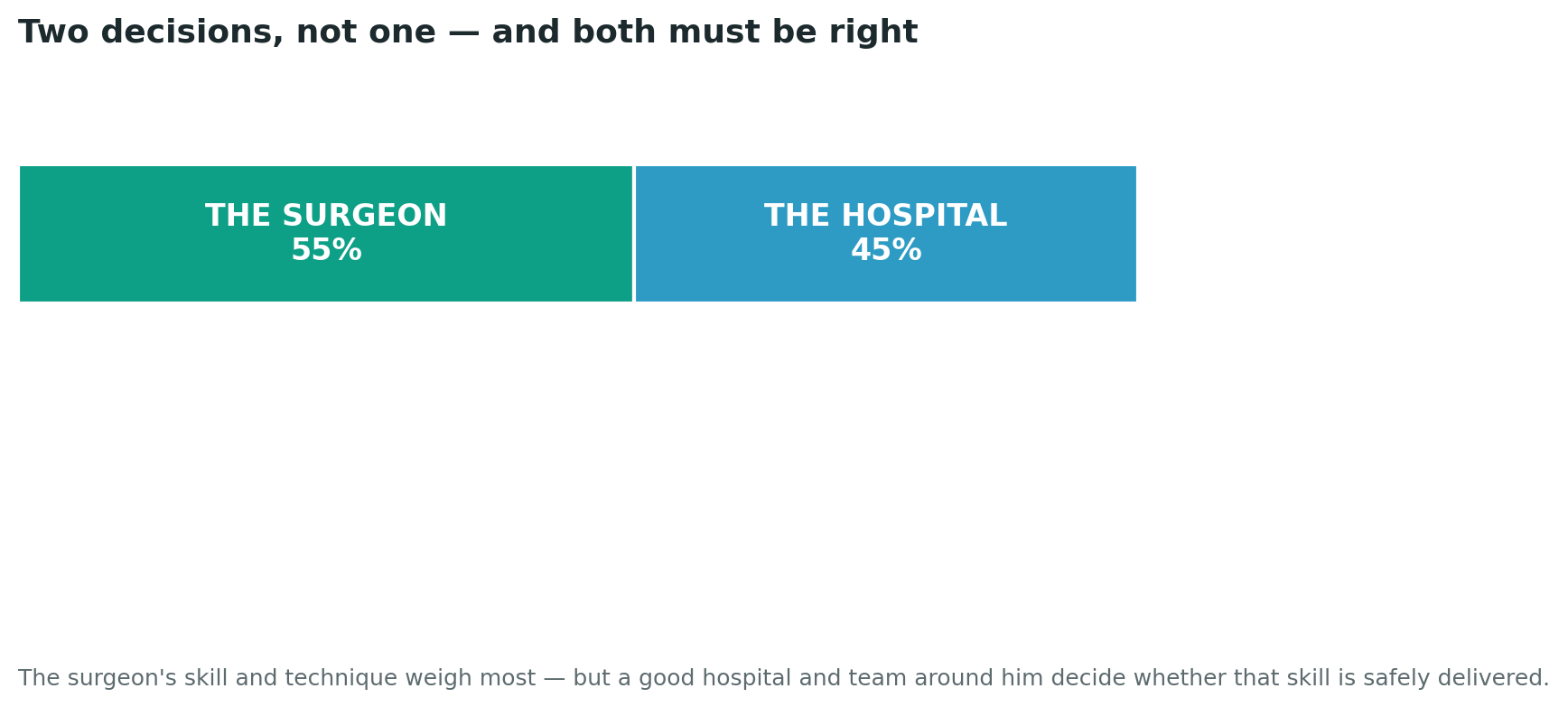
The surgeon’s skill and technique weigh most in prostate surgery, but the hospital and team around him decide whether that skill is safely delivered.
Part One: choosing the surgeon
1. Choose a urologist — and for cancer, a uro-oncologist. Prostate surgery is the province of urologists; for cancer, seek one who sub-specialises in prostate-cancer surgery, not one who treats it occasionally among other work.
2. Ask his volume — it matters more here than almost anywhere. Prostate cancer surgery has a long learning curve, and high-volume surgeons achieve markedly better results — better cancer control, better recovery of urinary control, better preservation of sexual function. Ask how many prostate operations he performs each year, and favour high numbers.
3. Ask about nerve-sparing and robotic technique. The nerves that control erections run alongside the prostate, and a skilled surgeon spares them where the cancer allows — a technique made finer by robotic surgery. Done well, nerve- sparing protects sexual function and continence without compromising cancer control. Ask whether he performs it, and how often.
4. Expect honesty about the “trifecta” — and the risks. The goal of prostate surgery is threefold: control the cancer, preserve urinary continence, and preserve sexual potency. A trustworthy surgeon is candid that incontinence and impotence are real possible outcomes, gives you his own results honestly, and does not gloss over them. Beware anyone who promises no side effects.
5. Ask about his outcomes. A confident surgeon will share his cancer-control, continence and potency rates for men like you. Vague reassurance is not the same as a candid number.
6. Confirm he will operate on you personally. Ask, and get it in writing, that the named surgeon you chose will perform your operation, not delegate it to a trainee.
7. Test his communication before you travel. The best surgeons review your PSA history, scans and biopsy remotely, answer clearly, and discuss the trade-offs frankly. How he communicates from a distance tells you much about the care to come.
How to read an Indian prostate surgeon’s qualifications
| Stage | Qualification | What it tells you |
|---|---|---|
| Basic medical degree | MBBS | A qualified doctor — the starting point, not a specialist. |
| Urology specialist | MCh (Urology) or DNB (Urology) | A fully trained urological surgeon — the essential qualification. |
| Cancer & robotic expertise | Fellowship in uro-oncology / robotic surgery | Focused training in prostate-cancer and robotic surgery — what you want. |
You can confirm that a surgeon is properly registered on the National Medical Commission register of India (nmc.org.in). A genuine specialist will be glad to have you check.
Part Two: choosing the hospital and its team
1. Confirm a uro-oncology team for cancer. As above, this is the single most important thing for cancer. Ask directly whether a multidisciplinary team — urologist, oncologist, radiation oncologist, pathologist — will weigh your options together, rather than a lone surgeon deciding.
2. Check the surgical capability. For prostate-cancer surgery, a modern centre offers robotic surgery, which allows the fine, nerve-sparing technique that protects function. Ask what the hospital has and how experienced its team is with it.
3. Confirm on-site radiotherapy and pathology. Because radiotherapy is a genuine alternative to surgery, and because the diagnosis and cancer grading depend on a pathologist, choose a centre where these are on site — so your whole care is coordinated in one place.
4. Insist on accreditation and infection control. The hospital should be accredited by India’s NABH, and ideally by JCI, and should track and control its infection rates.
5. Check continence and rehabilitation support. Recovery of urinary control after prostate surgery is helped greatly by pelvic-floor physiotherapy. Confirm the hospital provides it, with a plan you can continue at home in Zambia.
6. Weigh international support and transparent pricing. A good centre helps with the visa invitation, accommodation and a coordinator, and gives a written, itemised, fixed quote stating what is included and what happens if there is a complication.
7. Ask how it will support you after you fly home. Prostate-cancer follow-up runs for years through regular PSA tests. A good hospital offers teleconsultation, provides a full written record, and will liaise with your doctor in Zambia for your continuing checks.
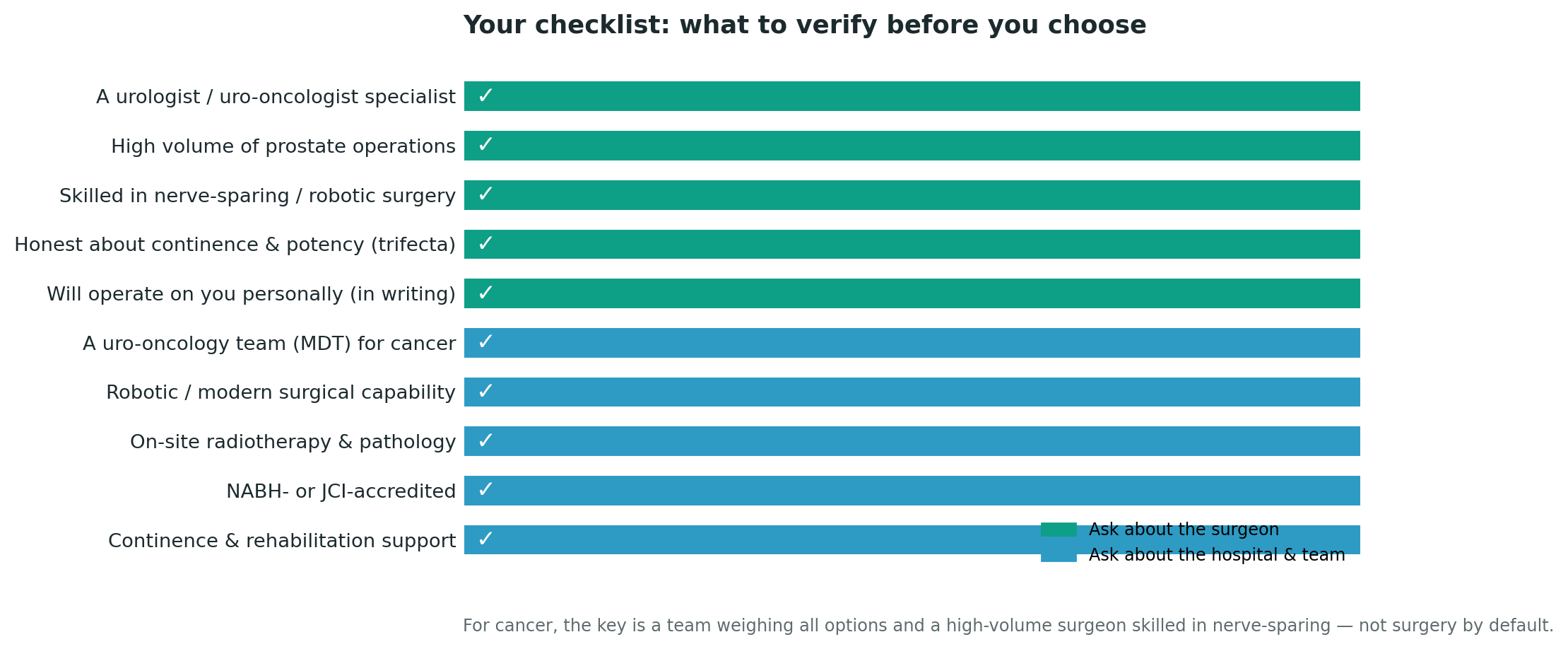
Keep this checklist beside you. For cancer, the key is a team weighing all options and a high-volume surgeon skilled in nerve-sparing — not surgery by default.
Cost and value: how to weigh the money honestly
Prostate surgery in a good Indian hospital costs a fraction of Western private pricing, which is why many men travel. At roughly ZK19 to the US dollar in mid-2026, the saving is large in kwacha; confirm the rate before travel, as it moves. But value is not the lowest price. In prostate surgery above all, a dearer, high-volume surgeon skilled in nerve-sparing may leave you continent and potent where a cheaper, less experienced one leaves you neither — and no saving is worth that. Weigh the surgeon’s results, not just the fee.
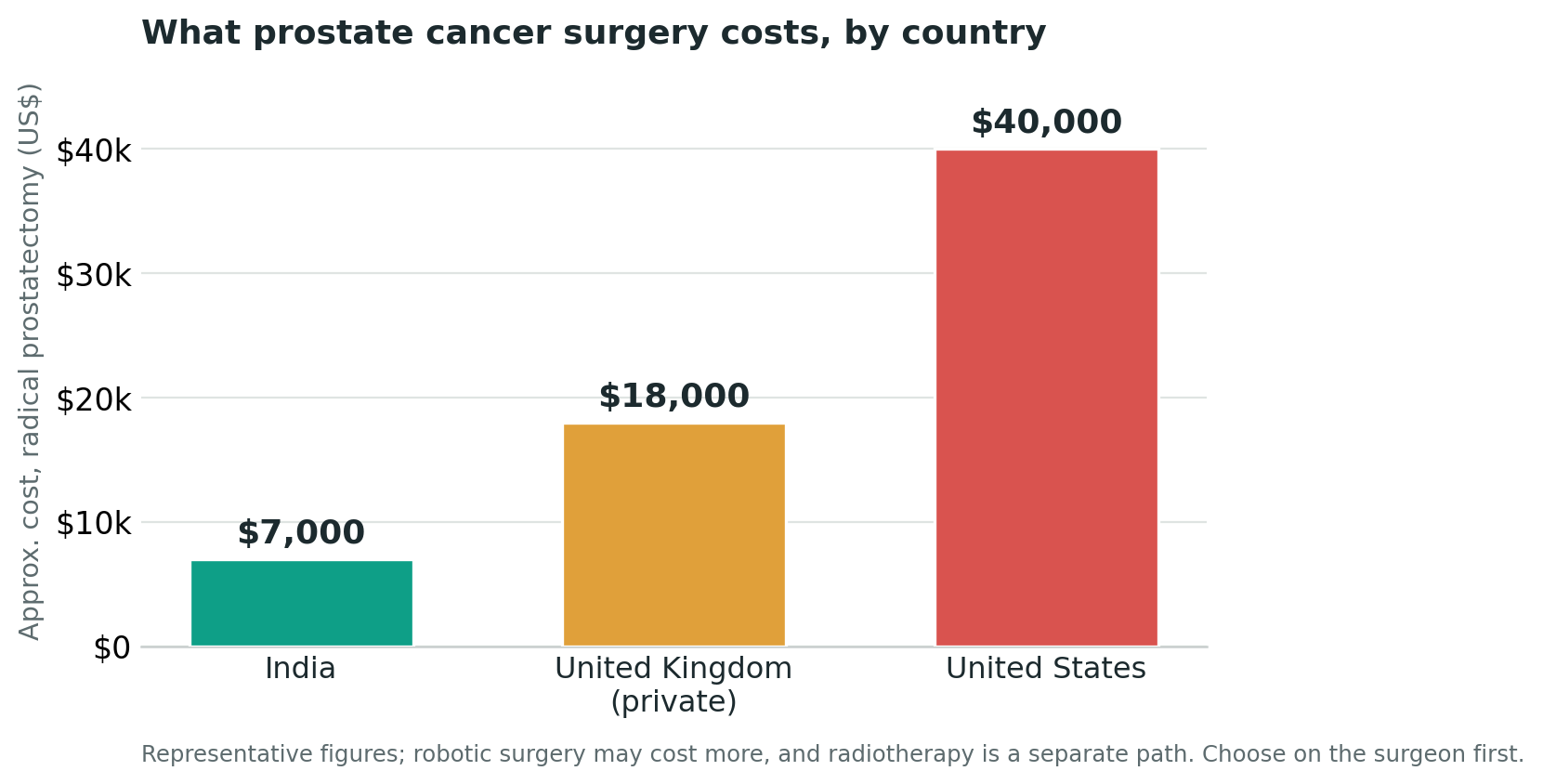
Representative figures; robotic surgery may cost more, and radiotherapy is a separate path. India’s affordability is genuine — but choose on the surgeon first.
In 24 years of arranging these journeys, I have learned that the disputes that arise almost never concern the headline price — they concern whether the treatment was the right one and what its true results were. Insist on the surgeon’s honest outcomes and the full, itemised picture before you commit a single kwacha.
What a Zambian man should weigh in particular
Beyond the surgeon and the hospital, several things matter especially for a man travelling from Zambia. First, your raised risk : men of African descent face a higher risk of prostate cancer, more aggressive disease, and later diagnosis — so if you have symptoms or a raised PSA, pursue a proper diagnosis promptly rather than waiting. Many men delay out of embarrassment or fear, and with prostate cancer that delay can be costly; there is nothing shameful in the checks, and seeking them early is one of the wisest things a man can do for himself and his family. Second, settle the diagnosis before choosing surgery, and disclose your full history, including HIV. Third, how you will pay and your follow-up : the National Health Insurance scheme funds care inside Zambia, not treatment abroad, so this comes from your own resources; and because prostate-cancer follow-up continues for years through PSA testing, arrange a Zambian doctor to take over your monitoring before you travel, with a written handover from the Indian team.
The practical journey from Zambia
India requires a yellow fever vaccination certificate from travellers arriving from Zambia, valid only ten days after the injection. Your medical visa is issued by the High Commission of India on Pandit Nehru Road in Lusaka against the hospital’s invitation letter; apply for a medical-attendant visa in the same batch, as you will want someone with you. There is no direct flight — you will connect through Addis Ababa on Ethiopian Airlines, or through Dubai, Doha or Nairobi. Send your actual PSA history, MRI files and biopsy report for review before you travel, and settle the hospital by traceable bank transfer rather than cash.
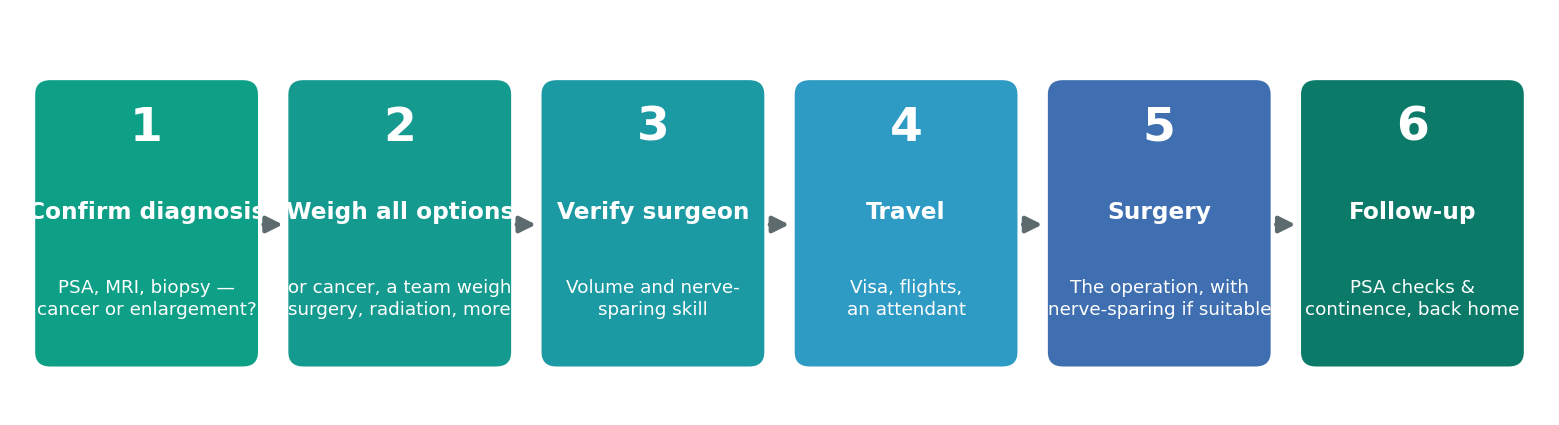
Four signals that should make you pause
- An offer to operate before the diagnosis is settled — or a benign-enlargement operation presented as though it treated cancer.
- No uro-oncology team — a single surgeon deciding your treatment alone, with no mention of surveillance or radiotherapy.
- Will not share his results — his volume or his continence and potency results, or promises no side effects.
- A single price with no breakdown — no clarity on complications, and no plan for your years of PSA follow-up in Zambia.
Straight Answers for Zambians about Prostate Surgeons & Hospitals in India
My PSA is raised. Do I have cancer?
Not necessarily. A raised PSA can be caused by benign enlargement, infection or other factors, not only cancer — and a normal PSA does not entirely exclude it. It is a signal to investigate properly, with an examination, an MRI and usually a biopsy, before anything is concluded or any surgery is chosen.
If I have prostate cancer, must I have surgery?
No. Surgery is one option among several. Low-risk cancers are often best watched with active surveillance; radiotherapy or hormone therapy may suit others as well as surgery. A uro-oncology team should weigh the options for your specific cancer — be wary of being pushed straight to an operation.
Will surgery leave me incontinent or impotent?
These are real possible outcomes, which is why the surgeon’s skill matters so much. A high-volume surgeon using nerve- sparing technique gives the best chance of preserving urinary control and sexual function while controlling the cancer. Ask for his honest results, and be wary of anyone promising no side effects.
Why does the surgeon’s volume matter so much?
Because prostate-cancer surgery has a long learning curve, and experienced, high-volume surgeons achieve markedly better cancer control, continence and potency than occasional ones. Ask how many he performs a year, and choose on his results, not the price.
Sources & Useful Links
- 🌐 Verify a surgeon (India) — National Medical Commission register of doctors: nmc.org.in
- 🌐 Hospital accreditation (India) — verify a hospital’s NABH accreditation: nabh.co
- 🌐 Medical visa (India), Lusaka — High Commission of India, requirements & process: hcizambia.gov.in/page/medical-visa
- 🌐 National Health Insurance (Zambia) — NHIMA cover (treatment abroad is not covered): nhima.co.zm
- 🌐 Cancer services (Zambia) — Ministry of Health; national cancer & urology services: moh.gov.zm
- 🌐 Yellow fever & travel health — WHO vaccination guidance: who.int/health-topics/yellow-fever
A closing word
If you send me your PSA history, scans and biopsy report, I will help you with the questions that matter most: first, whether your problem is benign enlargement or cancer; then, if it is cancer, whether surgery is truly the right path or whether surveillance, radiotherapy or another route would serve you better; and, if you do need surgery, which surgeons are genuine high-volume specialists skilled in nerve-sparing, and which hospitals have the team and technology to treat you safely. The prostate rewards careful thought over haste. Getting the diagnosis and the decision right — before choosing a surgeon — is where the outcome is won, and where I can help you most. That, for all these years, has been my work.
Frequently Asked Questions by Zambians about Prostate Surgeons & Hospitals in India
How should Zambian patients choose a prostate surgeon in India?
For prostate cancer, the guide recommends choosing a high-volume uro-oncologist rather than a general urologist who only occasionally performs cancer surgery. Experience in nerve-sparing and robotic techniques should also be assessed.
Is benign prostate enlargement the same as prostate cancer?
No. BPH is a benign enlargement that may cause urinary obstruction, whereas prostate cancer is a malignant condition requiring separate diagnostic assessment and treatment planning.
Does a raised PSA automatically mean prostate cancer?
No. The guide specifically states that a raised PSA does not by itself confirm cancer. Diagnosis may involve clinical assessment, MRI and biopsy.
Is surgery always necessary for prostate cancer?
No. Depending on cancer risk, age and health, options may include active surveillance, radiotherapy, hormone therapy or surgery. The guide recommends multidisciplinary assessment before treatment is chosen.
Why is a uro-oncology multidisciplinary team important?
A multidisciplinary team allows urology, medical oncology, radiation oncology and pathology specialists to evaluate all valid treatment options instead of defaulting automatically to surgery.
What is nerve-sparing prostate surgery?
Nerve-sparing aims to preserve nerves alongside the prostate that contribute to erectile function when doing so is oncologically safe. The guide recommends asking the surgeon specifically about experience and outcomes with this technique.
What does the prostate surgery “trifecta” mean?
The guide defines the trifecta as cancer control, urinary continence and sexual potency. Patients should ask the surgeon about all three outcomes rather than focusing only on removal of the cancer.
What qualifications should an Indian prostate cancer surgeon have?
The guide identifies MCh Urology or DNB Urology as specialist qualifications and recommends additional focused expertise through a fellowship in uro-oncology or robotic surgery.
What records should Zambian patients send before travelling?
Patients should send their PSA history, actual MRI files and biopsy report for review so the Indian team can assess the diagnosis and available treatment options before travel.
What follow-up is required after returning to Zambia?
For prostate cancer, follow-up can continue for years through regular PSA testing. The guide recommends arranging a Zambian doctor before travelling and obtaining a full written handover and teleconsultation support from the Indian hospital.
Page Summary
This guide explains how Zambian men should choose prostate surgeons and hospitals in India, but its central message is that choosing the surgeon is not the first decision. The first step is distinguishing benign prostate enlargement from prostate cancer. BPH can produce troublesome urinary symptoms but is not cancer, and procedures such as TURP are designed to relieve obstruction rather than treat prostate malignancy.
Citation Block
| Topic | Information |
|---|---|
| Topic Information | Details |
| Procedure | Prostate Surgery / Prostate Cancer Treatment |
| Country | India |
| Intended Audience | Zambian Patients |
| Primary Conditions | Benign Prostatic Hyperplasia and Prostate Cancer |
| BPH Procedure Mentioned | TURP |
| Cancer Treatments Discussed | Surgery, Active Surveillance, Radiotherapy and Hormone Therapy |
| Cancer Surgery | Prostate Removal / Prostate Cancer Surgery |
| Surgical Technique Highlighted | Nerve-Sparing and Robotic Surgery |
| Surgeon Qualification | MCh Urology or DNB Urology |
| Preferred Additional Training | Fellowship in Uro-Oncology / Robotic Surgery |
| Average Treatment Cost | No Specific Prostate Surgery Cost Range Stated in the Guide |
| Zambia Follow-Up | Regular PSA Testing with a Zambian Doctor + Indian Team Support |
| Medical Visa | High Commission of India in Lusaka |


Our Mission Statement
Our mission is to place patients at the centre of every healthcare decision by providing trustworthy, evidence-based, and unbiased medical information. We believe that informed patients make better decisions. Backed by personalised guidance from our experienced advisory team, we help patients understand their treatment options, compare them objectively, and confidently choose the path that best suits their medical needs and personal circumstances.
Patient Testimonials from Zambia
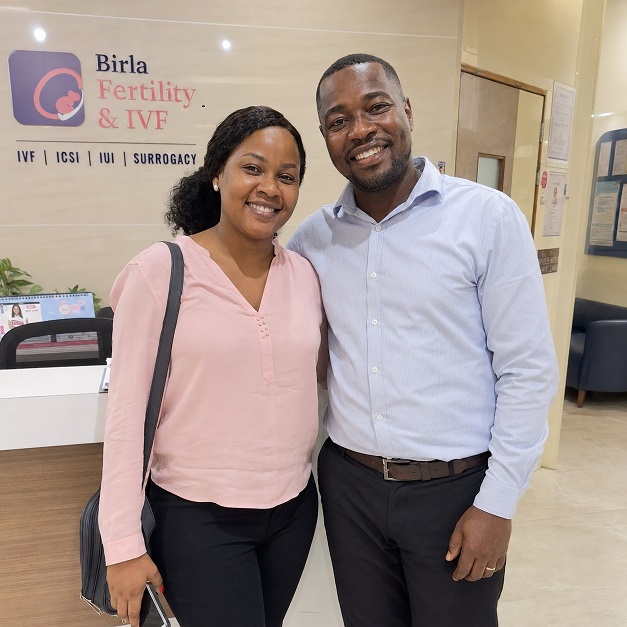
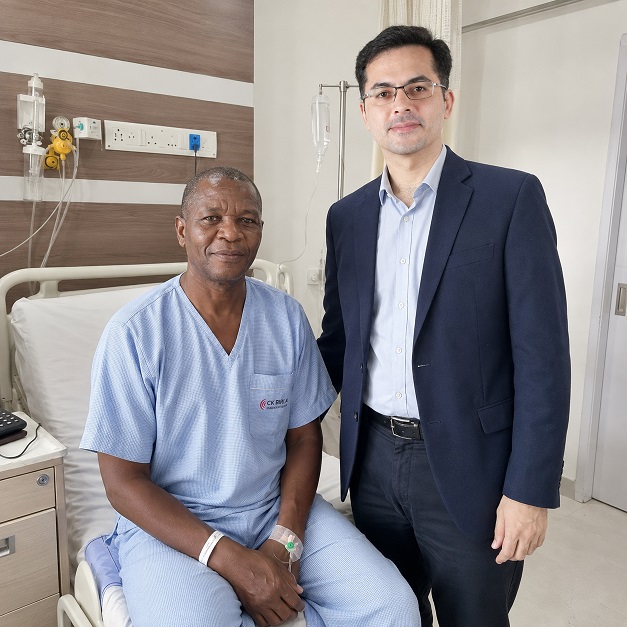

Ready to Take the First Step?
Share your Medical Reports with our Healthcare Managers Today and Get a FREE CONSULTATION, a Personalized Treatment Plan, and Complete Support from Arrival to Recovery.
Get Your Free ConsultationAreas We Serve
This resource has been thoughtfully prepared for patients from Zambia who are considering medical treatment in India. We also welcome patients from the wider region in the countries mentioned below-
We assist patients from:
- Zambia
- Angola
- Malawi
- Zimbabwe
- Botswana
- Namibia
- South Africa
- Eswatini
- Lesotho
- Gabon
- Chad
- Equatorial Guinea
- São Tomé and Príncipe
- Republic of the Congo
- Democratic Republic of the Congo
Many of the insights, treatment pathways, hospital recommendations, travel guidance, and patient support services described here are equally relevant and may be used as a reference when planning treatment in India.
From Zambia to India: Your Complete Patient Support Guide
- Best Weight-Loss (Bariatric) Surgeons & Hospitals in India for Zambian Patients
- Best Brain-Tumour Surgeons & Hospitals in India for Zambian Patients
- Best Cancer Doctors & Hospitals in India for Zambian Patients
- Best Cardiac Surgeons & Hospitals in India for Zambian Patients
- Best Cosmetic Surgeons & Facilities in India for Zambian Patients
- Best CyberKnife Treatment Teams & Centres in India for Zambian Patients
- Best Dentists & Dental Clinics in India for Zambian Patients
- Best Heart Valve Replacement Surgeons & Hospitals in India for Zambian Patients
- Best Hip Surgeons & Hospitals in India for Zambian Patients
- Best Knee Surgeons & Hospitals in India for Zambian Patients
- Best Neurosurgeons & Hospitals in India for Zambian Patients
- Best Paediatric Cardiac Surgeons & Hospitals in India for Zambian Patients
- Best Paediatric Neurosurgeons & Hospitals in India for Zambian Patients
- Best Prostate Surgeons & Hospitals in India for Zambian Patients
- Best Scoliosis Surgeons & Hospitals in India for Zambian Patients
- Best Spine Surgeons & Hospitals in India for Zambian Patients
- Best Bone Marrow Transplant Teams & Hospitals in India for Zambian Patients
- Best Kidney Transplant Surgeons & Hospitals in India for Zambian Patients