

Selecting the Best Weight-Loss (Bariatric) Surgeons & Hospitals in India — a Zambian Patient’s Guide
Bariatric surgery is not a single event but the start of a lifelong change. The operation matters, but the team and the follow-up that come after it matter just as much. This guide sets out how to choose well.
Weight-loss surgery is sometimes spoken of as though it were a single dramatic fix — an operation, and then a new life. The truth is gentler and more demanding: it is a powerful tool that can transform health and length of life, but only within a lifelong partnership between the patient, a proper team, and careful ongoing care. For 24 years I have helped African patients weigh this choice, and the lesson I return to most often is this: the operation itself is, in a sense, the easy part. What decides whether it truly succeeds is the team around it, and the years of follow-up afterward — especially once you are home, far from the hospital that operated on you.
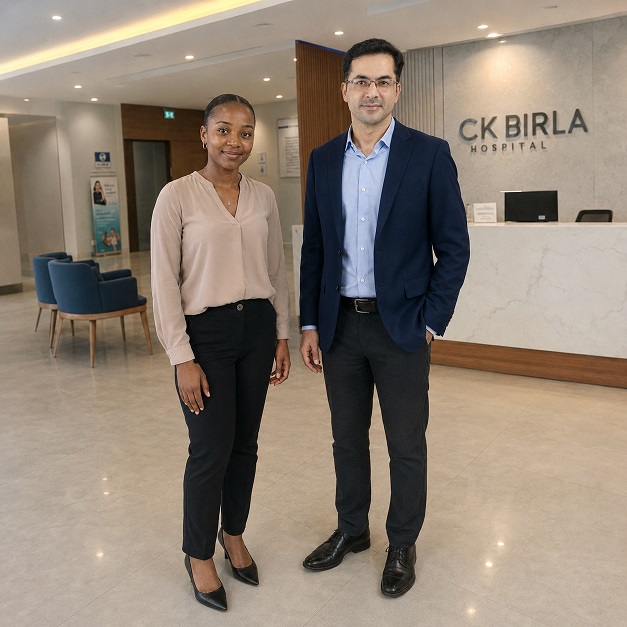
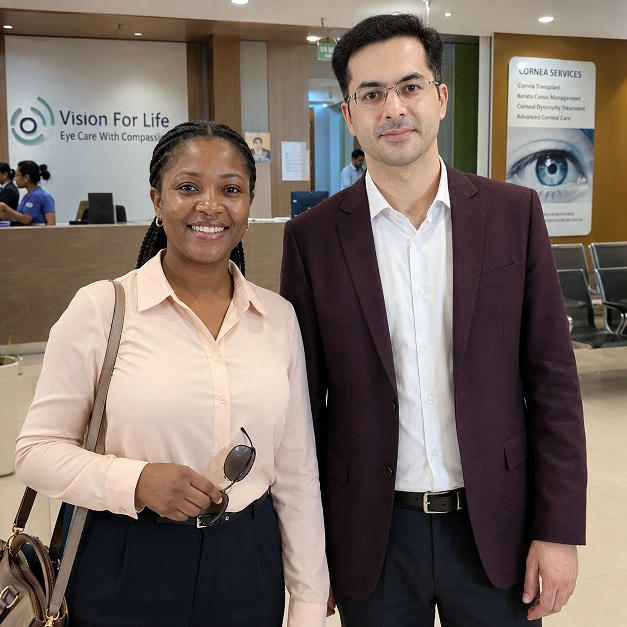
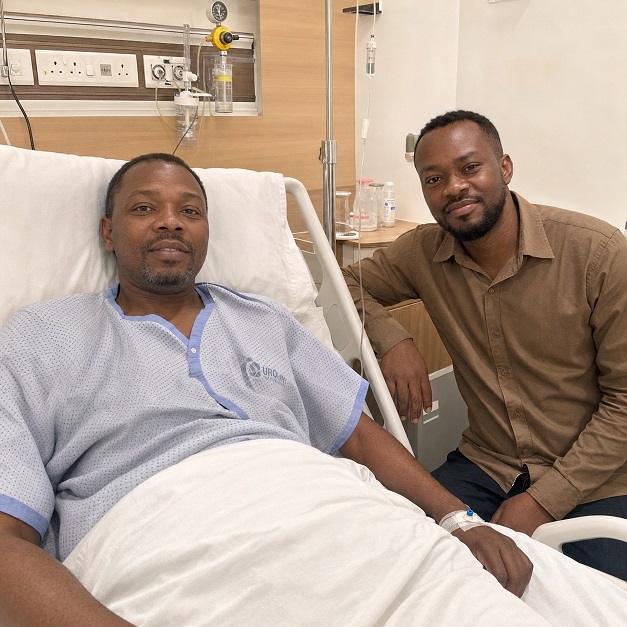
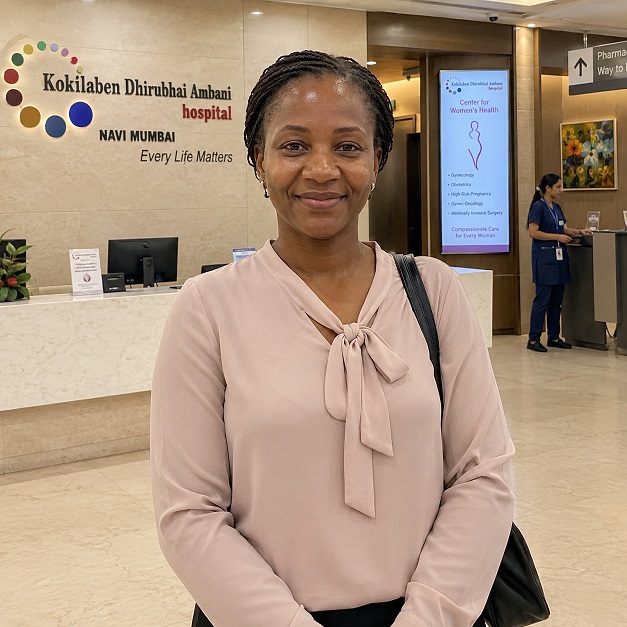
Healing Journeys of Zambian Patients

Key Takeaways
- Bariatric surgery should be viewed as the beginning of lifelong weight-management care rather than a single operation. The document places equal importance on the surgeon and the multidisciplinary team responsible for nutrition, psychological support and long-term monitoring.
- The guide states that bariatric surgery is generally considered for adults with a BMI of 40 or above, or a BMI of 35 or above with a serious obesity-related condition, such as type 2 diabetes, high blood pressure or severe sleep apnoea.
- Surgery should generally follow genuine attempts at medical weight management. It is not presented as an appropriate treatment for modest weight loss or purely cosmetic goals.
- Psychological readiness is also part of eligibility because patients must make lasting changes to eating habits and lifestyle after surgery.
- The page 2 graphic gives equal weighting to the surgeon and the team/hospital: 50% surgeon and 50% team and hospital. This reflects the guide's emphasis on lifelong follow-up rather than the operation alone.
- Two principal procedures are discussed: sleeve gastrectomy and gastric bypass.
- Sleeve gastrectomy removes a large portion of the stomach, reducing food capacity and influencing hunger hormones. The document describes it as a comparatively simpler operation with a lower risk of nutrient malabsorption.
- Gastric bypass creates a small stomach pouch and reroutes part of the small intestine. It may provide greater weight loss and a stronger effect on diabetes, but it also carries a higher risk of vitamin and mineral deficiencies.
- The guide does not describe either operation as universally better. Procedure selection should depend on the patient's weight, medical conditions and ability to maintain the required follow-up.
Quick Facts
- Treatment
- Bariatric & Metabolic / Weight-Loss Surgery
- Country
- India
- Intended Audience
- Zambian Patients
- Primary Condition
- Obesity
- Eligibility – BMI
- Generally 40 or Above
- Eligibility with Comorbidity
- Generally BMI 35 or Above with a Serious Weight-Related Condition
- Weight-Related Conditions Highlighted
- Type 2 Diabetes, High Blood Pressure and Severe Sleep Apnoea
- Pre-Surgery Requirement
- Genuine Attempts at Medical Weight Management
- Psychological Assessment
- Important for Long-Term Readiness
- Nutrients Requiring Monitoring
- Vitamin B12, Iron, Folate, Calcium and Vitamin D
- Potential Deficiency Effects
- Anaemia, Weak Bones and Nerve Problems
- Blood Tests
- Regular Long-Term Monitoring Required
- Hospital Accreditation
- NABH and Ideally JCI
- Pre-Travel Information
- Full Weight and Health History
In Brief
Zambian patients considering bariatric surgery in India should choose a complete bariatric programme rather than focusing only on the operation or surgeon. The guide gives equal importance to the surgeon and the team/hospital because long-term success depends heavily on dietetic support, psychological readiness, supplements and lifelong nutrient monitoring. Sleeve gastrectomy and gastric bypass are the two main procedures discussed. Sleeve has a lower nutrient-malabsorption risk, while gastric bypass may produce greater weight loss and a stronger diabetes effect but requires particularly careful long-term nutritional monitoring.
First, should you travel at all?
Bariatric surgery is not widely available in Zambia, so for patients who meet the medical criteria, travelling to an experienced centre is often the only realistic route, and India, with high-volume, modern bariatric units, is a leading destination. But before travel is even considered, the more basic question is whether surgery is right for you at all — and that depends on more than simply wanting to lose weight.
Knowledge that must come first: are you actually eligible, and is this the right route?
Bariatric surgery is generally considered for adults with a body mass index (BMI) of 40 or above , or a BMI of 35 or above with a serious weight-related condition such as type 2 diabetes, high blood pressure, or severe sleep apnoea — and only after genuine attempts at medical weight management have not succeeded. It is not intended for modest weight loss or cosmetic goals, and a reputable surgeon will assess you honestly against these criteria rather than operating on request. Eligibility also considers your psychological readiness for a lasting change in how you eat, and any conditions that might make surgery unsafe. If you do not clearly meet the criteria, an honest team will say so, and that honesty — not eagerness to operate — is the first sign of a team worth trusting. It is also worth setting realistic expectations from the outset: bariatric surgery is a powerful tool, not a guarantee, and the greatest, most lasting results come to patients who commit fully to the dietary and lifestyle changes their team recommends, both before and long after the operation.
Two decisions, not one — and here they carry equal weight
You are choosing the surgeon and the team and hospital around him. In most operations in this series the surgeon’s skill weighs somewhat more; in bariatric surgery, the two are closer to equal, because your result depends as much on the dietitian who guides your new way of eating, and the system that catches nutrient problems early, as on the hour or two spent in the operating theatre.
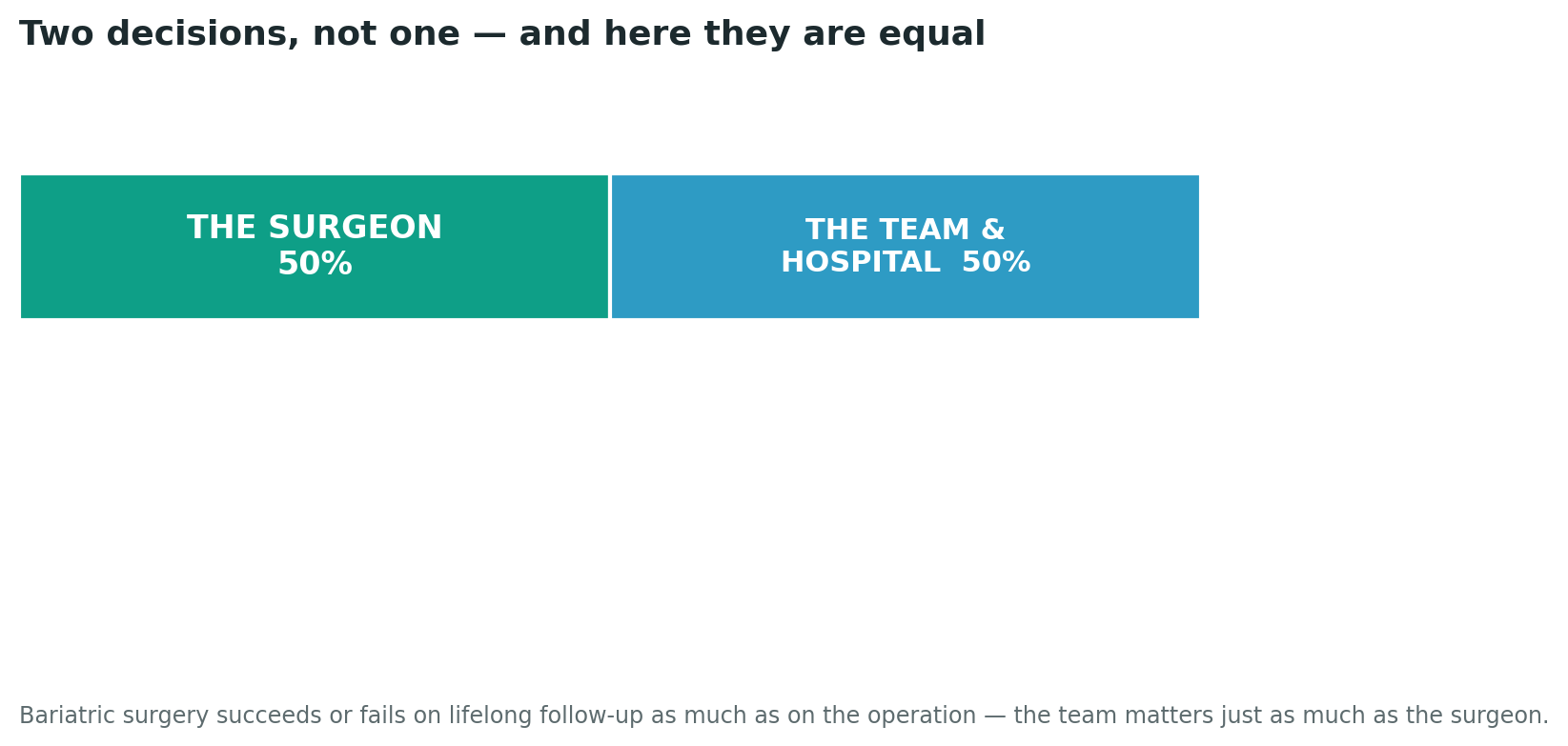
Bariatric surgery succeeds or fails on lifelong follow-up as much as on the operation itself — the team matters just as much as the surgeon.
Understanding the operation: sleeve or bypass?
The two most common operations work differently. Sleeve gastrectomy removes a large part of the stomach, restricting how much you can eat and altering hunger hormones; it is a comparatively simpler operation with a lower risk of nutrient malabsorption. Gastric bypass creates a small stomach pouch and reroutes part of the small intestine, often producing greater weight loss and a stronger effect on diabetes, but at the cost of a higher risk of vitamin and mineral deficiency, since the rerouted gut absorbs some nutrients less well. Neither is simply “better” — the right choice depends on your weight, your health conditions, and your ability to sustain the follow-up each requires, and it should be recommended by your team, not chosen from a menu.
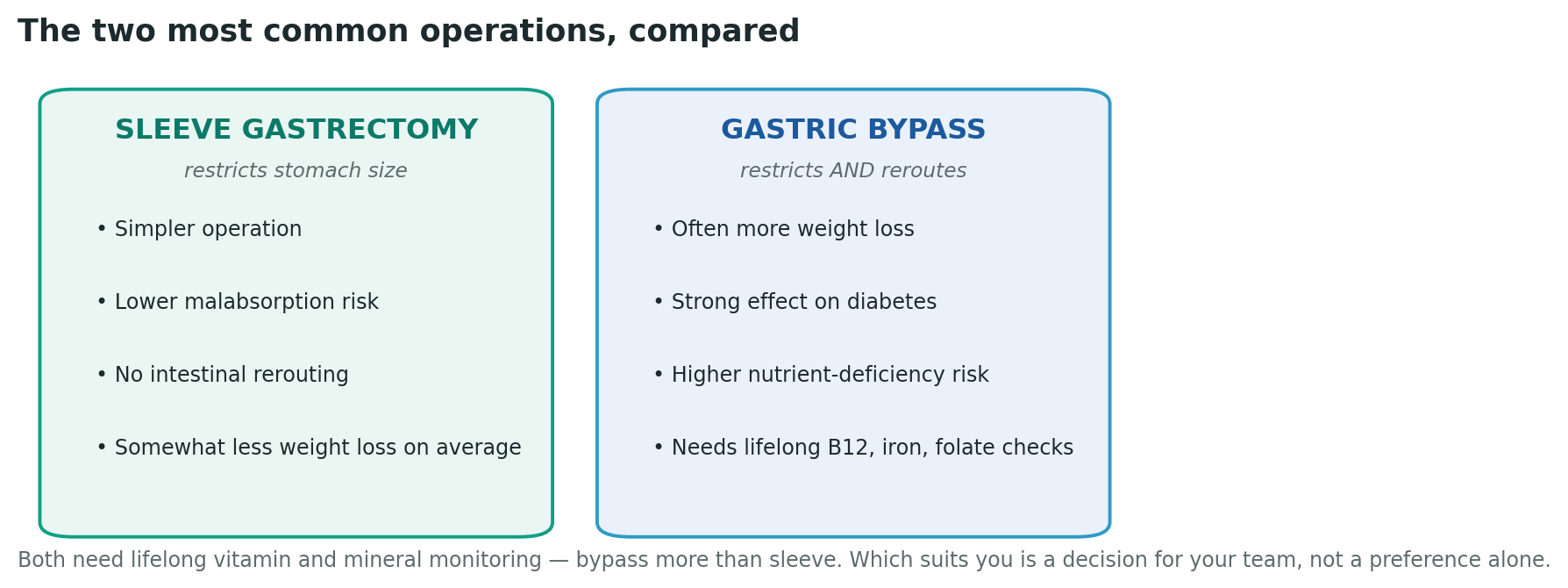
Both require lifelong vitamin and mineral monitoring — bypass more than sleeve. Which suits you is a decision for your team, not a preference alone.
The knowledge that matters most afterward: lifelong nutrient monitoring
This is the fact every Zambian patient must carry home. Both operations, and especially gastric bypass, change how your body absorbs vitamin B12, iron, folate, calcium and vitamin D — and deficiencies can appear silently, sometimes years after surgery, once the body’s stores run down. Left unaddressed, this can cause anaemia, weakened bones and nerve problems. This is not a rare complication to be feared, but an entirely expected and manageable part of life after surgery — provided you take prescribed supplements for life and have your blood checked regularly. Before you travel, ask exactly which supplements you will need, and arrange with a Zambian doctor how your bloods will be monitored once you are home. This single piece of planning matters as much as the operation itself.
Part One: choosing the surgeon
1. Choose a fellowship-trained bariatric surgeon. Seek a surgeon who has done dedicated bariatric and metabolic surgery training, not a general surgeon who performs it occasionally.
2. Ask his volume of bariatric operations. As with every operation in this series, experience predicts better outcomes and fewer complications. Ask how many procedures he performs each year.
3. Expect an honest recommendation between sleeve and bypass. A good surgeon explains why a particular procedure suits your weight, health conditions and circumstances, rather than performing whichever he prefers regardless of your case.
4. Ask about his outcomes. A confident surgeon shares his complication and revision rates candidly. Vague reassurance is not the same as a clear number.
5. Confirm he will operate on you personally. Ask, and get it in writing, that the named surgeon you chose will perform the operation, not delegate it to a trainee.
6. Test his communication before you travel. The best surgeons review your history, weight and health conditions remotely, and discuss risks and expected results honestly.
7. Ask what happens if you need a revision. Occasionally a first operation does not achieve or maintain the expected result, and a further procedure is needed. Ask how the surgeon and hospital handle this, and whether it is included in your planning.
How to read an Indian bariatric surgeon’s qualifications
| Stage | Qualification | What it tells you |
|---|---|---|
| Basic medical degree | MBBS | A qualified doctor — the starting point, not a specialist. |
| Surgical specialist | MS (General Surgery) or DNB (Surgery) | A fully trained general surgeon — the essential qualification. |
| Bariatric expertise | Fellowship in bariatric & metabolic surgery | Focused training in weight-loss surgery — what you want. |
You can confirm that a surgeon is properly registered on the National Medical Commission register of India (nmc.org.in). A genuine specialist will be glad to have you check.
Part Two: choosing the team and hospital
1. Confirm a dietitian is part of the team, not an afterthought. Your new relationship with food is central to success. Insist on structured pre- and post-operative dietary guidance from a qualified dietitian, not a leaflet handed to you at discharge.
2. Ask about psychological support. A good programme includes access to a psychologist or counsellor, recognising that lasting change in eating habits is as much a psychological journey as a physical one.
3. Insist on a clear lifelong nutrient-monitoring plan. Ask exactly which vitamins and minerals you will need to take, how often blood tests are recommended, and for how many years. A serious programme has this mapped out in writing before you even have surgery.
4. Check accreditation and infection control. The hospital should be accredited by India’s NABH, and ideally by JCI, and should track and control its infection and complication rates.
5. Ask about support groups and long-term contact. Many successful programmes offer ongoing group support and check-ins, which help patients sustain their new habits well beyond the first months.
6. Weigh international support and transparent pricing. A good centre helps with the visa invitation, accommodation and a coordinator, and gives a written, itemised, fixed quote stating what is included.
7. Ask how it will support you after you fly home. This matters more here than almost anywhere in this series. A good hospital offers teleconsultation, a written record of exactly which procedure and any devices were used, and clear supplement and monitoring guidance for a Zambian doctor to continue.
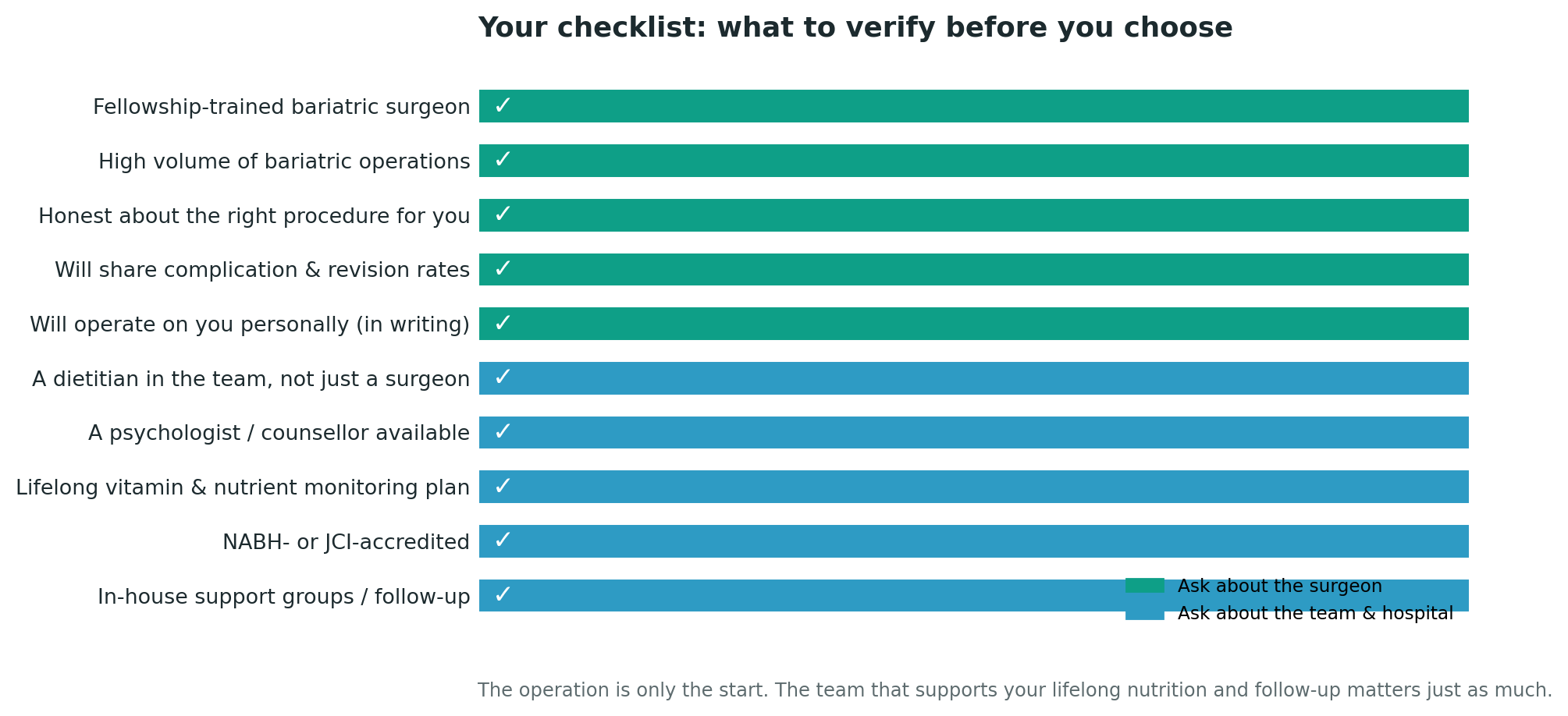
Keep this checklist beside you. The operation is only the start — the team that supports your lifelong nutrition and follow-up matters just as much.
Cost and value: how to weigh the money honestly
Bariatric surgery in a good Indian hospital costs a fraction of Western private pricing, which is why many patients travel. At roughly ZK19 to the US dollar in mid-2026, the saving is large in kwacha; confirm the rate before travel, as it moves. But the true cost of bariatric surgery is not the operation alone — it is the years of supplements, blood tests and support that follow. Weigh a centre’s honesty about this whole picture, not just its headline surgical fee.
In 24 years of arranging these journeys, I have learned that the disputes that arise almost never concern the operation itself — they concern patients who returned home unprepared for the lifelong supplements and monitoring that success actually requires. Insist on the full picture, for the years ahead as well as the operation, before you commit a single kwacha.
What a Zambian patient should weigh in particular
Beyond the surgeon and the team, several things matter specifically for a patient travelling from Zambia. First, plan your lifelong supplements before you leave India : understand exactly which vitamins and minerals you need, and how to obtain them reliably once home. Second, arrange blood test monitoring with a Zambian doctor before you travel, with a clear written plan from the Indian team on what to check and how often. Third, how you will pay : the National Health Insurance scheme funds care inside Zambia, not treatment abroad, so this comes from your own resources — and the cost of years of supplements and monitoring should be part of your planning from the start, not a surprise afterward.
The practical journey from Zambia
India requires a yellow fever vaccination certificate from travellers arriving from Zambia, valid only ten days after the injection. Your medical visa is issued by the High Commission of India on Pandit Nehru Road in Lusaka against the hospital’s invitation letter; apply for a medical-attendant visa in the same batch, as you will want someone with you. There is no direct flight — you will connect through Addis Ababa on Ethiopian Airlines, or through Dubai, Doha or Nairobi. Send your full weight and health history, including any diabetes, blood pressure or sleep apnoea diagnoses, for review before you travel, and settle the hospital by traceable bank transfer rather than cash.
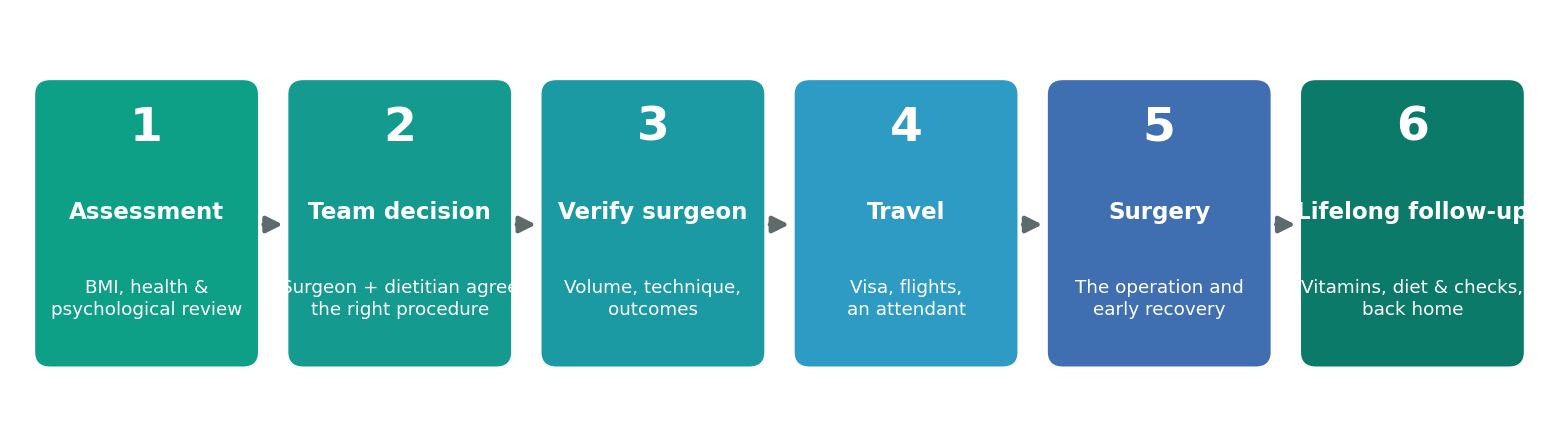
Four signals that should make you pause
- No proper BMI or health assessment — a surgeon willing to operate without discussing whether you truly meet the criteria.
- No dietitian or psychological support — genuinely built into the programme, only the surgeon and the operation.
- No written lifelong monitoring plan — for vitamins and follow-up, provided before surgery.
- A single price with no mention — of the years of supplements, blood tests and follow-up that success actually requires.
Straight Answers for Zambians about Weight-Loss (Bariatric) Surgeons & Hospitals in India
Am I eligible for bariatric surgery?
Generally, surgery is considered for a BMI of 40 or above, or 35 or above with a serious weight-related condition such as diabetes or high blood pressure, and after genuine attempts at medical weight management. A proper assessment by a qualified team will confirm whether you meet these criteria.
Which is better — sleeve gastrectomy or gastric bypass?
Neither is universally better. Sleeve gastrectomy is simpler with a lower nutrient-deficiency risk; gastric bypass often gives greater weight loss and helps diabetes more, but carries a higher risk of vitamin and mineral deficiency. The right choice depends on your health and circumstances, and should be recommended by your team.
Will I need to take supplements forever?
Very likely, yes — especially after gastric bypass. Vitamin B12, iron, folate, calcium and vitamin D levels can fall, sometimes silently and years later. This is a normal, manageable part of life after surgery provided you take prescribed supplements and have regular blood tests, ideally arranged with a doctor in Zambia.
What matters most in choosing a hospital?
A genuine team including a dietitian and psychological support, not just a surgeon; a clear written plan for your lifelong nutrient monitoring; and honest support in coordinating your follow-up once you are back home in Zambia.
Sources & Useful Links
- 🌐 Verify a surgeon (India) — National Medical Commission register of doctors: nmc.org.in
- 🌐 Hospital accreditation (India) — verify a hospital’s NABH accreditation: nabh.co
- 🌐 Medical visa (India), Lusaka — High Commission of India, requirements & process: hcizambia.gov.in/page/medical-visa
- 🌐 National Health Insurance (Zambia) — NHIMA cover (treatment abroad is not covered): nhima.co.zm
- 🌐 Ministry of Health, Zambia — referrals and national services: moh.gov.zm
- 🌐 Yellow fever & travel health — WHO vaccination guidance: who.int/health-topics/yellow-fever
A closing word
If you send me your weight, health history and any related conditions, I will help you with the questions that matter most: whether you genuinely meet the criteria for surgery; which surgeons are honest, high-volume specialists with a real team around them, not just an operating list; and, most importantly, how to plan the lifelong supplements and monitoring that success actually depends on, so that the good work done in the operating theatre is not undone once you are home in Zambia. Bariatric surgery is a beginning, not an end, and planning for what comes after is where I can help you most. That, for all these years, has been my work.
Frequently Asked Questions by Zambians about Weight-Loss (Bariatric) Surgeons & Hospitals in India
How should Zambian patients choose the best bariatric surgeon in India?
Zambian patients should look for a surgeon with dedicated bariatric and metabolic surgery fellowship training, substantial bariatric procedure experience, transparent complication and revision rates and a willingness to explain why a particular operation is appropriate.
Who is generally eligible for bariatric surgery in India?
The guide states that bariatric surgery is generally considered for adults with a BMI of 40 or above, or a BMI of 35 or above with a serious weight-related condition such as diabetes, hypertension or severe sleep apnoea, after genuine attempts at medical weight management.
Is sleeve gastrectomy or gastric bypass better for Zambian patients?
Neither is universally better. Sleeve gastrectomy is described as comparatively simpler with a lower nutrient-malabsorption risk. Gastric bypass may produce greater weight loss and have a stronger effect on diabetes but carries a higher risk of vitamin and mineral deficiencies.
Will Zambian patients need lifelong supplements after bariatric surgery?
Very likely, particularly following gastric bypass. The guide highlights vitamin B12, iron, folate, calcium and vitamin D as nutrients requiring continued attention.
Why are regular blood tests important after bariatric surgery?
Nutritional deficiencies may develop silently, sometimes years after surgery. Without monitoring and treatment, they may contribute to anaemia, weakened bones and nerve problems. Zambian patients should therefore arrange ongoing blood testing after returning home.
What support should a bariatric hospital in India provide to Zambian patients?
A strong programme should include a qualified dietitian, psychological support, structured dietary guidance, a written lifelong nutrient-monitoring plan, teleconsultation and clear instructions for the doctor continuing care in Zambia.
What qualifications should Zambian patients check in an Indian bariatric surgeon?
The guide identifies MBBS as the basic medical degree, MS General Surgery or DNB Surgery as specialist surgical training, and a fellowship in bariatric and metabolic surgery as the focused expertise patients should seek.
What should Zambian patients send to the bariatric team before travelling to India?
They should provide their full weight and health history, including relevant diagnoses such as diabetes, high blood pressure and sleep apnoea. This allows the team to assess eligibility and begin planning before travel.
What follow-up should Zambian patients arrange before returning home?
Patients should obtain a written supplement and blood-test monitoring schedule and arrange follow-up with a doctor in Zambia. The Indian hospital should also provide treatment records and access to teleconsultation when required.
What are the main red flags when choosing bariatric surgery in India?
The guide highlights four warning signs: a surgeon willing to operate without proper BMI and health assessment, no genuine dietitian or psychological support, no written lifelong vitamin and monitoring plan, and a price that ignores the continuing cost of supplements, blood tests and follow-up.
Page Summary
This guide explains how Zambian patients should evaluate bariatric surgeons, multidisciplinary teams and hospitals in India. Its central message is that bariatric surgery is not simply an operation; it begins a lifelong process involving dietary change, supplements, blood testing and medical follow-up. Eligibility comes before travel. The document states that surgery is generally considered for a BMI of 40 or above, or 35 or above when accompanied by a serious weight-related condition, after genuine attempts at medical weight management.
Citation Block
| Topic | Information |
|---|---|
| Topic Information | Details |
| Procedure | Bariatric & Metabolic / Weight-Loss Surgery |
| Country | India |
| Intended Audience | Zambian Patients |
| Primary Condition | Obesity |
| Eligibility | Generally BMI ≥40, or BMI ≥35 with a Serious Weight-Related Condition |
| Conditions Highlighted | Obesity, Type 2 Diabetes, High Blood Pressure and Severe Sleep Apnoea |
| Procedures | Sleeve Gastrectomy and Gastric Bypass |
| Surgeon Qualification | MS General Surgery/DNB Surgery + Fellowship in Bariatric & Metabolic Surgery |
| Surgeon vs Programme Weighting | 50% Surgeon + 50% Team & Hospital |
| Multidisciplinary Support | Dietitian + Psychological Support |
| Nutrients Monitored | Vitamin B12, Iron, Folate, Calcium and Vitamin D |
| Long-Term Requirement | Lifelong Supplements and Regular Blood Tests |
| Hospital Accreditation | NABH and Ideally JCI |


Our Mission Statement
Our mission is to place patients at the centre of every healthcare decision by providing trustworthy, evidence-based, and unbiased medical information. We believe that informed patients make better decisions. Backed by personalised guidance from our experienced advisory team, we help patients understand their treatment options, compare them objectively, and confidently choose the path that best suits their medical needs and personal circumstances.
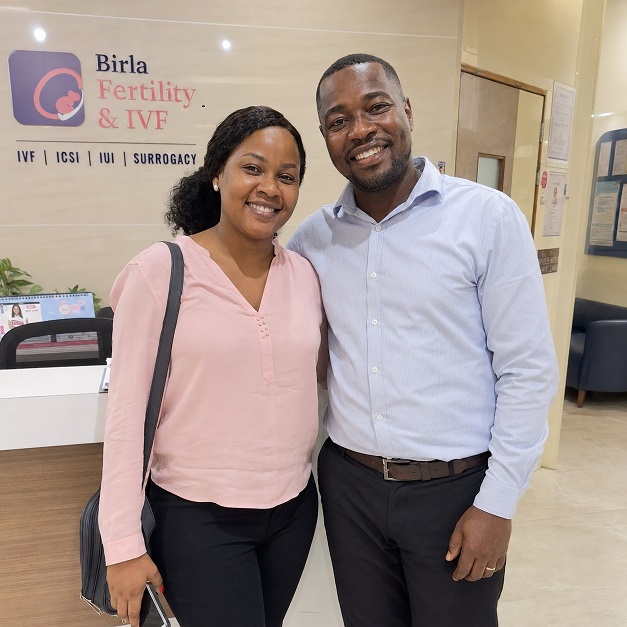
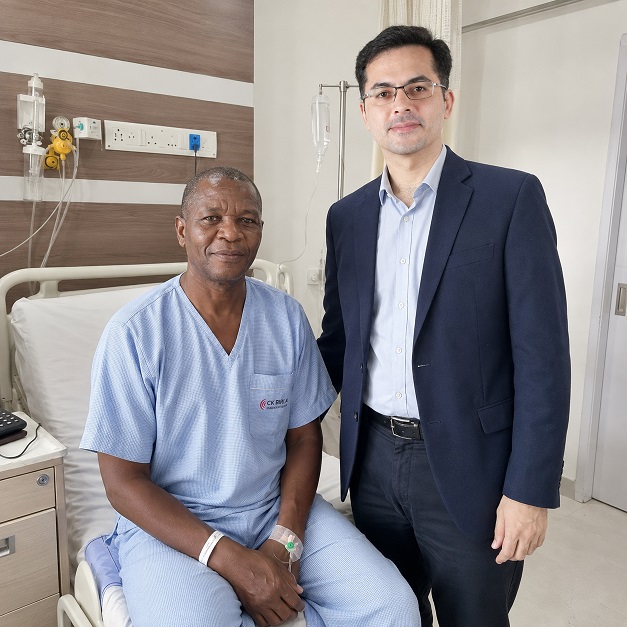
Patient Testimonials from Zambia

Ready to Take the First Step?
Share your Medical Reports with our Healthcare Managers Today and Get a FREE CONSULTATION, a Personalized Treatment Plan, and Complete Support from Arrival to Recovery.
Get Your Free ConsultationAreas We Serve
This resource has been thoughtfully prepared for patients from Zambia who are considering medical treatment in India. We also welcome patients from the wider region in the countries mentioned below-
We assist patients from:
- Zambia
- Angola
- Malawi
- Zimbabwe
- Botswana
- Namibia
- South Africa
- Eswatini
- Lesotho
- Gabon
- Chad
- Equatorial Guinea
- São Tomé and Príncipe
- Republic of the Congo
- Democratic Republic of the Congo
Many of the insights, treatment pathways, hospital recommendations, travel guidance, and patient support services described here are equally relevant and may be used as a reference when planning treatment in India.
From Zambia to India: Your Complete Patient Support Guide
- Best Weight-Loss (Bariatric) Surgeons & Hospitals in India for Zambian Patients
- Best Brain-Tumour Surgeons & Hospitals in India for Zambian Patients
- Best Cancer Doctors & Hospitals in India for Zambian Patients
- Best Cardiac Surgeons & Hospitals in India for Zambian Patients
- Best Cosmetic Surgeons & Facilities in India for Zambian Patients
- Best CyberKnife Treatment Teams & Centres in India for Zambian Patients
- Best Dentists & Dental Clinics in India for Zambian Patients
- Best Heart Valve Replacement Surgeons & Hospitals in India for Zambian Patients
- Best Hip Surgeons & Hospitals in India for Zambian Patients
- Best Knee Surgeons & Hospitals in India for Zambian Patients
- Best Neurosurgeons & Hospitals in India for Zambian Patients
- Best Paediatric Cardiac Surgeons & Hospitals in India for Zambian Patients
- Best Paediatric Neurosurgeons & Hospitals in India for Zambian Patients
- Best Prostate Surgeons & Hospitals in India for Zambian Patients
- Best Scoliosis Surgeons & Hospitals in India for Zambian Patients
- Best Spine Surgeons & Hospitals in India for Zambian Patients
- Best Bone Marrow Transplant Teams & Hospitals in India for Zambian Patients
- Best Kidney Transplant Surgeons & Hospitals in India for Zambian Patients