

Selecting the Best Paediatric Neurosurgeons & Hospitals in India — a Zambian Parent’s Guide
Most paediatric neurosurgery in this region is not a single dramatic operation but the start of years of care — and knowing this from the outset changes how a parent should choose.
When a doctor tells a parent that their child needs brain surgery, the mind understandably goes to the single operation ahead — the day, the theatre, the recovery. For 24 years I have guided African families through this, and the truth I share first is usually a surprising one: for the most common reason children in this region need neurosurgery — a build-up of fluid on the brain called hydrocephalus, treated with a shunt — the first operation is often not the end of the story but the beginning of a years-long relationship with a paediatric neurosurgery team. Understanding this from the outset changes what you should look for, and protects you from unnecessary alarm if a second operation is later needed.
Healing Journeys of Zambian Patients
Key Takeaways
- The guide's defining message is that paediatric neurosurgery may be the beginning of years of care rather than a single operation. This is particularly important for hydrocephalus treated with a shunt, where later revision surgery can be part of the expected treatment journey.
- The document identifies hydrocephalus—a build-up of fluid around the brain—as a common reason children in the region require neurosurgery.
- Hydrocephalus may be treated using a shunt, a thin tube that drains excess fluid from around the brain to another part of the body.
- The guide explains that in Africa, hydrocephalus is frequently associated with previous infection or occurs alongside spina bifida/myelomeningocele. This regional context makes experience with these conditions particularly relevant when choosing a paediatric neurosurgeon.
- One of the most important points for parents is that a shunt is a mechanical device placed in a growing child. It may later require revision because of blockage, infection or the child's growth.
- The document cites published research indicating that roughly one-third to as many as one-half of children, depending on the study, may require at least one shunt revision within the first few years.
- The infographic on page 2 simplifies this to an illustrative figure of approximately 40% potentially needing a revision within the first few years. The guide explicitly explains that revision should not automatically be interpreted as failure of the original operation.
- Parents should instead learn to recognise signs of a possible shunt problem quickly.
- Warning signs identified in the guide include headache, vomiting, drowsiness, irritability and changes in behaviour.
- Four major warning signs are identified: a surgeon promising a single guaranteed final operation without discussing possible revision; no written instructions about shunt warning signs; no dedicated paediatric neuro-ICU or paediatric neuro-anaesthesia team; and a single treatment price without planning for possible revision or Zambia aftercare.
Quick Facts
- Treatment
- Paediatric Neurosurgery / Children's Brain & Spine Surgery
- Country
- India
- Intended Audience
- Zambian Parents and Children
- Primary Condition Highlighted
- Hydrocephalus
- Other Conditions Discussed
- Spina Bifida, Craniosynostosis, Childhood Brain Tumours, Spinal Tumours and Head Injury
- Hydrocephalus Treatment Highlighted
- Shunt Surgery
- What a Shunt Does
- Drains Excess Fluid from Around the Brain to Another Part of the Body
- Regional Hydrocephalus Factors Discussed
- Previous Infection and Spina Bifida/Myelomeningocele
- Key Long-Term Principle
- First Surgery May Be the Beginning of Years of Care
- Shunt Revision
- Can Be an Expected Part of Long-Term Treatment Rather Than Evidence of Failure
- Published Revision Range Cited
- Roughly One-Third to One-Half May Require at Least One Revision Within the First Few Years
- Indicative Exchange Rate in Guide
- Approximately ZK19 to US$1 in Mid-2026; Current Rate Should Be Confirmed
- Medical Visa
- High Commission of India in Lusaka
- Medical Attendant
- Attendant Visa for the Accompanying Parent
In Brief
Zambian parents considering paediatric neurosurgery in India should plan for both the immediate operation and the child's longer-term neurological care. This is particularly important for hydrocephalus treated with a shunt, because the guide notes that a meaningful proportion of children may require revision within the first few years due to blockage, infection or growth. Parents should choose a genuine paediatric neurosurgeon experienced with the child's exact condition and a hospital with a dedicated paediatric neuro-ICU, paediatric neuro-anaesthesia, strong infection control and clear long-term support. Families should also learn the warning signs of shunt problems and establish an urgent-care and follow-up pathway in Zambia before returning home.
First, should you travel at all?
Zambia has a small number of neurosurgeons and limited paediatric neurosurgical capacity, so complex or specialised children’s neurosurgery is often referred abroad, and India, with dedicated paediatric neurosurgery programmes, is a leading destination. As with every guide in this series, travelling is the second decision; understanding your child’s exact condition, and what care it will realistically involve over time, comes first.
It helps to see the range involved, because paediatric neurosurgery covers considerably more than one condition. Beyond hydrocephalus, children may need surgery for spina bifida (an opening in the spine present from birth, often repaired soon after delivery), craniosynostosis (early fusion of the skull bones, best corrected within a defined window in infancy to allow normal brain growth), childhood brain or spinal tumours, and the after-effects of head injury. Each has its own timeline and its own considerations, and none should be assumed from a brief description — what matters is your own child’s specific diagnosis, confirmed by proper imaging, and the plan a genuine paediatric specialist builds around it.
Knowledge that must come first: hydrocephalus, shunts, and why revision is normal, not failure
This is the single most important thing for a parent to understand. The most common reason children in this region undergo neurosurgery is hydrocephalus — a build-up of fluid around the brain — treated by inserting a thin tube, called a shunt , that drains the excess fluid to another part of the body. In Africa, hydrocephalus is frequently caused by earlier infection, or occurs alongside spina bifida (myelomeningocele); this differs somewhat from patterns seen in higher-income countries, and a good paediatric neurosurgeon here will be well versed in treating it. Shunts are highly effective, but they are mechanical devices in a growing child, and published research consistently shows a meaningful share — roughly a third to as many as half, depending on the study — will need at least one revision surgery within the first few years, due to blockage, infection, or simply the tubing needing to lengthen as the child grows. This is not a sign that anything was done wrong. It is a normal, expected part of caring for a child with a shunt, and a good team will explain this honestly from the very first conversation, and teach you the warning signs of a problem so you can act quickly if one arises.
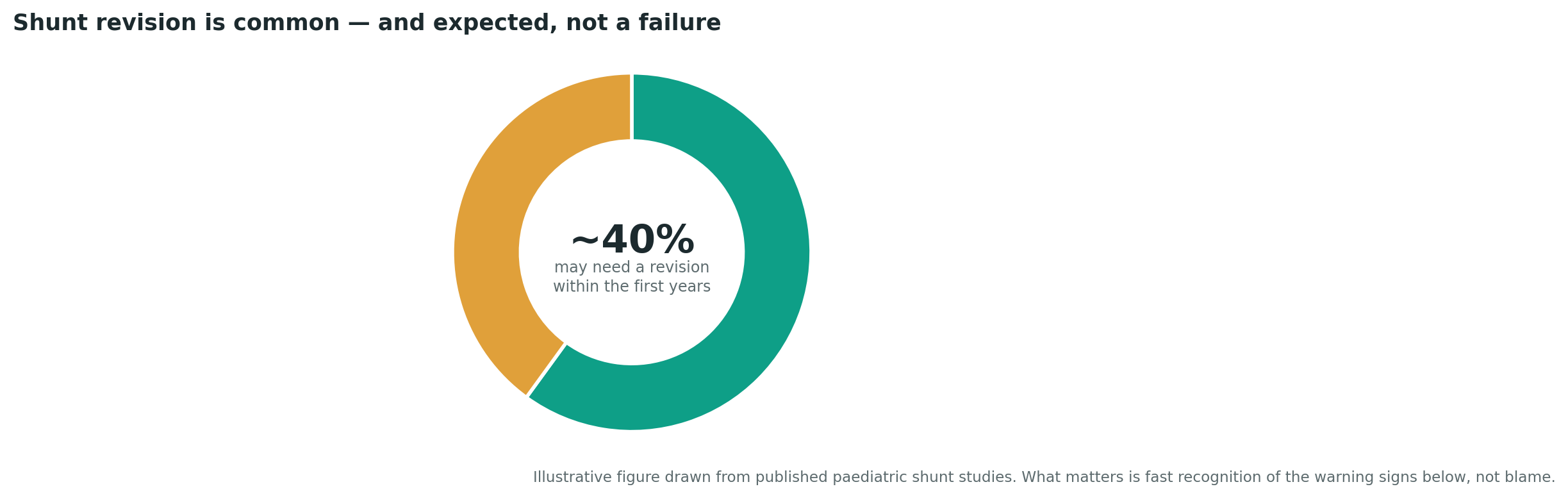
What matters is fast recognition of the warning signs — headache, vomiting, drowsiness, or a change in behaviour — not blame if a revision is needed.
Two decisions, not one
You are choosing the surgeon and the paediatric team and hospital . Both must be right, and because the relationship often continues for years, the hospital’s long-term support matters as much as the individual operation.
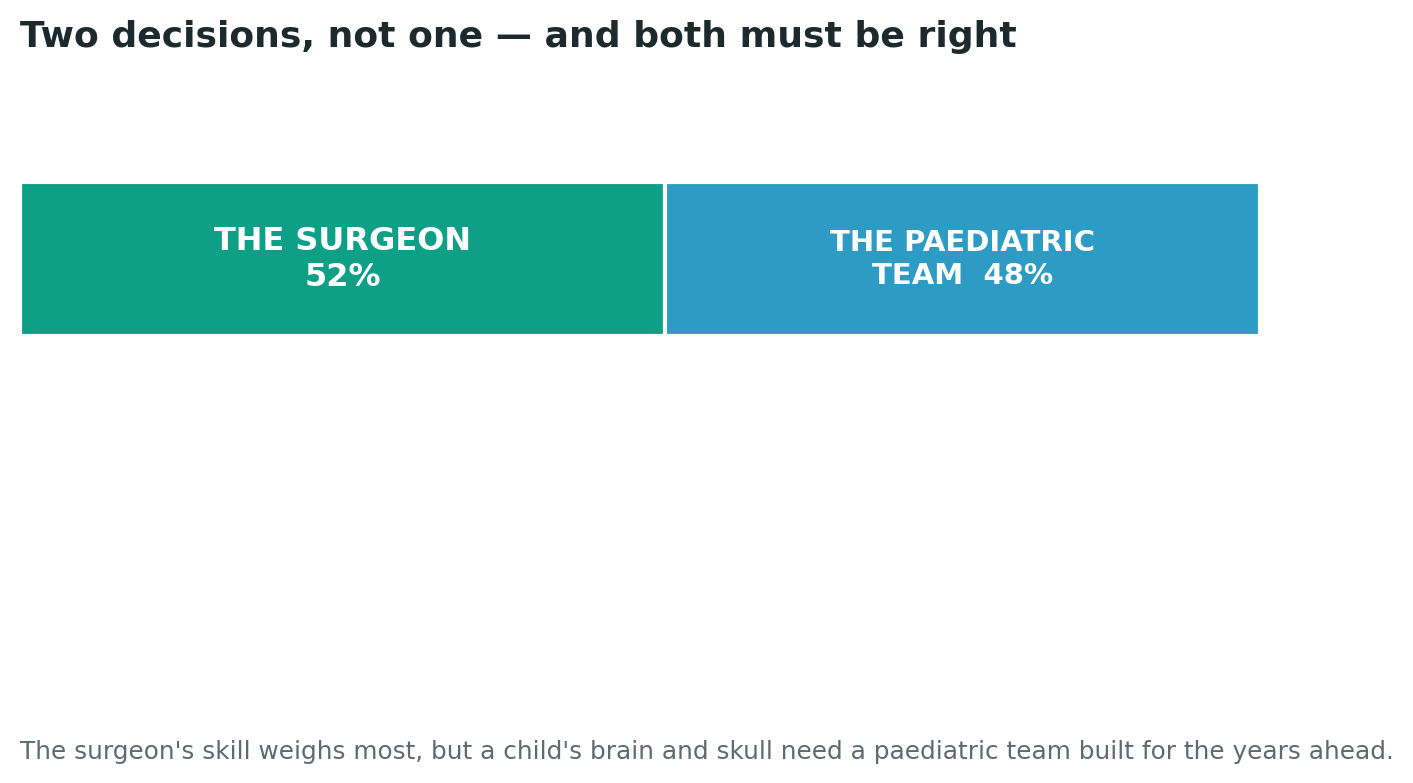
The surgeon’s skill weighs most, but a child’s brain and skull need a paediatric team built for the years ahead.
Part One: choosing the surgeon
1. Choose a genuine paediatric neurosurgeon. Seek a surgeon whose main practice is children’s neurosurgery, trained specifically in paediatric conditions, rather than an adult neurosurgeon occasionally treating children.
2. Ask his volume with your child’s exact condition. Whether hydrocephalus and shunts, spina bifida, craniosynostosis (early fusion of skull bones), or a paediatric brain or spinal tumour, experience with the specific condition predicts a better result. Ask how often he treats it.
3. Expect an honest explanation of what lies ahead. A good paediatric neurosurgeon explains not only the first operation, but what is realistically likely afterward — including the chance of a shunt revision — rather than presenting a single operation as the definite end of treatment.
4. Ask about timing, where it matters. Some conditions, such as craniosynostosis, are best corrected within a defined early window while the skull is still highly adaptable; others, like most shunt placements, are addressed as soon as safely possible after diagnosis. Ask plainly how time-sensitive your child’s condition is.
5. Ask about outcomes. A confident surgeon shares his complication and revision rates honestly for children like yours. Vague reassurance is not the same as a candid number.
6. Confirm he will operate on your child personally. Ask, and get it in writing, that the named surgeon you chose will perform the operation, not delegate it to a trainee.
7. Test his communication before you travel. The best paediatric neurosurgeons review imaging remotely, explain the plan in terms a parent can follow, and are candid about the years of care that may lie ahead.
How to read an Indian paediatric neurosurgeon’s qualifications
| Stage | Qualification | What it tells you |
|---|---|---|
| Basic medical degree | MBBS | A qualified doctor — the starting point, not a specialist. |
| Neurosurgical specialist | MCh (Neurosurgery) or DNB (Neurosurgery) | A fully trained brain and spine surgeon — a general qualification, not yet paediatric-specific. |
| Paediatric expertise | Fellowship in paediatric neurosurgery | Focused training specifically in children’s neurosurgery — what you want. |
You can confirm that a surgeon is properly registered on the National Medical Commission register of India (nmc.org.in). A genuine specialist will be glad to have you check.
Part Two: choosing the paediatric team and hospital
1. Insist on a paediatric neuro intensive-care unit. Recovery from children’s brain and spine surgery needs staff and equipment specifically built for children, not adapted from adult neuro-ICU care. Confirm it is genuinely paediatric.
2. Confirm paediatric neuro-anaesthesia expertise. Anaesthetising a young child for brain or spine surgery is a specialised skill. Ask whether the anaesthesia team focuses specifically on paediatric neurosurgical cases.
3. Ask how the team teaches you to recognise problems. Because shunt problems can arise at any time, including long after you return home, a good hospital gives you clear, written guidance on the warning signs — headache, vomiting, drowsiness, irritability, or a change in behaviour — and what to do if they appear.
4. Confirm a plan for long-term, growing-up follow-up. Ask how the hospital will coordinate ongoing monitoring with a doctor in Zambia between visits, and what happens if a revision is needed after you have returned home.
5. Check accreditation and infection control. The hospital should be accredited by India’s NABH, and ideally by JCI, with infection rates tracked and controlled — particularly important since shunt infections are a leading cause of revision.
6. Weigh international support and transparent pricing. A good centre helps with the visa invitation for both child and accompanying parent, and gives a written, itemised, fixed quote for the treatment.
7. Ask how it will support you after you fly home. A good hospital offers teleconsultation, a full written record of the exact device and procedure used, and clear guidance for a Zambian doctor to continue your child’s care.
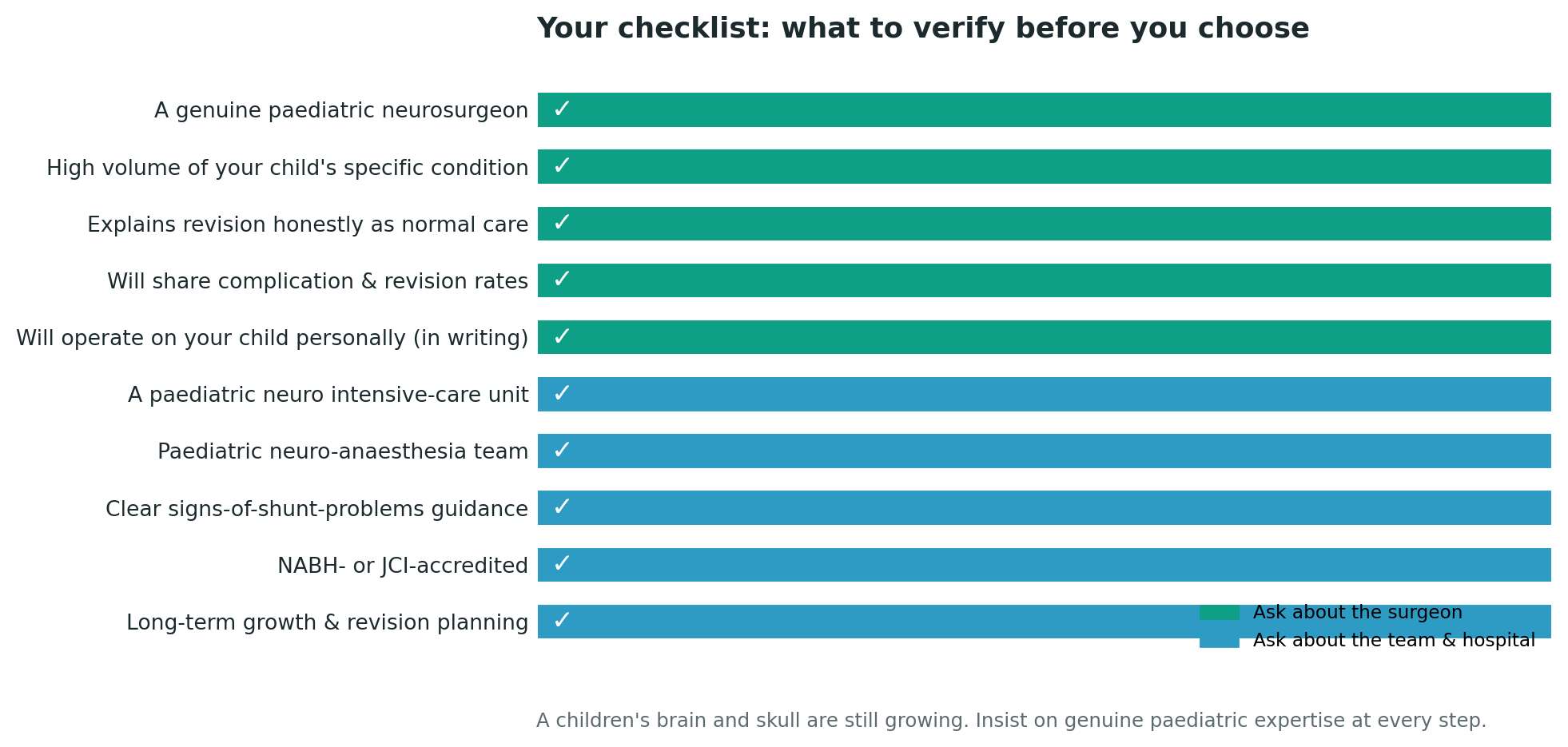
Keep this checklist beside you. A children's brain and skull are still growing — insist on genuine paediatric expertise at every step.
Cost and value: how to weigh the money honestly
Paediatric neurosurgery in a good Indian hospital costs a fraction of Western private pricing, which is why many families travel. At roughly ZK19 to the US dollar in mid-2026, the saving is large in kwacha; confirm the rate before travel, as it moves. But because a shunt revision is a real possibility, weigh the whole picture — not just the first operation’s price, but how straightforward and affordable follow-up care and any future revision will be, whether in India or coordinated with a doctor in Zambia.
In 24 years of arranging these journeys, I have learned that the families who cope best are not those who were promised a single, final operation, but those told honestly from the start what to expect, and taught exactly what warning signs mean they should seek help without delay. Insist on that honesty, and the full itemised picture, before you commit a single kwacha.
What a Zambian family should weigh in particular
Beyond the surgeon and the team, several things matter specifically for a family travelling from Zambia. First, learn the warning signs of a shunt problem before you leave India, and know exactly where to seek urgent help in Zambia if they appear, since a blocked or infected shunt can become serious quickly and should never be left to see if it settles on its own. Second, how you will pay : the National Health Insurance scheme funds care inside Zambia, not treatment abroad, so this comes from your own resources, and a shunt’s likely need for revision means planning financially for more than a single trip. Third, arrange ongoing local care : a Zambian paediatrician or, where available, a neurosurgical service, should be briefed with a clear written record from the Indian team so they can respond quickly if a problem arises between visits.
The practical journey from Zambia
India requires a yellow fever vaccination certificate from travellers arriving from Zambia, valid only ten days after the injection. The medical visa is issued by the High Commission of India on Pandit Nehru Road in Lusaka against the hospital’s invitation letter, with an attendant visa for the accompanying parent in the same batch. There is no direct flight — you will connect through Addis Ababa on Ethiopian Airlines, or through Dubai, Doha or Nairobi. Send your child’s imaging and any prior surgical records, not just a summary, for review before you travel, and settle the hospital by traceable bank transfer rather than cash.
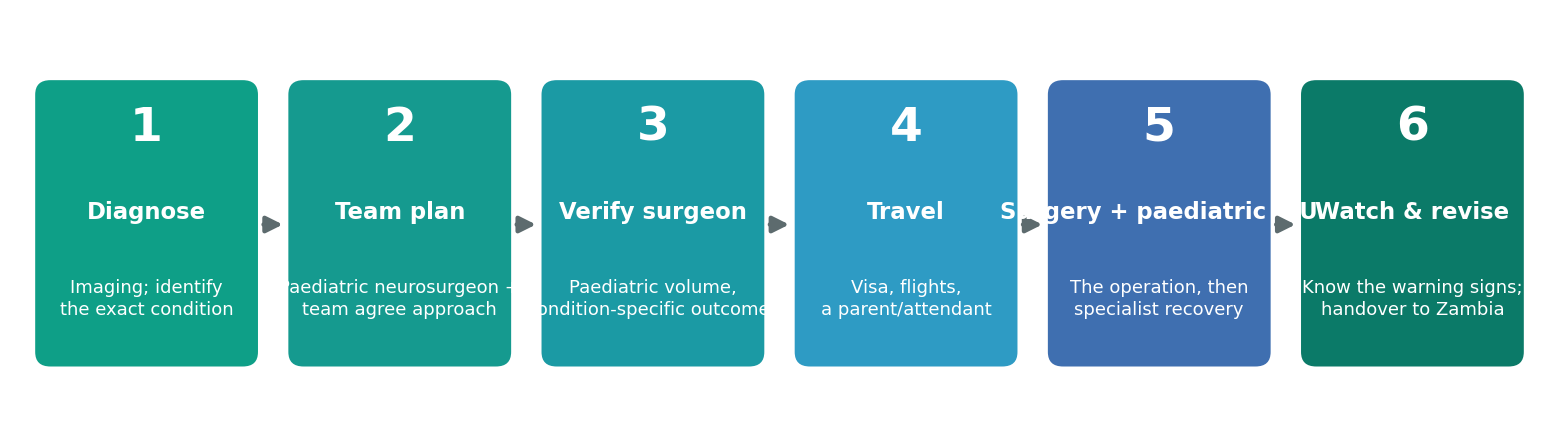
Four signals that should make you pause
- A promise of a guaranteed, final fix — a surgeon presenting a single operation without mentioning the real chance of future revision.
- No written warning-sign guidance — for a shunt problem, or what to do if they occur back in Zambia.
- No separate paediatric neuro-ICU — or no dedicated paediatric neuro-anaesthesia team.
- A single price with no revision plan — and no aftercare arrangement for Zambia.
Straight Answers for Zambians about Paediatric Neurosurgeons & Hospitals in India
My child needs a shunt for hydrocephalus. Will one operation be enough?
Often not, and that is normal. A meaningful share of children with shunts need at least one revision within the first few years, due to blockage, infection, or growth. This does not mean the first operation went wrong. Learn the warning signs of a problem, and know that revision is an expected part of care, not a failure.
Why does it matter that the surgeon is a paediatric specialist?
Because children's brains, skulls and nervous systems, and their response to surgery and anaesthesia, differ substantially from adults'. A surgeon whose main practice is adult neurosurgery does not have the same depth of paediatric-specific experience as one trained and focused on children.
What are the warning signs I should watch for after a shunt is placed?
Headache, vomiting, unusual drowsiness, irritability, or a noticeable change in behaviour can all signal a shunt problem. Ask your hospital for clear, written guidance before you leave, and seek medical help promptly in Zambia if any of these appear.
What matters most in the hospital I choose?
A genuinely separate paediatric neuro-intensive-care unit, a paediatric neuro-anaesthesia team, honest teaching about warning signs, and a clear plan for long-term follow-up and possible revision, coordinated with a doctor in Zambia.
Sources & Useful Links
- 🌐 Verify a surgeon (India) — National Medical Commission register of doctors: nmc.org.in
- 🌐 Hospital accreditation (India) — verify a hospital’s NABH accreditation: nabh.co
- 🌐 Medical visa (India), Lusaka — High Commission of India, requirements & process: hcizambia.gov.in/page/medical-visa
- 🌐 National Health Insurance (Zambia) — NHIMA cover (treatment abroad is not covered): nhima.co.zm
- 🌐 Ministry of Health, Zambia — referrals and national paediatric services: moh.gov.zm
- 🌐 Yellow fever & travel health — WHO vaccination guidance: who.int/health-topics/yellow-fever
A closing word
If you send me your child’s imaging and a note on their condition, I will help you with the questions that matter most: which surgeons are genuine paediatric neurosurgical specialists, not adult surgeons treating children occasionally; which hospitals have the paediatric intensive care and anaesthesia a child’s brain and skull need; and, above all, how to understand honestly what lies ahead — including the real chance of a shunt revision — so that if it happens, you recognise it for what it is: an expected part of your child’s care, not a crisis born of a mistake. That honest preparation is often the greatest gift I can offer a worried parent. That, for all these years, has been my work.
Frequently Asked Questions by Zambians about Paediatric Neurosurgeons & Hospitals in India
How should Zambian parents choose a paediatric neurosurgeon in India?
Parents should choose a surgeon whose main practice is children's neurosurgery and who has experience treating their child's exact condition. Fellowship training in paediatric neurosurgery is the focused additional expertise recommended by the guide.
Will one shunt operation permanently treat a child's hydrocephalus?
Not necessarily. The guide explains that a meaningful proportion of children require at least one revision within the first few years. Revision can occur because of blockage, infection or growth and does not automatically mean the original operation failed.
How common is shunt revision according to the guide?
The text cites published research suggesting roughly one-third to one-half of children may require at least one revision within the first few years, depending on the study. The page 2 infographic uses an illustrative figure of approximately 40%.
What warning signs of a shunt problem should parents know?
The guide highlights headache, vomiting, drowsiness, irritability and changes in behaviour. Parents should obtain clear written instructions about what to do and where to seek urgent care in Zambia if these signs occur.
What qualifications should an Indian paediatric neurosurgeon have?
The guide identifies MCh Neurosurgery or DNB Neurosurgery as specialist neurosurgical qualifications and recommends additional fellowship training specifically in paediatric neurosurgery.
What hospital facilities are important for paediatric neurosurgery?
A genuinely paediatric neuro-ICU and paediatric neuro-anaesthesia expertise are key requirements. The hospital should also have appropriate infection-control systems and recognised accreditation.
Why is infection control especially important for children with shunts?
Shunt infection is identified as an important cause of revision. The guide therefore recommends choosing a hospital that tracks and controls infection rates and teaches parents how to recognise possible problems.
What should parents send to India before travelling?
Parents should send their child's actual imaging and any previous surgical records, rather than only a written summary, so the paediatric neurosurgical team can review the case properly.
What follow-up should be arranged in Zambia?
A Zambian paediatrician or, where available, a neurosurgical service should receive a complete written record from the Indian team. Parents should also know where to obtain urgent help if symptoms of a shunt problem develop.
What are the main red flags when choosing paediatric neurosurgery in India?
The guide identifies four warning signs: a surgeon promising a guaranteed one-operation cure without discussing revision, no written guidance about shunt problems, no dedicated paediatric neuro-ICU or paediatric neuro-anaesthesia team, and a single treatment price without a plan for future revision or aftercare in Zambia.
Page Summary
This guide explains how Zambian parents should choose a paediatric neurosurgeon and hospital in India, with particular attention to hydrocephalus and long-term shunt care. Its central message is different from viewing neurosurgery as a single operation. For some children, especially those receiving a shunt for hydrocephalus, the initial operation can begin a relationship with neurosurgical care that continues for years.
Citation Block
| Topic | Information |
|---|---|
| Topic Information | Details |
| Procedure | Paediatric Neurosurgery / Children's Brain & Spine Surgery |
| Country | India |
| Intended Audience | Zambian Parents and Children |
| Primary Condition | Hydrocephalus |
| Conditions Covered | Hydrocephalus, Spina Bifida, Craniosynostosis, Paediatric Brain/Spinal Tumours and Head Injury |
| Primary Procedure Highlighted | Shunt Surgery |
| Long-Term Procedure Consideration | Shunt Revision |
| Shunt Revision Range Cited | Roughly One-Third to One-Half Within the First Few Years, Depending on Study |
| Illustrative Figure | Approximately 40% |
| Surgeon Qualification | MCh Neurosurgery or DNB Neurosurgery |
| Preferred Additional Training | Fellowship in Paediatric Neurosurgery |
| Surgeon vs Team Weighting | 52% Surgeon + 48% Paediatric Team |
| Hospital Accreditation | NABH and Ideally JCI |

Our Mission Statement
Our mission is to place patients at the centre of every healthcare decision by providing trustworthy, evidence-based, and unbiased medical information. We believe that informed patients make better decisions. Backed by personalised guidance from our experienced advisory team, we help patients understand their treatment options, compare them objectively, and confidently choose the path that best suits their medical needs and personal circumstances.
Patient Testimonials from Zambia
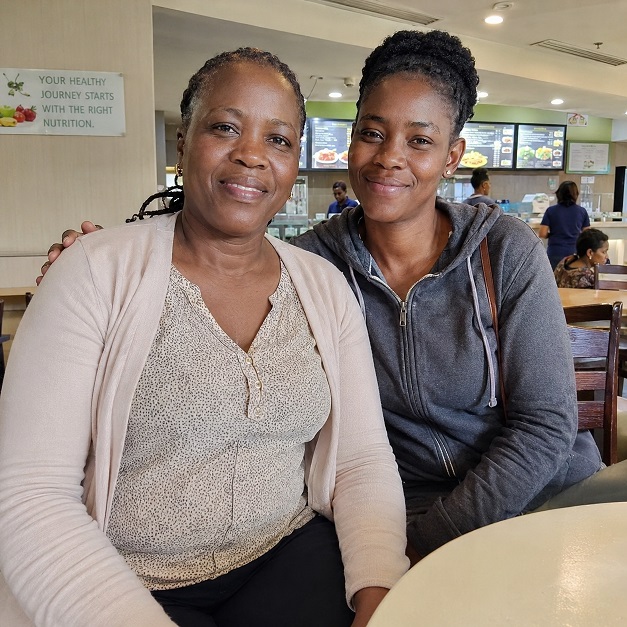
Ready to Take the First Step?
Share your Medical Reports with our Healthcare Managers Today and Get a FREE CONSULTATION, a Personalized Treatment Plan, and Complete Support from Arrival to Recovery.
Get Your Free ConsultationAreas We Serve
This resource has been thoughtfully prepared for patients from Zambia who are considering medical treatment in India. We also welcome patients from the wider region in the countries mentioned below-
We assist patients from:
- Zambia
- Angola
- Malawi
- Zimbabwe
- Botswana
- Namibia
- South Africa
- Eswatini
- Lesotho
- Gabon
- Chad
- Equatorial Guinea
- São Tomé and Príncipe
- Republic of the Congo
- Democratic Republic of the Congo
Many of the insights, treatment pathways, hospital recommendations, travel guidance, and patient support services described here are equally relevant and may be used as a reference when planning treatment in India.
From Zambia to India: Your Complete Patient Support Guide
- Best Weight-Loss (Bariatric) Surgeons & Hospitals in India for Zambian Patients
- Best Brain-Tumour Surgeons & Hospitals in India for Zambian Patients
- Best Cancer Doctors & Hospitals in India for Zambian Patients
- Best Cardiac Surgeons & Hospitals in India for Zambian Patients
- Best Cosmetic Surgeons & Facilities in India for Zambian Patients
- Best CyberKnife Treatment Teams & Centres in India for Zambian Patients
- Best Dentists & Dental Clinics in India for Zambian Patients
- Best Heart Valve Replacement Surgeons & Hospitals in India for Zambian Patients
- Best Hip Surgeons & Hospitals in India for Zambian Patients
- Best Knee Surgeons & Hospitals in India for Zambian Patients
- Best Neurosurgeons & Hospitals in India for Zambian Patients
- Best Paediatric Cardiac Surgeons & Hospitals in India for Zambian Patients
- Best Paediatric Neurosurgeons & Hospitals in India for Zambian Patients
- Best Prostate Surgeons & Hospitals in India for Zambian Patients
- Best Scoliosis Surgeons & Hospitals in India for Zambian Patients
- Best Spine Surgeons & Hospitals in India for Zambian Patients
- Best Bone Marrow Transplant Teams & Hospitals in India for Zambian Patients
- Best Kidney Transplant Surgeons & Hospitals in India for Zambian Patients