

Selecting the Best Neurosurgeons & Hospitals in India — a Zambian Patient’s Guide
Neurosurgery is not one operation but a whole family of very different ones. Two questions come before any choice: is it an emergency or can it wait, and which sub-specialist matches your exact condition?
People speak of “a neurosurgeon” as though it were a single thing, but neurosurgery is really many specialties under one name — the surgeon who clips a burst blood vessel deep in the brain is not the one who operates on epilepsy, or on a child’s spine. For 24 years I have helped African patients find their way through this, and I have learned that choosing well begins not with a name but with two questions: is your condition an emergency that cannot wait, or a planned one that leaves room to choose — and, if you can choose, which particular kind of neurosurgeon does your exact problem need? Answer those, and the rest of this guide falls into place.
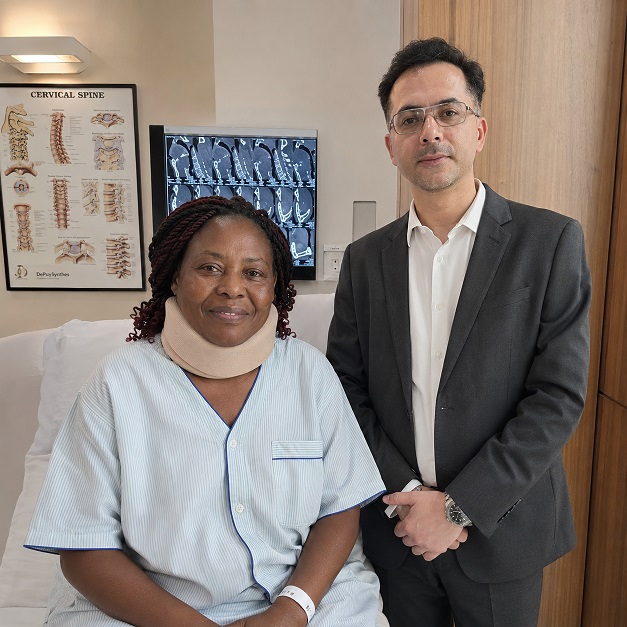
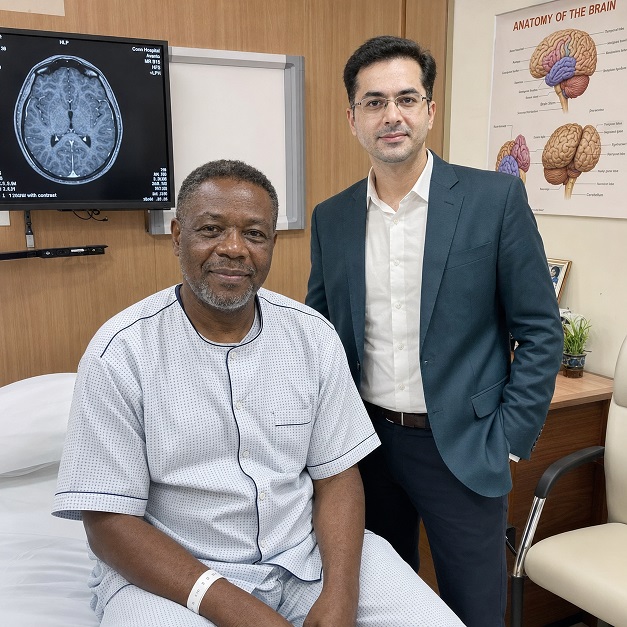
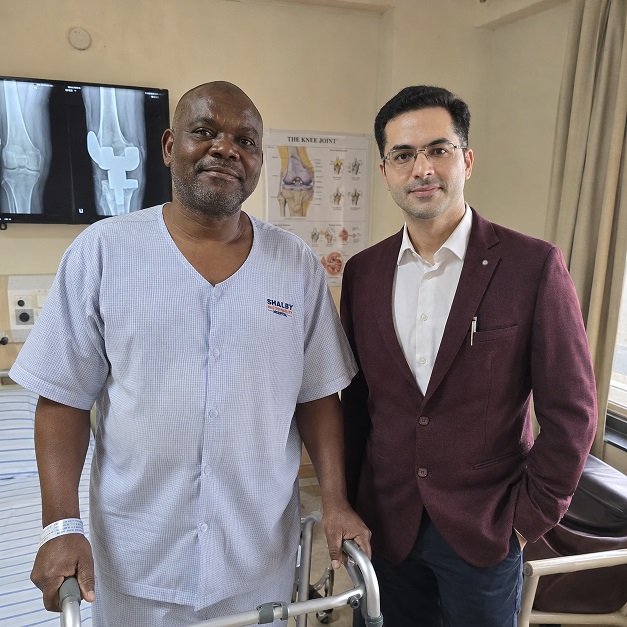
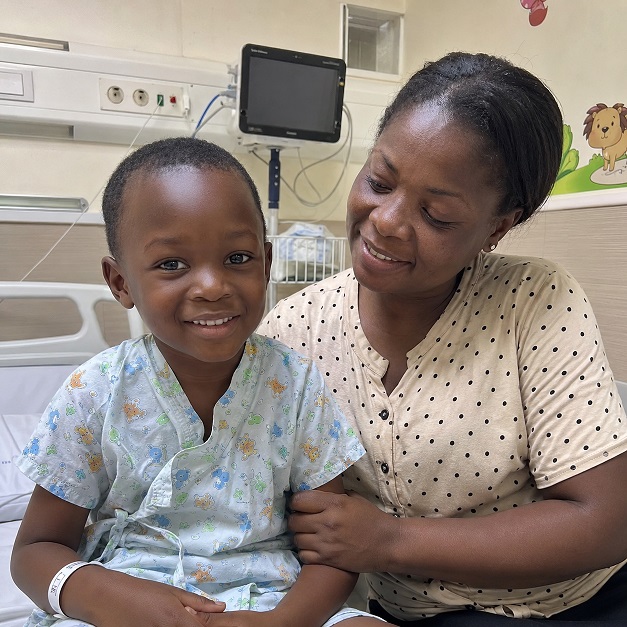
Healing Journeys of Zambian Patients

Key Takeaways
- The guide begins with a distinction that comes before choosing any surgeon or hospital: is the neurological condition an emergency, or is it planned care? This determines whether international travel should even be considered.
- A brain bleed after a head injury, sudden severe headache associated with a ruptured aneurysm, rapidly progressing spinal-cord compression or quickly worsening consciousness are described as neurosurgical emergencies requiring immediate local care.
- The guide explicitly states that patients with these emergencies should not delay treatment in order to travel abroad.
- By contrast, most brain tumours, unruptured aneurysms, many spine conditions and functional or epilepsy procedures are described as planned conditions in which there may be enough time to confirm the diagnosis, compare options and select a surgeon and hospital.
- The second major principle is that neurosurgery is not one specialty in practical terms. It includes several highly specialised areas, and the surgeon should be matched precisely to the patient's condition.
- Sub-specialties discussed include brain tumour surgery, vascular neurosurgery, spine surgery, functional neurosurgery, epilepsy surgery, skull-base surgery and paediatric neurosurgery.
- A patient with an aneurysm should therefore look for a surgeon with focused vascular/aneurysm experience, while a child requiring neurosurgery should be assessed by a paediatric neurosurgeon.
- The guide warns against assuming that general neurosurgical experience automatically translates into expertise with every neurological condition.
- Payment to the hospital is recommended by traceable bank transfer rather than cash.
- The four major warning signs identified by the guide are: being encouraged to travel despite a true neurosurgical emergency, choosing a surgeon who only occasionally treats the patient's specific problem, selecting a hospital without a dedicated neuro-ICU/round-the-clock cover/appropriate equipment, and accepting a single price without an itemised breakdown or Zambia aftercare plan.
Quick Facts
- Treatment
- Neurosurgery / Brain & Spine Surgery
- Country
- India
- Intended Audience
- Zambian Patients
- First Critical Question
- Emergency or Planned Neurosurgery?
- Emergency Treatment Principle
- Immediate Care at the Nearest Capable Hospital
- Travel for Neurosurgical Emergencies
- Not Recommended
- Emergency Conditions Mentioned
- Brain Bleeding After Head Injury, Ruptured Aneurysm, Rapid Spinal-Cord Compression and Rapidly Worsening Consciousness
- Planned Conditions Mentioned
- Most Brain Tumours, Unruptured Aneurysms, Many Spine Conditions and Functional/Epilepsy Surgery
- Main Selection Principle
- Match the Neurosurgical Sub-Specialist to the Exact Condition
- Neurosurgical Sub-Specialties Discussed
- Tumour, Vascular, Spine, Functional, Skull Base and Paediatric Neurosurgery
- Other Neurosurgical Area Discussed
- Epilepsy Surgery
- Surgeon vs Hospital Weighting
- 55% Surgeon + 45% Hospital
- Second Opinion
- Recommended for Planned Neurosurgery
- Surgeon Verification
- National Medical Commission Register
In Brief
Zambian patients considering neurosurgery in India should first establish whether their condition is an emergency or planned. Emergencies require immediate treatment at the nearest capable centre and should not be delayed for international travel. For planned neurosurgery, the most important selection principle is to match the surgeon's exact sub-specialty—such as tumour, vascular, spine, functional, skull-base or paediatric neurosurgery—to the patient's condition. The hospital should complement this expertise with a dedicated neuro-ICU, 24-hour specialist cover, MRI and CT imaging, appropriate procedure-specific technology, rehabilitation and a clear follow-up pathway in Zambia.
First, should you travel at all?
Zambia has very few neurosurgeons — a shortage shared across much of the region — so complex, planned neurosurgery is often referred abroad, and India is a leading destination. But travelling is only ever an option for planned care. A true neurosurgical emergency must be treated at the nearest capable hospital, without delay; there is no time to arrange a journey, and attempting one can cost a life. The first thing to establish, therefore, is which of the two you face.
What “neurosurgery” covers
It helps to see the breadth, because it explains why matching the right surgeon matters so much. Neurosurgery spans the removal of brain tumours ; the treatment of blood-vessel problems such as aneurysms and malformations; spine surgery for slipped discs, narrowing and deformity; functional surgery for epilepsy and movement disorders; trauma after head and spine injuries; the relief of hydrocephalus (fluid on the brain); and a distinct field of paediatric neurosurgery for children. These are genuinely different crafts, each with its own techniques and its own experts. Knowing which one your problem belongs to is the first step to finding the right surgeon for it.
The first question: emergency, or planned?
This distinction shapes everything. A bleed on the brain after a head injury, a sudden thunderclap headache from a ruptured aneurysm, a spinal cord being rapidly crushed, a fast decline in consciousness — these are emergencies , and they are treated wherever help is nearest and fastest, not wherever is best on paper. Travelling abroad is not an option for them. By contrast, most brain tumours, an aneurysm found before it bursts, many spine conditions, and functional or epilepsy surgery are planned — there is time to establish the diagnosis, weigh the options, choose the right surgeon and hospital, and travel. This guide is about choosing well for planned neurosurgery; if your situation is an emergency, the right action is immediate local care.
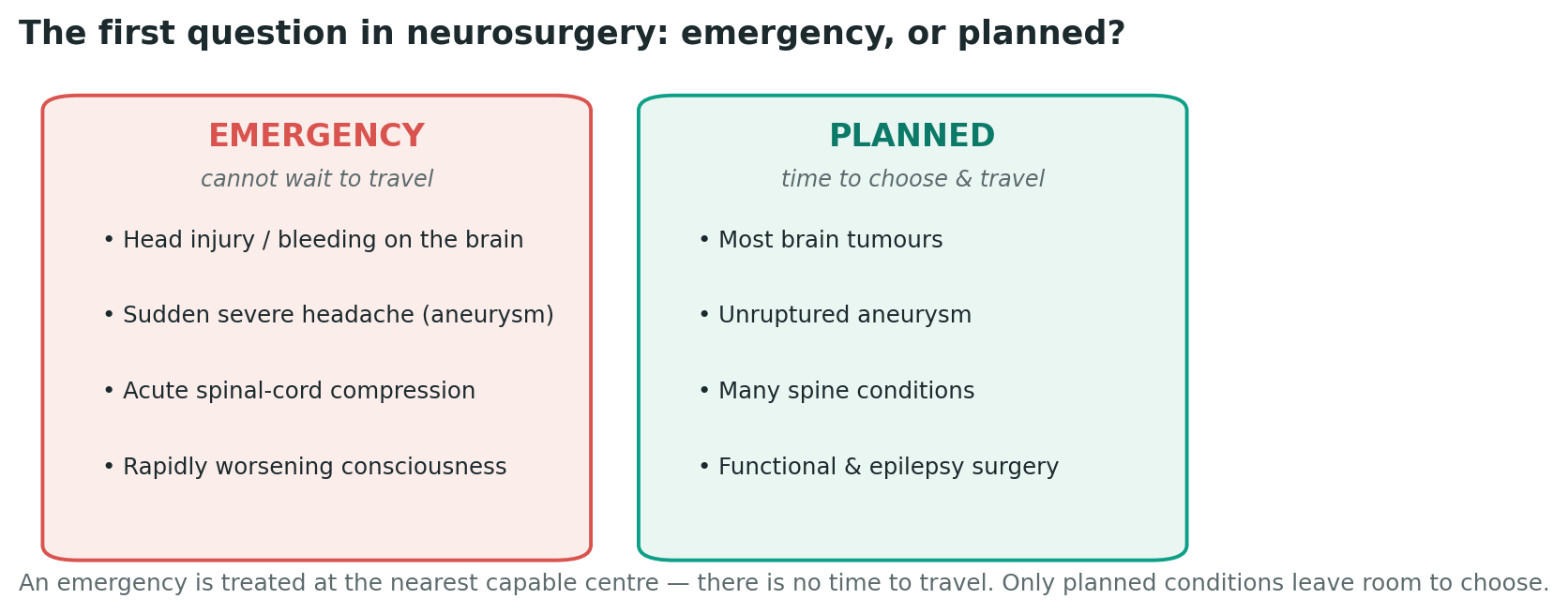
The dividing line that comes before every other decision: an emergency is treated at the nearest capable centre, while only planned conditions leave room to choose and travel.
The second question: match the sub-specialist to your exact condition
Once you know your care is planned, understand this: neurosurgery is a family of distinct crafts, and experience in one does not mean expertise in another. There are neurosurgeons who focus on tumours , on blood vessels (aneurysms and malformations), on the spine , on functional problems such as epilepsy and movement disorders, on the skull base , and on children . The single most valuable thing you can do is match the surgeon’s sub-specialty precisely to your condition — a high-volume aneurysm surgeon for an aneurysm, a paediatric neurosurgeon for a child. A generalist who occasionally treats your problem is not the equal of a specialist who treats it every week.
Two decisions, not one
Beyond matching the sub-specialist, you are making two choices: the surgeon and the hospital . Both must be right. Neurosurgery depends utterly on the hospital around the surgeon — its neuro-intensive care, its imaging, its specialised equipment — because even the finest operation can be undone by poor recovery care. The surgeon’s skill weighs most, but the hospital decides whether that skill is safely delivered.
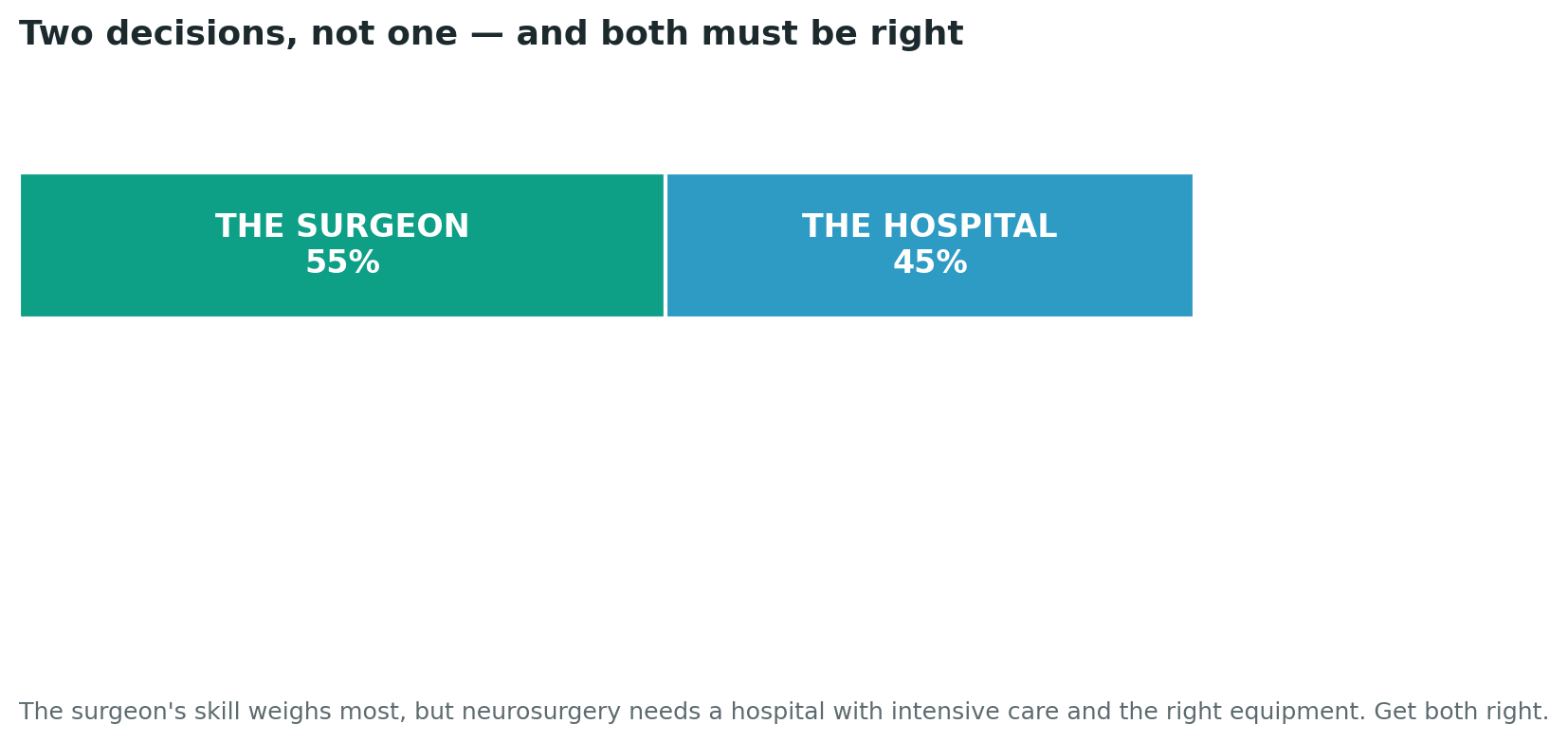
The surgeon weighs most, but neurosurgery leans heavily on the hospital’s intensive care and equipment — both must be right.
Part One: choosing the surgeon
1. Match the sub-specialty to your condition. As above, this is the most important criterion of all. Ask directly whether the surgeon sub-specialises in your exact problem, and how much of his practice it makes up.
2. Ask his volume with your specific operation. Experience with the particular procedure you need — not neurosurgery in general — is what predicts a good result. Ask how many of your operation he performs each year, and favour high numbers.
3. Confirm he uses modern techniques. Depending on your case, that may mean neuronavigation, intra-operative monitoring, the operating microscope, or minimally invasive and endovascular approaches. Ask what he uses and why.
4. Expect honesty about whether — and how much — to operate. A trustworthy neurosurgeon will tell you plainly if an operation is not needed, or if a smaller one will do, and will discuss the real risks to the brain or nerves as readily as the benefits.
5. Ask about his outcomes. A confident surgeon knows and shares his complication rates for operations like yours. Vague reassurance is not the same as a candid number.
6. Confirm he will operate on you personally. Ask, and get it in writing, that the named surgeon you chose will perform your operation, not delegate it to a trainee.
7. Test his communication before you travel. The best surgeons review your scans and history remotely, answer clearly, and welcome your questions and any wish for a second opinion.
How to read an Indian neurosurgeon’s qualifications
| Stage | Qualification | What it tells you |
|---|---|---|
| Basic medical degree | MBBS | A qualified doctor — the starting point, not a specialist. |
| Neurosurgical specialist | MCh (Neurosurgery) or DNB (Neurosurgery) | A fully trained brain and spine surgeon — the essential qualification. |
| Sub-specialty expertise | Fellowship in vascular, tumour, spine, functional or paediatric neurosurgery | Focused training in your exact kind of problem — what you want. |
You can confirm that a surgeon is properly registered on the National Medical Commission register of India (nmc.org.in). A genuine specialist will be glad to have you check.
Part Two: choosing the hospital
1. Insist on accreditation. The hospital should be accredited by India’s NABH , and ideally internationally by JCI — your assurance that theatres, anaesthesia and emergency care meet a proper standard.
2. Insist on a dedicated neuro intensive-care unit. This is the safeguard that matters most in neurosurgery. Recovery from brain and spine surgery needs a specialised neuro-ICU with staff who watch the nervous system closely in the critical hours afterward. Confirm it is on site.
3. Check for round-the-clock cover and imaging. A serious neurosurgical centre has neurosurgeons and anaesthetists available at all hours and high-quality MRI and CT on site — so that if something changes after your operation, help and imaging are immediate.
4. Confirm the right equipment for your case. Different conditions need different tools: a vascular case may need an angiography or hybrid theatre; a tumour or functional case, neuronavigation and monitoring. Ask whether the hospital has what your operation specifically requires.
5. Ask about infection control and rehabilitation. The hospital should track its infection rates, and provide the physiotherapy and rehabilitation that recovery from neurosurgery often needs, with a plan to continue at home.
6. Weigh international support and transparent pricing. A good centre helps with the visa invitation, accommodation and a coordinator, and gives a written, itemised, fixed quote stating what is included and what happens if there is a complication.
7. Ask how it will support you after you fly home. A good hospital offers teleconsultation for follow-up, provides a full written record of what was done, and will liaise with your doctor in Zambia if a query arises later.
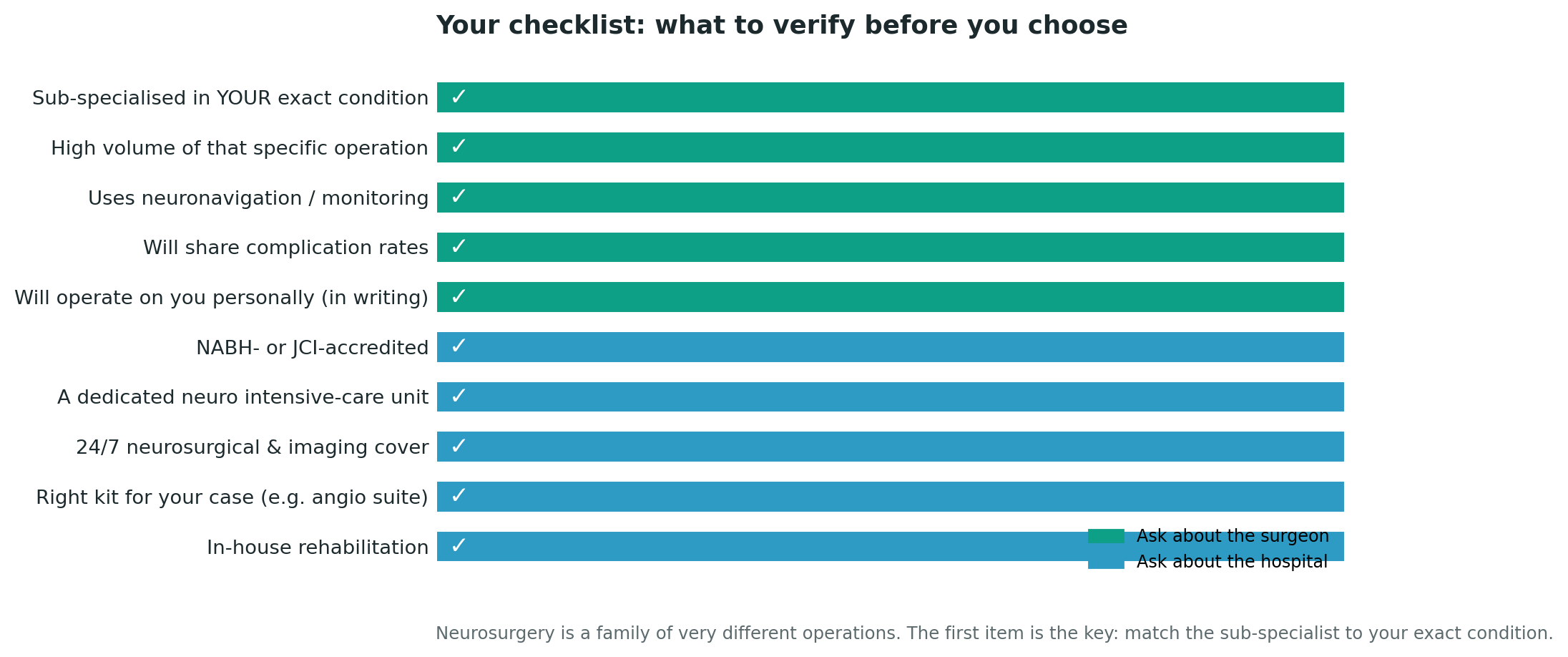
Keep this checklist beside you. Neurosurgery is a family of very different operations — the first item is the key: match the sub-specialist to your exact condition.
Cost and value: how to weigh the money honestly
Planned neurosurgery in a good Indian hospital costs a fraction of Western private pricing, which is why many patients travel. At roughly ZK19 to the US dollar in mid-2026, the saving is large in kwacha; confirm the rate before travel, as it moves. But value is not the lowest price. A dearer quote from a surgeon truly sub-specialised in your condition, at a hospital with a real neuro-ICU, is far better value than a cheaper one without them — because in neurosurgery, the cost of a complication is measured not only in money but in the brain and the nerves.
In 24 years of arranging these journeys, I have learned that the disputes that arise almost never concern the headline price — they concern whether the surgeon was truly the right specialist and what the quote left out. Insist on the full, itemised picture, and on evidence that the surgeon and hospital match your exact condition, before you commit a single kwacha. The right question is never simply “how much?” but “is this the right specialist, in the right hospital, for my particular problem?”
What a Zambian patient should weigh in particular
Beyond the surgeon and the hospital, several things matter specifically for a patient travelling from Zambia. First, the emergency question : never attempt to travel with a neurosurgical emergency — seek the nearest capable care at once, and reserve travel for planned conditions. Second, the diagnosis : settle it clearly before planning surgery, disclose your full history including HIV and any tuberculosis, since both can affect the brain and spine, and send your actual scans for review. Third, how you will pay and your aftercare : the National Health Insurance scheme funds care inside Zambia, not treatment abroad, so this comes from your own resources; and because neurosurgical recovery can be long, arrange a Zambian doctor and, where needed, rehabilitation to take over before you travel, with a written handover from the Indian team.
The practical journey from Zambia
India requires a yellow fever vaccination certificate from travellers arriving from Zambia, valid only ten days after the injection. Your medical visa is issued by the High Commission of India on Pandit Nehru Road in Lusaka against the hospital’s invitation letter; apply for a medical-attendant visa in the same batch, as you will want someone with you. There is no direct flight — you will connect through Addis Ababa on Ethiopian Airlines, or through Dubai, Doha or Nairobi. Send your actual MRI and CT files, not only the reports, for review before you travel, and settle the hospital by traceable bank transfer rather than cash.
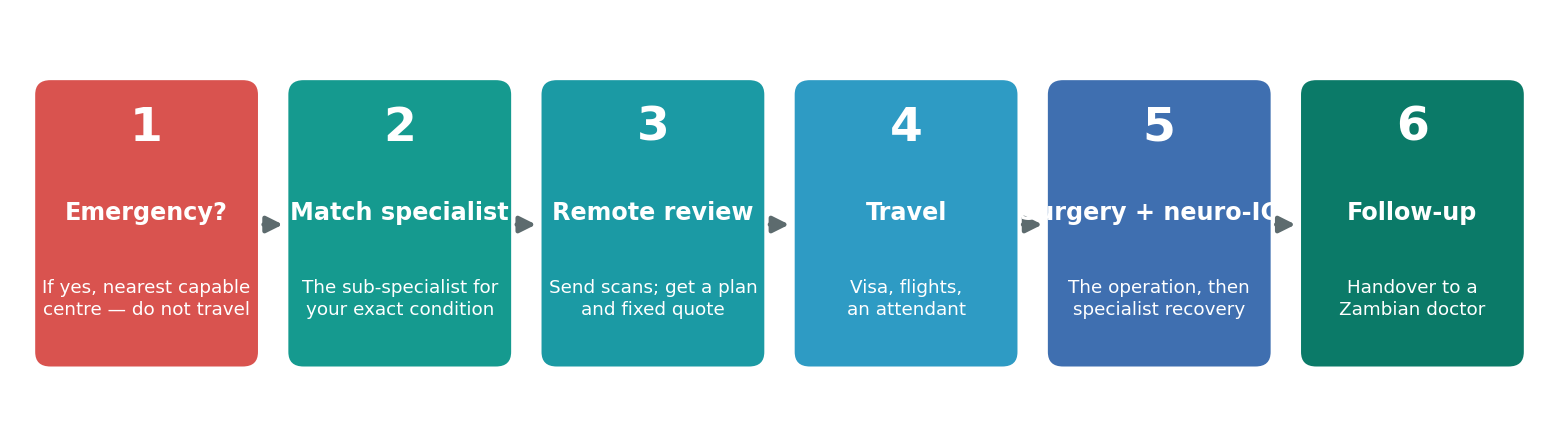
Four signals that should make you pause
- Advice to travel for a true emergency — a condition that is in fact an emergency needing immediate local care.
- Only occasional experience — a surgeon who treats your particular problem only occasionally, not as a focused sub-specialty.
- No dedicated neuro-ICU — no round-the-clock cover, or the specific equipment your case needs.
- A single price with no breakdown — no clarity on complications, and no aftercare plan for Zambia.
Straight Answers for Zambians about Neurosurgeons & Hospitals in India
How do I know if my condition is an emergency or can wait?
Sudden severe headache, bleeding on the brain after injury, rapid loss of consciousness, or a spinal cord being quickly compressed are emergencies needing immediate local care — never travel with these. Most tumours, unruptured aneurysms and many spine and functional conditions are planned, leaving time to choose and travel. A doctor can tell you which you face.
Does it matter which kind of neurosurgeon I choose?
Greatly. Neurosurgery divides into sub-specialties — tumour, vascular, spine, functional, paediatric — and a surgeon expert in one may seldom treat another. Match the sub-specialist precisely to your condition, and favour one who performs your exact operation frequently.
What is the most important thing about the hospital?
A dedicated neuro intensive-care unit, round-the-clock neurosurgical and imaging cover, and the specific equipment your operation needs. Even a superb operation depends on specialised recovery care in the hours and days that follow.
Should I seek a second opinion?
Yes, especially for planned neurosurgery. A trustworthy surgeon welcomes it, will tell you honestly whether surgery is truly needed, and will not resent your wish to be sure before something as serious as brain or spine surgery.
Sources & Useful Links
- 🌐 Verify a surgeon (India) — National Medical Commission register of doctors: nmc.org.in
- 🌐 Hospital accreditation (India) — verify a hospital’s NABH accreditation: nabh.co
- 🌐 Medical visa (India), Lusaka — High Commission of India, requirements & process: hcizambia.gov.in/page/medical-visa
- 🌐 National Health Insurance (Zambia) — NHIMA cover (treatment abroad is not covered): nhima.co.zm
- 🌐 Ministry of Health, Zambia — referrals and national services: moh.gov.zm
- 🌐 Yellow fever & travel health — WHO vaccination guidance: who.int/health-topics/yellow-fever
A closing word
If you send me your scans and a note on your history, I will help you with the questions that come first in neurosurgery: whether your condition is an emergency needing immediate local care or a planned one that leaves room to choose; and, if you can choose, which sub-specialised neurosurgeon and which properly equipped hospital match your exact problem. Neurosurgery is among the most demanding of all fields, and the greatest mistake is to treat it as one thing when it is many. Matching the right specialist and the right hospital to your particular condition is where the outcome is won — and where I can help you most. That, for all these years, has been my work.
Frequently Asked Questions by Zambians about Neurosurgeons & Hospitals in India
How can a Zambian patient know whether neurosurgery can wait for travel?
The guide separates emergencies from planned conditions. Sudden brain bleeding, a ruptured aneurysm, rapidly worsening consciousness or acute spinal-cord compression require immediate local treatment and should not be delayed for travel.
Does the type of neurosurgeon matter?
Yes. Neurosurgery contains distinct sub-specialties including tumour, vascular, spine, functional, skull-base and paediatric neurosurgery. The guide recommends matching the surgeon's focused expertise directly to the patient's condition.
What qualifications should an Indian neurosurgeon have?
The guide identifies MCh Neurosurgery or DNB Neurosurgery as the essential specialist qualification after the basic MBBS degree. A fellowship relevant to the patient's specific condition is preferred.
What should patients ask about the surgeon's experience?
Patients should ask how frequently the surgeon performs their exact operation, rather than asking only how many years they have practised neurosurgery. Procedure-specific experience is the focus of the guide.
What is the most important hospital facility for neurosurgery?
A dedicated neuro intensive-care unit is identified as the most important hospital-level safeguard, supported by round-the-clock neurosurgical care and immediate access to appropriate imaging.
What technology should a neurosurgery hospital have?
It depends on the condition. The guide mentions neuronavigation, intra-operative monitoring, an operating microscope, MRI and CT, and angiography or hybrid-theatre facilities for appropriate vascular cases.
Should a Zambian patient seek a second opinion before neurosurgery?
Yes, particularly for planned surgery. The guide states that a trustworthy surgeon should welcome a second opinion and honestly discuss whether surgery is genuinely necessary.
What records should patients send to India before travelling?
Patients should send their actual MRI and CT files, not only the written reports, together with their medical history. The guide specifically advises disclosing HIV and tuberculosis where relevant.
What follow-up should be arranged after returning to Zambia?
A Zambian doctor and, where required, rehabilitation should be organised before travel. The Indian hospital should provide a complete written handover and offer follow-up support such as teleconsultation.
What are the main red flags when selecting neurosurgery in India?
The four red flags are being encouraged to travel with a true emergency, choosing a surgeon who only occasionally treats the specific condition, selecting a hospital without a dedicated neuro-ICU/24-hour support/required equipment, and accepting a non-itemised price without a complication or Zambia aftercare plan.
Page Summary
This guide explains how Zambian patients should choose a neurosurgeon and hospital in India. Unlike procedures that can be evaluated primarily by surgeon volume or hospital reputation, neurosurgery begins with two more fundamental questions: is the condition an emergency or planned, and which neurosurgical sub-specialist matches the exact problem?
Citation Block
| Topic | Information |
|---|---|
| Topic Information | Details |
| Procedure | Neurosurgery / Brain & Spine Surgery |
| Country | India |
| Intended Audience | Zambian Patients |
| Primary Decision | Emergency vs Planned Neurosurgery |
| Conditions Covered | Brain Tumours, Aneurysms/Malformations, Spine Conditions, Epilepsy/Functional Disorders, Hydrocephalus, Trauma and Paediatric Conditions |
| Sub-Specialties | Tumour, Vascular, Spine, Functional, Skull Base and Paediatric Neurosurgery |
| Surgeon Qualification | MCh Neurosurgery or DNB Neurosurgery |
| Preferred Additional Training | Condition-Specific Neurosurgical Fellowship |
| Surgeon vs Hospital Weighting | 55% Surgeon + 45% Hospital |
| Hospital Accreditation | NABH and Ideally JCI |
| Critical Hospital Facility | Dedicated Neuro-ICU |
| Imaging | On-Site MRI and CT |
| Specialised Technology | Neuronavigation, Intra-Operative Monitoring, Operating Microscope, Endovascular/Minimally Invasive Facilities as Appropriate |

Our Mission Statement
Our mission is to place patients at the centre of every healthcare decision by providing trustworthy, evidence-based, and unbiased medical information. We believe that informed patients make better decisions. Backed by personalised guidance from our experienced advisory team, we help patients understand their treatment options, compare them objectively, and confidently choose the path that best suits their medical needs and personal circumstances.
Patient Testimonials from Zambia
Ready to Take the First Step?
Share your Medical Reports with our Healthcare Managers Today and Get a FREE CONSULTATION, a Personalized Treatment Plan, and Complete Support from Arrival to Recovery.
Get Your Free ConsultationAreas We Serve
This resource has been thoughtfully prepared for patients from Zambia who are considering medical treatment in India. We also welcome patients from the wider region in the countries mentioned below-
We assist patients from:
- Zambia
- Angola
- Malawi
- Zimbabwe
- Botswana
- Namibia
- South Africa
- Eswatini
- Lesotho
- Gabon
- Chad
- Equatorial Guinea
- São Tomé and Príncipe
- Republic of the Congo
- Democratic Republic of the Congo
Many of the insights, treatment pathways, hospital recommendations, travel guidance, and patient support services described here are equally relevant and may be used as a reference when planning treatment in India.
From Zambia to India: Your Complete Patient Support Guide
- Best Weight-Loss (Bariatric) Surgeons & Hospitals in India for Zambian Patients
- Best Brain-Tumour Surgeons & Hospitals in India for Zambian Patients
- Best Cancer Doctors & Hospitals in India for Zambian Patients
- Best Cardiac Surgeons & Hospitals in India for Zambian Patients
- Best Cosmetic Surgeons & Facilities in India for Zambian Patients
- Best CyberKnife Treatment Teams & Centres in India for Zambian Patients
- Best Dentists & Dental Clinics in India for Zambian Patients
- Best Heart Valve Replacement Surgeons & Hospitals in India for Zambian Patients
- Best Hip Surgeons & Hospitals in India for Zambian Patients
- Best Knee Surgeons & Hospitals in India for Zambian Patients
- Best Neurosurgeons & Hospitals in India for Zambian Patients
- Best Paediatric Cardiac Surgeons & Hospitals in India for Zambian Patients
- Best Paediatric Neurosurgeons & Hospitals in India for Zambian Patients
- Best Prostate Surgeons & Hospitals in India for Zambian Patients
- Best Scoliosis Surgeons & Hospitals in India for Zambian Patients
- Best Spine Surgeons & Hospitals in India for Zambian Patients
- Best Bone Marrow Transplant Teams & Hospitals in India for Zambian Patients
- Best Kidney Transplant Surgeons & Hospitals in India for Zambian Patients