

Selecting the Best Spine Surgeons & Hospitals in India — a Zambian Patient’s Guide
Spine surgery turns on judgement more than any operation in medicine — and the first, most important question is often whether you need it at all. This guide sets out how a Zambian patient should choose.
f all the surgery I help people navigate, none rewards care in choosing more than the spine. A good spine operation, Odone for the right reason, can free a person from years of pain or save a threatened limb; a wrong one, done for a reason that was never sound, can leave a person worse than before. For 24 years I have watched both outcomes, and I have learned that the most important skill a spine surgeon has is not in his hands but in his judgement — the wisdom to know when not to operate as surely as when to. So this guide is unusual. Before it helps you choose a surgeon and a hospital, it asks you to make sure you need surgery at all.
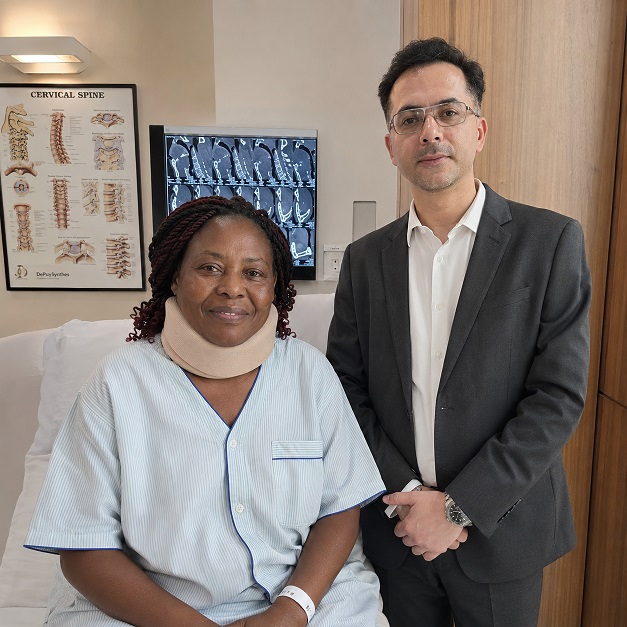
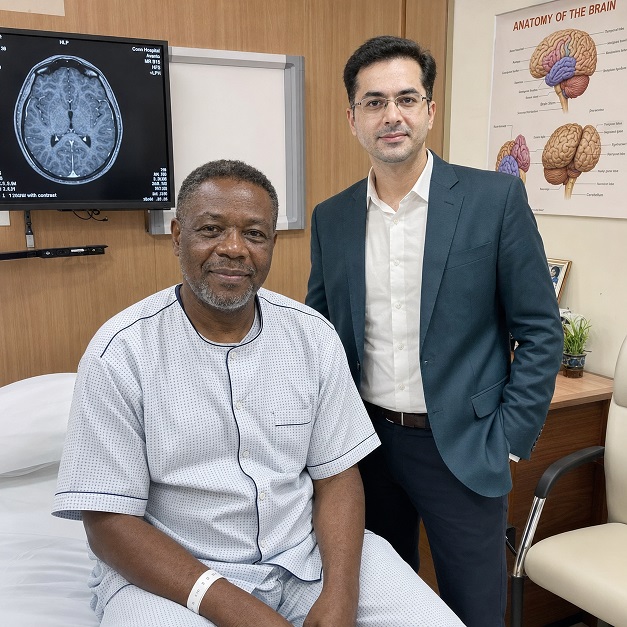
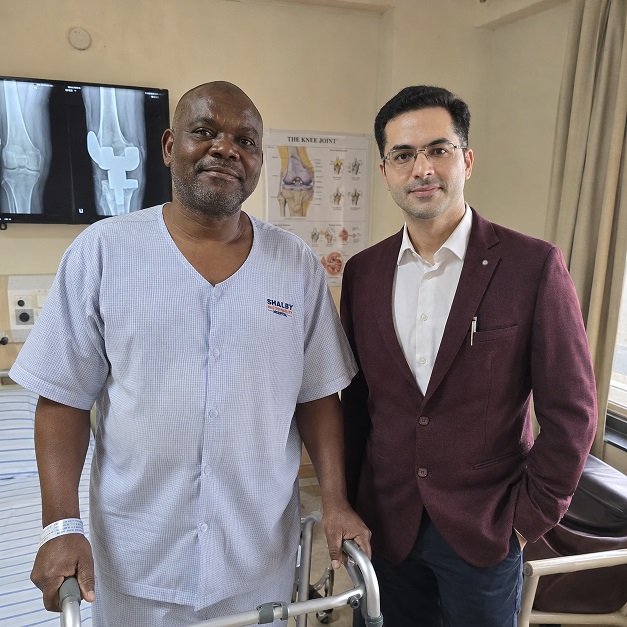
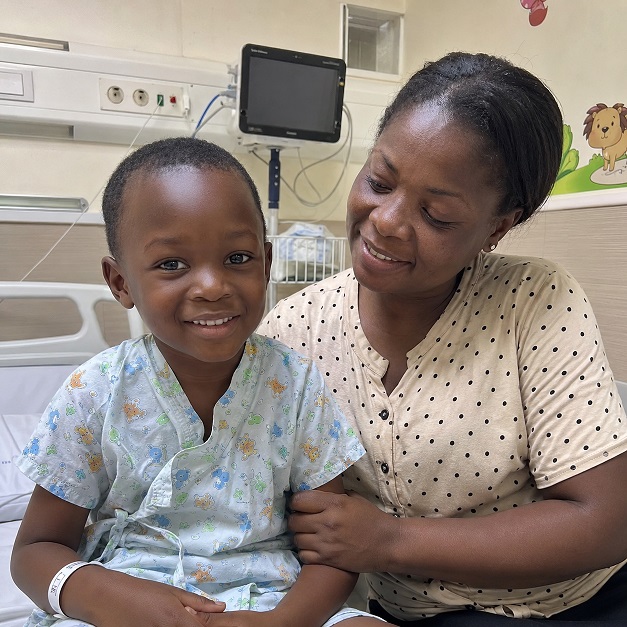
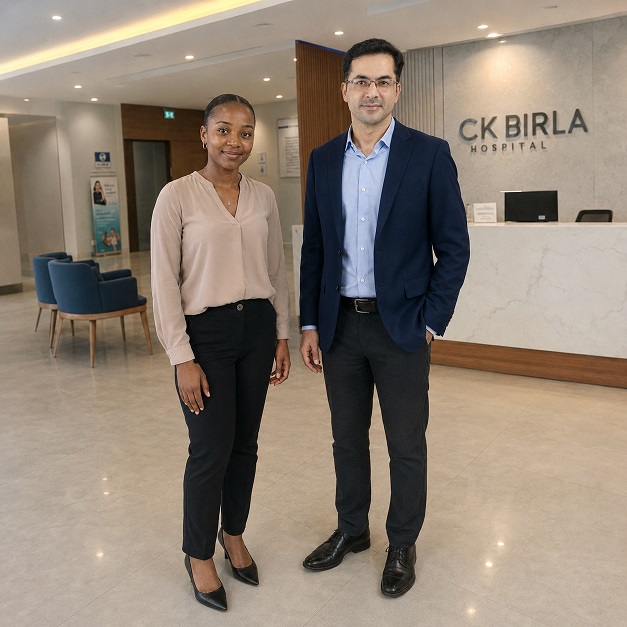
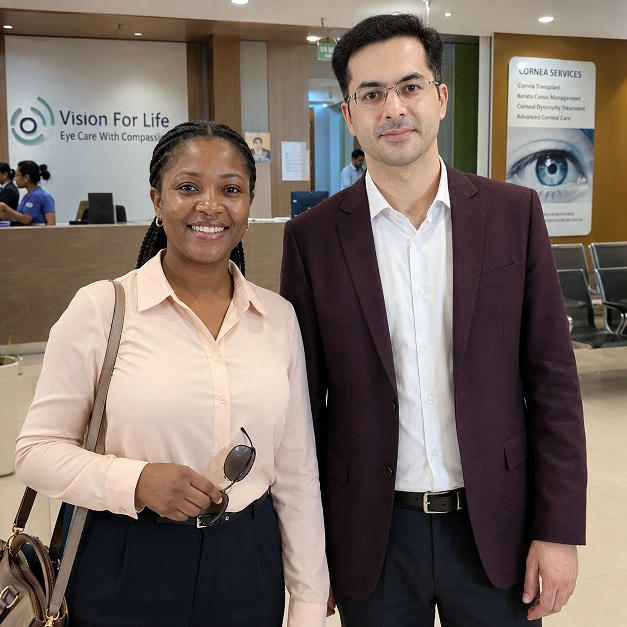
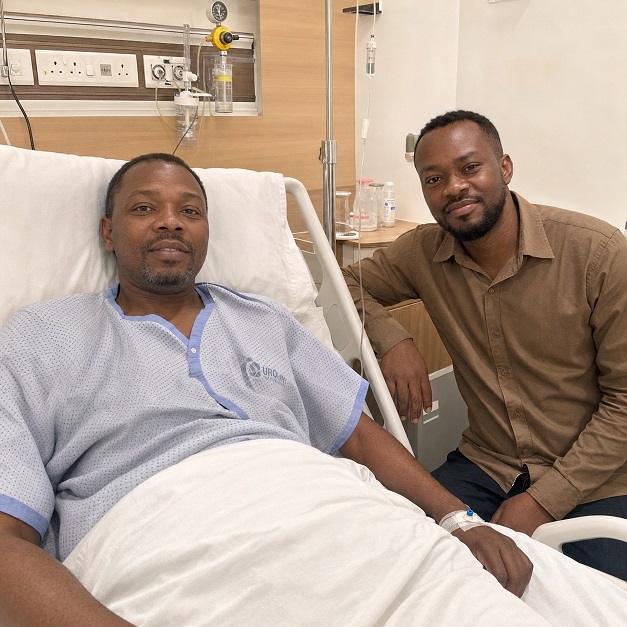
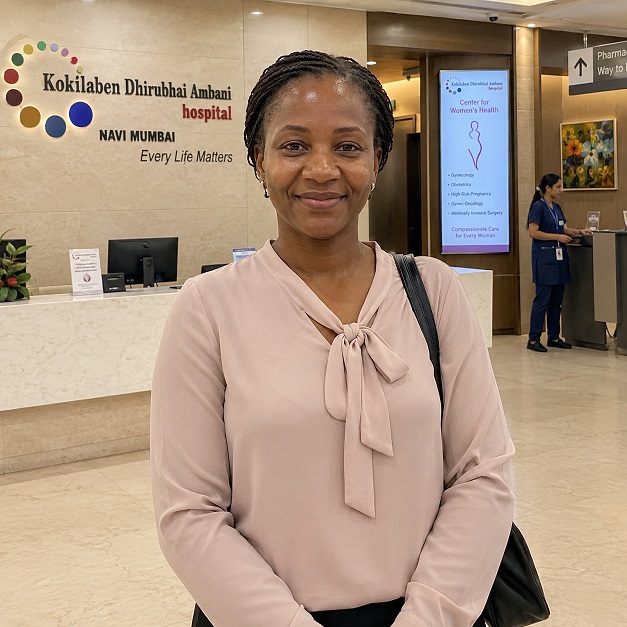
Healing Journeys of Zambian Patients

Key Takeaways
- The guide's most important message is that the first question is not which spine surgeon to choose, but whether surgery is genuinely needed at all. Many back and neck problems may improve with time, physiotherapy and appropriate pain management rather than an operation.
- The document places unusual emphasis on surgical judgement. It argues that an unnecessary operation performed technically well can still leave a patient worse off.
- For that reason, the guide strongly recommends obtaining an independent second opinion before agreeing to spine surgery, ideally from a specialist who is not financially dependent on performing the operation.
- A trustworthy spine surgeon should be willing to tell a patient when surgery is unnecessary and should consider conservative treatment before recommending a major operation.
- A Zambia-specific issue is tuberculosis of the spine, or Pott's disease. The guide notes that not every spinal disorder is purely mechanical and that spinal tuberculosis may initially require anti-TB medication rather than surgery.
- Accurate diagnosis should therefore come before any surgical plan, particularly when symptoms or imaging could reflect infection rather than ordinary degenerative spine disease.
- Once surgery is genuinely necessary, the document separates the decision into surgeon selection and hospital selection.
Quick Facts
- Treatment
- Spine Surgery / Spinal Treatment
- Country
- India
- Intended Audience
- Zambian Patients
- First Critical Question
- Is Spine Surgery Genuinely Necessary?
- Primary Treatment Principle
- Obtain an Independent Second Opinion Before Surgery
- Non-Surgical Options Mentioned
- Time, Physiotherapy and Appropriate Pain Management
- Key Surgeon Quality
- Willingness to Say Surgery May Not Be Required
- Preferred Surgical Principle
- Use the Smallest Operation That Adequately Treats the Problem
- Large Fusion
- Should Have a Clear Reason Why a Smaller Procedure Will Not Work
- Important Surgeon Outcomes
- Complication and Revision Rates
- Surgeon Confirmation
- Named Surgeon Should Personally Perform the Operation
- Second Opinion
- Strongly Recommended
- Surgeon Verification
- National Medical Commission Register
- Hospital Accreditation
- NABH and Ideally JCI
In Brief
Zambian patients considering spine surgery in India should first establish whether surgery is genuinely necessary and obtain an independent second opinion before committing to an operation. The guide recommends choosing a dedicated spine specialist from either an orthopaedic or neurosurgical background who has fellowship training, experience with the patient's exact condition and a willingness to recommend the smallest effective operation. Hospital selection should include intra-operative nerve monitoring, appropriate intensive care, MRI and CT imaging, infection control and structured rehabilitation. Spinal tuberculosis should also be excluded where relevant before assuming a mechanical spine problem requires surgery.
First, should you travel — and should you have surgery?
Zambia has orthopaedic and neurosurgical services, centred on the University Teaching Hospital in Lusaka and other referral hospitals, and some spine problems are handled at home. But specialist spine surgery — and the equipment that makes it safe — is limited, so complex cases are often referred abroad, and India is a leading destination. Yet before you think about travelling, settle the prior question: do you truly need an operation? Many back and neck problems improve with time, physiotherapy and proper pain care, and surgery is the right answer for only some. Travelling is the second decision; needing surgery is the first.
The most important knowledge in this guide: make sure you need it
Spine surgery is among the most over-performed operations in the world, and the reason is uncomfortable but simple: it is lucrative, and the same scan can be read as a reason to operate or a reason to wait. Large, complex spinal fusions are sometimes done where a smaller operation, or none at all, would have served the patient better. This is the single greatest risk you face — not a clumsy surgeon, but an unnecessary operation skilfully performed. Protect yourself with one rule above all others: get an independent second opinion before agreeing to spine surgery, ideally from a surgeon who will not profit from operating on you. A great spine surgeon is distinguished precisely by his willingness to tell you that you do not need him.
There is a further point that matters especially in Zambia. Not every spinal problem is mechanical. In a country with a high tuberculosis burden, some spine disease is caused by tuberculosis of the spine (Pott’s disease), which is treated first and foremost with anti-TB medicines, not primarily with the knife. Getting the diagnosis right — before anyone reaches for surgery — is therefore part of choosing well.
Two decisions, not one
Once surgery is genuinely needed, you are making two separate choices: the surgeon and the hospital . Both must be right. In spine work the surgeon’s judgement carries even more weight than in joint replacement, because so much depends on choosing the right operation and performing it near the delicate nerves and spinal cord. But the hospital around him — its monitoring, its intensive care, its infection control — decides whether that skill is safely delivered. Weigh them together, and compromise on neither.
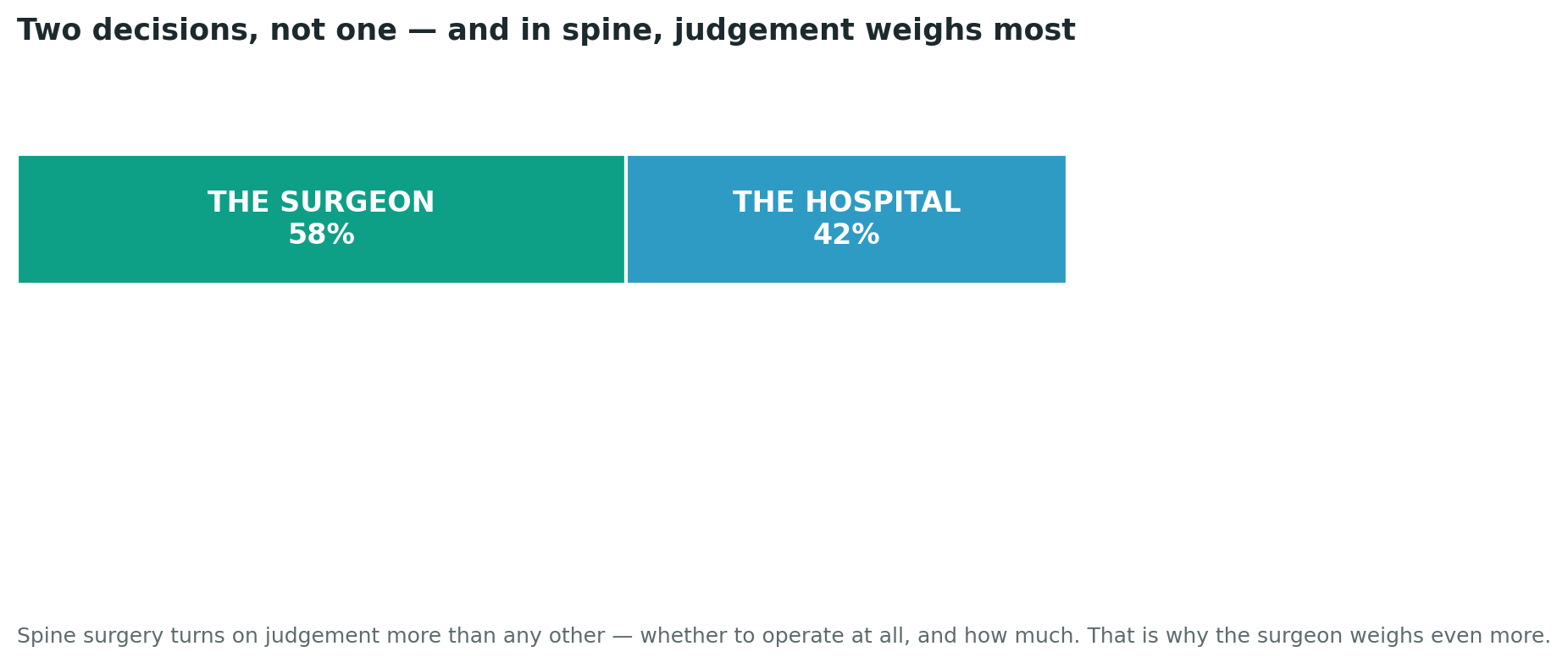
Spine surgery turns on judgement more than any other, so the surgeon weighs even more heavily — but the hospital’s safeguards still decide whether that skill is safely delivered.
Part One: choosing the surgeon
1. Choose a dedicated spine specialist. Spine surgery is performed by two kinds of specialist — orthopaedic surgeons who have sub-specialised in the spine, and neurosurgeons — and either can be excellent. What matters is that the surgeon devotes his practice to the spine and has done a dedicated spine fellowship , rather than treating spines occasionally alongside other work.
2. Above all, is he willing to say you may not need surgery? This is the most important quality of all. A trustworthy spine surgeon will consider non-surgical care first, will not rush you, and will plainly tell you if an operation is not warranted. Be deeply wary of any surgeon who recommends major surgery quickly, before conservative options have been tried or a second opinion sought.
3. Does he recommend the smallest operation that will work? Where surgery is needed, good spine surgeons favour the least that solves the problem — a targeted decompression, say, rather than a sweeping fusion — because bigger operations carry bigger risks. If a large fusion is proposed, ask exactly why a smaller procedure will not do.
4. Ask about his experience with your specific problem. The spine covers a vast range, from a slipped disc to scoliosis to a spinal tumour. Ask how often he performs the particular operation you are considering, and favour a surgeon who does it frequently — volume and focus improve results here as everywhere.
5. Ask about his outcomes. A confident, honest surgeon knows his own complication rate and revision rate and will share them. You are entitled to ask how often his patients are helped, how often harmed, and how often they need further surgery.
6. Confirm he will operate on you personally. Ask, and get it in writing, that the named surgeon you chose will perform your operation, not delegate it to a trainee.
7. Test his communication, and welcome of a second opinion. The best surgeons review your scans and history remotely, answer questions clearly, discuss risks as readily as benefits, and welcome — rather than resent — your wish for an independent view. How he responds to that request tells you a great deal.
How to read an Indian spine surgeon’s qualifications
| Stage | Qualification | What it tells you |
|---|---|---|
| Basic medical degree | MBBS | A qualified doctor — the starting point, not a specialist. |
| Surgical specialist | MS / DNB (Orthopaedics), or MCh / DNB (Neurosurgery) | A trained orthopaedic or neurological surgeon — both routes lead to spine work. |
| Spine expertise | Fellowship in spine surgery | Sub-specialist training focused on the spine — what you want. |
You can confirm that a surgeon is properly registered on the National Medical Commission register of India (nmc.org.in). A genuine specialist will be glad to have you check.
Part Two: choosing the hospital
1. Insist on accreditation. The hospital should be accredited by India’s NABH , and ideally internationally by JCI — your assurance that theatres, anaesthesia, sterilisation and emergency care meet a proper standard.
2. Confirm intra-operative nerve monitoring. This is the spine-specific safeguard that matters most. During spine surgery, continuous monitoring of the nerves and spinal cord warns the surgeon instantly if a nerve is at risk, helping prevent paralysis and lasting nerve damage. Ask directly whether the hospital uses intra-operative neuromonitoring — a serious spine centre will.
3. Check the intensive care and imaging. Spine surgery needs a proper neuro or surgical intensive-care unit for recovery, and high-quality imaging — MRI and CT — both to plan the operation and to check it afterwards. Confirm both are on site.
4. Ask about infection control. An infection around the spine or an implant is a serious complication. Ask what the hospital’s surgical-infection rate is and how it keeps it low; serious hospitals track this and will tell you.
5. Check the physiotherapy and rehabilitation. Recovery from spine surgery is earned in careful rehabilitation. Confirm strong in-house physiotherapy, and a clear programme to continue at home in Zambia.
6. Weigh international support and transparent pricing. A good centre helps with the visa invitation, accommodation and a coordinator, and — because spine costs vary so widely by procedure — gives a written, itemised, fixed quote stating exactly what is included and what happens if there is a complication.
7. Ask how it will support you after you fly home. A good hospital offers teleconsultation for follow-up, provides a full written record of what was done, and will liaise with your doctor in Zambia if a query arises later.
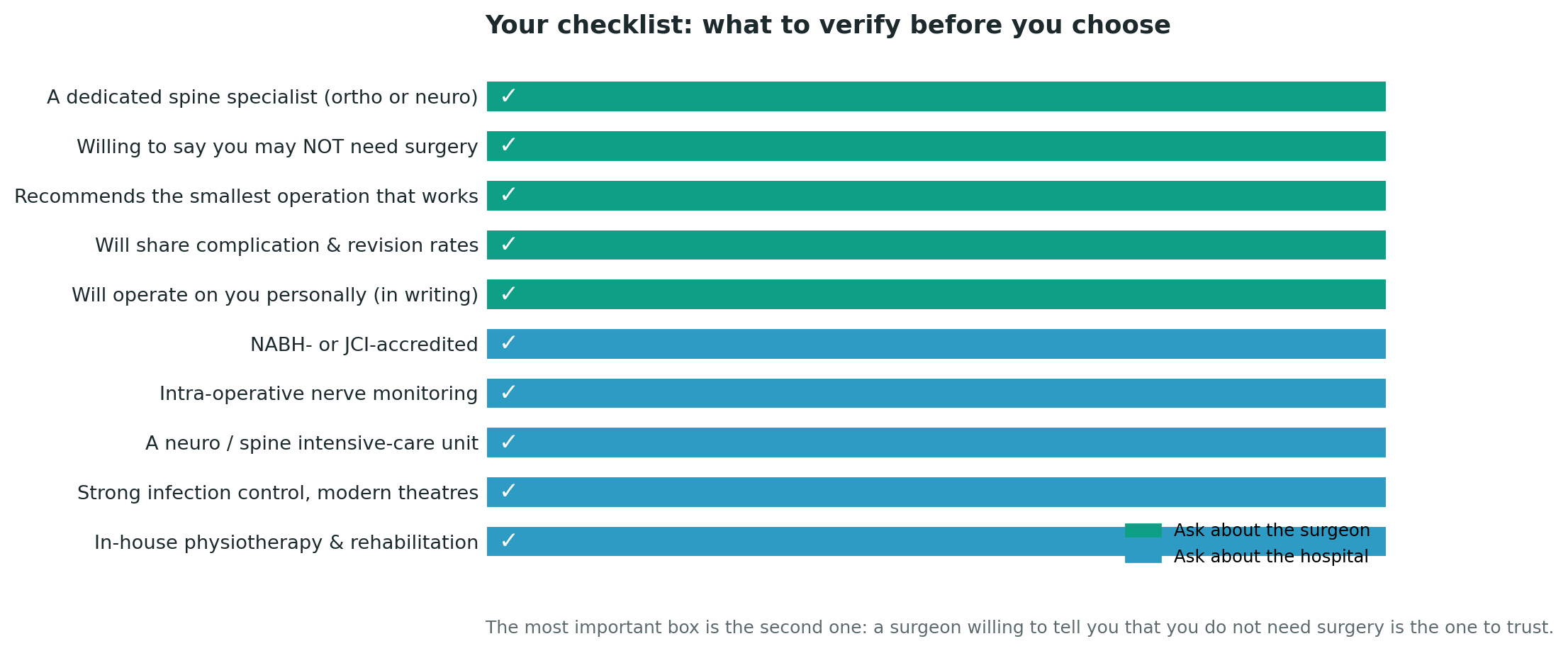
Keep this checklist beside you. The most important box is the second — a surgeon willing to tell you that you do not need surgery is the one to trust.
Cost and value: how to weigh the money honestly
Spine surgery in a good Indian hospital costs a fraction of Western private pricing, which is why many patients travel. At roughly ZK19 to the US dollar in mid-2026, the saving is large in kwacha; confirm the rate before travel, as it moves. But here, more than anywhere, the cheapest path is not the safest, and the dearest is not the best. The real saving in spine surgery often comes from having the right operation — frequently a smaller one — rather than the biggest, because an unnecessary fusion is both the most expensive option and the most harmful.
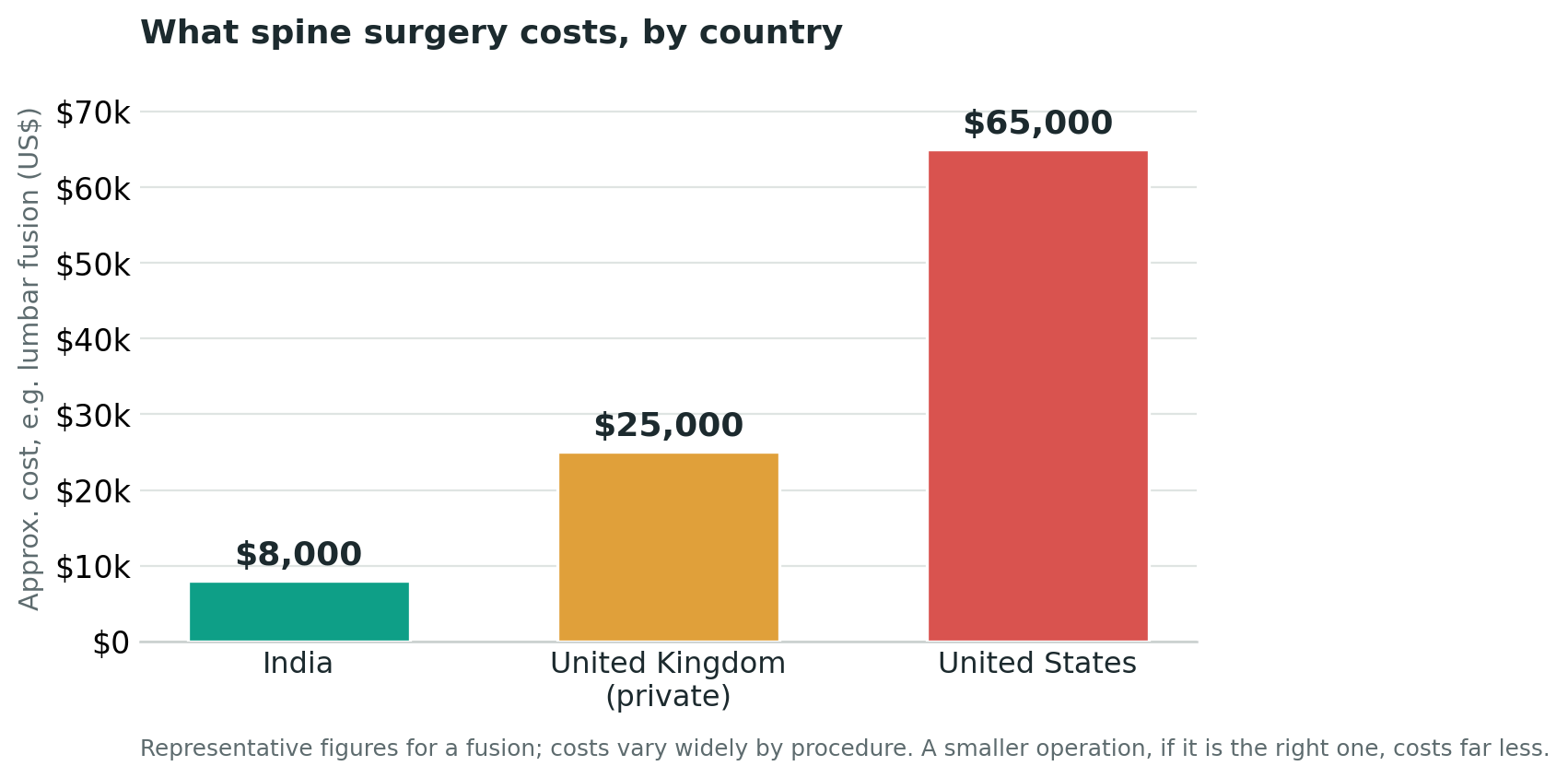
Representative figures for a fusion; costs vary widely by procedure. If a smaller operation is the right one, it costs far less — another reason to be sure of the plan.
In 24 years of arranging these journeys, I have learned that the disputes that arise almost never concern the headline price — they concern whether the operation was the right one, and what the quote left out. Insist on the full, itemised picture, and on a clear reason for the particular operation proposed, before you commit a single kwacha.
What a Zambian patient should weigh in particular
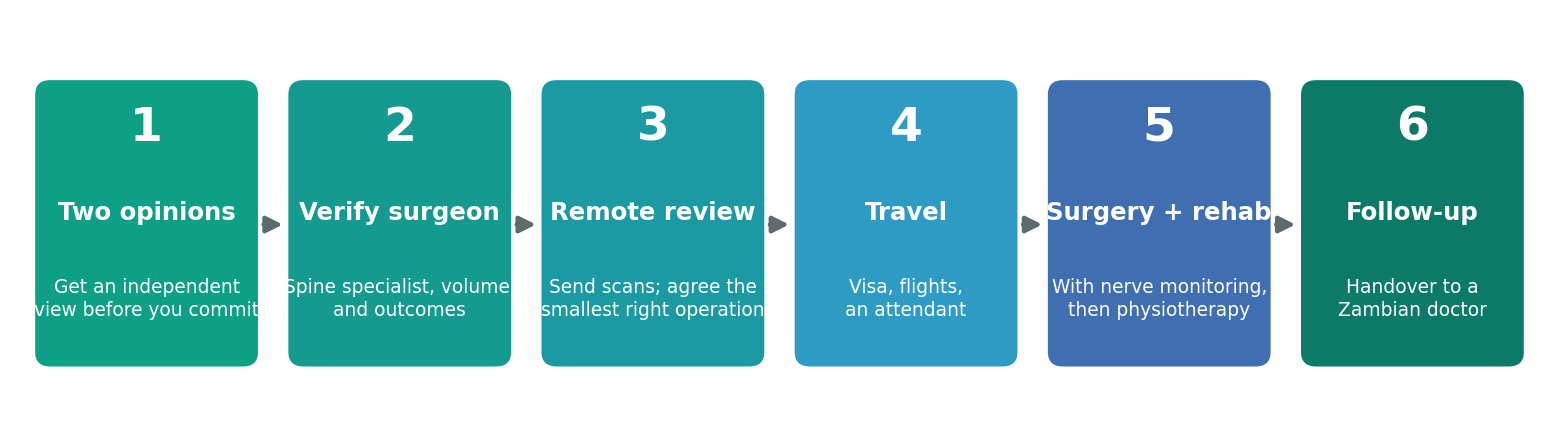
Beyond the surgeon and the hospital, several things matter specifically for a patient travelling from Zambia. First, how you will pay : the National Health Insurance scheme funds care at accredited facilities inside Zambia, not elective surgery abroad, so this comes from your own resources — which makes value, and above all the right operation, all the more important. Second, the right diagnosis : because tuberculosis of the spine and other conditions can mimic mechanical problems, insist that the diagnosis is settled before surgery is planned, and disclose your full history, including HIV and any TB, so nothing is missed. Third, your aftercare at home : arrange a Zambian doctor and a physiotherapist to take over your recovery before you travel, and insist the Indian team writes a clear handover and rehabilitation plan.
The practical journey from Zambia
India requires a yellow fever vaccination certificate from travellers arriving from Zambia, valid only ten days after the injection. Your medical visa is issued by the High Commission of India on Pandit Nehru Road in Lusaka against the hospital’s invitation letter; apply for a medical-attendant visa in the same batch, as you will want someone with you after surgery. There is no direct flight — you will connect through Addis Ababa on Ethiopian Airlines, or through Dubai, Doha or Nairobi. Send your actual MRI and CT files, not only the reports, for review before you travel, book a changeable return ticket to allow for recovery, and settle the hospital by traceable bank transfer rather than cash.
Four signals that should make you pause
- Major surgery recommended too quickly — before conservative care or a second opinion, or resenting your seeking one.
- A large fusion with no clear reason — why a smaller operation will not do.
- No intra-operative nerve monitoring — no proper intensive care, or no current NABH or JCI accreditation.
- A single price with no breakdown — no clarity on complications, and no aftercare plan for Zambia.
Straight Answers for Zambians about Spine Surgeons & Hospitals in India
How do I know whether I really need spine surgery?
Get an independent second opinion before agreeing, ideally from a surgeon who will not operate on you. Many back and neck problems improve without surgery, and the right operation is often a small one. A trustworthy surgeon considers non- surgical care first and will tell you plainly if surgery is not warranted.
Should my spine surgeon be an orthopaedic surgeon or a neurosurgeon?
Either can be excellent. What matters is that the surgeon sub-specialises in the spine, has done a spine fellowship, and performs your particular operation frequently — not which of the two training routes he came through.
What is intra-operative nerve monitoring, and why does it matter?
It is continuous monitoring of your nerves and spinal cord during surgery, warning the surgeon instantly if a nerve is at risk. It helps prevent paralysis and lasting nerve damage, and a serious spine hospital will have it. Confirm it is used before you choose.
Could my spine problem be something other than a mechanical one?
Yes. In Zambia, tuberculosis of the spine is one important cause, and it is treated mainly with medicines rather than surgery. This is why settling the diagnosis first — before anyone plans an operation — is an essential part of choosing well.
Sources & Useful Links
- 🌐 Verify a surgeon (India) — National Medical Commission register of doctors: nmc.org.in
- 🌐 Hospital accreditation (India) — verify a hospital’s NABH accreditation: nabh.co
- 🌐 Medical visa (India), Lusaka — High Commission of India, requirements & process: hcizambia.gov.in/page/medical-visa
- 🌐 National Health Insurance (Zambia) — NHIMA cover (elective surgery abroad is not covered): nhima.co.zm
- 🌐 Ministry of Health, Zambia — referrals and national services: moh.gov.zm
- 🌐 Yellow fever & travel health — WHO vaccination guidance: who.int/health-topics/yellow-fever
A closing word
If you send me your scans and a note on your history, I will help you with the questions that matter most in spine surgery: first, whether you truly need an operation at all, and whether the diagnosis is settled; then, if you do, which surgeons are genuine spine specialists who favour the smallest operation that works, which hospitals have the monitoring and intensive care to make it safe, and what a fair, complete quote looks like. In no other field is a second opinion worth more, and in none is the willingness of a surgeon to say “you do not need me” a surer sign of the one to trust. That, for all these years, has been my work.
Frequently Asked Questions by Zambians about Spine Surgeons & Hospitals in India
How should Zambian patients decide whether they need spine surgery in India?
The guide recommends first determining whether surgery is genuinely necessary. Many back and neck conditions can improve with physiotherapy, time or appropriate pain management, so an independent second opinion is strongly advised.
Why is a second opinion particularly important before spine surgery?
The guide stresses that different surgeons may interpret the same scan differently. A second opinion can help determine whether surgery is necessary and whether a smaller procedure could achieve the same result.
Can an orthopaedic surgeon or neurosurgeon perform spine surgery?
Yes. The guide states that excellent spine surgeons may come from either orthopaedic or neurosurgical training. Focused spine fellowship training and procedure-specific experience matter more than the original specialty.
Why should patients ask whether a smaller operation is possible?
Larger operations such as spinal fusion can carry greater risks and costs. The guide recommends choosing the smallest operation capable of solving the patient's actual problem.
Why is spinal tuberculosis important for Zambian patients?
Spinal tuberculosis or Pott's disease may resemble a mechanical spinal problem but is primarily treated with anti-TB medicines. Diagnosis should therefore be settled before an operation is planned.
What qualifications should a spine surgeon in India have?
The surgeon may have MS/DNB Orthopaedics or MCh/DNB Neurosurgery, followed ideally by dedicated fellowship training in spine surgery.
What hospital technology is particularly important for spine surgery?
The guide identifies intra-operative nerve monitoring as the key spine-specific safeguard because it continuously monitors the spinal cord and nerves during surgery.
What records should Zambian patients send before travelling?
Patients should send their actual MRI and CT files, rather than only the written reports, together with relevant medical history for specialist review.
How should rehabilitation be arranged after returning to Zambia?
The guide recommends arranging a Zambian doctor and physiotherapist before travel and obtaining a written surgical and rehabilitation handover from the Indian hospital.
What are the main red flags when choosing spine surgery in India?
The guide highlights rapid recommendation of major surgery before conservative care or a second opinion, a large fusion without justification, absence of intra-operative nerve monitoring or suitable ICU/accreditation and a non-itemised quotation without a clear Zambia aftercare plan.
Page Summary
This guide explains how Zambian patients should select spine surgeons and hospitals in India, but its strongest message comes before surgeon selection: confirm that surgery is genuinely necessary. The document argues that spine surgery depends heavily on clinical judgement. Some back and neck problems improve with non-operative treatment, and a technically successful but unnecessary operation can still harm the patient.
Citation Block
| Topic | Information |
|---|---|
| Topic Information | Details |
| Procedure | Spine Surgery / Spinal Treatment |
| Country | India |
| Intended Audience | Zambian Patients |
| Primary Decision | Whether Spine Surgery Is Genuinely Necessary |
| Conditions Covered | Disc Disease, Spinal Compression, Spinal Deformity, Scoliosis, Spinal Tumours and Other Spine Disorders |
| Zambia-Specific Differential | Spinal Tuberculosis / Pott's Disease |
| Treatment Options Mentioned | Conservative Care, Decompression, Fusion and Other Condition-Specific Spine Procedures |
| Preferred Surgical Principle | Smallest Effective Operation |
| Surgeon Qualification | MS/DNB Orthopaedics or MCh/DNB Neurosurgery |
| Preferred Additional Training | Fellowship in Spine Surgery |
| Surgeon vs Hospital Weighting | 58% Surgeon + 42% Hospital |
| Critical Hospital Safeguard | Intra-Operative Nerve Monitoring |
| Hospital Accreditation | NABH and Ideally JCI |


Our Mission Statement
Our mission is to place patients at the centre of every healthcare decision by providing trustworthy, evidence-based, and unbiased medical information. We believe that informed patients make better decisions. Backed by personalised guidance from our experienced advisory team, we help patients understand their treatment options, compare them objectively, and confidently choose the path that best suits their medical needs and personal circumstances.
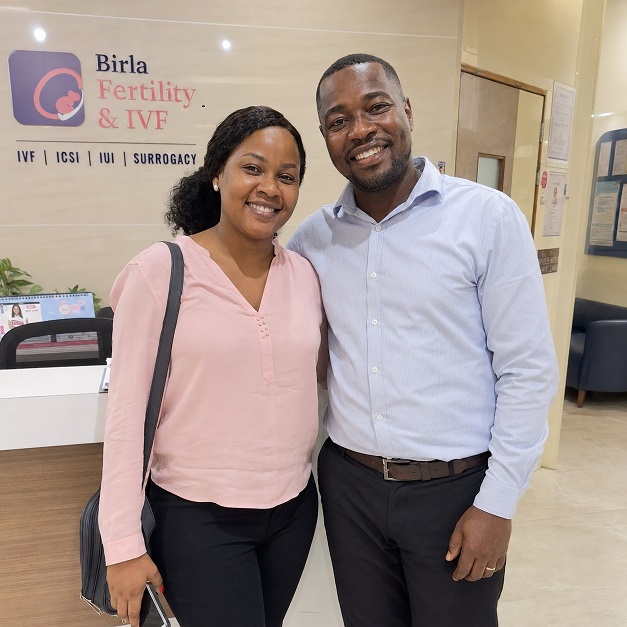
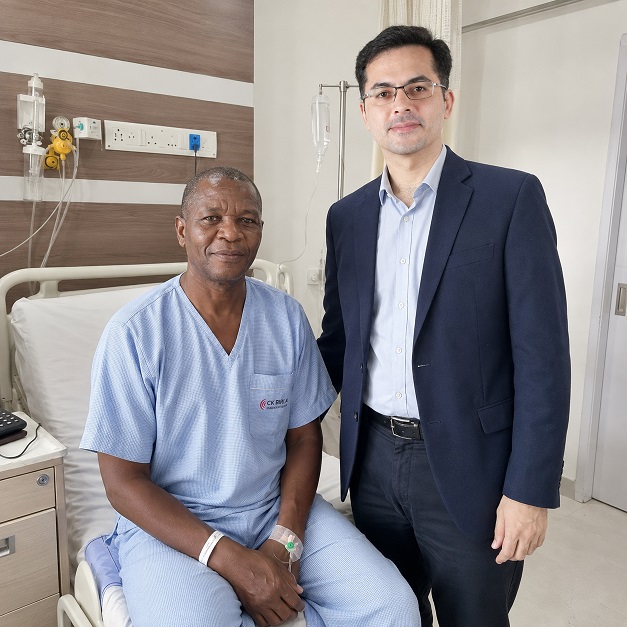
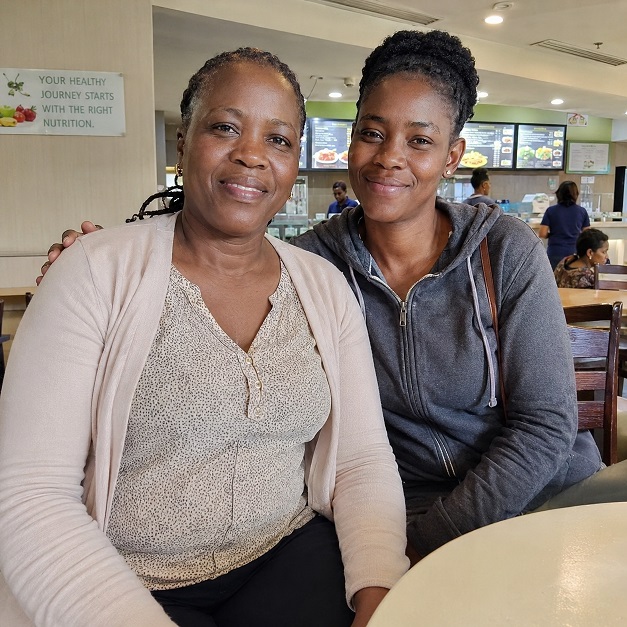
Patient Testimonials from Zambia
Ready to Take the First Step?
Share your Medical Reports with our Healthcare Managers Today and Get a FREE CONSULTATION, a Personalized Treatment Plan, and Complete Support from Arrival to Recovery.
Get Your Free ConsultationAreas We Serve
This resource has been thoughtfully prepared for patients from Zambia who are considering medical treatment in India. We also welcome patients from the wider region in the countries mentioned below-
We assist patients from:
- Zambia
- Angola
- Malawi
- Zimbabwe
- Botswana
- Namibia
- South Africa
- Eswatini
- Lesotho
- Gabon
- Chad
- Equatorial Guinea
- São Tomé and Príncipe
- Republic of the Congo
- Democratic Republic of the Congo
Many of the insights, treatment pathways, hospital recommendations, travel guidance, and patient support services described here are equally relevant and may be used as a reference when planning treatment in India.
From Zambia to India: Your Complete Patient Support Guide
- Best Weight-Loss (Bariatric) Surgeons & Hospitals in India for Zambian Patients
- Best Brain-Tumour Surgeons & Hospitals in India for Zambian Patients
- Best Cancer Doctors & Hospitals in India for Zambian Patients
- Best Cardiac Surgeons & Hospitals in India for Zambian Patients
- Best Cosmetic Surgeons & Facilities in India for Zambian Patients
- Best CyberKnife Treatment Teams & Centres in India for Zambian Patients
- Best Dentists & Dental Clinics in India for Zambian Patients
- Best Heart Valve Replacement Surgeons & Hospitals in India for Zambian Patients
- Best Hip Surgeons & Hospitals in India for Zambian Patients
- Best Knee Surgeons & Hospitals in India for Zambian Patients
- Best Neurosurgeons & Hospitals in India for Zambian Patients
- Best Paediatric Cardiac Surgeons & Hospitals in India for Zambian Patients
- Best Paediatric Neurosurgeons & Hospitals in India for Zambian Patients
- Best Prostate Surgeons & Hospitals in India for Zambian Patients
- Best Scoliosis Surgeons & Hospitals in India for Zambian Patients
- Best Spine Surgeons & Hospitals in India for Zambian Patients
- Best Bone Marrow Transplant Teams & Hospitals in India for Zambian Patients
- Best Kidney Transplant Surgeons & Hospitals in India for Zambian Patients