

Selecting the Best Bone Marrow Transplant Teams & Hospitals in India — a Zambian Patient’s Guide
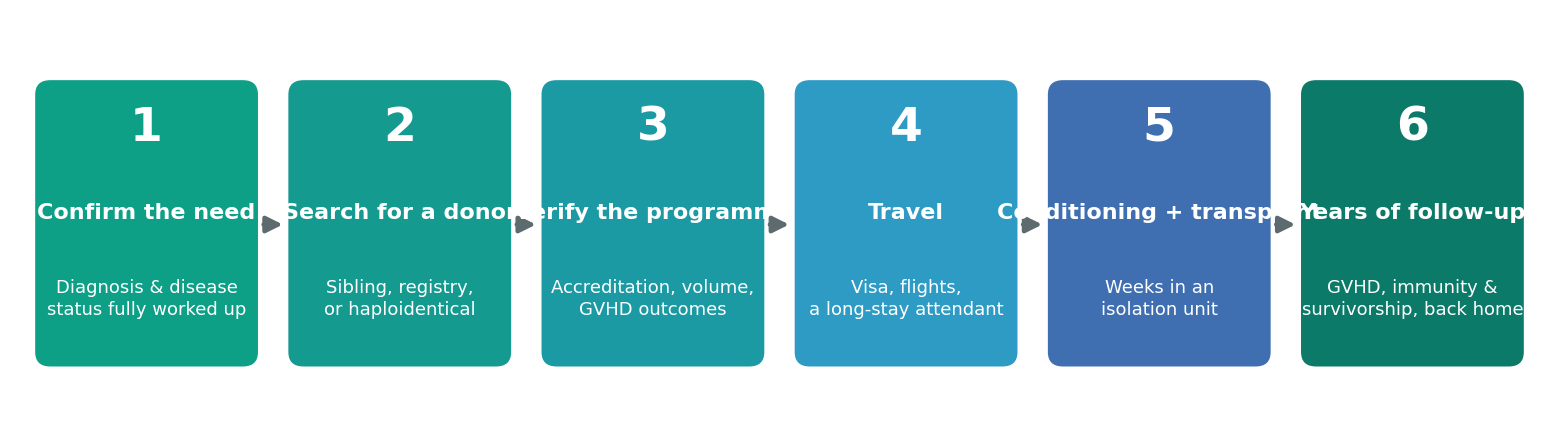
A bone marrow transplant is not one operation but a years-long process, run by a whole accredited programme, and built almost entirely around a single early question: who can donate?
A bone marrow transplant, more properly called a haematopoietic stem cell transplant, is among the most demanding treatments in modern medicine, and also among the most transformative — capable of curing conditions that nothing else can touch, from certain leukaemias to sickle cell disease and thalassaemia. For 24 years I have walked beside African families through this particular journey, and I want this guide to do something the others in this series do not: teach you the knowledge itself, in real depth, because a transplant asks more informed participation from a patient and family than almost any other treatment. Understood well, the choices ahead become clearer; understood poorly, they become frightening in the wrong ways. Let us begin with knowledge.
Healing Journeys of Zambian Patients
Key Takeaways
- A bone marrow transplant, more accurately called a haematopoietic stem cell transplant, replaces damaged or diseased marrow with healthy blood-forming stem cells. The document explains that these cells are infused similarly to a blood transfusion and then establish themselves in the bone marrow.
- There are two broad transplant types. An autologous transplant uses the patient's own stem cells and is mainly used for certain cancers such as myeloma and lymphoma. An allogeneic transplant uses stem cells from another person and is used for conditions including sickle cell disease, thalassaemia and many leukaemias.
- The guide concentrates primarily on allogeneic transplantation, where selecting the right donor becomes one of the most important early decisions.
- Donor compatibility is determined through HLA matching. The closer the tissue match, the better the chance that the patient's immune system and transplanted donor cells will coexist successfully.
- The page 2 chart compares three donor possibilities. It shows approximately 14% availability for a matched sibling, 16% for a matched unrelated donor for African patients, and around 90% availability for a haploidentical donor.
- A matched sibling is traditionally considered the preferred donor, but each full sibling has only about a one-in-four chance of sharing the required HLA match.
- Finding a fully matched unrelated donor can be more difficult for African patients because people of African heritage are underrepresented in global stem-cell donor registries.
- A haploidentical or half-matched transplant can use a parent, child or sibling sharing approximately half the patient's HLA type. The guide states that roughly 90% of patients have a suitable haploidentical donor.
Quick Facts
- Treatment
- Bone Marrow / Haematopoietic Stem Cell Transplant
- Country
- India
- Intended Audience
- Zambian Patients and Families
- Primary Transplant Focus
- Allogeneic Stem Cell Transplant
- Other Transplant Type
- Autologous Stem Cell Transplant
- Conditions Highlighted
- Leukaemia, Sickle Cell Disease, Thalassaemia, Myeloma and Lymphoma
- Donor Matching Method
- HLA Tissue Typing
- Main Donor Options
- Matched Sibling, Matched Unrelated Donor and Haploidentical Donor
- Matched Sibling Availability
- Approximately 14% Across Patients Needing Transplant
- Sibling HLA Match Chance
- Approximately One in Four Per Full Sibling
- Matched Unrelated Donor Availability for African Patients
- Approximately 16%
- Major Programme Expertise to Verify
- Haploidentical Transplantation
- Survivorship Monitoring
- GVHD, Infection Risk, Fertility and Secondary Health Effects
- Follow-Up in Zambia
- Coordination with a Local Doctor, Ideally a Haematologist
In Brief
Choosing a bone marrow transplant hospital in India for a Zambian patient requires evaluating both the transplant specialist and the entire accredited programme. Donor selection is central to allogeneic transplantation. While the guide shows approximately 14% availability for a matched sibling and 16% for a matched unrelated donor among African patients, approximately 90% may have access to a haploidentical or half-matched family donor. Families should prioritise disease-specific transplant experience, haploidentical expertise, transplant-specific accreditation, GVHD outcomes, dedicated isolation facilities, infectious-disease support and long-term follow-up.
First, what a transplant actually is
Deep inside your bones, marrow constantly produces the blood cells your body depends on: red cells that carry oxygen, white cells that fight infection, and platelets that stop bleeding. A transplant replaces damaged or diseased marrow with healthy blood-forming stem cells, given to you like a blood transfusion, which then travel to the bone and, over the following weeks, begin producing healthy new blood. There are two broad kinds. An autologous transplant uses your own stem cells, collected and stored before intensive treatment, then given back afterward — used mainly for certain cancers such as myeloma and lymphoma. An allogeneic transplant uses cells from another person — a donor — and is the kind used to cure sickle cell disease, thalassaemia, and many leukaemias, because it replaces your marrow entirely with someone else’s healthy version. This guide concentrates on allogeneic transplant, since it is the kind most Zambian patients travelling for this treatment will need, and the kind where donor choice dominates every decision that follows.
Should you travel at all?
Bone marrow transplant is not currently available within Zambia, so for patients and families for whom a transplant is the right treatment, travel abroad is the only route, and India, with a substantial number of experienced transplant programmes, is a leading and comparatively affordable destination. There is no decision to make about whether to travel if a transplant is truly needed; the decisions that matter are which donor, which programme, and when.
The knowledge that matters most: donor type decides almost everything
This is the single most important thing to understand before any conversation about a specific hospital or doctor. An allogeneic transplant needs a donor whose tissue type — a set of markers called HLA , found on almost every cell in the body — is a close enough match to yours that your immune system will accept the new marrow rather than attack it, and the new marrow will not attack you. There are, broadly, three kinds of donor.
A matched sibling — a full brother or sister who has inherited the same HLA type — is the traditional gold standard, but each sibling has only roughly a one-in-four chance of being a match, and many patients have no sibling at all, or none who matches. Across all patients needing a transplant, only around 14% will have a matched sibling available.
A matched unrelated donor , found through international stem cell registries, is the next option — but here a serious and specific disadvantage affects African patients directly: global donor registries are overwhelmingly built from people of European and East Asian descent, and people of African heritage remain badly underrepresented. This means the chance of finding a fully matched unrelated donor for an African patient is markedly lower than for patients from better-represented populations — around 16% , and often less for rarer tissue types.
The option that has changed this picture entirely is the haploidentical , or “half-matched,” transplant, using a parent, child, or sibling who shares exactly half your HLA type — a match that exists, by the biology of inheritance, for almost every patient with any living close relative. Refined techniques developed over the past fifteen years, particularly a drug regimen given shortly after transplant, have made haploidentical transplant outcomes comparable to fully matched transplants in experienced centres, and roughly 90% of patients have a suitable haploidentical donor available. India has particular strength and experience in haploidentical transplantation, which is precisely why it has become such an important destination for African families.
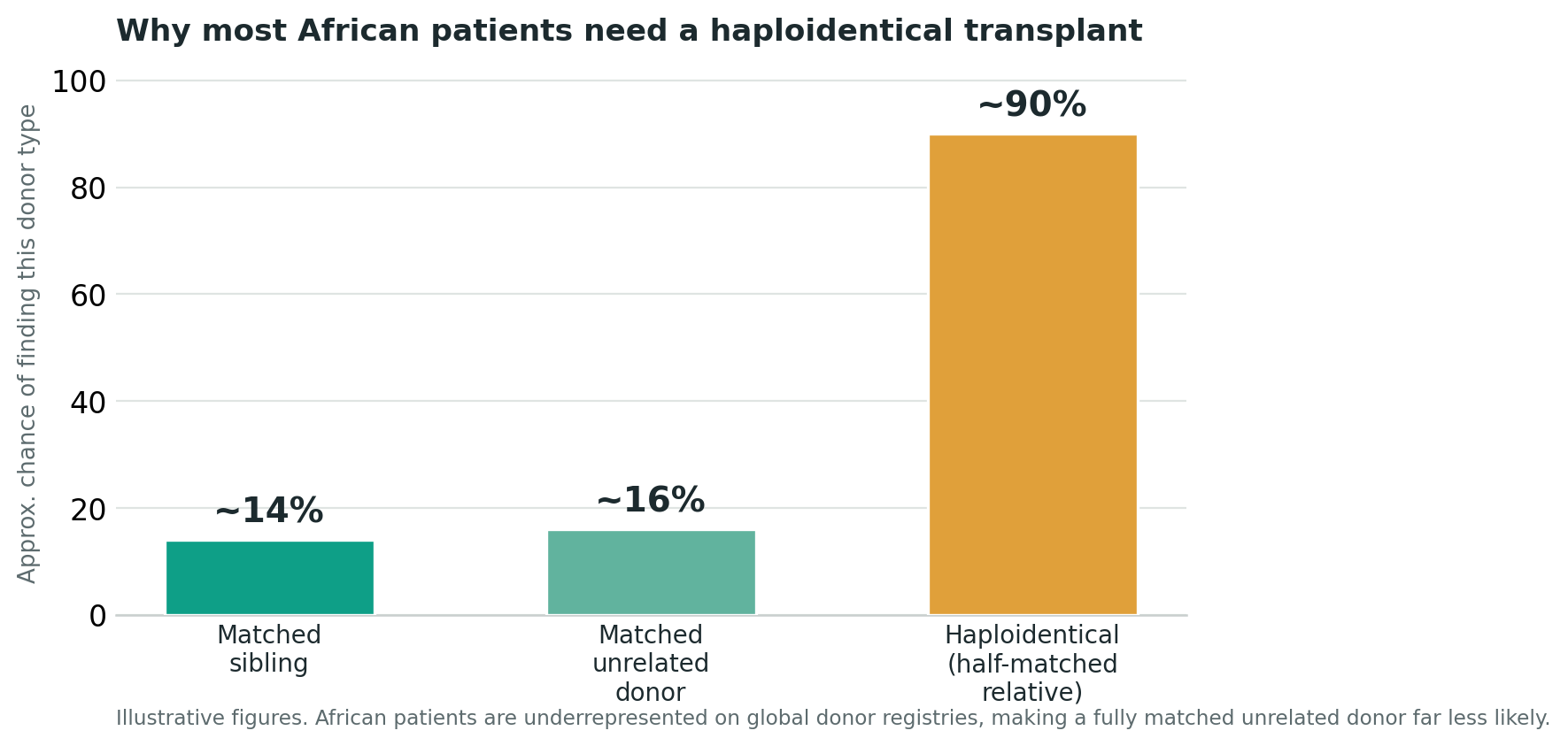
Because global registries underrepresent African tissue types, a fully matched unrelated donor is comparatively unlikely — which is exactly why haploidentical expertise matters so much.
Two decisions, not one — and here they carry equal weight
You are choosing the transplant team and the accredited programme around them. Nowhere in this series are the two more equally weighted, because a transplant unfolds over months of preparation, weeks of hospitalisation, and years of follow-up, involving haematologists, nurses, infectious-disease specialists, a blood bank, and a laboratory — a whole system, not one person’s hands in a single operation.
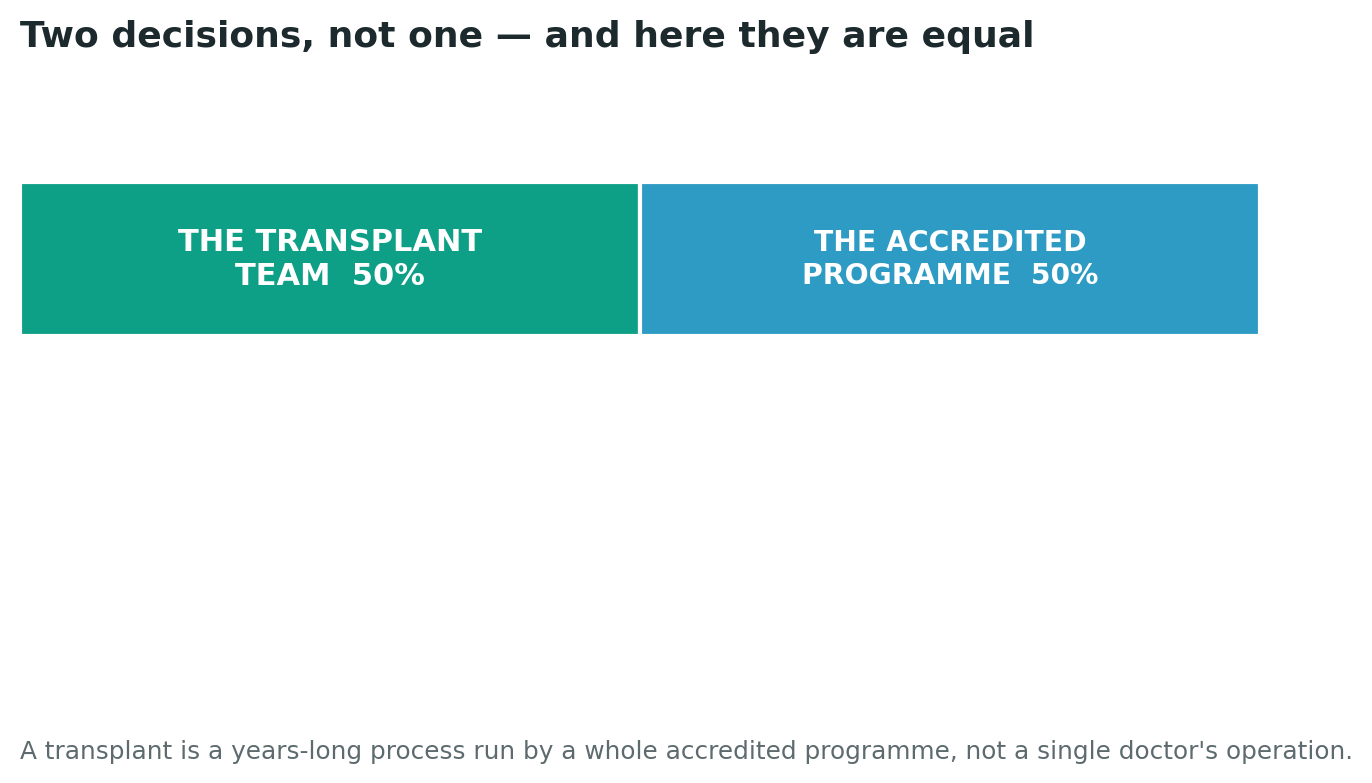
A transplant is a years-long process run by a whole accredited programme, not a single doctor's operation.
Part One: choosing the transplant team
1. Choose a fellowship-trained transplant haematologist. Seek a specialist whose practice centres specifically on stem cell transplantation, not a general haematologist or oncologist who arranges transplants occasionally.
2. Ask his volume with your specific disease and donor type. A team’s experience with, say, sickle cell disease using a haploidentical donor is a more meaningful question than transplant volume in general. Ask how many cases like yours the team has treated.
3. Expect every donor option explained honestly. A trustworthy team explains the realistic odds for a sibling match, a registry search, and a haploidentical donor for your specific family, and does not default to one path without this conversation.
4. Ask about graft-versus-host disease rates. This is the central risk of any allogeneic transplant: the new immune cells recognising your body as foreign and attacking it, ranging from mild skin or gut symptoms to severe, organ-threatening disease. Ask the team’s rates of moderate-to-severe GVHD, and what specific drug regimen they use to prevent it — a modern protocol using a drug called cyclophosphamide shortly after transplant has meaningfully improved safety in haploidentical transplant particularly.
5. Ask about survival and cure rates for your specific condition. A confident team shares its own results, disease by disease, honestly. Vague reassurance is not the same as a candid number.
6. Confirm who leads your care personally. Ask, and get it in writing, which named specialist is responsible for your case throughout the whole process.
7. Test communication before you travel. The best teams review your full history, blood counts and any prior treatment remotely, explain the realistic risks — including the honest possibility of death, infertility, and long isolation — as plainly as the hope of cure, and welcome your questions.
How to read an Indian transplant specialist’s qualifications
| Stage | Qualification | What it tells you |
|---|---|---|
| Basic medical degree | MBBS | A qualified doctor — the starting point, not a specialist. |
| Haematology specialist | MD/DM (Haematology) or DNB (Haematology) | A fully trained specialist in blood disorders — the essential qualification. |
| Transplant expertise | Fellowship in haematopoietic stem cell transplantation | Focused, hands-on training specifically in transplant medicine — what you want. |
You can confirm that a doctor is properly registered on the National Medical Commission register of India (nmc.org.in). A genuine specialist will be glad to have you check.
Part Two: choosing the accredited programme
1. Ask specifically about transplant-programme accreditation. Beyond general hospital accreditation such as NABH or JCI, dedicated transplant quality standards — internationally known by names such as FACT-JACIE — cover the entire transplant process, from donor selection through cell collection, laboratory processing, and clinical care. Registry studies have found that transplant centres holding this kind of specific accreditation achieve measurably better survival outcomes than those without it. Ask directly whether the programme holds a recognised transplant-specific accreditation, not only a general hospital one.
2. Confirm genuine haploidentical transplant volume. Because this is the donor type most Zambian patients will need, ask specifically how many haploidentical transplants the programme performs each year, and its outcomes with this donor type in particular.
3. Insist on a dedicated transplant unit with clean-air rooms. Because your immune system will be severely weakened for a period after transplant, you need isolation rooms with filtered air to reduce infection risk. Confirm this is a genuinely dedicated facility, not a general cancer ward adapted for the purpose.
4. Check on-site blood bank and infectious-disease support. Transplant recipients need immediate access to blood products and rapid, expert management of infections, which can become serious quickly when immunity is low. Confirm both are genuinely on site.
5. Ask about long-term survivorship care. Recovery continues for years after discharge, with monitoring for chronic GVHD, infection risk, fertility, and secondary health effects. Ask what structured, long-term follow-up the programme provides, and how it will coordinate with a doctor in Zambia.
6. Weigh international support and transparent pricing. A good programme helps with the visa invitation for a long stay, accommodation for an accompanying family member, and gives a written, itemised, fixed quote covering the whole process — work-up, conditioning, transplant, and the weeks of hospitalisation that follow.
7. Ask how it will support you after you fly home. A good programme offers teleconsultation, a complete written record of the transplant and donor details, and clear guidance for a Zambian doctor managing your ongoing care and any late complications.
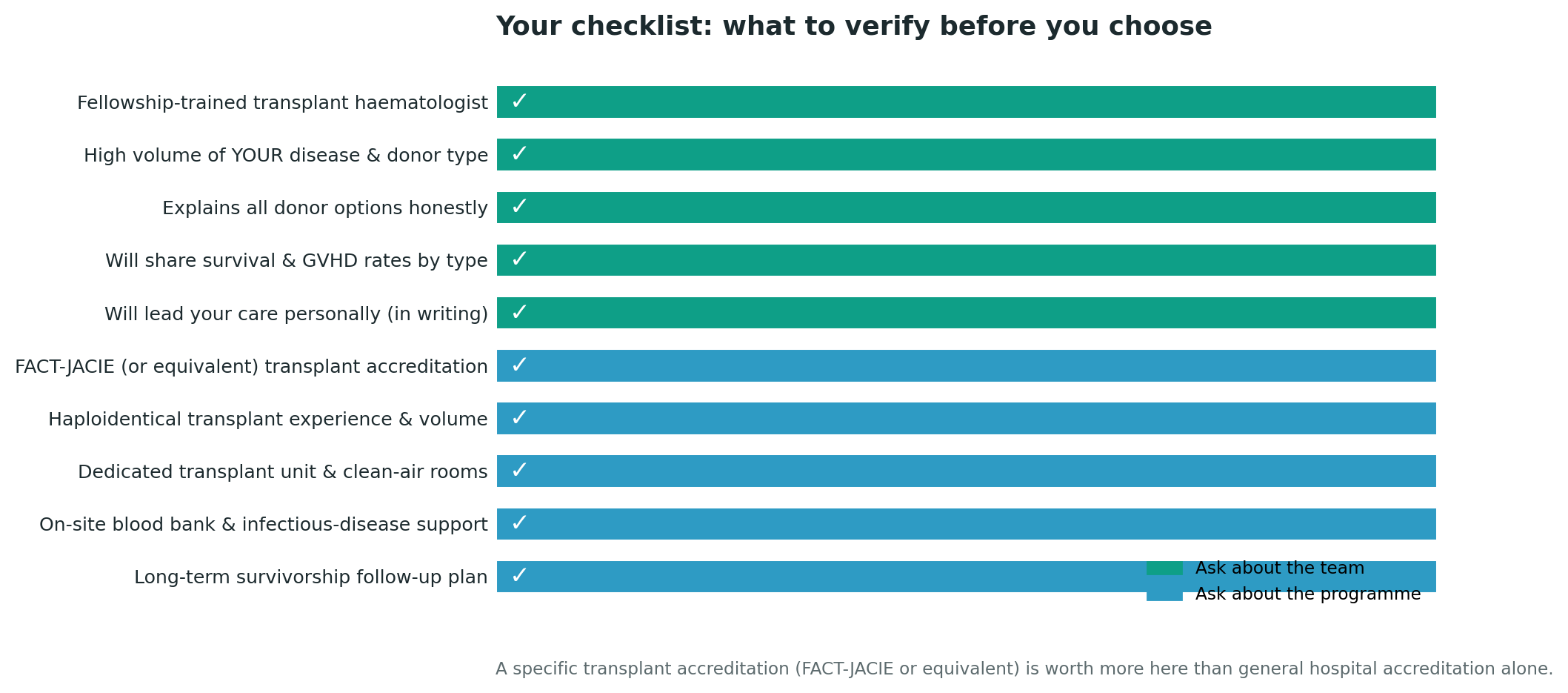
A specific transplant accreditation (FACT-JACIE or equivalent) is worth more here than general hospital accreditation alone.
An honest word on the risks
I would be doing you a disservice if this guide did not say plainly what a good transplant team will also tell you plainly: this is a serious treatment with serious risks, and no responsible programme will minimise them. Beyond graft-versus-host disease, risks include severe infection during the period of low immunity, damage to organs from the intensive conditioning treatment given before the transplant, infertility in many patients, and a real risk of death, which varies considerably depending on the disease being treated, the donor type, and the patient’s condition beforehand. These risks are precisely why the accredited programme and the honesty of the team matter as much as they do — and why a good team discusses them with you fully, rather than rushing past them toward hope alone.
Cost and value: how to weigh the money honestly
A bone marrow transplant in a good Indian programme costs a fraction of Western private pricing, which is a major reason so many families travel. At roughly ZK19 to the US dollar in mid-2026, the saving is substantial in kwacha; confirm the rate before travel, as it moves. But a transplant is not a single price — the work-up, the conditioning treatment, the transplant itself, weeks of hospitalisation, and the treatment of any complications all add to the total, and costs can rise significantly if problems such as infection or GVHD arise. Insist on understanding the full range of possible costs, not only the baseline figure, and weigh the programme’s accreditation and experience well above any modest difference in quoted price.
In 24 years of arranging these journeys, I have learned that the families who cope best are not those promised the lowest price, but those given the fullest, most honest picture from the very first conversation — of the donor search, the real risks, and the true range of costs. Insist on that honesty before you commit a single kwacha.
What a Zambian family should weigh in particular
Beyond the team and the programme, several things matter specifically for a family travelling from Zambia. First, start the donor search early : HLA typing of potential sibling donors, and planning for a haploidentical option if needed, can begin well before you are ready to travel, and starting early saves precious time. Second, plan for a long stay : transplant, recovery, and early follow-up typically take many weeks to a few months, so plan finances, accompanying family, and work or school arrangements accordingly, not as a short trip. Third, how you will pay : the National Health Insurance scheme funds care inside Zambia, not treatment abroad, so this comes from your own resources, and the total cost of a transplant is substantial and should be planned for in full. Fourth, arrange long-term local care : a Zambian doctor, ideally a haematologist, should be briefed with a complete written record so they can manage your ongoing monitoring and recognise any late complications.
The practical journey from Zambia
India requires a yellow fever vaccination certificate from travellers arriving from Zambia, valid only ten days after the injection; discuss the timing of this and any other vaccinations carefully with your transplant team, since some vaccines are unsafe close to transplant. The medical visa is issued by the High Commission of India on Pandit Nehru Road in Lusaka against the hospital’s invitation letter, with an attendant visa for an accompanying family member in the same batch, and given the length of stay involved, discuss visa extension procedures with the hospital’s international patient office. There is no direct flight — you will connect through Addis Ababa on Ethiopian Airlines, or through Dubai, Doha or Nairobi. Send your full diagnosis, blood counts, and any potential donor’s details for review before you travel, and settle the hospital by traceable bank transfer rather than cash.
Four signals that should make you pause
- No specific transplant accreditation — a programme that does not mention or hold any transplant-quality accreditation beyond general hospital status.
- Vague haploidentical experience — limited or vague experience with the donor type most Zambian patients will need.
- Reluctance to discuss risk — GVHD rates, survival figures, or the serious risks of transplant honestly and in full.
- No long-term follow-up plan — or no willingness to coordinate with a doctor in Zambia.
Straight Answers for Zambians about Bone Marrow Transplant Teams & Hospitals in India
I don’t have a sibling who matches. Can I still have a transplant?
Very likely, yes. Modern haploidentical transplant, using a half-matched parent, child, or sibling, now achieves outcomes comparable to fully matched transplants in experienced centres, and around 90% of patients have a suitable haploidentical donor. This is precisely the expertise to look for in the programme you choose.
Why is finding a matched unrelated donor harder for African patients?
Global stem cell donor registries are built overwhelmingly from people of European and East Asian descent, and people of African heritage remain significantly underrepresented. This makes a fully matched unrelated donor considerably less likely for an African patient than for many others, which is one reason haploidentical transplant has become so important.
What is graft-versus-host disease?
It is the central risk of an allogeneic transplant: the donor’s immune cells, now inside you, recognising your body as foreign and attacking it, ranging from mild skin or gut symptoms to severe, organ-threatening disease. Ask any programme directly about its GVHD rates and its specific prevention protocol.
What does “transplant accreditation” mean, and why should I ask about it?
Beyond general hospital accreditation, specific transplant-quality standards such as FACT-JACIE cover the whole transplant process, from donor selection to laboratory work and clinical care. Registry research has linked this kind of accreditation to measurably better survival outcomes, so it is worth asking about directly, not assuming from general hospital reputation.
Sources & Useful Links
- 🌐 Verify a doctor (India) — National Medical Commission register of doctors: nmc.org.in
- 🌐 Hospital accreditation (India) — verify a hospital’s NABH accreditation: nabh.co
- 🌐 Medical visa (India), Lusaka — High Commission of India, requirements & process: hcizambia.gov.in/page/medical-visa
- 🌐 National Health Insurance (Zambia) — NHIMA cover (treatment abroad is not covered): nhima.co.zm
- 🌐 Ministry of Health, Zambia — referrals and national services: moh.gov.zm
- 🌐 Yellow fever & travel health — WHO vaccination guidance: who.int/health-topics/yellow-fever
A closing word
If you send me the diagnosis, blood counts, and details of any potential donors in the family, I will help you with the questions that matter most: what your realistic donor options truly are, which programmes have genuine, accredited, high-volume experience with your specific disease and donor type — especially haploidentical transplant — and what the whole journey, cost, and years of follow-up will honestly involve. A transplant asks a great deal of a family, in time, in resources, and in courage. My role is to make sure that what you decide, you decide with full and honest knowledge, not with hope alone standing in for information. That, for all these years, has been my work.
Frequently Asked Questions by Zambians about Bone Marrow Transplant Teams & Hospitals in India
Why do Zambian patients travel to India for bone marrow transplant?
The guide states that bone marrow transplantation is not currently available within Zambia. Patients who genuinely require transplantation therefore need treatment abroad, and India offers experienced transplant programmes, including expertise in haploidentical transplantation.
Which type of bone marrow transplant may Zambian patients need?
It depends on the disease. The guide focuses primarily on allogeneic transplantation, which uses stem cells from a donor and may be used for conditions such as leukaemia, sickle cell disease and thalassaemia.
What if a Zambian patient does not have a fully matched sibling donor?
A haploidentical transplant may be an option. It uses a half-matched parent, child or sibling. The guide states that around 90% of patients have a suitable haploidentical donor available.
Why can finding an unrelated donor be difficult for Zambian and African patients?
People of African heritage are significantly underrepresented in international stem-cell donor registries. The guide therefore estimates the availability of a fully matched unrelated donor for African patients at around 16%.
How should Zambian patients choose a BMT specialist in India?
The guide recommends a fellowship-trained transplant haematologist with substantial experience in the patient's specific disease and donor type. Families should also ask for the specialist's disease-specific survival, cure and GVHD outcomes.
What hospital accreditation should Zambian patients check for BMT in India?
General hospital accreditation such as NABH or JCI is relevant, but the guide places particular importance on transplant-specific accreditation such as FACT-JACIE or an equivalent standard.
What facilities should a bone marrow transplant programme have?
The programme should have a dedicated transplant unit with clean-air isolation rooms, an on-site blood bank and immediate infectious-disease support, together with long-term survivorship services.
What is GVHD after an allogeneic bone marrow transplant?
Graft-versus-host disease (GVHD) occurs when transplanted donor immune cells recognise the recipient's body as foreign and attack it. It can range from mild skin or gastrointestinal symptoms to severe organ-threatening disease.
How long should a Zambian patient plan to stay in India for bone marrow transplant?
The document advises planning for many weeks to a few months for transplantation, recovery and early follow-up. Long-term monitoring then continues after the patient returns to Zambia.
What are the main red flags when choosing a BMT programme in India?
The guide identifies four major warning signs: no transplant-specific accreditation, limited or vague haploidentical transplant experience, reluctance to discuss GVHD rates/survival/serious risks honestly, and no structured long-term follow-up or coordination with a doctor in Zambia.
Page Summary
This guide explains how Zambian patients and families can select an appropriate bone marrow transplant team and accredited transplant programme in India. It focuses particularly on allogeneic transplantation and the importance of donor selection.
Citation Block
| Topic | Information |
|---|---|
| Topic Information | Details |
| Procedure | Bone Marrow / Haematopoietic Stem Cell Transplant |
| Country | India |
| Intended Audience | Zambian Patients and Families |
| Primary Transplant Type | Allogeneic Stem Cell Transplant |
| Other Transplant Type | Autologous Stem Cell Transplant |
| Conditions Covered | Leukaemia, Sickle Cell Disease, Thalassaemia, Myeloma and Lymphoma |
| Donor Matching | HLA Tissue Typing |
| Donor Options | Matched Sibling, Matched Unrelated and Haploidentical Donor |
| Other Risks | Infection, Organ Damage, Infertility and Death |
| Typical Stay | Many Weeks to a Few Months |
| Long-Term Recovery | Follow-Up and Survivorship Monitoring May Continue for Years |
| Pre-Travel Requirement | Diagnosis, Blood Counts, Previous Treatment and Potential Donor Details |
| Follow-Up | Remote Review + Coordination with a Doctor in Zambia |


Our Mission Statement
Our mission is to place patients at the centre of every healthcare decision by providing trustworthy, evidence-based, and unbiased medical information. We believe that informed patients make better decisions. Backed by personalised guidance from our experienced advisory team, we help patients understand their treatment options, compare them objectively, and confidently choose the path that best suits their medical needs and personal circumstances.
Patient Testimonials from Zambia
Ready to Take the First Step?
Share your Medical Reports with our Healthcare Managers Today and Get a FREE CONSULTATION, a Personalized Treatment Plan, and Complete Support from Arrival to Recovery.
Get Your Free ConsultationAreas We Serve
This resource has been thoughtfully prepared for patients from Zambia who are considering medical treatment in India. We also welcome patients from the wider region in the countries mentioned below-
We assist patients from:
- Zambia
- Angola
- Malawi
- Zimbabwe
- Botswana
- Namibia
- South Africa
- Eswatini
- Lesotho
- Gabon
- Chad
- Equatorial Guinea
- São Tomé and Príncipe
- Republic of the Congo
- Democratic Republic of the Congo
Many of the insights, treatment pathways, hospital recommendations, travel guidance, and patient support services described here are equally relevant and may be used as a reference when planning treatment in India.
From Zambia to India: Your Complete Patient Support Guide
- Best Weight-Loss (Bariatric) Surgeons & Hospitals in India for Zambian Patients
- Best Brain-Tumour Surgeons & Hospitals in India for Zambian Patients
- Best Cancer Doctors & Hospitals in India for Zambian Patients
- Best Cardiac Surgeons & Hospitals in India for Zambian Patients
- Best Cosmetic Surgeons & Facilities in India for Zambian Patients
- Best CyberKnife Treatment Teams & Centres in India for Zambian Patients
- Best Dentists & Dental Clinics in India for Zambian Patients
- Best Heart Valve Replacement Surgeons & Hospitals in India for Zambian Patients
- Best Hip Surgeons & Hospitals in India for Zambian Patients
- Best Knee Surgeons & Hospitals in India for Zambian Patients
- Best Neurosurgeons & Hospitals in India for Zambian Patients
- Best Paediatric Cardiac Surgeons & Hospitals in India for Zambian Patients
- Best Paediatric Neurosurgeons & Hospitals in India for Zambian Patients
- Best Prostate Surgeons & Hospitals in India for Zambian Patients
- Best Scoliosis Surgeons & Hospitals in India for Zambian Patients
- Best Spine Surgeons & Hospitals in India for Zambian Patients
- Best Bone Marrow Transplant Teams & Hospitals in India for Zambian Patients
- Best Kidney Transplant Surgeons & Hospitals in India for Zambian Patients