

Selecting the Best Cosmetic Surgeons & Facilities in India — a Zambian Patient’s Guide
“Cosmetic surgeon” is not always a protected title, and combining too many procedures to save a trip is a real, measurable risk. This guide sets out how to choose safely.
Cosmetic surgery is elective, chosen rather than medically forced upon you, and that changes the whole calculation of risk and reward: there is no illness compelling you forward, so there is no excuse for cutting corners on safety. For 24 years I have helped patients approach this decision properly, and the two lessons I return to most often are these: first, the words “cosmetic surgeon” are not always backed by genuine surgical training, so verification matters more here than almost anywhere; and second, the temptation to combine several procedures into one long trip, to save time and cost, carries a real and measurable increase in risk. This guide is built around both.
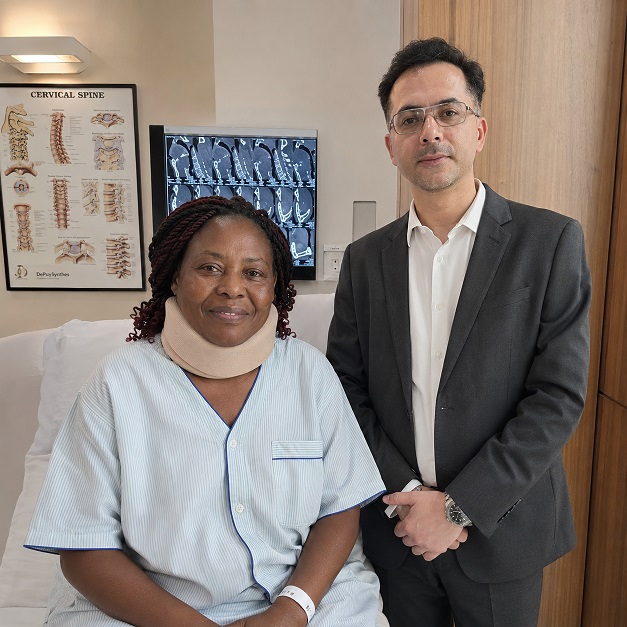
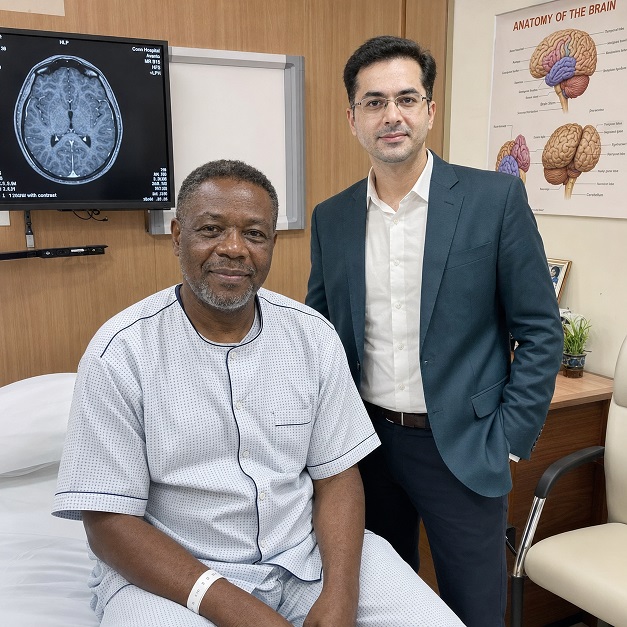
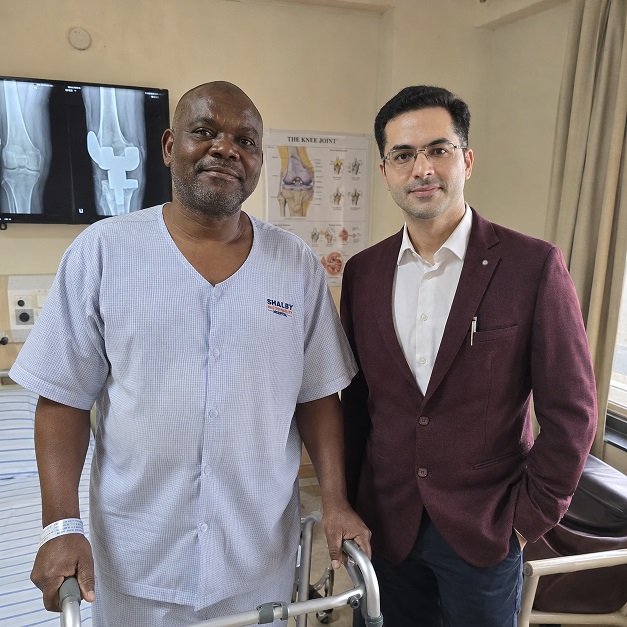
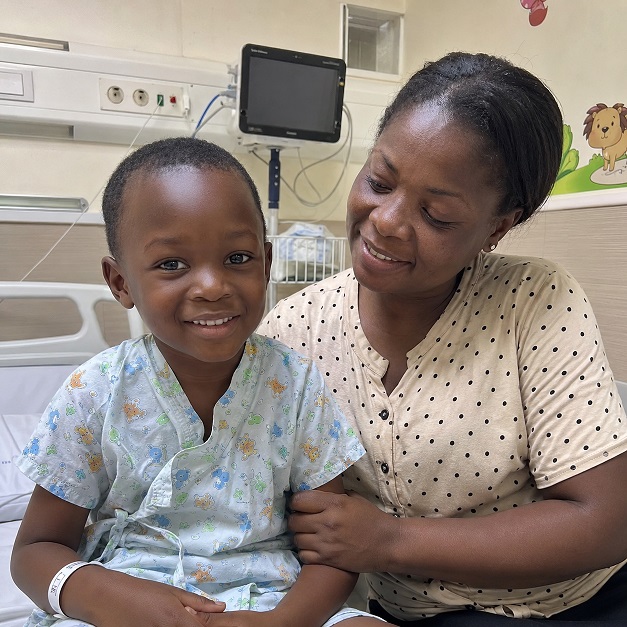
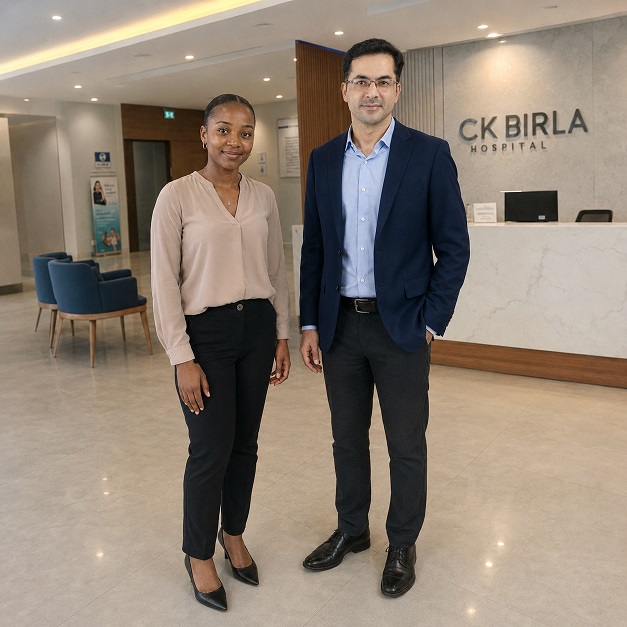
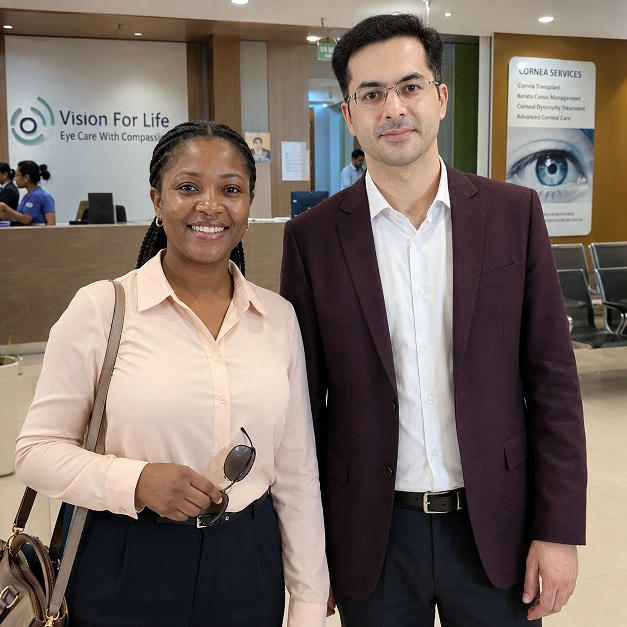
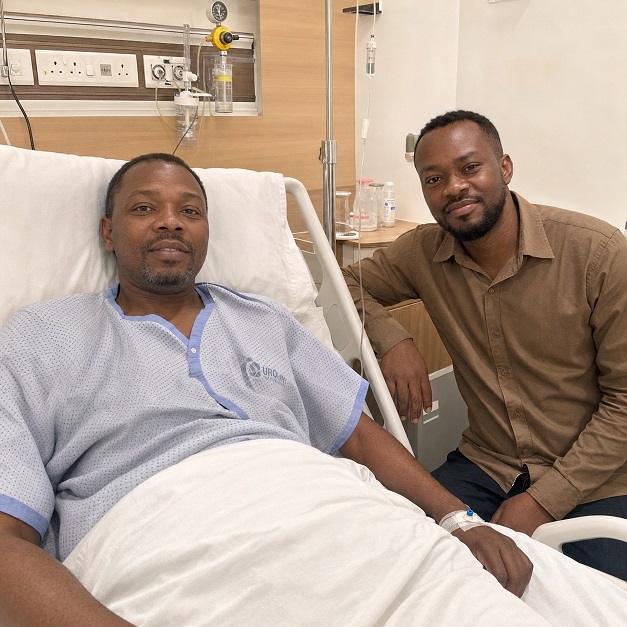
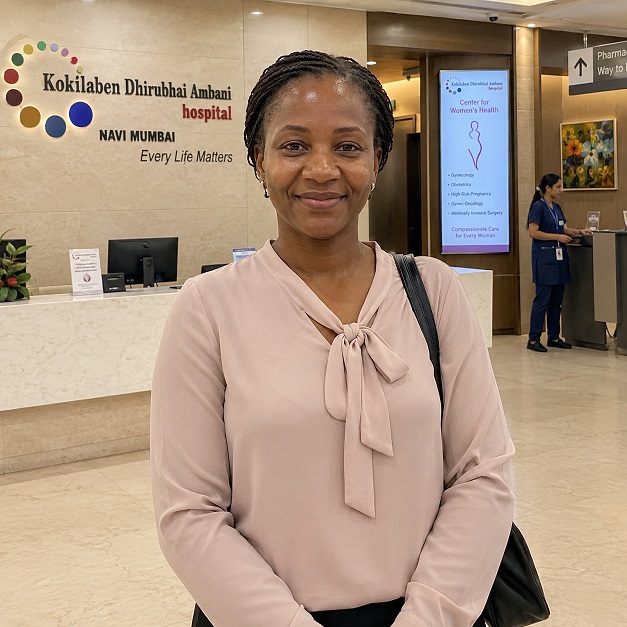
Healing Journeys of Zambian Patients

Key Takeaways
- Cosmetic surgery is elective, which means patients have time to choose carefully. The guide's central message is that surgeon qualifications and facility safety should come before price or convenience.
- The words “cosmetic surgeon” do not necessarily mean the doctor has completed recognised specialist training in plastic surgery. Patients should verify the doctor's actual qualifications rather than relying on the title used by a clinic or advertisement.
- A genuine plastic surgeon in India should have recognised postgraduate specialist training, typically MCh in Plastic Surgery or DNB in Plastic Surgery, rather than only a general medical or dental qualification supplemented by short cosmetic courses.
- The document treats surgeon and facility selection as two separate decisions. Its page 2 graphic assigns 55% importance to the surgeon and 45% to the facility.
- Procedure-specific experience matters. A surgeon who regularly performs rhinoplasty may not necessarily have equivalent experience in breast surgery, facelift surgery or body contouring.
- Patients should ask how frequently the surgeon performs their exact procedure, rather than relying on the surgeon's total cosmetic-surgery volume.
- Before-and-after photographs should represent the surgeon's own patients. The guide recommends requesting a substantial gallery rather than accepting stock photographs or only a few carefully selected examples.
- One of the strongest warnings concerns combining several cosmetic procedures into one operation simply to save a second trip.
Quick Facts
- Treatment
- Cosmetic & Plastic Surgery
- Country
- India
- Intended Audience
- Zambian Patients
- Central Safety Principle
- Verify Surgeon and Facility Before Considering Price
- Important Title Warning
- “Cosmetic Surgeon” Does Not Necessarily Mean a Formally Trained Plastic Surgeon
- Basic Medical Qualification
- MBBS
- General Surgical Qualification
- MS General Surgery
- Plastic Surgery Specialist Qualification
- MCh Plastic Surgery or DNB Plastic Surgery
- Surgeon vs Facility Weighting
- 55% Surgeon + 45% Facility
- Important Surgeon Criterion
- High Volume in the Patient's Exact Procedure
- Procedures Mentioned
- Facelift, Eyelid Surgery, Rhinoplasty, Breast Surgery, Liposuction and Tummy Tuck
- Before-and-After Photographs
- Should Be Genuine Cases of the Chosen Surgeon
- Emergency Requirement
- Clear Backup and Escalation to a Full Hospital
- Infection Control
- Facility Should Follow Recognised Sterilisation Standards
In Brief
Selecting cosmetic surgeons and facilities in India for Zambian patients should begin with verification of genuine plastic-surgery qualifications rather than the title “cosmetic surgeon.” The guide recommends MCh or DNB Plastic Surgery training, high procedure-specific experience and an accredited facility with specialist anaesthesia and emergency backup. It also highlights a Zambia-specific consideration: darker skin has a greater tendency toward keloid scarring and pigment changes, making experience with similar skin types important. The document's chart shows an illustrative 4.2% 30-day complication rate for a single procedure versus 7.6% when two or more procedures are combined in one session.
First, should you travel at all?
Zambia has some cosmetic and reconstructive surgery capacity, and simpler procedures may be available at home. But for a wider range of procedures, more advanced technique, and often lower cost, many patients travel, and India, with a large and experienced cosmetic surgery sector, is a leading destination. Because this surgery is elective, you have the luxury of time to choose carefully — use it, rather than rushing toward the first attractive advertisement you see.
It helps to know the range involved, because “cosmetic surgery” covers procedures with quite different risk profiles. Facial procedures such as a facelift, eyelid surgery or rhinoplasty are generally shorter, with lower overall complication rates. Breast surgery, whether augmentation, reduction or a lift, carries its own specific considerations, including that implants are not permanent devices and future revision should be expected as normal, planned care rather than a sign of failure. Body- contouring procedures such as liposuction or a tummy tuck, particularly in combination, carry a somewhat higher risk of blood clots and fluid shifts, and deserve the most caution when combining is considered. None of this should discourage you — cosmetic surgery performed by a qualified surgeon in an accredited facility is, overall, a very safe category of medicine — but understanding which category your chosen procedure falls into helps you ask sharper questions.
Knowledge that must come first: verify the title, not just the confidence
This is the single most important thing to understand. In many countries, including some medical tourism destinations, “cosmetic surgeon” is not a strictly protected title , and doctors from various backgrounds can describe themselves this way after limited additional training, or none at all. A genuine plastic surgeon , by contrast, has completed lengthy, rigorous, formally recognised surgical training and board certification specifically in plastic and reconstructive surgery. Confidence, a polished clinic, and an attractive website tell you nothing about which kind of doctor you are seeing. Always verify the actual qualification, not the label on the door.
Two decisions, not one
You are choosing the surgeon and the facility . Both must be right. The surgeon’s genuine training and skill weigh most, but an accredited facility with proper anaesthesia support and emergency backup is what keeps an elective operation safe if anything unexpected occurs.
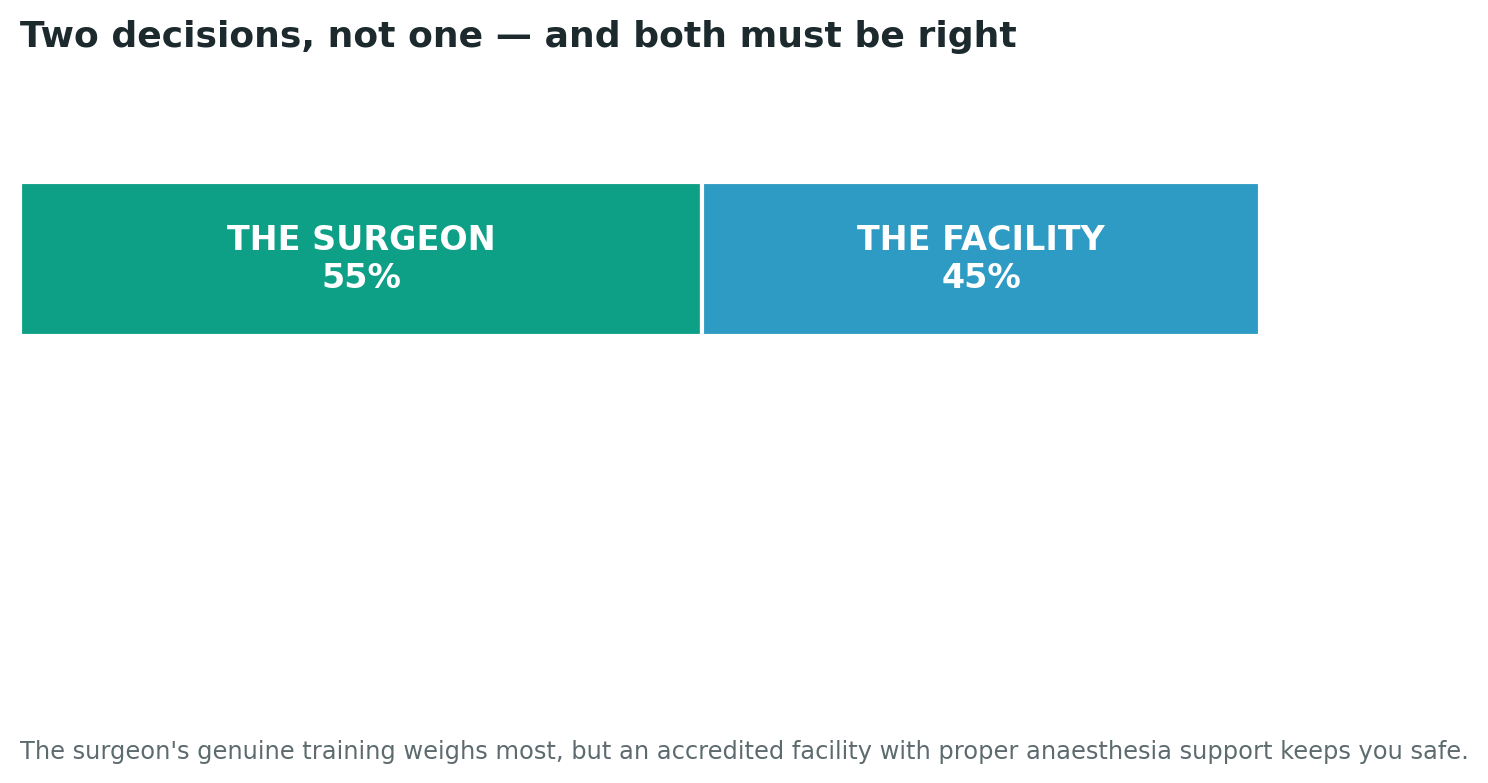
The surgeon's genuine training weighs most, but an accredited facility with proper anaesthesia support keeps you safe.
The second most important thing: resist combining too much into one trip
Travelling a long distance naturally tempts patients to have several procedures done together, to make the most of one journey. This is sometimes reasonable — but it is not free of cost. Data from a large plastic-surgery outcomes registry shows that combining two or more procedures in a single operative session very nearly doubles the 30-day complication rate compared with a single procedure alone, largely because of the longer time spent under anaesthesia, which raises the risk of complications including dangerous blood clots. A good surgeon weighs this honestly with you and will decline to combine procedures where the combination itself adds meaningful risk, even if that means a second, separate trip. Be wary of any surgeon or clinic eager to fit everything into a single visit purely for your convenience or their revenue.
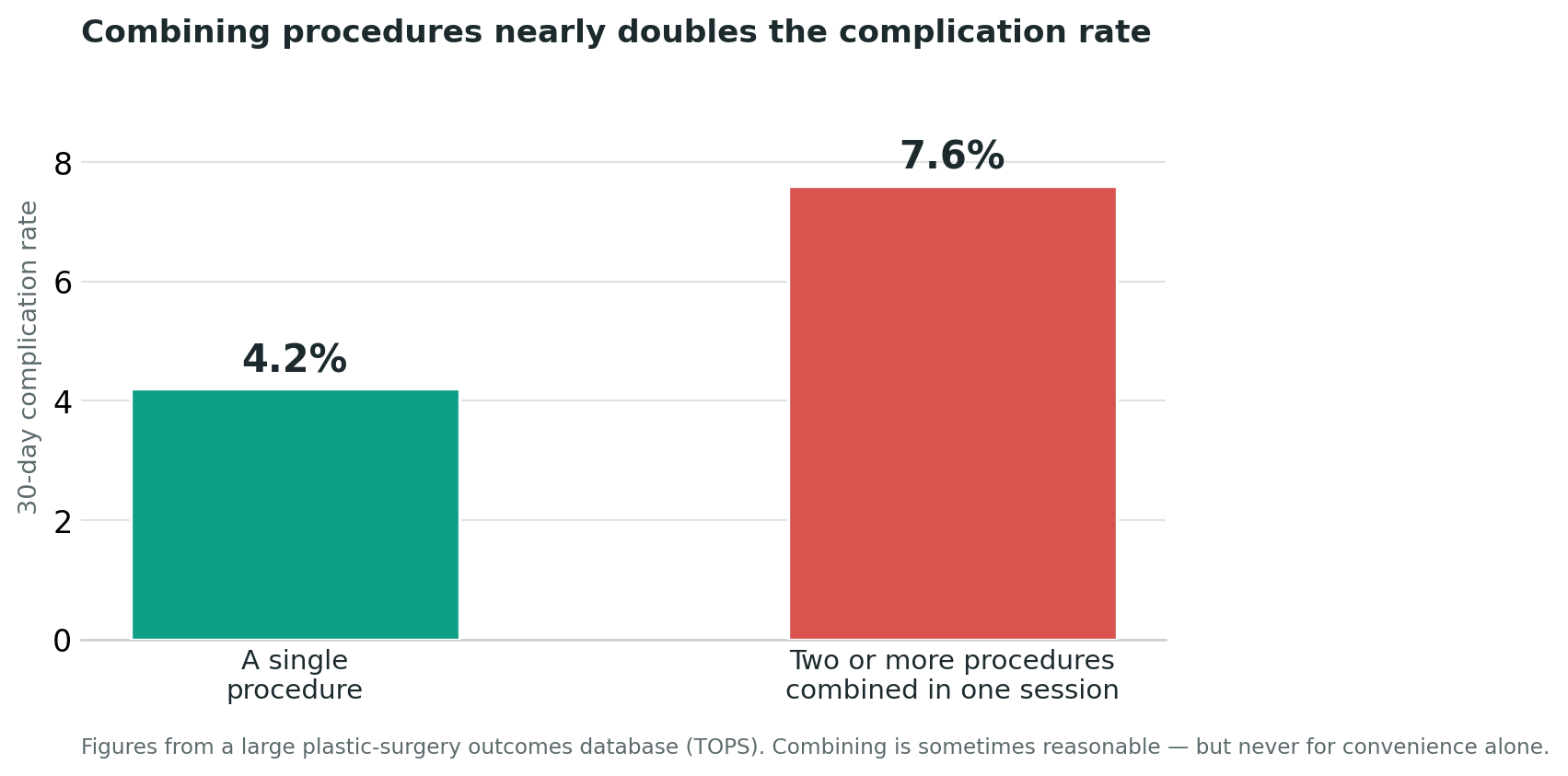
Combining is sometimes reasonable for genuinely complementary procedures — but never for convenience alone, and never without an honest conversation about the added risk.
Part One: choosing the surgeon
1. Verify genuine plastic surgery board certification. Look specifically for recognised postgraduate training in plastic and reconstructive surgery (MCh or DNB in Plastic Surgery in India), not simply a general medical or dental qualification with short courses in cosmetic technique.
2. Ask his volume with your specific procedure. A surgeon who performs your exact procedure frequently, whether a facelift, breast surgery, or body contouring, is generally a safer and more predictable choice than one for whom it is occasional work.
3. Insist on real before-and-after photographs of his own patients. Ask to see a substantial gallery of genuine results, not stock images or a handful of flattering examples, and ask specifically whether these are his own cases.
4. Expect an honest limit on combining procedures. A trustworthy surgeon discusses which procedures can be safely combined and which cannot, based on your health and the added anaesthesia time, and is willing to recommend a second trip rather than a single, overloaded operation.
5. Ask about his complication and revision rates. A confident surgeon shares these candidly. Vague reassurance, or a claim of no complications ever, is not credible and is not the same as an honest number.
6. Confirm he will operate on you personally. Ask, and get it in writing, that the named surgeon you chose will perform your operation, not delegate it to a trainee.
7. Insist on a proper pre-operative assessment. A responsible surgeon evaluates your full health history and realistic goals, in person or by thorough video consultation, before agreeing to operate — not on the day you arrive.
How to read an Indian plastic surgeon’s qualifications
| Stage | Qualification | What it tells you |
|---|---|---|
| Basic medical degree | MBBS | A qualified doctor — the starting point, not a specialist. |
| Surgical specialist | MS (General Surgery) | A trained general surgeon — not yet plastic-surgery specific. |
| Plastic surgery specialist | MCh (Plastic Surgery) or DNB (Plastic Surgery) | Formal, recognised training in plastic and reconstructive surgery — what you want. |
You can confirm that a surgeon is properly registered on the National Medical Commission register of India (nmc.org.in). A genuine specialist will be glad to have you check.
Part Two: choosing the facility
1. Insist on accreditation. The facility should be accredited by India’s NABH , and ideally internationally by JCI , particularly for anything requiring general anaesthesia.
2. Confirm anaesthesia is delivered by a qualified anaesthetist. Ask specifically who administers and monitors your anaesthesia, and confirm they are a trained specialist, not the operating surgeon alone managing both roles.
3. Ask about emergency backup. A responsible facility for surgical procedures has arrangements for immediate escalation to a full hospital if a complication arises, even for procedures performed in a stand-alone cosmetic surgery centre.
4. Ask about infection control. Confirm the facility tracks and controls its infection rates, and follows recognised sterilisation standards.
5. Confirm a clear policy on combining procedures. Ask what the facility’s own limits are on total operating time and combined procedures, independent of what any one surgeon proposes — a responsible facility has its own safety ceiling.
6. Insist on transparent, itemised pricing. Get a written quote covering the surgeon’s fee, facility fee, anaesthesia, and aftercare, with clarity on what happens if a revision is needed.
7. Ask how it will support you after you fly home. A good facility offers teleconsultation for follow-up questions, a full written record of exactly what was done, and guidance for a Zambian doctor if a concern arises during your recovery.
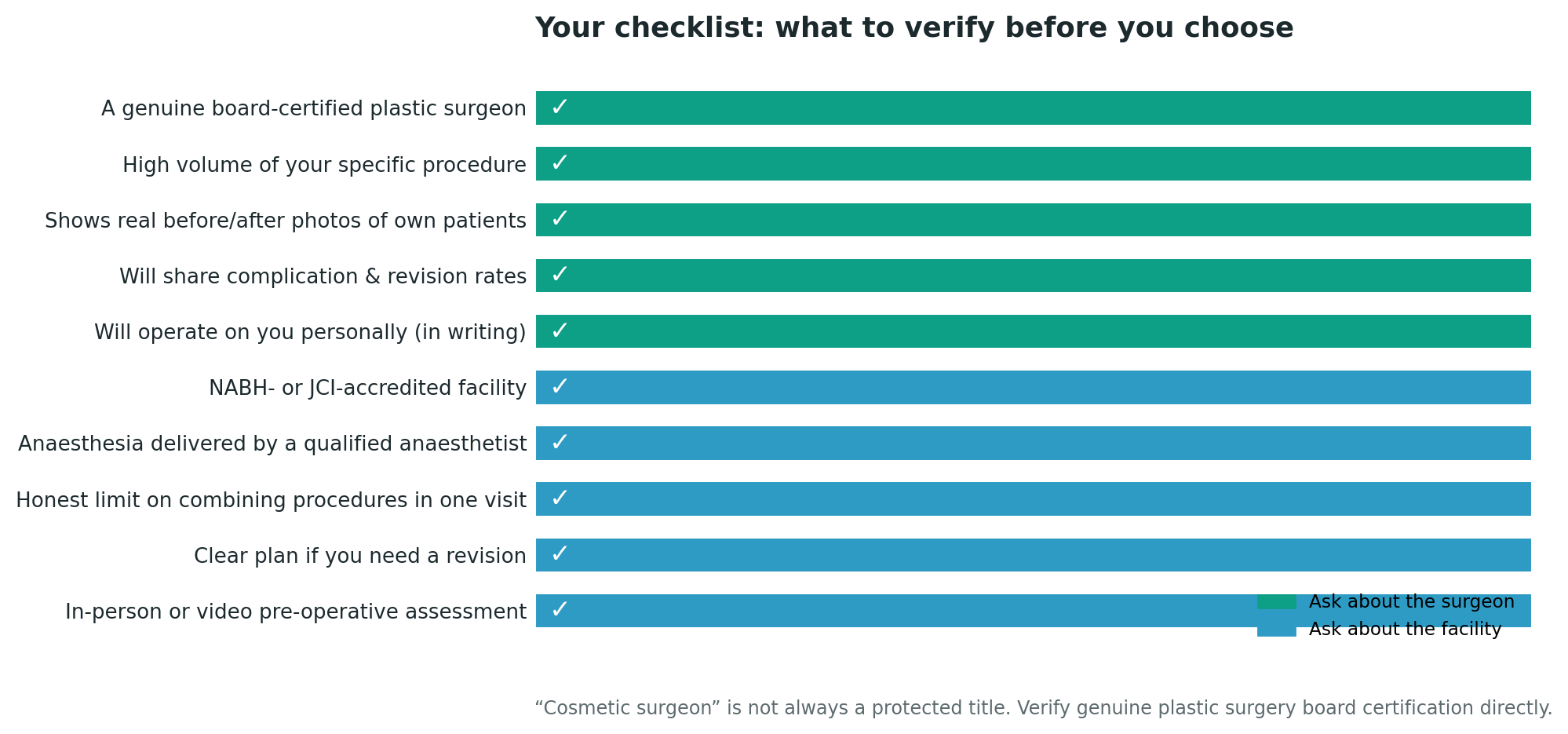
“Cosmetic surgeon” is not always a protected title. Verify genuine plastic surgery board certification directly.
Cost and value: how to weigh the money honestly
Cosmetic surgery in a good Indian facility costs a fraction of Western private pricing, which is part of why many patients travel. At roughly ZK19 to the US dollar in mid-2026, the saving is large in kwacha; confirm the rate before travel, as it moves. But because this surgery is elective and unforced, there is no justification for choosing on price alone. A cheaper package that pushes you toward combining more procedures than is wise, or that uses an unverified “cosmetic surgeon,” is not a saving — it is a real increase in risk for a result you were never obliged to pursue at all.
In 24 years of arranging these journeys, I have learned that the disputes that arise almost never concern the headline price — they concern patients persuaded to combine more procedures than was wise, or operated on by someone whose actual qualifications were never what they seemed. Insist on verified credentials and an honest conversation about combining procedures before you commit a single kwacha.
What a Zambian patient should weigh in particular
Beyond the surgeon and the facility, several things matter specifically for a patient travelling from Zambia. First, your skin heals differently : darker skin carries a meaningfully higher risk of keloid scarring and visible pigment changes after surgery, so choose a surgeon experienced specifically with skin like yours, and discuss scar-management planning before you agree to any procedure. Second, plan your travel around safe healing, not around fitting everything into one trip : resist the temptation to add extra procedures purely because you have already made the journey. Third, how you will pay : elective cosmetic surgery is never covered by the National Health Insurance scheme, so budget the full, honest cost from the outset, including aftercare.
The practical journey from Zambia
India requires a yellow fever vaccination certificate from travellers arriving from Zambia, valid only ten days after the injection. Depending on the procedure, you may need a medical visa issued by the High Commission of India on Pandit Nehru Road in Lusaka against the facility’s invitation letter. There is no direct flight — you will connect through Addis Ababa on Ethiopian Airlines, or through Dubai, Doha or Nairobi. Book a changeable return ticket that allows for proper recovery time before flying, since air travel too soon after surgery raises the risk of blood clots, and settle the facility by traceable bank transfer rather than cash.
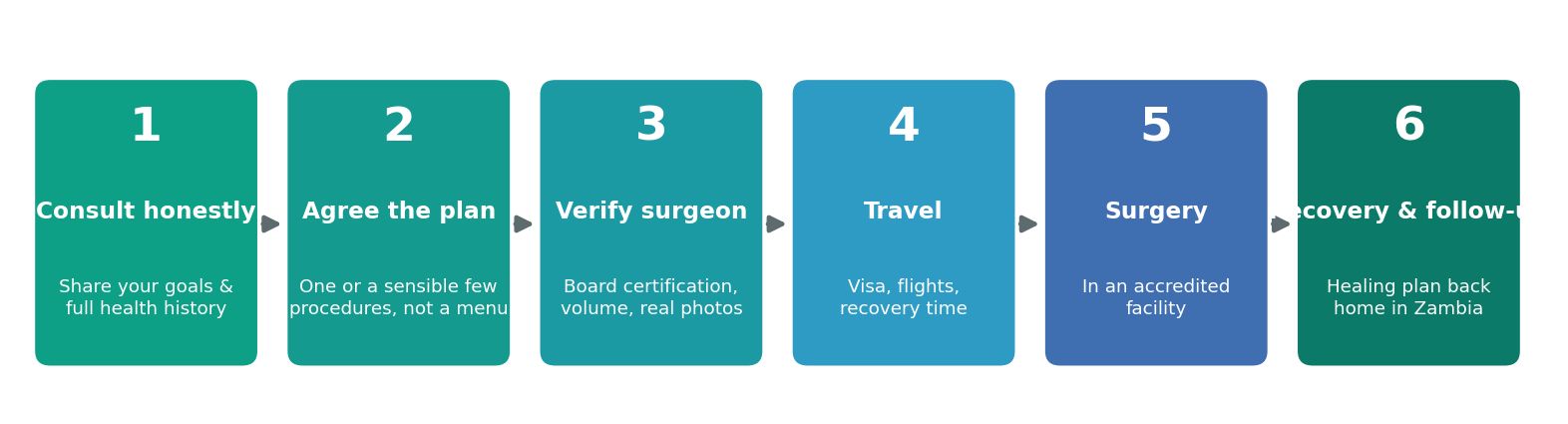
Four signals that should make you pause
- No verifiable board certification — a “cosmetic surgeon” who cannot show genuine, verifiable plastic surgery training.
- Pressure to combine several procedures — into one long operation, framed mainly around convenience or cost, without a serious safety conversation.
- Only stock or unverifiable photographs — with no willingness to confirm they are the surgeon’s own patients.
- No clear anaesthesia or emergency backup — a facility without current NABH or JCI accreditation.
Straight Answers for Zambians about Cosmetic Surgeons & Facilities in India
Is “cosmetic surgeon” the same as “plastic surgeon”?
Not necessarily. In many places, “cosmetic surgeon” is not a strictly protected title, and doctors from varied backgrounds can use it after limited training. A genuine plastic surgeon has completed rigorous, formally recognised surgical training. Always verify the actual qualification, not the label.
Can I combine several procedures to save time and money on my trip?
Sometimes, for genuinely complementary procedures, but combining nearly doubles the 30-day complication rate compared with a single procedure, largely from longer anaesthesia time and higher blood-clot risk. Never combine purely for convenience; insist on an honest safety conversation first.
How do I know if before-and-after photos are genuine?
Ask directly whether they are the surgeon's own patients, request to see a broad, unfiltered gallery rather than a handful of best examples, and be wary of any reluctance to answer plainly.
Does my skin tone affect my risk or results?
Yes. Darker skin carries a higher risk of keloid scarring and visible pigment changes after surgery. Choose a surgeon with specific experience treating skin like yours, and discuss scar management as part of your planning, not as an afterthought.
Sources & Useful Links
- 🌐 Verify a surgeon (India) — National Medical Commission register of doctors: nmc.org.in
- 🌐 Hospital accreditation (India) — verify a facility’s NABH accreditation: nabh.co
- 🌐 Medical visa (India), Lusaka — High Commission of India, requirements & process: hcizambia.gov.in/page/medical-visa
- 🌐 National Health Insurance (Zambia) — NHIMA cover (elective cosmetic surgery is not covered): nhima.co.zm
- 🌐 Ministry of Health, Zambia — general health referrals: moh.gov.zm
- 🌐 Yellow fever & travel health — WHO vaccination guidance: who.int/health-topics/yellow-fever
A closing word
If you tell me what you are considering, I will help you verify the questions that matter most: whether a surgeon is a genuinely board-certified plastic surgeon rather than simply a confident “cosmetic surgeon,” whether the before- and-after photographs you are shown are real and honestly presented, and whether any plan to combine procedures is being proposed for sound clinical reasons or merely for convenience. Because this surgery is elective, you owe yourself the time to choose well — there is no illness pushing you forward, only the chance to make a careful, well- verified decision, and a good surgeon will never rush you past that chance. That, for all these years, has been my work.
Frequently Asked Questions by Zambians about Cosmetic Surgeons & Facilities in India
How should Zambian patients choose a cosmetic surgeon in India?
They should verify that the doctor has recognised specialist plastic-surgery training, such as MCh or DNB in Plastic Surgery, and ask about experience with the exact procedure they are considering.
Is a “cosmetic surgeon” always a qualified plastic surgeon?
No. The guide specifically warns that “cosmetic surgeon” is not necessarily a strictly protected specialist title. Patients should verify actual plastic-surgery qualifications rather than relying on the label.
Can Zambian patients combine several cosmetic procedures during one trip to India?
Sometimes, but only when clinically reasonable. The guide's chart shows the 30-day complication rate increasing from 4.2% for a single procedure to 7.6% for two or more procedures combined in one session.
Why should Zambian patients consider skin tone when choosing a plastic surgeon?
The guide states that darker skin carries a greater risk of keloid scarring and visible pigment changes. Patients should therefore choose a surgeon experienced with similar skin types and discuss scar management before surgery.
What qualifications should an Indian plastic surgeon have?
The guide identifies MBBS as the basic medical degree, MS General Surgery as general surgical training and MCh or DNB Plastic Surgery as formal specialist plastic-surgery qualifications.
What should Zambian patients check in a cosmetic surgery facility?
The facility should have NABH and ideally JCI accreditation, a qualified anaesthetist, recognised infection-control systems and clear emergency backup, particularly for procedures requiring general anaesthesia.
How can patients check whether before-and-after photographs are genuine?
They should ask whether the photographs are from the surgeon's own patients and request a broad gallery rather than relying on a small number of selected or stock images.
What should be included in a cosmetic surgery quotation?
The guide recommends a written, itemised quotation covering the surgeon's fee, facility fee, anaesthesia and aftercare, with a clear explanation of what happens and who pays if revision surgery is needed.
How should Zambian patients plan their return flight after cosmetic surgery in India?
They should use a changeable return ticket and allow adequate recovery time. The document warns that flying too soon after surgery can increase blood-clot risk, so recovery and medical clearance should determine the return date.
What are the main red flags when choosing cosmetic surgery in India?
The guide highlights four warning signs: a “cosmetic surgeon” unable to show genuine plastic-surgery qualifications, pressure to combine multiple procedures mainly for convenience or cost, stock or unverifiable before-and-after photographs, and a facility without clear specialist anaesthesia, emergency backup or current NABH/JCI accreditation.
Page Summary
This guide explains how Zambian patients should select cosmetic surgeons and surgical facilities in India, emphasising that elective surgery allows patients the time to verify safety before committing to treatment. The first requirement is verifying that the doctor is genuinely trained in plastic surgery. The term “cosmetic surgeon” may not by itself prove formal specialist surgical training. The guide recommends looking for an MCh or DNB in Plastic Surgery.
Citation Block
| Topic | Information |
|---|---|
| Topic Information | Details |
| Procedure | Cosmetic & Plastic Surgery |
| Country | India |
| Intended Audience | Zambian Patients |
| Procedures Covered | Rhinoplasty, Facelift, Eyelid Surgery, Breast Surgery, Liposuction and Tummy Tuck |
| Primary Specialist | Formally Trained Plastic Surgeon |
| Specialist Qualification | MCh Plastic Surgery or DNB Plastic Surgery |
| Surgeon vs Facility Weighting | 55% Surgeon + 45% Facility |
| Single Procedure Complication Rate | 4.2% in the Guide's Illustrative Chart |
| Combined Procedure Complication Rate | 7.6% for Two or More Procedures in One Session |
| Zambia-Specific Consideration | Darker Skin and Increased Keloid/Pigment-Change Risk |
| Facility Accreditation | NABH and Ideally JCI |
| Anaesthesia | Qualified Specialist Anaesthetist |
| Emergency Support | Immediate Escalation Arrangements to a Full Hospital |

Our Mission Statement
Our mission is to place patients at the centre of every healthcare decision by providing trustworthy, evidence-based, and unbiased medical information. We believe that informed patients make better decisions. Backed by personalised guidance from our experienced advisory team, we help patients understand their treatment options, compare them objectively, and confidently choose the path that best suits their medical needs and personal circumstances.
Patient Testimonials from Zambia

Ready to Take the First Step?
Share your Medical Reports with our Healthcare Managers Today and Get a FREE CONSULTATION, a Personalized Treatment Plan, and Complete Support from Arrival to Recovery.
Get Your Free ConsultationAreas We Serve
This resource has been thoughtfully prepared for patients from Zambia who are considering medical treatment in India. We also welcome patients from the wider region in the countries mentioned below-
We assist patients from:
- Zambia
- Angola
- Malawi
- Zimbabwe
- Botswana
- Namibia
- South Africa
- Eswatini
- Lesotho
- Gabon
- Chad
- Equatorial Guinea
- São Tomé and Príncipe
- Republic of the Congo
- Democratic Republic of the Congo
Many of the insights, treatment pathways, hospital recommendations, travel guidance, and patient support services described here are equally relevant and may be used as a reference when planning treatment in India.
From Zambia to India: Your Complete Patient Support Guide
- Best Weight-Loss (Bariatric) Surgeons & Hospitals in India for Zambian Patients
- Best Brain-Tumour Surgeons & Hospitals in India for Zambian Patients
- Best Cancer Doctors & Hospitals in India for Zambian Patients
- Best Cardiac Surgeons & Hospitals in India for Zambian Patients
- Best Cosmetic Surgeons & Facilities in India for Zambian Patients
- Best CyberKnife Treatment Teams & Centres in India for Zambian Patients
- Best Dentists & Dental Clinics in India for Zambian Patients
- Best Heart Valve Replacement Surgeons & Hospitals in India for Zambian Patients
- Best Hip Surgeons & Hospitals in India for Zambian Patients
- Best Knee Surgeons & Hospitals in India for Zambian Patients
- Best Neurosurgeons & Hospitals in India for Zambian Patients
- Best Paediatric Cardiac Surgeons & Hospitals in India for Zambian Patients
- Best Paediatric Neurosurgeons & Hospitals in India for Zambian Patients
- Best Prostate Surgeons & Hospitals in India for Zambian Patients
- Best Scoliosis Surgeons & Hospitals in India for Zambian Patients
- Best Spine Surgeons & Hospitals in India for Zambian Patients
- Best Bone Marrow Transplant Teams & Hospitals in India for Zambian Patients
- Best Kidney Transplant Surgeons & Hospitals in India for Zambian Patients