

Scoliosis & Spine Deformation Corrective Surgery in India for Zambian Patients
Not every curved spine is the same condition. Understanding which kind you or your child has — and why — is the first and most important step toward the right treatment.
A spine that has begun to bend or twist away from its normal line is one of the more visible and worrying things a family can be told about, because it touches not only comfort but appearance, confidence, and sometimes far more serious risks to the nerves themselves. For 24 years I have guided Zambian and wider African families through the treatment of spinal deformity, and the first lesson I share is always the same: “curved spine” is not one diagnosis but several, with different causes, different shapes, different urgency, and different treatments. Some curves are watched patiently for years. Others, if left even a matter of months, can threaten a person’s ability to walk. Telling them apart correctly is where good care begins.
Healing Journeys of Zambian Patients
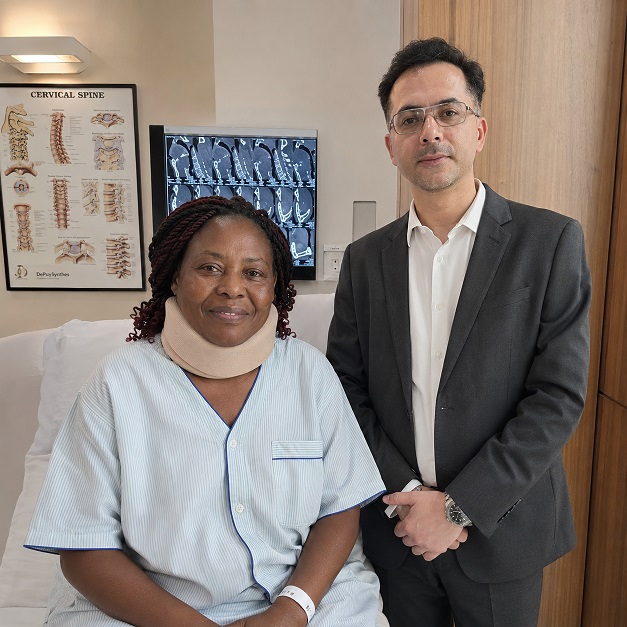
Key Takeaways
- Not every curved spine is scoliosis. Zambian patients should first establish whether the deformity is idiopathic scoliosis, Pott’s kyphosis or another spinal condition because the cause and treatment can be very different.
- Pott’s spine is caused by spinal tuberculosis damaging and collapsing the vertebrae. Anti-TB medicines treat the infection, but they cannot reverse bone that has already collapsed or correct a significant deformity.
- Treatment for scoliosis depends largely on the curve and whether it is progressing. Mild curves may be monitored, moderate curves in growing children may be managed with bracing, while larger or progressive curves may require corrective fusion surgery.
- Severe Pott’s kyphosis may require surgery when the deformity progresses, causes significant pain or threatens the spinal cord. Severe rigid deformities can require vertebral column resection, a complex procedure that benefits from a high-volume specialist centre.
- Good spinal deformity care starts with proper diagnosis and imaging. For suspected spinal TB, appropriate testing should confirm the infection, while intra-operative neuromonitoring is an important safeguard during complex deformity correction.
- Recovery depends on the operation performed. Corrective fusion usually involves several days in hospital and months of gradual recovery, while major Pott’s kyphosis correction requires closer supervision and rehabilitation. A follow-up doctor in Zambia should be arranged before travelling home.
- Zambian patients can often receive treatment for less severe scoliosis and spinal TB locally, while complex deformity correction may be a reason to consider a high-volume centre in India. Patients should send actual X-rays and, for suspected TB, their treatment records before travel and arrange the medical visa, yellow-fever certificate and connecting flights in advance.
Quick Facts
- Treatment
- Scoliosis and Spinal Deformity Treatment
- Country
- India
- Patients
- Zambian Patients
- Main Conditions
- Idiopathic Scoliosis and Post-Tuberculous Kyphosis
- Other Conditions
- Congenital and Adult Degenerative Deformity
- Diagnosis
- Imaging and Appropriate TB Testing Where Required
- Scoliosis Measurement
- Cobb Angle on X-Ray
- Mild Scoliosis
- Observation and Regular Monitoring
- Moderate Scoliosis
- Bracing May Be Used in Growing Children
- Severe Scoliosis
- Corrective Fusion With Instrumentation
- Pott’s Spine
- Anti-TB Medicine Is Essential
- Severe Pott’s Kyphosis
- May Require Corrective Surgery
- Advanced Deformity
- Vertebral Column Resection May Be Required
- Urgent Warning Signs
- Weakness, Numbness or Walking Difficulty
In Brief
Zambian patients considering spinal deformity treatment in India should first establish the exact cause of the curve or deformity. Idiopathic scoliosis and post-tuberculous Pott’s kyphosis require different treatment approaches, and spinal TB must be treated medically even when surgery is later required for the resulting deformity. Patients should have their actual X-rays and relevant TB treatment records reviewed before travelling and should choose a surgeon and hospital with specific experience in the proposed deformity procedure.
The two deformities this guide covers, and why they are different
Most spinal deformity a Zambian patient will encounter falls into one of two broad groups, and confusing them can lead to the wrong expectations entirely. The first is scoliosis , a smooth, gradual sideways curve of the spine, usually appearing in adolescence with no clear single cause (called idiopathic scoliosis), or later in life as the ageing spine degenerates unevenly. The second, and the one with a particular importance in this region, is post-tuberculous kyphosis , often called Pott’s spine after the disease that causes it — a sharp, angular forward bend, sometimes called a gibbus, caused by spinal tuberculosis destroying and collapsing one or more vertebrae. These are genuinely different conditions, and this guide treats them as such.
Two further, less common causes are worth knowing by name, even though this guide does not cover them in the same depth. Congenital spinal deformity arises when the vertebrae themselves form incompletely before birth, producing a curve that is present from infancy and often needs a different, earlier surgical approach than idiopathic scoliosis. Adult degenerative deformity develops later in life, as the discs and joints of an ageing spine wear unevenly, sometimes on top of an old, previously mild adolescent curve. Both are assessed on the same principles as the two main conditions below — confirm the cause, judge the severity and any nerve involvement, and match the treatment to the individual, not to the label alone.
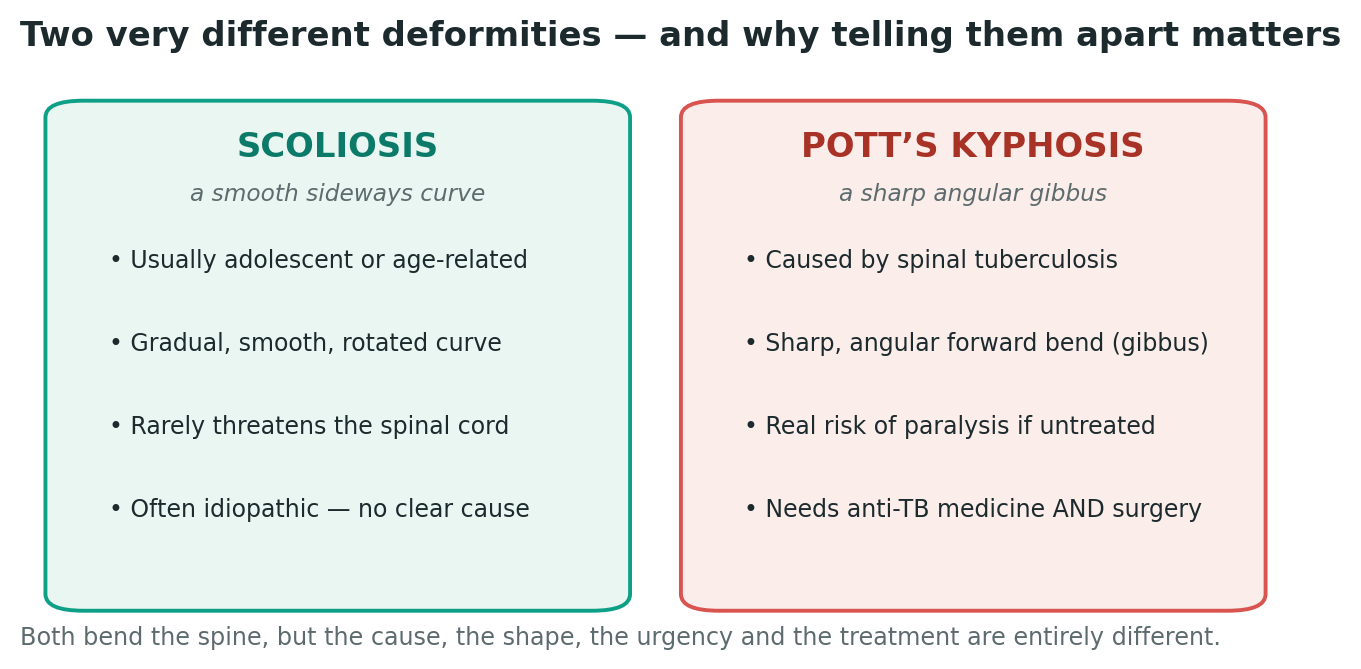
Both bend the spine, but the cause, the shape, the urgency and the treatment are entirely different — which is why the correct diagnosis always comes first.
Pott’s spine: why this matters so much in Zambia
Tuberculosis remains a significant health burden across this region, and spinal tuberculosis — infection of the vertebrae by the same bacterium that causes TB in the lungs — accounts for a substantial share of all musculoskeletal tuberculosis worldwide. Left untreated, or even after the infection itself has been successfully cured with medicine, the vertebrae it has damaged can collapse, producing a sharp, angular deformity as the spine folds forward around the destroyed bone. In a meaningful minority of cases, around three to five in every hundred, this deformity becomes severe — generally described as beyond 60 degrees — and severe deformity carries real risks: chronic pain, worsening breathing difficulty as the ribcage is distorted, and, most seriously, pressure on the spinal cord that can cause weakness or paralysis in the legs, a complication with the historical name Pott’s paraplegia. Research following patients with this condition has found the risk of some degree of neurological involvement can reach as high as four in ten cases when the deformity is severe and the spine unstable.
The most important knowledge in this guide: medicine first, surgery for the deformity
Spinal tuberculosis itself is treated with a full course of combination anti-tuberculosis medicines, typically over many months, and this eradicates the infection in the great majority of patients. Surgery does not replace this treatment — it addresses what the infection has already done to the bone and the spinal alignment. This is a vital distinction: a patient can be cured of the infection by medicine alone and still be left with a progressive, worsening deformity that only surgery can correct. The decision to operate is generally based on several things together — the severity and progression of the deformity, whether nerve function is threatened, whether pain is severe, and whether the infection itself is controlled — not simply on the presence of a curve. Risk factors for going on to develop a severe deformity include catching the disease as a young child, involvement of several vertebrae, and infection in the thoracic (upper-to-mid back) portion of the spine. The earlier spinal tuberculosis is diagnosed and treated, the smaller the deformity that results — which is itself one of the strongest reasons to seek assessment promptly for persistent back pain, especially in a child.
How each condition is treated
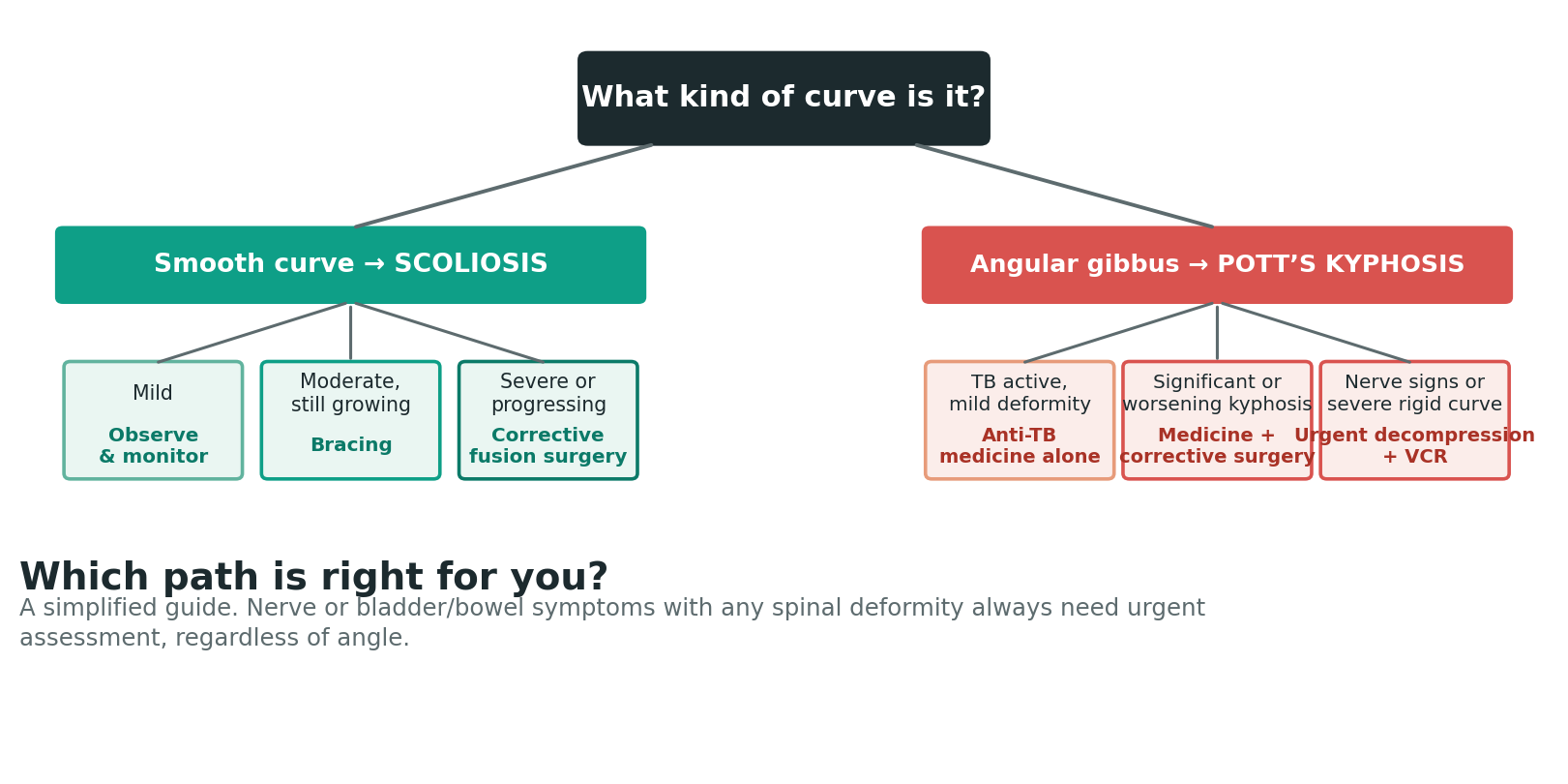
For idiopathic scoliosis, treatment follows the severity of the curve, measured in degrees on an X-ray (the Cobb angle). Mild curves are often simply watched over time; moderate curves in a child who still has significant growing to do are frequently managed with a brace to prevent worsening; and larger curves, generally beyond around 45 to 50 degrees, or curves that continue to progress, are usually treated surgically with instrumentation and fusion to correct and stabilise the spine.
For Pott’s kyphosis, surgery is generally considered when the deformity is severe (commonly beyond 60 degrees), progressing despite completed anti-TB treatment, causing significant pain, or — most urgently — when there are signs of nerve or spinal cord involvement such as weakness, numbness, or difficulty controlling the bladder or bowel. The surgical goal is threefold: to remove any remaining infected or dead tissue pressing on the nerves, to correct the angular deformity, and to stabilise the spine with instrumentation so it heals in a corrected position. For severe, rigid deformities, this often requires a technically demanding operation called a posterior vertebral column resection, in which the most severely collapsed section of the spine is carefully removed and the two ends brought back into alignment — a procedure that has become the established treatment of choice for advanced cases, and one that benefits enormously from a surgeon and hospital with genuine, specific experience in it.
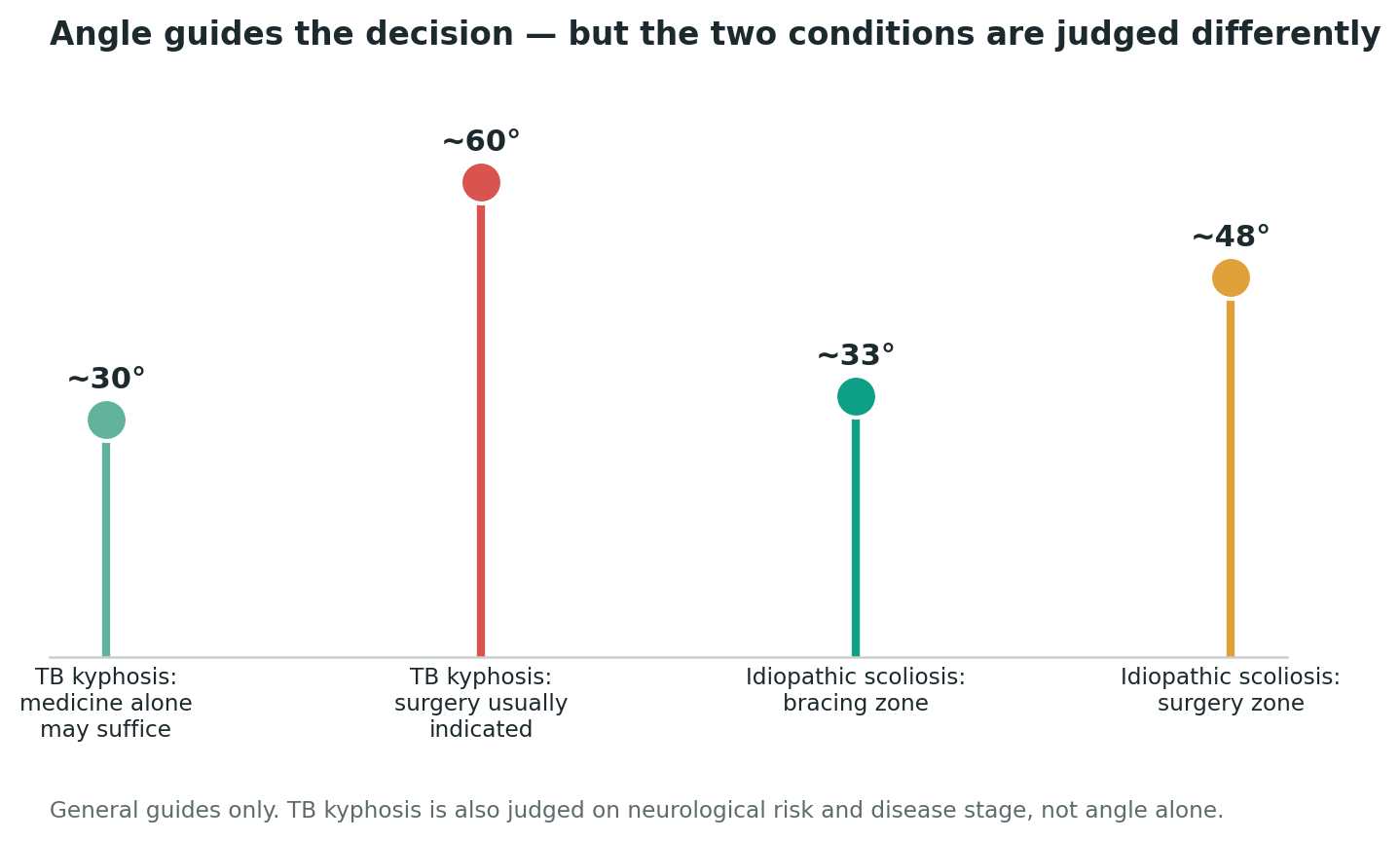
General guides only. In Pott’s kyphosis, nerve involvement can indicate surgery even at a smaller angle than these figures suggest.
Treatment options at a glance
| Situation | Typical approach | What it involves |
|---|---|---|
| Mild scoliosis | Observation | Regular monitoring with X-rays; no active treatment needed. |
| Moderate scoliosis, still growing | Bracing | A supportive brace worn to prevent the curve worsening during growth. |
| Severe or progressive scoliosis | Corrective fusion surgery | Instrumentation (rods and screws) and bone fusion to correct and stabilise the curve. |
| Active spinal TB, mild deformity | Anti-TB medicine alone | A full multi-drug course; the spine is monitored as the infection resolves. |
| Spinal TB, significant or worsening kyphosis | Medicine plus corrective surgery | Decompression of the nerves, correction of the angle, and instrumented fusion. |
| Severe, rigid Pott’s deformity | Vertebral column resection | Removal of the collapsed segment and realignment; a specialist, high-volume procedure. |
What good care looks like
Whichever condition is involved, certain things distinguish genuinely good care. The diagnosis should be confirmed properly — imaging, and for suspected tuberculosis, appropriate testing to confirm the infection — before any treatment plan is made. For spine surgery generally, a second opinion is worth seeking, since spine surgery is performed more often worldwide than the evidence always supports, and a good surgeon is one willing to explain clearly why an operation is, or is not, needed. For deformity surgery specifically, continuous monitoring of the spinal cord and nerves during the operation (intra-operative neuromonitoring) is an important safeguard, because the correction manoeuvres involved carry a real risk to the nerves if not carefully managed. And for children whose spines are still growing, techniques exist to correct or manage a deformity while preserving further growth, which is a different skill from correcting a fully grown spine.
Recovery deserves the same honest planning as the operation itself. After corrective fusion surgery, most patients spend several days in hospital and gradually return to normal activity over the following months, guided by a structured physiotherapy programme; a rigid brace is sometimes used for a period afterward, particularly following major deformity correction, to protect the spine while the fusion consolidates. After a vertebral column resection for severe Pott’s kyphosis, recovery is naturally longer and more closely supervised, given the scale of the correction and the importance of protecting the nerves during the healing period. In both cases, arrange a clear rehabilitation plan before you travel home, and identify a doctor in Zambia who can continue your physiotherapy and monitor your progress.
Cost and value
Spinal deformity correction in a good Indian hospital costs a fraction of Western private pricing. At roughly ZK19 to the US dollar in mid-2026, the saving is substantial in kwacha; confirm the rate before travel, as it moves. Costs vary considerably with the complexity of the case — a straightforward bracing consultation is inexpensive, while a major vertebral column resection for severe Pott’s kyphosis is among the more complex and costly operations in spine surgery, reflecting the length of the procedure, the instrumentation used, and the intensive post-operative care required.
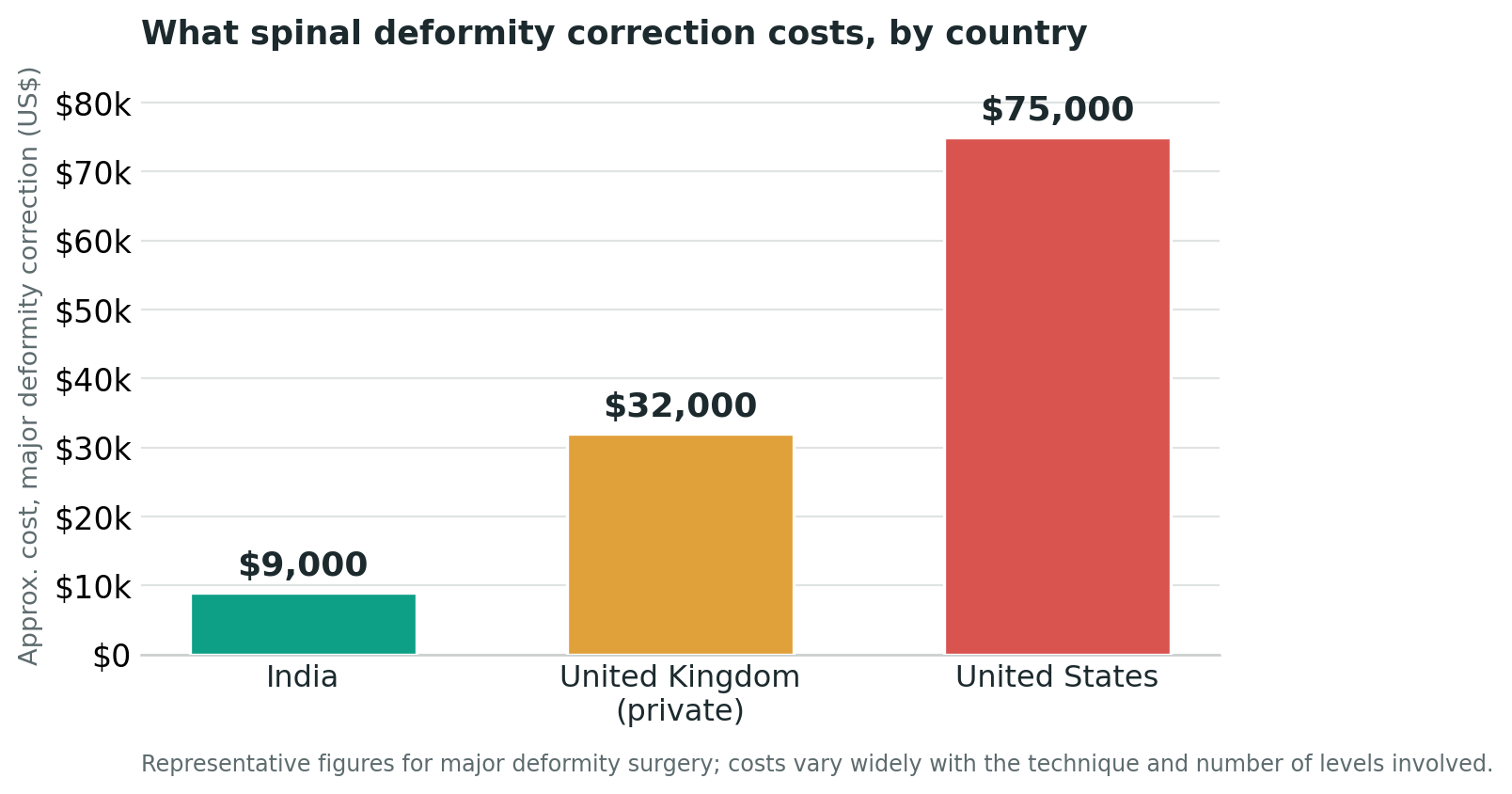
Representative figures for major deformity surgery; a smaller procedure, where appropriate, costs considerably less.
In 24 years of arranging these journeys, I have found that the disputes that arise almost never concern the headline price — they concern whether the diagnosis, and therefore the whole treatment plan, was correct from the outset. Insist on a clear, confirmed diagnosis, and a plain explanation of why a particular treatment is recommended, before any figure is agreed.
Zambian practicalities
Zambia has orthopaedic and general surgical services, centred on the University Teaching Hospital in Lusaka and other referral hospitals, and less severe cases of both scoliosis and spinal TB can often be managed, at least in part, at home — particularly the medical treatment of tuberculosis itself, which should always be started locally rather than delayed for travel. Complex deformity correction, and particularly advanced techniques such as vertebral column resection, are harder to access locally, which is where travel to a high-volume centre becomes valuable. India requires a yellow fever certificate from Zambian travellers, valid from ten days after vaccination; the medical visa is issued by the High Commission of India in Lusaka against the hospital’s invitation letter, with an attendant visa in the same batch. There is no direct flight, so plan to connect via Addis Ababa, Dubai, Doha or Nairobi. Send your actual X-rays, and for suspected TB, your treatment records to date, not only a summary report, for review before you travel.
Which path applies to you?
Signals that should prompt urgent, not routine, attention
- New weakness, numbness, or difficulty walking — in a person with a known or suspected spinal deformity or spinal TB, this needs urgent assessment, not a routine appointment.
- Loss of bladder or bowel control — alongside back pain or a visible deformity, this is an emergency.
- A visibly worsening angular deformity (gibbus) — despite a completed course of anti-TB treatment.
- Persistent back pain in a child that does not settle — particularly with any visible curve or hump, worth assessing promptly rather than waiting.
Straight answers for Zambian Patients about Scoliosis & Spine Deformation Corrective Surgery in India
Is a curved spine always scoliosis?
No. A smooth sideways curve is usually scoliosis, but a sharp, angular forward bend can be a sign of spinal tuberculosis (Pott's kyphosis), which is a different condition with a different treatment, including the need for anti-TB medicine. Any spinal deformity deserves a proper diagnosis, not an assumption.
If I complete my TB treatment, will my spine straighten on its own?
Medicine cures the infection but does not reverse bone that has already collapsed. Some mild deformity may be simply monitored, but significant or progressive kyphosis generally needs surgery in addition to completing the medical treatment, not instead of it.
How urgent is surgery for spinal tuberculosis?
It depends on the individual case, but any sign of nerve involvement — weakness, numbness, or bladder or bowel changes — makes it urgent. Without these signs, surgery for deformity alone is planned more deliberately, though it should not be delayed indefinitely if the curve is progressing.
Can children with scoliosis avoid surgery?
Often, yes. Many curves are mild and simply monitored, and moderate curves in a growing child are frequently managed successfully with bracing. Surgery is generally reserved for larger or progressive curves, and the decision should always follow a proper assessment of the specific curve, not a general rule.
Sources & useful links
- 🌐 Medical visa (India), Lusaka — High Commission of India, requirements & process: hcizambia.gov.in/page/medical-visa
- 🌐 National Health Insurance (Zambia) — NHIMA cover (treatment abroad is not covered): nhima.co.zm
- 🌐 Ministry of Health, Zambia — TB and orthopaedic referral services: moh.gov.zm
- 🌐 Verify a surgeon (India) — National Medical Commission register of doctors: nmc.org.in
- 🌐 Hospital accreditation (India) — verify a hospital’s NABH accreditation: nabh.co
- 🌐 Yellow fever & travel health — WHO vaccination guidance: who.int/health-topics/yellow-fever
A closing word
If you send me your X-rays, and where relevant your TB treatment history, I will help you understand exactly what kind of deformity you or your child is dealing with, what it genuinely requires, and which surgeons and hospitals in India have real, specific experience with it — whether that is careful monitoring, bracing, standard corrective fusion, or the specialist skill of correcting a severe, rigid Pott’s deformity. The right diagnosis, arrived at early and confirmed properly, remains the single most powerful thing in this entire guide — more powerful, in the end, than any single choice of surgeon or hospital that follows it. That, for all these years, has been my work.
Frequently Asked Questions by Zambian Patients about Scoliosis & Spine Deformation Corrective Surgery in India
Is every curved spine in a Zambian patient scoliosis?
No. A smooth sideways curve may be scoliosis, while a sharp forward bend can indicate Pott’s kyphosis caused by spinal tuberculosis. The two conditions require different treatment approaches.
What causes Pott’s spine in Zambian patients?
Pott’s spine is caused by tuberculosis infection affecting the vertebrae. The infection can damage and collapse the bones, creating a sharp forward spinal deformity known as kyphosis or gibbus.
Does completing TB treatment straighten the spine for Zambian patients?
Not necessarily. Anti-TB medicines treat the infection, but they cannot reverse vertebral bone that has already collapsed. Significant or progressive deformity may therefore require corrective surgery after or alongside appropriate medical treatment.
When does scoliosis require surgery for Zambian patients?
Mild curves may be monitored, while moderate curves in growing children may be treated with bracing. Larger curves, generally beyond around 45–50 degrees, or curves that continue to progress may require corrective fusion surgery.
When can Pott’s kyphosis require surgery in India?
Surgery may be considered when the deformity is severe or progressing, causes significant pain or produces nerve or spinal cord symptoms. Weakness, numbness or bladder and bowel changes require particularly urgent assessment.
What is vertebral column resection for severe Pott’s kyphosis?
It is a complex corrective procedure in which the severely collapsed section of the spine is removed and the spine is brought back into alignment and stabilised with instrumentation. It is generally reserved for severe, rigid deformities.
Can children from Zambia avoid scoliosis surgery?
Often, yes. Many mild curves can be monitored, while moderate curves in growing children can frequently be managed with bracing. Surgery is generally considered for larger or progressive curves after proper assessment.
What should Zambian patients check before choosing a spine surgeon in India?
Patients should seek a surgeon with specific experience in spinal deformity correction and the procedure being considered. For complex surgery, the hospital should also have appropriate monitoring and rehabilitation facilities.
How should Zambian patients prepare for spinal deformity treatment in India?
Patients should send their actual X-rays and, when spinal TB is suspected or previously treated, their TB treatment records for review before travelling. They should also arrange the hospital invitation, medical visa, yellow-fever certificate and connecting flights.
Can Zambian patients continue recovery in Zambia after spine surgery in India?
Yes. Patients should arrange a clear rehabilitation and follow-up plan before returning home. A doctor in Zambia can continue monitoring progress and coordinate physiotherapy during the recovery period.
Page Summary
This guide covers scoliosis and spinal deformity treatment in India for Zambian patients, including diagnosis and treatment options. It explains scoliosis, Pott’s kyphosis, bracing and corrective spinal surgery, and notes that severe deformities may require advanced procedures such as vertebral column resection. It also covers recovery, rehabilitation and follow-up care. Zambian patients can learn about medical visa, travel and pre-treatment document requirements. Proper planning can help patients coordinate treatment in India and continued care in Zambia.
Citation Block
| Topic | Information |
|---|---|
| Topic Information | Scoliosis & Spine Deformation Corrective Surgery in India for Zambian Patients |
| Treatment | Spinal Deformity Correction and Scoliosis Surgery |
| Country | India |
| Intended Audience | Zambian Patients |
| Main Conditions | Idiopathic Scoliosis and Post-Tuberculous Pott’s Kyphosis |
| Diagnosis | Imaging, Cobb Angle Assessment and TB Testing Where Required |
| Scoliosis Treatment | Observation, Bracing or Corrective Fusion |
| Pott’s Spine Treatment | Anti-TB Medicine With Corrective Surgery Where Indicated |
| Advanced Surgery | Vertebral Column Resection for Severe Rigid Deformity |
| Important Safeguard | Intra-Operative Neuromonitoring |
| Urgent Symptoms | Weakness, Numbness, Walking Difficulty or Bladder/Bowel Changes |
| Recovery | Several Days in Hospital Followed by Months of Rehabilitation |
| Zambia Treatment Option | Less Severe Cases Can Often Be Managed Locally |
| India Consideration | Complex Deformity Correction and Specialist Experience |

Our Mission Statement
Our mission is to place patients at the centre of every healthcare decision by providing trustworthy, evidence-based, and unbiased medical information. We believe that informed patients make better decisions. Backed by personalised guidance from our experienced advisory team, we help patients understand their treatment options, compare them objectively, and confidently choose the path that best suits their medical needs and personal circumstances.
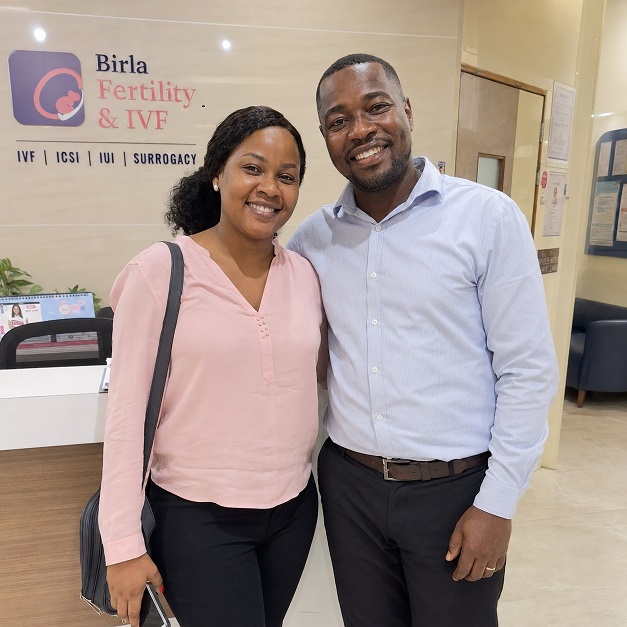
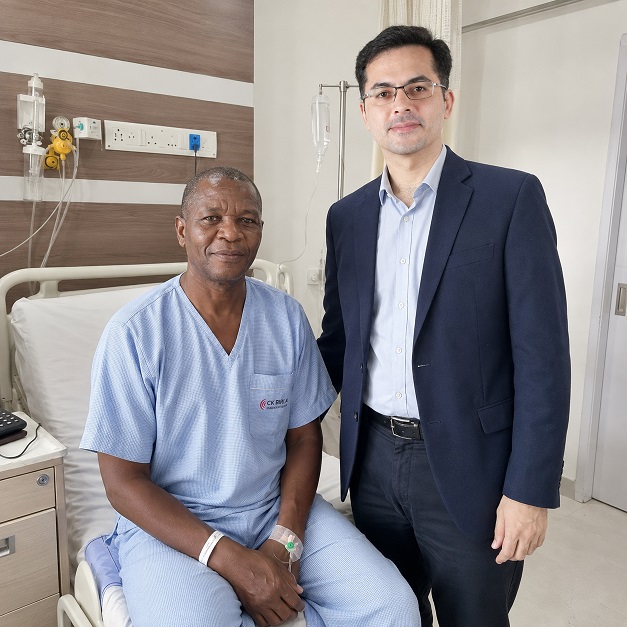
Patient Testimonials from Zambia
Ready to Take the First Step?
Share your Medical Reports with our Healthcare Managers Today and Get a FREE CONSULTATION, a Personalized Treatment Plan, and Complete Support from Arrival to Recovery.
Get Your Free ConsultationAreas We Serve
This resource has been thoughtfully prepared for patients from Zambia who are considering medical treatment in India. We also welcome patients from the wider region in the countries mentioned below-
We assist patients from:
- Zambia
- Angola
- Malawi
- Zimbabwe
- Botswana
- Namibia
- South Africa
- Eswatini
- Lesotho
- Gabon
- Chad
- Equatorial Guinea
- São Tomé and Príncipe
- Republic of the Congo
- Democratic Republic of the Congo
Many of the insights, treatment pathways, hospital recommendations, travel guidance, and patient support services described here are equally relevant and may be used as a reference when planning treatment in India.
From Zambia to India: Your Complete Patient Support Guide
- Best Weight-Loss (Bariatric) Surgeons & Hospitals in India for Zambian Patients
- Best Brain-Tumour Surgeons & Hospitals in India for Zambian Patients
- Best Cancer Doctors & Hospitals in India for Zambian Patients
- Best Cardiac Surgeons & Hospitals in India for Zambian Patients
- Best Cosmetic Surgeons & Facilities in India for Zambian Patients
- Best CyberKnife Treatment Teams & Centres in India for Zambian Patients
- Best Dentists & Dental Clinics in India for Zambian Patients
- Best Heart Valve Replacement Surgeons & Hospitals in India for Zambian Patients
- Best Hip Surgeons & Hospitals in India for Zambian Patients
- Best Knee Surgeons & Hospitals in India for Zambian Patients
- Best Neurosurgeons & Hospitals in India for Zambian Patients
- Best Paediatric Cardiac Surgeons & Hospitals in India for Zambian Patients
- Best Paediatric Neurosurgeons & Hospitals in India for Zambian Patients
- Best Prostate Surgeons & Hospitals in India for Zambian Patients
- Best Scoliosis Surgeons & Hospitals in India for Zambian Patients
- Best Spine Surgeons & Hospitals in India for Zambian Patients
- Best Bone Marrow Transplant Teams & Hospitals in India for Zambian Patients
- Best Kidney Transplant Surgeons & Hospitals in India for Zambian Patients