

Parkinson's Treatment and DBS Surgery in India for Zambian Patients
Before any conversation about brain surgery can begin, one question has to be answered honestly: is this actually Parkinson's disease, or something that looks like it and is entirely reversible?
Deep brain stimulation, or DBS, is one of the genuine success stories of modern neurosurgery — for the right patient, at the right stage of disease, it can dramatically improve tremor, stiffness and the unpredictable "on-off" fluctuations that make daily life difficult with advanced Parkinson's disease. But it is neither the first treatment to try nor a fix available to everyone with the diagnosis. In 24 years of guiding patients through neurological care abroad, I have found that two questions matter more than any other before DBS is even discussed: is the diagnosis genuinely Parkinson's disease, and is this the right moment in its course. This guide addresses both.
Healing Journeys of Zambian Patients
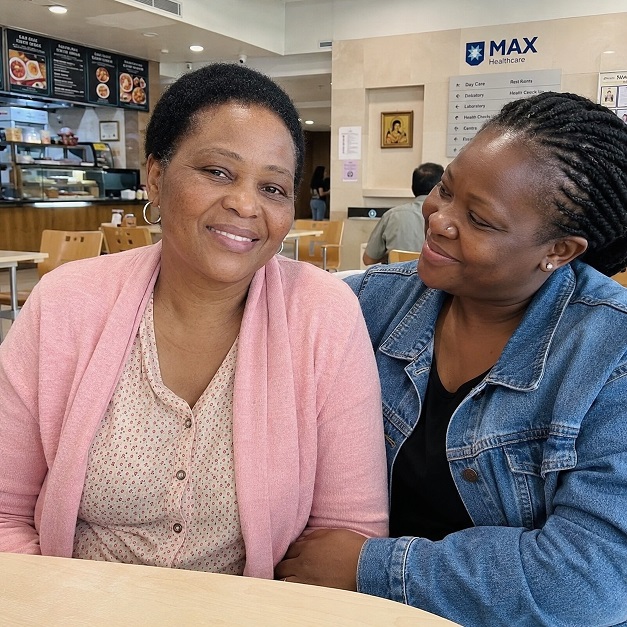
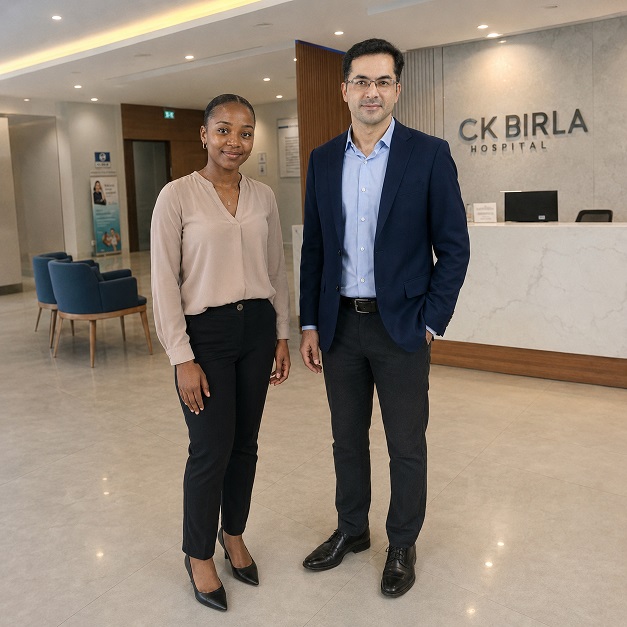
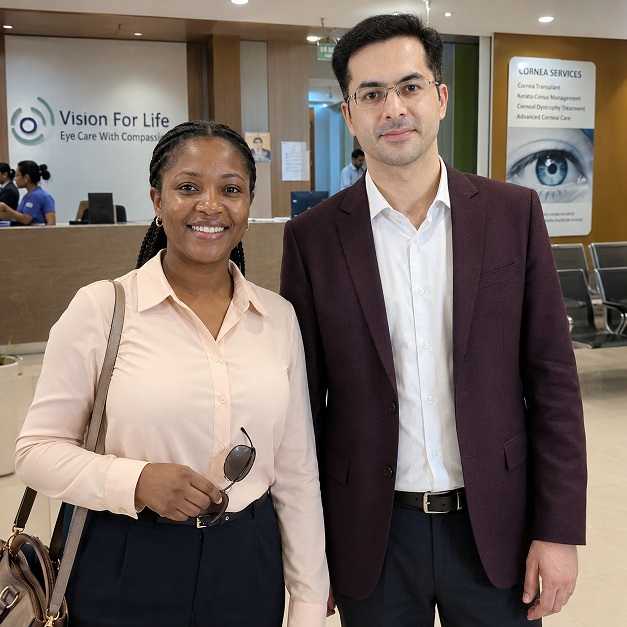
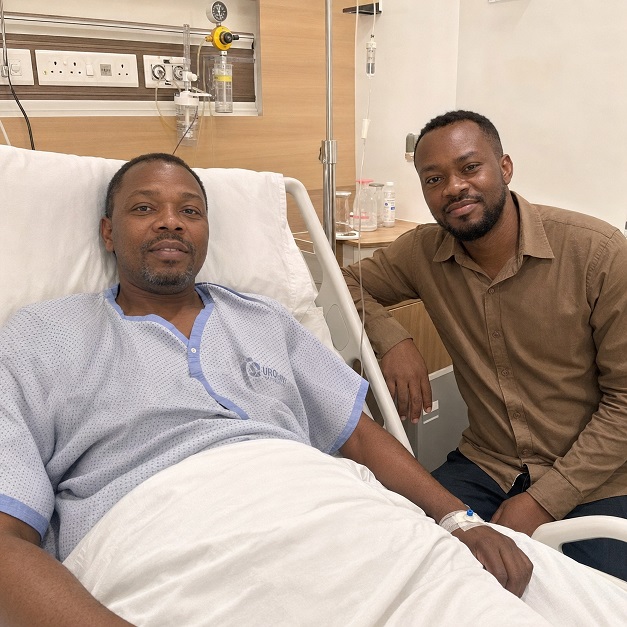
It is worth saying plainly, too, that Parkinson's disease itself, correctly diagnosed and well managed, is not the frightening prospect many people first imagine. Many patients live full, active lives for years on medication alone, and DBS, when it is eventually right, is one further tool available for a specific stage of the disease, not a sign that earlier treatment has failed.
Key Takeaways
- The guide stresses that DBS should never be considered before confirming that the patient genuinely has Parkinson's disease. Drug-induced parkinsonism can closely resemble Parkinson's but may improve after the causative medicine is stopped. The guide specifically highlights metoclopramide and certain antipsychotic and anti-vertigo medicines as possible causes.
- The page 1 chart shows an illustrative comparison of approximately 93% idiopathic Parkinson's disease versus 7% drug-induced parkinsonism in the cited published movement-disorder cohorts. The guide therefore recommends a complete review of current and recently used medicines before considering brain surgery.
- DBS has a specific candidacy window. The best candidates generally have a confirmed diagnosis of several years, a strong response to levodopa, medication-related motor fluctuations or dyskinesias that are no longer adequately controlled, and no significant cognitive or psychiatric decline. A formal levodopa-response test is presented as one of the most important assessments before surgery.
- The guide highlights a major practical issue for Zambian patients: DBS does not eliminate Parkinson's medication. The page 3 chart notes that only about 3% of African countries have levodopa/carbidopa reliably available at primary-care level, compared with the broader WHO African Region. Patients should therefore confirm reliable medication access in Zambia and arrange long-term neurological care before travelling.
- When choosing an Indian centre, the guide recommends a genuine movement-disorder team involving a neurologist, neurosurgeon and neuropsychologist, rather than relying on a neurosurgeon alone. Patients should verify NABH accreditation, ideally JCI, ask how candidacy was assessed, understand the selected brain target and establish how stimulator programming and medication management will continue after returning to Zambia.
- The page 4 cost chart gives an indicative DBS cost of approximately US$22,000 in India, compared with US$55,000 in the UK and US$90,000 in the US. The guide stresses that the quotation should cover surgery, the implanted device and hospital stay, while long-term planning should also consider battery replacement, programming visits and whether a rechargeable or non-rechargeable battery is more practical.
Quick Facts
- Author
- Dr. Dheeraj Bojwani
- Experience
- 24+ Years of Experience
- Treatment
- Parkinson's Treatment & DBS Surgery
- Patients
- Zambian Parkinson's Patients
- Key Specialist
- Movement-Disorder Specialist / Neurosurgeon
- Main Assessment
- Confirmed diagnosis and DBS candidacy
- Key Test
- Levodopa-response test
- Best Candidates
- Strong levodopa response with troublesome motor fluctuations
- Key Exclusion
- Significant cognitive or psychiatric decline
- India Cost
- Approximately US$22,000
- Pre-Travel Records
- Medication history and neurology records
- Follow-Up
- Medication management and DBS programming
- Key Safety Check
- Multidisciplinary movement-disorder team
- Decision Principle
- Confirm candidacy and follow-up capability before travelling
In Brief
For Zambian patients considering DBS in India, the guide's key message is to confirm the diagnosis and candidacy before discussing surgery. DBS is generally considered after several years of confirmed Parkinson's disease when levodopa response remains strong but medication no longer controls fluctuations or dyskinesias adequately. The guide gives an indicative DBS cost of US$22,000 in India and emphasises reliable medication access and long-term device follow-up in Zambia.
First, is it actually Parkinson's disease?
A tremor or stiffness that looks like Parkinson's disease is not always Parkinson's disease. A range of common, everyday medicines can cause a condition called drug-induced parkinsonism, which can look almost identical to the real disease but is, in most cases, fully reversible once the causing medicine is stopped. Metoclopramide, a widely used and often easily available medicine for nausea and vomiting, is one of the best-documented causes, alongside certain antipsychotic and anti-vertigo medications. This matters enormously here, because nausea from malaria, gastrointestinal illness and other common conditions is frequently treated with exactly these medicines.
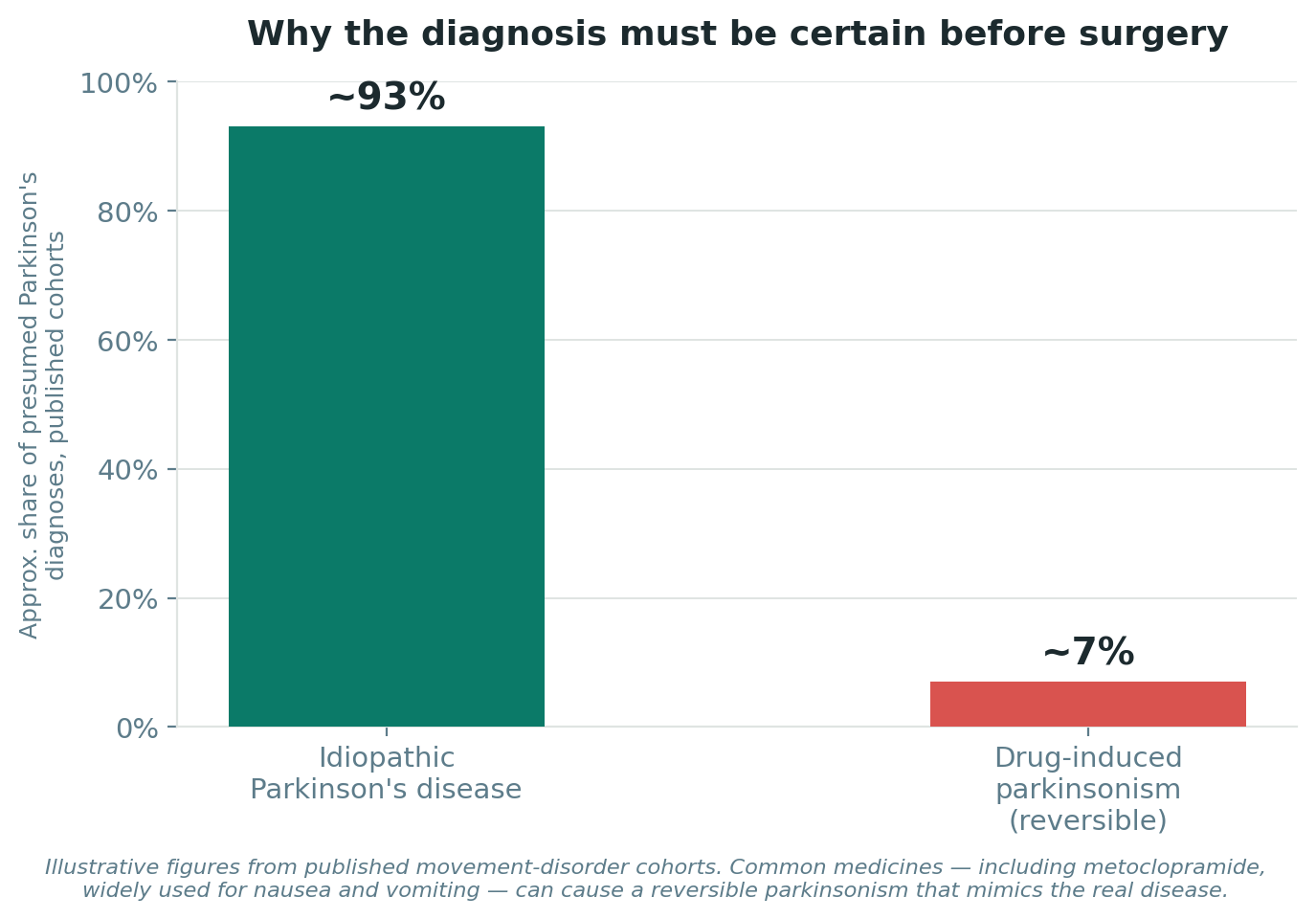
A meaningful share of presumed Parkinson's cases turn out to be a reversible reaction to a medicine, not the disease itself.
Before any conversation about DBS surgery, insist on a careful review of every medicine you currently take or have taken recently, disclosed fully and honestly to your doctor. If a reversible cause is found and addressed, symptoms may improve substantially with no surgery at all — and offering surgery to someone with drug-induced parkinsonism would treat the wrong problem entirely.
Beyond medicines, other conditions can also mimic Parkinson's disease, including damage from previous small strokes affecting movement control, a condition sometimes called vascular parkinsonism, and several rarer neurological disorders with their own distinct patterns. Untangling these from true Parkinson's disease usually takes time, careful examination, and sometimes brain imaging, which is exactly why the diagnosis is not something to rush toward surgery from.
If it is Parkinson's — when is the right moment for DBS?
Unlike most conditions in this guide series, where the risk is almost always in waiting too long, DBS candidacy is genuinely a window that opens and then closes. Move too early, before the diagnosis is fully certain and other forms of parkinsonism have been excluded, and surgery may be unnecessary or wrong. Wait too long, until cognitive decline or symptoms that no longer respond to levodopa have set in, and DBS becomes less effective and considerably riskier. The best candidates typically have a confirmed diagnosis of several years' standing, a strong, well-documented response to levodopa medication, motor fluctuations or dyskinesias that medication alone can no longer control well, and no significant cognitive or psychiatric decline.
The levodopa-response test at the heart of this assessment is worth understanding, since it is the single most informative piece of evidence a specialist team can gather. A patient is examined both without medication and then again once a dose of levodopa has taken full effect, and the improvement between the two states is measured directly rather than estimated from memory or a general sense of how someone is doing. A strong response on this test is one of the best predictors that DBS will help; a weak or absent response is one of the clearest signs that it will not, regardless of how advanced the symptoms otherwise appear.
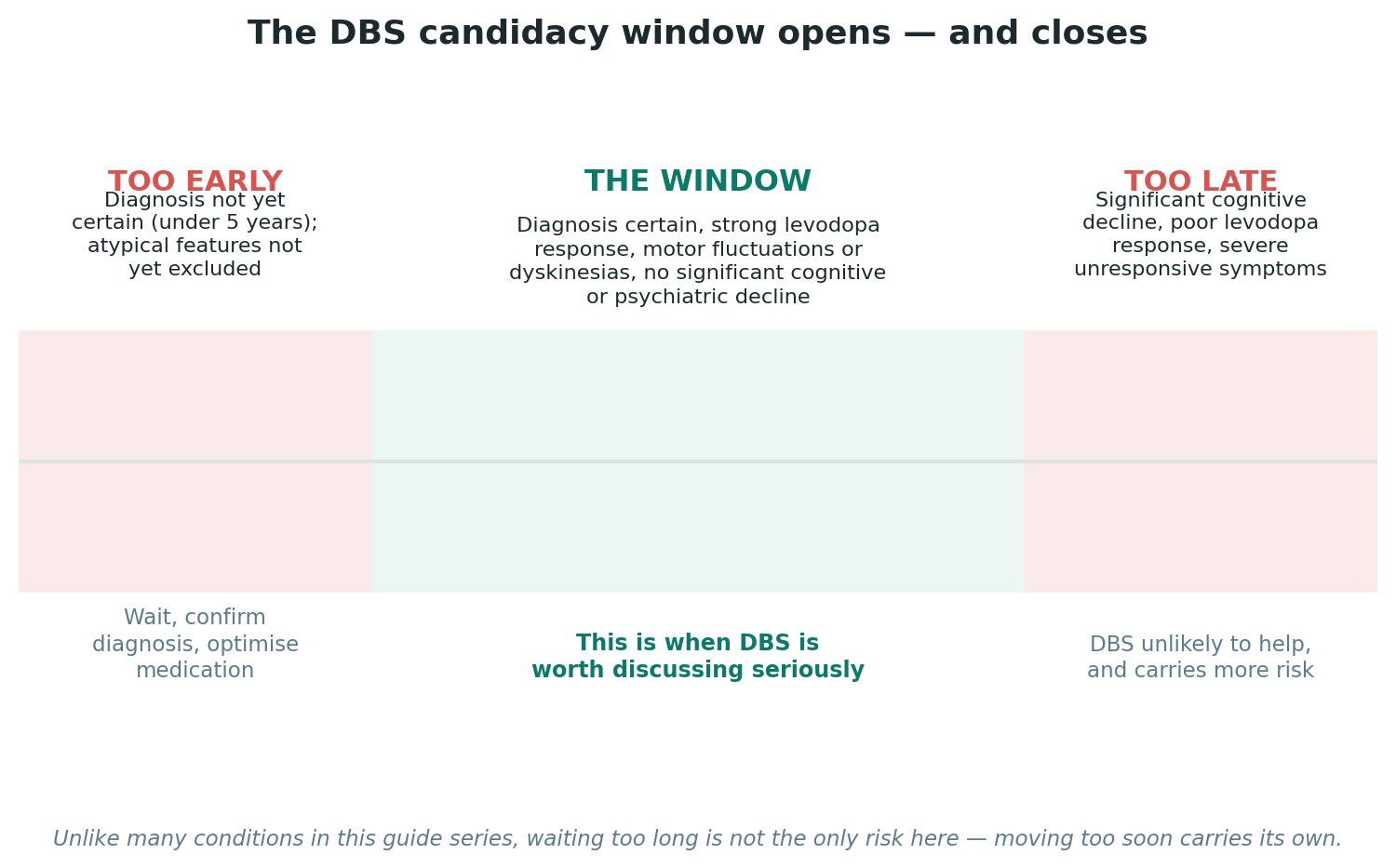
Unlike many conditions in this guide series, moving too soon carries its own risk, not just moving too late.
| Your situation | Typical approach | What it involves |
|---|---|---|
| New tremor or stiffness, especially alongside regular use of anti-nausea or antipsychotic medicine | Review medications before assuming Parkinson's | Stopping or substituting the likely cause, under medical supervision, to see if symptoms improve |
| Recently diagnosed, well-controlled on medication | Continue medical management | Regular follow-up and medication adjustment; surgery is not the right conversation yet |
| Diagnosis of several years' standing, strong levodopa response, but now with motor fluctuations or dyskinesias | DBS worth discussing seriously | Formal assessment by a movement-disorder specialist team, including a levodopa-response test |
| Significant cognitive decline, poor levodopa response, or severe psychiatric symptoms | DBS is unlikely to be appropriate | Continued medical management and support; surgery in this situation typically does not help and adds risk |
Why reliable medication access matters for the whole plan
DBS does not replace Parkinson's medication — it reduces how much is needed and smooths out its effects, but nearly all patients continue taking some levodopa afterward. This means reliable, ongoing access to medication back home in Zambia is not a side issue but a core part of whether DBS will actually help you in the long run.
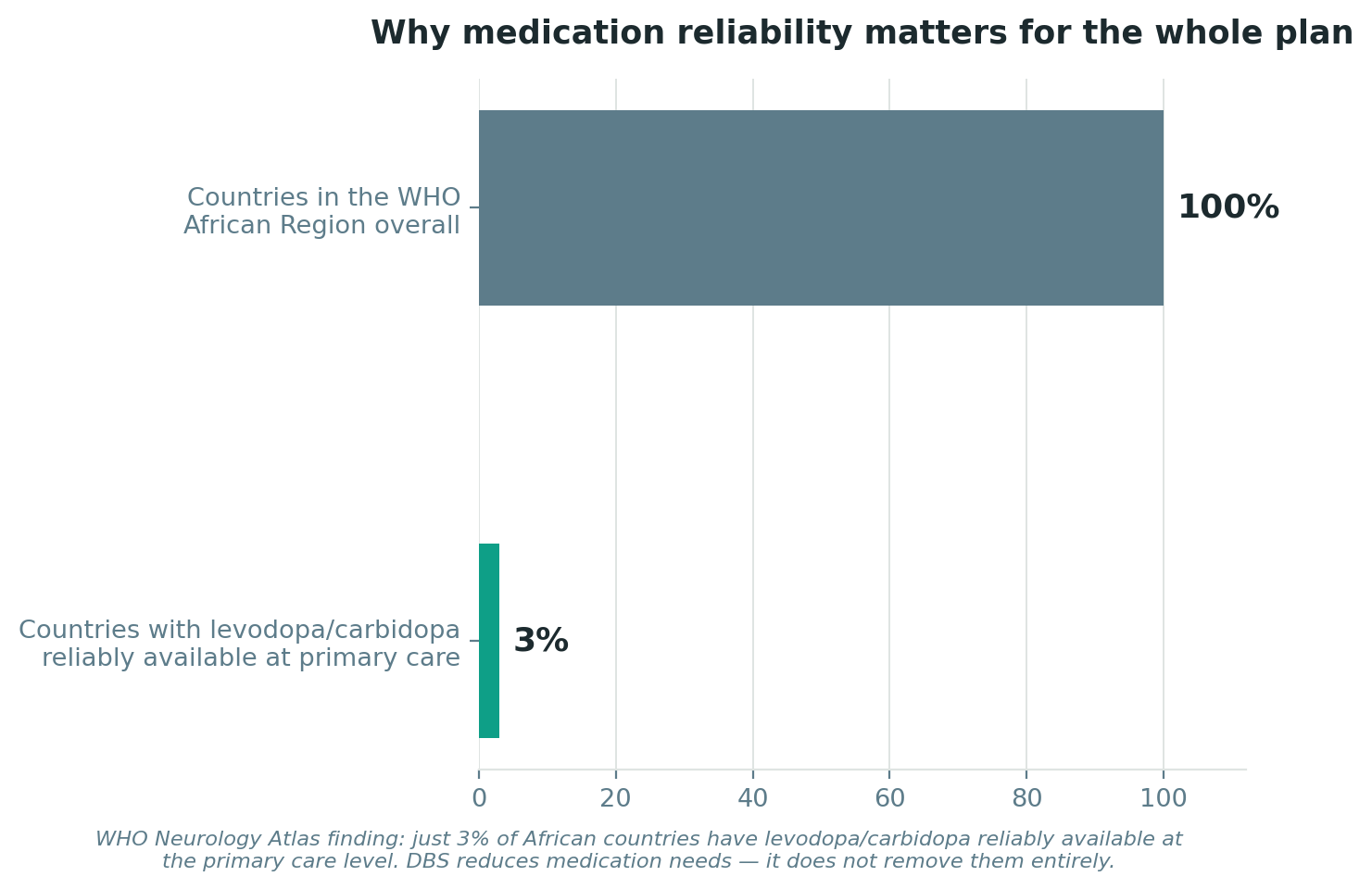
A candidacy assessment that shows a strong levodopa response only means something if that medication remains available afterward.
Choosing the centre
Ask specifically whether your case will be assessed by a genuine movement-disorder specialist team — a neurologist, neurosurgeon and neuropsychologist together — rather than a neurosurgeon working alone, since correct patient selection is the single biggest driver of a good outcome. Ask how the centre performs the levodopa-response test that underpins candidacy, and request to see your own results and how they were interpreted, rather than a general reassurance that you are "a good candidate."
Confirm accreditation (NABH, ideally JCI), and ask directly how they will support your ongoing medication and device programming needs once you are home, since DBS requires periodic adjustment of the stimulator settings, particularly in the months after surgery, and a plan for how this will happen remotely or through a Zambian specialist should be agreed before you travel.
It is also reasonable to ask about the centre's approach to which specific brain target they use, since DBS can be directed at different structures depending on which symptoms are most troublesome, and an experienced team will be able to explain why a particular target was chosen for your specific pattern of symptoms rather than applying the same approach to every patient.
Cost and value: how to weigh the money honestly
DBS surgery in a good Indian hospital costs a fraction of the equivalent procedure in the West, and India has substantial experience with the procedure. The saving is real, but DBS is one of the more device-dependent treatments in this guide series — the cost of the implant itself, and of any future battery replacement, belongs in your planning alongside the surgery price.
It is worth understanding the two main types of battery system available, since this affects both upfront cost and long-term planning. A non-rechargeable battery is simpler but needs surgical replacement every few years as it depletes; a rechargeable battery lasts considerably longer between replacements but costs more initially and requires the patient to charge it regularly at home. Discuss honestly with your team which system suits your circumstances, including how manageable regular charging would realistically be for you.
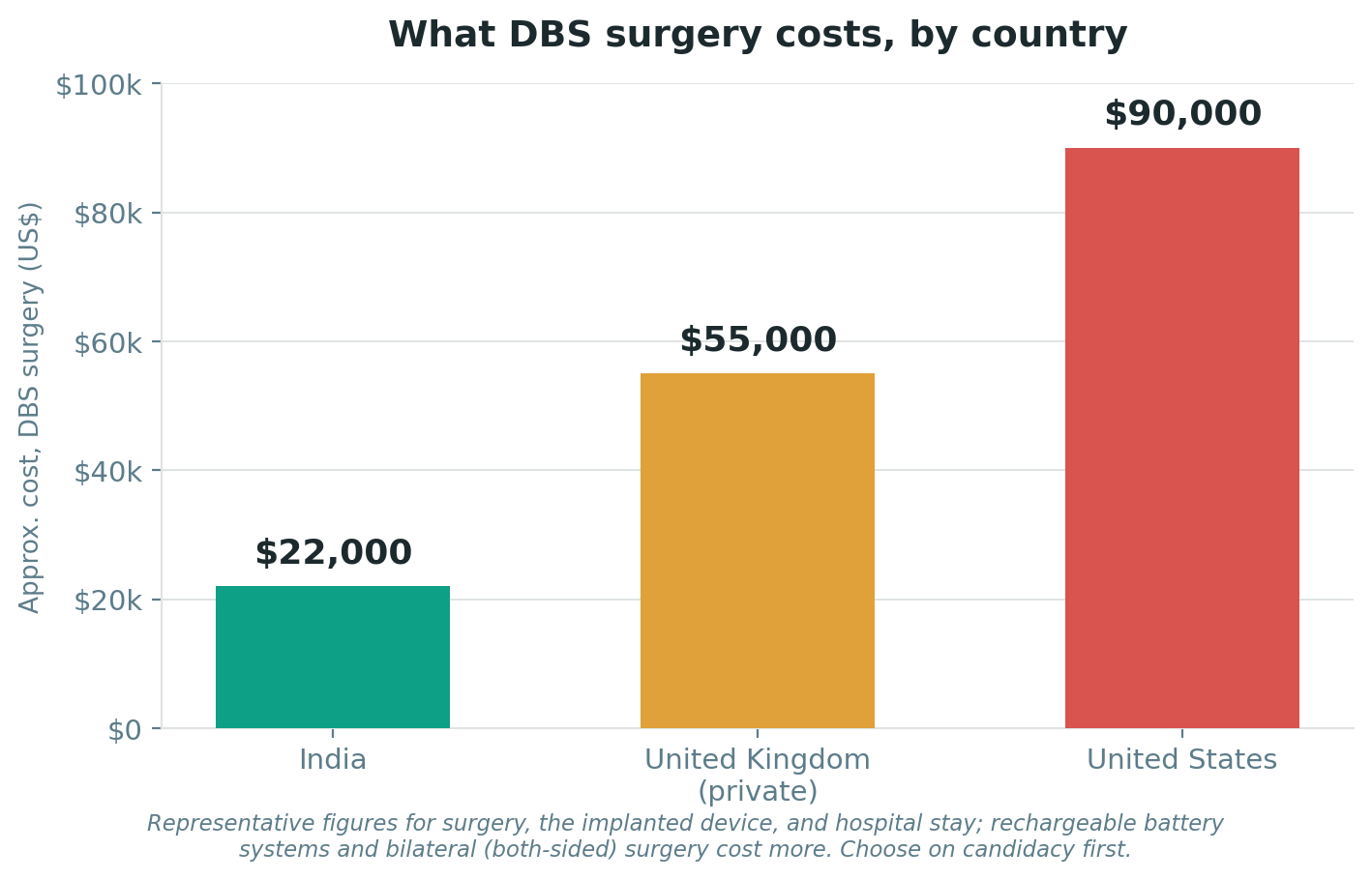
India's affordability is genuine — but confirm candidacy, and a realistic follow-up plan, before you travel.
In 24 years of arranging these journeys, I have found that the patients who benefit most from DBS are the ones whose candidacy was assessed honestly and specifically, not assumed from a diagnosis alone. Ask for a written, itemised quote covering the surgery, the device, hospital stay, and the plan for programming visits, and clarify early what ongoing support will look like once you are back in Zambia.
What a Zambian patient should weigh in particular
Beyond the clinical decision, several practical matters deserve attention. First, payment: NHIMA funds care at accredited facilities inside Zambia, not treatment abroad, so DBS surgery in India comes from your own resources — another reason to be confident in candidacy before committing funds. Second, be scrupulously honest with your medical team about every medicine you take or have taken recently, including over-the-counter remedies, since this directly affects whether your parkinsonism is genuinely Parkinson's disease. Third, arrange with a Zambian neurologist to take over your long-term medication management and, where possible, device monitoring, and insist the Indian team provides a complete written plan, including device settings, before you leave.
Fourth, plan realistically for the months after surgery, not just the procedure itself. DBS typically requires several follow-up visits in the weeks after implantation to adjust the stimulator settings for the best effect, and while some of this can potentially be managed remotely with a capable local doctor, an initial period of closer follow-up, ideally in person, gives the best chance of getting your settings right the first time.
The practical journey from Zambia
India requires a yellow fever vaccination certificate from travellers arriving from Zambia, valid only from ten days after the injection. Your medical visa is issued by the High Commission of India on Pandit Nehru Road in Lusaka against the hospital's invitation letter. There is no direct flight from Zambia to India; you will connect through Addis Ababa on Ethiopian Airlines, or through Dubai, Doha or Nairobi. Send your complete medication history and any prior neurology records, not only a summary, for remote review before you travel, since your medication history is central to confirming whether DBS is genuinely appropriate for you.
Straight answers for Zambian Patients about Parkinson's Treatment and DBS Surgery in India
Could my tremor be caused by a medicine I'm taking, not Parkinson's disease?
It is possible, particularly if you regularly take medicines for nausea, vertigo, or certain psychiatric conditions. This should be reviewed carefully with a doctor before any diagnosis of Parkinson's disease is accepted as final, since drug-induced parkinsonism is common and usually reversible.
I was just diagnosed with Parkinson's. Should I ask about DBS now?
Generally not yet. DBS is usually considered only after several years of confirmed diagnosis, once medication alone is no longer controlling symptoms well. Early diagnosis is the time to focus on medical management and building a clear picture of how your disease responds to treatment.
Will DBS mean I no longer need Parkinson's medication?
No. DBS typically reduces the amount of medication needed and smooths out its effects, but almost all patients continue some medication afterward. Reliable ongoing access to it remains essential to the treatment working well.
My relative has Parkinson's with some memory problems. Is DBS still an option?
Significant cognitive decline is one of the clearest reasons DBS may not be appropriate, since surgery in this situation is less likely to help and carries more risk. This should be assessed formally by a specialist team rather than assumed either way.
How long does it take to know if DBS has worked?
Some improvement, particularly in tremor, can be noticeable soon after the device is switched on, but getting the settings right for the best overall benefit typically takes several follow-up visits over the following weeks and months. Patience during this adjustment period is a normal and expected part of the process, not a sign that something has gone wrong.
Sources
- 🌐 Medical visa, Lusaka — High Commission of India, requirements & process: hcizambia.gov.in/page/medical-visa
- 🌐 Hospital accreditation (India) — Verify a hospital's NABH accreditation: nabh.co
- 🌐 National Health Insurance (Zambia) — NHIMA cover, treatment abroad is not covered: nhima.co.zm
- 🌐 Ministry of Health Zambia — National health services & guidance: moh.gov.zm
- 🌐 National Medical Commission (verify a doctor) — Confirm a doctor's registration in India: nmc.org.in
- 🌐 WHO yellow fever — Vaccination requirements before travel: who.int/health-topics/yellow-fever
A Closing Word
Of everything I help patients think through, this is one of the clearest cases where getting the diagnosis right matters as much as choosing where to have surgery. If you send me your complete medication history, your neurology records, and a note on how your symptoms have changed over time, I will help you understand honestly whether your diagnosis is genuinely Parkinson's disease, whether this is the right moment in its course to discuss DBS, and which centres in India have the genuine specialist team to assess and treat you well.
Frequently Asked Questions by Zambian Patients about Parkinson's Treatment and DBS Surgery in India
Is every tremor a sign of Parkinson's disease?
No. Certain medicines and other neurological conditions can produce Parkinson-like symptoms. A complete medication review and specialist assessment should be performed before confirming the diagnosis.
Which medicines can cause Parkinson-like symptoms?
The guide specifically mentions metoclopramide, along with certain antipsychotic and anti-vertigo medicines. Drug-induced parkinsonism may improve when the causative medicine is appropriately stopped or changed under medical supervision.
Should a newly diagnosed Parkinson's patient have DBS?
Generally, no. DBS is usually considered after several years of confirmed Parkinson's disease, when medication no longer controls motor fluctuations or dyskinesias adequately.
What is the levodopa-response test?
The patient is assessed without medication and then reassessed after levodopa has taken effect. The degree of improvement helps specialists determine whether DBS is likely to provide meaningful benefit.
Can someone with memory problems have DBS?
Significant cognitive decline is one of the clearest reasons DBS may not be appropriate. The guide recommends formal assessment by a specialist team rather than making this decision from symptoms alone.
Will DBS stop Parkinson's medication completely?
No. DBS generally reduces medication requirements and smooths symptom control, but most patients continue taking some Parkinson's medication afterward.
How much does DBS cost in India?
The guide gives an indicative cost of approximately US$22,000, including the surgery, implanted device and hospital stay. Battery replacement and future programming may create additional costs.
What type of DBS battery should I choose?
A non-rechargeable battery is simpler but requires replacement periodically. A rechargeable system lasts longer but costs more initially and requires regular charging. The choice should reflect the patient's circumstances and ability to manage charging.
How often does DBS need programming?
The guide explains that several follow-up visits are commonly required during the weeks and months after implantation to optimise the stimulator settings. A plan for local or remote support should be arranged before travelling.
What should I send before travelling to India?
Send the complete medication history and previous neurology records, rather than only a summary. The medication history is particularly important for confirming whether the symptoms represent Parkinson's disease and whether DBS is appropriate.
Page Summary
This five-page Zambia-to-India medical travel guide explains Parkinson's disease treatment and deep brain stimulation (DBS), focusing first on confirming the diagnosis and then identifying the appropriate treatment window. The page 1 chart presents an illustrative 93% idiopathic Parkinson's versus 7% drug-induced parkinsonism comparison. The page 2 candidacy diagram shows the DBS window between being too early and too late, while the page 3 chart highlights limited reliable levodopa/carbidopa availability in African primary-care settings. The page 4 cost chart gives an indicative DBS cost of US$22,000 in India, compared with US$55,000 in the UK and US$90,000 in the US.
Citation Block
| Topic | Information |
|---|---|
| Topic | Parkinson's Treatment & DBS Surgery in India for Zambian Patients |
| Treatment | Parkinson's Treatment / Deep Brain Stimulation |
| Patients | Zambian Parkinson's Patients |
| Specialist | Movement-Disorder Specialist / Neurosurgeon |
| Main Assessment | Diagnosis and DBS candidacy |
| Key Test | Levodopa-response test |
| DBS Candidates | Confirmed disease + strong levodopa response + motor fluctuations/dyskinesias |
| Key Exclusion | Significant cognitive or psychiatric decline |
| Medication Check | Review all current/recent medicines |
| Centre Requirement | Neurologist + neurosurgeon + neuropsychologist |
| Accreditation | NABH, ideally JCI |
| India Cost | Approximately US$22,000 |
| UK Cost | Approximately US$55,000 |
| US Cost | Approximately US$90,000 |
| Device Check | Rechargeable vs non-rechargeable battery |
| Pre-Travel Records | Medication history and neurology records |
| Follow-Up | Medication management and stimulator programming |
| Key Statistic | ~93% idiopathic vs ~7% drug-induced parkinsonism in cited cohorts |
| Medication Access | ~3% of African countries reported reliable levodopa/carbidopa availability at primary-care level |
| Warning Sign | DBS recommended without formal candidacy assessment |
| Patient Pathway | Diagnosis review → medication assessment → levodopa-response testing → DBS candidacy → surgery → programming → long-term follow-up |
| Decision Principle | Correct diagnosis, appropriate timing and reliable follow-up are essential |


Our Mission Statement
Our mission is to place patients at the centre of every healthcare decision by providing trustworthy, evidence-based, and unbiased medical information. We believe that informed patients make better decisions. Backed by personalised guidance from our experienced advisory team, we help patients understand their treatment options, compare them objectively, and confidently choose the path that best suits their medical needs and personal circumstances.
Patient Testimonials from Zambia
Ready to Take the First Step?
Share your Medical Reports with our Healthcare Managers Today and Get a FREE CONSULTATION, a Personalized Treatment Plan, and Complete Support from Arrival to Recovery.
Get Your Free ConsultationAreas We Serve
This resource has been thoughtfully prepared for patients from Zambia who are considering medical treatment in India. We also welcome patients from the wider region in the countries mentioned below-
We assist patients from:
- Zambia
- Angola
- Malawi
- Zimbabwe
- Botswana
- Namibia
- South Africa
- Eswatini
- Lesotho
- Gabon
- Chad
- Equatorial Guinea
- São Tomé and Príncipe
- Republic of the Congo
- Democratic Republic of the Congo
Many of the insights, treatment pathways, hospital recommendations, travel guidance, and patient support services described here are equally relevant and may be used as a reference when planning treatment in India.
From Zambia to India: Your Complete Patient Support Guide
- Best Weight-Loss (Bariatric) Surgeons & Hospitals in India for Zambian Patients
- Best Brain-Tumour Surgeons & Hospitals in India for Zambian Patients
- Best Cancer Doctors & Hospitals in India for Zambian Patients
- Best Cardiac Surgeons & Hospitals in India for Zambian Patients
- Best Cosmetic Surgeons & Facilities in India for Zambian Patients
- Best CyberKnife Treatment Teams & Centres in India for Zambian Patients
- Best Dentists & Dental Clinics in India for Zambian Patients
- Best Heart Valve Replacement Surgeons & Hospitals in India for Zambian Patients
- Best Hip Surgeons & Hospitals in India for Zambian Patients
- Best Knee Surgeons & Hospitals in India for Zambian Patients
- Best Neurosurgeons & Hospitals in India for Zambian Patients
- Best Paediatric Cardiac Surgeons & Hospitals in India for Zambian Patients
- Best Paediatric Neurosurgeons & Hospitals in India for Zambian Patients
- Best Prostate Surgeons & Hospitals in India for Zambian Patients
- Best Scoliosis Surgeons & Hospitals in India for Zambian Patients
- Best Spine Surgeons & Hospitals in India for Zambian Patients
- Best Bone Marrow Transplant Teams & Hospitals in India for Zambian Patients
- Best Kidney Transplant Surgeons & Hospitals in India for Zambian Patients