

Paediatric Neurosurgery in India for Zambian Patients
Few areas of medicine ask a parent to move at such different speeds — the same broad specialty that demands surgery within hours of birth for one condition asks for patient, careful planning over months for another.
Paediatric neurosurgery is not one condition but many, and the single biggest mistake a frightened parent can make is treating them all the same way. A baby born with an open spinal defect needs surgery within days; a baby with a slowly changing skull shape has months to find the right team; a child with new headaches needs prompt but not panicked assessment. In 24 years of guiding Zambian families through children's neurosurgical care, I have found that understanding which situation your child is in changes everything about how you should act. This guide sets out the major conditions, how urgently each truly needs attention, and — because so much of this burden is preventable — what matters for future pregnancies too.
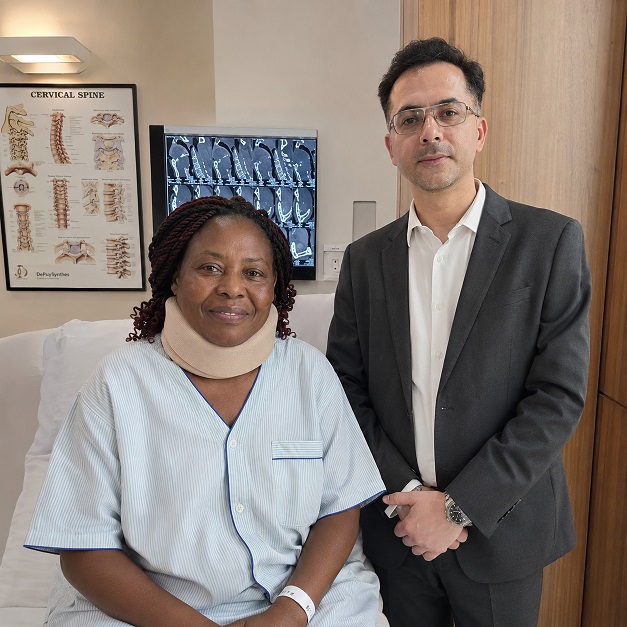
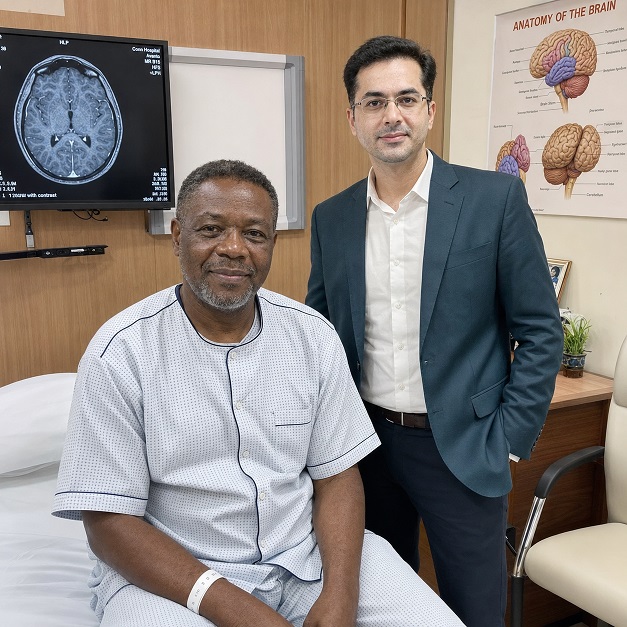
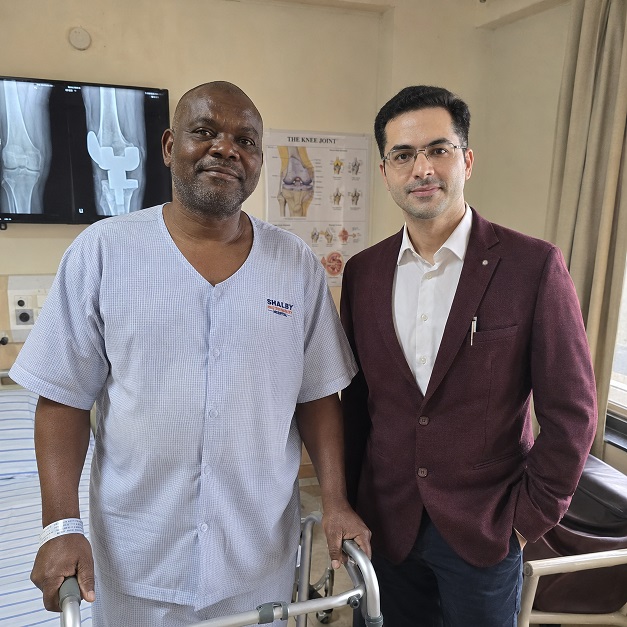
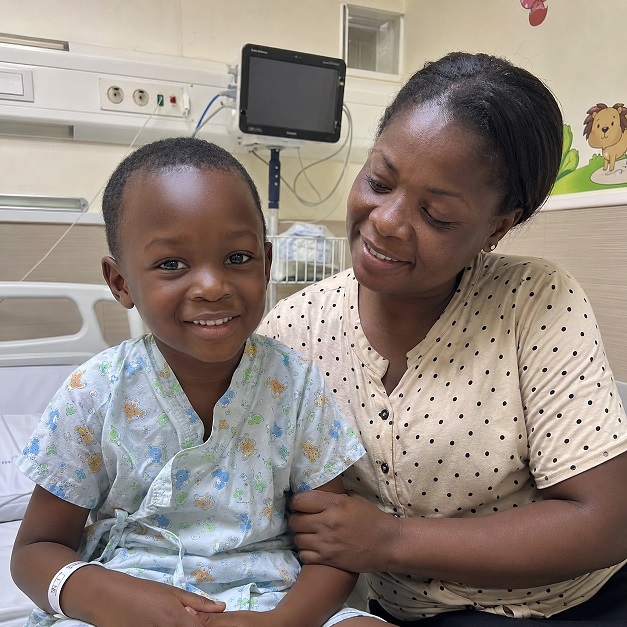
Healing Journeys of Zambian Patients
Key Takeaways
- The guide explains that paediatric neurosurgery covers conditions with very different levels of urgency, including hydrocephalus, spina bifida, craniosynostosis, brain or spinal tumours and Chiari malformation. The correct treatment timeline depends on the child's specific diagnosis, so specialist assessment should come before any travel decision.
- The page 1 urgency graphic shows that an open spina bifida defect may require surgery within 24–72 hours, symptomatic hydrocephalus within days, brain tumours with raised pressure within days to weeks, while craniosynostosis is generally best treated within the first 6–12 months. Mild, stable Chiari malformation may instead be monitored.
- The page 2 condition table outlines the main treatments: hydrocephalus may require a shunt or ETV where suitable, myelomeningocele requires early closure, craniosynostosis requires skull reconstruction, brain or spinal tumours need paediatric neuro-oncology assessment, and stable Chiari malformation may only require observation.
- The guide highlights the importance of paediatric-specific expertise in the neurosurgeon, anaesthetist and intensive-care team. Families should confirm a dedicated paediatric ICU, ask about ETV for suitable hydrocephalus cases, ensure bladder and bowel assessment for spina bifida, and understand how long-term follow-up will continue after returning to Zambia.
- The page 3 cost chart gives illustrative costs of approximately US$10,000 in India, US$50,000 in the UK and US$90,000 in the US. The guide recommends an itemised quotation covering surgery, paediatric ICU stay and the first follow-up scan, while also planning for long-term monitoring and possible repeat care.
- For Zambian families, the guide recommends sending the child's actual scans for remote review before travelling, arranging a Zambian doctor for ongoing follow-up, and keeping complete operative reports, imaging and shunt details. It also stresses that rapidly enlarging head, repeated vomiting, drowsiness, an open spinal defect, seizures or worsening neurological symptoms require urgent medical attention rather than delayed travel planning.
Quick Facts
- Author
- Dr. Dheeraj Bojwani
- Experience
- 24+ Years
- Treatment
- Paediatric Neurosurgery
- Patients
- Zambian Patients
- Key Specialist
- Paediatric Neurosurgeon
- Key Conditions
- Hydrocephalus, spina bifida, craniosynostosis, brain tumours and Chiari malformation
- Urgency Check
- Depends entirely on the child's condition
- Emergency Signs
- Rapidly enlarging head, vomiting, drowsiness or open spinal defect
- Hydrocephalus Options
- Shunt or ETV where suitable
- Craniosynostosis
- Surgery generally within the first 6–12 months
- Team Check
- Paediatric neurosurgeon, anaesthetist and intensive-care team
- ICU Check
- Dedicated paediatric intensive care
- Spina Bifida Check
- Bladder and bowel assessment
- Follow-Up
- Long-term monitoring in Zambia
- Shunt Check
- Exact type and settings documented
- Cost Check
- Written, itemised quotation
- Pre-Travel Check
- Actual scans and medical history
- Key Warning
- Do not delay urgent treatment to arrange international travel
- Decision Principle
- Choose paediatric-specific expertise and act according to the true urgency of the child's condition.
In Brief
For Zambian families considering paediatric neurosurgery in India, the guide recommends making urgency and paediatric-specific expertise the first priorities, before cost or travel arrangements. Families should send the child's actual scans for specialist review, confirm dedicated paediatric neurosurgical, anaesthesia and intensive-care experience, and establish a clear long-term follow-up plan in Zambia before travelling.
First, should you travel at all?
Zambia has neurosurgical capacity at referral hospitals including the University Teaching Hospital in Lusaka, and straightforward cases, particularly shunt placement for hydrocephalus, are treated within the country. What is harder to access consistently is paediatric-specific expertise across the full range of conditions — a surgeon, anaesthetist and intensive-care team experienced specifically with children's smaller anatomy, different fluid balance, and different tolerance for blood loss and anaesthesia than adults. For complex or unusual cases, or when local capacity is stretched, travelling to a high- volume paediatric neurosurgery centre becomes worth considering, and India has built substantial experience treating children from across Africa.
The decision to travel should follow, not precede, an accurate diagnosis and an honest assessment of urgency from a doctor who has actually examined your child. Sending scans for remote review before booking any travel is essential, since the right course of action — and how much time you genuinely have — depends entirely on the specific condition.
It is worth saying plainly that fear itself can push families toward hasty decisions in either direction — either delaying care for a condition that is genuinely urgent, or rushing to travel for one that is not. A brief conversation with a paediatric specialist, even remotely, before any booking is made, is often the single most useful step a worried parent can take.
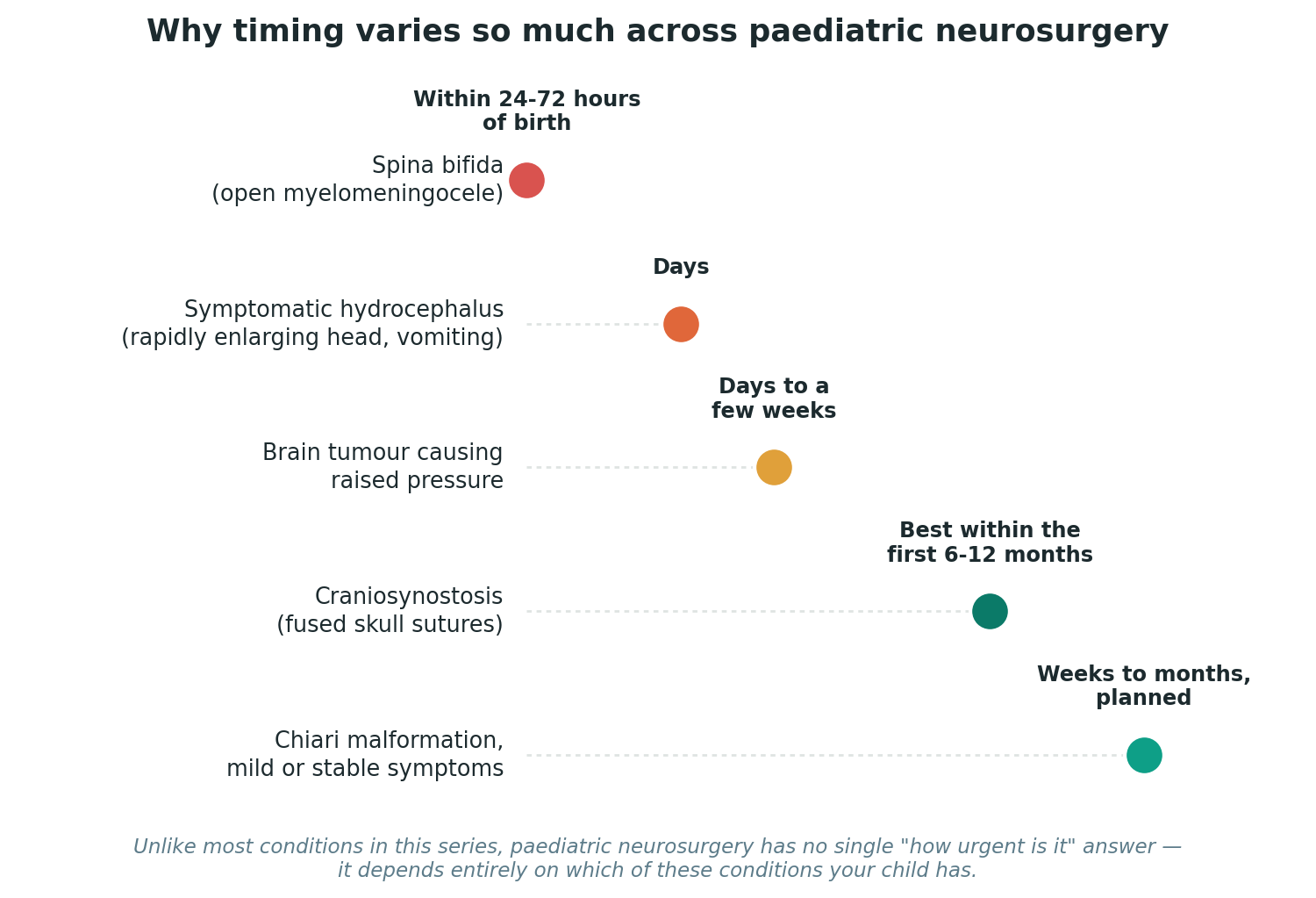
The same broad specialty spans emergencies measured in hours and elective planning measured in months.
The conditions, and how urgently each acts
Hydrocephalus — a build-up of fluid around the brain — is the most common reason Zambian children come to neurosurgery, often following a newborn infection or as a companion to spina bifida. When it develops gradually and is caught on routine checks, there is time to plan; when a baby's head is visibly and rapidly enlarging, or vomiting and drowsiness appear, it becomes an emergency. Spina bifida, where the spine and its covering fail to close properly in the womb, is different again: when the defect is open, exposing the spinal cord, closure within the first few days of life is critical to prevent infection and further nerve damage. Craniosynostosis, where the bones of a baby's skull fuse too early and distort its growing shape, is rarely an emergency, but surgery within the first year gives the best results, since it works with the brain's own rapid growth to help reshape the skull. Brain tumours in children require urgent evaluation once suspected, though the true timeline depends on the tumour type and whether it is raising pressure inside the skull.
Chiari malformation — where part of the brain sits lower than usual, pressing toward the opening at the base of the skull — sits at the gentler end of this spectrum. Many children with a mild, stable form have no symptoms at all and are simply monitored over time; surgery is reserved for those with meaningful symptoms or evidence the condition is progressing. Knowing which category a child falls into, rather than assuming any finding on a scan demands immediate action, is exactly the kind of judgement a genuine paediatric specialist provides.
| Condition | How it typically presents | What treatment involves |
|---|---|---|
| Hydrocephalus (fluid build-up) | Enlarging head, poor feeding, vomiting, drowsiness, or found on routine scan | A shunt to drain fluid, or in some cases an endoscopic procedure (ETV) that avoids implanting a device altogether |
| Spina bifida (myelomeningocele) | Visible defect on the back at birth | Surgical closure within the first days of life; many children also need a shunt for accompanying hydrocephalus |
| Craniosynostosis | Abnormally shaped head noticed in early infancy | Reconstructive surgery, ideally in the first 6-12 months, to release fused sutures and reshape the skull |
| Brain or spinal tumour | Headaches, vomiting, vision or balance problems, seizures, or a change in behaviour | Urgent imaging and assessment by a paediatric neuro-oncology team; surgery, and sometimes chemotherapy or radiotherapy, depending on type |
| Chiari malformation | Often found incidentally, or with headaches, neck pain or balance difficulty | Careful observation if mild and stable; surgery if symptoms are significant or worsening |
A largely preventable part of this burden
Spina bifida and related neural tube defects are far more common across sub-Saharan Africa than in countries where industrially milled flour is reliably fortified with folic acid — a simple, inexpensive B-vitamin that, taken before and in the earliest weeks of pregnancy, substantially reduces the risk of these defects forming in the first place. South Africa saw roughly a 30% decline in neural tube defects after introducing mandatory fortification. Fortification coverage across the region, including Zambia, remains inconsistent, which means individual folic acid supplementation before conception is not a minor detail but one of the most protective things a woman planning a pregnancy can do — particularly relevant if a previous child has been affected, since the risk of recurrence is higher and the protective effect of folic acid is well established.
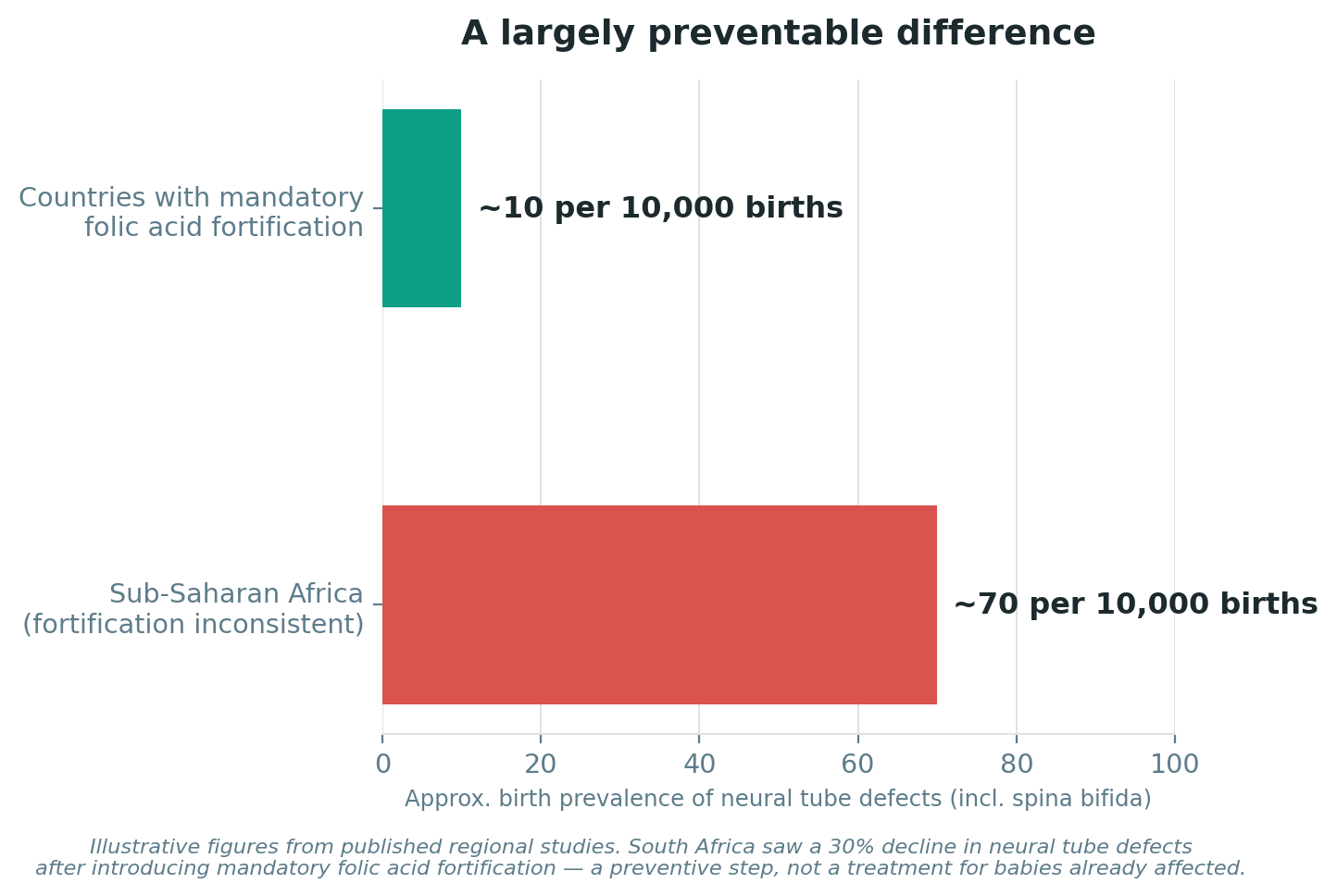
This chart concerns prevention for future pregnancies — it does not change the treatment a child already affected needs now.
Choosing the team, once travel is the right choice
Ask specifically whether the neurosurgeon, anaesthetist and intensive care unit have dedicated paediatric experience, not simply general neurosurgical experience applied to a smaller patient. Children are not small adults: anaesthesia dosing, fluid balance, and tolerance of blood loss all differ, and a team that operates on children daily will manage these differently from one that does so occasionally. Confirm a dedicated paediatric intensive care unit is available, and ask how the hospital supports parents staying with a hospitalised child, since extended family presence matters enormously for a child's recovery and is standard practice at good paediatric centres.
For hydrocephalus specifically, ask whether the centre offers endoscopic third ventriculostomy (ETV), sometimes combined with choroid plexus cauterisation, as an alternative to a permanent shunt where a child's anatomy is suitable — this avoids implanting a device altogether and its associated lifelong revision risk, though it is not the right option for every child. For any condition, ask how the team will hand over long-term follow-up to Zambia, since paediatric neurosurgical conditions, particularly shunted hydrocephalus, need monitoring for symptoms of malfunction for years afterward.
For spina bifida specifically, ask whether the centre's approach includes assessment and management of the bladder and bowel, since myelomeningocele often affects these systems alongside the spine itself, and a genuinely comprehensive paediatric team will address this as part of the same care plan rather than treating the spinal closure in isolation.
Cost and value: how to weigh the money honestly
Paediatric neurosurgery in a good Indian hospital costs a small fraction of the equivalent care in the West, and India treats large numbers of children from across Africa, meaning real experience with the conditions common in this region. The saving is genuine, but the cost of long-term follow-up — repeat scans, and for shunted children, monitoring for the rest of childhood — belongs in the financial plan from the outset, not as an afterthought once you are home.
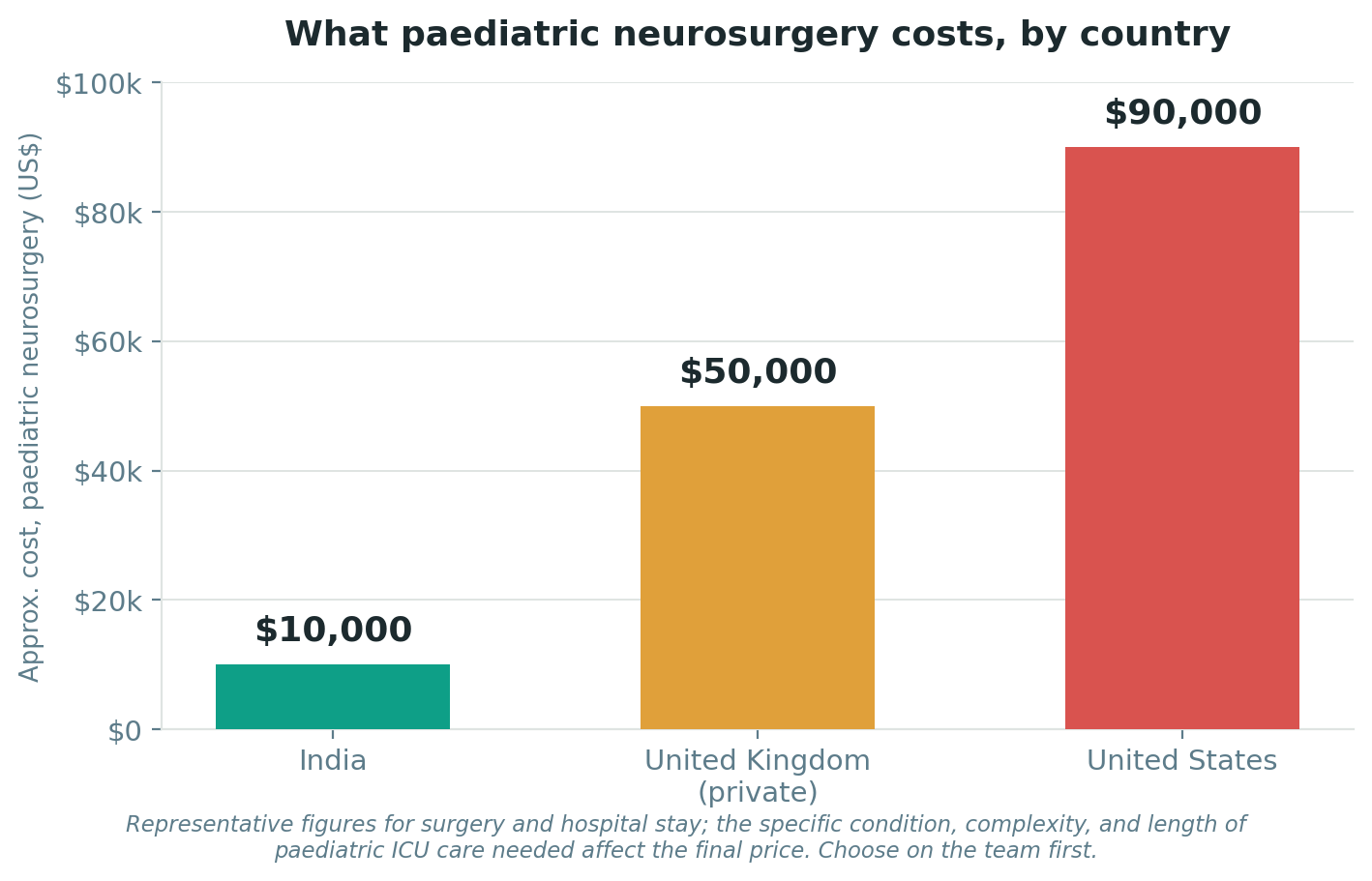
India's affordability is genuine — but confirm paediatric-specific expertise, not general neurosurgical experience, first.
In 24 years of arranging these journeys, I have found that the families who do best are the ones who ask precise questions about paediatric-specific experience before travelling, rather than assuming any neurosurgeon can simply treat a smaller patient. Ask for a written, itemised quote covering surgery, paediatric ICU stay, and the first follow-up scan, and clarify early what ongoing monitoring will look like once you are back in Zambia.
What a Zambian family should weigh in particular
Beyond the medical decision, several practical matters deserve attention. First, payment: NHIMA funds care at accredited facilities inside Zambia, not treatment abroad, so this comes from the family's own resources — another reason to have the complete plan, including follow-up, in writing before you travel. Second, if your child has a shunt fitted, learn the warning signs of shunt malfunction before you leave India — headache, vomiting, drowsiness, or a return of the symptoms that first brought you to hospital — since shunts can and do sometimes need revision, and recognising a problem early matters more than which country the original surgery happened in. Third, arrange a Zambian paediatrician or, where possible, a doctor experienced with shunted children to take over routine monitoring, and insist on a complete written operative report and imaging before you leave.
Fourth, keep a copy of your child's operative details — the type of shunt fitted, its settings if adjustable, and the surgical approach used — somewhere easily accessible, ideally with a copy at home and a copy you carry. If your child later needs urgent care anywhere, including at a Zambian hospital unfamiliar with the original surgery, this information can meaningfully speed up safe treatment.
The practical journey from Zambia
India requires a yellow fever vaccination certificate from travellers arriving from Zambia, valid only from ten days after the injection — check with the hospital about timing if your child's condition is urgent, since vaccination and surgery scheduling both need coordinating. Your medical visa is issued by the High Commission of India on Pandit Nehru Road in Lusaka against the hospital's invitation letter; apply for medical-attendant visas for accompanying parents in the same batch. There is no direct flight from Zambia to India; you will connect through Addis Ababa on Ethiopian Airlines, or through Dubai, Doha or Nairobi. Send your child's actual scans, not only written reports, for remote review before you travel, so the hospital's team can advise honestly on urgency before you commit to a journey.
Signals that need urgent, not routine, attention
1. In a baby: a rapidly enlarging head, a bulging soft spot, repeated vomiting, or unusual drowsiness — seek care the same day.
2. An open defect visible on a newborn's back — this is an emergency requiring same-day assessment.
3. In any child, especially one with a known shunt: new or worsening headache, vomiting, vision changes, seizures, or a return of earlier symptoms.
4. Any centre that cannot describe specific paediatric neurosurgical experience, separate from general adult neurosurgery, for your child's condition.
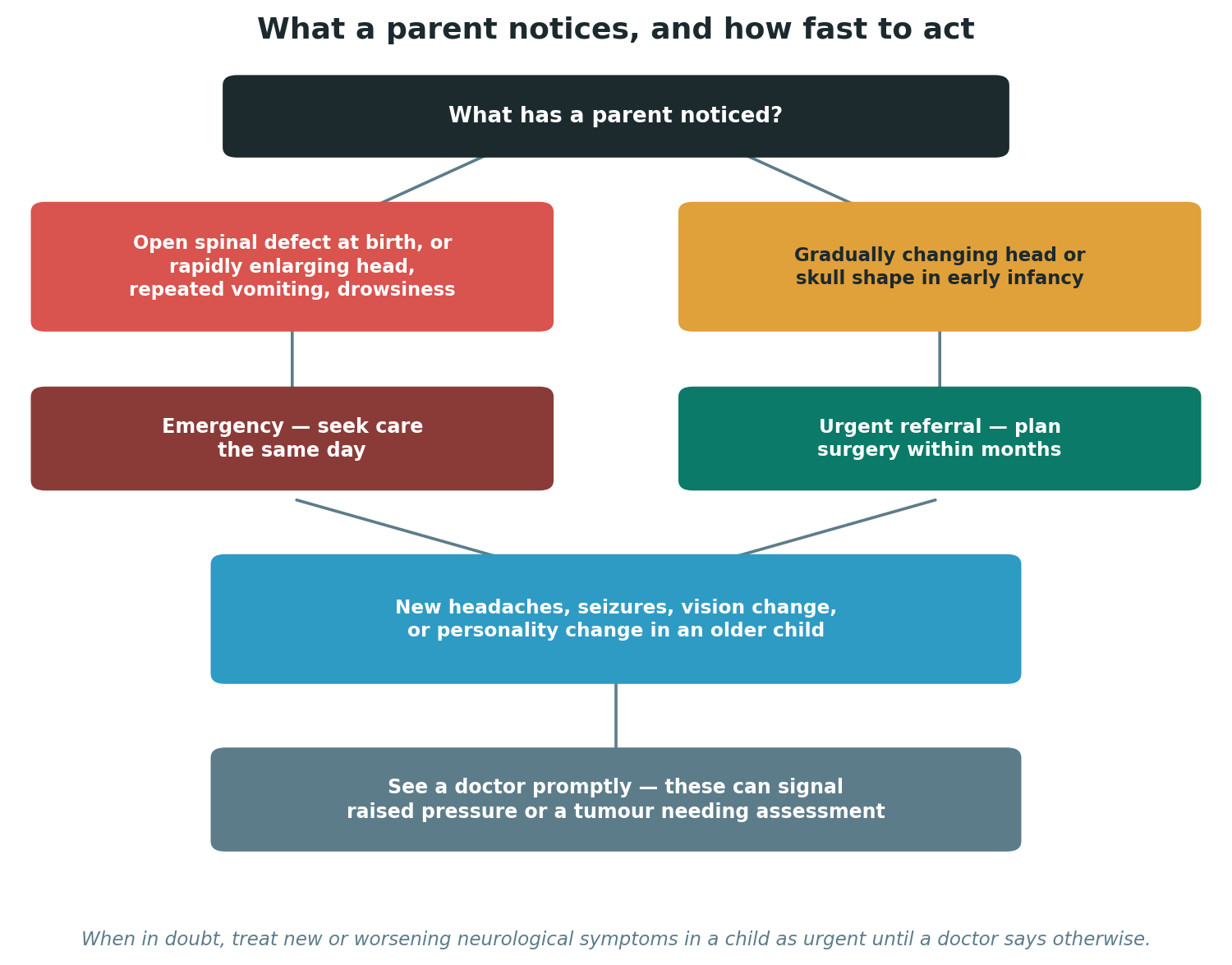
A quick reference for how urgently to act on what you notice — when in doubt, act as though it is urgent.
Straight answers for Zambian Patients about Paediatric Neurosurgery in India
Is a VP shunt a one-time surgery?
Not always. Shunts can block, infect, or need lengthening as a child grows, and a meaningful proportion of children need at least one revision within a few years. This is a normal part of managing hydrocephalus, not a sign that the original surgery failed, and it is one reason ongoing monitoring matters as much as the initial operation.
My baby's head shape looks unusual. How quickly do we need to act?
Craniosynostosis is rarely a same-day emergency, but earlier evaluation gives more options, since surgery within the first 6 to 12 months tends to give the best results by working with the skull's own rapid early growth. See a doctor promptly for assessment, even if it does not feel like an emergency.
We already have one child with spina bifida. What does that mean for a future pregnancy?
The risk of a neural tube defect recurring in a future pregnancy is higher than in the general population, which makes folic acid supplementation before conception especially important. Discuss this specifically with a doctor when planning any future pregnancy, ideally starting supplementation before you conceive rather than after.
How do I know if a hospital genuinely specialises in children, not just adults?
Ask directly how many children with your child's specific condition the team treats each year, whether the anaesthetist and intensive care unit are paediatric-specific, and how parents are supported to stay with a hospitalised child. Vague reassurance is not the same as a specific answer.
Sources
- 🌐 Medical visa, Lusaka — High Commission of India, requirements & process: hcizambia.gov.in/page/medical-visa
- 🌐 Hospital accreditation (India) — Verify a hospital's NABH accreditation: nabh.co
- 🌐 National Health Insurance (Zambia) — NHIMA cover, treatment abroad is not covered: nhima.co.zm
- 🌐 Ministry of Health Zambia — National health services & guidance: moh.gov.zm
- 🌐 National Medical Commission (verify a surgeon) — Confirm a surgeon's registration in India: nmc.org.in
- 🌐 WHO yellow fever — Vaccination requirements before travel: who.int/health-topics/yellow-fever
A Closing Word
Few situations feel as frightening as a diagnosis affecting your child's brain or spine, and few call for such different responses depending on exactly what is wrong. If you send me your child's scans and a note on what has been noticed, I will help you understand honestly how urgent your situation truly is, which centres in India have the genuine paediatric-specific team and track record to treat your child well, and, if it is relevant to your family, what a future pregnancy needs to look like to protect the next child too.
Frequently Asked Questions by Zambian Patients about Paediatric Neurosurgery in India
Should every Zambian child with a neurosurgical condition travel to India?
No. Zambia has neurosurgical capacity at referral hospitals, including the University Teaching Hospital in Lusaka. India may be considered for complex or unusual cases or when local paediatric-specific capacity is limited.
How urgent is paediatric neurosurgery?
It depends entirely on the condition. An open spinal defect may require surgery within 24–72 hours, while craniosynostosis can generally be planned within the first 6–12 months.
What symptoms of hydrocephalus require urgent attention?
A rapidly enlarging head, bulging soft spot, repeated vomiting or unusual drowsiness in a baby requires same-day medical assessment.
Can hydrocephalus be treated without a permanent shunt?
In some children, endoscopic third ventriculostomy (ETV) may be an alternative to shunt placement if the child's anatomy and condition are suitable. It is not appropriate for every child.
How quickly should an open spina bifida defect be treated?
An open myelomeningocele requires urgent surgical closure within the first days of life to reduce the risks of infection and further nerve damage.
When is craniosynostosis surgery usually performed?
The guide states that surgery is generally best performed within the first 6–12 months, when it can work with the brain's rapid early growth to help reshape the skull.
What should I check in an Indian paediatric neurosurgery centre?
Ask whether the neurosurgeon, anaesthetist and intensive-care team all have dedicated paediatric experience, whether there is a paediatric ICU and how parents are supported during hospitalisation.
What follow-up is needed after shunt surgery?
Shunts can block, become infected or require revision as a child grows. Families should understand the warning signs and arrange long-term monitoring with a Zambian paediatrician or doctor experienced with shunted children.
What records should we take back to Zambia?
Obtain the complete operative report, imaging and exact shunt details, including the type, settings if adjustable and surgical approach used. Keep copies both at home and with the child.
What are the main warning signs?
Seek urgent medical attention for an open spinal defect, rapidly enlarging head, repeated vomiting, drowsiness, new or worsening headache, seizures, vision changes or return of previous symptoms, particularly in a child with a shunt.
Page Summary
This guide helps Zambian families understand paediatric neurosurgery options in India, covering hydrocephalus, spina bifida, craniosynostosis, brain and spinal tumours and Chiari malformation. The page 1 urgency graphic shows that treatment timelines range from 24–72 hours for some newborn emergencies to months for planned conditions, while the guide emphasises paediatric-specific surgical, anaesthesia and intensive-care expertise and long-term follow-up in Zambia.
Citation Block
| Topic | Information |
|---|---|
| Topic | Paediatric Neurosurgery in India for Zambian Patients |
| Treatment | Paediatric Neurosurgery |
| Patients | Zambian Patients |
| Key Specialist | Paediatric Neurosurgeon |
| Key Conditions | Hydrocephalus, spina bifida, craniosynostosis, brain/spinal tumours and Chiari malformation |
| Urgency | Condition-specific; may range from hours to months |
| Emergency Signs | Rapidly enlarging head, bulging soft spot, repeated vomiting, drowsiness or open spinal defect |
| Hydrocephalus Treatment | Shunt or ETV where anatomically suitable |
| Spina Bifida | Early surgical closure and bladder/bowel assessment |
| Craniosynostosis | Reconstruction ideally within the first 6–12 months |
| Tumour Care | Paediatric neuro-oncology assessment |
| Team Requirement | Paediatric neurosurgeon, anaesthetist and intensive-care team |
| ICU Requirement | Dedicated paediatric ICU |
| Parent Support | Ability to stay with the hospitalised child |
| Long-Term Care | Structured follow-up in Zambia |
| Shunt Documentation | Type, settings and surgical approach |
| Pre-Travel Review | Actual scans and medical history |
| Cost Assessment | Itemised quote covering surgery, ICU and first follow-up scan |
| Warning Signs | Rapidly enlarging head, open spinal defect, worsening neurological symptoms or lack of paediatric-specific expertise |
| Travel Requirements | Yellow-fever certificate and Indian medical visa |
| Key Decision | Confirm urgency and paediatric-specific expertise before arranging travel |

Our Mission Statement
Our mission is to place patients at the centre of every healthcare decision by providing trustworthy, evidence-based, and unbiased medical information. We believe that informed patients make better decisions. Backed by personalised guidance from our experienced advisory team, we help patients understand their treatment options, compare them objectively, and confidently choose the path that best suits their medical needs and personal circumstances.
Patient Testimonials from Zambia
Ready to Take the First Step?
Share your Medical Reports with our Healthcare Managers Today and Get a FREE CONSULTATION, a Personalized Treatment Plan, and Complete Support from Arrival to Recovery.
Get Your Free ConsultationAreas We Serve
This resource has been thoughtfully prepared for patients from Zambia who are considering medical treatment in India. We also welcome patients from the wider region in the countries mentioned below-
We assist patients from:
- Zambia
- Angola
- Malawi
- Zimbabwe
- Botswana
- Namibia
- South Africa
- Eswatini
- Lesotho
- Gabon
- Chad
- Equatorial Guinea
- São Tomé and Príncipe
- Republic of the Congo
- Democratic Republic of the Congo
Many of the insights, treatment pathways, hospital recommendations, travel guidance, and patient support services described here are equally relevant and may be used as a reference when planning treatment in India.
From Zambia to India: Your Complete Patient Support Guide
- Best Weight-Loss (Bariatric) Surgeons & Hospitals in India for Zambian Patients
- Best Brain-Tumour Surgeons & Hospitals in India for Zambian Patients
- Best Cancer Doctors & Hospitals in India for Zambian Patients
- Best Cardiac Surgeons & Hospitals in India for Zambian Patients
- Best Cosmetic Surgeons & Facilities in India for Zambian Patients
- Best CyberKnife Treatment Teams & Centres in India for Zambian Patients
- Best Dentists & Dental Clinics in India for Zambian Patients
- Best Heart Valve Replacement Surgeons & Hospitals in India for Zambian Patients
- Best Hip Surgeons & Hospitals in India for Zambian Patients
- Best Knee Surgeons & Hospitals in India for Zambian Patients
- Best Neurosurgeons & Hospitals in India for Zambian Patients
- Best Paediatric Cardiac Surgeons & Hospitals in India for Zambian Patients
- Best Paediatric Neurosurgeons & Hospitals in India for Zambian Patients
- Best Prostate Surgeons & Hospitals in India for Zambian Patients
- Best Scoliosis Surgeons & Hospitals in India for Zambian Patients
- Best Spine Surgeons & Hospitals in India for Zambian Patients
- Best Bone Marrow Transplant Teams & Hospitals in India for Zambian Patients
- Best Kidney Transplant Surgeons & Hospitals in India for Zambian Patients