

Neuronavigation and Advanced Brain Surgery in India for Zambian Patients
A tumour sitting inside the part of the brain that controls speech or movement was once treated as a reason to hold back — today, the right technology can mean the difference between a cautious partial removal and a confident, complete one.
Once a brain tumour has been confirmed and a decision made to operate, a second set of questions becomes just as important as the diagnosis itself: how completely can the tumour be removed, and can this be done safely if it sits close to the parts of the brain controlling speech, movement or vision. Modern tools — neuronavigation, which acts like a GPS system for the surgeon using your own scans, and awake craniotomy, which allows real-time testing of brain function during surgery — have changed what is possible for tumours once considered too risky to fully remove. In 24 years of guiding patients through neurosurgical care abroad, I have found that understanding these tools changes how a family should think about what "operable" really means.
Healing Journeys of Zambian Patients
Key Takeaways
- The guide explains why extent of tumour removal matters, particularly for gliomas, with complete or gross-total resection consistently associated with better survival than subtotal removal. The page 1 chart illustrates a 61% relative improvement in 1-year survival associated with gross-total compared with subtotal resection in the cited glioblastoma outcome data.
- The guide describes neuronavigation as a GPS-like system that uses the patient's MRI or CT scans to create a real-time 3D map of the brain and tumour. This can help the surgeon accurately identify tumour boundaries and maximise safe removal while reducing the risk to healthy brain tissue.
- The page 2 diagram and chart explain the role of awake craniotomy for tumours within or near areas controlling speech, movement or vision. In the cited series, awake craniotomy with real-time mapping achieved maximal safe resection in 84% of patients, illustrating how functional mapping can change what is safely achievable in selected tumours.
- The guide stresses that these technologies are not appropriate for every tumour. Tumours away from eloquent areas may be treated with standard neuronavigation-guided surgery, while clearly unresectable tumours may require biopsy, radiotherapy or other non-surgical treatment. A second opinion is recommended when a tumour has been considered too risky for complete removal without specifically assessing modern mapping technology.
- The page 3 selection framework recommends asking about the surgeon's experience with neuronavigation and awake craniotomy, the number of awake mapping procedures performed annually, multidisciplinary neuro-oncology review, expected extent of safe resection and availability of intraoperative MRI where appropriate. Awake procedures should involve an experienced anaesthetist and, ideally, a neuropsychologist or speech therapist for functional testing.
- The page 4 cost chart gives an illustrative cost of approximately US$8,000 in India for advanced neuronavigation-guided brain tumour surgery, compared with US$35,000 in the private UK and US$65,000 in the USA. The guide notes that awake craniotomy with functional mapping may cost more than standard surgery and recommends an itemised quotation covering surgery, mapping and hospital stay.
Quick Facts
- Author
- Dr. Dheeraj Bojwani
- Experience
- 24+ Years
- Treatment
- Neuronavigation & Advanced Brain Surgery
- Patients
- Zambian Patients
- Key Specialist
- Neurosurgeon / Neuro-Oncology Team
- Key Technology
- Neuronavigation and functional mapping
- Key Procedure
- Awake craniotomy for selected eloquent-area tumours
- Gross-Total Resection Finding
- +61% relative 1-year survival in cited data
- Awake Mapping Finding
- 84% achieved maximal safe resection in cited series
- India Cost
- Approximately US$8,000
- UK Cost
- Approximately US$35,000
- US Cost
- Approximately US$65,000
- Pre-Travel Check
- Complete brain imaging
- Follow-Up
- Zambian neuro-oncology team
- Key Warning
- Technology does not make every tumour safely resectable
- Decision Principle
- Match the technology to tumour location and surgical risk.
In Brief
For Zambian patients considering advanced brain tumour surgery in India, the guide recommends reviewing the exact tumour location, expected extent of safe resection, need for neuronavigation or awake mapping, surgeon-specific experience and postoperative neuro-oncology follow-up. A tumour described as inoperable may warrant a second opinion if advanced mapping options were not previously considered, but not every tumour can safely be removed even with modern technology.
Why how much of the tumour is removed matters so much
For many brain tumours, particularly gliomas, the extent to which a surgeon can safely remove the tumour is one of the strongest predictors of how long a patient survives afterward. A complete, or gross total, resection is consistently associated with meaningfully better survival than a partial, or subtotal, resection of the same tumour — not a marginal difference, but one substantial enough to shape the entire treatment strategy.
This finding has been replicated across numerous published studies of different tumour types and patient groups, and it underlies a broader shift in how neurosurgeons approach these operations. Rather than accepting a cautious partial removal as simply the safest default, modern practice increasingly asks what specific tools and techniques could make a more complete removal achievable without added risk — which is precisely the question neuronavigation and awake craniotomy exist to answer.
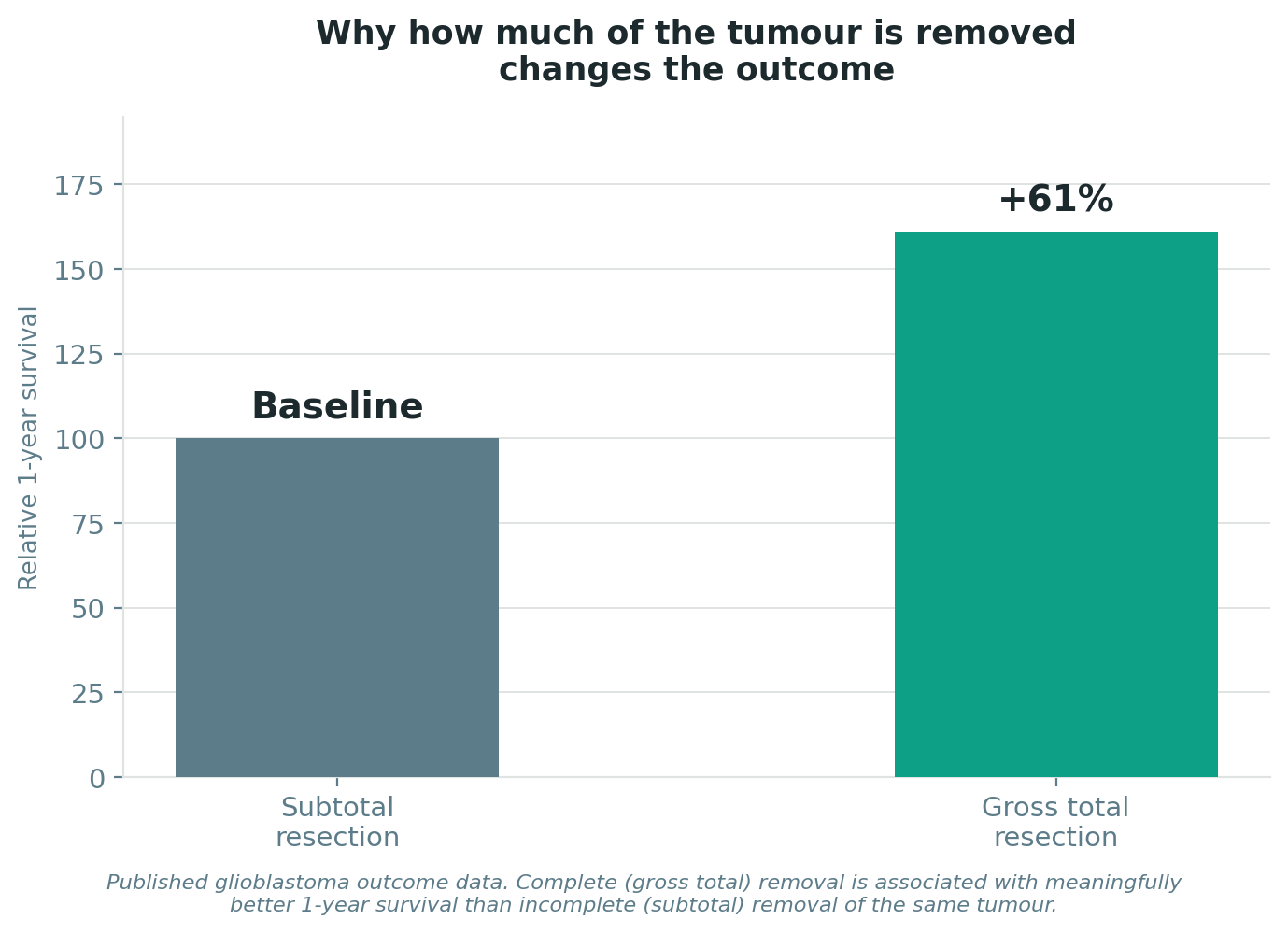
This is precisely why the tools that help a surgeon remove more of a tumour safely matter so much.
This is where neuronavigation comes in. Using your pre-operative MRI or CT scans, a neuronavigation system creates a detailed 3D map of your brain and the tumour within it, tracked in real time during surgery so the surgeon always knows exactly where the instruments are relative to the tumour's true boundaries. This precision helps surgeons remove more of the tumour with greater confidence, while avoiding healthy brain tissue that a freehand approach might risk.
| Your situation | Typical approach | What it involves |
|---|---|---|
| Tumour away from speech, movement or vision-controlling areas | Standard neuronavigation-guided surgery | Patient asleep throughout; real-time image guidance helps maximise safe removal |
| Tumour within or bordering an eloquent brain area | Awake craniotomy with functional mapping | Patient is woken during the critical part of surgery to test speech or movement in real time |
| Tumour considered too risky for complete removal at initial assessment | Second opinion from a specialist neuro-oncology team | Reassessment of whether modern mapping technology changes what is safely achievable |
| Tumour clearly unresectable regardless of technology | Biopsy, radiotherapy or other non-surgical treatment | Not every tumour benefits from these tools — an honest assessment matters more than the technology itself |
Why tumours near speech and movement areas aren't automatically "too risky"
Historically, a tumour sitting within or close to the parts of the brain controlling speech, movement or vision — known as eloquent areas — was often treated with great caution, sometimes leaving significant tumour behind to avoid causing permanent disability. Awake craniotomy changes this calculation. With the patient awake and responsive during the critical part of the operation, the surgical team can directly test speech, movement or sensation while gently stimulating the brain tissue, allowing them to map exactly where the eloquent tissue lies and work right up to its edge with far greater confidence. The process is more comfortable than it may sound. The scalp is numbed with local anaesthetic, and the brain tissue itself has no pain receptors, meaning the patient feels no pain during the mapping process itself, even while fully conscious. Patients are typically sedated for the parts of the surgery that do not require their active participation, and only kept alert during the specific window when speech or movement testing is needed.
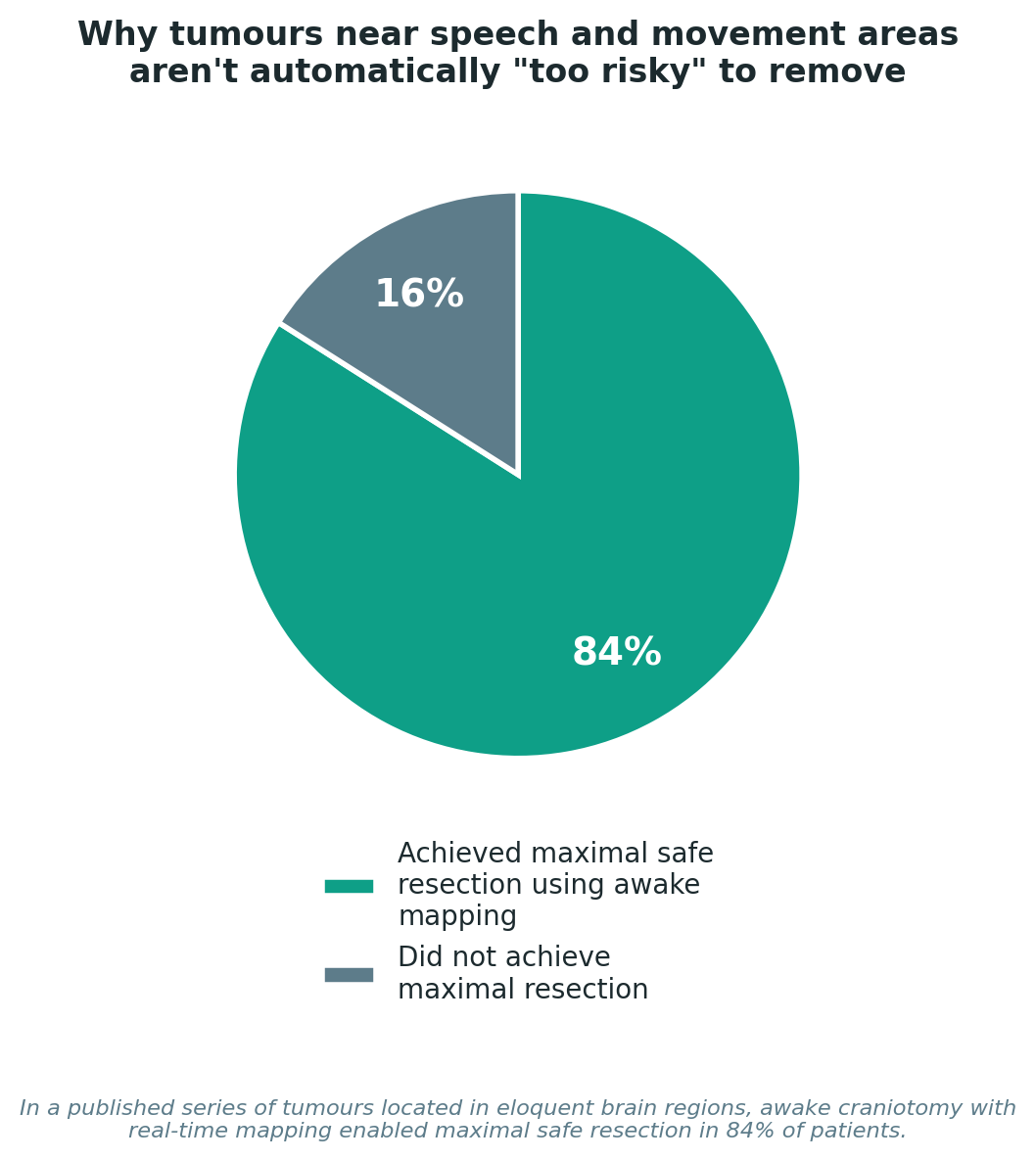
This is precisely why a tumour's location should prompt a specific question about mapping technology, not automatic caution.
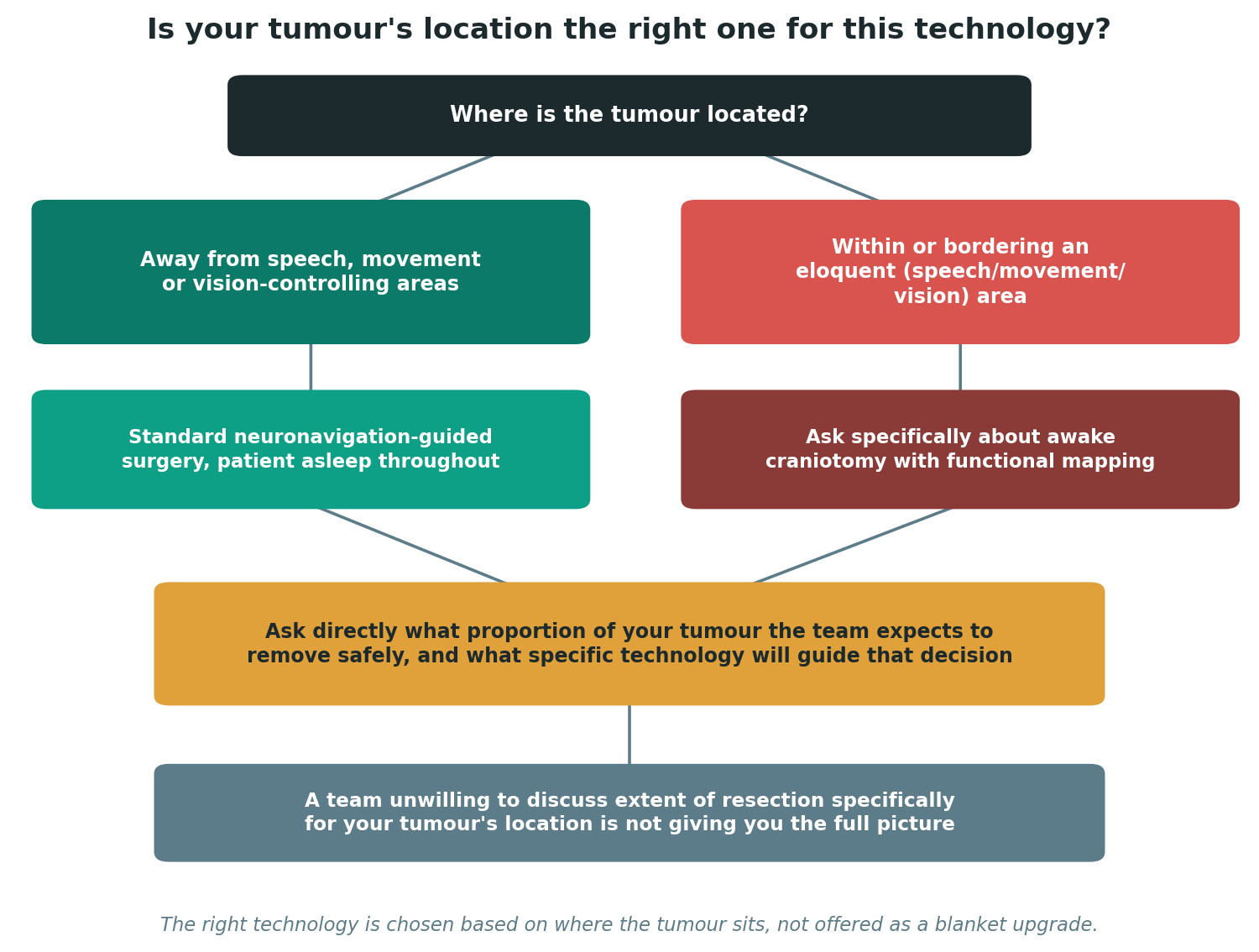
The right technology is chosen based on where the tumour sits, not offered as a blanket upgrade to every patient.
Choosing the surgeon and the hospital
Ask directly whether neuronavigation is used as standard for your specific tumour, and if your tumour is near an eloquent area, ask specifically whether awake craniotomy with intraoperative mapping is available and how many such procedures the team performs each year. Confirm that your case is reviewed by a genuine multidisciplinary neuro-oncology team, and ask them to state plainly what proportion of your tumour they realistically expect to remove safely, rather than a vague assurance.
Check accreditation (NABH, ideally JCI), and ask about the availability of intraoperative MRI if your tumour's complexity might benefit from imaging during the operation itself, since this represents a further level of precision beyond standard neuronavigation for select cases.
It is also worth asking specifically who is present in the operating theatre during an awake mapping procedure, since this typically requires a coordinated team including an anaesthetist experienced in awake neurosurgical techniques and, ideally, a neuropsychologist or speech therapist to conduct the functional testing accurately. A centre with a genuinely established programme will describe this team readily and specifically.
Cost and value: how to weigh the money honestly
Advanced brain tumour surgery in a good Indian hospital costs a small fraction of the equivalent procedure in the West, and India has centres with genuine experience in neuronavigation and awake craniotomy. The saving is real, but the specific technology used should match your tumour's actual location and risk, not simply be offered as an upsell.
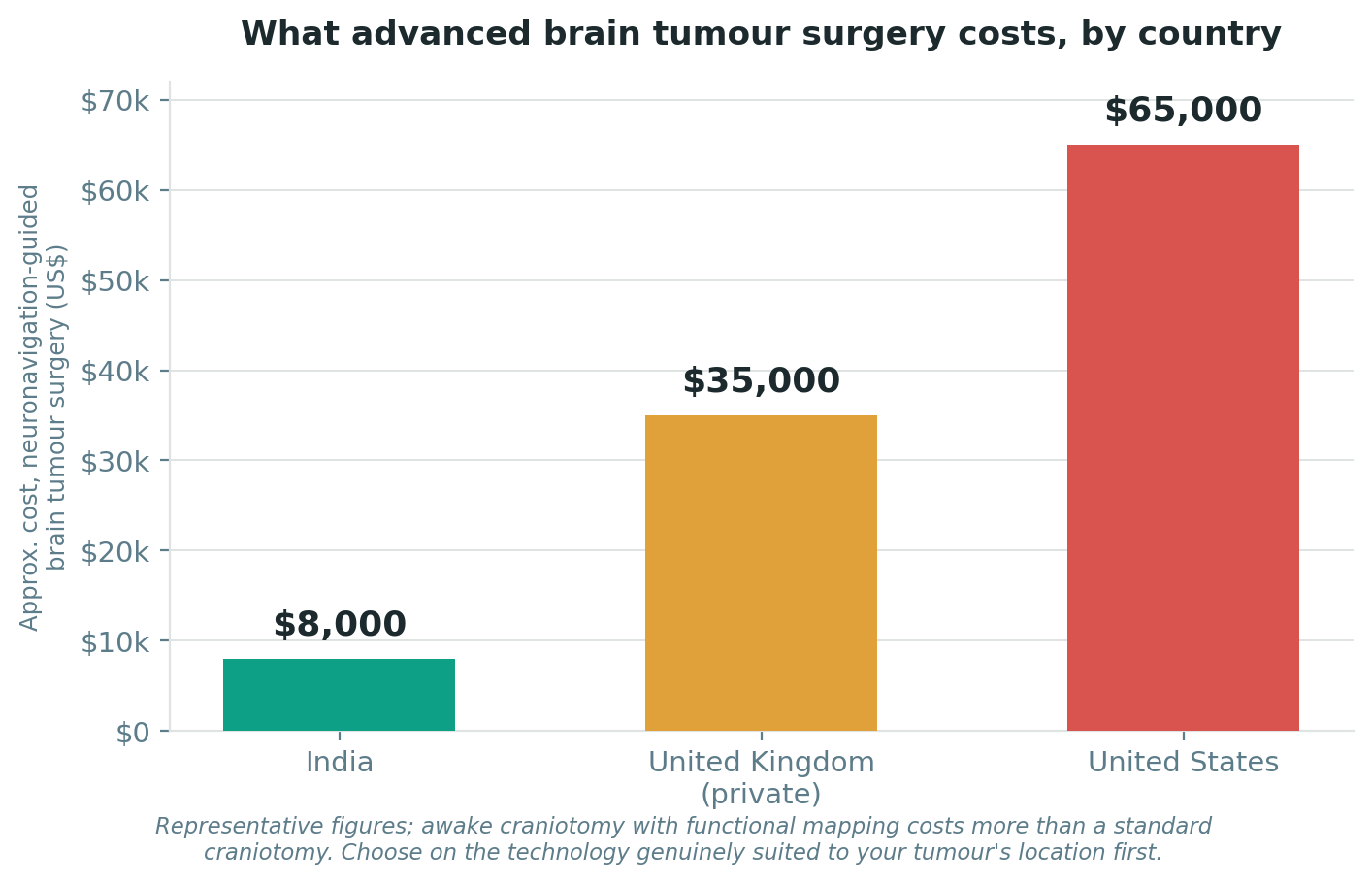
India's affordability is genuine — but confirm the technology is genuinely matched to your tumour's location.
In 24 years of arranging these journeys, I have found that patients who ask specifically about extent of resection and the technology supporting it tend to have a far clearer understanding of what to realistically expect. Ask for a written, itemised quote covering the surgery, any functional mapping required, and hospital stay.
What a Zambian patient should weigh in particular
Beyond the treatment decision itself, several practical matters deserve attention. First, payment: NHIMA funds care at accredited facilities inside Zambia, not treatment abroad, so this comes from your own resources — another reason to be confident the specific technology recommended genuinely suits your tumour's location before committing funds. Second, if you have been told your tumour is inoperable or only partially treatable, ask specifically whether this assessment considered awake craniotomy or advanced neuronavigation, since these tools can change what is realistically achievable. Third, aftercare: arrange follow-up imaging and neuro-oncology care with a Zambian team before you travel, and insist the Indian team provides a complete written operative report.
Fourth, prepare realistically for the possibility that awake mapping may identify function in an area close to your tumour that changes the surgical plan mid-operation. A confident surgical team will explain this possibility to you beforehand, since the whole purpose of the mapping is to let the findings genuinely guide how much tissue is safely removed, rather than following a plan fixed in advance regardless of what mapping reveals.
The practical journey from Zambia
India requires a yellow fever vaccination certificate from travellers arriving from Zambia, valid only from ten days after the injection. Your medical visa is issued by the High Commission of India on Pandit Nehru Road in Lusaka against the hospital's invitation letter. There is no direct flight from Zambia to India; you will connect through Addis Ababa on Ethiopian Airlines, or through Dubai, Doha or Nairobi. Send your complete imaging, not only a written report, for remote review before you travel, since the exact location of your tumour relative to eloquent brain areas is what determines which technology is genuinely appropriate for you.
Straight answers for Zambian Patients about Neuronavigation and Advanced Brain Surgery in India
I was told my tumour is too risky to remove completely. Should I get a second opinion?
This is a reasonable and often worthwhile step, particularly if the original assessment did not specifically discuss awake craniotomy or advanced neuronavigation. Modern mapping technology has changed what is safely achievable for many tumours near eloquent brain areas.
Is awake craniotomy painful or frightening?
The brain itself has no pain receptors, so patients do not feel pain during the mapping process, though the experience of being awake during surgery understandably feels unusual. Most patients report the experience as manageable, and centres with genuine experience will explain exactly what to expect beforehand.
Does every brain tumour need neuronavigation or awake surgery?
No. These tools matter most for tumours near eloquent brain areas or where precise, complete removal is particularly important. A straightforward, accessible tumour may not need the same level of technology, and a good team will explain honestly what your specific case requires.
What if my tumour truly cannot be safely removed, even with these tools?
Not every tumour benefits from surgery regardless of the technology available, and an honest team will tell you this rather than attempting a risky removal. In this situation, radiotherapy, biopsy for diagnosis, or other treatments may be the more appropriate path.
Sources
- 🌐 Medical visa, Lusaka — High Commission of India, requirements & process: hcizambia.gov.in/page/medical-visa
- 🌐 Hospital accreditation (India) — Verify a hospital's NABH accreditation: nabh.co
- 🌐 National Health Insurance (Zambia) — NHIMA cover, treatment abroad is not covered: nhima.co.zm
- 🌐 Ministry of Health Zambia — National health services & guidance: moh.gov.zm
- 🌐 National Medical Commission (verify a surgeon) — Confirm a surgeon's registration in India: nmc.org.in
- 🌐 WHO yellow fever — Vaccination requirements before travel: who.int/health-topics/yellow-fever
A Closing Word
Of everything I help patients understand, this is where a second opinion can genuinely change what is possible — a tumour once called inoperable may look different to a team with the right mapping technology and experience. If you send me your complete imaging, I will help you understand honestly what your realistic surgical options are, and which centres in India have the genuine expertise in neuronavigation and awake craniotomy to give you the best possible outcome.
Frequently Asked Questions by Zambian Patients about Neuronavigation and Advanced Brain Surgery in India
What is neuronavigation?
Neuronavigation uses the patient's MRI or CT scans to create a 3D map of the brain and tumour, helping the surgeon track instruments relative to the tumour during surgery.
What is an awake craniotomy?
It is a surgical approach in which the patient is awake and responsive during the critical part of surgery so the team can test speech, movement or sensation while mapping brain function.
Does every brain tumour require awake surgery?
No. The guide states that awake mapping is particularly relevant to tumours within or near eloquent brain areas, while accessible tumours may only require standard neuronavigation.
Can neuronavigation make an inoperable tumour operable?
It can change what is safely achievable in some selected cases, particularly when tumour location previously limited surgery. However, some tumours remain unsafe to remove even with advanced technology.
How effective was awake mapping in the cited series?
The page 2 chart reports that 84% of patients achieved maximal safe resection with awake craniotomy and real-time mapping in the cited series.
How much does advanced brain surgery cost in India?
The page 4 chart gives an illustrative cost of approximately US$8,000 in India, compared with US$35,000 in the private UK and US$65,000 in the USA.
Should I seek a second opinion if surgery was considered too risky?
The guide considers this reasonable, particularly when the original assessment did not specifically consider awake craniotomy or advanced neuronavigation.
What should Zambian patients send before travelling?
Send complete brain imaging, not only the written report, because the tumour's precise location relative to speech, movement and vision areas helps determine the appropriate technology.
What should I ask the neurosurgical team?
Ask about their experience with your tumour type, annual awake mapping volume, expected percentage of safe tumour removal, multidisciplinary review and whether intraoperative MRI is available when appropriate.
What should I arrange after surgery?
Arrange follow-up imaging and neuro-oncology care with a Zambian team before travelling and obtain a complete written operative report from the Indian hospital.
Page Summary
This guide helps Zambian patients understand neuronavigation and advanced brain tumour surgery in India, focusing on extent of safe tumour removal, neuronavigation, awake craniotomy, functional mapping, specialist expertise, costs and follow-up. The page 1 chart highlights a 61% relative 1-year survival improvement associated with gross-total versus subtotal resection in cited data, while the page 2 chart reports 84% maximal safe resection with awake mapping in a cited series. The page 4 chart gives an illustrative cost of US$8,000 in India compared with US$35,000 in the UK and US$65,000 in the USA.
Citation Block
| Topic | Information |
|---|---|
| Topic | Neuronavigation & Advanced Brain Surgery in India for Zambian Patients |
| Treatment | Advanced Brain Tumour Surgery |
| Patients | Zambian Patients |
| Specialist | Neurosurgeon / Neuro-Oncology Team |
| Key Technology | Neuronavigation |
| Advanced Technique | Awake craniotomy with functional mapping |
| Resection Finding | Gross-total resection associated with +61% relative 1-year survival in cited data |
| Awake Mapping Finding | 84% achieved maximal safe resection in cited series |
| Surgeon Check | Neuronavigation and awake mapping experience |
| Team Check | Multidisciplinary neuro-oncology review |
| Technology Check | Intraoperative MRI where appropriate |
| Awake Team | Experienced anaesthetist + functional testing support |
| India Cost | ~US$8,000 |
| UK Cost | ~US$35,000 |
| US Cost | ~US$65,000 |
| Pre-Travel Records | Complete imaging |
| Follow-Up | Zambian neuro-oncology team |
| Warning Signs | Vague resection expectations, unclear technology availability, no mapping expertise |
| Patient Pathway | Imaging → specialist review → tumour-location assessment → technology selection → surgery → follow-up imaging → neuro-oncology care |
| Key Decision | Match technology to tumour location, expected resection and individual surgical risk |
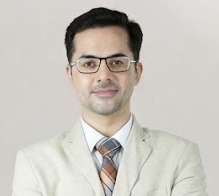

Our Mission Statement
Our mission is to place patients at the centre of every healthcare decision by providing trustworthy, evidence-based, and unbiased medical information. We believe that informed patients make better decisions. Backed by personalised guidance from our experienced advisory team, we help patients understand their treatment options, compare them objectively, and confidently choose the path that best suits their medical needs and personal circumstances.
Patient Testimonials from Zambia
Ready to Take the First Step?
Share your Medical Reports with our Healthcare Managers Today and Get a FREE CONSULTATION, a Personalized Treatment Plan, and Complete Support from Arrival to Recovery.
Get Your Free ConsultationAreas We Serve
This resource has been thoughtfully prepared for patients from Zambia who are considering medical treatment in India. We also welcome patients from the wider region in the countries mentioned below-
We assist patients from:
- Zambia
- Angola
- Malawi
- Zimbabwe
- Botswana
- Namibia
- South Africa
- Eswatini
- Lesotho
- Gabon
- Chad
- Equatorial Guinea
- São Tomé and Príncipe
- Republic of the Congo
- Democratic Republic of the Congo
Many of the insights, treatment pathways, hospital recommendations, travel guidance, and patient support services described here are equally relevant and may be used as a reference when planning treatment in India.
From Zambia to India: Your Complete Patient Support Guide
- Best Weight-Loss (Bariatric) Surgeons & Hospitals in India for Zambian Patients
- Best Brain-Tumour Surgeons & Hospitals in India for Zambian Patients
- Best Cancer Doctors & Hospitals in India for Zambian Patients
- Best Cardiac Surgeons & Hospitals in India for Zambian Patients
- Best Cosmetic Surgeons & Facilities in India for Zambian Patients
- Best CyberKnife Treatment Teams & Centres in India for Zambian Patients
- Best Dentists & Dental Clinics in India for Zambian Patients
- Best Heart Valve Replacement Surgeons & Hospitals in India for Zambian Patients
- Best Hip Surgeons & Hospitals in India for Zambian Patients
- Best Knee Surgeons & Hospitals in India for Zambian Patients
- Best Neurosurgeons & Hospitals in India for Zambian Patients
- Best Paediatric Cardiac Surgeons & Hospitals in India for Zambian Patients
- Best Paediatric Neurosurgeons & Hospitals in India for Zambian Patients
- Best Prostate Surgeons & Hospitals in India for Zambian Patients
- Best Scoliosis Surgeons & Hospitals in India for Zambian Patients
- Best Spine Surgeons & Hospitals in India for Zambian Patients
- Best Bone Marrow Transplant Teams & Hospitals in India for Zambian Patients
- Best Kidney Transplant Surgeons & Hospitals in India for Zambian Patients