

Leukemia, Lymphoma and Blood Cancer Treatments in India for Zambian Patients
One of the fastest-growing tumours in all of human medicine is also one of the most curable — but only if the days between noticing it and starting treatment are counted in days, not weeks.
Leukemia and lymphoma are cancers of the blood and lymphatic system, treated primarily with chemotherapy rather than surgery, sometimes followed by a stem cell transplant for certain diagnoses — that specific procedure has its own dedicated guide elsewhere in this series. Here, the focus is on two situations that look and behave differently from most cancers discussed in this guide series, and that deserve specific, urgent attention: Burkitt lymphoma, a cancer strongly associated with this region, and lymphoma occurring alongside HIV. In 24 years of guiding cancer patients through treatment abroad, I have found both are highly treatable, sometimes curable, but only when recognised and acted on quickly.
Healing Journeys of Zambian Patients
Key Takeaways
- The guide highlights Burkitt lymphoma as an exceptionally fast-growing cancer, with the page 1 graphic illustrating a tumour doubling time of approximately 24–48 hours. It is strongly associated with the region and commonly presents in children as rapidly increasing jaw, facial or abdominal swelling. The guide stresses that suspected cases require assessment and treatment within days rather than weeks.
- The page 2 chart compares long-term cure rates for Burkitt lymphoma, showing approximately 90% in high-income settings with prompt intensive treatment versus around 35% in parts of sub-Saharan Africa with typical presentation. The guide attributes this gap primarily to delays in diagnosis and access to intensive treatment rather than a biologically more difficult form of the disease.
- The guide also focuses on lymphoma occurring alongside HIV, explaining that chemotherapy and antiretroviral therapy should generally be coordinated rather than treated sequentially. It recommends centres experienced in managing potential drug interactions and providing integrated haemato-oncology and HIV care.
- The page 3 treatment pathway distinguishes between rapidly growing suspected Burkitt lymphoma, HIV-associated lymphoma, leukemia without a transplant indication and cases where stem cell transplantation is recommended. For all blood cancers, the guide recommends review by a genuine haemato-oncology team with experience in the patient's exact diagnosis, along with clear infection-monitoring and supportive-care protocols during chemotherapy.
- The page 4 cost chart gives an illustrative cost of approximately US$6,000 in India for a complete multi-cycle intensive chemotherapy course, compared with US$35,000 in the private UK and US$80,000 in the USA. The guide notes that costs vary according to diagnosis and treatment complexity and recommends obtaining an itemised quotation for the complete chemotherapy course.
- For Zambian patients, the guide stresses that chemotherapy commonly involves multiple cycles over several months, making financial, family and travel planning important. Patients should send complete pathology and imaging records for remote review and arrange the appropriate medical visa, while suspected Burkitt lymphoma should never be delayed simply to organise travel.
Quick Facts
- Author
- Dr. Dheeraj Bojwani
- Experience
- 24+ Years
- Treatment
- Leukemia, Lymphoma & Blood Cancer Treatment
- Patients
- Zambian Patients
- Key Specialist
- Haemato-Oncology Team
- Key Cancer
- Burkitt Lymphoma
- Burkitt Growth
- Approximately 24–48 hour doubling time
- Prompt-Treatment Cure
- Over 90% in cited well-resourced settings
- Key Treatment
- Intensive chemotherapy
- HIV-Associated Lymphoma
- Chemotherapy with coordinated antiretroviral therapy
- India Cost
- Approximately US$6,000
- UK Cost
- Approximately US$35,000
- US Cost
- Approximately US$80,000
- Treatment Duration
- Multiple cycles over several months
- Pre-Travel Check
- Complete pathology and imaging records
- Follow-Up
- Coordinated haemato-oncology care
- Key Warning
- Do not delay suspected Burkitt lymphoma for travel planning
- Decision Principle
- Confirm the exact diagnosis and start appropriate treatment as quickly as possible.
In Brief
For Zambian patients considering blood cancer treatment in India, the guide recommends rapid diagnosis, exact disease classification, specialist haemato-oncology review and a clearly defined treatment plan. Suspected Burkitt lymphoma requires particularly urgent attention, while patients with HIV-associated lymphoma should ensure chemotherapy and antiretroviral treatment are coordinated by one specialist team.
Why speed matters more here than almost anywhere else in this guide series
Burkitt lymphoma is strongly associated with this region, closely linked to chronic exposure to malaria alongside Epstein-Barr virus infection in early childhood. It most often presents as a rapidly growing mass in the jaw or face, or as swelling in the abdomen, and predominantly affects young children. What makes it genuinely unusual among cancers is its growth rate: it is considered the fastest-growing human tumour documented in medicine, with a doubling time of roughly one to two days.
This connection to malaria is not simply coincidental. Repeated malaria infection appears to suppress the immune system's ability to control Epstein-Barr virus, which most children in this region acquire very early in life, allowing infected cells to accumulate and eventually undergo the specific genetic change that drives this cancer. This is part of why continued progress on malaria control across the region carries a benefit that extends well beyond malaria itself.
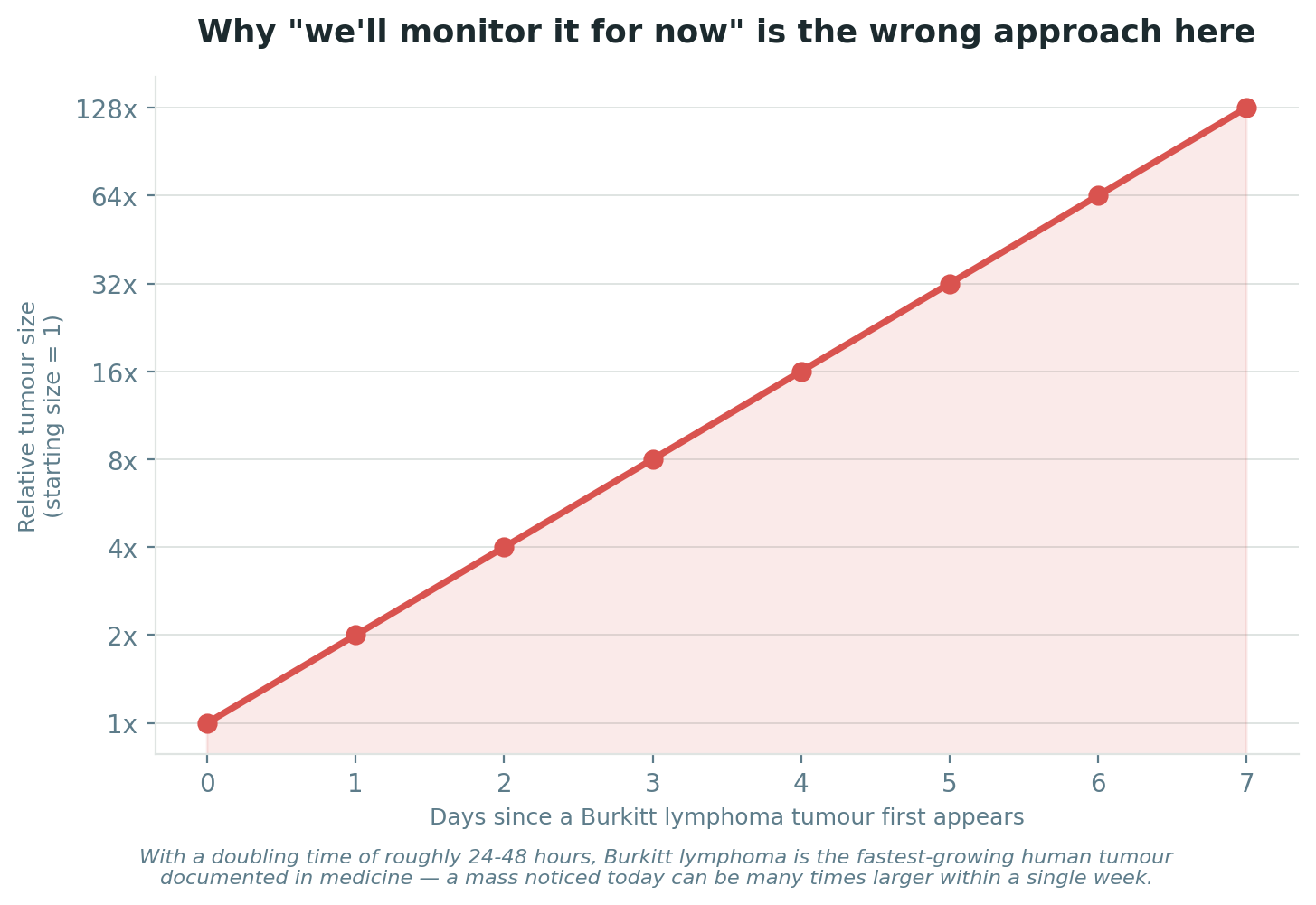
A mass that seems small and new today can be many times larger within a single week — this is not a condition where watching and waiting is appropriate.
The genuinely hopeful part of this story is that Burkitt lymphoma's aggressive growth makes it exceptionally sensitive to chemotherapy, and it was one of the first cancers in medical history shown to be curable with drug treatment alone. In settings with prompt diagnosis and intensive chemotherapy, long- term cure rates now regularly exceed 90%. The tragedy is that in parts of this region, cure rates remain far lower, not because the cancer is biologically different, but because of delayed diagnosis and limited access to intensive treatment in time.
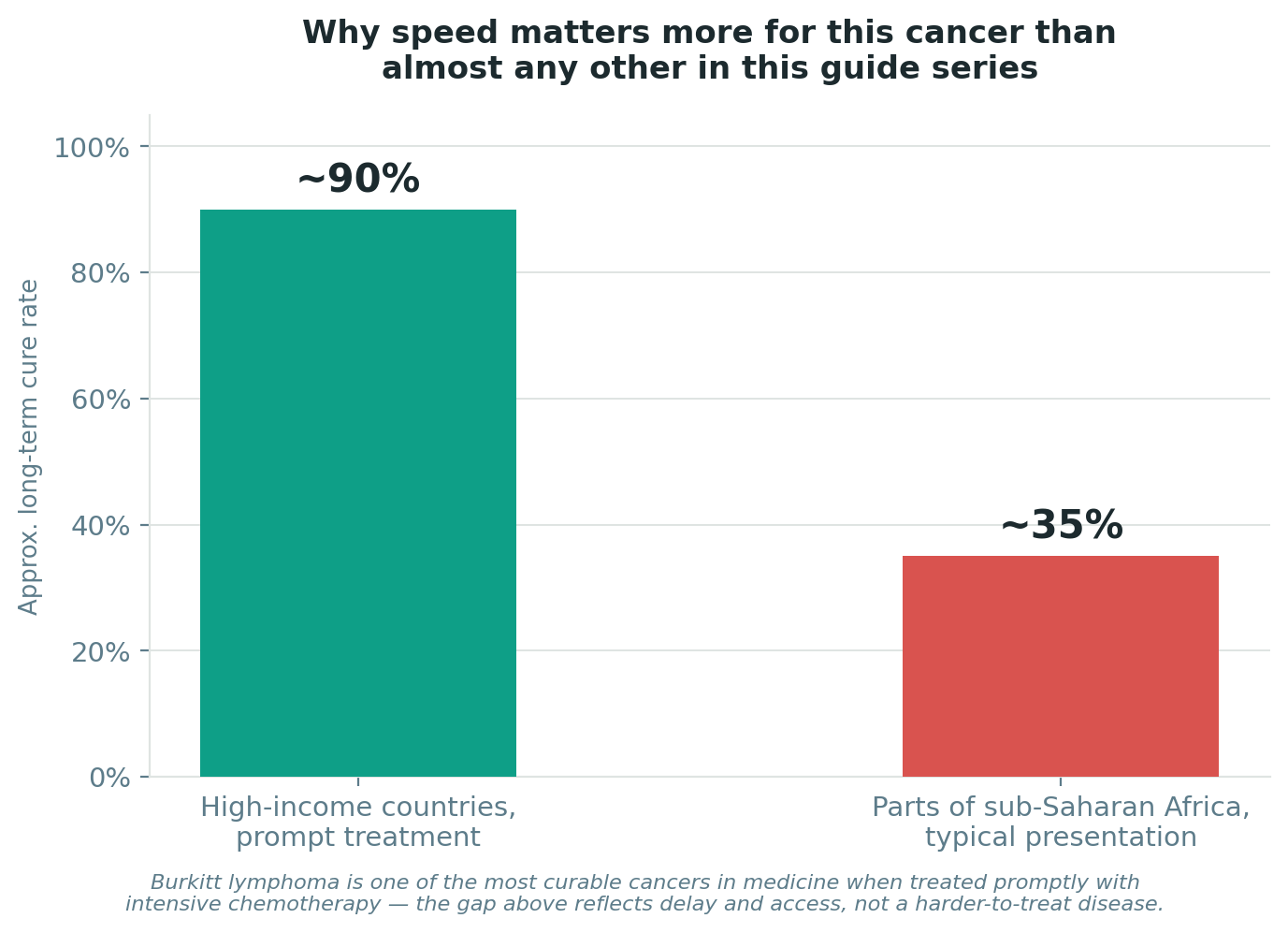
This gap reflects speed of diagnosis and treatment access — not a harder-to-treat form of the disease.
| Your situation | Typical approach | What it involves |
|---|---|---|
| Child with rapidly growing jaw, facial or abdominal swelling | Urgent referral for biopsy and intensive chemotherapy | Diagnosis and treatment start within days; this is a genuine emergency, not a routine cancer referral |
| Adult with new lymph node swelling, known or suspected HIV | Combined chemotherapy and antiretroviral therapy | Both conditions treated together under specialist supervision, not one after the other |
| Leukemia diagnosed on blood testing, no transplant indication | Chemotherapy course, often over several months | Multiple cycles of treatment, with regular blood monitoring throughout |
| Leukemia or lymphoma where a stem cell transplant is recommended | Referral to a transplant-specific programme | See this series' dedicated bone marrow transplant guide for donor matching and transplant-specific detail |
Why lymphoma and HIV need to be treated together, not in sequence
Non-Hodgkin lymphoma is one of the cancers most strongly linked to HIV, and it remains a significant cause of illness and death among people living with HIV across this region. For years, the instinct in resource-limited settings was to treat the more visible or urgent problem first. Published research now shows clearly that combining chemotherapy with antiretroviral therapy, rather than delaying one for the other, gives patients outcomes comparable to those without HIV. If you or a family member is living with HIV and develops lymphoma, ask specifically that both conditions are managed together by a coordinated team, not treated as separate, sequential problems. This shift in approach reflects a broader, genuinely encouraging change in how HIV-associated cancers are understood. With reliable antiretroviral treatment supporting the immune system, patients can generally tolerate standard chemotherapy protocols reasonably well, and modern combined treatment protocols have narrowed the outcome gap between patients with and without HIV considerably compared to the earlier years of the epidemic.
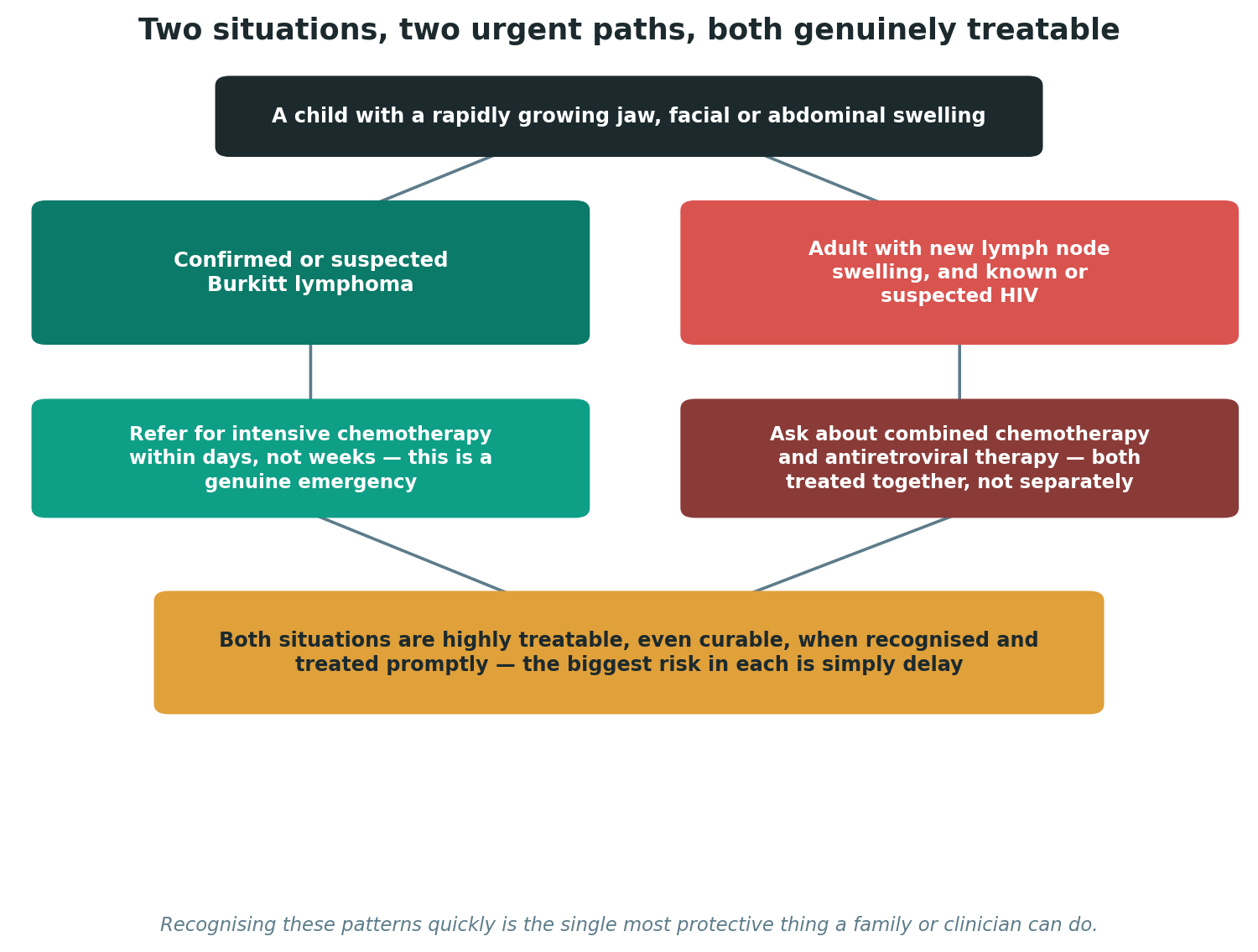
Recognising these patterns quickly is the single most protective thing a family or clinician can do.
Choosing the centre
For suspected Burkitt lymphoma, ask directly how quickly the centre can confirm diagnosis and begin treatment, since any meaningful delay works against this specific cancer more than almost any other. For lymphoma alongside HIV, ask specifically about the centre's experience coordinating chemotherapy with antiretroviral therapy, including managing potential drug interactions between the two treatments.
Check accreditation (NABH, ideally JCI), and for any blood cancer diagnosis, confirm your case is reviewed by a genuine haemato-oncology team with specific experience in your exact diagnosis, since treatment protocols vary considerably between different types of leukemia and lymphoma.
It is also worth asking what supportive care is available during chemotherapy, since blood cancer treatment often causes a temporary but significant drop in the body's ability to fight infection, and a centre with genuine experience will have clear, specific protocols for monitoring and managing this risk throughout your treatment course.
Cost and value: how to weigh the money honestly
Blood cancer treatment in a good Indian hospital costs a fraction of the equivalent care in the West, and India has centres with genuine, high-volume experience in both paediatric and adult haemato-oncology. The saving is real, but for Burkitt lymphoma specifically, the cost of delay is measured in days and directly affects survival, not just money.
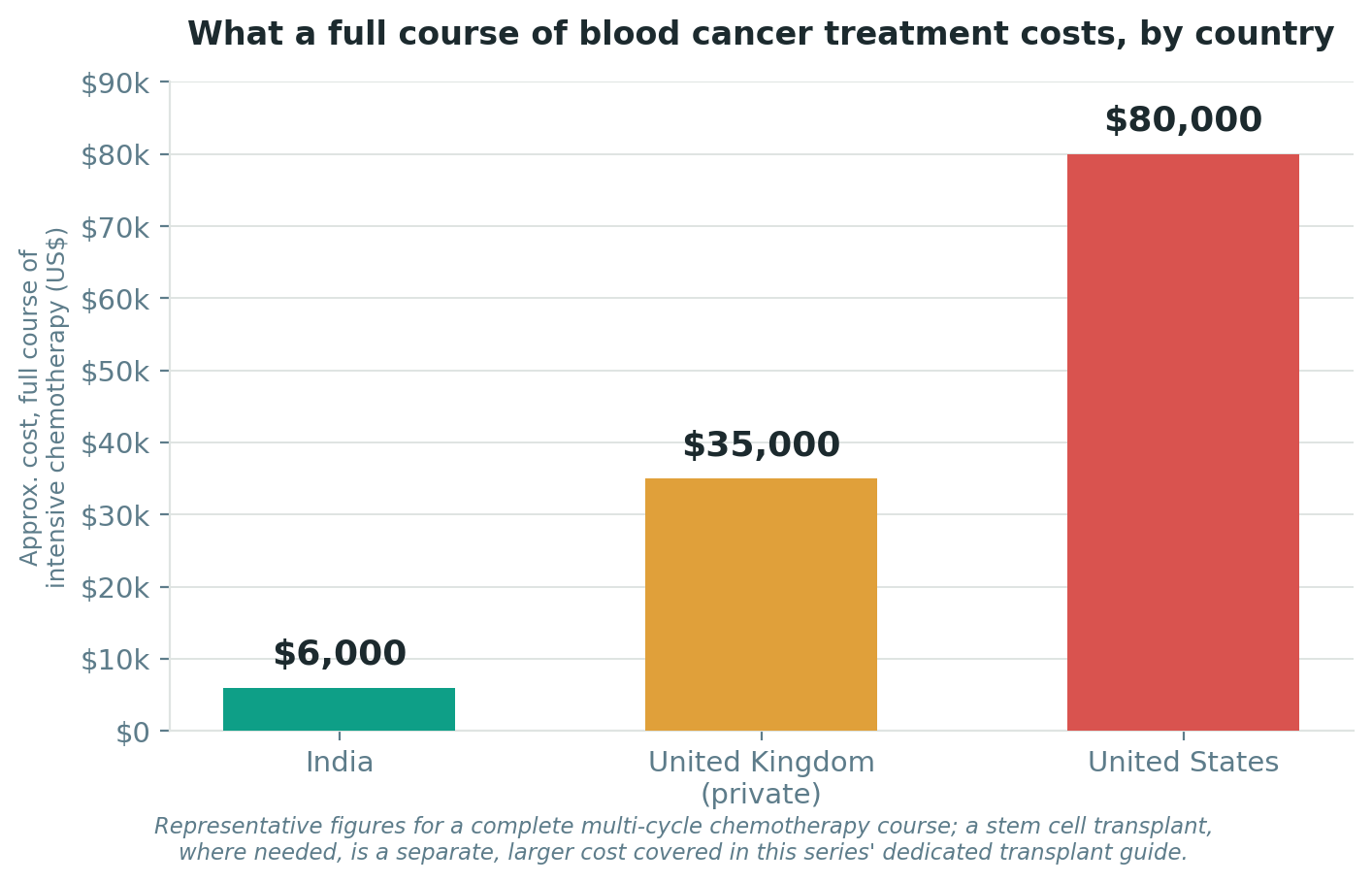
India's affordability is genuine — and for Burkitt lymphoma, acting within days protects both the outcome and the budget.
In 24 years of arranging these journeys, I have found that families who treat a suspected Burkitt lymphoma diagnosis with genuine urgency, rather than researching extensively before acting, tend to see far better outcomes. Ask for a written, itemised quote covering the complete chemotherapy course appropriate to your specific diagnosis.
What a Zambian patient should weigh in particular
Beyond the treatment decision itself, several practical matters deserve attention. First, payment: NHIMA funds care at accredited facilities inside Zambia, not treatment abroad, so this comes from your own resources — another reason to move quickly once a diagnosis like Burkitt lymphoma is suspected, since delay itself carries real cost. Second, if a child in your care develops a rapidly growing facial or abdominal mass, seek medical assessment within days, not weeks. Third, if you or a family member is living with HIV and a lymphoma diagnosis arises, insist that both conditions are managed by one coordinated team.
Fourth, plan realistically for a multi-month treatment course, since most chemotherapy protocols for these conditions involve several cycles delivered over months rather than a single visit, and understanding this timeline in advance helps with both financial and family planning.
The practical journey from Zambia
India requires a yellow fever vaccination certificate from travellers arriving from Zambia, valid only from ten days after the injection — for a genuine emergency like suspected Burkitt lymphoma, discuss timing directly with the hospital, since urgent treatment may need to proceed regardless. Your medical visa is issued by the High Commission of India on Pandit Nehru Road in Lusaka against the hospital's invitation letter; chemotherapy courses often require an extended-stay visa given their multi-month duration. There is no direct flight from Zambia to India; you will connect through Addis Ababa on Ethiopian Airlines, or through Dubai, Doha or Nairobi. Send your complete pathology and imaging results, not only a summary, for remote review before you travel.
Straight answers for Zambian Patients about Leukemia, Lymphoma and Blood Cancer Treatments in India
My child has a rapidly growing lump on the jaw. How urgent is this really?
Extremely urgent. This is a classic presentation of Burkitt lymphoma, one of the fastest-growing cancers known, and needs assessment and, if confirmed, treatment within days, not weeks. Do not wait to see if it resolves on its own.
I have HIV and have just been diagnosed with lymphoma. Should I stop my HIV medication during chemotherapy?
No — published research consistently shows that continuing antiretroviral therapy alongside chemotherapy gives better outcomes than treating the conditions separately. Discuss this directly and specifically with your treating team.
Will I need a bone marrow transplant?
Not necessarily — many leukemias and lymphomas are treated successfully with chemotherapy alone. Where a transplant is recommended for your specific diagnosis, this series has a separate, dedicated guide covering donor matching and the transplant process in detail.
Sources
- 🌐 Medical visa, Lusaka — High Commission of India, requirements & process: hcizambia.gov.in/page/medical-visa
- 🌐 Hospital accreditation (India) — Verify a hospital's NABH accreditation: nabh.co
- 🌐 National Health Insurance (Zambia) — NHIMA cover, treatment abroad is not covered: nhima.co.zm
- 🌐 Ministry of Health Zambia — National health services & guidance: moh.gov.zm
- 🌐 National Medical Commission (verify a doctor) — Confirm a doctor's registration in India: nmc.org.in
- 🌐 WHO yellow fever — Vaccination requirements before travel: who.int/health-topics/yellow-fever
A Closing Word
Of everything I help families with, this is where speed genuinely saves lives more than almost anywhere else in this guide series. If you send me your child's or your own pathology results and a description of how symptoms have progressed, I will help you understand honestly how urgent your situation is, and which centres in India have the genuine haemato-oncology experience to treat you or your child well, starting as quickly as possible.
Frequently Asked Questions by Zambian Patients about Leukemia, Lymphoma and Blood Cancer Treatments in India
How urgent is suspected Burkitt lymphoma?
Extremely urgent. The guide describes Burkitt lymphoma as one of the fastest-growing human cancers and recommends assessment and, if confirmed, treatment within days rather than weeks.
Is Burkitt lymphoma curable?
Yes, and often highly so — with prompt diagnosis and intensive chemotherapy, cure rates in well-resourced settings regularly exceed 90%. The key factor is speed of diagnosis and treatment, not the aggressiveness of the cancer itself.
What symptoms can suggest Burkitt lymphoma?
The guide highlights a rapidly growing jaw or facial mass or abdominal swelling, particularly in a child, as an important presentation requiring urgent medical assessment.
How is leukemia usually treated?
The guide states that leukemia without a transplant indication is generally treated with multiple cycles of chemotherapy over several months, accompanied by regular blood monitoring.
How should HIV-associated lymphoma be treated?
The guide recommends coordinating chemotherapy and antiretroviral therapy together, rather than treating the two conditions sequentially, under specialist supervision.
Will every leukemia or lymphoma patient need a bone marrow transplant?
No. The guide notes that many cases can be treated successfully with chemotherapy alone. Transplantation is considered only when indicated for the specific diagnosis.
How much can blood cancer treatment cost in India?
The page 4 chart gives an illustrative cost of approximately US$6,000 for a complete multi-cycle intensive chemotherapy course. Actual costs depend on diagnosis and treatment requirements.
How long does blood cancer treatment take?
Many chemotherapy protocols require several cycles delivered over multiple months, rather than a single hospital visit.
What should Zambian patients send before travelling?
The guide recommends sending complete pathology and imaging results, rather than only a summary, for remote review before travel.
What should Zambian families check when choosing a centre?
They should confirm diagnosis-specific haemato-oncology experience, treatment speed, accreditation, supportive-care protocols and experience coordinating chemotherapy with antiretroviral therapy where HIV is involved.
Page Summary
This guide helps Zambian patients and families understand leukemia, lymphoma and blood cancer treatment options in India, with particular attention to Burkitt lymphoma and HIV-associated lymphoma. It highlights the exceptional growth rate of Burkitt lymphoma, the importance of rapid diagnosis and intensive chemotherapy, and the need for coordinated care when HIV is present. The page 4 chart gives an illustrative complete chemotherapy cost of US$6,000 in India compared with US$35,000 in the UK and US$80,000 in the USA.
Citation Block
| Topic | Information |
|---|---|
| Topic | Leukemia, Lymphoma & Blood Cancer Treatment in India for Zambian Patients |
| Treatment | Chemotherapy and Haemato-Oncology Care |
| Patients | Zambian Patients |
| Key Specialist | Haemato-Oncology Team |
| Key Cancer | Burkitt Lymphoma |
| Burkitt Growth | Approximately 24–48 hour doubling time |
| Cure Finding | >90% in cited well-resourced settings with prompt intensive treatment |
| HIV-Associated Lymphoma | Coordinate chemotherapy with antiretroviral therapy |
| Main Treatment | Intensive chemotherapy |
| India Cost | ~US$6,000 |
| UK Cost | ~US$35,000 |
| US Cost | ~US$80,000 |
| Treatment Duration | Multiple cycles over several months |
| Centre Check | Exact diagnosis-specific haemato-oncology experience |
| Supportive Care | Infection monitoring and management during chemotherapy |
| Pre-Travel Records | Complete pathology and imaging |
| Visa | Indian Medical Visa; extended stay may be relevant for chemotherapy |
| Follow-Up | Coordinated specialist care |
| Warning Signs | Delayed assessment of rapidly growing mass, sequential HIV/lymphoma treatment, unclear diagnosis-specific expertise |
| Patient Pathway | Diagnosis → specialist review → treatment plan → chemotherapy → monitoring → follow-up |
| Key Decision | Prioritise rapid diagnosis and timely, diagnosis-specific treatment |


Our Mission Statement
Our mission is to place patients at the centre of every healthcare decision by providing trustworthy, evidence-based, and unbiased medical information. We believe that informed patients make better decisions. Backed by personalised guidance from our experienced advisory team, we help patients understand their treatment options, compare them objectively, and confidently choose the path that best suits their medical needs and personal circumstances.
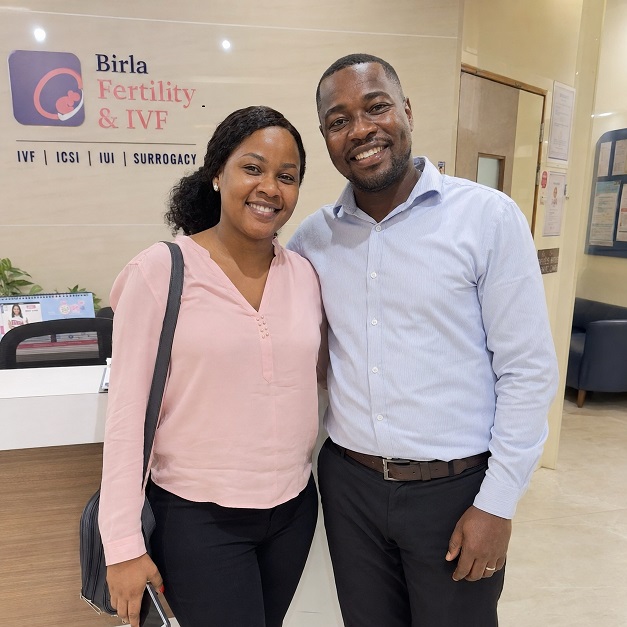
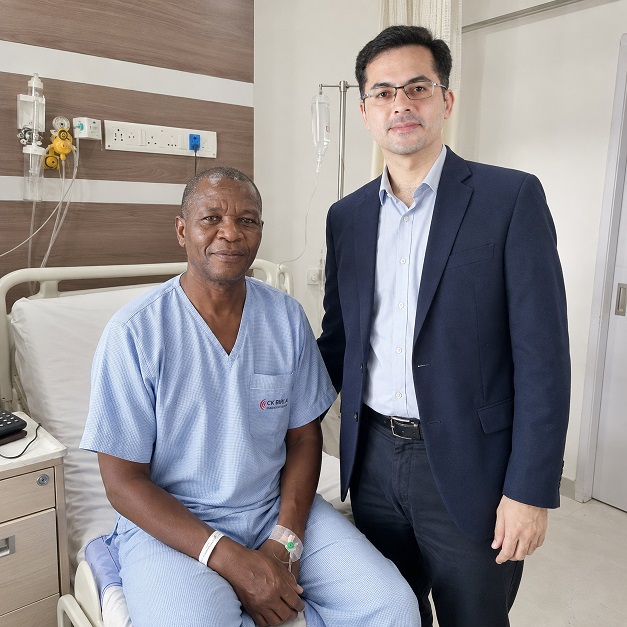
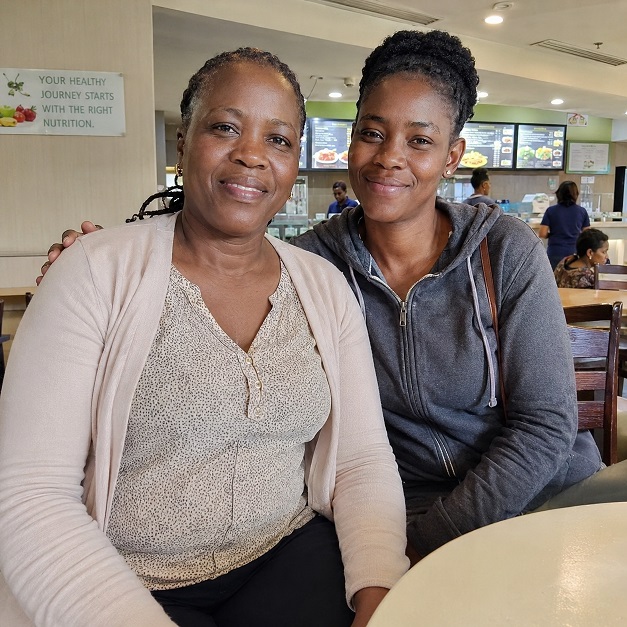
Patient Testimonials from Zambia
Ready to Take the First Step?
Share your Medical Reports with our Healthcare Managers Today and Get a FREE CONSULTATION, a Personalized Treatment Plan, and Complete Support from Arrival to Recovery.
Get Your Free ConsultationAreas We Serve
This resource has been thoughtfully prepared for patients from Zambia who are considering medical treatment in India. We also welcome patients from the wider region in the countries mentioned below-
We assist patients from:
- Zambia
- Angola
- Malawi
- Zimbabwe
- Botswana
- Namibia
- South Africa
- Eswatini
- Lesotho
- Gabon
- Chad
- Equatorial Guinea
- São Tomé and Príncipe
- Republic of the Congo
- Democratic Republic of the Congo
Many of the insights, treatment pathways, hospital recommendations, travel guidance, and patient support services described here are equally relevant and may be used as a reference when planning treatment in India.
From Zambia to India: Your Complete Patient Support Guide
- Best Weight-Loss (Bariatric) Surgeons & Hospitals in India for Zambian Patients
- Best Brain-Tumour Surgeons & Hospitals in India for Zambian Patients
- Best Cancer Doctors & Hospitals in India for Zambian Patients
- Best Cardiac Surgeons & Hospitals in India for Zambian Patients
- Best Cosmetic Surgeons & Facilities in India for Zambian Patients
- Best CyberKnife Treatment Teams & Centres in India for Zambian Patients
- Best Dentists & Dental Clinics in India for Zambian Patients
- Best Heart Valve Replacement Surgeons & Hospitals in India for Zambian Patients
- Best Hip Surgeons & Hospitals in India for Zambian Patients
- Best Knee Surgeons & Hospitals in India for Zambian Patients
- Best Neurosurgeons & Hospitals in India for Zambian Patients
- Best Paediatric Cardiac Surgeons & Hospitals in India for Zambian Patients
- Best Paediatric Neurosurgeons & Hospitals in India for Zambian Patients
- Best Prostate Surgeons & Hospitals in India for Zambian Patients
- Best Scoliosis Surgeons & Hospitals in India for Zambian Patients
- Best Spine Surgeons & Hospitals in India for Zambian Patients
- Best Bone Marrow Transplant Teams & Hospitals in India for Zambian Patients
- Best Kidney Transplant Surgeons & Hospitals in India for Zambian Patients