

Joint Arthroscopy and Sports Medicine in India for Zambian Patients
A torn ACL rarely needs same-day surgery, but it is not a condition that rewards waiting either — every episode of the knee giving way while it stays unreconstructed adds further, sometimes irreversible, damage to the joint.
Joint arthroscopy uses a small camera and instruments inserted through tiny incisions to diagnose and treat injuries inside a joint, most often the knee, without the larger incisions traditional surgery once required. This guide focuses specifically on the anterior cruciate ligament, or ACL, and the meniscus — the two structures most often injured together in football and other sports, and the two where the timing of treatment genuinely changes the long-term outcome. In 24 years of guiding patients through orthopaedic care abroad, I have found that understanding why timing matters here — differently from most other joint conditions in this guide series — helps families make a clearer decision.
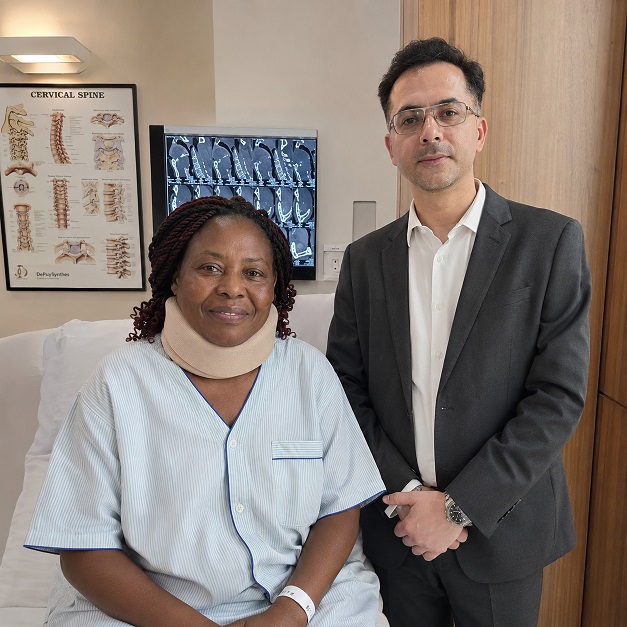
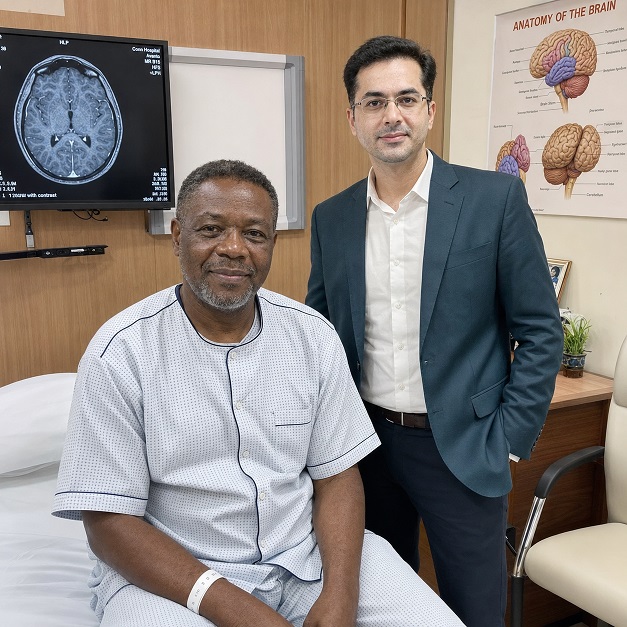
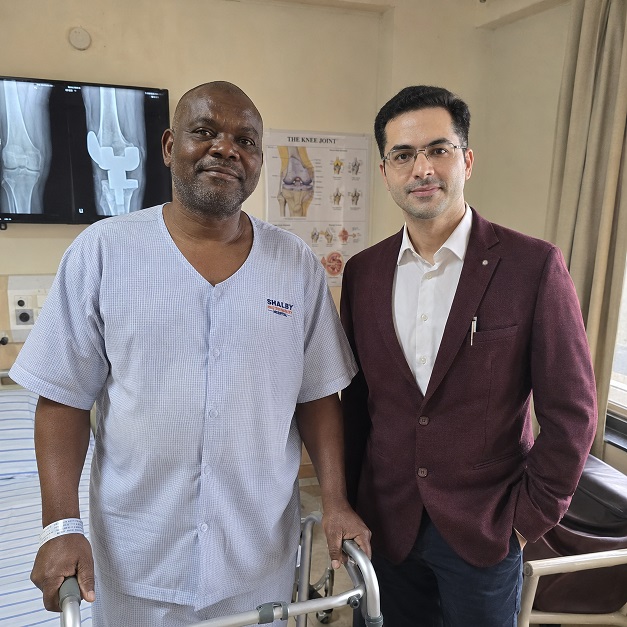
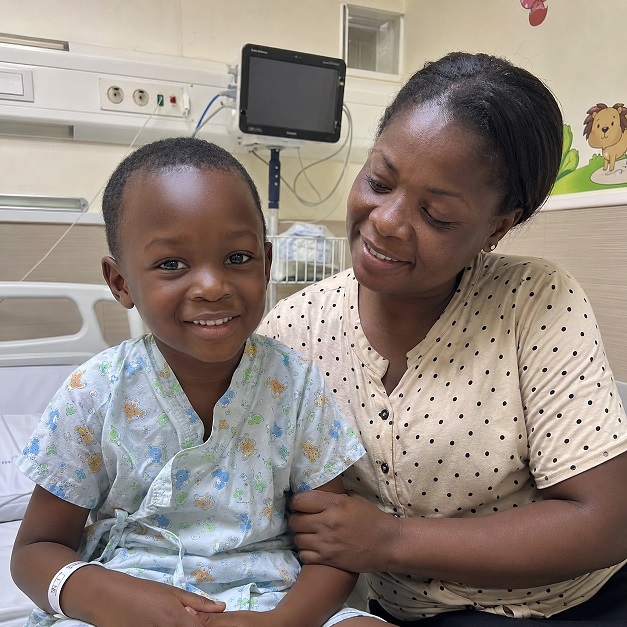
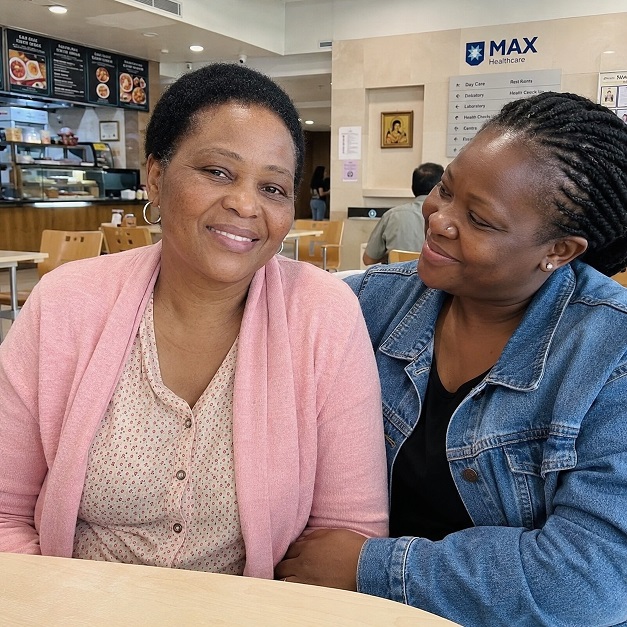
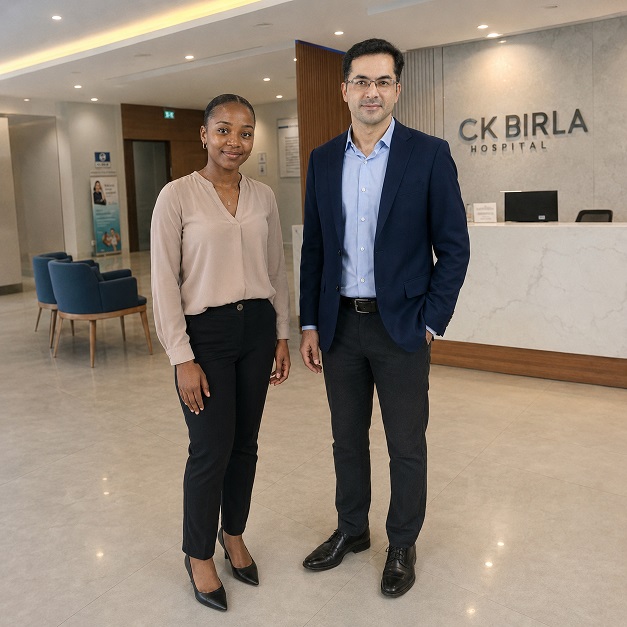
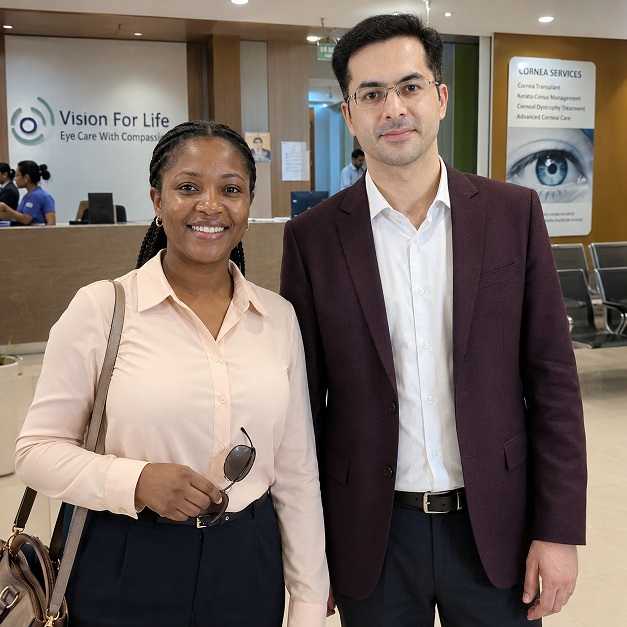
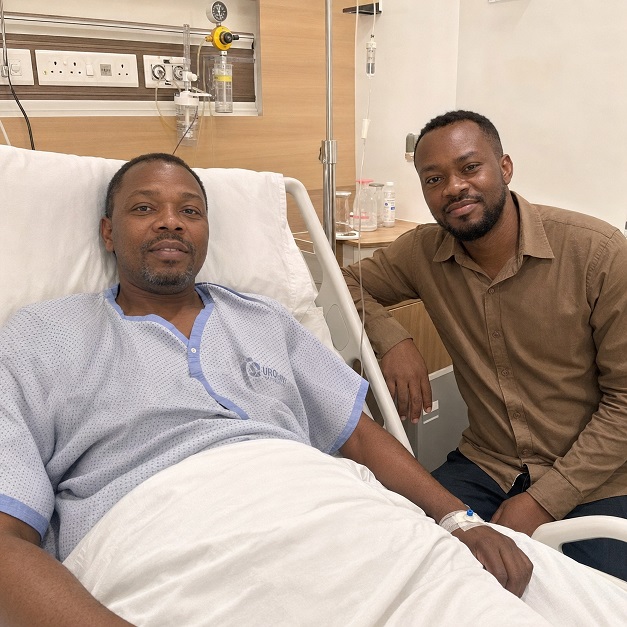
Healing Journeys of Zambian Patients
Key Takeaways
- The guide highlights that the knee is one of the most commonly injured areas among footballers in the cited African academy and club studies, accounting for approximately 28% of injuries, compared with about 22% for the ankle and 18% for the thigh/hamstring. The guide particularly focuses on ACL and meniscus injuries because repeated knee instability can contribute to further joint damage.
- The page 2 chart illustrates the effect of treatment timing, reporting an approximate 15% risk of secondary meniscus tear when ACL reconstruction occurs within three months, compared with approximately 45% when reconstruction occurs after 12 months. The guide explains that repeated episodes of the knee giving way can place additional stress on the meniscus and cartilage.
- The guide recommends meniscus repair rather than removal whenever the tear pattern allows, because repair preserves more of the knee's natural shock-absorbing function. Where a tear is unsuitable for repair, partial meniscectomy may be used to remove only the damaged portion while preserving healthy tissue.
- The page 3 diagram presents the timing pathway: an active patient with a confirmed ACL tear should discuss reconstruction within weeks rather than months, while a patient whose surgery has already been delayed should avoid further postponement because of increasing meniscus and cartilage risk. The guide also stresses that graft selection should be individualised according to age, activity level and goals.
- The page 4 cost chart gives an illustrative ACL reconstruction cost of approximately US$4,500 in India, US$15,000 in the private UK and US$30,000 in the USA. The guide notes that combined meniscus repair can add to the cost and recommends obtaining a written, itemised quotation covering surgery, graft and physiotherapy.
- For Zambian patients, the guide emphasises that rehabilitation is an essential part of ACL treatment, with structured programmes commonly taking nine months to one year before a safe return to competitive football. Patients should arrange physiotherapy in Zambia before travelling and ensure their rehabilitation plan reflects their actual work or sporting demands.
Quick Facts
- Author
- Dr. Dheeraj Bojwani
- Experience
- 24+ Years
- Treatment
- Joint Arthroscopy & Sports Medicine
- Patients
- Zambian Patients
- Key Specialist
- Orthopaedic Sports Medicine Surgeon
- Key Injuries
- ACL and Meniscus Tears
- Knee Injury Share
- Approximately 28% in cited African football cohorts
- Timing
- Discuss ACL reconstruction within weeks rather than months
- Meniscus Preference
- Repair where the tear is suitable
- India ACL Cost
- Approximately US$4,500
- UK Cost
- Approximately US$15,000
- US Cost
- Approximately US$30,000
- Rehabilitation
- Approximately 9–12 months for competitive football
- Pre-Travel Check
- MRI images and injury history
- Follow-Up
- Structured physiotherapy in Zambia
- Key Warning
- Avoid unnecessary delay after a confirmed ACL tear
- Decision Principle
- Protect the joint while choosing treatment suited to the injury and activity goals.
In Brief
For Zambian patients with an ACL or meniscus injury, the guide recommends prompt specialist assessment, MRI review, discussion of meniscus repair versus removal, appropriate graft selection and a structured rehabilitation plan. ACL reconstruction is not usually a same-day emergency, but prolonged delay can increase the risk of additional meniscus and cartilage damage.
Why the knee deserves particular attention in football
Football is by far the most widely played sport in Zambia, and published studies from academy and club settings across the region, including a study of players at the Olympic Youth Development Centre in Lusaka, consistently identify the knee as one of the most commonly injured areas, alongside the ankle. Sudden changes of direction, awkward landings, and contact challenges all place real stress on the ligaments and cartilage that stabilise the knee.
This is not unique to elite or academy-level players. Amateur and community football, played on informal pitches without the benefit of dedicated medical support, carries the same fundamental mechanisms of injury, and often less immediate access to proper assessment when something goes wrong. Understanding what a serious knee injury looks like, and that it deserves more than rest and hoping for the best, matters for players at every level of the game.
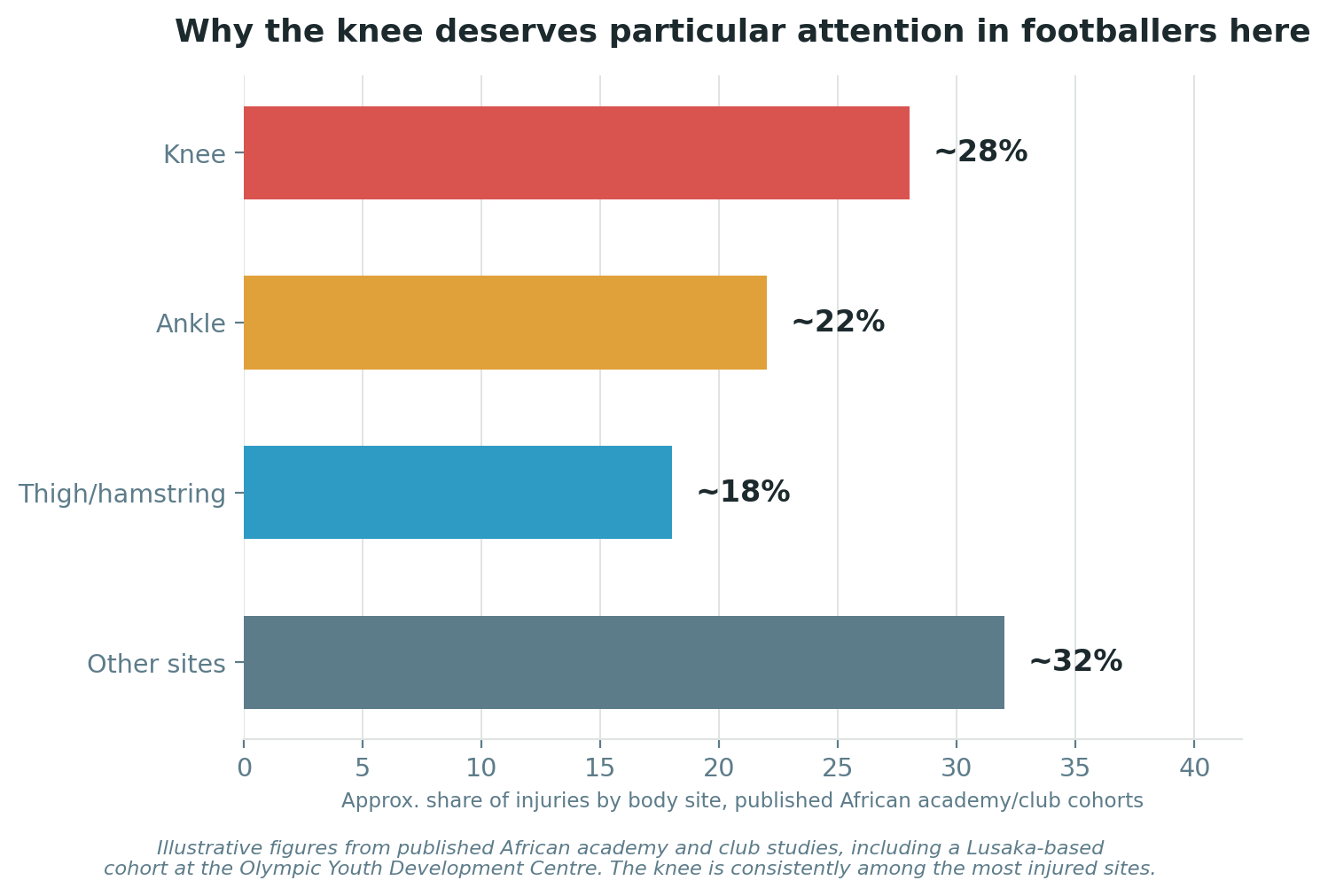
This is precisely why recognising a serious knee injury, rather than treating it as a routine sprain, matters so much for footballers here.
An ACL tear typically causes a distinct popping sensation at the moment of injury, followed by swelling and a feeling that the knee is unstable or gives way, particularly during pivoting or changes of direction. This is different from a simple sprain, which usually improves steadily with rest, and deserves a proper assessment rather than an assumption that time alone will resolve it.
| Your situation | Typical approach | What it involves |
|---|---|---|
| Confirmed ACL tear, active lifestyle or physical occupation | Reconstruction within weeks of injury, not months | Arthroscopic replacement of the torn ligament using a graft, typically from your own tissue |
| Confirmed ACL tear, already delayed several months | Reconstruction remains worthwhile, but act promptly now | Surgery still helps, though the joint may already show additional damage requiring attention during the same operation |
| Meniscus tear alongside an ACL injury, favourable tear pattern | Meniscus repair, not removal, where possible | Stitching the torn meniscus back together, preserving more of its shock-absorbing function long-term |
| Meniscus tear with a pattern unsuitable for repair | Partial meniscectomy | Removal of only the damaged portion, preserving as much healthy tissue as possible |
Why waiting on a torn ACL isn't a neutral choice
Unlike a fracture or a genuine emergency, an ACL tear does not typically threaten life or limb, and this can create a false sense that surgery can wait indefinitely without consequence. Published research says otherwise. Every time an ACL-deficient knee gives way during ordinary activity or sport, it places abnormal stress on the meniscus and the cartilage lining the joint, and the risk of a secondary meniscus tear rises substantially the longer reconstruction is delayed. This matters especially because the meniscus itself has only limited capacity to heal once torn, and a tear caught and repaired early has a genuinely better chance of successful healing than one that has been present, and possibly worsening, for many months. Once a meniscus tear becomes too extensive or degenerative to repair, the only remaining option is to remove the damaged portion, which leaves the joint with less natural cushioning for the years ahead.
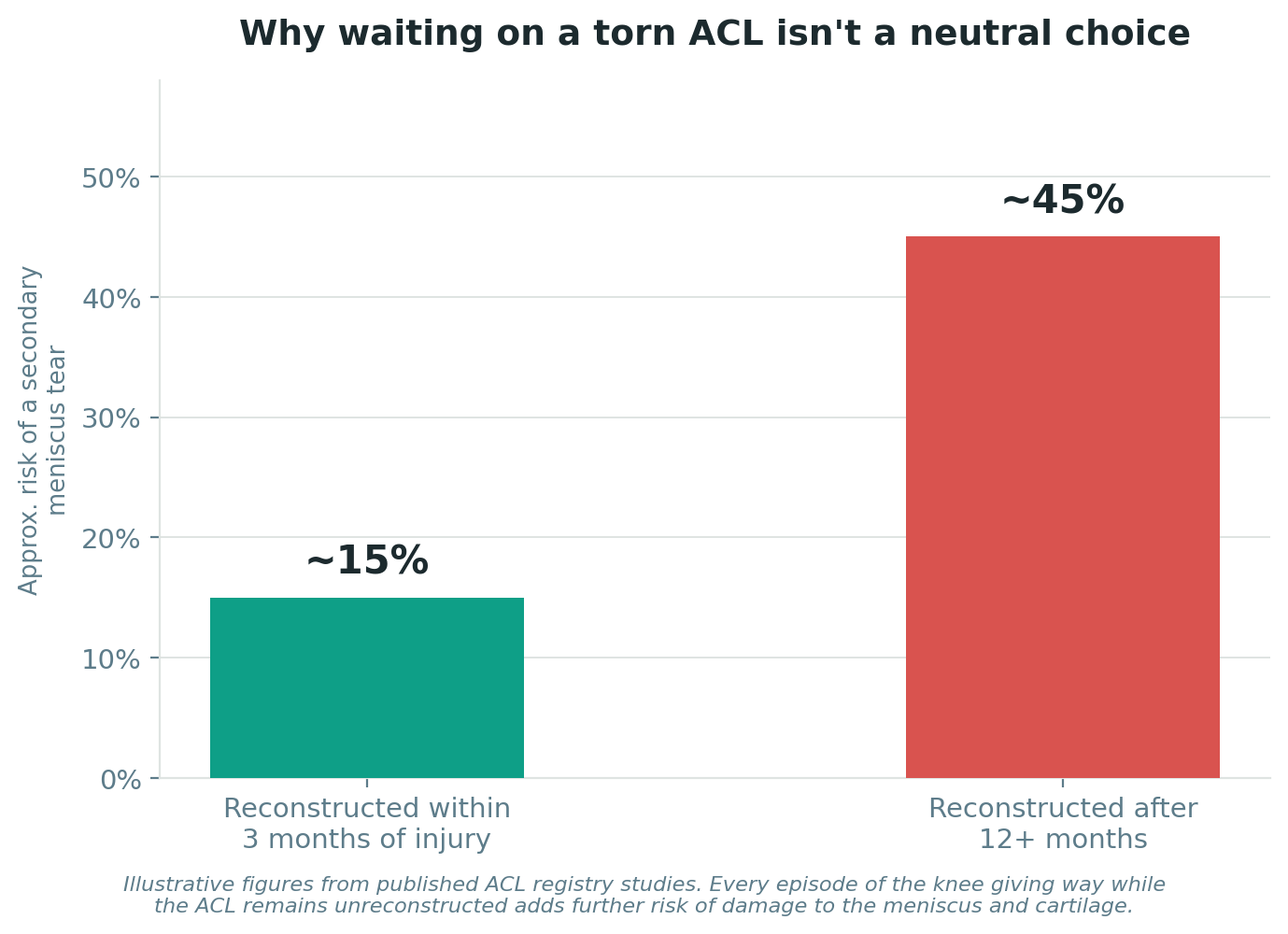
This is why "I'll deal with it later" is a genuinely different decision from simply choosing when to have surgery.
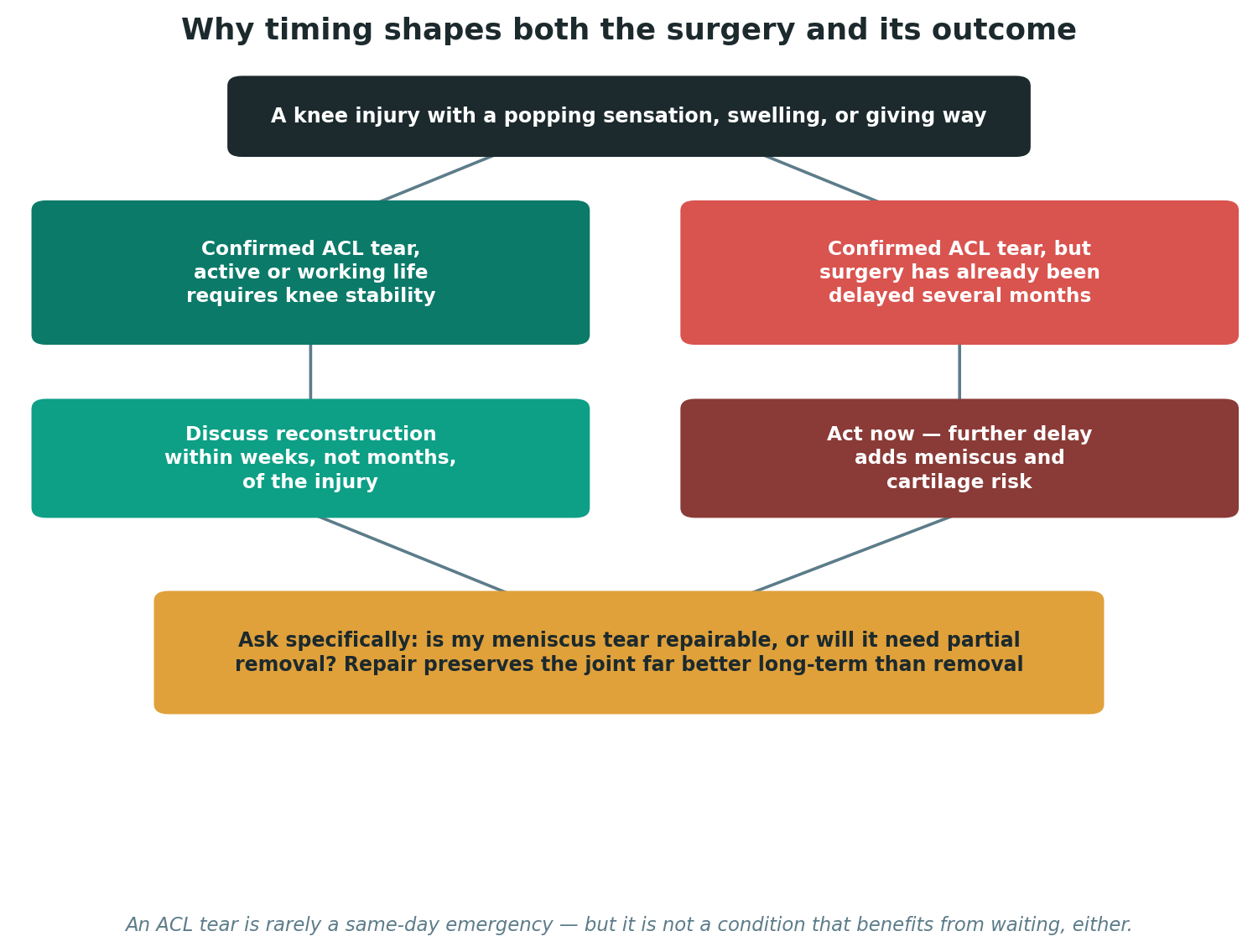
An ACL tear is rarely a same-day emergency — but it is not a condition that benefits from waiting, either.
Choosing the surgeon and the hospital
Ask directly how many ACL reconstructions the surgeon performs each year, and what graft options they typically use and why. If a meniscus tear is also present, ask specifically whether repair is being considered, not just removal, since this decision meaningfully affects your knee's long-term health, particularly if you are young or physically active.
Check accreditation (NABH, ideally JCI), and ask about the structured physiotherapy programme that should follow surgery, since the success of ACL reconstruction depends heavily on months of guided rehabilitation, not the operation alone.
It is also worth asking what graft source the surgeon recommends for your specific situation, since options typically include tissue taken from your own hamstring or patellar tendon, or occasionally donor tissue, each with different characteristics around strength, donor-site discomfort and recovery time. A good surgeon will explain why a particular option suits your age, activity level and goals, rather than defaulting to a single approach for every patient.
Cost and value: how to weigh the money honestly
ACL reconstruction in a good Indian hospital costs a small fraction of the equivalent procedure in the West, and India has extensive experience with both ACL and meniscus surgery. The saving is real, but the true cost of delay is measured in additional joint damage that may complicate the surgery and affect your long-term outcome, not just money.
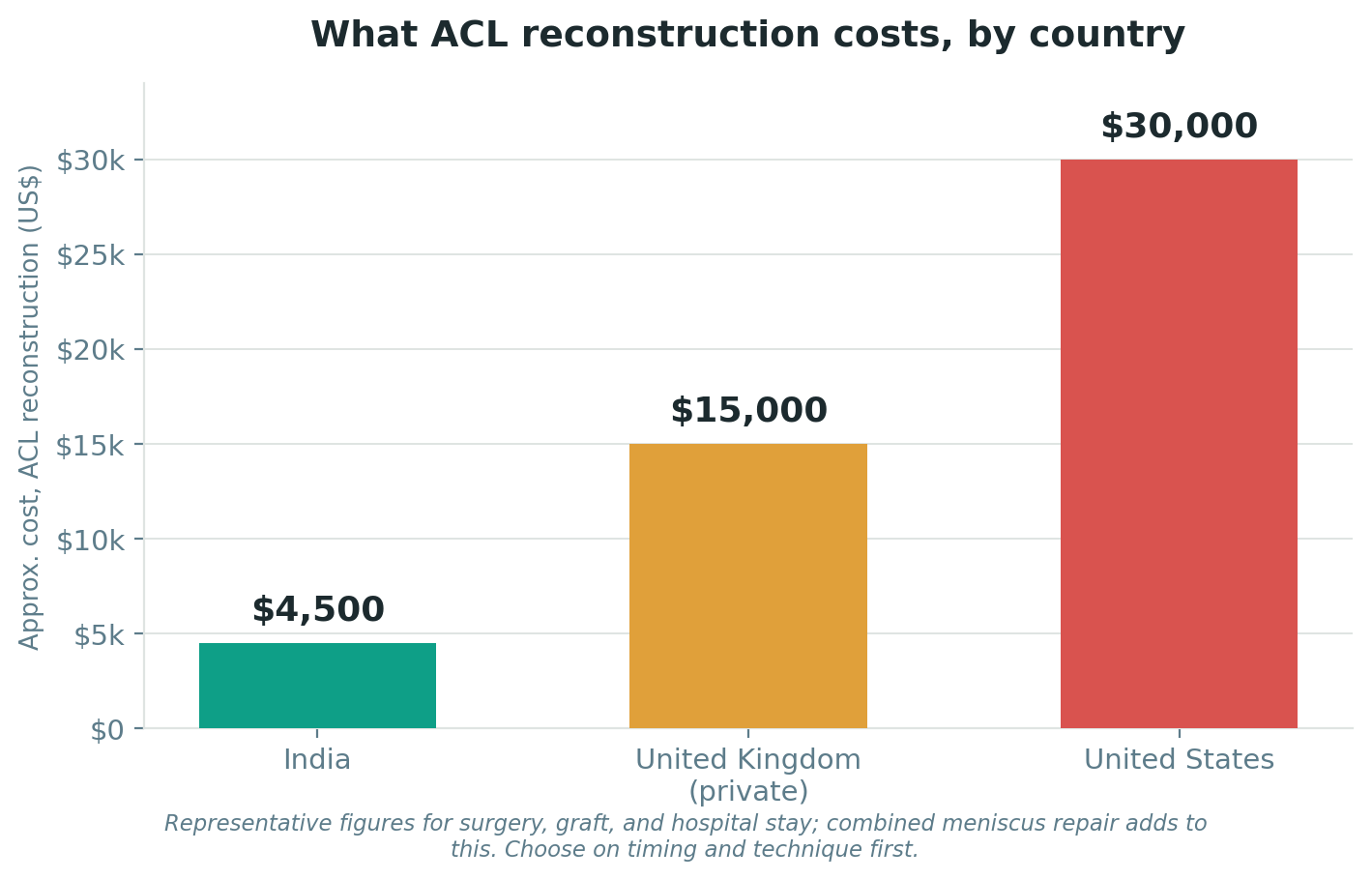
India's affordability is genuine — and acting within weeks, rather than months, of the injury protects both your joint and your budget.
In 24 years of arranging these journeys, I have found that patients who treat an ACL tear as a genuine, if not emergency, priority tend to have simpler surgery and better long-term outcomes than those who wait. Ask for a written, itemised quote covering the surgery, graft, and the physiotherapy plan for your return home.
What a Zambian patient should weigh in particular
Beyond the treatment decision itself, several practical matters deserve attention. First, payment: NHIMA funds care at accredited facilities inside Zambia, not treatment abroad, so this comes from your own resources — another reason to act within weeks of a confirmed ACL tear, since delay adds complexity as well as cost. Second, if you play or coach football, particularly at a youth or academy level, consider whether basic injury-prevention training is available to your team, since structured programmes have been shown to reduce these injuries in the first place. Third, aftercare: arrange physiotherapy with a Zambian provider before you travel, since months of structured rehabilitation are essential to a good outcome.
Fourth, be realistic about the demands of your work or sport when planning your return, since a physically demanding job or competitive sport requires a longer, more gradually staged recovery than a sedentary lifestyle. Discuss this specifically with your surgical and physiotherapy team so your rehabilitation plan reflects what you actually need to return to, not a generic timeline.
The practical journey from Zambia
India requires a yellow fever vaccination certificate from travellers arriving from Zambia, valid only from ten days after the injection. Your medical visa is issued by the High Commission of India on Pandit Nehru Road in Lusaka against the hospital's invitation letter. There is no direct flight from Zambia to India; you will connect through Addis Ababa on Ethiopian Airlines, or through Dubai, Doha or Nairobi. Send your MRI images, not only a written report, for remote review before you travel, since the exact pattern of ligament and meniscus damage determines the right surgical approach.
Straight answers for Zambian Patients about Joint Arthroscopy and Sports Medicine in India
I tore my ACL a few months ago and it hasn't bothered me much. Do I still need surgery?
This depends on your activity level and whether your knee still gives way, but delay itself carries real risk of further joint damage even without obvious symptoms. A proper assessment, including imaging, is worth pursuing now rather than continuing to wait.
Will my meniscus definitely need to be removed?
Not necessarily — repair is often possible depending on the exact location and pattern of the tear, and preserves the joint far better long-term than removal. Ask your surgeon specifically whether repair is being considered for your tear.
How long before I can return to football after ACL reconstruction?
Most structured rehabilitation programmes take nine months to a year before a safe return to competitive sport, and rushing this timeline meaningfully increases the risk of re-injury. Plan around this realistic timeframe rather than a shorter one.
Can younger players prevent these injuries in the first place?
Structured warm-up and movement training programmes have been shown to reduce the risk of ACL and other knee injuries in footballers. Ask whether your club or academy has access to this kind of injury-prevention training.
Sources
- 🌐 Medical visa, Lusaka — High Commission of India, requirements & process: hcizambia.gov.in/page/medical-visa
- 🌐 Hospital accreditation (India) — Verify a hospital's NABH accreditation: nabh.co
- 🌐 National Health Insurance (Zambia) — NHIMA cover, treatment abroad is not covered: nhima.co.zm
- 🌐 Ministry of Health Zambia — National health services & guidance: moh.gov.zm
- 🌐 National Medical Commission (verify a surgeon) — Confirm a surgeon's registration in India: nmc.org.in
- 🌐 WHO yellow fever — Vaccination requirements before travel: who.int/health-topics/yellow-fever
A Closing Word
Of everything I help patients with, this is where the message is refreshingly simple: an ACL tear is not an emergency, but it is not a condition to sit on either. If you send me your MRI images and a note on how and when your injury happened, I will help you understand honestly how urgent your situation is, whether your meniscus is likely repairable, and which centres in India have the genuine sports medicine experience to treat you well.
Frequently Asked Questions by Zambian Patients about Joint Arthroscopy and Sports Medicine in India
Is an ACL tear an emergency?
The guide states that an ACL tear is rarely a same-day emergency, but it is also not a condition that generally benefits from indefinite delay because repeated instability can cause further joint damage.
Why does ACL surgery timing matter?
Repeated episodes of knee instability can increase stress on the meniscus and cartilage. The page 2 chart illustrates a higher reported secondary meniscus-tear risk with longer delays.
Should a torn meniscus always be removed?
No. The guide recommends repair whenever the tear pattern is suitable, because preserving the meniscus maintains more of its natural shock-absorbing function.
How much does ACL reconstruction cost in India?
The page 4 chart gives an illustrative cost of approximately US$4,500 in India, compared with US$15,000 in the private UK and US$30,000 in the USA.
What grafts can be used for ACL reconstruction?
The guide identifies tissue from the hamstring or patellar tendon, with donor tissue sometimes used. The choice should depend on the patient's age, activity level and goals.
How long does rehabilitation take before returning to football?
The guide states that structured rehabilitation commonly takes nine months to one year before a safe return to competitive sport. Rushing the process can increase re-injury risk.
What should Zambian patients send before travelling?
Patients should send their MRI images, not only the written report, together with information about how and when the injury occurred.
What should I ask an ACL surgeon?
Ask how many ACL reconstructions the surgeon performs annually, which graft options they use, why a particular graft is recommended and whether a coexisting meniscus tear can be repaired.
Should physiotherapy be arranged before returning to Zambia?
Yes. The guide recommends arranging a Zambian physiotherapy provider before travel, because months of structured rehabilitation are essential to a successful outcome.
Can footballers reduce the risk of future ACL injuries?
The guide notes that structured warm-up and movement-training programmes have been shown to reduce ACL and other knee injuries and recommends asking clubs or academies about injury-prevention programmes.
Page Summary
This guide helps Zambian patients understand ACL reconstruction, meniscus treatment and joint arthroscopy in India, focusing on treatment timing, meniscus preservation, graft selection, costs and rehabilitation. The page 2 chart highlights an approximate 15% versus 45% secondary meniscus-tear risk when ACL reconstruction occurs within three months versus after 12 months, while the page 4 chart gives an illustrative ACL reconstruction cost of US$4,500 in India compared with US$15,000 in the UK and US$30,000 in the USA.
Citation Block
| Topic | Information |
|---|---|
| Topic | Joint Arthroscopy & Sports Medicine in India for Zambian Patients |
| Treatment | ACL Reconstruction & Meniscus Treatment |
| Patients | Zambian Patients |
| Specialist | Orthopaedic Sports Medicine Surgeon |
| Key Injuries | ACL and meniscus tears |
| Knee Injury Finding | ~28% in cited African football cohorts |
| ACL Timing | Reconstruction within weeks rather than months when appropriate |
| Secondary Meniscus Risk | ~15% within 3 months vs ~45% after 12 months |
| Meniscus Approach | Repair where the tear is suitable |
| Graft Options | Hamstring, patellar tendon or donor tissue |
| India Cost | ~US$4,500 |
| UK Cost | ~US$15,000 |
| US Cost | ~US$30,000 |
| Rehabilitation | Approximately 9–12 months for competitive football |
| Surgeon Check | Annual ACL reconstruction volume and graft experience |
| Hospital Check | NABH, ideally JCI |
| Pre-Travel Records | MRI images and injury history |
| Follow-Up | Physiotherapy with a Zambian provider |
| Warning Signs | Prolonged delay, no discussion of meniscus repair, generic graft recommendation, inadequate rehabilitation plan |
| Travel Check | Yellow-fever certificate and Indian Medical Visa |
| Patient Pathway | MRI review → specialist consultation → treatment decision → arthroscopic surgery → structured rehabilitation → return to activity |
| Key Decision | Address the ACL injury promptly while preserving repairable meniscus tissue |
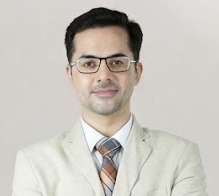

Our Mission Statement
Our mission is to place patients at the centre of every healthcare decision by providing trustworthy, evidence-based, and unbiased medical information. We believe that informed patients make better decisions. Backed by personalised guidance from our experienced advisory team, we help patients understand their treatment options, compare them objectively, and confidently choose the path that best suits their medical needs and personal circumstances.
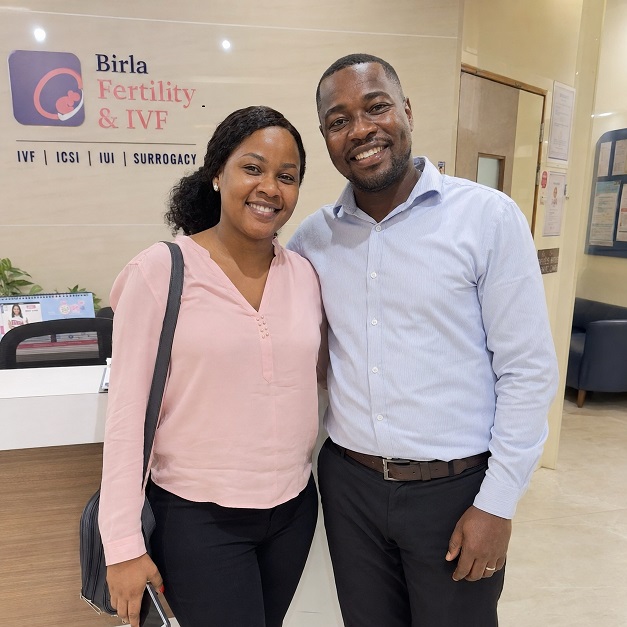
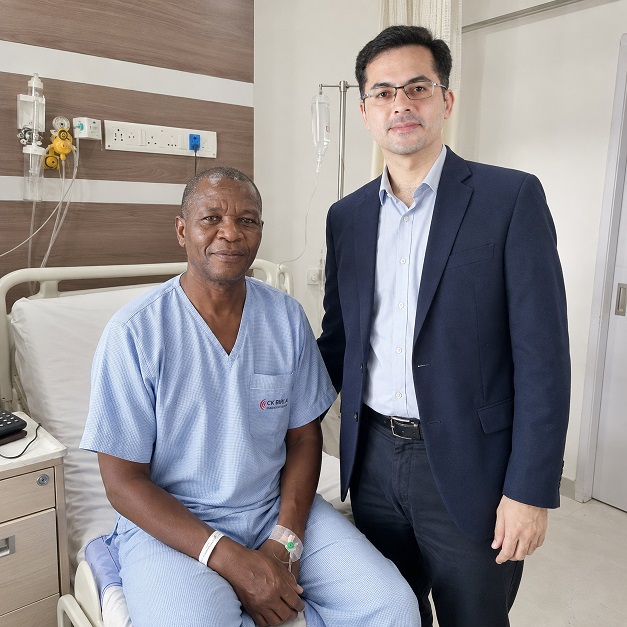
Patient Testimonials from Zambia
Ready to Take the First Step?
Share your Medical Reports with our Healthcare Managers Today and Get a FREE CONSULTATION, a Personalized Treatment Plan, and Complete Support from Arrival to Recovery.
Get Your Free ConsultationAreas We Serve
This resource has been thoughtfully prepared for patients from Zambia who are considering medical treatment in India. We also welcome patients from the wider region in the countries mentioned below-
We assist patients from:
- Zambia
- Angola
- Malawi
- Zimbabwe
- Botswana
- Namibia
- South Africa
- Eswatini
- Lesotho
- Gabon
- Chad
- Equatorial Guinea
- São Tomé and Príncipe
- Republic of the Congo
- Democratic Republic of the Congo
Many of the insights, treatment pathways, hospital recommendations, travel guidance, and patient support services described here are equally relevant and may be used as a reference when planning treatment in India.
From Zambia to India: Your Complete Patient Support Guide
- Best Weight-Loss (Bariatric) Surgeons & Hospitals in India for Zambian Patients
- Best Brain-Tumour Surgeons & Hospitals in India for Zambian Patients
- Best Cancer Doctors & Hospitals in India for Zambian Patients
- Best Cardiac Surgeons & Hospitals in India for Zambian Patients
- Best Cosmetic Surgeons & Facilities in India for Zambian Patients
- Best CyberKnife Treatment Teams & Centres in India for Zambian Patients
- Best Dentists & Dental Clinics in India for Zambian Patients
- Best Heart Valve Replacement Surgeons & Hospitals in India for Zambian Patients
- Best Hip Surgeons & Hospitals in India for Zambian Patients
- Best Knee Surgeons & Hospitals in India for Zambian Patients
- Best Neurosurgeons & Hospitals in India for Zambian Patients
- Best Paediatric Cardiac Surgeons & Hospitals in India for Zambian Patients
- Best Paediatric Neurosurgeons & Hospitals in India for Zambian Patients
- Best Prostate Surgeons & Hospitals in India for Zambian Patients
- Best Scoliosis Surgeons & Hospitals in India for Zambian Patients
- Best Spine Surgeons & Hospitals in India for Zambian Patients
- Best Bone Marrow Transplant Teams & Hospitals in India for Zambian Patients
- Best Kidney Transplant Surgeons & Hospitals in India for Zambian Patients