

IVF and Fertility Treatment in India for Zambian Patients
Infertility here is too often assumed to be a woman's problem, caused by something no one talks about early enough to prevent — but the evidence tells a different, more hopeful story about where the real causes lie, and how directly IVF can address them.
In vitro fertilisation, or IVF, is the process of fertilising an egg with sperm outside the body and transferring the resulting embryo into the womb — a technique that has helped millions of couples worldwide have children they could not conceive naturally. In this region specifically, the most common underlying cause of infertility is not age or an unexplained mystery, but blocked fallopian tubes, usually from an infection that could have been treated years earlier. In 24 years of guiding patients through fertility treatment abroad, I have found that understanding this — and freeing the conversation from blame — changes everything about how a couple approaches this journey.
Healing Journeys of Zambian Patients


Key Takeaways
- The guide explains that blocked or damaged fallopian tubes are a major cause of female infertility in parts of sub-Saharan Africa, often following untreated infection or complications after childbirth or pregnancy loss. Because IVF bypasses the fallopian tubes completely, it can be a particularly direct treatment option for tubal-factor infertility.
- The page 1 chart shows an approximate share of female infertility attributed to blocked or damaged tubes of 85% in the cited sub-Saharan African cohorts, compared with 33% worldwide and 30% in the United States. The guide also stresses that infections such as chlamydia and gonorrhoea may cause little or no obvious symptoms while still producing lasting tubal damage.
- The guide strongly recommends that both partners undergo fertility evaluation rather than treating infertility as solely a woman's problem. Its page 2 chart shows male factors involved in 52% of cases, while 48% had no male factor identified in the cited regional evidence. Semen analysis is therefore presented as one of the most useful early investigations for the male partner.
- For male-factor infertility, the guide identifies ICSI (intracytoplasmic sperm injection) as an important IVF technique in which a single sperm is injected directly into an egg. It may overcome several sperm-quality or sperm-quantity problems and should be considered after appropriate evaluation rather than automatically added to every IVF cycle.
- The guide also addresses HIV and fertility, explaining that HIV status does not necessarily prevent a couple from having a biological child. Depending on which partner is affected, options discussed include sperm washing with IUI/IVF, suppressive antiretroviral treatment and PrEP, with specialist reproductive and HIV care planned together.
- When selecting an Indian fertility clinic, the guide recommends checking success rates by age and diagnosis rather than relying on a single headline success rate. It also recommends verifying accreditation, laboratory standards, counselling support and specific experience with serodiscordant couples where HIV is relevant.
- The page 4 cost chart gives an indicative cost of US$3,500 for one standard IVF cycle in India, compared with US$10,000 in the UK and US$20,000 in the US. The guide stresses that one cycle may not be sufficient and recommends planning financially for a possible second cycle, with a full cycle typically requiring a stay of around four to six weeks from monitoring through embryo transfer.
Quick Facts
- Author
- Dr. Dheeraj Bojwani
- Experience
- 24+ Years of Experience
- Treatment
- IVF & Fertility Treatment
- Patients
- Zambian Couples
- Key Specialist
- Fertility Specialist / Reproductive Medicine Specialist
- Main Assessment
- Evaluation of both partners
- Key Priority
- Identify the underlying cause before IVF
- Key Treatments
- IVF and ICSI
- Key Factor
- Female age and infertility diagnosis
- Male Assessment
- Semen analysis
- India Cost
- Approximately US$3,500 per IVF cycle
- UK Cost
- Approximately US$10,000
- US Cost
- Approximately US$20,000
- Treatment Duration
- Approximately 4–6 weeks per cycle
- Pre-Travel Records
- Both partners' fertility test results
- Follow-Up
- Fertility specialist follow-up
- Key Warning Signs
- IVF offered without proper evaluation of both partners
- Decision Principle
- Choose treatment based on the identified cause and age-specific success prospects
In Brief
For Zambian couples considering IVF in India, the guide recommends testing both partners first and identifying the underlying cause before choosing treatment. IVF can be particularly useful when fallopian tubes are blocked, while ICSI may be appropriate for male-factor infertility. The guide gives an indicative cost of US$3,500 for one IVF cycle in India and advises couples to plan for the possibility of more than one cycle.
Why the cause matters so much here
Across much of the West, infertility is often linked to a woman's age or to no clearly identifiable cause at all. Here, the picture is different, and in an important sense more treatable: the dominant cause of female infertility in parts of sub-Saharan Africa is damage to the fallopian tubes, most often following an untreated sexually transmitted infection or an infection after childbirth or pregnancy loss. This is sometimes called the region's "infertility belt," and it means a large share of couples facing infertility here have a specific, identifiable, and — with IVF — directly addressable cause.
This pattern also has an important preventive dimension, worth naming even as you seek treatment. Many sexually transmitted infections that damage the fallopian tubes, particularly chlamydia and gonorrhoea, cause no obvious symptoms in a large proportion of women, meaning the infection can silently cause lasting damage before anyone realises anything is wrong. This is not a reason for guilt about a diagnosis that has already occurred — it is a reason for any woman of reproductive age experiencing unusual pelvic pain, unusual discharge, or bleeding between periods to seek prompt testing and treatment, since early treatment can prevent the tubal damage altogether.
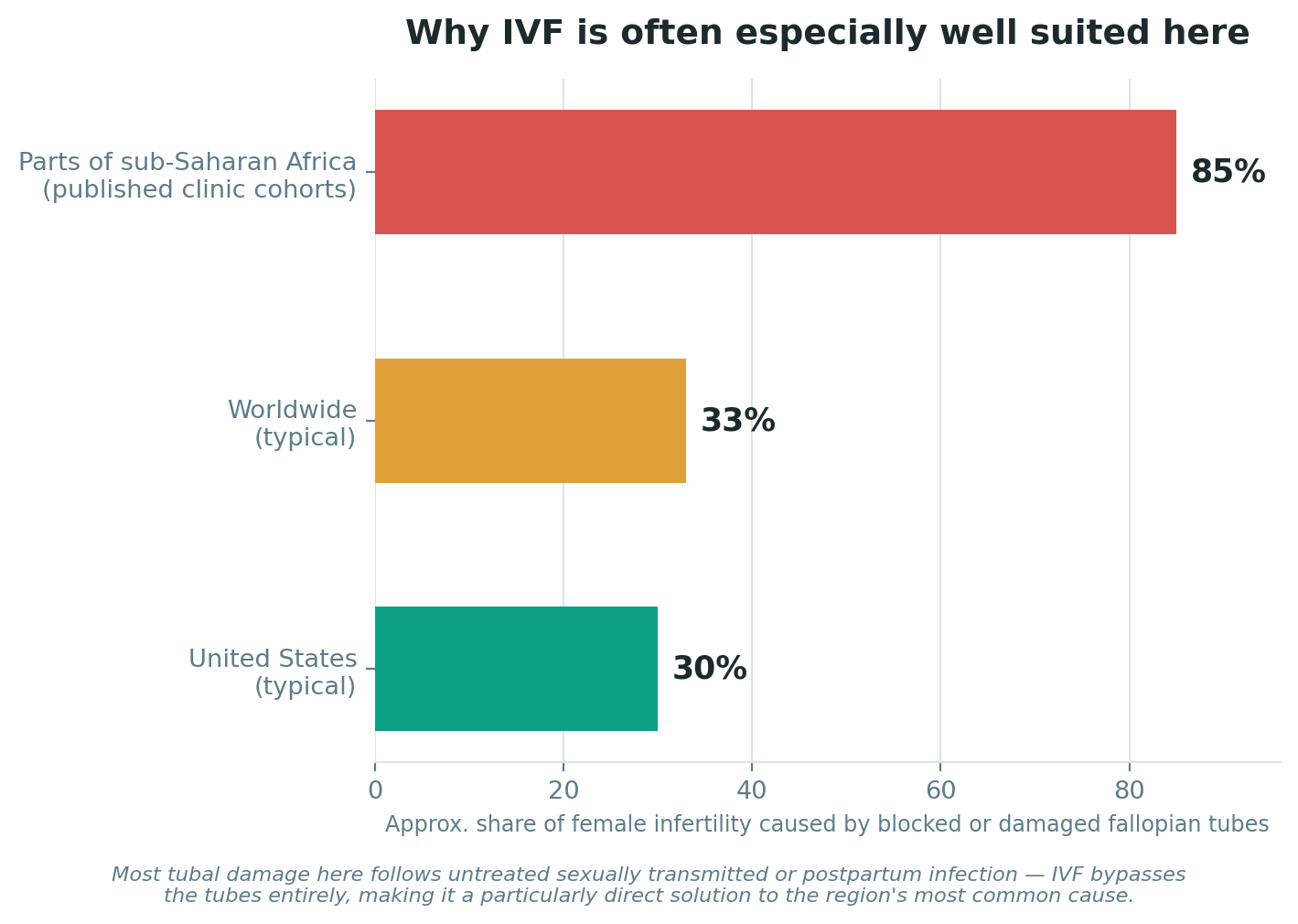
IVF bypasses the fallopian tubes entirely — a particularly direct solution to the region's most common cause of infertility.
This matters practically because IVF does not require healthy, open fallopian tubes to work — the egg and sperm are combined outside the body, and the resulting embryo is placed directly into the womb. For a couple whose infertility stems from tubal damage, this is not simply one option among several; it is often the most direct and effective route to a pregnancy, addressing the underlying problem rather than working around it.
| Your situation | Typical approach | What it involves |
|---|---|---|
| Blocked or damaged fallopian tubes, confirmed on testing | IVF is often the most direct option | Bypasses the tubes entirely; success does not depend on repairing the underlying damage |
| Infertility of unclear cause, both partners not yet tested | Full evaluation of both partners first | Semen analysis for the male partner, hormonal and structural assessment for the female partner |
| Male factor infertility identified | IVF with ICSI (intracytoplasmic sperm injection) often appropriate | A single sperm is injected directly into an egg, which can overcome many male fertility problems |
| One or both partners living with HIV | Safe conception planning with a specialist team | Discussed in detail below — HIV status does not need to end the possibility of a biological child |
Why both partners should be tested
Infertility is frequently, and wrongly, treated as a problem belonging to the woman alone — she is often the one who seeks care, undergoes the most invasive testing, and, in many communities, carries social blame for a couple's difficulty conceiving. The evidence tells a different story. Published studies from the region consistently find that male factors, including sperm quality and quantity, are involved in over half of infertility cases.
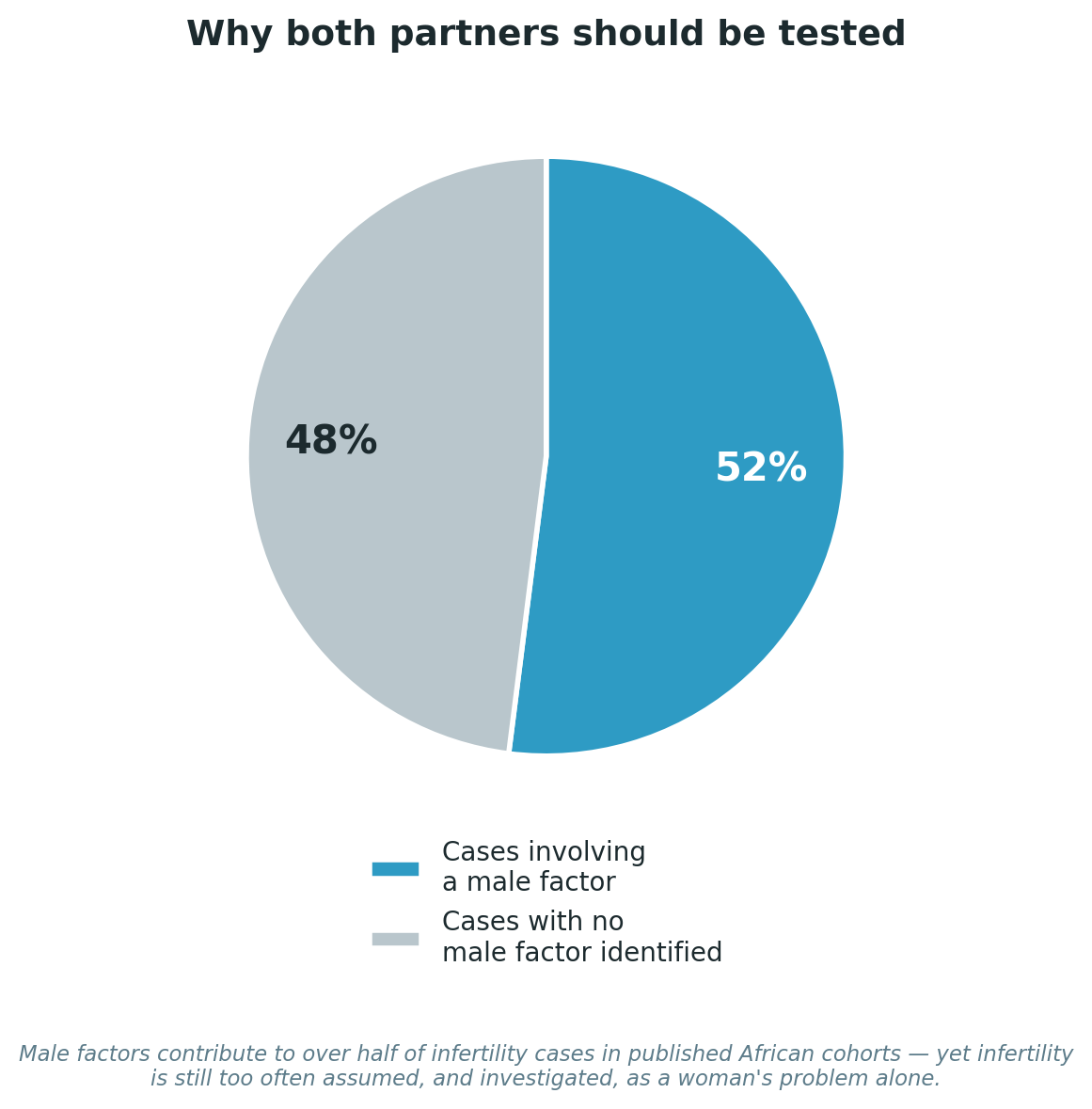
A simple semen analysis for the male partner is one of the most useful, and most overlooked, early steps.
A conversation that should never be avoided: HIV and fertility
Given HIV prevalence in this region, this is a conversation many couples need but few feel able to raise. It should not be a difficult one. Modern reproductive medicine offers well-established, medically supported ways for couples living with HIV to conceive a biological child with very low risk of transmission, whichever partner is affected.
It is worth being clear that these approaches are not experimental or unusual internationally — they are recommended by major reproductive medicine bodies, and the evidence supporting them, particularly for sperm washing, spans decades and thousands of procedures with no recorded transmissions. For couples where the cost of full IVF combined with sperm washing is a genuine barrier, simpler and less costly approaches, such as timed intercourse while the partner living with HIV maintains a fully suppressed viral load and the other partner takes PrEP, are also recognised, evidence-based options worth discussing with a specialist.
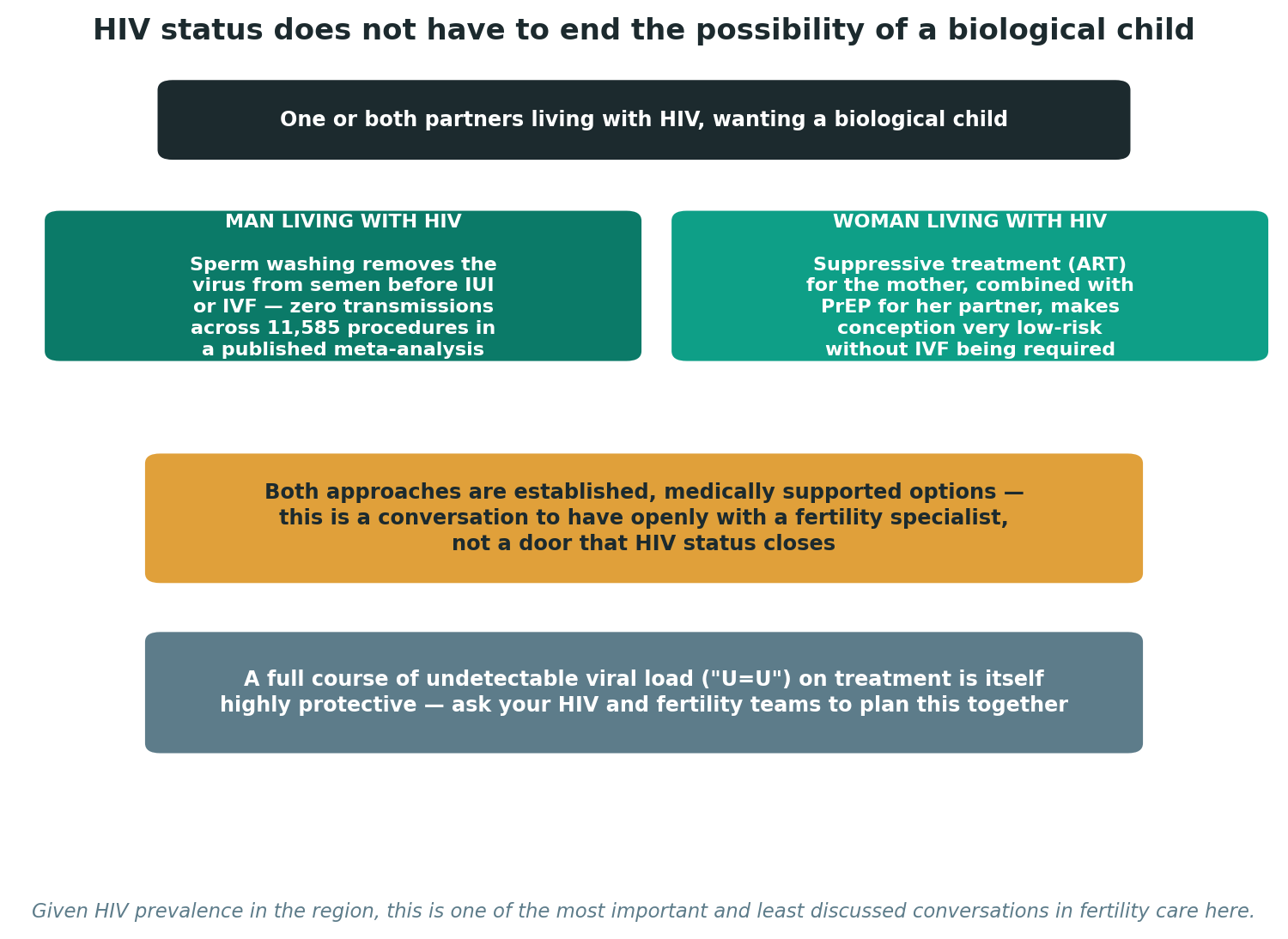
This is a conversation to have openly with a specialist — not an assumption to carry silently.
Choosing the clinic
Ask directly what testing both partners will undergo before any treatment plan is proposed, and be wary of a clinic that proceeds to IVF without a clear explanation of what has actually been found to cause your specific infertility. Ask for the clinic's published success rates by age group and by diagnosis, not just an overall headline figure, since these numbers vary considerably depending on the underlying cause and the woman's age.
Check accreditation (NABH, ideally ICMR-registered, as required under Indian law for all assisted reproduction clinics), and if HIV status is relevant to your situation, ask specifically about the clinic's experience and protocols for serodiscordant couples, including sperm washing capability if needed.
It is also worth asking directly about the clinic's approach to counselling and emotional support throughout treatment, since IVF can be a physically and emotionally demanding process, particularly if more than one cycle is needed. A good clinic treats this as part of genuine care, not an optional extra.
Cost and value: how to weigh the money honestly
A single IVF cycle in a good Indian clinic costs a small fraction of the equivalent treatment in the West, and India performs very high volumes of IVF with modern laboratory standards. The saving is real, but IVF success is not guaranteed on a single attempt for most patients, and the true cost of treatment often includes more than one cycle.
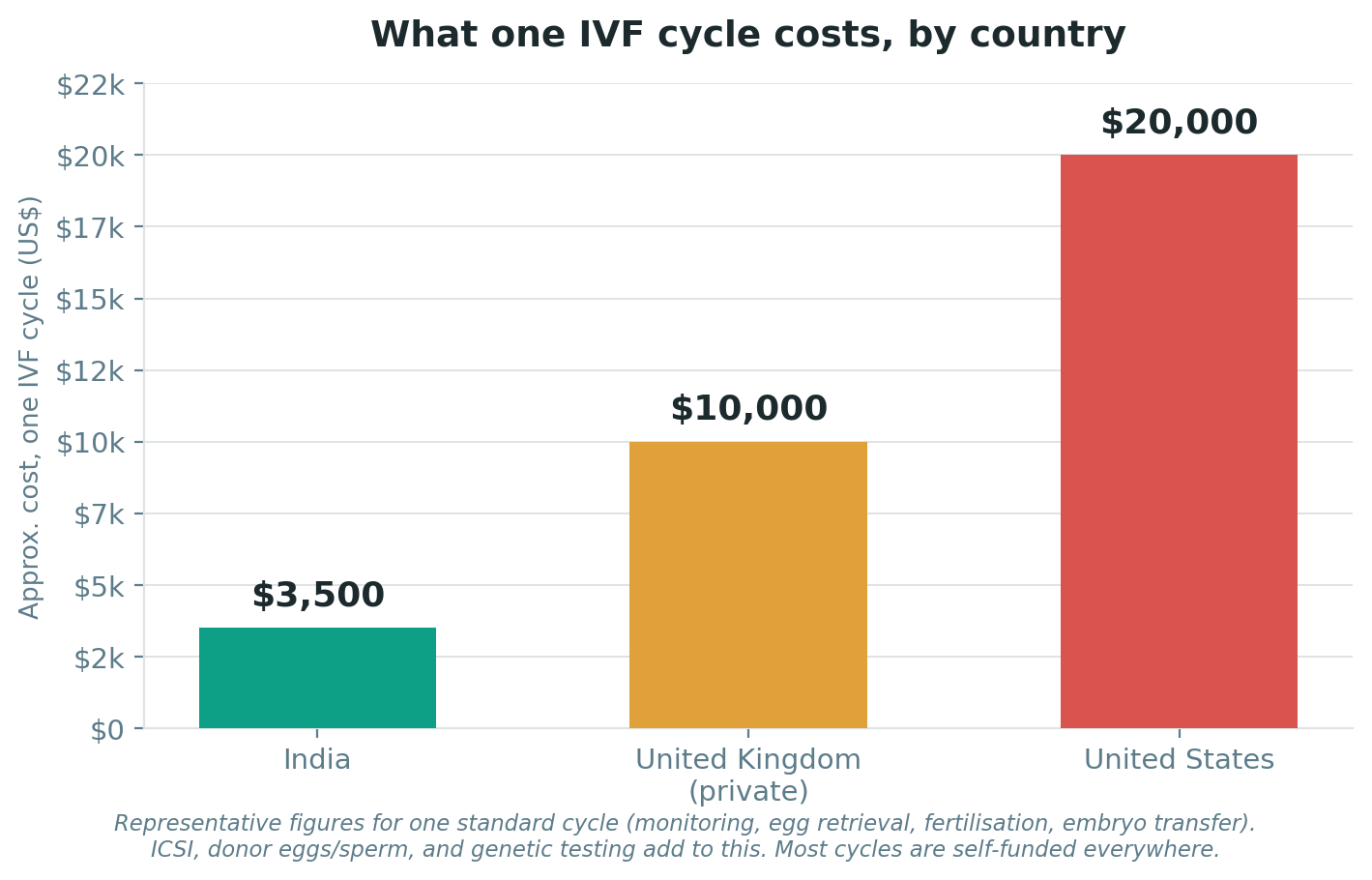
India's affordability makes more than one cycle realistically possible for most families, if needed.
In 24 years of arranging these journeys, I have found that couples who plan financially and emotionally for the possibility of more than one cycle tend to navigate this process with far less distress than those who treat the first attempt as a single, final chance. Ask for a written, itemised quote covering one full cycle, and a realistic estimate of the cost if a second cycle becomes necessary.
What a Zambian patient should weigh in particular
Beyond the treatment decision itself, several practical matters deserve attention. First, payment: NHIMA funds care at accredited facilities inside Zambia, not treatment abroad, so this comes from your own resources — another reason to have a full, itemised understanding of likely total cost, including a possible second cycle, before committing funds. Second, both partners should be tested and involved in every part of this process, not just the woman, both for accuracy of diagnosis and to share the emotional weight of treatment fairly. Third, if a sexually transmitted infection is identified as a contributing cause, both partners should be treated, and this is worth raising directly and without shame with your medical team.
Fourth, consider the emotional support available to you during this process, both from each other and from family or friends you choose to involve. Fertility treatment can be a private, sometimes isolating experience, and deciding in advance who you want to share this journey with, and who you would rather keep it from for now, is a reasonable and worthwhile conversation to have as a couple before you travel.
The practical journey from Zambia
India requires a yellow fever vaccination certificate from travellers arriving from Zambia, valid only from ten days after the injection. Your medical visa is issued by the High Commission of India on Pandit Nehru Road in Lusaka against the hospital's invitation letter, and both partners should apply together. There is no direct flight from Zambia to India; you will connect through Addis Ababa on Ethiopian Airlines, or through Dubai, Doha or Nairobi. Send both partners' prior fertility test results, if any exist, for remote review before you travel, and allow for a stay of several weeks, since a full IVF cycle from initial monitoring to embryo transfer typically takes four to six weeks.
Straight answers for Zambian Patients about IVF and Fertility Treatment in India
Is infertility always the woman's fault?
No. Male factors are involved in over half of infertility cases in published studies from this region, and both partners should be tested as a routine first step, not as an afterthought once the woman has been thoroughly investigated.
My tubes are blocked from a past infection. Is there any point trying IVF?
Yes — IVF is specifically designed to bypass the fallopian tubes, since fertilisation happens outside the body. This makes it a particularly direct and effective option for tubal factor infertility, which is the most common cause of female infertility in this region.
Can my partner and I have a baby if one of us has HIV?
In most cases, yes, using established medical approaches — sperm washing combined with IUI or IVF if the man is living with HIV, or suppressive treatment combined with PrEP for the partner if the woman is living with HIV. Raise this directly and openly with a fertility specialist.
How many IVF cycles might we realistically need?
This varies by individual circumstances, particularly age and the underlying cause of infertility, and many couples need more than one cycle to achieve a pregnancy. Ask your clinic for success rates specific to your age and diagnosis, and plan financially for more than one attempt if possible.
Sources
- 🌐 Medical visa, Lusaka — High Commission of India, requirements & process: hcizambia.gov.in/page/medical-visa
- 🌐 Hospital accreditation (India) — Verify a hospital's NABH accreditation: nabh.co
- 🌐 National Health Insurance (Zambia) — NHIMA cover, treatment abroad is not covered: nhima.co.zm
- 🌐 Ministry of Health Zambia — National health services & guidance: moh.gov.zm
- 🌐 National Medical Commission (verify a doctor) — Confirm a doctor's registration in India: nmc.org.in
- 🌐 WHO yellow fever — Vaccination requirements before travel: who.int/health-topics/yellow-fever
A Closing Word
Of everything I help couples navigate, fertility treatment is where I most want families to know they are not alone, and that the cause of their difficulty conceiving is very often identifiable and directly treatable. If you send me both partners' test results and a note on your situation, I will help you understand honestly what is likely to be causing your infertility, what your realistic prospects with IVF look like, and which clinics in India have the genuine experience — including with HIV-discordant couples, if relevant — to support you well.
Frequently Asked Questions by Zambian Patients about IVF and Fertility Treatment in India
Is infertility always caused by the woman?
No. The guide highlights that male factors are involved in over half of infertility cases in published regional studies. Both partners should therefore be evaluated from the beginning.
Can IVF work if my fallopian tubes are blocked?
Yes. IVF bypasses the fallopian tubes because fertilisation occurs outside the body and the embryo is subsequently transferred into the uterus.
What is ICSI?
ICSI is a form of assisted reproduction in which a single sperm is injected directly into an egg. It can be useful for several male-factor infertility problems.
Can couples affected by HIV have a biological child?
In many cases, yes. The guide discusses established approaches including sperm washing with IUI/IVF and suppressive treatment with PrEP, depending on which partner has HIV.
How much does one IVF cycle cost in India?
The guide gives an indicative cost of approximately US$3,500 for one standard IVF cycle in India. The actual cost depends on the treatment plan and additional procedures required.
Will one IVF cycle always work?
No. Success varies considerably according to factors such as age and the underlying diagnosis. Couples should ask for clinic success rates specific to their age group and condition.
How long should we stay in India?
The guide recommends allowing approximately four to six weeks for a full IVF cycle from initial monitoring through embryo transfer.
Should both partners' tests be sent before travelling?
Yes. Sending both partners' previous fertility test results allows the Indian clinic to review the case before travel and may reduce unnecessary repeat testing.
How should I choose an IVF clinic in India?
Ask about age- and diagnosis-specific success rates, accreditation, laboratory standards, counselling support and experience with your specific fertility problem.
Should we plan for more than one IVF cycle?
It is sensible to consider the possibility. The guide notes that many couples may require more than one attempt, so obtaining a cost estimate for a second cycle can help with realistic financial planning.
Page Summary
This five-page Zambia-to-India medical travel guide explains IVF and fertility treatment, focusing on the regional importance of tubal-factor infertility, the need to investigate male factors and the availability of established approaches for couples affected by HIV. The page 1 chart compares the cited proportion of female infertility associated with blocked or damaged fallopian tubes, while the page 2 chart shows male factors involved in 52% of infertility cases in the cited regional evidence. The page 3 HIV pathway explains sperm washing, suppressive treatment and PrEP options, while the page 4 cost chart gives an indicative IVF cost of US$3,500 in India, compared with US$10,000 in the UK and US$20,000 in the US. A full IVF cycle may require approximately four to six weeks in India.
Citation Block
| Topic | Information |
|---|---|
| Topic | IVF & Fertility Treatment in India for Zambian Patients |
| Treatment | IVF / ICSI / Assisted Reproduction |
| Patients | Zambian Couples |
| Specialist | Fertility / Reproductive Medicine Specialist |
| Main Assessment | Both partners' fertility evaluation |
| Key Priority | Identify the underlying cause |
| Tubal Factor | Major cause highlighted in the regional evidence |
| Male Factor | Involved in over half of cited infertility cases |
| Key Treatment | IVF |
| Male-Factor Option | ICSI |
| HIV Option | Specialist safe-conception planning |
| Clinic Check | Age- and diagnosis-specific success rates |
| India Cost | Approximately US$3,500 per cycle |
| UK Cost | Approximately US$10,000 |
| US Cost | Approximately US$20,000 |
| Treatment Stay | Approximately 4–6 weeks |
| Pre-Travel Records | Both partners' fertility tests |
| Follow-Up | Fertility specialist |
| Quality Check | NABH / ICMR registration as applicable |
| Quote Check | Full cycle and possible second-cycle cost |
| Key Statistic | 85% tubal-factor figure shown for cited sub-Saharan African cohorts |
| Male-Factor Figure | 52% shown in the page 2 chart |
| Patient Pathway | Both-partner evaluation → diagnosis → treatment selection → IVF/ICSI → embryo transfer → follow-up |
| Decision Principle | Diagnose the cause first and select treatment accordingly |


Our Mission Statement
Our mission is to place patients at the centre of every healthcare decision by providing trustworthy, evidence-based, and unbiased medical information. We believe that informed patients make better decisions. Backed by personalised guidance from our experienced advisory team, we help patients understand their treatment options, compare them objectively, and confidently choose the path that best suits their medical needs and personal circumstances.
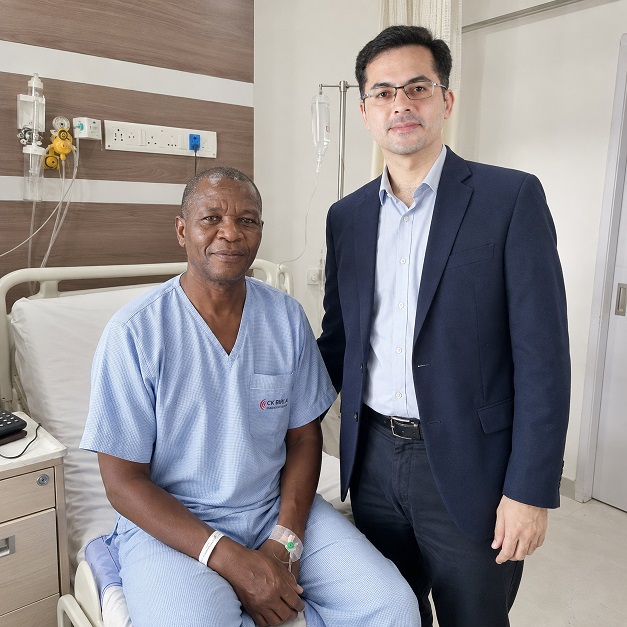
Patient Testimonials from Zambia

Ready to Take the First Step?
Share your Medical Reports with our Healthcare Managers Today and Get a FREE CONSULTATION, a Personalized Treatment Plan, and Complete Support from Arrival to Recovery.
Get Your Free ConsultationAreas We Serve
This resource has been thoughtfully prepared for patients from Zambia who are considering medical treatment in India. We also welcome patients from the wider region in the countries mentioned below-
We assist patients from:
- Zambia
- Angola
- Malawi
- Zimbabwe
- Botswana
- Namibia
- South Africa
- Eswatini
- Lesotho
- Gabon
- Chad
- Equatorial Guinea
- São Tomé and Príncipe
- Republic of the Congo
- Democratic Republic of the Congo
Many of the insights, treatment pathways, hospital recommendations, travel guidance, and patient support services described here are equally relevant and may be used as a reference when planning treatment in India.
From Zambia to India: Your Complete Patient Support Guide
- Best Weight-Loss (Bariatric) Surgeons & Hospitals in India for Zambian Patients
- Best Brain-Tumour Surgeons & Hospitals in India for Zambian Patients
- Best Cancer Doctors & Hospitals in India for Zambian Patients
- Best Cardiac Surgeons & Hospitals in India for Zambian Patients
- Best Cosmetic Surgeons & Facilities in India for Zambian Patients
- Best CyberKnife Treatment Teams & Centres in India for Zambian Patients
- Best Dentists & Dental Clinics in India for Zambian Patients
- Best Heart Valve Replacement Surgeons & Hospitals in India for Zambian Patients
- Best Hip Surgeons & Hospitals in India for Zambian Patients
- Best Knee Surgeons & Hospitals in India for Zambian Patients
- Best Neurosurgeons & Hospitals in India for Zambian Patients
- Best Paediatric Cardiac Surgeons & Hospitals in India for Zambian Patients
- Best Paediatric Neurosurgeons & Hospitals in India for Zambian Patients
- Best Prostate Surgeons & Hospitals in India for Zambian Patients
- Best Scoliosis Surgeons & Hospitals in India for Zambian Patients
- Best Spine Surgeons & Hospitals in India for Zambian Patients
- Best Bone Marrow Transplant Teams & Hospitals in India for Zambian Patients
- Best Kidney Transplant Surgeons & Hospitals in India for Zambian Patients