

HIPEC Cancer Surgery in India for Zambian Patients
Of every operation in this guide series, HIPEC is the one where a centre's case count matters most — and where the number of previous cases a centre has performed is not a nice detail, but a fact that meaningfully affects your chance of surviving the surgery.
Hyperthermic intraperitoneal chemotherapy, or HIPEC, combines two demanding treatments into one: cytoreductive surgery, in which a surgeon physically removes every visible trace of cancer from the lining of the abdomen, followed immediately by a heated chemotherapy wash circulated through the abdominal cavity to destroy microscopic disease left behind. For the right patient, with the right extent of disease, treated at a genuinely experienced centre, it offers a real chance at long-term survival where few other options exist. For the wrong patient, or at an inexperienced centre, it is one of the most punishing operations in oncology, with little chance of benefit. In 24 years of guiding cancer patients through treatment abroad, I have found no procedure in this guide series where getting these two judgements right matters more.
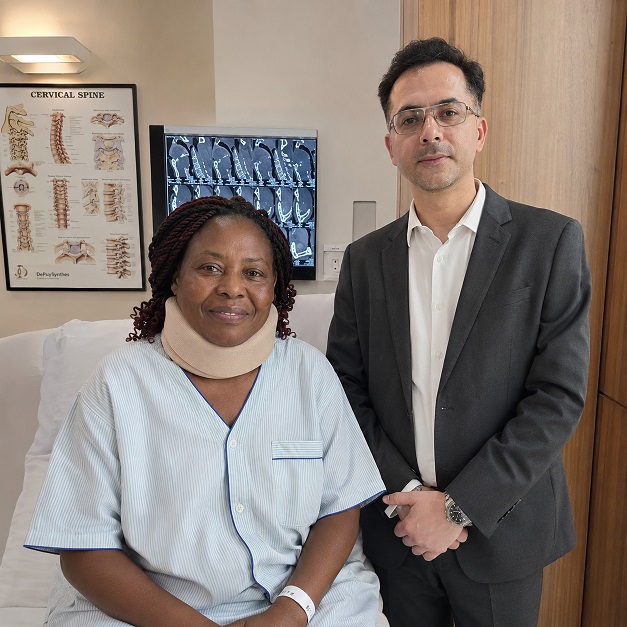
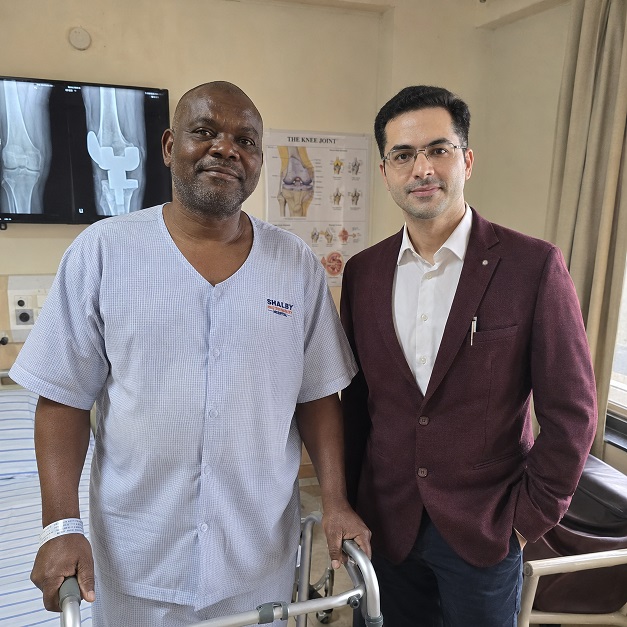
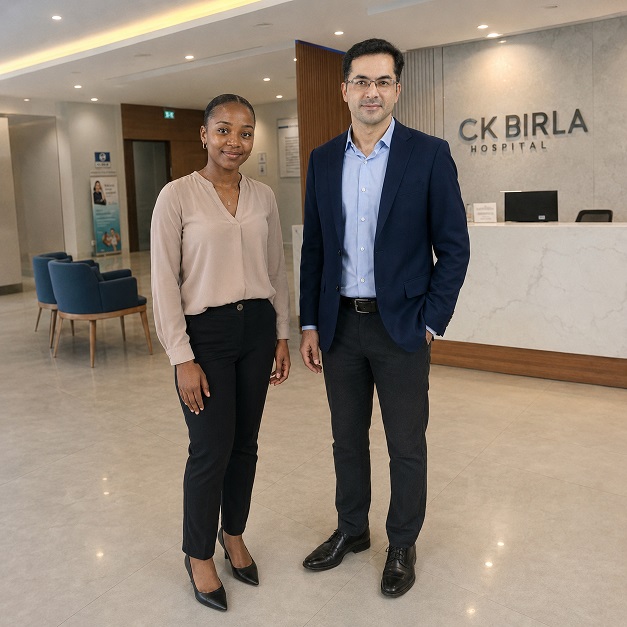
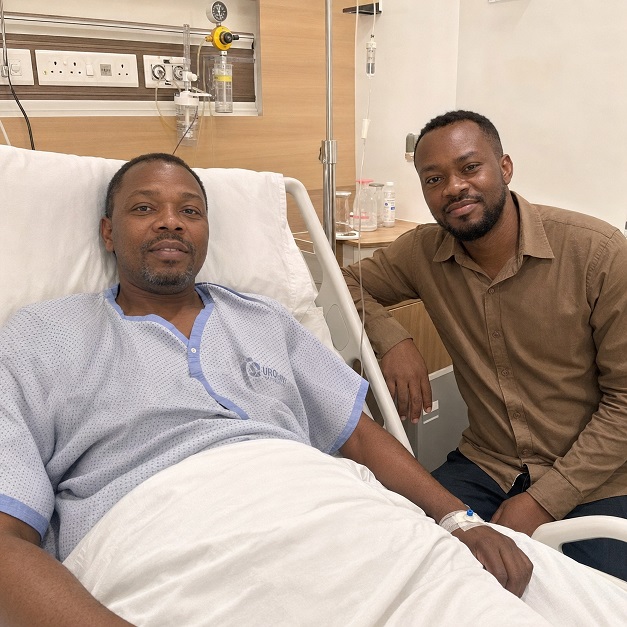
Healing Journeys of Zambian Patients




Key Takeaways
- The guide explains that HIPEC combines cytoreductive surgery with heated chemotherapy delivered directly into the abdominal cavity. It is mainly used for peritoneal carcinomatosis arising from cancers such as colorectal, ovarian, stomach and appendix cancers, and may offer meaningful long-term disease control for carefully selected patients.
- Patient selection depends heavily on the Peritoneal Cancer Index (PCI), which scores tumour deposits across 13 abdominal and pelvic regions on a scale of 0–39. The guide presents PCI 0–9 as the strongest range for complete cytoreduction, PCI 10–19 as requiring careful centre-specific assessment, and PCI 20–39 as generally making complete cytoreduction difficult.
- The guide stresses that complete cytoreduction matters more than simply undergoing the operation. Its page 2 chart illustrates approximately 57 months median overall survival with complete cytoreduction versus 17 months with incomplete cytoreduction in the cited colorectal peritoneal-metastasis cohorts. This is why experienced teams should honestly assess whether all visible disease can realistically be removed.
- HIPEC has a particularly steep learning curve, making centre-specific experience one of the most important selection factors. The guide cites research estimating that approximately 140–220 cases may be required for technical proficiency, while its page 3 chart shows illustrative procedure-related mortality falling from about 18% during early experience to 3% after accumulated experience.
- The guide recommends selecting a dedicated, high-volume HIPEC programme with a multidisciplinary team, strong ICU support and experience with the patient's specific cancer type. Patients should ask about annual CRS-HIPEC volume, complete cytoreduction rates and what the team would do if disease proves more extensive than imaging suggested.
- The page 4 cost chart gives an indicative combined CRS and HIPEC cost of US$12,000 in India, compared with US$45,000 in the UK and US$90,000 in the US. Recovery is substantial: hospitalisation commonly lasts one to two weeks, often including intensive care, followed by several additional weeks of recovery at home.
Quick Facts
- Author
- Dr. Dheeraj Bojwani
- Experience
- 24+ Years of Experience
- Treatment
- HIPEC Cancer Surgery
- Patients
- Zambian Cancer Patients
- Key Specialist
- Surgical Oncologist / HIPEC Specialist
- Main Assessment
- PCI score and ability to achieve complete cytoreduction
- Key Priority
- Complete removal of visible disease
- Key Cancers
- Colorectal, ovarian, stomach and appendix cancers
- Key Selection Factor
- Centre-specific CRS-HIPEC experience
- Team Requirement
- Multidisciplinary oncology team with ICU support
- India Cost
- Approximately US$12,000
- UK Cost
- Approximately US$45,000
- US Cost
- Approximately US$90,000
- Hospital Stay
- Approximately 1–2 weeks
- Pre-Travel Records
- Imaging, pathology and previous surgical records
- Follow-Up
- Long-term surveillance with a Zambian oncologist
- Key Warning Signs
- Low centre experience or unclear complete-cytoreduction outcomes
- Decision Principle
- Choose proven HIPEC expertise and realistic candidacy over the lowest price
In Brief
For Zambian patients considering HIPEC in India, the most important question is not simply the price or availability of the procedure but whether complete cytoreduction is realistically achievable at an experienced centre. PCI, tumour type, disease distribution and overall fitness must be assessed carefully. The guide gives an indicative CRS-HIPEC cost of US$12,000 in India, with hospital recovery commonly lasting one to two weeks.
First, what is HIPEC actually for?
HIPEC is used for a specific pattern of cancer spread called peritoneal carcinomatosis, where cancer — most often originating in the colon, ovary, stomach or appendix — has spread across the lining of the abdominal cavity rather than to distant organs like the liver or lungs. This pattern of spread behaves differently from typical metastatic disease, and unlike cancer that has spread through the bloodstream, it can sometimes be treated with real intent to control or even cure the disease, rather than purely for symptom relief. This is precisely why HIPEC exists as a distinct, specialised field within cancer surgery.
Not every patient with peritoneal spread is a candidate. The single most important factor determining suitability is how extensive the disease is within the abdomen, measured using a structured assessment called the Peritoneal Cancer Index, and whether all of it can realistically be surgically removed.
The Peritoneal Cancer Index divides the abdomen and pelvis into thirteen distinct regions and scores the size of any tumour deposits found in each during surgery, producing a single number between 0 and 39. This is not something that can be fully determined from a scan alone; imaging gives an estimate, but the definitive assessment usually happens once a surgeon can directly examine the abdominal cavity, sometimes through a preliminary diagnostic laparoscopy before committing to the full operation.
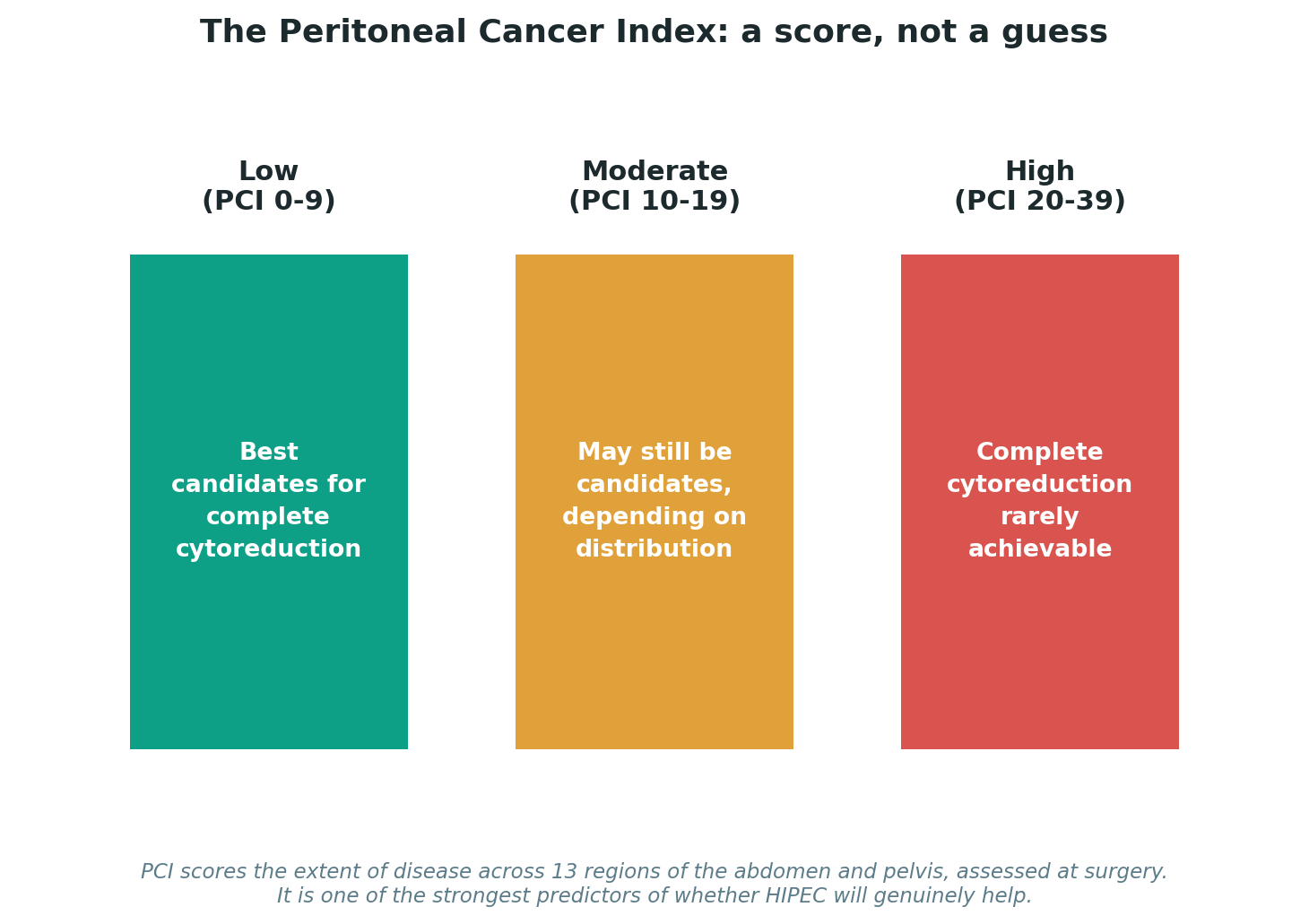
This score, assessed during surgery, is one of the strongest predictors of whether HIPEC will genuinely help you.
| Your situation | Typical approach | What it involves |
|---|---|---|
| Peritoneal spread with a low PCI score, disease confined to a few regions | Strong candidate for CRS and HIPEC | Complete cytoreduction is realistically achievable, offering the best chance of meaningful survival benefit |
| Peritoneal spread with a moderate PCI score | Careful, centre-specific assessment needed | Whether complete cytoreduction is achievable depends heavily on exactly where disease is located, not just the total score |
| Peritoneal spread with a high PCI score, or disease outside the abdomen | HIPEC is unlikely to be appropriate | Systemic chemotherapy or other palliative treatment is usually the more appropriate path |
| Poor overall fitness, significant other medical conditions | Careful risk-benefit discussion before proceeding | This is major, prolonged surgery, and general fitness for it matters as much as the cancer itself |
Why the completeness of surgery matters more than the surgery itself
Across every cancer type HIPEC is used for, one factor consistently predicts survival more than any other: whether the surgeon achieved a complete cytoreduction — meaning no visible tumour, or only microscopic residual disease, was left behind. This is scored using the Completeness of Cytoreduction system, and the difference in outcome between a complete and incomplete result is not small.
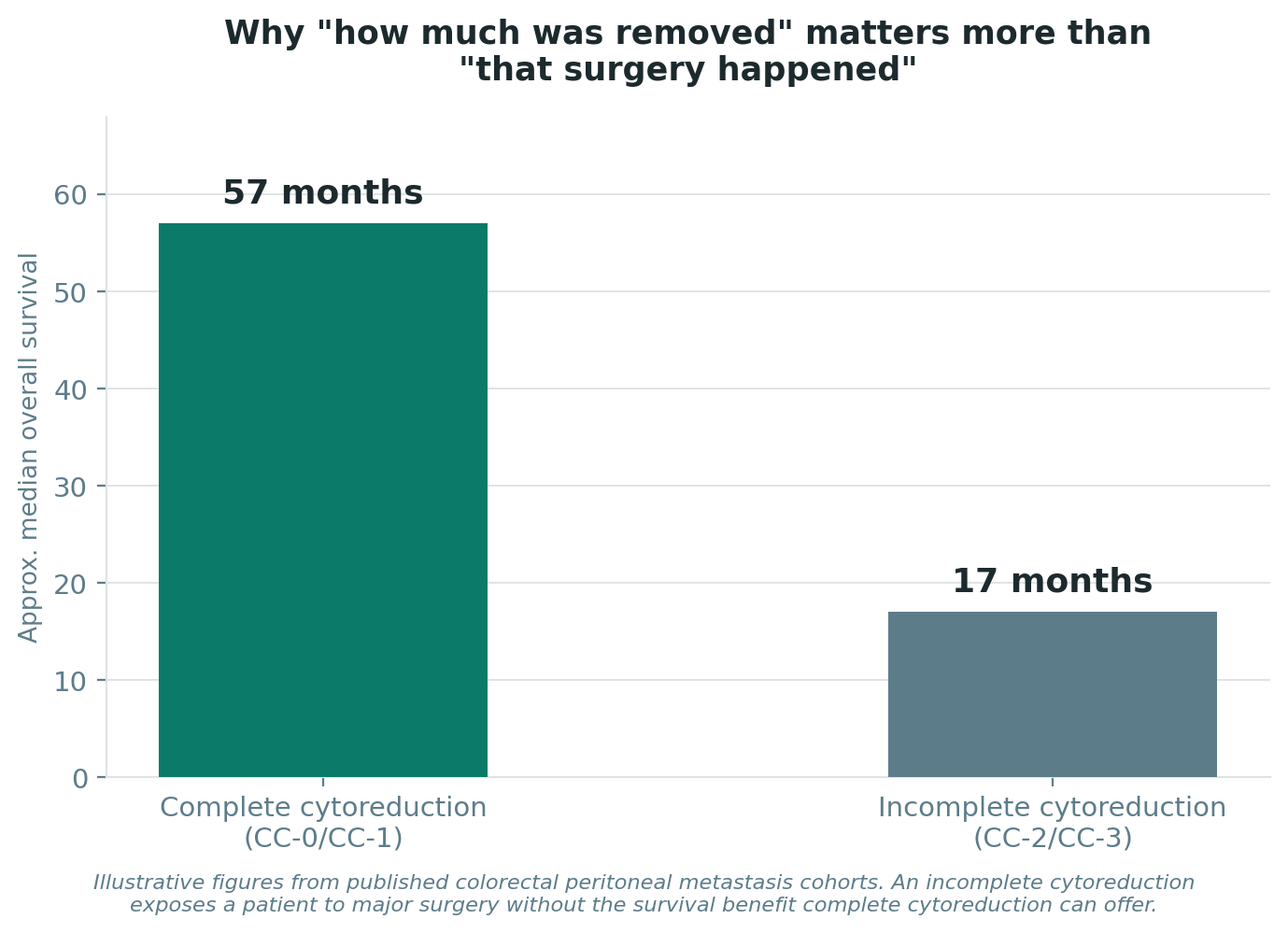
An incomplete cytoreduction exposes a patient to the full risk of major surgery without this survival advantage.
This is why patient selection before surgery, and surgical judgement during it, matter so much. A skilled, experienced surgical team will tell you honestly, based on imaging and sometimes a preliminary laparoscopy, whether complete cytoreduction is realistically achievable in your case — and a team willing to say "this may not be achievable for you" before surgery begins is protecting you, not disappointing you.
This also explains why the specific cancer causing your peritoneal spread matters to the conversation. Cancers such as pseudomyxoma peritonei, a rare condition usually arising from a tumour in the appendix, tend to respond particularly well to this approach, while some other cancer types and more aggressive tumour biology are less favourable even when the disease appears similarly extensive on imaging. A genuinely experienced team will discuss your specific tumour type and its known behaviour with HIPEC, not treat all peritoneal spread as interchangeable.
Why centre experience matters more here than almost anywhere else
HIPEC combined with cytoreductive surgery has one of the steepest learning curves of any procedure in modern oncology. Published research estimates that a surgical team needs to perform somewhere between 140 and 220 cases before reaching full technical proficiency, and outcomes during that early learning period can be dramatically worse than at an established, high-volume centre. This is not a small effect: published data from early experience shows mortality rates dropping from double digits to a small fraction of that as a centre's experience accumulates.
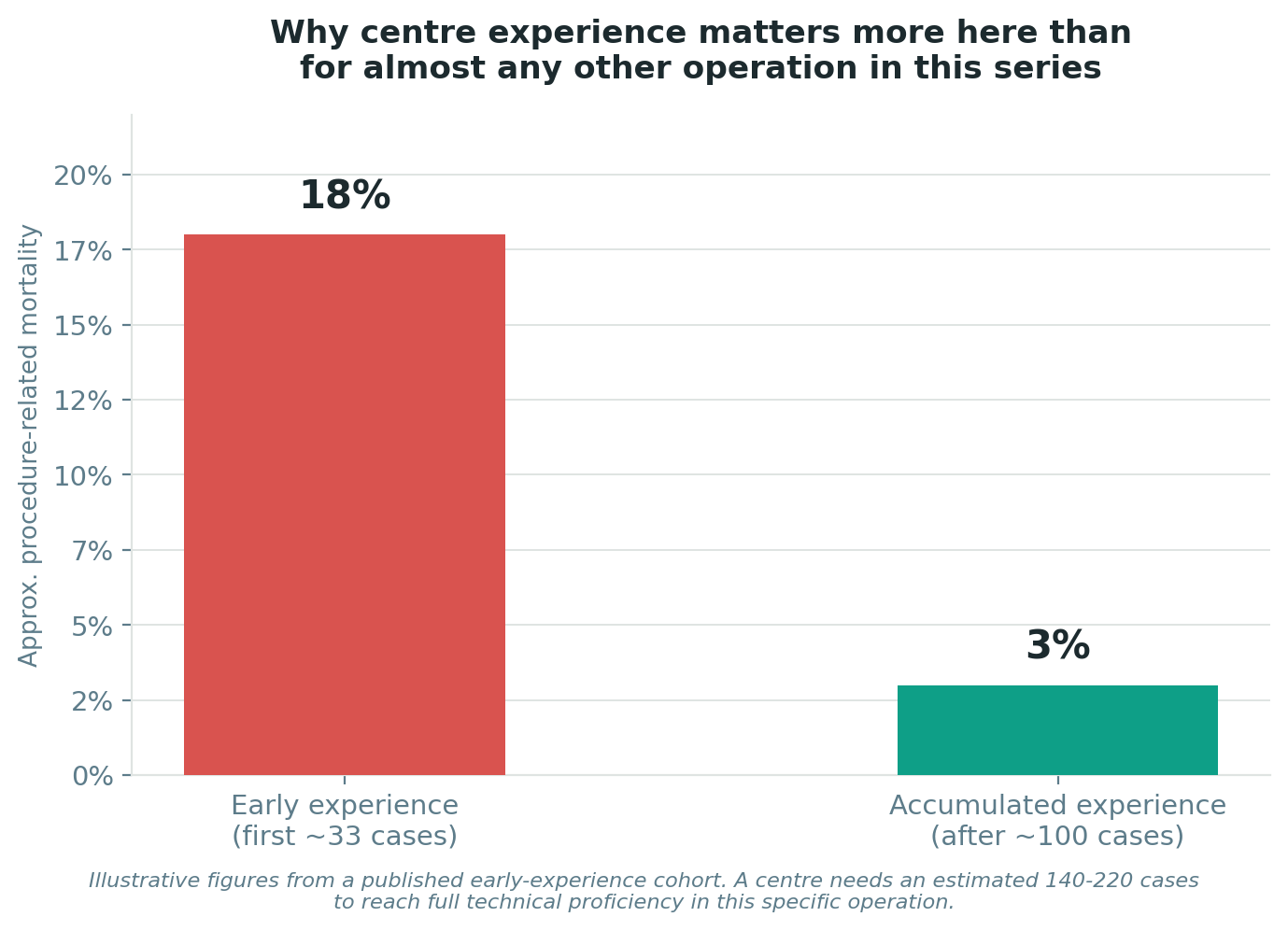
This is why asking a centre's specific case volume for this exact procedure is not optional here — it is essential.
Choosing the centre
Ask directly how many CRS and HIPEC procedures the centre performs each year, and how many years they have run a dedicated programme for this specific operation — a general cancer hospital that occasionally performs HIPEC is a materially different proposition from a centre with a dedicated, high- volume peritoneal malignancy programme. India has established genuine, high-volume HIPEC centres with outcomes comparable to leading centres in high-income countries, including programmes specifically built to serve patients from lower-resource settings — but this expertise is concentrated in a small number of centres, not spread evenly across the country.
Confirm that your case is assessed by a genuine multidisciplinary team before surgery, including a detailed discussion of your realistic PCI score and the likelihood of complete cytoreduction, and ask what proportion of their patients achieve a complete cytoreduction result. Check accreditation (NABH, ideally JCI), and ask specifically about their intensive care capacity, since this is an operation that regularly requires ICU-level support afterward.
It is also worth asking specifically about the surgical team's approach if, once inside the abdomen, the disease turns out to be more extensive than the imaging suggested. A confident team will describe a clear plan for this situation — sometimes proceeding with a partial, symptom-focused surgery instead, rather than pushing ahead with an incomplete cytoreduction that carries all the risk of the full operation without its benefit.
Cost and value: how to weigh the money honestly
CRS and HIPEC in a good Indian hospital costs a small fraction of the equivalent procedure in the West, and India has genuine, high-volume experience with this specific operation. The saving is real, but for this procedure more than almost any other in this guide series, the cheapest option is not automatically the best value — an inexperienced centre's lower price does not offset the dramatically higher risk of a poor outcome.
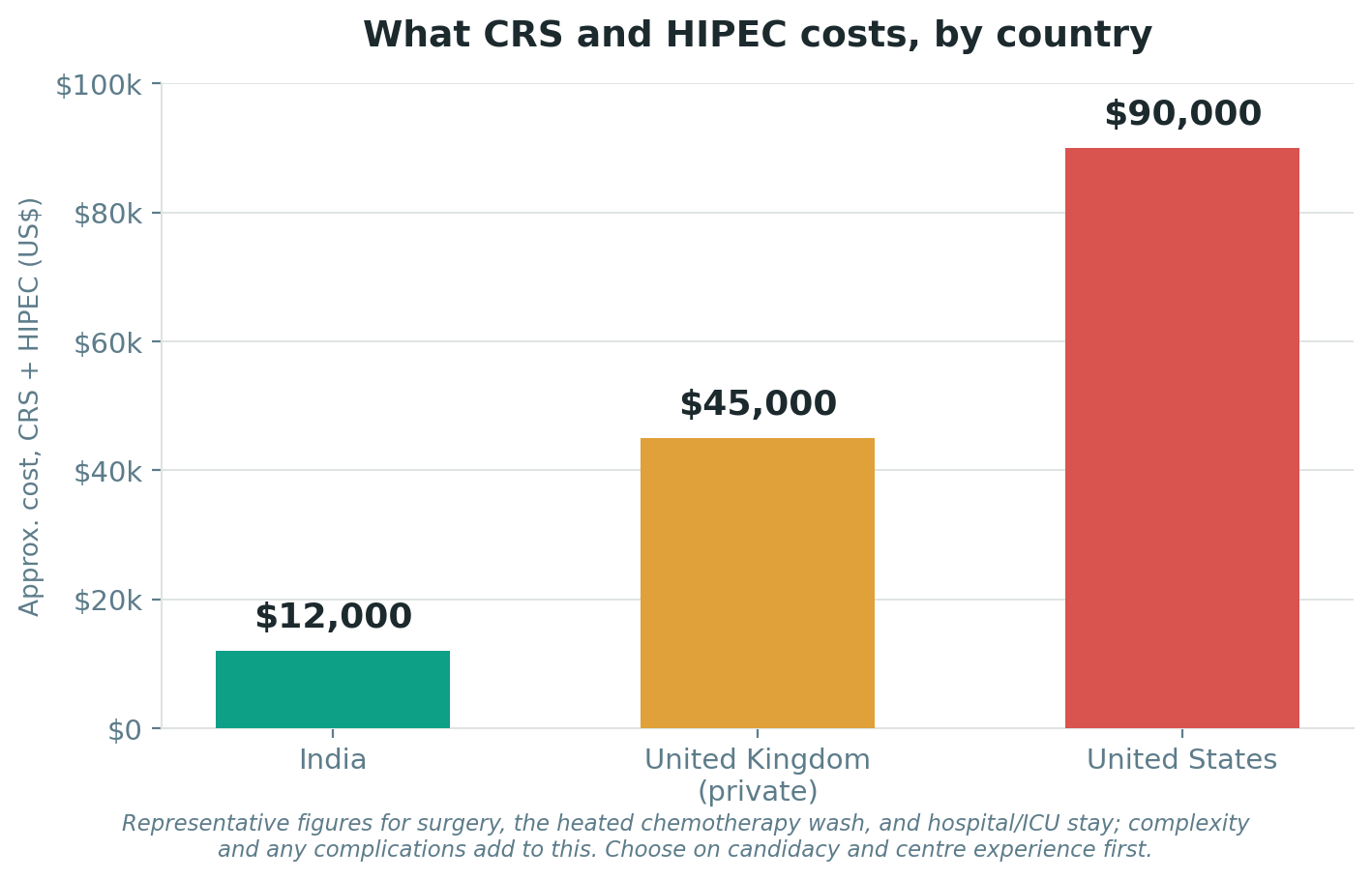
India's affordability is genuine — but centre experience matters more here than the price you pay.
In 24 years of arranging these journeys, I have found that the patients who do best with HIPEC are the ones who insist on knowing a centre's specific case volume and outcomes before committing, rather than assuming any hospital offering the procedure is equally qualified to perform it. Ask for a written, itemised quote covering the surgery, the ICU stay, and the extended hospital recovery this operation typically requires.
What a Zambian patient should weigh in particular
Beyond the surgical decision itself, several practical matters deserve attention. First, payment: NHIMA funds care at accredited facilities inside Zambia, not treatment abroad, so this comes from your own resources — another reason to be confident in both your candidacy and the centre's genuine experience before committing funds. Second, plan for a longer recovery than most other operations in this guide series; hospital stays of one to two weeks, including time in intensive care, are typical, and full recovery at home takes considerably longer. Third, aftercare: arrange with a Zambian oncologist to take over your long-term surveillance, and insist the Indian team provides a complete written operative report, including your exact PCI and CC scores, since these matter for any future treatment decisions.
Fourth, arrange for practical support during your stay. Because this surgery is prolonged and recovery involves a genuine intensive-care phase, having a family member or close companion with you throughout, not just for the journey itself, makes a meaningful difference to how well the whole experience is managed and understood.
The practical journey from Zambia
India requires a yellow fever vaccination certificate from travellers arriving from Zambia, valid only from ten days after the injection. Your medical visa is issued by the High Commission of India on Pandit Nehru Road in Lusaka against the hospital's invitation letter; given the extended hospital stay this surgery requires, plan for an extended-stay medical visa and a medical-attendant visa for anyone travelling with you. There is no direct flight from Zambia to India; you will connect through Addis Ababa on Ethiopian Airlines, or through Dubai, Doha or Nairobi. Send your complete imaging, pathology and any prior surgical records, not only a summary, for remote review before you travel, since these determine whether HIPEC is genuinely appropriate for your specific disease pattern.
Straight answers for Zambian Patients about HIPEC Cancer Surgery in India
Is HIPEC the same as chemotherapy I might already know about?
No. HIPEC is delivered directly into the abdominal cavity during surgery, heated, and combined with the physical removal of visible tumour — a fundamentally different approach from the intravenous chemotherapy most people are familiar with, which travels through the whole body via the bloodstream.
My cancer has spread to my liver as well as the lining of my abdomen. Am I still a candidate?
Generally, HIPEC is intended for cancer confined to the peritoneal cavity, and significant spread to other organs usually rules it out. This should be assessed carefully by a specialist team, since the presence and extent of any disease outside the abdomen materially changes the picture.
How do I know if a centre genuinely has enough experience with this specific operation?
Ask directly for their annual case volume of CRS and HIPEC specifically, not general cancer surgery numbers, and ask what proportion of their patients achieve complete cytoreduction. A confident, experienced centre will share this information readily.
What does recovery from HIPEC actually involve?
This is major surgery, and recovery reflects that — typically one to two weeks in hospital, often including intensive care, followed by weeks of recovery at home before returning to normal activities. Plan your travel, finances and support around this realistic timeline rather than a shorter one.
Sources
- 🌐 Medical visa, Lusaka — High Commission of India, requirements & process: hcizambia.gov.in/page/medical-visa
- 🌐 Hospital accreditation (India) — Verify a hospital's NABH accreditation: nabh.co
- 🌐 National Health Insurance (Zambia) — NHIMA cover, treatment abroad is not covered: nhima.co.zm
- 🌐 Ministry of Health Zambia — National health services & guidance: moh.gov.zm
- 🌐 National Medical Commission (verify a surgeon) — Confirm a surgeon's registration in India: nmc.org.in
- 🌐 WHO yellow fever — Vaccination requirements before travel: who.int/health-topics/yellow-fever
A Closing Word
Of everything I help patients weigh, HIPEC is where a centre's specific track record matters as much as the diagnosis itself. If you send me your imaging, pathology and treatment history, I will help you understand honestly whether HIPEC is a genuine option for your specific pattern of disease, what your realistic chance of complete cytoreduction looks like, and which centres in India have the deep, specific experience with this exact operation to give you the best possible chance.
Frequently Asked Questions by Zambian Patients about HIPEC Cancer Surgery in India
What is HIPEC?
HIPEC combines cytoreductive surgery, which removes visible abdominal cancer, with heated chemotherapy circulated directly inside the abdominal cavity to target remaining microscopic disease.
Which cancers can be treated with HIPEC?
The guide discusses HIPEC mainly for colorectal, ovarian, stomach and appendix-related cancers that have spread to the peritoneal lining.
What is the Peritoneal Cancer Index?
PCI is a scoring system that assesses tumour deposits across 13 regions of the abdomen and pelvis, producing a score from 0 to 39. It helps determine the extent of disease and whether complete cytoreduction may be possible.
Does a high PCI rule out HIPEC?
Not automatically, but a high PCI makes complete cytoreduction more difficult. The guide indicates that PCI 20–39 generally makes complete cytoreduction rarely achievable, while individual disease distribution still needs specialist assessment.
Why is complete cytoreduction so important?
The guide identifies complete cytoreduction as one of the strongest predictors of outcome. Its cited comparison shows approximately 57 months median survival with complete cytoreduction versus 17 months with incomplete cytoreduction.
How should I choose a HIPEC centre in India?
Ask specifically about the centre's annual CRS-HIPEC volume, years of experience, complete cytoreduction rate and experience with your particular cancer type.
How much does CRS and HIPEC cost in India?
The guide gives an indicative combined cost of approximately US$12,000 in India. The quotation should clearly state whether ICU care and the extended hospital stay are included.
How long will recovery take?
Hospitalisation is typically around one to two weeks, often including intensive care, followed by several additional weeks of recovery at home before normal activities can resume.
What records should Zambian patients send before travelling?
Send complete imaging, pathology reports and previous surgical records, rather than only a summary. These allow the Indian HIPEC team to assess disease distribution and potential candidacy before travel.
What are the main warning signs when choosing a centre?
Be cautious if a centre cannot provide its specific CRS-HIPEC case volume, complete-cytoreduction outcomes or ICU capability, or if it promises HIPEC without clearly assessing whether complete tumour removal is achievable.
Page Summary
This five-page Zambia-to-India medical travel guide explains cytoreductive surgery and HIPEC, focusing on careful patient selection, PCI scoring, complete cytoreduction and the importance of high-volume centre experience. The page 1 PCI graphic divides disease into low 0–9, moderate 10–19 and high 20–39 scores, while the page 2 survival chart illustrates approximately 57 months versus 17 months for complete versus incomplete cytoreduction. The page 3 experience chart highlights the reduction in illustrative mortality from 18% during early experience to 3% after accumulated experience. The page 4 cost chart gives an indicative CRS-HIPEC cost of US$12,000 in India, compared with US$45,000 in the UK and US$90,000 in the US.
Citation Block
| Topic | Information |
|---|---|
| Topic | HIPEC Cancer Surgery in India for Zambian Patients |
| Treatment | Cytoreductive Surgery + HIPEC |
| Patients | Zambian Cancer Patients |
| Specialist | Surgical Oncologist / HIPEC Specialist |
| Main Assessment | PCI score and resectability |
| Key Priority | Complete cytoreduction |
| Key Cancers | Colorectal, ovarian, stomach and appendix |
| PCI Range | 0–39 across 13 abdominal/pelvic regions |
| Best PCI Range | 0–9 |
| Centre Check | Annual CRS-HIPEC case volume |
| Outcome Check | Complete cytoreduction rate |
| Team Requirement | Multidisciplinary team + ICU support |
| India Cost | Approximately US$12,000 |
| UK Cost | Approximately US$45,000 |
| US Cost | Approximately US$90,000 |
| Hospital Stay | Approximately 1–2 weeks |
| Quote Check | Surgery, HIPEC, ICU and extended hospital recovery |
| Pre-Travel Records | Imaging, pathology and previous surgical records |
| Follow-Up | Zambian oncologist and long-term surveillance |
| Quality Check | NABH, ideally JCI |
| Key Statistic | Approx. 57 vs 17 months median survival in cited comparison |
| Experience Factor | Approx. 140–220 cases estimated for technical proficiency |
| Warning Signs | Low case volume or unclear complete-cytoreduction outcomes |
| Patient Pathway | Records → PCI/resectability assessment → tumour-board review → CRS-HIPEC → ICU/recovery → Zambia follow-up |
| Decision Principle | Centre experience and complete cytoreduction potential matter more than price alone |


Our Mission Statement
Our mission is to place patients at the centre of every healthcare decision by providing trustworthy, evidence-based, and unbiased medical information. We believe that informed patients make better decisions. Backed by personalised guidance from our experienced advisory team, we help patients understand their treatment options, compare them objectively, and confidently choose the path that best suits their medical needs and personal circumstances.
Patient Testimonials from Zambia


Ready to Take the First Step?
Share your Medical Reports with our Healthcare Managers Today and Get a FREE CONSULTATION, a Personalized Treatment Plan, and Complete Support from Arrival to Recovery.
Get Your Free ConsultationAreas We Serve
This resource has been thoughtfully prepared for patients from Zambia who are considering medical treatment in India. We also welcome patients from the wider region in the countries mentioned below-
We assist patients from:
- Zambia
- Angola
- Malawi
- Zimbabwe
- Botswana
- Namibia
- South Africa
- Eswatini
- Lesotho
- Gabon
- Chad
- Equatorial Guinea
- São Tomé and Príncipe
- Republic of the Congo
- Democratic Republic of the Congo
Many of the insights, treatment pathways, hospital recommendations, travel guidance, and patient support services described here are equally relevant and may be used as a reference when planning treatment in India.
From Zambia to India: Your Complete Patient Support Guide
- Best Weight-Loss (Bariatric) Surgeons & Hospitals in India for Zambian Patients
- Best Brain-Tumour Surgeons & Hospitals in India for Zambian Patients
- Best Cancer Doctors & Hospitals in India for Zambian Patients
- Best Cardiac Surgeons & Hospitals in India for Zambian Patients
- Best Cosmetic Surgeons & Facilities in India for Zambian Patients
- Best CyberKnife Treatment Teams & Centres in India for Zambian Patients
- Best Dentists & Dental Clinics in India for Zambian Patients
- Best Heart Valve Replacement Surgeons & Hospitals in India for Zambian Patients
- Best Hip Surgeons & Hospitals in India for Zambian Patients
- Best Knee Surgeons & Hospitals in India for Zambian Patients
- Best Neurosurgeons & Hospitals in India for Zambian Patients
- Best Paediatric Cardiac Surgeons & Hospitals in India for Zambian Patients
- Best Paediatric Neurosurgeons & Hospitals in India for Zambian Patients
- Best Prostate Surgeons & Hospitals in India for Zambian Patients
- Best Scoliosis Surgeons & Hospitals in India for Zambian Patients
- Best Spine Surgeons & Hospitals in India for Zambian Patients
- Best Bone Marrow Transplant Teams & Hospitals in India for Zambian Patients
- Best Kidney Transplant Surgeons & Hospitals in India for Zambian Patients