

Hip Surgery in India for Zambian Patients
Why hip trouble in Zambia is often not the hip trouble of the West — what actually causes it, why timing can save the joint, and how to choose surgery in India that lasts a lifetime.
There is a particular limp I have learned to recognise over the years — the short, guarded step of someone whose hip has begun to give way, who has stopped walking to church, stopped sitting on the floor, stopped sleeping on that side. If you are reading this in Lusaka, Kitwe or Ndola, you may know it in your own body. For 24 years I have helped patients across Africa understand what is happening inside that joint and what to do about it, and with the hip more than almost any other operation, the right knowledge changes the outcome. So this guide is written to inform you first and reassure you second — because a well-informed patient makes a far better decision than a frightened one.
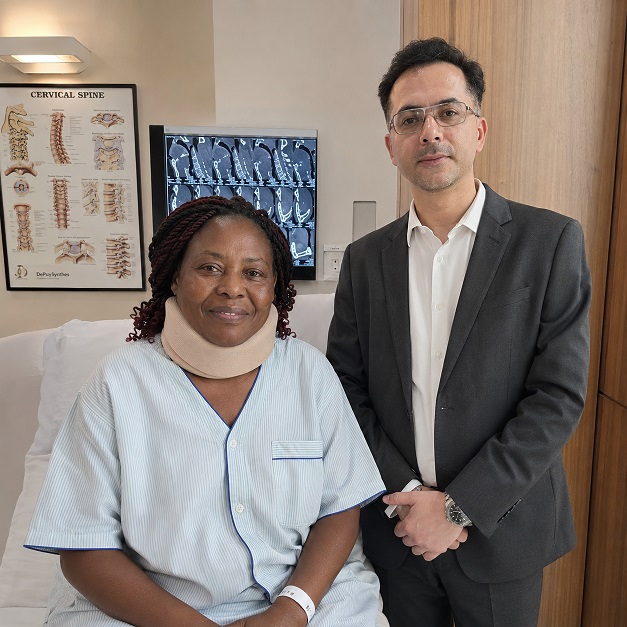
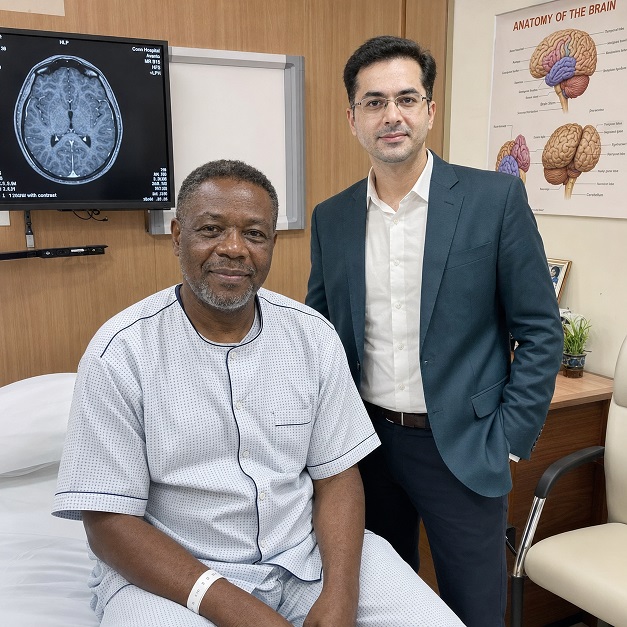
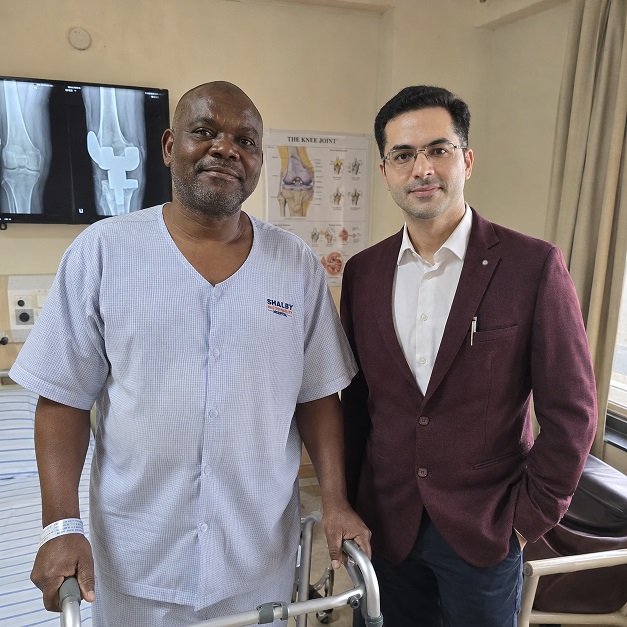
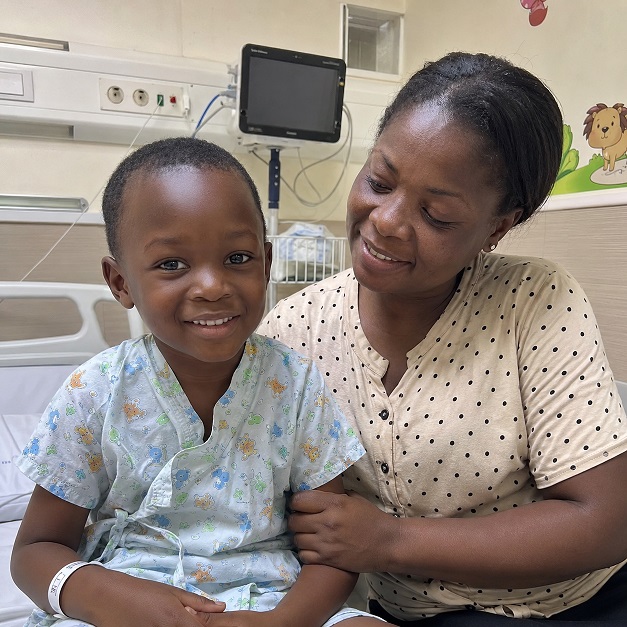
Healing Journeys of Zambian Patients




Key Takeaways
- Hip disease among Zambian patients may differ significantly from the age-related osteoarthritis commonly associated with hip replacement in Western countries. The guide particularly highlights avascular necrosis (AVN) as an important cause of hip damage among younger patients.
- Avascular necrosis develops when the blood supply to the femoral head is interrupted. The bone can gradually weaken, soften and eventually collapse, destroying the hip joint.
- The guide cites a large sub-Saharan African review involving 1,400 hip-replacement patients, in which AVN was the second most common reason for hip replacement and more than half of patients with AVN had both hips affected.
- Important causes associated with AVN in the guide include HIV, sickle cell disease, excess alcohol consumption and prolonged steroid use.
- The page 2 chart highlights the age difference influencing treatment strategy: a typical Western osteoarthritis patient undergoing hip replacement is shown at approximately 68 years, compared with approximately 42 years for hip collapse associated with HIV or sickle cell disease.
- Timing is particularly important with AVN. Before the femoral head collapses, some patients may be candidates for core decompression, a joint-preserving procedure intended to relieve pressure and encourage blood supply to the affected bone.
- Four warning signs are identified: no itemised quotation, refusal to name the implant and bearing surface, pressure to decide and pay immediately, and no follow-up arrangement after returning to Zambia.
Quick Facts
- Treatment
- Hip Surgery & Total Hip Replacement
- Country
- India
- Intended Audience
- Zambian Patients
- Primary Condition Highlighted
- Avascular Necrosis (AVN)
- Affected Bone
- Femoral Head
- Other Condition Highlighted
- Osteoarthritis
- Important AVN Factors
- HIV, Sickle Cell Disease, Excess Alcohol and Long-Term Steroid Use
- Patients in Cited African Review
- 1,400
- Bilateral AVN
- More Than Half of AVN Patients Had Both Hips Affected
- Both Hips / Same Admission
- Approximately US$10,900
- Bilateral Treatment
- May Be Performed in One Admission or Closely Staged During One Trip in Suitable Patients
- HIV Pre-Surgery Tests
- CD4 Count and Viral Load
- HIV Medication
- Continue Antiretroviral Treatment Without Interruption
- Sickle Cell Requirement
- Experienced Haematology and Perioperative Planning
In Brief
Hip surgery in India for Zambian patients often requires special consideration because conditions such as avascular necrosis can affect the hip at a younger age and may involve both joints. If AVN is identified before the femoral head collapses, core decompression may sometimes preserve the natural joint. Once collapse has occurred, total hip replacement may be required. The guide estimates an all-in hip replacement cost of approximately US$5,000–US$7,000 in India, with implant durability and long-term follow-up particularly important for younger patients.
First, should you travel at all?
Let me be fair to Zambia. The University Teaching Hospital in Lusaka, the country’s largest referral centre, trains the nation’s surgeons; Levy Mwanawasa University Teaching Hospital has widened specialist care; the Zambian–Italian Orthopaedic Hospital has replaced hips for years and has kept its own joint register since the late 1990s; private units such as Medcross in Lusaka, and the teaching hospital in Ndola, add further capacity. For a straightforward hip in a fit patient, treatment in Zambia is entirely reasonable, and I will say so plainly if that is your case. The limits are volume and waiting: hip replacement rewards a surgeon who does it in large numbers, week after week, and those numbers are not yet here at scale. When the problem is complex — both hips, a very young patient, a collapsed joint, or a revision — the case for a high-volume centre becomes strong.
Knowledge first: why a Zambian hip is often not a Western hip
In wealthy countries, a worn hip is usually a story of age — decades of ordinary wear grinding the cartilage away in a patient in their late sixties or seventies. In Zambia and across the region, a very large share of hip disease is a different disease altogether, and understanding it is the single most useful thing this guide can give you.
The condition is called avascular necrosis — literally, bone that has lost its blood supply. The ball at the top of the thigh bone, the femoral head, depends on a fragile blood supply, and when that supply is cut off the bone dies, softens and collapses, and the joint is destroyed from the inside. In one of the largest reviews of hip replacements ever carried out in sub-Saharan Africa — 1,400 patients — avascular necrosis was the second most common reason for a new hip, close behind ordinary arthritis, and more than half of those patients had both hips affected. Crucially, they were markedly younger than the arthritis patients.
Why so common here? Two reasons above all. The first is HIV , which in that same African series was the leading identifiable cause of avascular necrosis; Zambia’s adult HIV prevalence sits around 11 per cent, so this is not a rare footnote but a mainstream cause. The second is sickle cell disease , carried and inherited widely across the region, in which the abnormal red cells block the tiny vessels feeding the femoral head; the hip is the most typical site of all, and it often strikes in the twenties and thirties. Excess alcohol and long courses of steroid medicine complete the picture. None of this is a matter of shame — it is simply biology, and biology can be planned for.
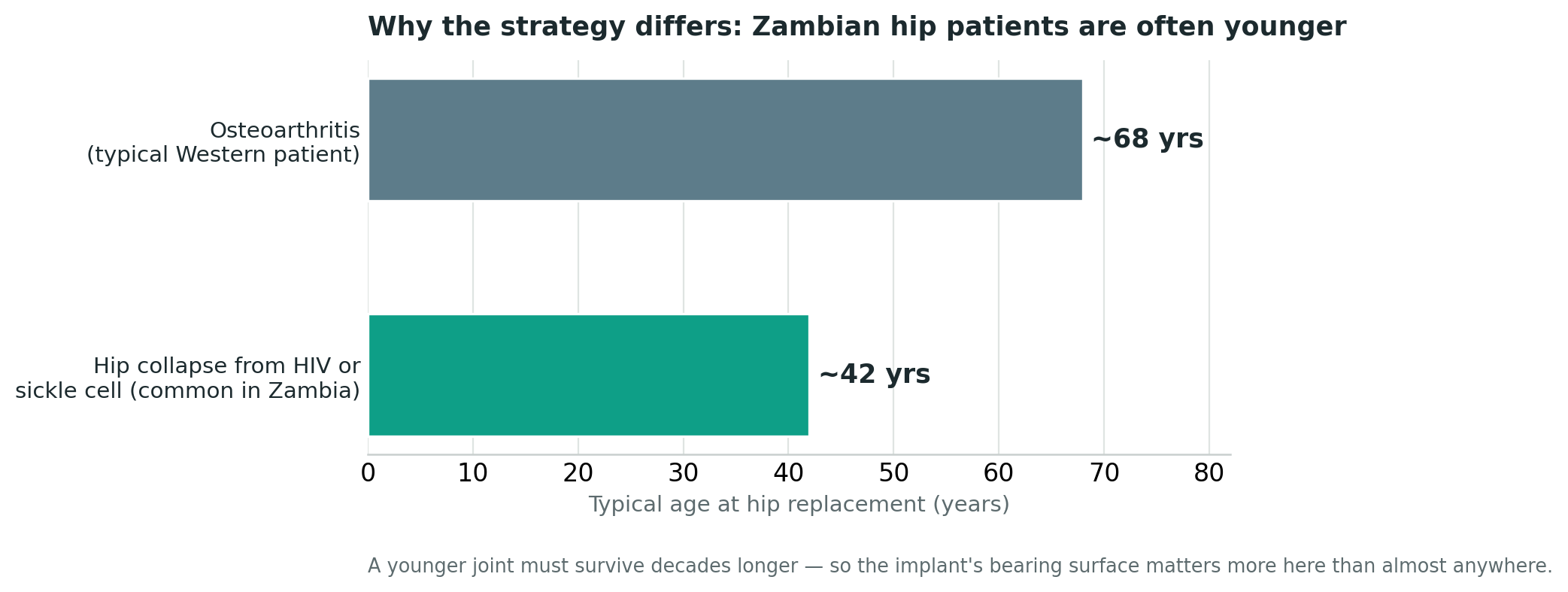
In the West a new hip is typically an operation of the late sixties; in Zambia it is often an operation of the forties, or younger.
The knowledge that can save a hip: catch it before it collapses
Here is the part worth reading twice. Avascular necrosis moves through stages. In its early stages, before the femoral head has actually collapsed, the hip can sometimes be saved without any replacement at all — a small operation called core decompression drills into the dying bone to relieve pressure and coax new blood vessels in, and in well-selected early cases it can halt the process and preserve your own natural joint for years. Once the head has collapsed, that window is gone and a replacement becomes the only real answer. The tragedy I see again and again is the patient who waited — who had the hip pain for two years, assumed nothing could be done, and arrived only when the joint was already destroyed. The lesson is blunt: if you have unexplained hip or groin pain, and especially if you live with HIV or sickle cell, get an X-ray or MRI
born with.
If you are young, the implant must last a lifetime
Because so many Zambian hip patients are in their thirties and forties, the ordinary Western playbook does not fit. A hip replacement fitted at sixty-eight only needs to last a comfortable retirement. A hip fitted at forty may need to survive forty more years of a working, walking, load-bearing life — and that changes which implant you should accept. The wearing surfaces matter enormously: a modern hard-wearing bearing, such as ceramic-on-ceramic or ceramic against highly cross- linked polyethylene, resists wear far better over decades than the older metal-on-plastic combinations, and for a young, active patient that difference is measured in extra years before a revision is ever needed. This is not a detail to leave to chance or to a price list. Ask your surgeon, in writing, which bearing they intend to use and why — and choose a high- volume centre precisely because it will have the full range of implants and the experience to match the right one to a young joint.
The cost, in plain terms
Cost is usually what starts the search. A total hip replacement in a good Indian hospital, all in — surgeon, implant, theatre, hospital stay and physiotherapy — typically lands around US$5,000 to US$7,000. The same operation privately in the United Kingdom runs about four times that; in the United States, closer to eight. At roughly ZK19 to the dollar in mid- 2026, an Indian package sits near ZK105,000 to ZK130,000 — treat that rate as a moving figure to confirm before you travel.
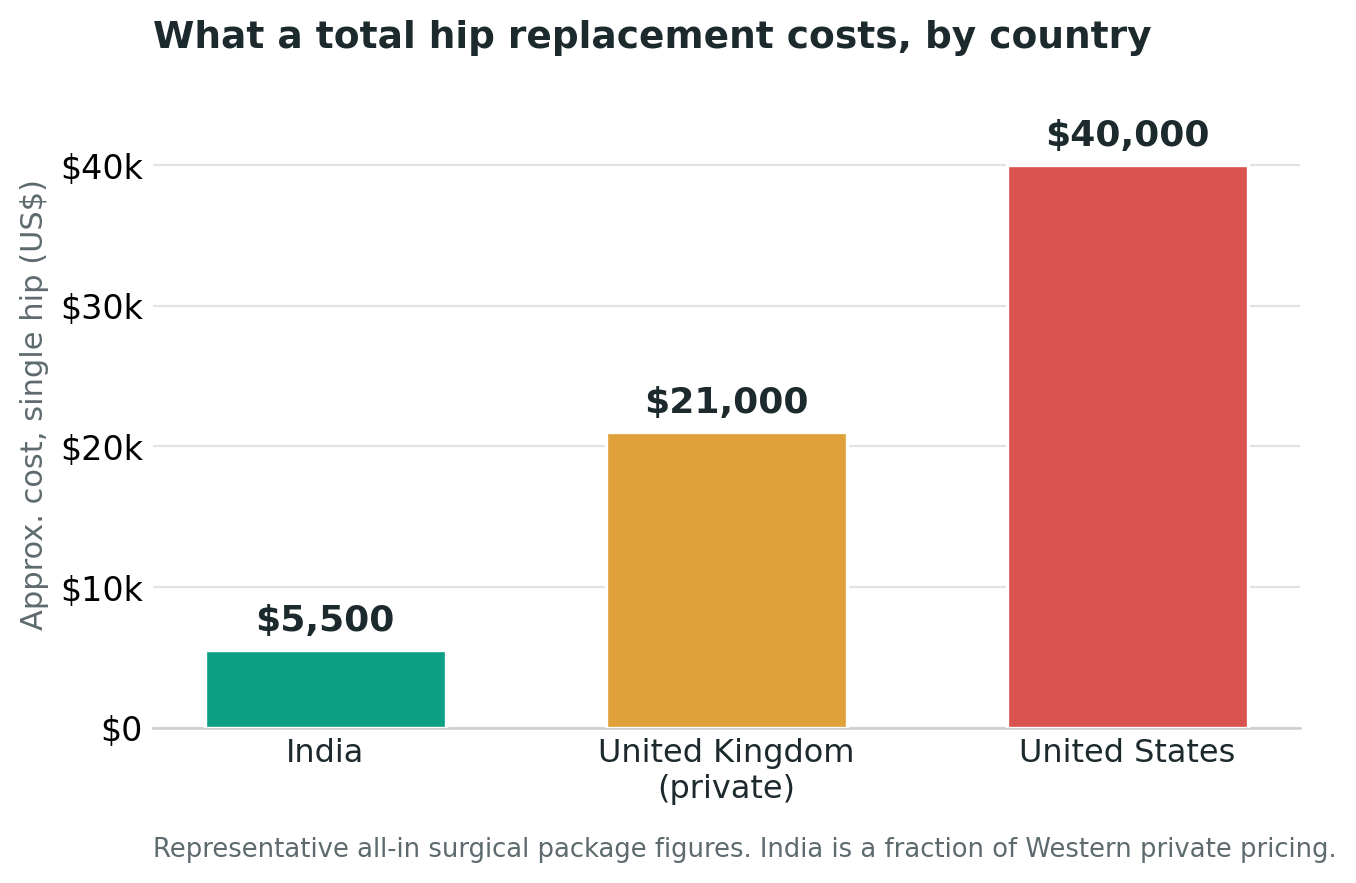
India’s all-in surgical pricing is a fraction of Western private cost. Figures are representative and vary by hospital and implant.
In 24 years of arranging these journeys, I have learned that disputes almost never concern the quoted price — they concern what the quote quietly left out: the implant and its bearing, the intensive-care days if needed, the blood, the physiotherapy. Insist on one written, itemised figure, and be wary of any number that looks too clean to be true.
If both hips have gone, do them in one trip
Because avascular necrosis so often strikes both sides, many Zambian patients need two hips replaced, not one. If that is you, resist the temptation to fix one, fly home, and return next year for the other — that doubles the airfare, the visa, the weeks away and the recovery. A high-volume centre can, for a fit patient, replace both hips in a single admission, or in two closely staged operations on one trip. It asks more of the body at first, but it is one journey instead of two.
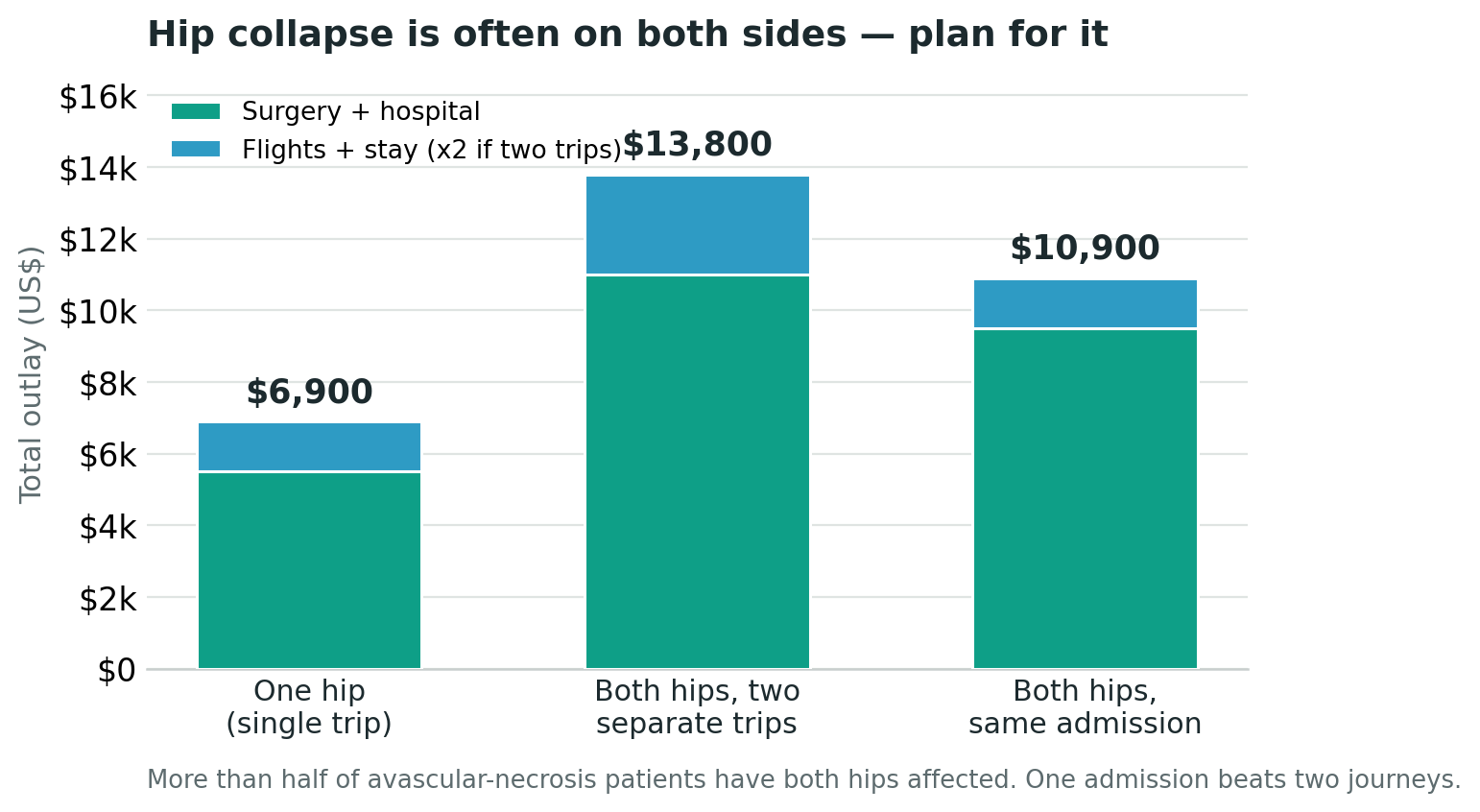
More than half of avascular-necrosis patients have both hips affected. One admission beats two separate journeys.
If you live with HIV or sickle cell — read this carefully
This is the reassurance the knowledge earns. If your HIV is well controlled — a good CD4 count and an undetectable viral load on treatment — it is not a barrier to an excellent hip replacement. Study after study, including from our own region, shows that patients with well-managed HIV recover from hip surgery just as well as anyone else. What matters is preparation: have your CD4 count and viral load done before you travel, keep taking your antiretrovirals without a break, and send those results with your scans so the surgical team can plan properly. Do not hide your status — a surgeon who knows it can protect you; one who does not, cannot.
If you have sickle cell disease , the operation is very doable but demands a haematologist’s hand. The anaesthetic, the blood loss and the cold of an operating theatre can all provoke a sickle crisis, so a proper plan — careful warming and oxygen, good hydration, and a transfusion strategy agreed in advance — turns a risky operation into a safe one. Choose a centre that has managed sickle cell patients through surgery before, and say so from your very first message. Good centres in India do this routinely.
Why India, and the twenty-year question
Beyond price, the hospitals Zambian patients are sent to are accredited to international standards — JCI internationally, NABH within India — and staffed by surgeons who perform hip replacements in the hundreds each year, with the full range of modern implants and bearings on the shelf. There are no waiting lists, and English, Zambia’s official language, is the working language of care. But remember the real point: a hip replacement is a twenty- to forty-year relationship, not a two- week trip. Insist that your surgeon records the exact implant and bearing used and writes a full operative note, and that a plan exists to hand your follow-up back to a Zambian orthopaedic surgeon for the years that follow. A common, well- documented implant that a Lusaka surgeon can recognise is worth more to you than any exotic alternative.
Recovery, and when you can fly home
The operation is a couple of hours; the recovery earns the result. In a good programme you will be helped to stand and take supported steps within a day or two, and most patients walk with a frame before leaving the ward. Plan for two to three weeks in India — enough for the wound to settle and for your team to be confident the risk of a blood clot has passed before a long flight. Do not book a return that forces you onto a plane too early.
What the journey looks like
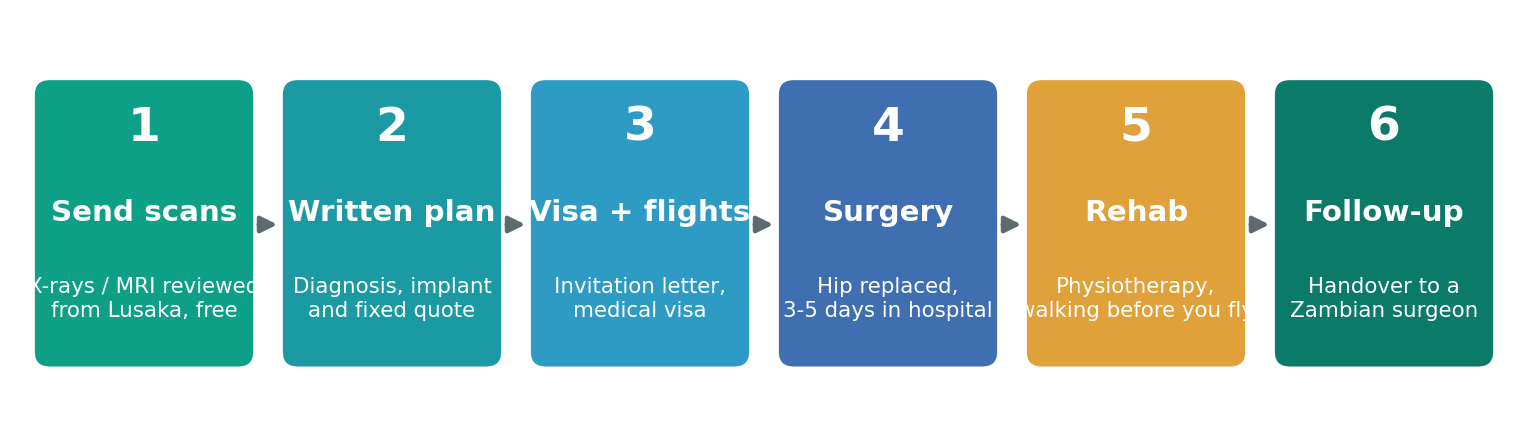
It begins before you leave home. Send your actual imaging — the X-ray and MRI files themselves, not only the typed report — and a good hospital will return a written plan and a fixed quote at no charge. Only then do you commit a single kwacha.
Practicalities for travelling from Zambia
India requires a yellow fever vaccination certificate from travellers arriving from Zambia, valid only ten days after the injection — do not leave it late. Your medical visa is issued by the High Commission of India on Pandit Nehru Road in Lusaka against the hospital’s invitation letter; apply for a medical-attendant visa in the same batch so a family member can travel with you. There is no direct flight — you will connect through Addis Ababa on Ethiopian Airlines, or through Dubai, Doha or Nairobi, a door-to-door journey of roughly fourteen to twenty hours. Book a changeable return ticket. Bring your original scans, your medication list and your HIV or sickle cell records, and settle the hospital by traceable bank transfer rather than carrying large sums of cash.
On paying for it. Zambia’s National Health Insurance scheme funds care at accredited facilities inside the country, not elective surgery abroad, so a planned hip replacement in India will come from your own resources. I would rather you knew that from the first line than discovered it later. If you hold a private or employer policy, ask the insurer in writing whether any overseas benefit exists before assuming it does.
Four signals that should make you pause
- A quote with no itemised breakdown — of surgeon, implant, hospital and physiotherapy.
- A refusal to name the implant — the specific implant and bearing surface that will be used.
- Pressure to decide and pay today — without time to consider it properly.
- No arrangement for follow-up — once you are back in Zambia.
Straight answers for Zambian Patients about Hip Surgery in India
I have hip pain but I am young. Do I really need a replacement?
Not necessarily — and that is exactly why you should be scanned early. If avascular necrosis is caught before the joint collapses, a smaller joint-preserving operation may save your own hip. The only way to know is to have the imaging reviewed now, not later.
I am HIV positive. Can I still have hip surgery in India?
Yes. With well-controlled HIV — a good CD4 count and undetectable viral load — outcomes are excellent. Bring your latest results, keep taking your treatment, and tell the surgical team openly so they can plan for you.
Can both hips be done on one trip?
Often, for a fit patient. Since avascular necrosis frequently affects both sides, doing them on a single journey saves a second visa, a second airfare and a second recovery.
What if something goes wrong after I return home?
This is why the implant record and follow-up plan matter. With a common implant and a full operative note, a Zambian orthopaedic surgeon can manage your routine follow-up and address problems without you flying back.
Sources & Useful Links
- 🌐 Medical visa (India), Lusaka — High Commission of India, requirements & process: hcizambia.gov.in/page/medical-visa
- 🌐 National Health Insurance (Zambia) — NHIMA cover and accredited facilities: nhima.co.zm
- 🌐 Ministry of Health, Zambia — referrals and national health services: moh.gov.zm
- 🌐 University Teaching Hospitals, Lusaka — Zambia’s largest public referral centre: uth.gov.zm
- 🌐 Hospital accreditation (India) — verify a hospital’s NABH accreditation: nabh.co
- 🌐 Yellow fever & travel health — WHO vaccination guidance: who.int/health-topics/yellow-fever
A closing word
If you send me your scans and a note on your history — including your HIV or sickle cell status if it applies — I will review them and tell you honestly what I think, including whether your hip might still be saved without a replacement, and whether you should stay in Zambia rather than travel. The hip is the one operation where acting early changes everything. Do not wait for the joint to collapse before you ask the question. My work has always been to make sure you get the right answer, at the right time.
Frequently Asked Questions by Zambian Patients about Hip Surgery in India
Why do Zambian patients travel to India for hip surgery?
The guide explains that straightforward cases may be treated in Zambia, while complex cases—such as bilateral hip disease, hip collapse, younger patients and revision surgery—may benefit from a high-volume orthopaedic centre in India.
How much does hip replacement in India cost for Zambian patients?
The guide gives a typical all-in range of approximately US$5,000–US$7,000. The page 3 chart uses a representative figure of approximately US$5,500 for one hip replacement in India.
What is avascular necrosis, and why is it important for Zambian hip patients?
Avascular necrosis occurs when the blood supply to the femoral head is interrupted, causing the bone to weaken and potentially collapse. The guide highlights it as an important cause of hip replacement among younger patients in sub-Saharan Africa.
Can avascular necrosis be treated without hip replacement?
Sometimes. If AVN is diagnosed before the femoral head collapses, selected patients may undergo core decompression to try to preserve their natural hip.
Can Zambian patients have both hips replaced during one trip to India?
Yes, in appropriately selected and medically fit patients. The guide explains that both hips may be replaced during one admission or through closely staged procedures during the same trip.
Which hip implants are discussed for younger Zambian patients?
The guide highlights modern hard-wearing bearings such as ceramic-on-ceramic and ceramic-on-highly-cross-linked polyethylene, particularly because younger patients may need their replacement to last for decades.
Can patients living with HIV undergo hip replacement in India?
The guide states that patients with well-controlled HIV, including a good CD4 count and undetectable viral load, can achieve excellent outcomes. Patients should provide their latest results and continue antiretroviral treatment.
Can Zambian patients with sickle cell disease undergo hip surgery in India?
Yes, but specialised planning is important. The guide recommends an experienced team with haematology support and precautions involving warming, oxygen, hydration and an agreed transfusion strategy.
How long should Zambian patients stay in India after hip replacement?
The guide recommends approximately two to three weeks in India. Supported standing and walking generally begin within one or two days, while the page 5 pathway shows approximately 3–5 days in hospital.
What are the red flags when choosing hip surgery in India?
The guide identifies four warning signs: a quotation without an itemised breakdown, refusal to identify the implant and bearing surface, pressure to decide and pay immediately, and no arrangement for orthopaedic follow-up after returning to Zambia.
Page Summary
This guide explains hip surgery in India for Zambian patients, focusing particularly on why hip disease may occur at a younger age and for different reasons than typical age-related hip arthritis in Western countries. Avascular necrosis is a major focus. AVN occurs when blood flow to the femoral head is interrupted, eventually causing bone death and collapse. The guide highlights HIV and sickle cell disease among important causes relevant to the region.
Citation Block
| Topic | Information |
|---|---|
| Topic Information | Details |
| Procedure | Hip Surgery & Total Hip Replacement |
| Country | India |
| Intended Audience | Zambian Patients |
| Primary Condition | Avascular Necrosis (AVN) |
| Other Condition | Osteoarthritis |
| AVN Factors Highlighted | HIV, Sickle Cell Disease, Excess Alcohol and Long-Term Steroid Use |
| Early Joint-Preserving Procedure | Core Decompression |
| Replacement Procedure | Total Hip Replacement |
| Bilateral Treatment | Both Hips May Be Treated During One Trip in Suitable Patients |
| Modern Bearing Options | Ceramic-on-Ceramic and Ceramic-on-Highly Cross-Linked Polyethylene |
| Pre-Travel Imaging | Actual X-Ray and MRI Files |
| Hospital Stay | Approximately 3–5 Days Shown in Page 5 Pathway |
| Typical Stay in India | Approximately 2–3 Weeks |


Our Mission Statement
Our mission is to place patients at the centre of every healthcare decision by providing trustworthy, evidence-based, and unbiased medical information. We believe that informed patients make better decisions. Backed by personalised guidance from our experienced advisory team, we help patients understand their treatment options, compare them objectively, and confidently choose the path that best suits their medical needs and personal circumstances.
Patient Testimonials from Zambia


Ready to Take the First Step?
Share your Medical Reports with our Healthcare Managers Today and Get a FREE CONSULTATION, a Personalized Treatment Plan, and Complete Support from Arrival to Recovery.
Get Your Free ConsultationAreas We Serve
This resource has been thoughtfully prepared for patients from Zambia who are considering medical treatment in India. We also welcome patients from the wider region in the countries mentioned below-
We assist patients from:
- Zambia
- Angola
- Malawi
- Zimbabwe
- Botswana
- Namibia
- South Africa
- Eswatini
- Lesotho
- Gabon
- Chad
- Equatorial Guinea
- São Tomé and Príncipe
- Republic of the Congo
- Democratic Republic of the Congo
Many of the insights, treatment pathways, hospital recommendations, travel guidance, and patient support services described here are equally relevant and may be used as a reference when planning treatment in India.
From Zambia to India: Your Complete Patient Support Guide
- Best Weight-Loss (Bariatric) Surgeons & Hospitals in India for Zambian Patients
- Best Brain-Tumour Surgeons & Hospitals in India for Zambian Patients
- Best Cancer Doctors & Hospitals in India for Zambian Patients
- Best Cardiac Surgeons & Hospitals in India for Zambian Patients
- Best Cosmetic Surgeons & Facilities in India for Zambian Patients
- Best CyberKnife Treatment Teams & Centres in India for Zambian Patients
- Best Dentists & Dental Clinics in India for Zambian Patients
- Best Heart Valve Replacement Surgeons & Hospitals in India for Zambian Patients
- Best Hip Surgeons & Hospitals in India for Zambian Patients
- Best Knee Surgeons & Hospitals in India for Zambian Patients
- Best Neurosurgeons & Hospitals in India for Zambian Patients
- Best Paediatric Cardiac Surgeons & Hospitals in India for Zambian Patients
- Best Paediatric Neurosurgeons & Hospitals in India for Zambian Patients
- Best Prostate Surgeons & Hospitals in India for Zambian Patients
- Best Scoliosis Surgeons & Hospitals in India for Zambian Patients
- Best Spine Surgeons & Hospitals in India for Zambian Patients
- Best Bone Marrow Transplant Teams & Hospitals in India for Zambian Patients
- Best Kidney Transplant Surgeons & Hospitals in India for Zambian Patients