

Heart Failure Treatment and Surgery in India for Zambian Patients
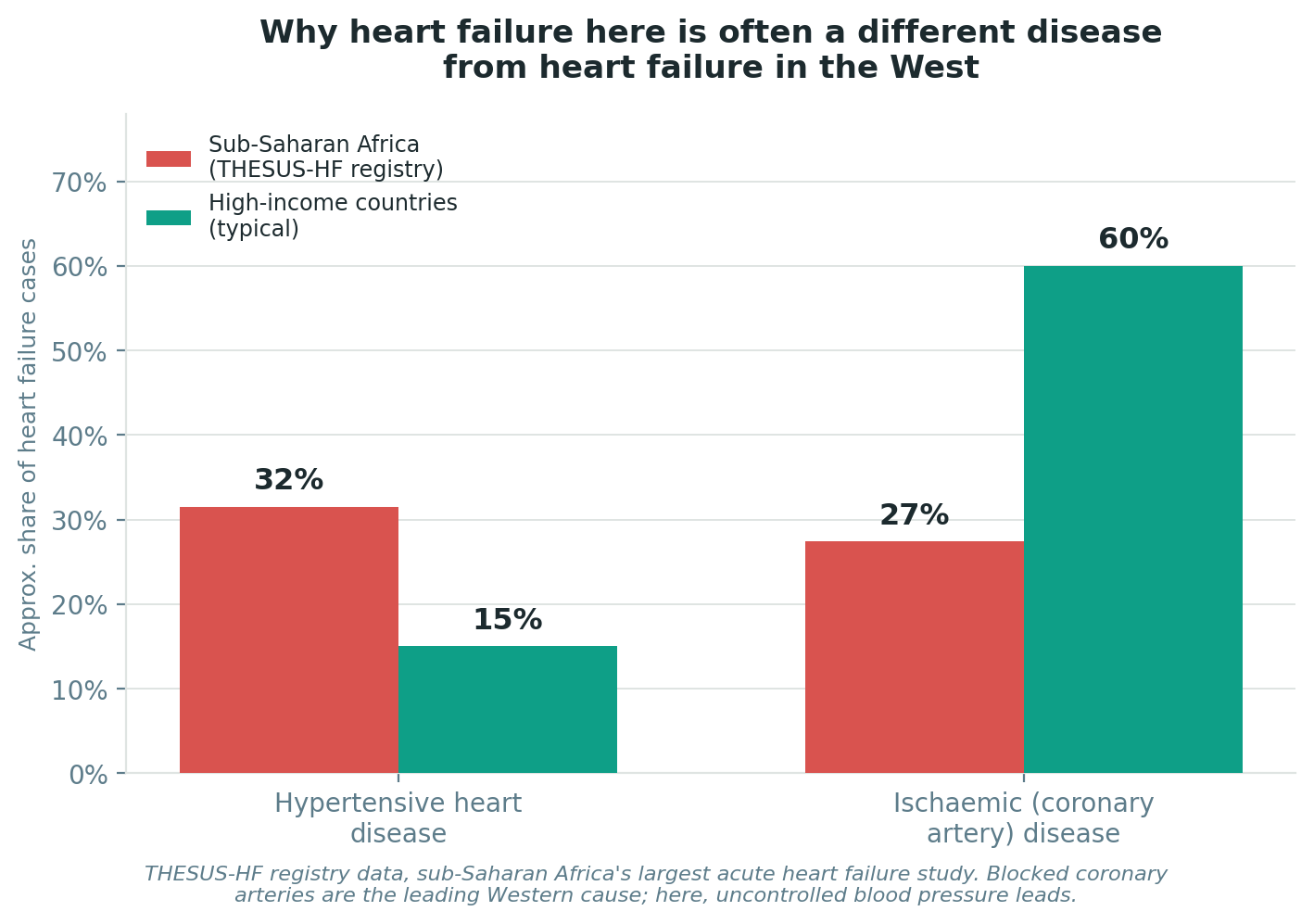
Heart failure here is, on average, a different disease from heart failure in the West — striking a decade or two earlier, and driven far more often by uncontrolled blood pressure than by blocked arteries.
Heart failure means the heart muscle can no longer pump blood as effectively as the body needs, and it is treated with a combination of medication, and, for the right patients, devices or surgery that help the heart work more efficiently or protect against dangerous rhythm problems. But the underlying reasons someone develops heart failure — and even who is affected — look meaningfully different here than in the textbooks written for Western practice. In 24 years of guiding patients through cardiac care abroad, I have found that understanding this difference changes both how heart failure should be prevented and how urgently certain warning signs deserve attention.
Healing Journeys of Zambian Patients






Key Takeaways
- The guide highlights that heart failure in sub-Saharan Africa often develops earlier and has a different underlying pattern from Western countries. The page 1 chart shows hypertensive heart disease accounting for approximately 32% of heart failure cases in the cited sub-Saharan African registry, compared with 15% in high-income countries, while ischaemic heart disease accounted for 27% versus 60%.
- The guide explains that uncontrolled hypertension is a major driver of heart failure in the region, alongside rheumatic heart disease and infectious causes. Treatment therefore begins with identifying the underlying cause and optimising medication and blood-pressure control rather than automatically moving to surgery or device therapy.
- The page 1–2 treatment table identifies different approaches according to the patient's heart-failure pattern: optimised medication for hypertension-related disease, ICD implantation when there is significant risk of life-threatening arrhythmia, and CRT when ventricular contraction is poorly coordinated. Devices are reserved for patients whose testing demonstrates an appropriate indication.
- The guide gives particular attention to peripartum cardiomyopathy, which develops during the final month of pregnancy or in the months following childbirth. The page 2 chart reports rates as high as 1 in 96 deliveries in some parts of Nigeria, compared with approximately 1 in 4,000 in the United States and 1 in 15,500 in Japan. The page 3 diagram stresses that worsening breathlessness, difficulty lying flat, waking at night with breathlessness, rapid weight gain or swelling require prompt cardiac assessment.
- For choosing an Indian centre, the guide recommends asking about specific ICD and CRT procedure volumes, heart-failure specialist assessment, detailed testing of ventricular function and relevant experience with peripartum cardiomyopathy. It also recommends checking NABH accreditation, ideally JCI, and confirming that medication optimisation was adequately attempted before invasive treatment.
- The page 4 cost chart gives an illustrative cost of approximately US$9,000 in India for representative CRT-D therapy, compared with US$30,000 in the private UK and US$55,000 in the United States. The guide stresses that the device and treatment must match the patient's specific heart-failure pattern and recommends a written, itemised quotation.
Quick Facts
- Author
- Dr. Dheeraj Bojwani
- Experience
- 24+ Years
- Treatment
- Heart Failure Treatment & Surgery
- Patients
- Zambian Patients
- Key Specialist
- Heart Failure Cardiologist / Cardiac Team
- Major Regional Cause
- Hypertensive heart disease
- Key Treatment
- Medication optimisation and blood-pressure control
- Device Options
- ICD and CRT
- Peripartum Risk
- Up to 1 in 96 deliveries in some reported areas of Nigeria
- India CRT-D Cost
- Approximately US$9,000
- UK Cost
- Approximately US$30,000
- US Cost
- Approximately US$55,000
- Pre-Travel Check
- Complete cardiac tests and echocardiogram reports
- Follow-Up
- Zambian cardiology team
- Device Check
- Keep the device identification card after implantation
- Key Warning
- Do not choose a device without detailed cardiac assessment
- Decision Principle
- Treat the underlying heart-failure pattern, not just the symptoms.
In Brief
For Zambian patients considering advanced heart failure treatment in India, the guide recommends first establishing the underlying cause and severity of heart failure, confirming whether medication has been optimised and determining whether an ICD or CRT device is genuinely indicated. Long-term follow-up with a Zambian cardiology team should be arranged before travel.
Why heart failure here is often a different disease
In high-income countries, heart failure is predominantly a disease of older age, most often caused by blocked coronary arteries that have gradually starved the heart muscle of blood over decades. Across sub-Saharan Africa, the picture is different: heart failure strikes on average a full two decades earlier, and the leading cause is not blocked arteries but uncontrolled high blood pressure, which places a chronic strain on the heart muscle until it can no longer keep up.
This pattern reflects a region still in the middle of what researchers call an epidemiological transition, where rheumatic heart disease and infectious causes of heart failure remain present alongside a rapidly rising burden of hypertension linked to urbanisation, changing diets and less physically active daily life. This means a treating team here needs to think broadly, since more than one of these causes can genuinely coexist in the same patient, unlike the more uniform picture seen in Western practice.
This is why controlling blood pressure well, over years, is one of the most protective things a person can do for their heart here.
This distinction matters for prevention as much as treatment. Where coronary artery disease dominates, preventing heart failure means managing cholesterol, preventing blood clots and treating narrowed arteries. Where hypertension dominates, prevention means consistent, well-controlled blood pressure treatment over years — a genuinely different, and in many ways more achievable, target.
| Your situation | Typical approach | What it involves |
|---|---|---|
| Heart failure from long-standing, poorly controlled hypertension | Optimised medication first | A combination of heart failure medications, carefully titrated, alongside strict blood pressure control |
| Heart failure with dangerously irregular heart rhythm risk despite medication | Implantable cardioverter defibrillator (ICD) | A device that monitors heart rhythm and delivers a shock if a life-threatening rhythm occurs |
| Heart failure with poorly coordinated ventricular contraction on testing | Cardiac resynchronisation therapy (CRT) | A specialised device that helps the heart's chambers contract in a more coordinated, efficient way |
| New breathlessness or swelling late in pregnancy or soon after birth | Prompt cardiac assessment | Discussed in detail below — this pattern needs specific attention in this region |
Why breathlessness late in pregnancy deserves specific attention here
Peripartum cardiomyopathy is a form of heart failure that develops in the last month of pregnancy or in the months after childbirth, in women with no prior history of heart disease. It is reported far more frequently in parts of West Africa than almost anywhere else studied, with some areas of Nigeria reporting rates as high as one in every 96 deliveries. Because some breathlessness and swelling is a normal part of late pregnancy, this condition is easily mistaken for an ordinary pregnancy symptom, and delayed recognition is strongly linked to worse outcomes. The exact reasons for this striking regional pattern are not fully understood, though researchers have proposed a combination of genetic susceptibility, nutritional factors, and the effects of pre-eclampsia and multiple pregnancies, among other possible contributors. What is clear from published data is that late presentation, often only once symptoms have become severe, is strongly associated with higher mortality and lower rates of full heart recovery — precisely the outcome earlier recognition could help prevent.
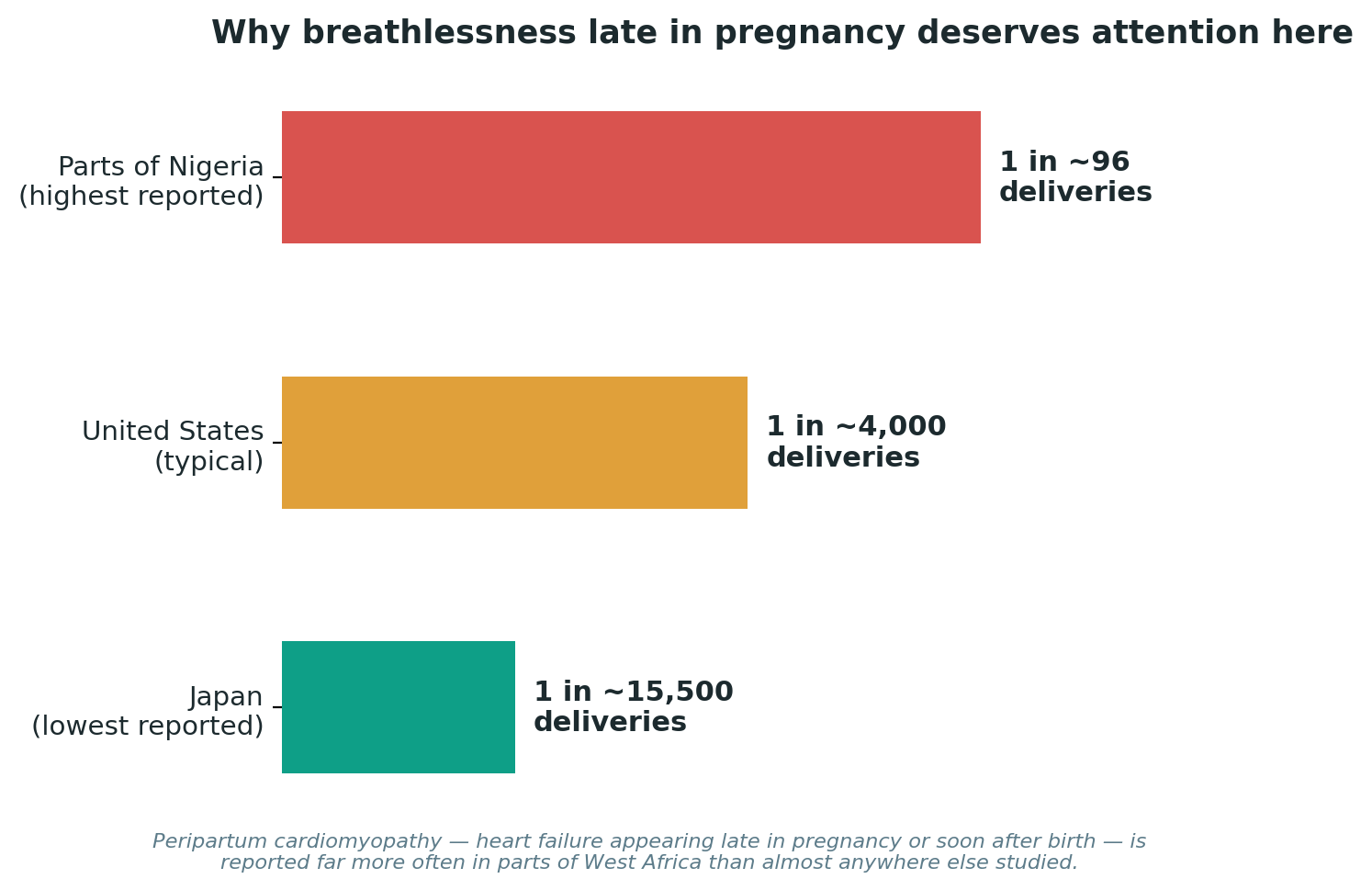
This is not a reason for alarm at ordinary pregnancy tiredness — it is a reason to know the warning signs that go beyond it.
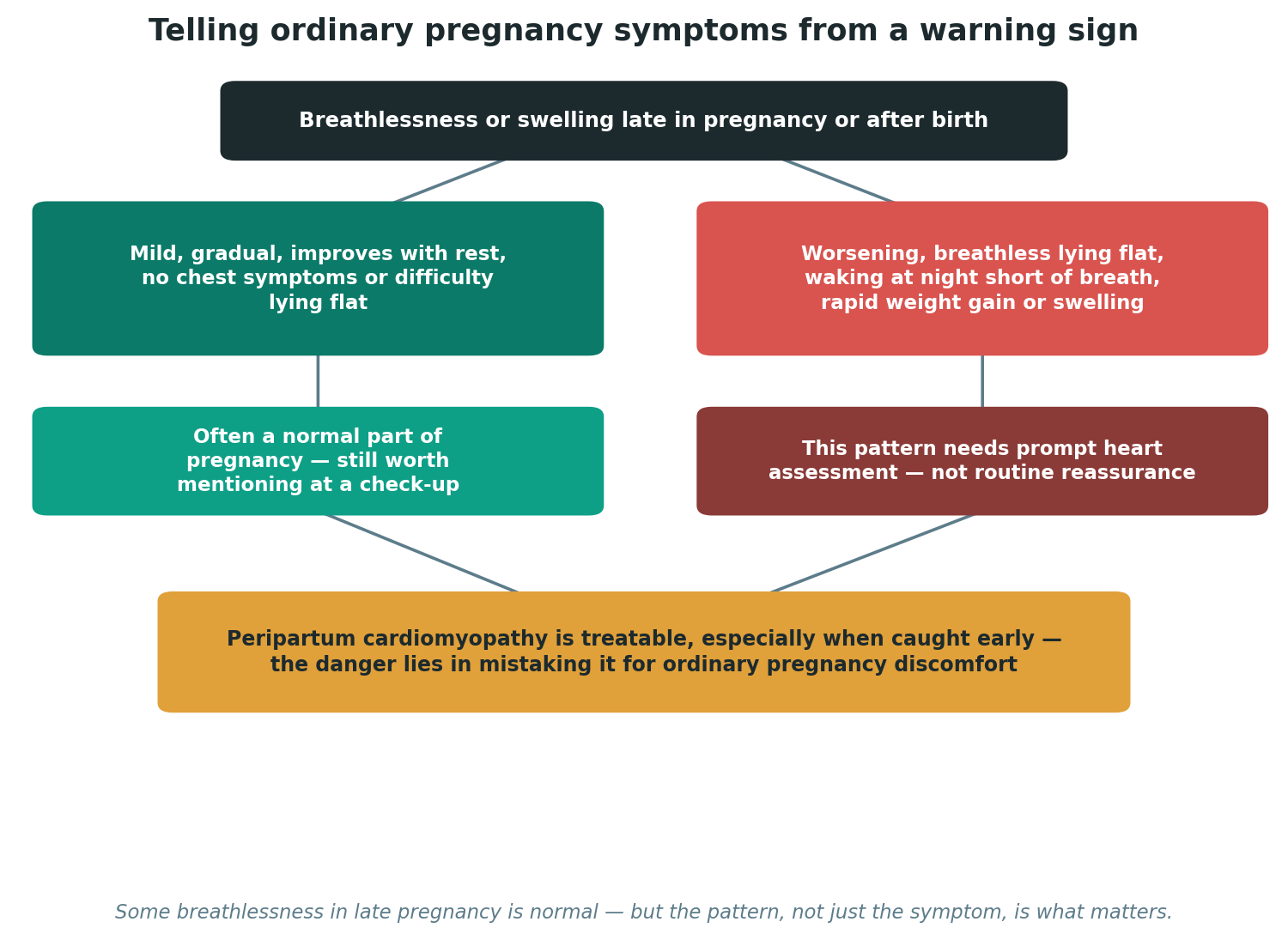
Some breathlessness in late pregnancy is normal — but the pattern, not just the symptom, is what matters.
The encouraging news is that peripartum cardiomyopathy, caught early and treated appropriately, has a real chance of significant recovery, and many women go on to regain substantial heart function. The tragedy in the region's outcome data is not that the condition is untreatable, but that presentation is often delayed until the disease is already advanced.
Choosing the centre
For device therapy — ICD or CRT — ask directly how many of these specific procedures the centre performs each year, and ask for a clear explanation of why a particular device is recommended for your specific heart failure pattern, not a generic recommendation. Confirm that your case is assessed by a genuine heart failure specialist team, including detailed testing of how your heart's chambers are contracting, not simply a general cardiology consultation.
Check accreditation (NABH, ideally JCI), and if peripartum cardiomyopathy is your diagnosis, ask specifically about the centre's experience with this condition, since its management and monitoring during any future pregnancy differs from general heart failure care.
It is also worth asking specifically what medication optimisation was attempted before any device or surgical option was suggested, since guideline- directed medical therapy, given time to take full effect, is the foundation of heart failure treatment and should generally be tried and adjusted before more invasive options are considered, except in specific circumstances your team should explain clearly.
Cost and value: how to weigh the money honestly
Advanced heart failure device therapy in a good Indian hospital costs a small fraction of the equivalent treatment in the West, and India has genuine experience with both ICD and CRT implantation. The saving is real, but device therapy is only appropriate for specific patterns of heart failure — the right diagnosis and assessment matter more than the device itself.
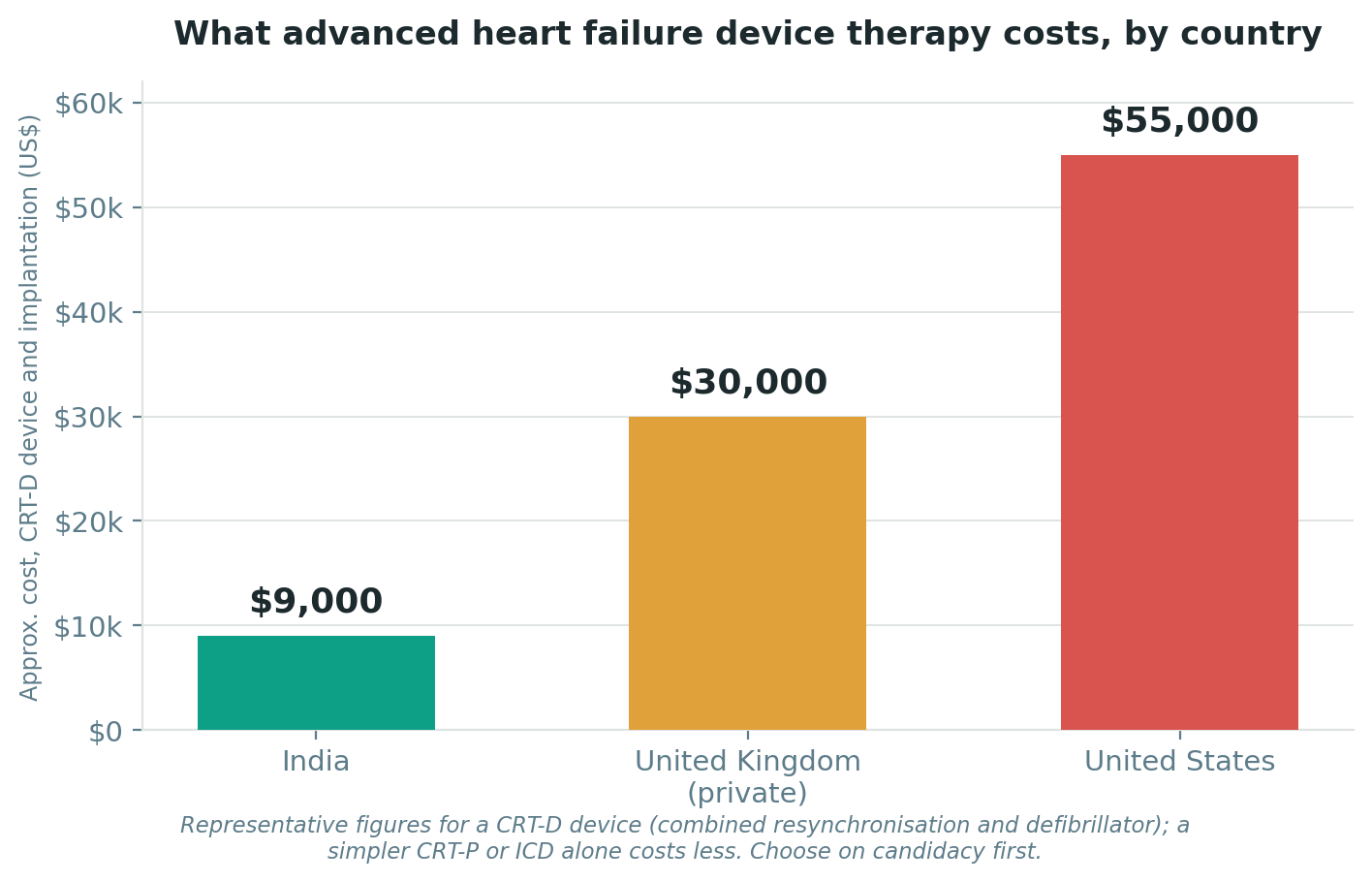
India's affordability is genuine — but confirm the specific device matches your specific heart failure pattern.
In 24 years of arranging these journeys, I have found that patients who understand the underlying cause of their heart failure, not just its symptoms, tend to engage more effectively with long-term treatment. Ask for a written, itemised quote covering assessment, any device required, and follow-up care.
What a Zambian patient should weigh in particular
Beyond the treatment decision itself, several practical matters deserve attention. First, payment: NHIMA funds care at accredited facilities inside Zambia, not treatment abroad, so this comes from your own resources — another reason consistent blood pressure control, which is genuinely achievable and protective, deserves real priority. Second, if you are pregnant or recently gave birth and experience breathlessness that feels different from ordinary tiredness, particularly if it worsens or wakes you at night, seek prompt cardiac assessment rather than assuming it will pass. Third, aftercare: heart failure requires long-term follow-up, so arrange this with a Zambian cardiology team before you travel.
Fourth, if a device is implanted, keep your device identification card with you at all times once home, and share a copy with a family member, since this small piece of paper tells any doctor treating you in an emergency exactly what device you have and what it requires.
The practical journey from Zambia
India requires a yellow fever vaccination certificate from travellers arriving from Zambia, valid only from ten days after the injection. Your medical visa is issued by the High Commission of India on Pandit Nehru Road in Lusaka against the hospital's invitation letter. There is no direct flight from Zambia to India; you will connect through Addis Ababa on Ethiopian Airlines, or through Dubai, Doha or Nairobi. Send your complete cardiac test results, including any echocardiogram reports, for remote review before you travel, since these determine which specific treatment approach is right for you.
Straight answers for Zambian Patients about Heart Failure Treatment and Surgery in India
I have high blood pressure. Does this really put me at risk of heart failure?
Yes — uncontrolled hypertension is the leading cause of heart failure in this region, and consistent, well-managed treatment over years is one of the most protective things you can do for your heart.
I'm pregnant and feeling breathless. Should I be worried?
Mild breathlessness that improves with rest is common in normal pregnancy. But breathlessness that is worsening, occurs lying flat, wakes you at night, or comes with rapid swelling deserves prompt cardiac assessment, not routine reassurance.
Will I need a device implanted for my heart failure?
Not necessarily. Many patients are managed successfully with medication alone, and devices like ICDs or CRT are reserved for specific patterns of heart failure identified through detailed cardiac testing. Ask your team to explain honestly whether your specific situation warrants this.
I had peripartum cardiomyopathy. Can I have more children?
This depends on how much your heart function has recovered, and needs a specific, individual assessment with a cardiologist before any future pregnancy. Some women recover well; for others, future pregnancy carries meaningful risk that should be discussed openly.
Sources
- 🌐 Medical visa, Lusaka — High Commission of India, requirements & process: hcizambia.gov.in/page/medical-visa
- 🌐 Hospital accreditation (India) — Verify a hospital's NABH accreditation: nabh.co
- 🌐 National Health Insurance (Zambia) — NHIMA cover, treatment abroad is not covered: nhima.co.zm
- 🌐 Ministry of Health Zambia — National health services & guidance: moh.gov.zm
- 🌐 National Medical Commission (verify a doctor) — Confirm a doctor's registration in India: nmc.org.in
- 🌐 WHO yellow fever — Vaccination requirements before travel: who.int/health-topics/yellow-fever
A Closing Word
Of everything I help patients understand, this is where recognising the pattern matters as much as any treatment decision — heart failure here often has a different cause, strikes younger, and in pregnancy can be mistaken for something ordinary. If you send me your cardiac test results, I will help you understand honestly what is driving your heart failure, whether device therapy is genuinely appropriate for your specific pattern, and which centres in India have the genuine heart failure expertise to treat you well.
Frequently Asked Questions by Zambian Patients about Heart Failure Treatment and Surgery in India
What is the major cause of heart failure highlighted for this region?
The guide identifies uncontrolled hypertension as a leading cause of heart failure in sub-Saharan Africa and stresses the importance of consistent blood-pressure control.
Will every heart failure patient need surgery or a device?
No. The guide states that many patients are managed with medication optimisation, while ICD and CRT devices are reserved for specific clinical and testing patterns.
What is an ICD?
An implantable cardioverter-defibrillator (ICD) monitors heart rhythm and can deliver a shock when a life-threatening rhythm occurs.
What is CRT?
Cardiac resynchronisation therapy (CRT) is a specialised device treatment designed to help the heart's chambers contract in a more coordinated and efficient way.
What is peripartum cardiomyopathy?
It is a form of heart failure that develops during the last month of pregnancy or in the months after childbirth in women without previous heart disease.
Which pregnancy symptoms require prompt cardiac assessment?
Worsening breathlessness, difficulty breathing while lying flat, waking at night short of breath, rapid weight gain or swelling should prompt cardiac assessment rather than routine reassurance.
How much can advanced device therapy cost in India?
The page 4 chart gives an illustrative CRT-D cost of approximately US$9,000 in India, compared with US$30,000 in the UK and US$55,000 in the USA.
What should Zambian patients send before travelling?
The guide recommends sending complete cardiac test results, including echocardiogram reports, for remote specialist review before travel.
What should patients do after returning to Zambia with a device?
Arrange long-term follow-up with a Zambian cardiology team and keep the device identification card with you, while also giving a copy to a family member.
Can a woman who had peripartum cardiomyopathy have another pregnancy?
The guide states that this depends on how much heart function has recovered and requires individual cardiology assessment before another pregnancy because future pregnancy may carry significant risk for some women.
Page Summary
This guide helps Zambian patients understand heart failure treatment and advanced cardiac device options in India, focusing on underlying causes, medication optimisation, ICD and CRT therapy, peripartum cardiomyopathy, specialist assessment, costs and long-term follow-up. It highlights the stronger contribution of hypertensive heart disease in the cited sub-Saharan African data, while the page 4 chart gives an illustrative CRT-D cost of approximately US$9,000 in India compared with US$30,000 in the UK and US$55,000 in the USA.
Citation Block
| Topic | Information |
|---|---|
| Topic | Heart Failure Treatment & Surgery in India for Zambian Patients |
| Treatment | Heart Failure Treatment, ICD & CRT |
| Patients | Zambian Patients |
| Key Specialist | Heart Failure Cardiologist / Cardiac Team |
| Regional Finding | Hypertensive heart disease ~32% in cited sub-Saharan African registry |
| Primary Approach | Medication optimisation and blood-pressure control |
| Device Options | ICD and CRT |
| ICD Indication | Dangerous rhythm risk despite appropriate treatment |
| CRT Indication | Poorly coordinated ventricular contraction |
| Peripartum Finding | Up to 1 in 96 deliveries in some reported areas of Nigeria |
| India CRT-D Cost | ~US$9,000 |
| UK Cost | ~US$30,000 |
| US Cost | ~US$55,000 |
| Centre Check | Specific ICD/CRT procedure volume |
| Assessment Check | Detailed ventricular-function testing |
| Accreditation | NABH, ideally JCI |
| Pre-Travel Records | Cardiac tests and echocardiogram reports |
| Follow-Up | Zambian cardiology team |
| Device Record | Keep device identification card after implantation |
| Warning Signs | Generic device recommendation, inadequate testing, unclear medication optimisation |
| Travel Check | Yellow-fever certificate and Indian Medical Visa |
| Patient Pathway | Cardiac records → remote review → specialist assessment → medication optimisation/device decision → treatment → long-term follow-up in Zambia |
| Key Decision | Confirm the diagnosis and specific device indication before choosing treatment |


Our Mission Statement
Our mission is to place patients at the centre of every healthcare decision by providing trustworthy, evidence-based, and unbiased medical information. We believe that informed patients make better decisions. Backed by personalised guidance from our experienced advisory team, we help patients understand their treatment options, compare them objectively, and confidently choose the path that best suits their medical needs and personal circumstances.
Patient Testimonials from Zambia


Ready to Take the First Step?
Share your Medical Reports with our Healthcare Managers Today and Get a FREE CONSULTATION, a Personalized Treatment Plan, and Complete Support from Arrival to Recovery.
Get Your Free ConsultationAreas We Serve
This resource has been thoughtfully prepared for patients from Zambia who are considering medical treatment in India. We also welcome patients from the wider region in the countries mentioned below-
We assist patients from:
- Zambia
- Angola
- Malawi
- Zimbabwe
- Botswana
- Namibia
- South Africa
- Eswatini
- Lesotho
- Gabon
- Chad
- Equatorial Guinea
- São Tomé and Príncipe
- Republic of the Congo
- Democratic Republic of the Congo
Many of the insights, treatment pathways, hospital recommendations, travel guidance, and patient support services described here are equally relevant and may be used as a reference when planning treatment in India.
From Zambia to India: Your Complete Patient Support Guide
- Best Weight-Loss (Bariatric) Surgeons & Hospitals in India for Zambian Patients
- Best Brain-Tumour Surgeons & Hospitals in India for Zambian Patients
- Best Cancer Doctors & Hospitals in India for Zambian Patients
- Best Cardiac Surgeons & Hospitals in India for Zambian Patients
- Best Cosmetic Surgeons & Facilities in India for Zambian Patients
- Best CyberKnife Treatment Teams & Centres in India for Zambian Patients
- Best Dentists & Dental Clinics in India for Zambian Patients
- Best Heart Valve Replacement Surgeons & Hospitals in India for Zambian Patients
- Best Hip Surgeons & Hospitals in India for Zambian Patients
- Best Knee Surgeons & Hospitals in India for Zambian Patients
- Best Neurosurgeons & Hospitals in India for Zambian Patients
- Best Paediatric Cardiac Surgeons & Hospitals in India for Zambian Patients
- Best Paediatric Neurosurgeons & Hospitals in India for Zambian Patients
- Best Prostate Surgeons & Hospitals in India for Zambian Patients
- Best Scoliosis Surgeons & Hospitals in India for Zambian Patients
- Best Spine Surgeons & Hospitals in India for Zambian Patients
- Best Bone Marrow Transplant Teams & Hospitals in India for Zambian Patients
- Best Kidney Transplant Surgeons & Hospitals in India for Zambian Patients