

Complex Orthopaedic and Joint Revision Surgery in India for Zambian Patients
Two patients can both have pain after a joint replacement — one because the implant has come loose over time, the other because it has become infected — and confusing the two, even briefly, changes the entire treatment plan.
Joint revision surgery replaces or repairs a hip or knee implant that is no longer working as it should, whether from years of wear, mechanical loosening, a fracture around the implant, or infection. It is a genuinely different undertaking from a first joint replacement — more technically demanding, more variable in what it requires, and dependent from the very first assessment on correctly identifying why the original implant has failed. In 24 years of guiding patients through orthopaedic care abroad, I have found that this single diagnostic distinction, infection or not, shapes almost every decision that follows.
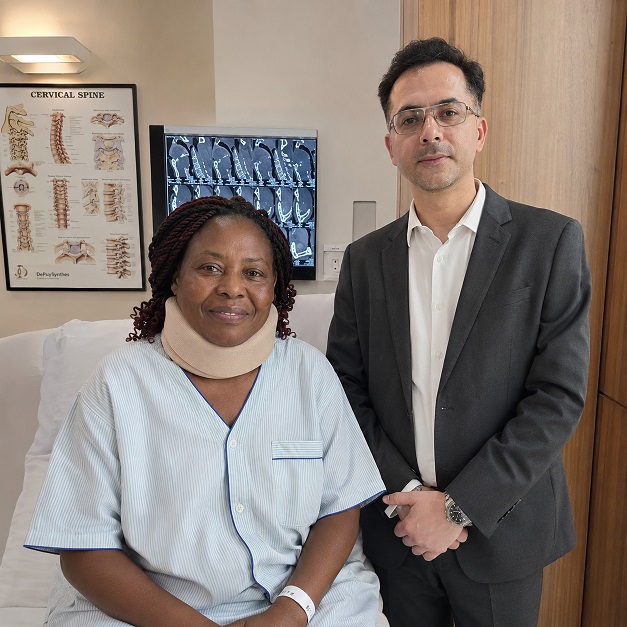
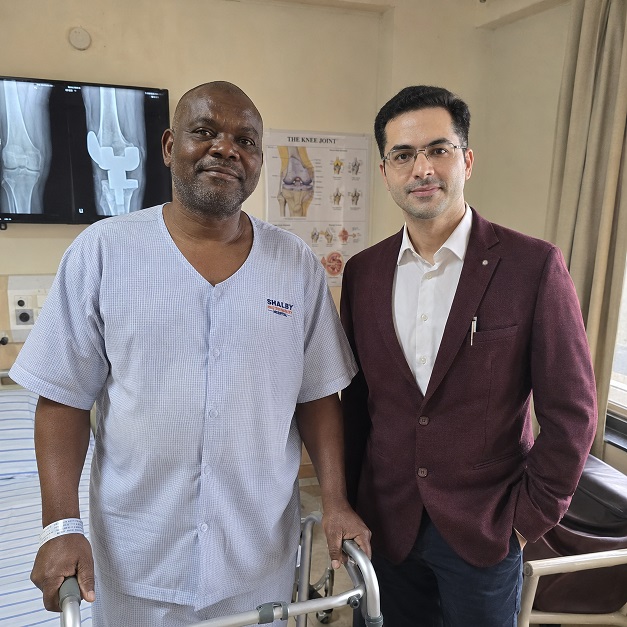
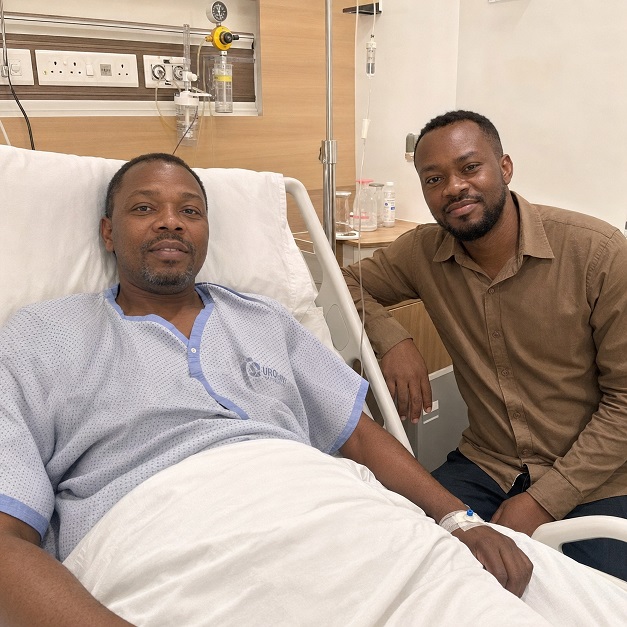
Healing Journeys of Zambian Patients





Key Takeaways
- The guide's central message is that the first and most important question in a failed joint replacement is why the original implant failed. Mechanical loosening, wear or fracture and infection can require substantially different treatment pathways.
- Revision joint replacement is more technically demanding than primary joint replacement because the surrounding bone and soft tissue may already have been altered, with infection, bone loss and scarring adding further complexity.
- The page 1 chart illustrates the difference in future surgical risk, with an approximately 4% risk of further surgery within five years after primary replacement compared with approximately 19% after revision replacement.
- The page 2 comparison explains that confirmed mechanical failure without infection is usually managed with a single-stage revision, while confirmed periprosthetic joint infection usually requires a two-stage approach involving implant removal, an antibiotic-loaded spacer, weeks of antibiotics and later reimplantation.
- The guide strongly emphasises that joint fluid testing should not be skipped. Infection and mechanical failure can sometimes present with overlapping symptoms, so an X-ray or clinical impression alone may not be sufficient.
- The page 3 guidance recommends checking the surgeon's and centre's annual revision hip or knee volumes, because revision surgery is a distinct subspecialty requiring different implants, instruments and experience from primary joint replacement.
- Revision centres should also have access to specialised implants, augments, bone-graft techniques and constrained implant designs, because bone loss around the original implant may need to be addressed during revision.
- Zambian patients should request a written, itemised quotation covering the complete pathway, particularly because two-stage infection revision is more expensive and involves a longer treatment period than single-stage mechanical revision.
- The page 4 cost chart gives representative figures of approximately US$7,000 in India, US$28,000 in the UK and US$55,000 in the US, while emphasising that diagnosis and treatment pathway should come before price comparison.
- The guide specifically advises Zambian patients to bring all original joint-replacement records, including implant brand and model where available, arrange follow-up with a Zambian orthopaedic team and send imaging and available joint-fluid results for remote review before travelling.
Quick Facts
- Treatment
- Complex Orthopaedic and Joint Revision Surgery
- Country
- India
- Patients
- Patients from Zambia
- Key Specialist
- Orthopaedic Joint Revision Surgeon
- Main Procedures
- Hip and Knee Revision Surgery
- Primary Assessment
- Determine Why the Original Implant Failed
- Key Diagnostic Test
- Joint Fluid Testing
- Mechanical Failure
- Usually Single-Stage Revision
- Confirmed Infection
- Usually Two-Stage Revision
- Two-Stage Approach
- Implant Removal → Antibiotic Spacer → Weeks of Antibiotics → Reimplantation
- Primary Replacement Further-Surgery Risk
- Approximately 4% Within 5 Years
- Revision Replacement Further-Surgery Risk
- Approximately 19% Within 5 Years
- Representative India Cost
- Approximately US$7,000
- UK Comparison
- Approximately US$28,000
- US Comparison
- Approximately US$55,000
- Surgeon Check
- Annual Revision Hip or Knee Case Volume
- Hospital Check
- Revision Experience, Accreditation and Specialised Implant Availability
- Bone-Loss Check
- Bone Grafts, Augments and Constrained Implant Options
- Zambia-Specific Check
- Arrange Follow-Up With a Zambian Orthopaedic Team
- Pre-Travel
- Complete Imaging, Joint-Fluid Results and Original Implant Records
- Important Warning
- Do Not Proceed to Revision Without Proper Infection Assessment
- Author
- Dr. Dheeraj Bojwani
- Experience
- 24+ Years
In Brief
For Zambian patients considering complex hip or knee revision surgery in India, the guide recommends confirming why the original joint replacement failed before choosing the surgical approach. Joint-fluid testing is particularly important because infection generally requires a staged revision, while confirmed mechanical loosening or wear without infection is usually treated with a single-stage revision. Patients should also verify revision-specific surgeon and hospital experience, specialised implant and bone-graft capabilities, obtain a written itemised quotation and arrange coordinated orthopaedic follow-up in Zambia.
Why a revision is a genuinely different undertaking
A first hip or knee replacement carries a relatively low chance of needing further surgery in the following years. A revision joint, by contrast, has a meaningfully higher chance of needing yet another procedure down the line, since the surrounding bone and soft tissue have already been altered by the original surgery, and any complicating factor — infection, bone loss, prior scarring — adds further complexity.
This does not mean revision surgery is a poor option, or that it should be avoided. For most patients with a genuinely failed joint replacement, revision offers real, substantial relief from pain and restored function. It does mean the stakes of getting the diagnosis and the surgical approach right the first time are higher than for a straightforward primary replacement, since a revision that itself fails leaves a patient with fewer good options remaining.
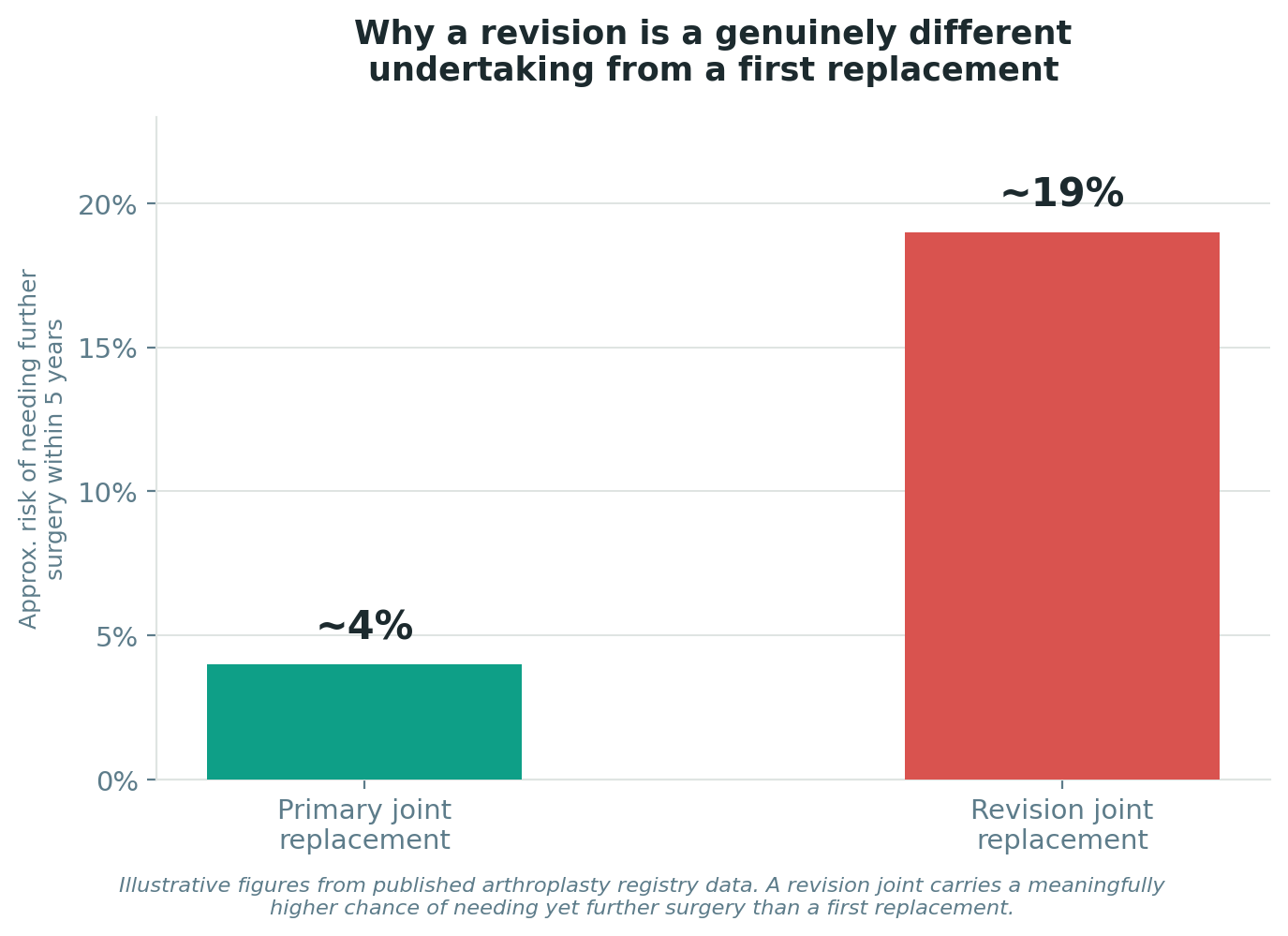
This is not a reason to avoid revision surgery when it's needed — it is a reason to choose the right centre and the right diagnosis from the start.
This is precisely why the first, most important question in any revision case is not what type of implant to use, but why the original one failed. Two very different processes can cause a joint replacement to fail, and they call for two very different surgical plans.
| Your situation | Typical approach | What it involves |
|---|---|---|
| Gradual pain, instability or looseness, years after original surgery, no fever or wound issues | Assessment for aseptic (mechanical) failure | Imaging and joint fluid testing to confirm no infection, then usually a single-stage revision |
| Fever, warmth, swelling, or drainage from the joint at any point after surgery | Urgent assessment for possible infection | Prompt joint fluid sampling; if infection is confirmed, typically a staged surgical approach |
| Confirmed periprosthetic joint infection | Two-stage revision, usually | Removal of the infected implant, an antibiotic-loaded spacer, weeks of antibiotics, then a second operation to reimplant |
| Confirmed mechanical loosening or wear, no infection | Single-stage revision | Removal and replacement of the failed components in one operation |
Why the cause of failure changes the entire plan
When a joint replacement fails because of mechanical wear, loosening, or a fracture around the implant, revision is usually a single operation, similar in overall structure to the original surgery, though technically more demanding. When a joint replacement fails because of infection, the picture is entirely different: most cases require a staged approach — removing the infected implant, placing a temporary antibiotic-releasing spacer, treating with weeks of targeted antibiotics, and only then performing a second operation to implant the new prosthesis once the infection is confirmed cleared. Confusing these two situations, or treating an infected joint as though it were simply loose, can lead to a failed revision and a much harder problem to solve afterward. Some cases fall between these two categories, or genuinely require clinical judgement to classify, since early infection and early mechanical problems can present with overlapping symptoms. This is precisely why joint fluid testing, not simply an X-ray or a clinical impression, is the step that should never be skipped, regardless of how confident an initial assessment might feel.
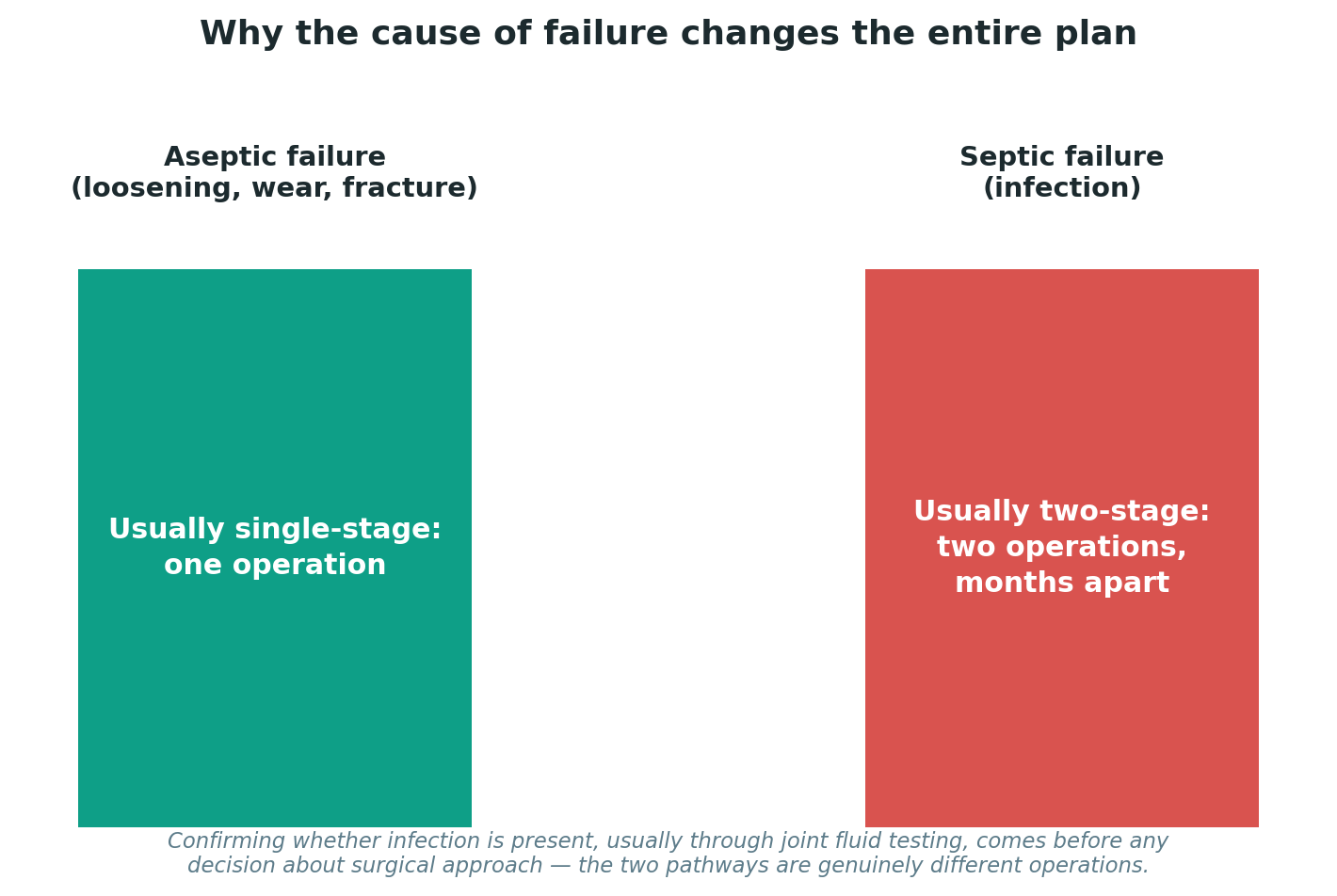
Confirming which situation you are in, through joint fluid testing, always comes before deciding on the surgical approach.
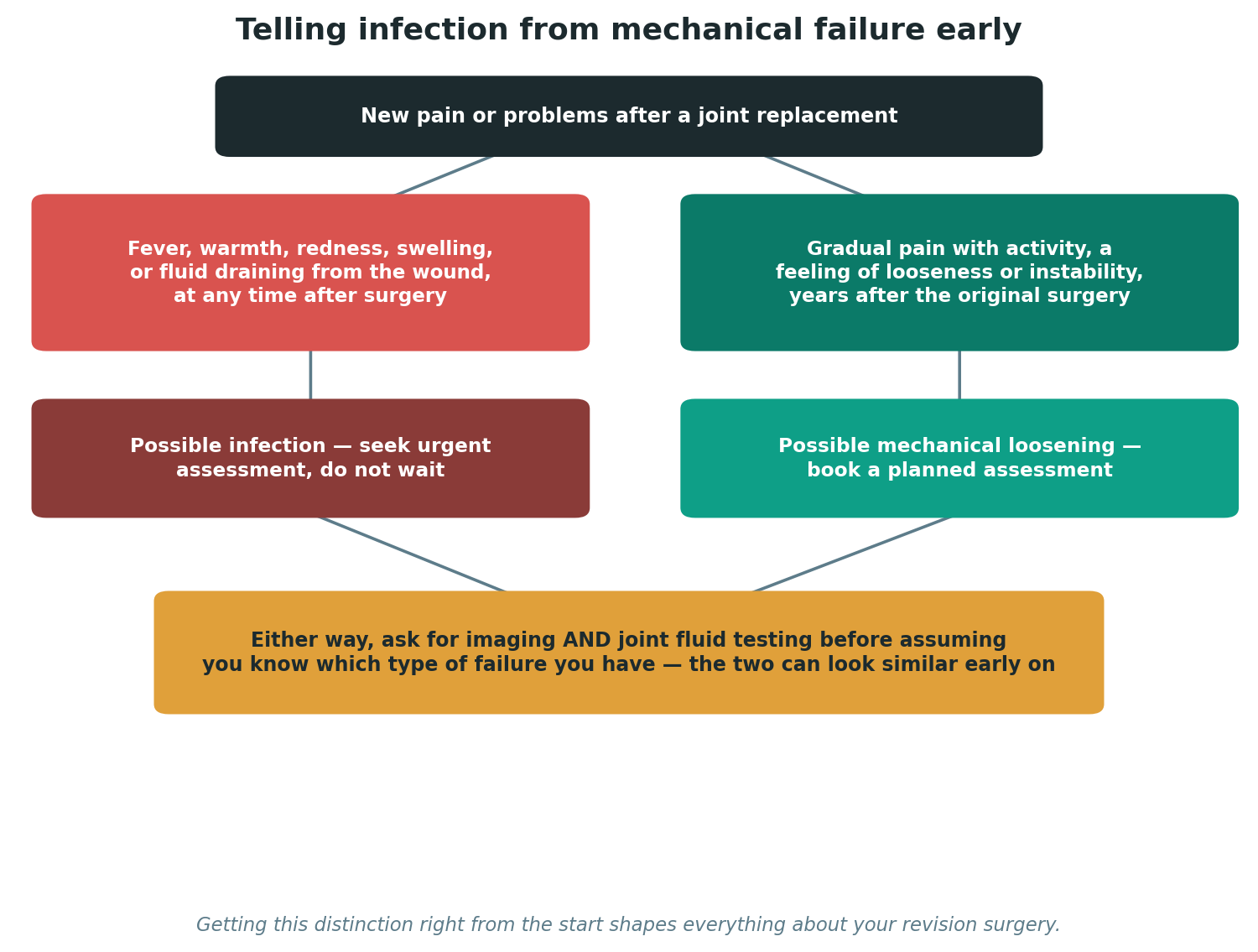
Getting this distinction right from the start shapes everything about your revision surgery.
Choosing the surgeon and the hospital
Ask directly how many revision hip or knee procedures the surgeon and centre perform each year, since this is a distinct subspecialty from primary joint replacement, requiring different implants, instruments and experience. Ask specifically what testing will be done to confirm or rule out infection before any surgical plan is finalised, and be wary of a centre that proceeds straight to surgery without this step.
Check accreditation (NABH, ideally JCI), and if infection is confirmed, ask about the centre's specific experience with two-stage revision and their protocols for confirming the infection has genuinely cleared before reimplantation, since rushing this step risks the entire procedure failing.
It is also worth asking what specialised implants and bone-graft techniques the centre has available, since revision surgery often needs to address bone loss around the original implant site using augments, grafts, or more constrained implant designs not required in a first replacement. A centre with genuine revision experience will discuss this openly rather than treating it as a footnote.
Cost and value: how to weigh the money honestly
Revision joint replacement in a good Indian hospital costs a fraction of the equivalent procedure in the West, and India has centres with genuine experience in both mechanical and infected revision cases. The saving is real, but a two-stage infection revision costs meaningfully more than a single-stage mechanical one, and the correct diagnosis, not the price, should always come first.
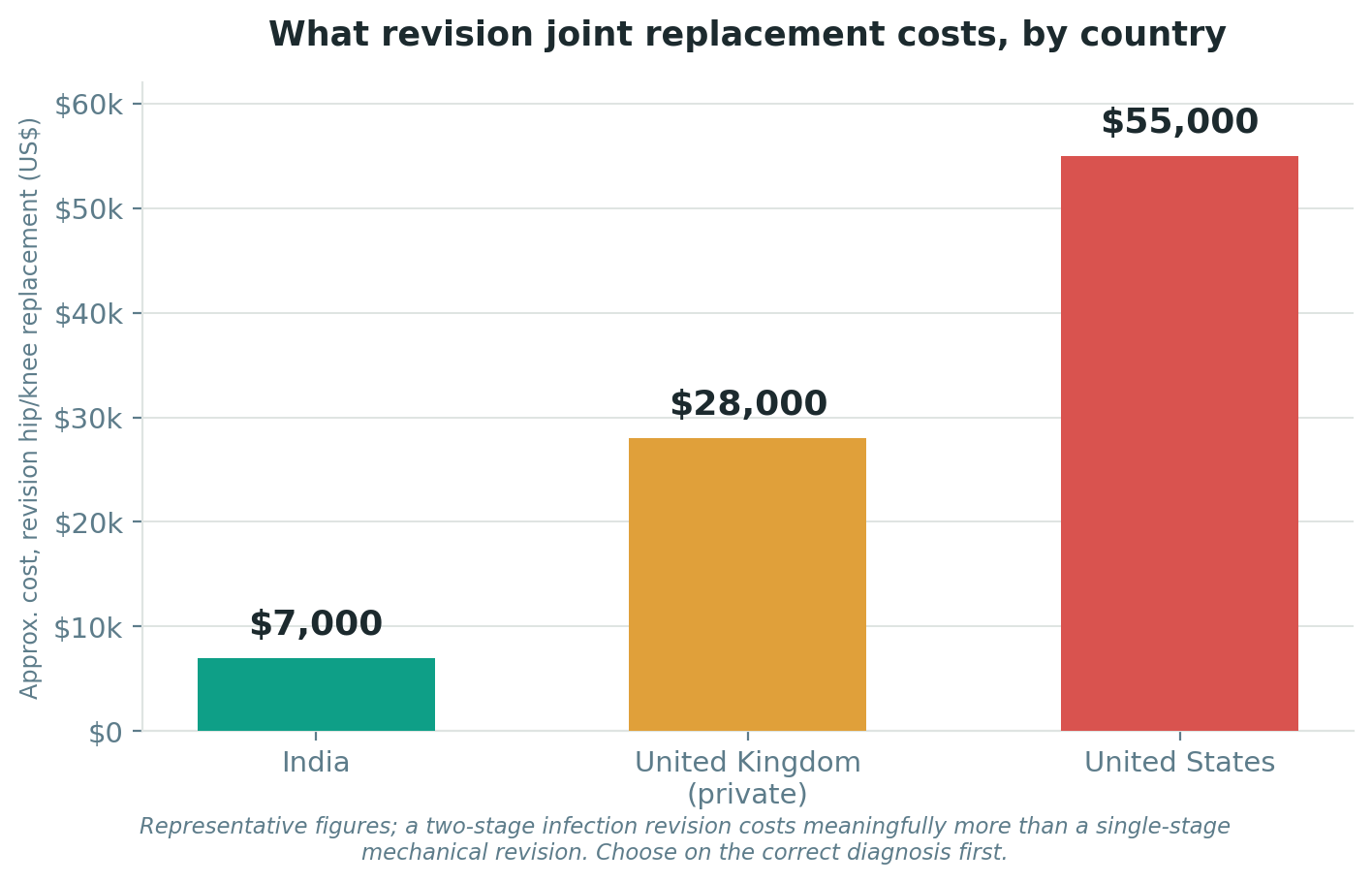
India's affordability is genuine — and confirming the correct diagnosis protects both your joint and your budget.
In 24 years of arranging these journeys, I have found that patients who insist on proper infection testing before any revision surgery avoid the far greater cost, in money and health, of a failed procedure. Ask for a written, itemised quote covering the complete pathway appropriate to your specific diagnosis.
What a Zambian patient should weigh in particular
Beyond the treatment decision itself, several practical matters deserve attention. First, payment: NHIMA funds care at accredited facilities inside Zambia, not treatment abroad, so this comes from your own resources — another reason to insist on a confirmed diagnosis before committing to any specific surgical plan. Second, if you have any fever, wound drainage or new warmth around a joint replacement, seek assessment urgently rather than waiting, since infection can progress while mechanical problems generally allow more time for planning. Third, aftercare: revision surgery, particularly for infection, requires extended follow-up, so arrange this with a Zambian orthopaedic team before you travel.
Fourth, gather and bring every piece of documentation you have about your original joint replacement, including the implant brand and model if it was recorded, since this information can meaningfully affect how straightforward your revision surgery is, and its absence can add both time and complexity to the assessment process.
The practical journey from Zambia
India requires a yellow fever vaccination certificate from travellers arriving from Zambia, valid only from ten days after the injection. Your medical visa is issued by the High Commission of India on Pandit Nehru Road in Lusaka against the hospital's invitation letter; if a two-stage infection revision is likely, plan for an extended-stay medical visa given the weeks between operations. There is no direct flight from Zambia to India; you will connect through Addis Ababa on Ethiopian Airlines, or through Dubai, Doha or Nairobi. Send your complete imaging and, if available, any joint fluid test results for remote review before you travel.
Straight answers for Zambian Patients about Complex Orthopaedic and Joint Revision Surgery in India
How do I know if my joint replacement is infected or just wearing out?
Fever, warmth, redness, swelling or drainage from the wound point toward possible infection and need urgent assessment. Gradual pain with activity and a feeling of instability, years after surgery, without these signs, more often suggests mechanical wear, though proper testing is needed either way to confirm.
Why would I need two separate operations instead of one?
This staged approach is the standard treatment for a confirmed infected joint replacement, since it allows the infection to be properly cleared with a temporary spacer and antibiotics before a new, permanent implant is placed. Attempting to combine these steps risks the infection persisting.
Is revision surgery riskier than my first joint replacement?
Generally yes — it is more technically demanding, and published data shows a meaningfully higher chance of needing further surgery down the line compared with a first replacement. This makes choosing a genuinely experienced revision centre particularly important.
My original surgery was done years ago, possibly not at the best facility. Does that matter now?
It can be genuinely useful information for planning your revision, so share whatever records or details you have, including the original implant type if known. This information doesn't change your options unfavourably, but it can meaningfully help your surgical team plan the best approach.
Sources
- 🌐 Medical visa, Lusaka — High Commission of India, requirements & process: hcizambia.gov.in/page/medical-visa
- 🌐 Hospital accreditation (India) — Verify a hospital's NABH accreditation: nabh.co
- 🌐 National Health Insurance (Zambia) — NHIMA cover, treatment abroad is not covered: nhima.co.zm
- 🌐 Ministry of Health Zambia — National health services & guidance: moh.gov.zm
- 🌐 National Medical Commission (verify a surgeon) — Confirm a surgeon's registration in India: nmc.org.in
- 🌐 WHO yellow fever — Vaccination requirements before travel: who.int/health-topics/yellow-fever
A Closing Word
Of everything I help patients with, this is where getting the diagnosis right, before any surgical decision is made, matters more than almost anything else. If you send me your imaging and any available test results, I will help you understand honestly whether infection is likely, what your realistic surgical pathway looks like, and which centres in India have the genuine revision experience to give you the best possible outcome.
Frequently Asked Questions by Zambian Patients about Complex Orthopaedic and Joint Revision Surgery in India
Why is revision joint replacement different from the first joint replacement? Revision surgery is more technically demanding because bone and soft tissue may already have been altered, while infection, bone loss and scarring can further complicate the procedure.
How can a patient know whether the implant is infected? Fever, warmth, redness, swelling or wound drainage can suggest infection, while gradual pain with activity and instability years later may suggest mechanical failure. Joint-fluid testing is needed to properly confirm the cause.
Why is joint-fluid testing so important? Infection and mechanical failure can sometimes produce overlapping symptoms. The guide therefore recommends joint-fluid testing before finalising the surgical approach.
When is single-stage revision usually performed? When the joint replacement has confirmed mechanical loosening or wear without infection, revision is usually performed in one operation.
Why does an infected joint usually require two operations? The infected implant is removed and an antibiotic-loaded spacer is placed, followed by weeks of targeted antibiotics. A second operation is then performed to implant the new prosthesis after the infection has been cleared.
What should Zambian patients ask a revision surgeon? They should ask how many hip or knee revisions the surgeon performs each year, how infection is assessed, which revision approach is recommended and what specialised implants or bone-graft techniques may be required.
Why should the hospital's revision experience be checked separately? Revision surgery requires specialised implants, instruments, grafts and other resources that may not be routinely needed for primary joint replacement.
How much does revision joint replacement cost in India? The guide gives a representative figure of approximately US$7,000 in India, compared with approximately US$28,000 in the UK and US$55,000 in the US. Actual costs vary by diagnosis and complexity.
What records should Zambian patients bring to India? Patients should bring all available records from the original replacement, including the implant brand and model where known, imaging and any previous joint-fluid test results.
What are the main warning signs when choosing a revision centre? Warning signs include proceeding without proper infection testing, inability to provide revision-specific experience, no clear plan for two-stage infection treatment and no structured follow-up arrangement in Zambia.
Page Summary
This guide explains how Zambian patients can approach complex hip and knee joint revision surgery in India, with the diagnosis of implant failure presented as the most important first step. The page 1 chart compares approximately 4% further-surgery risk after primary replacement with approximately 19% after revision replacement within five years. The page 2 diagram shows why the treatment pathway changes according to the cause: mechanical failure generally leads to a single-stage revision, while confirmed infection usually requires two stages separated by antibiotic treatment. The page 3 flowchart reinforces the importance of imaging and joint-fluid testing before assuming the cause of failure, while also recommending revision-specific surgeon and hospital evaluation. The page 4 chart gives representative costs of approximately US$7,000 in India, US$28,000 in the UK and US$55,000 in the US. The guide also highlights implant records, medical visa planning, yellow-fever requirements and coordinated follow-up in Zambia.
Citation Block
| Topic | Information |
|---|---|
| Topic Information | Complex Orthopaedic and Joint Revision Surgery in India for Zambian Patients |
| Treatment | Complex Orthopaedic and Joint Revision Surgery |
| Intended Audience | Patients from Zambia |
| Key Specialist | Orthopaedic Joint Revision Surgeon |
| Main Procedures | Hip and Knee Revision Surgery |
| Primary Assessment | Identify Why the Original Joint Replacement Failed |
| Key Diagnostic Test | Joint Fluid Testing |
| Mechanical Failure | Usually Single-Stage Revision |
| Confirmed Infection | Usually Two-Stage Revision |
| Two-Stage Pathway | Implant Removal → Antibiotic Spacer → Weeks of Antibiotics → Reimplantation |
| Primary Replacement Risk | Approximately 4% Further Surgery Within 5 Years |
| Revision Replacement Risk | Approximately 19% Further Surgery Within 5 Years |
| Surgeon Check | Annual Revision Hip and Knee Procedure Volume |
| Hospital Check | Revision-Specific Experience and Accreditation |
| Implant Check | Specialised Revision Implants and Constrained Designs |
| Bone-Loss Check | Availability of Bone Grafts and Augments |
| Infection Check | Confirm Infection Status Before Finalising Surgical Plan |
| Cost Check | Request a Written, Itemised Quote for the Complete Diagnosis-Specific Pathway |
| India Cost Reference | Approximately US$7,000 Representative Figure |
| Zambia-Specific Check | Arrange Extended Follow-Up With a Zambian Orthopaedic Team |
| Records Check | Bring Original Implant Brand, Model and Previous Surgery Records Where Available |
| Travel Check | Yellow-Fever Certificate and Medical Visa Requirements |
| Important Warning | Do Not Treat a Potentially Infected Joint as Simple Mechanical Loosening Without Proper Testing |
| Pre-Travel Requirement | Send Complete Imaging and Available Joint-Fluid Results for Remote Review |
| Patient Journey | Diagnosis → infection assessment → revision planning → surgeon/hospital evaluation → travel → revision surgery → recovery → Zambian follow-up |
| Follow-Up | Coordinated Orthopaedic Care in Zambia |


Our Mission Statement
Our mission is to place patients at the centre of every healthcare decision by providing trustworthy, evidence-based, and unbiased medical information. We believe that informed patients make better decisions. Backed by personalised guidance from our experienced advisory team, we help patients understand their treatment options, compare them objectively, and confidently choose the path that best suits their medical needs and personal circumstances.
Patient Testimonials from Zambia


Ready to Take the First Step?
Share your Medical Reports with our Healthcare Managers Today and Get a FREE CONSULTATION, a Personalized Treatment Plan, and Complete Support from Arrival to Recovery.
Get Your Free ConsultationAreas We Serve
This resource has been thoughtfully prepared for patients from Zambia who are considering medical treatment in India. We also welcome patients from the wider region in the countries mentioned below-
We assist patients from:
- Zambia
- Angola
- Malawi
- Zimbabwe
- Botswana
- Namibia
- South Africa
- Eswatini
- Lesotho
- Gabon
- Chad
- Equatorial Guinea
- São Tomé and Príncipe
- Republic of the Congo
- Democratic Republic of the Congo
Many of the insights, treatment pathways, hospital recommendations, travel guidance, and patient support services described here are equally relevant and may be used as a reference when planning treatment in India.
From Zambia to India: Your Complete Patient Support Guide
- Best Weight-Loss (Bariatric) Surgeons & Hospitals in India for Zambian Patients
- Best Brain-Tumour Surgeons & Hospitals in India for Zambian Patients
- Best Cancer Doctors & Hospitals in India for Zambian Patients
- Best Cardiac Surgeons & Hospitals in India for Zambian Patients
- Best Cosmetic Surgeons & Facilities in India for Zambian Patients
- Best CyberKnife Treatment Teams & Centres in India for Zambian Patients
- Best Dentists & Dental Clinics in India for Zambian Patients
- Best Heart Valve Replacement Surgeons & Hospitals in India for Zambian Patients
- Best Hip Surgeons & Hospitals in India for Zambian Patients
- Best Knee Surgeons & Hospitals in India for Zambian Patients
- Best Neurosurgeons & Hospitals in India for Zambian Patients
- Best Paediatric Cardiac Surgeons & Hospitals in India for Zambian Patients
- Best Paediatric Neurosurgeons & Hospitals in India for Zambian Patients
- Best Prostate Surgeons & Hospitals in India for Zambian Patients
- Best Scoliosis Surgeons & Hospitals in India for Zambian Patients
- Best Spine Surgeons & Hospitals in India for Zambian Patients
- Best Bone Marrow Transplant Teams & Hospitals in India for Zambian Patients
- Best Kidney Transplant Surgeons & Hospitals in India for Zambian Patients