

Cancer Treatment in India for Zambian Patients
Cancer is not one disease, and it is not one decision. This guide explains what actually decides whether treatment works — the diagnosis, the stage, the team and the timing — and how Zambian patients can get all four right.
o word empties a room of hope faster than “cancer.” Yet in 24 years of guiding patients across Africa through it, I Nhave watched that fear do more harm than the disease in its early stages — fear that delays the biopsy, hides the diagnosis from the family, and lets a curable cancer grow into one that is not. So let me begin with the most important truth in this whole guide: a great many cancers are curable when they are caught and treated properly and in time. The task is not to panic and not to freeze, but to move quickly and in the right order. This guide is written to show you that order.
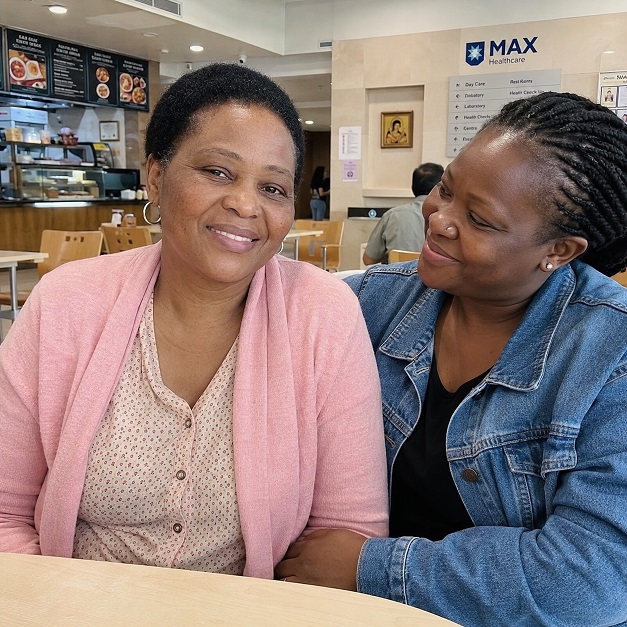
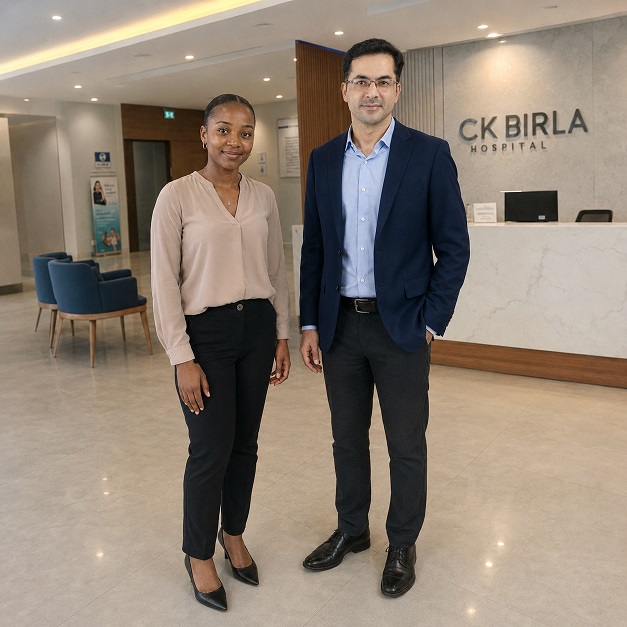
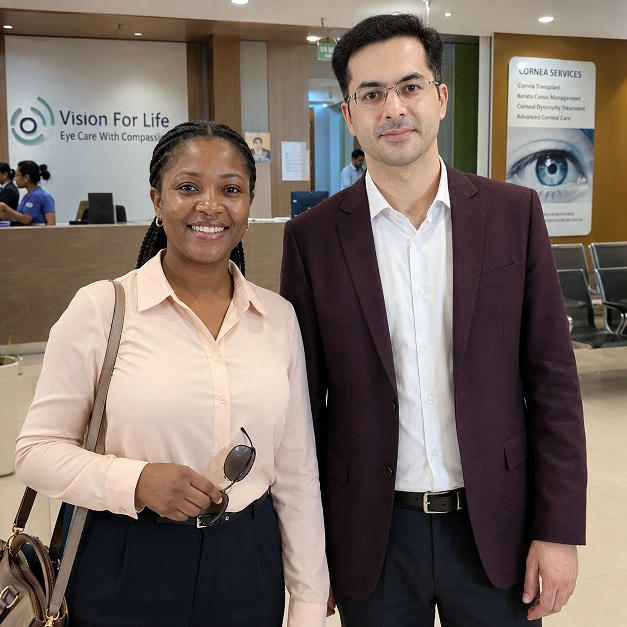
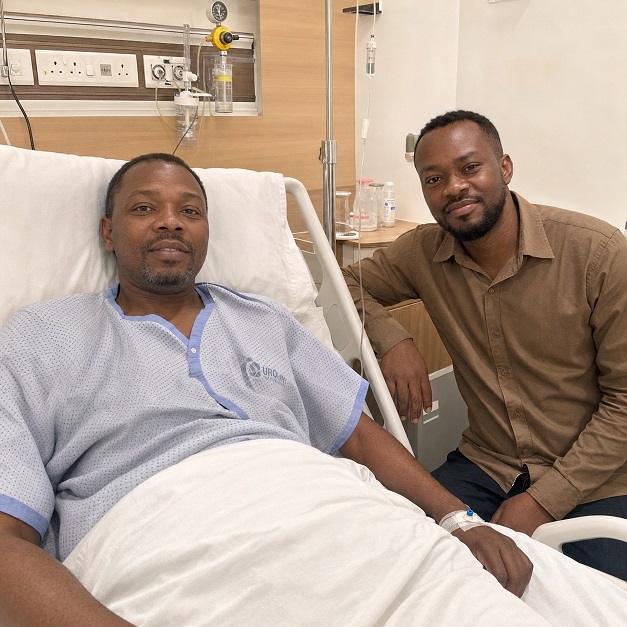
Healing Journeys of Zambian Patients
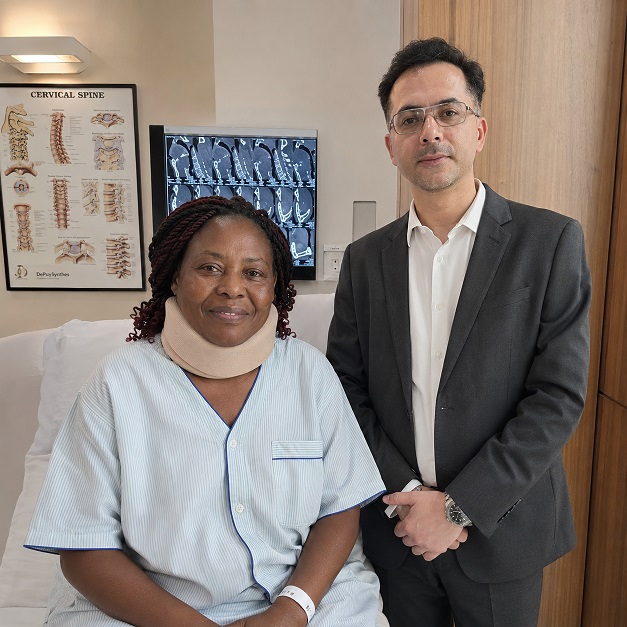
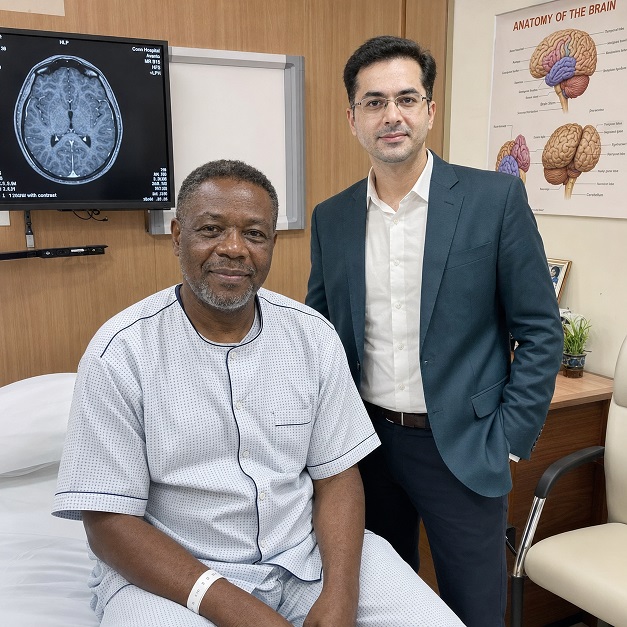
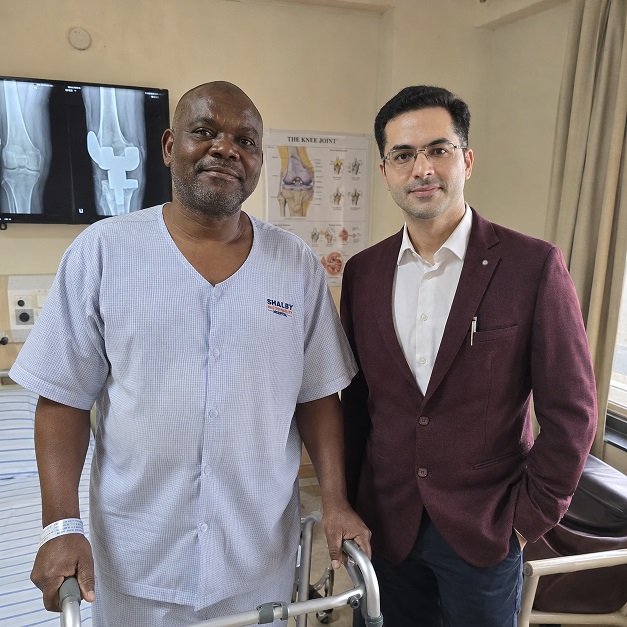
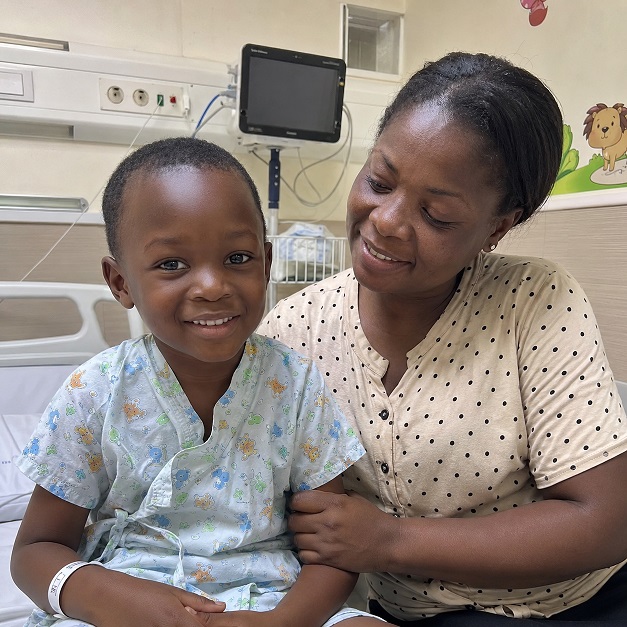
Key Takeaways
- Cancer treatment should begin with two essential questions: what exactly is the cancer, and what stage is it? The guide emphasises that treatment, hospital selection and cost should not be decided until both questions have been properly answered.
- An exact diagnosis is established from tissue. Zambian patients are advised to send their actual biopsy blocks and slides, rather than relying only on a written pathology report, so an expert pathologist can review the tissue and perform additional molecular testing when required.
- The second critical step is cancer staging. Scans determine how far the disease has spread and help establish whether treatment is intended to cure the cancer or control it.
- The page 2 chart illustrates how strongly stage can affect outcomes using breast cancer as an example. It shows illustrative 5-year survival of 99% for Stage I, 90% for Stage II, 72% for Stage III and 30% for Stage IV. These figures are illustrative for breast cancer rather than survival estimates for every cancer.
- The guide stresses that modern cancer treatment should be planned by a multidisciplinary tumour board, rather than by one doctor alone.
- The tumour board described in the document includes a surgeon, medical oncologist, radiation oncologist, pathologist and radiologist, who jointly decide the appropriate treatment sequence.
Quick Facts
- Treatment
- Comprehensive Cancer Treatment
- Country
- India
- Intended Audience
- Zambian Patients
- First Requirement
- Accurate Tissue Diagnosis
- Second Requirement
- Complete Cancer Staging
- Pathology Review
- Actual Biopsy Blocks and Slides Recommended
- Additional Diagnostic Testing
- Molecular Tests Where Required
- Treatment Planning
- Multidisciplinary Tumour Board
- Tumour Board Specialists
- Surgeon, Medical Oncologist, Radiation Oncologist, Pathologist and Radiologist
- Advanced Radiotherapy Mentioned
- IMRT, Image-Guided Radiotherapy and Brachytherapy
- Illustrative 5-Year Survival – Stage I Breast Cancer
- 99%
- Illustrative 5-Year Survival – Stage II Breast Cancer
- 90%
- Illustrative 5-Year Survival – Stage III Breast Cancer
- 72%
- Illustrative 5-Year Survival – Stage IV Breast Cancer
- 30%
In Brief
Cancer treatment in India for Zambian patients should begin with an accurate tissue diagnosis and complete staging, followed by multidisciplinary tumour-board planning. Treatment may include surgery, chemotherapy, radiotherapy, targeted therapy or immunotherapy, depending on the exact cancer and its stage. The guide's page 4 chart gives a representative US$8,000 surgery-plus-chemotherapy cost in India, while stressing that actual treatment costs vary significantly according to cancer type, stage, treatment cycles and supportive care.
First, should you travel at all?
Zambia has a real and growing cancer service. The Cancer Diseases Hospital in Lusaka, opened in 2007, is the national referral centre and has diagnosed and treated tens of thousands of patients; it offers surgery, chemotherapy, radiotherapy and screening under one roof. For many patients, especially those caught early, treatment at home is the right choice, and I will say so plainly. But the honest picture is that this is the country’s one public radiotherapy centre for a nation of some twenty million people; waiting lists are long, and radiotherapy services have suffered equipment breakdowns in recent years. Outside Lusaka the gaps widen — some provincial hospitals cannot even analyse a tissue sample locally. When a cancer needs prompt, complex or multi-part treatment and time is the enemy, those constraints matter.
Knowledge first: the diagnosis and the stage decide everything
Before any talk of treatment, of hospitals, or of cost, two questions decide your entire path — and a shocking number of patients begin treatment before either is properly answered.
The first is the exact diagnosis . “Cancer” is not a diagnosis; it is a family of hundreds of different diseases, and the precise type — established from a tissue sample examined under the microscope, increasingly with molecular tests — dictates which treatment will work and which will do nothing. This is why you must always send the tissue itself — the biopsy blocks and slides — for expert review, not merely a typed report. A second pathologist’s reading changes the diagnosis more often than most people imagine, and the wrong diagnosis means the wrong treatment.
The second question is the stage — how far the cancer has spread — established by scans. Stage is what separates a cancer that can be cured from one that can only be controlled, and it decides whether surgery, radiotherapy, chemotherapy, or a sequence of all three is the right plan. No honest quote and no treatment plan can exist before staging is done. Anyone offering to operate or to price your care without it is guessing with your life.
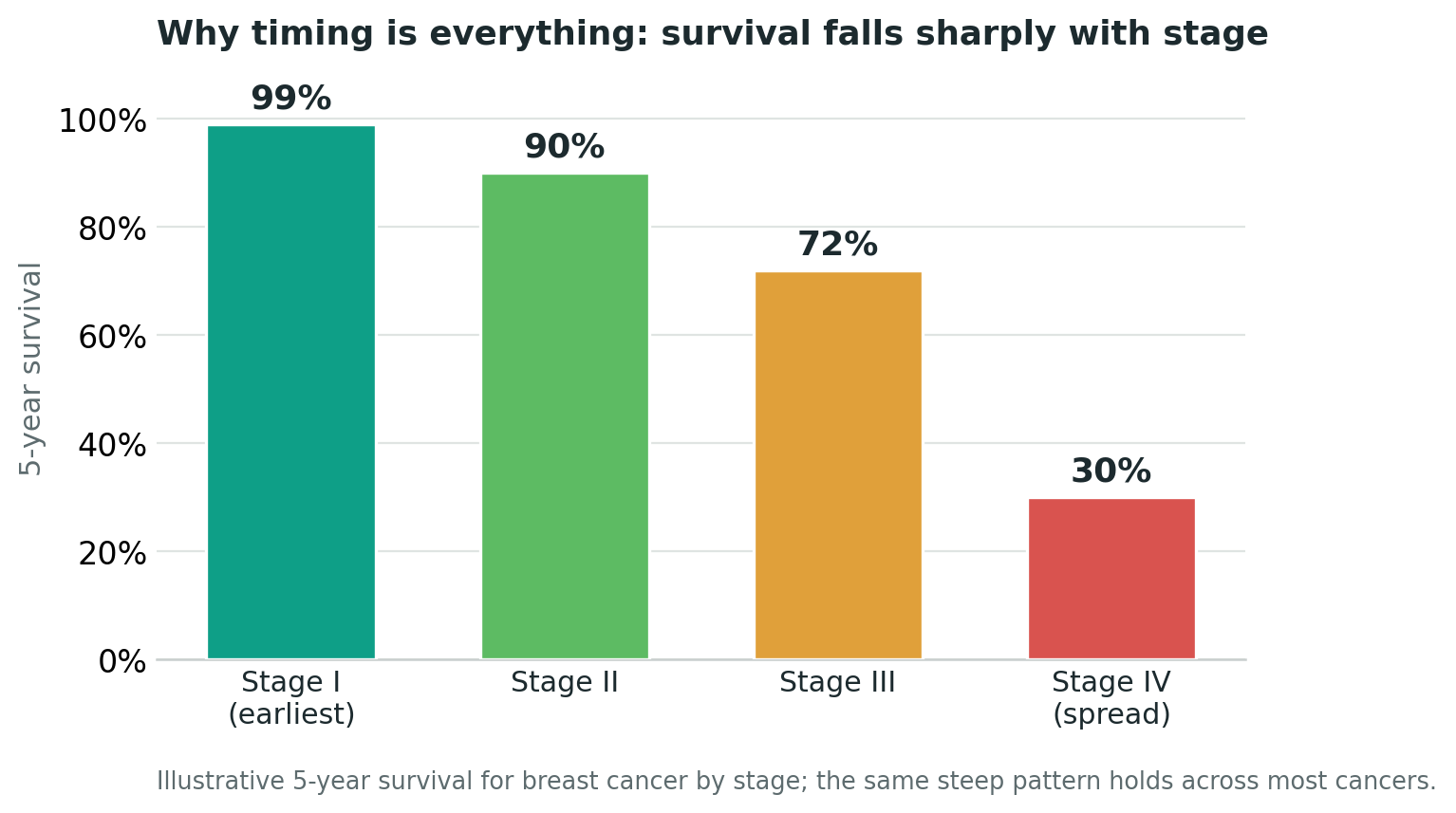
The earlier a cancer is caught, the more likely it is to be cured. This is why speed, not panic, is what saves lives.
The plan should come from a team, not one doctor
Here is a principle every good cancer centre lives by and every patient should demand: modern cancer treatment is planned by a tumour board — a multidisciplinary team in which a surgeon, a medical oncologist, a radiation oncologist, a pathologist and a radiologist sit together and agree your plan. Cancer is too complex for one person to hold all of it. A surgeon alone may reach for surgery; an oncologist alone may reach for drugs. The right answer is usually a carefully ordered combination, and only a team decides that well. When you choose where to be treated, ask directly whether your case will go before a tumour board. In India’s leading cancer hospitals, it always does.
The main treatments, and why the order matters
Cancer is treated with a small number of tools, and the skill lies in choosing which, and in what sequence. Surgery removes a tumour that is contained, and for many solid cancers caught early it is the single most curative step. Radiotherapy uses precisely aimed radiation to destroy cancer cells, either to cure or to shrink a tumour before surgery and mop up after it — it is central to cervical, head-and-neck and many other cancers, which is exactly why access to good radiotherapy matters so much. Chemotherapy and the newer targeted and immunotherapy drugs travel through the whole body to reach cancer that has spread or might. The order is not interchangeable: giving one treatment out of sequence can waste the chance another offered. This is the whole point of the tumour board — to set the right sequence from the start, rather than discovering too late that a step was missed.
The Zambian picture: cancer here is shaped by HIV — and that is workable
Cancer in Zambia does not look quite like cancer in Europe, and understanding why helps you act sooner. The country carries the world’s third-highest burden of cervical cancer — it makes up roughly a quarter of all cancers diagnosed here — and it is driven largely by HIV, which several times over raises a woman’s risk. HIV also lies behind much of Zambia’s Kaposi sarcoma and certain lymphomas. This matters in two practical ways. First, it means screening saves lives: a cervical screen, a breast check, and for men a prostate check can catch these cancers while they are still curable, so do not wait for symptoms. Second, it means your HIV status is part of the plan — and, reassuringly, well-controlled HIV is not a barrier to full cancer treatment. Keep taking your antiretrovirals, bring your latest CD4 and viral-load results, and share them openly so the team can protect you.
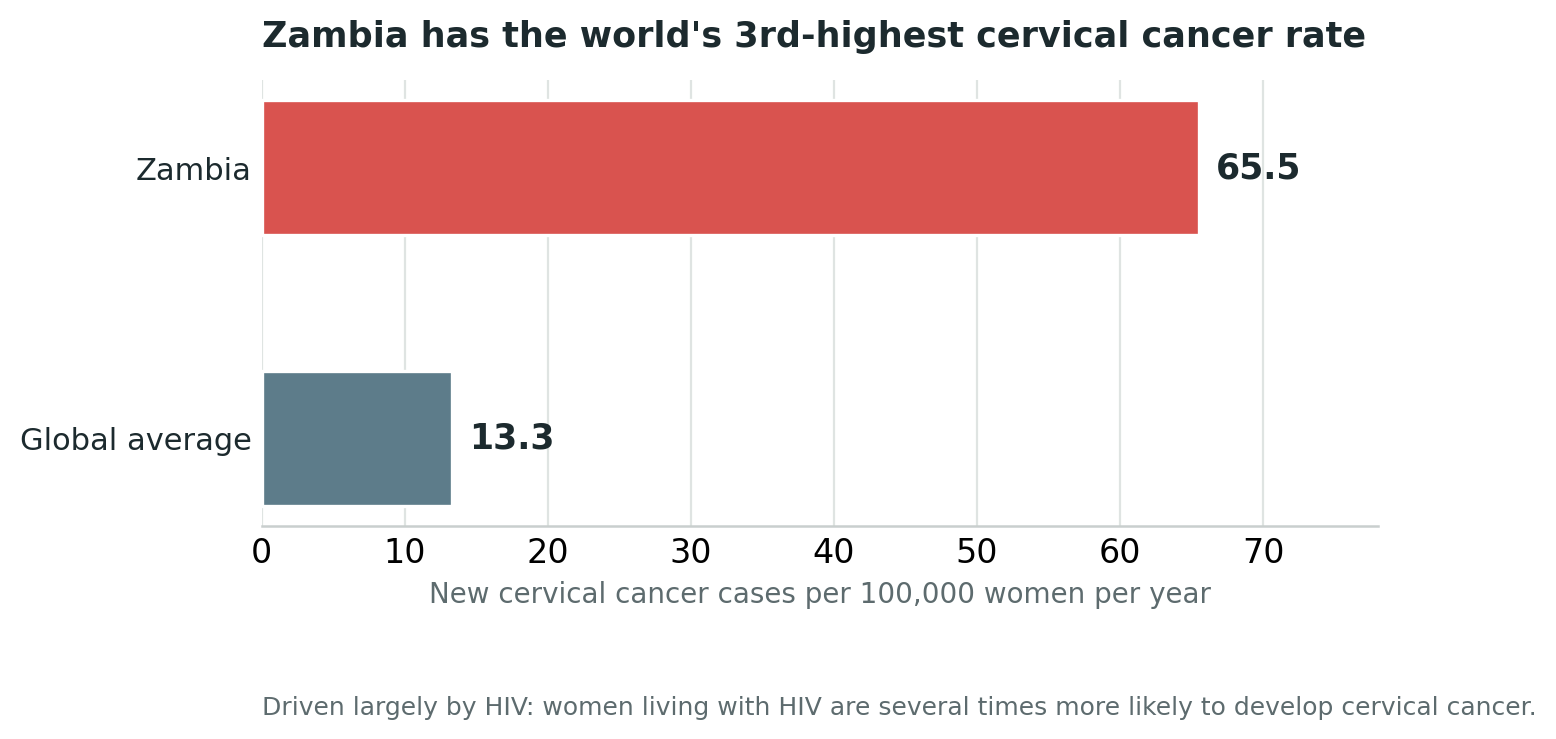
A stark, specific reason not to wait: cervical cancer is common and HIV-linked in Zambia, yet highly preventable and curable when caught early.
Warning signs you should never ignore
You do not need to wait for symptoms — screening is better — but you must never explain away the ones that matter. A lump anywhere, especially in the breast; abnormal bleeding, including any bleeding between periods, after intimacy or after menopause; a sore or ulcer that will not heal; unexplained weight loss; a persistent cough or hoarseness; a change in bowel or bladder habits that lasts more than a few weeks; or difficulty swallowing — any of these deserves prompt medical attention, not months of hoping it passes. Caught at this stage, cancer is at its most curable. And one hard truth spoken with care: abandoning proven treatment for herbal or spiritual cures alone costs Zambian lives every year, because the delay lets a curable cancer become incurable. Faith and family are a source of great strength through treatment — but let them stand alongside proven medicine, not in place of it.
Why India, when the plan is complex
Where India earns its place is depth and speed. Its major cancer hospitals — accredited to international standards, JCI internationally and NABH within India — run high-volume tumour boards and offer the full arsenal on one campus: modern surgery, the current chemotherapy and targeted and immunotherapy drugs, and advanced radiotherapy such as IMRT, image-guided radiotherapy and brachytherapy, with almost no waiting for a machine. For a Zambian patient facing a long radiotherapy queue at home, or a cancer that needs several treatments in a tightly timed sequence, that combination of breadth and speed can be the difference between a plan delivered on time and a plan delayed past the point where it works. English is the working language of care, which removes a barrier patients meet elsewhere.
The cost, in plain terms
Cancer cost varies enormously by type and stage, so treat any single figure with care. As a guide, a full course of treatment — surgery plus chemotherapy, say — in a good Indian hospital often runs a fraction of Western private pricing. At roughly ZK19 to the US dollar in mid-2026, that difference is large in kwacha terms; confirm the rate before travel, as it moves.
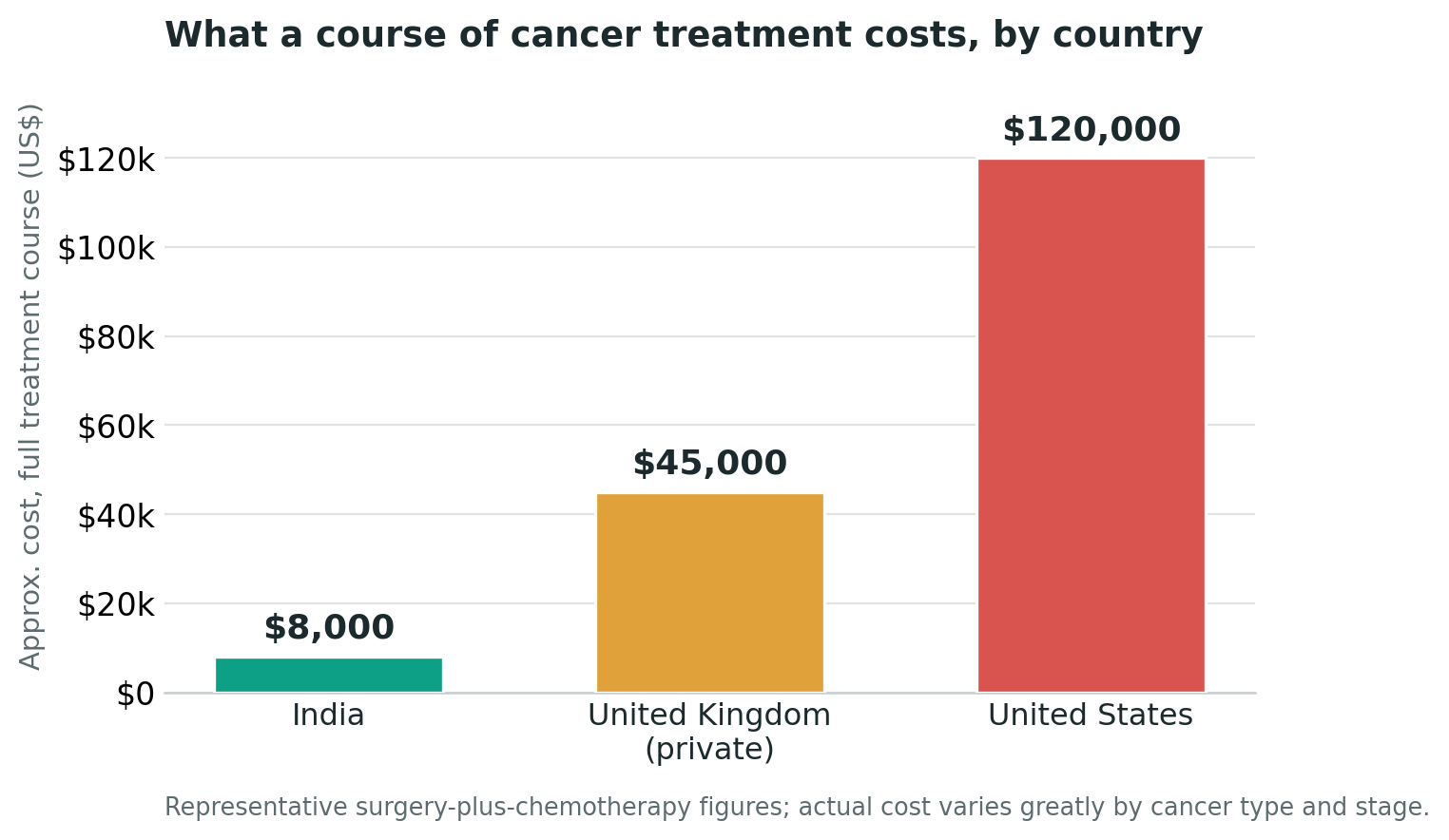
Representative figures only; your actual cost depends entirely on the cancer, its stage and the treatment it needs.
In 24 years of arranging these journeys, I have learned that disputes almost never concern the headline price — they concern what it left out: the number of chemotherapy cycles, the imaging, the supportive medicines, the possibility that the plan changes once treatment begins. Insist on an itemised plan and quote, and ask what happens to the price if the cancer responds differently than hoped.
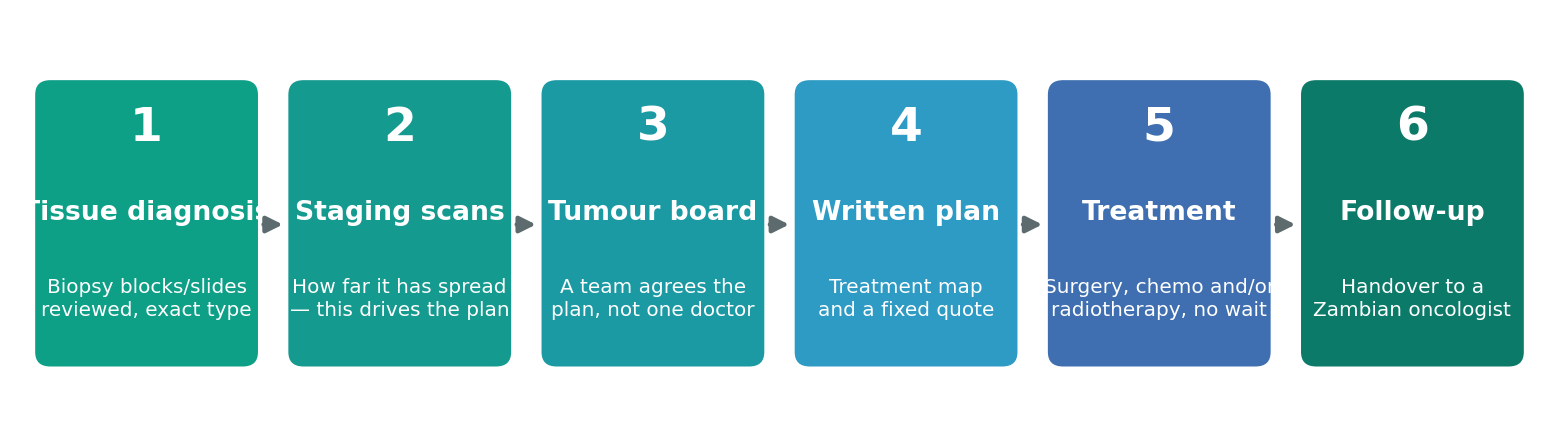
What the journey looks like
Notice that surgery is never step one. The tissue diagnosis and staging come first, then a team-agreed plan, and only then treatment. Send your actual scans and your biopsy material for review from Lusaka, and a good centre will return a plan and a fixed quote before you commit a single kwacha.
You can begin much of this without leaving home. Reputable Indian cancer centres will review your scans and biopsy material remotely and give you a written opinion and plan before you ever board a flight — so you travel with a decision already made, not to go searching for one. Use that. Get a remote second opinion first, compare it with the advice you have received in Zambia, and let the two converge. It costs little, and it means every day and every kwacha you spend after that is spent on treatment, not on uncertainty.
Practicalities for travelling from Zambia
India requires a yellow fever vaccination certificate from travellers arriving from Zambia, valid only ten days after the injection — do not leave it late. Your medical visa is issued by the High Commission of India on Pandit Nehru Road in Lusaka against the hospital’s invitation letter; apply for a medical-attendant visa in the same batch, because cancer treatment is a journey best not taken alone. There is no direct flight — you will connect through Addis Ababa on Ethiopian Airlines, or through Dubai, Doha or Nairobi, a door-to-door journey of roughly fourteen to twenty hours. Cancer treatment may mean several weeks away, or repeated visits, so plan the practicalities early: a changeable ticket, longer-stay accommodation for you and your companion, and your HIV or other medical records carried with you. Above all, bring the biopsy blocks and slides, not just the reports.
On paying for it. Zambia’s National Health Insurance scheme funds care at accredited facilities inside the country, not elective treatment abroad, so cancer care in India will come from your own resources unless a private or employer policy covers it. Ask your insurer in writing before assuming, and budget realistically: cancer treatment can evolve, so build in room for extra cycles or scans rather than only the opening quote.
Four signals that should make you pause
- Treatment proposed before diagnosis is complete — a proper tissue diagnosis and staging scans not yet done.
- A plan made by a single doctor — with no mention of a tumour board or second opinion.
- A fixed price before staging is known — quoted before anyone knows the cancer’s type and stage.
- Pressure to start immediately — without your biopsy material being reviewed, or no follow-up plan for Zambia.
Straight answers for Zambian Patients about Cancer Treatment in India
Is my cancer curable?
It depends far more on the type and stage than on anything else — and many cancers, caught early, are curable. The only way to know is an accurate diagnosis and staging. That is why acting quickly, rather than waiting in fear, is the single most powerful thing you can do.
I am living with HIV. Can I still have cancer treatment?
Yes. With well-controlled HIV, patients receive full cancer treatment and do well. Keep taking your antiretrovirals, bring your latest results, and tell the team openly so they can tailor the plan safely.
Why send the biopsy blocks, not just the report?
Because an expert pathologist re-examining the actual tissue — often with modern molecular tests — sometimes reaches a different, more precise diagnosis, and the diagnosis decides the treatment. It is the cheapest, most important second opinion you can get.
Should I be treated in Zambia or India?
If your cancer is early and straightforward, Zambia may be exactly right. If it needs prompt, complex or tightly sequenced treatment — especially radiotherapy where local queues are long — India’s depth and speed can matter a great deal. Send your scans and let the plan guide the decision.
Sources & Useful Links
- 🌐 Medical visa (India), Lusaka — High Commission of India, requirements & process: hcizambia.gov.in/page/medical-visa
- 🌐 National Health Insurance (Zambia) — NHIMA cover and accredited facilities: nhima.co.zm
- 🌐 Ministry of Health, Zambia — referrals and national health services: moh.gov.zm
- 🌐 University Teaching Hospitals, Lusaka — Zambia’s largest public referral centre: uth.gov.zm
- 🌐 Hospital accreditation (India) — verify a hospital’s NABH accreditation: nabh.co
- 🌐 Yellow fever & travel health — WHO vaccination guidance: who.int/health-topics/yellow-fever
A closing word
If you send me your scans, your biopsy details and a note on your history, I will help you get the two things that matter most first — an accurate diagnosis and an accurate stage — and an honest view of whether your treatment is best done in Zambia or in India. Cancer rewards speed and punishes delay, but it does not reward panic. Move quickly, in the right order, with the right team, and give yourself the best chance the disease allows. That, for all these years, has been my work.
Frequently Asked Questions by Zambian Patients about Cancer Treatment in India
Why do Zambian patients travel to India for cancer treatment?
The guide explains that India may be useful when cancer requires prompt, complex or tightly sequenced treatment, particularly where access to radiotherapy or multiple cancer specialists is important.
How much does cancer treatment in India cost for Zambian patients?
The page 4 chart gives a representative figure of approximately US$8,000 for surgery plus chemotherapy in India. Actual costs vary substantially according to the cancer type, stage and treatment required.
What should Zambian cancer patients do before travelling to India?
Patients should obtain an accurate diagnosis and staging and send their actual scans, biopsy blocks and slides for specialist review. A remote second opinion can help establish a treatment plan before travel.
Why are biopsy blocks and slides important for Zambian cancer patients?
They allow an expert pathologist to re-examine the actual tissue and perform additional testing where needed. The guide emphasises that the exact cancer diagnosis determines which treatment will work.
What cancer treatments are available in India for Zambian patients?
The guide discusses surgery, chemotherapy, radiotherapy, targeted therapy and immunotherapy, with treatment selected according to the cancer type and stage.
Why should cancer treatment be planned by a tumour board?
Cancer treatment often requires several specialties. A tumour board brings together a surgeon, medical oncologist, radiation oncologist, pathologist and radiologist to agree on the appropriate treatment and sequence.
Can Zambian patients living with HIV receive cancer treatment in India?
According to the guide, well-controlled HIV is not automatically a barrier to full cancer treatment. Patients should continue their antiretroviral medicines and provide recent CD4 and viral-load results.
Can Zambian patients receive cervical cancer treatment in India?
Yes. The guide specifically highlights Zambia's high cervical cancer burden. Depending on stage, treatment may involve surgery, radiotherapy, chemotherapy or a combination determined by the oncology team.
How long do Zambian patients need to stay in India for cancer treatment?
There is no single duration. The guide states that cancer treatment may involve several weeks in India or repeated visits, depending on whether the patient needs surgery, chemotherapy, radiotherapy or combined treatment.
What are the red flags when choosing cancer treatment in India?
The guide highlights four warning signs: treatment proposed before proper tissue diagnosis and staging, a plan made by one doctor without tumour-board review, a fixed price quoted before the cancer type and stage are established, and pressure to begin without pathology review or a follow-up plan for Zambia.
Page Summary
This guide explains cancer treatment in India for Zambian patients around one central principle: the diagnosis and stage must be established before treatment begins. Cancer is not one disease, and different cancer types and stages require different treatment strategies. Patients are advised to send their actual biopsy blocks and slides for expert pathology review, rather than relying only on a typed report. Staging scans are then used to determine how far the cancer has spread.
Citation Block
| Topic | Information |
|---|---|
| Topic Information | Details |
| Procedure | Comprehensive Cancer Treatment |
| Country | India |
| Intended Audience | Zambian Patients |
| Diagnosis | Tissue Diagnosis with Expert Pathology Review |
| Staging | Imaging-Based Cancer Staging |
| Pre-Treatment Material | Actual Biopsy Blocks, Slides and Scans |
| Treatment Planning | Multidisciplinary Tumour Board |
| Specialists | Surgeon, Medical Oncologist, Radiation Oncologist, Pathologist and Radiologist |
| Treatments | Surgery, Chemotherapy, Radiotherapy, Targeted Therapy and Immunotherapy |
| Advanced Radiotherapy | IMRT, Image-Guided Radiotherapy and Brachytherapy |
| Cost Variables | Cancer Type, Stage, Treatment Cycles, Imaging, Medicines and Changes to Treatment |
| Typical Stay | Depends on Cancer Type and Treatment; May Require Several Weeks or Repeated Visits |
| Hospital Stay | Depends on Surgery and Individual Treatment Plan |


Our Mission Statement
Our mission is to place patients at the centre of every healthcare decision by providing trustworthy, evidence-based, and unbiased medical information. We believe that informed patients make better decisions. Backed by personalised guidance from our experienced advisory team, we help patients understand their treatment options, compare them objectively, and confidently choose the path that best suits their medical needs and personal circumstances.
Patient Testimonials from Zambia
Ready to Take the First Step?
Share your Medical Reports with our Healthcare Managers Today and Get a FREE CONSULTATION, a Personalized Treatment Plan, and Complete Support from Arrival to Recovery.
Get Your Free ConsultationAreas We Serve
This resource has been thoughtfully prepared for patients from Zambia who are considering medical treatment in India. We also welcome patients from the wider region in the countries mentioned below-
We assist patients from:
- Zambia
- Angola
- Malawi
- Zimbabwe
- Botswana
- Namibia
- South Africa
- Eswatini
- Lesotho
- Gabon
- Chad
- Equatorial Guinea
- São Tomé and Príncipe
- Republic of the Congo
- Democratic Republic of the Congo
Many of the insights, treatment pathways, hospital recommendations, travel guidance, and patient support services described here are equally relevant and may be used as a reference when planning treatment in India.
From Zambia to India: Your Complete Patient Support Guide
- Best Weight-Loss (Bariatric) Surgeons & Hospitals in India for Zambian Patients
- Best Brain-Tumour Surgeons & Hospitals in India for Zambian Patients
- Best Cancer Doctors & Hospitals in India for Zambian Patients
- Best Cardiac Surgeons & Hospitals in India for Zambian Patients
- Best Cosmetic Surgeons & Facilities in India for Zambian Patients
- Best CyberKnife Treatment Teams & Centres in India for Zambian Patients
- Best Dentists & Dental Clinics in India for Zambian Patients
- Best Heart Valve Replacement Surgeons & Hospitals in India for Zambian Patients
- Best Hip Surgeons & Hospitals in India for Zambian Patients
- Best Knee Surgeons & Hospitals in India for Zambian Patients
- Best Neurosurgeons & Hospitals in India for Zambian Patients
- Best Paediatric Cardiac Surgeons & Hospitals in India for Zambian Patients
- Best Paediatric Neurosurgeons & Hospitals in India for Zambian Patients
- Best Prostate Surgeons & Hospitals in India for Zambian Patients
- Best Scoliosis Surgeons & Hospitals in India for Zambian Patients
- Best Spine Surgeons & Hospitals in India for Zambian Patients
- Best Bone Marrow Transplant Teams & Hospitals in India for Zambian Patients
- Best Kidney Transplant Surgeons & Hospitals in India for Zambian Patients