

Selecting the Best Robotic Cancer Surgeons and Hospitals in India — a Zambian Patient's Guide
Ask any surgeon directly how many robotic cases of YOUR specific cancer they have personally performed on the exact platform being used — a specific, confident number reveals experience that genuinely matches your case.
Choosing a surgeon and hospital for robotic cancer surgery means going beyond "does this surgeon use a robotic system" to ask specifically how much experience they have with your exact cancer type on that exact platform. In 24 years of guiding patients through cancer care abroad, I have found that whether robotic technique helps or harms genuinely depends on the specific cancer involved, and general robotic comfort does not guarantee case-specific expertise.
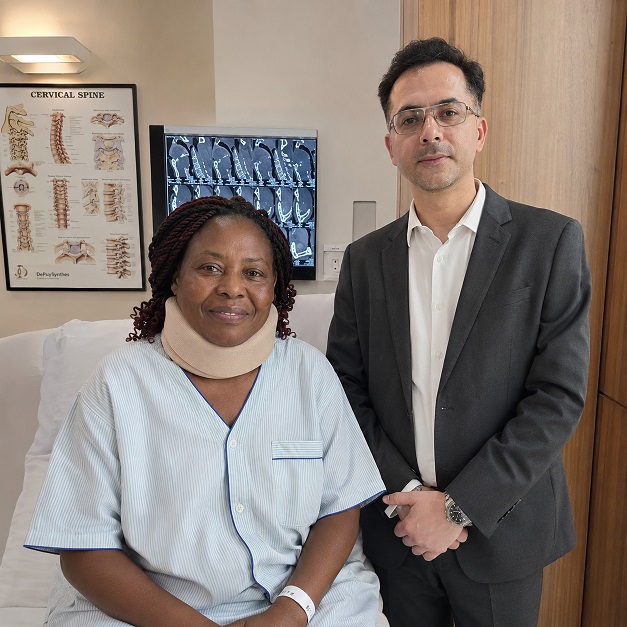
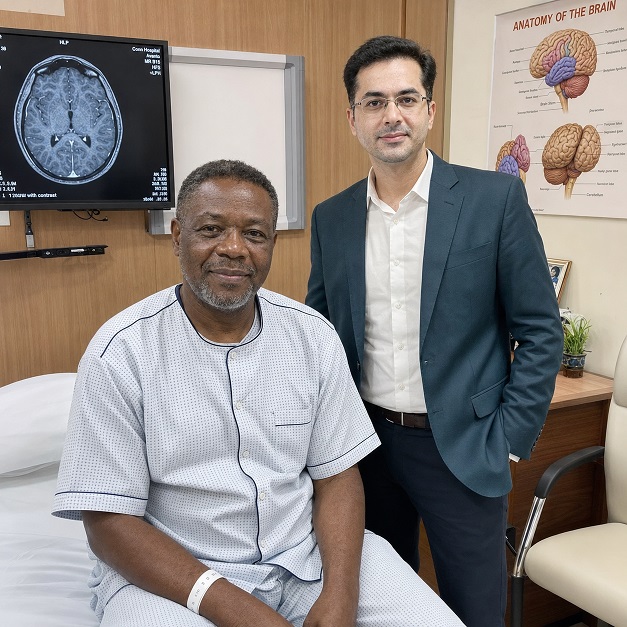
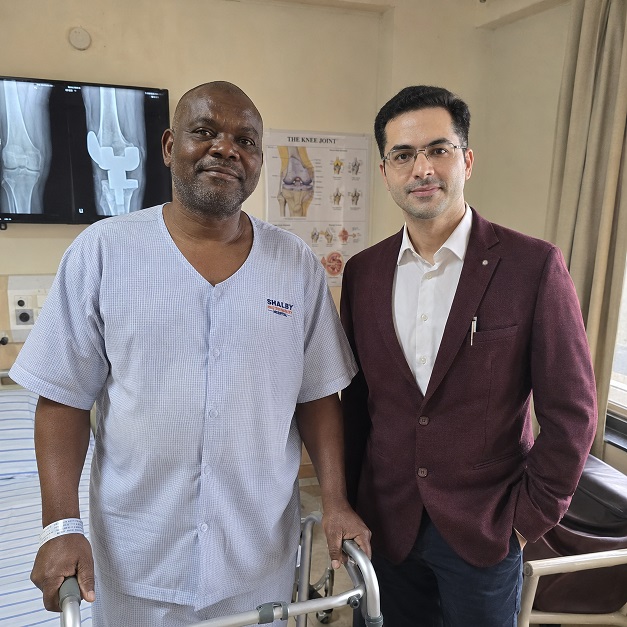
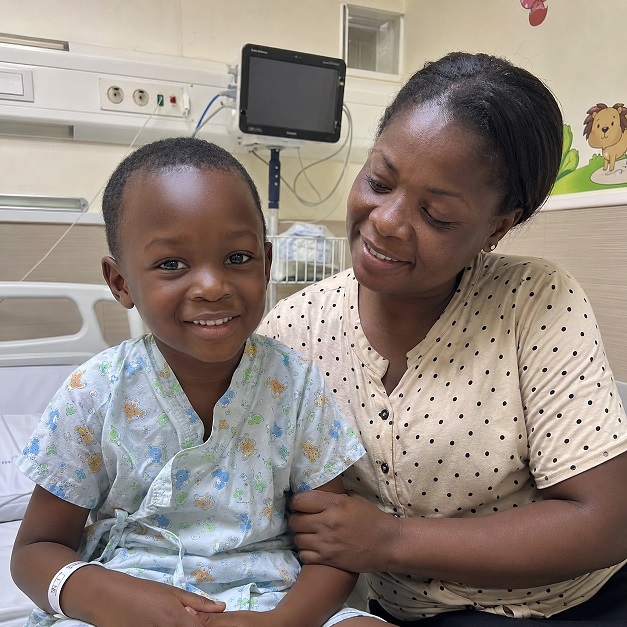
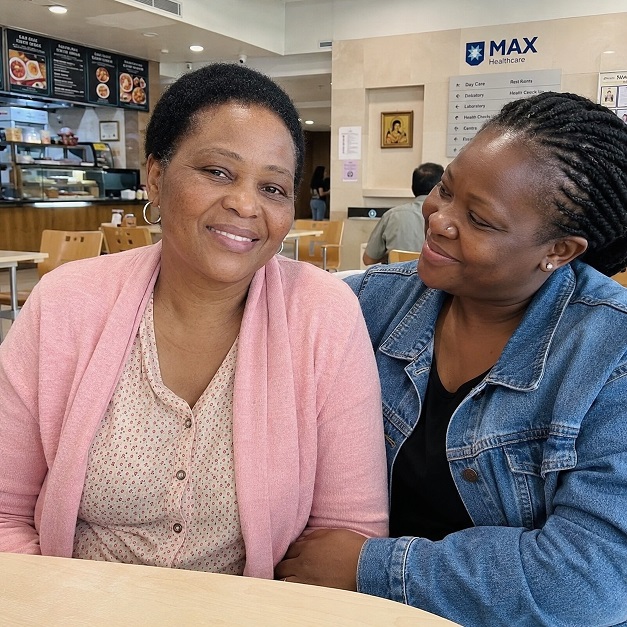
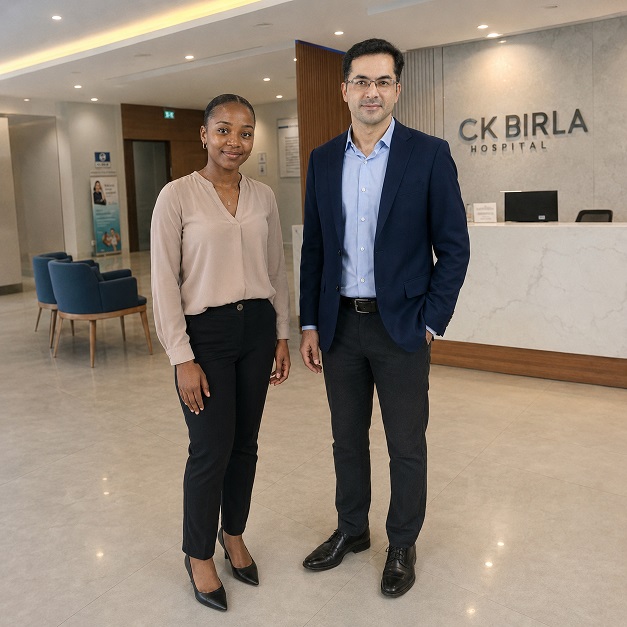
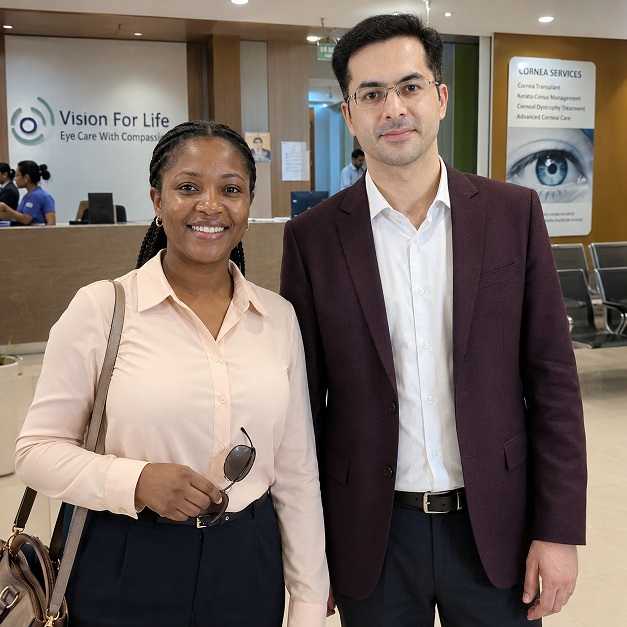
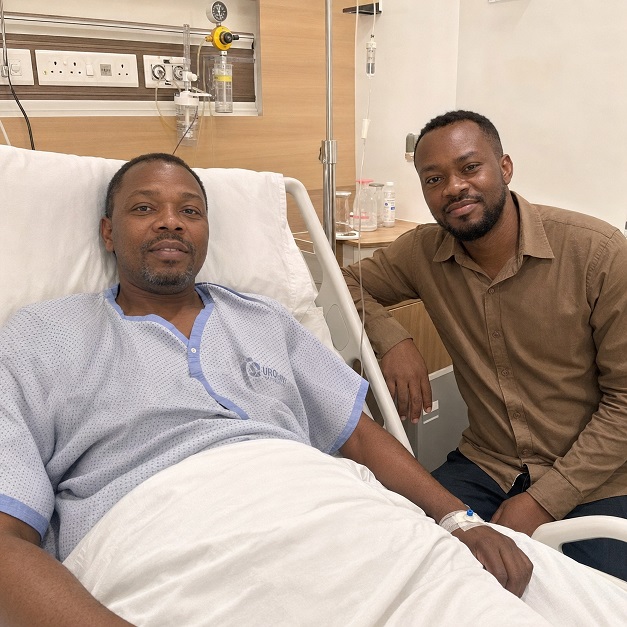
Healing Journeys of Zambian Patients
Key Takeaways
- The guide explains that Zambia has limited local capacity for robotic cancer surgery, largely because of the specialised equipment and training required. Travel to India may therefore be worthwhile when a patient needs robotic cancer surgery, provided the selected surgeon and centre have genuine experience with the patient's specific cancer.
- The guide stresses that general robotic experience is not the same as cancer-specific robotic experience. Robotic surgery has a procedure-specific learning curve, so a surgeon who performs several robotic operations may not necessarily have strong experience with the patient's particular cancer. Patients should ask for the surgeon's personal case count for their exact cancer type.
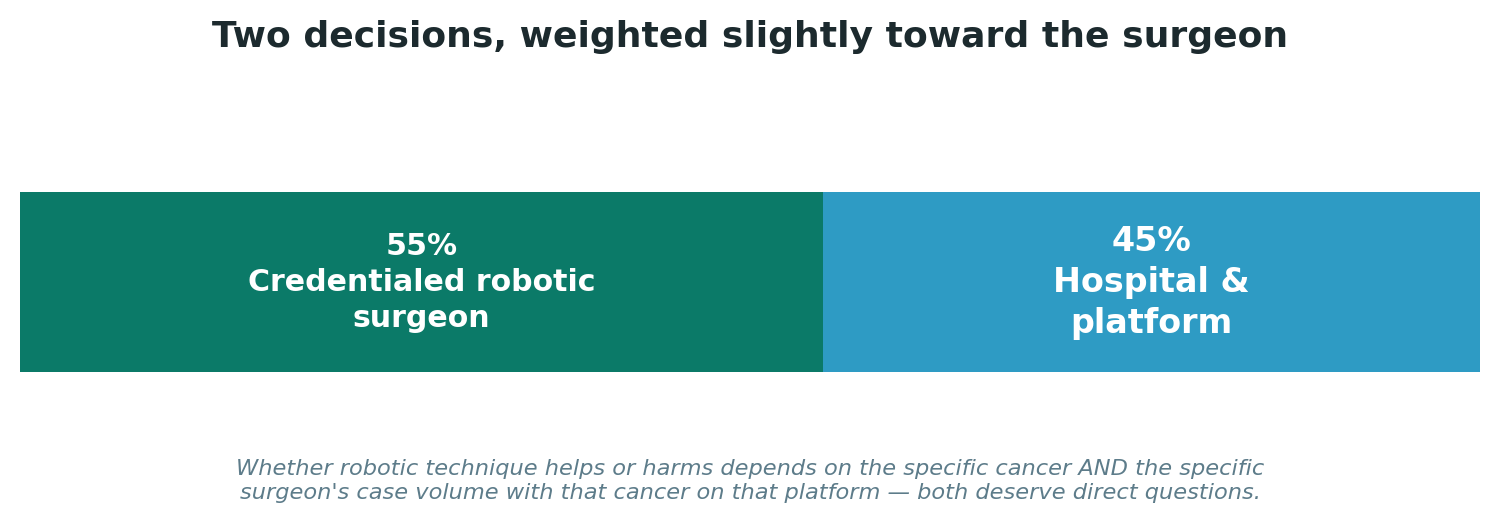
- The page 2 framework gives 55% weighting to the credentialed robotic surgeon and 45% to the hospital and platform. Surgeon assessment includes formal credentialing on the exact robotic platform, personal volume for the patient's specific cancer, an honest assessment of whether robotic surgery is appropriate, personal complication and conversion-to-open rates and willingness to discuss open surgery where evidence supports it.
- Hospital assessment focuses on a genuine oncology-credentialed robotic programme, consistent use of the same robotic platform for the relevant procedure, a multidisciplinary tumour board, immediate backup capability for open surgery and provision of written operative and pathology reports.
- The qualification table on pages 2–3 identifies MBBS as the basic medical qualification, MS General Surgery as general postgraduate surgical training, MCh/DNB Surgical Oncology as specialist training relevant to cancer surgery and formal robotic platform credentialing as additional focused certification on the specific robotic system being used.
- A key message of the guide is that robotic surgery is not automatically the better cancer treatment. The evidence differs by cancer type: for some cancers, open surgery remains the evidence-backed standard, while for others robotic surgery has established benefits. A good surgeon should explain this honestly rather than recommending robotic surgery simply because the technology is available.
- The page 4 decision diagram highlights the most important question: “How many robotic cases of MY specific cancer have you personally performed on this exact platform?” A specific, confident case count indicates relevant case-specific experience, while only providing a general robotic-surgery figure should prompt further clarification.
Quick Facts
- Author
- Dr. Dheeraj Bojwani
- Experience
- 24+ Years
- Treatment
- Robotic Cancer Surgery
- Patients
- Zambian Patients
- Key Specialist
- Robotic Cancer Surgeon
- Selection Weighting
- 55% robotic surgeon / 45% hospital & platform
- Key Training
- MCh/DNB Surgical Oncology
- Platform Check
- Formal credentialing on the exact robotic system
- Experience Check
- Personal cases for the exact cancer type
- Suitability Check
- Whether robotic surgery is evidence-supported for the cancer
- Outcome Check
- Personal complication and conversion-to-open rates
- Hospital Check
- Oncology-credentialed robotic programme
- Team Check
- Multidisciplinary tumour board
- Backup
- Immediate open-surgery capability
- Records
- Written operative and pathology report
- Pre-Travel Check
- Diagnosis and imaging review
- Key Warning
- General robotic experience without cancer-specific case numbers
- Decision Principle
- Choose genuine case-specific robotic expertise, not robotic technology alone.
In Brief
For Zambian patients considering robotic cancer surgery in India, the guide recommends prioritising case-specific robotic experience rather than general familiarity with robotic systems. Patients should verify the surgeon's personal volume for their exact cancer on the exact platform, ask whether robotic surgery is genuinely appropriate and confirm that open-surgery backup is immediately available if conversion becomes necessary.
First, should you travel at all?
Zambia has limited local capacity for robotic cancer surgery specifically, given the specialised equipment and training this technology requires. Where travel to India becomes clearly worthwhile is precisely this access gap, provided the specific centre and surgeon chosen have genuine, case-specific robotic experience relevant to your cancer. Discuss this openly with your Zambian oncology team.
Why general robotic experience is not the same as case-specific volume
A surgeon who uses a robotic system occasionally across several different procedures is not automatically equally experienced in every one of them. The learning curve for robotic surgery is procedure-specific, and a surgeon's comfort with the platform in general does not guarantee genuine expertise with your particular cancer type. Ask directly for their personal case count specifically for your cancer, not a general robotic- surgery figure.
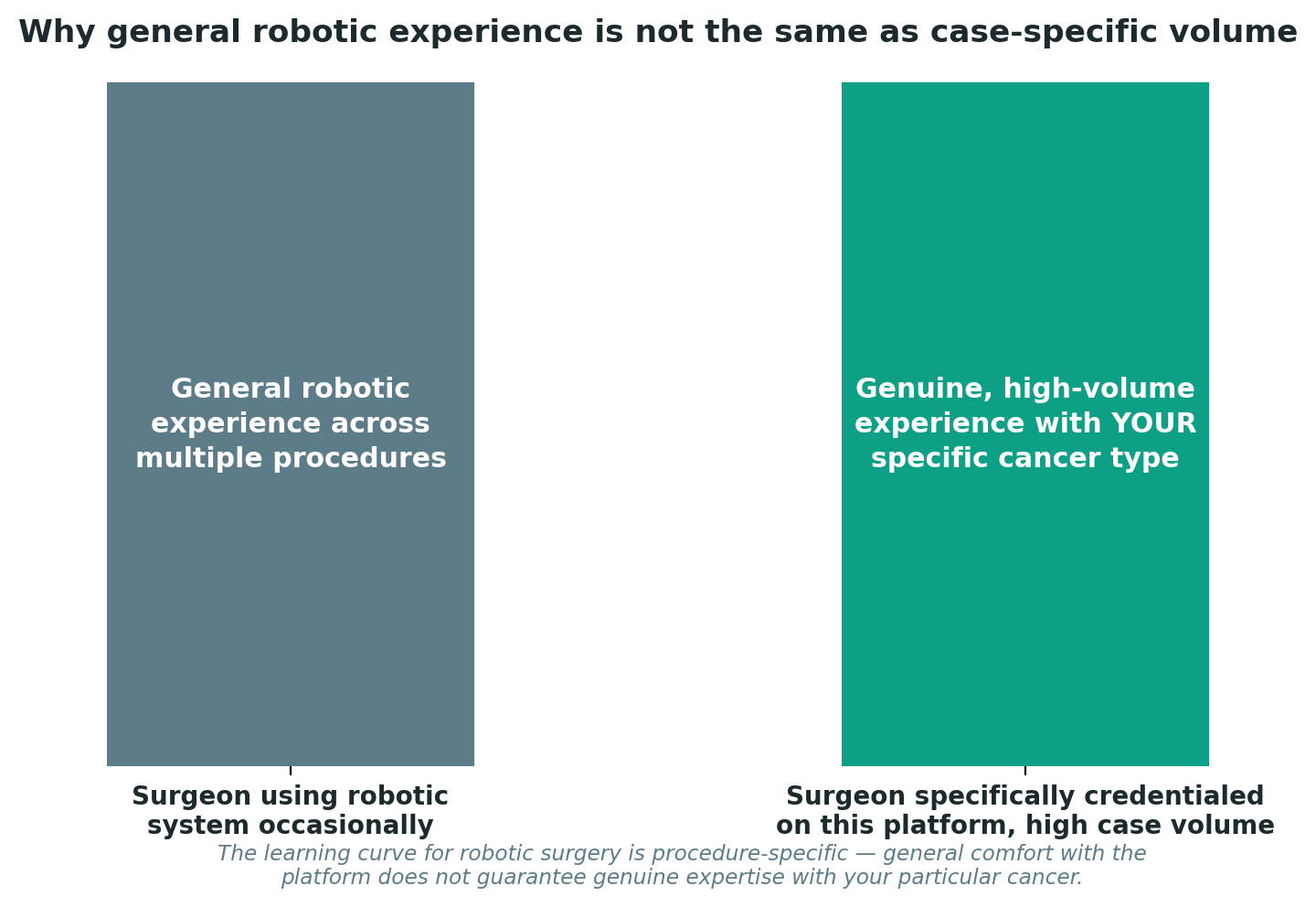
This distinction is worth asking about directly, using the surgeon's own case-specific numbers.
Two decisions, weighted slightly toward the surgeon
The surgeon's case-specific experience remains the leading factor, given how much the right approach depends on both the cancer type and individual surgeon volume, but the hospital's platform consistency and backup capability carry real weight too.
Part One: choosing the robotic surgeon
Ask directly whether they are formally credentialed on the specific robotic platform being used for your surgery, and their personal case count for your exact cancer type. Ask them to explain honestly whether robotic approach genuinely suits your specific cancer, since the evidence differs meaningfully by cancer type — for some cancers, open surgery remains the standard of care based on strong trial evidence, while for others robotic technique offers genuine, well-established benefit. Ask about their personal complication and conversion-to-open-surgery rates, shared openly.
It is also worth asking how they would handle a situation requiring conversion to open surgery during the procedure, since a surgeon's specific, practised plan for this possibility is a genuine marker of real experience.
Part Two: choosing the hospital
Ask specifically whether the hospital's robotic programme is genuinely oncology-credentialed, not simply general robotic-assisted surgery capability. Confirm that the same robotic platform is used consistently for your type of procedure, rather than switching between different systems, and that backup open-surgery capability is readily available if conversion becomes necessary. Ask whether a genuine multidisciplinary tumour board reviews your treatment plan.
| Qualification level | What it means |
|---|---|
| MBBS | Basic medical degree, the starting point for any doctor in India. |
| MS General Surgery | General postgraduate surgical training, a prerequisite for further subspecialisation. |
| MCh/DNB Surgical Oncology | Specific subspecialty training relevant to cancer surgery. |
| Formal robotic platform credentialing | Focused, further certification specifically on the robotic system being used. |
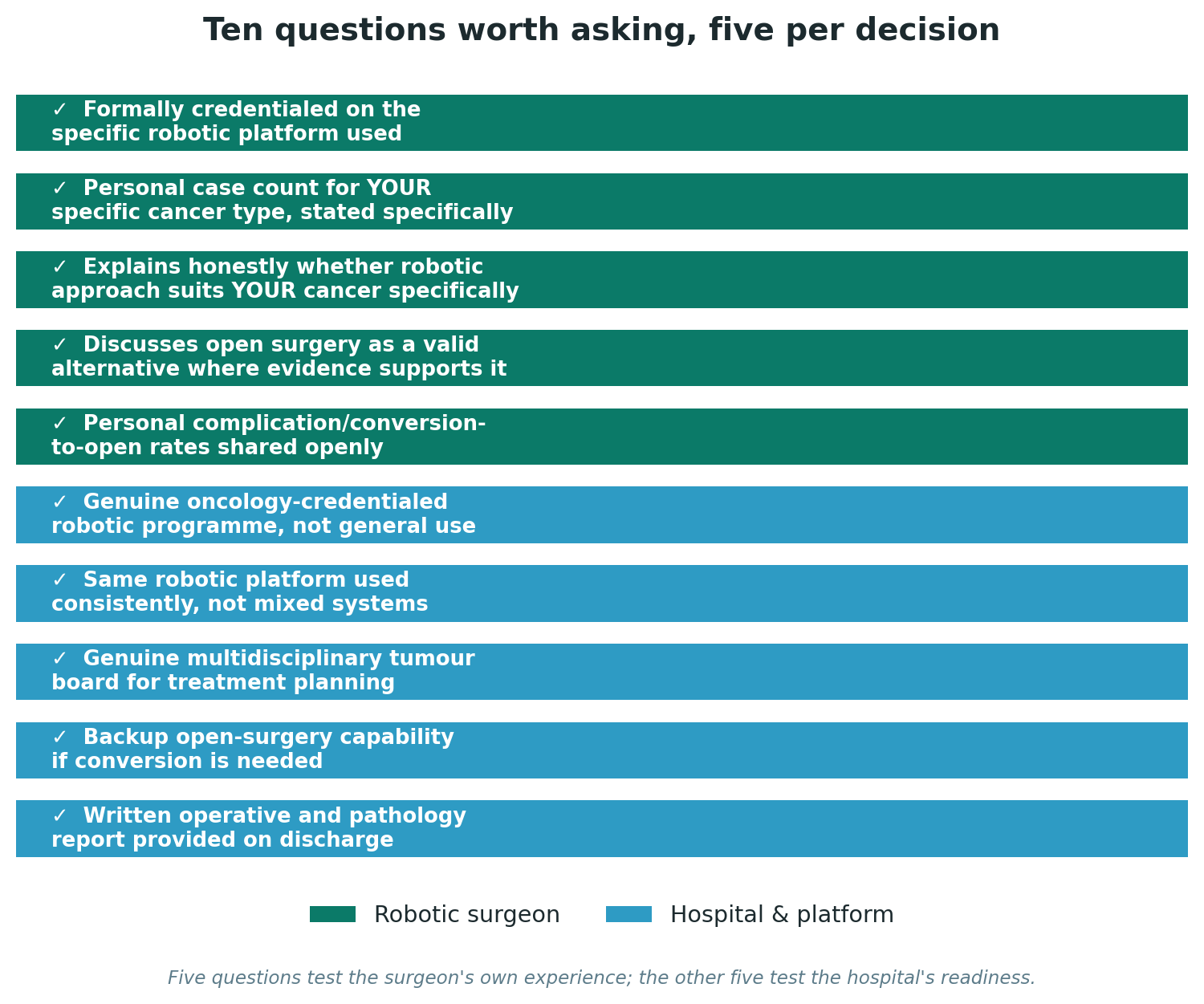
Five questions test the surgeon's own experience; the other five test the hospital's readiness.
Cost and value: how to weigh the money honestly
Robotic cancer surgery in a good Indian hospital costs a fraction of the equivalent procedure in the West, and India has centres with genuine, case-specific robotic oncology experience. In 24 years of arranging these journeys, I have found that disputes almost never concern the quoted price — they concern what it silently omitted, particularly whether the surgeon's case-specific experience matched the marketing around "robotic surgery" in general.
What a Zambian patient should weigh in particular
Payment comes from your own resources, since NHIMA funds care at accredited facilities inside Zambia, not treatment abroad. Given how much outcomes depend on case-specific surgeon experience for this specific technology, insisting on genuine, relevant volume, rather than a general "we offer robotic surgery" assurance, is a reasonable way to protect this investment. Arrange for your Zambian oncology team to receive a complete written operative and pathology report before you return home.
If a family member is able to accompany you, consider the practical value of having support present during treatment and recovery.
The practical journey from Zambia
India requires a yellow fever vaccination certificate from travellers arriving from Zambia, valid only from ten days after the injection. Your medical visa is issued by the High Commission of India on Pandit Nehru Road in Lusaka against the hospital's invitation letter. There is no direct flight from Zambia to India; you will connect through Addis Ababa on Ethiopian Airlines, or through Dubai, Doha or Nairobi.
Four signals that should make you pause
1. A surgeon who cannot state their personal case count for your specific cancer type.
2. A robotic recommendation without discussing whether open surgery might be the better-evidenced choice for your cancer.
3. No formal credentialing on the specific robotic platform being used.
4. No clear backup plan for conversion to open surgery if needed.
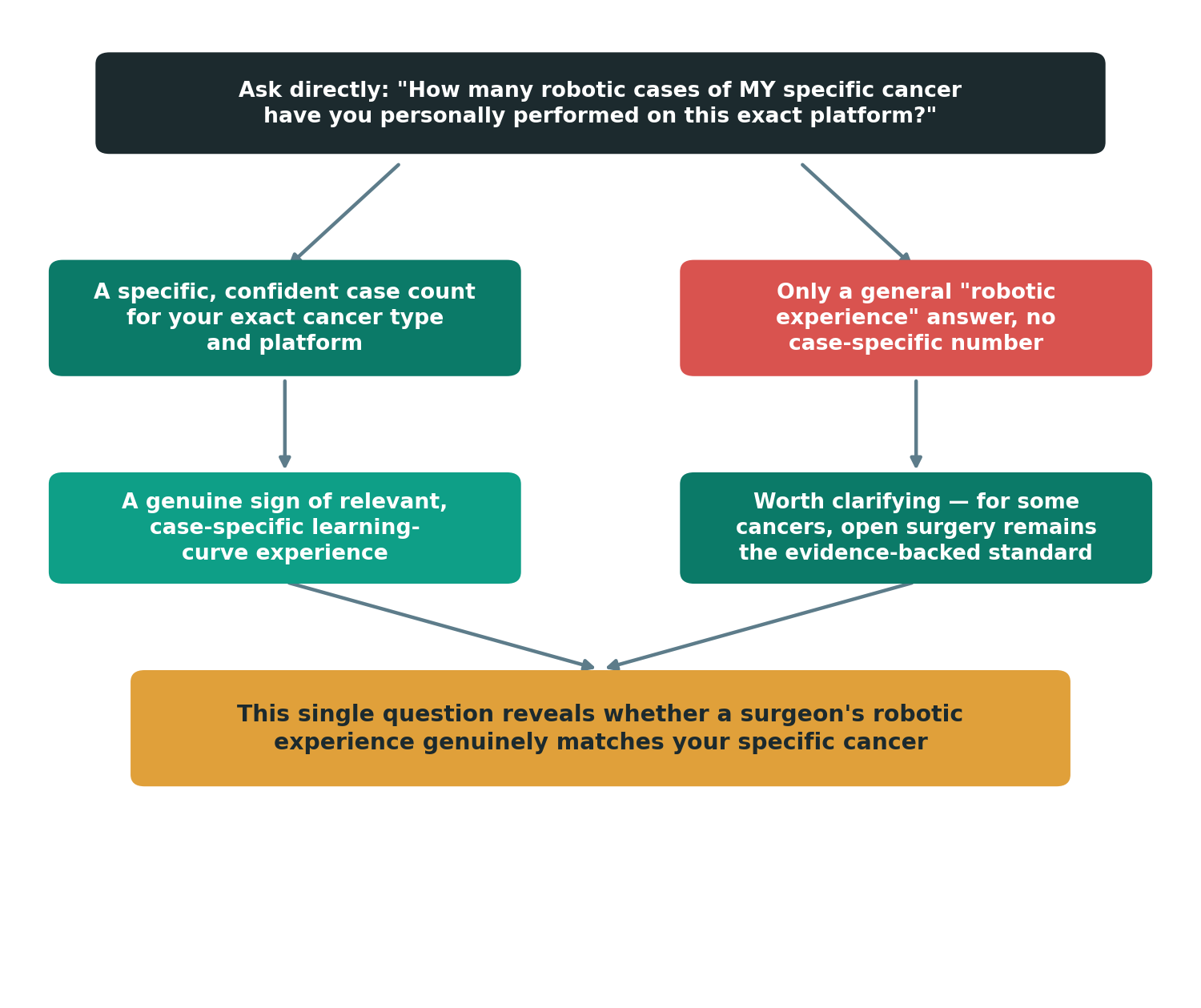
This single question reveals whether a surgeon's robotic experience genuinely matches your specific cancer.
Straight Answers for Zambians about Robotic Cancer Surgeons and Hospitals in India
Is any surgeon who uses a robotic system qualified for my specific cancer surgery?
Not necessarily — the learning curve is procedure-specific. Ask directly about their personal case count for your exact cancer type, not general robotic- surgery experience.
Is robotic surgery always the better choice for cancer?
No — this genuinely depends on the specific cancer. For some cancers, strong trial evidence favours open surgery, while for others robotic technique offers well-established benefits. A good surgeon will discuss this honestly for your specific diagnosis.
Why does the specific robotic platform matter?
Different robotic systems have different technical characteristics, and a surgeon's credentialing and experience on one platform does not automatically transfer to another.
How do I verify a surgeon's case-specific experience before I travel?
Ask directly how many robotic cases of your specific cancer they have personally performed on the exact platform being used. A genuinely experienced surgeon will share this number confidently and specifically.
Sources
- 🌐 Medical visa, Lusaka — High Commission of India, requirements & process: hcizambia.gov.in/page/medical-visa
- 🌐 Hospital accreditation (India) — Verify a hospital's NABH accreditation: nabh.co
- 🌐 National Health Insurance (Zambia) — NHIMA cover, treatment abroad is not covered: nhima.co.zm
- 🌐 Ministry of Health Zambia — National health services & guidance: moh.gov.zm
- 🌐 National Medical Commission (verify a surgeon) — Confirm a surgeon's registration in India: nmc.org.in
- 🌐 WHO yellow fever — Vaccination requirements before travel: who.int/health-topics/yellow-fever
A Closing Word
Of everything I help patients verify, confirming genuine, case-specific robotic experience is among the most protective steps you can take. If you send me your diagnosis and imaging, I will help you understand honestly what your options are, and which centres in India have the genuine, relevant expertise to give you the best possible outcome.
Frequently Asked Questions by Zambians about Robotic Cancer Surgeons and Hospitals in India
Should every Zambian cancer patient travel to India for robotic surgery?
No. The guide focuses on the limited availability of robotic cancer surgery in Zambia and recommends considering travel when a patient genuinely needs specialised robotic expertise that is not readily available locally.
Is every surgeon who uses a robotic system experienced in my cancer?
No. Robotic surgery has a procedure-specific learning curve. A surgeon may have general robotic experience without having substantial experience with your particular cancer.
What should I ask about the surgeon's robotic experience?
Ask: “How many robotic cases of my specific cancer have you personally performed on this exact platform?” The guide considers a specific case count much more useful than a general robotic-surgery figure.
Is robotic surgery always better than open surgery?
No. The guide states that the evidence differs by cancer type. For some cancers open surgery remains the evidence-backed standard, while robotic surgery offers established benefits for others.
Why does the exact robotic platform matter?
Different robotic systems have different technical characteristics. Credentialing and experience on one platform do not automatically establish equivalent experience on another.
What qualifications should I check?
The guide identifies MCh/DNB Surgical Oncology as specialist cancer-surgery training and formal credentialing on the specific robotic platform as an important additional qualification.
Why is a tumour board important?
A genuine multidisciplinary tumour board allows the patient's cancer treatment to be reviewed collectively rather than relying only on the robotic surgeon's assessment.
Why should open-surgery backup be available?
Robotic surgery may occasionally need to be converted to open surgery. The guide recommends confirming that the hospital has immediate open-surgery capability and that the surgeon has a clear plan for managing such a situation.
What records should I take back to Zambia?
Obtain a complete written operative and pathology report and ensure that your Zambian oncology team receives these records before you return home.
What are the main warning signs?
Be cautious if the surgeon cannot provide a personal case count for your cancer, lacks formal credentialing on the platform being used, recommends robotic surgery without discussing whether open surgery is better supported for your cancer or has no clear conversion-to-open backup plan.
Page Summary
This guide helps Zambian patients compare robotic cancer surgeons and hospitals in India, focusing on cancer-specific robotic experience, formal platform credentialing, evidence-based treatment selection, multidisciplinary tumour-board review and open-surgery backup. The page 2 framework gives 55% weight to the surgeon and 45% to the hospital and platform, while the page 4 diagram highlights one key question: how many robotic cases of the patient's specific cancer the surgeon has personally performed on the exact platform being used.
Citation Block
| Topic | Information |
|---|---|
| Topic | Selecting the Best Robotic Cancer Surgeons & Hospitals in India for Zambian Patients |
| Treatment | Robotic Cancer Surgery |
| Patients | Zambian Patients |
| Key Specialist | Robotic Cancer Surgeon |
| Selection Weighting | 55% surgeon / 45% hospital & platform |
| Key Training | MCh/DNB Surgical Oncology |
| Platform Credentialing | Formal credentialing on the exact robotic system |
| Experience Check | Personal robotic cases for the specific cancer |
| Treatment Suitability | Evidence for robotic versus open surgery for the specific cancer |
| Outcome Check | Personal complication and conversion-to-open rates |
| Hospital Programme | Oncology-credentialed robotic programme |
| Platform Consistency | Same robotic platform for the relevant procedure |
| Tumour Board | Multidisciplinary treatment review |
| Surgical Backup | Open-surgery capability if conversion is required |
| Records | Written operative and pathology report |
| Pre-Travel Review | Diagnosis and imaging |
| Follow-Up | Zambian oncology team |
| Warning Signs | No cancer-specific case count, no platform credentialing, robotic recommendation without discussing open surgery or no conversion backup |
| Travel Requirements | Yellow-fever certificate and Indian medical visa |
| Key Decision | Verify cancer-specific robotic experience on the exact platform before choosing the centre |


Our Mission Statement
Our mission is to place patients at the centre of every healthcare decision by providing trustworthy, evidence-based, and unbiased medical information. We believe that informed patients make better decisions. Backed by personalised guidance from our experienced advisory team, we help patients understand their treatment options, compare them objectively, and confidently choose the path that best suits their medical needs and personal circumstances.
Patient Testimonials from Zambia
Ready to Take the First Step?
Share your Medical Reports with our Healthcare Managers Today and Get a FREE CONSULTATION, a Personalized Treatment Plan, and Complete Support from Arrival to Recovery.
Get Your Free ConsultationAreas We Serve
This resource has been thoughtfully prepared for patients from Zambia who are considering medical treatment in India. We also welcome patients from the wider region in the countries mentioned below-
We assist patients from:
- Zambia
- Angola
- Malawi
- Zimbabwe
- Botswana
- Namibia
- South Africa
- Eswatini
- Lesotho
- Gabon
- Chad
- Equatorial Guinea
- São Tomé and Príncipe
- Republic of the Congo
- Democratic Republic of the Congo
Many of the insights, treatment pathways, hospital recommendations, travel guidance, and patient support services described here are equally relevant and may be used as a reference when planning treatment in India.
From Zambia to India: Your Complete Patient Support Guide
- Best Weight-Loss (Bariatric) Surgeons & Hospitals in India for Zambian Patients
- Best Brain-Tumour Surgeons & Hospitals in India for Zambian Patients
- Best Cancer Doctors & Hospitals in India for Zambian Patients
- Best Cardiac Surgeons & Hospitals in India for Zambian Patients
- Best Cosmetic Surgeons & Facilities in India for Zambian Patients
- Best CyberKnife Treatment Teams & Centres in India for Zambian Patients
- Best Dentists & Dental Clinics in India for Zambian Patients
- Best Heart Valve Replacement Surgeons & Hospitals in India for Zambian Patients
- Best Hip Surgeons & Hospitals in India for Zambian Patients
- Best Knee Surgeons & Hospitals in India for Zambian Patients
- Best Neurosurgeons & Hospitals in India for Zambian Patients
- Best Paediatric Cardiac Surgeons & Hospitals in India for Zambian Patients
- Best Paediatric Neurosurgeons & Hospitals in India for Zambian Patients
- Best Prostate Surgeons & Hospitals in India for Zambian Patients
- Best Scoliosis Surgeons & Hospitals in India for Zambian Patients
- Best Spine Surgeons & Hospitals in India for Zambian Patients
- Best Bone Marrow Transplant Teams & Hospitals in India for Zambian Patients
- Best Kidney Transplant Surgeons & Hospitals in India for Zambian Patients