

Selecting the Best Gamma Knife Teams and Hospitals in India — a Zambian Patient's Guide
Ask any centre directly how many cases of your specific condition they have treated with Gamma Knife — a specific, confident number reveals a team whose experience genuinely matches your diagnosis, not just the technology in general.
Choosing a Gamma Knife team and hospital means choosing a genuine multidisciplinary team, not a single doctor, and a centre with modern technology and condition-specific experience. In 24 years of guiding patients through neurological care abroad, I have found that this matters more for Gamma Knife than for many procedures, since treatment is typically delivered in a single session, leaving little room to course-correct afterward.
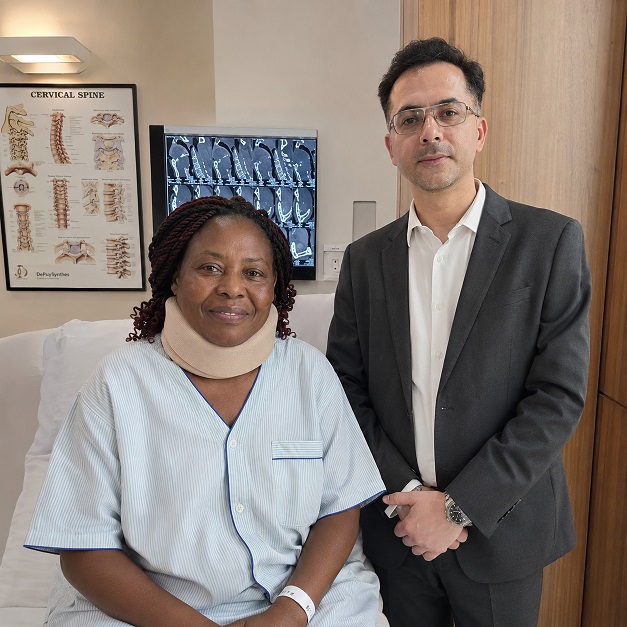
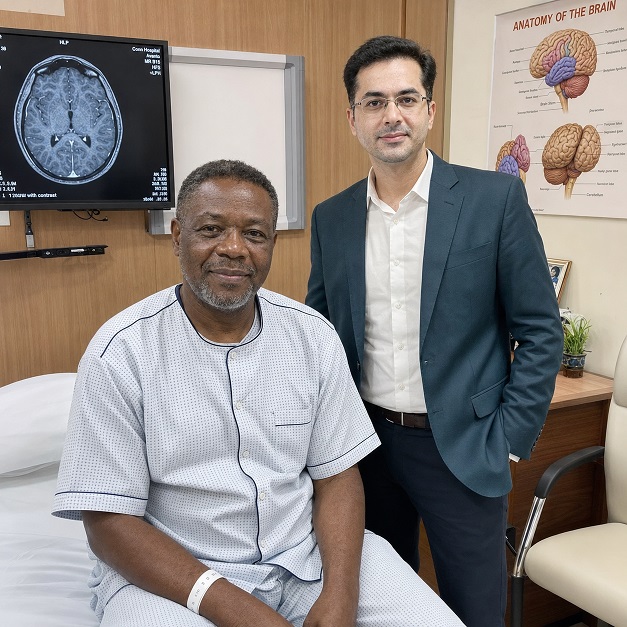
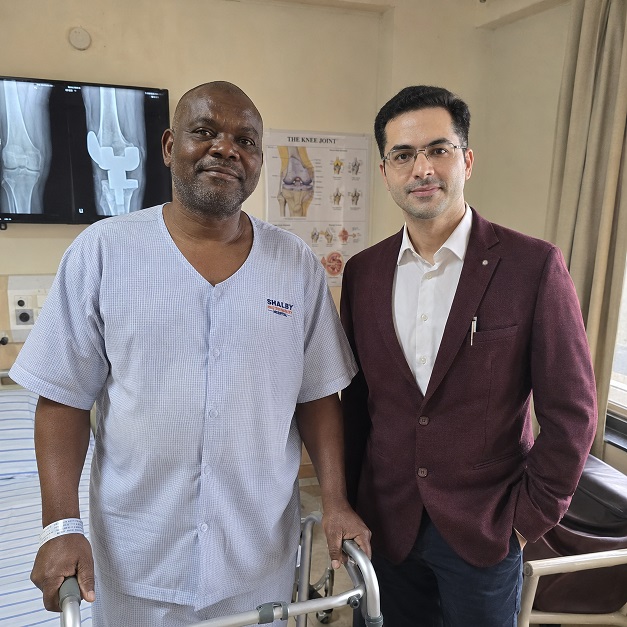
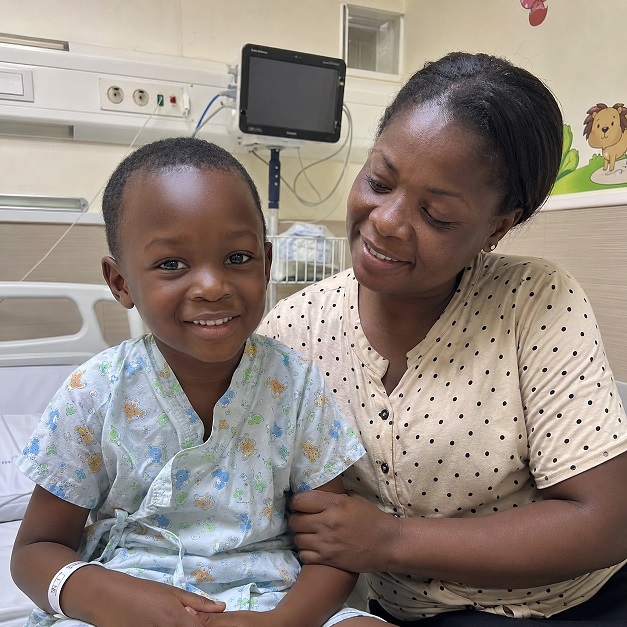
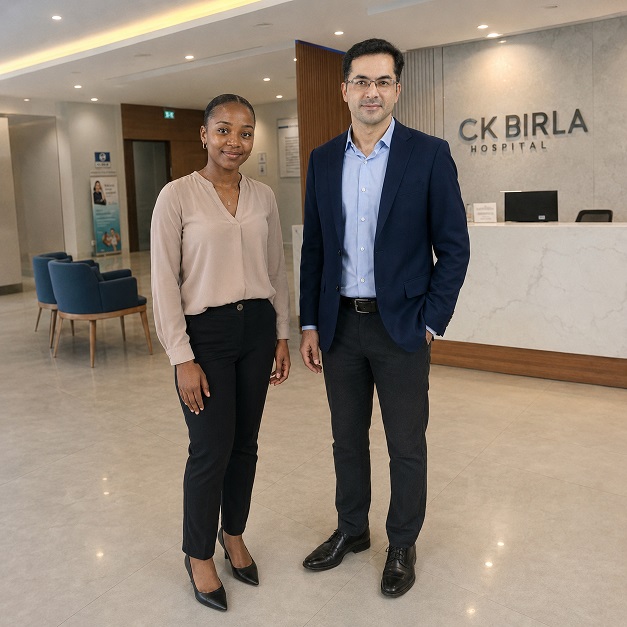
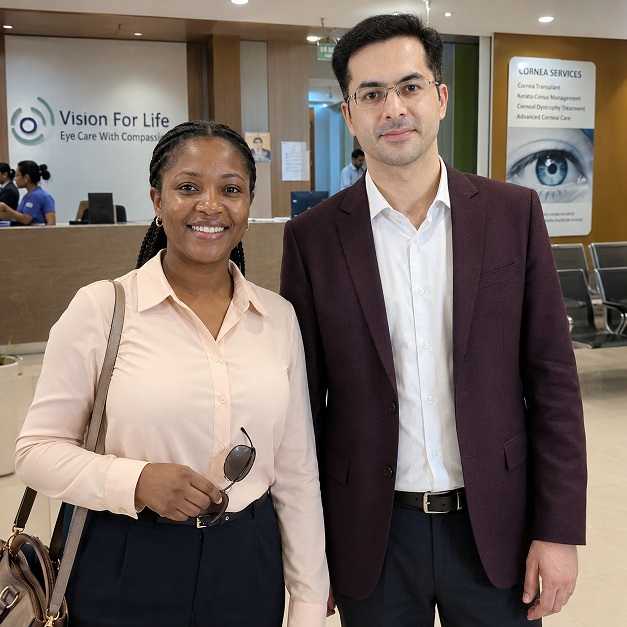
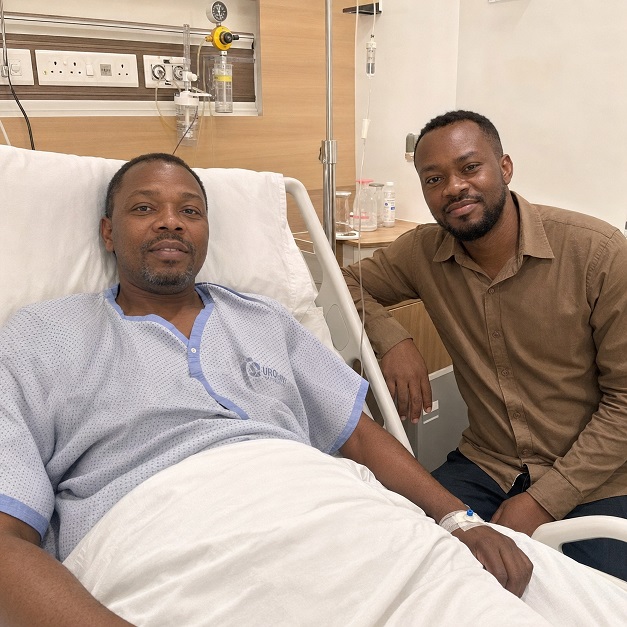
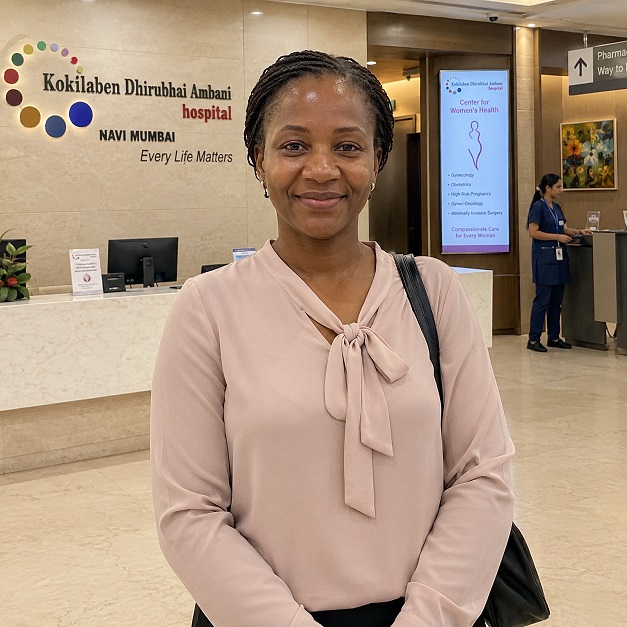
Healing Journeys of Zambian Patients

Key Takeaways
- The guide explains that Gamma Knife is not currently available in Zambia, making travel to an experienced centre an important consideration for patients who are genuinely suitable for this technology. Gamma Knife is intended for selected brain and skull-base conditions, so patients should discuss their diagnosis and suitability with their Zambian neurology or oncology team before travelling.
- The guide stresses that Gamma Knife is a multidisciplinary treatment rather than a procedure performed by a neurosurgeon alone. The neurosurgeon and radiation oncologist jointly define the treatment target, while a medical physicist plans the precise radiation dose. Patients should confirm that all three roles are actively involved in their specific case.
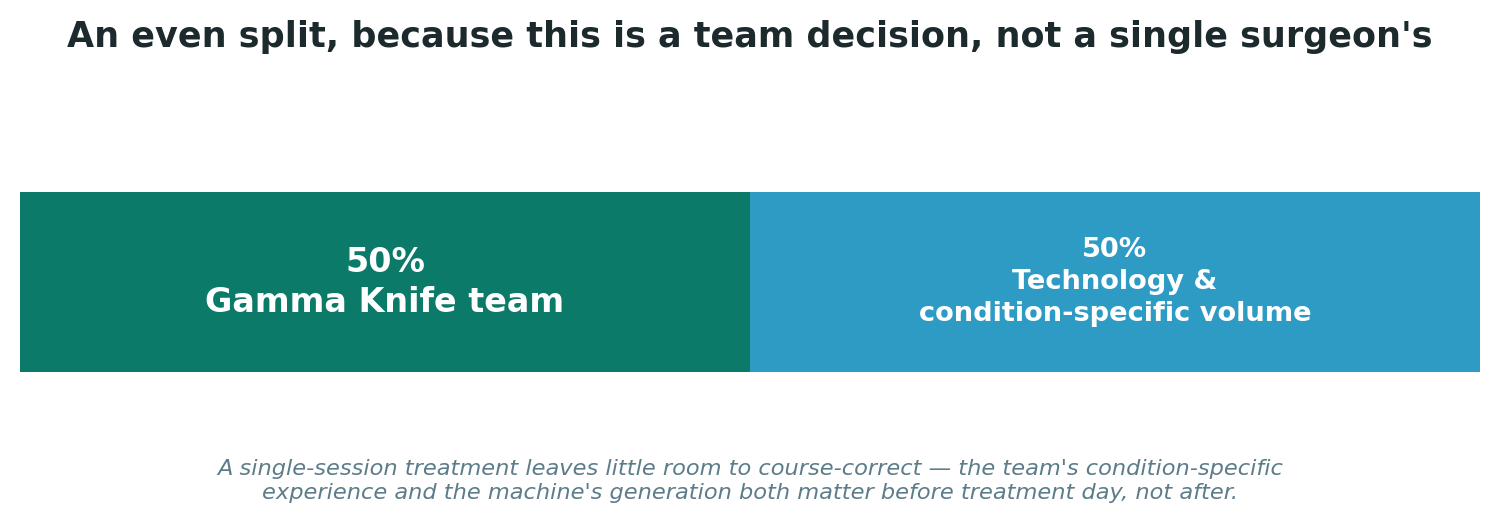
- The page 2 framework gives 50% weighting to the Gamma Knife team and 50% to technology and condition-specific volume. Team assessment includes active neurosurgeon and radiation-oncologist involvement, experience with the exact diagnosis, realistic outcome expectations, second-session planning and complication reporting. Technology assessment includes current-generation equipment, a dedicated medical physicist, condition-specific case volume, follow-up imaging and written dose details.
- The guide emphasises that condition-specific experience matters more than an overall Gamma Knife case count. Brain metastases, AVMs, acoustic neuromas, meningiomas, trigeminal neuralgia and essential tremor require different clinical judgement. The page 4 diagram therefore recommends asking exactly how many cases of the patient's specific condition the team has treated with Gamma Knife.
- The qualification table identifies MCh Neurosurgery / MD Radiation Oncology as relevant postgraduate training, with stereotactic radiosurgery fellowship providing focused additional training. A certified medical physicist is responsible for specialised radiation dose planning and delivery. The guide also highlights the importance of using a current-generation Gamma Knife unit because treatment precision has improved across technology generations.
- For Zambian patients, the guide recommends confirming the full treatment cost, including follow-up imaging, and obtaining a written treatment report with dose details before returning home. It also highlights the need for a clear follow-up imaging plan after travel and notes the requirements for a yellow-fever certificate and Indian Medical Visa.
Quick Facts
- Author
- Dr. Dheeraj Bojwani
- Experience
- 24+ Years
- Treatment
- Gamma Knife / Stereotactic Radiosurgery
- Patients
- Zambian Patients
- Key Team
- Neurosurgeon, radiation oncologist and medical physicist
- Selection Weighting
- 50% Gamma Knife team / 50% technology & condition-specific volume
- Key Assessment
- Experience with the exact condition
- Technology Check
- Current-generation Gamma Knife unit
- Planning Check
- Dedicated medical physicist
- Outcome Check
- Realistic diagnosis-specific expectations
- Follow-Up
- Post-treatment imaging plan
- Records
- Written treatment report with dose details
- Pre-Travel Check
- Diagnosis and imaging review
- Key Warning
- General Gamma Knife volume without condition-specific experience
- Decision Principle
- Choose relevant team expertise and modern technology together.
In Brief
For Zambian patients considering Gamma Knife treatment in India, the guide recommends prioritising a genuine multidisciplinary team with condition-specific experience and modern technology. The most important question to ask is how many cases of the patient's specific condition the team has treated, rather than accepting only a general Gamma Knife volume.
First, should you travel at all?
Gamma Knife is not currently available in Zambia, and given its single-session, precision nature, this is a procedure where travelling to a genuinely experienced centre is clearly the right approach. Discuss this openly with your Zambian neurology or oncology team as part of your referral, particularly to confirm your condition is genuinely suited to this specific technology, since Gamma Knife treats only brain and skull-base conditions and is not appropriate for every case.
Why this is a team decision, not a single surgeon's
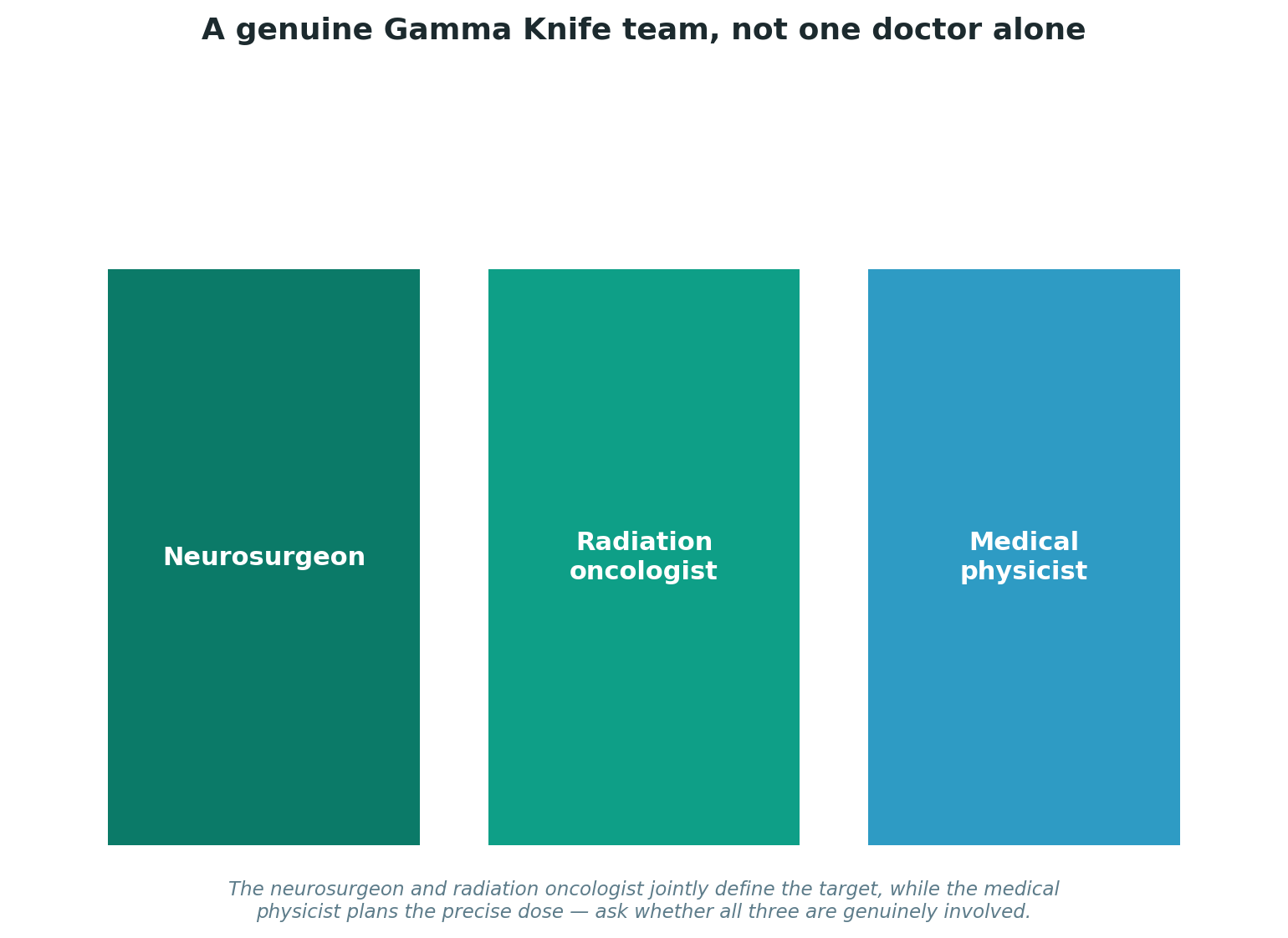
Gamma Knife treatment planning genuinely depends on close collaboration between a neurosurgeon and a radiation oncologist, who jointly define the treatment target, and a medical physicist, who plans the precise radiation dose. Ask directly whether all three roles are genuinely and actively involved in your specific case, not just the neurosurgeon alone.
An even split, because this is a team decision, not a single surgeon's
Given the collaborative, single-session nature of Gamma Knife treatment, the team's condition-specific experience and the technology's readiness both matter equally, which is why this guide weighs them evenly rather than favouring one side.
Part One: choosing the Gamma Knife team
Ask directly whether the neurosurgeon and radiation oncologist are both actively involved in planning your treatment, not just one of them with the other signing off. Ask for their specific experience with your exact condition — brain metastases, an AVM, acoustic neuroma, meningioma, trigeminal neuralgia and essential tremor each require somewhat different judgement, even though all use the same underlying technology. Ask them to state realistic outcome expectations honestly for your specific diagnosis, and explain what would happen if a second session were later needed.
Part Two: choosing the technology and hospital
Ask specifically whether the centre uses a current-generation Gamma Knife unit, since dose-planning precision has improved across generations of the technology. Confirm a dedicated medical physicist, not a shared or part-time one, is responsible for your specific dose plan. Ask for the centre's case volume for your specific condition, not just an overall Gamma Knife figure, and confirm a clear plan for follow-up imaging after you return home.
| Qualification level | What it means |
|---|---|
| MBBS | Basic medical degree, the starting point for any doctor in India. |
| MCh Neurosurgery / MD Radiation Oncology | Specific postgraduate training for each core team role. |
| Stereotactic radiosurgery fellowship | Focused, further training specifically in Gamma Knife and related techniques. |
| Certified medical physicist | Specialist qualification in radiation dose planning and delivery. |
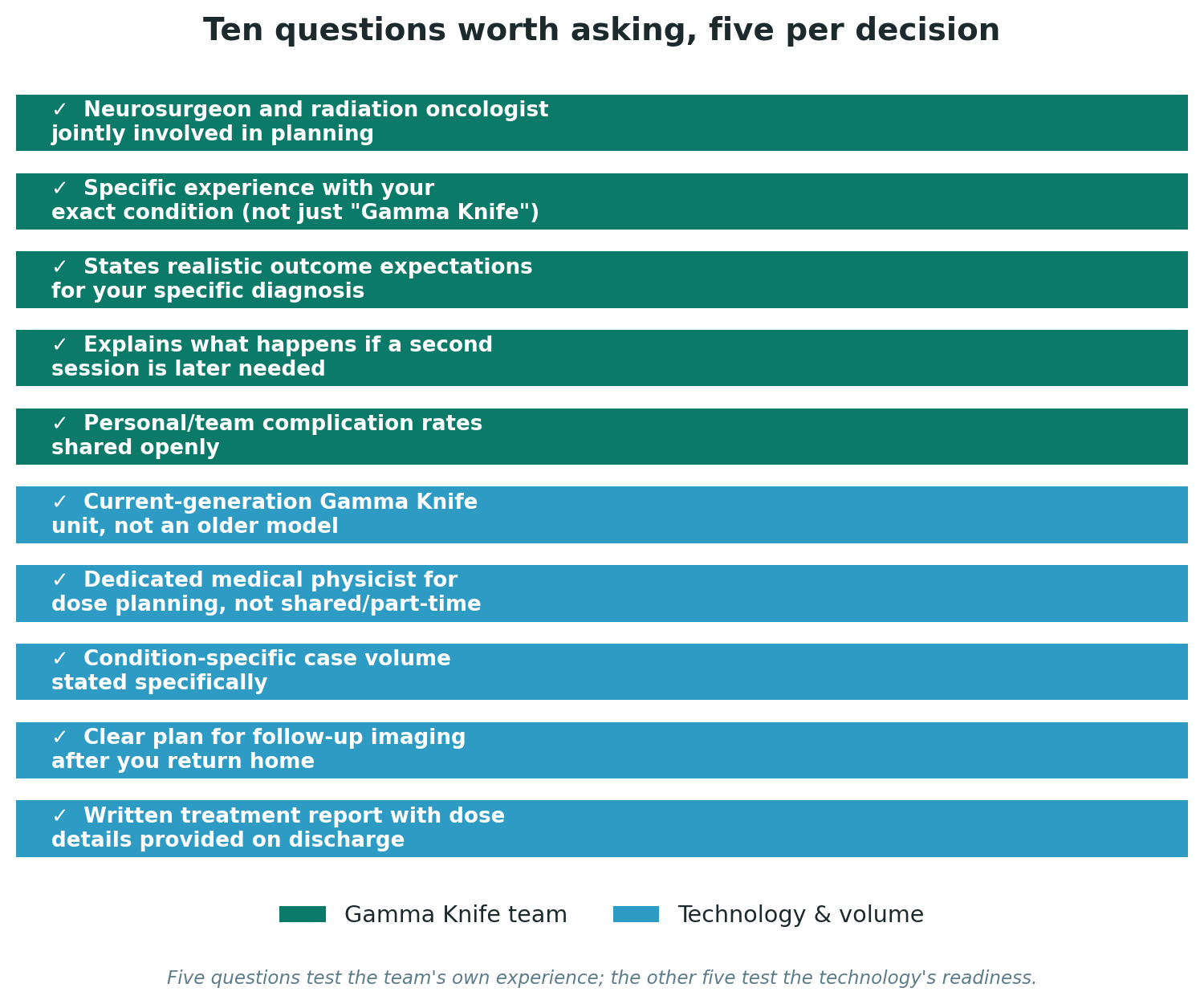
Five questions test the team's own experience; the other five test the technology's readiness.
Cost and value: how to weigh the money honestly
Gamma Knife treatment in a good Indian hospital costs a fraction of the equivalent procedure in the West, and India has centres with genuine multidisciplinary experience and modern technology. In 24 years of arranging these journeys, I have found that disputes almost never concern the quoted price — they concern what it silently omitted, particularly the cost of follow-up imaging in the months after treatment.
What a Zambian patient should weigh in particular
Payment comes from your own resources, since NHIMA funds care at accredited facilities inside Zambia, not treatment abroad. Given how much outcomes depend on the team's condition-specific experience for a single-session treatment, insisting on genuine, relevant experience, rather than a general "we offer Gamma Knife" assurance, is a reasonable way to protect this investment. Arrange for your Zambian team to receive a complete written treatment report, including dose details, before you return home.
If a family member is able to accompany you, consider the practical value of having support present, and ask in advance about the realistic timeline before it is safe to travel home, since this varies depending on your specific condition and any sedation used during the procedure.
The practical journey from Zambia
India requires a yellow fever vaccination certificate from travellers arriving from Zambia, valid only from ten days after the injection. Your medical visa is issued by the High Commission of India on Pandit Nehru Road in Lusaka against the hospital's invitation letter. There is no direct flight from Zambia to India; you will connect through Addis Ababa on Ethiopian Airlines, or through Dubai, Doha or Nairobi.
Four signals that should make you pause
1. No radiation oncologist or medical physicist mentioned as part of your planning team.
2. Only a general Gamma Knife volume figure, with no number specific to your condition.
3. Vague answers about the specific generation of Gamma Knife technology used.
4. No clear plan for follow-up imaging after you return home.
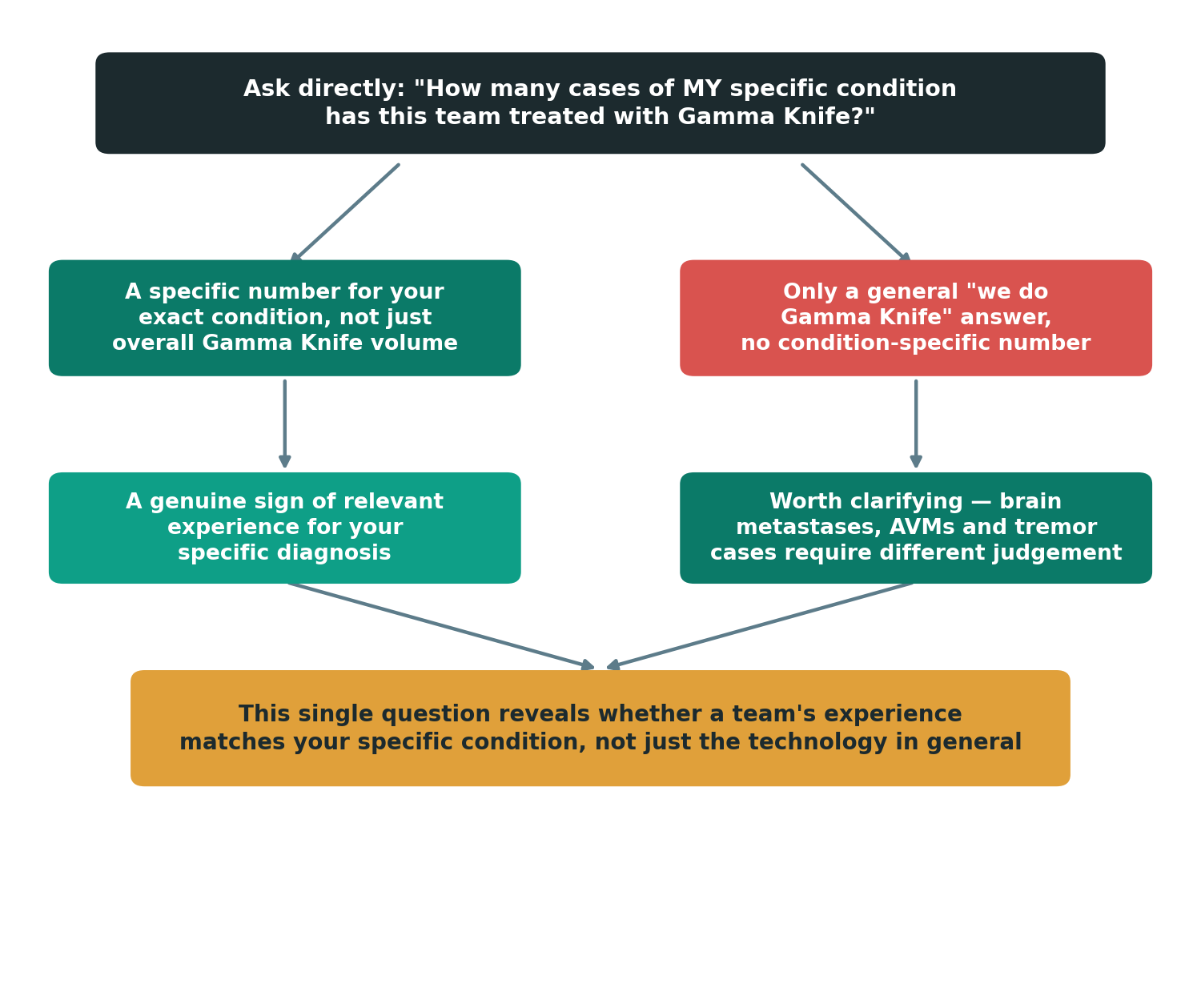
This single question reveals whether a team's experience matches your specific condition, not just the technology in general.
Straight Answers for Zambians about Gamma Knife Teams and Hospitals in India
Is any neurosurgeon qualified to deliver Gamma Knife treatment?
Not alone — this is genuinely a team decision, requiring a radiation oncologist and medical physicist working alongside the neurosurgeon. Ask directly whether all three roles are actively involved.
Why does condition-specific experience matter more than overall Gamma Knife volume?
Brain metastases, AVMs, trigeminal neuralgia and essential tremor each require different clinical judgement, even using the same technology. A team experienced in one condition is not automatically equally experienced in another.
Why does the specific generation of technology matter?
Dose-planning precision and treatment-delivery accuracy have improved across generations of Gamma Knife technology, which can meaningfully affect how precisely healthy tissue is spared around your target.
How do I verify a team's relevant experience before I travel?
Ask directly how many cases of your specific condition they have treated with Gamma Knife. A genuinely experienced team will share this number confidently and specifically.
Sources
- 🌐 Medical visa, Lusaka — High Commission of India, requirements & process: hcizambia.gov.in/page/medical-visa
- 🌐 Hospital accreditation (India) — Verify a hospital's NABH accreditation: nabh.co
- 🌐 National Health Insurance (Zambia) — NHIMA cover, treatment abroad is not covered: nhima.co.zm
- 🌐 Ministry of Health Zambia — National health services & guidance: moh.gov.zm
- 🌐 National Medical Commission (verify a doctor) — Confirm a doctor's registration in India: nmc.org.in
- 🌐 WHO yellow fever — Vaccination requirements before travel: who.int/health-topics/yellow-fever
A Closing Word
Of everything I help patients verify, confirming genuine, condition-specific team experience alongside modern technology is among the most protective steps you can take. If you send me your diagnosis and imaging, I will help you understand honestly what your options are, and which centres in India have the genuine expertise to give you the best possible outcome from this single, precise treatment.
This guide is general information to help Zambian patients select Gamma Knife teams and hospitals in India and is not a substitute for individual medical advice. The appropriate treatment must be determined by qualified neurosurgeons and radiation oncologists after full review of your specific diagnosis. Cost figures here are general and vary by individual, hospital and case complexity. Costs, exchange rates, visa rules and vaccination requirements change; confirm all details before you travel, verify qualifications and accreditation independently, and always obtain a written, itemised quotation before proceeding.
Frequently Asked Questions by Zambians about Gamma Knife Teams and Hospitals in India
Should Zambian patients travel to India for Gamma Knife?
The guide states that Gamma Knife is not currently available in Zambia. Patients should first confirm with their Zambian neurology or oncology team that their specific condition is suitable for Gamma Knife.
Is Gamma Knife performed by a neurosurgeon alone?
No. The guide describes Gamma Knife as a multidisciplinary treatment involving a neurosurgeon, radiation oncologist and medical physicist. All three should be actively involved in treatment planning.
Which conditions can be treated with Gamma Knife?
The guide specifically discusses conditions including brain metastases, AVMs, acoustic neuromas, meningiomas, trigeminal neuralgia and essential tremor. Suitability depends on the individual diagnosis.
Why is condition-specific experience important?
Different conditions require different treatment decisions even when the same Gamma Knife technology is used. A centre experienced with one condition is not automatically equally experienced with another.
What question should I ask the Gamma Knife centre?
Ask: “How many cases of my specific condition has this team treated with Gamma Knife?” The guide considers a specific, confident answer more useful than a general Gamma Knife volume.
Why does the Gamma Knife technology generation matter?
The guide explains that treatment-planning precision and delivery accuracy have improved across technology generations. Patients should therefore ask which generation of Gamma Knife equipment the centre uses.
Why is the medical physicist important?
The medical physicist is responsible for precise radiation dose planning and delivery. The guide recommends confirming that a dedicated medical physicist is involved rather than a shared or part-time arrangement.
What should I ask about follow-up after Gamma Knife?
Confirm the follow-up imaging schedule, particularly how imaging will be managed after returning to Zambia. This should be established before treatment.
What records should I take back to Zambia?
The guide recommends obtaining a complete written treatment report including dose details so the Zambian medical team has the necessary information for continued care.
What are the main warning signs?
Be cautious if the centre cannot identify a radiation oncologist or medical physicist involved in planning, provides only an overall Gamma Knife volume, is vague about its technology generation or has no clear plan for follow-up imaging.
Page Summary
This guide helps Zambian patients compare Gamma Knife teams and hospitals in India, focusing on multidisciplinary expertise, condition-specific treatment experience, current-generation technology, medical physics and follow-up imaging. The page 2 framework gives equal 50% weight to the Gamma Knife team and technology/condition-specific volume, while the page 4 diagram highlights one key question: how many cases of the patient's specific condition the team has actually treated with Gamma Knife.
Citation Block
| Topic | Information |
|---|---|
| Topic | Selecting the Best Gamma Knife Teams & Hospitals in India for Zambian Patients |
| Treatment | Gamma Knife / Stereotactic Radiosurgery |
| Patients | Zambian Patients |
| Key Team | Neurosurgeon, radiation oncologist and medical physicist |
| Selection Weighting | 50% team / 50% technology & condition-specific volume |
| Key Training | Stereotactic radiosurgery fellowship |
| Experience Check | Exact condition-specific Gamma Knife cases |
| Planning Check | Neurosurgeon and radiation oncologist jointly involved |
| Physics Check | Dedicated medical physicist |
| Technology Check | Current-generation Gamma Knife unit |
| Outcome Check | Realistic diagnosis-specific expectations |
| Second Session | Clear explanation if additional treatment may be required |
| Follow-Up | Imaging plan after returning home |
| Records | Written treatment report with dose details |
| Cost Check | Include follow-up imaging costs |
| Pre-Travel Review | Diagnosis and imaging |
| Warning Signs | No radiation oncologist/physicist, only general case volume, unclear technology generation or no follow-up imaging plan |
| Travel Requirements | Yellow-fever certificate and Indian Medical Visa |
| Key Decision | Prioritise condition-specific team experience alongside modern Gamma Knife technology |


Our Mission Statement
Our mission is to place patients at the centre of every healthcare decision by providing trustworthy, evidence-based, and unbiased medical information. We believe that informed patients make better decisions. Backed by personalised guidance from our experienced advisory team, we help patients understand their treatment options, compare them objectively, and confidently choose the path that best suits their medical needs and personal circumstances.
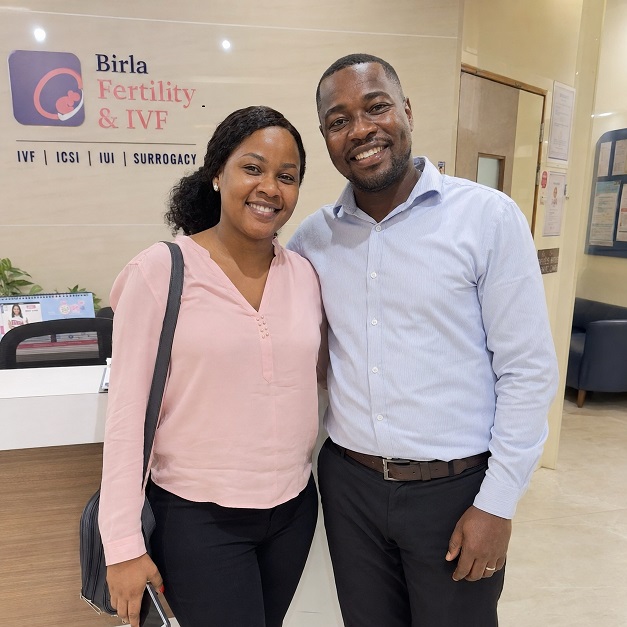
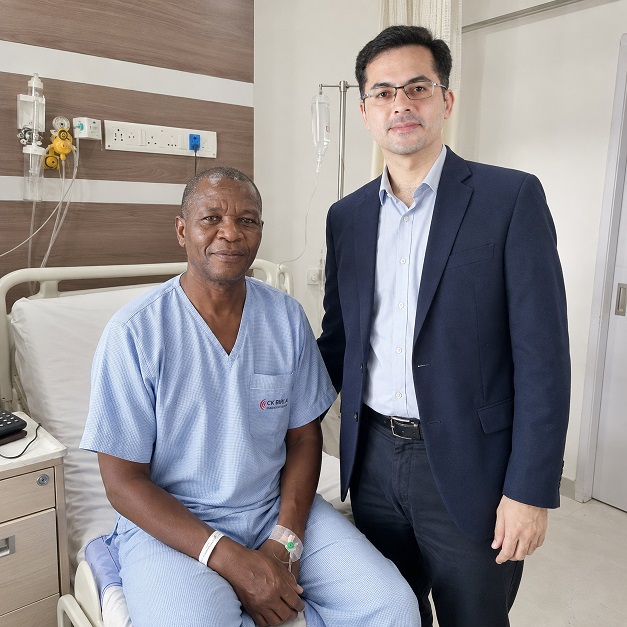
Patient Testimonials from Zambia

Ready to Take the First Step?
Share your Medical Reports with our Healthcare Managers Today and Get a FREE CONSULTATION, a Personalized Treatment Plan, and Complete Support from Arrival to Recovery.
Get Your Free ConsultationAreas We Serve
This resource has been thoughtfully prepared for patients from Zambia who are considering medical treatment in India. We also welcome patients from the wider region in the countries mentioned below-
We assist patients from:
- Zambia
- Angola
- Malawi
- Zimbabwe
- Botswana
- Namibia
- South Africa
- Eswatini
- Lesotho
- Gabon
- Chad
- Equatorial Guinea
- São Tomé and Príncipe
- Republic of the Congo
- Democratic Republic of the Congo
Many of the insights, treatment pathways, hospital recommendations, travel guidance, and patient support services described here are equally relevant and may be used as a reference when planning treatment in India.
From Zambia to India: Your Complete Patient Support Guide
- Best Weight-Loss (Bariatric) Surgeons & Hospitals in India for Zambian Patients
- Best Brain-Tumour Surgeons & Hospitals in India for Zambian Patients
- Best Cancer Doctors & Hospitals in India for Zambian Patients
- Best Cardiac Surgeons & Hospitals in India for Zambian Patients
- Best Cosmetic Surgeons & Facilities in India for Zambian Patients
- Best CyberKnife Treatment Teams & Centres in India for Zambian Patients
- Best Dentists & Dental Clinics in India for Zambian Patients
- Best Heart Valve Replacement Surgeons & Hospitals in India for Zambian Patients
- Best Hip Surgeons & Hospitals in India for Zambian Patients
- Best Knee Surgeons & Hospitals in India for Zambian Patients
- Best Neurosurgeons & Hospitals in India for Zambian Patients
- Best Paediatric Cardiac Surgeons & Hospitals in India for Zambian Patients
- Best Paediatric Neurosurgeons & Hospitals in India for Zambian Patients
- Best Prostate Surgeons & Hospitals in India for Zambian Patients
- Best Scoliosis Surgeons & Hospitals in India for Zambian Patients
- Best Spine Surgeons & Hospitals in India for Zambian Patients
- Best Bone Marrow Transplant Teams & Hospitals in India for Zambian Patients
- Best Kidney Transplant Surgeons & Hospitals in India for Zambian Patients