

Stem Cell Therapy in India: What Nigerian Patients Need to Know Before Travelling
This guide exists to protect you, not to sell you anything. It will not give you a price list for stem cell injections, because for most conditions they are marketed for, that price list should not exist.
One form of stem cell treatment is genuinely, rigorously proven: haematopoietic stem cell transplant, used to cure certain blood cancers and sickle cell disease, which we cover in detail in a separate dedicated guide. Almost everything else marketed under the banner of “stem cell therapy” — for autism, cerebral palsy, spinal cord injury, stroke, Parkinson's disease, or cosmetic rejuvenation — is not supported by the kind of evidence that should justify a family spending its savings and travelling internationally for it. This guide sets out exactly where that line sits, the specific warning signs that identify an unregulated clinic, the real harm that has been documented in patients who pursued unproven treatment, and the genuinely safer route for anyone hoping to access experimental therapy: a registered clinical trial.
A different kind of guide. Every other guide in this series sets out what a proven procedure costs and where to have it done well. This one is different on purpose. “Stem cell therapy” is marketed worldwide, including in India, for conditions ranging from autism to paralysis to anti-ageing, almost none of it backed by the kind of evidence that supports the surgeries and cancer treatments covered elsewhere in this series. The International Society for Stem Cell Research, the World Health Organization, and leading cancer centres have all published warnings about this specific industry. This guide follows their lead.
| 1 | Dozens | Documented | 0 |
|---|---|---|---|
| CATEGORY OF STEM CELL TREATMENT IS RIGOROUSLY PROVEN AND WIDELY USED | OF UNRELATED CONDITIONS ARE MARKETED BY UNREGULATED CLINICS USING THE SAME CLAIM | CASES OF SERIOUS HARM, INCLUDING DEATH, FROM UNREGULATED STEM CELL CLINICS | COST FIGURES GIVEN IN THIS GUIDE FOR UNPROVEN TREATMENTS, DELIBERATELY |
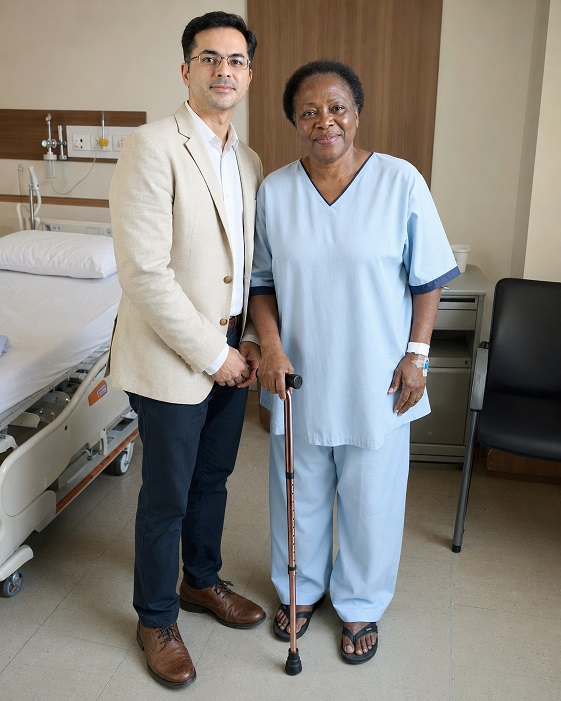
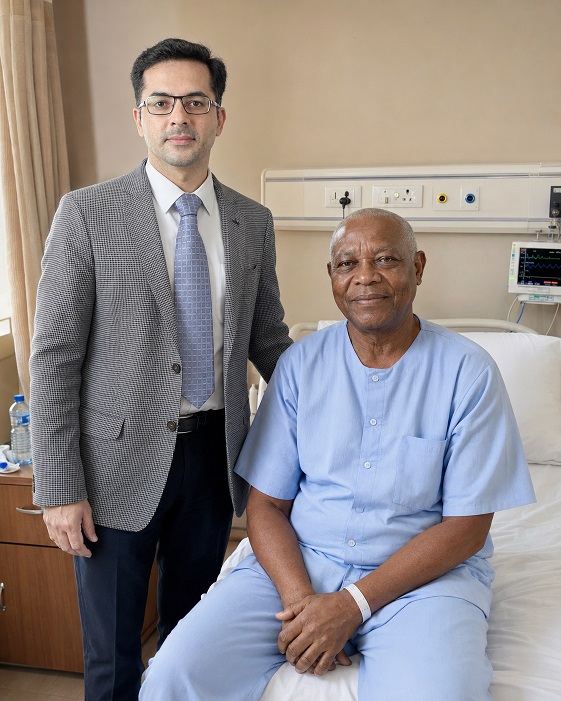
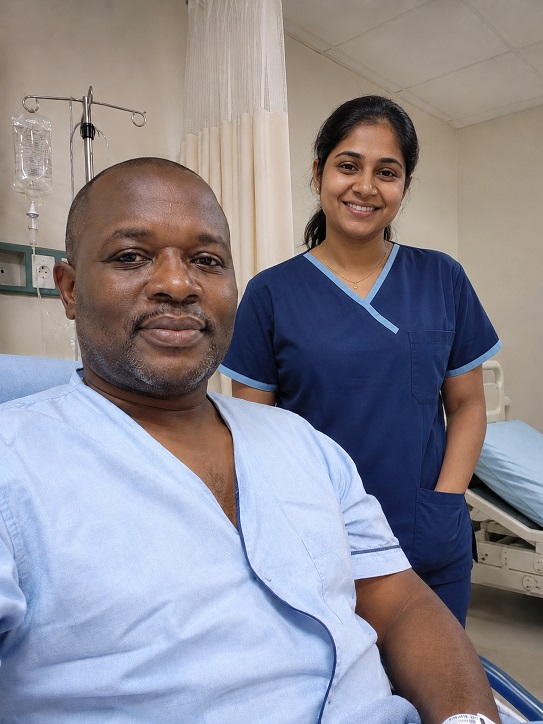
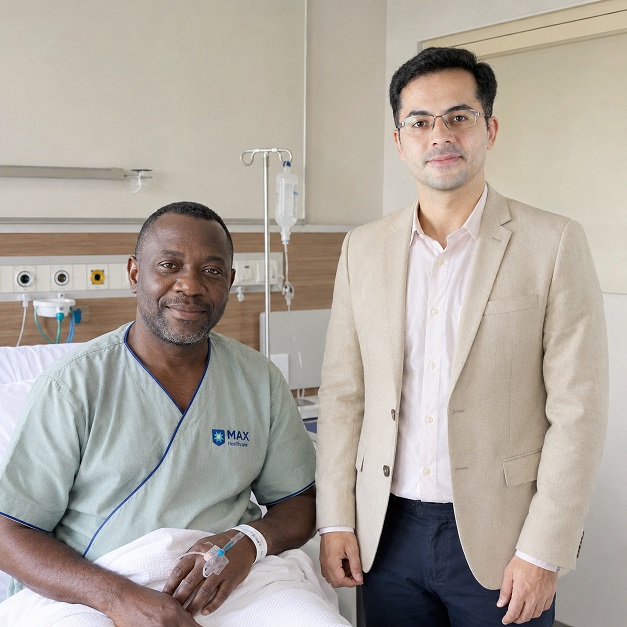
Healing Journeys of Nigerian Patients



Key Takeaways
- This document is deliberately different from the other treatment guides. It is a patient-safety guide, not a treatment or pricing guide, and it intentionally provides zero cost figures for unproven stem cell interventions.
- The guide identifies one category of stem cell treatment as rigorously proven and widely used: haematopoietic stem cell transplantation for conditions such as leukaemia, lymphoma, myeloma and sickle cell disease.
- Haematopoietic stem cell transplant replaces a diseased blood-forming system with a healthy one and is treated in the document as legitimate, evidence-based medicine available at accredited centres.
- The guide distinguishes this proven treatment from a much wider commercial market advertising “stem cell therapy” for autism, cerebral palsy, spinal cord injury, stroke, Parkinson’s disease, ALS, multiple sclerosis and cosmetic anti-ageing.
- According to the document, these marketed uses do not currently have the kind of large, rigorous, peer-reviewed clinical-trial evidence required to describe them as proven treatments.
- The guide makes an important distinction between research being conducted and a therapy being approved and evidence based. A treatment being scientifically interesting or under investigation does not mean patients should pay commercially for it.
- The page 3 figure contrasts the small group of established uses with the much larger list of conditions for which stem cell injections are marketed without comparable evidence. It notes that a small and evolving body of trial evidence exists for a few narrow areas, including certain knee osteoarthritis applications, but advises patients to check the actual study rather than marketing claims.
Quick Facts
- Guide Type
- Patient Safety Guide
- Country Context
- Nigerian Patients Considering Treatment Abroad
- Primary Subject
- Stem Cell Therapy Claims and Patient Safety
- Treatment Price Guide
- No
- Unproven Treatment Cost Figures Provided
- 0
- Rigorously Proven Stem Cell Category Highlighted
- Haematopoietic Stem Cell Transplantation
- Proven Uses Mentioned
- Leukaemia, Lymphoma, Myeloma and Sickle Cell Disease
- Primary Proven Mechanism
- Replacement of a Diseased Blood-Forming System
- Commercially Marketed Unproven Conditions
- Autism, Cerebral Palsy, Spinal Cord Injury, Stroke, Parkinson’s Disease, ALS, Multiple Sclerosis and Cosmetic Anti-Ageing
- Evidence Standard Required
- Large, Rigorous, Peer-Reviewed Clinical Trials
- Research Equals Proven Treatment
- No
- Small Developing Evidence Area Mentioned
- Certain Knee Osteoarthritis Applications
- Primary Scientific Organisation Cited
- International Society for Stem Cell Research
- Other Organisations Referenced
- World Health Organization and Major Cancer Centres
- Main Patient-Safety Concern
- Unregulated Commercial Stem Cell Clinics
- Documented Harm
- Serious Infection
- Documented Harm
- Tumour Formation
- Author
- Dr. Dheeraj Bojwani
- Experience
- 24 Years
In Brief
Most treatments commercially marketed as “stem cell therapy” for conditions such as autism, cerebral palsy, spinal cord injury, stroke or Parkinson’s disease are not supported by the level of clinical evidence required to call them proven therapies. This patient-safety guide identifies haematopoietic stem cell transplantation for blood cancers and sickle cell disease as the clearest rigorously established stem cell treatment, while deliberately providing no prices for unproven commercial injections. Nigerian patients interested in experimental therapy are advised to seek a registered, ethics-approved clinical trial, independently verify its registration and obtain a second opinion from a disease specialist with no financial connection to the clinic.
01 · the Real Problem
A small, proven category, and a much larger unproven industry wearing its name
Stem cells are, genuinely, one of modern medicine's most important discoveries. That real scientific promise is precisely what an international marketplace of clinics has learned to exploit. The International Society for Stem Cell Research, the leading global scientific body in this field, maintains that the marketing of unproven treatments raises serious ethical and safety concerns, and has published patient-facing guidance specifically to help families tell legitimate science from commercial exploitation.
The clearest, most rigorously proven application of stem cells in medicine remains haematopoietic stem cell transplant: replacing a diseased blood-forming system with a healthy one to treat leukaemia, lymphoma, myeloma, and sickle cell disease. This is real, effective, and available at accredited centres in India; we cover it fully in a separate dedicated guide, since it deserves the same careful cost and capacity treatment as any other major procedure in this series.
What this guide is about is everything else sold under the same broad label. Clinics worldwide, including some in countries that also host excellent, legitimate hospitals, market stem cell injections for autism, cerebral palsy, spinal cord injury, stroke recovery, Parkinson's disease, ALS, multiple sclerosis, and cosmetic anti-ageing. None of these currently has the kind of large, rigorous, peer-reviewed clinical trial evidence that would justify calling it a proven treatment. A specialist in blood cancer at a major American cancer centre put it plainly: these are unproven treatments driven by hope against hope, and patients pursuing them are accepting real risk for unknown benefit.
02 · PROVEN VS. MARKETED
Where the evidence actually stands
The gap between what stem cells are proven to treat and what they are marketed to treat is the entire reason stem cell tourism exists. Seeing both lists side by side makes the gap difficult to miss.
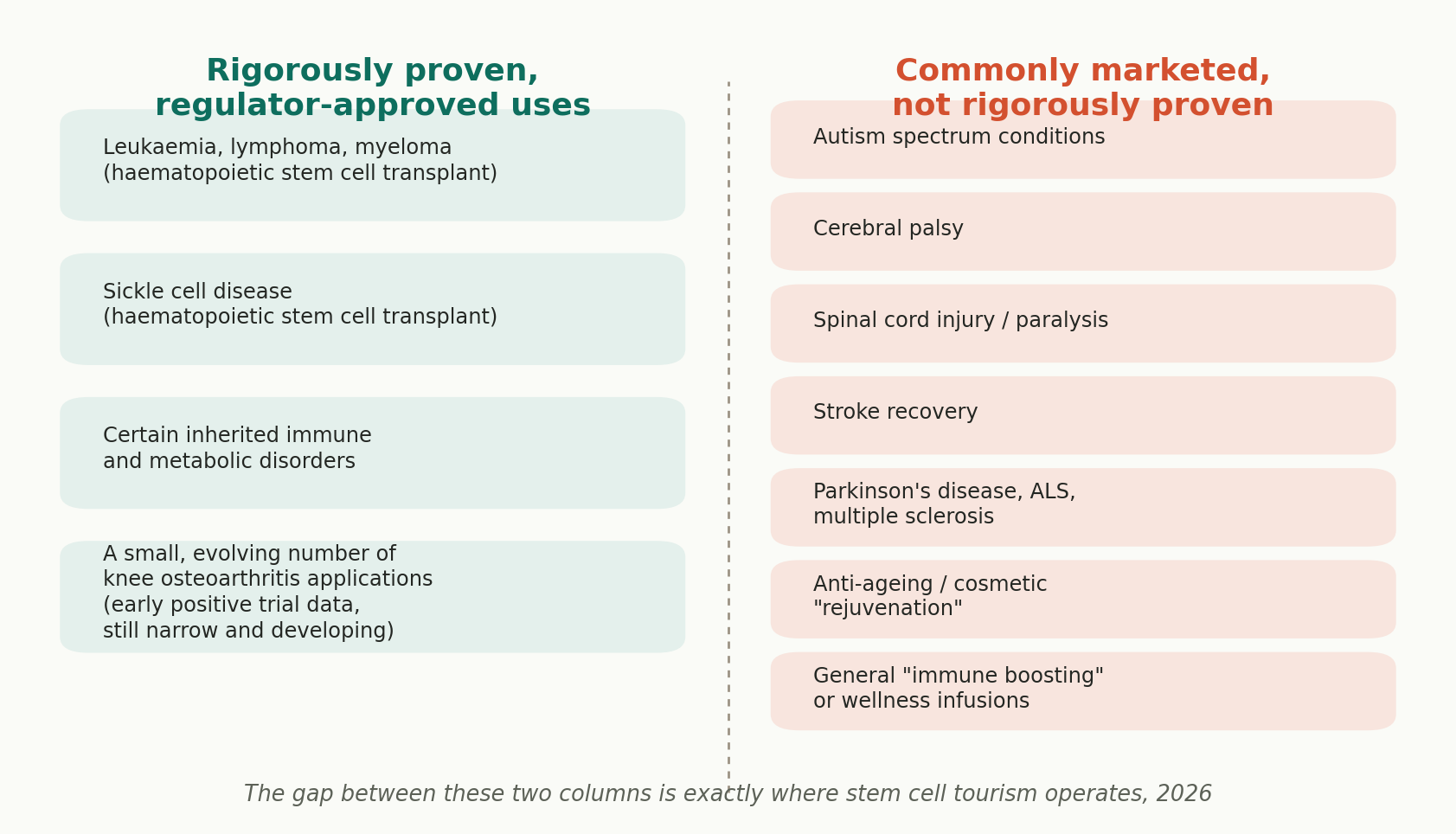
Figure 1. A small, evolving body of trial evidence exists for a few narrow applications beyond transplant, such as certain knee osteoarthritis injections; even there, claims should be checked against the actual published trial, not marketing language.
This does not mean every claim in the right-hand column is dishonestly made, or that research in these areas is not happening. It means that research and an approved, evidence-based treatment are two very different things, and a family considering travelling internationally and paying a large sum deserves to know which one is actually being offered.
03 · the Warning Signs
How to recognise an unregulated clinic before you pay
The ISSCR Patient Handbook on Stem Cell Therapies sets out a consistent pattern of warning signs found across unregulated clinics internationally, regardless of which country they operate in.
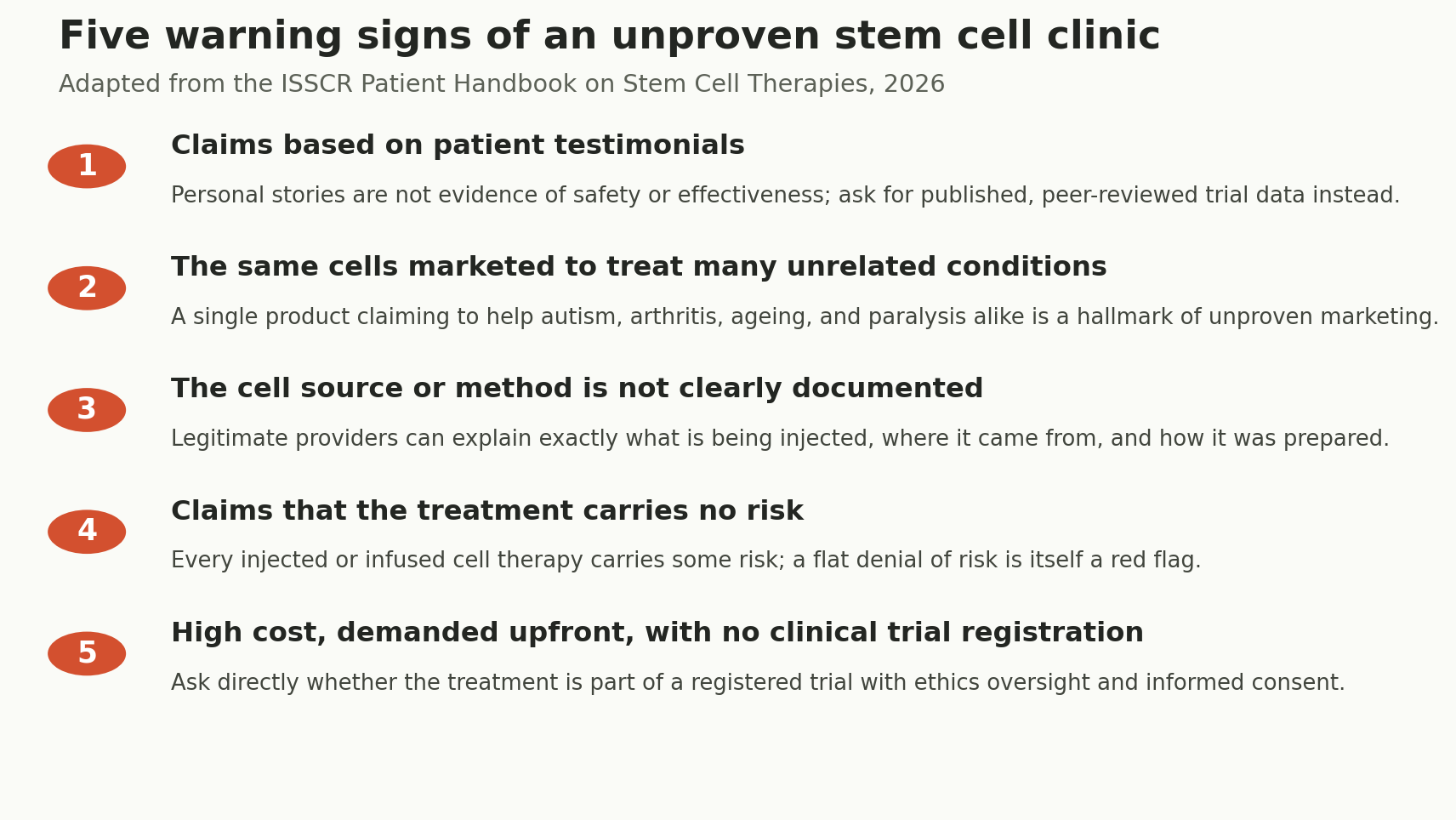
Figure 2. Any single warning sign is worth taking seriously; a clinic showing several of these together should be treated as a firm red flag, not a borderline case.
A genuinely reputable programme, by contrast, can answer specific questions clearly: what exact cells are being used, where they come from, what condition they are approved to treat, what the published evidence shows, and what happens if something goes wrong. If those answers are vague, redirected to a sales consultant, or replaced with video testimonials, that is itself the answer.
04 · WHAT HAS ACTUALLY HAPPENED TO PATIENTS
This is not a theoretical risk
Documented harm from unregulated stem cell interventions is real and has been reported in medical literature and by regulatory bodies internationally. Reported complications include serious infections, tumour formation at the injection site, blood clots, vision loss following eye injections, and heart and neurological complications. In one widely cited case that helped prompt international calls for stronger regulation, two children died at an unregulated clinic in Germany that had exploited a legal loophole to offer untested treatment; the clinic was subsequently closed.
Beyond direct physical harm, there is a second, quieter cost: choosing an unproven treatment over an effective, established one for the same window of time. A treating physician's warning on this point deserves to be repeated directly: patients who pursue unproven therapy instead of effective treatment sometimes return with more advanced disease, making the odds of successful treatment worse than if they had never sought the unproven option at all.
Pursuing unregulated treatment can also have a longer-term consequence that is easy to overlook: it may make a patient ineligible for future enrolment in a legitimate, registered clinical trial for the same condition, should one become available.
05 · the Safer Route
If you want access to genuinely experimental treatment
Hope for a condition without a current proven treatment is not something to be talked out of; it is something to be redirected toward the system built specifically to test new treatments safely. A registered clinical trial is that system, and it looks very different from a commercial clinic's offer.
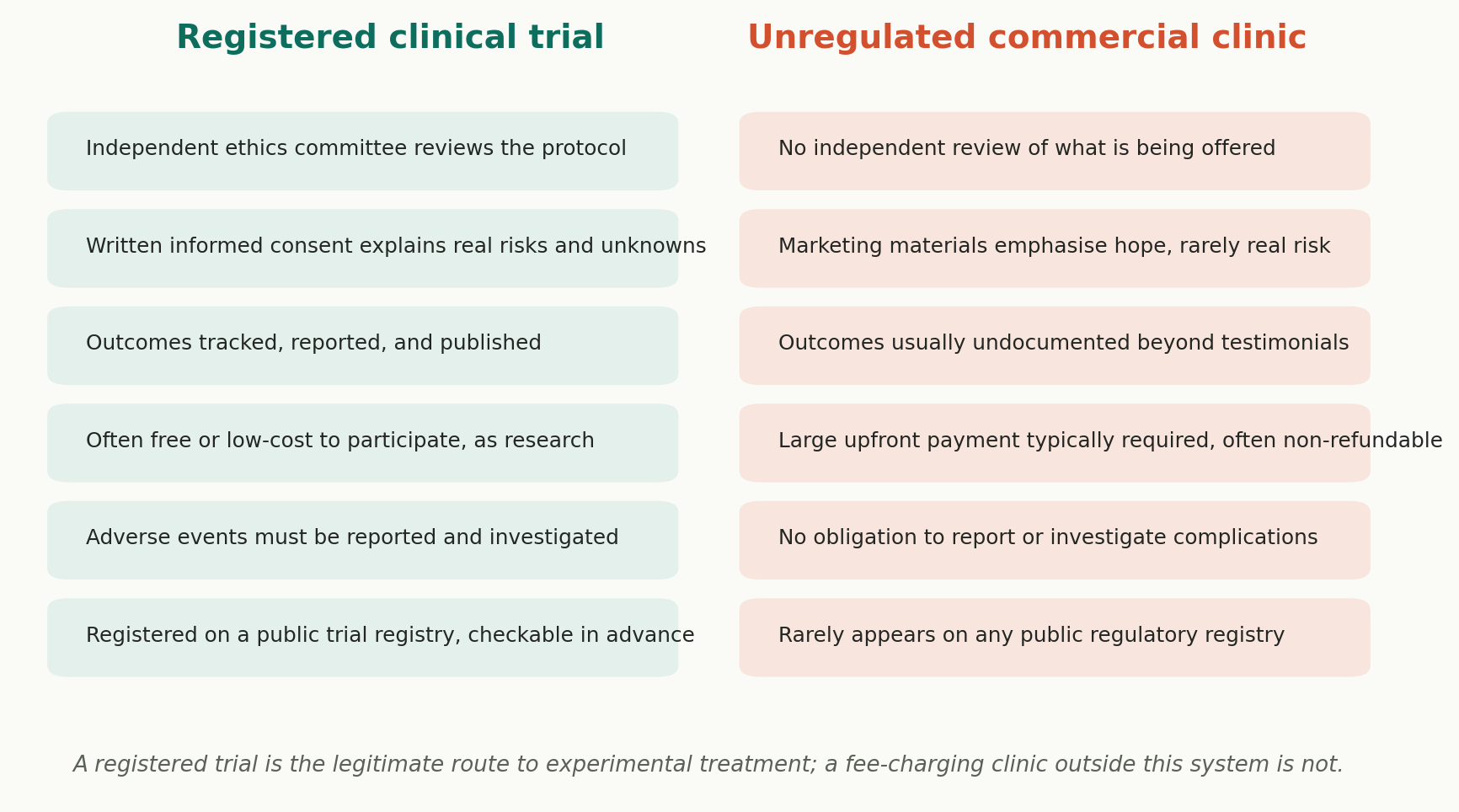
Figure 3. Every feature on the trial side of this comparison exists specifically to protect patients; their absence on the other side is not an oversight, it is the business model.
Practical steps if you are considering any stem cell treatment
- Ask your treating specialist directly whether a proven stem cell treatment exists for your specific condition
- Search public clinical trial registries for studies recruiting patients with your condition
- Ask any clinic offering stem cell therapy for their trial registration number, and verify it independently
- Get a second opinion from a specialist in your actual disease who has no financial connection to the clinic
- Be especially cautious of any clinic offering same-day treatment with no waiting list or screening process
Before you consider stem cell therapy for any condition
- Confirm with an independent specialist whether a proven stem cell treatment genuinely exists for your condition.
- If it is blood cancer or sickle cell disease, consult our dedicated bone marrow transplant guide for accredited options.
- For any other condition, ask explicitly whether the treatment is part of a registered, ethics-approved clinical trial.
- Check the trial registration independently, not just by taking the clinic's word for it.
- Ask for published, peer-reviewed evidence, not patient testimonials or before-and-after videos.
- Treat “no risk” claims, multi-condition marketing, and demands for large upfront cash payments as serious warning signs together.
- Remember that pursuing unproven treatment can delay effective care and may affect future trial eligibility.
- When in doubt, choose the treatment with published evidence over the one with the most persuasive marketing.
Straight Answers for Nigerian Patients about Stem Cell Therapy in India
Is stem cell therapy proven to cure autism, cerebral palsy, or paralysis?
No. There is currently no rigorous clinical trial evidence that stem cell injections cure or reliably improve autism, cerebral palsy, spinal cord injury, stroke, Parkinson's disease, ALS, or multiple sclerosis. Clinics marketing these claims are operating outside the scientific and regulatory consensus.
What stem cell treatments are actually proven to work?
Haematopoietic stem cell transplant for blood cancers and sickle cell disease is rigorously proven and widely used, including in India. A small, evolving body of trial evidence also supports certain uses in knee osteoarthritis, though this remains a narrow and developing area.
What are the warning signs of an unproven stem cell clinic?
Reliance on patient testimonials rather than published data, the same product marketed for many unrelated conditions, an undocumented cell source, claims of no risk, and a large upfront fee outside any registered clinical trial.
Has stem cell tourism actually harmed patients?
Yes. Documented harms include serious infections, tumour formation, blood clots, vision loss, heart and neurological complications, and in some reported cases, death, including children treated at an unregulated clinic that was later closed.
Is a registered clinical trial a safer way to access experimental treatment?
Yes. Registered trials involve independent ethics review, documented informed consent, tracked and published outcomes, and mandatory adverse event reporting, none of which apply to most commercial stem cell clinics operating outside regulatory oversight.
Do Nigerians need a visa for legitimate stem cell transplant treatment in India?
Yes, for the proven treatment, haematopoietic stem cell transplant. Nigerian patients need an Indian Medical Visa from the High Commission in Abuja, the Consulate in Lagos, or the e-Medical route, plus a Medical Attendant Visa for close relatives, with a hospital invitation letter and financial proof.
What should I do if I am considering stem cell therapy for a serious condition?
Get an independent opinion from a specialist in the actual disease, not from the clinic offering the treatment. Ask whether the treatment is part of a registered clinical trial. Be especially cautious of any clinic promising a cure for a condition with no current proven stem cell treatment.
A closing word
Every other guide in this series exists to help a family spend money wisely on a treatment that genuinely works. This one exists to help a family avoid spending money, sometimes a great deal of it, on treatment that does not yet have the evidence to justify the claim being made for it. That is not a smaller act of care than the rest of this series. For a family facing a devastating diagnosis with no current cure, it may be the single most important piece of advice in it.
In twenty-four years of this work, the single clearest pattern across every genuinely effective treatment covered in this series is that it can point to published evidence, name the specific institutions and researchers behind it, and explain honestly what it cannot yet do. Any stem cell clinic that cannot do the same, however compassionate its marketing sounds, is asking for trust it has not earned.
Sources
- 🌐 International Society for Stem Cell Research — Patient Handbook on Stem Cell Therapies
- 🌐 City of Hope — Experts Warn About the Dangers of Stem Cell Tourism, 2025
- 🌐 California Institute for Regenerative Medicine (CIRM) — Stem Cell Tourism overview
- 🌐 International stem cell tourism: a critical literature review and evidence-based recommendations. International Health, Oxford Academic
- 🌐 Master Z, Matthews KRW, Abou-El-Enein M — Unproven stem cell interventions: a global public health problem requiring global deliberation
- 🌐 Cao et al. — Efficacy and safety of mesenchymal stem cells in knee osteoarthritis
Frequently Asked Questions by Nigerians about Stem Cell Therapy in India
Is stem cell therapy proven to cure autism, cerebral palsy or paralysis?
No. The guide states that there is currently no rigorous clinical-trial evidence showing that commercial stem cell injections cure or reliably improve autism, cerebral palsy, spinal cord injury, stroke, Parkinson’s disease, ALS or multiple sclerosis.
What stem cell treatments are actually proven to work?
The clearest established application described in the document is haematopoietic stem cell transplantation for blood cancers and sickle cell disease. A small developing evidence base exists in a few other narrow research areas.
Why does this guide not provide prices for commercial stem cell therapy?
It deliberately gives zero cost figures for unproven interventions because quoting commercial prices could imply a degree of treatment legitimacy that the evidence does not support.
What are the warning signs of an unproven stem cell clinic?
Major warnings include reliance on testimonials rather than published research, one product marketed for many unrelated conditions, an unclear cell source, claims that treatment has no risks and demands for large upfront payments.
Has unregulated stem cell treatment actually harmed patients?
Yes. Documented complications include serious infections, tumour formation, blood clots, vision loss, cardiac and neurological complications and, in some reported cases, death.
Is a registered clinical trial safer than a commercial experimental-treatment clinic?
Yes. Registered trials include independent ethics review, formal consent, structured patient selection, outcome tracking and mandatory reporting of adverse events.
How can Nigerian patients verify a claimed clinical trial?
Ask the clinic for the trial registration number and verify it independently in a recognised public clinical-trial registry rather than relying on the clinic's own website or sales staff.
Can trying an unproven therapy make things worse even if the injection itself causes no complication?
Yes. Time spent pursuing an ineffective treatment may delay established care and allow the underlying condition to worsen. Previous unregulated treatment may also affect eligibility for a future legitimate clinical trial.
Do Nigerian patients need a visa for legitimate stem cell transplant treatment in India?
Yes, for established haematopoietic stem cell transplantation. The guide states that Nigerian patients require an Indian Medical Visa and appropriate Medical Attendant Visas supported by a hospital invitation and financial documentation.
What should a Nigerian patient do before paying for any stem cell treatment?
Obtain an independent opinion from a specialist in the actual disease, confirm whether a proven stem cell treatment exists, verify any claimed clinical trial independently and request peer-reviewed evidence rather than testimonials or marketing videos.
Page Summary
This document is intentionally different from a conventional medical-travel guide. Its purpose is not to compare prices or destinations but to prevent patients from spending money on treatments whose benefits have not been established.The guide begins by separating haematopoietic stem cell transplantation from the broader commercial stem cell market. Blood-forming stem cell transplant for diseases such as leukaemia, lymphoma, myeloma and sickle cell disease is described as rigorous, established medicine.By contrast, commercial stem cell injections advertised for autism, cerebral palsy, paralysis, stroke, Parkinson’s disease, ALS, multiple sclerosis and anti-ageing are described as lacking the level of clinical evidence necessary to regard them as proven therapies.
Citation Block
| Topic | Information |
|---|---|
| Topic Information | Stem Cell Therapy in India: What Nigerian Patients Need to Know Before Travelling |
| Guide Type | Patient Safety / Evidence Guide |
| Country Context | Nigerian Patients Considering Treatment Abroad |
| Primary Subject | Proven Versus Unproven Stem Cell Therapy |
| Proven Stem Cell Treatment Highlighted | Haematopoietic Stem Cell Transplantation |
| Proven Conditions Mentioned | Leukaemia, Lymphoma, Myeloma and Sickle Cell Disease |
| Commercial Claims Discussed | Autism, Cerebral Palsy, Spinal Cord Injury, Stroke, Parkinson’s Disease, ALS, Multiple Sclerosis and Anti-Ageing |
| Unproven Treatment Prices | Deliberately Not Provided |
| Evidence Standard | Rigorous Peer-Reviewed Clinical Trials |
| Primary Regulatory / Scientific Reference | International Society for Stem Cell Research |
| Major Red Flags | Testimonials, Multi-Condition Marketing, Undocumented Cell Source, No-Risk Claims and Large Upfront Fees |
| Documented Risks | Infection, Tumour Formation, Blood Clots, Vision Loss and Cardiac/Neurological Complications |
| Deaths Mentioned | Two Children at an Unregulated Clinic |
| Risk of Delay | Effective Established Treatment May Be Postponed |
| Trial Eligibility Risk | Unregulated Treatment May Affect Future Eligibility |
| Safer Experimental Pathway | Registered Clinical Trial |
| Clinical Trial Safeguards | Ethics Review, Informed Consent, Outcome Tracking and Adverse-Event Reporting |
| First Requirement | Independent Specialist Opinion |
| Verification Requirement | Independently Check Trial Registration |
| Evidence to Request | Published Peer-Reviewed Research |
| Medical Visa | Relevant for Proven Haematopoietic Stem Cell Transplant in India |
| Medical Attendant Visa | Available for Close Relatives |
| Main Decision Principle | Evidence Before Marketing |
| Author | Dr. Dheeraj Bojwani |
| Experience | 24 Years |


Our Mission Statement
Our mission is to place patients at the centre of every healthcare decision by providing trustworthy, evidence-based, and unbiased medical information. We believe that informed patients make better decisions. Backed by personalised guidance from our experienced advisory team, we help patients understand their treatment options, compare them objectively, and confidently choose the path that best suits their medical needs and personal circumstances.
Patient Testimonials from Nigeria



Ready to Take the First Step?
Share your Medical Reports with our Healthcare Managers Today and Get a FREE CONSULTATION, a Personalized Treatment Plan, and Complete Support from Arrival to Recovery.
Get Your Free ConsultationAreas We Serve
This resource has been thoughtfully prepared for patients from Nigeria who are considering medical treatment in India. We also welcome patients from the wider region in the countries mentioned below-
We assist patients from:
- Benin
- Niger
- Chad
- Cameroon
- Algeria
- Egypt
- Libya
- Morocco
- Sudan
- Tunisia
- Gambia
- Ghana
- Burkina Faso
- Cabo Verde
- Côte d'Ivoire
- Equatorial Guinea
- São Tomé and Príncipe
Many of the insights, treatment pathways, hospital recommendations, travel guidance, and patient support services described here are equally relevant and may be used as a reference when planning treatment in India.
From Nigeria to India: Your Complete Patient Support Guide
- Artificial Disc Replacement in India for Nigerian Patients
- Weight Loss and Bariatric Surgery in India for Nigerian Patients
- Bone Marrow Transplant in India for Nigerian Patients
- Brain Tumour Surgery in India for Nigerian Patients
- Breast Cancer Treatment and Surgery in India for Nigerian Patients
- Cancer Treatment and Surgery in India for Nigerian Patients
- Cardiac Arrhythmia and Heart Pacemaker Treatment in India for Nigerian Patients
- Cardiac Surgery in India for Nigerian Patients
- Colorectal Cancer Treatment and Surgery in India for Nigerian Patients
- Complex Orthopaedic and Joint Revision Surgery in India for Nigerian Patients
- Cornea Transplant and Advanced Eye Surgery in India for Nigerian Patients
- CyberKnife Treatment in India for Nigerian Patients
- Gamma Knife Treatment in India for Nigerian Patients
- Heart Failure Treatment and Surgery in India for Nigerian Patients
- Hip Surgery in India for Nigerian Patients
- HIPEC Cancer Surgery in India for Nigerian Patients
- IVF and Fertility Treatment in India for Nigerian Patients
- Joint Arthroscopy and Sports Medicine in India for Nigerian Patients