

HIPEC Cancer Surgery in India for Nigerian Patients
For the diagnosis that used to mean the cancer had simply spread too far to treat — and the small, highly specialised group of teams worldwide who changed that answer for some patients, though not all.
Cancer that has spread across the lining of the abdominal cavity, known as peritoneal carcinomatosis, was for decades treated as a marker of terminal disease, largely untouched by surgery or standard chemotherapy. Hyperthermic intraperitoneal chemotherapy, combined with extensive cytoreductive surgery, changed that outlook for a genuine subset of patients, and it remains one of the most demanding, resource-intensive procedures in all of surgical oncology. Even in the relatively better-resourced North African region, a 2025 survey found only around a quarter of surveyed institutions had any HIPEC capability, despite most offering standard cancer surgery. There is no published evidence of a dedicated programme operating anywhere in Nigeria. This guide sets out what genuinely determines whether HIPEC is the right treatment for a specific patient, what it costs in India once travel is counted, and why its recovery timeline is among the longest of any procedure covered in this series.
| ~26% | 0 | 8–12 hrs | 70–85% |
|---|---|---|---|
| OF NORTH AFRICAN INSTITUTIONS SURVEYED HAD ANY HIPEC CAPABILITY IN 2025 | DEDICATED CRS-HIPEC PROGRAMMES DOCUMENTED IN NIGERIA | TYPICAL OPERATING TIME FOR A FULL CRS-HIPEC PROCEDURE | TYPICAL SAVING ON AN EQUIVALENT INDIA PATHWAY VS. THE US |
Healing Journeys of Nigerian Patients






Key Takeaways
- HIPEC is not a standalone chemotherapy procedure. The guide explains that it combines cytoreductive surgery (CRS) with heated intraperitoneal chemotherapy during the same long operation. First, the surgeon removes all visible tumour from the surfaces of the abdominal cavity; heated chemotherapy is then circulated directly inside the abdomen.
- The chemotherapy is typically heated to approximately 41–43°C and circulated for about 60–90 minutes, allowing a high local concentration of chemotherapy to reach remaining microscopic cancer cells.
- A complete CRS-HIPEC procedure may take approximately 8–12 hours, making it one of the most demanding operations covered in the guide.
- The document strongly warns that not every cancer involving the peritoneum is automatically suitable for HIPEC. The cancer type, overall disease extent and whether complete cytoreduction can realistically be achieved determine candidacy.
- The evidence is described as particularly established for appendiceal cancer and pseudomyxoma peritonei.
- For colorectal cancer with peritoneal metastases, the guide highlights the PRODIGE 7 trial, which found that adding heated chemotherapy did not improve survival compared with thorough cytoreductive surgery alone. The document therefore treats colorectal HIPEC candidacy as more nuanced rather than automatic.
- For gastric cancer with peritoneal spread, the evidence is described as still evolving.
- The Peritoneal Cancer Index (PCI) is one of the central assessment tools in the guide. It helps describe how extensively cancer has spread across the abdominal cavity and is used together with clinical judgement to estimate whether complete cytoreduction is achievable.
Quick Facts
- Treatment
- Cytoreductive Surgery With Hyperthermic Intraperitoneal Chemotherapy
- Common Abbreviation
- CRS-HIPEC
- Country
- India
- Intended Audience
- Nigerian Patients and Families
- Primary Specialty
- Peritoneal Surface Oncology
- Primary Condition
- Peritoneal Carcinomatosis / Peritoneal Metastatic Disease
- HIPEC Components
- Cytoreductive Surgery + Heated Intraperitoneal Chemotherapy
- HIPEC Temperature
- Approximately 41–43°C
- Chemotherapy Circulation Duration
- Approximately 60–90 Minutes
- Typical Full Procedure Duration
- Approximately 8–12 Hours
- Primary Candidacy Measure
- Cancer Type, Disease Extent and Achievable Cytoreduction
- Important Staging Tool
- Peritoneal Cancer Index
- Pre-HIPEC Assessment
- Diagnostic Laparoscopy / PCI Staging
- Best-Established Indications Mentioned
- Appendiceal Cancer and Pseudomyxoma Peritonei
- Author
- Dr. Dheeraj Bojwani
- Experience
- 24 Years' Experience
In Brief
CRS-HIPEC in India is a specialised treatment for selected Nigerian patients with cancer spread across the lining of the abdominal cavity. The procedure combines extensive cytoreductive surgery to remove visible tumour with heated chemotherapy circulated inside the abdomen at approximately 41–43°C for 60–90 minutes. Candidacy depends on the cancer type, Peritoneal Cancer Index and whether complete cytoreduction is realistically achievable; the guide specifically cautions that HIPEC is not appropriate for every case of peritoneal metastasis. Indicative Indian costs range from US$12,000–18,000 for low-complexity CRS-HIPEC to US$20,000–32,000 for high-complexity disease, while a moderate-complexity all-in pathway is estimated at approximately US$25,000–36,000.
01 · the Real Problem
An answer to "too far to treat" that only sometimes applies
HIPEC combines two distinct steps performed in a single, extended operation. First, cytoreductive surgery removes every piece of visible tumour from the surfaces of the abdominal cavity, sometimes requiring removal of parts of the bowel, spleen, or other organs the disease has spread across. Immediately afterward, heated chemotherapy, typically around 41 to 43 degrees Celsius, is circulated through the open abdominal cavity for 60 to 90 minutes, reaching cancer cells at a local concentration far higher than intravenous chemotherapy could safely achieve elsewhere in the body.
The evidence supporting this approach is genuinely strong for some cancers and genuinely unsettled for others, and an honest guide has to say so plainly. For appendiceal cancer and pseudomyxoma peritonei, a rare tumour that fills the abdominal cavity with mucinous material, cytoreductive surgery with HIPEC is well established and produces some of the best outcomes in the entire field. For colorectal cancer that has spread to the peritoneum, a major international trial, PRODIGE 7, found that adding heated chemotherapy did not improve survival over thorough cytoreductive surgery alone, findings that have genuinely reshaped how some specialists now use HIPEC in this specific cancer. Gastric cancer with peritoneal spread sits somewhere between these two pictures, with newer trial evidence still being weighed.
This variability is precisely why the diagnosis alone should never be treated as an automatic ticket to HIPEC. The specific cancer type, and the extent of disease found on careful staging, are what should drive the decision, not the existence of the technology.
02 · Nigeria's Capacity
A procedure concentrated in very few hands, even regionally
HIPEC demands more than most cancer surgery: a surgical oncology team specifically trained in peritoneal surface malignancy, specialised heated-perfusion equipment, an operating theatre capable of supporting procedures lasting most of a day, and an intensive care unit equipped for a patient population at genuine risk of major post-operative complications. A 2025 survey of institutions across North Africa, a region with meaningfully more oncology infrastructure than West Africa on most measures, found cytoreductive surgery available at over 70 percent of surveyed centres and systemic chemotherapy at nearly 90 percent, but HIPEC specifically available at only around a quarter.
Nigeria does not appear in the published literature as having a dedicated CRS-HIPEC programme, consistent with the broader pattern this series has documented in related fields: hepatopancreatobiliary surgery requiring the same kind of specialised, high-volume surgical infrastructure was found available at only a small fraction of West African institutions surveyed, and HIPEC sits at an even higher tier of resource intensity than that.
None of this means Nigerian oncologists cannot recognise peritoneal carcinomatosis or make an appropriate referral. It means the procedure itself, where genuinely indicated, currently has to happen elsewhere.
03 · THE TREATMENT MAP
Which stage of care, and what it costs
The path to HIPEC nearly always begins with staging, not surgery, since the extent of disease found determines whether the operation is appropriate at all.
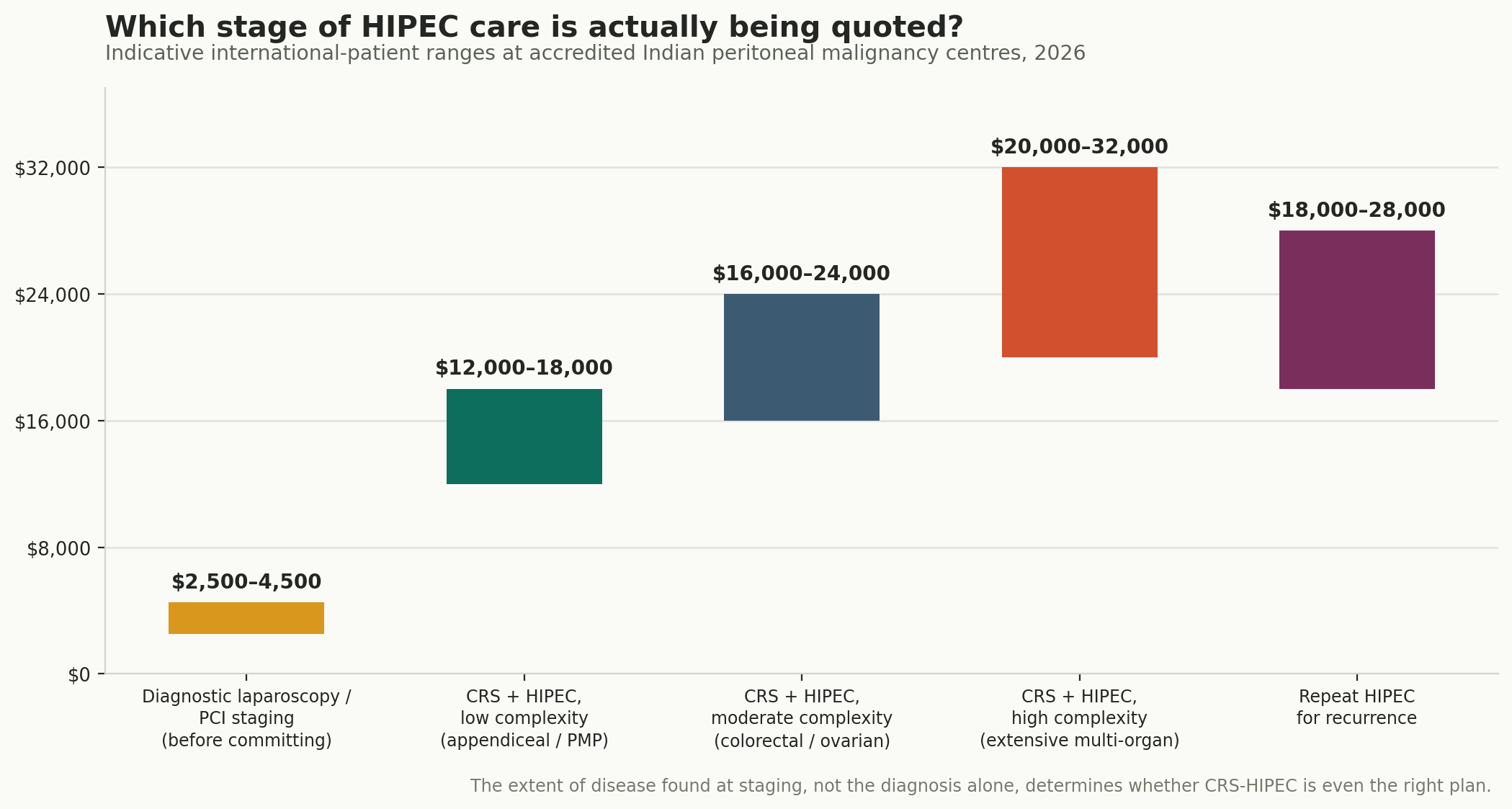
Figure 1. Staging laparoscopy, measuring the peritoneal cancer index, often happens before a family commits to the far larger cost and physical demand of the full procedure.
| Stage of care | Typically suits | Indicative cost | Hospital stay |
|---|---|---|---|
| Diagnostic laparoscopy / PCI staging | Confirming candidacy and disease extent before committing to full surgery | $2,500–4,500 | 1–3 nights |
| CRS-HIPEC, low complexity | Appendiceal cancer or pseudomyxoma peritonei, limited disease extent | $12,000–18,000 | 14–18 nights |
| CRS-HIPEC, moderate complexity | Colorectal or ovarian peritoneal metastases, moderate disease extent | $16,000–24,000 | 16–21 nights |
| CRS-HIPEC, high complexity | Extensive disease needing multiple organ resections | $20,000–32,000 | 21–28 nights |
| Repeat HIPEC for recurrence | Disease recurrence after a prior successful cytoreduction | $18,000–28,000 | 16–21 nights |
Table 1. Indicative international-patient pricing at accredited Indian peritoneal malignancy centres, mid-2026. Figures are planning ranges, not offers, and vary by extent of disease and organs requiring resection.
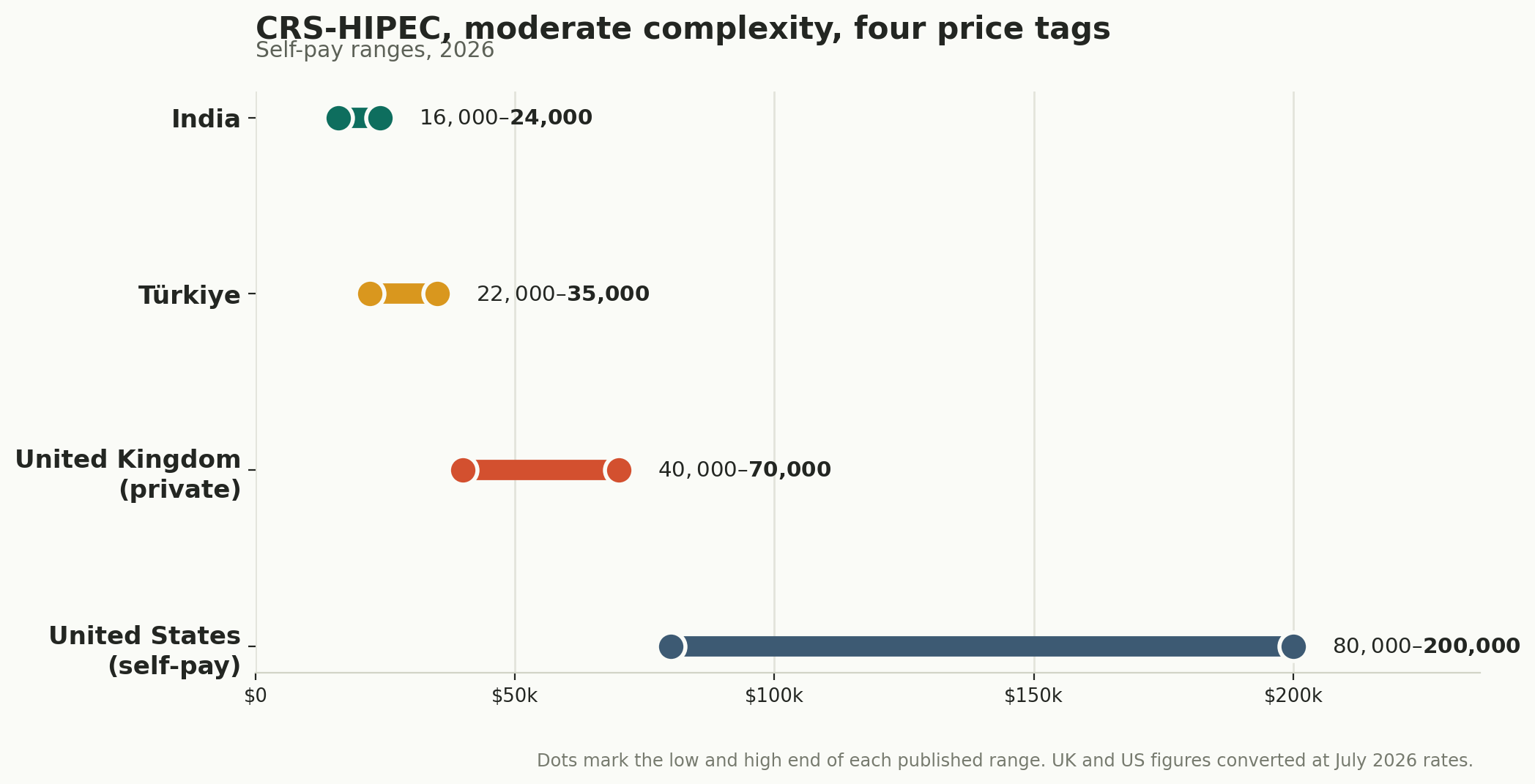
Figure 2. CRS-HIPEC of moderate complexity, priced across four common destinations for Nigerian medical travellers.
What a proper written quote must itemise
- The specific cancer type, and whether current evidence actually supports HIPEC for that diagnosis
- The peritoneal cancer index score and whether complete cytoreduction is realistically achievable
- Which organs are anticipated to require resection, and how that affects both cost and recovery
- Expected ICU days included, and the rate for any extension beyond that
- Whether adjuvant systemic chemotherapy is part of the plan, and its separate cost
04 · the Full Budget
What the whole journey costs, beyond the operation
The surgical fee is the number families anchor on, and the least complete one, given how extended this recovery genuinely is. A representative pathway — moderate complexity CRS-HIPEC, one patient and one attendant, roughly five to six weeks in India — adds up like this:
- Surgical package (surgery, ICU, extended ward stay): $17,000–25,000
- Return flights, two travellers (Lagos/Abuja – Delhi/Mumbai/Chennai): $2,200–3,000
- Pre-surgical workup (staging laparoscopy, CT/MRI, tumour markers): $1,000–1,800
- Extended accommodation, five to six weeks, two people : $2,000–3,200
- Medical and attendant visas (extended validity, two applications): $450–600
- Contingency for extended ICU stay or a longer procedure than planned: 15–20% All-in, most families should plan for US$25,000–36,000 for moderate complexity CRS-HIPEC — roughly ₦34.5–49.7 million at the official mid-July 2026 rate of about ₦1,380 to the dollar, somewhat higher at parallel-market rates near ₦1,410. High complexity cases needing multiple organ resections should be budgeted considerably higher, and adjuvant chemotherapy afterward adds further cost.
05 · Getting There
Visa, travel, and one of the longest recoveries in this series
India issues a Medical Visa (M) to the patient and a Medical Attendant Visa (MX) to up to two close relatives, and given the length of stay this procedure requires, extended visa validity should be requested from the outset. Applications go through the High Commission in Abuja or the Consulate General in Lagos by prior appointment. The hospital's invitation letter, three months of certified bank statements, and passports valid well beyond six months move the process fastest.
Lagos and Abuja both reach Delhi, Mumbai and Chennai with a single stop, usually via Addis Ababa, Doha, Dubai, Nairobi or Istanbul, a total journey of 13 to 18 hours. A patient recovering from CRS-HIPEC needs written fitness-to-fly clearance from the treating surgical team; this is not a procedure where an early flight
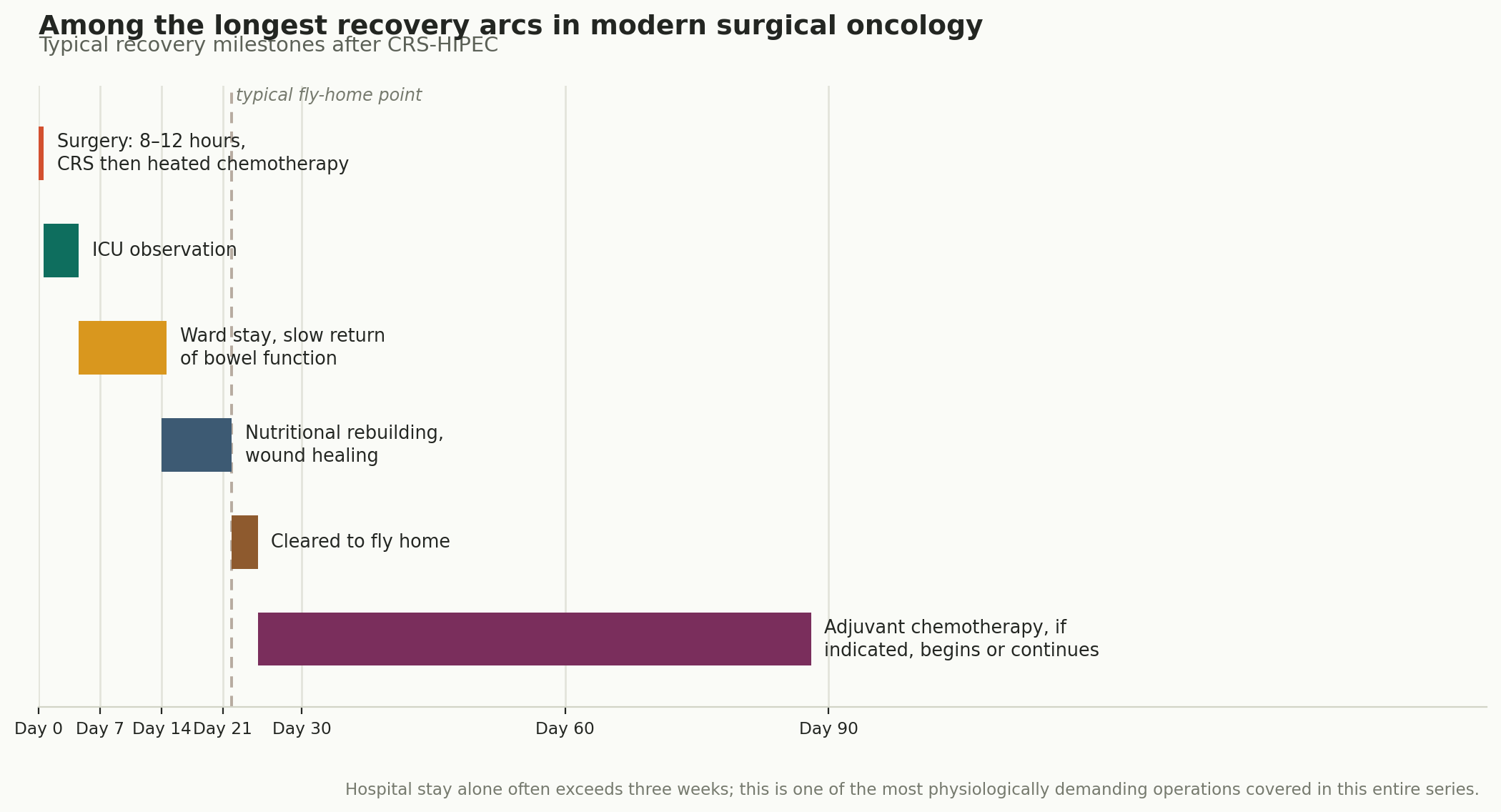
home is realistic.
Figure 3. Hospital stay alone often exceeds three weeks; this is among the most physiologically demanding procedures in modern surgical oncology, and the recovery timeline reflects that honestly.
On candidacy, honestly. Not every patient whose cancer has reached the peritoneum is a good candidate for this operation, and a centre that offers it to everyone who asks, regardless of cancer type or disease extent, is not practising in line with current evidence. A genuine assessment includes staging laparoscopy, a documented peritoneal cancer index score, and an honest conversation about whether complete cytoreduction is realistically achievable for your specific case.
What has to travel home with the patient
- Full operative note, including organs resected and final peritoneal cancer index
- Complete pathology report, since this often determines whether adjuvant chemotherapy follows
- A written nutritional recovery and wound care plan
- A long-term surveillance imaging schedule, since recurrence monitoring continues for years
- A named clinician contact for urgent teleconsultation if fever, severe pain, or wound concerns arise
06 · THE HONEST COMPARISON
What stays in Nigeria, and what travels
Diagnosis, initial staging imaging, and standard systemic chemotherapy for peritoneal disease that is not a HIPEC candidate remain reasonably manageable within Nigeria's broader oncology system, and continuing that care at home with a Nigerian oncologist is entirely appropriate once a treatment plan is set.
What has to travel is the operation itself, for the genuine subset of patients where current evidence supports it, since this specific combination of surgical expertise, equipment, and post-operative critical care is not documented as available anywhere in Nigeria, and remains scarce even across the wider West African region. Given how directly outcomes depend on a team's specific experience with peritoneal surface malignancy, that concentration of expertise is a serious, legitimate factor for any patient considering this pathway.
Before you commit to CRS-HIPEC abroad
- Get a confirmed cancer diagnosis and full staging imaging before contacting any HIPEC centre.
- Ask explicitly whether current evidence supports HIPEC for your specific cancer type, not just peritoneal disease generally.
- Request the centre's peritoneal cancer index assessment and their honest opinion on achievable cytoreduction.
- Ask for the surgical team's specific case volume in peritoneal surface malignancy, not general oncology experience.
- Confirm expected ICU days and the full anticipated length of hospital stay in writing.
- Establish whether adjuvant chemotherapy is anticipated, and its separate cost, before travelling.
- Get written fitness-to-fly criteria before booking a return flight.
- Pay into the hospital's own institutional account only, never an individual's personal account.
Straight Answers for Nigerian Patients about HIPEC Cancer Surgery in India
Is HIPEC surgery in India cheaper than the UK or US?
Yes, substantially. CRS-HIPEC of moderate complexity is indicatively $16,000 to $24,000 in India, against roughly $40,000 to $70,000 privately in the UK and $80,000 to $200,000 self-pay in the United States.
What is HIPEC, and how is it different from standard chemotherapy?
HIPEC combines cytoreductive surgery, removing all visible tumour from the abdominal lining, with heated chemotherapy circulated directly inside the abdominal cavity for 60 to 90 minutes afterward, reaching a much higher local drug concentration than intravenous chemotherapy can achieve.
Is every patient with peritoneal cancer spread a candidate for HIPEC?
No. Candidacy depends on the peritoneal cancer index and whether complete removal of all visible tumour is realistically achievable. Patients with very extensive disease are generally not candidates, and this must be assessed by a specialised team before any treatment plan is made.
Do Nigerians need a visa for HIPEC treatment in India?
Yes. You need an Indian Medical Visa from the High Commission in Abuja, the Consulate in Lagos, or the e- Medical route, plus a Medical Attendant Visa for up to two close relatives, with a hospital invitation letter and financial proof.
How long is recovery after CRS-HIPEC?
Among the longest of any procedure in this series. Hospital stay is typically two to three weeks, including several days in intensive care, with full recovery generally taking three to six months, longer if adjuvant chemotherapy follows.
Does HIPEC work for every cancer that spreads to the abdomen?
The evidence varies by cancer type. It is well established for appendiceal cancer and pseudomyxoma peritonei. For colorectal cancer, a major trial found no added benefit from the heated chemotherapy over thorough surgery alone, so the specific cancer type genuinely changes the recommendation.
Is HIPEC available in Nigeria?
There is no published evidence of a dedicated CRS-HIPEC programme in Nigeria. Even in the relatively better-resourced North African region, a 2025 survey found only around a quarter of surveyed institutions had HIPEC access, despite most offering standard cancer surgery and chemotherapy.
A closing word
HIPEC represents a genuine, hard-won advance for a specific group of patients whose diagnosis once carried no realistic surgical option at all. It is not, and should not be treated as, a universal answer for peritoneal cancer spread; the evidence itself draws real boundaries around who benefits, and a centre unwilling to discuss those boundaries honestly is not one to trust with an operation this demanding.
In twenty-four years of this work, the families who navigate this best get precise staging before committing to anything, ask directly whether the evidence actually supports HIPEC for their specific cancer, and plan realistically, financially and logistically, for a recovery measured in months rather than weeks. The surgery is the single most demanding day. What follows, patiently, is what determines whether that day was worth it.
Sources
- 🌐 American Cancer Society — HIPEC and cytoreductive surgery, patient information
- 🌐 NHS (UK) — Peritoneal cancer and HIPEC: overview
- 🌐 Quenet F et al. — Cytoreductive surgery plus HIPEC versus cytoreductive surgery alone for colorectal peritoneal metastases (PRODIGE 7)
- 🌐 Availability and Practice Patterns of Cytoreductive Surgery and HIPEC across North Africa: A Regional Survey. 2025
- 🌐 Initial Experience with CRS-HIPEC at a Tertiary Care Centre. Journal of the College of Physicians and Surgeons Pakistan, 2025
- 🌐 High Commission of India, Abuja — Medical and Medical Attendant Visa requirements
Frequently Asked Questions by Nigerians about HIPEC Cancer Surgery in India
Is HIPEC surgery in India cheaper than the UK or US?
Yes, according to the guide. Moderate-complexity CRS-HIPEC is approximately US$16,000–24,000 in India, compared with roughly US$40,000–70,000 privately in the UK and US$80,000–200,000 self-pay in the US.
What is HIPEC and how is it different from standard chemotherapy?
HIPEC combines surgery to remove visible abdominal tumour with heated chemotherapy circulated directly inside the abdominal cavity for about 60–90 minutes. This produces a much higher local drug concentration than intravenous chemotherapy.
Is every patient with cancer spread to the peritoneum suitable for HIPEC?
No. Candidacy depends on the specific cancer type, PCI score and whether complete removal of visible tumour is realistically possible. Patients with very extensive disease may not be suitable.
What is the Peritoneal Cancer Index?
The PCI is a staging measure used to describe the extent of cancer spread throughout the abdominal cavity. The guide recommends documenting it before committing to the full procedure.
Which cancers have the strongest evidence for HIPEC?
The guide describes appendiceal cancer and pseudomyxoma peritonei as well-established indications. Evidence differs for colorectal and gastric cancers, so treatment should be diagnosis-specific.
How much does CRS-HIPEC cost in India?
Indicative costs range from US$12,000–18,000 for low-complexity disease to US$20,000–32,000 for high-complexity surgery. The all-in moderate-complexity pathway is approximately US$25,000–36,000.
How long does recovery take after CRS-HIPEC?
Hospitalisation is usually around two to three weeks, including several days in intensive care. Full recovery generally takes approximately three to six months and may take longer if chemotherapy follows.
Is HIPEC available in Nigeria?
The guide states that there is no published evidence of a dedicated CRS-HIPEC programme in Nigeria. Diagnosis, staging and standard systemic chemotherapy can still appropriately be provided within Nigeria.
Do Nigerian patients need a visa for HIPEC treatment in India?
Yes. The guide specifies an Indian Medical Visa and a Medical Attendant Visa for up to two close relatives. Because of the long recovery, extended validity should be requested from the outset.
What should Nigerian patients confirm before travelling for HIPEC?
Confirm the diagnosis and complete staging, ask whether evidence supports HIPEC for the exact cancer, obtain the PCI assessment, establish whether complete cytoreduction is achievable, verify the team's specific CRS-HIPEC case volume and obtain the expected ICU and hospital stay in writing.
Page Summary
This guide presents HIPEC as one of the most specialised and physically demanding cancer treatments in the series and makes an important distinction from the outset: peritoneal spread does not automatically mean a patient should undergo HIPEC. CRS-HIPEC combines two major treatment components in the same operation. Cytoreductive surgery first removes visible tumour throughout the abdominal cavity. Heated chemotherapy is then circulated locally at approximately 41–43°C for 60–90 minutes.
Citation Block
| Topic | Information |
|---|---|
| Topic Information | HIPEC Cancer Surgery in India for Nigerian Patients |
| Treatment | Cytoreductive Surgery + Hyperthermic Intraperitoneal Chemotherapy |
| Country | India |
| Intended Audience | Nigerian Patients and Families |
| Condition | Peritoneal Carcinomatosis / Peritoneal Metastatic Disease |
| Cancer Types Discussed | Appendiceal, Pseudomyxoma Peritonei, Colorectal, Ovarian and Gastric |
| Primary Candidacy Tool | Peritoneal Cancer Index |
| Initial Procedure | Diagnostic Laparoscopy / PCI Staging |
| HIPEC Temperature | Approximately 41–43°C |
| Chemotherapy Circulation | Approximately 60–90 Minutes |
| Typical Operating Time | Approximately 8–12 Hours |
| Nigeria Dedicated Programme | No Published Dedicated CRS-HIPEC Programme |
| Hospital Stay | Approximately 14–28 Nights Depending on Complexity |
| Representative Surgical Package | US$17,000–25,000 |
| All-In Moderate-Complexity Budget | US$25,000–36,000 |
| Representative India Stay | Approximately 5–6 Weeks |
| Recovery | Approximately 3–6 Months |
| ICU | Several Days May Be Required |
| Adjuvant Treatment | Systemic Chemotherapy May Follow |
| Nigeria Appropriate Care | Diagnosis, Initial Staging and Standard Systemic Therapy |
| Records for Return to Nigeria | Operative Note, Final PCI, Pathology, Nutrition/Wound Plan and Surveillance Schedule |
| Medical Visa | Indian Medical Visa |
| Attendant Visa | Medical Attendant Visa for Up to Two Close Relatives |
| Author | Dr. Dheeraj Bojwani |
| Experience | 24 Years' Experience |


Our Mission Statement
Our mission is to place patients at the centre of every healthcare decision by providing trustworthy, evidence-based, and unbiased medical information. We believe that informed patients make better decisions. Backed by personalised guidance from our experienced advisory team, we help patients understand their treatment options, compare them objectively, and confidently choose the path that best suits their medical needs and personal circumstances.
Patient Testimonials from Nigeria



Ready to Take the First Step?
Share your Medical Reports with our Healthcare Managers Today and Get a FREE CONSULTATION, a Personalized Treatment Plan, and Complete Support from Arrival to Recovery.
Get Your Free ConsultationAreas We Serve
This resource has been thoughtfully prepared for patients from Nigeria who are considering medical treatment in India. We also welcome patients from the wider region in the countries mentioned below-
We assist patients from:
- Benin
- Niger
- Chad
- Cameroon
- Algeria
- Egypt
- Libya
- Morocco
- Sudan
- Tunisia
- Gambia
- Ghana
- Burkina Faso
- Cabo Verde
- Côte d'Ivoire
- Equatorial Guinea
- São Tomé and Príncipe
Many of the insights, treatment pathways, hospital recommendations, travel guidance, and patient support services described here are equally relevant and may be used as a reference when planning treatment in India.
From Nigeria to India: Your Complete Patient Support Guide
- Artificial Disc Replacement in India for Nigerian Patients
- Weight Loss and Bariatric Surgery in India for Nigerian Patients
- Bone Marrow Transplant in India for Nigerian Patients
- Brain Tumour Surgery in India for Nigerian Patients
- Breast Cancer Treatment and Surgery in India for Nigerian Patients
- Cancer Treatment and Surgery in India for Nigerian Patients
- Cardiac Arrhythmia and Heart Pacemaker Treatment in India for Nigerian Patients
- Cardiac Surgery in India for Nigerian Patients
- Colorectal Cancer Treatment and Surgery in India for Nigerian Patients
- Complex Orthopaedic and Joint Revision Surgery in India for Nigerian Patients
- Cornea Transplant and Advanced Eye Surgery in India for Nigerian Patients
- CyberKnife Treatment in India for Nigerian Patients
- Gamma Knife Treatment in India for Nigerian Patients
- Heart Failure Treatment and Surgery in India for Nigerian Patients
- Hip Surgery in India for Nigerian Patients
- HIPEC Cancer Surgery in India for Nigerian Patients
- IVF and Fertility Treatment in India for Nigerian Patients
- Joint Arthroscopy and Sports Medicine in India for Nigerian Patients