

Hip Surgery in India for Nigerian Patients
For the hip pain that arrived far too early in life, the fracture after a fall that never quite healed right, and what it actually costs to walk without pain again.
The hip does not always fail the way people expect. Sometimes it is an elderly parent who fell and fractured a femoral neck after a road accident. Sometimes it is much younger — a patient in their twenties or thirties, living with sickle cell disease, whose hip pain turns out to be avascular necrosis of the femoral head, the bone slowly dying from an interrupted blood supply. Nigeria carries the world's largest burden of sickle cell disease, and that fact quietly shapes who ends up needing a hip replacement, and how young they are when they need it. This guide sets out what hip replacement actually costs in India once travel is counted, what Nigeria's own orthopaedic capacity can and cannot offer, and what recovery genuinely looks like — because a hip, unlike a knee, often comes back faster than people expect, provided a few postural rules are respected in the first weeks.
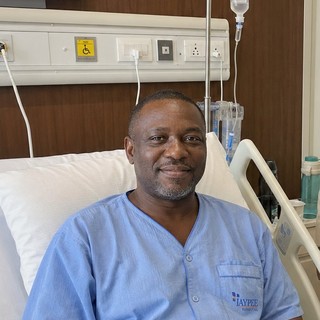
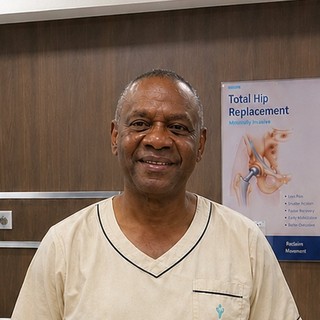
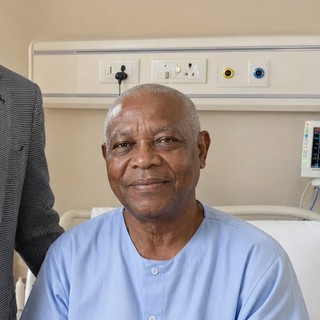
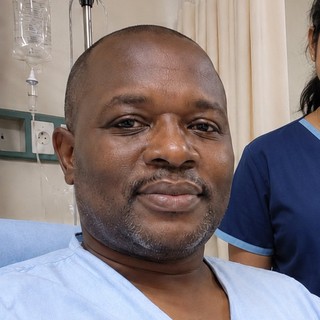
Healing Journeys of Nigerian Patients




Key Takeaways
- The guide explains that Nigerian hip-replacement patients are not always elderly. Nigeria's unusually high burden of sickle cell disease means that avascular necrosis of the femoral head is an important cause of hip failure in much younger adults.
- Nigeria is described as having approximately 150,000 babies born with sickle cell disease every year, representing roughly a quarter to a third of global sickle-cell births. Around 50 million Nigerians are also described as carrying the sickle-cell trait.
- A Nigerian retrospective study cited in the guide found avascular necrosis in nearly one in six sickle cell patients followed over fifteen years, while a Lagos University Teaching Hospital study found it in roughly one quarter of sickle-cell patients presenting with musculoskeletal complications.
- This matters because avascular necrosis may affect both hips, even if only one is painful at the time of diagnosis. The document specifically advises an MRI of both hips before budgeting for a single-hip operation.
- Nigeria has roughly 350 qualified orthopaedic surgeons for a population above 223 million. The National Orthopaedic Hospital in Lagos and several private centres perform hip replacements successfully.
- The guide does not suggest that every hip-replacement patient needs to travel. A straightforward hip fracture in an older patient may be better treated quickly in Nigeria rather than delayed for an overseas journey.
- India's relative advantage is described in the more complex categories: young-onset avascular necrosis, bilateral disease, revision surgery, broader implant choice and cases where sickle-cell-specific anaesthetic and haematology planning matter.
Quick Facts
- Treatment
- Hip Surgery and Hip Replacement
- Country
- India
- Intended Audience
- Nigerian Patients and Families
- Primary Specialty
- Orthopaedic Joint Replacement
- Major Nigeria-Specific Condition
- Sickle-Cell-Related Avascular Necrosis
- Nigeria Sickle Cell Births Mentioned
- Approximately 150,000 Per Year
- Share of Global Sickle Cell Births Mentioned
- Approximately 25–35%
- Nigerians Carrying Sickle Cell Trait Mentioned
- Around 50 Million
- AVN in One Nigerian Sickle Cell Study
- Nearly 1 in 6 Patients
- AVN in LUTH Musculoskeletal Cohort
- Roughly 1 in 4
- Important AVN Feature
- Both Hips May Be Affected
- Recommended AVN Imaging
- MRI of Both Hips
- Nigeria Orthopaedic Surgeons Mentioned
- Approximately 350
- Nigeria Strength
- Fracture Surgery and Straightforward Hip Replacement
- Author
- Dr. Dheeraj Bojwani
- Experience
- 24 Years' Experience
In Brief
Hip surgery in India for Nigerian patients is particularly relevant to younger patients with sickle-cell-related avascular necrosis, bilateral disease or complex revision needs. The guide recommends MRI assessment of both hips when avascular necrosis is suspected because the condition may be bilateral even when symptoms initially affect only one side. Indicative Indian costs range from US$3,500–5,500 for hemiarthroplasty to US$8,000–11,500 for bilateral hip replacement, while a standard unilateral total hip replacement is approximately US$4,500–7,500. Walking with support generally starts on the first postoperative day, and many patients walk independently within about three to five weeks.
Who This Guide is for
Families facing a hip fracture in an elderly parent after a fall or road traffic accident Patients, often younger, diagnosed with avascular necrosis of the femoral head, particularly in connection with sickle cell disease Anyone comparing a robotic-assisted procedure against a conventional one Families considering bilateral hip replacement, where both hips need doing
SECTION ONE
What Nigeria can do, and where it struggles
Start with the honest baseline. Nigeria has roughly 350 qualified orthopaedic surgeons for a population above 223 million, and it also carries a specific national burden that shapes hip disease more than almost anywhere else in the world: an estimated 150,000 babies are born with sickle cell disease in Nigeria every year, the highest number of any country, representing roughly a quarter to a third of all sickle cell births globally. Around 50 million Nigerians carry the sickle cell trait, and no nationwide newborn screening programme yet exists to catch the disease early and manage it proactively.
Avascular necrosis of the femoral head is one of the best-documented complications of sickle cell disease, and Nigerian studies show it is not rare. A retrospective study at Obafemi Awolowo University Teaching Hospital found nearly one in six sickle cell patients followed over fifteen years had developed avascular necrosis of the hip; a Lagos
University Teaching Hospital study found it among roughly a quarter of sickle cell patients presenting with musculoskeletal complications. This means a meaningful share of Nigerian hip replacement candidates are not elderly at all — they are young adults whose hip has failed decades before arthritis normally would.
The National Orthopaedic Hospital in Lagos and several private centres perform hip replacements competently, and a straightforward fracture in an elderly patient is often best treated quickly and locally rather than delayed for travel. What remains genuinely constrained is implant choice and case volume for the harder categories: bilateral disease, revision surgery, and hip replacement in a young sickle cell patient where implant longevity and anaesthetic planning both matter enormously.
SECTION TWO
Which procedure, and what it costs
“Hip replacement” covers very different operations depending on the cause. A fracture in an older patient is often treated with hemiarthroplasty, faster and less costly. Avascular necrosis or arthritis in a younger patient usually calls for a total hip replacement, with an implant chosen to last for decades rather than years.
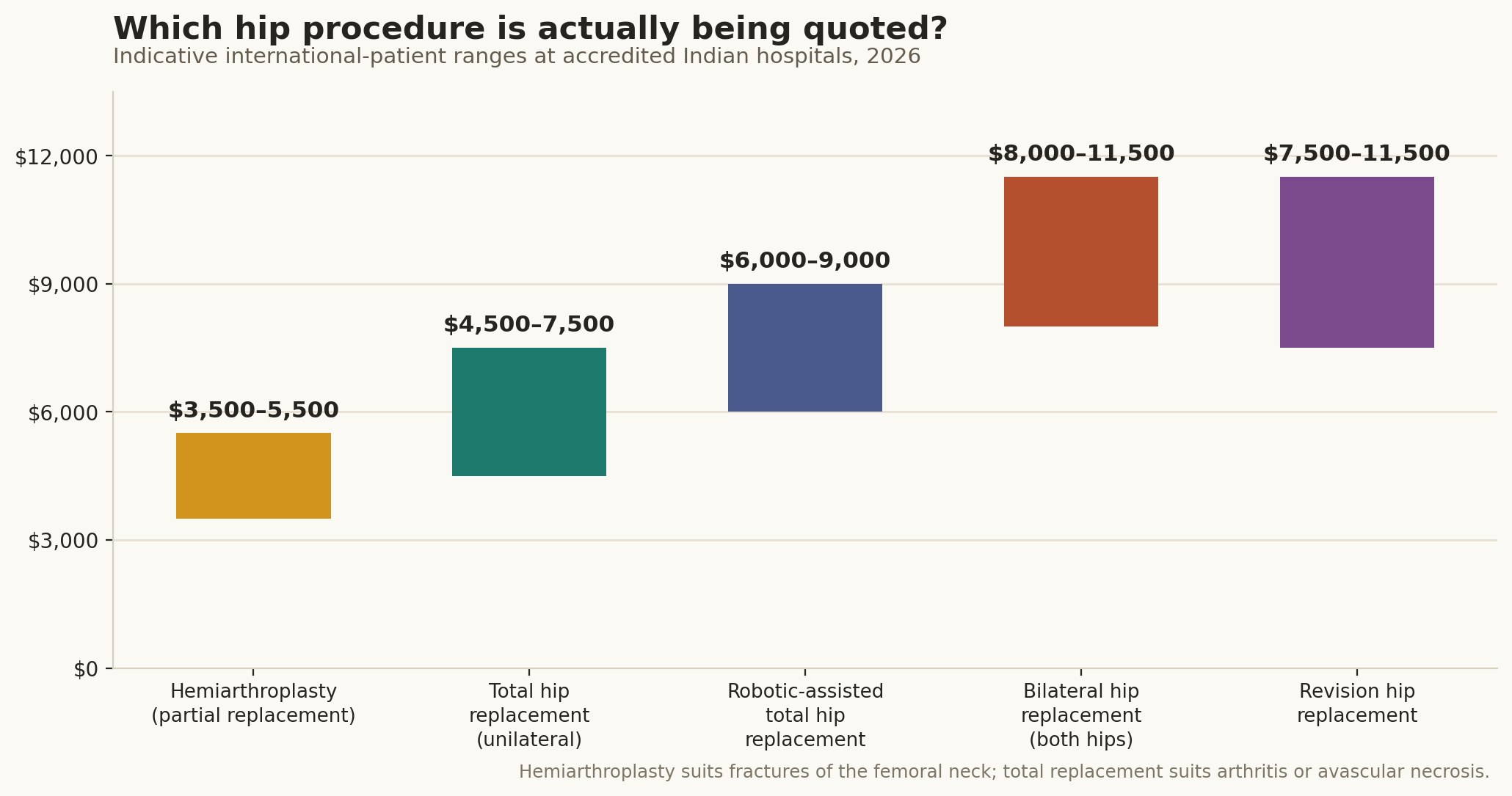
Figure 1. Five different procedures under one umbrella term. Confirm which one your surgeon is actually quoting, and why, before comparing prices between hospitals.
| Procedure | Typically suits | Indicative cost | Hospital stay |
|---|---|---|---|
| Hemiarthroplasty (partial replacement) | Femoral neck fracture in older patients | $3,500–5,500 | 3–5 nights |
| Total hip replacement (unilateral) | Advanced arthritis or avascular necrosis of one hip | $4,500–7,500 | 3–5 nights |
| Robotic-assisted total hip replacement | Complex deformity, younger patients wanting maximum precision | $6,000–9,000 | 3–5 nights |
| Bilateral hip replacement | Both hips affected, often the case in bilateral avascular necrosis | $8,000–11,500 | 5–7 nights |
| Revision hip replacement | A previous implant failing, loosening, or infected | $7,500–11,500 | 5–8 nights |
Table 1. Indicative international-patient pricing at accredited Indian orthopaedic centres, mid-2026. Figures are planning ranges, not offers, and vary by implant brand, hospital tier and robotic assistance. Avascular necrosis linked to sickle cell disease frequently affects both hips, even when only one is symptomatic at the time of diagnosis. Ask for an MRI of both hips before budgeting for a single-hip procedure, to avoid the surprise of a second trip a year later.
SECTION THREE
The full budget, not just the surgery
The surgical package is the number everyone anchors on, and the one that tells the least complete story. A representative journey — single total hip replacement, one patient and one attendant, two to three weeks in India — adds up like this:
- Surgery package (theatre, implant, surgeon, ward): $4,500–7,500
- Return flights, two travellers (Lagos/Abuja – Delhi/Mumbai/Chennai): $2,200–3,000
- Pre-surgical diagnostics (imaging, full haematology workup, anaesthetic clearance): $450–800
- Accommodation and living, two to three weeks, two people : $1,000–1,800
- Physiotherapy sessions in India (through the hospital stay): $250–500
- Medical and attendant visas (two applications): $400–500 All-in, most families should plan for US$8,800–14,100 for a single hip — roughly ₦12.1–19.5 million at the official mid-July 2026 rate of about ₦1,380 to the dollar, somewhat higher sourcing dollars in the parallel market near ₦1,410. For a sickle cell patient with confirmed bilateral disease, a planned bilateral procedure usually costs less overall than two separate trips a year apart.
Set against the alternatives, the case for travelling is strongest precisely for the categories Nigeria's own capacity handles least easily: young-onset avascular necrosis and revision surgery.
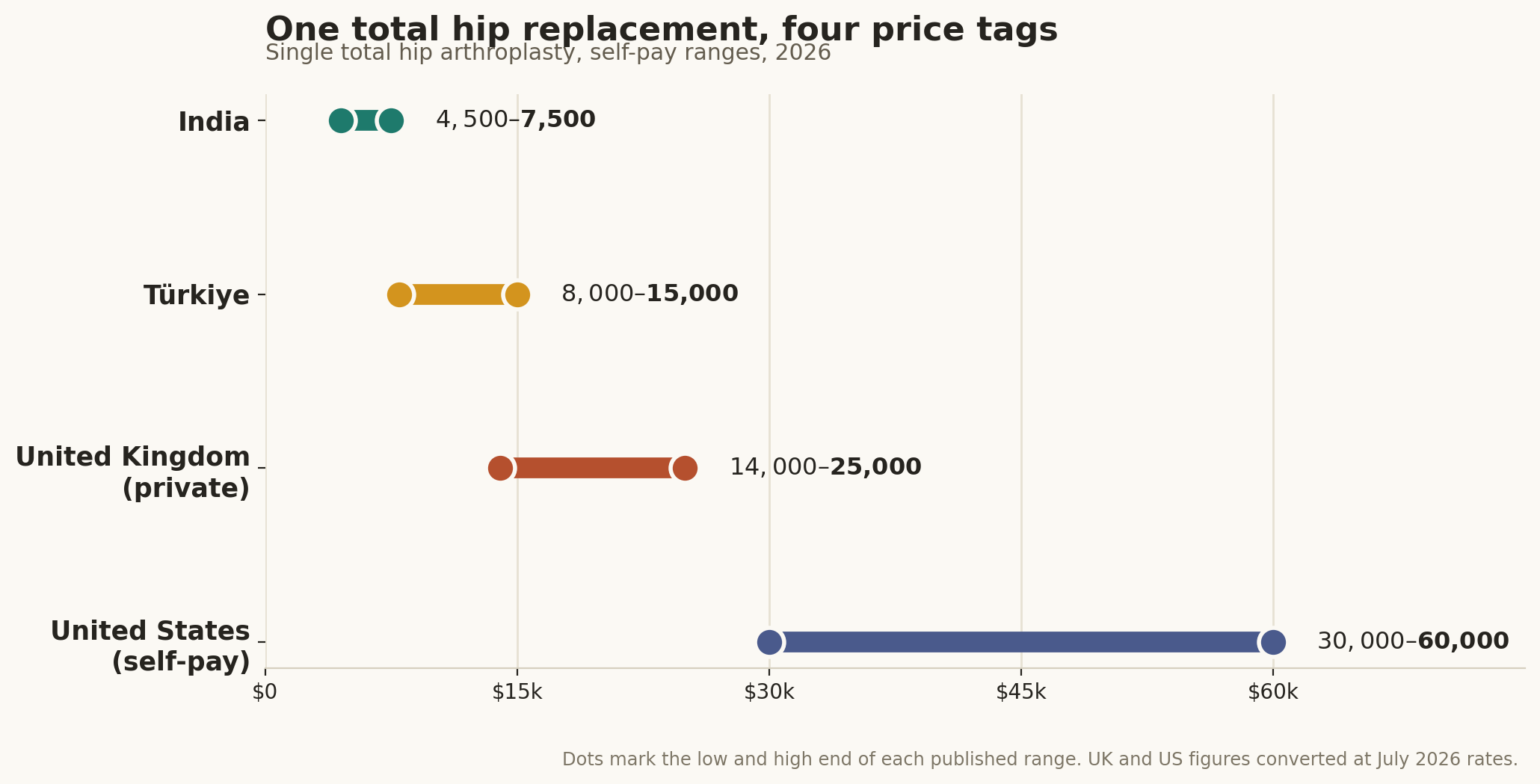
Figure 2. A single total hip replacement, self-pay, across four common destinations for Nigerian medical travellers.
What a proper written quote must itemise
- Surgeon, anaesthesia and theatre fees, separated from ward and implant charges
- Implant brand and whether it is imported or Indian-manufactured
- Whether a full haematology workup is included for sickle cell patients
- Whether robotic assistance is included, or priced as an add-on
- Written policy on cost if a second hip or revision becomes necessary
SECTION FOUR
Getting there, and getting home
India issues a Medical Visa (M) to the patient and a Medical Attendant Visa (MX) to up to two close relatives — spouse, parent, sibling, adult child. Applications go through the High Commission in Abuja or the Consulate General in Lagos by prior appointment, and an e-Medical route turns around in days for straightforward files. Three documents move it fastest: the hospital's invitation letter naming your attendants with passport numbers, three months of certified bank statements, and a passport valid six months with two blank pages.
Lagos and Abuja both reach Delhi, Mumbai and Chennai with a single stop, usually via Addis Ababa, Doha, Dubai, Nairobi or Istanbul, a total journey of 13 to 18 hours. For a patient with sickle cell disease specifically, cabin pressure and dehydration on long flights can be a trigger for a painful crisis, so build in hydration breaks, avoid tight seating for extended periods, and carry a written summary of the diagnosis and usual management plan.
The part that decides how well the hip actually recovers
Unlike the knee, the hip generally tolerates early walking well, but demands strict postural precautions in the first weeks — avoiding certain positions of flexion and rotation that can dislocate a new implant. That protocol has to travel home with the patient in full.
- Operative note, the surgical approach used (anterior or posterior), and implant details
- The specific postural precautions tied to that approach, in writing
- Discharge medication list using generic names stocked in Nigerian pharmacies
- For sickle cell patients, a joint follow-up plan between the Indian team and the home haematologist
- A named clinician contact for teleconsultation if pain, swelling or fever arise
SECTION FIVE
What recovery actually looks like
There is genuinely good news here: the hip tends to recover faster than the knee. Post-operative pain is usually less, walking with support starts on day one, and many patients are walking unaided somewhere between three and five weeks, against four to six for a knee.
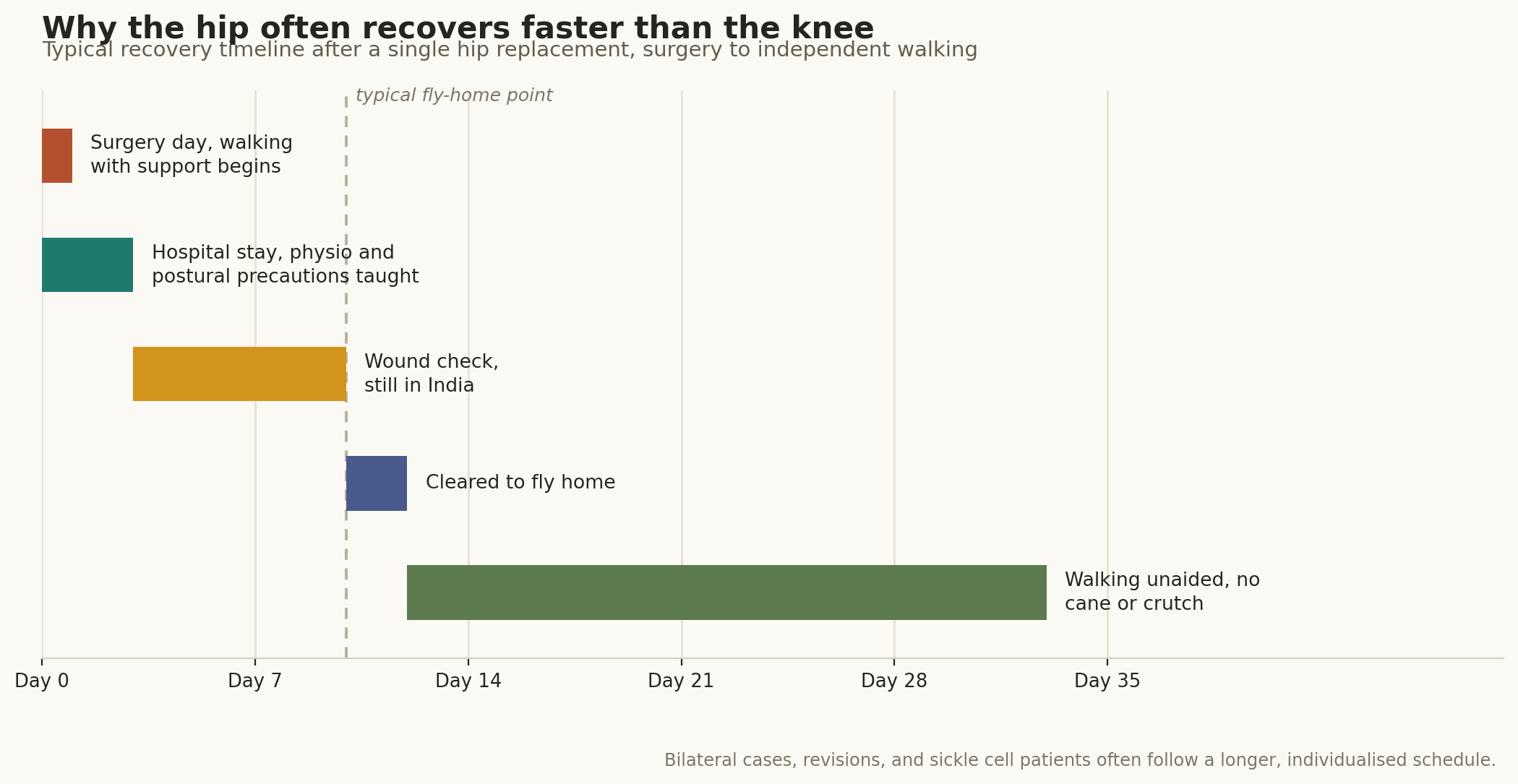
Figure 3. A typical single-hip recovery curve. Bilateral cases, revisions, and sickle cell patients often follow a longer, more individualised schedule.
Respecting the postural precautions in the first six weeks matters more than the intensity of physiotherapy itself — most early dislocations happen from a single wrong movement, not from too little exercise. A Nigerian physiotherapist can pick up the rest of the rehabilitation, provided they receive the written protocol naming the exact surgical approach used.
SECTION SIX
The honest comparison
Nigeria treats hip trauma competently. The National Orthopaedic Hospital and several private centres in Lagos and Abuja handle fractures and straightforward replacements with real success, and there is little reason to travel for an uncomplicated case that can be treated quickly at home.
Where travelling earns its cost is avascular necrosis in a younger patient, particularly where sickle cell disease is involved and both hips may eventually need treatment, bilateral surgery planned from the outset, and revision procedures needing specific implant systems. Those are exactly the categories where Nigeria's national sickle cell burden creates demand that its current specialist capacity and implant access cannot yet fully match.
Before you commit to surgery abroad
- Get a clear diagnosis first — fracture, arthritis, or avascular necrosis — confirmed by imaging.
- For suspected avascular necrosis, request an MRI of both hips, even if only one is currently painful.
- If you have sickle cell disease, share your complete haematology history with the Indian surgical team before travel.
- Ask explicitly whether robotic assistance is included in the quoted price or billed separately.
- For bilateral cases, get one quote for both hips together, not two single-hip quotes added up.
- Establish in writing the postural precaution protocol before you leave India, not after you land.
- Verify the invitation letter has reached the mission by email, with both attendants named.
- Pay into the hospital's own institutional account only, never an individual's personal account.
Straight Answers for Nigerian Patients about Hip Surgery in India
Is hip replacement in India cheaper than the UK or US?
Yes, substantially. A single total hip replacement is indicatively $4,500 to $7,500 in India, against roughly $14,000 to $25,000 privately in the UK and $30,000 to $60,000 self-pay in the United States.
How long do I need to stay in India for hip replacement?
About two weeks for a single hip: three to five days in hospital, then roughly a week of review and physiotherapy before flying is cleared. Bilateral surgery or revision typically needs one to two weeks longer.
Do Nigerians need a visa for hip surgery in India?
Yes. You need an Indian Medical Visa from the High Commission in Abuja, the Consulate in Lagos, or the e-Medical route, plus a Medical Attendant Visa for up to two close relatives, with a hospital invitation letter and financial proof.
Is robotic hip replacement worth the extra cost?
It is widely available in India and typically adds 20 to 30 per cent to the base price. It improves implant positioning precision, which matters most for complex deformity, revision cases, or younger patients.
Can both hips be replaced at the same time?
Yes. Bilateral hip replacement in a single admission is routine at high-volume Indian centres, indicatively $8,000 to $11,500 for both hips combined — generally more economical than two separate trips.
Can avascular necrosis from sickle cell disease be treated in India?
Yes. High-volume Indian centres routinely treat avascular necrosis of the femoral head, including in younger sickle cell patients, with appropriate pre-operative haematology workup and implants selected for longevity.
Is India better than Nigeria for hip replacement?
Not always. Nigeria's National Orthopaedic Hospital and several private centres perform hip replacements successfully. India's advantage is case volume, implant choice, and experience with complex or sickle-cell-related cases.
A closing word
A hip replacement is judged a year later by whether someone walks without thinking about it and without pain in the groin, not by which country the operation happened in. For a straightforward fracture in an older patient, speed of local treatment often matters more than the destination. For avascular necrosis in a younger patient, sickle cell disease or otherwise, or for a complex revision, India's case volume and implant range offer a genuine margin of safety.
In twenty-four years of this work, the patients who do best are the ones who get a precise diagnosis first — including an MRI of both hips where avascular necrosis is suspected — and who respect the postural precautions of the first weeks with real discipline, wherever they are treated. The implant does its part in theatre. The walking gets rebuilt afterward, carefully, one week at a time.
Sources
- 🌐 American Academy of Orthopaedic Surgeons — Total Hip Replacement, patient information
- 🌐 NHS (UK) — Hip replacement: overview and recovery
- 🌐 Adekile AD et al. — Avascular necrosis of the femoral head in sickle cell disease in Nigeria: a retrospective study
- 🌐 Musculo-skeletal disorders in sickle cell disease, Lagos University Teaching Hospital. Nigerian Postgraduate Medical Journal
- 🌐 Africa Check — Weighing Nigeria's sickle cell burden: is it the world's highest? africacheck.org, 2026 update
- 🌐 High Commission of India, Abuja — Medical and Medical Attendant Visa requirements
Frequently Asked Questions by Nigerians about Hip Surgery in India
Is hip replacement in India cheaper than the UK or US?
Yes, according to the guide. A single total hip replacement is listed at US$4,500–7,500 in India, compared with roughly US$14,000–25,000 privately in the UK and US$30,000–60,000 self-pay in the United States.
How long do Nigerian patients usually stay in India for hip replacement?
The guide recommends about two weeks for a single hip: roughly three to five days in hospital followed by review and physiotherapy. Bilateral or revision surgery generally needs one to two additional weeks.
Can avascular necrosis caused by sickle cell disease be treated in India?
Yes. The guide states that Indian high-volume centres routinely treat femoral-head AVN in younger sickle-cell patients, with appropriate haematology assessment and implant selection for long-term durability.
Why should both hips be scanned if only one hip hurts?
Sickle-cell-related avascular necrosis frequently affects both hips. The document therefore recommends MRI of both hips to identify silent disease and avoid an unexpected second treatment trip later.
Can both hips be replaced during the same admission?
Yes. Bilateral hip replacement is described as routine at high-volume Indian centres and costs approximately US$8,000–11,500 for both hips combined.
Is robotic hip replacement worth the extra cost?
The guide says robotic assistance generally adds 20–30% to the base price and improves implant-positioning precision. Its value may be greatest for complex deformity, revision surgery or younger patients.
How soon can patients walk after total hip replacement?
Walking with support generally begins on day one after surgery. Many single-hip patients walk independently within approximately three to five weeks.
What precautions are important after hip replacement?
The guide stresses strict postural precautions during the first six weeks. The exact restrictions depend on whether an anterior or posterior surgical approach was used and should be supplied in writing.
Do Nigerian patients need a visa for hip surgery in India?
Yes. The document specifies an Indian Medical Visa and a Medical Attendant Visa for up to two close relatives, supported by a hospital invitation letter and financial proof.
Is India always better than Nigeria for hip replacement?
No. Straightforward fractures and uncomplicated replacements can be treated successfully in Nigeria. The guide identifies India's clearest advantage in complex cases, young patients with sickle-cell-related AVN, bilateral surgery and revision replacement.
Page Summary
This guide approaches hip surgery through a Nigeria-specific issue that makes the patient population different from the usual age-related arthritis model: sickle cell disease and avascular necrosis can cause severe hip destruction decades earlier than expected. The document reports Nigeria's very high sickle-cell burden and cites Nigerian studies showing meaningful rates of avascular necrosis among patients with the disease. Because AVN can affect both hips, the guide specifically recommends MRI of both sides even when symptoms are currently unilateral.
Citation Block
| Topic | Information |
|---|---|
| Topic Information | Hip Surgery in India for Nigerian Patients |
| Treatment | Hip Replacement and Orthopaedic Hip Surgery |
| Country | India |
| Intended Audience | Nigerian Patients and Families |
| Conditions Covered | Femoral Neck Fracture, Arthritis, Avascular Necrosis and Failed Hip Replacement |
| Nigeria-Specific Focus | Sickle-Cell-Related Avascular Necrosis |
| Primary Diagnostic Requirement | Imaging |
| AVN Imaging Recommendation | MRI of Both Hips |
| Procedures | Hemiarthroplasty, Total Hip Replacement, Robotic THR, Bilateral THR and Revision THR |
| Hospital Stay | Approximately 3–8 Nights Depending on Procedure |
| Representative India Stay | Approximately 2–3 Weeks |
| All-In Single Hip Budget | US$8,800–14,100 |
| Walking With Support | From Day 1 |
| Independent Walking | Approximately 3–5 Weeks in Many Single-Hip Cases |
| Postural Precaution Period | First 6 Weeks |
| Nigeria Appropriate Care | Fractures and Straightforward Hip Replacement |
| Travel More Relevant For | AVN, Bilateral Disease, Revision and Complex Cases |
| Sickle Cell Planning | Orthopaedic + Haematology Coordination |
| Records for Return to Nigeria | Operative Note, Surgical Approach, Implant Details and Rehabilitation Protocol |
| Medical Visa | Indian Medical Visa |
| Attendant Visa | Medical Attendant Visa for Up to Two Close Relatives |
| Author | Dr. Dheeraj Bojwani |
| Experience | 24 Years' Experience |


Our Mission Statement
Our mission is to place patients at the centre of every healthcare decision by providing trustworthy, evidence-based, and unbiased medical information. We believe that informed patients make better decisions. Backed by personalised guidance from our experienced advisory team, we help patients understand their treatment options, compare them objectively, and confidently choose the path that best suits their medical needs and personal circumstances.
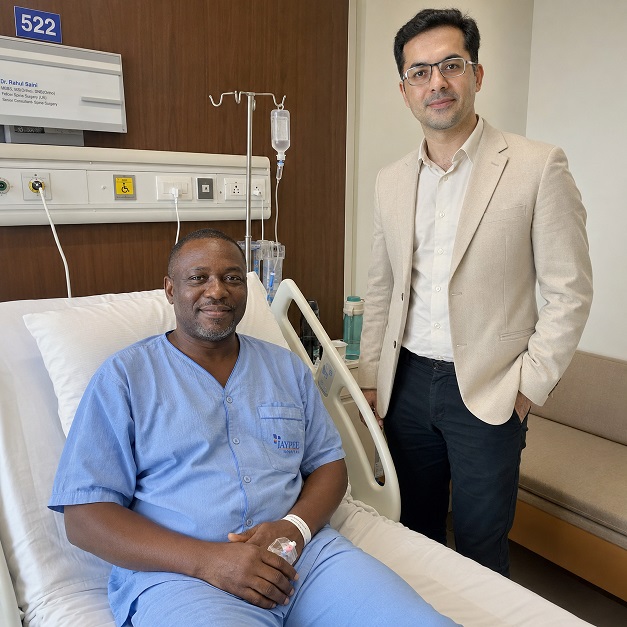
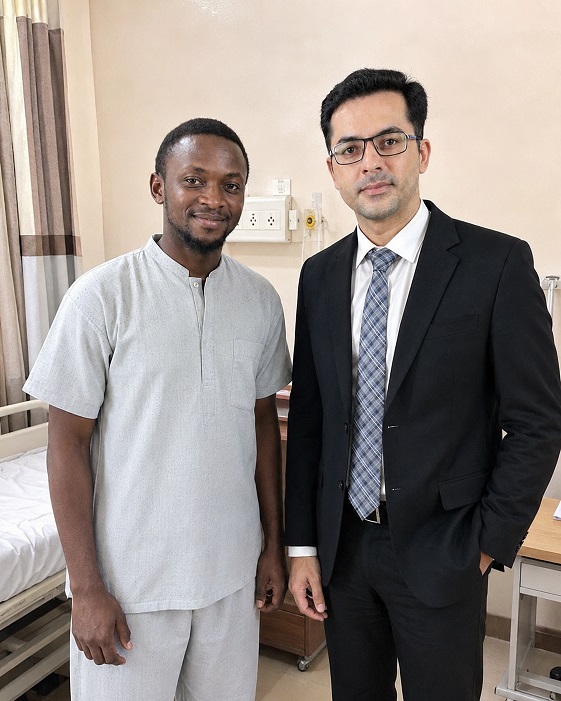
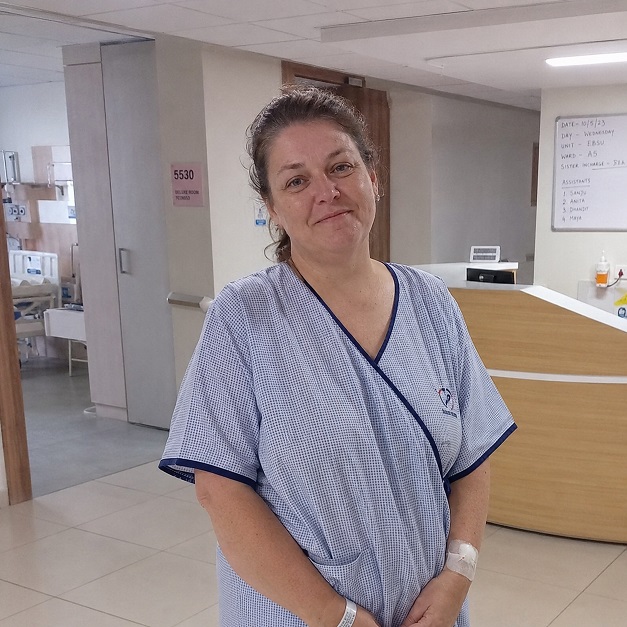
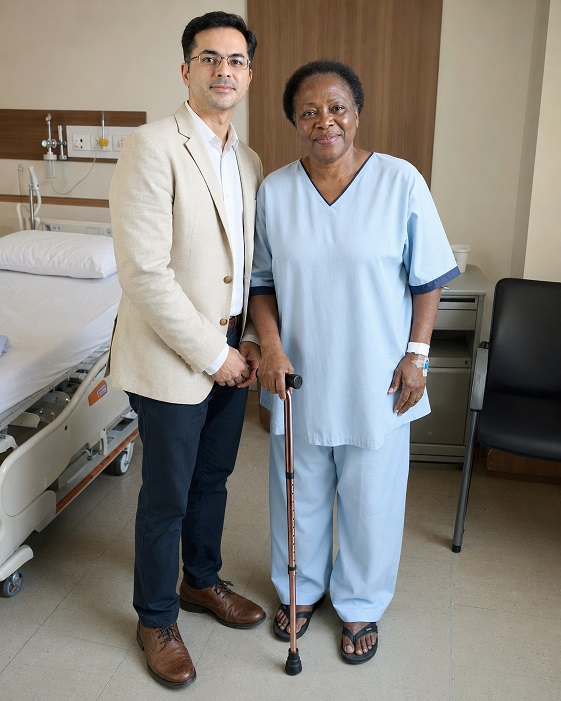
Patient Testimonials from Nigeria


Ready to Take the First Step?
Share your Medical Reports with our Healthcare Managers Today and Get a FREE CONSULTATION, a Personalized Treatment Plan, and Complete Support from Arrival to Recovery.
Get Your Free ConsultationAreas We Serve
This resource has been thoughtfully prepared for patients from Nigeria who are considering medical treatment in India. We also welcome patients from the wider region in the countries mentioned below-
We assist patients from:
- Benin
- Niger
- Chad
- Cameroon
- Algeria
- Egypt
- Libya
- Morocco
- Sudan
- Tunisia
- Gambia
- Ghana
- Burkina Faso
- Cabo Verde
- Côte d'Ivoire
- Equatorial Guinea
- São Tomé and Príncipe
Many of the insights, treatment pathways, hospital recommendations, travel guidance, and patient support services described here are equally relevant and may be used as a reference when planning treatment in India.
From Nigeria to India: Your Complete Patient Support Guide
- Artificial Disc Replacement in India for Nigerian Patients
- Weight Loss and Bariatric Surgery in India for Nigerian Patients
- Bone Marrow Transplant in India for Nigerian Patients
- Brain Tumour Surgery in India for Nigerian Patients
- Breast Cancer Treatment and Surgery in India for Nigerian Patients
- Cancer Treatment and Surgery in India for Nigerian Patients
- Cardiac Arrhythmia and Heart Pacemaker Treatment in India for Nigerian Patients
- Cardiac Surgery in India for Nigerian Patients
- Colorectal Cancer Treatment and Surgery in India for Nigerian Patients
- Complex Orthopaedic and Joint Revision Surgery in India for Nigerian Patients
- Cornea Transplant and Advanced Eye Surgery in India for Nigerian Patients
- CyberKnife Treatment in India for Nigerian Patients
- Gamma Knife Treatment in India for Nigerian Patients
- Heart Failure Treatment and Surgery in India for Nigerian Patients
- Hip Surgery in India for Nigerian Patients
- HIPEC Cancer Surgery in India for Nigerian Patients
- IVF and Fertility Treatment in India for Nigerian Patients
- Joint Arthroscopy and Sports Medicine in India for Nigerian Patients