

Artificial Disc Replacement in India for Nigerian Patients
For the patient who was told they need spine surgery, and who deserves to know that fusion is not the only answer — and that they may not even qualify for the alternative.
Spinal fusion has been the default answer to disc disease for decades, and for good reason: it works, reliably, for a great many patients. But permanently eliminating motion at one level of the spine comes with a known long-term trade-off — increased mechanical stress on the discs immediately above and below it, a problem called adjacent segment disease, which can itself eventually need surgery. Artificial disc replacement exists specifically to address that trade-off, preserving motion instead of eliminating it. It is not, however, an option for everyone who wants it. This guide sets out what genuinely makes someone a candidate for disc replacement rather than fusion, what the procedure costs in India once travel is counted, why Nigeria currently has essentially no domestic capacity for it, and why its recovery timeline looks so different from the fusion surgery described in our companion spine guide.
| Motion | <60 | 1–2 | 70–85% |
|---|---|---|---|
| PRESERVED AT THE TREATED LEVEL, UNLIKE FUSION | TYPICAL AGE CEILING FOR GOOD ADR CANDIDACY | LEVELS: THE USUAL UPPER LIMIT FOR DISC REPLACEMENT | TYPICAL SAVING ON AN EQUIVALENT INDIA PATHWAY VS. THE US |
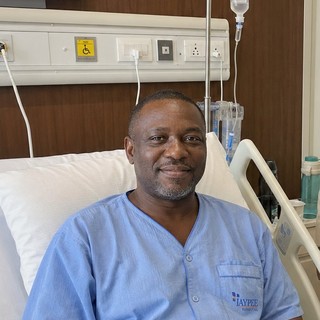
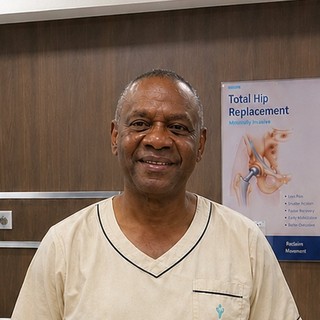
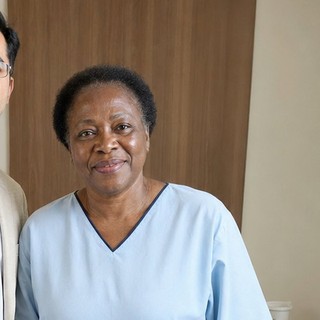
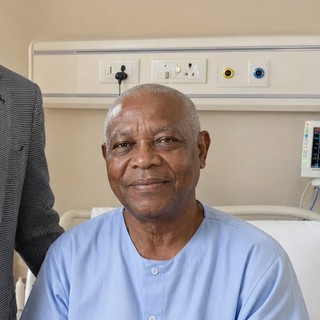
Healing Journeys of Nigerian Patients



Key Takeaways
- Artificial disc replacement is a motion-preserving alternative to spinal fusion for carefully selected patients with cervical or lumbar disc disease. Instead of permanently joining two vertebrae, the damaged disc is removed and replaced with a mechanical implant intended to preserve close-to-natural movement at the treated level.
- The guide stresses that artificial disc replacement is not automatically preferable to fusion. Patient selection is stricter, making candidacy the first question Nigerian patients should address before comparing hospitals, destinations or prices.
- Good candidates are generally under 60 years of age, have disease limited to one or two spinal levels, have adequate bone quality, and have persistent nerve-related arm or leg symptoms despite appropriate conservative treatment.
- Factors that can rule out artificial disc replacement include significant facet joint arthritis, osteoporosis or poor bone quality, spinal instability such as spondylolisthesis, disease affecting more than two levels, prior fusion at the same or immediately adjacent level, active infection and significant spinal deformity.
- Cervical artificial disc replacement has the stronger evidence base. The guide describes it as more widely studied and internationally adopted, with a longer-established track record than lumbar disc replacement.
- Lumbar disc replacement has stricter patient-selection criteria and a shorter clinical track record. Not every centre performing cervical ADR necessarily offers lumbar ADR.
- The guide explains that spinal fusion eliminates movement at the operated level. This can transfer additional mechanical load to neighbouring spinal segments and contribute to adjacent segment disease over time. Artificial disc replacement was developed specifically to preserve motion and address this trade-off.
- The treatment map gives an indicative cost of US$6,000–9,500 for single-level cervical ADR, with a typical hospital stay of 1–2 nights.
- Two-level cervical ADR is listed at US$9,000–14,000, generally requiring 2–3 nights in hospital.
Quick Facts
- Treatment
- Artificial Disc Replacement / Disc Arthroplasty
- Country
- India
- Intended Audience
- Nigerian Patients and Families
- Primary Focus
- Motion-Preserving Spine Surgery as an Alternative to Fusion
- Main Procedures
- Cervical ADR and Lumbar ADR
- Motion at Treated Level
- Preserved Rather Than Eliminated
- Typical Age Ceiling for Good ADR Candidacy
- Under 60 Years
- Usual Number of Levels
- 1–2 Levels
- Primary Candidacy Requirement
- Carefully Selected Disc Disease With Preserved Bone Quality
- Conservative Treatment Before Surgery
- Physiotherapy, Medication or Bracing
- Major Exclusion – Facet Joints
- Significant Facet Joint Arthritis
- Major Exclusion – Bone
- Osteoporosis or Other Poor Bone-Quality Conditions
- Major Exclusion – Stability
- Spinal Instability Such as Spondylolisthesis
- Author
- Dr. Dheeraj Bojwani
- Experience
- 24 Years' Experience
In Brief
Artificial disc replacement in India may provide a motion-preserving alternative to spinal fusion for carefully selected Nigerian patients with cervical or lumbar disc disease. Candidacy is stricter than for fusion and generally favours patients under 60 with one- or two-level disease, good bone quality, no significant facet arthritis or spinal instability, and persistent symptoms despite conservative treatment. Cervical ADR has a stronger evidence base than lumbar ADR. Indicative Indian pricing in the guide ranges from US$6,000–9,500 for single-level cervical ADR to US$12,000–19,000 for a hybrid ADR-and-fusion construct. Because ADR does not require the vertebrae to fuse together, recovery can be considerably faster than after conventional spinal fusion.
01 · THE REAL PROBLEM
Why an alternative to fusion exists at all
Spinal fusion treats disc disease by removing the damaged disc and permanently joining the two adjacent vertebrae with bone graft and hardware, so they heal into one solid piece. It is effective, well-studied, and remains the right choice for a great many patients, particularly where instability or significant deformity is present. But solid bone where two vertebrae once moved independently changes the mechanics of the whole spine: the segments above and below the fusion take on more of the movement and load that the fused level used to share, and over years that added stress can accelerate their own degeneration — a well- documented phenomenon called adjacent segment disease that sometimes requires a second operation years later.
Artificial disc replacement was developed specifically to interrupt that chain of events. Rather than fusing the level, the surgeon removes the damaged disc and inserts a mechanical device designed to preserve close- to-natural motion in its place. Multiple large randomized trials comparing cervical disc replacement against the standard fusion procedure have found outcomes that are equal to or better, with the added benefit of retained neck motion and, in several long-term studies, a measurably lower rate of subsequent adjacent- level surgery.
None of this makes disc replacement automatically the right choice, or even an available choice, for any given patient. It is a genuinely different procedure with its own, stricter set of rules about who it actually suits.
02 · Who Actually Qualifies
Candidacy is the real gatekeeper here, not the destination
Disc replacement candidacy is meaningfully stricter than fusion candidacy, and understanding this matters more than comparing hospital prices. Good candidates are generally under sixty years old, with disc disease limited to one or, at most, two levels, causing arm or leg pain from nerve compression that has not resolved with proper conservative treatment such as physiotherapy, medication, or bracing.
What typically rules a patient out
- Significant facet joint arthritis at the level being considered
- Osteoporosis or other conditions weakening bone quality
- Spinal instability, such as spondylolisthesis, at the affected level
- Disease affecting more than two levels
- A prior fusion at the same or an immediately adjacent level
- Active infection, or significant deformity requiring correction rather than motion preservation
Cervical disc replacement, for the neck, has the deeper evidence base of the two: it has been studied in more and larger trials, is more widely adopted internationally, and its long-term outcomes are better established. Lumbar disc replacement, for the lower back, is newer technology, carries stricter selection criteria still, and has a shorter track record, which is why not every centre offering cervical disc replacement also offers it in the lumbar spine.
The honest starting point. Before asking where to have this done, ask whether you are actually a candidate for it at all. A surgeon recommending fusion when disc replacement is not appropriate for your case is not being conservative for no reason — get a clear explanation of why, specifically, before assuming a second opinion would simply offer you the newer technology instead.
03 · THE TREATMENT MAP
Which procedure, and what it costs
Cost scales with region of the spine, number of levels, and whether the case is a straightforward disc replacement or a hybrid construct combining replacement at one level with fusion at another, for patients with multi-level disease where only some levels qualify for motion preservation.
Figure 1. Lumbar disc replacement generally costs more than the equivalent cervical procedure, reflecting the larger surgical exposure
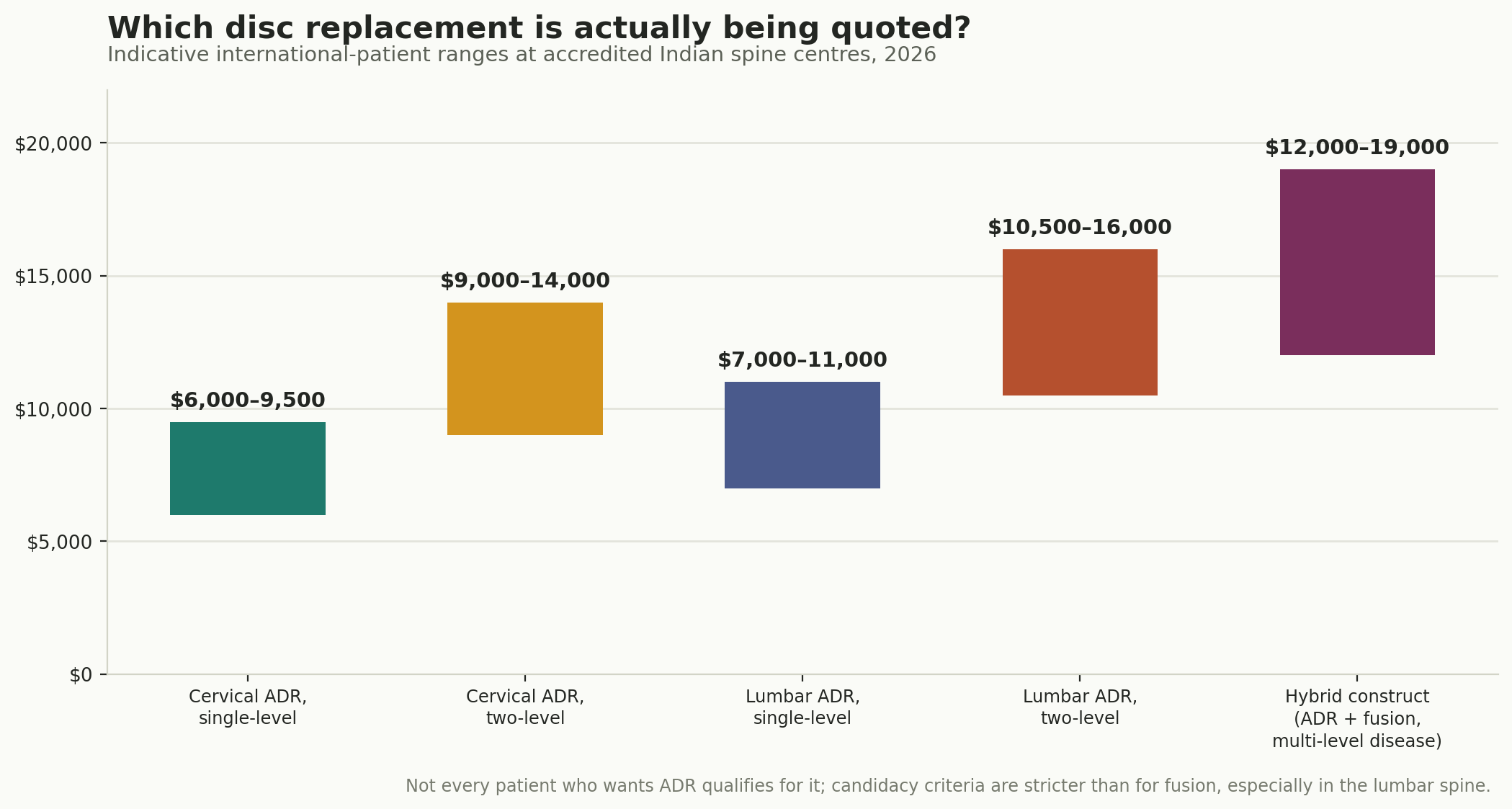
and stricter patient monitoring the lower spine requires.
| Procedure | Typically suits | Indicative cost | Hospital stay |
|---|---|---|---|
| Cervical ADR, single-level | One degenerated cervical disc causing arm pain, otherwise a good candidate | $6,000–9,500 | 1–2 nights |
| Cervical ADR, two-level | Two adjacent cervical discs affected, both meeting candidacy criteria | $9,000–14,000 | 2–3 nights |
| Lumbar ADR, single-level | One degenerated lumbar disc in a carefully selected younger patient | $7,000–11,000 | 2–4 nights |
| Lumbar ADR, two-level | Two adjacent lumbar levels, meeting the stricter two-level criteria | $10,500–16,000 | 3–5 nights |
| Hybrid construct (ADR + fusion) | Multi-level disease where only some levels are ADR candidates | $12,000–19,000 | 5–8 nights |
Table 1. Indicative international-patient pricing at accredited Indian spine centres, mid-2026. Figures are planning ranges, not offers, and vary by implant system and hospital tier.
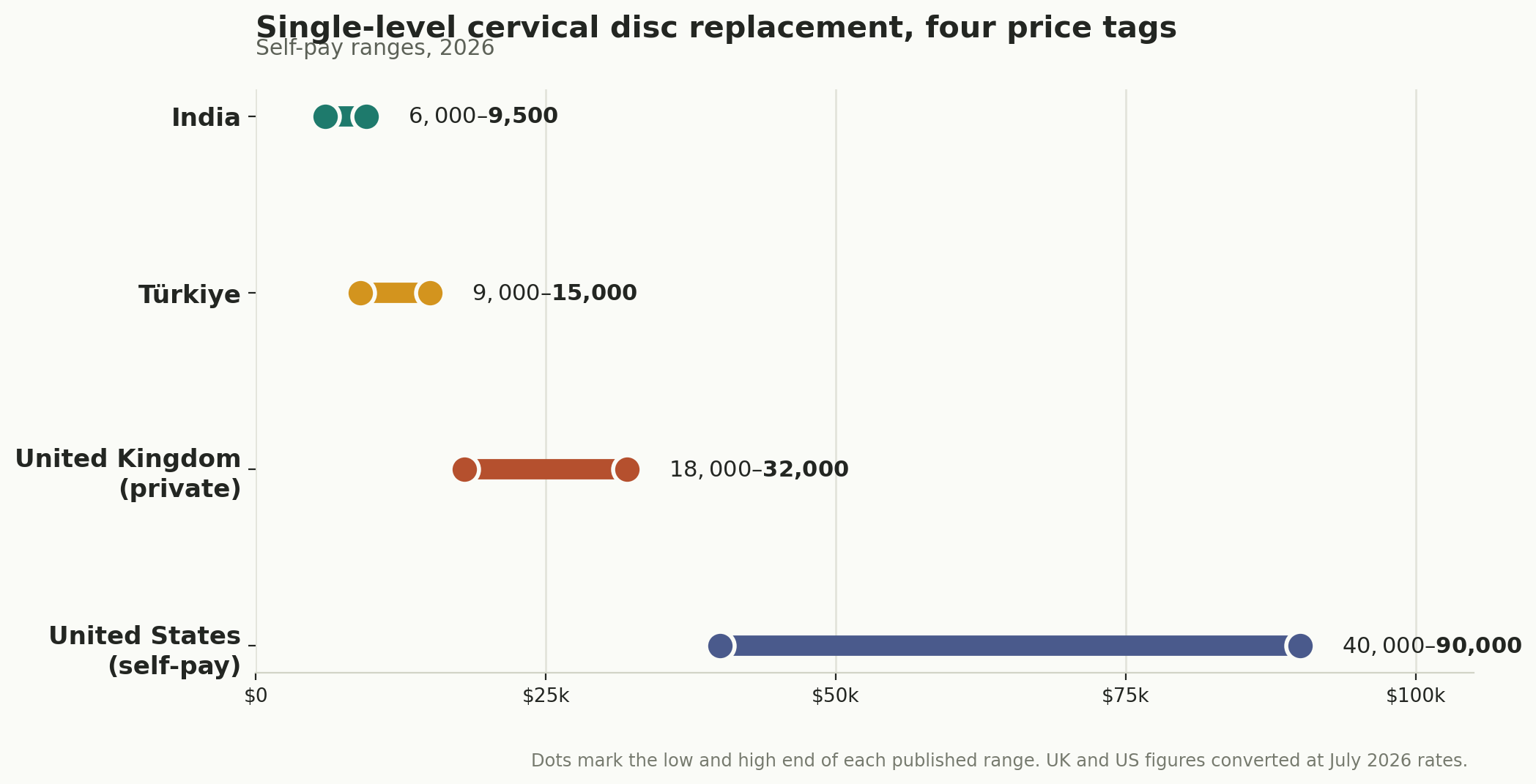
Figure 2. Single-level cervical disc replacement, priced across four common destinations for Nigerian medical travellers.
What a proper written quote must itemise
- Confirmation, in writing, that you meet the specific candidacy criteria for the procedure being quoted
- The implant system to be used, and its long-term track record for this specific application
- Whether one or two levels are being treated, and whether a hybrid construct is actually needed
- What happens, and what it costs, if intra-operative findings mean fusion is needed instead
- Ward nights included, and the rate beyond that
04 · the Full Budget
What the whole journey costs, beyond the operation
The surgical fee is the number families anchor on, and the least complete one. A representative pathway — single-level cervical disc replacement, one patient and one attendant, roughly two weeks in India — adds up like this:
- Surgical package (surgery, implant, surgeon, ward stay): $7,000–10,500
- Return flights, two travellers (Lagos/Abuja – Delhi/Mumbai/Chennai): $2,200–3,000
- Pre-surgical workup (MRI, flexion-extension X-rays, bloodwork): $500–900
- Accommodation, two weeks, two people : $900–1,400
- Medical and attendant visas (two applications): $400–500
- Contingency for extended imaging or an additional level: 15–20%
All-in, most families should plan for US$11,000–16,500 for single-level cervical disc replacement — roughly ₦15.2–22.8 million at the official mid-July 2026 rate of about ₦1,380 to the dollar, somewhat higher at parallel-market rates near ₦1,410. Lumbar and two-level procedures should be budgeted proportionally higher against the ranges in Table 1.
05 · Getting There
Visa, travel, and why recovery looks so different from fusion
India issues a Medical Visa (M) to the patient and a Medical Attendant Visa (MX) to up to two close relatives. Applications go through the High Commission in Abuja or the Consulate General in Lagos by prior appointment, and an e-Medical route turns around in days for straightforward files. The hospital's invitation letter, three months of certified bank statements, and a passport valid six months with two blank pages move the process fastest.
Lagos and Abuja both reach Delhi, Mumbai and Chennai with a single stop, usually via Addis Ababa, Doha,
Dubai, Nairobi or Istanbul, a total journey of 13 to 18 hours.
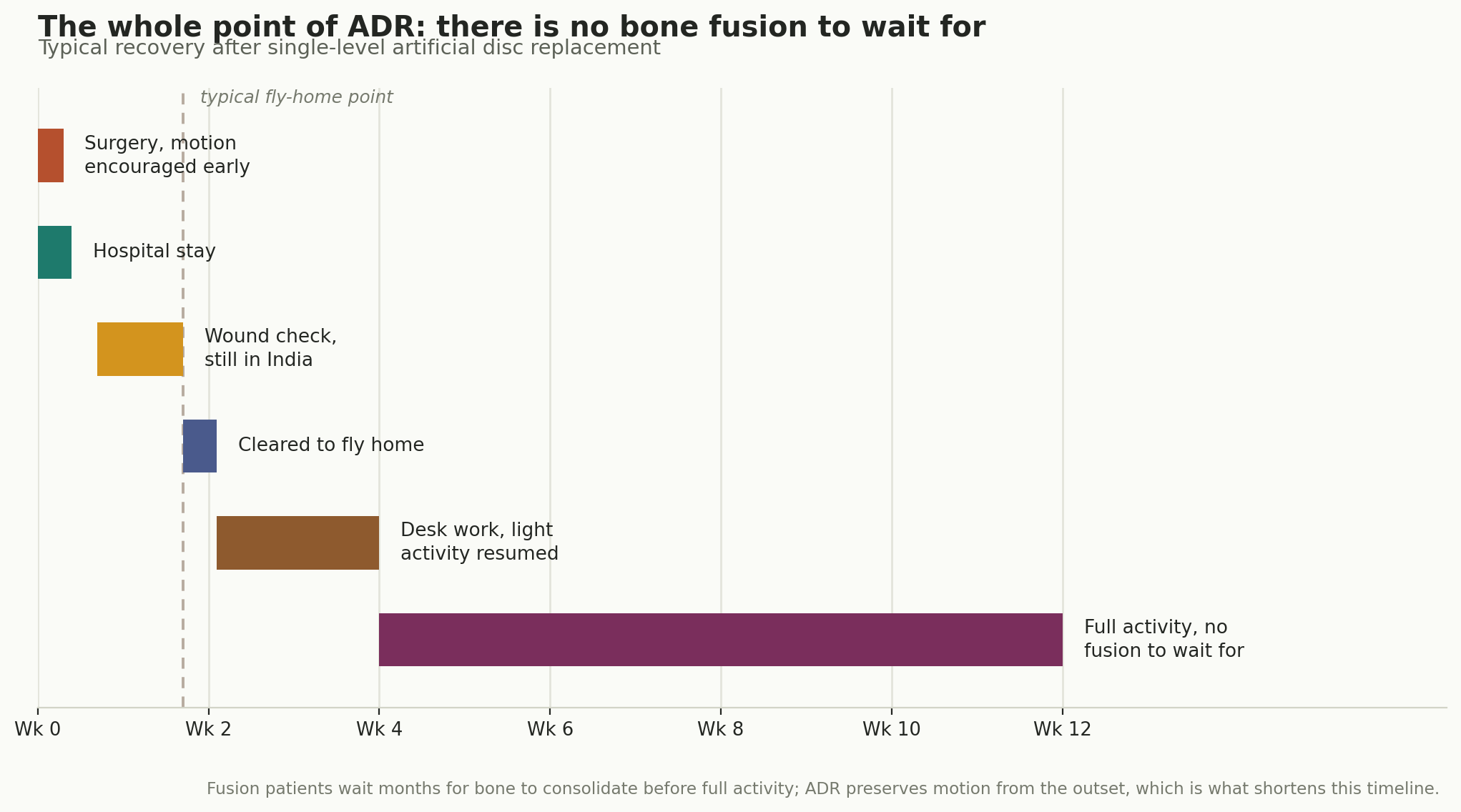
Figure 3. The entire clinical rationale for disc replacement shows up in this chart: because no fusion is happening, there is no months- long bone-healing period to wait through, which is why recovery looks so different from our companion fusion guide.
What has to travel home with the patient
- Full operative note, implant system and size used, and post-operative imaging
- A written activity guidance schedule specific to disc replacement, not a generic spine-surgery handout
- Discharge medication using generic names available in Nigerian pharmacies
- A follow-up imaging schedule to confirm implant position and motion over the following months
- A named clinician contact for teleconsultation if new weakness, worsening pain, or wound concerns arise
06 · THE HONEST COMPARISON
What stays in Nigeria, and what travels
Fusion surgery for straightforward, single-level disc disease is genuinely available from competent Nigerian spine teams, and remains an entirely reasonable choice for many patients, particularly where disc replacement candidacy criteria are not met in the first place.
Disc replacement itself is a different matter. The procedure demands specific implant systems, imaging protocols, and surgical experience that remain concentrated in a small number of international centres even within high-income countries, and essentially do not exist within Nigeria's current spine surgical capacity. For a patient who has been confirmed as a genuine candidate, travelling is not a matter of preference between comparable options — it is currently the only route to the procedure at all.
Before you commit to disc replacement abroad
- Get imaging-confirmed evidence that your disease is limited to one or two levels before assuming you qualify.
- Ask explicitly, in writing, why you have been assessed as a candidate for disc replacement rather than fusion.
- Confirm bone quality has been assessed, particularly for patients over fifty.
- Ask which implant system is planned, and request its published long-term outcome data for your specific level.
- Establish in writing what happens, and what it costs, if fusion becomes necessary instead during surgery.
- For lumbar procedures specifically, ask about the surgeon's specific case volume in lumbar, not just cervical, disc replacement.
- Verify the invitation letter has reached the mission by email, with both attendants named.
- Pay into the hospital's own institutional account only, never an individual's personal account.
Straight Answers for Nigerian Patients about Artificial Disc Replacement in India
Is artificial disc replacement in India cheaper than the UK or US?
Yes, substantially. Single-level cervical disc replacement is indicatively $6,000 to $9,500 in India, against roughly $18,000 to $32,000 privately in the UK and $40,000 to $90,000 self-pay in the United States.
Am I automatically a candidate for disc replacement?
No. Candidacy is stricter than for fusion. Good candidates are generally under 60, have disease limited to one or two levels, preserved bone quality, no significant facet joint arthritis, no instability, and no prior fusion at an adjacent level.
What is adjacent segment disease, and why does it matter?
Fusion eliminates motion at the treated level, which can increase mechanical stress on the discs above and below it over time, sometimes causing them to degenerate faster and eventually need surgery themselves. Disc replacement preserves motion specifically to reduce this risk.
Is cervical or lumbar disc replacement more established?
Cervical has the stronger evidence base, with multiple large trials showing outcomes equal to or better than fusion. Lumbar disc replacement is newer technology with more restrictive patient selection and a shorter long-term track record.
Do Nigerians need a visa for this procedure in India?
Yes. You need an Indian Medical Visa from the High Commission in Abuja, the Consulate in Lagos, or the e- Medical route, plus a Medical Attendant Visa for up to two close relatives, with a hospital invitation letter and financial proof.
How does recovery compare to fusion?
Considerably faster in most cases. Since there is no bone fusion to wait for, many patients resume desk work within two to three weeks and reach full activity within two to three months, against three to twelve months for a comparable fusion.
Is disc replacement available in Nigeria?
It is essentially unavailable domestically. The procedure requires specific implant systems and surgical experience that remain concentrated in a small number of international centres, well beyond Nigeria's already limited spine surgical capacity.
A closing word
Disc replacement is not a better version of fusion; it is a different tool suited to a narrower set of patients. The honest first question is never “where should I go for this,” but “does my case genuinely meet the criteria for it” — and a surgeon who says it does not, when disc replacement was what you had in mind, deserves to be heard out rather than second-guessed on reputation alone.
In twenty-four years of this work, the patients who do best with this procedure are the ones who arrive with clear imaging, understand precisely why they were assessed as candidates, and appreciate that the faster recovery disc replacement offers is a direct consequence of what it preserves, not a shortcut around proper healing. The implant restores motion at the level that needed it. Everything else about a good outcome still depends on choosing the right operation for the right patient in the first place.
Sources
- 🌐 American Association of Neurological Surgeons — Artificial Cervical Disc Surgery, patient information
- 🌐 NHS (UK) — Spinal disc replacement: overview – nhs.uk
- 🌐 Johanson T et al. — Effect of Arthroplasty vs Fusion for Patients with Cervical Radiculopathy: A Randomized Control Trial
- 🌐 UnitedHealthcare — Total Artificial Disc Replacement for the Spine, medical policy and clinical criteria, 2026
- 🌐 Incidence of adjacent segment degeneration in cervical disc arthroplasty versus fusion: a meta-analysis of prospective studies
- 🌐 High Commission of India, Abuja — Medical and Medical Attendant Visa requirements
Frequently Asked Questions by Nigerians about Artificial Disc Replacement in India
Are all Nigerian patients with disc disease candidates for artificial disc replacement in India?
No. Candidacy is stricter than for spinal fusion. Good candidates are generally under 60, have disease limited to one or two levels, adequate bone quality and no significant facet arthritis or spinal instability.
What is the difference between artificial disc replacement and spinal fusion?
Fusion permanently joins adjacent vertebrae and eliminates movement at that level. Artificial disc replacement removes the diseased disc and replaces it with an implant designed to preserve motion.
What is adjacent segment disease and why does it matter?
After fusion, neighbouring spinal levels may take on additional movement and mechanical load. Over time, this can accelerate degeneration in those adjacent discs and may occasionally lead to further treatment or surgery.
Is cervical or lumbar artificial disc replacement more established?
Cervical ADR has the stronger evidence base and a longer international track record. Lumbar disc replacement has stricter selection criteria and is not offered by every centre performing cervical ADR.
How much does cervical artificial disc replacement cost in India for Nigerian patients?
The guide lists approximately US$6,000–9,500 for single-level cervical ADR and US$9,000–14,000 for two-level cervical ADR. Actual pricing depends on the implant, hospital and individual case.
How much does lumbar artificial disc replacement cost in India?
Single-level lumbar ADR is listed at approximately US$7,000–11,000, while two-level lumbar ADR is approximately US$10,500–16,000.
How long does recovery take after artificial disc replacement?
Recovery can be considerably faster than fusion because bone fusion does not need to occur. The guide states that many patients may resume desk work within 2–3 weeks and reach fuller activity within approximately 2–3 months.
Is artificial disc replacement available in Nigeria?
The guide describes ADR as essentially unavailable domestically, with the necessary implant systems and specialist experience concentrated in a relatively small number of international centres.
What should Nigerian patients check in an artificial disc replacement quote from India?
The quote should identify the implant system, number of levels being treated, whether a hybrid procedure is required, included hospital nights and what happens if the surgeon determines that fusion is necessary instead.
Do Nigerian patients need a visa for artificial disc replacement in India?
Yes. The guide states that Nigerian patients require the appropriate Indian Medical Visa, while eligible accompanying relatives can use the Medical Attendant Visa route with the required hospital and financial documentation.
Page Summary
This guide explains artificial disc replacement specifically for Nigerian patients considering spine treatment in India. Rather than presenting ADR simply as a newer alternative to spinal fusion, the document centres the decision on patient candidacy. It first explains the mechanical difference between the procedures. Fusion permanently eliminates movement at the treated spinal level, whereas artificial disc replacement inserts a mechanical disc intended to preserve motion. The guide connects this distinction to adjacent segment disease, where neighbouring spinal levels may experience increased mechanical stress after fusion.
Citation Block
| Topic | Information |
|---|---|
| Topic Information | Artificial Disc Replacement in India for Nigerian Patients |
| Treatment | Artificial Disc Replacement / Disc Arthroplasty |
| Country | India |
| Intended Audience | Nigerian Patients and Families |
| Primary Objective | Preserve Motion at the Treated Spinal Level |
| Alternative Compared | Spinal Fusion |
| Procedures | Cervical ADR, Lumbar ADR and Hybrid ADR + Fusion |
| Typical Candidate Age | Generally Under 60 Years |
| Typical Disease Extent | One or Two Levels |
| Candidacy Assessment | Imaging, Bone Quality and Clinical Examination |
| Major Exclusions | Facet Arthritis, Osteoporosis, Instability, Multilevel Disease, Certain Prior Fusions, Infection and Significant Deformity |
| More Established ADR Type | Cervical Artificial Disc Replacement |
| Hospital Stay | Approximately 1–8 Nights Depending on Procedure |
| Representative India Stay | Approximately 2 Weeks for Single-Level Cervical ADR |
| Desk Work Recovery | Often Around 2–3 Weeks |
| Fuller Activity | Approximately 2–3 Months |
| Fusion-Related Issue Discussed | Adjacent Segment Disease |
| Nigeria Availability | Described as Essentially Unavailable Domestically |
| Pre-Surgical Workup | MRI, Flexion-Extension X-Rays and Bloodwork |
| Quote Requirements | Implant System, Levels Treated, Hybrid Need, Ward Nights and Conversion-to-Fusion Policy |
| Follow-Up | Postoperative Review and Access to Clinical Advice for New Symptoms or Wound Concerns |
| Author | Dr. Dheeraj Bojwani |
| Experience | 24 Years' Experience |


Our Mission Statement
Our mission is to place patients at the centre of every healthcare decision by providing trustworthy, evidence-based, and unbiased medical information. We believe that informed patients make better decisions. Backed by personalised guidance from our experienced advisory team, we help patients understand their treatment options, compare them objectively, and confidently choose the path that best suits their medical needs and personal circumstances.
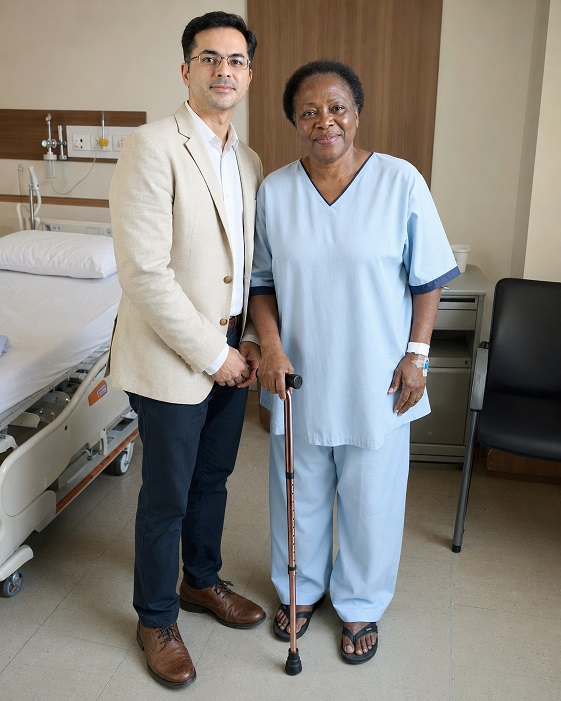
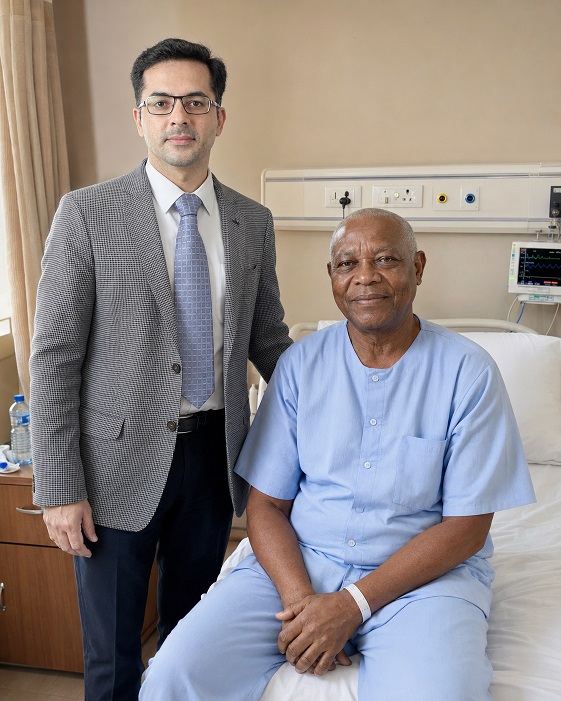
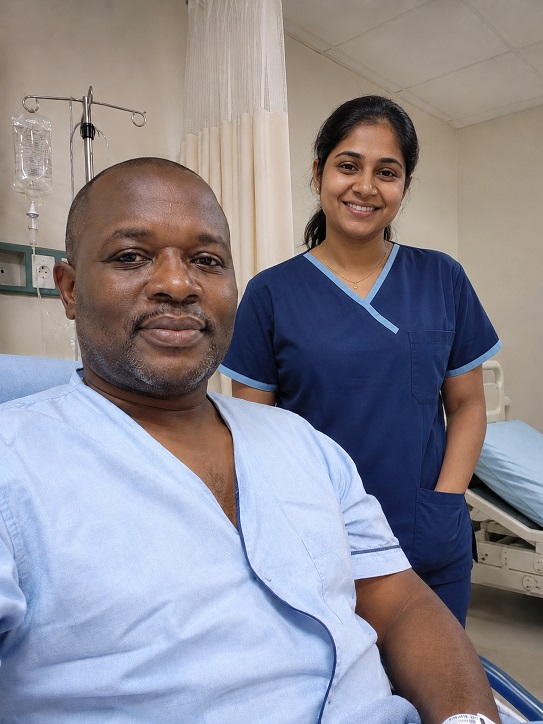
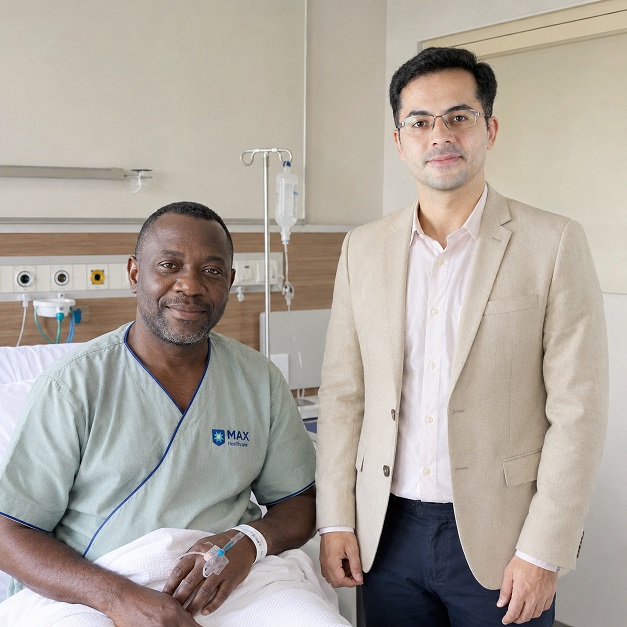
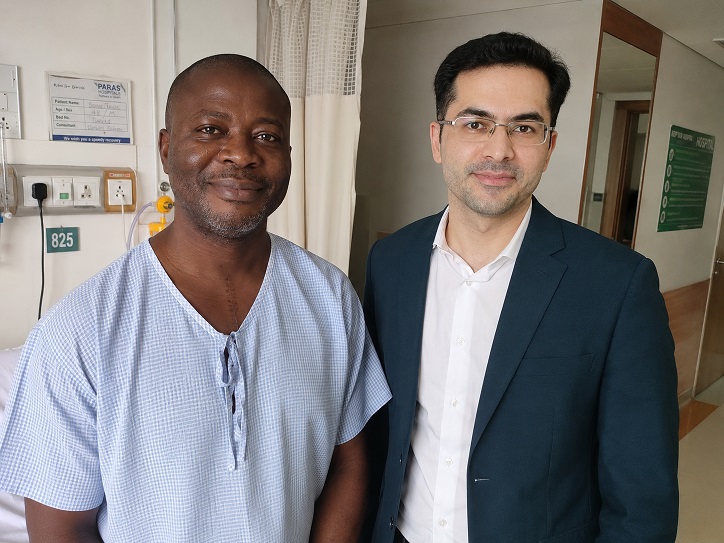
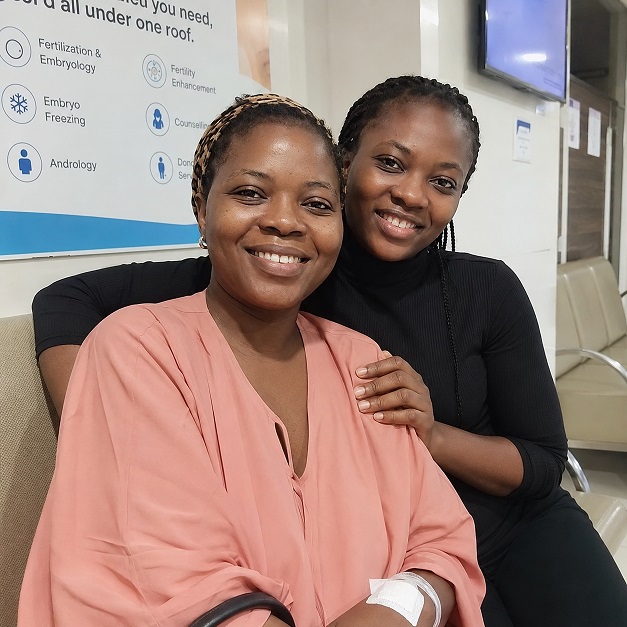
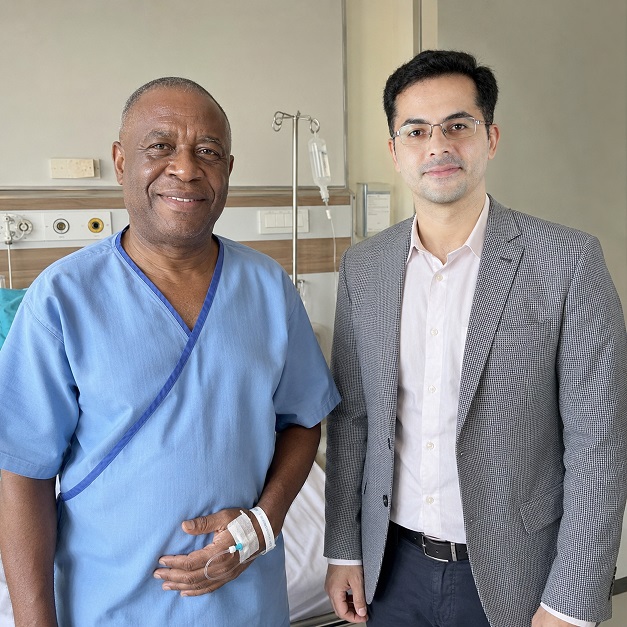
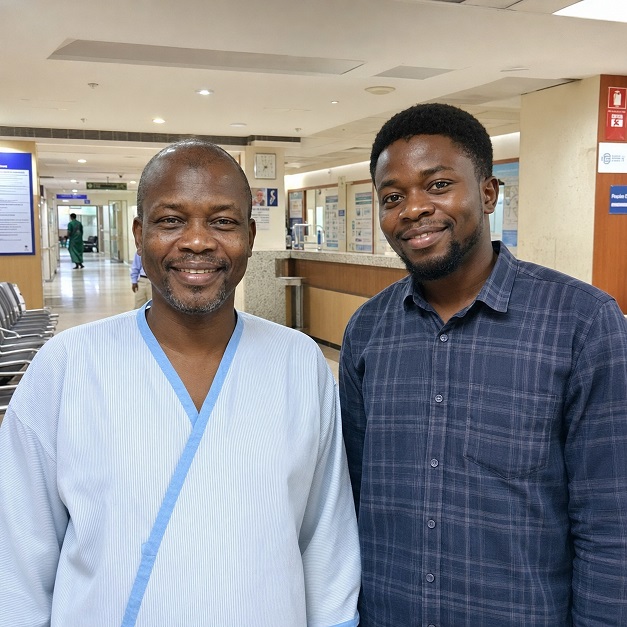
Patient Testimonials from Nigeria



Ready to Take the First Step?
Share your Medical Reports with our Healthcare Managers Today and Get a FREE CONSULTATION, a Personalized Treatment Plan, and Complete Support from Arrival to Recovery.
Get Your Free ConsultationAreas We Serve
This resource has been thoughtfully prepared for patients from Nigeria who are considering medical treatment in India. We also welcome patients from the wider region in the countries mentioned below-
We assist patients from:
- Benin
- Niger
- Chad
- Cameroon
- Algeria
- Egypt
- Libya
- Morocco
- Sudan
- Tunisia
- Gambia
- Ghana
- Burkina Faso
- Cabo Verde
- Côte d'Ivoire
- Equatorial Guinea
- São Tomé and Príncipe
Many of the insights, treatment pathways, hospital recommendations, travel guidance, and patient support services described here are equally relevant and may be used as a reference when planning treatment in India.
From Nigeria to India: Your Complete Patient Support Guide
- Artificial Disc Replacement in India for Nigerian Patients
- Weight Loss and Bariatric Surgery in India for Nigerian Patients
- Bone Marrow Transplant in India for Nigerian Patients
- Brain Tumour Surgery in India for Nigerian Patients
- Breast Cancer Treatment and Surgery in India for Nigerian Patients
- Cancer Treatment and Surgery in India for Nigerian Patients
- Cardiac Arrhythmia and Heart Pacemaker Treatment in India for Nigerian Patients
- Cardiac Surgery in India for Nigerian Patients
- Colorectal Cancer Treatment and Surgery in India for Nigerian Patients
- Complex Orthopaedic and Joint Revision Surgery in India for Nigerian Patients
- Cornea Transplant and Advanced Eye Surgery in India for Nigerian Patients
- CyberKnife Treatment in India for Nigerian Patients
- Gamma Knife Treatment in India for Nigerian Patients
- Heart Failure Treatment and Surgery in India for Nigerian Patients
- Hip Surgery in India for Nigerian Patients
- HIPEC Cancer Surgery in India for Nigerian Patients
- IVF and Fertility Treatment in India for Nigerian Patients
- Joint Arthroscopy and Sports Medicine in India for Nigerian Patients