

Joint Arthroscopy and Sports Medicine in India for Nigerian Patients
For the knee that gave way during training, the shoulder that has never quite been right since that tackle, and the difference proper early treatment makes to whether a football dream survives it.
Football is not simply Nigeria's most popular sport; for a striking number of young Nigerians, it is the plan, the pathway that a knee injury can quietly close before anyone realises how serious it was. A study of amateur footballers in Enugu found anterior cruciate ligament injury rates in line with the global average for the sport, the majority non-contact injuries from a twist or turn during ordinary training, not a dramatic collision. What happens in the weeks after that twist — whether it is properly diagnosed, and whether the knee is protected while that diagnosis is confirmed — often matters more than the injury itself. This guide sets out what arthroscopic treatment for the most common sports injuries actually costs in India once travel is counted, what Nigeria's own arthroscopy capacity can and cannot offer today, and why return to play is measured in strength tests, not simply a date on a calendar.
| Global-level | Most | 9–12 | 70–85% |
|---|---|---|---|
| ACL INJURY RATES FOUND AMONG AMATEUR FOOTBALLERS IN ENUGU, NIGERIA | ACL INJURIES ARE NON-CONTACT, FROM TWISTING DURING TRAINING | MONTHS TYPICAL BEFORE SAFE RETURN TO COMPETITIVE PLAY | TYPICAL SAVING ON AN EQUIVALENT INDIA PATHWAY VS. THE US |
Healing Journeys of Nigerian Patients
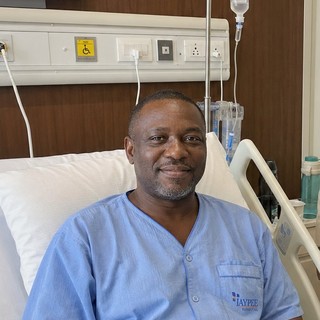
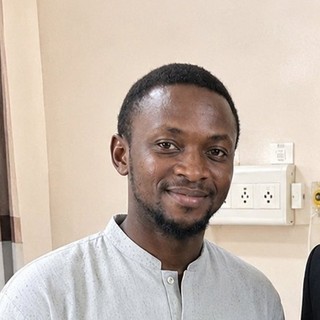
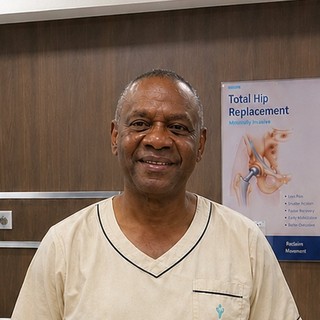
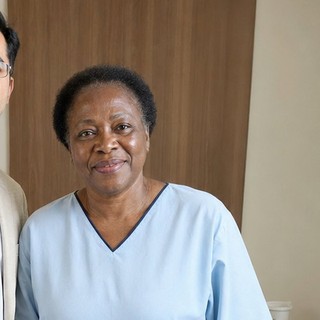
Key Takeaways
- Football provides the central Nigerian context for this guide. Research among amateur footballers in Enugu found ACL injury rates broadly in line with global levels, with most ACL injuries occurring through non-contact twisting or turning movements during ordinary training rather than dramatic collisions.
- The guide's main message is that the original injury is often only part of the problem. What happens in the weeks immediately afterward—particularly whether the injury is correctly diagnosed and the unstable joint is protected—can materially affect the eventual damage.
- A complete ACL tear does not heal on its own. Reconstruction is generally required for patients intending to return to pivoting sports such as football, basketball or handball.
- Not every ACL injury requires surgery. Partial tears and some complete tears in people with lower activity demands may be managed with structured physiotherapy, but the decision requires an accurate diagnosis and assessment of instability, activity goals and associated joint damage.
- Continuing to train or compete on an unstable knee can cause additional injury to the meniscus and articular cartilage, potentially turning an isolated ligament injury into a substantially more complicated joint problem.
- Even technically successful ACL reconstruction is only one part of recovery. The guide emphasises that rehabilitation and adherence to a graduated return-to-sport programme strongly influence the long-term result.
- Arthroscopic surgery is already available in Nigeria. Nigerian surgeons in Kano have published experience managing associated meniscal injuries arthroscopically in ACL-deficient knees, and arthroscopy services are also reported in Enugu and Lagos.
Quick Facts
- Treatment
- Joint Arthroscopy and Sports Medicine
- Country
- India
- Intended Audience
- Nigerian Patients, Athletes and Families
- Primary Specialty
- Orthopaedic Sports Medicine
- Major Nigeria-Specific Focus
- Football-Related ACL Injury
- ACL Injury Pattern Mentioned
- Mostly Non-Contact
- Common Injury Mechanism
- Twisting or Turning During Training
- Important Diagnostic Test
- MRI
- Complete ACL Tear
- Does Not Heal on Its Own
- Surgery Commonly Required For
- Active Patients Returning to Pivoting Sports
- Non-Surgical Treatment
- Possible for Selected Partial Tears and Lower-Demand Patients
- Major Risk of Continuing Sport
- Additional Meniscus and Joint Cartilage Damage
- Nigeria Arthroscopy Availability
- Yes
- Author
- Dr. Dheeraj Bojwani
- Experience
- 24 Years' Experience
In Brief
Joint arthroscopy and sports medicine treatment in India can be considered by Nigerian athletes with ACL tears, meniscus injuries, rotator cuff tears and selected hip injuries, particularly when the injury is complex or access to high-volume arthroscopic care is limited locally. ACL reconstruction costs approximately US$3,500–6,000 in India, while combined ACL and meniscus repair costs US$4,500–7,500. The guide emphasises that surgery alone does not determine a successful return to sport: competitive football typically requires around 9–12 months of graduated rehabilitation, with final clearance based on objective strength, balance and control testing rather than time alone.
01 · THE REAL PROBLEM
The injury is rarely the whole story
A complete anterior cruciate ligament tear does not heal on its own; the ligament has too limited a blood supply to repair itself, and reconstruction is generally needed for anyone hoping to return to pivoting sport like football, basketball or handball. A partial tear, or a complete tear in someone with lower activity demands, can sometimes be managed without surgery through structured physiotherapy, but that decision needs an accurate diagnosis to make correctly, not a guess based on how the knee feels a week later.
The research literature on football specifically is unusually deep — ACL injury in the sport has been studied more thoroughly than in almost any other, with FIFA and UEFA running dedicated medical education programmes on it for over two decades. That evidence points to a consistent, uncomfortable fact: continuing to play, or train, on an unstable or misdiagnosed knee is what turns a repairable ligament injury into a more complex one, as the meniscus and joint cartilage absorb damage the ligament was supposed to prevent. For a young player whose entire pathway runs through staying fit and visible, that compounding damage is not an abstract medical risk. It is the difference between a repaired knee and a shortened career.
Even after a well-performed reconstruction, long-term studies following players for a decade found a meaningful share developing early signs of joint wear, underscoring that the surgery itself is only part of what determines the outcome. Rehabilitation, and the discipline to follow it fully, does the rest.
02 · NIGERIA'S CAPACITY
Real, but concentrated in a handful of cities
Arthroscopic surgery genuinely exists in Nigeria, which sets this guide apart from several others in this series. Nigerian surgeons in Kano have published on the specific advantage arthroscopy offers in ACL- deficient knees, allowing associated meniscal injuries to be treated in the same procedure rather than through a separate, more invasive open operation. Facilities have also been reported in Enugu, and at least one private hospital group in Lagos now runs a dedicated arthroscopy and sports injury service with a structured rehabilitation pathway.
What remains uneven is reach. Outside a small number of centres, older open surgical techniques are still commonly used in place of arthroscopy, and in many parts of the country an ACL tear may not be promptly recognised at all, particularly where cost or access to MRI delays a confident diagnosis. For a footballer or active patient outside one of the cities with an established programme, the practical path to a modern arthroscopic repair, performed by a surgeon doing this procedure regularly, is not always straightforward.
This is a genuinely different picture from a technology gap. The equipment and the skill exist in Nigeria; the question is one of access, diagnostic speed, and how many surgeons are doing this procedure often enough to stay sharp at it.
03 · THE TREATMENT MAP
Which repair, and what it costs
Sports injury surgery is not one operation, and cost scales with which joint and which structures are involved.
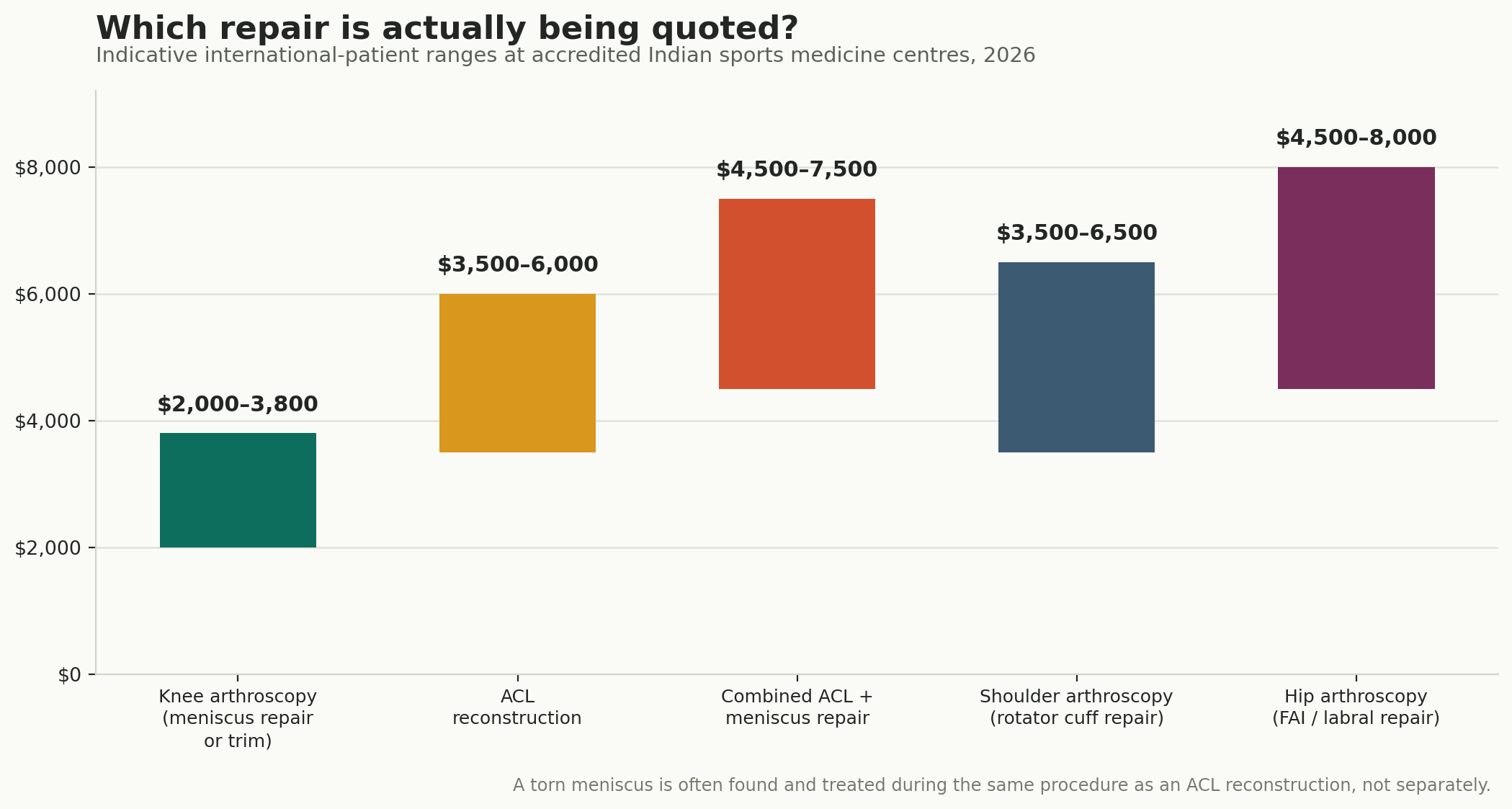
Figure 1. A torn meniscus is frequently found and treated in the same sitting as an ACL reconstruction, which is why the combined procedure costs meaningfully more than either alone.
| Procedure | Typically suits | Indicative cost | Hospital stay |
|---|---|---|---|
| Knee arthroscopy (meniscus repair or trim) | A torn meniscus without ligament instability | $2,000–3,800 | Day case–1 night |
| ACL reconstruction | A complete ACL tear in an active or pivoting-sport patient | $3,500–6,000 | 1–2 nights |
| Combined ACL + meniscus repair | ACL tear with an associated meniscal injury found on the same knee | $4,500–7,500 | 1–2 nights |
| Shoulder arthroscopy (rotator cuff repair) | A torn rotator cuff from throwing sports, contact injury, or degeneration | $3,500–6,500 | Day case–1 night |
| Hip arthroscopy (FAI / labral repair) | Femoroacetabular impingement or a torn hip labrum in an active patient | $4,500–8,000 | 1–2 nights |
Table 1. Indicative international-patient pricing at accredited Indian sports medicine centres, mid-2026. Figures are planning ranges, not offers, and vary by hospital tier, graft type, and case complexity.
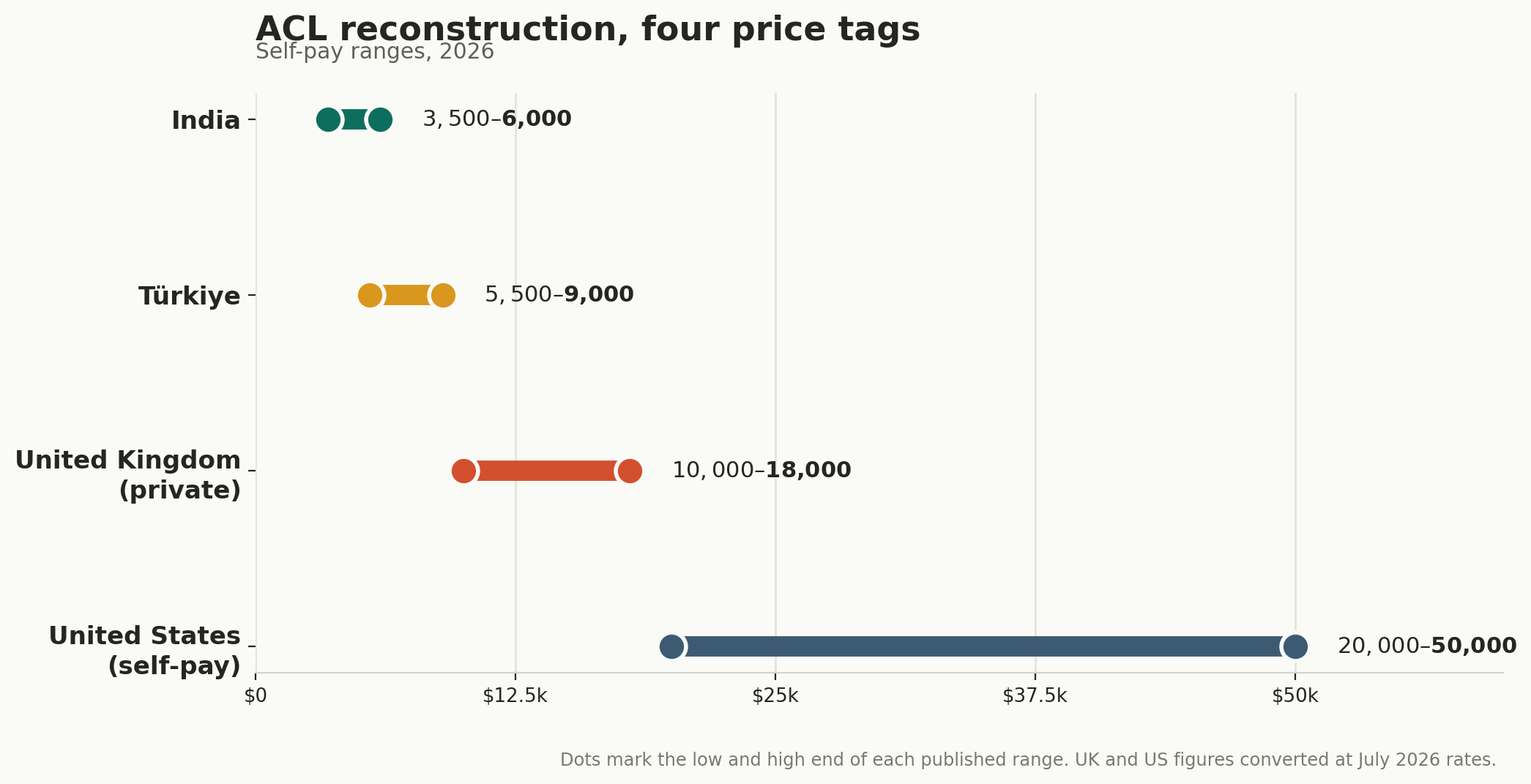
Figure 2. ACL reconstruction, priced across four common destinations for Nigerian patients and their families.
What a proper written quote must itemise
- The exact procedure and graft type for ligament reconstruction, since this affects both cost and rehabilitation timeline
- Whether a meniscus or cartilage injury has been confirmed on MRI, or is only suspected pending surgery
- Physiotherapy sessions included in the package, and where rehabilitation continues afterward
- Whether the surgeon regularly treats athletes specifically, not just general orthopaedic cases
- Written policy on cost if additional damage is found during the procedure
04 · the Full Budget
What the whole journey costs, beyond the operation
The surgical fee is the number families anchor on, and the least complete one. A representative pathway — ACL reconstruction, one patient and one attendant, roughly two weeks in India — adds up like this:
- Surgical package (arthroscopy, graft, surgeon, hospital stay): $4,000–6,500
- Return flights, two travellers (Lagos/Abuja – Delhi/Mumbai/Chennai): $2,200–3,000
- Pre-surgical workup (MRI, X-ray, bloodwork, anaesthetic clearance): $400–700
- Accommodation, about two weeks, two people : $900–1,400
- Medical and attendant visas (two applications): $400–500
- Contingency for additional repair work found during surgery: 15–20% All-in, most families should plan for US$8,000–12,500 for ACL reconstruction — roughly ₦11.0–17.3 million at the official mid-July 2026 rate of about ₦1,380 to the dollar, somewhat higher at parallel-market rates near ₦1,410. A straightforward meniscus repair alone runs considerably lower, and shoulder or hip procedures should be budgeted against the ranges in Table 1.
05 · Getting There
Visa, travel, and what return to play actually involves
India issues a Medical Visa (M) to the patient and a Medical Attendant Visa (MX) to up to two close relatives. Applications go through the High Commission in Abuja or the Consulate General in Lagos by prior appointment, and an e-Medical route turns around in days for straightforward files. The hospital's invitation letter, three months of certified bank statements, and a passport valid six months with two blank pages move the process fastest.
Lagos and Abuja both reach Delhi, Mumbai and Chennai with a single stop, usually via Addis Ababa, Doha, Dubai, Nairobi or Istanbul, a total journey of 13 to 18 hours.
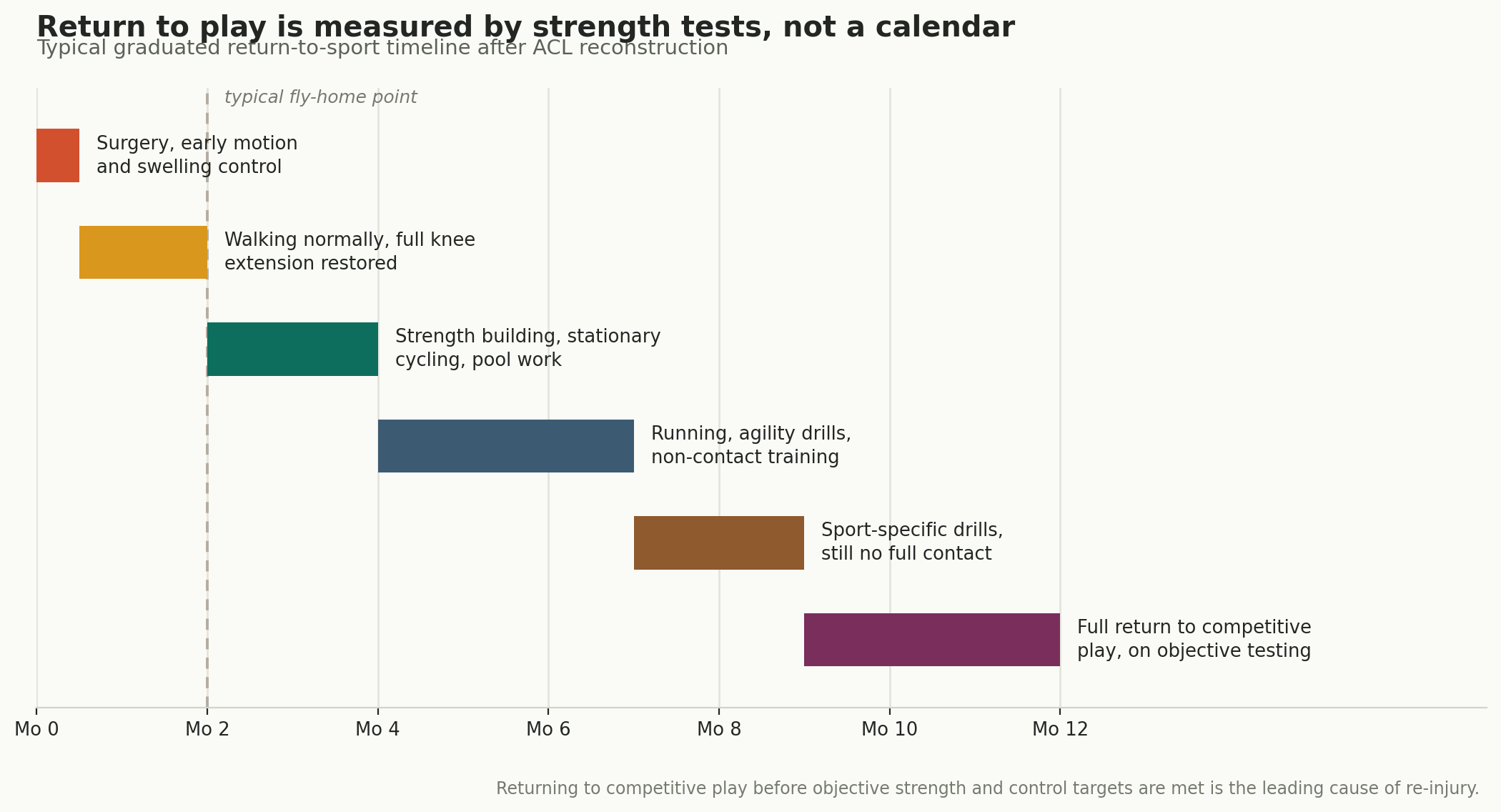
Figure 3. Every stage has to be earned with objective testing, not simply reached by waiting; skipping ahead of the graduated protocol is the single biggest predictor of re-injury.
On rushing the return, honestly. The single most common mistake after a well-performed reconstruction is returning to full training or competition based on how the knee feels, or how urgently a season or trial demands it, rather than on measured strength, balance and control benchmarks. A surgeon or physiotherapist clearing a return based on a calendar date alone, without testing, is not following current evidence-based practice.
What has to travel home with the patient
- Full operative note, graft type, and any additional repairs performed
- A written, staged rehabilitation protocol with objective progression criteria at each phase
- Discharge medication using generic names available in Nigerian pharmacies
- Contact details for a Nigerian physiotherapist experienced in post-operative sports rehabilitation
- A named clinician contact for teleconsultation if swelling, instability, or pain concerns arise
06 · THE HONEST COMPARISON
What stays in Nigeria, and what travels
Straightforward meniscus injuries and, increasingly, ACL reconstructions performed at Nigeria's existing arthroscopy centres in Kano, Enugu and Lagos are genuinely treatable at home, and for a patient near one of these programmes with a prompt, accurate diagnosis, there is little reason to travel.
What tips the calculation toward travelling is exactly what remains uneven: access outside those few cities, combined or complex injuries needing a surgeon with high case volume, and any situation where diagnostic delay has already let the injury compound. For a young athlete whose career genuinely depends on the quality of both the surgery and the rehabilitation that follows it, the depth of experience at a very high-volume international sports medicine centre is a real, legitimate factor to weigh.
Before you commit to surgery, at home or abroad
- Get an MRI to confirm the diagnosis before assuming what the injury is from symptoms alone.
- Avoid returning to training or play until instability has been properly assessed by a specialist.
- Ask explicitly whether the surgeon treats athletes regularly, not only general orthopaedic patients.
- Confirm the graft type planned for ligament reconstruction and why it was chosen for your case.
- Get the full staged rehabilitation protocol in writing before you leave the treating centre.
- Identify a Nigerian physiotherapist experienced in sports rehabilitation before you travel, not after you return.
- Insist that return-to-play clearance be based on objective testing, not a calendar date alone.
- Pay into the hospital's own institutional account only, never an individual's personal account.
Straight Answers for Nigerian Patients about Joint Arthroscopy and Sports Medicine in India
Is ACL reconstruction in India cheaper than the UK or US?
Yes, substantially. ACL reconstruction is indicatively $3,500 to $6,000 in India, against roughly $10,000 to $18,000 privately in the UK and $20,000 to $50,000 self-pay in the United States.
Does every ACL tear need surgery?
No. A complete tear generally does not heal on its own and usually needs reconstruction for anyone returning to pivoting sport, but partial tears and some cases in less active individuals can be managed with structured physiotherapy. The decision depends on instability, activity goals, and associated damage.
How long until a footballer can return to competitive play?
Typically nine to twelve months. Clearance should be based on objective strength, balance and control testing rather than the calendar alone; returning too early is the leading cause of re-injury.
Do Nigerians need a visa for arthroscopic surgery in India?
Yes. You need an Indian Medical Visa from the High Commission in Abuja, the Consulate in Lagos, or the e- Medical route, plus a Medical Attendant Visa for up to two close relatives, with a hospital invitation letter and financial proof.
Is knee arthroscopy available in Nigeria?
Yes, at a limited number of centres, including reported programmes in Kano, Enugu and Lagos. Capacity remains concentrated in a handful of cities, and many cases outside them are still managed with older open techniques or delayed diagnosis.
What happens if an ACL tear is not treated properly and the player keeps playing?
Continuing to play on an unstable knee significantly raises the risk of further damage to the meniscus and joint cartilage, turning a repairable ligament injury into a more complex problem, and can shorten a playing career that proper early treatment might have protected.
Is India better than Nigeria for sports injury surgery?
For complex or combined injuries specifically, often yes, given how concentrated Nigeria's arthroscopic capacity remains. For straightforward, early-diagnosed cases at one of Nigeria's existing arthroscopy centres, a good outcome is genuinely achievable at home.
A closing word
A sports injury is rarely a single dramatic moment; it is a diagnosis that either gets confirmed quickly and treated properly, or gets guessed at while the player keeps training on a joint that needed protecting. Nigeria already has real arthroscopic expertise in a handful of cities. The gap that matters most is speed of accurate diagnosis and consistent access to it, wherever a young athlete happens to be based.
In twenty-four years of this work, the patients who do best are the ones who get an MRI before assuming, choose a surgeon who treats athletes as a matter of routine, and respect the graduated return-to-play protocol even when a trial, a season, or a contract is pushing them to rush it. The reconstruction restores the ligament. The discipline of the months that follow is what actually gets a player back on the pitch, safely, and keeps them there.
Sources
- 🌐 American Academy of Orthopaedic Surgeons — ACL injury, patient information
- 🌐 NHS (UK) — ACL injury: overview and treatment
- 🌐 Krutsch W et al. — Sport-specific differences in ACL injury, treatment and return to sports: football
- 🌐 Prevalence of Anterior Cruciate Ligament Injury among amateur footballers in Enugu, South-East Nigeria. Nigerian Journal of Medicine
- 🌐 Nkanta, Alabi — Arthroscopic management of concomitant meniscal injury in ACL-deficient knees, Kano, Nigeria
- 🌐 High Commission of India, Abuja — Medical and Medical Attendant Visa requirements
Frequently Asked Questions by Nigerians about Joint Arthroscopy and Sports Medicine in India
Is ACL reconstruction in India cheaper than the UK or US?
Yes. The guide lists ACL reconstruction at approximately US$3,500–6,000 in India, compared with roughly US$10,000–18,000 privately in the UK and US$20,000–50,000 self-pay in the United States.
Does every ACL tear require surgery?
No. Complete tears generally need reconstruction for patients returning to pivoting sports, while partial tears and some injuries in less active patients may be managed with structured physiotherapy.
How long does it take a Nigerian footballer to return to competitive play after ACL reconstruction?
Typically around 9–12 months. However, the document stresses that clearance should depend on objective strength, balance and control testing rather than simply reaching a particular month.
Is knee arthroscopy available in Nigeria?
Yes. The guide reports arthroscopy programmes in Kano, Enugu and Lagos. The main limitation is that access remains concentrated in relatively few cities.
What happens if a footballer keeps playing with an untreated ACL tear?
Repeated instability can damage the meniscus and joint cartilage, potentially transforming an isolated ligament injury into a more complex joint problem and threatening long-term playing ability.
How much does combined ACL and meniscus surgery cost in India?
The document lists approximately US$4,500–7,500, usually with a hospital stay of one to two nights.
How much should Nigerian families budget for the complete ACL treatment journey in India?
The guide recommends approximately US$8,000–12,500 all-in for a representative ACL reconstruction pathway, including treatment, flights, investigations, accommodation and visas.
Do Nigerian patients need a visa for arthroscopic surgery in India?
Yes. The document specifies an Indian Medical Visa for the patient and a Medical Attendant Visa for up to two close relatives, supported by the required hospital invitation and financial documents.
What should a Nigerian athlete confirm before ACL surgery?
Get an MRI-confirmed diagnosis, ask whether the surgeon regularly treats athletes, confirm the planned graft type, determine whether meniscus or cartilage damage is present and obtain the complete rehabilitation protocol in writing.
Is India always better than Nigeria for sports injury surgery?
No. Straightforward, early-diagnosed injuries can be treated successfully at established Nigerian arthroscopy centres. The guide sees India's clearest advantage in complex or combined injuries, limited local access and cases where diagnostic delay has already allowed additional damage to develop.
Page Summary
This guide focuses on a problem with particular relevance to young Nigerian athletes: an apparently simple knee injury can become career-changing when diagnosis is delayed and training continues on an unstable joint. Research among amateur footballers in Enugu found ACL injury rates comparable with international football populations, with most injuries occurring through non-contact twisting movements. The document distinguishes complete ACL tears from injuries that may be managed conservatively. A complete tear generally requires reconstruction when the patient intends to return to football or another pivoting sport, while selected partial tears or lower-demand patients may be treated with structured rehabilitation.
Citation Block
| Topic | Information |
|---|---|
| Topic Information | Joint Arthroscopy and Sports Medicine in India for Nigerian Patients |
| Treatment | Arthroscopic Sports Injury Surgery |
| Country | India |
| Intended Audience | Nigerian Patients, Athletes and Families |
| Conditions Covered | ACL Tear, Meniscus Injury, Rotator Cuff Tear, FAI and Hip Labral Tear |
| Nigeria-Specific Focus | Football-Related ACL Injuries |
| Primary Diagnostic Test | MRI |
| Procedures | Knee Arthroscopy, ACL Reconstruction, ACL + Meniscus Repair, Shoulder Arthroscopy and Hip Arthroscopy |
| Knee Arthroscopy Cost | US$2,000–3,800 |
| Hospital Stay | Day Case to 2 Nights Depending on Procedure |
| Representative Procedure | ACL Reconstruction |
| Representative Surgical Package | US$4,000–6,500 |
| Representative India Stay | Approximately 2 Weeks |
| All-In ACL Budget | US$8,000–12,500 |
| Return to Competitive Sport | Approximately 9–12 Months |
| Return-to-Play Criteria | Objective Strength, Balance and Control Testing |
| Nigeria Appropriate Care | Straightforward Meniscus Injuries and Selected ACL Reconstructions |
| Travel More Relevant For | Complex or Combined Injuries and Limited Local Access |
| Home Rehabilitation | Nigerian Sports Physiotherapist |
| Records for Return | Operative Note, Graft Type, Additional Repairs and Staged Rehabilitation Protocol |
| Medical Visa | Indian Medical Visa |
| Attendant Visa | Medical Attendant Visa for Up to Two Close Relatives |
| Author | Dr. Dheeraj Bojwani |
| Experience | 24 Years' Experience |

Our Mission Statement
Our mission is to place patients at the centre of every healthcare decision by providing trustworthy, evidence-based, and unbiased medical information. We believe that informed patients make better decisions. Backed by personalised guidance from our experienced advisory team, we help patients understand their treatment options, compare them objectively, and confidently choose the path that best suits their medical needs and personal circumstances.
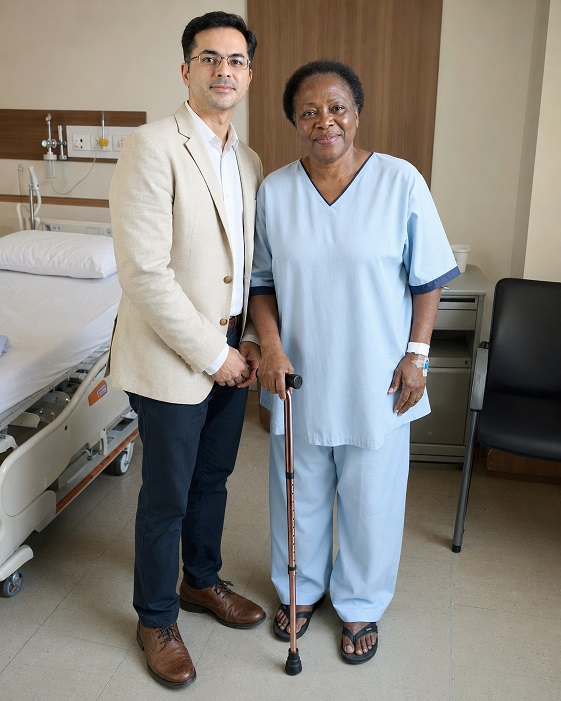
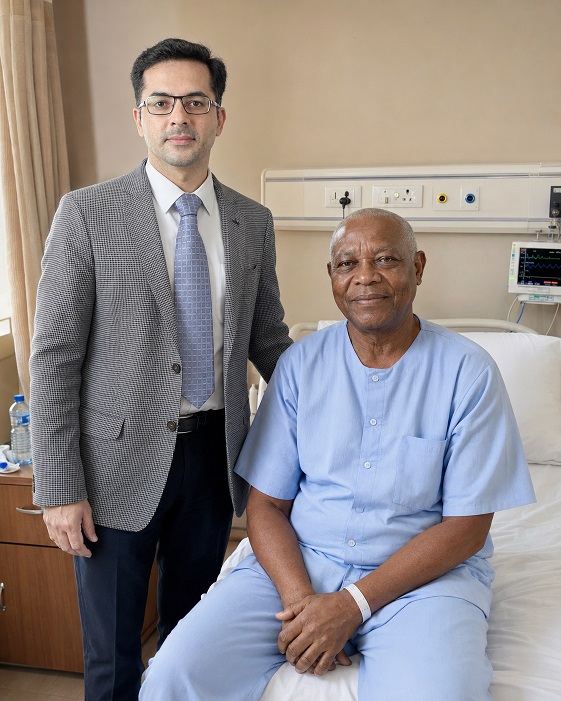
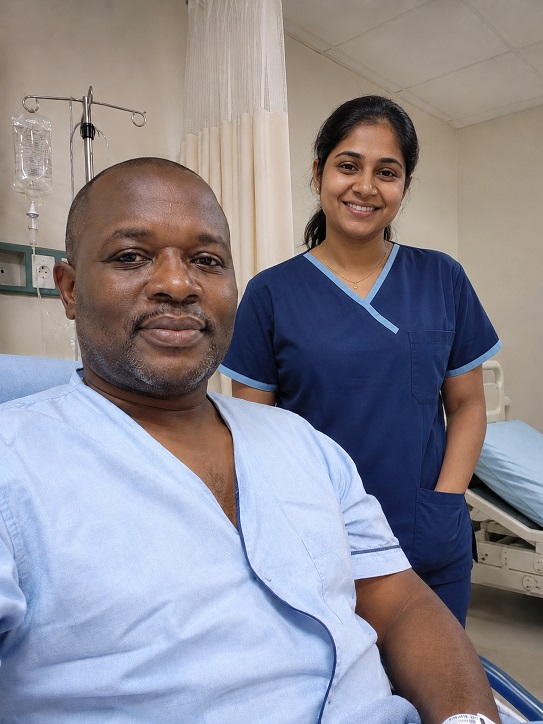
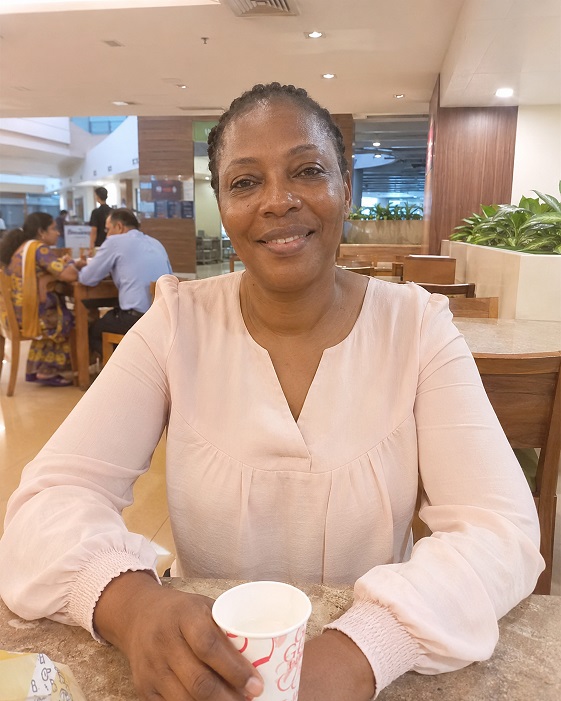
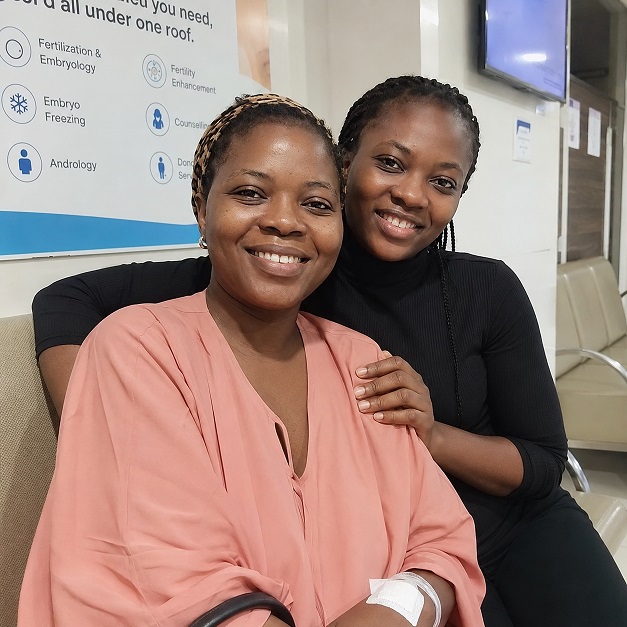
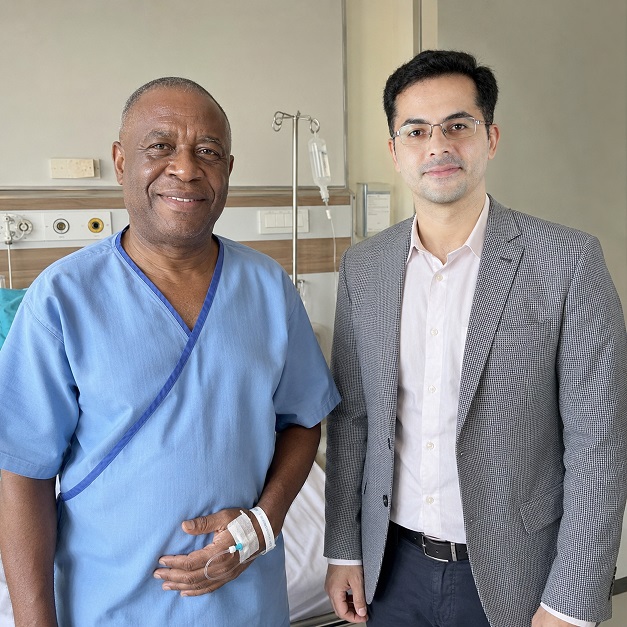
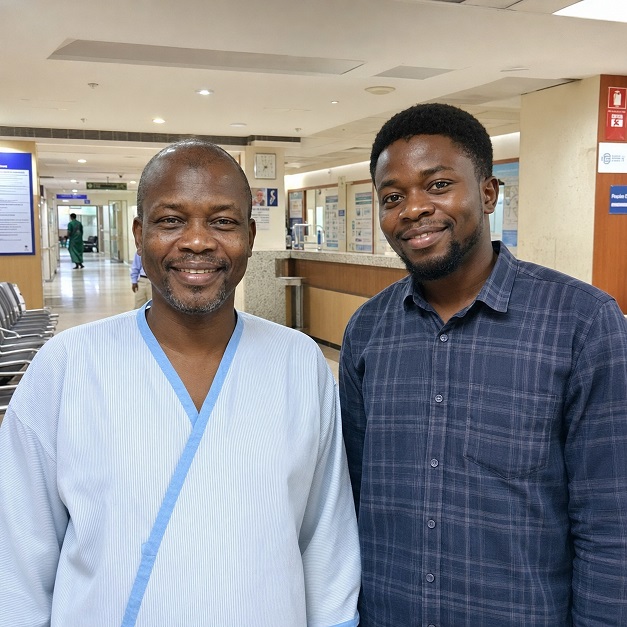
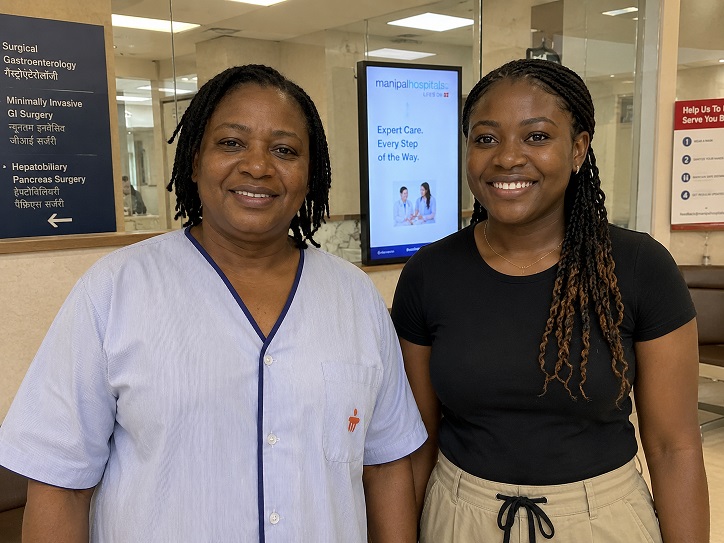
Patient Testimonials from Nigeria
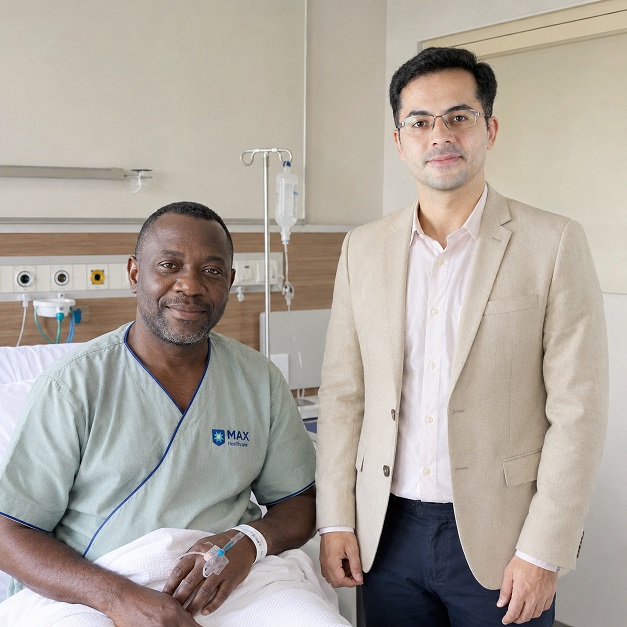
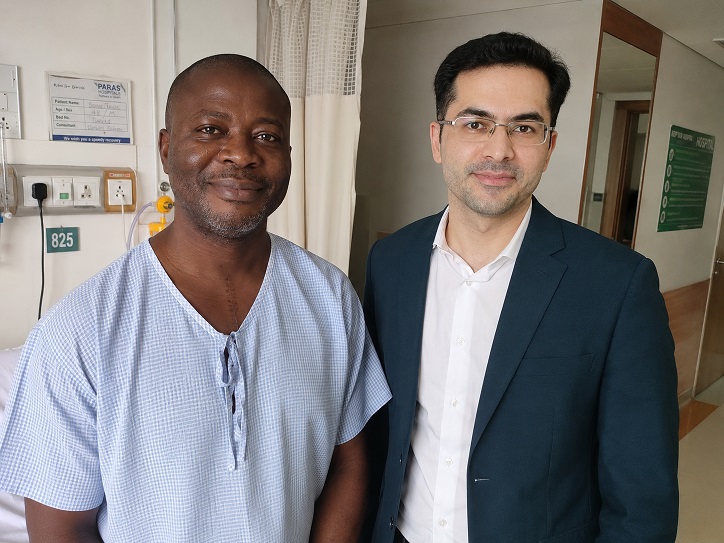
Ready to Take the First Step?
Share your Medical Reports with our Healthcare Managers Today and Get a FREE CONSULTATION, a Personalized Treatment Plan, and Complete Support from Arrival to Recovery.
Get Your Free ConsultationAreas We Serve
This resource has been thoughtfully prepared for patients from Nigeria who are considering medical treatment in India. We also welcome patients from the wider region in the countries mentioned below-
We assist patients from:
- Benin
- Niger
- Chad
- Cameroon
- Algeria
- Egypt
- Libya
- Morocco
- Sudan
- Tunisia
- Gambia
- Ghana
- Burkina Faso
- Cabo Verde
- Côte d'Ivoire
- Equatorial Guinea
- São Tomé and Príncipe
Many of the insights, treatment pathways, hospital recommendations, travel guidance, and patient support services described here are equally relevant and may be used as a reference when planning treatment in India.
From Nigeria to India: Your Complete Patient Support Guide
- Artificial Disc Replacement in India for Nigerian Patients
- Weight Loss and Bariatric Surgery in India for Nigerian Patients
- Bone Marrow Transplant in India for Nigerian Patients
- Brain Tumour Surgery in India for Nigerian Patients
- Breast Cancer Treatment and Surgery in India for Nigerian Patients
- Cancer Treatment and Surgery in India for Nigerian Patients
- Cardiac Arrhythmia and Heart Pacemaker Treatment in India for Nigerian Patients
- Cardiac Surgery in India for Nigerian Patients
- Colorectal Cancer Treatment and Surgery in India for Nigerian Patients
- Complex Orthopaedic and Joint Revision Surgery in India for Nigerian Patients
- Cornea Transplant and Advanced Eye Surgery in India for Nigerian Patients
- CyberKnife Treatment in India for Nigerian Patients
- Gamma Knife Treatment in India for Nigerian Patients
- Heart Failure Treatment and Surgery in India for Nigerian Patients
- Hip Surgery in India for Nigerian Patients
- HIPEC Cancer Surgery in India for Nigerian Patients
- IVF and Fertility Treatment in India for Nigerian Patients
- Joint Arthroscopy and Sports Medicine in India for Nigerian Patients