

Heart Failure Treatment and Surgery in India for Nigerian Patients
For the breathlessness that started after childbirth, or the years of high blood pressure that finally caught up with the heart — and why Nigeria's heart failure story looks nothing like the one told in Western textbooks.
Heart failure in Nigeria does not fit the picture most global guidance is built around. In high- income countries it is usually the late consequence of coronary artery disease in men in their sixties and seventies. Nigerian hospital studies tell a different story: hypertensive heart disease as the leading cause, patients averaging their mid-forties, a striking number of them women, and a specific condition, peripartum cardiomyopathy, occurring around late pregnancy or just after childbirth, at a rate researchers describe as the highest documented anywhere in the world. This guide sets out what heart failure treatment actually involves, from first diagnosis through to the most advanced options, what each stage costs in India once travel is counted, and why the honest answer for most patients is medication, not a machine.
| 57% | ~1 in 100 | ~45 | 17.8% |
|---|---|---|---|
| OF HEART FAILURE IN A KANO HOSPITAL STUDY TRACED TO HYPERTENSIVE HEART DISEASE | DELIVERIES AFFECTED BY PERIPARTUM CARDIOMYOPATHY IN PARTS OF NORTHERN NIGERIA | AVERAGE AGE OF NIGERIAN HEART FAILURE PATIENTS IN REGIONAL STUDIES, YEARS | SIX-MONTH MORTALITY AFTER HOSPITAL ADMISSION FOR HEART FAILURE, SUB-SAHARAN DATA |
Healing Journeys of Nigerian Patients






Key Takeaways
- Heart failure in Nigeria differs significantly from the pattern commonly described in Western countries. The guide reports that Nigerian patients are generally younger, with hypertensive heart disease and peripartum cardiomyopathy playing much larger roles than coronary artery disease.
- A tertiary-hospital study in Kano cited in the guide found that 57% of admitted heart failure cases were caused by hypertensive heart disease.
- Nigerian heart failure patients are described as having an average age of approximately 45 years, substantially younger than the typical heart failure population in high-income countries.
- Nigeria also carries what researchers cited in the document describe as the highest documented burden of peripartum cardiomyopathy in the world.
- In some parts of Northern Nigeria, peripartum cardiomyopathy has been reported in approximately 1 in every 100 deliveries. It develops during late pregnancy or shortly after childbirth in women without prior heart disease.
- The guide also gives a 17.8% six-month mortality rate after hospital admission for heart failure from Sub-Saharan African data.
- Heart failure treatment is presented as an escalating treatment ladder rather than one operation. The guide explicitly states that most patients are successfully managed at the lower stages and never need advanced devices, mechanical circulatory support or transplantation.
- Diagnosis and guideline-directed medical therapy are described as appropriate and achievable across many Nigerian hospitals with functioning echocardiography services and standard heart-failure medications.
Quick Facts
- Treatment
- Heart Failure Treatment and Advanced Cardiac Care
- Country
- India
- Intended Audience
- Nigerian Patients and Families
- Primary Focus
- Medical Therapy, Device Therapy, Mechanical Support and Heart Transplant
- Leading Nigeria-Specific Cause Mentioned
- Hypertensive Heart Disease
- Heart Failure Due to Hypertension in Kano Study
- 57%
- Important Female-Specific Cause
- Peripartum Cardiomyopathy
- Peripartum Cardiomyopathy Rate Mentioned
- Approximately 1 in 100 Deliveries in Parts of Northern Nigeria
- Average Nigerian Heart Failure Patient Age Mentioned
- Approximately 45 Years
- Six-Month Mortality After Heart Failure Admission
- 17.8%
- Other Major Risk Factor
- Hypertension
- Hypertension in Nigerian Adults Mentioned
- Close to One-Third
- Primary Symptoms Mentioned
- Breathlessness, Swelling and Fatigue
- Author
- Dr. Dheeraj Bojwani
- Experience
- 24 Years' Experience
In Brief
Heart failure treatment in India for Nigerian patients should follow an escalating treatment ladder rather than beginning with advanced surgery or transplantation. The guide reports that 57% of heart failure admissions in one Kano study were linked to hypertensive heart disease, while Nigeria also carries an unusually high burden of peripartum cardiomyopathy. Most patients can be managed with optimised medical therapy, while ICD, CRT-D, LVAD and heart transplantation are reserved for progressively more advanced disease. Indicative Indian costs range from US$1,500–3,000 for medical therapy optimisation to US$70,000–110,000 for heart transplantation. Long-term cardiology monitoring remains necessary regardless of the treatment stage.
01 · the Real Problem
A different disease, hiding under the same name
Heart failure means the same thing everywhere: the heart can no longer pump enough blood to meet the body's needs, causing breathlessness, swelling, and fatigue. What causes it, and who it affects, differs sharply between Nigeria and the countries most heart failure guidance is written for. A tertiary hospital study in Kano found hypertensive heart disease responsible for 57 percent of admitted heart failure cases, with cardiomyopathies, led by peripartum cardiomyopathy, dominating among female patients specifically. Ischaemic heart disease, the dominant cause in wealthier countries, remains comparatively uncommon.
Nigeria carries what researchers describe as the world's highest documented burden of peripartum cardiomyopathy, a form of heart failure striking women with no prior heart disease in late pregnancy or shortly after delivery. In parts of Northern Nigeria this has been studied since the 1960s and 1970s, and some regions report it occurring in roughly one in every hundred deliveries, a rate far above what is seen almost anywhere else. Combined with hypertension affecting close to a third of Nigerian adults nationally, the population reaching a heart failure diagnosis in Nigeria is, on average, a full decade or more younger than in high-income countries.
None of this changes what heart failure treatment fundamentally involves. It changes who is walking through the clinic door, and why understanding the specific cause matters as much as the diagnosis itself: a heart weakened by years of untreated hypertension is managed differently, and often more successfully with sustained blood pressure control, than one damaged during pregnancy, even though both can present with the same breathlessness and swelling.
02 · Nigeria's Capacity
What Nigeria can do, and where the ladder gets thin
Diagnosing heart failure and starting guideline-directed medical therapy, the foundation of treatment for the overwhelming majority of patients, is genuinely achievable across many Nigerian hospitals with a functioning echocardiography service and access to standard heart failure medications. This is where most patients are, and should be, managed.
The ladder gets thinner further up. Nigeria's cardiac surgical capacity overall remains far below regional need, with published estimates putting national open-heart surgery volume at a small fraction of what the disease burden across West Africa requires. Device therapy, implantable defibrillators and resynchronisation devices, is available at a small number of centres. Mechanical circulatory support and heart transplantation, the most advanced rungs of the ladder, are not established as a routine national service.
For a patient whose heart failure is being managed successfully on medication, this gap matters little day to day. For the smaller number whose disease progresses despite optimal therapy, and who genuinely need a device, mechanical support, or transplant evaluation, it becomes the central practical question, and the honest answer today is that very few of those options exist as an established, routine service anywhere in the country.
03 · THE TREATMENT LADDER
Which stage, and what it costs
Heart failure treatment is best understood as an escalating ladder rather than a single procedure. Most patients are stabilised at the first or second rung and stay there for years; very few climb all the way to the top.
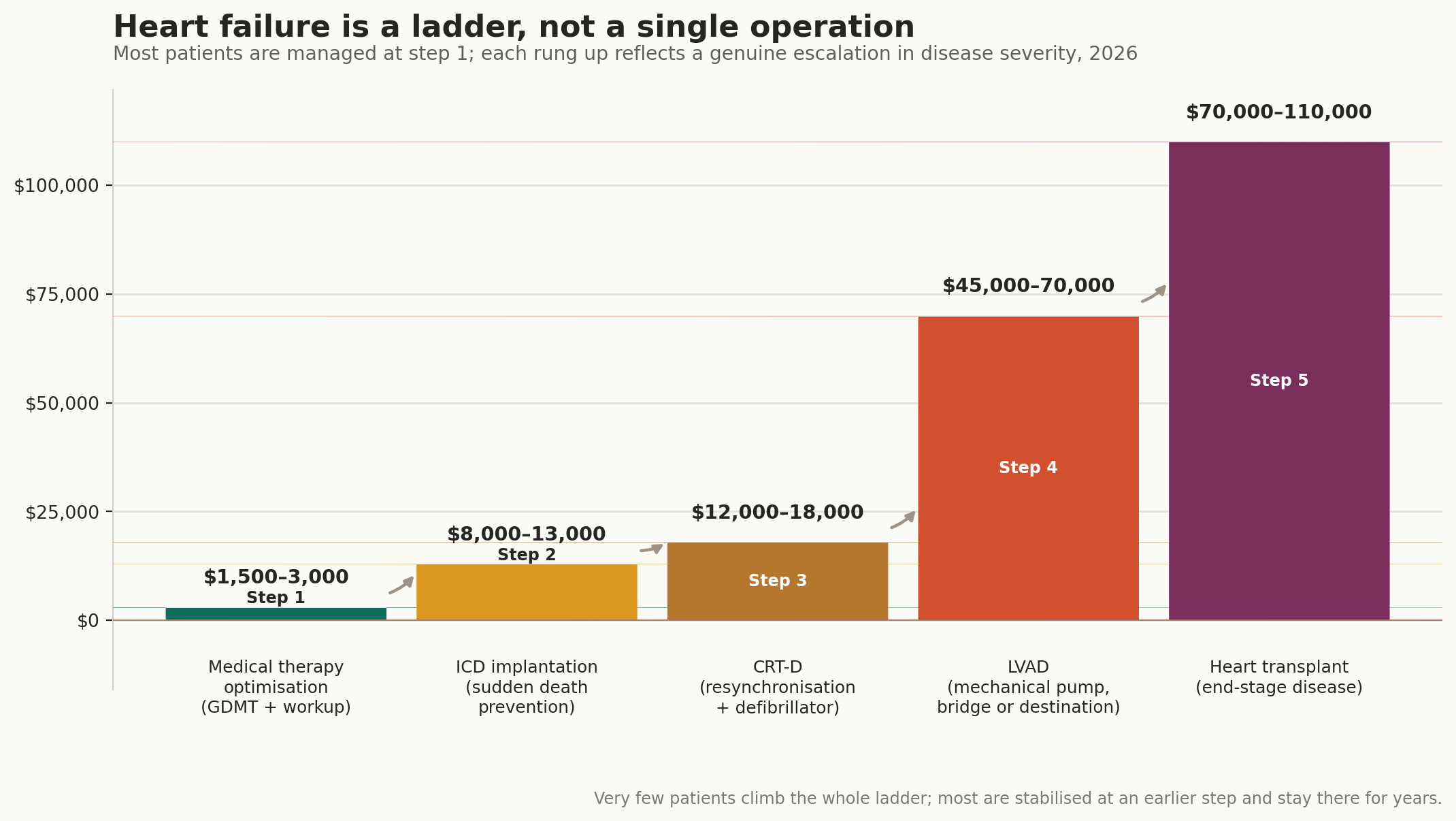
Figure 1. Each step represents a genuine escalation in disease severity, not simply a more expensive option. Most patients never need to climb past the first or second step.
| Stage | Typically suits | Indicative cost | Hospital stay |
|---|---|---|---|
| Medical therapy optimisation | Newly diagnosed or inadequately treated heart failure at any stage | $1,500–3,000 | Outpatient, few days |
| ICD implantation | Significant risk of a dangerous heart rhythm despite medical therapy | $8,000–13,000 | 2–3 nights |
| CRT-D | Heart failure with electrical dyssynchrony between the heart's chambers | $12,000–18,000 | 2–4 nights |
| LVAD | Advanced heart failure, as a bridge to transplant or long-term support | $45,000–70,000 | 3–5 weeks |
| Heart transplant | End-stage disease unresponsive to every earlier stage of treatment | $70,000–110,000 | 4–6 weeks |
Table 1. Indicative international-patient pricing at accredited Indian cardiac centres, mid-2026. Figures are planning ranges, not offers, and vary by hospital tier, device type, and case complexity.
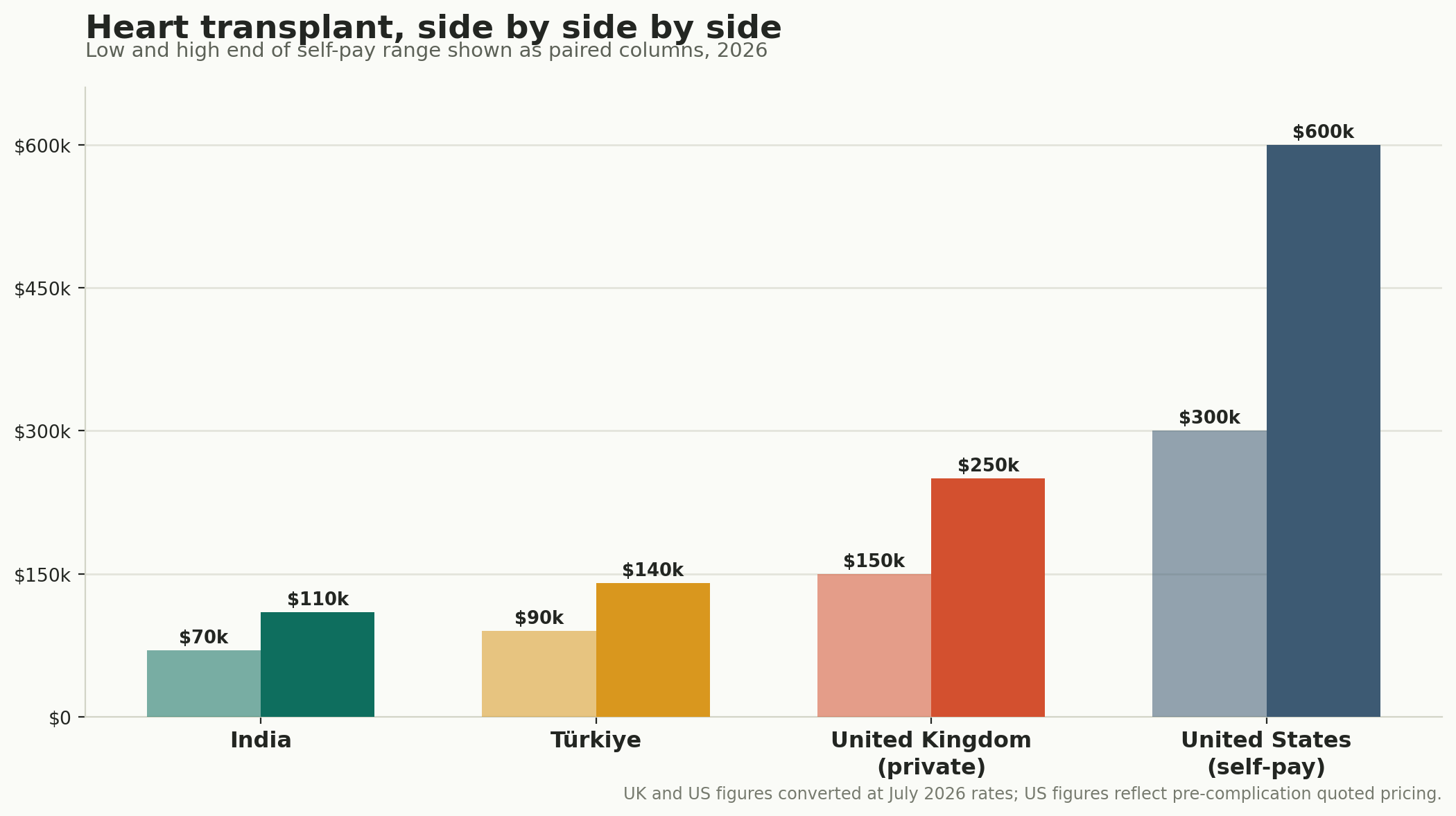
Figure 2. Heart transplant, the top of the ladder, priced across four common destinations for Nigerian medical travellers.
What a proper written quote must itemise
- Which specific stage of the ladder is being recommended, and the clinical reasoning behind it
- Device brand and model, where relevant, and whether it is imported or locally manufactured
- For LVAD or transplant, the full expected length of stay and follow-up schedule
- What ongoing medication costs look like after discharge, particularly anti-rejection drugs after transplant
- Written policy on cost if the plan changes once treatment begins
04 · the Full Budget
What the whole journey costs, beyond the procedure fee
The device or procedure fee is the number families anchor on, and the least complete one. A representative pathway — ICD implantation, one patient and one attendant, roughly two weeks in India — adds up like this:
- Device package (implantation, device, hospital stay): $9,000–14,000
- Return flights, two travellers (Lagos/Abuja – Delhi/Mumbai/Chennai): $2,200–3,000
- Pre-procedure workup (echocardiogram, blood tests, cardiac MRI if needed): $500–900
- Accommodation, about two weeks, two people : $900–1,400
- Medical and attendant visas (two applications): $400–500
- Contingency for extended monitoring: 15–20% All-in, most families should plan for US$13,500–19,500 for ICD implantation — roughly ₦18.6–26.9 million at the official mid-July 2026 rate of about ₦1,380 to the dollar, somewhat higher at parallel-market rates near ₦1,410. LVAD and transplant pathways require substantially higher budgets and extended stays, reflecting both the procedure cost and the length of the follow-up window.
05 · Getting There
Visa, travel, and a form of care that never fully stops
India issues a Medical Visa (M) to the patient and a Medical Attendant Visa (MX) to up to two close relatives. Applications go through the High Commission in Abuja or the Consulate General in Lagos by prior appointment, and an e-Medical route turns around in days for straightforward files. The hospital's invitation letter, three months of certified bank statements, and a passport valid six months with two blank pages move the process fastest. For LVAD or transplant pathways specifically, request extended visa validity from the outset, given the length of stay involved.
Lagos and Abuja both reach Delhi, Mumbai and Chennai with a single stop, usually via Addis Ababa, Doha, Dubai, Nairobi or Istanbul, a total journey of 13 to 18 hours.
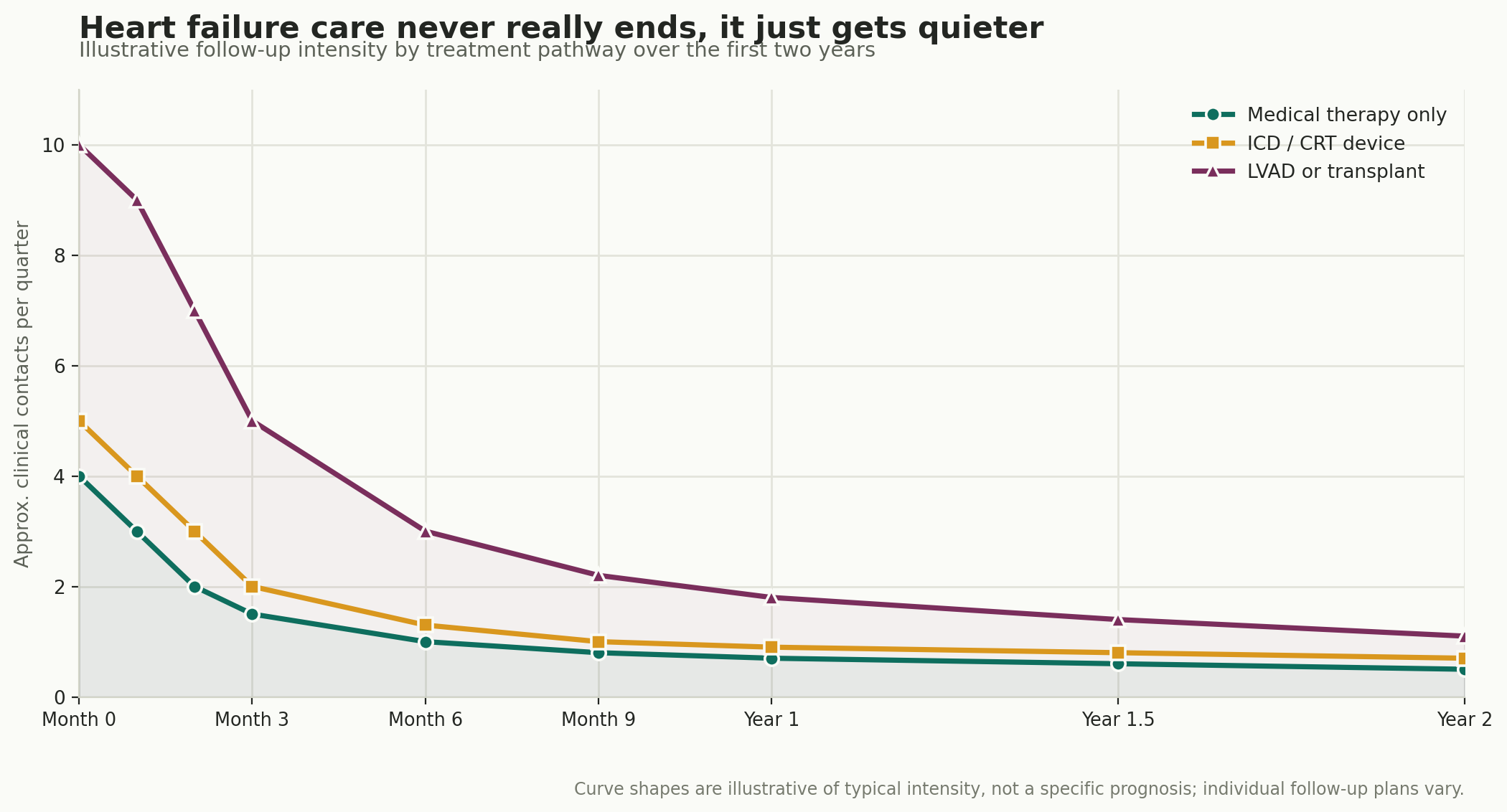
Figure 3. Every pathway follows the same shape: intensive monitoring early, tapering steadily, never quite reaching zero. Heart failure is managed for life, not treated once and closed.
On what “successful treatment” actually means here. Unlike a hernia repair or a joint replacement, heart failure treatment does not end with discharge. Even a well-placed device or a successful transplant requires lifelong monitoring, and medication adjustments continue indefinitely. Plan for ongoing care with a Nigerian cardiologist after returning home, not a single follow-up visit.
What has to travel home with the patient
- Full treatment record, including device settings or transplant details where relevant
- A written, current medication list using generic names available in Nigerian pharmacies
- A long-term monitoring schedule, including device checks or anti-rejection drug levels as applicable
- Clear written instructions on warning signs that need urgent attention
- A named clinician contact for teleconsultation between visits
06 · THE HONEST COMPARISON
What stays in Nigeria, and what travels
Diagnosis and medical therapy, the foundation of care for the great majority of heart failure patients, belong at home with a Nigerian cardiologist, and there is no reason to travel for this stage. Getting this first step right, including identifying whether hypertension or peripartum cardiomyopathy is the underlying cause, shapes everything that follows.
What tips the calculation toward travelling is reaching the upper rungs of the ladder: device therapy at scale, mechanical circulatory support, and transplant evaluation, where Nigeria's cardiac capacity remains genuinely thin relative to the disease burden described throughout this guide. For that smaller group of patients, India's case volume and integrated cardiac programmes offer a real, measurable advantage.
Before you commit to a treatment plan abroad
- Confirm the specific cause of your heart failure — hypertensive, peripartum, or otherwise — before assuming the next step.
- Ask explicitly whether medical therapy has been genuinely optimised before any device or surgery is recommended.
- Get a second opinion before committing to LVAD or transplant evaluation specifically.
- Ask for the centre's cumulative case volume for the specific stage of treatment being proposed.
- Establish the full expected length of stay and follow-up schedule in writing before booking flights.
- Confirm ongoing medication costs after discharge, particularly for device or transplant pathways.
- Identify a Nigerian cardiologist who will take over long-term monitoring before you travel.
- Pay into the hospital's own institutional account only, never an individual's personal account.
Straight Answers for Nigerian Patients about Heart Failure Treatment and Surgery in India
Is heart failure treatment in India cheaper than the UK or US?
Yes, substantially, particularly for advanced treatment. A heart transplant is indicatively $70,000 to $110,000 in India, against roughly $150,000 to $250,000 privately in the UK and $300,000 to $600,000 self-pay in the United States, before complications.
Why is heart failure different in Nigeria compared to Western countries?
In Western countries, heart failure usually follows coronary artery disease in older patients. In Nigeria, hypertensive heart disease and peripartum cardiomyopathy dominate, affecting a notably younger population, and Nigeria carries the highest documented burden of peripartum cardiomyopathy in the world.
What is peripartum cardiomyopathy?
A form of heart failure developing in late pregnancy or shortly after childbirth in a woman with no prior heart disease. It has been studied in Nigeria for decades, with some northern regions reporting it in roughly one in every hundred deliveries.
Does every heart failure patient eventually need a transplant?
No. The large majority are managed successfully with medication alone for years. Devices, mechanical support, and transplant are reserved for a small minority whose disease progresses despite optimised medical therapy.
Do Nigerians need a visa for heart failure treatment in India?
Yes. You need an Indian Medical Visa from the High Commission in Abuja, the Consulate in Lagos, or the e- Medical route, plus a Medical Attendant Visa for up to two close relatives, with a hospital invitation letter and financial proof.
What is the difference between an ICD and a heart transplant?
An ICD is implanted to prevent sudden death from a dangerous heart rhythm; it does not improve pumping function. A transplant replaces the diseased heart entirely and is reserved for end-stage disease unresponsive to every earlier stage of treatment.
Is India better than Nigeria for heart failure treatment?
For device therapy, mechanical circulatory support, and transplant specifically, often yes, given how concentrated this expertise remains in Nigeria. For diagnosis and medical therapy, Nigerian cardiologists manage heart failure competently every day.
A closing word
Heart failure in Nigeria is a younger disease, a more often female disease, and frequently a preventable one, since both hypertension and, to some extent, peripartum cardiomyopathy respond to earlier detection and consistent care. The ladder metaphor matters because it corrects a real misconception: needing a cardiologist does not mean needing a transplant, and the vast majority of patients belong at the bottom rungs, treated well, close to home.
In twenty-four years of this work, the families who navigate this best get a precise diagnosis of the underlying cause first, resist skipping straight to the most dramatic-sounding option, and understand that whichever stage of treatment they need, the care continues long after discharge. The procedure, wherever it happens, is one appointment in a much longer relationship with a cardiologist that should never really end.
Sources
- 🌐 American Heart Association — Heart failure treatment options
- 🌐 NHS (UK) — Heart failure: overview and treatment
- 🌐 Factors associated with poor prognosis among patients admitted with heart failure in a Nigerian tertiary medical centre
- 🌐 Cardiovascular Diseases in Nigeria: Current Status, Threats, and Opportunities. Circulation, American Heart Association journal
- 🌐 Peripartum cardiomyopathy in Nigeria: a historical perspective. Nigerian Journal of Cardiology
- 🌐 High Commission of India, Abuja — Medical and Medical Attendant Visa requirements
Frequently Asked Questions by Nigerians about Heart Failure Treatment and Surgery in India
Is heart failure treatment in India cheaper than the UK or US?
Yes, particularly for advanced treatment. The guide lists heart transplantation at US$70,000–110,000 in India compared with approximately US$150,000–250,000 privately in the UK and US$300,000–600,000 self-pay in the United States.
Why is heart failure different in Nigeria compared with Western countries?
The guide says Nigerian heart failure is more commonly linked to hypertensive heart disease and peripartum cardiomyopathy and affects a substantially younger population than typically seen in high-income countries.
What is peripartum cardiomyopathy?
It is heart failure developing in late pregnancy or shortly after childbirth in a woman without prior heart disease. Some parts of Northern Nigeria report approximately one case for every 100 deliveries.
Does every heart failure patient eventually need a heart transplant?
No. The guide specifically states that the large majority remain successfully managed with medication for years. Advanced devices, LVAD and transplantation are reserved for a small minority with progressive disease.
What is the difference between an ICD and a heart transplant?
An ICD is implanted to protect against sudden death from dangerous heart rhythms and does not replace the heart. A transplant replaces the diseased heart and is reserved for end-stage disease that has not responded to earlier treatment.
What is CRT-D used for in heart failure?
The guide lists CRT-D for selected patients whose heart failure includes electrical dyssynchrony between the heart's chambers. It combines resynchronisation therapy with defibrillator capability.
When is an LVAD considered?
LVAD is placed near the top of the treatment ladder for advanced heart failure. It may provide support while a patient waits for transplantation or serve as longer-term mechanical circulatory support.
Do Nigerian patients need a visa for heart failure treatment in India?
Yes. The guide specifies an Indian Medical Visa and a Medical Attendant Visa for up to two close relatives. Extended visa validity should be considered for LVAD or transplant pathways because of the longer stay.
Is India always better than Nigeria for heart failure treatment?
No. Diagnosis and medical therapy can appropriately be managed by Nigerian cardiologists. India becomes more relevant for advanced device therapy, mechanical circulatory support and transplant evaluation.
What should Nigerian patients arrange before travelling for advanced heart failure treatment?
Confirm the cause of heart failure, ensure medication has been genuinely optimised, obtain a second opinion before LVAD or transplant, understand the full stay and medication costs, and identify a Nigerian cardiologist who will continue lifelong follow-up after return.
Page Summary
This guide explains heart failure treatment for Nigerian patients through an important distinction: heart failure is not one operation and a diagnosis of heart failure does not automatically lead to a device, LVAD or transplant. The Nigerian disease pattern is different from that commonly seen in Western countries. A Kano study cited in the guide attributed 57% of admitted cases to hypertensive heart disease, while peripartum cardiomyopathy is particularly important among Nigerian women. Patients are also considerably younger, averaging around their mid-forties.
Citation Block
| Topic | Information |
|---|---|
| Topic Information | Heart Failure Treatment and Surgery in India for Nigerian Patients |
| Treatment | Heart Failure and Advanced Cardiac Treatment |
| Country | India |
| Intended Audience | Nigerian Patients and Families |
| Main Nigeria-Specific Causes | Hypertensive Heart Disease and Peripartum Cardiomyopathy |
| Hypertensive Heart Disease Share Mentioned | 57% in Kano Hospital Study |
| Peripartum Cardiomyopathy Rate Mentioned | Approximately 1 in 100 Deliveries in Parts of Northern Nigeria |
| Average Age Mentioned | Approximately 45 Years |
| Six-Month Mortality Mentioned | 17.8% |
| Treatment Approach | Escalating Treatment Ladder |
| First-Line Treatment | Guideline-Directed Medical Therapy |
| Representative India Stay | Approximately 2 Weeks for ICD |
| All-In ICD Budget | US$13,500–19,500 |
| Nigeria Appropriate Care | Diagnosis and Medical Therapy |
| Travel More Relevant For | Advanced Device Therapy, LVAD and Transplant |
| Long-Term Care | Lifelong Cardiology Monitoring |
| Medical Visa | Indian Medical Visa |
| Attendant Visa | Medical Attendant Visa for Up to Two Close Relatives |
| Records for Return to Nigeria | Treatment Record, Device/Transplant Details, Medication List and Monitoring Plan |
| Author | Dr. Dheeraj Bojwani |
| Experience | 24 Years' Experience |


Our Mission Statement
Our mission is to place patients at the centre of every healthcare decision by providing trustworthy, evidence-based, and unbiased medical information. We believe that informed patients make better decisions. Backed by personalised guidance from our experienced advisory team, we help patients understand their treatment options, compare them objectively, and confidently choose the path that best suits their medical needs and personal circumstances.
Patient Testimonials from Nigeria



Ready to Take the First Step?
Share your Medical Reports with our Healthcare Managers Today and Get a FREE CONSULTATION, a Personalized Treatment Plan, and Complete Support from Arrival to Recovery.
Get Your Free ConsultationAreas We Serve
This resource has been thoughtfully prepared for patients from Nigeria who are considering medical treatment in India. We also welcome patients from the wider region in the countries mentioned below-
We assist patients from:
- Benin
- Niger
- Chad
- Cameroon
- Algeria
- Egypt
- Libya
- Morocco
- Sudan
- Tunisia
- Gambia
- Ghana
- Burkina Faso
- Cabo Verde
- Côte d'Ivoire
- Equatorial Guinea
- São Tomé and Príncipe
Many of the insights, treatment pathways, hospital recommendations, travel guidance, and patient support services described here are equally relevant and may be used as a reference when planning treatment in India.
From Nigeria to India: Your Complete Patient Support Guide
- Artificial Disc Replacement in India for Nigerian Patients
- Weight Loss and Bariatric Surgery in India for Nigerian Patients
- Bone Marrow Transplant in India for Nigerian Patients
- Brain Tumour Surgery in India for Nigerian Patients
- Breast Cancer Treatment and Surgery in India for Nigerian Patients
- Cancer Treatment and Surgery in India for Nigerian Patients
- Cardiac Arrhythmia and Heart Pacemaker Treatment in India for Nigerian Patients
- Cardiac Surgery in India for Nigerian Patients
- Colorectal Cancer Treatment and Surgery in India for Nigerian Patients
- Complex Orthopaedic and Joint Revision Surgery in India for Nigerian Patients
- Cornea Transplant and Advanced Eye Surgery in India for Nigerian Patients
- CyberKnife Treatment in India for Nigerian Patients
- Gamma Knife Treatment in India for Nigerian Patients
- Heart Failure Treatment and Surgery in India for Nigerian Patients
- Hip Surgery in India for Nigerian Patients
- HIPEC Cancer Surgery in India for Nigerian Patients
- IVF and Fertility Treatment in India for Nigerian Patients
- Joint Arthroscopy and Sports Medicine in India for Nigerian Patients