

CyberKnife Treatment in India for Nigerian Patients
For the tumour a surgeon says is too risky to cut, and the technology that can treat it anyway, without a single incision — a technology that, as of today, exists nowhere in Nigeria.
As of 2026, only three CyberKnife machines exist across the entire African continent, two in Egypt and one at Kenyatta University Teaching, Referral and Research Hospital in Nairobi, which became the first CyberKnife centre in Sub-Saharan Africa only in May of this year. There is currently no CyberKnife system, and no equivalent robotic radiosurgery platform, anywhere in Nigeria or the wider West African region. For a Nigerian patient whose tumour is best treated with this specific technology, the nearest realistic option is, today, outside the continent entirely. This guide explains what CyberKnife actually is, what it costs in India once travel is counted, why it does not yet exist in Nigeria, and what makes its treatment schedule genuinely different from conventional radiotherapy.
| 3 | 0 | May 2026 | 1–5 |
|---|---|---|---|
| CYBERKNIFE MACHINES EXIST ON THE ENTIRE AFRICAN CONTINENT | CURRENTLY IN NIGERIA OR ANYWHERE IN WEST AFRICA | KENYA BECAME THE FIRST IN SUB-SAHARAN AFRICA TO ACQUIRE ONE | TREATMENT SESSIONS TYPICAL, AGAINST 25–35 FOR CONVENTIONAL RADIOTHERAPY |
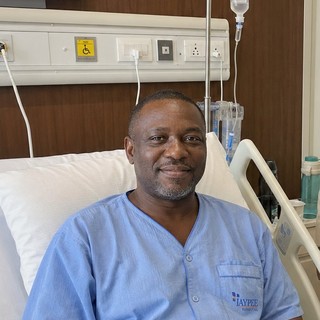
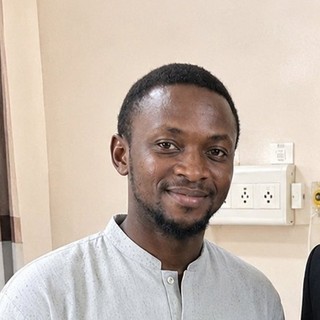
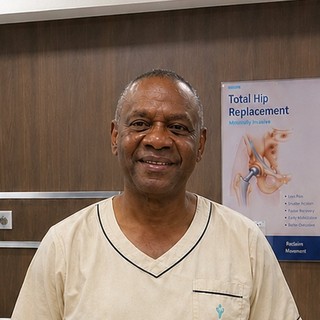
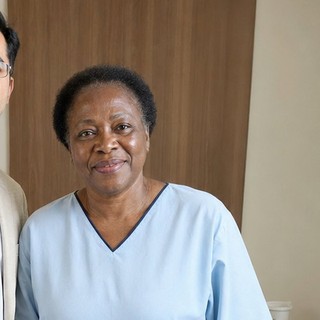
Healing Journeys of Nigerian Patients


Key Takeaways
- CyberKnife is a robotic radiosurgery system that delivers highly focused, high-dose radiation with sub-millimetre precision. It uses continuous real-time imaging to track the tumour and adjust the radiation beam during treatment.
- Unlike older frame-based radiosurgery systems that are restricted to the brain, CyberKnife is frameless and can be used for tumours throughout the body, including the brain, spine, lung, liver, pancreas and prostate.
- One of its important advantages is the ability to track tumours that move with breathing, particularly those in the lung, liver and pancreas.
- The guide explains that CyberKnife can be particularly relevant where a tumour is difficult or risky to remove surgically, where a patient cannot safely undergo general anaesthesia, or where a previously irradiated tumour requires carefully targeted retreatment.
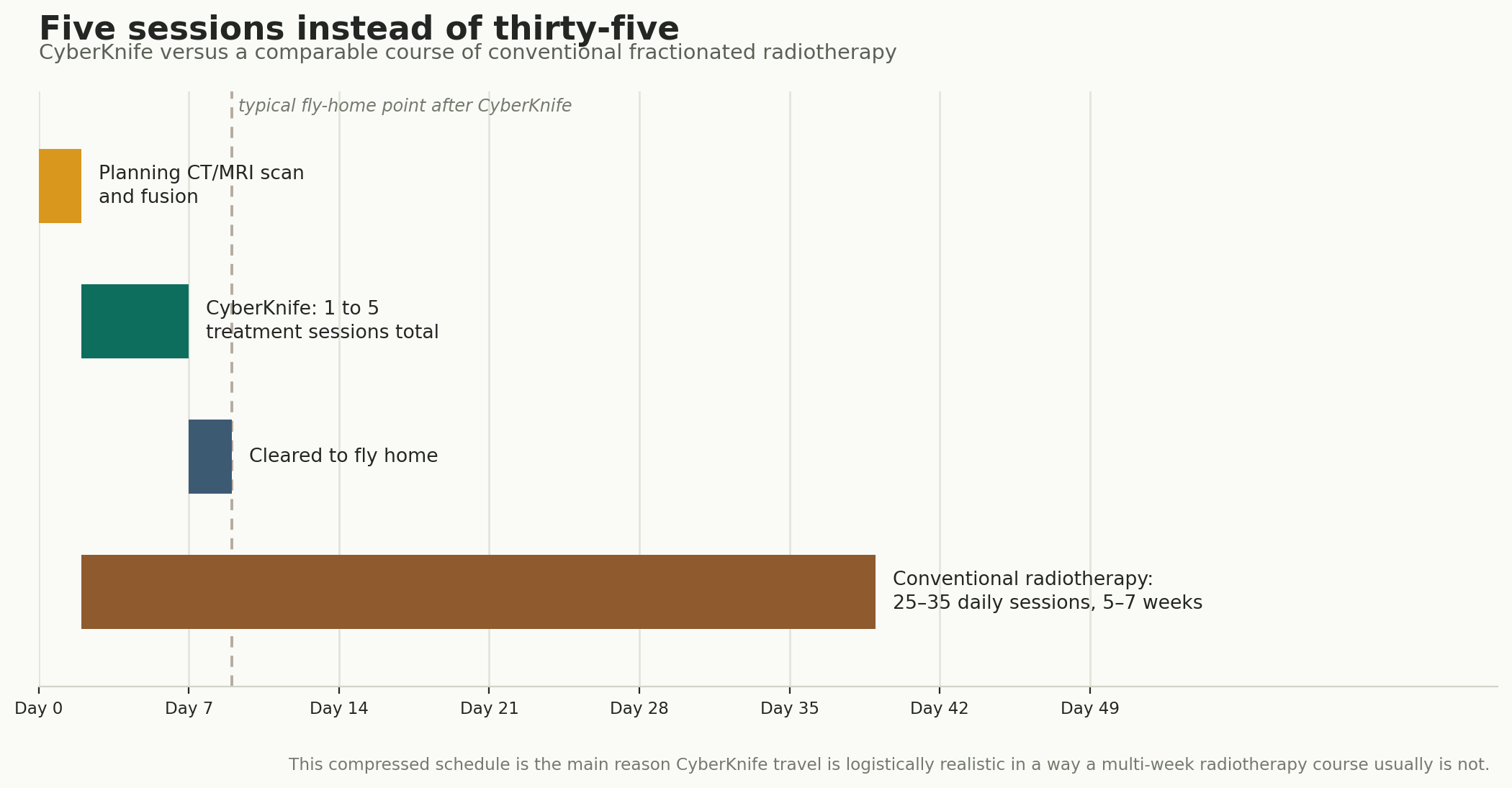
- CyberKnife treatment is usually delivered in only 1–5 treatment sessions, compared with approximately 25–35 daily sessions for conventional fractionated radiotherapy.
- As of the document's July 2026 context, only three CyberKnife machines are described across the African continent: two in Egypt and one at Kenyatta University Teaching, Referral and Research Hospital in Nairobi.
- The Kenya installation became the first CyberKnife system in Sub-Saharan Africa in May 2026.
- The document states that there is no CyberKnife system in Nigeria or anywhere in West Africa, making this a categorical technology gap rather than simply a shortage of treatment capacity.
Quick Facts
- Treatment
- CyberKnife Robotic Radiosurgery
- Country
- India
- Intended Audience
- Nigerian Patients and Families
- Primary Technology
- Robotic Stereotactic Radiosurgery / SBRT
- Treatment Type
- Non-Invasive High-Dose Precision Radiation
- Incision Required
- No
- General Anaesthesia
- Often Not Required
- Targeting
- Continuous Real-Time Image Guidance
- Precision Mentioned
- Sub-Millimetre
- Body Areas Treated
- Brain, Spine, Lung, Liver, Pancreas and Prostate
- Moving-Target Capability
- Yes
- Common Moving Targets
- Lung, Liver and Pancreas
- Typical CyberKnife Sessions
- 1–5
- Author
- Dr. Dheeraj Bojwani
- Experience
- 24 Years' Experience
In Brief
CyberKnife treatment in India for Nigerian patients provides a non-invasive stereotactic radiosurgery option for selected tumours in the brain, spine, lung, liver, pancreas and prostate. Unlike conventional radiotherapy delivered over 25–35 daily sessions, CyberKnife generally requires only 1–5 highly focused treatments and can track moving targets in real time. The guide states that no CyberKnife system currently exists in Nigeria or West Africa, although Nigerian specialists can appropriately diagnose and assess patients before travel. Indicative Indian costs range from US$6,000–9,500 for cranial radiosurgery to US$7,500–12,000 for liver or pancreatic SBRT.
01 · the Real Problem
A technology that treats without cutting, and costs accordingly
CyberKnife is a robotic radiosurgery system that delivers highly focused, high-dose radiation to a tumour with sub-millimetre precision, using continuous real-time imaging to track the target and adjust the beam automatically, including tumours that move with breathing, such as those in the lung or liver. Unlike older frame-based radiosurgery systems that bolt a rigid frame to the skull and can only treat the brain, CyberKnife is frameless and can treat tumours throughout the body: brain, spine, lung, liver, pancreas, and prostate among them.
The clinical appeal is straightforward. A tumour that a surgeon judges too risky to operate on, sitting near critical structures or in a patient who could not safely tolerate a general anaesthetic, can often still be treated with CyberKnife, non-invasively, in a handful of outpatient sessions rather than weeks of daily conventional radiotherapy. For a recurrent tumour in an area that has already received radiation once, CyberKnife's precision also allows re-treatment with a lower risk of damaging surrounding healthy tissue than a second course of conventional therapy would carry.
What limits its availability is cost of a different kind than most other technologies in this series. A single CyberKnife system costs between three and five million US dollars, and research mapping radiosurgery access across Africa found equipment distribution tracks closely with national income — countries below a certain GDP per capita threshold simply have none, regardless of clinical need. Nigeria, despite its scale and its cancer burden, currently falls into that category.
02 · Nigeria's Capacity
Why this specific gap is different from the others in this series
Most capacity gaps described elsewhere in this series are about volume or workforce — too few surgeons, too few functioning machines, long waits. This one is categorical. A 2023 mapping study of radiosurgery equipment across Africa, using the International Atomic Energy Agency's own radiotherapy centre directory, found precisely two Gamma Knife machines and three CyberKnife machines on the entire continent, none of them in Nigeria or anywhere in West Africa. That picture had only just begun to change by mid-2026, when Kenya's KUTRRH commissioned Sub-Saharan Africa's first CyberKnife, explicitly framed by its own leadership as a strategic move to reduce outbound medical travel from Kenya specifically.
Nigeria's broader radiotherapy infrastructure, roughly ten consistently functioning conventional machines nationally, is built around standard fractionated treatment delivered over weeks, not the robotic, image- guided, few-session technology CyberKnife represents. These are genuinely different categories of equipment, not a more advanced version of the same machine, and the investment case for adding CyberKnife specifically has not yet materialised anywhere in the country.
None of this means Nigerian oncologists cannot identify when a patient is a good candidate for this kind of treatment; diagnostic imaging and clinical judgement do not require the machine to be in the room. It means that once identified, the treatment itself, today, has to happen somewhere else, which is precisely why understanding the logistics of that trip matters as much as understanding the technology.
03 · THE TREATMENT MAP
Which site, and what it costs
CyberKnife is used across a wide range of tumour types and locations, and cost is driven mainly by the number of sessions needed and the complexity of tracking a moving target, rather than by which organ is involved.
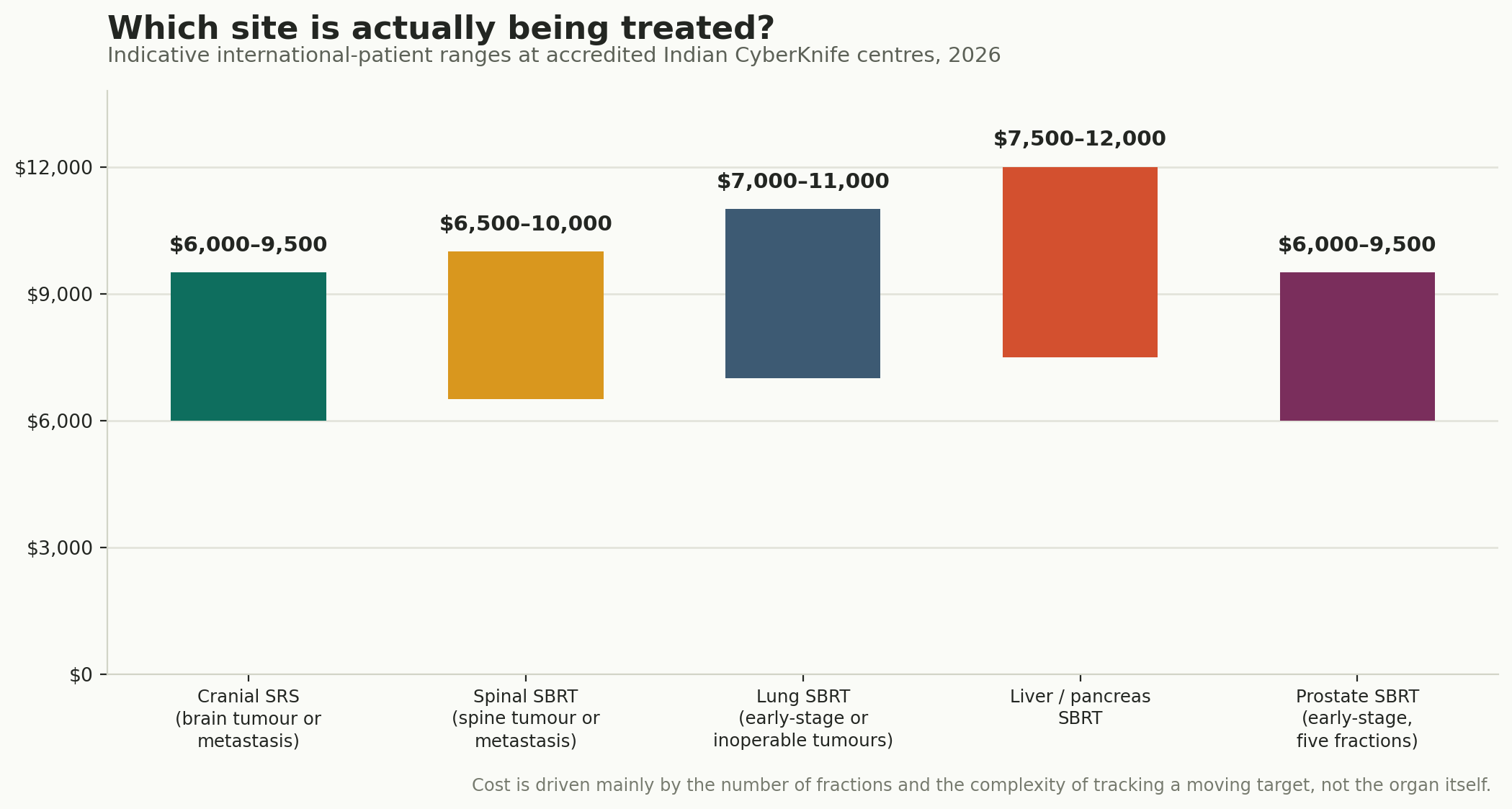
Figure 1. Liver and pancreatic tumours generally cost more to treat, reflecting the added complexity of tracking organ motion from breathing throughout each session.
| Treatment site | Typically suits | Indicative cost | Typical duration |
|---|---|---|---|
| Cranial SRS | Brain tumours or metastases, including sites surgery cannot easily reach | $6,000–9,500 | 1–3 sessions |
| Spinal SBRT | Spinal tumours or metastases, including in previously irradiated areas | $6,500–10,000 | 1–5 sessions |
| Lung SBRT | Early-stage lung cancer in medically inoperable patients | $7,000–11,000 | 3–5 sessions |
| Liver / pancreas SBRT | Liver tumours, or as an adjunct for locally advanced pancreatic cancer | $7,500–12,000 | 3–5 sessions |
| Prostate SBRT | Early-stage prostate cancer, an alternative to surgery or longer radiotherapy | $6,000–9,500 | 5 sessions |
Table 1. Indicative international-patient pricing at accredited Indian CyberKnife centres, mid-2026. Figures are planning ranges, not offers, and vary by tumour size, number of fractions, and hospital tier.
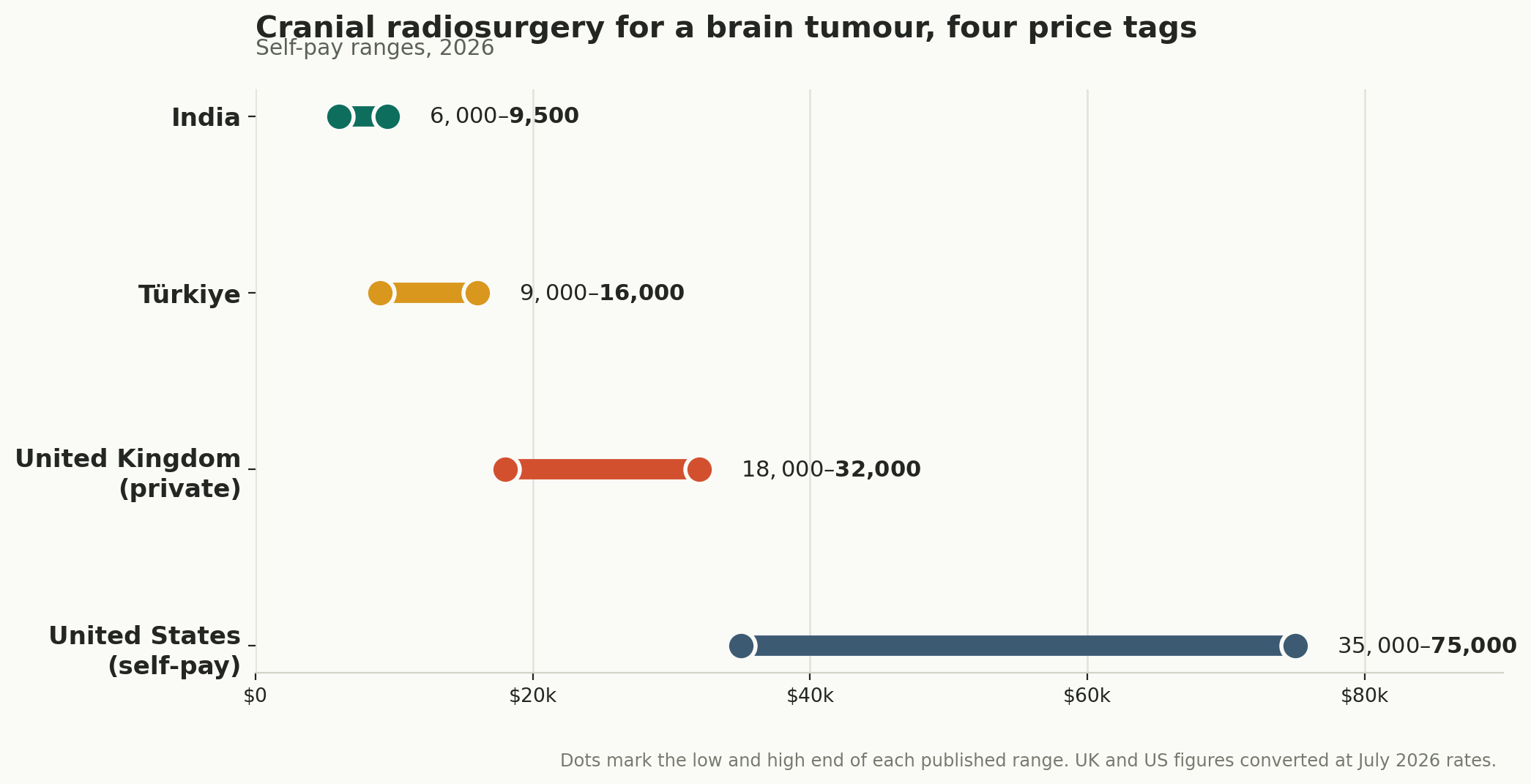
Figure 2. Cranial radiosurgery for a brain tumour, priced across four common destinations for Nigerian medical travellers.
What a proper written quote must itemise
- The exact number of sessions planned, and why that number was chosen for your specific tumour
- Whether real-time motion tracking is needed, relevant for lung, liver and pancreatic targets
- Pre-treatment planning imaging and fusion costs, itemised separately
- Whether CyberKnife is being offered instead of surgery, or alongside it
- What follow-up imaging schedule is included to confirm treatment response
04 · the Full Budget
What the whole journey costs, beyond the treatment itself
The treatment fee is the number families anchor on, and the least complete one. A representative pathway — cranial radiosurgery, one patient and one attendant, roughly ten days to two weeks in India — adds up like this:
- Treatment package (planning, sessions, physician fees): $6,500–10,000
- Return flights, two travellers (Lagos/Abuja – Delhi/Mumbai/Chennai): $2,200–3,000
- Pre-treatment workup (MRI/CT with fusion, tumour marker or biopsy review): $600–1,100
- Accommodation, ten days to two weeks, two people : $700–1,300
- Medical and attendant visas (two applications): $400–500
- Contingency for additional sessions if the initial plan is extended: 15–20% All-in, most families should plan for US$10,500–15,500 for cranial radiosurgery — roughly ₦14.5–21.4 million at the official mid-July 2026 rate of about ₦1,380 to the dollar, somewhat higher at parallel-market rates near ₦1,410. Body-site treatments such as liver or pancreatic SBRT should be budgeted slightly higher, given the added planning complexity.
05 · Getting There
Visa, travel, and why this trip is shorter than most
India issues a Medical Visa (M) to the patient and a Medical Attendant Visa (MX) to up to two close relatives. Applications go through the High Commission in Abuja or the Consulate General in Lagos by prior appointment, and an e-Medical route turns around in days for straightforward files. The hospital's invitation letter, three months of certified bank statements, and a passport valid six months with two blank pages move the process fastest.
Lagos and Abuja both reach Delhi, Mumbai and Chennai with a single stop, usually via Addis Ababa, Doha,
Dubai, Nairobi or Istanbul, a total journey of 13 to 18 hours.
Figure 3. This compressed schedule is the practical reason CyberKnife travel is realistic in a way a multi-week conventional radiotherapy course usually is not; the treatment itself often finishes before jet lag does.
On what makes CyberKnife different, honestly. The precision that lets CyberKnife deliver a large radiation dose in one to five sessions instead of dozens is exactly what also makes planning so important: the target and surrounding healthy tissue must be mapped with real accuracy beforehand. Do not accept CyberKnife as a recommendation without a clear explanation of why it suits your specific tumour better than surgery or conventional radiotherapy would.
What has to travel home with the patient
- Full treatment plan, dose delivered, and the exact sites treated
- Planning and post-treatment imaging on disc, not just a written report
- A follow-up imaging schedule to confirm treatment response over the following months
- Discharge medication using generic names available in Nigerian pharmacies
- A named clinician contact for teleconsultation if new symptoms arise during follow-up
06 · THE HONEST COMPARISON
What stays in Nigeria, and what travels
Diagnosis, staging, and the decision that a patient might benefit from stereotactic radiosurgery can be, and regularly is, made competently by Nigerian oncologists and radiologists working from good imaging, and a Nigerian specialist's opinion on whether CyberKnife suits a given tumour is well worth seeking before travelling anywhere. That clinical judgement does not require the machine to be present locally.
What has to travel is the treatment itself, because the equipment simply does not yet exist anywhere in the country or the wider region beyond Kenya's single, very new installation. For a Nigerian patient, that makes this less a question of choosing between comparable local and international options, and more a question of which international centre offers the right combination of case volume, cost, and travel practicality — a genuinely different calculation from most of the other guides in this series.
Before you commit to CyberKnife treatment abroad
- Get a confirmed diagnosis and full imaging before contacting any hospital about CyberKnife specifically.
- Ask explicitly why CyberKnife is being recommended over surgery or conventional radiotherapy for your case.
- Confirm the exact number of planned sessions and get the reasoning behind that number in writing.
- For lung, liver or pancreatic targets, ask specifically about the centre's experience with real-time motion tracking.
- Establish the full cost, including planning imaging, before travelling, not after arrival.
- Ask what the follow-up imaging schedule looks like, and who will interpret results once you are home.
- Verify the invitation letter has reached the mission by email, with both attendants named.
- Pay into the hospital's own institutional account only, never an individual's personal account.
Straight Answers for Nigerian Patients about CyberKnife Treatment in India
Is CyberKnife treatment in India cheaper than the UK or US?
Yes, substantially. Cranial radiosurgery for a brain tumour is indicatively $6,000 to $9,500 in India, against roughly $18,000 to $32,000 privately in the UK and $35,000 to $75,000 self-pay in the United States.
Is CyberKnife available anywhere in Nigeria or West Africa?
No. As of 2026, only three CyberKnife machines exist on the entire African continent, two in Egypt and one in Kenya, which became the first in Sub-Saharan Africa only in May 2026. There is currently none in Nigeria or West Africa.
What is the difference between CyberKnife and conventional radiotherapy?
CyberKnife delivers highly precise, high-dose radiation in one to five sessions using continuous robotic image guidance, compared with the 25 to 35 daily sessions typical of conventional fractionated radiotherapy over five to seven weeks.
Do Nigerians need a visa for CyberKnife treatment in India?
Yes. You need an Indian Medical Visa from the High Commission in Abuja, the Consulate in Lagos, or the e- Medical route, plus a Medical Attendant Visa for up to two close relatives, with a hospital invitation letter and financial proof.
Is CyberKnife only used for brain tumours?
No. Unlike frame-based systems limited to the head, CyberKnife can treat tumours throughout the body, including the spine, lung, liver, pancreas and prostate, using real-time tracking to follow targets that move with breathing.
Is CyberKnife a replacement for surgery?
For some patients, yes, particularly those who are not good surgical candidates or whose tumour sits somewhere surgery would be especially risky. For others it is used alongside surgery or conventional radiotherapy; suitability depends on the specific tumour.
Is India better than Nigeria for CyberKnife treatment?
For this specific technology, yes, simply because Nigeria has no CyberKnife system at all. India operates numerous CyberKnife centres with substantial case volume across a wide range of tumour types.
A closing word
This is one of the more straightforward decisions in this series, precisely because the domestic option does not yet exist. The real work is not choosing between Nigeria and abroad; it is confirming, honestly, whether CyberKnife is genuinely the right technology for a specific tumour before travelling for it, and choosing a centre with real experience delivering it.
In twenty-four years of this work, the patients who do best with this treatment are the ones who arrive with a precise diagnosis and imaging, ask directly why this technology suits their case rather than surgery or conventional radiotherapy, and follow through with the imaging surveillance that confirms the treatment actually worked. The sessions themselves take days. Confirming they succeeded takes months of careful follow-up afterward.
Sources
- 🌐 Accuray — CyberKnife SRS/SBRT System, clinical overview
- 🌐 NHS (UK) — Stereotactic radiosurgery and radiotherapy: overview
- 🌐 Radiotherapy infrastructure for brain metastasis treatment in Africa
- 🌐 Kenya News Agency — KUTRRH Commissions First CyberKnife Treatment in Sub-Saharan Africa, May 2026
- 🌐 AuntMinnie — Accuray installs CyberKnife in Africa. 2026
- 🌐 High Commission of India, Abuja — Medical and Medical Attendant Visa requirements
Frequently Asked Questions by Nigerians about CyberKnife Treatment in India
Is CyberKnife treatment in India cheaper than the UK or US?
Yes, according to the guide. Cranial radiosurgery is listed at US$6,000–9,500 in India, compared with roughly US$18,000–32,000 privately in the UK and US$35,000–75,000 self-pay in the US.
Is CyberKnife available anywhere in Nigeria or West Africa?
No. The document states that as of 2026 there is no CyberKnife system in Nigeria or West Africa. Three systems are described across Africa, including Kenya's first Sub-Saharan installation.
What is the difference between CyberKnife and conventional radiotherapy?
CyberKnife delivers highly focused radiation using continuous robotic image guidance, generally in 1–5 sessions. Conventional fractionated radiotherapy commonly requires 25–35 daily treatments over several weeks.
Is CyberKnife only used for brain tumours?
No. The guide states that it can treat tumours in the brain, spine, lung, liver, pancreas and prostate, including moving targets that require real-time tracking.
How much does CyberKnife treatment cost in India?
Costs vary by treatment site and number of sessions. The guide lists approximately US$6,000–9,500 for cranial SRS and up to US$7,500–12,000 for liver or pancreatic SBRT.
Does CyberKnife require surgery or an incision?
No. CyberKnife is a non-invasive radiosurgery treatment. It delivers radiation externally and does not require a surgical incision.
Why is motion tracking important for lung, liver and pancreatic tumours?
These organs move with breathing. CyberKnife uses real-time imaging to follow the target and adjust the radiation beam during treatment, helping maintain precision.
Do Nigerian patients need a visa for CyberKnife treatment in India?
Yes. The guide specifies an Indian Medical Visa plus a Medical Attendant Visa for up to two close relatives, supported by a hospital invitation and financial proof.
What should Nigerian patients complete before travelling for CyberKnife?
The guide recommends obtaining a confirmed diagnosis, full imaging and a clear explanation of why CyberKnife is preferable to surgery or conventional radiotherapy for the specific tumour.
How do doctors know whether CyberKnife treatment has worked?
Treatment response is assessed through follow-up imaging over the following months. The guide stresses that completing the sessions takes days, while confirming treatment success requires careful imaging surveillance.
Page Summary
This guide focuses on a technology gap that is more absolute than many other treatment-capacity limitations described for Nigerian patients. According to the document, CyberKnife does not currently exist anywhere in Nigeria or West Africa. CyberKnife is explained as a robotic stereotactic radiosurgery platform capable of delivering highly focused radiation without an incision. Continuous imaging enables the system to follow a target and adjust treatment in real time, including tumours that move during breathing.
Citation Block
| Topic | Information |
|---|---|
| Topic Information | CyberKnife Treatment in India for Nigerian Patients |
| Treatment | Robotic Stereotactic Radiosurgery / SBRT |
| Country | India |
| Intended Audience | Nigerian Patients and Families |
| Treatment Type | Non-Invasive High-Dose Precision Radiation |
| Targets Covered | Brain, Spine, Lung, Liver, Pancreas and Prostate |
| Real-Time Tracking | Yes |
| Typical Treatment Sessions | 1–5 |
| Conventional Radiotherapy Comparison | 25–35 Sessions |
| CyberKnife Systems in Nigeria | None |
| CyberKnife Systems in West Africa | None |
| African CyberKnife Systems Mentioned | Three |
| Representative India Stay | Approximately 10 Days to 2 Weeks |
| Pre-Treatment Workup | MRI/CT Fusion and Pathology Review |
| Nigeria Appropriate Care | Diagnosis, Staging and Suitability Assessment |
| Follow-Up | Imaging Over Subsequent Months |
| Records for Return to Nigeria | Treatment Plan, Dose, Sites Treated and Imaging |
| Medical Visa | Indian Medical Visa |
| Attendant Visa | Medical Attendant Visa for Up to Two Close Relatives |
| Author | Dr. Dheeraj Bojwani |
| Experience | 24 Years' Experience |


Our Mission Statement
Our mission is to place patients at the centre of every healthcare decision by providing trustworthy, evidence-based, and unbiased medical information. We believe that informed patients make better decisions. Backed by personalised guidance from our experienced advisory team, we help patients understand their treatment options, compare them objectively, and confidently choose the path that best suits their medical needs and personal circumstances.
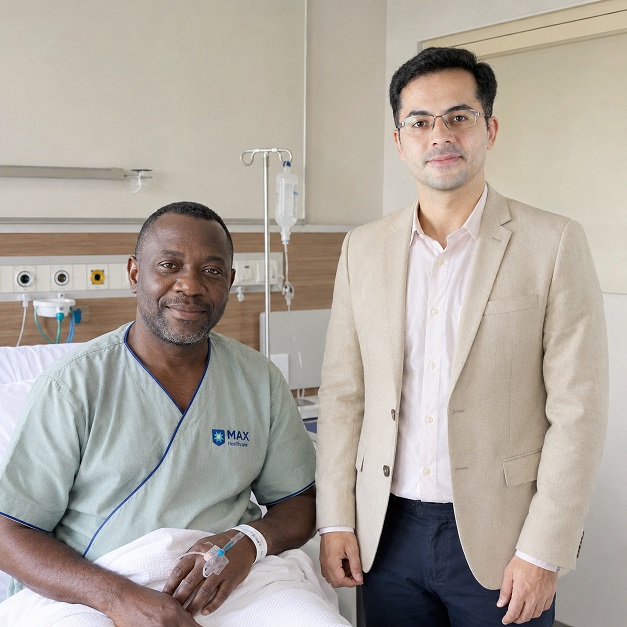
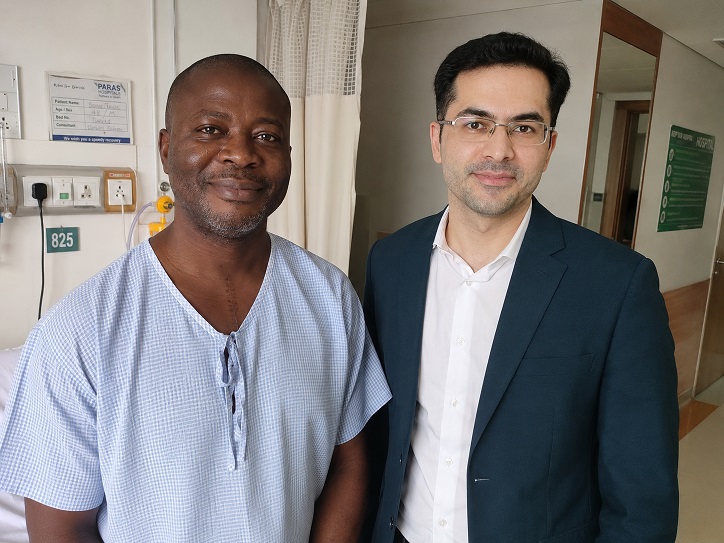
Patient Testimonials from Nigeria

Ready to Take the First Step?
Share your Medical Reports with our Healthcare Managers Today and Get a FREE CONSULTATION, a Personalized Treatment Plan, and Complete Support from Arrival to Recovery.
Get Your Free ConsultationAreas We Serve
This resource has been thoughtfully prepared for patients from Nigeria who are considering medical treatment in India. We also welcome patients from the wider region in the countries mentioned below-
We assist patients from:
- Benin
- Niger
- Chad
- Cameroon
- Algeria
- Egypt
- Libya
- Morocco
- Sudan
- Tunisia
- Gambia
- Ghana
- Burkina Faso
- Cabo Verde
- Côte d'Ivoire
- Equatorial Guinea
- São Tomé and Príncipe
Many of the insights, treatment pathways, hospital recommendations, travel guidance, and patient support services described here are equally relevant and may be used as a reference when planning treatment in India.
From Nigeria to India: Your Complete Patient Support Guide
- Artificial Disc Replacement in India for Nigerian Patients
- Weight Loss and Bariatric Surgery in India for Nigerian Patients
- Bone Marrow Transplant in India for Nigerian Patients
- Brain Tumour Surgery in India for Nigerian Patients
- Breast Cancer Treatment and Surgery in India for Nigerian Patients
- Cancer Treatment and Surgery in India for Nigerian Patients
- Cardiac Arrhythmia and Heart Pacemaker Treatment in India for Nigerian Patients
- Cardiac Surgery in India for Nigerian Patients
- Colorectal Cancer Treatment and Surgery in India for Nigerian Patients
- Complex Orthopaedic and Joint Revision Surgery in India for Nigerian Patients
- Cornea Transplant and Advanced Eye Surgery in India for Nigerian Patients
- CyberKnife Treatment in India for Nigerian Patients
- Gamma Knife Treatment in India for Nigerian Patients
- Heart Failure Treatment and Surgery in India for Nigerian Patients
- Hip Surgery in India for Nigerian Patients
- HIPEC Cancer Surgery in India for Nigerian Patients
- IVF and Fertility Treatment in India for Nigerian Patients
- Joint Arthroscopy and Sports Medicine in India for Nigerian Patients