

Shoulder Surgery in India for Nigerian Patients
For the trader who cannot lift their tray overhead, the farmer whose reach is no longer what it was — and the honest question of whether the answer is a scalpel or a set of exercises.
Shoulder pain is one of the most common reasons people seek orthopaedic care, and rotator cuff disorders account for more than half of it. Updated 2025 clinical guidelines are notably direct on the first question most patients actually need answered: for many symptomatic tears, physical therapy and surgery both produce meaningful improvement, and a structured course of therapy is generally the sensible starting point, not surgery by default. Understanding when that changes, and what surgery genuinely offers once it becomes necessary, is what this guide sets out to explain. This guide is written with a specific population in mind: patients whose shoulders are not simply a source of discomfort, but a working tool, the arm that lifts market goods overhead, swings a hoe, or carries loads across a construction site. For this group, the question is never purely medical; it is also, honestly, about whether a specific treatment path actually returns someone to the physical work their livelihood depends on.
| 50%+ | 77% | 5–10 yrs | 2025 |
|---|---|---|---|
| OF ALL SHOULDER CONDITIONS ARE ROTATOR CUFF DISORDERS | OF MANUAL LABOURERS RETURNED TO THEIR SAME OCCUPATION AFTER ROTATOR CUFF REPAIR, LONG-TERM | TIMEFRAME OVER WHICH AN UNTREATED TEAR CAN PROGRESS, EVEN WITH SYMPTOM RELIEF FROM THERAPY | YEAR OF THE CURRENT AAOS AND INTERNATIONAL CLINICAL PRACTICE GUIDELINES CITED HERE |
Healing Journeys of Nigerian Patients









Key Takeaways
- The guide states that rotator cuff disorders account for more than 50% of shoulder conditions and emphasises that surgery should not automatically be the first treatment.
- The 2025 clinical guidelines cited in the guide support structured physical therapy as the sensible starting point for many symptomatic small to medium full-thickness rotator cuff tears.
- The guide warns that even when symptoms improve with therapy, tear size, muscle atrophy and fatty infiltration can progress over 5–10 years, making timely surgical review important for large, worsening or therapy-resistant tears.
- For Nigerian manual workers such as farmers, traders, construction workers and artisans, the guide focuses on whether treatment can realistically restore the physical ability required for their occupation.
- A long-term study of 165 manual labourers found that 77% returned to the same occupation an average of 11 years after arthroscopic rotator cuff repair, while 23% changed or discontinued physically demanding work.
- The guide explains that reverse shoulder replacement is specifically suited to advanced arthritis combined with a non-functional rotator cuff. When the cuff remains functional, standard total shoulder replacement is generally more appropriate.
- Indicative costs at accredited Indian centres are US$2,200–US$3,800 for shoulder arthroscopy, US$3,500–US$6,000 for arthroscopic rotator cuff repair, US$8,500–US$13,500 for total shoulder replacement and US$10,000–US$16,000 for reverse shoulder replacement.
- The page 6 recovery chart shows that recovery is measured in months rather than weeks. The illustrative rotator cuff pathway includes 28 days of sling immobilisation followed by approximately 103 days of physiotherapy and progressive strengthening.
- Nigerian patients are advised to arrange continuing physiotherapy with a Nigerian provider before travelling, because rehabilitation after shoulder surgery is an important part of the final outcome.
- The guide recommends asking about tear size, realistic return to the patient's specific occupation, the appropriate replacement type and the surgeon's reasoning for surgery, rather than relying on a general recovery promise.
Quick Facts
- Treatment
- Shoulder Surgery
- Country
- India
- Patients
- Patients from Nigeria
- Key Specialist
- Orthopaedic Shoulder Surgeon
- Main Condition
- Rotator Cuff Disorders
- Other Conditions
- Shoulder Arthritis and Advanced Rotator Cuff Damage
- Primary Assessment
- Shoulder Examination and Imaging
- First Treatment
- Structured Physical Therapy Where Appropriate
- Arthroscopy Cost
- US$2,200–US$3,800
- Rotator Cuff Repair
- US$3,500–US$6,000
- Total Shoulder Replacement
- US$8,500–US$13,500
- Reverse Shoulder Replacement
- US$10,000–US$16,000
- Important Check
- Confirm Tear Size and Progression
- Replacement Check
- Match Implant Type to Rotator Cuff Function
- Occupation Check
- Discuss Realistic Return to Specific Physical Work
- Pre-Travel Records
- Imaging and Previous Treatment Records
- Visa
- Indian Medical Visa and Medical Attendant Visa
- Travel
- Lagos/Abuja to Indian Medical Hubs With One Stop
- Recovery
- Several Months With Extended Physiotherapy
- Follow-Up
- Nigerian Physiotherapist and Orthopaedic Follow-Up
- Author
- Dr. Dheeraj Bojwani
- Experience
- 24+ Years
In Brief
For Nigerian patients considering shoulder surgery in India, the guide recommends beginning with a proper course of physical therapy where appropriate, while recognising that large, worsening or therapy-resistant rotator cuff tears may require timely surgical review. The choice between arthroscopic repair, total shoulder replacement and reverse shoulder replacement should depend on the tear, arthritis and rotator cuff function. Patients should also discuss realistic return to their specific occupation, obtain a written quotation and arrange continued physiotherapy in Nigeria before travelling because full recovery can take several months.
01 · the Honest Starting Point
Why guidelines say: try physiotherapy first
The current evidence base, reflected in the 2025 American Academy of Orthopaedic Surgeons guideline and a companion international clinical practice guideline published the same year, is genuinely clear on this point: both physical therapy and surgery result in significant improvement in patient-reported outcomes for symptomatic small to medium full-thickness rotator cuff tears. Physical therapy carries no surgical risk, costs meaningfully less, and can begin almost immediately.
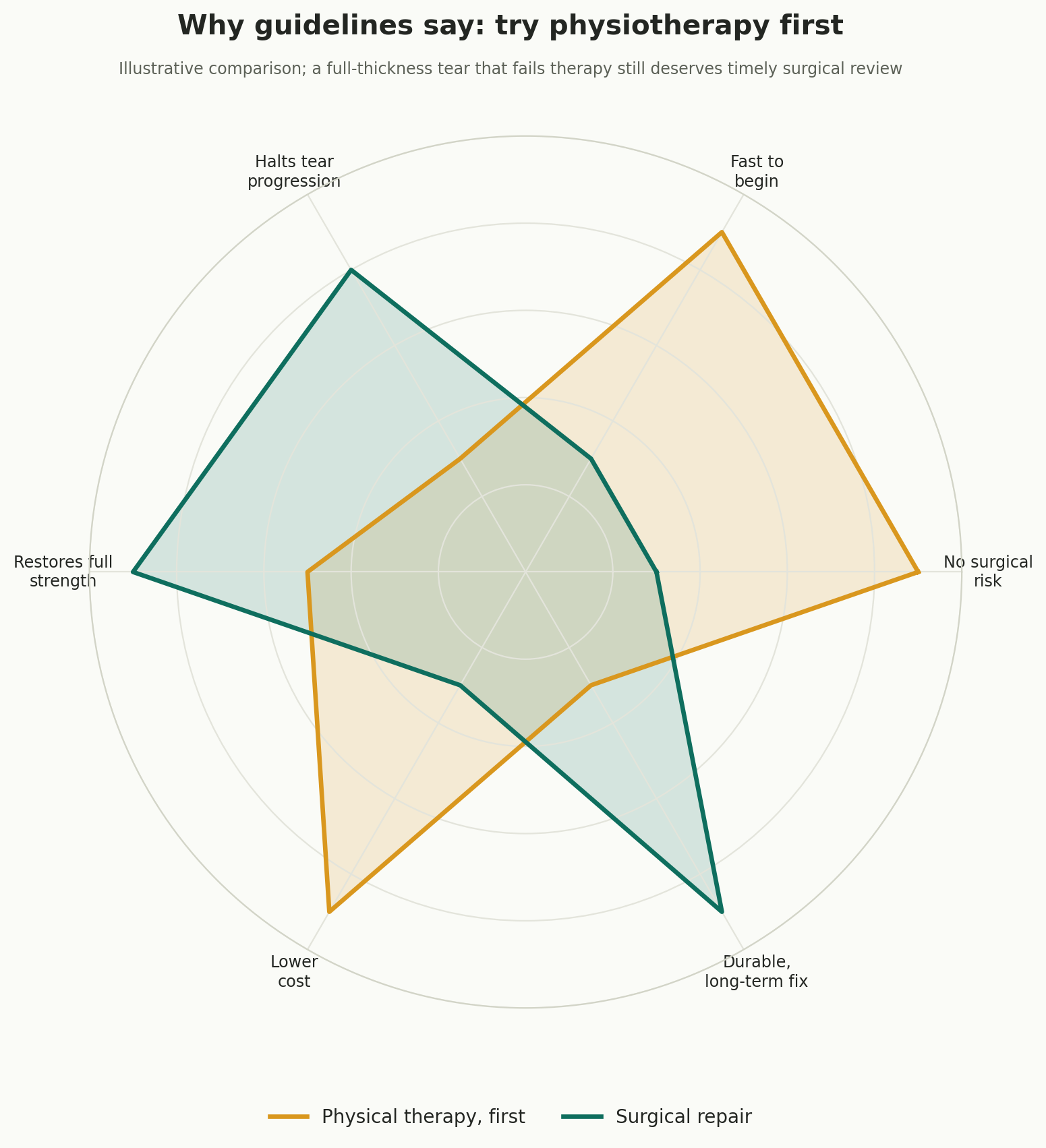
Figure 1. Physical therapy wins on safety, speed, and cost. Surgery wins on halting progression and restoring full strength. Neither is universally correct.
What the same guidelines are equally clear about is the limit of that first approach: tear size, muscle atrophy, and fatty infiltration can progress over five to ten years even in patients whose symptoms improve with therapy alone. This is not a reason to skip physical therapy, it remains the right first step for most patients, but it is a reason to treat a large or worsening tear, or one that has genuinely failed a proper course of therapy, as a case for timely surgical review rather than indefinite delay.
The practical guidance from these 2025 recommendations is specific enough to act on. Injections, either corticosteroid or, for patients who cannot tolerate them, anti-inflammatory alternatives, can offer genuine short-term relief of pain and function without committing to surgery. Debridement or repair of high-grade partial tears that have failed physical therapy is a reasonable next step, and healed surgical repairs consistently show better outcomes than either physical therapy alone or an unhealed repair, a useful reminder that not every surgical attempt succeeds equally, and the quality of the repair itself matters.
02 · the Manual Labour Question
What actually happens to workers, long-term
For a Nigerian population with a substantial share of livelihoods built on physical labour, farming, market trading, construction, artisanal work, the real question is rarely whether surgery is technically possible, but whether it actually restores someone's ability to keep doing their job.
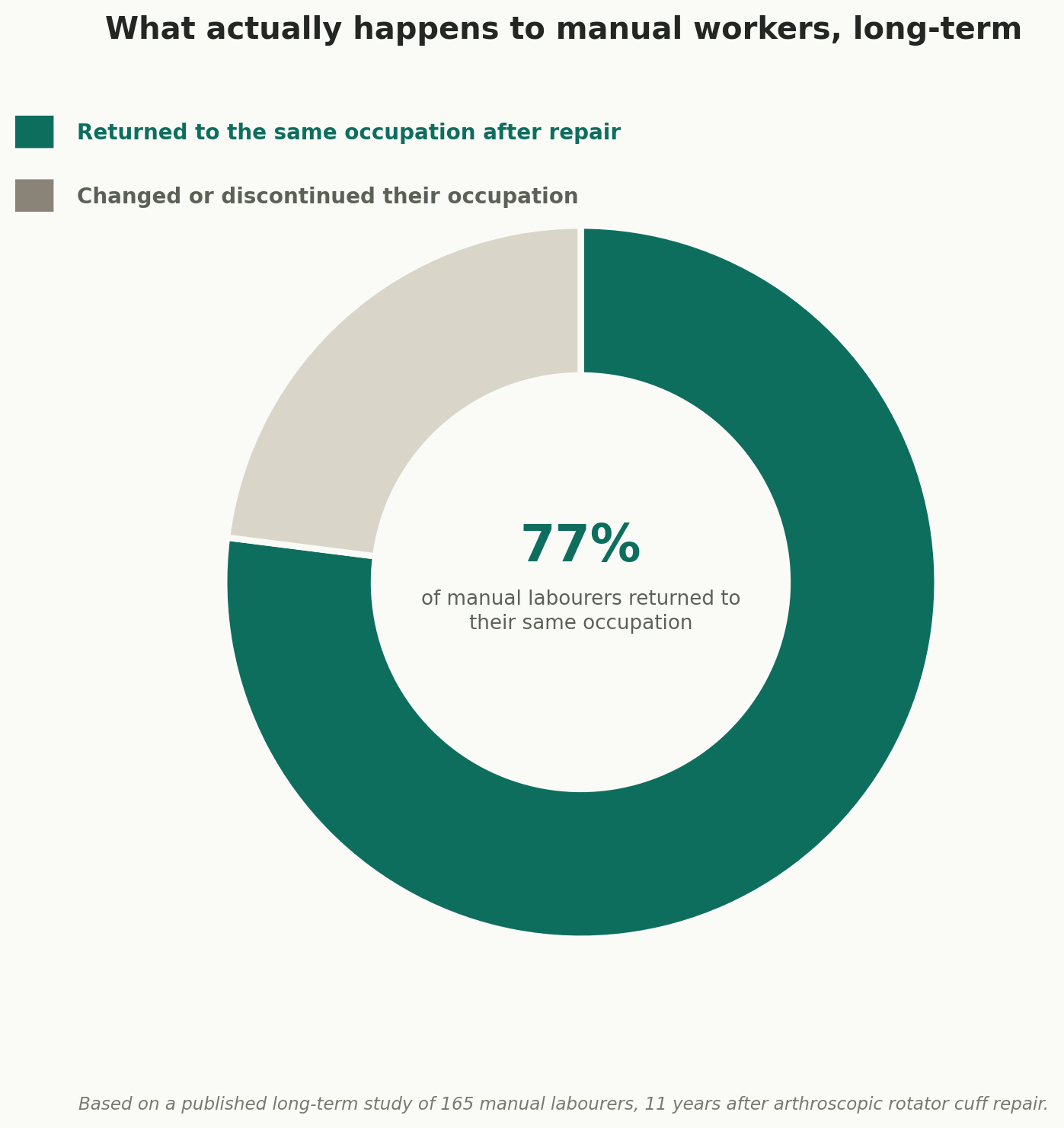
Figure 2. Long-term outcomes for manual workers after rotator cuff repair, based on a published international study.
A published long-term study following 165 manual labourers for an average of 11 years after arthroscopic rotator cuff repair found 77 percent had returned to the same occupation, with 23 percent changing or discontinuing physically demanding work. This is a genuinely encouraging figure for a population weighing whether surgery is worth the recovery time, though it also confirms that a meaningful minority of even successfully repaired shoulders do not fully restore a person's capacity for the heaviest physical work, information worth factoring honestly into any decision.
This finding also offers a genuinely useful, concrete question to bring into any pre-surgical consultation: rather than asking generally "will I recover," a manual worker is better served asking specifically "what proportion of your patients doing work like mine have returned to that same work, and over what timeframe."
A surgeon with real, relevant experience treating physically active patients can usually answer this with genuine specificity, rather than a general reassurance.
03 · When Replacement is the Answer
The clever fix for a cuff that cannot be repaired
For advanced shoulder arthritis where the rotator cuff itself is too damaged to function, a standard shoulder replacement, which still relies on the rotator cuff to move the arm, often fails to restore useful movement. Reverse shoulder replacement solves this with a genuinely elegant piece of engineering: the normal ball- and-socket arrangement is reversed, placing the ball on the shoulder blade and the socket on the arm, allowing the deltoid muscle, rather than the damaged rotator cuff, to power the arm's movement.
This makes reverse replacement specifically suited to a particular combination of problems, advanced arthritis alongside a rotator cuff too damaged to repair, rather than a general upgrade over standard shoulder replacement. A surgeon recommending it should be able to explain clearly why this specific combination applies to your case.
The deltoid, the large muscle covering the outer shoulder, is not normally the primary engine of arm-raising movement, that role belongs to the rotator cuff, but the reverse design changes the joint's mechanics so the deltoid can take over that function effectively. This is precisely why reverse replacement is not simply "a better version" of standard replacement for every patient; for someone whose rotator cuff still functions well, a standard replacement, which preserves more natural shoulder mechanics, generally remains the more appropriate choice.
04 · COST AND RECOVERY
What it costs, and how long it genuinely takes
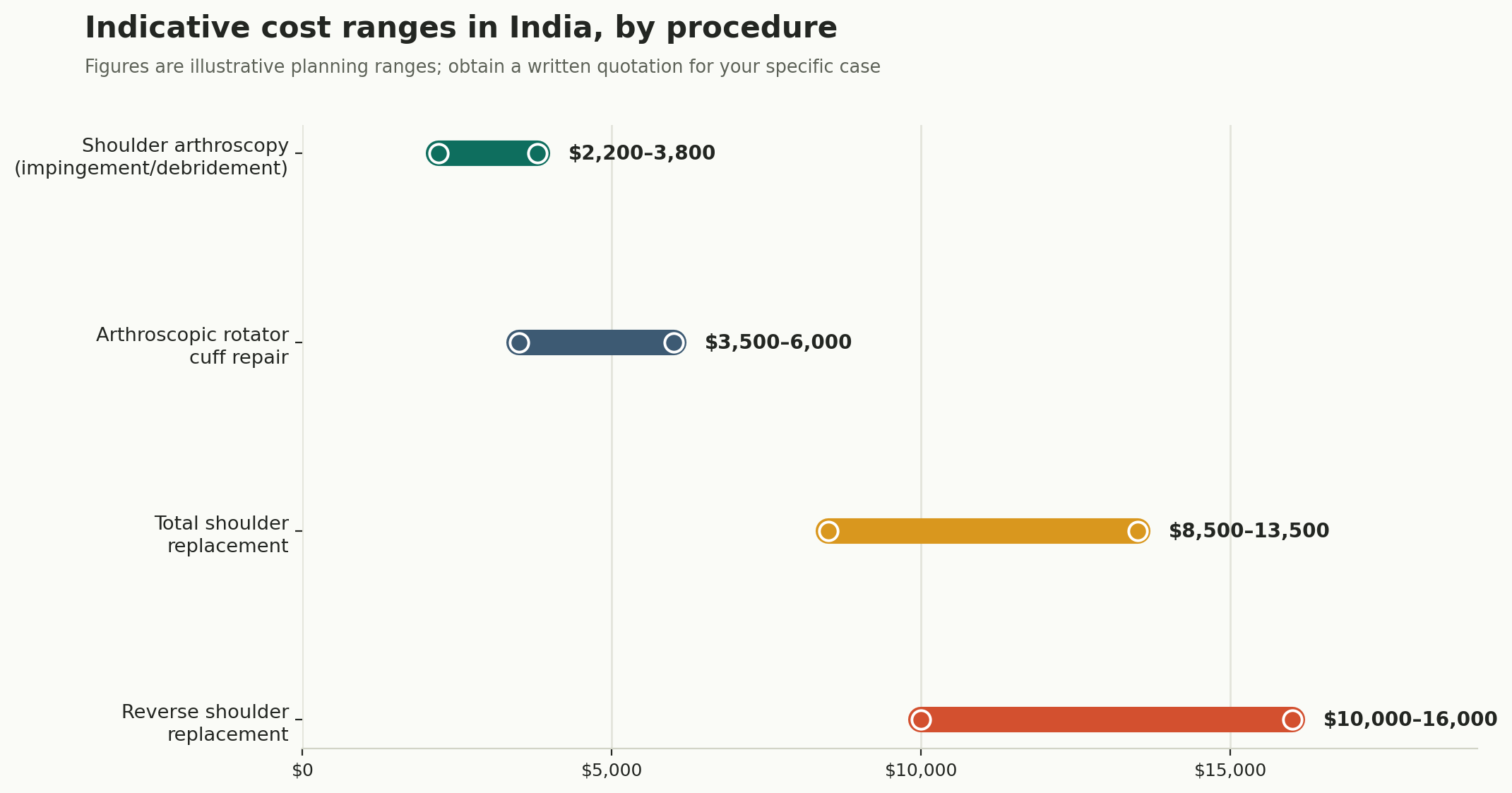
Figure 3. Indicative cost ranges by procedure. Replacement surgery carries a materially higher cost than arthroscopic repair.
| Procedure | Typically suits | Indicative cost |
|---|---|---|
| Shoulder arthroscopy | Impingement, labral debridement, minor repairs | $2,200–3,800 |
| Arthroscopic rotator cuff repair | Full-thickness tears that have failed therapy | $3,500–6,000 |
| Total shoulder replacement | Advanced arthritis with an intact rotator cuff | $8,500–13,500 |
| Reverse shoulder replacement | Advanced arthritis with a non-functional cuff | $10,000–16,000 |
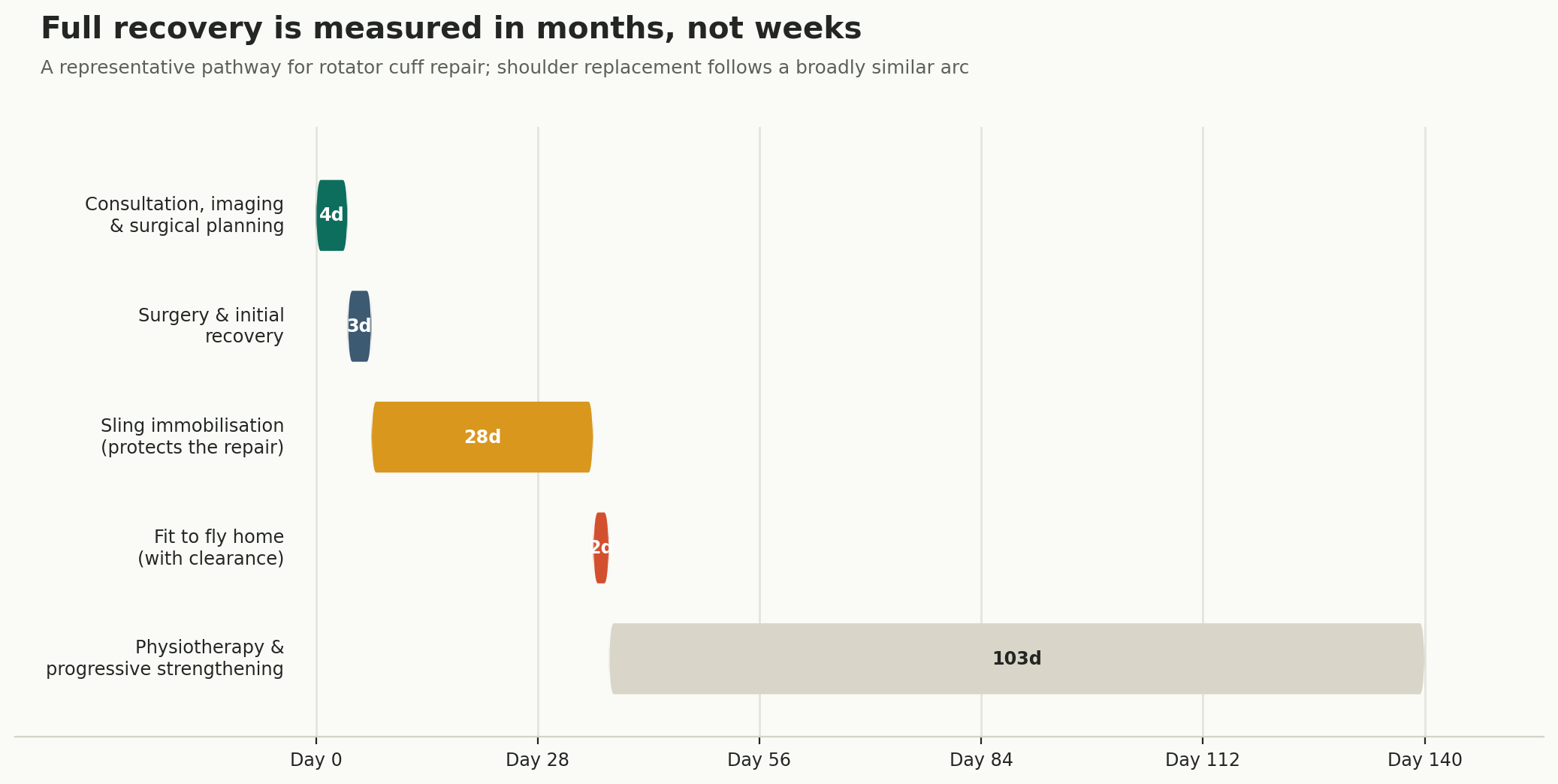
Table 1. Indicative international-patient pricing at accredited Indian centres, mid-2026. Figures vary by complexity, implant choice, and specific centre.
Figure 4. Full recovery is measured in months. The sling protects the repair well before real strength returns, and physiotherapy carries most of that final recovery.
On visa and travel. India issues a Medical Visa (M) to the patient and a Medical Attendant Visa (MX) to accompanying family, through the High Commission in Abuja, the Consulate in Lagos, or the e-Medical route. Lagos and Abuja reach India's major medical hubs with a single stop, a 13 to 18 hour total journey. Given the extended physiotherapy phase, a realistic plan for continuing rehabilitation with a Nigerian physiotherapist after returning home matters as much as the surgery itself.
Before you commit to a shoulder surgery plan
- Confirm a structured course of physical therapy has genuinely been tried first, where appropriate for your tear.
- Ask specifically about tear size, and how that shapes the urgency of surgical review.
- For replacement surgery, confirm which specific implant type suits your rotator cuff status.
- Ask what realistic return to your specific occupation looks like, not a general recovery timeline.
- Arrange continuing physiotherapy with a Nigerian provider before you travel, not after.
- Pay into the hospital's own institutional account only, never an individual's personal account.
Straight Answers for Nigerian Patients about Shoulder Surgery in India
Does every rotator cuff tear need surgery?
No. 2025 guidelines confirm physical therapy and surgery both meaningfully improve outcomes for symptomatic small to medium tears, with therapy generally the appropriate first step.
Can manual labourers return to physically demanding work after surgery?
Most can. A long-term study of 165 manual labourers found 77 percent returned to the same occupation an average of 11 years after arthroscopic repair.
What is reverse shoulder replacement?
It swaps the normal ball-and-socket arrangement, letting the deltoid muscle power arm movement even when the rotator cuff is too damaged to function, which a standard replacement cannot achieve.
Why might waiting too long be a problem?
Even when therapy improves symptoms, the underlying tear, muscle atrophy, and fatty infiltration can progress over five to ten years without treatment.
Do Nigerians need a visa for shoulder surgery in India?
Yes. You need an Indian Medical Visa from the High Commission in Abuja, the Consulate in Lagos, or the e- Medical route, plus a Medical Attendant Visa for accompanying family.
A closing word
Shoulder pain rarely announces itself as an emergency, which makes it easy to either ignore for too long or rush toward surgery too quickly. The current evidence supports a more deliberate middle path: a genuine course of physical therapy first for most tears, honest recognition of when that approach has run its course, and a clear-eyed understanding of what surgery can, and cannot, restore for the specific work a person's life actually depends on.
The patients who navigate this decision best are the ones who treat both extremes with equal suspicion: neither dismissing months of persistent shoulder pain as something to simply endure, nor accepting an immediate surgical recommendation without first understanding whether a structured, genuine course of therapy has actually been tried.
Sources
- 🌐 American Academy of Orthopaedic Surgeons — Management of Rotator Cuff Injuries, Clinical Practice Guideline, 2025
- 🌐 Desmeules F, Roy JS, Lafrance S, et al. Rotator Cuff Tendinopathy Diagnosis, Nonsurgical Medical Care, and Rehabilitation
- 🌐 Collin P, et al. Arthroscopic Rotator Cuff Repair and Subsequent Career Changes in Manual Workers: A Long-term Observational Study
- 🌐 American Shoulder and Elbow Surgeons — Reverse shoulder replacement, patient information
- 🌐 High Commission of India, Abuja — Medical and Medical Attendant Visa requirements
Frequently Asked Questions by Nigerians about Shoulder Surgery in India
Does every rotator cuff tear require surgery?
No. The guide states that 2025 guidelines support physical therapy as the appropriate first step for many symptomatic small to medium tears. Surgery may become appropriate when a tear is large, worsening or has failed proper therapy.
Why should Nigerian patients try physiotherapy before surgery?
Physical therapy can improve pain and function without surgical risks and at lower cost. The guide recommends a structured course before surgery where appropriate.
Can a rotator cuff tear worsen even when pain improves?
Yes. The guide explains that tear size, muscle atrophy and fatty infiltration may progress over 5–10 years, even when symptoms improve with therapy.
Can manual workers return to their previous jobs after rotator cuff surgery?
Many can. A long-term study cited in the guide found that 77% of 165 manual labourers returned to the same occupation after arthroscopic rotator cuff repair.
How much does rotator cuff repair cost in India for Nigerian patients?
The guide gives an indicative cost of US$3,500–US$6,000 for arthroscopic rotator cuff repair at accredited Indian centres.
When is total shoulder replacement considered?
The guide describes total shoulder replacement as appropriate for advanced arthritis when the rotator cuff remains functional, allowing the shoulder to retain more natural mechanics.
When is reverse shoulder replacement used?
Reverse replacement is specifically suited to advanced arthritis combined with a non-functional rotator cuff. It allows the deltoid muscle to power arm movement instead of relying on the damaged cuff.
How much does reverse shoulder replacement cost in India?
The indicative range is US$10,000–US$16,000, depending on complexity, implant choice and the treating centre.
How long does recovery take after shoulder surgery?
Recovery can take several months. The guide's page 6 illustration shows 28 days of sling immobilisation followed by approximately 103 days of physiotherapy and progressive strengthening for a representative rotator cuff repair.
What should Nigerian patients arrange before returning home?
They should arrange continued physiotherapy with a Nigerian provider, obtain their surgical records and follow the treating surgeon's rehabilitation plan. The guide considers rehabilitation after returning home an important part of the treatment pathway.
Page Summary
This guide explains the key considerations for Nigerian patients exploring shoulder surgery in India, with its central focus on the evidence-based role of physiotherapy before surgery and the circumstances in which surgical treatment becomes appropriate. It covers rotator cuff tears, arthroscopic repair, total shoulder replacement and reverse shoulder replacement, while highlighting the particular importance of restoring physical function for Nigerian manual workers. The guide provides indicative costs ranging from US$2,200–US$16,000, explains that recovery can extend for several months, and emphasises pre-travel imaging, realistic occupational expectations, appropriate implant selection and continued physiotherapy in Nigeria after returning home.
Citation Block
| Topic | Information |
|---|---|
| Topic Information | Shoulder Surgery in India for Patients from Nigeria |
| Treatment | Shoulder Surgery |
| Intended Audience | Patients from Nigeria |
| Key Specialist | Orthopaedic Shoulder Surgeon |
| Main Condition | Rotator Cuff Disorders |
| Other Conditions | Shoulder Arthritis and Advanced Rotator Cuff Damage |
| Primary Assessment | Shoulder Examination and Imaging |
| First Treatment | Structured Physical Therapy Where Appropriate |
| Rotator Cuff Repair Cost | US$3,500–US$6,000 |
| Total Shoulder Replacement | US$8,500–US$13,500 |
| Reverse Shoulder Replacement | US$10,000–US$16,000 |
| Important Specialist Check | Confirm Experience With the Specific Shoulder Condition and Procedure |
| Treatment Choice Check | Ask Why Surgery Is Appropriate After Physical Therapy |
| Replacement Check | Confirm Implant Type Based on Rotator Cuff Function |
| Occupation Check | Discuss Return to the Patient's Specific Physical Work |
| Important Warning | Surgery Recommended Without a Genuine Trial of Therapy Where Appropriate |
| Recovery Check | Plan for Several Months of Rehabilitation |
| Pre-Travel Records | Shoulder Imaging and Previous Treatment Records |
| Visa Requirement | Indian Medical Visa and Medical Attendant Visa |
| Patient Journey | Assessment/therapy → surgical review → visa → travel/surgery → sling/recovery → physiotherapy/follow-up |
| Follow-Up | Nigerian Physiotherapist and Orthopaedic Follow-Up |


Our Mission Statement
Our mission is to place patients at the centre of every healthcare decision by providing trustworthy, evidence-based, and unbiased medical information. We believe that informed patients make better decisions. Backed by personalised guidance from our experienced advisory team, we help patients understand their treatment options, compare them objectively, and confidently choose the path that best suits their medical needs and personal circumstances.
Patient Testimonials from Nigeria















Ready to Take the First Step?
Share your Medical Reports with our Healthcare Managers Today and Get a FREE CONSULTATION, a Personalized Treatment Plan, and Complete Support from Arrival to Recovery.
Get Your Free ConsultationAreas We Serve
This resource has been thoughtfully prepared for patients from Nigeria who are considering medical treatment in India. We also welcome patients from the wider region in the countries mentioned below-
We assist patients from:
- Benin
- Niger
- Chad
- Cameroon
- Algeria
- Egypt
- Libya
- Morocco
- Sudan
- Tunisia
- Gambia
- Ghana
- Burkina Faso
- Cabo Verde
- Côte d'Ivoire
- Equatorial Guinea
- São Tomé and Príncipe
Many of the insights, treatment pathways, hospital recommendations, travel guidance, and patient support services described here are equally relevant and may be used as a reference when planning treatment in India.
From Nigeria to India: Your Complete Patient Support Guide
- Artificial Disc Replacement in India for Nigerian Patients
- Weight Loss and Bariatric Surgery in India for Nigerian Patients
- Bone Marrow Transplant in India for Nigerian Patients
- Brain Tumour Surgery in India for Nigerian Patients
- Breast Cancer Treatment and Surgery in India for Nigerian Patients
- Cancer Treatment and Surgery in India for Nigerian Patients
- Cardiac Arrhythmia and Heart Pacemaker Treatment in India for Nigerian Patients
- Cardiac Surgery in India for Nigerian Patients
- Colorectal Cancer Treatment and Surgery in India for Nigerian Patients
- Complex Orthopaedic and Joint Revision Surgery in India for Nigerian Patients
- Cornea Transplant and Advanced Eye Surgery in India for Nigerian Patients
- CyberKnife Treatment in India for Nigerian Patients
- Gamma Knife Treatment in India for Nigerian Patients
- Heart Failure Treatment and Surgery in India for Nigerian Patients
- Hip Surgery in India for Nigerian Patients
- HIPEC Cancer Surgery in India for Nigerian Patients
- IVF and Fertility Treatment in India for Nigerian Patients
- Joint Arthroscopy and Sports Medicine in India for Nigerian Patients