

Selecting the Best Penile Implant Surgeons and Hospitals in India for Nigerian Patients
Two genuinely different devices exist for this procedure. The right one depends on your own circumstances, not on which is more advanced.
Penile implant surgery, typically considered after other treatments for erectile dysfunction have not succeeded, involves a genuine choice between two device categories that work in fundamentally different ways. Neither is a simple upgrade of the other. Understanding this distinction, and the honest, long-term tradeoffs each device carries, matters before evaluating any specific surgeon or hospital. This guide focuses on the two factors that most shape long-term satisfaction with this procedure: an honest, individualised device recommendation, and clear, upfront understanding of the mechanical realities each device carries over years of use.
Should you even be reading this guide? If penile implant surgery has genuinely been discussed as an appropriate option following evaluation of other treatments, this guide will help you evaluate the surgeon and hospital. A full urological assessment remains the appropriate starting point if this has not yet happened.
Healing Journeys of Nigerian Patients









Key Takeaways
- The guide's central message is that inflatable and malleable penile implants are genuinely different options, not simply a basic and advanced version of the same device.
- Inflatable implants offer a more natural function, but require sufficient manual dexterity to operate the pump and contain more mechanical components.
- Malleable implants are simpler, semi-rigid and have fewer moving parts, with a lower mechanical-failure risk and generally lower cost.
- The page 2 comparison emphasises that neither device is automatically better for every patient. The choice should consider manual dexterity, tolerance for possible future revision, cost and personal preference.
- The page 3 graphic illustrates the general mechanical pattern that inflatable devices may have a greater possibility of eventual mechanical revision because they contain more moving components. Individual outcomes vary by device model and surgeon.
- The guide stresses that revision, when eventually required, is generally a well-established and manageable procedure for an experienced surgeon, rather than something patients should view as an emergency.
- The page 4 evaluation gives 61% weight to the surgeon's device recommendation and placement precision and 39% to the hospital's device sourcing and revision capability.
- Nigerian patients should confirm the specific implant brand by name and check whether it has an established international servicing and support network, because specialised urological device servicing remains limited within Nigeria.
- Patients should ask about the surgeon's specific experience and complication rate, as well as how a future mechanical problem or revision would be handled.
- Four warning signs include no honest discussion of both device types, no explanation of long-term mechanical considerations, reluctance to identify the implant brand and no clear plan for future revision if required.
Quick Facts
- Treatment
- Penile Implant Surgery
- Country
- India
- Patients
- Patients from Nigeria
- Key Specialist
- Urologist / Penile Implant Specialist
- Main Device Types
- Inflatable and Malleable Implants
- Inflatable Implant
- More Natural Function With More Mechanical Components
- Malleable Implant
- Simpler Semi-Rigid Design With Fewer Moving Parts
- Selection Factors
- Manual Dexterity, Cost, Personal Preference and Revision Tolerance
- Evaluation Weighting
- 61% Surgeon; 39% Hospital
- Surgeon Check
- Device Recommendation, Placement Precision and Specific Experience
- Hospital Check
- Established Device Sourcing and Revision Capability
- Brand Check
- Confirm Exact Implant Brand Before Surgery
- Nigeria Check
- Verify International Servicing and Support Availability
- Revision Check
- Ask How Future Mechanical Problems Will Be Managed
- Important Warning
- No Honest Discussion of Both Device Types
- Pre-Travel
- Full Urological Evaluation Confirming Surgery Is Appropriate
- Visa
- Indian Medical Visa and Medical Attendant Visa
- Follow-Up
- Nigerian Urologist and Long-Term Implant Care
- Author
- Dr. Dheeraj Bojwani
- Experience
- 24+ Years
In Brief
For Nigerian patients considering penile implant surgery in India, the guide recommends focusing first on which device type genuinely suits the patient's circumstances, rather than assuming that an inflatable implant is automatically better. Patients should discuss manual dexterity, long-term mechanical considerations, personal preferences and future revision possibilities with the surgeon. They should also confirm the exact implant brand and its international servicing availability, assess the surgeon's specific experience and establish a Nigerian urologist relationship for long-term follow-up before travelling.
Start Here
Two genuinely different devices, not one "upgrade" of the other
Understanding this distinction is the necessary first step before any conversation about a specific surgeon or hospital.
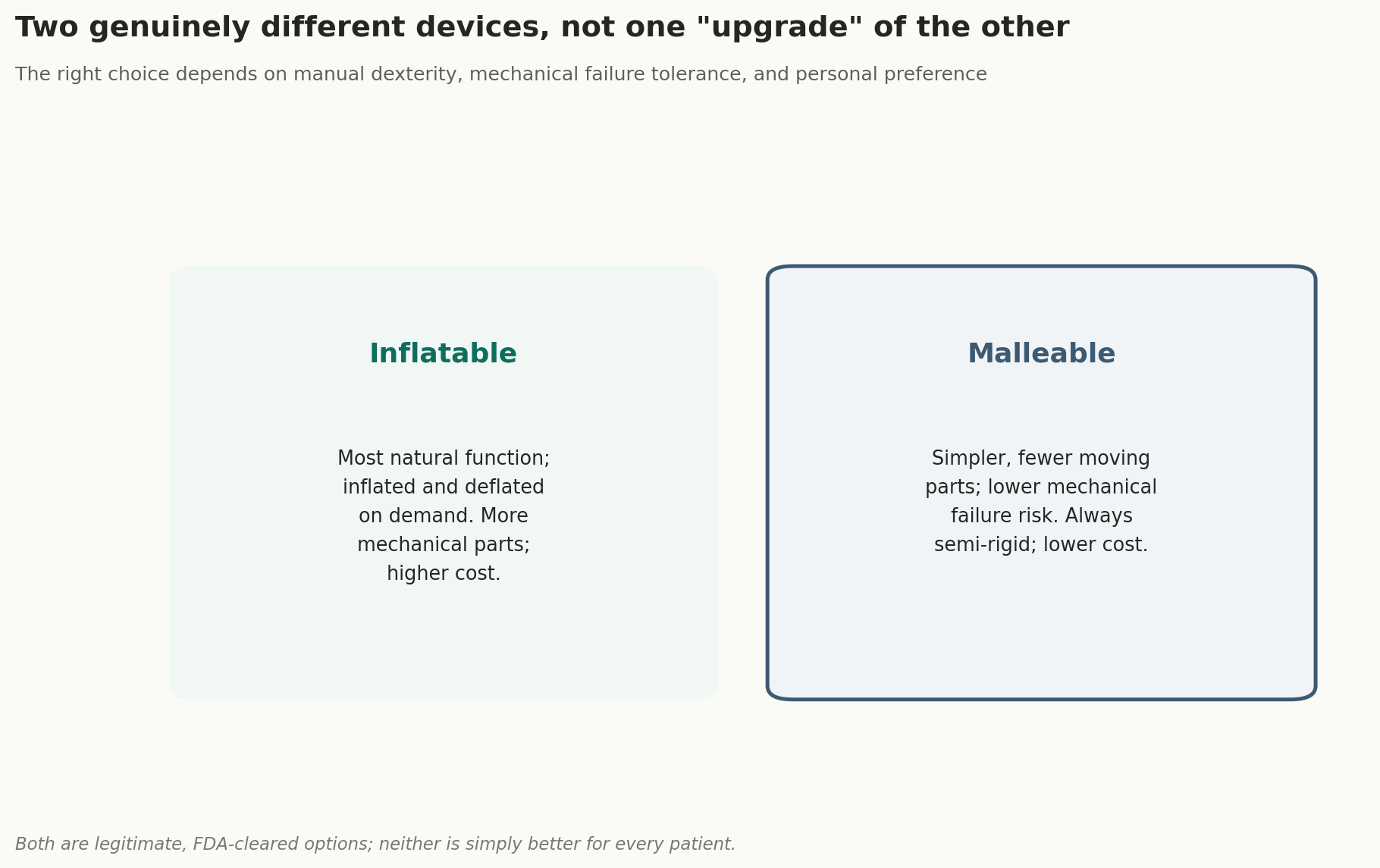
Both are legitimate, FDA-cleared options; neither is simply better for every patient.
The right choice depends on genuinely individual factors: manual dexterity, since inflatable devices require operating a pump mechanism; tolerance for the possibility of future mechanical revision; and personal preference regarding cost and the specific way each device functions day to day. A surgeon should present both options honestly, rather than defaulting to whichever device their programme uses most often.
Patient satisfaction studies for both device types are generally high when the device is well matched to the individual, which is precisely why this initial conversation carries so much weight. A rushed recommendation, without genuine discussion of your own circumstances, risks a mismatch that becomes apparent only after surgery.
The Honest Long-term Picture
More moving parts means more that can eventually wear
This is a genuine, well-documented consideration worth discussing before surgery, not discovering years afterward.
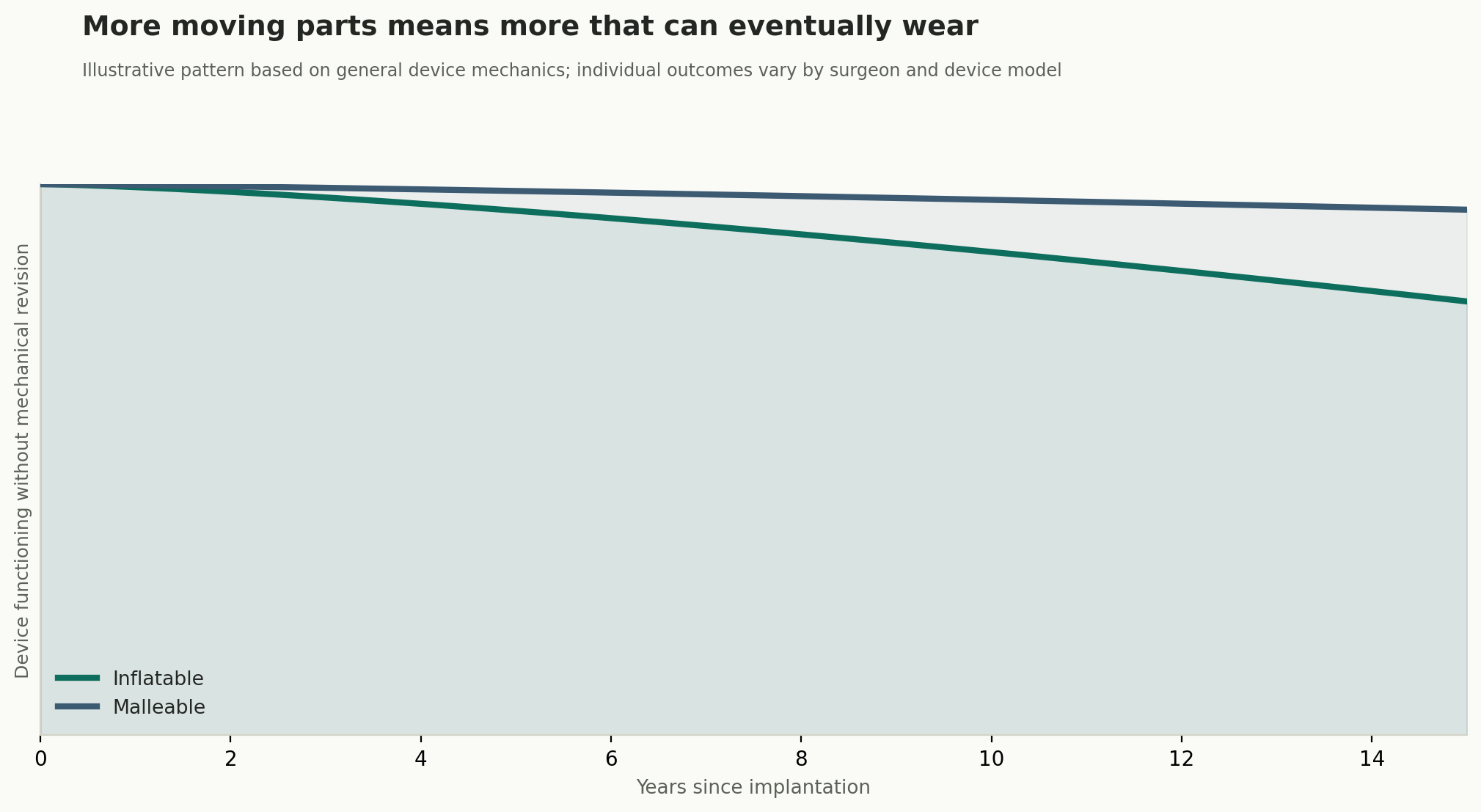
Illustrative pattern based on general device mechanics; individual outcomes vary by surgeon and device model.
This does not mean inflatable devices are a poor choice; many patients use them successfully for many years, and modern devices have improved considerably in reliability. It means the possibility of eventual mechanical revision is a genuine, worth-planning-for consideration, not a rare exception, and a surgeon should discuss this honestly as part of the original decision.
Revision surgery, when eventually needed, is generally a well-established, manageable procedure for an experienced surgeon, not a crisis. Understanding this in advance removes much of the anxiety that can otherwise accompany a later mechanical issue, and allows a patient to make the original device choice with clear, realistic expectations rather than an unspoken worry.
A note on why the pre-surgical conversation matters so much for this specific procedure. Unlike many procedures where the surgical technique itself is the primary variable, much of what determines satisfaction with a penile implant is decided before surgery, in an honest, thorough conversation about device type, realistic expectations, and individual circumstances.
THE BALANCE
The conversation before surgery decides most of this
Given how much this decision depends on an individualised device recommendation and precise placement, this evaluation weights toward the surgeon.
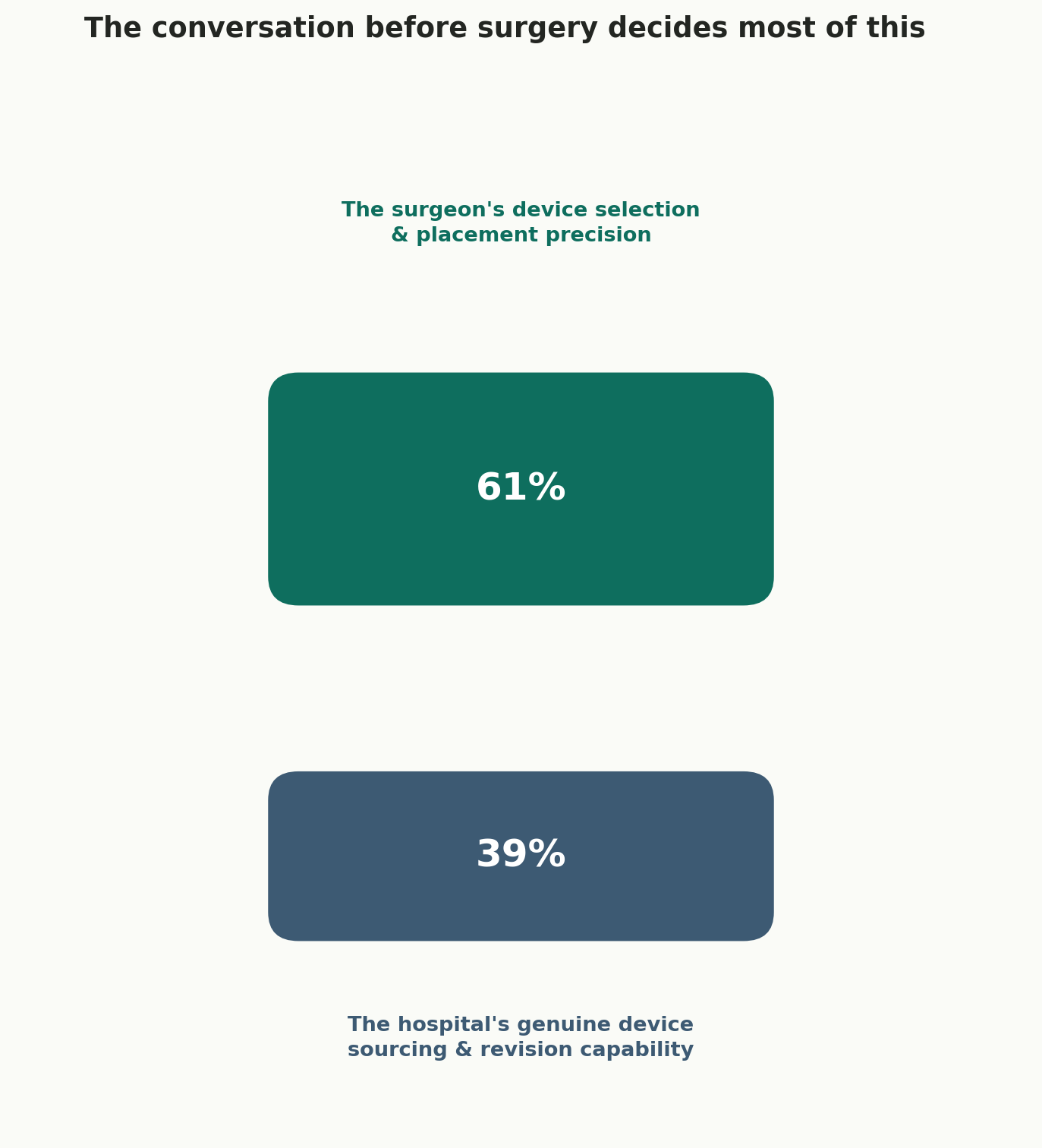
The surgeon's device recommendation and surgical precision carry the larger share of this decision.
The hospital's genuine access to established device brands, and its capability to manage a future revision if needed, remain real, important factors. But the specific device recommendation, made through an honest conversation about individual circumstances, and the precision of the surgical placement itself, sit primarily with the treating surgeon. This weighting reflects how much this particular decision hinges on the quality of a single, thorough pre-operative conversation.
THE VETTING CONVERSATION
What to actually ask
Questions for the surgeon
- Which device type do you recommend for my specific circumstances, and why? A thoughtful answer engages with your individual situation.
- What is your specific experience and complication rate with this procedure? A confident, specific answer suggests genuine, tracked experience.
- What happens if a mechanical issue arises years from now? This should be a clear, honest explanation.
- Which specific device brand will be used? A confident, specific answer, by name, is reasonable to expect.
Questions for the hospital
- Is the specific device brand a well-established, globally available system? This matters for long-term servicing.
- What is the hospital's own outcome and complication data? Specific, tracked figures matter more than general reassurance.
- What is the plan for follow-up care after surgery? This should be a clear, structured plan.
- How would a future revision, if needed, be handled? This should be a genuine, considered answer.
NIGERIA-SPECIFIC CONSIDERATIONS
Why device brand matters for long-term care
Given that specialised urological device servicing remains genuinely limited within Nigeria, choosing an established, well-recognised device brand, one with a genuine international servicing and support network, is a practical consideration worth weighing alongside the immediate surgical decision. Confirming this detail before surgery protects against future difficulty if a mechanical issue does eventually arise.
Four warning signs worth taking seriously
- No honest discussion of both device types. This should be a genuine, individualised conversation.
- No clear explanation of long-term mechanical considerations. This should be discussed upfront, not glossed over.
- Reluctance to confirm the specific device brand being used. This should be a confident, specific answer.
- No clear plan for handling a future revision if needed. This should be a genuine, considered answer.
A practical order of operations
- Complete a full urological evaluation confirming surgery is genuinely the appropriate option.
- Discuss inflatable versus malleable devices honestly, understanding the real tradeoffs for your situation.
- Ask the surgeon-side and hospital-side questions above before committing to treatment.
- Confirm the specific device brand, and its long-term servicing availability.
- Travel, surgery, and a recovery period appropriate to the specific procedure.
- Establish a Nigerian urologist relationship for ongoing follow-up care.
Straight Answers for Nigerian Patients about Penile Implant Surgery in India
Is an inflatable implant always better than a malleable one?
No. Inflatable offers more natural function but more mechanical parts and higher long-term failure risk. Malleable is simpler with lower mechanical failure risk but remains semi-rigid.
Do these implants eventually need replacement?
Mechanical components, particularly in inflatable devices, can wear over many years and may eventually require revision, a genuine consideration worth discussing before surgery.
Why does manual dexterity matter for choosing device type?
Inflatable implants require operating a pump mechanism, which demands reasonable manual dexterity. Patients with hand function limitations may find malleable devices more practical.
Why does the surgeon matter more than the hospital here?
The device recommendation and precise placement, based on an honest conversation about individual circumstances, are decisions made primarily by the treating surgeon.
What is a realistic red flag when choosing a provider?
No honest discussion of both device types, no explanation of long-term mechanical considerations, or reluctance to confirm the device brand, are genuine warning signs.
A closing word
This decision is genuinely personal, and the right device depends on individual circumstances rather than a universal hierarchy of options. A surgeon willing to have a full, honest conversation about both device types, including their long-term mechanical realities, is offering exactly the kind of care this decision deserves. In twenty-four years of this work, the patients who navigate this best insist on understanding both device options fully, ask directly about long-term mechanical considerations, and confirm the specific device brand before committing to treatment. The surgery itself is a single procedure. The device chosen that day is one a patient lives with for years.
Sources
- 🌐 American Urological Association — Penile implants, patient information
- 🌐 Sexual Medicine Society of North America — Choosing a penile implant, patient resources
- 🌐 NHS (UK) — Penile implants: overview – nhs.uk
- 🌐 International Society for Sexual Medicine — Patient information on erectile dysfunction treatment
- 🌐 High Commission of India, Abuja — Medical and Medical Attendant Visa requirements
Frequently Asked Questions by Nigerians about Penile Implant Surgery in India
Are inflatable penile implants always better than malleable implants?
No. The guide explains that neither device is universally better. The appropriate choice depends on manual dexterity, personal preference, cost and tolerance for possible future mechanical revision.
What is the main advantage of an inflatable implant?
An inflatable implant provides a more natural function, because it can be inflated when needed and deflated afterward.
What is the main advantage of a malleable implant?
A malleable implant has a simpler semi-rigid design with fewer moving parts, which can reduce mechanical-failure concerns and may make it more practical for some patients.
Why does manual dexterity matter when choosing an implant?
Inflatable devices require the patient to operate a pump mechanism. Patients with limitations in hand function may therefore find a malleable device more practical.
Can penile implants eventually require revision?
Yes. The guide explains that mechanical components can wear over many years, particularly in inflatable devices, and revision may eventually be required.
Does the possibility of revision mean inflatable implants are a poor choice?
No. The guide states that many patients use inflatable implants successfully for years and that modern devices have improved in reliability. The possibility of future revision should simply be discussed honestly before surgery.
Why should Nigerian patients confirm the exact implant brand?
Specialised urological device servicing is described as limited within Nigeria. An established brand with an international servicing and support network may make future care easier.
What should Nigerian patients ask the surgeon before surgery?
They should ask which device is recommended and why, the surgeon's specific experience and complication rate, what happens if a mechanical problem occurs and which exact brand will be implanted.
What should Nigerian patients ask the hospital?
They should confirm that the specific device brand is established and globally available, ask about the hospital's own outcome data and understand how a future revision would be managed.
What are the main warning signs when choosing a penile implant provider?
Warning signs include no honest discussion of both device types, no explanation of long-term mechanical considerations, reluctance to identify the implant brand and no clear plan for future revision.
Page Summary
This guide explains how Nigerian patients can select penile implant surgeons and hospitals in India, focusing on the individualised choice between inflatable and malleable implants. The page 2 comparison shows that inflatable devices provide more natural function but contain more mechanical components, while malleable devices are simpler, semi-rigid and have fewer moving parts. The page 3 graphic illustrates the general possibility of greater eventual mechanical revision with inflatable devices, while noting that individual outcomes vary by device and surgeon. The page 4 evaluation gives 61% weight to the surgeon's device recommendation and placement precision and 39% to the hospital's device sourcing and revision capability. The guide also emphasises specific device-brand verification, international servicing availability and long-term follow-up with a Nigerian urologist.
Citation Block
| Topic | Information |
|---|---|
| Topic Information | Selecting the Best Penile Implant Surgeons and Hospitals in India for Nigerian Patients for Patients from Nigeria |
| Treatment | Penile Implant Surgery |
| Intended Audience | Patients from Nigeria |
| Key Specialist | Urologist / Penile Implant Specialist |
| Main Device Types | Inflatable and Malleable Implants |
| Inflatable Implant | More Natural Function With More Mechanical Components |
| Malleable Implant | Simpler Semi-Rigid Design With Fewer Moving Parts |
| Selection Factors | Manual Dexterity, Cost, Personal Preference and Revision Tolerance |
| Evaluation Weighting | 61% Surgeon; 39% Hospital |
| Surgeon Check | Device Recommendation, Placement Precision and Specific Experience |
| Experience Check | Ask for Specific Procedure Experience and Complication Rate |
| Device Check | Confirm Exact Device Brand Before Surgery |
| Hospital Check | Verify Established Device Sourcing and Revision Capability |
| Nigeria-Specific Check | Confirm International Servicing and Support Network |
| Revision Check | Ask How Future Mechanical Issues Will Be Managed |
| Important Warning | No Honest Discussion of Both Device Types |
| Pre-Travel Requirement | Full Urological Evaluation Confirming Surgery Is Appropriate |
| Patient Journey | Urological evaluation → device comparison → surgeon/hospital verification → brand confirmation → travel/surgery → recovery → Nigerian follow-up |
| Follow-Up | Nigerian Urologist and Long-Term Implant Care |


Our Mission Statement
Our mission is to place patients at the centre of every healthcare decision by providing trustworthy, evidence-based, and unbiased medical information. We believe that informed patients make better decisions. Backed by personalised guidance from our experienced advisory team, we help patients understand their treatment options, compare them objectively, and confidently choose the path that best suits their medical needs and personal circumstances.
Patient Testimonials from Nigeria















Ready to Take the First Step?
Share your Medical Reports with our Healthcare Managers Today and Get a FREE CONSULTATION, a Personalized Treatment Plan, and Complete Support from Arrival to Recovery.
Get Your Free ConsultationAreas We Serve
This resource has been thoughtfully prepared for patients from Nigeria who are considering medical treatment in India. We also welcome patients from the wider region in the countries mentioned below-
We assist patients from:
- Benin
- Niger
- Chad
- Cameroon
- Algeria
- Egypt
- Libya
- Morocco
- Sudan
- Tunisia
- Gambia
- Ghana
- Burkina Faso
- Cabo Verde
- Côte d'Ivoire
- Equatorial Guinea
- São Tomé and Príncipe
Many of the insights, treatment pathways, hospital recommendations, travel guidance, and patient support services described here are equally relevant and may be used as a reference when planning treatment in India.
From Nigeria to India: Your Complete Patient Support Guide
- Artificial Disc Replacement in India for Nigerian Patients
- Weight Loss and Bariatric Surgery in India for Nigerian Patients
- Bone Marrow Transplant in India for Nigerian Patients
- Brain Tumour Surgery in India for Nigerian Patients
- Breast Cancer Treatment and Surgery in India for Nigerian Patients
- Cancer Treatment and Surgery in India for Nigerian Patients
- Cardiac Arrhythmia and Heart Pacemaker Treatment in India for Nigerian Patients
- Cardiac Surgery in India for Nigerian Patients
- Colorectal Cancer Treatment and Surgery in India for Nigerian Patients
- Complex Orthopaedic and Joint Revision Surgery in India for Nigerian Patients
- Cornea Transplant and Advanced Eye Surgery in India for Nigerian Patients
- CyberKnife Treatment in India for Nigerian Patients
- Gamma Knife Treatment in India for Nigerian Patients
- Heart Failure Treatment and Surgery in India for Nigerian Patients
- Hip Surgery in India for Nigerian Patients
- HIPEC Cancer Surgery in India for Nigerian Patients
- IVF and Fertility Treatment in India for Nigerian Patients
- Joint Arthroscopy and Sports Medicine in India for Nigerian Patients