

Selecting the Best Paediatric Heart Surgeons and Hospitals in India for Nigerian Patients
Most of this series tells you to slow down and evaluate carefully. For some diagnoses in this guide, days genuinely matter, and knowing which kind of case you are facing comes first.
Congenital heart disease is not a single diagnosis with a single timeline. Some defects, described as critical, can be life-threatening within days of birth without intervention. Others, genuinely serious, allow weeks or a few months for careful evaluation. Many, simple by comparison, can be monitored safely and treated electively, sometimes years later. This guide, unlike most in this series, has to say something uncomfortable early: the advice to take your time, get a second opinion, and evaluate carefully does not apply equally to every diagnosis here, and knowing which category a specific child falls into is the necessary first step before anything else in this guide becomes useful. This is worth stating plainly because the rest of this series generally counsels patience: seek a second opinion, verify credentials thoroughly, resist pressure to decide quickly. For a critical congenital heart diagnosis specifically, some of that patience is a luxury a family may not genuinely have, and recognising which situation applies is itself the most important early decision.
Should you even be reading this guide? If a congenital heart defect has been diagnosed and surgery has been discussed, this guide will help you evaluate the surgical team and hospital programme. If a defect is newly suspected but not yet confirmed and staged by a paediatric cardiologist, urgent referral for that evaluation, not this guide, is the appropriate next step.
Healing Journeys of Nigerian Patients



Key Takeaways
- Congenital heart disease is not one diagnosis with one timeline. Some defects can be monitored safely, others need treatment within weeks or months, and some critical congenital heart defects may become life-threatening within days of birth.
- The guide therefore makes urgency assessment the first step before comparing any surgeon or hospital.
- A paediatric cardiologist should first confirm the diagnosis and place the child's condition into an appropriate urgency category. The page 2 diagram separates congenital heart disease into three broad pathways: simple lesions that may be monitored or treated electively, serious lesions requiring treatment within weeks to a few months, and critical lesions requiring intervention within days.
- Examples given include small ASD or mild valve narrowing in the elective category, larger VSD with heart-failure symptoms in the serious category, and conditions such as hypoplastic left heart syndrome or transposition of the great arteries in the critical category.
- This is one of the few guides in the series where the usual advice to slow down, compare options and seek several opinions does not apply equally to every patient.
- For a critical diagnosis, rapid action with a programme capable of urgent intervention may be more important than prolonged comparison.
- For a stable lesion, families usually have more time to evaluate the surgeon, hospital, outcome data and long-term care structure carefully.
- Certain congenital heart defects—particularly single-ventricle conditions—cannot be corrected through one operation.
- For families facing complex single-ventricle or multi-stage surgery, this is a practical reason to consider a sustained programme capable of following the child across the entire pathway.
- The four major warning signs are: no written urgency staging from a paediatric cardiologist, vague answers about dedicated paediatric cardiac ICU capacity, no continuity plan for staged surgery, and reluctance to discuss defect-specific outcome data.
Quick Facts
- Topic
- Selecting Paediatric Heart Surgeons and Hospitals
- Country
- India
- Intended Audience
- Nigerian Children, Parents and Families
- Primary Specialty
- Paediatric Cardiac Surgery
- Primary Conditions
- Congenital Heart Defects
- First Requirement
- Confirmed Diagnosis by a Paediatric Cardiologist
- First Decision
- Urgency Category
- Simple Congenital Heart Disease
- May Be Monitored or Treated Electively
- Nigeria Paediatric Cardiac Capacity
- Severely Limited Relative to Need
- Domestic Care Source Mentioned
- Visiting International Medical Mission Teams
- Long-Term Follow-Up
- Paediatric Cardiology Follow-Up in Nigeria
- Main Decision Principle
- Match the Speed of Decision-Making to the Urgency of the Child's Exact Heart Defect
- Author/Advisor
- Dr. Dheeraj Bojwani
- Experience
- 24 Years
In Brief
Selecting a paediatric heart surgeon in India begins with understanding how urgent the child's congenital heart defect actually is. Some lesions can be monitored for years, while critical conditions such as hypoplastic left heart syndrome or transposition of the great arteries may require intervention within days. The guide therefore recommends a written urgency assessment from a paediatric cardiologist before comparing surgical programmes. For complex cases, the surrounding hospital team carries major weight: neonatal cardiac anaesthesia, infant perfusion expertise and a dedicated paediatric cardiac ICU are as important as the surgeon's technical skill. Nigerian families should also ask for defect-specific outcomes and, where staged surgery is required, confirm that the programme can provide continuity over several years.
START HERE
Not every diagnosis is the same emergency
Understanding where a specific defect falls on this spectrum shapes everything about how quickly this decision needs to move.
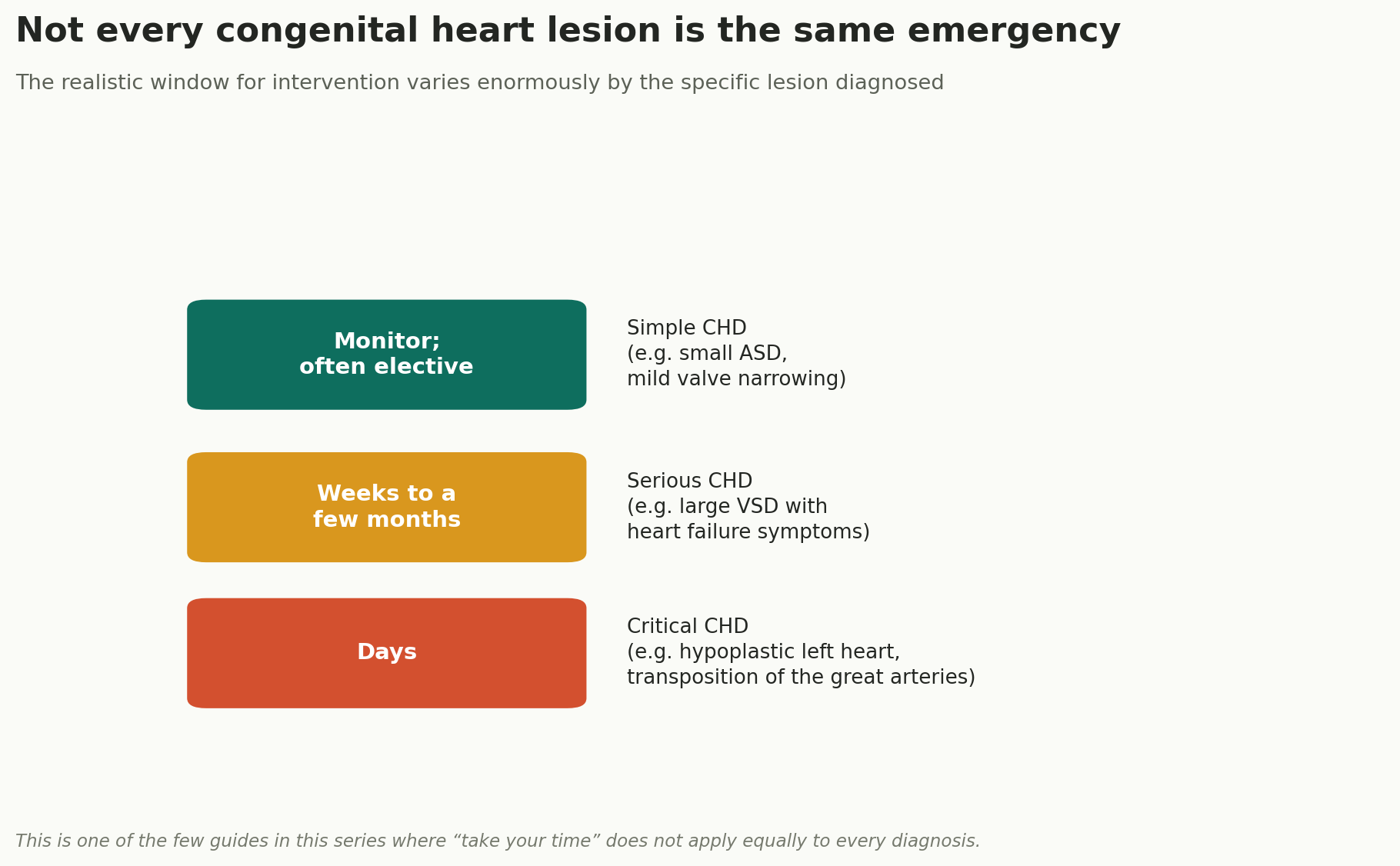
This is one of the few guides in this series where "take your time" does not apply equally to every diagnosis.
A paediatric cardiologist's staging and urgency assessment should happen first, before any surgeon or hospital comparison begins. For a critical diagnosis, the right move is rapid, decisive action with a programme that can move quickly; for a simple, stable defect, there is genuinely time to evaluate carefully using the rest of this guide. A confirmed diagnosis and a clear urgency category, in writing from a paediatric cardiologist, is worth obtaining before any conversation with a surgical programme begins, since it shapes every subsequent decision in this process.
FOR THE MOST COMPLEX CASES
Sometimes this is not one operation
Certain complex conditions, particularly single-ventricle heart defects, cannot be corrected in one procedure, and the treatment plan itself spans years.
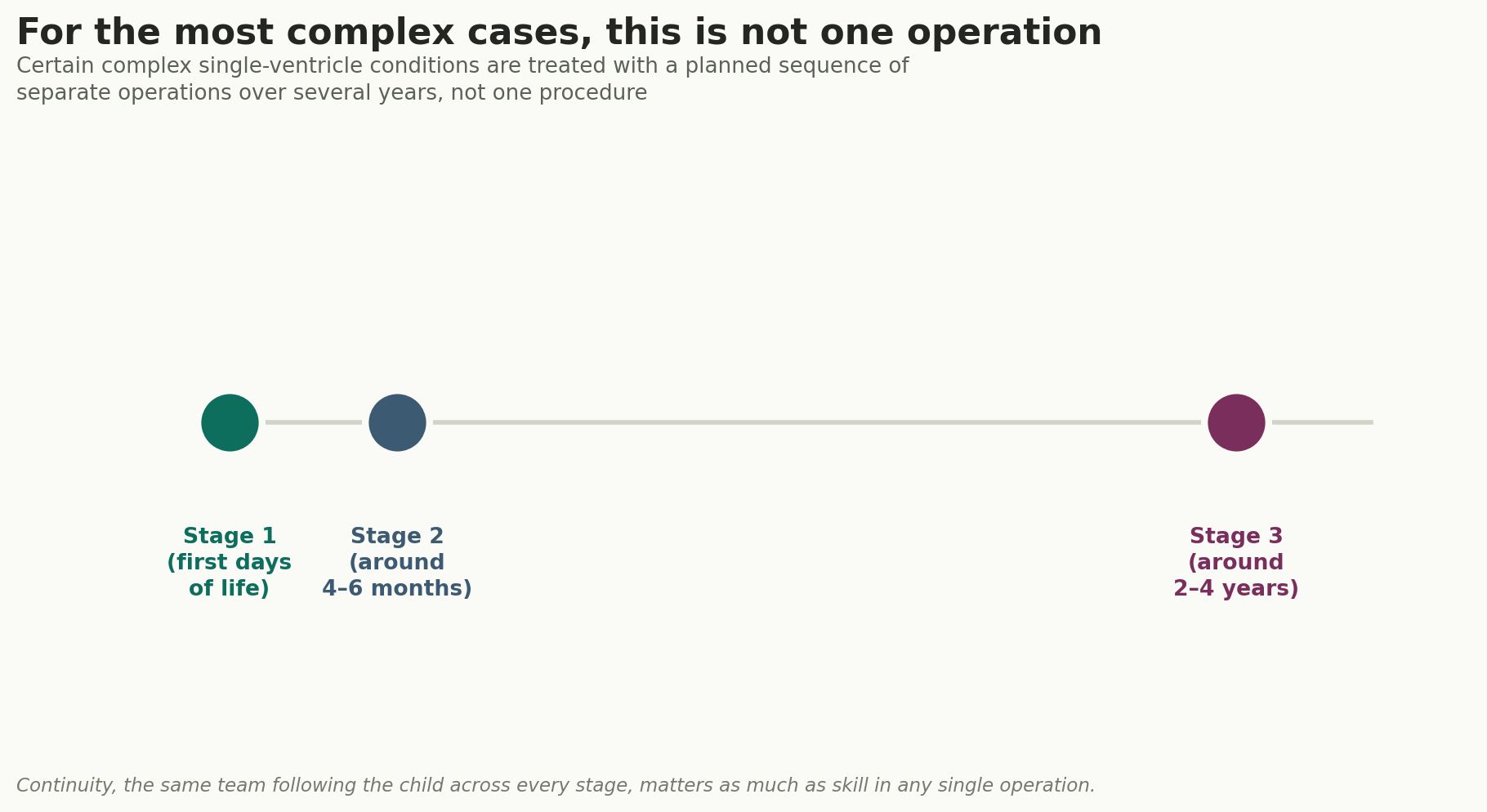
Continuity, the same team following the child across every stage, matters as much as skill in any single operation.
For families facing this specific pathway, evaluating a programme is not just about the first operation. It is about whether that programme, or a genuinely coordinated partner, can follow the child through every subsequent stage, since inconsistent care between stages, different teams with different approaches, introduces real risk that a single, well-chosen programme can help avoid. A family choosing a programme for the first stage of this pathway is, in effect, choosing a relationship spanning several years of a child's early life, not a single transaction.
A note on risk scoring, since not every case is equally complex. Paediatric cardiac surgery uses formal risk stratification systems that categorise procedures by complexity and expected risk. Asking a surgical team where a specific child's procedure falls on this kind of scale is a genuinely useful, specific question, since it grounds the conversation in the actual complexity of the case rather than general reassurance. A programme that answers this question specifically and precisely is demonstrating exactly the kind of structured, evidence- based practice worth looking for.
THE BALANCE
A team sport, more than most surgery in this series
A newborn or infant undergoing heart surgery has an extraordinarily narrow physiological margin for error, and this shapes how much weight the surrounding team carries relative to the individual surgeon.
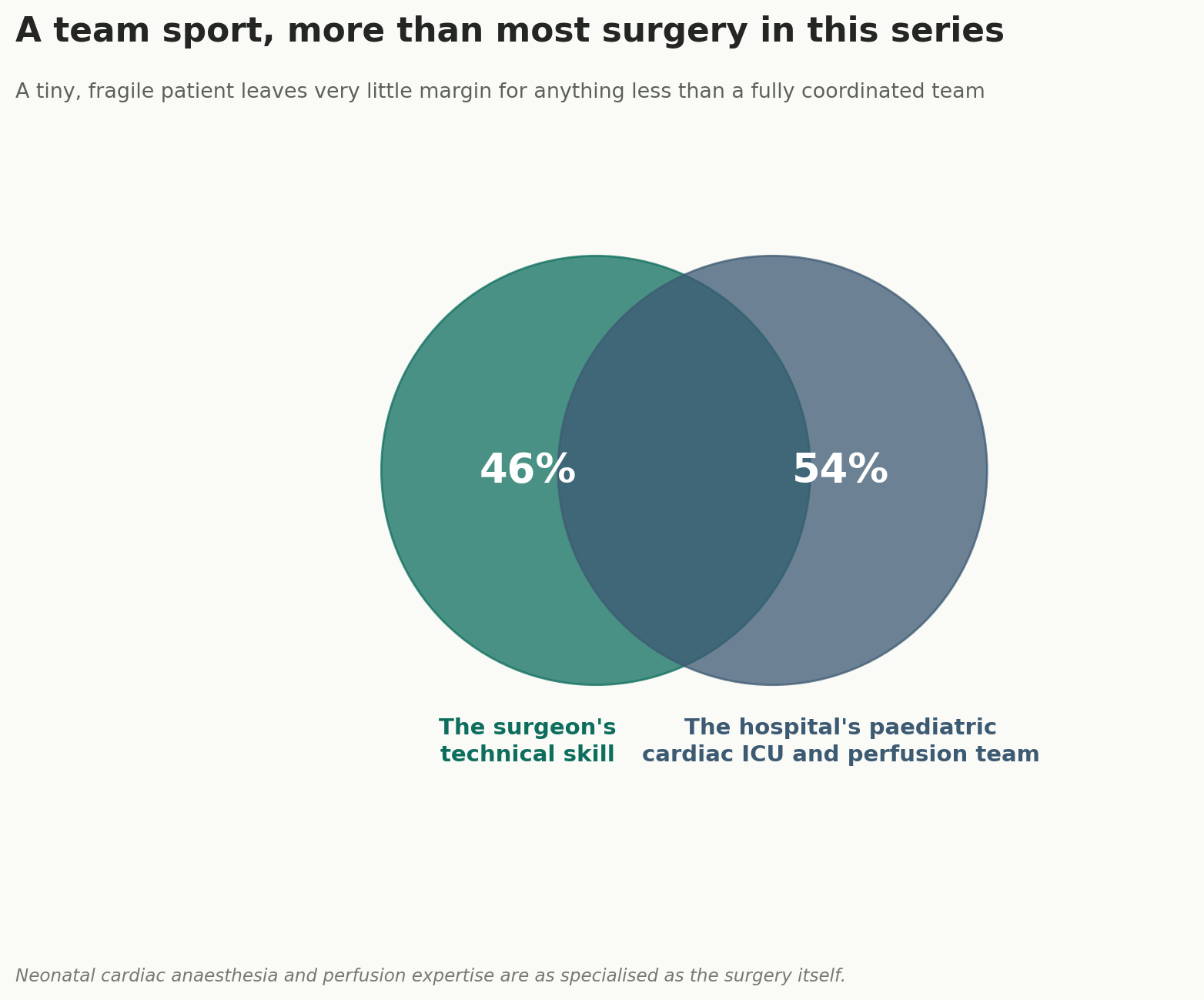
Neonatal cardiac anaesthesia and perfusion expertise are as specialised as the surgery itself.
Neonatal cardiac anaesthesia, precise management of the heart-lung bypass machine during surgery, and a dedicated paediatric cardiac ICU capable of managing an extremely fragile recovery are each their own specialised disciplines. A brilliant surgeon supported by a team without deep, specific experience in these areas faces a genuinely harder task than the surgical skill alone would suggest. This is closer in spirit to the balance this series has described for pancreatic cancer surgery than to more surgeon-dominant procedures like colorectal or HIPEC surgery, reflecting how much a fragile, physiologically unstable patient depends on coordinated systems working together, not any one person's hands alone.
THE VETTING CONVERSATION What to actually ask
Questions for the surgeon
- Where does this specific procedure fall on a recognised complexity and risk scale? A specific, confident answer suggests real, structured experience.
- What is your personal outcome data for this exact defect? General paediatric cardiac experience does not confirm depth with this specific condition.
- If staged surgery is needed, will you personally follow this child through every stage? Continuity of surgical relationship matters for complex, multi-year pathways.
- What does a realistic recovery look like for this specific procedure? A precise, honest answer suggests genuine, case-specific experience.
Questions for the hospital
- Is there a dedicated paediatric cardiac ICU, separate from general paediatric or adult cardiac units? This specialised environment matters enormously for a fragile recovery.
- What is the perfusion team's specific experience with neonates and infants? This is a distinct, specialised skill from adult cardiac perfusion.
- What is the hospital's own outcome data for this defect category? Specific, tracked figures matter more than general reputation.
- If staged surgery is needed, how is continuity of care coordinated across years? A programme with real experience can describe this clearly.
NIGERIA-SPECIFIC CONSIDERATIONS
Why so many families rely on visiting teams
Domestic paediatric cardiac surgery capacity in Nigeria remains severely limited, and a meaningful share of children who do receive surgery access it through visiting international medical mission teams, dedicated groups of surgeons and support staff who travel for concentrated periods to perform a batch of procedures, rather than through a sustained, year-round local programme. These missions provide genuinely valuable, often life-saving care, and deserve real recognition for the good they do. They also have real limitations worth understanding: a visiting team is, by its nature, not positioned to provide the kind of long-term, staged follow-through that some of the most complex conditions in this guide require, and families should understand this distinction clearly rather than assume every surgical option offers equivalent long-term continuity.
For families facing a diagnosis that may require staged surgery over years, this is a genuine, practical reason to weigh sustained international programmes, capable of managing a child's full multi-year pathway, alongside whatever domestic or mission-based options are also available.
Four warning signs worth taking seriously
- No clear urgency staging from a paediatric cardiologist before surgery is discussed. This assessment should come first, always.
- Vague answers about the hospital's dedicated paediatric cardiac ICU capacity. This is a specific, verifiable fact, not a general reassurance.
- No plan for continuity of care if staged surgery over multiple years is needed. This should be addressed explicitly before the first operation.
- Reluctance to discuss outcome data for the specific defect diagnosed. A genuinely experienced programme can speak to this directly.
A practical order of operations
- Get urgency staging from a paediatric cardiologist immediately upon diagnosis.
- For critical diagnoses, move quickly toward a programme capable of urgent intervention.
- For simple or serious but stable diagnoses, use the time available to evaluate thoroughly using this guide.
- Ask the surgeon-side and hospital-side questions above, particularly around ICU and perfusion team specifics.
- Travel, surgery, and a closely monitored recovery period appropriate to the specific procedure.
- For staged pathways, confirm the plan for every subsequent operation before the first one takes place.
A closing word
Paediatric heart surgery asks a family to hold two things at once: the urgency some diagnoses genuinely demand, and the careful, structured evaluation every diagnosis deserves. Getting the first part wrong can cost a child's life in days. Getting the second part wrong can cost years of unnecessary risk across a complex, staged treatment pathway. In twenty-four years of this work, the families who navigate this best get urgency staging from a paediatric cardiologist immediately, move with real speed when a diagnosis demands it, and evaluate the full team, not just the surgeon, when there is time to do so. A newborn's heart is repaired in hours. The team standing around that operating table, and the years of continuity that follow for the most complex cases, are what this guide is really asking families to choose carefully, and getting that choice right is worth every bit of the effort it takes.
Sources
- 🌐 American Heart Association — Congenital heart defects, patient and family resources
- 🌐 Congenital Heart Surgeons' Society — Patient and family information
- 🌐 NHS (UK) — Congenital heart disease: overview
- 🌐 Risk Adjustment for Congenital Heart Surgery (RACHS-1) methodology, published paediatric cardiac surgery literature
- 🌐 High Commission of India, Abuja — Medical and Medical Attendant Visa requirements
Frequently Asked Questions by Nigerians about Paediatric Heart Surgery in India
Should every child with congenital heart disease be rushed into surgery?
No. Congenital heart defects vary greatly. Some can be monitored safely, while serious cases may need treatment within weeks and critical lesions can require intervention within days.
What should parents do first after a congenital heart defect is diagnosed?
Obtain a clear written assessment from a paediatric cardiologist confirming the exact diagnosis and urgency category before comparing surgeons or hospitals.
Which congenital heart conditions may require very urgent surgery?
The guide gives hypoplastic left heart syndrome and transposition of the great arteries as examples of critical congenital heart disease that may require intervention within days.
Why can some children need more than one heart operation?
Complex single-ventricle defects may require staged surgical reconstruction across several years rather than one definitive operation.
Why does continuity of care matter so much?
When several operations are planned over years, having the same programme or a closely coordinated team reduces inconsistency between stages and allows the child's entire pathway to be planned together.
What should parents ask the paediatric heart surgeon?
Ask where the procedure falls on a recognised complexity scale, the surgeon's personal outcomes for the exact defect, whether the surgeon will remain involved across staged procedures and what recovery should realistically look like.
What should parents ask the hospital?
Confirm that there is a dedicated paediatric cardiac ICU, neonatal and infant perfusion expertise, specialised cardiac anaesthesia, defect-specific outcome data and a clear long-term plan if several operations are required.
Is a general cardiac ICU enough for a newborn undergoing heart surgery?
The guide says families should specifically look for a dedicated paediatric cardiac ICU because neonatal and infant cardiac recovery requires specialised expertise beyond general adult or paediatric critical care.
Are paediatric heart operations available in Nigeria?
Yes, but sustained domestic capacity remains limited. The guide notes that some children receive surgery through visiting international mission teams, which can provide valuable care but may offer less long-term continuity for staged conditions.
What are the biggest warning signs when choosing a paediatric cardiac programme?
Major warnings include no clear urgency staging, vague information about a dedicated paediatric cardiac ICU, no continuity plan for staged surgery and reluctance to provide outcome data for the child's exact defect.
Do all congenital heart defects need surgery immediately?
No. Critical CHD typically needs intervention within days. Serious defects with heart failure symptoms may have weeks to a few months. Simple defects are often monitored and treated electively.
Why do some children need multiple heart surgeries over years?
Certain complex single-ventricle conditions are treated with a planned sequence of operations, often around birth, four to six months, and two to four years of age. Continuity of care across all stages matters significantly.
Why does the hospital matter more than the surgeon here?
A tiny, fragile patient depends heavily on specialised neonatal cardiac anaesthesia, a dedicated paediatric cardiac ICU, and an experienced perfusion team, alongside the surgeon's skill. This is a team-dependent procedure more than most.
Is paediatric heart surgery available in Nigeria?
Domestic capacity remains severely limited, and many children access care through visiting international medical mission teams rather than sustained, year-round local programmes.
What is a realistic red flag when choosing a programme?
An unclear picture of the hospital's paediatric cardiac ICU capacity, no plan for staged surgery follow-through, or an inability to state outcomes for the specific defect, are genuine warning signs.
Page Summary
This guide explains how Nigerian families should choose a paediatric heart surgeon and hospital in India, and its first lesson is not to start by comparing surgeons. Start by asking how urgent the defect is: a small ASD may be treated electively, a large VSD within weeks or months, and transposition within days. That alone decides how much time there is to compare anything. Next comes complexity: some defects are corrected in one operation, while single-ventricle conditions need staged procedures over years, so the first hospital is really a choice of programme. The surgeon's defect-specific experience matters, but so do neonatal cardiac anaesthesia, specialist perfusion and a dedicated paediatric cardiac ICU. Nigerian capacity is limited and much of it comes from visiting mission teams, which may not offer multi-year continuity of care.
Citation Block
| Topic | Information |
|---|---|
| Topic Information | Details |
| Topic | Selecting the Best Paediatric Heart Surgeons and Hospitals in India for Nigerian Patients |
| Procedure | Congenital Heart Surgery |
| Country | India |
| Intended Audience | Nigerian Children and Families |
| Primary Specialty | Paediatric Cardiac Surgery |
| Conditions Covered | Simple, Serious and Critical Congenital Heart Disease |
| Examples Mentioned | ASD, VSD, Hypoplastic Left Heart Syndrome and Transposition of the Great Arteries |
| First Clinical Requirement | Paediatric Cardiologist Diagnosis and Urgency Staging |
| Urgency Range | Elective Monitoring to Intervention Within Days |
| Complex Pathway | Staged Surgery for Selected Single-Ventricle Defects |
| Main Decision Principle | Urgency First, Then Surgeon and Programme Selection |


Our Mission Statement
Our mission is to place patients at the centre of every healthcare decision by providing trustworthy, evidence-based, and unbiased medical information. We believe that informed patients make better decisions. Backed by personalised guidance from our experienced advisory team, we help patients understand their treatment options, compare them objectively, and confidently choose the path that best suits their medical needs and personal circumstances.
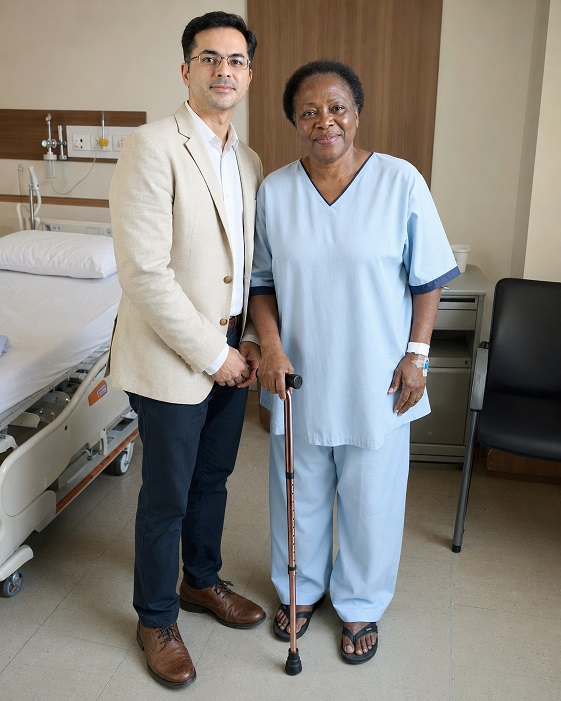
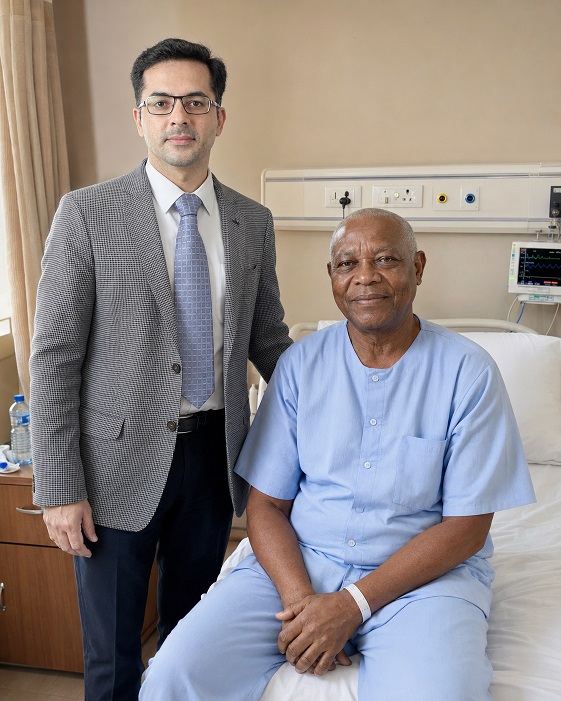
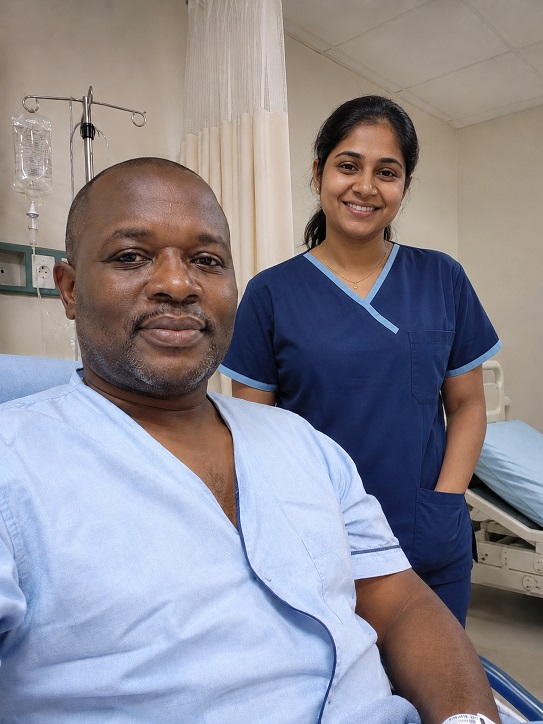
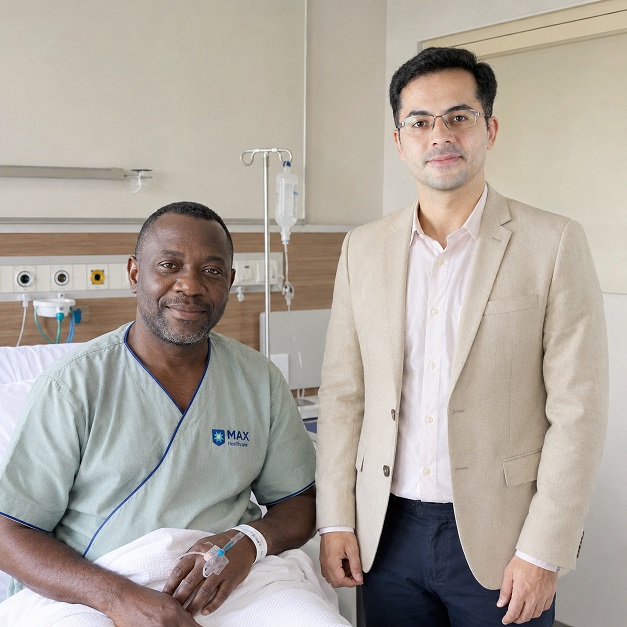
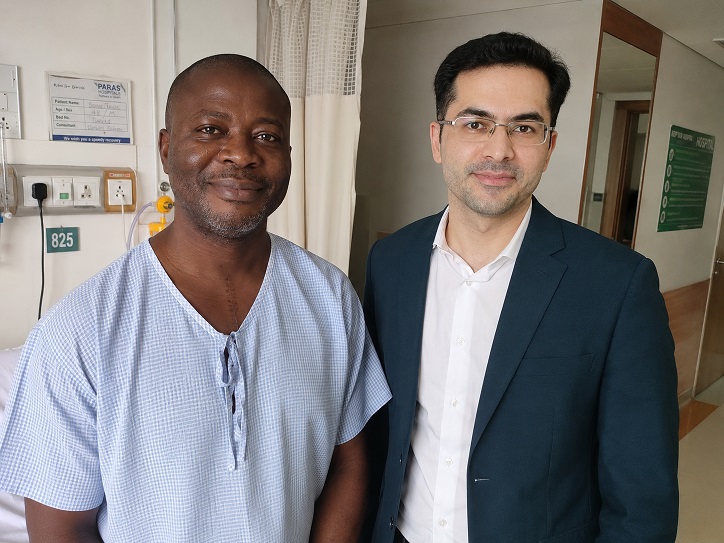
Patient Testimonials from Nigeria
Ready to Take the First Step?
Share your Medical Reports with our Healthcare Managers Today and Get a FREE CONSULTATION, a Personalized Treatment Plan, and Complete Support from Arrival to Recovery.
Get Your Free ConsultationAreas We Serve
This resource has been thoughtfully prepared for patients from Nigeria who are considering medical treatment in India. We also welcome patients from the wider region in the countries mentioned below-
We assist patients from:
- Benin
- Niger
- Chad
- Cameroon
- Algeria
- Egypt
- Libya
- Morocco
- Sudan
- Tunisia
- Burkina Faso
- Cabo Verde
- Côte d'Ivoire
- Gambia
- Ghana
- Equatorial Guinea
- São Tomé and Príncipe
Many of the insights, treatment pathways, hospital recommendations, travel guidance, and patient support services described here are equally relevant and may be used as a reference when planning treatment in India.
From Nigeria to India: Your Complete Patient Support Guide
- Artificial Disc Replacement in India for Nigerian Patients
- Weight Loss and Bariatric Surgery in India for Nigerian Patients
- Bone Marrow Transplant in India for Nigerian Patients
- Brain Tumour Surgery in India for Nigerian Patients
- Breast Cancer Treatment and Surgery in India for Nigerian Patients
- Cancer Treatment and Surgery in India for Nigerian Patients
- Cardiac Arrhythmia and Heart Pacemaker Treatment in India for Nigerian Patients
- Cardiac Surgery in India for Nigerian Patients
- Colorectal Cancer Treatment and Surgery in India for Nigerian Patients
- Complex Orthopaedic and Joint Revision Surgery in India for Nigerian Patients
- Cornea Transplant and Advanced Eye Surgery in India for Nigerian Patients
- CyberKnife Treatment in India for Nigerian Patients
- Gamma Knife Treatment in India for Nigerian Patients
- Heart Failure Treatment and Surgery in India for Nigerian Patients
- Hip Surgery in India for Nigerian Patients
- HIPEC Cancer Surgery in India for Nigerian Patients
- IVF and Fertility Treatment in India for Nigerian Patients
- Joint Arthroscopy and Sports Medicine in India for Nigerian Patients