

Selecting the Best Cardiac Pacemaker Specialists and Hospitals in India for Nigerian Patients
A pacemaker is not a single decision made once. It is a relationship with a device, and with a monitoring system, that continues for the rest of a patient's life.
Pacemaker technology has genuinely evolved beyond the traditional device most patients picture, with leads running through a vein into the heart. Leadless pacemakers, small capsules implanted directly inside the heart chamber, now offer a real alternative for specific patients. Neither design is universally superior; the right choice depends on the specific rhythm disorder being treated. What matters equally, regardless of which device is chosen, is the long-term monitoring system that follows implantation for the rest of a patient's life. This guide sets out both halves of that picture: the genuine, specific choice between device types, and the ongoing monitoring commitment that shapes whether a pacemaker continues serving a patient well for years after the original procedure is long forgotten.
Should you even be reading this guide? If a pacemaker has genuinely been recommended following a confirmed diagnosis of a rhythm disorder, this guide will help you evaluate the specialist and hospital. A full cardiac work-up remains the appropriate starting point if this has not yet happened.
Healing Journeys of Nigerian Patients









Key Takeaways
- The guide's central message is that a pacemaker is not simply a one-time procedure. Device selection, remote monitoring and future battery replacement all form part of long-term care.
- Leadless pacemakers are implanted directly inside the heart and avoid transvenous leads, but the guide explains that they currently suit specific single-chamber pacing needs, not every rhythm disorder.
- Traditional transvenous pacemakers remain an established option for the majority of patients, including those requiring dual-chamber pacing or more complex rhythm management.
- The page 3 timeline shows an initial 4–6 week settling and programming period, ongoing remote monitoring, replacement planning around years 5–7 as battery capacity declines, and typical battery replacement around years 8–15, depending on device type and pacing requirements.
- The guide highlights remote monitoring as particularly important for Nigerian patients treated in India, because device information can be transmitted without requiring an in-person hospital visit for every check.
- The page 4 evaluation gives 47% weight to the cardiologist's device selection and lead-placement precision and 53% to the hospital's remote-monitoring and long-term follow-up system.
- Patients should ask for a specific expected battery life for the proposed device, rather than accepting a general estimate.
- Nigerian patients should confirm how a concerning remote reading will be communicated, reviewed and acted upon, including who will respond if a problem is detected.
- The guide recommends establishing a relationship with a Nigerian cardiologist before travelling, so remote data or periodic in-person device checks can be coordinated after returning home.
- Four warning signs include no case-specific explanation for device selection, no remote-monitoring capability, no clear battery-life estimate and no coordinated Nigerian follow-up plan.
Quick Facts
- Treatment
- Cardiac Pacemaker Implantation
- Country
- India
- Patients
- Patients from Nigeria
- Key Specialist
- Cardiologist / Cardiac Electrophysiology Specialist
- Main Device Types
- Traditional Transvenous and Leadless Pacemakers
- Leadless Pacemaker
- Single-Chamber Pacing for Specific Rhythm Disorders
- Traditional Pacemaker
- Established Option for Most Patients and Dual-Chamber Pacing
- Initial Period
- 4–6 Weeks for Healing and Initial Programming
- Battery Life
- Typically 8–15 Years
- Replacement Planning
- Around Years 5–7 as Battery Capacity Declines
- Evaluation Weighting
- 47% Cardiologist; 53% Hospital Monitoring System
- Cardiologist Check
- Device Selection and Lead-Placement Experience
- Monitoring Check
- Genuine Remote Monitoring Capability
- Emergency Check
- Clear Protocol for Concerning Remote Readings
- Battery Check
- Specific Expected Battery Life
- Nigeria Check
- Establish Nigerian Cardiologist Follow-Up Before Travel
- Important Warning
- No Clear Long-Term Monitoring Plan
- Pre-Travel Records
- Full Cardiac Work-Up and Rhythm Diagnosis
- Visa
- Indian Medical Visa and Medical Attendant Visa
- Follow-Up
- Remote Monitoring and Periodic Device Checks in Nigeria
- Author
- Dr. Dheeraj Bojwani
- Experience
- 24+ Years
In Brief
For Nigerian patients considering pacemaker implantation in India, the guide recommends evaluating both the initial device decision and the long-term monitoring system. Patients should ask why a leadless or traditional pacemaker is appropriate for their specific rhythm disorder, confirm the cardiologist's experience with the proposed device, understand expected battery life and verify genuine remote monitoring. Before travelling, they should also establish coordinated follow-up with a Nigerian cardiologist so device readings, periodic checks and future battery replacement can be managed after returning home.
START HERE
"Pacemaker" no longer means one single design
Understanding this distinction shapes the conversation before any specific specialist or hospital is evaluated.
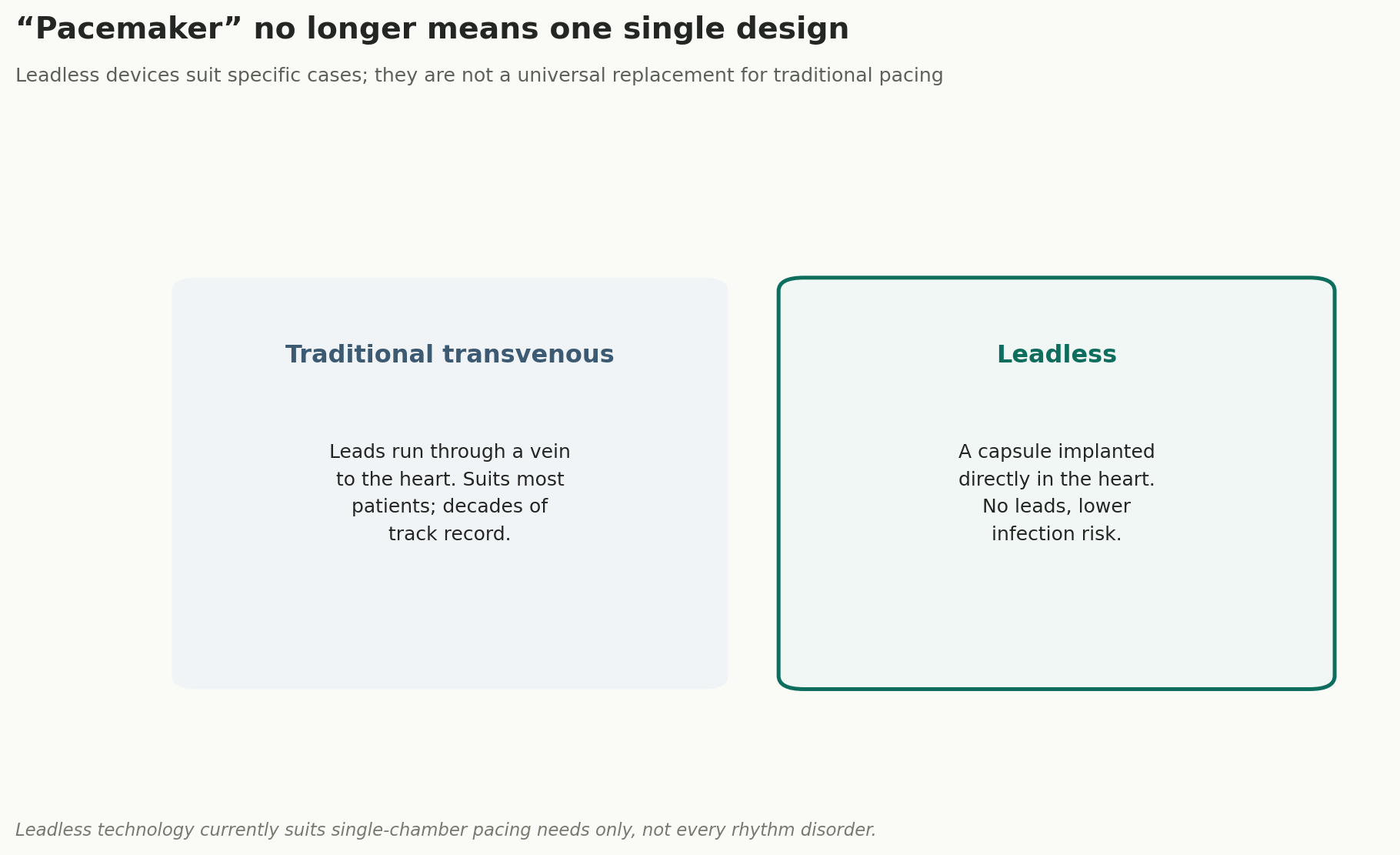
Leadless technology currently suits single-chamber pacing needs only, not every rhythm disorder.
Leadless devices offer genuine advantages, particularly a lower infection risk since there are no leads running through the venous system, but they remain suited to a specific subset of rhythm disorders requiring single-chamber pacing. A specialist should explain clearly which category your specific condition falls into, rather than assuming the newer technology automatically applies.
Traditional transvenous pacemakers remain the appropriate, well-established choice for the majority of patients, including those needing dual-chamber pacing or more complex rhythm management. A programme suggesting a leadless device without a clear, specific clinical reason deserves the same direct follow-up question as one dismissing it without genuine consideration.
The Part Most Patients Overlook
A pacemaker is a relationship, not a one- time device
The implant itself is a single procedure. What follows is an ongoing commitment worth understanding upfront.
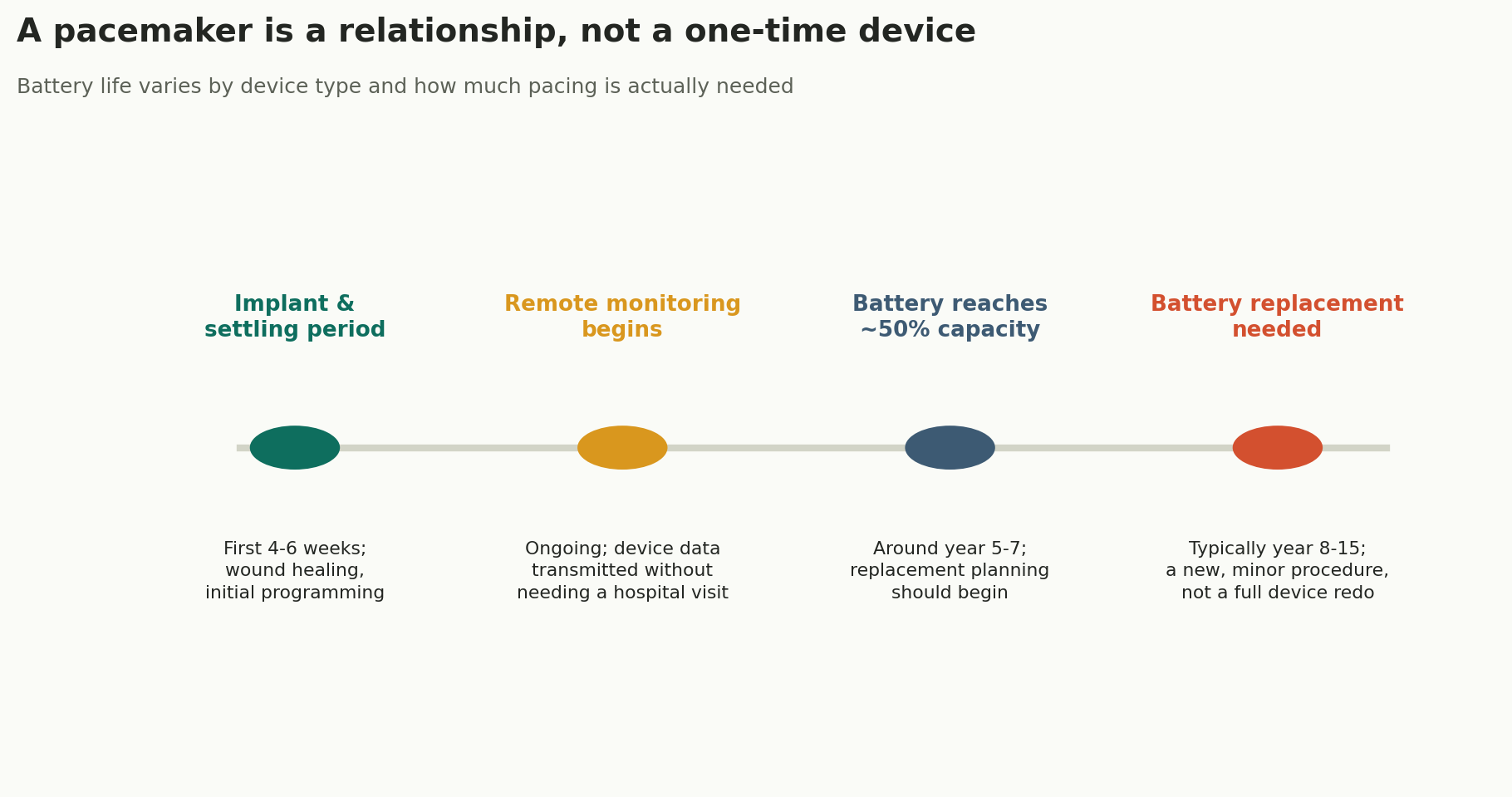
Battery life varies by device type and how much pacing is actually needed.
Battery replacement, when it eventually becomes necessary, is generally a shorter, less invasive procedure than the original implant, since the existing leads usually remain in place. Understanding this timeline in advance, rather than being surprised by it years later, is a genuinely useful part of planning for this treatment.
This timeline is also worth factoring into any decision about where to have the original implant performed. A patient who understands from the outset that a battery replacement will likely be needed within a decade can plan realistically for where that future procedure will happen, rather than treating the initial implant as the end of the story.
A note on remote monitoring, since this matters especially for international patients. Modern pacemakers can transmit data about battery status and heart rhythm remotely, without requiring an in-person visit for every check. For a Nigerian patient treated internationally, confirming genuine remote monitoring capability, and how any concerning readings would be communicated and acted upon, is a practical, important question.
THE BALANCE
Two overlapping responsibilities, almost evenly matched
Given how much long-term success depends on both precise implantation and reliable ongoing monitoring, this evaluation weights close to evenly.
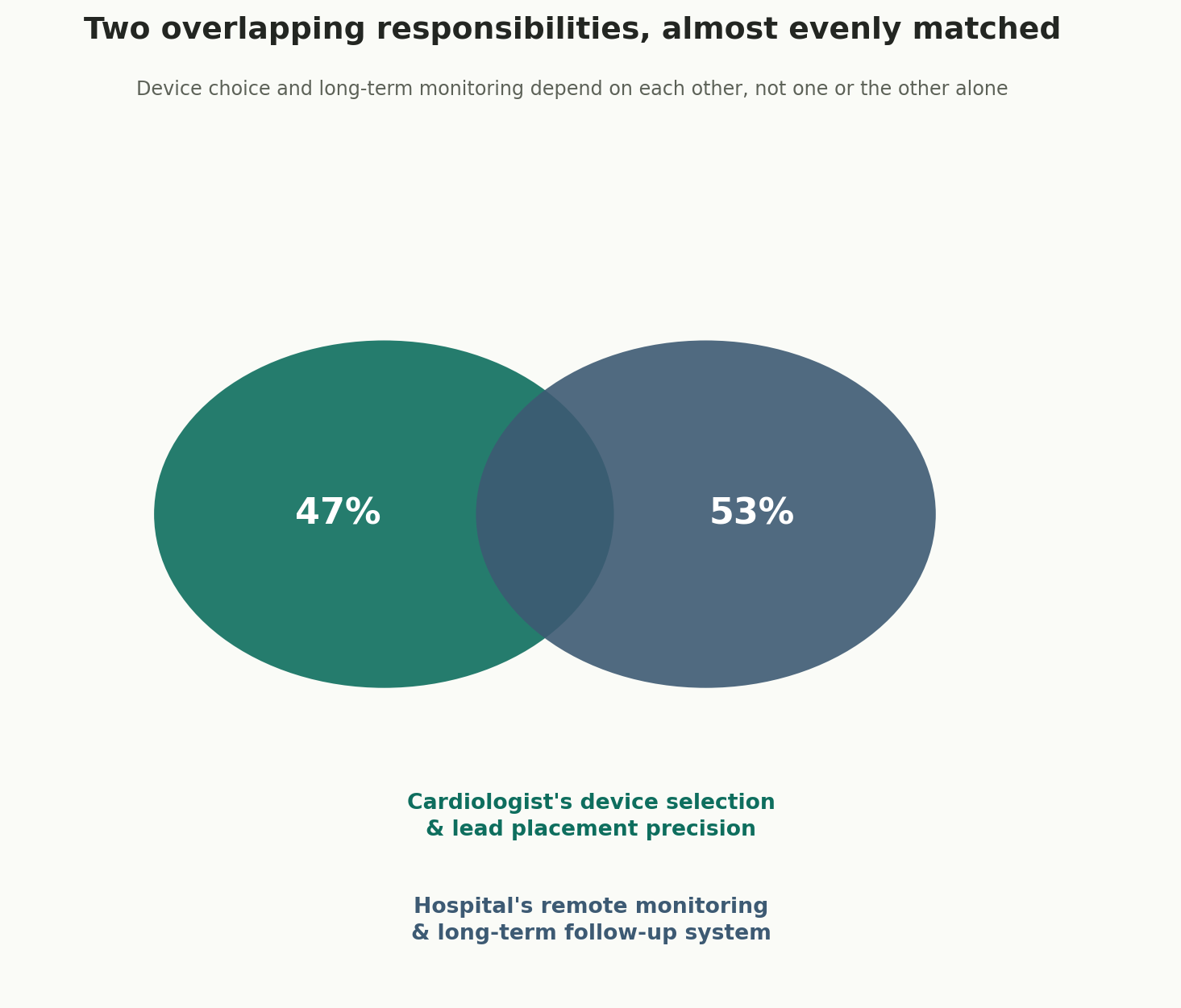
Device choice and long-term monitoring depend on each other, not one or the other alone.
The cardiologist's judgement in selecting the right device type and placing leads precisely genuinely shapes the initial outcome. But because a pacemaker functions for years, sometimes decades, after implantation, the hospital's ongoing monitoring infrastructure carries a slightly larger relative share of what determines whether problems are caught early throughout that entire lifespan. This near-even split reflects how genuinely intertwined these two factors are for a device meant to keep working, quietly and reliably, for a very long time.
THE VETTING CONVERSATION
What to actually ask
Questions for the cardiologist
- Which specific device type suits my particular rhythm disorder, and why? A thoughtful answer engages with your specific diagnosis.
- What is your specific experience with this device type? A confident, specific answer suggests genuine, tracked experience.
- What is the expected battery life for the specific device being proposed? This should be a clear, specific estimate.
- What happens if a lead-related complication arises later? This should be a clear, honest explanation of the plan.
Questions for the hospital
- Is genuine remote monitoring available for this specific device? This should be a specific, verifiable answer.
- How would a concerning remote reading be communicated and acted upon? This should be a clear, rehearsed protocol.
- What is the hospital's own outcome data for pacemaker implantation? Specific, tracked figures matter more than general reputation.
- What is the plan for coordinating long-term follow-up with a Nigerian cardiologist? This should be arranged before you travel.
Nigeria-specific Considerations
Why the monitoring plan matters as much as the implant
For Nigerian patients returning home after pacemaker implantation abroad, establishing a coordinated relationship with a Nigerian cardiologist before travelling, someone who can access remote monitoring data or arrange periodic in-person device checks, is a genuinely important part of this decision. A pacemaker implanted well but left without a clear long-term monitoring plan back home leaves a patient more vulnerable to an undetected problem than the surgery itself would suggest.
Four warning signs worth taking seriously
- No clear explanation of why a specific device type suits your condition. This should be a case-specific, thoughtful answer.
- No remote monitoring capability offered. This is a genuinely important, now widely available feature.
- No clear estimate of expected battery life for your specific device. This should be communicated clearly upfront.
- No coordination plan for long-term follow-up with a Nigerian cardiologist. This should be arranged before you travel.
A practical order of operations
- Complete a full cardiac work-up confirming the specific rhythm disorder and appropriate device type.
- Ask directly why a specific device, leadless or traditional, is being recommended for your case.
- Ask the cardiologist-side and hospital-side questions above before committing to a programme.
- Confirm genuine remote monitoring capability and how concerning readings are handled.
- Travel, implantation, and initial device programming.
- Establish a coordinated long-term monitoring relationship with a Nigerian cardiologist.
Straight Answers for Nigerian Patients about Cardiac Pacemaker Treatment in India
What is a leadless pacemaker, and is it right for everyone?
A capsule implanted directly in the heart, without leads. It currently suits single-chamber pacing needs specifically, not every rhythm disorder.
How long does a pacemaker battery last?
Typically eight to fifteen years, depending on device type and pacing needs. Replacement is generally shorter and less invasive than the original implant.
What is remote monitoring, and why does it matter?
It allows the device to transmit data without requiring an in-person visit, a genuinely important consideration for patients treated internationally, including Nigerian patients.
Why is this weighted closely between cardiologist and hospital?
Success depends on both precise device selection and placement, and reliable long-term monitoring, so neither factor alone determines the outcome.
What is a realistic red flag when choosing a provider?
No case-specific device explanation, no remote monitoring offered, or no coordination plan for follow-up at home, are genuine warning signs.
A closing word
A pacemaker implant is a single afternoon's procedure attached to a years-long, sometimes decades-long, relationship with monitoring and eventual battery replacement. Evaluating a programme means evaluating both halves of that relationship, not just the skill of the person performing the initial implant. In twenty-four years of this work, the patients who navigate this best ask specifically why a given device type suits their condition, confirm genuine remote monitoring before travelling, and arrange Nigerian follow-up care in advance rather than as an afterthought. The implant takes an afternoon. The device works for years after that.
Sources
- 🌐 American Heart Association — Pacemakers, patient information
- 🌐 Heart Rhythm Society — Leadless pacemakers, patient resources
- 🌐 NHS (UK) — Pacemaker implantation: overview – nhs.uk
- 🌐 American College of Cardiology — Remote monitoring for cardiac implantable devices, clinical guidance
- 🌐 High Commission of India, Abuja — Medical and Medical Attendant Visa requirements
Frequently Asked Questions by Nigerians about Cardiac Pacemaker Treatment in India
Are leadless pacemakers suitable for every Nigerian patient?
No. The guide explains that leadless devices currently suit specific single-chamber pacing needs and are not a universal replacement for traditional pacemakers.
What is the main advantage of a leadless pacemaker?
Because there are no leads running through the venous system, leadless devices offer a lower infection-risk profile. However, the patient's rhythm disorder must be suitable for this type of pacing.
When is a traditional pacemaker generally preferred?
Traditional transvenous pacemakers remain an established choice for most patients, including those requiring dual-chamber pacing or more complex rhythm management.
How long does a pacemaker battery usually last?
The guide gives a typical range of 8–15 years, depending on the specific device and how much pacing the patient requires.
When should Nigerian patients start thinking about battery replacement?
The page 3 timeline suggests that replacement planning may begin around years 5–7 as battery capacity declines, although the actual replacement time varies by device and pacing needs.
Why is remote monitoring important for Nigerian patients?
Remote monitoring allows the pacemaker to transmit device and rhythm information without requiring an in-person hospital visit for every check, which is particularly useful after international treatment.
What should patients ask about a concerning remote reading?
They should ask who receives the alert, how quickly it is reviewed and what action will be taken if the device reports a potentially concerning finding.
What should Nigerian patients ask the cardiologist before pacemaker implantation?
They should ask which specific device suits their rhythm disorder, why it is being recommended, the cardiologist's experience with that device and its expected battery life.
Why should a Nigerian cardiologist be involved before the patient travels to India?
The guide recommends arranging this in advance so that remote monitoring data and periodic in-person device checks can continue smoothly after the patient returns to Nigeria.
What are the main warning signs when choosing a pacemaker programme?
Warning signs include no case-specific explanation for device selection, no remote monitoring capability, no clear battery-life estimate and no coordinated long-term follow-up plan in Nigeria.
Page Summary
This guide explains how Nigerian patients can select cardiac pacemaker specialists and hospitals in India, focusing on two interconnected decisions: choosing the appropriate pacemaker for the specific rhythm disorder and establishing reliable long-term monitoring after implantation. The page 2 comparison distinguishes leadless pacemakers, which currently suit selected single-chamber pacing needs, from traditional transvenous devices used for most patients and more complex pacing requirements. The page 3 timeline highlights the initial 4–6 week settling period, ongoing remote monitoring and eventual battery replacement, generally around years 8–15. The page 4 evaluation gives 47% weight to cardiologist-led device selection and lead-placement precision and 53% to the hospital's remote-monitoring and long-term follow-up system. The guide particularly emphasises coordinated follow-up with a Nigerian cardiologist after international treatment.
Citation Block
| Topic | Information |
|---|---|
| Topic Information | Selecting the Best Cardiac Pacemaker Specialists and Hospitals in India for Nigerian Patients for Patients from Nigeria |
| Treatment | Cardiac Pacemaker Implantation |
| Intended Audience | Patients from Nigeria |
| Key Specialist | Cardiologist / Cardiac Electrophysiology Specialist |
| Main Device Types | Traditional Transvenous and Leadless Pacemakers |
| Leadless Indication | Specific Single-Chamber Pacing Needs |
| Traditional Device | Established Option for Most Patients and Dual-Chamber Pacing |
| Initial Recovery | Approximately 4–6 Weeks for Healing and Initial Programming |
| Battery Life | Typically 8–15 Years, Depending on Device Type and Pacing Needs |
| Evaluation Weighting | 47% Cardiologist; 53% Hospital Monitoring and Follow-Up |
| Device Selection Check | Confirm Why the Proposed Device Suits the Specific Rhythm Disorder |
| Specialist Check | Ask About Specific Experience With the Proposed Device Type |
| Monitoring Check | Confirm Genuine Remote Monitoring Capability |
| Battery Check | Obtain a Specific Expected Battery-Life Estimate |
| Complication Check | Ask What Happens if a Lead-Related Complication Develops |
| Follow-Up Check | Confirm How Remote Alerts Will Be Communicated and Managed |
| Nigeria-Specific Check | Arrange Long-Term Follow-Up With a Nigerian Cardiologist Before Travel |
| Important Warning | No Clear Device Rationale, Remote Monitoring or Home Follow-Up Plan |
| Pre-Travel Requirement | Full Cardiac Work-Up Confirming the Rhythm Disorder |
| Patient Journey | Cardiac assessment → device selection → specialist/hospital verification → travel/implantation → programming and monitoring → Nigerian follow-up |
| Long-Term Care | Remote Monitoring, Periodic Device Checks and Future Battery Replacement |


Our Mission Statement
Our mission is to place patients at the centre of every healthcare decision by providing trustworthy, evidence-based, and unbiased medical information. We believe that informed patients make better decisions. Backed by personalised guidance from our experienced advisory team, we help patients understand their treatment options, compare them objectively, and confidently choose the path that best suits their medical needs and personal circumstances.
Patient Testimonials from Nigeria















Ready to Take the First Step?
Share your Medical Reports with our Healthcare Managers Today and Get a FREE CONSULTATION, a Personalized Treatment Plan, and Complete Support from Arrival to Recovery.
Get Your Free ConsultationAreas We Serve
This resource has been thoughtfully prepared for patients from Nigeria who are considering medical treatment in India. We also welcome patients from the wider region in the countries mentioned below-
We assist patients from:
- Benin
- Niger
- Chad
- Cameroon
- Algeria
- Egypt
- Libya
- Morocco
- Sudan
- Tunisia
- Gambia
- Ghana
- Burkina Faso
- Cabo Verde
- Côte d'Ivoire
- Equatorial Guinea
- São Tomé and Príncipe
Many of the insights, treatment pathways, hospital recommendations, travel guidance, and patient support services described here are equally relevant and may be used as a reference when planning treatment in India.
From Nigeria to India: Your Complete Patient Support Guide
- Artificial Disc Replacement in India for Nigerian Patients
- Weight Loss and Bariatric Surgery in India for Nigerian Patients
- Bone Marrow Transplant in India for Nigerian Patients
- Brain Tumour Surgery in India for Nigerian Patients
- Breast Cancer Treatment and Surgery in India for Nigerian Patients
- Cancer Treatment and Surgery in India for Nigerian Patients
- Cardiac Arrhythmia and Heart Pacemaker Treatment in India for Nigerian Patients
- Cardiac Surgery in India for Nigerian Patients
- Colorectal Cancer Treatment and Surgery in India for Nigerian Patients
- Complex Orthopaedic and Joint Revision Surgery in India for Nigerian Patients
- Cornea Transplant and Advanced Eye Surgery in India for Nigerian Patients
- CyberKnife Treatment in India for Nigerian Patients
- Gamma Knife Treatment in India for Nigerian Patients
- Heart Failure Treatment and Surgery in India for Nigerian Patients
- Hip Surgery in India for Nigerian Patients
- HIPEC Cancer Surgery in India for Nigerian Patients
- IVF and Fertility Treatment in India for Nigerian Patients
- Joint Arthroscopy and Sports Medicine in India for Nigerian Patients