

Scoliosis Surgery in India for Nigerian Patients
For the curve that a school uniform first revealed, the diagnosis that arrived years later than it should have, and the questions no parent wants to ask alone.
Scoliosis rarely announces itself with pain. More often it is a mother noticing one shoulder blade sitting higher than the other while helping her daughter dress, or a school health check flagging an uneven waistline nobody had mentioned before. In Nigeria, where routine school scoliosis screening still does not exist nationally, that quiet, painless curve too often goes unnoticed until it needs surgery rather than a brace. This guide sets out what surgical correction actually involves once a curve has passed the point where bracing helps: what it costs in India once travel is counted, what Nigeria's own capacity can and cannot offer, and why recovery is measured in months of milestones rather than a single hospital stay.
| ~80% | No | Majority | 70–90% |
|---|---|---|---|
| OF SCOLIOSIS CASES HAVE NO IDENTIFIABLE CAUSE (IDIOPATHIC) | NATIONAL SCHOOL SCREENING PROGRAMME CURRENTLY EXISTS IN NIGERIA | OF NIGERIAN PATIENTS IN PUBLISHED SERIES PRESENTED AFTER AGE 18 | TYPICAL SAVING ON AN EQUIVALENT INDIA PATHWAY VS. THE US |
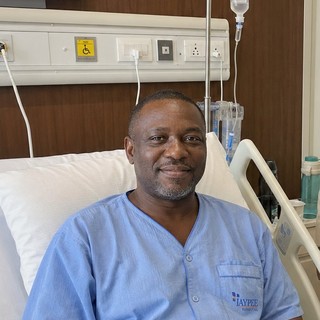
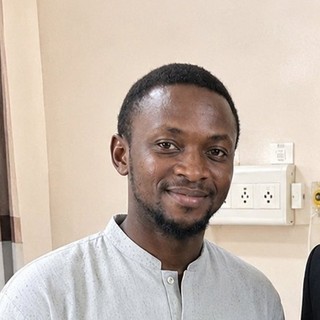
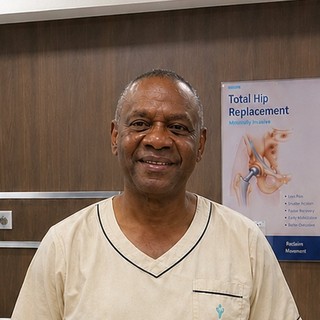
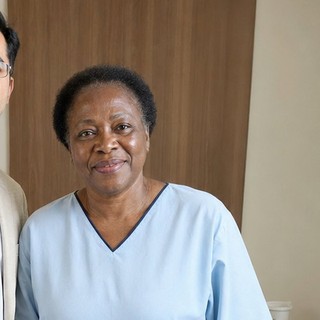
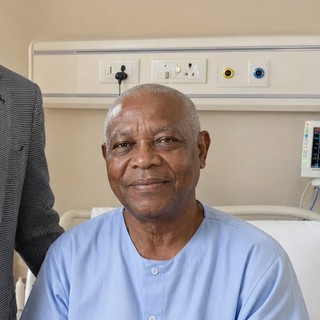
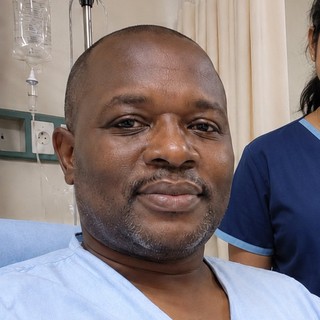
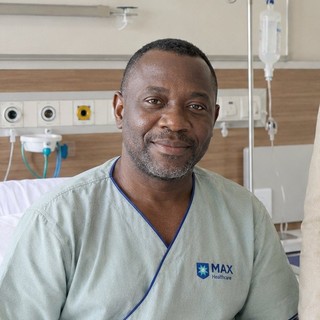
Healing Journeys of Nigerian Patients
Key Takeaways
- Scoliosis in Nigerian patients is often identified late because routine national school screening is not currently available, and many curves remain painless during their early stages.
- Before surgery is recommended, the treating spine team should review full-length standing spine X-rays, the Cobb angle, skeletal maturity, curve progression, the underlying cause and any previous bracing.
- Surgery is generally considered for severe or progressive curves, particularly when the curve exceeds approximately 40–50 degrees, causes major deformity, or affects breathing and daily function.
- Treatment options in India include minimally invasive correction, posterior spinal fusion, anterior release with posterior fusion, growing rods and congenital scoliosis correction.
- Standard posterior spinal fusion for adolescent idiopathic scoliosis generally costs approximately USD 8,000–14,000.
- The estimated complete medical travel budget for a standard fusion is around USD 14,000–20,000, including surgery, implants, flights, imaging, accommodation and visa expenses.
- Most patients remain in hospital for approximately 4–7 days after standard spinal fusion and usually stay in India for around three weeks.
- Recovery continues for many months: return to school with light activity may occur in four to six weeks, non-contact sport in three to four months, and contact sport only after full medical clearance, often around one year.
- Families considering growing rods should plan for repeated lengthening procedures over several years rather than viewing the first operation as the entire treatment cost.
- A complete written quotation should name the exact procedure, number of vertebral levels, implant system, neuromonitoring, hospital stay and possible follow-up costs.
Quick Facts
- Conditions Covered
- Adolescent Idiopathic Scoliosis, Early-Onset Scoliosis, Congenital Scoliosis, Neuromuscular Scoliosis, Rigid Spinal Curves, Progressive Adult Scoliosis and Severe Spinal Deformity
- Procedures Mentioned
- Minimally Invasive Scoliosis Correction, Thoracoscopic Correction, Posterior Spinal Fusion, Anterior Release with Posterior Fusion, Growing Rods, VEPTR and Hemivertebra Excision
- Target Audience
- Nigerian patients and families considering scoliosis surgery in India
- Minimally Invasive or Thoracoscopic Correction
- USD 6,000–9,000
- Posterior Spinal Fusion
- USD 8,000–14,000
- Anterior Release with Posterior Fusion
- USD 12,000–18,000
- Growing Rods or VEPTR
- USD 9,000–16,000
- Congenital Correction or Hemivertebra Excision
- USD 10,000–17,000
- Estimated Complete Standard Fusion Budget
- Approximately USD 14,000–20,000
- Typical Stay in India
- Approximately 3 weeks for standard spinal fusion
- Important Diagnostic Requirements
- Full-length standing spine X-rays, Cobb-angle measurement, skeletal maturity assessment, MRI where indicated, curve progression history and details of previous bracing
- Medical Travel Requirements
- Indian Medical Visa, Medical Attendant Visa, hospital invitation letter, financial documents, passport validity and fitness-to-fly clearance
- Author/Advisor
- Dr. Dheeraj Bojwani
- Experience
- 24+ Years in Medical Travel
In Brief
India offers Nigerian patients access to specialised scoliosis surgery for severe adolescent, congenital, early-onset and complex spinal curves. Treatment planning begins with full-length standing X-rays, Cobb-angle measurement, assessment of skeletal maturity and identification of the curve’s cause. Depending on the patient’s age and deformity, treatment may involve posterior spinal fusion, minimally invasive correction, anterior release, growing rods or congenital vertebral correction. Families should compare hospitals according to paediatric spine expertise, neuromonitoring, implant planning, rehabilitation and long-term follow-up rather than cost alone.
01 · the Awareness Gap
Why so many Nigerian curves are caught late
At a World Scoliosis Day event in Lagos in July 2026, organised by the Scoliosis Focus Foundation with Gbagada General Hospital, doctors were direct: misconceptions and stigma continue to delay diagnosis, and Nigeria still has no routine school-based screening to catch curves while small and bracing might work. The Foundation's founder, Dr. Ayomide Akintan-Adejuwon, noted around four in five cases are idiopathic — no identifiable cause — while the rest trace to congenital spinal abnormalities present from birth, or neuromuscular conditions affecting the muscles that hold the spine upright.
The Chairman of the Lagos Medical Guild, Dr. Oluwole Olusanya, used the occasion to call on government to introduce routine scoliosis screening in schools and expand specialised treatment centres nationally. That call reflects a real gap: a published case series from Babcock University Teaching Hospital, Ogun State, found the majority of scoliosis patients were already over 18 by diagnosis, with lower back pain the most common reason they sought care. In countries with organised school screening, most cases are caught as teenagers, when bracing can still change the outcome.
None of this is a story about neglect. It reflects a genuine, named gap in infrastructure — screening programmes and paediatric spine specialists — that Nigerian clinicians are actively campaigning to close. For a family facing a curve today, the practical consequence is that many curves are found only once they have progressed past the point where bracing helps, precisely when surgical correction becomes the conversation.
02 · Before Surgery
What has to happen before anyone quotes a price
A curve is not a diagnosis on its own. Before any hospital can give a meaningful quote, they need to know the type of scoliosis, its precise angle, and whether growth remains — because each of those changes the entire treatment plan.
What to have ready before contacting a hospital
- Full-length standing spine X-rays, front and side, ideally taken within the last three months
- The measured Cobb angle, and whether it has been tracked over time to show progression
- A note on skeletal maturity — whether the patient is still growing, which determines fusion versus growing rods
- Any known cause: idiopathic, congenital, or an underlying neuromuscular condition
- A history of bracing tried, and how the curve responded to it Indian spine teams typically request updated imaging even when Nigerian X-rays exist, since planning depends on precise, current measurements. Budget one to two weeks for this review before a firm plan and price are confirmed.
A note on timing. Scoliosis surgery is rarely an emergency, but it is also rarely something to defer indefinitely. Curves above 50 degrees tend to keep progressing even after growth stops, and larger curves generally mean longer, more complex, more expensive surgery. A curve worth watching this year is often a curve worth treating next year, not in five.
03 · THE TREATMENT MAP
Which procedure, and what it costs
Scoliosis surgery is not one operation. The right procedure depends on the curve's cause, size, rigidity, and remaining growth, and the cost difference between options is wide enough that a vague quote is close to useless.
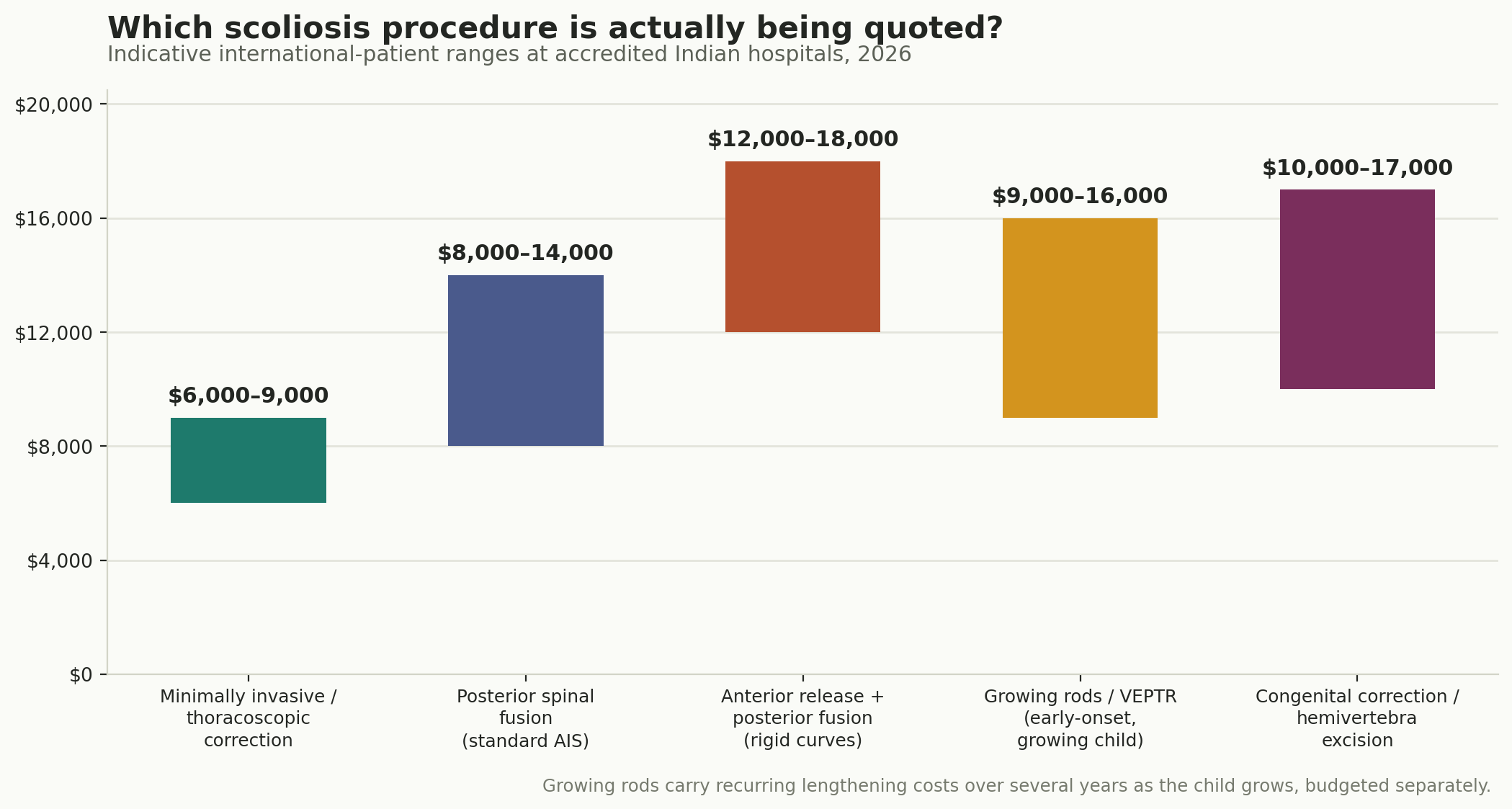
Figure 1. Growing rods carry an additional, ongoing cost: periodic lengthening procedures every few months as the child grows, budgeted as a multi-year commitment rather than a single bill.
| Procedure | Typically suits | Indicative cost | Hospital stay |
|---|---|---|---|
| Minimally invasive / thoracoscopic correction | Selected curves suitable for smaller incisions and faster recovery | $6,000–9,000 | 3–5 nights |
| Posterior spinal fusion (standard AIS) | Typical adolescent idiopathic scoliosis, the most common surgical case | $8,000–14,000 | 4–7 nights |
| Anterior release + posterior fusion | Rigid, severe curves that do not correct with posterior surgery alone | $12,000–18,000 | 7–10 nights |
| Growing rods / VEPTR | Early-onset scoliosis in young children with significant growth remaining | $9,000–16,000 | 4–6 nights |
| Congenital correction / hemivertebra excision | Scoliosis from a malformed vertebra present since birth | $10,000–17,000 | 6–9 nights |
Table 1. Indicative international-patient pricing at accredited Indian spine centres, mid-2026. Figures are planning ranges, not offers, and vary by curve size, number of vertebral levels, and implant choice.
Set against the alternatives, the case for travelling is starkest for standard adolescent correction — the case most Nigerian families are likely to face.
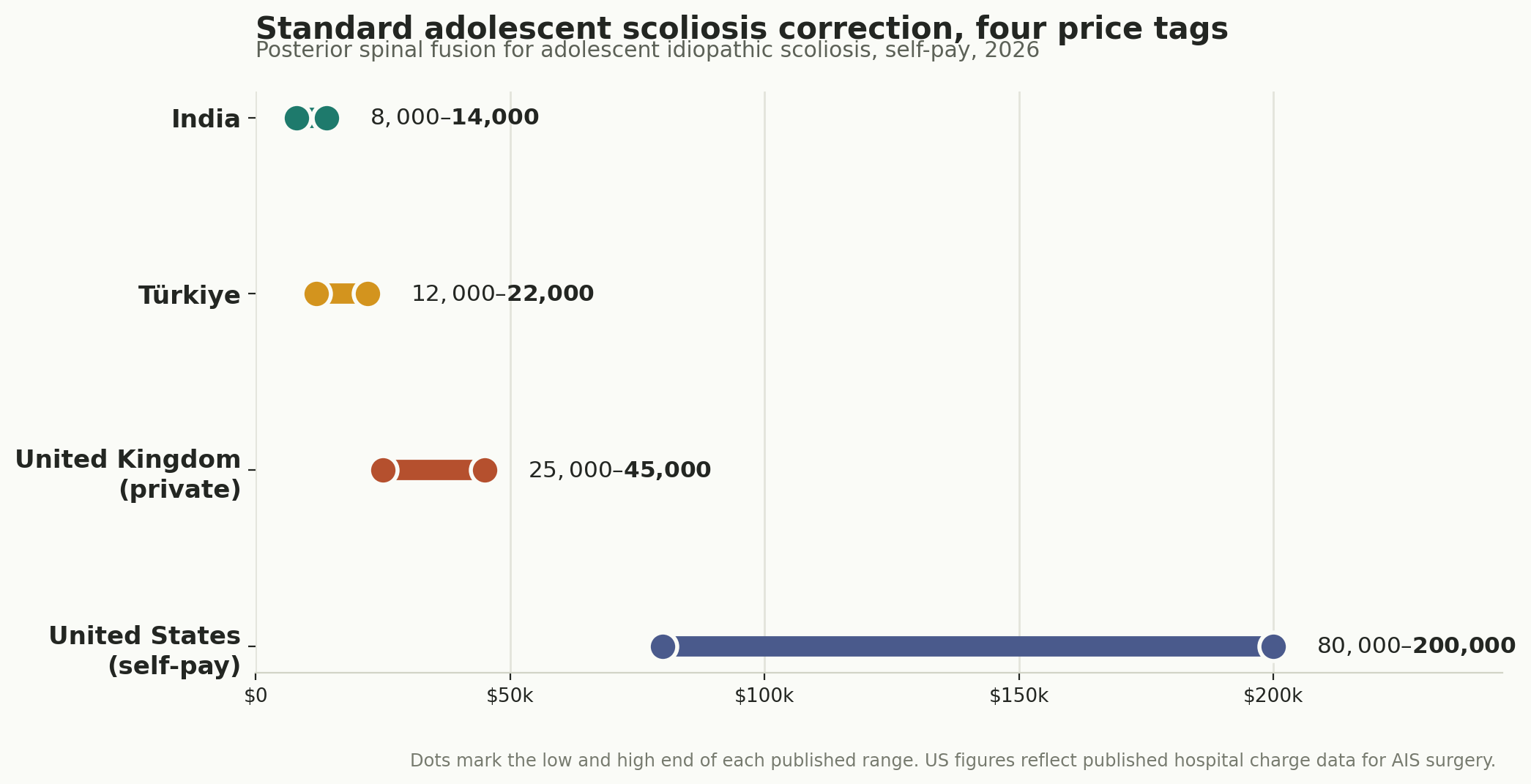
Figure 2. A standard posterior spinal fusion for adolescent idiopathic scoliosis, priced across four common destinations. The US figures reflect published hospital charge data for this exact procedure.
04 · the Full Budget
What the whole journey costs, beyond the operation
The surgical fee is the number families anchor on, and the least complete one. A representative pathway — standard fusion, one adolescent patient and one parent, roughly three weeks in India — adds up like this:
- Surgical package (fusion, implants, surgeon, hospital stay): $9,000–14,500
- Return flights, two travellers (Lagos/Abuja – Delhi/Mumbai/Chennai): $2,200–3,000
- Pre-surgical imaging and workup (updated X-rays, MRI if indicated, bloodwork): $500–900
- Accommodation, three weeks, two people : $1,300–2,000
- Medical and attendant visas (two applications): $400–500
- Contingency for extended stay or an additional review visit: 15–20% All-in, most families should plan for US$14,000–20,000 for a standard fusion — roughly ₦19.3–27.6 million at the official mid-July 2026 rate of about ₦1,380 to the dollar, somewhat higher at parallel-market rates near ₦1,410. Growing-rod cases carry an ongoing budget beyond this for lengthening visits over several years, which is worth planning for as a multi-year commitment rather than a one-time cost.
What a proper written quote must itemise
- The exact procedure named — fusion, anterior release, growing rods — not just "scoliosis surgery"
- The number of vertebral levels the plan covers, since this drives most of the cost difference
- Implant brand and material, separated from surgeon and hospital fees
- Whether neuromonitoring during surgery is included, given its role in protecting spinal cord function
- For growing rods, the cost of each future lengthening visit, not just the initial surgery
05 · GETTING THERE
Visa, travel, and the mechanics of the trip
India issues a Medical Visa (M) to the patient and a Medical Attendant Visa (MX) to up to two close relatives — typically a parent in these cases. Applications go through the High Commission in Abuja or the Consulate General in Lagos by prior appointment, and an e-Medical route turns around in days for straightforward files. The hospital's invitation letter, three months of certified bank statements, and a passport valid six months with two blank pages move the process fastest. A medical visa commonly runs six months; a follow-up visit for a growing-rod lengthening is arranged as a fresh, usually quicker, application.
Lagos and Abuja both reach Delhi, Mumbai and Chennai with a single stop, usually via Addis Ababa, Doha, Dubai, Nairobi or Istanbul, a total journey of 13 to 18 hours. For a young patient flying home after spinal surgery, ask the surgeon for written fitness-to-fly clearance and request seating that allows the back to remain supported through the flight.
The part that decides how the correction actually holds
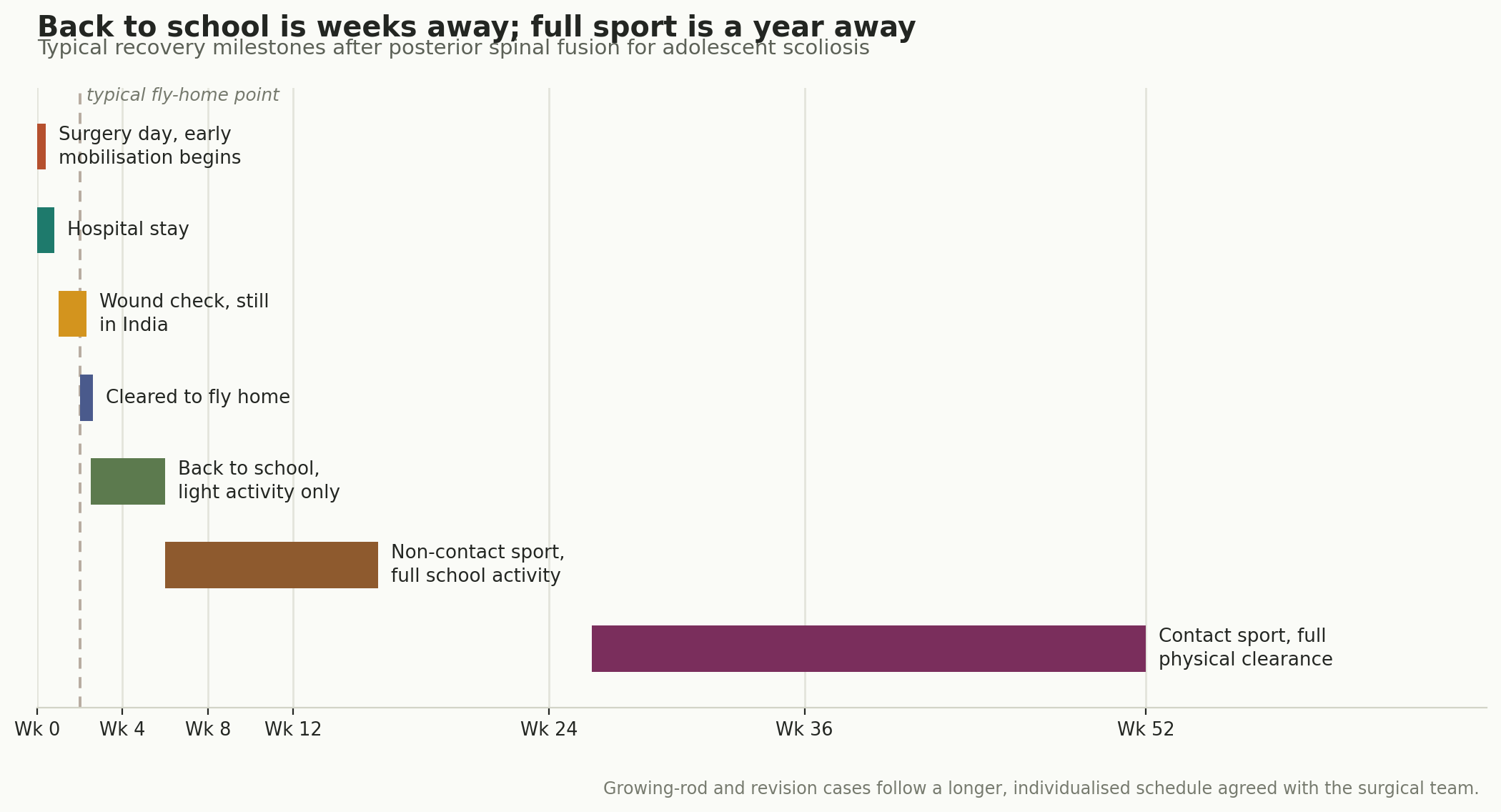
Spinal fusion is not finished when the patient leaves the operating table. The bone graft needs months to consolidate into solid new bone, and that process continues long after the family has flown home.
Figure 3. Milestones stretch well beyond the flight home. Growing-rod and revision cases follow an even longer, individualised schedule agreed with the surgical team.
- Full operative note, implant details, and the exact vertebral levels fused
- Post-operative X-rays, both as images on disc and as a written report
- A written activity restriction schedule, specific to what was done, not a generic handout
- A follow-up imaging schedule to confirm fusion is progressing as expected
- A named clinician contact for teleconsultation if pain, fever, or wound concerns arise
06 · the Honest Comparison
What stays in Nigeria, and what travels
Nigerian orthopaedic and neurosurgical teams see and manage scoliosis regularly, and organisations like the Scoliosis Focus Foundation are actively building the awareness, counselling, and support infrastructure that early detection depends on. Mild to moderate curves caught early, and managed with observation or bracing, are well within what a Nigerian specialist can handle, and there is no reason to travel for that.
What genuinely tips the calculation toward travel is exactly what Dr. Olusanya's call for more specialised centres implies is still thin on the ground: complex surgical correction for severe, rigid, congenital, or neuromuscular curves, and access to growing-rod systems for young children who need years of coordinated follow-up. Those are precisely the cases where high surgical volume and sub-specialised paediatric spine expertise matter most, and where India's case numbers offer a real depth advantage.
Before you commit to a treatment plan abroad
- Get updated, full-length standing X-rays and a precise Cobb angle before contacting any hospital.
- Ask explicitly which procedure is being quoted, and how many vertebral levels the plan covers.
- Confirm whether the curve is still progressing, and whether surgery now versus in a year changes the complexity.
- For a growing child, ask specifically whether growing rods or a different early-onset strategy is being recommended, and why.
- Establish in writing whether spinal cord neuromonitoring is included during surgery.
- For growing-rod cases, get the full multi-year lengthening schedule and cost in writing before the first surgery.
- Verify the invitation letter has reached the mission by email, with both attendants named.
- Pay into the hospital's own institutional account only, never an individual's personal account.
Straight Answers for Nigerian Patients about Scoliosis Surgery in India
Is scoliosis surgery in India cheaper than the UK or US?
Yes, substantially. A standard posterior spinal fusion for adolescent scoliosis is indicatively $8,000 to $14,000 in India, against roughly $25,000 to $45,000 privately in the UK and $80,000 to $200,000 in the United States.
How long does recovery take?
Hospital stay is typically four to seven days. Most patients return to school on light activity within four to six weeks, non-contact sport by three to four months, and full contact sport clearance usually waits until around twelve months.
Do Nigerians need a visa for scoliosis surgery in India?
Yes. You need an Indian Medical Visa from the High Commission in Abuja, the Consulate in Lagos, or the e- Medical route, plus a Medical Attendant Visa for up to two close relatives, with a hospital invitation letter and financial proof.
Is scoliosis surgery only for children and teenagers?
No. Most surgical cases are adolescents, but adults with untreated curves that have progressed, or degenerative scoliosis appearing later in life, are also routinely operated on in India.
What are growing rods, and when are they used?
Expandable implants used in young children with significant growth remaining. They control the curve while allowing continued growth, and are lengthened periodically, often converting to a definitive fusion near skeletal maturity.
Can scoliosis be treated without surgery?
Yes, for many mild to moderate curves caught early, through bracing and observation. Surgery is generally reserved for curves beyond 40 to 50 degrees, or those causing significant pain, deformity, or breathing difficulty.
Is India better than Nigeria for scoliosis surgery?
Not for every case, but for surgical correction specifically, India's case volume and access to growing-rod systems matter most for severe, congenital, or neuromuscular curves that Nigeria's limited specialist capacity struggles to serve at scale.
The question underneath all of this
A scoliosis diagnosis rarely arrives as an emergency, which is exactly why it is so easy to postpone the decision that matters most: getting an accurate measurement and an honest opinion on whether the curve is stable or still moving. The gap Nigerian clinicians themselves are campaigning to close — school screening, specialist capacity for the complex cases — is real, named, and being worked on. It does not yet close the gap for the family facing a 55-degree curve this year. In twenty-four years of this work, the families who navigate it best are the ones who get precise imaging early, ask exactly which procedure and how many levels are being quoted, and plan for the full arc of recovery — months, not weeks — rather than just the flight and the operation. A straighter spine is not judged in the hospital bed. It is judged a year later, at school, on a field, standing up straight without having to think about it.
Sources
- 🌐 Scoliosis Research Society — Patient and family information on scoliosis
- 🌐 NHS (UK) — Scoliosis: overview, causes and treatment
- 🌐 Bozzio AE et al. — Cost and Clinical Outcome of Adolescent Idiopathic Scoliosis Surgeries. International Journal of Spine Surgery, 2019
- 🌐 The Sun Nigeria — Experts seek greater awareness on scoliosis to boost early diagnosis, treatment. thesun.ng, July 2026
- 🌐 International Journal of Community Medicine and Public Health
- 🌐 High Commission of India, Abuja — Medical and Medical Attendant Visa requirements
Frequently Asked Questions by Nigerians about Scoliosis Surgery in India
Why do Nigerian patients choose India for scoliosis surgery?
Many Nigerian families choose India because it offers specialised paediatric and adult spine surgeons, high-volume scoliosis centres, advanced spinal implants, intraoperative neuromonitoring and experience in treating complex adolescent, congenital and neuromuscular scoliosis.
How much does scoliosis surgery in India cost for Nigerian patients?
Indicative treatment costs include: Minimally Invasive Correction: USD 6,000–9,000 Posterior Spinal Fusion: USD 8,000–14,000 Anterior Release with Posterior Fusion: USD 12,000–18,000 Growing Rods / VEPTR: USD 9,000–16,000 Congenital Scoliosis Correction: USD 10,000–17,000 A complete treatment journey for a standard spinal fusion generally requires a budget of approximately USD 14,000–20,000.
When is scoliosis surgery recommended?
Surgery is generally considered when the spinal curve continues to progress, exceeds approximately 40–50 degrees, causes significant deformity, affects breathing or daily activities, or when bracing is no longer effective.
What medical records should Nigerian patients send before travelling?
Patients should send full-length standing spine X-rays, Cobb-angle measurements, MRI scans (when required), information about skeletal maturity, previous brace treatment and medical history before receiving a final surgical recommendation.
How long should Nigerian patients stay in India for scoliosis surgery?
Most patients undergoing standard posterior spinal fusion remain in India for approximately three weeks, with a hospital stay of around four to seven days, followed by recovery, wound review and fitness-to-fly assessment before travelling home.
What are growing rods, and when are they used?
Growing rods or VEPTR systems are expandable implants used for young children with early-onset scoliosis who still have significant spinal growth remaining. They require planned lengthening procedures over several years before definitive spinal fusion is considered.
What should Nigerian families check before accepting a treatment quotation?
The quotation should clearly state the exact surgical procedure, number of vertebral levels, implant brand and material, neuromonitoring charges, hospital stay, rehabilitation plan and any future costs, especially for growing-rod procedures.
Do Nigerian patients need a medical visa for scoliosis surgery in India?
Yes. Patients require an Indian Medical Visa, while parents or accompanying relatives may apply for Medical Attendant Visas. Applications generally require a hospital invitation letter, financial documents and a valid passport.
How long does recovery take after scoliosis surgery?
Recovery continues for several months. Most patients return to school with light activity within four to six weeks, resume non-contact sports after approximately three to four months, and usually receive clearance for full contact sports around one year after surgery.
Is India always a better choice than Nigeria for scoliosis treatment?
Not necessarily. Mild to moderate scoliosis detected early can often be managed successfully in Nigeria with observation or bracing. India may offer additional advantages for severe, rigid, congenital, neuromuscular or early-onset scoliosis requiring complex surgery, growing rods or specialised paediatric spine expertise.
Page Summary
This guide explains scoliosis surgery in India for Nigerian patients, including delayed diagnosis, pre-operative imaging, Cobb-angle assessment, surgical options, treatment costs, medical travel planning and long-term recovery. It covers posterior spinal fusion, growing rods, congenital correction and minimally invasive procedures, while helping families understand what should be included in a written treatment plan and how follow-up can continue after returning to Nigeria.
Citation Block
| Topic | Information |
|---|---|
| Topic Information | Details |
| Procedure | Scoliosis Surgery and Spinal Deformity Correction |
| Country | India |
| Intended Audience | Nigerian Patients and Families |
| Conditions Covered | Adolescent Idiopathic, Early-Onset, Congenital, Neuromuscular and Progressive Scoliosis |
| Procedures | Posterior Spinal Fusion, Minimally Invasive Correction, Anterior Release, Growing Rods, VEPTR and Hemivertebra Excision |
| Typical Stay | Approximately 3 Weeks |
| Hospital Stay | Approximately 4–7 Nights for Standard Posterior Fusion |
| Recovery | School in 4–6 Weeks; Non-Contact Sport in 3–4 Months; Full Clearance Often Around 12 Months |
| Average Posterior Fusion Cost | USD 8,000–14,000 |
| Estimated Complete Budget | USD 14,000–20,000 |

Our Mission Statement
Our mission is to place patients at the centre of every healthcare decision by providing trustworthy, evidence-based, and unbiased medical information. We believe that informed patients make better decisions. Backed by personalised guidance from our experienced advisory team, we help patients understand their treatment options, compare them objectively, and confidently choose the path that best suits their medical needs and personal circumstances.
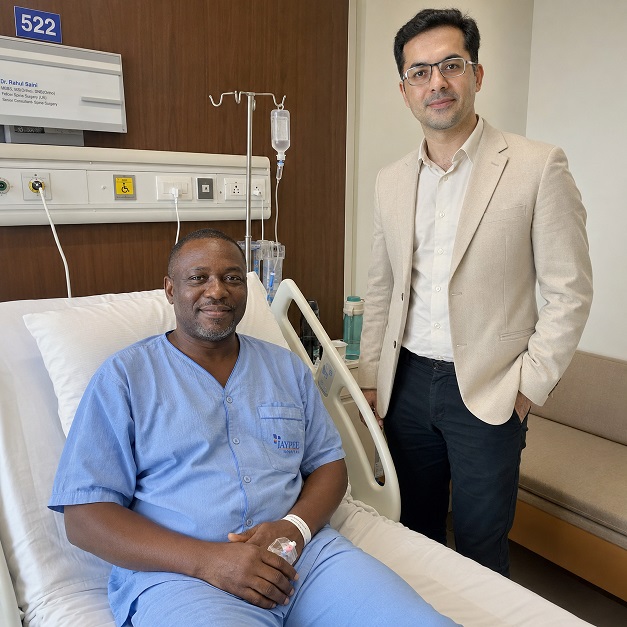
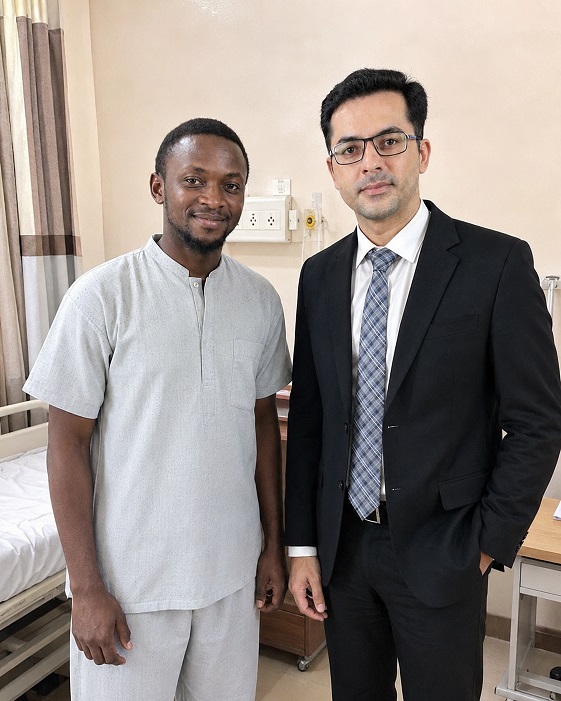
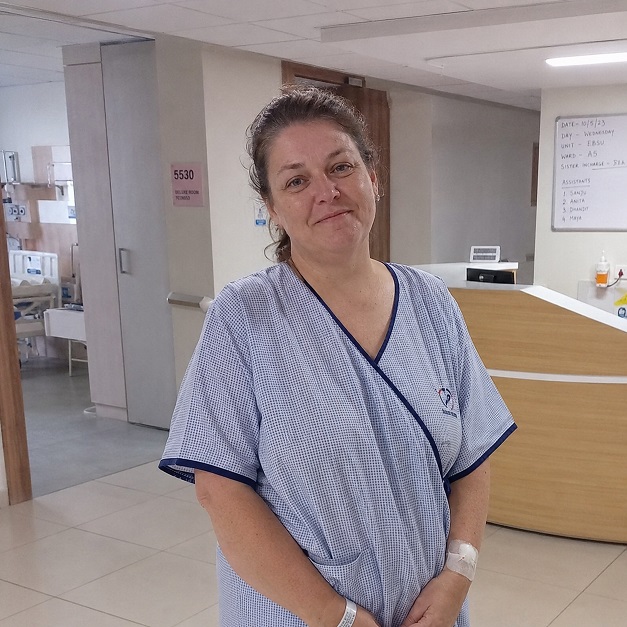
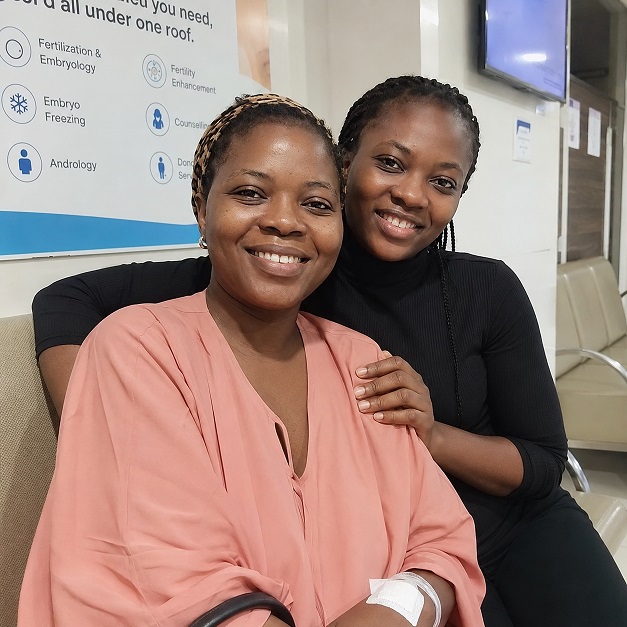
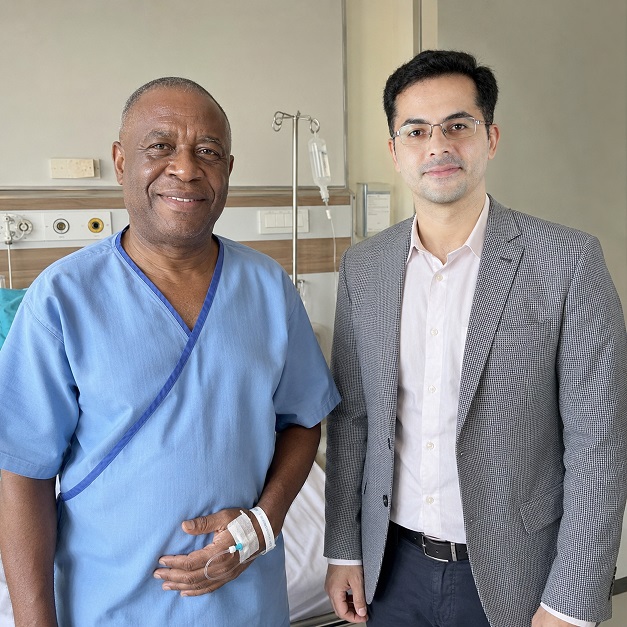
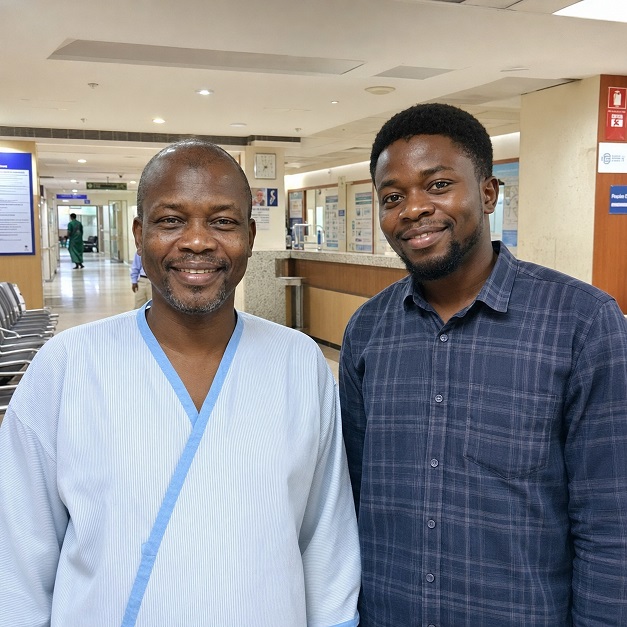
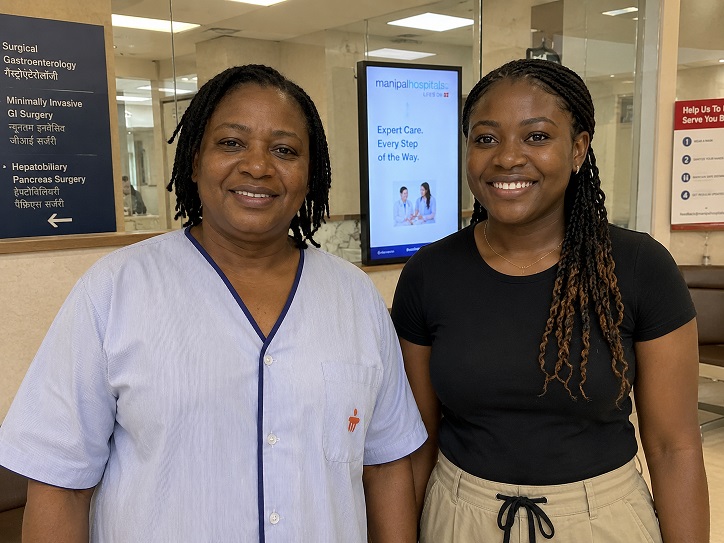
Patient Testimonials from Nigeria
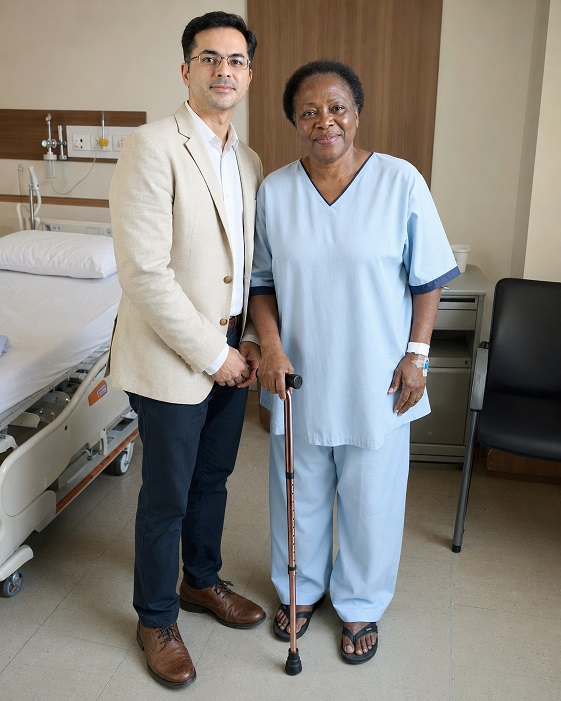
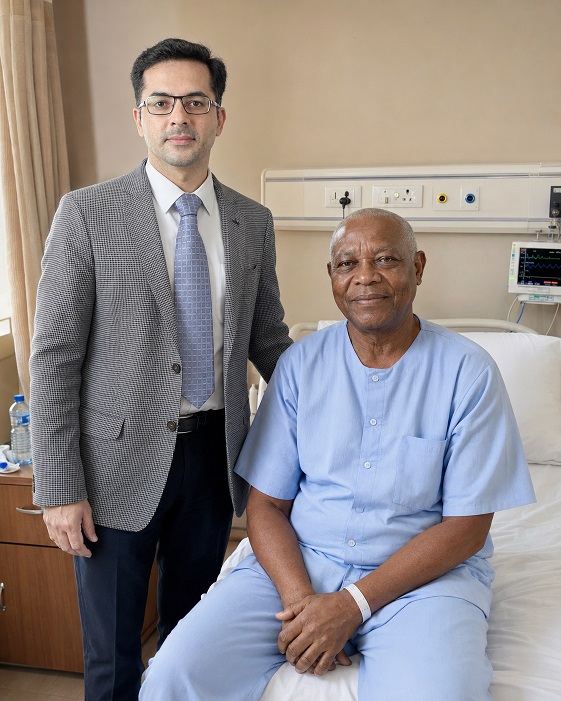
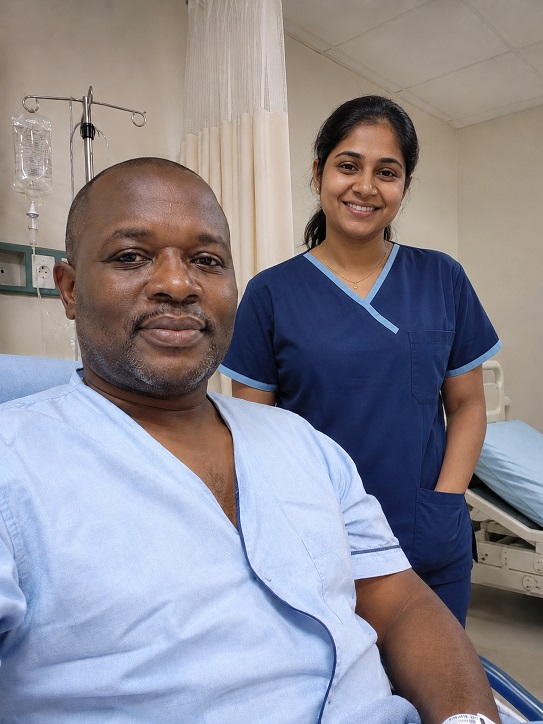
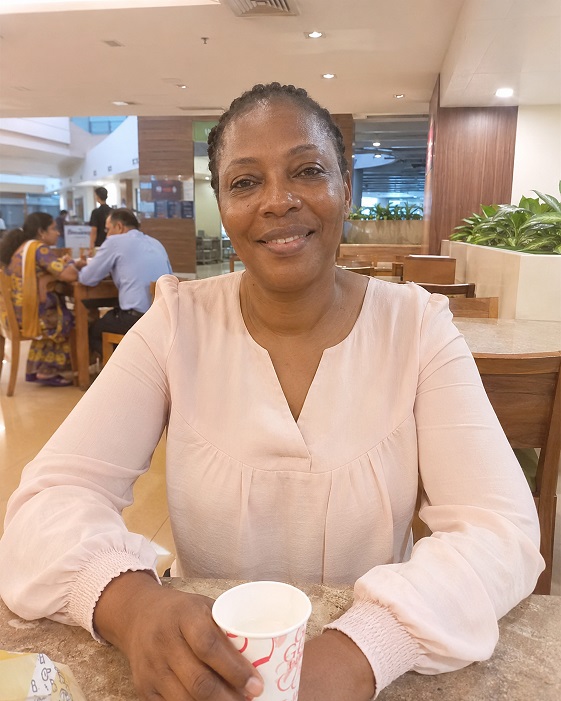
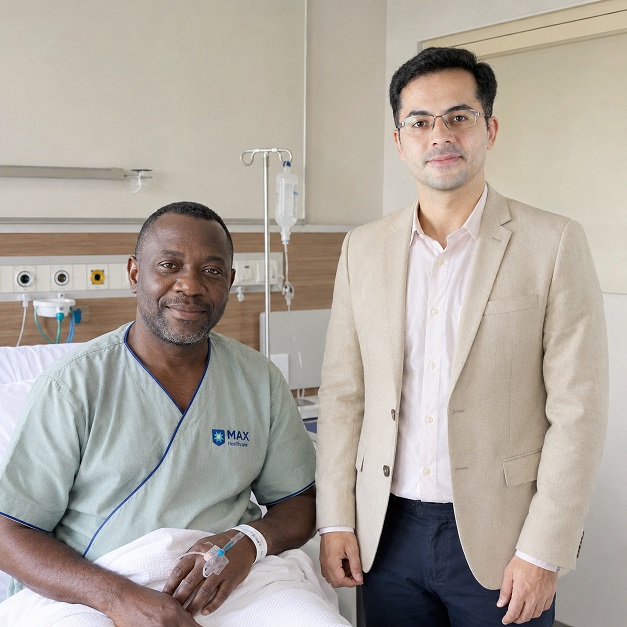
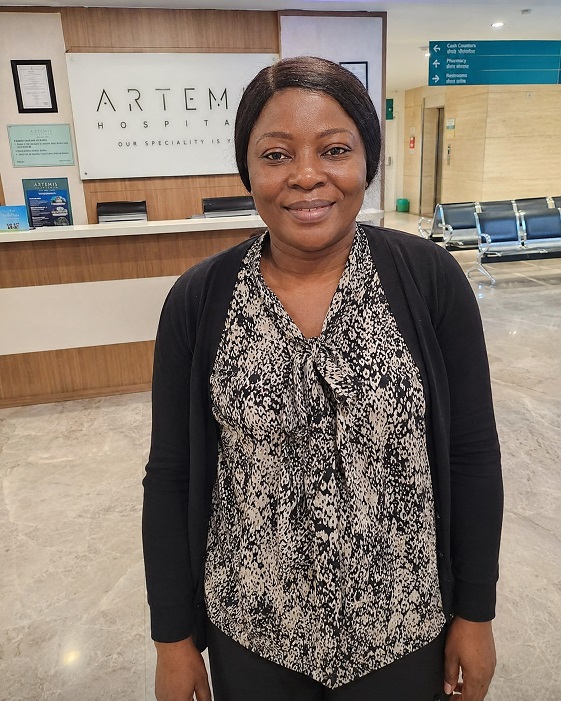
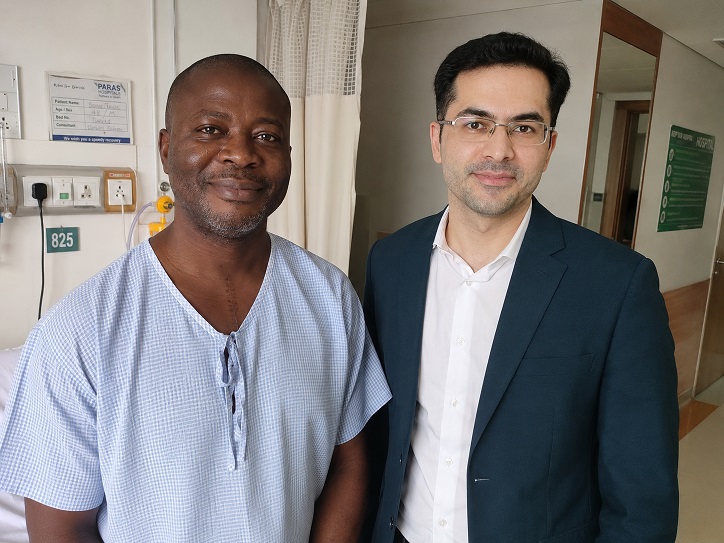
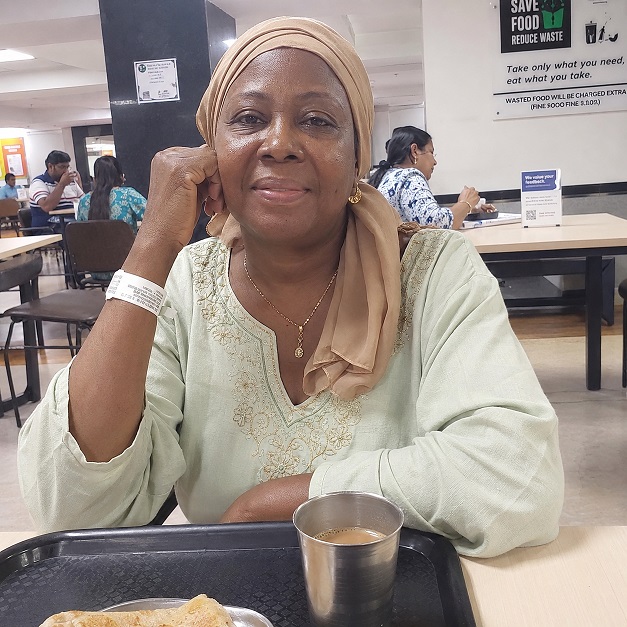
Ready to Take the First Step?
Share your Medical Reports with our Healthcare Managers Today and Get a FREE CONSULTATION, a Personalized Treatment Plan, and Complete Support from Arrival to Recovery.
Get Your Free ConsultationAreas We Serve
This resource has been thoughtfully prepared for patients from Nigeria who are considering medical treatment in India. We also welcome patients from the wider region in the countries mentioned below-
We assist patients from:
- Benin
- Niger
- Chad
- Cameroon
- Algeria
- Egypt
- Libya
- Morocco
- Sudan
- Tunisia
- Gambia
- Ghana
- Burkina Faso
- Cabo Verde
- Côte d'Ivoire
- Equatorial Guinea
- São Tomé and Príncipe
Many of the insights, treatment pathways, hospital recommendations, travel guidance, and patient support services described here are equally relevant and may be used as a reference when planning treatment in India.
From Nigeria to India: Your Complete Patient Support Guide
- Artificial Disc Replacement in India for Nigerian Patients
- Weight Loss and Bariatric Surgery in India for Nigerian Patients
- Bone Marrow Transplant in India for Nigerian Patients
- Brain Tumour Surgery in India for Nigerian Patients
- Breast Cancer Treatment and Surgery in India for Nigerian Patients
- Cancer Treatment and Surgery in India for Nigerian Patients
- Cardiac Arrhythmia and Heart Pacemaker Treatment in India for Nigerian Patients
- Cardiac Surgery in India for Nigerian Patients
- Colorectal Cancer Treatment and Surgery in India for Nigerian Patients
- Complex Orthopaedic and Joint Revision Surgery in India for Nigerian Patients
- Cornea Transplant and Advanced Eye Surgery in India for Nigerian Patients
- CyberKnife Treatment in India for Nigerian Patients
- Gamma Knife Treatment in India for Nigerian Patients
- Heart Failure Treatment and Surgery in India for Nigerian Patients
- Hip Surgery in India for Nigerian Patients
- HIPEC Cancer Surgery in India for Nigerian Patients
- IVF and Fertility Treatment in India for Nigerian Patients
- Joint Arthroscopy and Sports Medicine in India for Nigerian Patients