

Paediatric Neurosurgery in India for Nigerian Patients
For the baby whose head is measured a little too often at the clinic, the diagnosis nobody prepared you for, and what caring for it actually looks like — not for one operation, but for years.
Nigeria currently has an estimated 169 neurosurgeons for a population of 230 million — a shortage severe enough that the Federal Government moved this July to address it after the Brain and Spine Foundation Africa's founder, Chika Okwuolisa, publicly warned that thousands of Nigerians with neurological conditions cannot access life-saving care. Within that already thin workforce, paediatric neurosurgery is a narrower specialty still, even as hydrocephalus and neural tube defects together account for the majority of all children's neurosurgical cases seen in the country. This guide is about that specific gap. It sets out what treatment for hydrocephalus and spina bifida actually costs in India once travel is counted, what Nigeria's own paediatric neurosurgical capacity can and cannot offer today, and why caring for a child's shunt is a years-long commitment rather than a single operation to get through.
| 169 NEUROSURGEONS CURRENTLY SERVING 230 | 60.2% OF NIGERIAN PAEDIATRIC NEUROSURGERY CASES | 63.4% OF CHILD PATIENTS FIRST PRESENT BETWEEN ONE | 30–50% OF SHUNTS NEED AT LEAST ONE REVISION WITHIN A |
|---|---|---|---|
| MILLION NIGERIANS | ARE HYDROCEPHALUS OR NEURAL TUBE DEFECTS | AND TWELVE MONTHS OLD | FEW YEARS — THIS IS NORMAL |
Healing Journeys of Nigerian Patients


Key Takeaways
- Nigeria currently has an estimated 169 neurosurgeons serving approximately 230 million people, and paediatric neurosurgery represents an even narrower subspecialty within this already limited workforce.
- A systematic review of Nigerian paediatric neurosurgery from 1962 to 2021 identified more than 12,000 children across nearly 200 published studies. Hydrocephalus and neural tube defects such as spina bifida accounted for 60.2% of paediatric neurosurgical cases.
- The document also reports that 63.4% of children first presented between one and twelve months of age, reflecting how heavily congenital and early-life neurological conditions shape the paediatric caseload.
- Hydrocephalus occurs when cerebrospinal fluid accumulates within the brain because of impaired drainage or another disturbance in fluid circulation.
- The guide notes that, in Sub-Saharan Africa including Nigeria, a meaningful proportion of hydrocephalus follows neonatal infection, which differs from some of the patterns more commonly described in high-income countries.
- Spina bifida is a neural tube defect involving incomplete closure of the spine and spinal cord during early pregnancy. The document notes that many cases are preventable through adequate folic acid intake before conception and during early pregnancy, while awareness and uptake remain low in parts of Nigeria.
- Nigeria has genuine paediatric neurosurgical experience. Nigerian teams have published comparative outcomes involving endoscopic third ventriculostomy and VP shunting, contributing to the wider evidence base for hydrocephalus management.
- The main constraint identified is infrastructure and workforce capacity. A 2024 mapping study found 86 facilities capable of some neurosurgery nationally, but only 17.4% were accredited to train neurosurgeons, dedicated neurosurgical beds represented 4% of hospital capacity and dedicated operating theatres 15.4%.
Quick Facts
- Treatment
- Paediatric Neurosurgery
- Country
- India
- Intended Audience
- Nigerian Children, Parents and Families
- Primary Conditions
- Hydrocephalus and Neural Tube Defects
- Major Neural Tube Defect
- Spina Bifida / Myelomeningocele
- Other Condition Covered
- Encephalocele
- Nigerian Neurosurgeons Mentioned
- 169
- Population Served
- Approximately 230 Million
- Hydrocephalus + Neural Tube Defects Share
- 60.2% of Nigerian Paediatric Neurosurgery Cases
- Children Presenting at 1–12 Months
- 63.4%
- Nigerian Paediatric Cases Reviewed
- More Than 12,000
- Studies Reviewed
- Nearly 200
- Main Nigeria Constraint
- Workforce, Scheduling, Imaging and Paediatric ICU Capacity
- Facilities With Neurosurgical Capacity Mentioned
- 86
- Author
- Dr. Dheeraj Bojwani
- Experience
- 24 Years' Experience
In Brief
Paediatric neurosurgery in India for Nigerian children commonly includes treatment for hydrocephalus, spina bifida and related congenital neurological conditions. The guide reports that hydrocephalus and neural tube defects account for 60.2% of Nigerian paediatric neurosurgical cases, while the country's estimated 169 neurosurgeons serve a population of roughly 230 million. Treatment may involve VP shunt placement at US$4,000–7,000, ETV at US$4,500–7,500 or spina bifida closure at US$5,500–9,000. Families should understand that shunt care continues for years: roughly 30–50% of children need at least one revision within a few years, usually because of blockage, infection or growth rather than failure of the original operation.
01 · the Real Problem
A thin workforce, and two conditions that dominate the caseload
A systematic review tracing paediatric neurosurgery in Nigeria from 1962 to 2021 identified over twelve thousand child patients across nearly two hundred published studies. The pattern was strikingly consistent: most children were under five years old, the majority first presented between one and twelve months of age, and congenital abnormalities — overwhelmingly hydrocephalus and neural tube defects such as spina bifida — accounted for more than sixty percent of all diagnoses. These are not rare, unusual conditions. They are the everyday caseload of Nigerian paediatric neurosurgery.
Hydrocephalus is a build-up of fluid within the brain, usually from a blockage or an imbalance between fluid production and drainage. In much of sub-Saharan Africa, including Nigeria, a meaningful share of cases follow a neonatal infection rather than the pattern more common in high-income countries, which affects how early and how aggressively it needs to be addressed. Spina bifida, a defect in the closure of the spine and spinal cord during early pregnancy, is largely preventable with adequate folic acid intake before and during early pregnancy — yet awareness and uptake of folic acid supplementation remain documented as low among women of childbearing age in parts of rural Nigeria.
Layered on top of both conditions is the workforce reality: roughly 169 neurosurgeons for the entire country, a ratio of well under one per million people, all of it treating adult neurotrauma, spine disease and tumours alongside the paediatric caseload described above.
02 · Nigeria's Capacity
What Nigeria can do, and where it is genuinely stretched
Nigerian neurosurgical teams have published real, credible outcomes for children — comparative studies of endoscopic third ventriculostomy against shunt placement in Nigerian hydrocephalus patients, for instance, have contributed genuinely useful evidence to how the condition is managed globally. The skill is not in question. What a detailed 2024 mapping of the country's neurosurgical infrastructure found is a system stretched thin in almost every other dimension: of 86 facilities capable of any neurosurgery nationally, only 17.4 percent are accredited to train new neurosurgeons, dedicated neurosurgical beds make up just 4 percent of hospital capacity, and dedicated operating rooms only 15.4 percent.
That same analysis projected a deficit of over a thousand neurosurgeons by 2030 even accounting for current growth in training numbers. For a family whose child has just been diagnosed with hydrocephalus or spina bifida, that translates into a very practical problem: the surgeon may well have the skill to help, but scheduling capacity, imaging access, and paediatric-specific neurosurgical intensive care remain concentrated in a handful of urban centres, with long waits often attached.
None of this means treatment is unavailable in Nigeria. It means that for a condition where timing genuinely affects outcome — and both hydrocephalus and spina bifida are exactly that kind of condition — the practical waiting time matters as much as the diagnosis itself.
03 · THE TREATMENT MAP
Which procedure, and what it costs
Treatment depends entirely on the specific condition and its pattern. Hydrocephalus is generally managed either with a ventriculoperitoneal (VP) shunt, a permanent tube diverting fluid to be absorbed elsewhere in the body, or with an endoscopic third ventriculostomy (ETV), which creates a new internal drainage pathway without permanent hardware. Spina bifida usually needs the spinal defect itself closed, often alongside treatment for accompanying hydrocephalus.
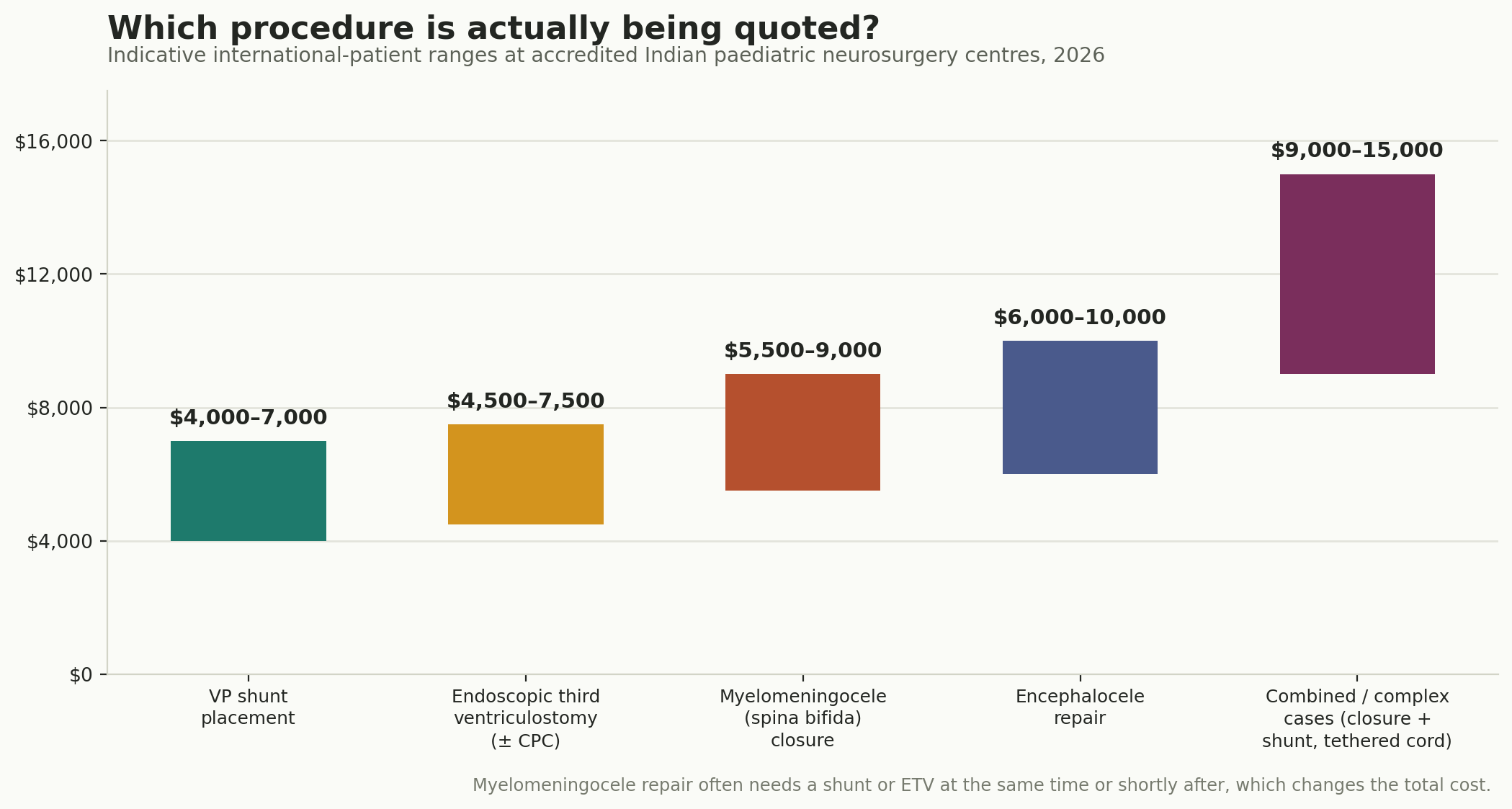
Figure 1. Spina bifida repair frequently needs a shunt or ETV at the same time, or shortly after, which is why combined cases cost meaningfully more than either procedure alone.
| Procedure | Typically suits | Indicative cost | Hospital stay |
|---|---|---|---|
| VP shunt placement | Hydrocephalus not suited to, or that has failed, endoscopic treatment | $4,000–7,000 | 4–7 nights |
| Endoscopic third ventriculostomy (± CPC) | Selected hydrocephalus patterns, often avoiding permanent hardware | $4,500–7,500 | 3–5 nights |
| Myelomeningocele (spina bifida) closure | An open spinal defect, ideally closed within days of birth | $5,500–9,000 | 7–10 nights |
| Encephalocele repair | Brain tissue protruding through a skull defect present from birth | $6,000–10,000 | 7–10 nights |
| Combined / complex cases | Spinal closure plus shunt, or tethered cord release | $9,000–15,000 | 10–14 nights |
Table 1. Indicative international-patient pricing at accredited Indian paediatric neurosurgery centres, mid-2026. Figures are planning ranges, not offers, and vary by the child's age, condition severity, and hardware used.
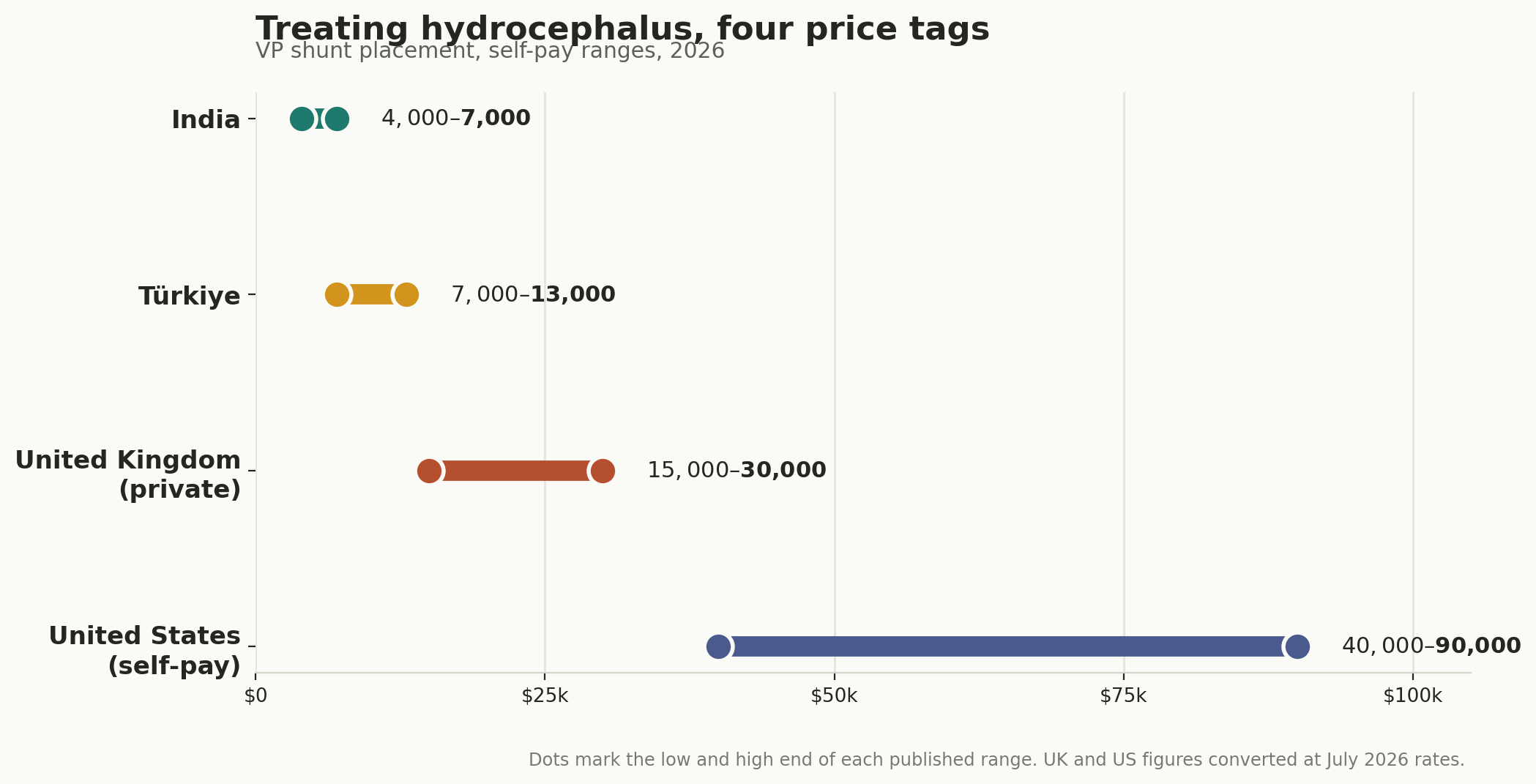
Figure 2. Treating hydrocephalus, priced across four common destinations for Nigerian medical travellers.
What a proper written quote must itemise
- Whether shunt placement or ETV is being recommended, and specifically why for this child's anatomy
- Shunt hardware brand and whether it is programmable, since this affects both cost and follow-up needs
- Whether the spinal defect and any hydrocephalus are being treated in one admission or staged separately
- Paediatric ICU nights included, and the rate beyond that
- Written policy on cost if a shunt revision becomes necessary during the same admission
04 · the Full Budget
What the whole journey costs, beyond the operation
The surgical fee is the number families anchor on, and the least complete one. A representative pathway — VP shunt placement, one child and one parent, roughly two to three weeks in India — adds up like this:
- Surgical package (surgery, shunt hardware, paediatric ICU, ward stay): $5,500–8,500
- Return flights, two travellers (Lagos/Abuja – Delhi/Mumbai/Chennai): $2,200–3,000
- Pre-surgical workup (MRI or CT, paediatric neurology consultation, bloodwork): $500–900
- Accommodation, two to three weeks, two people : $1,000–1,800
- Medical and attendant visas (two applications): $400–500
- Contingency for an extended stay or an in-hospital revision: 15–20% All-in, most families should plan for US$10,000–15,500 for straightforward shunt or ETV treatment — roughly ₦13.8–21.4 million at the official mid-July 2026 rate of about ₦1,380 to the dollar, somewhat higher at parallel-market rates near ₦1,410. Combined spinal and shunt cases should be budgeted closer to $15,000– 22,000 all-in.
05 · GETTING THERE
Visa, travel, and the years that follow
The child travels on an Indian Medical Visa, and at least one parent on a Medical Attendant Visa; a second attendant can also be included. Applications go through the High Commission in Abuja or the Consulate in Lagos by prior appointment, and an e-Medical route turns around in days for straightforward files. The hospital's invitation letter, three months of bank statements, and passports valid six months with two blank pages move the process fastest.
Lagos and Abuja both reach Delhi, Mumbai and Chennai with a single stop, usually via Addis Ababa, Doha, Dubai, Nairobi or Istanbul, 13 to 18 hours total. A newborn with an open myelomeningocele defect needs specific written clearance confirming the defect is covered and stable before any travel is booked.
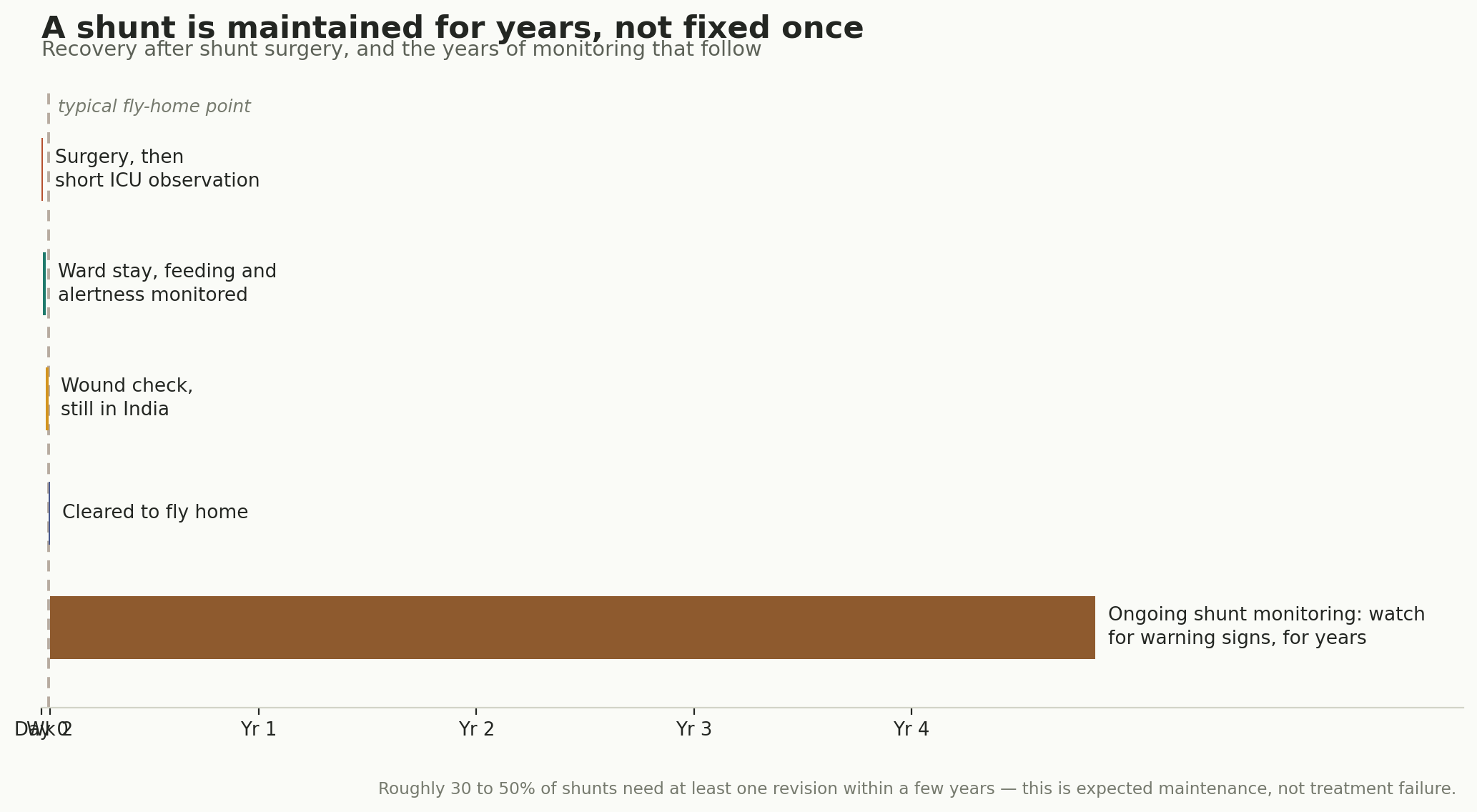
Figure 3. The operation is measured in days. Caring for a shunt is measured in years, and revision surgery along the way is expected maintenance, not a sign anything went wrong the first time.
The single most important thing to know. A shunt is a mechanical device, and mechanical devices need occasional maintenance. Roughly 30 to 50 percent of children with a shunt need at least one revision within a few years — from blockage, infection, or simply outgrowing the original hardware. This is normal, expected, long-term care, not evidence that the first surgery failed. Learning the warning signs matters more than any single follow-up appointment.
What has to travel home with the child
- Full operative note, shunt or ETV details, and imaging on disc, not just a written report
- A written list of shunt-malfunction warning signs, specific to the child's age
- A follow-up imaging schedule for the first year and beyond
- Wound and, where relevant, back-brace or positioning guidance for spina bifida closures
- A named clinician contact for teleconsultation if warning signs appear
06 · THE HONEST COMPARISON
What stays in Nigeria, and what travels
Nigerian neurosurgical teams diagnose and manage hydrocephalus and spina bifida every day, and ongoing shunt monitoring — the years-long part of this condition — is entirely appropriate to continue with a Nigerian paediatric neurosurgeon once the child is stable, provided they receive the full operative record.
What tips the calculation toward travelling for the initial surgery is exactly what the infrastructure numbers point to: limited scheduling capacity, concentrated imaging and paediatric ICU resources, and long waits in a system already projected to be short more than a thousand neurosurgeons within a few years. For a newborn with an open spinal defect, or an infant with rapidly progressing hydrocephalus, the time saved by a faster surgical date can matter as much as the surgery itself.
Before you commit to a treatment plan abroad
- Get a confirmed diagnosis by MRI or CT, and a named condition, before contacting any hospital.
- Ask explicitly whether shunt placement or ETV is recommended for this child's specific anatomy, and why.
- For spina bifida, confirm whether hydrocephalus treatment is planned in the same admission or separately.
- Get the shunt-malfunction warning signs in writing before you leave India, not after you get home.
- Establish the first-year follow-up imaging schedule before travelling home.
- Confirm which Nigerian neurosurgical centre can manage a shunt revision locally if one becomes necessary.
- Verify the invitation letter reached the mission by email, with both parents named where relevant.
- Pay into the hospital's own institutional account only, never an individual's personal account.
Straight Answers for Nigerian Patients about Paediatric Neurosurgery in India
Is paediatric neurosurgery in India cheaper than the UK or US?
Yes, substantially. VP shunt placement is indicatively $4,000 to $7,000 in India, against roughly $15,000 to $30,000 privately in the UK and $40,000 to $90,000 self-pay in the United States.
Is a shunt revision a sign that the first surgery failed?
No. Roughly 30 to 50 percent of shunts need at least one revision within a few years, most often due to blockage, infection, or a child outgrowing the original hardware. This is expected long-term maintenance, not a surgical failure.
Do parents need a visa to accompany a child for this surgery?
Yes. The child travels on an Indian Medical Visa and at least one parent on a Medical Attendant Visa, applied for through the High Commission in Abuja, the Consulate in Lagos, or the e-Medical route, with a hospital invitation letter and financial proof.
What is the difference between a shunt and an ETV?
A shunt is a permanent tube diverting fluid away from the brain. An endoscopic third ventriculostomy creates a new internal drainage pathway without permanent hardware, and suits some, but not all, patterns of hydrocephalus.
Can spina bifida be prevented?
Many cases can be prevented with adequate folic acid intake before and during early pregnancy. Awareness and uptake of folic acid supplementation remain low in parts of Nigeria, which is one contributor to the country's neural tube defect burden.
What are the warning signs a shunt may be blocked or infected?
In infants: a bulging fontanelle, sunset-appearing eyes, vomiting, irritability, or increasing head size. In older children: headache, vomiting, lethargy, vision changes, or new seizures. Any of these should be assessed urgently, not watched at home.
Is India better than Nigeria for paediatric neurosurgery?
For most congenital cases specifically, yes, given Nigeria's own reporting of a severe national neurosurgeon shortage. India offers dedicated paediatric neurosurgical teams and imaging capacity operating at a scale Nigeria's current workforce cannot yet match.
A closing word
Hydrocephalus and spina bifida are not stories about a single frightening operation. They are stories about years of careful, ongoing care, and the surgery is simply where that care begins. Nigeria's own neurosurgeons are honest about how thin the national workforce is stretched, and that honesty is worth taking as a reason to plan carefully, not as a reason to lose hope.
In twenty-four years of this work, the families who do best are the ones who get a firm diagnosis quickly, understand exactly what warning signs to watch for afterward, and treat shunt monitoring as a normal part of their child's life rather than a crisis waiting to happen. The surgery restores what the body could not manage on its own. Watching for the warning signs afterward is the part that protects the years that follow.
Sources
- 🌐 NHS (UK) — Hydrocephalus: overview and treatment
- 🌐 Vanguard News / allAfrica — FG moves to tackle brain disorders as Nigeria battles acute shortage of neurosurgeons. July 2026
- 🌐 Ukachukwu A-EK et al. — A Geospatial Analysis of the Availability, Distribution, and Accessibility of Neurosurgical Facilities, Workforce
- 🌐 Profile of Pediatric Neurosurgery in Nigeria from 1962 to 2021: A Systematic Review. 2023
- 🌐 Uche EO et al. — Endoscopic third ventriculostomy and ventriculoperitoneal shunt in non-communicating hydrocephalus
- 🌐 High Commission of India, Abuja — Medical and Medical Attendant Visa requirements
Frequently Asked Questions by Nigerians about Paediatric Neurosurgery in India
Is paediatric neurosurgery in India cheaper than the UK or US?
Yes. The document lists VP shunt placement at approximately US$4,000–7,000 in India, compared with US$15,000–30,000 privately in the UK and US$40,000–90,000 self-pay in the United States.
What is the difference between a VP shunt and ETV?
A VP shunt is permanent tubing that diverts excess fluid away from the brain. ETV creates a new internal pathway for cerebrospinal fluid and avoids permanent hardware, but it is suitable only for selected hydrocephalus patterns.
Is a shunt revision a sign that the first surgery failed?
No. The guide states that roughly 30–50% of shunts need at least one revision within a few years because of blockage, infection or the child outgrowing the hardware.
How much does hydrocephalus surgery cost in India for Nigerian children?
VP shunt placement is approximately US$4,000–7,000 and ETV around US$4,500–7,500. A full medical-travel pathway is estimated at roughly US$10,000–15,500.
How much does spina bifida surgery cost in India?
Myelomeningocele closure is listed at approximately US$5,500–9,000. When spinal closure and hydrocephalus surgery are both required, combined procedures can cost US$9,000–15,000 before travel expenses.
What warning signs may indicate a blocked or infected shunt?
In infants, watch for a bulging fontanelle, vomiting, irritability, increasing head size or sunset-looking eyes. Older children may develop headache, vomiting, lethargy, visual changes or seizures. These require urgent assessment.
Can spina bifida be prevented?
Many cases can be prevented through adequate folic acid intake before conception and during early pregnancy. The guide notes continuing gaps in folic-acid awareness and use in parts of Nigeria.
Do parents need a visa to accompany their child to India?
Yes. The child travels on an Indian Medical Visa and at least one parent on a Medical Attendant Visa. A second attendant can also be included.
Can long-term shunt monitoring continue in Nigeria?
Yes. The guide states that ongoing shunt monitoring can appropriately continue with a Nigerian paediatric neurosurgeon once the child is stable and the local team has the complete operative record.
What should parents take back to Nigeria after paediatric neurosurgery?
Families should carry the full operative note, shunt or ETV details, imaging, written malfunction warning signs, the first-year follow-up imaging schedule and wound or positioning guidance for spinal-defect repairs.
Page Summary
This guide frames paediatric neurosurgery not as a single operation but as a long-term care pathway that may continue throughout childhood. Nigeria's paediatric neurosurgical burden is dominated by hydrocephalus and neural tube defects, which together account for 60.2% of documented cases. Most children in the reviewed Nigerian literature first presented during infancy. The document recognises genuine Nigerian expertise. Local surgeons have published important work comparing VP shunting and ETV in children with hydrocephalus. The principal limitation is a health system stretched by an extremely small neurosurgical workforce and concentrated access to imaging, operating theatres and paediatric neurocritical care.
Citation Block
| Topic | Information |
|---|---|
| Topic Information | Paediatric Neurosurgery in India for Nigerian Patients |
| Treatment | Paediatric Neurosurgical Treatment |
| Country | India |
| Intended Audience | Nigerian Children, Parents and Families |
| Conditions Covered | Hydrocephalus, Spina Bifida, Myelomeningocele and Encephalocele |
| Nigeria-Specific Burden | Hydrocephalus and Neural Tube Defects |
| Share of Nigerian Paediatric Neurosurgery Cases | 60.2% |
| Children Presenting at 1–12 Months | 63.4% |
| Nigeria Neurosurgeons Mentioned | 169 |
| Primary Diagnostic Imaging | MRI or CT |
| Hydrocephalus Procedures | VP Shunt and ETV ± CPC |
| Hospital Stay | Approximately 3–14 Nights Depending on Procedure |
| Representative Surgical Package | US$5,500–8,500 |
| Representative India Stay | Approximately 2–3 Weeks |
| All-In Shunt / ETV Budget | US$10,000–15,500 |
| Combined Spinal + Shunt Budget | Approximately US$15,000–22,000 |
| Shunt Revision Rate Mentioned | Approximately 30–50% Within a Few Years |
| Long-Term Follow-Up | Years |
| Nigeria Appropriate Care | Diagnosis, Ongoing Shunt Monitoring and Local Revision Where Available |
| Travel More Relevant For | Time-Sensitive Initial Surgery and Cases Requiring Concentrated Paediatric Neurosurgical Resources |
| Medical Visa | Indian Medical Visa |
| Parent Visa | Medical Attendant Visa |
| Records for Return to Nigeria | Operative Note, Shunt/ETV Details, Imaging and Warning-Sign Instructions |
| Author | Dr. Dheeraj Bojwani |
| Experience | 24 Years' Experience |


Our Mission Statement
Our mission is to place patients at the centre of every healthcare decision by providing trustworthy, evidence-based, and unbiased medical information. We believe that informed patients make better decisions. Backed by personalised guidance from our experienced advisory team, we help patients understand their treatment options, compare them objectively, and confidently choose the path that best suits their medical needs and personal circumstances.
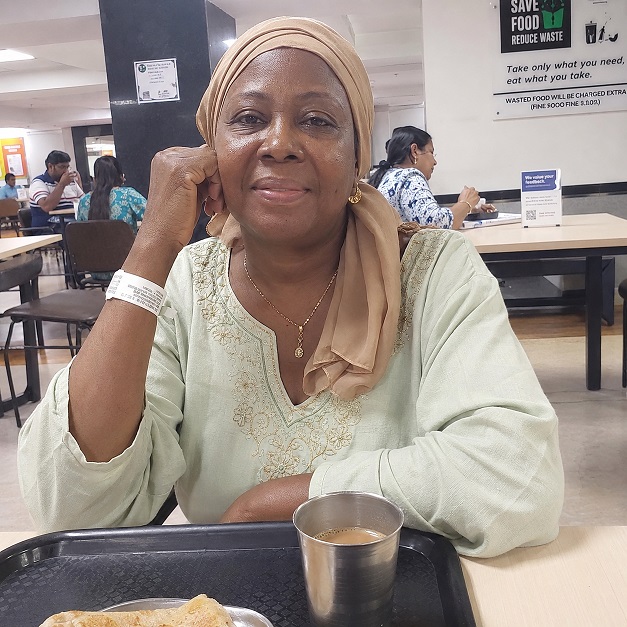
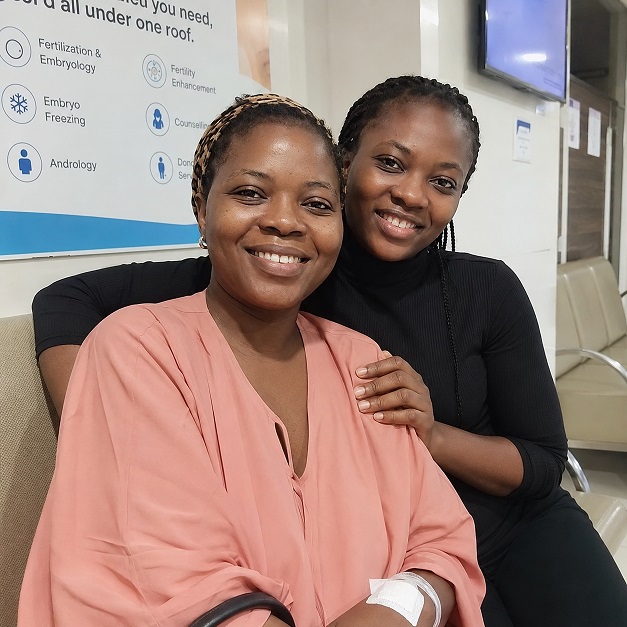
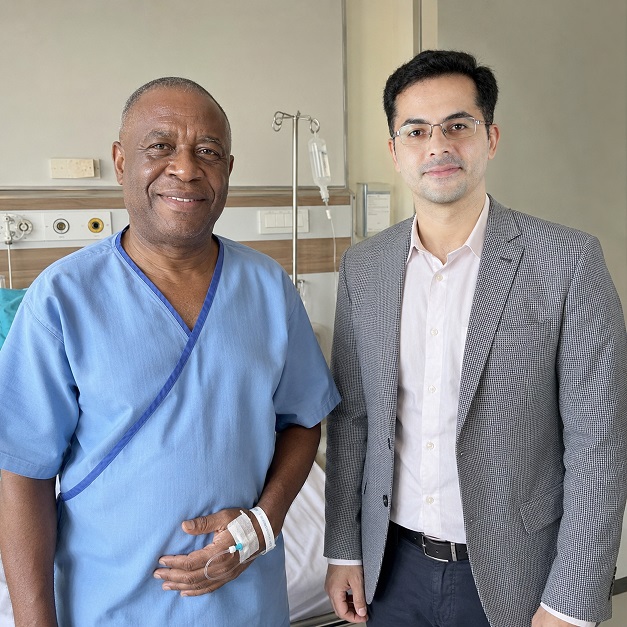
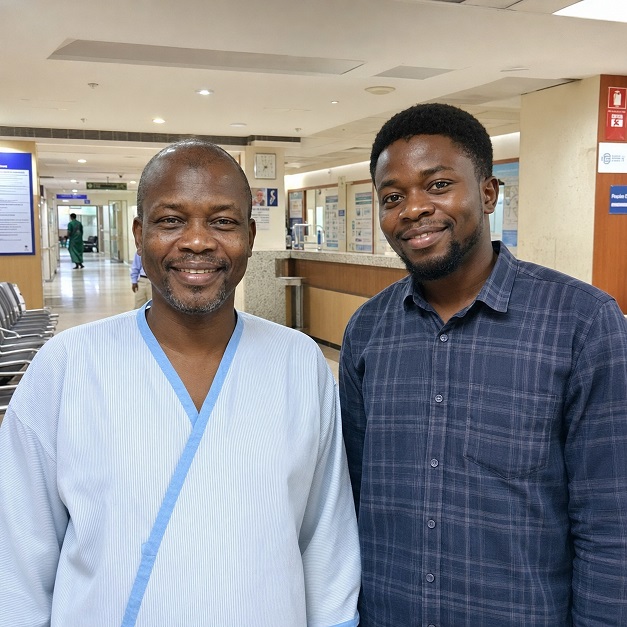
Patient Testimonials from Nigeria
Ready to Take the First Step?
Share your Medical Reports with our Healthcare Managers Today and Get a FREE CONSULTATION, a Personalized Treatment Plan, and Complete Support from Arrival to Recovery.
Get Your Free ConsultationAreas We Serve
This resource has been thoughtfully prepared for patients from Nigeria who are considering medical treatment in India. We also welcome patients from the wider region in the countries mentioned below-
We assist patients from:
- Benin
- Niger
- Chad
- Cameroon
- Algeria
- Egypt
- Libya
- Morocco
- Sudan
- Tunisia
- Gambia
- Ghana
- Burkina Faso
- Cabo Verde
- Côte d'Ivoire
- Equatorial Guinea
- São Tomé and Príncipe
Many of the insights, treatment pathways, hospital recommendations, travel guidance, and patient support services described here are equally relevant and may be used as a reference when planning treatment in India.
From Nigeria to India: Your Complete Patient Support Guide
- Artificial Disc Replacement in India for Nigerian Patients
- Weight Loss and Bariatric Surgery in India for Nigerian Patients
- Bone Marrow Transplant in India for Nigerian Patients
- Brain Tumour Surgery in India for Nigerian Patients
- Breast Cancer Treatment and Surgery in India for Nigerian Patients
- Cancer Treatment and Surgery in India for Nigerian Patients
- Cardiac Arrhythmia and Heart Pacemaker Treatment in India for Nigerian Patients
- Cardiac Surgery in India for Nigerian Patients
- Colorectal Cancer Treatment and Surgery in India for Nigerian Patients
- Complex Orthopaedic and Joint Revision Surgery in India for Nigerian Patients
- Cornea Transplant and Advanced Eye Surgery in India for Nigerian Patients
- CyberKnife Treatment in India for Nigerian Patients
- Gamma Knife Treatment in India for Nigerian Patients
- Heart Failure Treatment and Surgery in India for Nigerian Patients
- Hip Surgery in India for Nigerian Patients
- HIPEC Cancer Surgery in India for Nigerian Patients
- IVF and Fertility Treatment in India for Nigerian Patients
- Joint Arthroscopy and Sports Medicine in India for Nigerian Patients