

Laparoscopic and Robotic Myomectomy Surgery in India for Nigerian Patients
For the woman who has waited years, hoping the discomfort would pass on its own — and the fibroid map that determines everything about how her surgery should actually go.
Uterine fibroids are among the most common gynaecological conditions affecting Nigerian women, yet the path from first symptoms to treatment is often longer than it should be. Published Nigerian research places clinic-based prevalence broadly between 28 and 32 percent, though the true population figure is almost certainly higher, since fibroids are frequently asymptomatic and go undiagnosed. Myomectomy, surgical removal of fibroids while preserving the uterus, remains the treatment of choice for women who want to keep the option of future pregnancy. Getting the approach right, and understanding a specific, well-documented safety consideration along the way, matters as much as the surgery itself. This guide sets out how fibroid location, not just size, should shape which surgical approach is genuinely appropriate, what a specific and important safety conversation around larger fibroids actually involves, the real difference between myomectomy and hysterectomy as two operations built for different goals, and what treatment costs in India once the whole journey is counted.
| 28–32% | 30s–40s | 1 in 352 | 3 |
|---|---|---|---|
| PREVALENCE OF FIBROIDS AMONG WOMEN IN NIGERIAN GYNAECOLOGY CLINIC STUDIES | PEAK AGE RANGE FOR SYMPTOMATIC FIBROID DIAGNOSIS, THE HEIGHT OF REPRODUCTIVE YEARS | FDA-CITED ESTIMATE OF UNSUSPECTED SARCOMA AMONG WOMEN WITH PRESUMED BENIGN FIBROIDS | DISTINCT FIBROID LOCATIONS, EACH GENUINELY SUITED TO A DIFFERENT SURGICAL APPROACH |
Healing Journeys of Nigerian Patients









Key Takeaways
- The guide states that Nigerian clinic-based studies report uterine fibroid prevalence of approximately 28–32%, with symptomatic diagnosis commonly occurring during the 30s and 40s.
- Fibroid location, not size alone, determines the surgical approach. Submucosal fibroids may often be removed hysteroscopically, while intramural and subserosal fibroids may require laparoscopic, robotic or open surgery.
- The guide identifies thorough pre-operative imaging showing the location, size and number of fibroids as the most important planning information before selecting a surgical approach.
- For larger fibroids requiring morcellation, the guide highlights the FDA-cited estimate of approximately 1 in 352 women having an unsuspected uterine sarcoma and recommends an honest risk discussion and appropriate contained morcellation safeguards.
- Myomectomy preserves the uterus and potential fertility, while hysterectomy provides a definitive solution but permanently ends the possibility of pregnancy. The choice should therefore be based heavily on the woman's fertility goals.
- For women choosing myomectomy to preserve fertility, the guide emphasises careful layered repair of the uterine wall, because surgical technique can influence uterine integrity during a future pregnancy.
- Indicative costs in India are US$1,800–US$3,200 for hysteroscopic myomectomy, US$2,950–US$5,050 for laparoscopic myomectomy, US$5,050–US$8,150 for robotic myomectomy and US$3,250–US$5,800 for open myomectomy.
- The guide estimates an all-in laparoscopic myomectomy journey at US$5,900–US$9,900, including flights, accommodation, pre-operative workup and visa costs. Robotic and complex open procedures may cost more.
- The page 7 recovery pathway shows approximately 5 days for consultation/imaging and sarcoma assessment, 3 days for surgery and hospital stay, 14 days of early recovery and around 60 additional days before full recovery and fertility clearance.
- Nigerian patients should confirm whether pathology testing is included in the quotation, as examination of removed tissue is an important part of the safety process. They should also establish follow-up with a Nigerian gynaecologist before returning home.
Quick Facts
- Treatment
- Laparoscopic and Robotic Myomectomy
- Country
- India
- Patients
- Patients from Nigeria
- Key Specialist
- Gynaecological Surgeon / Fibroid Specialist
- Main Condition
- Uterine Fibroids
- Main Assessment
- Imaging Showing Fibroid Location, Size and Number
- Hysteroscopic Myomectomy
- US$1,800–US$3,200
- Laparoscopic Myomectomy
- US$2,950–US$5,050
- Robotic Myomectomy
- US$5,050–US$8,150
- Open Myomectomy
- US$3,250–US$5,800
- All-In Laparoscopic Journey
- US$5,900–US$9,900
- Important Check
- Match Surgical Approach to Fibroid Anatomy
- Fertility Check
- Discuss Myomectomy vs Hysterectomy Based on Pregnancy Plans
- Safety Check
- Discuss Sarcoma Risk and Contained Morcellation Where Relevant
- Pathology
- Confirm Tissue Testing Is Included
- Pre-Travel Records
- Ultrasound/MRI and Previous Treatment Records
- Visa
- Indian Medical Visa and Medical Attendant Visa
- Travel
- Lagos or Abuja to Indian Medical Hubs With One Stop
- Recovery
- Several Weeks With Longer Fertility Clearance
- Follow-Up
- Nigerian Gynaecologist and Post-Surgical Monitoring
- Author
- Dr. Dheeraj Bojwani
- Experience
- 24+ Years
In Brief
For Nigerian women considering laparoscopic or robotic myomectomy in India, the guide recommends starting with detailed imaging that maps the fibroids by location, size and number, because the anatomy determines whether hysteroscopic, laparoscopic, robotic or open surgery is appropriate. Women who wish to preserve fertility should discuss myomectomy versus hysterectomy carefully and ask specifically about uterine-wall repair and the safety approach to morcellation when relevant. Patients should also obtain an itemised quotation, confirm pathology testing, plan adequate recovery time and arrange follow-up with a Nigerian gynaecologist before travelling.
01 · the Real Problem
Common, under-diagnosed, and often diagnosed late
Fibroid prevalence estimates vary considerably depending on how a study is conducted. Clinic-based Nigerian studies place the figure between roughly 28 and 32 percent among women attending gynaecology services, while broader research on women of African ancestry globally, drawing on more comprehensive screening methods, places lifetime prevalence considerably higher, sometimes exceeding 70 to 80 percent by age 50. Roughly 7 percent of fibroid cases produce no symptoms at all, meaning many women carry fibroids without ever knowing it until a routine scan or a pregnancy ultrasound reveals them.
A specific, well-documented pattern compounds this: Nigerian clinical research published in 2025 has confirmed that symptomatic fibroids are frequently diagnosed late, often after fibroids have grown considerably larger and more numerous than they would have been at earlier presentation. This late presentation pattern directly shapes which surgical approach is realistically available; a fibroid caught early is often a straightforward laparoscopic case, while the same fibroid left untreated for years may require open surgery by the time treatment is finally sought.
The reasons behind this pattern of delay are worth understanding honestly, since they shape how a family should approach this decision. Research into Nigerian women's experiences points to a combination of factors: normalising heavy or painful periods as simply part of womanhood rather than a treatable symptom, genuine cost barriers to seeking specialist gynaecological care, and, in some cases, a preference to try herbal or traditional remedies before pursuing surgical options. None of these responses are unreasonable given the circumstances many women face, but each one adds time during which a manageable fibroid can grow into a considerably more complex surgical case.
Age is also a genuinely relevant factor here. Fibroids are most frequently diagnosed in a woman's 30s and 40s, precisely the years when many Nigerian women are actively building families or still hoping to. This timing makes the fertility-preservation question this guide addresses later not a peripheral concern, but frequently the central one shaping the entire treatment decision.
02 · Choosing the Right Approach
Location determines the approach, not just size
Fibroids are classified by where they grow relative to the uterine wall, and this classification, more than fibroid size alone, shapes which surgical approach is genuinely appropriate.
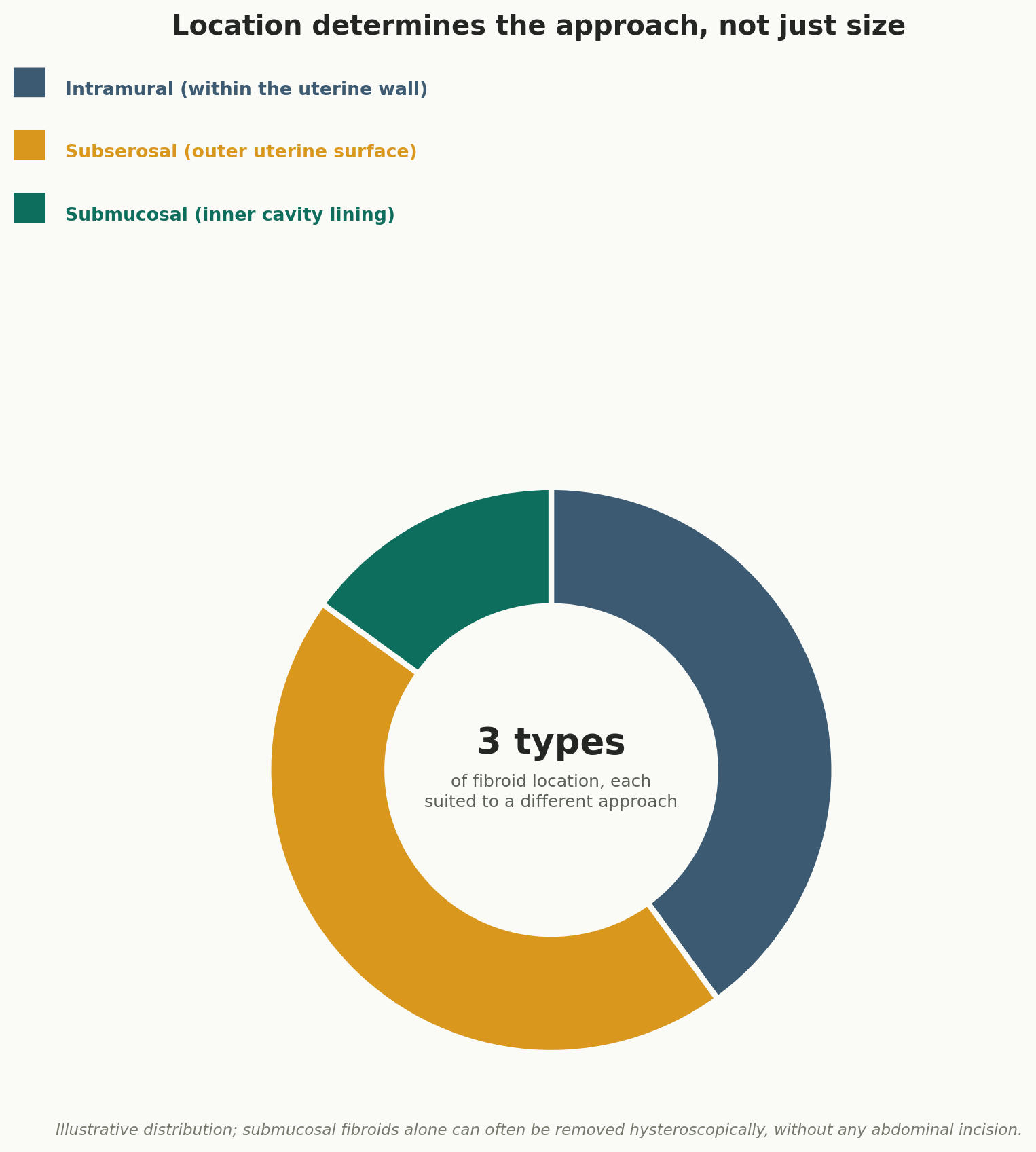
Figure 1. Submucosal fibroids alone can often be removed hysteroscopically, without any abdominal incision at all.
Submucosal fibroids, projecting into the uterine cavity, can frequently be removed hysteroscopically, through the cervix, with no abdominal incision whatsoever, the least invasive option available. Intramural and subserosal fibroids, embedded within or on the outer wall, generally require laparoscopic, robotic, or open surgery instead, with the specific choice depending on fibroid size, number, and overall complexity. A thorough pre-operative scan, correctly identifying location and not just size, is the single most important piece of planning information for this entire decision.
It is worth understanding that many women present with fibroids in more than one location simultaneously, a combination of intramural and subserosal growths, for instance, which can complicate the simple categorisation this chart illustrates. In these mixed cases, a surgeon's judgement about which approach handles the overall burden most safely and completely becomes genuinely important, and a second opinion is a reasonable step where the recommended approach seems inconsistent with what the imaging actually shows.
03 · the Safety Conversation
What most patients are never told about morcellation
For larger fibroids removed through minimally invasive approaches, a technique called morcellation, cutting tissue into smaller pieces for removal through small incisions, is often necessary. An FDA-cited estimate found that approximately 1 in 352 women undergoing surgery for presumed benign fibroids actually had an unsuspected uterine sarcoma, a rare cancer, and morcellating that unrecognised tissue can spread it throughout the abdomen. This finding significantly reshaped surgical practice worldwide.
This is not a reason to avoid minimally invasive myomectomy, which remains an excellent option for most women with appropriately assessed, lower-risk fibroids. It is a reason to expect a specific, honest conversation about this risk before surgery, and confirmation that modern safeguards, careful imaging, appropriate patient selection, and contained, in-bag morcellation techniques where morcellation is used, are genuinely in place.
Certain factors are known to raise sarcoma risk somewhat, including older age and rapid fibroid growth, and a thorough surgeon will factor these into pre-operative planning rather than treating every fibroid as automatically low-risk. A patient is entitled to ask, directly and specifically, how her own risk was assessed, and to expect a considered answer rather than a general reassurance that morcellation is routine and therefore safe.
04 · MYOMECTOMY OR HYSTERECTOMY
Two operations, two different goals
For women who have completed childbearing or have no interest in future pregnancy, hysterectomy offers a genuinely definitive solution: fibroids cannot recur in a uterus that has been removed. For women who want to preserve fertility, myomectomy remains the appropriate choice, understanding that new fibroids can develop in the years afterward, since the underlying tendency to form fibroids is not eliminated by removing the existing ones.
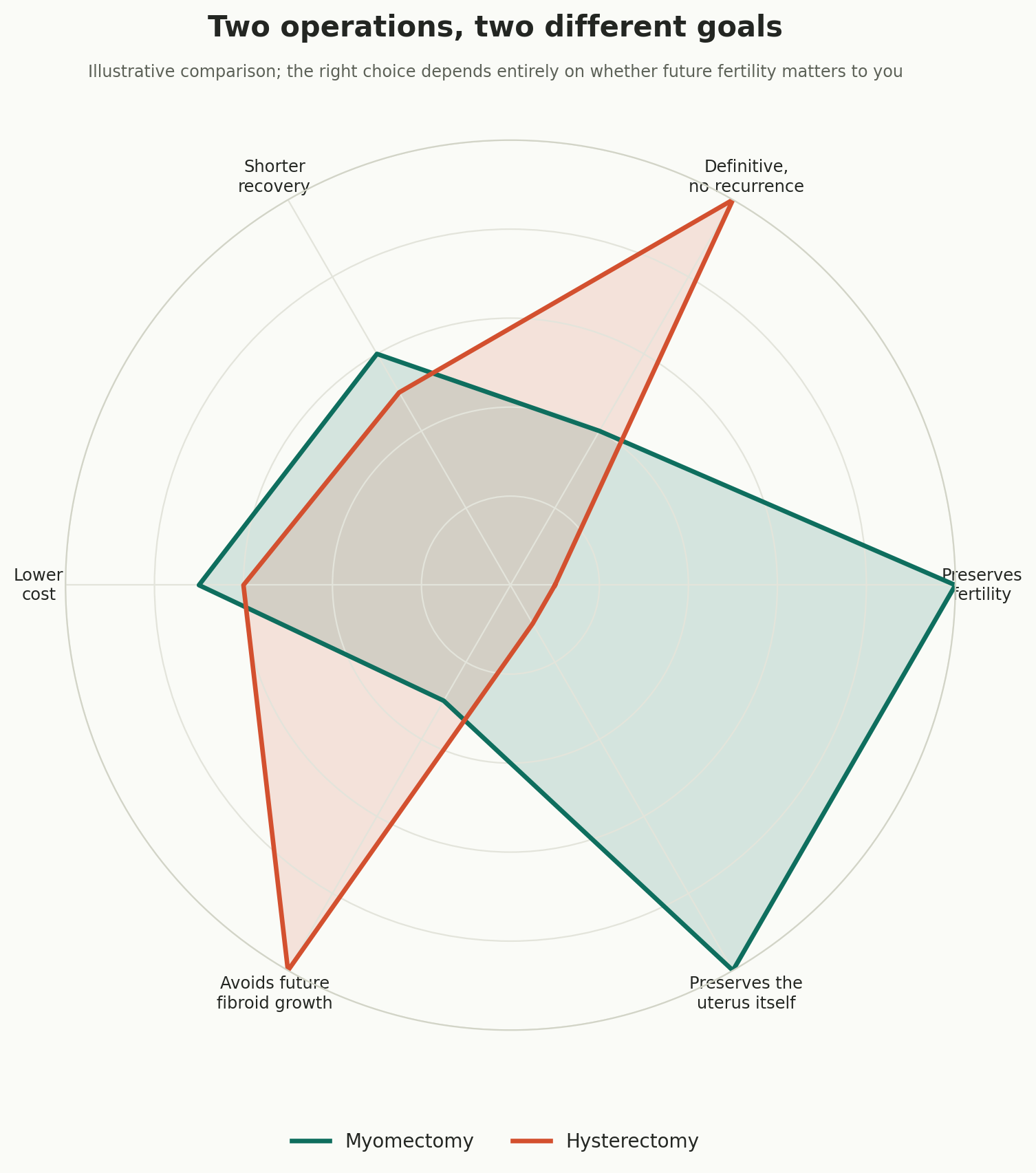
Figure 2. Myomectomy and hysterectomy are not competing versions of the same operation; they serve genuinely different goals, and the right choice depends almost entirely on whether future fertility matters to you.
This is a decision worth making deliberately, in full conversation with a gynaecologist, rather than one a surgeon should make by default based on fibroid severity alone. A patient's own fertility goals belong at the centre of this specific choice.
It is worth noting that this is not always a binary, one-time choice made in isolation. Some women choose myomectomy specifically to preserve the option of pregnancy in the near term, while remaining open to hysterectomy later if fibroids recur after childbearing is complete. Framing the decision this way, as a choice appropriate to a specific life stage rather than a single permanent verdict, can make the conversation with a surgeon considerably more productive and less fraught.
For women who do choose myomectomy specifically to preserve fertility, one further technical point deserves attention: how carefully the uterine wall is repaired afterward. A precisely layered repair supports the uterus's integrity during a future pregnancy and labour, while a hastily closed incision can, in rare cases, increase the risk of uterine rupture later. This is a genuine marker of surgical quality worth asking about directly, not an assumed given of any myomectomy procedure.
05 · Cost and Recovery
What it costs, and how the whole journey adds up
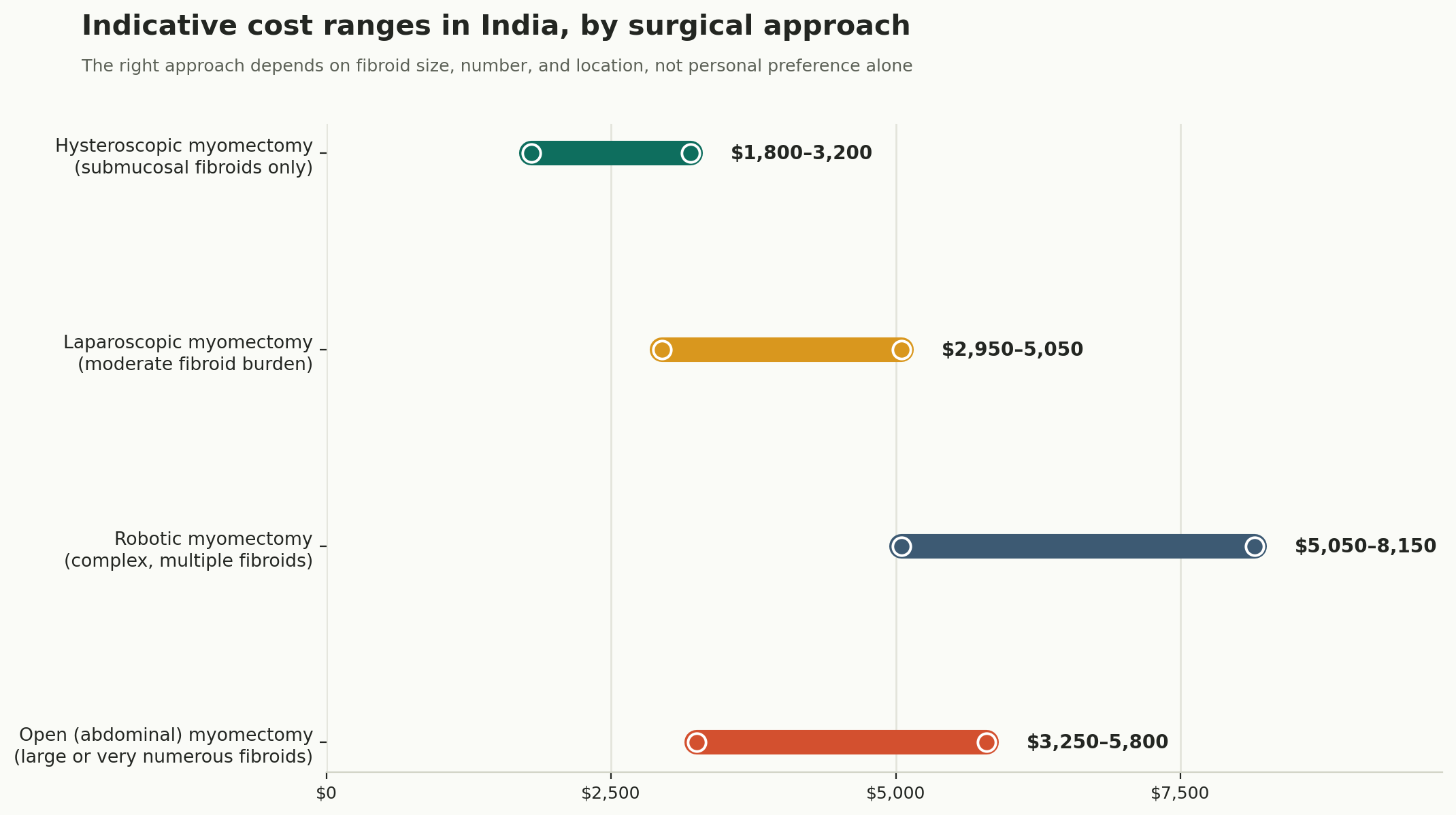
Figure 3. Indicative cost ranges by surgical approach. Open surgery, while more invasive, is not necessarily the most expensive option; robotic surgery generally carries the highest cost.
| Approach | Typically suits | Indicative cost |
|---|---|---|
| Hysteroscopic myomectomy | Submucosal fibroids only, no abdominal incision | $1,800–3,200 |
| Laparoscopic myomectomy | Moderate fibroid burden, appropriate anatomy | $2,950–5,050 |
| Robotic myomectomy | Complex cases, multiple fibroids requiring precision | $5,050–8,150 |
| Open (abdominal) myomectomy | Very large or numerous fibroids, late presentation | $3,250–5,800 |
Table 1. Indicative international-patient pricing at accredited Indian centres, mid-2026. Figures vary by fibroid burden, technique, and specific centre.
All-in, once flights, accommodation, pre-operative workup, and visa costs are included, most patients undergoing laparoscopic myomectomy should plan for US$5,900–9,900 for the full journey — roughly ₦8.1– 14.0 million at the official mid-July 2026 rate of about ₦1,380 to the dollar, somewhat higher at parallel- market rates near ₦1,410.
Robotic and complex open procedures for extensive multi-fibroid cases will sit meaningfully above this range, and a written, itemised quote reflecting your specific imaging findings, not a general estimate, is the only reliable way to budget accurately. Ask specifically whether the quoted figure includes pathology testing on removed tissue, since this laboratory step, confirming the fibroids were genuinely benign, is a necessary part of the safety process described earlier in this guide, not an optional extra.
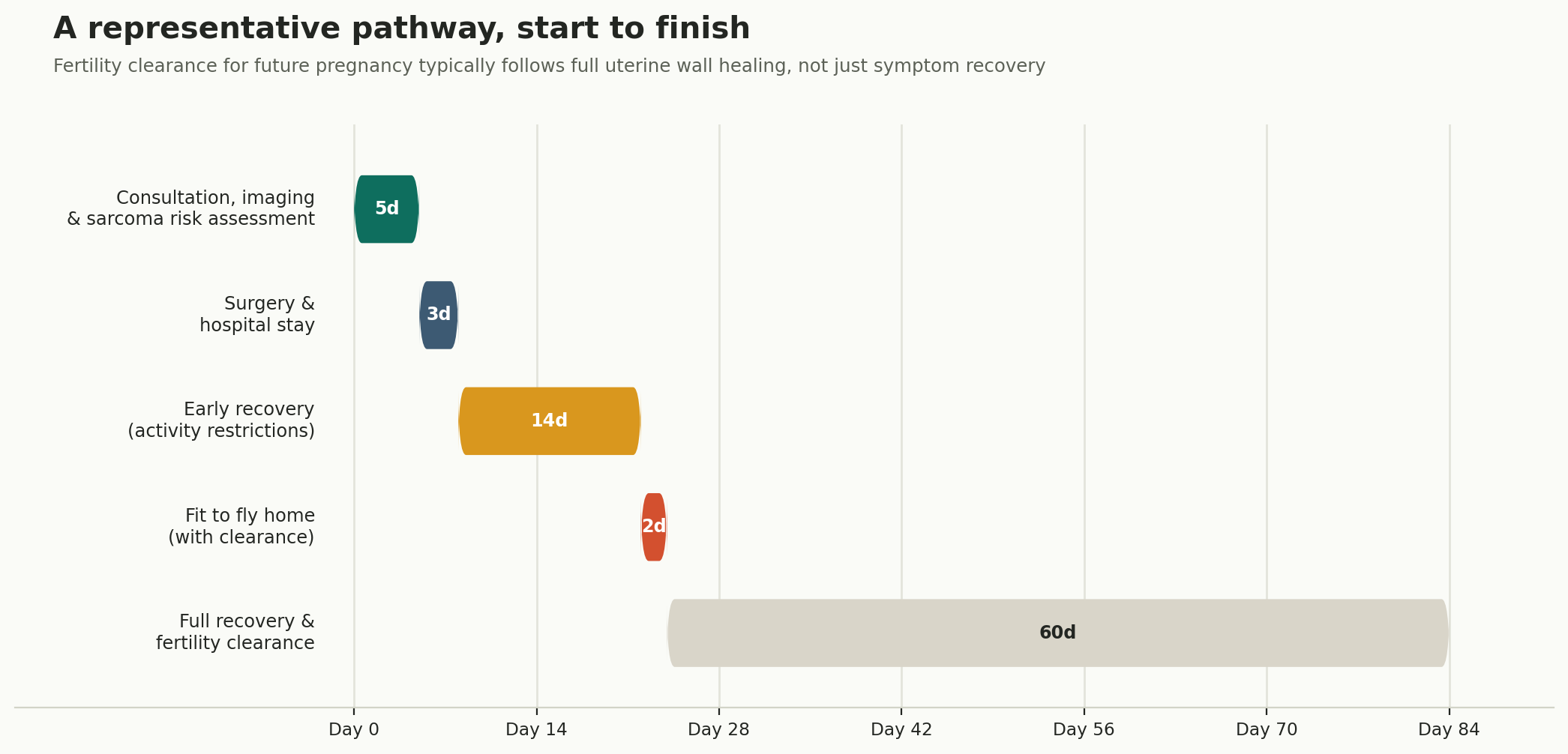
Figure 4. Fertility clearance for a future pregnancy attempt typically follows full uterine wall healing, meaningfully longer than symptom recovery alone.
On visa and travel. India issues a Medical Visa (M) to the patient and a Medical Attendant Visa (MX) to accompanying family, through the High Commission in Abuja, the Consulate in Lagos, or the e-Medical route. Lagos and Abuja reach India's major medical hubs with a single stop, a 13 to 18 hour total journey.
06 · THE HONEST COMPARISON
What genuinely benefits from travelling
Myomectomy is performed within Nigeria, at genuinely capable teaching hospitals and private centres, particularly for straightforward, single-fibroid cases identified early. What tends to tip the calculation toward travelling is the combination of factors this guide has described together: a late-presented, complex, multi- fibroid case requiring genuine subspecialty judgement about the right approach, alongside access to a full range of techniques, from hysteroscopic through robotic, under one roof, allowing a centre to match the approach precisely to the anatomy rather than defaulting to whichever technique happens to be locally available.
For a woman with a single, moderate-sized, appropriately located fibroid, a well-regarded Nigerian gynaecological surgeon may represent a perfectly reasonable, more accessible choice. The considerations in this guide, thorough imaging, an honest morcellation conversation, and a deliberate myomectomy-versus- hysterectomy discussion, apply with equal force wherever that surgery ultimately takes place.
Where travel genuinely earns its cost is in the harder cases: multiple large fibroids in mixed locations, a prior failed surgery, or a strong wish to avoid open surgery despite a complex fibroid map that would typically require it elsewhere. These are precisely the cases where a centre performing high volumes across every technique, and matching approach to anatomy with genuine subspecialty judgement, offers something a lower-volume domestic option may not yet be positioned to provide consistently.
Before you commit to a treatment plan abroad
- Get thorough imaging that identifies fibroid location, size, and number, not just a general diagnosis.
- Ask directly whether myomectomy or hysterectomy genuinely suits your fertility goals.
- Ask how sarcoma risk is assessed, and confirm contained morcellation techniques where relevant.
- Confirm which specific surgical approach suits your fibroid location and burden, and why.
- Get the full expected timeline in writing, including fertility clearance if pregnancy is planned.
- Establish follow-up care with a Nigerian gynaecologist before returning home.
- Pay into the hospital's own institutional account only, never an individual's personal account.
Straight Answers for Nigerian Patients about Laparoscopic and Robotic Myomectomy Surgery in India
How common are fibroids among Nigerian women?
Nigerian studies place clinic-based prevalence broadly between 28 and 32 percent, though broader research suggests the true figure is considerably higher, since many fibroids remain undiagnosed.
What is the difference between myomectomy and hysterectomy?
Myomectomy removes fibroids while preserving the uterus and fertility. Hysterectomy removes the uterus entirely, offering a definitive solution but ending fertility permanently.
Why does fibroid location matter for the surgical approach?
Submucosal fibroids can often be removed hysteroscopically without any incision. Intramural and subserosal fibroids typically need laparoscopic, robotic, or open surgery instead.
What is the morcellation safety concern?
An FDA-cited estimate found roughly 1 in 352 women had an unsuspected sarcoma. Morcellating that tissue can spread it. Current practice emphasises risk assessment and contained morcellation techniques.
Do Nigerians need a visa for myomectomy in India?
Yes. You need an Indian Medical Visa from the High Commission in Abuja, the Consulate in Lagos, or the e- Medical route, plus a Medical Attendant Visa for accompanying family.
A closing word
Fibroids are common enough that many Nigerian women live with them silently for years, and specific enough, in their location, size, and number, that no single surgical approach genuinely suits every case. Getting the diagnosis, and the mapping of exactly where a fibroid sits, right at the outset is what determines whether the least invasive option remains available, or whether years of delay have already narrowed the realistic choices.
In twenty-four years of this work, the patients who navigate this best get thorough imaging before assuming any approach, ask directly whether myomectomy or hysterectomy fits their own fertility goals, and take the morcellation safety conversation as seriously as the operation itself. The fibroids may be removed in a matter of hours. What that surgery means for a future pregnancy is what this decision is actually about.
None of this needs to happen in a single, rushed conversation. A fibroid that has been present for years, even one causing real discomfort, rarely demands a decision within days; the time taken to get a second opinion, confirm the surgical approach directly matches the imaging findings, and have an honest conversation about fertility goals is time genuinely well spent, not time lost.
Sources
- 🌐 Risk factors for late presentation of symptomatic uterine fibroid in urban Nigeria: A mixed method study. SAGE Open Medicine, 2025
- 🌐 Epidemiology of Uterine Fibroid in Black African Women: A Systematic Scoping Review. PMC
- 🌐 U.S. Food and Drug Administration — Updated Laparoscopic Uterine Power Morcellation in Hysterectomy and Myomectomy Safety Communication
- 🌐 American College of Obstetricians and Gynecologists — Uterine fibroids, patient information
- 🌐 High Commission of India, Abuja — Medical and Medical Attendant Visa requirements
Frequently Asked Questions by Nigerians about Laparoscopic and Robotic Myomectomy Surgery in India
How common are fibroids among Nigerian women?
The guide cites Nigerian clinic-based studies reporting a prevalence of approximately 28–32%, although the true population prevalence may be higher because many fibroids remain undiagnosed.
Why does fibroid location matter for choosing surgery?
Location determines which approach is appropriate. Submucosal fibroids may often be removed hysteroscopically, while intramural and subserosal fibroids may require laparoscopic, robotic or open surgery.
Is laparoscopic myomectomy suitable for every Nigerian patient?
No. The guide explains that the approach depends on fibroid location, size, number and overall complexity. A detailed scan is needed before deciding whether minimally invasive surgery is appropriate.
How much does laparoscopic myomectomy cost in India for Nigerian patients?
The indicative procedure cost is US$2,950–US$5,050. Including flights, accommodation, pre-operative workup and visas, the guide estimates approximately US$5,900–US$9,900 for the complete journey.
How much does robotic myomectomy cost in India?
The guide gives an indicative range of US$5,050–US$8,150. Robotic surgery is generally used for more complex cases requiring greater surgical precision.
Should Nigerian women choose myomectomy or hysterectomy?
The decision depends strongly on future fertility goals. Myomectomy removes fibroids while preserving the uterus, whereas hysterectomy removes the uterus and permanently ends the possibility of pregnancy.
What is the morcellation safety concern?
Morcellation breaks larger fibroids into smaller pieces for removal through minimally invasive incisions. The guide cites an FDA estimate of approximately 1 in 352 women having an unsuspected sarcoma, making risk assessment and contained morcellation important where applicable.
What should Nigerian patients ask about fertility after myomectomy?
Patients should ask how the surgeon plans to repair the uterine wall, because careful layered closure supports uterine integrity for a future pregnancy. Fertility clearance may take considerably longer than the initial symptom recovery period.
What should be included in the treatment quotation?
Patients should request an itemised written quote covering the specific surgical approach, hospital care, investigations and pathology testing. Complex or robotic procedures may cost more than the initial general estimate.
Do Nigerian patients need a visa for myomectomy treatment in India?
Yes. The guide states that patients require an Indian Medical Visa, while accompanying family may require Medical Attendant Visas. Applications can be made through the High Commission in Abuja, the Consulate in Lagos or the e-Medical route.
Page Summary
This guide explains the key considerations for Nigerian women exploring laparoscopic and robotic myomectomy in India, focusing on the importance of mapping fibroid location, size and number before choosing the surgical approach. It covers hysteroscopic, laparoscopic, robotic and open myomectomy, the safety considerations surrounding morcellation, and the important difference between myomectomy and hysterectomy for women who wish to preserve fertility. Indicative costs range from US$1,800 to US$8,150 by surgical approach, while a complete laparoscopic journey is estimated at US$5,900–US$9,900. The guide also covers recovery, pathology testing, medical visas, travel planning and the need for continued gynaecological follow-up in Nigeria.
Citation Block
| Topic | Information |
|---|---|
| Topic Information | Laparoscopic and Robotic Myomectomy in India for Patients from Nigeria |
| Treatment | Myomectomy / Fibroid Surgery |
| Intended Audience | Patients from Nigeria |
| Key Specialist | Gynaecological Surgeon / Fibroid Specialist |
| Main Condition | Uterine Fibroids |
| Primary Assessment | Imaging Showing Location, Size and Number |
| Main Surgical Options | Hysteroscopic, Laparoscopic, Robotic and Open Myomectomy |
| Laparoscopic Cost | US$2,950–US$5,050 |
| Robotic Cost | US$5,050–US$8,150 |
| All-In Laparoscopic Journey | US$5,900–US$9,900 |
| Important Specialist Check | Confirm Experience With Complex and Multi-Fibroid Cases |
| Fertility Check | Discuss Myomectomy vs Hysterectomy Based on Future Pregnancy Goals |
| Imaging Check | Confirm Fibroid Location, Size and Number Before Surgery |
| Safety Check | Discuss Sarcoma Risk and Contained Morcellation Where Relevant |
| Important Warning | Do Not Choose the Surgical Approach Based on Fibroid Size Alone |
| Pathology Check | Confirm Pathology Testing of Removed Tissue Is Included |
| Pre-Travel Records | Imaging and Previous Gynaecological Treatment Records |
| Visa Requirement | Indian Medical Visa and Medical Attendant Visa |
| Patient Journey | Imaging/review → surgical planning → visa → travel/surgery → early recovery → fertility clearance/follow-up |
| Follow-Up | Nigerian Gynaecologist and Long-Term Monitoring |


Our Mission Statement
Our mission is to place patients at the centre of every healthcare decision by providing trustworthy, evidence-based, and unbiased medical information. We believe that informed patients make better decisions. Backed by personalised guidance from our experienced advisory team, we help patients understand their treatment options, compare them objectively, and confidently choose the path that best suits their medical needs and personal circumstances.
Patient Testimonials from Nigeria















Ready to Take the First Step?
Share your Medical Reports with our Healthcare Managers Today and Get a FREE CONSULTATION, a Personalized Treatment Plan, and Complete Support from Arrival to Recovery.
Get Your Free ConsultationAreas We Serve
This resource has been thoughtfully prepared for patients from Nigeria who are considering medical treatment in India. We also welcome patients from the wider region in the countries mentioned below-
We assist patients from:
- Benin
- Niger
- Chad
- Cameroon
- Algeria
- Egypt
- Libya
- Morocco
- Sudan
- Tunisia
- Gambia
- Ghana
- Burkina Faso
- Cabo Verde
- Côte d'Ivoire
- Equatorial Guinea
- São Tomé and Príncipe
Many of the insights, treatment pathways, hospital recommendations, travel guidance, and patient support services described here are equally relevant and may be used as a reference when planning treatment in India.
From Nigeria to India: Your Complete Patient Support Guide
- Artificial Disc Replacement in India for Nigerian Patients
- Weight Loss and Bariatric Surgery in India for Nigerian Patients
- Bone Marrow Transplant in India for Nigerian Patients
- Brain Tumour Surgery in India for Nigerian Patients
- Breast Cancer Treatment and Surgery in India for Nigerian Patients
- Cancer Treatment and Surgery in India for Nigerian Patients
- Cardiac Arrhythmia and Heart Pacemaker Treatment in India for Nigerian Patients
- Cardiac Surgery in India for Nigerian Patients
- Colorectal Cancer Treatment and Surgery in India for Nigerian Patients
- Complex Orthopaedic and Joint Revision Surgery in India for Nigerian Patients
- Cornea Transplant and Advanced Eye Surgery in India for Nigerian Patients
- CyberKnife Treatment in India for Nigerian Patients
- Gamma Knife Treatment in India for Nigerian Patients
- Heart Failure Treatment and Surgery in India for Nigerian Patients
- Hip Surgery in India for Nigerian Patients
- HIPEC Cancer Surgery in India for Nigerian Patients
- IVF and Fertility Treatment in India for Nigerian Patients
- Joint Arthroscopy and Sports Medicine in India for Nigerian Patients