

Cosmetic and Aesthetic Surgery in India for Nigerian Patients
For the procedure you have researched for months and finally feel ready for — and the one question about your provider's qualifications that matters more than any price you will be quoted.
Nigeria's aesthetic medicine sector has expanded rapidly in recent years, driven by social media visibility, rising disposable income, and a genuine, understandable desire among many Nigerians to look and feel their best. That growth has significantly outpaced regulation. Nigerian medical professionals and public health specialists have stated publicly that the country currently lacks a dedicated regulatory body for aesthetic medicine specifically, leaving oversight fragmented across multiple agencies, and reports of poorly trained practitioners entering the field, driven by commercial opportunity rather than proper surgical training, have become a genuine, widely discussed concern within the profession itself. This guide is written for the patient who has already decided, thoughtfully, that a specific procedure is right for them. It does not exist to talk anyone out of that decision. It exists because that same thoughtful decision deserves to be carried out by someone genuinely qualified to perform it safely, and because the current gap in oversight means verifying that qualification is, for now, largely the patient's own responsibility. It also sets out what these procedures actually cost in India once travel is counted, and the concrete questions that separate a genuinely qualified provider from one operating well outside safe standards.
| ~65% | No dedicated body | 2025–2026 | 6 |
|---|---|---|---|
| TYPICAL SAVING CHOOSING AN ACCREDITED INDIAN CENTRE OVER UK/US LIST PRICING | REGULATORY OVERSIGHT FOR AESTHETIC MEDICINE SPECIFICALLY, PER NIGERIAN MEDICAL PROFESSIONALS | NIGERIA'S FIRST NATIONAL POLICY ON COSMETICS SAFETY AND HEALTH FORMALLY ADOPTED | CONCRETE QUESTIONS THAT SEPARATE A QUALIFIED PROVIDER FROM AN UNREGULATED ONE |
Healing Journeys of Nigerian Patients









Key Takeaways
- The guide focuses strongly on provider verification and patient safety, noting that Nigeria's aesthetic medicine sector has expanded faster than dedicated regulatory oversight.
- Nigeria adopted its first National Policy on Cosmetics Safety and Health in 2025–2026, but the guide explains that this primarily addresses cosmetic products rather than independently confirming who is qualified to perform aesthetic surgery.
- The guide stresses that facility registration does not automatically mean that the individual surgeon, anaesthetist or emergency systems meet appropriate standards.
- Four procedures are specifically compared: rhinoplasty, liposuction, breast augmentation and tummy tuck, with indicative Indian costs ranging from US$1,600 to US$4,550.
- The guide estimates that choosing an accredited Indian centre may provide a typical saving of around 65% compared with UK/US private list pricing, although this is an illustrative comparison rather than a guaranteed saving.
- A proper written quotation should identify the surgeon's board certification, named anaesthetist, exact accredited facility and emergency/ICU arrangements.
- For liposuction, the guide gives an illustrative all-in journey cost of US$4,600–US$8,200, including surgery, flights, pre-operative tests, accommodation, visa and a contingency allowance.
- Recovery should be planned in weeks rather than days. The page 6 recovery chart shows approximately 3 days for assessment, 2 days for surgery/hospital stay, around 10 days of early recovery and a much longer period before full activity and final results.
- The guide specifically warns against flying home too soon after major body-contouring surgery, because recent surgery combined with long-haul travel increases blood-clot risk.
- Nigerian patients should return home with the complete operative record, post-operative instructions, procedure-specific warning signs and treating surgeon's contact details.
Quick Facts
- Treatment
- Cosmetic and Aesthetic Surgery
- Country
- India
- Patients
- Patients from Nigeria
- Key Specialist
- Board-Certified Plastic / Cosmetic Surgeon
- Main Procedures
- Rhinoplasty, Liposuction, Breast Augmentation and Tummy Tuck
- Primary Assessment
- Surgical Consultation and Fitness-for-Surgery Assessment
- Indicative Procedure Cost
- US$1,600–US$4,550
- Indicative Liposuction Journey
- US$4,600–US$8,200 All-In
- Main Safety Check
- Verify Surgeon Board Certification
- Hospital Check
- Confirm Accredited Hospital, Not a Beauty Salon
- Anaesthesia Check
- Confirm Qualified Anaesthetist
- Emergency Check
- Written Emergency Protocol and ICU Access
- Cost Check
- Obtain a Detailed Written Quote
- Pre-Travel Requirement
- Medical Assessment and Surgical Planning
- Visa
- Indian Medical Visa and Medical Attendant Visa
- Travel Routes
- Lagos/Abuja to Delhi, Mumbai or Chennai via a connecting hub
- Recovery
- Usually Several Weeks
- Final Results
- Often Continue Developing for 2–3 Months
- Post-Travel Records
- Operative Report and Post-Operative Instructions
- Author
- Dr. Dheeraj Bojwani
- Experience
- 24+ Years
In Brief
For Nigerian patients considering cosmetic or aesthetic surgery in India, the guide recommends treating surgeon qualification, hospital accreditation, anaesthesia safety and emergency preparedness as non-negotiable checks, rather than choosing a provider mainly on price or online presentation. Patients should confirm the surgeon's specific board certification, identify the anaesthetist, verify the facility where surgery will occur and obtain a written emergency protocol. The guide also recommends planning the complete travel and recovery period, because final results may take two to three months and returning home too soon after major surgery can increase health risks.
01 · the Real Problem
A fast-growing industry, an unfinished regulatory system
Nigeria approved its first National Policy on Cosmetics Safety and Health at the 66th National Council on Health meeting, developed with the World Health Organization and the Federal Ministry of Health, a genuine and welcome step toward regulating the products used in cosmetic treatments nationally. This policy, however, is primarily focused on the safety of cosmetic products themselves, formulation standards, labelling, counterfeit prevention, rather than the separate, equally important question of who is qualified to perform surgical and injectable aesthetic procedures on patients.
Nigerian medical professionals speaking publicly on this gap have been direct about it. Physicians working in the field have described an industry where poorly trained individuals are entering the space at increasing rates, driven by commercial opportunity, without the anatomical training or emergency preparedness that safe aesthetic practice genuinely requires. A registered clinic, importantly, is not automatically the same thing as a clinic staffed by properly qualified surgical and anaesthesia personnel; regulatory investigations following serious complications have specifically noted that facility registration alone does not guarantee compliance with safety standards.
None of this means aesthetic procedures are inherently unsafe, performed correctly, by properly trained providers, in accredited facilities, they carry well-understood, manageable risk profiles. It means the burden of verification currently falls more heavily on the patient than it should, and this guide exists to make that verification process concrete and specific.
Encouragingly, the direction of travel is genuinely positive. The 2025-2026 national policy reflects real government attention to this space, and public commentary from Nigerian physicians pushing for dedicated aesthetic medicine regulation suggests the profession itself recognises the gap and wants it closed. For now, though, a patient making a decision this year cannot wait for that regulatory system to mature; they need a practical way to verify safety themselves, today.
02 · THE VERIFICATION GAP
Why "registered" does not mean "qualified"
The single most useful habit a patient can build, across any cosmetic or aesthetic procedure, is treating registration and genuine qualification as two entirely separate facts, both worth confirming independently rather than assuming one implies the other.
A facility can hold valid registration with relevant health authorities while the specific individual performing a procedure lacks board certification in plastic or cosmetic surgery, or while anaesthesia is administered without a qualified anaesthetist present. Neither of these gaps would necessarily be visible to a patient during a routine consultation, which is precisely why asking directly, and expecting specific, confident answers, matters so much more than judging a provider by how polished their clinic or online presence appears.
This distinction applies to every procedure covered in this guide, not to any single one in particular. A qualified, board-certified surgeon operating in an accredited facility, with a properly qualified anaesthetist and a documented emergency protocol, offers a fundamentally different safety profile than an unregulated provider, regardless of which specific procedure is being performed or how routine it may sound.
03 · THE PROCEDURES
What actually happens, and what it costs
Cosmetic and aesthetic surgery spans a wide range of procedures, each with its own recovery profile, risk considerations, and indicative cost.
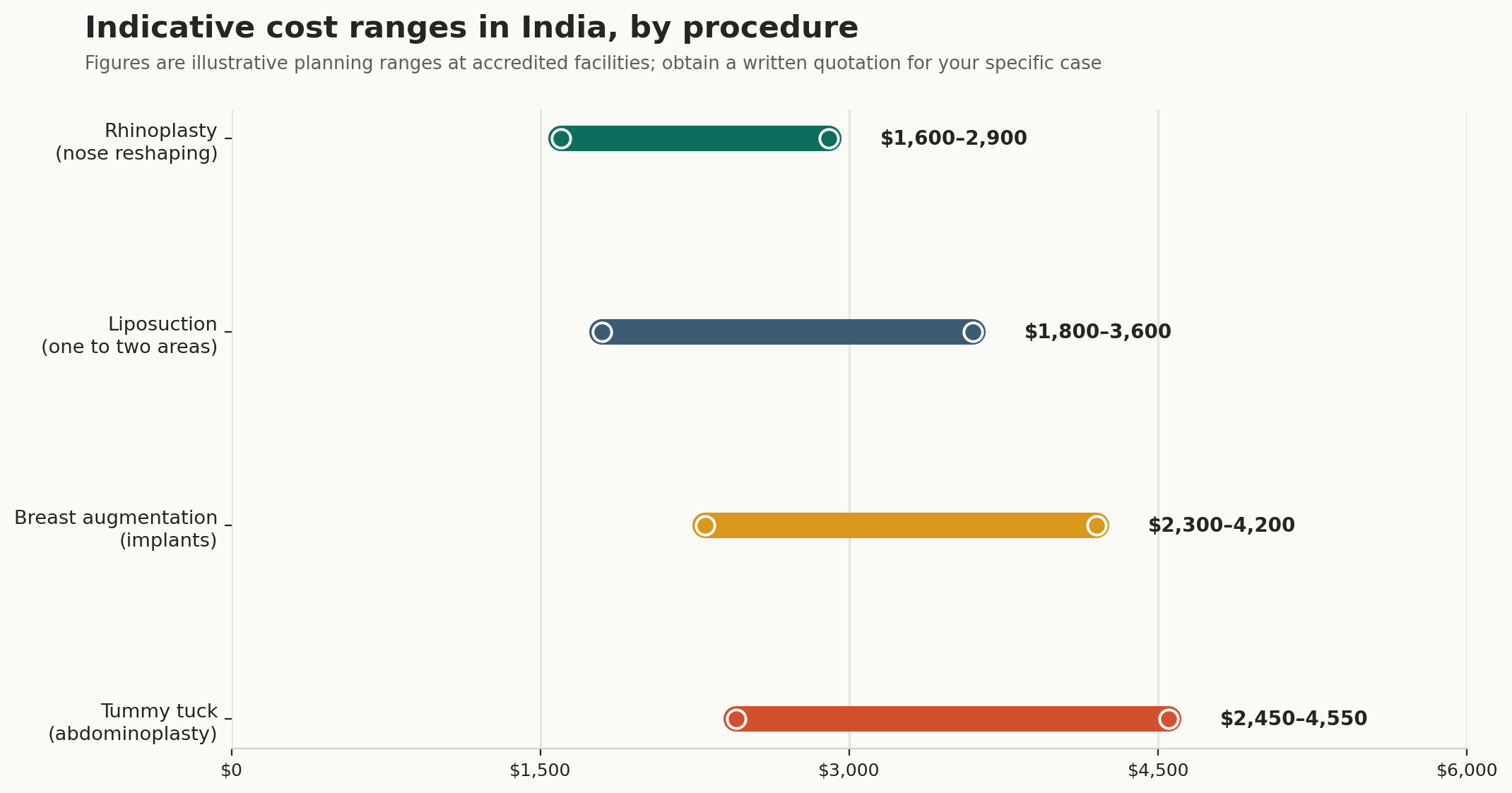
Figure 1. Indicative cost ranges by procedure. More complex, longer procedures carry proportionally higher costs and longer recovery windows.
| Procedure | Typically suits | Indicative cost | Recovery |
|---|---|---|---|
| Rhinoplasty | Reshaping nasal structure for aesthetic or functional reasons | $1,600–2,900 | 2–3 weeks |
| Liposuction | Localised fat reduction in one or two areas | $1,800–3,600 | 2–3 weeks |
| Breast augmentation | Volume or shape enhancement using implants | $2,300–4,200 | 2–4 weeks |
| Tummy tuck | Abdominal skin and muscle tightening, often post-pregnancy | $2,450–4,550 | 3–6 weeks |
Table 1. Indicative international-patient pricing at accredited Indian cosmetic surgery centres, mid-2026. Figures are planning ranges, not offers, and vary by hospital tier, surgeon experience, and case complexity.
What a proper written quote must itemise
- The surgeon's specific board certification, and the certifying body that issued it
- Whether anaesthesia will be delivered by a qualified anaesthetist, named specifically
- The exact facility where surgery will take place, and its accreditation status
- Written emergency protocol, including nearest ICU access, in case of a serious complication
04 · the Full Budget
What the whole journey costs, beyond the procedure fee
The procedure fee is the number patients anchor on, and the least complete one. A representative pathway — liposuction, one patient travelling alone, roughly three weeks in India — adds up like this:
- Surgical package (procedure, hospital stay, initial follow-up): $1,800–3,600
- Return flights (Lagos/Abuja – Delhi/Mumbai/Chennai): $1,100–1,500
- Pre-operative workup (blood tests, fitness for surgery clearance): $200–400
- Accommodation, roughly three weeks : $900–1,400
- Medical visa : $200–250
- Contingency for extended recovery monitoring: 10–15% All-in, most patients should plan for US$4,600–8,200 for a full liposuction pathway — roughly ₦6.3–11.6 million at the official mid-July 2026 rate of about ₦1,380 to the dollar, somewhat higher at parallel-market rates near ₦1,410. Combining multiple procedures in a single trip, where medically appropriate, can meaningfully improve the overall cost efficiency of the travel component, though this should never come at the expense of a surgeon's honest assessment of what is safe to combine in one operation.
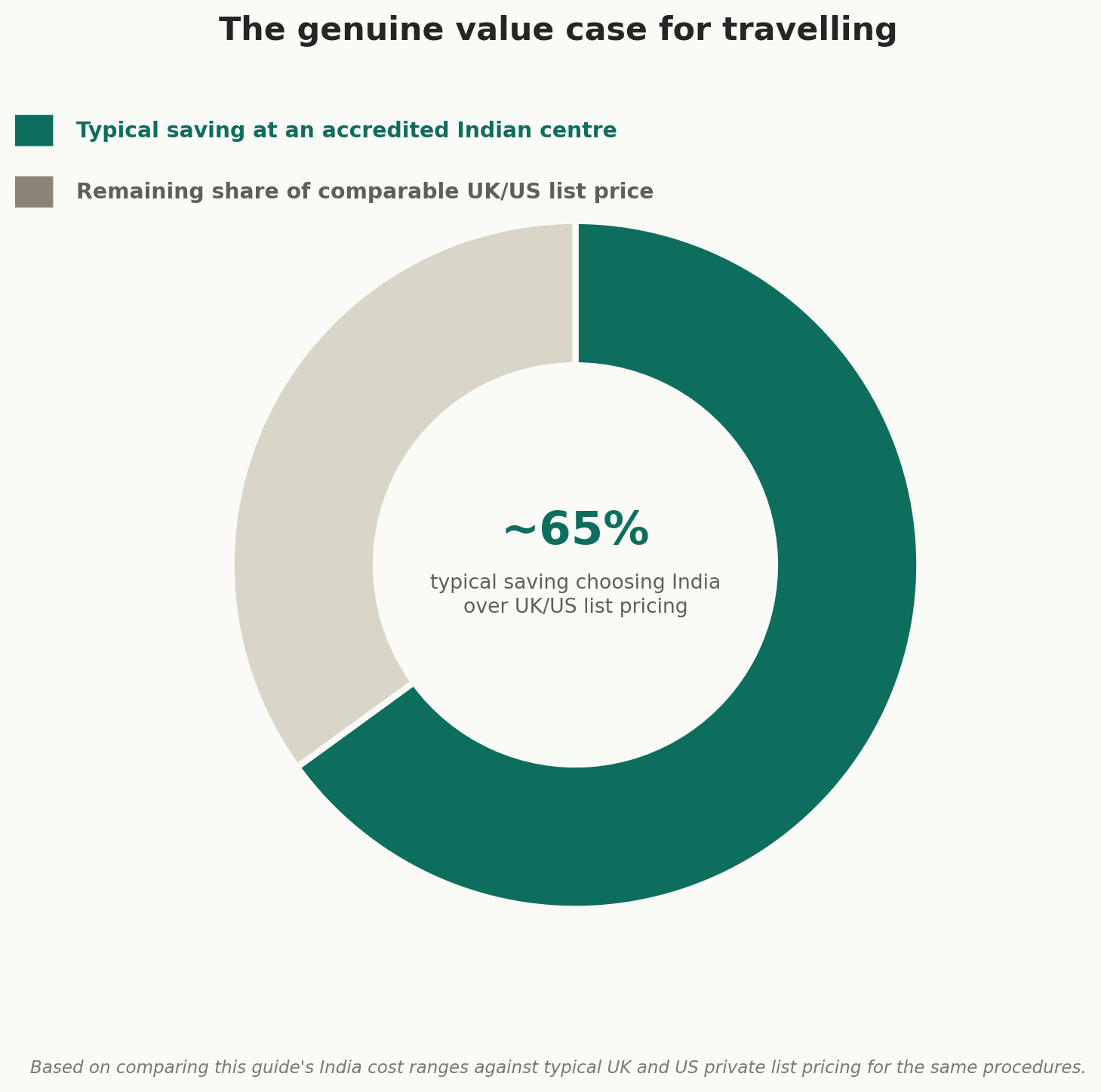
Figure 2. The genuine value case for travelling, based on this guide's own cost comparisons against typical UK and US private pricing.
05 · Getting There
Visa, travel, and a recovery worth taking seriously
India issues a Medical Visa (M) to the patient and a Medical Attendant Visa (MX) to accompanying family. Applications go through the High Commission in Abuja or the Consulate General in Lagos by prior appointment, and an e-Medical route turns around in days for straightforward files. The hospital's invitation letter, three months of certified bank statements, and a passport valid six months with two blank pages move the process fastest.
Lagos and Abuja both reach Delhi, Mumbai and Chennai with a single stop, usually via Addis Ababa, Doha, Dubai, Nairobi or Istanbul, a total journey of 13 to 18 hours.
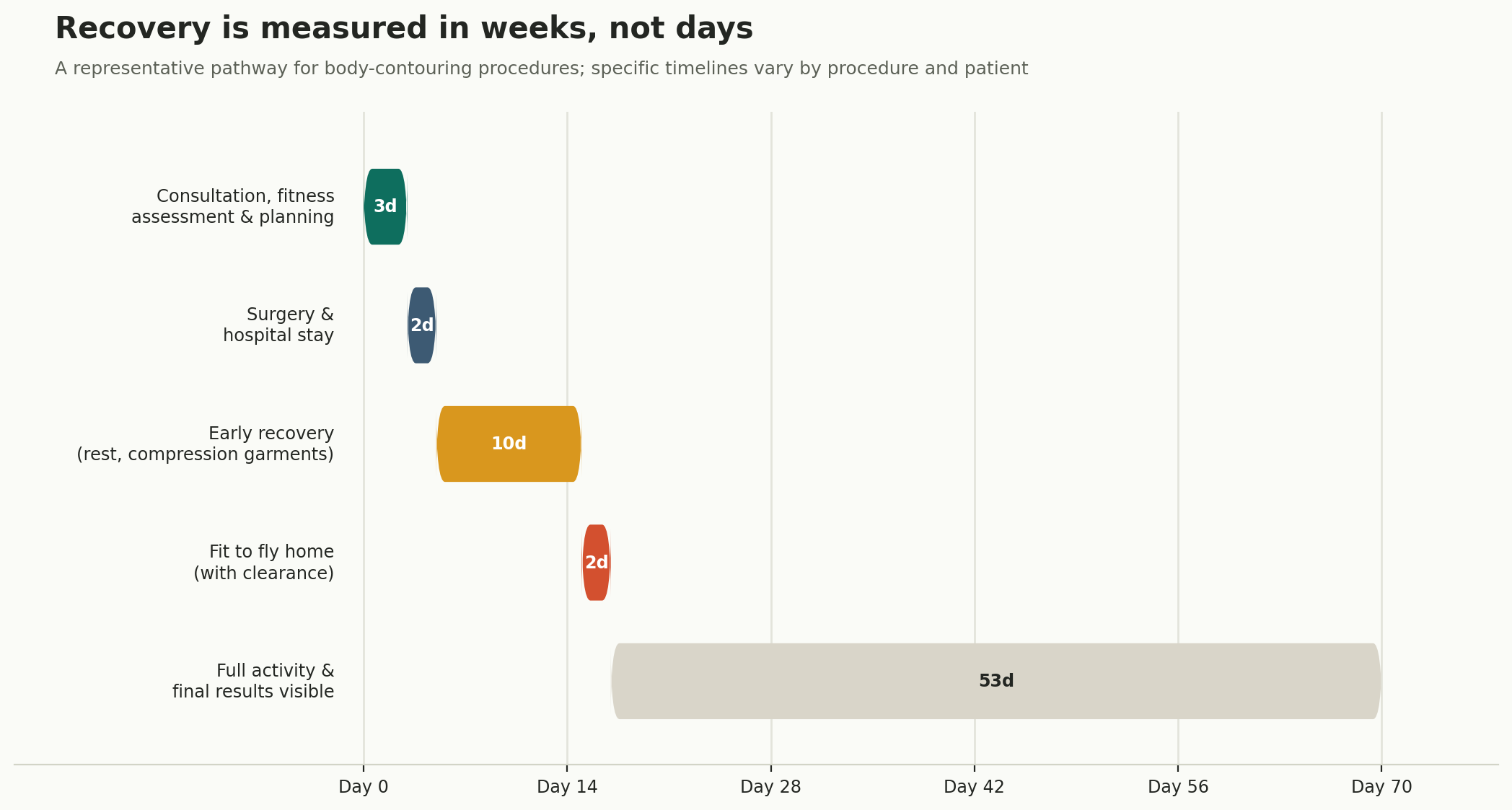
Figure 3. Recovery from body-contouring procedures extends well beyond the trip itself. Final results are typically not fully visible for two to three months.
On why flying home too soon is genuinely dangerous. Long-haul flights increase the risk of blood clots at the best of times; combined with recent surgery, this risk rises further. A clinic clearing a patient to fly within days of a major body-contouring procedure, without a specific, documented fitness assessment, is prioritising convenience over safety.
What has to travel home with the patient
- Full operative record, including specific technique used and any implants or materials placed
- Written post-operative care instructions covering the full recovery window, not just the first week
- Clear warning signs requiring urgent medical attention, specific to the procedure performed
- Contact details for the treating surgeon for questions during recovery The most important comparison this guide can offer is not geographic. It is the comparison between a genuinely qualified, accredited provider and an unregulated one, and that distinction applies with equal force whether a patient is considering treatment in Lagos, Abuja, or anywhere in India.
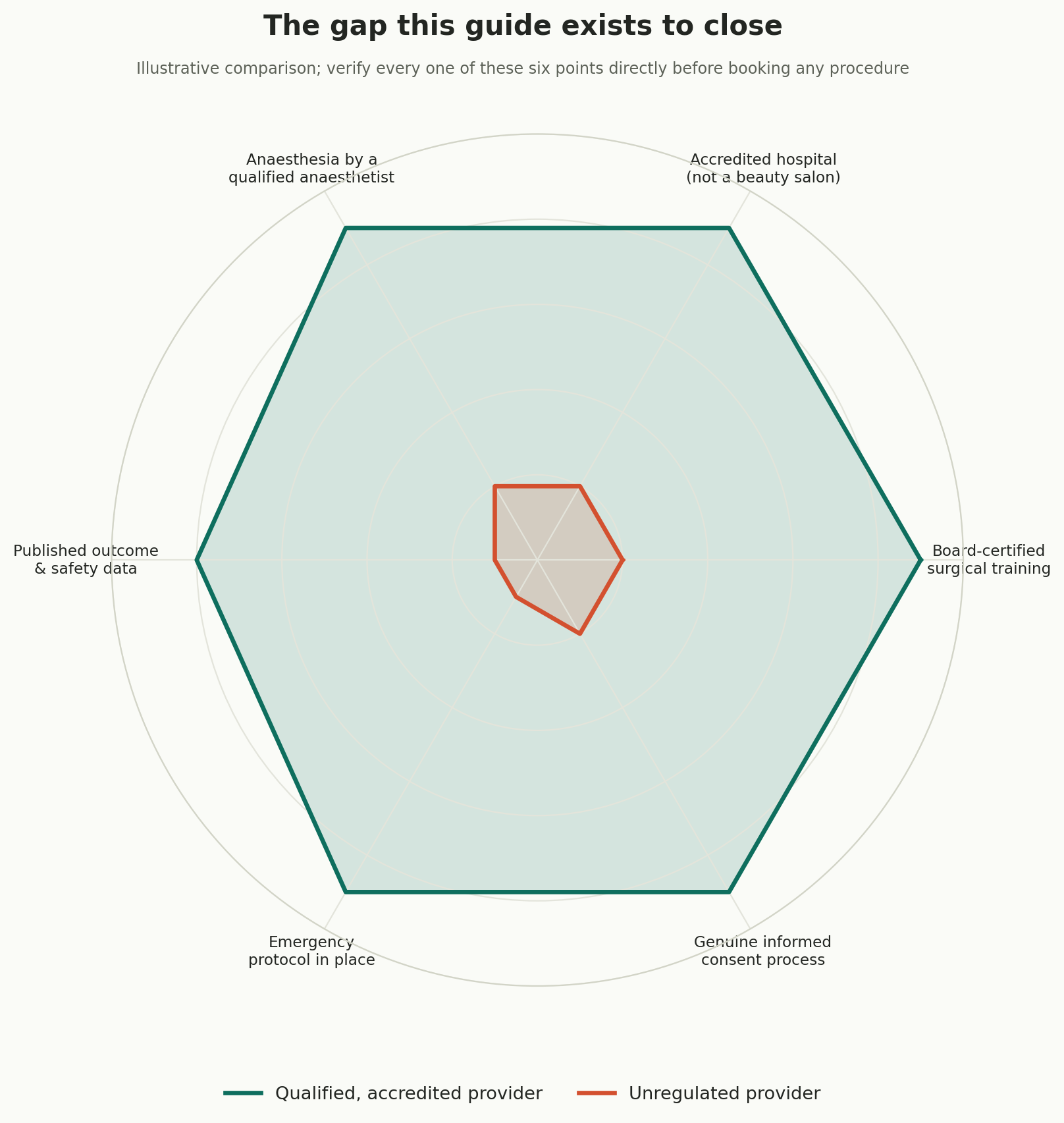
Figure 4. The gap this guide exists to close. Every one of these six points is directly verifiable before booking any procedure, anywhere.
A well-accredited Indian cosmetic surgery centre, chosen with the specific verification steps this guide describes, genuinely offers a combination of experienced, high-volume surgeons and lower relative cost that many Nigerian patients find compelling. A genuinely qualified provider in Lagos, verified against these same six criteria, can be an equally safe choice for many procedures, and a patient should not assume international travel is automatically the safer option by default. The verification process this guide describes is the actual decision that protects a patient; the country in which that verified provider happens to practise is a secondary consideration.
Before you commit to any cosmetic procedure, anywhere
- Confirm the surgeon's specific board certification in plastic or cosmetic surgery, and verify it independently.
- Confirm the procedure will take place at an accredited hospital, not a standalone aesthetic clinic without surgical facilities.
- Ask specifically who will administer anaesthesia, and confirm their qualification directly.
- Request the provider's own complication and safety data for the specific procedure, not general reassurance.
- Confirm a written emergency protocol exists, including nearest ICU access.
- Never let price alone be the deciding factor for an elective surgical procedure.
- Pay into the hospital's own institutional account only, never an individual's personal account.
Straight Answers for Nigerian Patients about Cosmetic and Aesthetic Surgery in India
Is cosmetic surgery in India cheaper than the UK or US?
Yes, substantially. Rhinoplasty is indicatively $1,600 to $2,900 in India, against roughly $8,000 to $12,000 privately in the UK and $8,000 to $15,000 self-pay in the United States, a typical saving of around 65 percent.
Is Nigeria's aesthetic medicine industry regulated?
Oversight remains fragmented. Nigerian professionals have stated the country lacks a dedicated regulatory body for aesthetic medicine specifically, even as a national cosmetics products policy was adopted in 2025 and 2026.
Does a registered clinic guarantee a safe procedure?
No. Regulatory investigations have specifically noted that facility registration alone does not guarantee safety standards or practitioner qualifications were met. Registration and genuine qualification are separate facts worth verifying independently.
How can I tell if a provider is genuinely qualified?
Confirm board certification, treatment at an accredited hospital, anaesthesia by a qualified anaesthetist, and a documented emergency protocol. A registered facility alone does not guarantee these standards.
Do Nigerians need a visa for cosmetic surgery in India?
Yes. You need an Indian Medical Visa from the High Commission in Abuja, the Consulate in Lagos, or the e- Medical route, plus a Medical Attendant Visa for accompanying family.
A closing word
Wanting to change something about how you look is not vanity requiring justification; it is a personal decision deserving the same seriousness as any other surgical procedure in this series. What makes cosmetic surgery different is that the industry surrounding it, in Nigeria and in many parts of the world, has grown faster than the systems meant to protect patients within it, placing a heavier burden of verification on the individual than it should.
In twenty-four years of this work, the patients who navigate this best treat every one of the verification steps in this guide as non-negotiable, and resist the pull of a lower price from an unverified provider. A confident, qualified provider will never be offended by these questions. That, itself, is often the clearest signal of all.
Sources
- 🌐 Stakeholders push regulation, training as Nigeria's aesthetic medicine sector expands. Vanguard News, 2026
- 🌐 Nigeria adopts national policy to strengthen cosmetics safety. World Health Organization Regional Office for Africa, 2026
- 🌐 Medical Law Digest Q1 2026 — Nigeria healthcare regulation update. Mondaq
- 🌐 American Society of Plastic Surgeons — Patient safety resources
- 🌐 High Commission of India, Abuja — Medical and Medical Attendant Visa requirements
Frequently Asked Questions by Nigerians about Cosmetic and Aesthetic Surgery in India
Is cosmetic surgery in India cheaper for Nigerian patients than in the UK or US?
The guide indicates that Indian prices can be substantially lower. It cites an illustrative saving of around 65% compared with typical UK/US private pricing.
Which cosmetic procedures are covered in the guide?
The guide specifically covers rhinoplasty, liposuction, breast augmentation and tummy tuck, with indicative costs and recovery periods for each.
How much does cosmetic surgery cost in India for Nigerian patients?
Indicative procedure costs range from approximately US$1,600 to US$4,550, depending on the procedure. Additional travel and recovery expenses must also be considered.
What is the complete cost of liposuction for a Nigerian patient?
The guide estimates approximately US$4,600–US$8,200 for a representative liposuction journey, including surgery, flights, tests, accommodation, visa and contingency costs.
Does a registered cosmetic clinic guarantee a safe procedure?
No. The guide clearly states that registration and genuine qualification are separate facts. Patients should independently verify the surgeon, anaesthetist, facility and emergency arrangements.
How can Nigerian patients verify a cosmetic surgeon's qualifications?
They should confirm the surgeon's specific board certification and the certifying body, and verify the information independently rather than relying only on the clinic's website or marketing material.
What should patients check about anaesthesia?
Patients should ask who will administer the anaesthesia and confirm that the person is a properly qualified anaesthetist. This should be identified before the procedure.
What should be included in a cosmetic surgery quotation?
The guide recommends confirming the surgeon's certification, named anaesthetist, exact surgical facility and accreditation, as well as the written emergency protocol and nearest ICU access.
How long should Nigerian patients plan to stay in India after cosmetic surgery?
Recovery varies by procedure. The guide's recovery chart shows that body-contouring recovery extends over several weeks, with final results often taking two to three months to become fully visible.
Can Nigerian patients fly home immediately after cosmetic surgery?
The guide strongly cautions against returning home too soon after major body-contouring surgery. Recent surgery combined with a long-haul flight can increase blood-clot risk, so patients should obtain documented medical clearance before flying.
Page Summary
This guide explains the major considerations for Nigerian patients exploring cosmetic and aesthetic surgery in India, with its main focus on verifying the qualifications and safety standards of the provider before booking an elective procedure. It covers rhinoplasty, liposuction, breast augmentation and tummy tuck, including indicative procedure costs, the additional expenses involved in a complete liposuction journey, surgeon board certification, accredited hospital facilities, qualified anaesthesia, emergency preparedness, medical-visa requirements and recovery planning. The guide's page 7 verification diagram highlights six core safety checks: board-certified surgical training, accredited hospital, qualified anaesthetist, genuine informed consent, emergency protocol and published outcome/safety data.
Citation Block
| Topic | Information |
|---|---|
| Topic Information | Cosmetic and Aesthetic Surgery in India for Patients from Nigeria |
| Treatment | Cosmetic and Aesthetic Surgery |
| Intended Audience | Patients from Nigeria |
| Key Specialist | Board-Certified Plastic / Cosmetic Surgeon |
| Main Procedures | Rhinoplasty, Liposuction, Breast Augmentation and Tummy Tuck |
| Primary Assessment | Surgical Consultation and Fitness-for-Surgery Assessment |
| Indicative Procedure Cost | US$1,600–US$4,550 |
| Indicative Liposuction Journey | US$4,600–US$8,200 All-In |
| Main Safety Check | Verify Specific Board Certification |
| Hospital Requirement | Accredited Hospital With Surgical Facilities |
| Anaesthesia Requirement | Qualified Anaesthetist |
| Emergency Requirement | Written Emergency Protocol and ICU Access |
| Important Warning | Registered Facility Alone Does Not Guarantee Practitioner Qualification |
| Outcome Check | Ask for Procedure-Specific Safety and Complication Data |
| Cost Check | Request a Detailed Written Quote Before Travel |
| Recovery Check | Do Not Plan Long-Haul Travel Too Soon After Major Surgery |
| Pre-Travel Records | Medical Assessment and Surgical Planning Records |
| Visa Requirement | Indian Medical Visa and Medical Attendant Visa |
| Travel Routes | Lagos/Abuja to Delhi, Mumbai or Chennai via Connecting Hubs |
| Patient Journey | Consultation → fitness assessment → visa → travel/surgery → early recovery → home follow-up |
| Post-Surgery Records | Operative Report, Care Instructions, Warning Signs and Surgeon Contact |
| Final Results | May Continue Developing for 2–3 Months |


Our Mission Statement
Our mission is to place patients at the centre of every healthcare decision by providing trustworthy, evidence-based, and unbiased medical information. We believe that informed patients make better decisions. Backed by personalised guidance from our experienced advisory team, we help patients understand their treatment options, compare them objectively, and confidently choose the path that best suits their medical needs and personal circumstances.
Patient Testimonials from Nigeria















Ready to Take the First Step?
Share your Medical Reports with our Healthcare Managers Today and Get a FREE CONSULTATION, a Personalized Treatment Plan, and Complete Support from Arrival to Recovery.
Get Your Free ConsultationAreas We Serve
This resource has been thoughtfully prepared for patients from Nigeria who are considering medical treatment in India. We also welcome patients from the wider region in the countries mentioned below-
We assist patients from:
- Benin
- Niger
- Chad
- Cameroon
- Algeria
- Egypt
- Libya
- Morocco
- Sudan
- Tunisia
- Gambia
- Ghana
- Burkina Faso
- Cabo Verde
- Côte d'Ivoire
- Equatorial Guinea
- São Tomé and Príncipe
Many of the insights, treatment pathways, hospital recommendations, travel guidance, and patient support services described here are equally relevant and may be used as a reference when planning treatment in India.
From Nigeria to India: Your Complete Patient Support Guide
- Artificial Disc Replacement in India for Nigerian Patients
- Weight Loss and Bariatric Surgery in India for Nigerian Patients
- Bone Marrow Transplant in India for Nigerian Patients
- Brain Tumour Surgery in India for Nigerian Patients
- Breast Cancer Treatment and Surgery in India for Nigerian Patients
- Cancer Treatment and Surgery in India for Nigerian Patients
- Cardiac Arrhythmia and Heart Pacemaker Treatment in India for Nigerian Patients
- Cardiac Surgery in India for Nigerian Patients
- Colorectal Cancer Treatment and Surgery in India for Nigerian Patients
- Complex Orthopaedic and Joint Revision Surgery in India for Nigerian Patients
- Cornea Transplant and Advanced Eye Surgery in India for Nigerian Patients
- CyberKnife Treatment in India for Nigerian Patients
- Gamma Knife Treatment in India for Nigerian Patients
- Heart Failure Treatment and Surgery in India for Nigerian Patients
- Hip Surgery in India for Nigerian Patients
- HIPEC Cancer Surgery in India for Nigerian Patients
- IVF and Fertility Treatment in India for Nigerian Patients
- Joint Arthroscopy and Sports Medicine in India for Nigerian Patients