

Choosing a Knee Surgeon and Hospital in India: A Nigerian Patient’s Decision File
Best Knee Surgeons and Hospitals in India for Nigerian Patients
A man in Ikeja, 62, both knees bad, the right one worse. Three quotes sit on his phone from three Indian hospitals: $4,900, $6,400, $8,200. All three say “total knee replacement.” None names an implant. None names a surgeon. He is about to take the cheapest, because the three look like the same product at three prices. They are not. In 24 years of moving West African patients into Indian operating theatres, I have watched that one assumption cost more money and more knees than any other mistake Nigerian patients make. This file is how to take those quotes apart.
Healing Journeys of Nigerian Patients


Key Takeaways
- Nigerian patients should compare knee replacement quotations by the named surgeon, implant brand and model, fixation type, hospital stay, complication data and physiotherapy—not by package price alone.
- India may be particularly useful when both knees require surgery, deformity is severe, revision surgery is needed, or conditions such as sickle cell disease, obesity, diabetes or cardiac disease require multidisciplinary care.
- The named surgeon’s annual knee replacement volume and the proportion of their practice devoted to joint replacement are important decision factors.
- Patients should ask for the exact implant system, whether it is cemented or uncemented, and whether a cruciate-retaining, posterior-stabilised or constrained design is proposed.
- A globally distributed implant system is preferable because future revision surgery may require identifiable components and matching parts.
- Most Nigerian patients are quoted approximately USD 4,200–7,500 for one total knee replacement at an accredited Indian hospital.
- The estimated complete medical travel budget is approximately ₦8 million–₦14 million, including surgery, implant, flights for two, accommodation and physiotherapy.
- Nigerian patients should generally plan for around 19 days in India, including work-up, hospitalisation, supervised rehabilitation and fit-to-fly assessment.
- A ten-day package may cover the operation but usually removes much of the supervised physiotherapy period that supports early knee movement.
- Follow-up planning should include a discharge summary, implant card, rehabilitation protocol, named physiotherapist in Nigeria and clear red-flag symptoms.
Quick Facts
- Conditions Covered
- Severe Knee Osteoarthritis, Bilateral Knee Disease, Long-Standing Varus or Valgus Deformity, Failed Knee Replacement, Knee Stiffness, Sickle Cell–Related Surgical Risk, Obesity, Diabetes and Cardiac Comorbidity
- Procedures Mentioned
- Total Knee Replacement, Bilateral Knee Replacement, Revision Knee Replacement, Cemented Knee Replacement, Uncemented Knee Replacement, Cruciate-Retaining Knee Replacement, Posterior-Stabilised Knee Replacement and Constrained Knee Replacement
- Target Audience
- Nigerian patients considering knee replacement surgery in India
- Treatment Highlights
- High-volume knee surgeons, named implant systems, complication tracking, multidisciplinary medical assessment, daily supervised physiotherapy, defined flexion targets, fit-to-fly review and structured follow-up in Nigeria
- Indicative Knee Replacement Cost
- USD 4,200–7,500 for one total knee replacement
- Estimated All-In Budget
- Approximately ₦8 million–₦14 million
- Typical Stay in India
- Approximately 19 days
- Pre-Operative Work-Up
- Approximately 3 days
- Hospital Stay
- Approximately 4–5 days
- Important Implant Details
- Brand, model, fixation type, cruciate-retaining or posterior-stabilised design, need for constraint and implant identity card
- Important Pre-Travel Records
- Weight-bearing knee X-rays, MRI where available, blood reports, current medicines, medical history and genotype where relevant
- Medical Travel Requirements
- Hospital invitation letter, Indian Medical Visa, Medical Attendant Visa, valid yellow fever certificate and a changeable return ticket
- Author/Advisor
- Dr. Dheeraj Bojwani
- Experience
- 24+ Years in Medical Travel
In Brief
Choosing a knee surgeon and hospital in India requires Nigerian patients to look beyond the lowest quotation. The most important factors include the surgeon’s annual knee replacement volume, the exact implant system, complication and revision data, the number of supervised physiotherapy sessions and the quality of follow-up after returning home. A detailed quotation should clearly state what is included, what may cost extra and how a second knee would be priced in the same admission. Patients should also send weight-bearing X-rays and relevant medical information before accepting a treatment plan.
First: what you are actually comparing
Start by being fair to home. Nigeria does knee surgery, and does it with real skill. The National Orthopaedic Hospital, Igbobi, has been replacing knees for decades, with sister institutions in Enugu and Dala, Kano. On the private side, Duchess International and Lagoon in Lagos, Cedarcrest and Garki in Abuja, R-Jolad, Reddington and Euracare run arthroplasty lists staffed by competent, often foreign- trained surgeons. Nobody serious tells Nigerian patients their country cannot operate.
The comparison is therefore not skill against no skill. It is depth against depth. A senior arthroplasty surgeon at a large Indian centre may do 200 to 300 knees a year and almost nothing else; the full range of implant sizes and constraint options sits on the shelf, so the design is chosen in theatre rather than by what could be imported in time; both knees can be done in a single admission; and cardiology, haematology, endocrinology and a dedicated physiotherapy gym are in the same building, on the same day, for the same bill. That concentration of volume and back-up is what you are buying, and it is why cost usually falls rather than rises when Nigerian patients cross over.
The trip earns its keep most clearly when both knees need doing at once; when the deformity is severe and long-standing, common here because patients present years later than in Europe; when a previous knee operation needs revision; when sickle cell disease, obesity, uncontrolled diabetes or cardiac disease calls for several specialties around one table; or when the Lagos private quote already sits close to the
Indian one, which happens more often than families expect. If your case is straightforward and you have found a local surgeon who does knees week in and week out, put the same seven questions to him. They work equally well in Lagos, and a good surgeon anywhere will welcome them.
Ranges, not single figures. Where a hospital sits inside its band is set by implant tier, length of stay and surgeon seniority
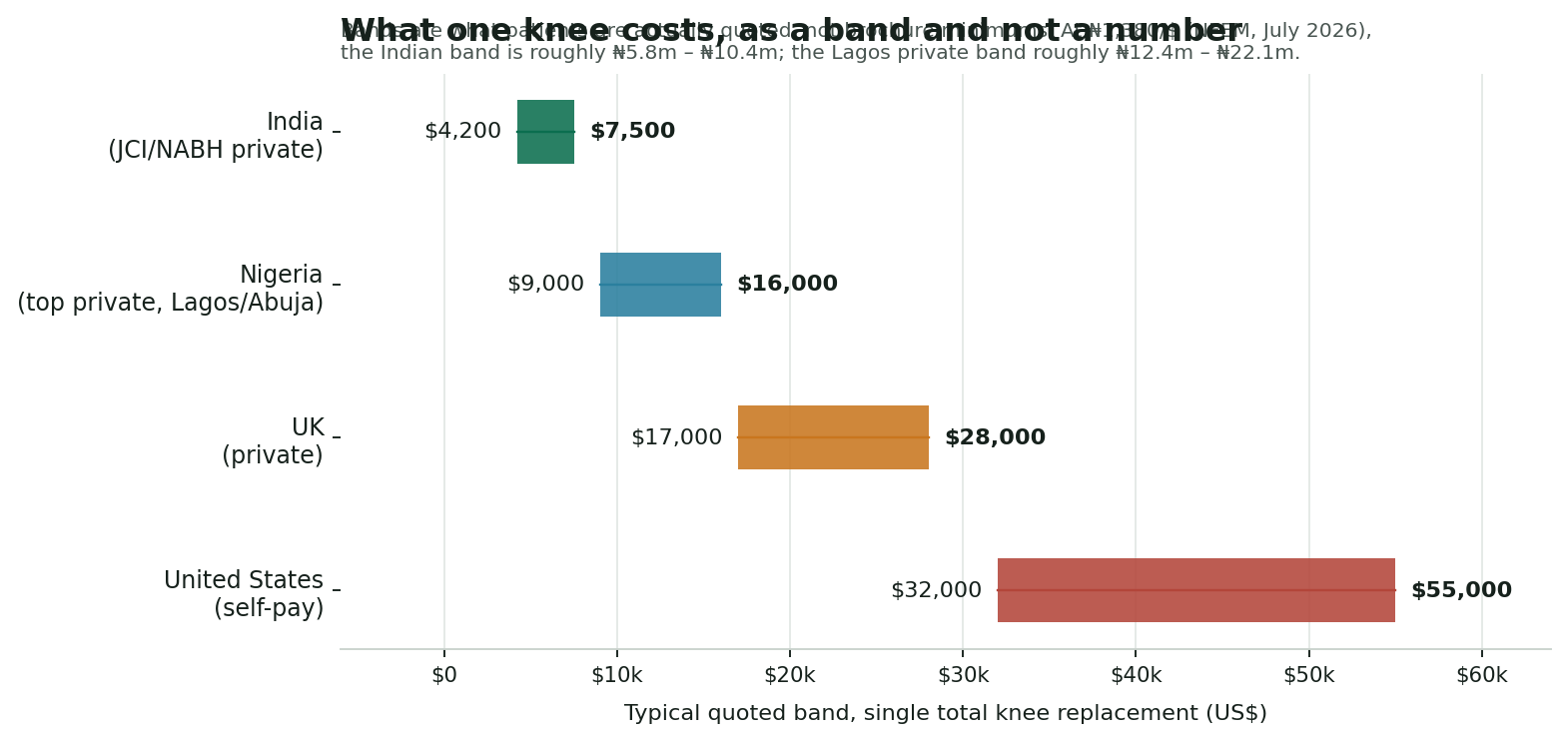
— exactly what questions 02, 05 and 06 expose.
The seven questions
What follows is not a list of things to “consider.” It is seven questions to send in writing to every hospital that has quoted you. The answers — and how specific they are — will separate those quotes faster than any brochure or ranking page.
01 How many knee replacements does the named surgeon personally perform in a year — and what proportion of his practice is knees?
Volume has a boring, well-documented relationship to outcome. A surgeon doing 200 knees a year meets the awkward intra-operative moment differently from one doing 30. Ask for a number, then ask what else he does — a “joints and trauma and sports and spine” surgeon is a generalist wearing four hats.
| Good Answer | Bad Answer |
|---|---|
| “Dr X performs roughly 250–300 knee arthroplasties a year; knees and hips are about 80% of his practice.” | “Our surgeons are highly experienced and internationally trained.” That is a sentence about nobody. |
02 Exactly which implant — brand, model and bearing — and why that one for my knee?
This is where the $4,900 and $8,200 quotes part company. The gap is rarely skill; it is hardware, sometimes a cheaper tier nobody mentioned. Ask for manufacturer and system name in writing, whether it is cemented or uncemented, cruciate-retaining or posterior-stabilised, and whether a constrained design is likely given how bent the knee has become. Severe long- standing varus deformity sometimes does need one — a clinical decision, not an upsell — but you should hear the reason before the price.
| Good Answer | Bad Answer |
|---|---|
| A named system, a named reason, and confirmation that you leave with an implant identity card. | “We use imported high-quality implants.” Every hospital on earth says this. |
03 Who in Nigeria can service this implant in fifteen years?
Almost nobody asks this, and it may be the most consequential question in the file. A knee replacement is a machine with a service life: in a patient over 65 it has a good chance of outliving him, in one of 55 who is heavy and still working it may not. Revision is far easier when the surgeon doing it can identify the exact system and obtain matching parts. An implant from a manufacturer with no distributor presence in Nigeria makes that harder, and you may be flying again at 70. Choose a globally distributed system, then keep and photograph the implant card and operative note.
| Good Answer | Bad Answer |
|---|---|
| A mainstream global system, plus a written operative note and implant card given at discharge. | Silence, or a brand you cannot find outside one country. |
04 What are your infection and revision rates, and how do you track them?
You will not audit the answer; the point is whether the unit measures itself at all. A department keeping its own arthroplasty register answers within a day, with figures and a caveat about case mix. One that does not produces a paragraph of reassurance. Deep infection costs a second operation and usually a second implant, and units that count it keep it down.
| Good Answer | Bad Answer |
|---|---|
| “Deep infection under 1%; here is how we count it; here is our 90-day readmission figure.” | “We have a very high success rate, over 99%.” Unmeasured perfection is marketing. |
05 What is not in this quote, and at what point does it become my problem?
Serious disputes almost never concern the quoted price. They concern what the quote silently omitted. In one message, ask the position on extra hospital days, an unplanned ICU night, transfusion, an implant changed in theatre, a problem found at work-up (here usually blood pressure, blood sugar or an unexpected cardiac finding), physiotherapy beyond the package, and accommodation for your attendant. Get currency, payment method and refund terms in the same reply, and ask what a second knee costs in the same admission.
| Good Answer | Bad Answer |
|---|---|
| An itemised estimate with a named scope, per-day rates for overruns, and a written escalation route. | A round number in a WhatsApp message with no breakdown. |
06 How many days of supervised physiotherapy do I get before you clear me to fly?
A knee replacement is not finished when the wound closes. It is finished around week three in a physiotherapy gym, and the range of motion you leave India with is close to the range you keep. Ask what flexion they expect before discharge, how many supervised sessions are included, and what happens if you are slow to bend, because stiff knees need early intervention. This is also why a ten-day round trip should worry you. Ten days is enough to have the operation. It is not enough to have the recovery.
| Good Answer | Bad Answer |
|---|---|
| A daily in-patient physiotherapy schedule, a target flexion figure, and a fit-to-fly review at around day 18–21. | “Physiotherapy is arranged as needed.” |
07 What is the written plan for the day I land back in Lagos?
Distance turns a small problem into a frightening one. A wound that weeps in week five is manageable if you already know who examines it. Secure four things before you pay: a discharge summary a Nigerian doctor can act on; a named physiotherapist in your city who already has your protocol; a stated channel and response time for reaching the surgeon; and a plain list of symptoms meaning go to hospital tonight, not message tomorrow.
| Good Answer | Bad Answer |
|---|---|
| A written follow-up schedule with named local contacts and defined red-flag symptoms. | “You can always call us.” |
Turn the answers into a score
Seven answers are hard to compare side by side, so turn them into numbers. Score each hospital 0 to 10 on the six axes below. Under 40 out of 60 does not deserve your deposit, whatever the price says.
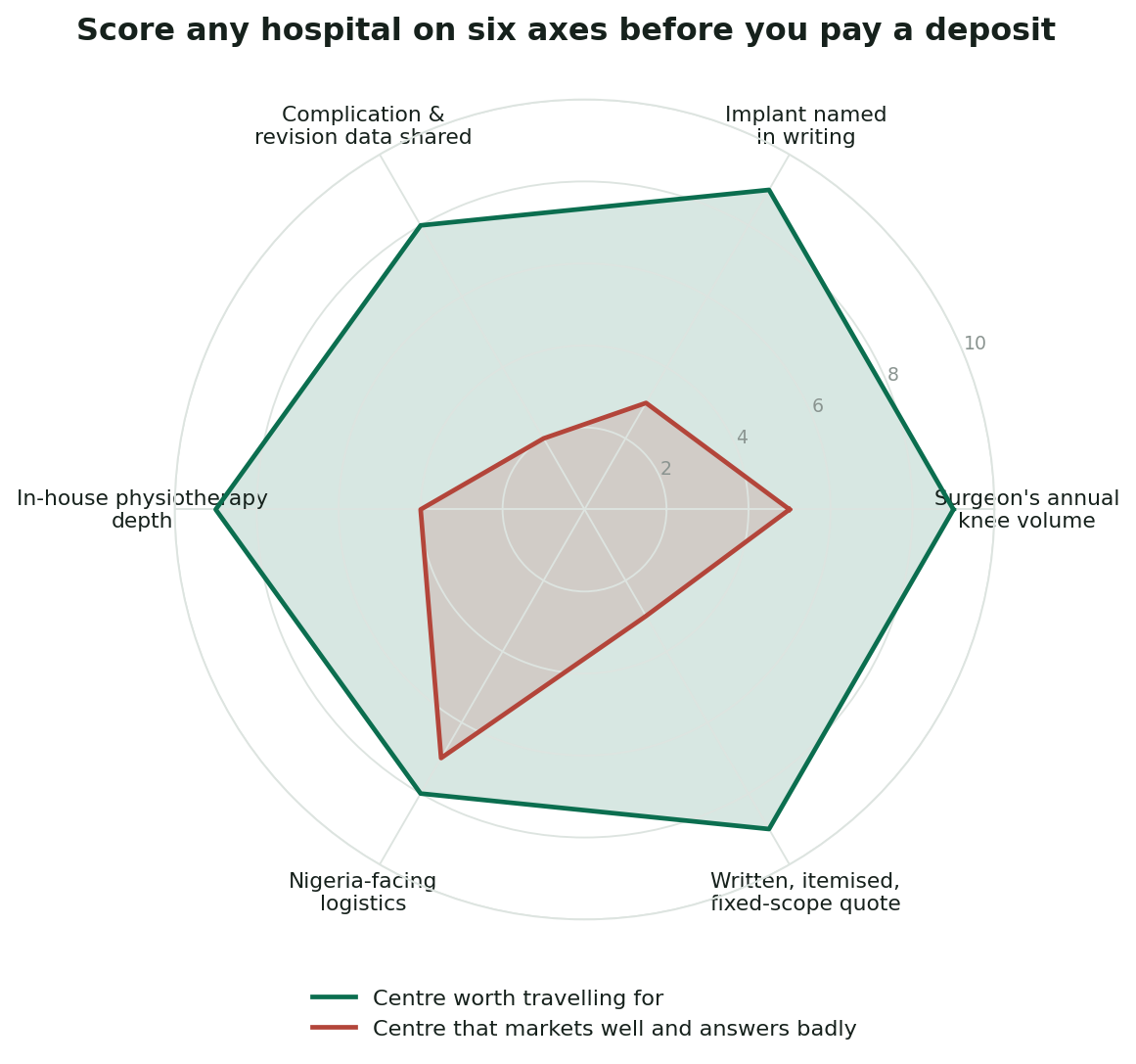
The shape tells you more than the total. Weak centres score well on logistics, because that is the sales function, and thin out wherever the clinical answers live.
| Axis | What a 10 looks like | Your score |
|---|---|---|
| Surgeon’s annual knee volume | A specific number above roughly 150, knees at the core of the practice | ___ / 10 |
| Implant named in writing | Brand, model, fixation type, and the clinical reason for it | ___ / 10 |
| Complication data shared | Real figures, a stated method of counting, and a caveat | ___ / 10 |
| Physiotherapy depth | Daily in-patient sessions, a flexion target, a plan for stiffness | ___ / 10 |
| Nigeria-facing logistics | Visa letter, pickup, attendant accommodation, a named coordinator | ___ / 10 |
| Written itemised quote | Fixed scope, listed exclusions, overrun rates, refund position | ___ / 10 |
Four Ways Nigerian Patients Get Burned
- Paying a person instead of a hospital. Money moves to an account in the hospital’s own name against an invoice. A personal account or a “facilitation fee” paid before any medical opinion exists is not a booking.
- Choosing on the quote instead of the answers. The cheapest quote is often cheapest because it assumes a shorter stay, a lower implant tier and less physiotherapy.
- Travelling before the written opinion arrives. Send the X-rays first. A hospital willing to quote without seeing a weight-bearing film will skip other things too.
- Underbudgeting the tail. Surgery is about a third of the spend. Flights for two, three weeks of hotel and food, and post-discharge physiotherapy are what ambush families.
The money, in naira and in plain terms
Two facts frame everything. The naira has held a relatively stable band through mid-2026, near ₦1,380 to the dollar on the official NFEM window and roughly ₦1,410–1,425 in the parallel market. The second is the one no brochure prints: this is out-of-pocket money. Cover under the NHIA framework is built around care delivered inside Nigeria, and standard HMO plans do not fund elective surgery abroad. Assume you are funding this yourself, then check your schedule.
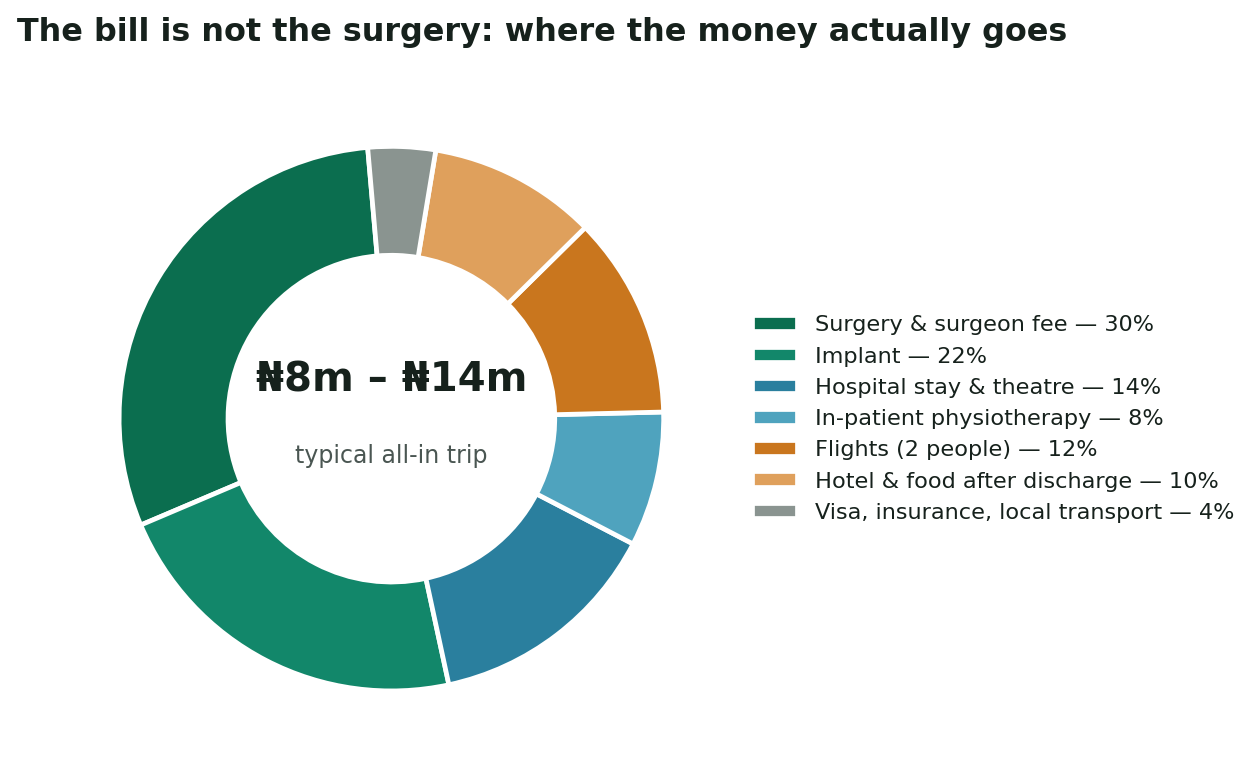
The operation is under a third of the outlay. Families who budget only for the surgical quote run short during the physiotherapy weeks — the worst possible moment to run short.
Practical money rules. Transfer to the hospital’s own account and keep the SWIFT confirmation. Take the estimate in dollars and never let an intermediary set your exchange rate. Carry cards from two banks and leave a naira buffer at home. Budget 15% contingency — not because Indian hospitals overcharge, but because bodies do not read estimates.
The clock, and the Nigeria-specific practicalities
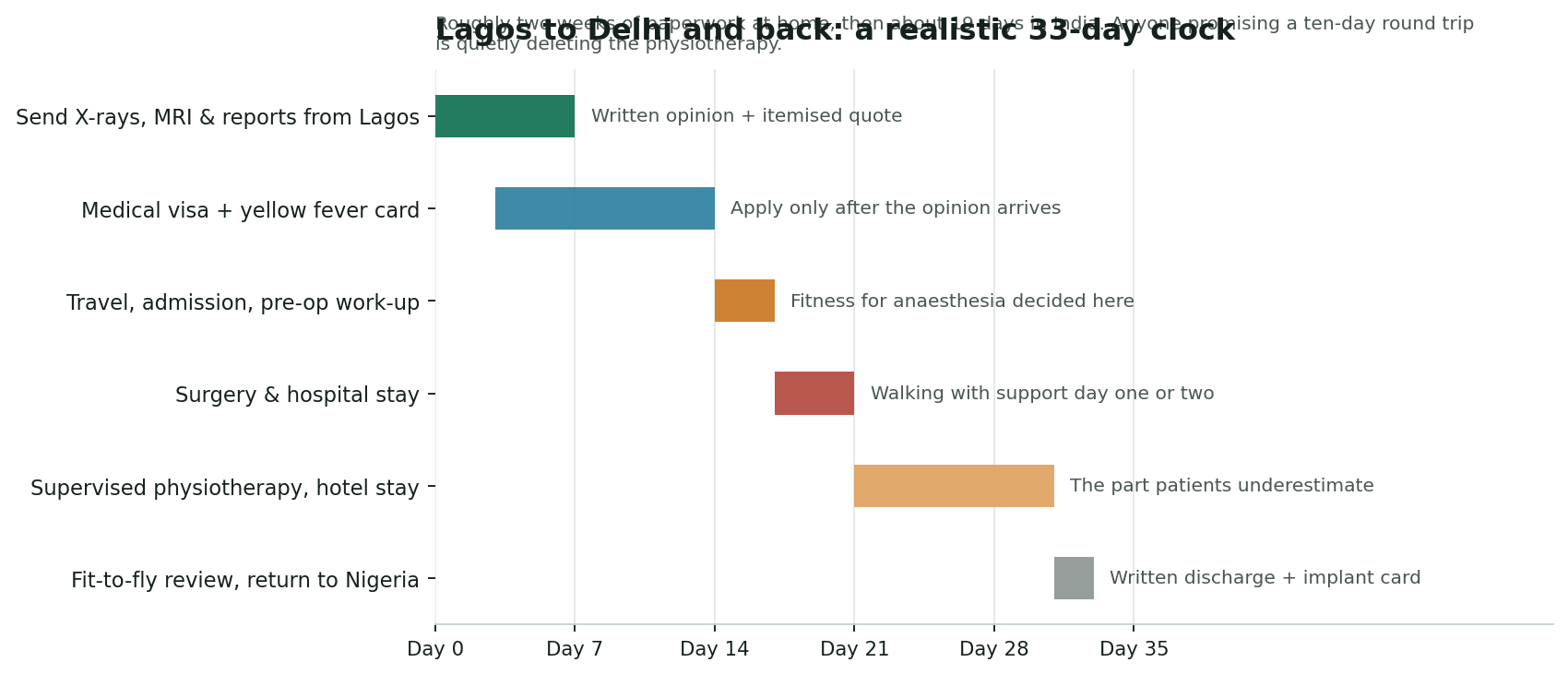
Build the calendar backwards from the fit-to-fly review, not forwards from the flight you would like to take.
Yellow fever is not optional. Travelling from Nigeria you need a valid yellow fever certificate to enter India, presented on arrival. Sort it early; it derails more departures than anything else on this list.
Apply for the visa after the opinion, not before. The Indian High Commission in Abuja and the Consulate General in Lagos handle Nigerian applications, and the medical visa is issued against the hospital’s invitation letter. Put the medical attendant visa in the same batch; nobody should do this trip alone.
Routing. With no practical non-stop from Lagos or Abuja, most patients connect through Addis Ababa, Dubai, Doha or Istanbul — fifteen to twenty hours door to door. Ask for an aisle seat, move your ankles hourly, and be sure the surgeon has cleared you to fly before booking the return.
Tell them about sickle cell, early. Sickle cell disease and trait are far commoner here than in the populations most Indian arthroplasty protocols were written around, and they change the anaesthetic plan, transfusion strategy, hydration and tourniquet use. Put your genotype in the first message; the right response is a haematologist joining the case before you fly.
None of that is exotic or expensive to get right. In 24 years of this work, the trips that went wrong almost never went wrong in theatre. They went wrong in a WhatsApp thread three weeks earlier, where a question was not asked.
Straight Answers for Nigerian Patients about Knee Surgery in India
How much does knee replacement surgery cost in India for a Nigerian patient?
Most are quoted US$4,200 to US$7,500 for one total knee replacement at an accredited Indian hospital — roughly ₦5.8m to ₦10.4m at mid-2026 rates. Budget ₦8m to ₦14m all-in, including flights for two, accommodation and physiotherapy. Both knees in one admission costs less than two trips.
How long must a Nigerian patient stay in India for knee surgery?
About nineteen days: three days of work-up, four to five as an in-patient, then roughly ten days of supervised physiotherapy before a fit-to-fly review. Add two weeks at home beforehand for records, opinion and visa. A ten-day package has removed the physiotherapy.
Will NHIA or my Nigerian HMO pay for knee surgery in India?
Almost certainly not. Cover under the NHIA framework is built around accredited providers inside Nigeria, and standard HMO plans do not fund elective surgery abroad. A few corporate and international policies carry overseas benefits, so ask your HMO in writing first.
What documents does a Nigerian patient need to travel to India for surgery?
A passport valid six months, an Indian medical visa issued against the hospital’s invitation letter, attendant visas for family, a valid yellow fever certificate, and your full medical file: weight-bearing knee X-rays, any MRI, blood results and current medicines.
How do I check whether an Indian knee surgeon is genuinely experienced?
Ask for his name in writing, his annual number of knee replacements, how much of his practice is joint replacement, his unit’s infection and revision figures, and who operates if he is unavailable. Verify registration with the relevant State Medical Council. A hospital that answers all five specifically within a day is telling you what it is.
A closing word
Send the seven questions to all three hospitals tonight and give them 48 hours. Read the replies not for what they promise but for what they will be specific about, because specificity is the one quality here that cannot be faked cheaply.
If you want a second pair of eyes on the films and the quotes before you commit, send them. Some patients who write to me are told the knee does not yet need replacing, or that what they need sits forty minutes from their house. If that is the right answer for your knee, it is the answer you will get.
Cost figures are indicative bands from quotations issued to West African patients, not offers. Conversions use an official NFEM rate of about ₦1,380 to US$1 at mid-July 2026 and will move. Visa and vaccination rules change: verify with the Indian High
Frequently Asked Questions by Nigerians about Knee Surgery in India
Why do Nigerian patients choose India for knee replacement surgery?
Many Nigerian patients choose India because it offers high-volume knee replacement surgeons, internationally accredited hospitals, advanced implant options, multidisciplinary medical care, structured physiotherapy, and affordable treatment compared with many other countries.
How much does knee replacement surgery in India cost for Nigerian patients?
A single total knee replacement generally costs between USD 4,200 and USD 7,500. The complete medical travel budget, including surgery, implants, flights for two, accommodation, physiotherapy, and other expenses, is approximately ₦8 million–₦14 million.
How long should Nigerian patients stay in India for knee replacement surgery?
Most patients should plan for approximately 19 days in India. This usually includes three days of pre-operative assessment, four to five days in hospital, around ten days of supervised physiotherapy, and a fit-to-fly review before returning home.
Can both knees be replaced during the same trip to India?
Yes. Bilateral knee replacement may be appropriate for selected patients with severe arthritis affecting both knees. Performing both procedures during one admission can reduce overall travel costs and avoid a second international trip, provided the patient is medically fit.
What implant details should Nigerian patients ask for before surgery?
Patients should request the implant brand, model, fixation type (cemented or uncemented), bearing design, and implant identity card. They should also ask why that specific implant is recommended for their condition rather than accepting a generic description such as "high-quality imported implant."
Why is supervised physiotherapy important after knee replacement?
Supervised physiotherapy helps improve knee movement, walking ability and long-term function. Patients should ask how many physiotherapy sessions are included, the expected knee bending (flexion) before discharge, and the rehabilitation plan if recovery is slower than expected.
What medical records should Nigerian patients send before travelling?
Patients should send weight-bearing knee X-rays, MRI scans (if available), previous surgical records, blood investigations, current medication lists, and details of any medical conditions such as diabetes, heart disease or sickle cell disease before receiving a final treatment recommendation.
What should Nigerian patients check before accepting a hospital quotation?
The quotation should clearly specify the surgeon, implant brand and model, hospital stay, ICU charges (if required), physiotherapy sessions, medicines, possible additional costs, accommodation arrangements for attendants, and charges for a second knee if both procedures are performed together.
Can Nigerian patients with sickle cell disease undergo knee replacement in India?
Yes. Patients should inform the hospital about their sickle cell status before travelling so that a haematologist can participate in treatment planning, including blood management, hydration, oxygenation, anaesthesia planning and post-operative care.
What follow-up care is needed after returning to Nigeria?
Patients should continue physiotherapy, attend wound reviews, monitor for infection or knee stiffness, follow the rehabilitation protocol, keep their implant identity card and discharge summary, and maintain regular follow-up with a Nigerian orthopaedic specialist.
Page Summary
This decision guide explains how Nigerian patients can choose a knee surgeon and hospital in India. It covers surgeon experience, implant selection, complication data, treatment quotations, bilateral and revision knee replacement, supervised physiotherapy, treatment costs, visa planning, expected stay and follow-up after returning to Nigeria. It helps patients compare hospitals according to clinical detail and rehabilitation quality rather than selecting the cheapest package.
Citation Block
| Topic | Information |
|---|---|
| Topic Information | Details |
| Procedure | Knee Surgery and Total Knee Replacement |
| Country | India |
| Intended Audience | Nigerian Patients |
| Conditions Covered | Severe Knee Osteoarthritis, Bilateral Knee Disease, Deformity, Failed Knee Replacement and Complex Medical Comorbidities |
| Procedures | Total Knee Replacement, Bilateral Knee Replacement, Revision Knee Replacement and Different Implant Designs |
| Typical Stay | Approximately 19 Days |
| Hospital Stay | Approximately 4–5 Days |
| Physiotherapy Period | Approximately 10 Days Before Fit-to-Fly Review |
| Recovery | Several Weeks to Months, Depending on Surgery, Knee Stiffness and Rehabilitation |
| Average Knee Replacement Cost | USD 4,200–7,500 |
| Estimated All-In Budget | Approximately ₦8 Million–₦14 Million |


Our Mission Statement
Our mission is to place patients at the centre of every healthcare decision by providing trustworthy, evidence-based, and unbiased medical information. We believe that informed patients make better decisions. Backed by personalised guidance from our experienced advisory team, we help patients understand their treatment options, compare them objectively, and confidently choose the path that best suits their medical needs and personal circumstances.
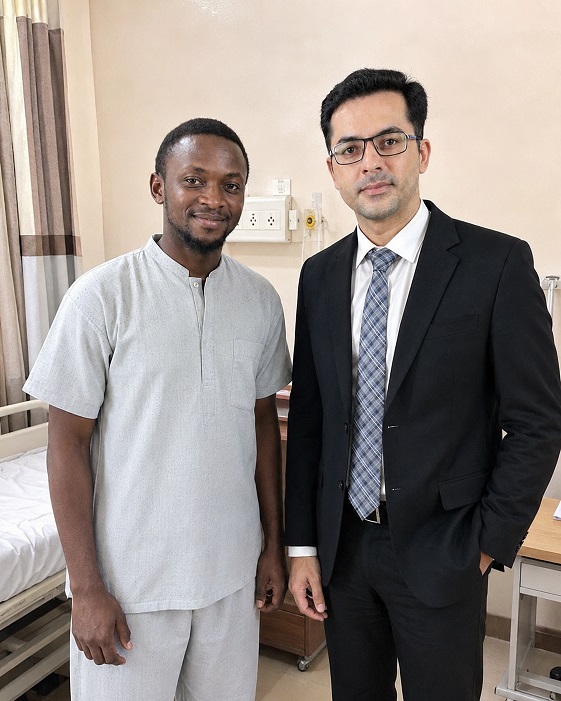
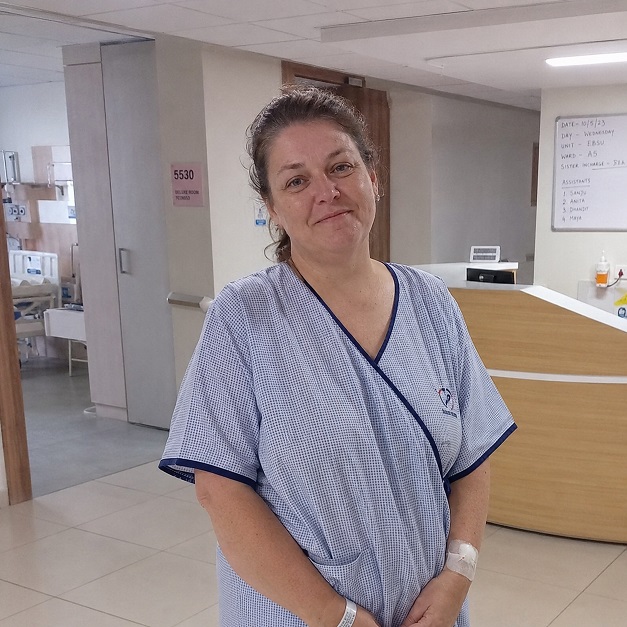
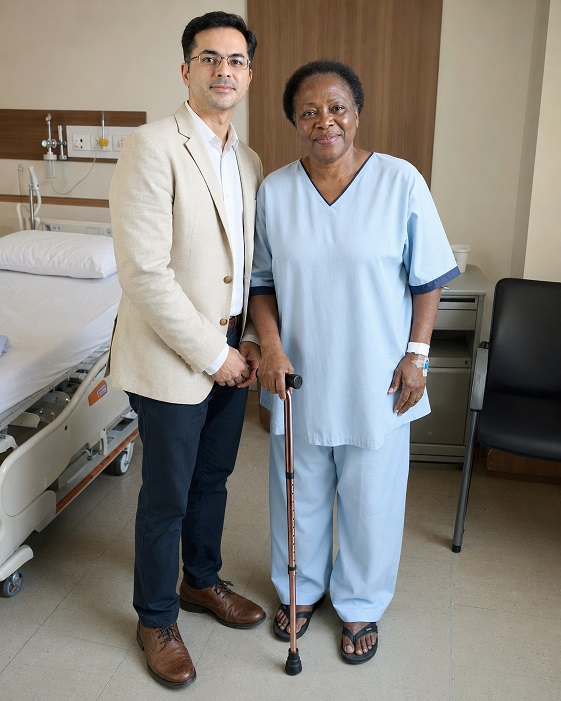
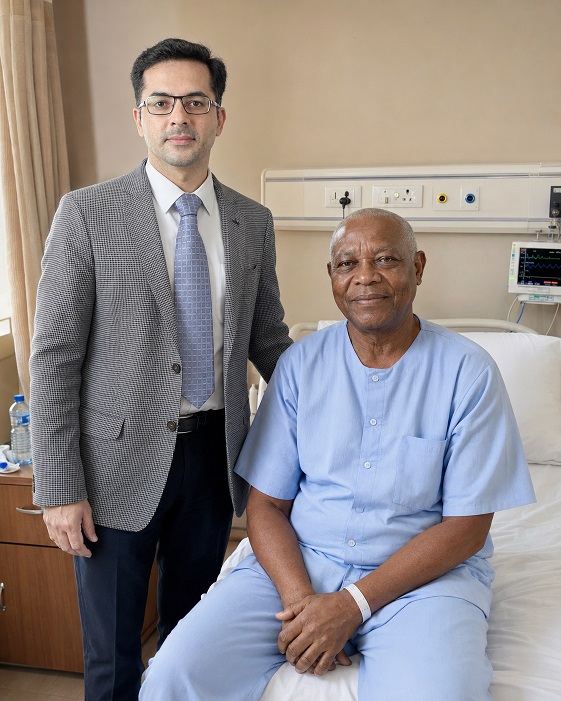
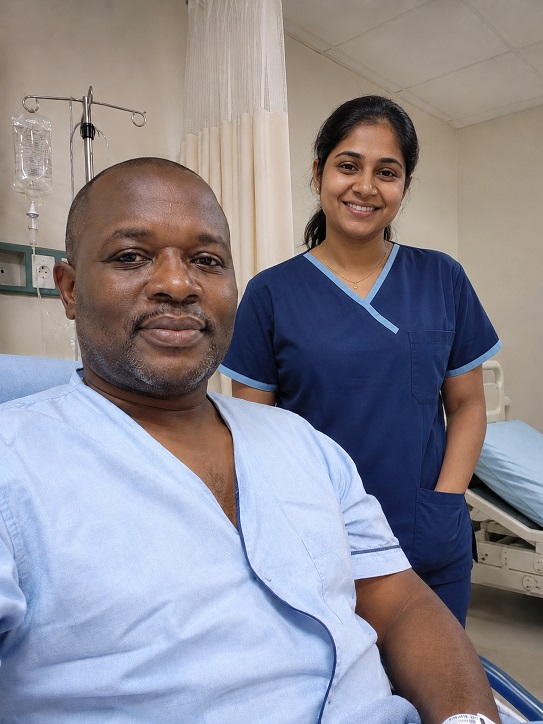
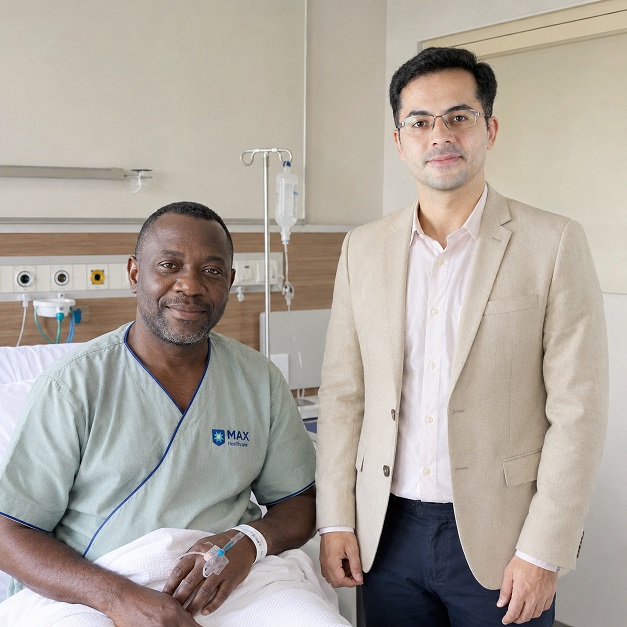
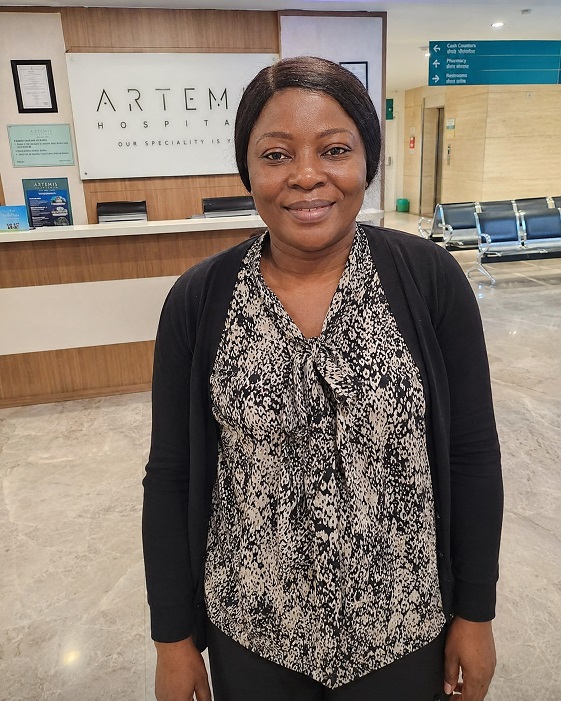
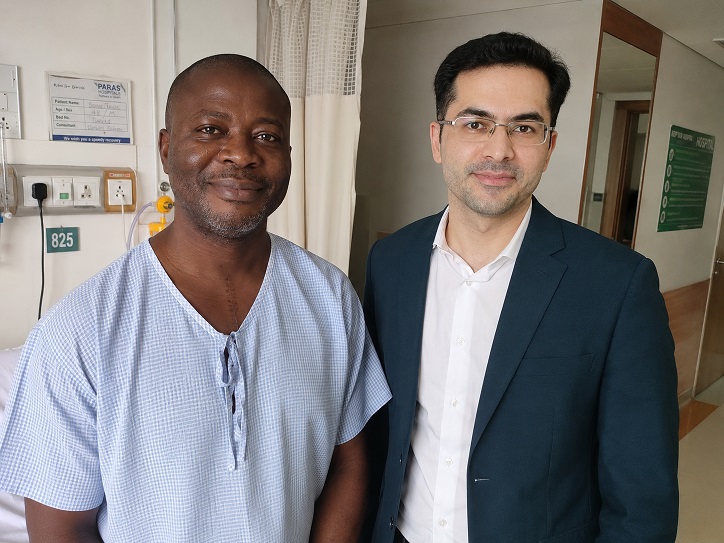
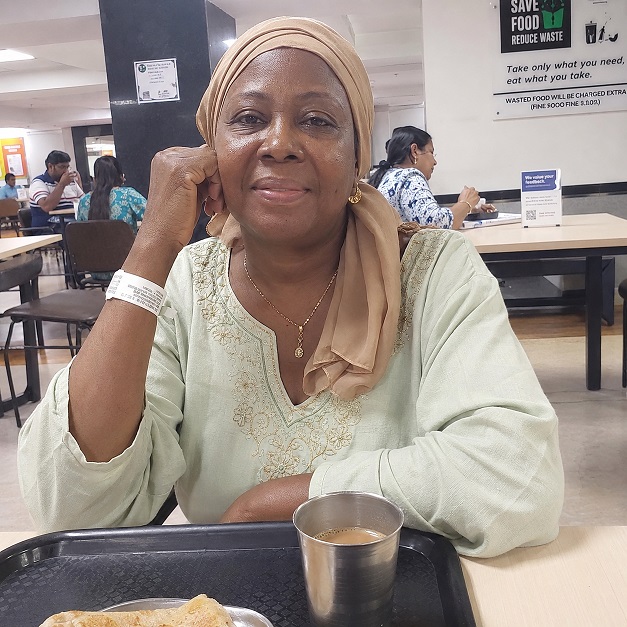
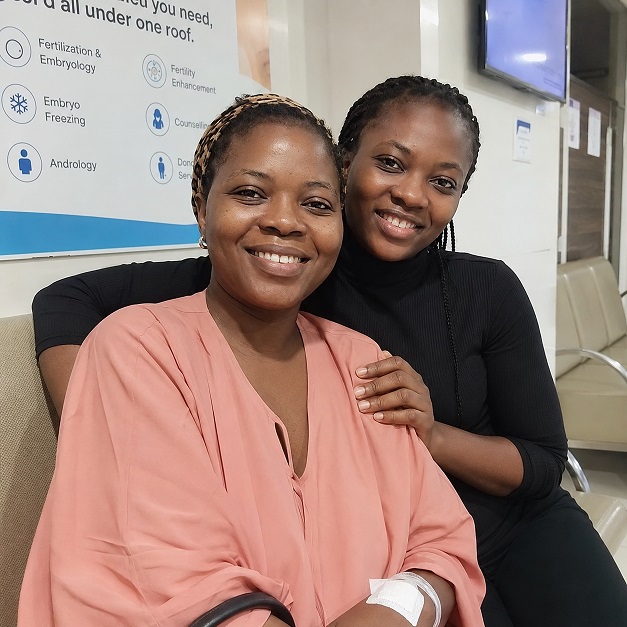
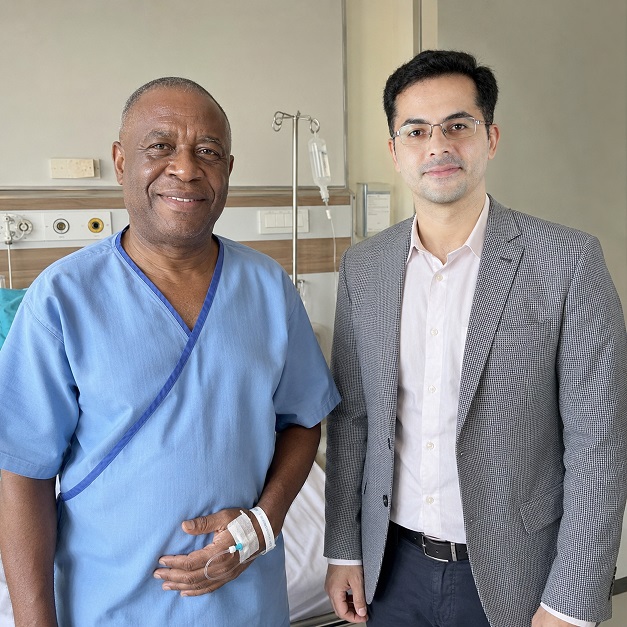
Patient Testimonials from Nigeria

Ready to Take the First Step?
Share your Medical Reports with our Healthcare Managers Today and Get a FREE CONSULTATION, a Personalized Treatment Plan, and Complete Support from Arrival to Recovery.
Get Your Free ConsultationAreas We Serve
This resource has been thoughtfully prepared for patients from Nigeria who are considering medical treatment in India. We also welcome patients from the wider region in the countries mentioned below-
We assist patients from:
- Benin
- Niger
- Chad
- Cameroon
- Algeria
- Egypt
- Libya
- Morocco
- Sudan
- Tunisia
- Gambia
- Ghana
- Burkina Faso
- Cabo Verde
- Côte d'Ivoire
- Equatorial Guinea
- São Tomé and Príncipe
Many of the insights, treatment pathways, hospital recommendations, travel guidance, and patient support services described here are equally relevant and may be used as a reference when planning treatment in India.
From Nigeria to India: Your Complete Patient Support Guide
- Artificial Disc Replacement in India for Nigerian Patients
- Weight Loss and Bariatric Surgery in India for Nigerian Patients
- Bone Marrow Transplant in India for Nigerian Patients
- Brain Tumour Surgery in India for Nigerian Patients
- Breast Cancer Treatment and Surgery in India for Nigerian Patients
- Cancer Treatment and Surgery in India for Nigerian Patients
- Cardiac Arrhythmia and Heart Pacemaker Treatment in India for Nigerian Patients
- Cardiac Surgery in India for Nigerian Patients
- Colorectal Cancer Treatment and Surgery in India for Nigerian Patients
- Complex Orthopaedic and Joint Revision Surgery in India for Nigerian Patients
- Cornea Transplant and Advanced Eye Surgery in India for Nigerian Patients
- CyberKnife Treatment in India for Nigerian Patients
- Gamma Knife Treatment in India for Nigerian Patients
- Heart Failure Treatment and Surgery in India for Nigerian Patients
- Hip Surgery in India for Nigerian Patients
- HIPEC Cancer Surgery in India for Nigerian Patients
- IVF and Fertility Treatment in India for Nigerian Patients
- Joint Arthroscopy and Sports Medicine in India for Nigerian Patients