

Selecting the Best Colorectal Cancer Surgeons and Hospitals in India for Nigerian Patients
A single line on a pathology report predicts recurrence better than almost anything a hospital can promise beforehand. Most patients never think to ask for it.
After rectal cancer surgery, a pathologist examines the removed specimen and records whether the mesorectal fascia, the fatty envelope surrounding the tumour, came out intact. This single finding is one of the strongest known predictors of whether the cancer returns locally, more informative than a hospital's general reputation, its building, or its marketing material. Almost no patient is told to ask for this specific report by name, and that gap, between what actually predicts outcome and what patients typically evaluate instead, is the starting point for this entire guide. Most families evaluating treatment abroad focus their attention on the country, the hospital's facilities, and the surgeon's general reputation. All of that has a place, but for colorectal cancer specifically, one measurable, objective fact recorded on paper after the operation tells you more about whether the surgery actually succeeded than any of those broader impressions.
Should you even be reading this guide? If colorectal cancer has been diagnosed and staged, this guide will help you evaluate the surgeon and hospital combination most likely to deliver a technically sound resection. If diagnosis or staging is not yet complete, that is the appropriate next step before these questions become relevant.
Healing Journeys of Nigerian Patients






Key Takeaways
- Nigerian patients considering colorectal cancer surgery in India should begin with a confirmed diagnosis and complete staging. The guide states that surgeon and hospital comparison becomes relevant only after the cancer has been properly diagnosed and staged.
- For rectal cancer specifically, the guide places exceptional importance on total mesorectal excision (TME). TME involves removing the rectal tumour together with the surrounding mesorectal tissue as an intact envelope.
- The condition of that removed mesorectal envelope is then assessed by the pathologist. The guide identifies mesorectal fascia completeness as one of the strongest predictors of local recurrence after rectal cancer surgery.
- Patients are therefore advised to request the full pathology report by name after surgery rather than accepting only a brief discharge summary. The document treats willingness to provide this report as an important sign of programme transparency.
- The pathology evidence should include the quality of the mesorectal plane, resection margins and an appropriate lymph-node harvest. Together, these create what the guide describes as an objective “paper trail” showing what the operation actually achieved.
- Colorectal cancer in Nigeria may also show a different clinical and biological pattern from Western populations. The guide cites molecular profiling research showing that Nigerian patients can present at a younger age, with higher rates of right-colon and rectal primary tumours compared with US cohorts.
- This younger-age pattern matters because bowel symptoms in younger Nigerian adults should not automatically be dismissed on the assumption that colorectal cancer is primarily a disease of older people.
- Persistent changes in bowel habits, unexplained bleeding, unexplained fatigue or weight loss should therefore receive prompt medical evaluation regardless of age.
Quick Facts
- Treatment
- Colorectal Cancer Treatment and Surgery
- Country
- India
- Intended Audience
- Nigerian Patients and Families
- Primary Conditions
- Colon Cancer and Rectal Cancer
- First Requirement
- Confirmed Diagnosis and Full Cancer Staging
- Important Rectal Cancer Technique
- Total Mesorectal Excision (TME)
- TME Principle
- Removal of the Rectal Tumour With the Surrounding Mesorectal Tissue in an Intact Envelope
- Critical Post-Surgery Evidence
- Full Pathology Report
- Important Pathology Finding
- Mesorectal Fascia Completeness
- Why Mesorectal Fascia Matters
- Strong Predictor of Local Recurrence Risk
- Other Pathology Measures
- Adequate Resection Margin and Proper Lymph-Node Harvest
- Primary Selection Principle
- Judge the Surgeon by the Technical Quality of the Exact Colorectal Procedure
- Surgeon vs Hospital Weighting
- Approximately Surgeon 54% / Hospital 46%
- Why Surgeon Weight Is Higher
- The Operating Surgeon Directly Determines the Quality of the Mesorectal Resection Plane
- Important Surgeon Question
- What Is Your Personal Rate of Complete Mesorectal Fascia in Rectal Cancer Resections?
- Surgeon Volume
- Ask for Annual Case Volume for the Specific Type of Resection
- General Colorectal Volume
- Does Not Automatically Confirm Rectal-Cancer-Specific Expertise
- Sphincter Preservation
- Should Be Considered According to Tumour Location and Imaging
- Sphincter Preservation Promise Before Imaging
- Major Red Flag
- Important Functional Trade-Off
- Low Anterior Resection Syndrome (LARS)
In Brief
Nigerian patients choosing a colorectal cancer surgeon and hospital in India should begin with a confirmed diagnosis and full staging, then evaluate the surgeon's experience with the exact resection required. For rectal cancer, the guide places particular importance on total mesorectal excision and the postoperative pathology report documenting mesorectal fascia completeness, resection margins and lymph-node harvest. Colorectal cancer is weighted approximately 54% toward the surgeon and 46% toward the hospital because the quality of the surgical resection plane is determined largely during the operation itself. Hospital-level tumour-board review, neoadjuvant treatment planning, stoma care and postoperative oncology coordination remain essential.
START HERE
The report that tells you what actually happened
Total mesorectal excision, or TME, is the established surgical technique for rectal cancer: removing the tumour along with its surrounding mesorectal tissue in one intact envelope. Whether that envelope stays intact, and how close the tumour came to the resection margin, is recorded in the pathology report and is directly linked to local recurrence risk. This same technique and reporting standard applies broadly across well-resourced surgical oncology programmes worldwide, including in the Nigerian treatment protocols documented later in this guide, meaning it is a genuinely universal benchmark to ask about, not an obscure or India-specific standard.
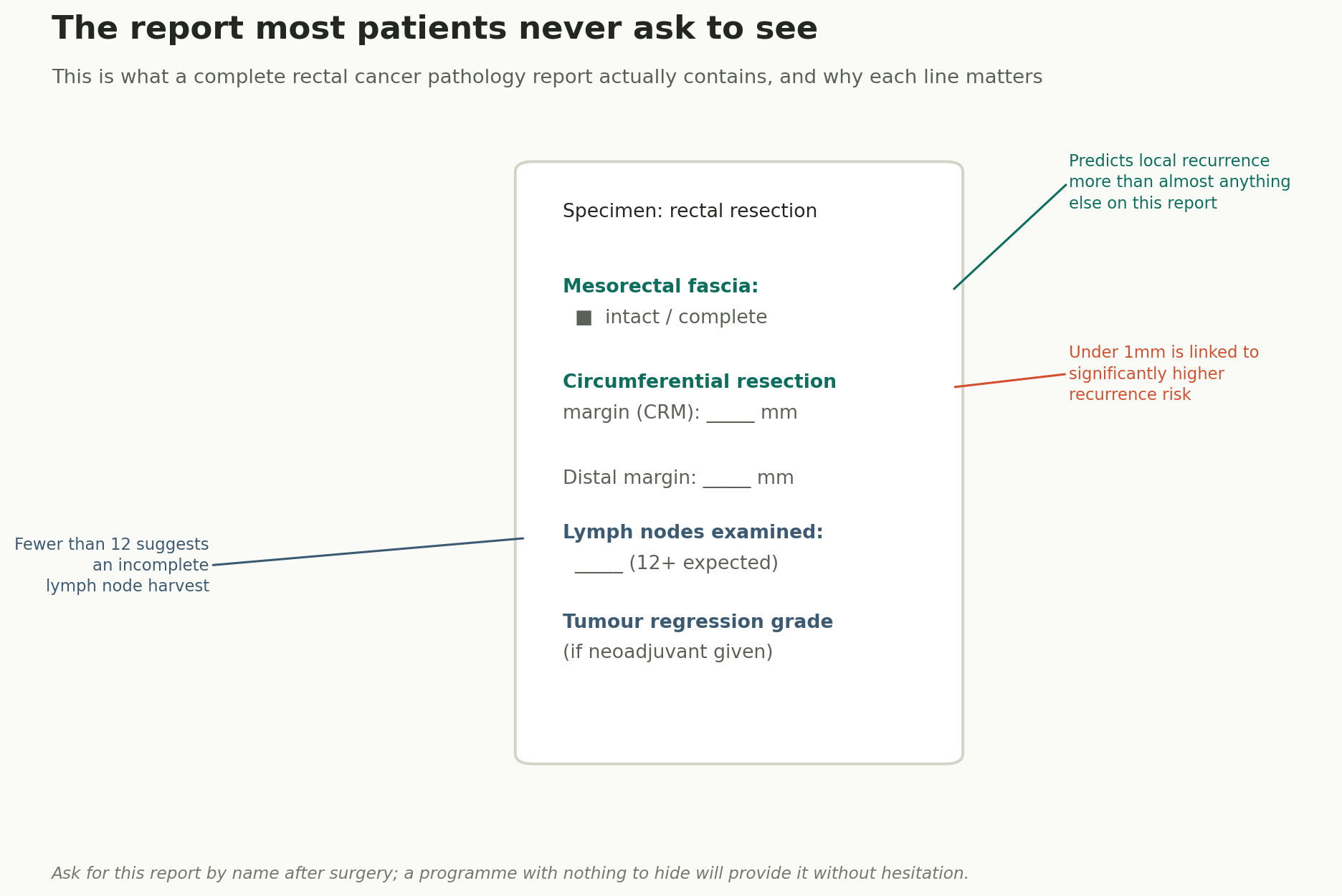
Ask for this report by name after surgery; a programme with nothing to hide will provide it without hesitation.
Requesting this report is not an act of distrust; it is a specific, informed question that any genuinely skilled surgical team expects and welcomes. A vague answer, or reluctance to share it, tells you more about a programme's confidence in its own work than almost any other single interaction. Bring this guide, or simply the specific terms it uses, to that conversation; a genuinely experienced surgical team will recognise them immediately.
THE BIOLOGY
A genuinely different disease pattern
Colorectal cancer in Nigeria is not simply the same disease as in Western textbooks, presenting later in life. A molecular and phenotypic profiling study published in Nature Communications, comparing Nigerian colorectal cancer cases against United States cohorts, found a genuinely distinct pattern.
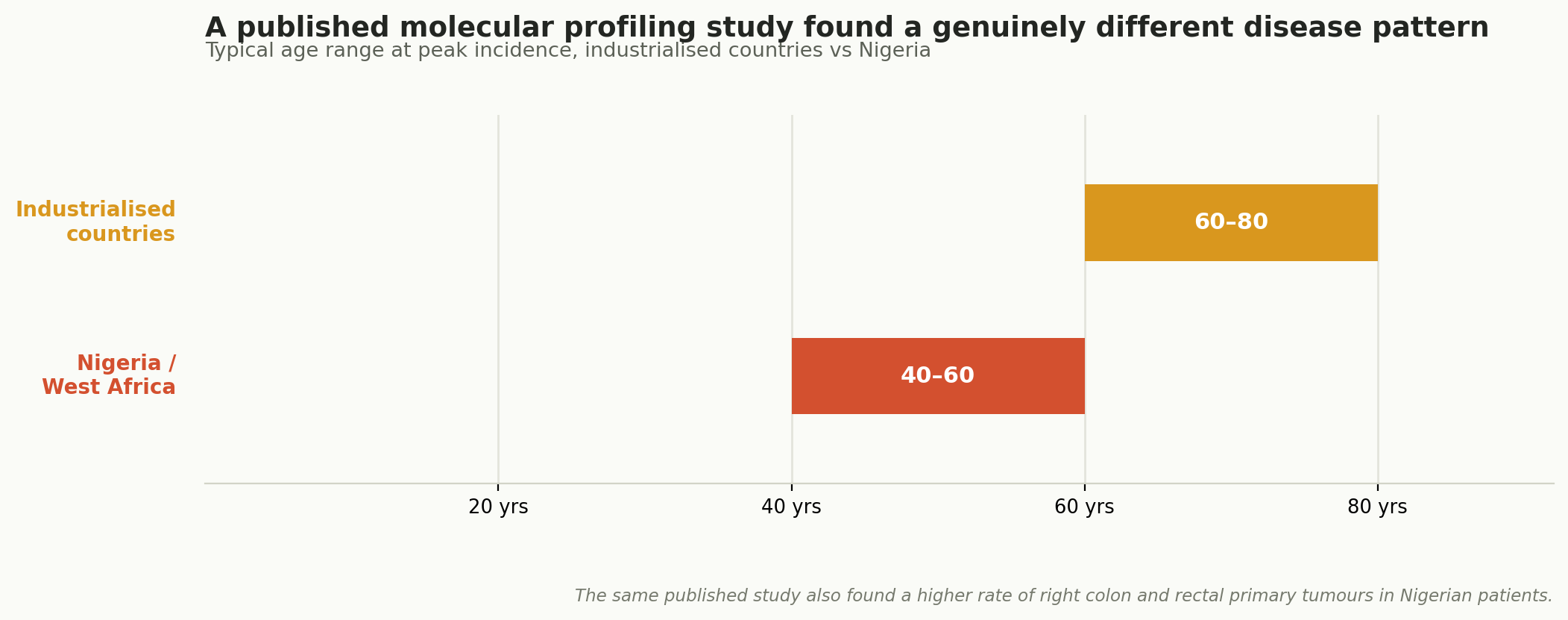
The same published study also found a higher rate of right colon and rectal primary tumours in Nigerian patients.
This matters practically, not just academically. A younger age of onset means colorectal cancer symptoms in a Nigerian patient in their 40s deserve the same seriousness as a similar presentation in a 65-year-old Western patient, and a treating team unfamiliar with this regional pattern may reasonably, but incorrectly, consider the diagnosis less likely at a younger age. A right-sided predominance also matters clinically, since right-sided tumours can present with more subtle symptoms, such as fatigue from slow blood loss, than the more classically taught left-sided pattern of visible bleeding or altered bowel habit.
A note on sphincter preservation, honestly. Avoiding a permanent colostomy through sphincter-preserving surgery is understandably a major priority for many patients, but it is not without trade-offs. A meaningful share of patients experience low anterior resection syndrome, a pattern of disordered bowel function, afterward. This is worth discussing candidly with a surgeon before assuming preservation is automatically the better outcome for every patient. For some tumours, particularly those very close to the anal sphincter, a well- executed permanent colostomy may genuinely offer a better quality of life than a preserved sphincter with significant ongoing dysfunction, and a good surgeon will discuss both paths honestly rather than defaulting to whichever sounds more appealing on the surface.
THE BALANCE
Here, the individual tips the balance
Given how directly the surgeon's own technique determines the mesorectal plane's quality, this is one of the procedures in this series where the surgeon's individual skill weighs more heavily than the hospital's broader systems.
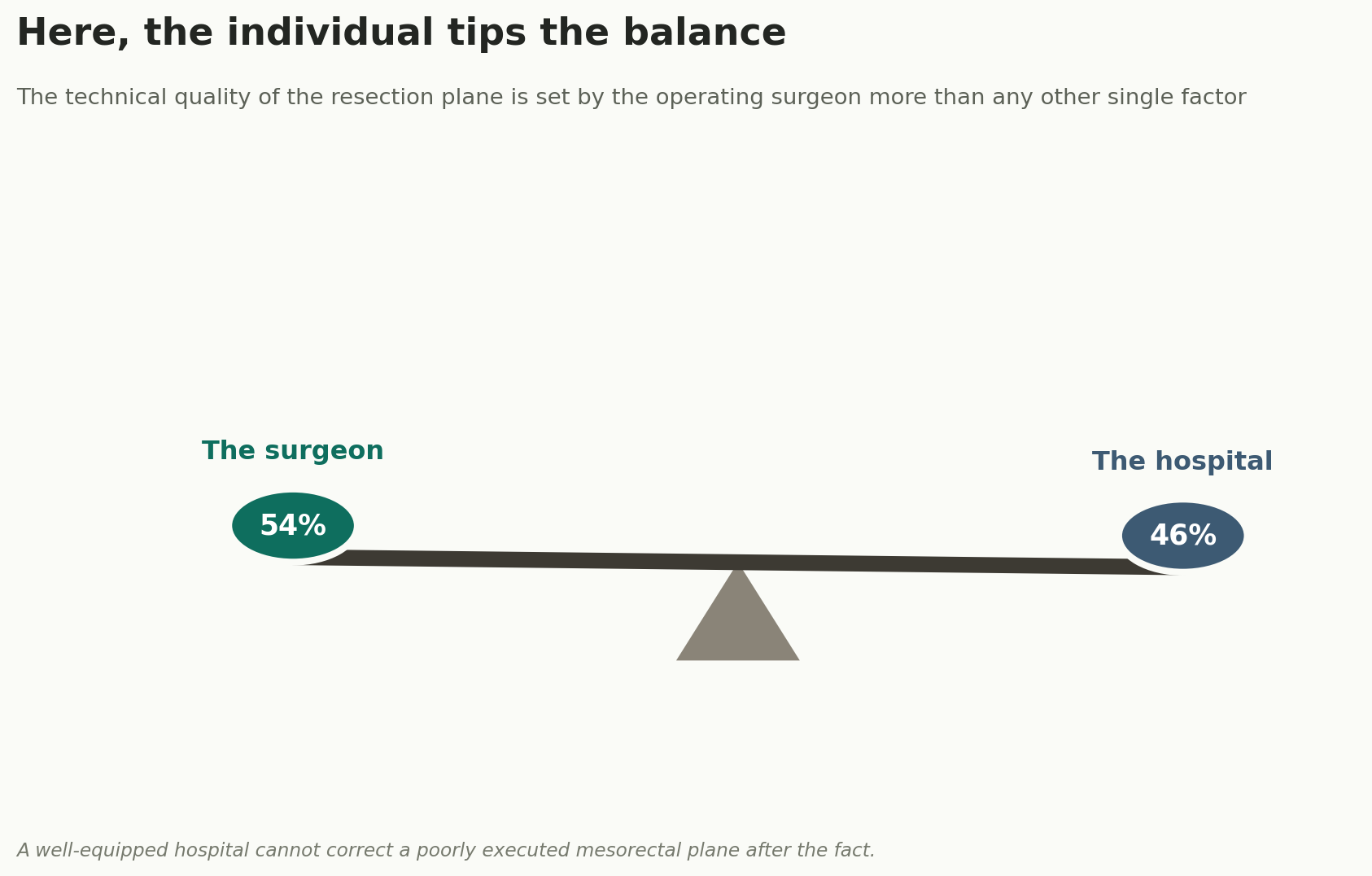
A well-equipped hospital cannot correct a poorly executed mesorectal plane after the fact.
This does not make the hospital irrelevant. Multidisciplinary staging, appropriate use of neoadjuvant chemoradiation where indicated, and post-operative care all matter. It means that, uniquely among the balance points in this series, the individual surgeon's hands during the operation itself carry the single largest share of influence over the outcome that matters most. This is a genuine departure from procedures like pancreatic cancer surgery, where system-level complication management carries the larger share; the two decisions call for different emphasis even within the same broader field of oncological surgery.
THE VETTING CONVERSATION
What to actually ask
Questions for the surgeon
- What is your personal rate of complete mesorectal fascia in your resections? A precise, comfortable answer suggests a surgeon who genuinely tracks this outcome.
- Is sphincter preservation appropriate for my specific tumour, and what are the realistic trade-offs? A thoughtful answer discusses LARS, not just the avoided colostomy.
- What is your annual case volume for this specific type of resection? General colorectal surgery volume does not confirm rectal cancer-specific expertise.
- Will the full pathology report, including CRM and mesorectal fascia status, be provided to me directly? This should be an easy, immediate yes.
Questions for the hospital
- Is my case reviewed at a multidisciplinary tumour board before treatment begins? Staging and treatment sequencing benefit from more than one specialist's input.
- Is neoadjuvant chemoradiation available and coordinated on-site, if indicated? This affects whether the right pre-surgical sequence is genuinely possible.
- What stoma care and support is available if a temporary or permanent stoma is needed? This meaningfully affects recovery and quality of life.
- What is the plan for adjuvant chemotherapy after surgery, if indicated? This should be discussed as part of the overall plan, not an afterthought.
NIGERIA-SPECIFIC CONSIDERATIONS
Why timing matters as much as technique
A 2026 scoping review of colorectal cancer presentation across Africa found emergency presentation, patients arriving with obstruction, perforation, or bleeding rather than through a planned diagnostic pathway, to be a well-documented, recurring pattern across the continent. A prospective Nigerian hospital registry studying colorectal cancer treatment confirmed that staging-appropriate protocols, including TME resection and chemoradiation sequencing, are followed where patients present in time for planned treatment, underscoring that the constraint is often timing of presentation rather than a lack of appropriate treatment knowledge once a patient reaches care.
Combined with the younger age of onset documented earlier in this guide, this suggests real value in Nigerian patients and their families taking new or persistent bowel symptoms seriously at any age, rather than assuming colorectal cancer is a disease of old age that can reasonably wait. Persistent changes in bowel habit, unexplained bleeding, or unexplained fatigue and weight loss deserve prompt medical evaluation regardless of a patient's age.
Four warning signs worth taking seriously
- Reluctance to provide the full pathology report, including mesorectal fascia status. This should be provided without hesitation.
- Sphincter preservation promised before your imaging has been reviewed. This depends on tumour location and cannot be promised in advance.
- No mention of multidisciplinary tumour board review before treatment begins. Staging decisions benefit from more than one specialist's judgement.
- Vague answers about personal case volume or mesorectal fascia completeness rates. A confident, experienced surgeon can speak to both directly.
A practical order of operations
- Get a confirmed diagnosis and full staging before contacting any surgical programme.
- Ask the surgeon directly about mesorectal fascia completeness rates and case volume.
- Confirm multidisciplinary tumour board review and, where indicated, neoadjuvant treatment planning.
- Discuss sphincter preservation honestly, including realistic functional trade-offs.
- Travel, surgery, and a supervised recovery period appropriate to the specific procedure.
- Request the full pathology report and hand it, with all documentation, to a Nigerian oncologist for coordinated follow-up.
Straight Answers for Nigerian Patients about Colorectal Cancer Surgery in India
What is total mesorectal excision, and why does it matter?
TME is the technique for removing rectal cancer with its surrounding fatty tissue in one intact envelope. Whether that envelope, the mesorectal fascia, stays intact is one of the strongest known predictors of local recurrence.
Is colorectal cancer in Nigeria the same disease as in Western countries?
Not entirely. A published molecular profiling study found Nigerian patients present at a genuinely younger age and have a higher rate of right colon and rectal primary tumours compared to US cohorts.
Does sphincter-preserving surgery always mean normal bowel function afterward?
Not automatically. A meaningful share of patients experience low anterior resection syndrome afterward. It is a real trade-off worth discussing honestly rather than assuming avoiding a colostomy means full normal function.
Why does the surgeon matter more than the hospital here?
The technical quality of the mesorectal resection plane is set primarily by the operating surgeon's hands during the procedure. A well-equipped hospital cannot correct a poorly executed plane after the fact.
What is a realistic red flag when choosing a programme?
Unwillingness to provide the full pathology report, or a promise of sphincter preservation before your imaging is reviewed, are genuine warning signs.
A closing word
Colorectal cancer surgery done well leaves a paper trail: a pathology report that confirms an intact mesorectal plane, an adequate margin, and a proper lymph node harvest. That report, not a hospital's reputation or a surgeon's bedside manner, is the closest thing to objective evidence of whether the operation actually achieved what it needed to. In twenty-four years of this work, the families who navigate this best ask for that report by name, take a younger patient's bowel symptoms as seriously as an older patient's, and discuss the real trade-offs of sphincter preservation honestly rather than assuming it is automatically the right goal. The surgery is a single day. The report it produces is the clearest evidence of how that day actually went, and it deserves to be requested, read, and understood, not simply filed away.
Sources
- 🌐 Molecular and phenotypic profiling of colorectal cancer patients in West Africa reveals biological insights. Nature Communications
- 🌐 Emergency presentation of colorectal cancer in Africa: a scoping review. BMJ Open, 2026
- 🌐 Treatment of Colorectal Cancer in Sub-Saharan Africa: Results from a Prospective Nigerian Hospital Registry
- 🌐 American Society of Colon and Rectal Surgeons — Rectal cancer, patient information
- 🌐 High Commission of India, Abuja — Medical and Medical Attendant Visa requirements
Frequently Asked Questions by Nigerians about Colorectal Cancer Surgery in India
What is total mesorectal excision and why does it matter for Nigerian patients with rectal cancer?
Total mesorectal excision removes the rectal tumour together with its surrounding mesorectal tissue in one intact envelope. The guide explains that the completeness of this plane is one of the strongest predictors of local recurrence after rectal cancer surgery.
How should Nigerian patients choose a colorectal cancer surgeon in India?
Ask about the surgeon's annual volume for the exact colorectal operation and, for rectal cancer, their personal rate of complete mesorectal fascia. General colorectal surgery experience alone is not enough.
Is the surgeon or hospital more important for colorectal cancer surgery?
The guide gives the surgeon a slight advantage at approximately 54% surgeon versus 46% hospital because the surgeon's technique determines the quality of the mesorectal resection plane during the operation.
What pathology report should patients request after rectal cancer surgery?
Patients should request the complete pathology report, including mesorectal fascia status, circumferential resection margin information and lymph-node assessment. The guide treats this as objective evidence of surgical quality.
Can a surgeon guarantee sphincter-preserving rectal cancer surgery before reviewing the scans?
No. The guide specifically identifies a promise of sphincter preservation before imaging review as a warning sign because feasibility depends on tumour location and anatomy.
Does avoiding a colostomy guarantee normal bowel function?
No. Some patients develop low anterior resection syndrome after sphincter-preserving surgery. The guide recommends discussing this functional trade-off rather than treating sphincter preservation as an automatically superior outcome.
Why is tumour-board review important for colorectal cancer?
Multidisciplinary review helps establish staging and the correct treatment sequence, including whether chemotherapy and radiotherapy should be given before surgery in selected rectal-cancer cases.
Is colorectal cancer different among Nigerian patients?
The guide cites molecular research showing that Nigerian patients can present at a younger age and have higher proportions of right-colon and rectal primary tumours compared with US cohorts.
Does this guide give a colorectal cancer surgery cost or standard stay in India?
No. This particular surgeon-and-hospital-selection guide does not provide a specific India cost range or standard stay duration, so those figures should not be added to the document summary.
What are the four main warning signs when choosing a colorectal cancer programme in India?
They are reluctance to provide the complete pathology report, promising sphincter preservation before reviewing imaging, absence of multidisciplinary tumour-board review and vague answers about personal case volume or mesorectal fascia completeness rates.
Page Summary
This guide places a particularly strong emphasis on objective evidence of surgical quality. For rectal cancer, that evidence is found in the pathology report after surgery—especially the condition of the mesorectal fascia, the resection margins and the lymph-node harvest.
Citation Block
| Topic | Information |
|---|---|
| Topic Information | Selecting Colorectal Cancer Surgeons and Hospitals in India for Nigerian Patients |
| Treatment | Colorectal Cancer Treatment and Surgery |
| Country | India |
| Intended Audience | Nigerian Patients and Families |
| Conditions Covered | Colon Cancer and Rectal Cancer |
| Important Procedure | Total Mesorectal Excision (TME) for Rectal Cancer |
| First Requirement | Confirmed Diagnosis and Full Staging |
| Primary Quality Measure | Mesorectal Fascia Completeness on Final Pathology |
| Additional Pathology Measures | Resection Margin and Lymph-Node Harvest |
| Surgeon Weighting | Approximately 54% |
| Hospital Weighting | Approximately 46% |
| Important Surgical Decision | Sphincter Preservation Where Appropriate |
| Functional Consideration | Low Anterior Resection Syndrome |
| Hospital Requirements | Tumour Board, Neoadjuvant Treatment Coordination, Stoma Support and Adjuvant Treatment Planning |
| India Treatment Cost | Specific Cost Range Not Provided in This Guide |
| Typical Stay | Specific Duration Not Provided in This Guide |
| Nigeria Follow-Up | Full Pathology and Treatment Documentation for Nigerian Oncologist |
| Author | Dr. Dheeraj Bojwani |
| Experience | 24 Years |


Our Mission Statement
Our mission is to place patients at the centre of every healthcare decision by providing trustworthy, evidence-based, and unbiased medical information. We believe that informed patients make better decisions. Backed by personalised guidance from our experienced advisory team, we help patients understand their treatment options, compare them objectively, and confidently choose the path that best suits their medical needs and personal circumstances.
Patient Testimonials from Nigeria

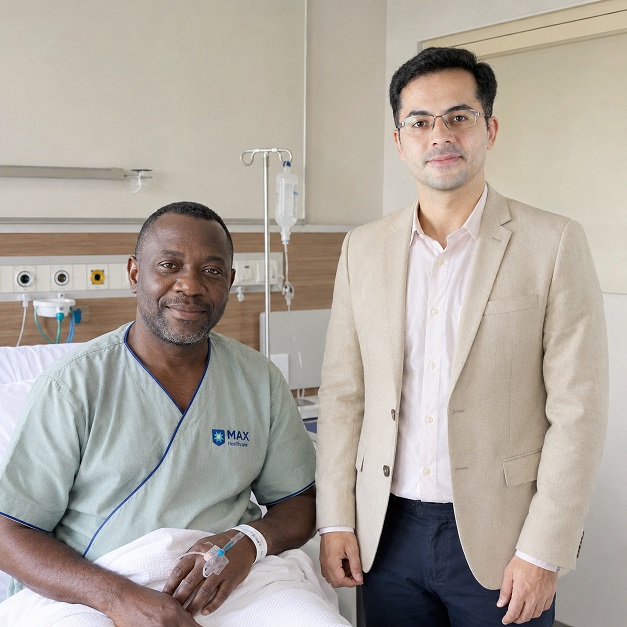
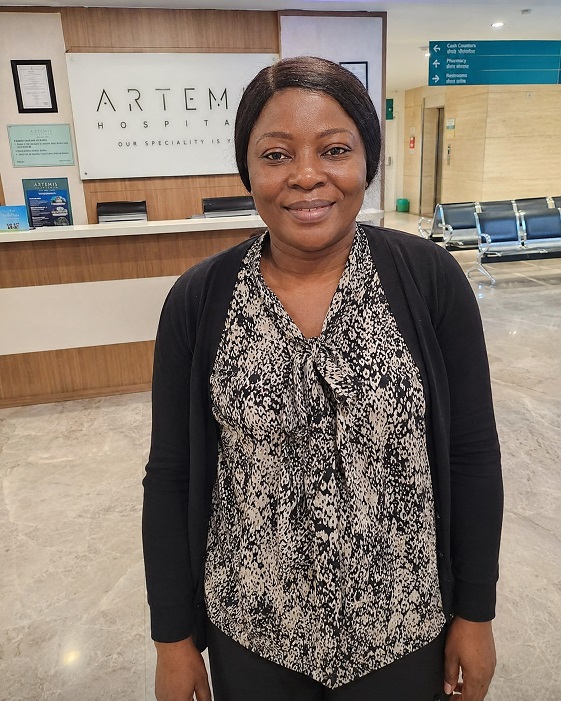
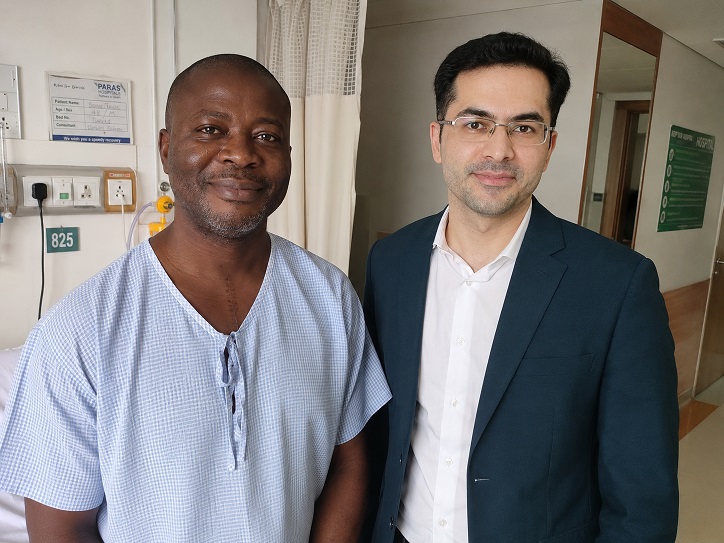
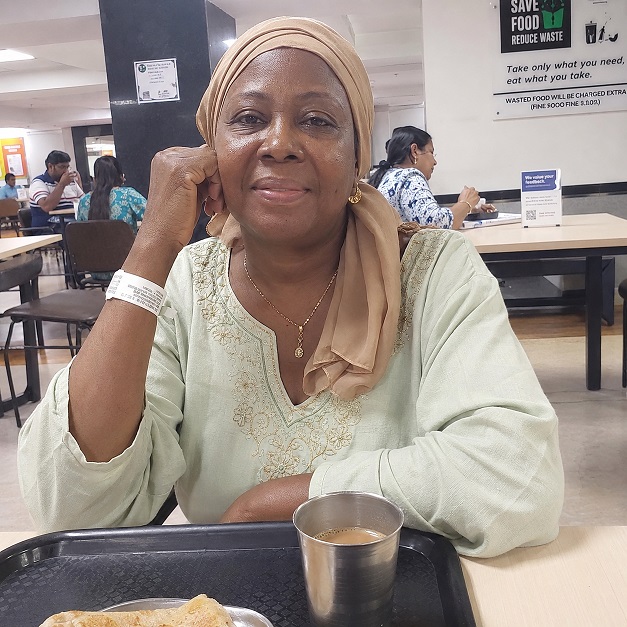
Ready to Take the First Step?
Share your Medical Reports with our Healthcare Managers Today and Get a FREE CONSULTATION, a Personalized Treatment Plan, and Complete Support from Arrival to Recovery.
Get Your Free ConsultationAreas We Serve
This resource has been thoughtfully prepared for patients from Nigeria who are considering medical treatment in India. We also welcome patients from the wider region in the countries mentioned below-
We assist patients from:
- Benin
- Niger
- Chad
- Cameroon
- Algeria
- Egypt
- Libya
- Morocco
- Sudan
- Tunisia
- Gambia
- Ghana
- Burkina Faso
- Cabo Verde
- Côte d'Ivoire
- Equatorial Guinea
- São Tomé and Príncipe
Many of the insights, treatment pathways, hospital recommendations, travel guidance, and patient support services described here are equally relevant and may be used as a reference when planning treatment in India.
From Nigeria to India: Your Complete Patient Support Guide
- Artificial Disc Replacement in India for Nigerian Patients
- Weight Loss and Bariatric Surgery in India for Nigerian Patients
- Bone Marrow Transplant in India for Nigerian Patients
- Brain Tumour Surgery in India for Nigerian Patients
- Breast Cancer Treatment and Surgery in India for Nigerian Patients
- Cancer Treatment and Surgery in India for Nigerian Patients
- Cardiac Arrhythmia and Heart Pacemaker Treatment in India for Nigerian Patients
- Cardiac Surgery in India for Nigerian Patients
- Colorectal Cancer Treatment and Surgery in India for Nigerian Patients
- Complex Orthopaedic and Joint Revision Surgery in India for Nigerian Patients
- Cornea Transplant and Advanced Eye Surgery in India for Nigerian Patients
- CyberKnife Treatment in India for Nigerian Patients
- Gamma Knife Treatment in India for Nigerian Patients
- Heart Failure Treatment and Surgery in India for Nigerian Patients
- Hip Surgery in India for Nigerian Patients
- HIPEC Cancer Surgery in India for Nigerian Patients
- IVF and Fertility Treatment in India for Nigerian Patients
- Joint Arthroscopy and Sports Medicine in India for Nigerian Patients